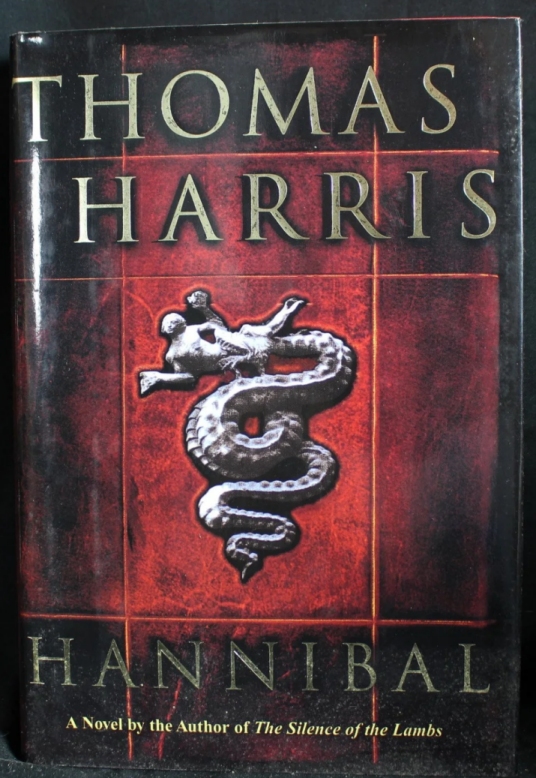
B.W. Battin’s Mary, Mary

Pocket Books – 1985

I started reading this book because it has a creepy cover.

Mary suffers from blackouts, brief periods during which she loses control over what she is doing and retains no memories. Also, she can’t tell anyone about these blackouts or she gets sick and passes out. When a murderer tries to kill her, Mary’s blackouts become more frequent and bad stuff starts happening to the people around her.

That’s the set-up. It’s a bit silly, but it has potential. It turns out that Mary was orphaned and has barely any memories of the mysterious orphanage where she grew up. Pretty much the only thing she does remember about it is that it was run by a Satanic nun. These details are revealed early on in the text, and in context, they set up the story in such a way that one ending seems inevitable. The writing is competent, and there is one particularly effective scene in a closed hardware store, but I was hoping that the author would drop in some shocking twists to elevate this beyond the realm of predictable thrillers. He didn’t.

This book ends almost exactly the way I thought it would. I say “almost exactly” because I thought there would be a slightly cheesy horror twist ending. There wasn’t though. This horror novel has a neat, complete happy ending. Yuck. No fucking thanks. In light of the predictable ending, the other faults of the book seem less forgiveable too. Why didn’t Mary just write her thoughts down instead of having to struggle to verbalise them to every new person she encounters? Also, why was she so afraid to tell her caring husband that she was seeing a psychiatrist? Stupid.

There’s a bit of suspense towards the middle of the book, but there is no real supernatural horror, novel depictions of Satanism, or extreme violence. Mary, Mary was a big let down. A few more of B.W. Battin’s books have cool covers, but I don’t feel any desire to check them out now.

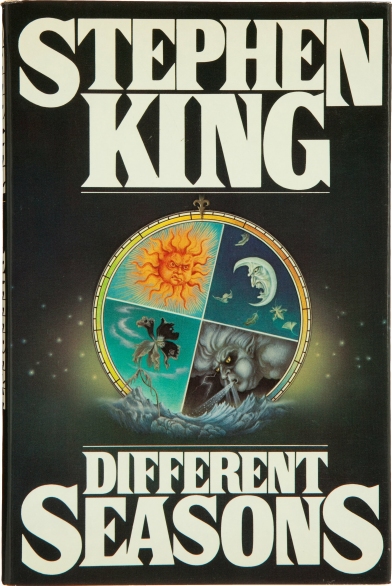
A few more books by Stephen King: Misery, Different Seasons and Christine

Greetings freaks. I doubt many people have noticed, but I have been alternating between posts on fiction and non-fiction since the beginning of the year. I had a big non-fiction post planned for this week, but I’m on holidays at the moment, and I haven’t had time to finish it, so I’ve got to switch it up. I’ve had the following post on the backburner for a long time, and I figure now is a good time to unburden myself. I’ve got something really juicy for you next week, but for now, here’s some more books by Stephen King.

Viking – 1987

Misery

I have never seen the movie version of Misery, but my mom saw it when I was a kid and told me all about it. I had heard that this was one of King’s better books, and it did not disappoint. I knew that the author was going to be “hobbled”, but I didn’t realise the book was different to the movie. Jesus. I literally winced when I got to that part. This is one of the best books I’ve read by Stephen King. I didn’t like The Longest Walk because it felt like it stuck to one track (excuse the pun). Misery is even more confined, but it works a lot better in my opinion. This was a really good book.

Viking – 1982

Different Seasons

Different Seasons is known as King’s non-horror collection, but one of the tales, The Breathing Method, is very definitely a horror story. The way it’s framed, as a bunch of old men telling scary stories, reminded me a bit of Peter Straub’s Ghost Story. It’s not nearly as ambitious as that book, but it’s not a bad story at all. It’s the only of one the four stories in here that hasn’t yet been turned into a big Hollywood movie. I watched The Shawshank Redemption and Stand by Me many times as a kid, but the stories they are based on are excellent, and I quite enjoyed Apt Pupil too. I know some high brow literature snobs look down on King, but he really is a talented writer. I loved this book.

Viking – 1983

Christine

I read Pet Semetery a couple of years ago, and I didn’t really like it, so I gave King a break for a few years. I really enjoyed Misery and Different Seasons, but they contain little of the supernatural fiction that drew me to King in the first place. I thought I’d better read one more book for this post, and Christine, King’s evil haunted car book, was next on my list. (I’ve read nearly all of his novels and story collections up until 1983 so far. ) I found Christine unbearably drawn out and overwritten. I’d imagine it would have been a much better book if it was 200 pages shorter. Honestly, it could have been a short story or a novella. I know some people love this one, but I wasn’t that interested.

Just in case you’re interested, here’s a link to the many other Stephen King books I’ve written about.

Wrestling Splatterpunk: Edward Lee and John Pelan’s Goon

I’m on my holidays at the moment, and I actually seem to have less time for reading than I usually do. Here’s a quick review of a quick little book that I quite enjoyed.

Overlook Collection – 2003 (First published 1996)

I haven’t read anything by Edward Lee since I gave up on his Bullet Through Your Face collection in 2020. I don’t mind vulgarity, but the amount of cocksnot in that book was tiresome. I recently came across a free copy of Goon, a book he co-authored with John Pelan, and it was short enough to convince me to give Lee another chance.

This is a brief splatterpunk novel about a serial killer/professional wrestler. It actually contains less wrestling than I was expecting.

I read 2 of the 3 stories in Bullet Through Your Face, but I gave up when I got to The Refrigerator full of Sperm, a story that was taken from Lee’s Splatterspunk: The Micah Hays Stories collection. You can imagine my disappointment when Micah Hays showed up as a character in Goon. Fortunately, it’s only a brief cameo appearance.

Things get weird at end (as they usually seem to in Lee’s books), but most of the plot of Goon is pretty much what you’d expect. There’s an instance of race-baiting in here that dates the book. I don’t think the authors were espousing racial hatred, but I don’t see two (sane) white guys feeling comfortable putting the same words to paper in 2023.

If you like wrestling and  gross stuff, you’ll probably like Goon. It was quite a silly book, but it was short enough that I enjoyed it. It contains just the right amount of cocksnot, not too much, not too little.

Evil Bunnies: David Anne’s The Folly

Corgi – 1980 (First published 1978)

The Folly – David Anne

I’ve read books about evil lizards, evil flies, evil dogs, evil jellyfish, evil mantises, evil butterflies, evil trout, evil cockroaches and several about evil worms. I’ve long been meaning to get around to the evil rats, cats and crabs, but when I heard about a book about evil bunny rabbits, I bumped it to the front of the queue.

When you’ve read a few of these “animal attacks” books, you start to see patterns emerging. This is set in England, and the set up was very similar to the slimey, squelchy, slithery books by John Halkin (which I assume are very similar to James Herbert’s Rats.) Peaceful rural scenes are interrupted by brutal maulings at the hands of hitherto mild-mannered wildlife. The attacks in The Folly were quite bloody, but there was nothing else to note until the end of the book.

Spoilers ahead:

So it turns out that the bunnies are a laboratory experiment gone wrong. A lad who wanted to control the rabbit population in his neighbourhood hired a scientist to genetically engineer a disease that would kill rabbits. Once accomplished, this pair continued their genetic experiments, resulting in a chamber of freaks. The book ends with the protagonist stumbling into a secret room in the scientist’s laboratory which houses his half-human, half-chimpanzee lover (Maybe it’s his love-child: I read this a few weeks ago, and I can’t honestly remember.) The inclusion of this freak is needless and out of place in the story, but I thought it was a stroke of genius. It was like giving somebody a sneaky finger up the bum at the end of a blowjob – the reader’s not expecting it and probably doesn’t really want it, but they shan’t deny it makes things more exciting!

In truth, this is a ridiculous book, but if you’re the kind of person who is willing to read a book about evil bunny rabbits, I don’t think you’ll be terribly disappointed.

The Last Days of Christ the Vampire – J.G. Eccarius

III Publishing – 1990 (First published 1988)

I first heard of this book a long time ago. The title and extremely childish cover were alluring, but copies were always that little bit too expensive for something that was probably awful. None of the reviews I read made me want to splash out either. I got my hands on a cheap copy recently, and I was pretty excited to get going.

A quick glance through this blog will prove that I have read my share of terrible books. It’s quite a feat to truly disappoint me. In truth, I think that The Last Days of Christ the Vampire might deserve the title of the worst novel I have ever read.

This is anarchist fiction. I’m not an anarchist, but the fact that this book espouses anarchy is not what made me dislike it. The writing here is unreadably poor. It’s like J.G. Eccarius never once considered the fact that novels are supposed to be entertaining. There is a plot here, but the story is so poorly told that it made it very difficult to figure out what was going on. There’s no focus on any specific character, and cast of characters is huge. To make matters worse, some characters change their names throughout the story. The writing itself is bad, and the plot construction is pathetic. This book is unbearably boring.

So Jesus was actually a vampire, and he is still alive today. There are a gang of vampires (including Simon Magus and Aleister Crowley) who have a hand in controlling world affairs. Some MaximumRocknRoll reading punk-rockers decide to put an end to this, so they go to Jerusalem to go vampire hunting. This all ends in a massive attack against the Pentagon.

That summary makes this book sound pretty good. A barely competent writer could have made this into something enjoyable. Unfortunately, the above paragraph contains all of the interesting parts of the book. The author chooses to pass over everything cool about a vampire Jesus and spends his time trying to promote an incredibly naïve political agenda – there’s no chilling descriptions of Jesus drinking his victim’s blood, but there are many paragraphs about mailing anarchist zines. I bet the author wore a bumflap. The action sequences are excruciating. This is awful fiction. It stinks. I wanted to give up, but I forced myself to finish it. Piece of shit.

Sean Costello’s Horror Novels: The Cartoonist, Eden’s Eyes and Captain Quad

In honour of Canada Day next Saturday, here’s some books by a Canadian author. Exactly one year ago, I read a horror novel by Sean Costello. It was great. I discovered that Costello had written two other horror novels, so I decided to read those too. Doing so was an excellent decision. I greatly enjoyed all three of these books.

Pocket Books – 1990

The Cartoonist

Scott, a successful psychiatrist with a horrible secret, meets a strange patient at his hospital. This drooling geriatric can’t walk or speak, but he can draw. At first the drawings seem random and unconnected, but Scott soon realises this is not the case.

I really enjoyed this novel. It’s set in Canada, and at its core, it’s about a father trying to protect his little girl. Both the antagonist and protagonist are horribly flawed people, but it was difficult for me not to empathise with both of them, and parts of this novel really got to me. In the 3 days leading up to me reading this book, I read 3 other “paperback from hell”-esque novels (The Kill, Joyride, and The Scourge) , and I had enjoyed each one less than the one before it. I was expecting the same from this one, but it was way, way better. It’s not perfect (my friend Micah made some valid criticisms when he reviewed it), but I found it very entertaining.

Pocket Books – 1989

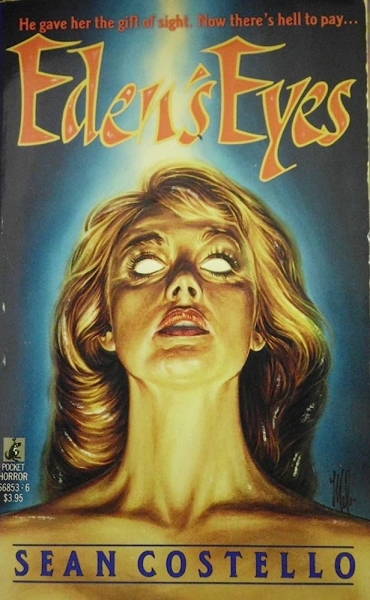
Eden’s Eyes

This book starts off with a father signing the consent forms to donate his recently deceased son’s organs. The eyes go to a blind author, the kidneys go to a sick child, and the heart goes to a homeless alcoholic. Unfortunately for everyone, the donor’s mother is not happy about the organ transplants, not happy at all.

That’s the basic premise of the book. That probably doesn’t make it sound like anything special, and in truth, it didn’t really feel like anything special for the first 50 or so pages. Then things started to get darker and weirder by the chapter. It ramps up and up and up, and the ending is bloody glorious. This is a slasher at heart, but the characters are interesting, and there’s weird supernatural elements that make it quite exciting.

I was so excited after the ending that I spent about 15 minutes trying to talk my wife into reading this one. (She wasn’t remotely interested.) Eden’s Eyes was a lot of fun to read.

Pocket Books – 1991

Captain Quad

I think this book may have the most off-putting title and cover of any horror novel ever. I didn’t want to read it, but I’m glad I did. It’s very dark, and I quite enjoyed it.

Peter Gardener is just about the greatest guy ever. He’s smart, athletic, handsome and kind. Unfortunately for him, he falls off his motorbike and breaks his neck. Being paralyzed from the neck down does two things to him. It gives him the opportunity to develop the ability to leave his body at will, and it also turns him into an evil psychopath.

That’s a horrible idea. It’s horrible because part of it is understandable. If I went from having the world in my pocket to losing the use of my body along with most of my relationships and dreams, I’m sure I’d become bitter. Hopefully not bitter enough to kill my mom, rape my ex, and shove an ice auger (basically a giant corkscrew) up an old friend’s anus, but definitely bitter.

Yes, this book gets very nasty. It was a bit like Eden’s Eyes in the way it transformed, fairly suddenly, from a gripping thriller to a gorefest.

Also like Eden’s Eyes, this one is about a person who develops psychic powers after going to a hospital. Sean Costello worked as an anesthesiologist, so this explains why sizeable parts of all three of these books take place in hospitals. The other books that came to mind when I was reading this were Trumbo’s Johnny Get Your Gun and Hallahan’s Keeper of the Children.

Captain Quad is unpleasant because Peter starts off as the good guy. He’s an extremely sympathetic character. You don’t want him to do the bad stuff he does, but it’s not too hard to understand why he does it. It’s difficult to read the book without imagining the same thing happening to yourself. I ride a bike to work every day, and the idea of getting hit by truck and paralysed is far more terrifying than a poltergeist. Honestly, the idea is almost a little too scary for a horror novel. I read these books to forget about my life, not to worry about it.

I really enjoyed these books, and I was really impressed with Costello’s writing. These are a step above a lot of the crap I read. Luckily for everyone, these three Canadian classics are now available as ebooks.

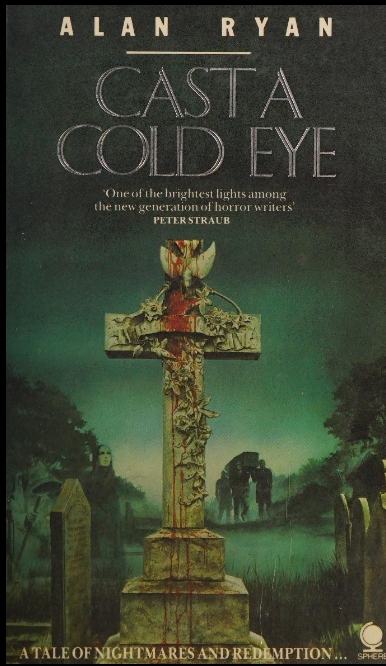
More Potato Famine Horror: Alan Ryan’s Cast A Cold Eye

I reviewed Alan Ryan’s The Kill and Dead White last winter. I was originally going to talk about Cast a Cold Eye in the same post as those two books, but I realised that that pair were set in the same village and shared characters, so I kept Cast a Cold Eye for later.

Sphere – 1986 (Originally published 1984)

Jack, a successful American author, goes to Ireland and rents a house so that he can research and write his new novel. He’s staying in Doolin, a little village on the west coast of the island, and shortly after arriving, he sees some old men pouring a bottle of blood into a fresh grave. Soon thereafter, he starts to see ghosts of victims of the potato famine.

Alright. Let’s stop there. More potato famine horror? I was not a fan of the last book I read within that very niche genre. Fortunately, Alan Ryan’s writing is far, far better than Ann Pilling’s, and the story here is more intriguing, even if it does also feature very skinny ghosts.

I want to make it clear that my disdain for potato famine horror isn’t because I’m offended by the author turning the suffering of an oppressed group of real people into entertainment. It’s more the fact that the potato famine is the only thing a lot of North Americans know about Ireland. This is like an Irish author writing a horror novel set in America about a hamburger monster or a story set in Australia about a zombie kangaroo. (I think the only other horror novel set in Ireland that I’ve read by a non-Irish author was Paul Huson’s The Keepsake. Thankfully that one had no hungry ghosts. It was about a stone that turns into a vampire. Cool!)

In fairness though, Ryan does a pretty good job of making it seem that he really likes Ireland, and I would be shocked if part of this story isn’t autobiographical. He has to have been there to write some of the things he writes. Trust me. He references tea 45 times throughout the 350 pages.

I was 23 when I left Ireland. I wasn’t planning on a long term move, but things ended up that way, and I still miss Ireland greatly. It’s strange going back. I’ve been gone for long enough that little things that I grew up with seem foreign. There’s moments when I feel like a tourist in my home country.

It was interesting reading this book. Some of the descriptions about the landscape were great. I tend to travel more in Ireland when I return now than I ever did when I lived there, and the only time I’ve visited Clare, the county where this book is set, was as a tourist. Ryan gets the countryside right.

At the same time though, there were definitely a few cringey bits. I didn’t like the author’s idea of “Irish time”. Granted, the buses in Dublin are shit, but I don’t think Irish people are less punctual than anyone else. Not everyone wears woolen jumpers either. Also, the parts where people would say “I am” instead of “yes” annoyed me.

Of the three books I’ve read by Ryan, this one is probably the best horror novel. Dead White is good, but clowns aren’t scary. Skinny little children running around at night are scary. This is, at its heart, a good old-fashioned ghost story. The ending was ok, but things didn’t come together quite as much as I was hoping for. I really enjoyed reading this book, but I think a large part of my enjoyment stemmed from the fact that I’m going to Ireland in a few weeks, and all of the talk of rainy days and cups of tea made me really excited. I will try to track down Ryan’s short stories in the future.

Revisiting the King in Yellow

I find writing about short story collections a bit intimidating. I’ll usually write a post here saying that the collection is ok and then quickly forget the stories until I read something else that reminds me of one of them. In some recent posts about short story collections, I have been including a table on the stories with a summary and/or my thoughts. I’m not sure if people are interested in these, but they help me remember.

I recently read Brian McNaughton’s Satan’s Surrogate. It’s not a particularly good book, but it’s full of allusions to other works of weird fiction, including Robert W. Chamber’s The King in Yellow. I read and reviewed that collection a few years ago, and although I knew I had enjoyed it, I couldn’t remember much about it other than the fact that it featured The King in Yellow, a non-existent book that was supposed to drive people mad. I also recalled that it had distinct sections and that only the first section dealt with the really weird stuff. I went back to read my post on it and discovered that I had included summaries on all of the stories in the book except the first four, the really interesting ones. (I also discovered that I had reviewed a second book by Robert W. Chambers that I had entirely forgotten about. I don’t know if I’m going senile or if I’ve just read too many books.)

A few weeks ago, I got sick. I actually vomited for the first time in maybe 20 years. I get a few colds every year, but I honestly cannot remember the last time I had a tummy bug. I didn’t realise that vomiting actually hurts and that I’m not capable of doing it quietly. Luckily enough, I vomited in the morning, before I had actually eaten anything, so it was just my cup of tea (and a single green bean from the night before) that came back up. Anyways, I was bedbound for a couple of days, and reading Satan’s Surrogate seemed like too much work. I wanted an audiobook, and I realised that I’d easily be able to find an audiobook copy of The King in Yellow. I only bothered with the first four stories, but I really enjoyed revisiting them.

The Repairer of Reputations

This is quite a complicated tale. It’s set in 1925 which was 25 years in the future at the time that it was written. It’s a little dystopian and involves the unveiling of government funded suicide booths, but it’s a horror story at its core. The narrator reads The King in Yellow while recovering from a head injury and ends up involving himself in a murderous conspiracy. His best friend is basically a professional blackmailer, and together they plan to seize control of the world. The plan doesn’t work out.

I read it and reread it, and wept and laughed and trembled with a horror which at times assails me yet. This is the thing that troubles me, for I cannot forget Carcosa where black stars hang in the heavens; where the shadows of men’s thoughts lengthen in the afternoon, when the twin suns sink into the lake of Hali; and my mind will bear for ever the memory of the Pallid Mask. I pray God will curse the writer, as the writer has cursed the world with this beautiful, stupendous creation, terrible in its simplicity, irresistible in its truth—a world which now trembles before the King in Yellow.

The narrator did suffer a brain injury, but his madness was certainly exacerbated by reading The King in Yellow. Vance, their hitman, also went insane after reading the book. It is not explicitly stated, but it seems to me that Chambers wanted his readers to believe that the legalisation of suicide was somehow influenced by the popularity of the awful tome.

The Mask

Two artists love the same girl. One of the guys reads The King in Yellow and then discovers a way to turn living creatures into statues. It is not explictly stated that his discovery was inspired by his reading. He starts off putting little creatures into his magic potion, but things get messy and the girl that everyone loves ends up in the puddle. I had completely forgotten the previous story, but I remembered what was going to happen at the end of this one quite soon after beginning it. It’s quite good, but The King in Yellow plays a fairly minor role. Characters from the play show up in the narrator’s fever dreams, but he has only ever flipped through its pages, so he ultimately retains his sanity.

 I thought, too, of The King in Yellow wrapt in the fantastic colors of his tattered mantle, and that bitter cry of Cassilda, “Not upon us, oh King, not upon us!” Feverishly I struggled to put it from me, but I saw the lake of Hali, thin and blank, without a ripple or wind to stir it, and I saw the towers of Carcosa behind the moon. Aldebaran, The Hyades, Alar, Hastur, glided through the cloud rifts which fluttered and flapped as they passed like the scolloped tatters of The King in Yellow.

In the Court of the Dragon

A lad gets bored during a church service, and he starts daydreaming about getting chased around town by the grumpy looking church organist. Part of the reason he is attending church is that he recently read The King in Yellow, and he finds the peaceful atmosphere in the church relieving. When he awakes from his daydream, he is transported to Carcosa and confronted by the Yellow King himself.

And now, far away, over leagues of tossing cloud-waves, I saw the moon dripping with spray; and beyond, the towers of Carcosa rose behind the moon.

Death and the awful abode of lost souls, whither my weakness long ago had sent him, had changed him for every other eye but mine. And now I heard his voice, rising, swelling, thundering through the flaring light, and as I fell, the radiance increasing, increasing, poured over me in waves of flame. Then I sank into the depths, and I heard the King in Yellow whispering to my soul: “It is a fearful thing to fall into the hands of the living God!”

The Yellow Sign

A painter is disturbed by a new watchman that has started working at the church opposite his house. This watchman’s face is so disgustingly ugly that it causes the painter to ruin the picture he is painting. The model who is posing for him falls in love with him, but she is haunted by strange dreams of the painter in a glass coffin. She gives him a strange piece of black jewelry as a gift. When the painter hurts his hands and can’t paint, the model hangs around his house. She finds a copy of The King in Yellow even though the painter did not own a copy because his friend, the narrator of The Repairer of Reputations, had gone mad after reading it. It is never explained how the book got into his house. Maybe the creepy watchman put it there.

I had always refused to listen to any description of it, and indeed, nobody ever ventured to discuss the second part aloud, so I had absolutely no knowledge of what those leaves might reveal. I stared at the poisonous mottled binding as I would at a snake.

Both the painter and his model end up reading the book. Soon thereafter, their dreams come true. The disgusting watchman breaks into their home and tries to steal the onyx clasp. Nobody survives. When the narrator realises what is happening he says,”I knew that the King in Yellow had opened his tattered mantle and there was only God to cry to now.”, but apparently the original text read,

I knew that the King in Yellow had opened his tattered mantle and there was only Christ to cry to now.

Apparently the publisher changed this so it wouldn’t offend Christian readers.

There are other stories in the collection, but none of them deal with The King in Yellow or Carcosa, and I’ve discussed them already. I think The Yellow Sign is probably my favourite out of these 4 stories. All four contain small references to other stories in this collection, but each tale works by itself. The references to The King in Yellow are maddeningly sparse, and you’ll want to read all four of these stories to get all the details. I reckon it’s what Chambers doesn’t say about this strange text that makes it so appealing. From what little he reveals, I have deduced that the play is about a shabbily dressed King who creeps out two Carcosian ladies called Cassilda and Camila.

Camilla: You, sir, should unmask.

Stranger: Indeed?

Cassilda: Indeed it’s time. We all have laid aside disguise but you.

Stranger: I wear no mask.

Camilla: (Terrified, aside to Cassilda.) No mask? No mask!

The King in Yellow, Act I, Scene 2.

 I thought, too, of the King in Yellow wrapped in the fantastic colours of his tattered mantle, and that bitter cry of Cassilda, “Not upon us, oh King, not upon us!”

I remembered Camilla’s agonized scream and the awful words echoing through the dim streets of Carcosa. They were the last lines in the first act,

What the Hell is that creep up to?

I know I mentioned it before, but there is something embarrassingly exciting about a creepy book that doesn’t exist. One of the characters in Satan’s Surrogate actually attempts to write a play with a similar title, but he isn’t successful. I quite enjoyed rereading these 4 stories by Chambers. Nothing else I’ve read by him comes close to them, but their atmosphere and allusions to the maddening and mysterious Yellow King are enough to ensure that Chambers is remembered as a master of weird fiction.

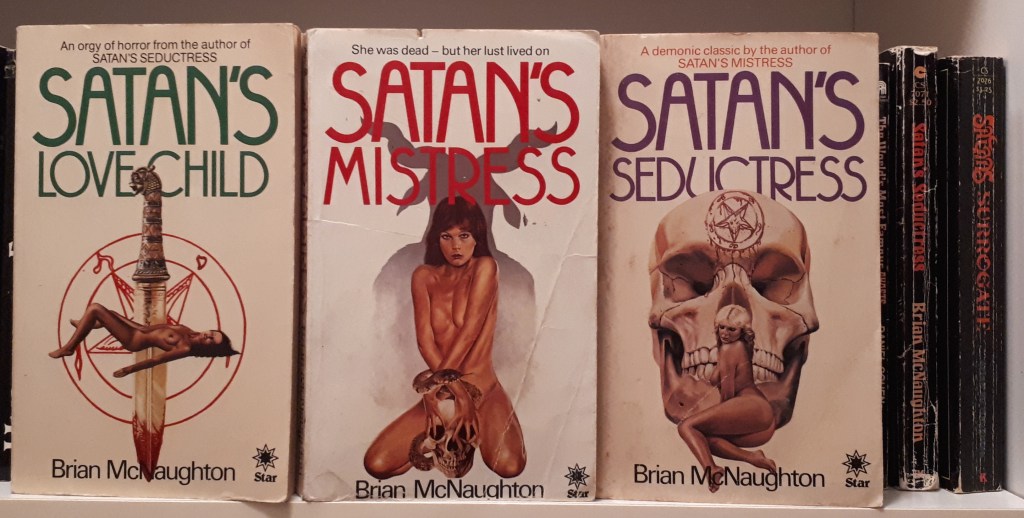
Brian McNaughton’s Satan Series: Satan’s Love Child, Satan’s Mistress, Satan’s Seductress and Satan’s Surrogate

Don’t deny it. Those covers are one the coolest things you’ve ever seen.

I remember seeing the covers of these books and immediately looking them up to buy them. This would have been 7 or 8 years ago. At that point, there were no copies available for less than 10 dollars, so I decided to wait. I just checked, and the cheapest available copy of Satan’s Surrogate available at the moment is just less than 300 dollars. Thanks a lot Paperbacks From Hell!

Star Edition 1981

Satan’s Love Child (1977)

A reporter for a small town newspaper discovers the horrendously mutilated corpse of a reclusive old man in a town that has recently been overrun by weird, taciturn hippies. Around the same time, the reporter figures out that her husband has been cheating on her, partly because he hates his weird stepdaughter.

As a horror novel, Satan’s Love Child is pretty mediocre. On the plus side, it has plenty of Satanism, a weird monster, a reanimated corpse, and even a few mentions of Yog-Sothoth. Unfortunately, the characters are transparent and don’t really act the way normal people would, even when they’re not under the influence of witchcraft. It’s not perfect, but I enjoyed it.

This was originally published as porn though. The author was initially asked to write a rip off of The Omen and then forced to insert graphic sex scenes before it was published. There’s only 3 or 4 sex scenes, but they’re full on hardcore porn. Honestly, I skimmed through these bits. They don’t add anything important to the book. There is a lengthy anal rape scene towards the end of the book that I wasn’t sure about. Was that bit supposed to be sexy or horrible? It came across as horrible.

Star Edition 1981

Satan’s Mistress (1978)

A dead wizard is reincarnated through incestuous rituals and then attempts to summon the Old Ones discussed in the fiction of H.P. Lovecraft after sexually assaulting some teenagers.

This book is trash, but it’s quite entertaining. I knew it was supposed to be Lovecraftian horror, but I didn’t realise quite how Lovecraftian. Lovecraft plays a similar role here as he does in Robert Bloch’s Strange Eons, not as a mere author of pulp fiction but as a prophet.

Despite the titles, this book has absolutely nothing to do with Satan’s Love Child. While the cover here is equally as sexy as its unrelated predecessor, the gratuitous sex scenes are absent. There is a similar unpleasantness running through the books. McNaughton wasn’t a happy ending kind of guy.

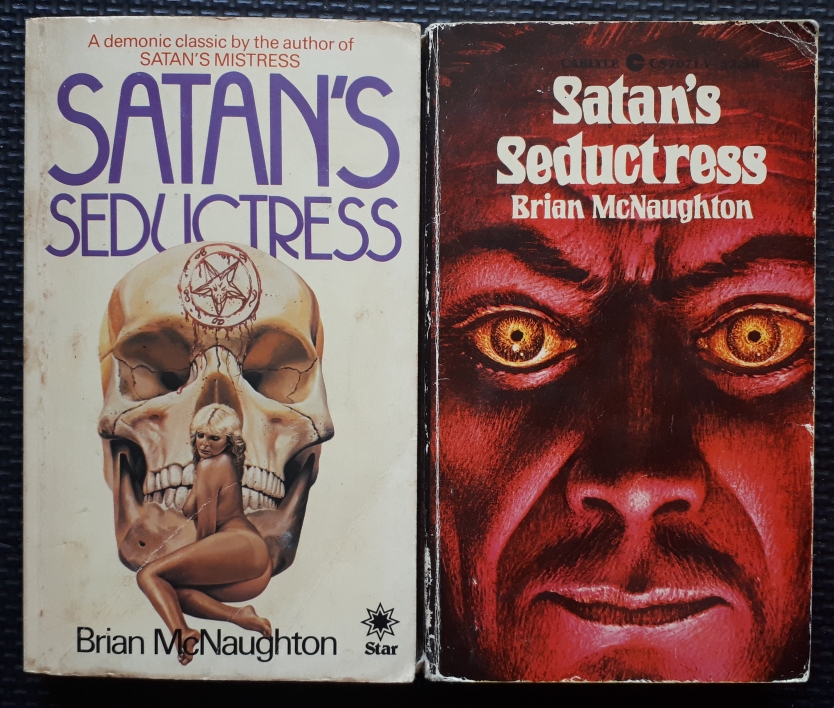
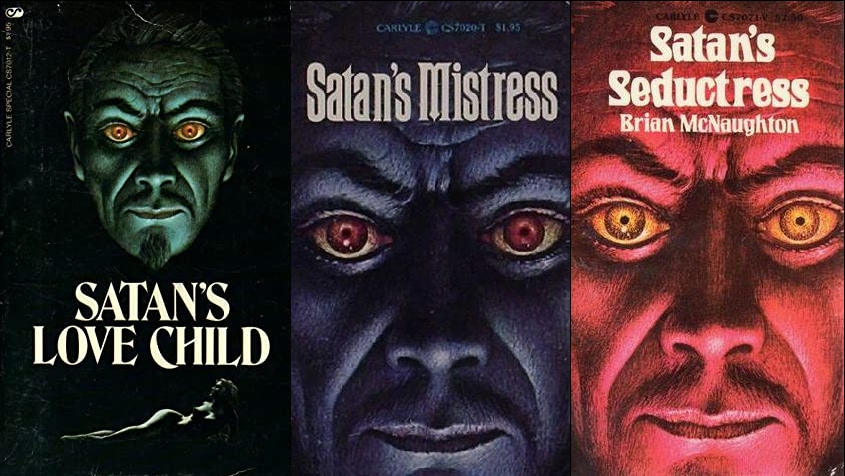
Star Edition 1981, Carlyle Edition 1980

Satan’s Seductress (1979)

Satan’s Seductress is a direct sequel to Satan’s Mistress. Its cast is almost entirely made up of characters who survived Satan’s Mistress. It’s more of the same. The evil wizard and his mistress are searching for the Necronomicon, and they are prepared to do some pretty horrendous stuff to get it.

This is not a great book, but it contains knife-wielding cultists, reanimated corpses, portals to other dimensions and eldritch tomes of forbidden mystery. This is precisely the kind of trash that I want to read after a hard day at work.

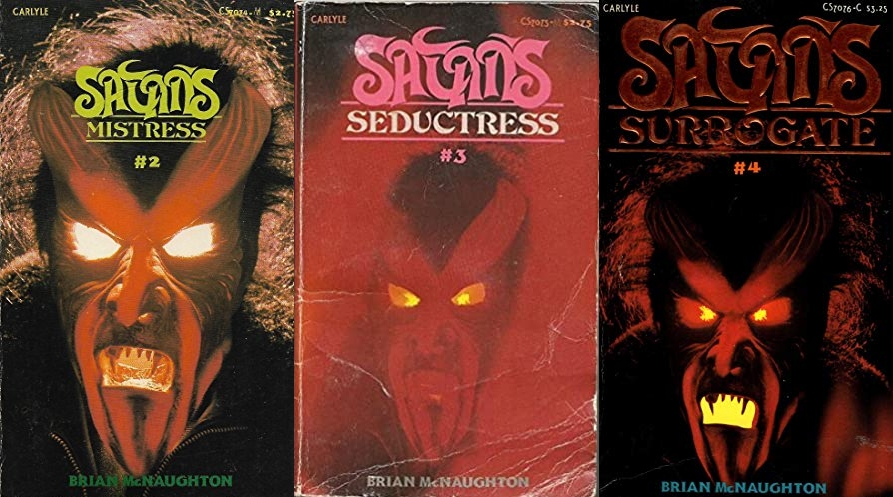
Carlyle Edition 1982

Satan’s Surrogate (1982)

While there is not much point in reading Satan’s Seductress if you haven’t read Satan’s Mistress, Satan’s Surrogate, like Satan’s Love Child is entirely separate, standalone novel. The plot has similarities with Mistress, and it’s similar in tone to the other books, but it’s far more complicated. Honestly, I found it a little disappointing. The story is too busy. There’s a lot of characters, and they’re largely uninteresting. There’s also a lot of plot elements, probably too much really. It has vampirism, wizards, alternate dimensions, cannibalism and references to Robert W. Chambers, Arthur Machen and H.P. Lovecraft, but it has a weird folklore thing running through it too. It wasn’t a total pain to read, but I never looked forward to sitting down with at night. This is particularly disappointing, as I paid more for my copy of this book than I did for any of the others mentioned here. As far as I know there was only one edition published under this title, so this is is the hardest to find of the Satan series.

I realise that I said very little about the plots of these books. That’s not laziness. There’s really not very much to say. These books are trash. The reason they are hard to find is because they look so damn cool.

The first editions of Satan’s Love Child, Satan’s Mistress and Satan’s Seductress all had the same face on them.

The sexy covers pictured at the top of the post appeared on the Star editions between 1980 and 1981. Satan’s Surrogate came out in 1982, and it never got a sexy cover. When it came out, it seems that Carlyle put out new editions of the earlier books with new covers. I have not been able to find an image of the cover of Satan’s Love Child from this run. I am not sure it even exists. That book is more pornographic than the others, so it might have been left out. Then again, the other books are numbered, so it seems unlikely that they left out #1.

If anyone has a copy of the Satan’s Love Child from this run, please scan it and let me see!

All editions of these books are pretty scarce at this point, but the sexy Star ones are the hardest to find. Fortunately, Wildside rereleased the original texts with their original names in the early 2000s. These are all available as ebooks on amazon for a few dollars. The first book in the series won’t include the gratuitous sex, but I doubt that will affect anyone’s enjoyment much. I thought about getting the new (actually old) editions too and comparing the texts to the Satan versions, but the books aren’t actually good enough to warrant doing that.

  • Satan’s Love Child is now Gemini Rising 
  • Satan’s Mistress is now Downward to Darkness 
  • Satan’s Seductress is now Worse Things Waiting 
  • Satan’s Surrogate is now The House Across the Way 

Honestly, these books are alright, but you’ll probably never end up with the full collection. Get the ebooks and save your money. Getting my hands on the full set of Star editions took more time than it did money, but they have only become scarcer since then. I have copies of a few of McNaughton’s short story collections too. I may get to them at some stage, but I’m in no rush.

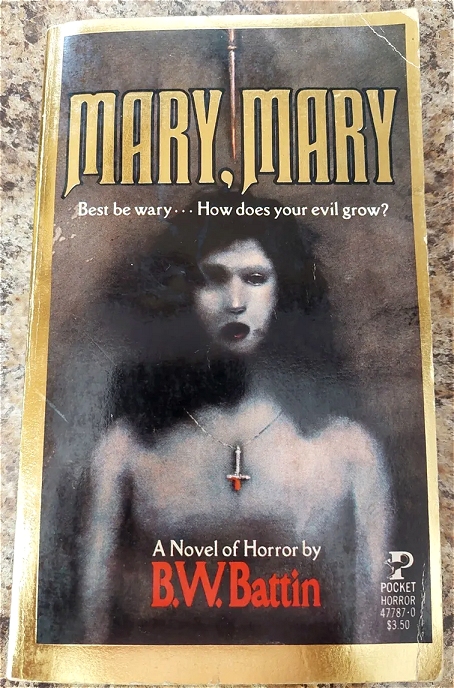
Which of Thomas Harris’s Hannibal Lector books are worth reading?

I was very young when I found out who Hannibal lector was. I had heard that The Silence of the Lambs was the ultimate sicko film. I remember staring at the vhs box in the video shop after mass when I was kid, wondering what the butterfly had to do with lambs. I asked my very Catholic parents, and while they wouldn’t give any details about the sexual-pervert, Buffalo Bill, they didn’t have a problem telling me all about the cannibalistic doctor. I would have been in my early teens when I finally saw it, and I spent the next 10 years quoting it to my friends. It’s one of my favourite movies..

About a year ago, I started reading a bunch of books that have been made into movies. These were just comfort reading, nothing to do with this blog, but then I realised that I should read The Silence of the Lambs and the other Hannibal Lector books.

I read Red Dragon (1981) last May, and I loved every page of it. I honestly can’t think of another book that sucked me in as much as this one. I had seen the movie version once when I was a teenager, but I didn’t remember much of it. Francis Dolarhyde is perhaps the creepiest character in any of Harris’s novels. This book was absolutely brilliant.

The Silence of Lambs (1988) was also excellent, but I was so familiar with the film version that it didn’t seem quite as tense as Red Dragon. I find it hard to imagine somebody reading my blog who hasn’t seen the movie, but if you’re in that position read the book first. (The movie version is obviously excellent too.)

It seems like common knowledge that Red Dragon and The Silence of the Lambs are masterpieces of suspense. Opinions on Hannibal (1999), the third book in the series, are more varied. It’s a bit more gory, and the ending is contraversial. I was warned by a pal to avoid it completely. I didn’t, and I actually quite enjoyed it, but it’s definitely not as good as its predecessors. The titular character doesn’t show up until a quarter of the way through the book, and he plays a very different role here than he does in the first two books. Before he shows up, the reader is introduced to Mason Verger, a mutilated child-rapist with a whole bunch of money and power. What follows is a bit of a Varney the Vampire situation in which the original bad guy turns into the hero. I suppose Hannibal isn’t really the antagonist in either Red Dragon or The Silence of the Lambs, but he is definitely very, very bad. In Hannibal, we’re completely rooting for him.

The ending is silly. It’s not believable. I think the ending to the movie version was a far better idea.

If you’ve read and enjoyed Red Dragon and The Silence of the Lambs, I’d say you will probably enjoy Hannibal. It’s not as good as those books, but it’s still quite entertaining.

While opinions on Hannibal were varied, it seemed that Hannibal Rising (2006), the fourth and final entry in the series, was universally hated. Harris supposedly only wrote it because Dino De Laurentis wanted to make a prequel movie and threatened to get somebody else to write it when Harris refused. I was warned to avoid this one, but I’m not a quitter.

Honestly, it wasn’t that bad. It’s over 300 pages long, and I finished it in 2 days. I found teenage Hannibal hunting down the Nazis who ate his baby sister enjoyable. It’s a prequel, so there’s no chance of any big surprises, and it doesn’t come close to the suspense of the first two books. Also, it humanizes Hannibal too much. He’s very clearly the good guy here. All that aside, this is still an entertaining thriller. I was never bored. It felt a bit like fan-fiction written by the original author.

Red Dragon and The Silence of the Lambs are as popular as they are for a reason. They are two of the most enjoyable books I have ever read. They’re deeply unsettling and hugely exciting. If you haven’t already, I command you to read them. Hannibal and Hannibal Rising are not as good, probably even unnecessary. In saying that, I still had a good time reading them.

“Hannibal the Cannibal” though? I only thought about this on the way home from work the other day, but that is the cheesiest name for a villain imaginable. Realistically, what are the chances that a person named Hannibal would actually end up as a devourer of human flesh?