
Sorry for not posting last week. I’ve been travelling, and I haven’t had much time to sit down and blog.
I read Herbert Gorman’s The Place Called Dagon a few weeks ago. I had read somewhere that it had influenced Lovecraft, and its title made it seem like the influence would be pretty direct. I enjoyed the book, and while it did feel very similar to some of Lovecraft’s tales, it wasn’t really what I expected.
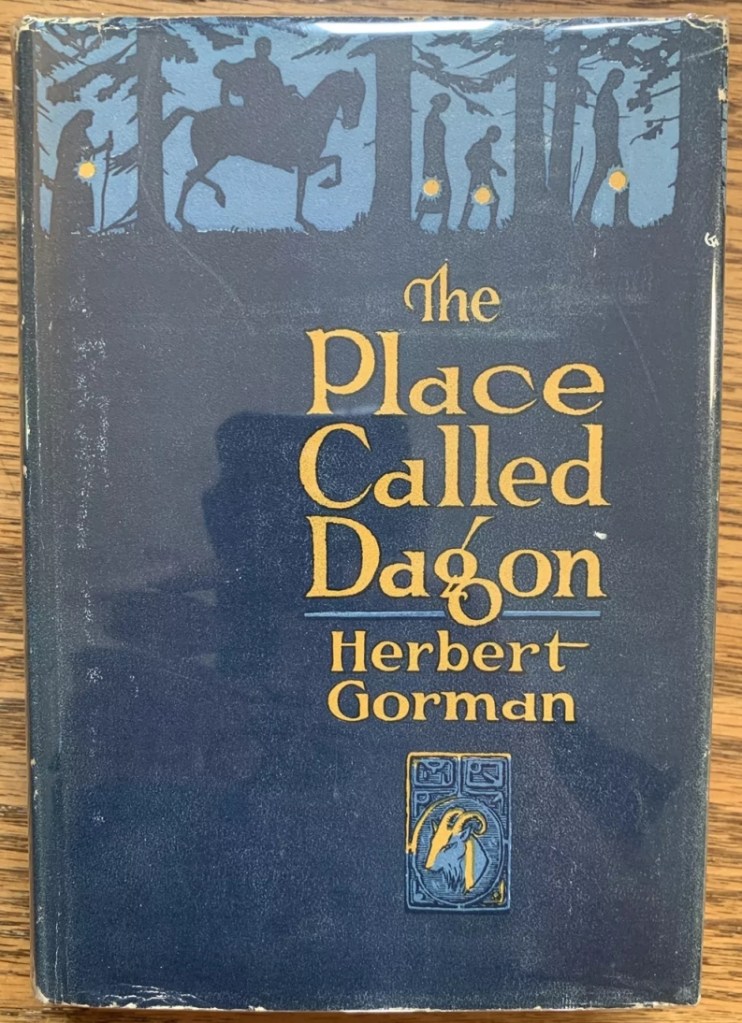
A doctor moves to a remote town in New England. He’s largely shunned by the locals. Things start to change when he is called to the home of the local eccentric who has just shot himself in the foot. This lad is a weirdo, but his wife is a total babe. One thing leads to another, and it’s not long until the doctor finds himself at a Satanic coven’s ritual sacrifice.
This is actually a pretty straight forward folk horror story, but the setting and tone is very similar to some of Lovecraft’s work. I was a bit surprised because when I think of what stands out about Lovecraftian horror, I tend to think of the cosmic side of things, strange and terrible gods that are oblivious to the suffering of humanity, but the evil in Gorman’s book is actually quite prosaic. There’s definite Dunwich vibes, but no real Yog Sothothery. The Dagon referred to in the book’s title is literally a place too. There’s no fish Gods involved.
I quite enjoyed this one. I went back and took a look to see what Lovecraft actually said about it. All I could find was a brief mention in his essay on Supernatural Horror in Literature. I remember reading Stephen King’s Danse Macabre, a book about horror fiction, a few years ago and then going back and reading all of the books it mentioned. I did the same thing after reading T.E.D. Klein’s The Ceremonies. I’m a bit surprised that I haven’t gone through Lovecraft’s essay in more detail and then hunted down the books mentioned therein. I’m just glancing through it now and seeing a lot of familiar names. Maybe I’ll get going on that soon.
 Nocturnal Revelries