More Fuckin’ Vampires – Poppy Z. Brite’s Lost Souls

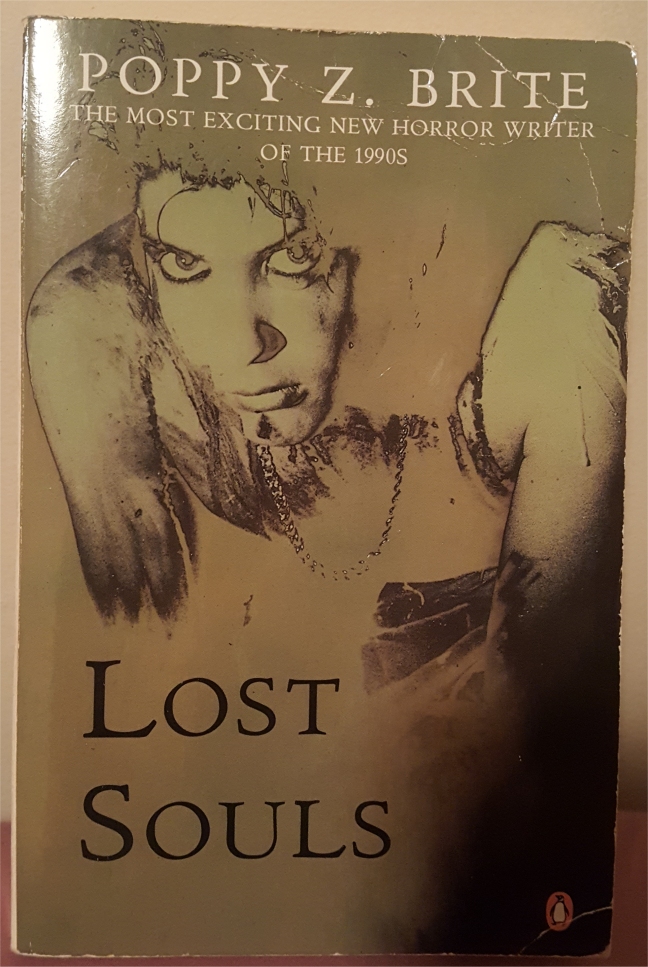
poppy z brite lost soulsLost Souls – Poppy Z. Brite
Penguin – 1994 (first published 1992)

I had no idea what this book was going to be about when I bought it. I was a bit disappointed once I realised it was about vampires, but I was already too far in to consider switching to something else.

It turned out to be far gayer (it’s absolutely full of dudes kissing dudes) and far more goth than I was expecting, but I actually really liked it.

Lost Souls ticks all of the necessary boxes for it to be classified as Gothic literature. I know wikipedia isn’t authoritative by any means, but it currently lists the following as the defining elements of Gothic fiction:

Virginal maiden – “young, beautiful, pure, innocent, kind, virtuous and sensitive. Usually starts out with a mysterious past and it is later revealed that she is the daughter of an aristocratic or noble family.” Nothing, the mysterious teenager is revealed to be the son of a Vampire. He’s virginal in the sense that he has not yet drank blood.
Hero Ghost, the sensitive, caring weirdo is undoubtedly the hero of this story.
Tyrant/villain/evil characters Zillah is a classic Gothic villain, absolutely self-absorbed and evil.
Bandits/ruffians Zillah’s two goons, Twig and Molochai.
The setting – “The plot is usually set in a castle, an abbey, a monastery, or some other, usually religious edifice, and it is acknowledged that this building has secrets of its own. This gloomy and frightening scenery sets the scene for what the audience has already come to expect. “ Most of the book is set in New Orleans graveyards, dingy, dimly lit rock concerts, and an archaic magic shop.
Night journeys Ghost and Steve do an awful lot of driving at night, the vampires also.
Madness The vampire’s bloodlust/Steve’s lack of self control
Miraculous survivals Christian survives being shot in the chest. Zillah recovers from a baseball-bat smashed face.

Lost Souls is clearly a Gothic novel, but more noticeably, it’s a goth novel. I use the word “goth” here in the teenage Skinny Puppy fan sense of the word. The book takes its title from its hero’s angsty, mystical rock band, and I think all of the other characters in the book have long, dyed-black hair.

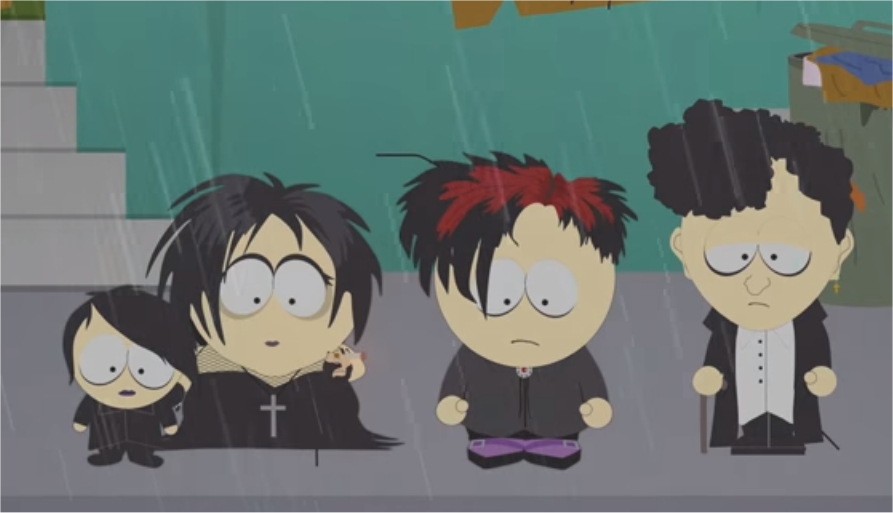
south park goth kidsLost Souls is exactly the kind of book that these kids would read.

The protagonist of the book is 15 years old, and his name is Nothing. He cuts himself and runs away from home because his parents don’t understand him… I found the 32 year old part of me cringing occasionally while reading through this, but my inner angsty teenager loved every page.

Lost Souls is a pretty cool book, quite a few steps above some of the modern horror I’ve reviewed here recently. I look forward to reading more of Poppy Z. Brite’s books in the future.

Halloween Novelizations

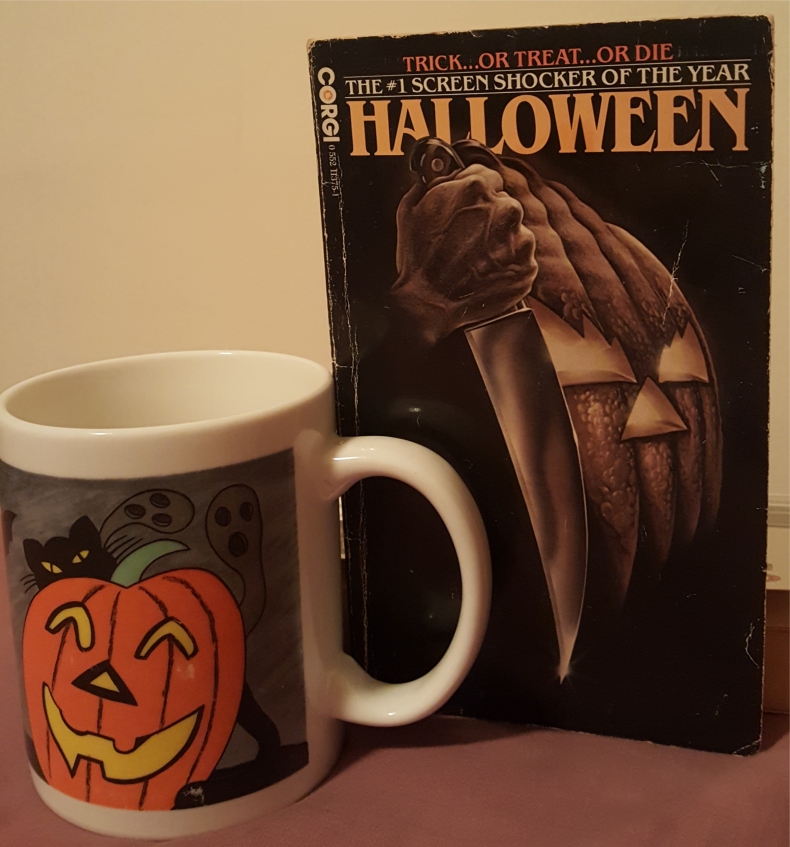
curtis richards halloween corgi

Halloween – Curtis Richards
Corgi – 1980 (First published 1979)
I wasn’t yet capable of deciding whether a film was bad or good when I first saw the original Halloween movie. It was a horror film that my parents didn’t know I was watching, and that was enough to make me think it was awesome. I don’t think I’ve ever rewatched it. I know I also saw Halloween H2O in a friends house when I was a kid, and I watched the Rob Zombie remake when it came out in the cinema, but I can’t pretend that I have ever been a dedicated fan of the Halloween series.

It might then seem strange that the first movie novelization that I would ever read would be Halloween. I had read about how rare this book was, and when I saw a copy going for a single dollar, I couldn’t resist. I quite enjoyed the book, but it’s not worth the $12,000 that some sellers are asking for. Do yourself a favour and download the pdf version that’s floating about the internet instead.

Part of this novelization’s appeal is its inclusion of background information and plot details that are not present in the movie. There’s a backstory here about the weird druidy-curse that is to blame for Michael Myers’ bloodlust. Most reviews praised these additions, but others claimed that they detracted from the mystery of the film. I thought they were fine. I haven’t watched the movie in almost 20 years, so I won’t try to lay out any comparisons here; there’s other reviews online that already do that. I had no real desire to rewatch the movie after reading the book either; it was enjoyable enough as a standalone text.

I finished reading the first Halloween novelization at lunch time last Sunday and then started listening to an audiobook recording of the novelization of the second Halloween movie only a couple of hours later. In a way it makes sense to do things this way; the second movie picks up directly where the first left off, but in retrospect, I think going directly from one to the other was probably a mistake.

halloween 2 jack martinHalloween II – Jack Martin (Dennis Etchison)
Zebra – 1981

The first fifth of the second novelization is basically the exact same thing as the last quarter of the first novelization. It retells how the first movie ends in order to set the scene for the rest of the book. This would be handy if you had taken some time between the two texts, but it made going directly from one to the other quite tedious. Although written by different authors, these parts of both books are based on the same part of the same movie, and this makes for a very boring start.

Things didn’t get much better. While the novelization of Halloween adds a new dimension to the story told in the movie, the second book is a more faithful novelization. It only briefly alludes to the druidic origin of the Myers’ curse, and this time round the reader never gets to see things from Michael’s perspective. Without these elements, the second book feels like a slightly different series to the first book.

Also, I haven’t seen it, but the second movie isn’t supposed to be as good as the first, and a straight novelization doesn’t make the story any better. There’s a lot of unnecessary character development and pointless crap in here. Why did Michael visit the school? Why the hell was that boring rubbish about the drunk trucker included? I was listening an audiobook version too, turning a dull 90 minute movie into a very dull 5 and half hour listening experience. Maybe it would have been more enjoyable if I had watched the movie beforehand, but I don’t honestly see how that could have been the case.

I was going to listen to the audiobook versions of Halloween 3 and 4 for this post, but I decided that it would actually make more sense just to watch the movies. Unfortunately, I didnt have the time. Also, the new Halloween movie comes out today, and it is supposed to be a direct sequel to the first film (even though it’s actually the 9th movie in the series, not including remakes). Halloween H2O and Halloween Resurrection, the 6th and 7th sequels, continued the story from the end of Halloween 2, ignoring the events of Halloween 3, 4, 5 and 6, but the new Halloween movie is going one step further than this, disregarding everything but the original 1978 movie. (So the 11th Halloween movie is technically the third Halloween 2. Complicated, right?) Well, if the people who actually make these movies are willing to ignore Halloween 3 and 4, I reckon I probably should too.

Have a spooky one!

Lowering the Tone – Cameron Pierce’s Ass Goblins of Auschwitz

ASS GOBLINS OF AUSCHWITZAss Goblins of Auschwitz – Cameron Pierce
Eraserhead Press – 2009

Ugh… Hmmmmm….. Ehhhhhh…….

This book first showed up on my radar a few years ago when an uncle jokingly posted an image of its cover to my facebook wall. (I think I deleted his post so that my woke friends wouldn’t give me any hassle.) I came across the book’s title again when I was reading about Bizarro fiction for my review of Carlton Mellick III’s The Cannibals of Candyland. I found a copy very easily, and before I knew it I was actually sitting on the bus to work reading Ass Goblins of Auschwitz.

There were a few moments at the beginning when a part of me (probably a few parts actually) told me to stop reading. There weren’t any specific events in the text that prompted this; it was more the realisation that I was giving attention to a person who was shamelessly looking for attention. The book isn’t about the real Auschwitz or real Nazis, and while that’s fortunate in some ways, it’s a let down in others. Cameron Pierce wasn’t making a bold statement about human nature, resilience or suffering. He was using the word Auschwitz because that word would make people notice his silly book.

I used to work in a coffee shop. One day a man walked into the shop with a live parrot on his shoulder. Every single customer in the shop commented on his parrot. When the man got to me and asked for a cinnamon bun, I told him it would be 3 dollars and took his money quietly. I met his hopeful stare, but I refused to let my eyes wander to the colourful talking bird perched on his shoulder. I would not give him that satisfaction. I hate people who shamelessly look for attention. Shove that parrot up your ass, you stupid wanker. Seriously, what kind of a brazen dipshit has to resort to that kind of bullshit to start up conversations?

Anyways, the actual story in here is far too childish to truly offend. It’s just silly teenage nonsense. There was one part where a man absorbs a bike into his scrotum, and I wondered if this was a nod to Flann O’Brien’s Third Policeman, a real masterpiece of absurd fiction. The rest was forgettable garbage – big walking bums abuse children and shit out swastikas. There was one part that made me laugh out loud, but I have a remarkably childish sense of humour, so a single LOL from 100 pages worth of pooing bums is actually quite disappointing.

I’m not usually this harsh when it comes to reviewing fiction, but I can’t ignore these issues. In fairness though, this book was published when the author was only 21 or so. I wrote some fairly embarrassing stuff when I was that age too, so I won’t hold this book against him. He seems to have deleted/frozen his web presence in the last 2 years. I wonder if he’s still writing.

The Cannibals of Candyland – Carlton Mellick III

the cannibals of candyland carlton mellickThe Cannibals of Candyland – Carlton Mellick III
Avant Punk – 2009
At some stage in the not-so-distant past, a tribe of paedophagists (cannibals with a taste for kids) that used candy to catch its prey was separated from the rest of the human race. Somehow, they very quickly evolved candy hands to make hunting small children easier. Now their entire bodies are covered in candy, and they live in a giant cave under the sewers, only surfacing to snatch kids away for dinner. This book is the story of Franklin – a man whose siblings were eaten by these cannibals – and his quest for revenge.

I was looking for books in a thrift store a few days ago, and I found this on the bottom shelf of the horror section. Recently, I’ve been expanding my horizons with some rather trashy horror fiction, and when I saw this priced at a cool 3 dollars, I thought I might as well take things one step further. I had seen mentions of Bizarro fiction before reading this book, but I had never given it any attention. (Bizarro fiction is a niche underground genre of literature that a quick google search will help you understand.)

Maybe the rest of this Bizarro stuff is absolute crap, but this book was pretty good. I have an interest in gross, offensive art, but I don’t have much time for offensiveness just for offensiveness’ sake. It takes no skill or intelligence to string together a bunch of obscenities. Likewise, I don’t mind zany, off-the-wall art, but I quite dislike zaniness for zaniness’ sake. (When I was 17, I went to a house party where my friend’s friends were sitting in a circle playing the “random game”, a game in which players took turns saying “random” things – “Cheese, huh huh”. The idea that people would feel comfortable acting that way makes me feel nauseous to this very day.) While The Cannibals of Candyland was both thoroughly repulsive and rather strange, it didn’t feel forced. Once the admittedly ridiculous premise of the story is accepted, the whole thing is pleasantly cohesive. The book is filled with revolting gore and uncomfortably bizarre sex scenes, but these facets are being used to tell a surprisingly relatable story. Also, the book is nice and short; it never gets boring.

I don’t know how many Bizarro novels will really fit in on this blog, but this one was definitely horrible enough to warrant its inclusion. I enjoyed reading it, and I like the seemingly DIY nature of the Bizarro movement. I reckon I’ll be reading (and probably reviewing) more of this kind of stuff in the future.

One for the Rockers – Shelia Bristow Garner’s Night Music, Garrett Boatman’s Stage Fright and Frank Lauria’s The Foundling

horror rock
Heavy metal has a long history of borrowing elements from the realm of horror fiction. Anthrax wrote Among the Living about Stephen King’s The Stand, Iron Maiden have Phantom of the Opera, Moonchild and lots of other songs about literature, Metallica did Call of Kutulu and The Thing that Should not Be about Lovecraft’s work (their Ride the Lightning album also got its name from The Stand), and Reverend Bizarre were clearly big Dennis Wheatley fans, penning songs titled They Used Dark Forces and The Devil Rides Out. (This list is far from exhaustive; I’m limiting my examples to books I have reviewed on this site.) Its pummeling cacophony, sludgy riffs, piercing shrieks and gutteral growls make heavy metal sound like the events in a horror novel, and it’s not at all surprising that several authors have tried to switch things around by writing horror stories involving heavy rock music. (I’ve previously reviewed Ghoul, an awesome novel about an evil rock band, and Shock Rock, an anthology of rock’n’roll themed short fiction.) This post looks at three more horror novels that have chanced their arm wrestling the rock monster.

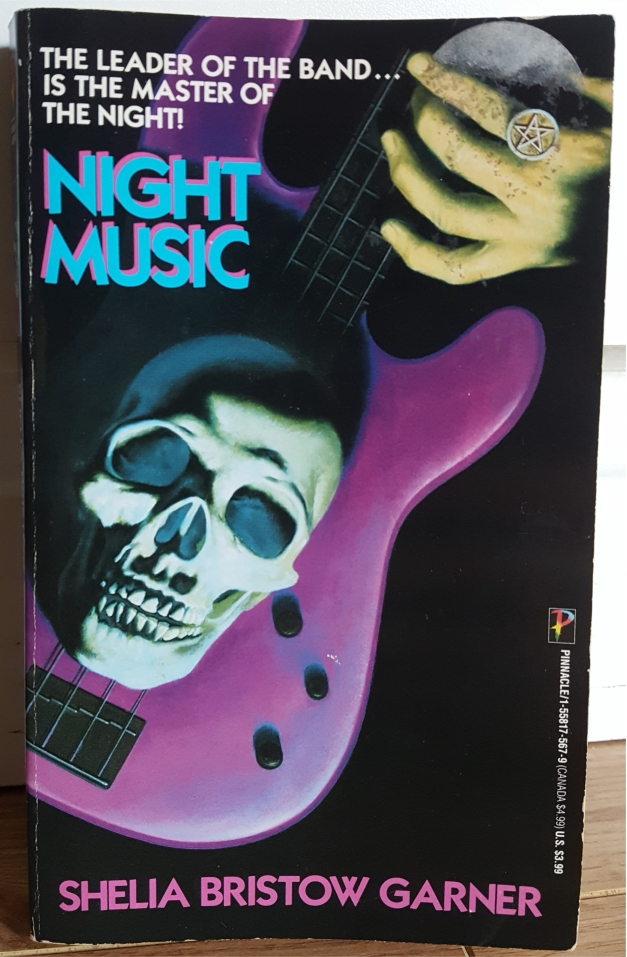
night music shelia bristow garnerNight Music – Sheila Bristow Garner

Pinnacle – 1992

This was an awful book. It’s about Kitty, a boring, plain-jane nurse, who falls in love with Michael, the singer in Fiasco, a shitty covers band. Soon after Kitty and Michael meet, a new guitarist joins the band, brainwashes Michael with a combination of hypnosis and rohypnol and then initiates him into a satanic cult. As Michael gets deeper and deeper into Satanism, his relationship with Kitty falls apart.

The characters are frustratingly flat – the good guys are good, and the bad guys are bad. Also, the members of Fiasco, the band, are suspiciously familiar – Michael leads, and David, he plays keys. Freddy’s cool but rude, and Jocko, well, he’s a party-dude.

The Satanism in here is never explained. To Sheila Bristow Garner, Satanists are just people who cut out other people’s hearts to worship the Devil. She assumes that her readers think so too. I was hoping that the horror in here would be of the supernatural variety because of cool skull on the cover, but I was sorely disappointed. The Satanic character is a good musician, and while he wouldn’t be the first character to receive his musical prowess from Satan, the book never explicitly suggests this. The most horrifying thing about this book is how dull it is. The main characters are so bland that I spent most of the book hoping that they would die horribly. This book is the literary equivalent of eating a stale cheese sandwich when you’re not hungry. Reading it feels like sitting on a train beside a person who has just farted. As soon as you realise what’s going on, you just want it to be over.

shelia bristow garnerThe author

This isn’t a horror novel. It’s a shitty romantic thriller that mentions Satanism. (There’s a surprising amount of loving, tender, consensual sex in here.) The rock ‘n’ roll element is limited to a few mentions of the blues-rock covers that the band perform. Everything about this book was disappointing. The cover art is by far the best part, and it doesn’t have much to do with the story. Look carefully and you’ll see that it pictures a bass guitar. The bassist in Fiasco is one of the least important characters in the story. He is never involved in any of the Satanic activity, yet the hand on the bass guitar is wearing a pentagram ring! Bullshit.


the foundling frank lauria
The Foundling – Frank Lauria

I quite liked Frank Lauria’s Doctor Orient series, and the cover of this book is an image of a devil-child playing an electric guitar. I had to read it.

I had read a rather unenthusiastic review of The Foundling before sitting down with the book, but it really wasn’t that bad. Sure, there’s only 4 or 5 real horror moments throughout, but I found the characters interesting enough to keep things afloat. This is the story of a retired rock-star and his wife adopting a preteen girl in an attempt to save their failing marriage. Unfortunately, the girl is sex-crazed, evil and magic. Whenever somebody annoys her, they end up dying horribly. The fact that the girl is evil is established early on, but the surprising reason for her evilness is only revealed towards the end. (Skip to the next paragraph if you’re planning to read this book.) It turns out that she is evil because she was brought up as part of the Manson family. That’s right. Not content with ripping off Carrie and the Omen, Frank Lauria decided to throw in a bit of Helter Skelter too. Surprised? It doesn’t make much sense in the context of the book either.

As far as rock’n’roll content is concerned, there’s not much to say. The dad character produces an album in the family’s basement, and the little girl writes a song, but that’s pretty much it. The rock’n’roll could be entirely removed from the story with just a few changes. Frank Lauria has played in a band, and the first Doctor Orient book features rock’n’roll mind control, so I guess he just likes it.

This was a quick read. It’s nothing special, but it was enjoyable enough.


stage fright garrett boatman
Stage Fright – Garret Boatman
I have been planning this post since the beginning of 2017, but tracking down this book delayed things considerably. I knew on seeing the cover that I would some day read it, but at that time copies were going for about 20 dollars, just a little more than what I feel comfortable paying for a trashy paperback. After being included on the cover of Paperbacks from Hell, this book became very difficult to find, and I had to spend a ludicrous amount of time and effort tracking down an affordable copy. I am delighted to announce that it was worth it.

This book is just as deadly as the cover would have you believe. While not really about a keyboard playing skeleton rocker, Stage Fright is a gory, slimy, slab of entertaining sci-fi horror. The instrument on the front cover is presumably the controller to a Dreamatron, a machine that allows its user to project their imagination into the dreams of an audience. Isidore Stark, the world’s most famous Dreamatron artist, decides to ingest the blood of schizophrenics to enhance his dreamscapes, but this leads to him losing control of his mind and the machine, and the results are very, very bloody. Characters from classic horror movies, the paintings of Bosch, and the books of Tolkien and Lovecraft show up in the “dreamies”. There are certain discrepancies to the story (how does the dream machine actually work?), but it’s pretty easy to let this stuff slide when you’re being confronted with flesh mazes and grotesque monsters tearing people’s limbs off. While this book isn’t about music, its intensity made it feel far more rock’n’roll than either of the other two books reviewed in this post.

I’ve only found one other full review of Stage Fright online. It’s quite a bit more critical than this one, but I suspect that Joe Kenney hadn’t slogged through two very mediocre (boring) rock novels directly beforehand. He is correct in claiming that some of the characters are overdeveloped and that the book is probably longer than it should be. Stage Fright is pure trash, but I prefer pure trash to diluted trash.

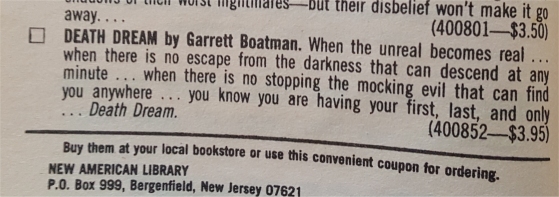
Joe Kenney also, very perceptively, notes that the inside cover of Stage Fright advertises another novel by Boatman Garrett called Death Dream. No such novel was ever published, and Kenney suggests that Death Dream might actually have been the original title for Stage Fright. This could explain the fact that the cover and title don’t have much to do with the plot of the novel; Death Dream would be more appropriate for this story.
death dream garrett boatmanDoes this then mean that Onyx had originally commissioned this cover art for an actual novel about a keyboard playing skeleton that was never published? Is there a manuscript of the real Stage Fright in some forgotten archive? We’ll probably never know.


I have reviewed these books in the order I read them. If I had ordered them by ranking, they’d be in the same position, Stage Fright being the best, Night Music being the shittest. Despite their incredible cover art, none of these books are really about rock music. My search for the perfect blend of horror and metal continues. Fortunately, I have these two books lying on my shelf for later.
the scream and kill riff

The Books of Richard Bachman

Richard Bachman was an American fiction writer who died in 1985. His books were quite dystopian and unpleasant. From what I can figure out, he was a friend of Stephen King – both authors repeatedly reference each other in their works, and Stephen King wrote introductions to several posthumous editions of Bachman’s books. I’m a big Stephen King fan, so I decided to spend a few months reading every book that Bachman wrote. I’m reviewing them here in the order that I read them, not the order that they were published.

bachman rageRage – 1977
This is the only book by this author that’s out of print. It’s about a kid killing two of his teachers and then taking his class hostage. While being held hostage, the students start opening up and sharing their deepest secrets with eachother. I found it pretty hard to swallow the idea of the kids bonding in a situation like this. At the end, they gang up on a boy (not the shooter) and brutally attack him.

The shooter had a messed up home life, but it wasn’t nearly messed up enough to justify his behaviour. None of the victims in this novel deserve what they get. There’s no satisfaction when they die. School shootings have become a far more frequent occurence since this book was published too, and some actual school shooters’ lockers have been found to contain this book. I didn’t like this one much.
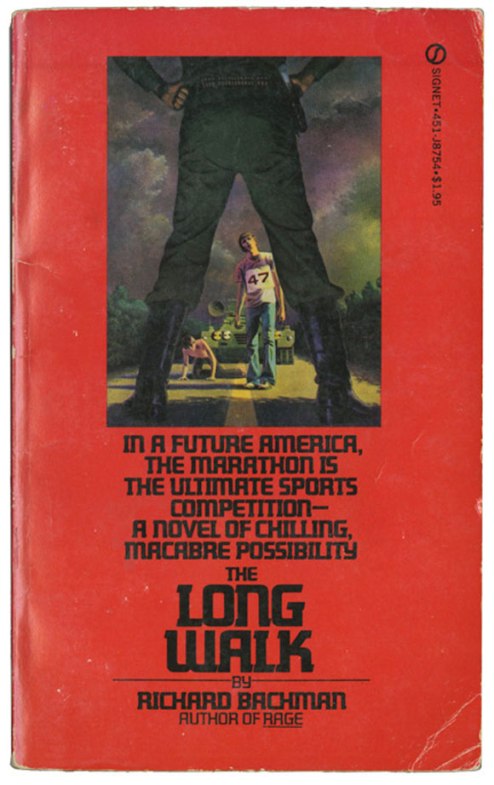
 

long walk bachmanThe Long Walk – 1979
This is the story of 100 teenagers in a competition to see who can walk the furthest without stopping. If they stop, they are shot dead. An interesting idea for a story, but it’s not an enjoyable read. A few months ago, I complained about how Henry James used frustrating language to make his readers feel the frustration that his characters are going through. In a similar way, Richard Bachman wrote a gruelling book about a gruelling experience. Like the road the characters are walking, this book goes on and on. While reading it, I kept wishing that it was a short story – it’s a straightforward concept that can only end one way, perfect for that format – but a short story wouldn’t bring out the true horror, the monotonous, inevitable, tortuous misery of the Long Walk.

I kept hoping that the walk would reach a point where the walkers started dropping off quickly, but that doesn’t really happen. The concept is quite brilliant in that way – the further the walkers go and the fewer of them that are alive, the better each individual’s chances become, spurring them on to continue. It’s a really clever, yet absolutely horrible, idea. The book is succesful in making the reader feel uncomfortable – for a book set on the open road, it’s strangely claustrophobic – but I can’t really say I enjoyed the journey. It reminded me of sitting through the 5th hour of a 10 hour flight. A rotten book that will make you feel lousy.
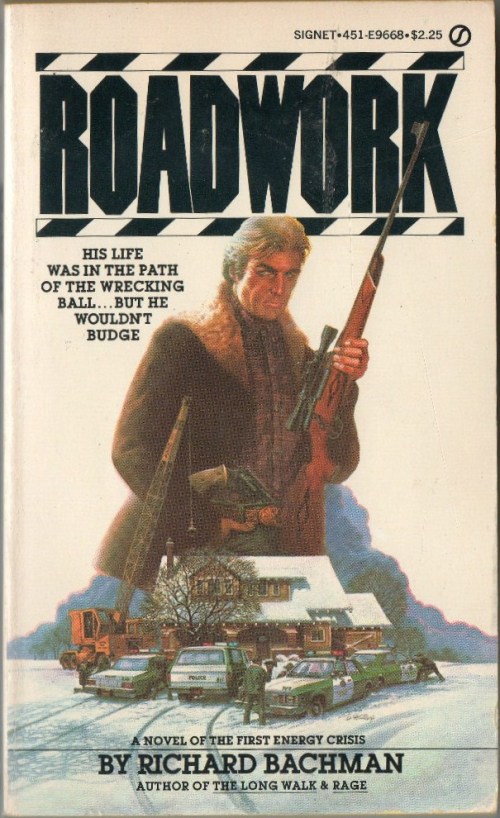
 

bachman roadworkRoadwork – 1981
I’m still not sure if this was a good book. While its ending is only marginally less obvious than The Long Walk, I found getting to that point to be more entertaining. (There’s only one potential destination for the characters in both novels, but the protagonist of Roadwork has several potential ways of getting there.) This is the story of a man’s life falling apart. It was clearly written by a person who was upset. No real surprises, but entertaining all the same.
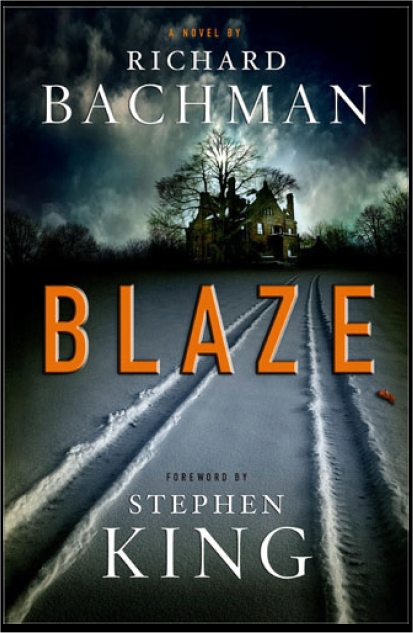
 

bachman blazeBlaze – 2006
Rage, The Long Walk, Roadwork and The Running Man used to be published together as a collection called The Bachman Books. I can’t remember why, but I took a break from that collection after Roadwork and read this 2007 book. Blaze was written in the 70s and revised for publication 30+ years later. Essentially the author has taken the 2 main characters from a famous Steinbeck’s Of Mice and Men and put them into very different circumstances. Instead of ranch workers, they’re now small time criminals, and once George is murdered, Lenny (or Blaze, as he’s called here) comes up with a plan to make a million dollars. If you’re familiar with Steinbeck’s work, you’ll have an idea of how things are going to end here, but that doesn’t ruin this story. There is only the slightest hint of supernatural activity towards the end of the novel, and I think it’s quite a push to describe this as a ghost story. It’s not a bad read though.
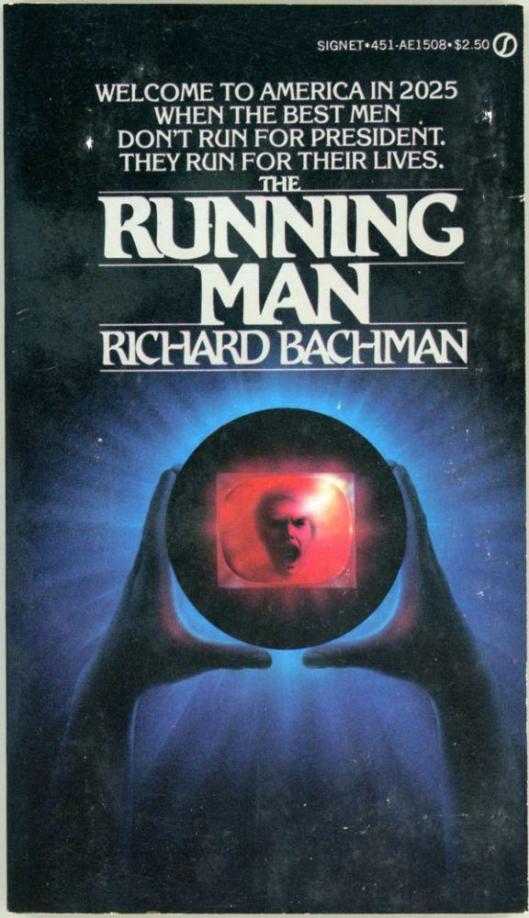
 

bachman running manThe Running Man – 1982
Honestly, this felt like a much improved version of the Long Walk. It’s the same basic idea (a government that kills people for entertainment), but this one has more of a futuristic, sci-fi vibe to it. Again, there’s only a few ways this story could possibly end, and by the time you get to the last quarter of the book, there is absolutely no question of where this is going. The chapters are numbered backwards too, and the whole countdown thing is pretty cool. I tried watching the movie, but I only got 40 mins into it before giving up.
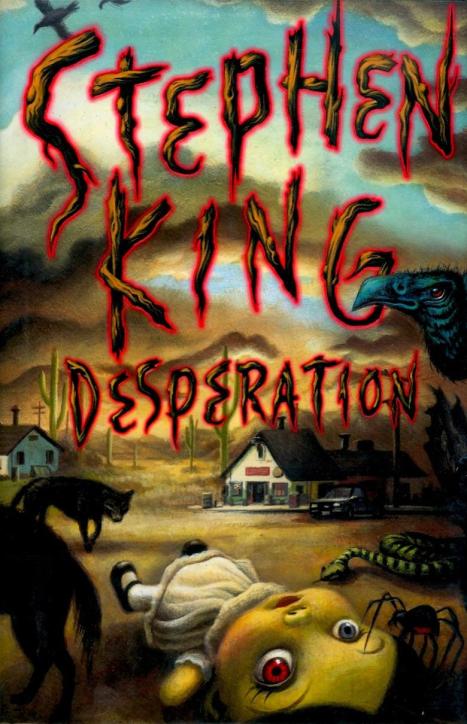
 

stephen king desperationDesperation – 1996
Ok, so I know you’re probably surprised to see a Stephen King novel in this post, but let me explain. In 1994, Richard Bachman’s widow found a manuscript of an unpublished novel called The Regulators in her cellar. I don’t know exactly how it happened, but somehow the manuscript managed to find its way into the hands of Stephen King. There is a brief reference to the Overlook Hotel (from King’s The Shining) in The Regulators, and King has name-dropped Bachman in several of his works since Bachman’s death, so I assume the two authors had become friends at a literary party or writing convention or something in the 80s. If Bachman’s wife or agent had stayed in touch with King, they might well have sent the manuscript to him to help get it published – by the mid 90s, King was the most popular author in the world. Before exerting his influence to have the book published, King seems to have decided to pay homage to his fallen comrade by writing a companion text to Bachman’s unpublished novel.

This post is about Bachman’s books though, so I’ll explain that in more detail in reference to his text later. As for King’s book, this is definitely one of his less brilliant novels. The concept is decent, the story is super gory, and there are some genuinely creepy ideas in here, but I reckon this would have worked better as a novella. At 700+ pages, Desperation is needlessly long. It’s also surprisingly religious. King was going through some difficult stuff in his life and used writing this book to work things out for himself. There’s a lot of discussion about the nature of God. This book has weird sex things, underground monsters, blood and guts, but it’s actually quite shit.
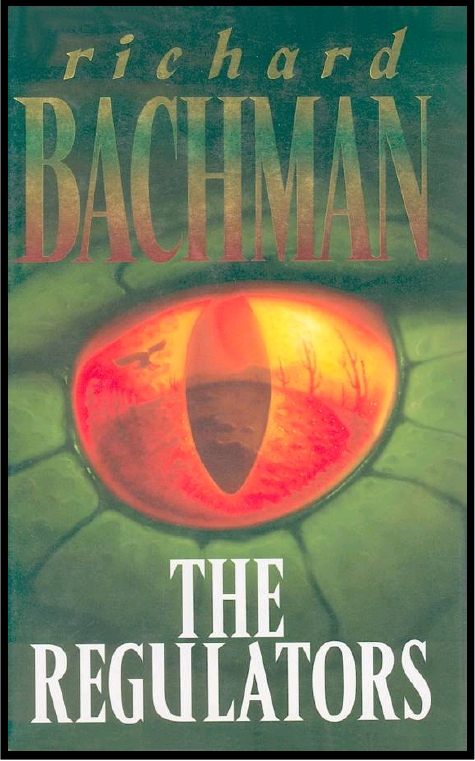
bachman the regulatorsThe Regulators – 1996
This book features the same characters as Stephen King’s novel Desperation, but instead of them fighting against the demonic Tak in a ghost town filled with corpses and scorpions, they get to battle him without leaving their neighbourhood. The Regulators is set in an alternate universe where the characters from Desperation are neighbours rather than drifters in the desert. Realistically though, most of the characters share only a name with their counterpart in Desperation. (David and Ralph Carver switch places as father and son.) Tak, the antagonist, is quite different too.

The Regulators was fairly shit, but I don’t think I noticed how shit it was until I was finished. It was exactly like a Goosebumps book for grown-ups. The plot was quite dumb. If a person was determined to finish all of Bachman’s books, I would suggest reading King’s Desperation before The Regulators. I know that sounds a bit strange given that The Regulators has to have been written before Desperation, but let me explain: The Regulators is quite short, and I think that Desperation’s mammoth size was King’s attempt to flesh out Bachman’s concept without editing the original text. Both books are shit though, so you’d be better off just leaving them alone.
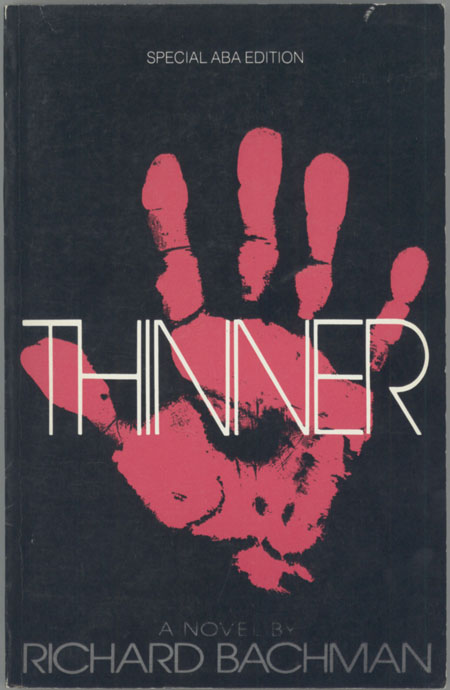
 

bachman thinnerThinner – 1984
Out of all of Bachman’s books, Thinner was the one that I wanted to read most, so I saved it for last. Somehow my friend Damo and I managed to rent a VHS copy of the movie version when we were kids, and while I remembered very little of the plot, I knew that this one was going to be a fairly straightforward horror story. Reading through a story that I had seen in a movie almost 20 years previously was a bit strange. I’d realise what was going to happen just before the book revealed it.

A fat man gets cursed by a gypsy and starts losing weight. The story is quite Bachmany in its inevitability – horror stories about curses can’t have happy endings. From the very beginning, you know that the protagonist is either going to waste away to nothing or have the curse lifted only to suffer an even more miserable death. The drawn out misery of the first two thirds of the book reminded me of The Long Walk. Things definitely pick up towards the end, but I think that this would have been more enjoyable as a short story than as a novel.

There’s a reference to Stephen King in here too, strengthening my belief that the two authors were friends.

richard bachmanThe only known photograph of Bachman

Well, that’s it for Richard Bachman. Apparently his wife still has some unpublished manuscripts, so it’s possible that another one will come out in the future. In honesty though, I’m happy enough waiting. These books weren’t anything special. Bachman’s friend, Stephen King, writes more enjoyable books.

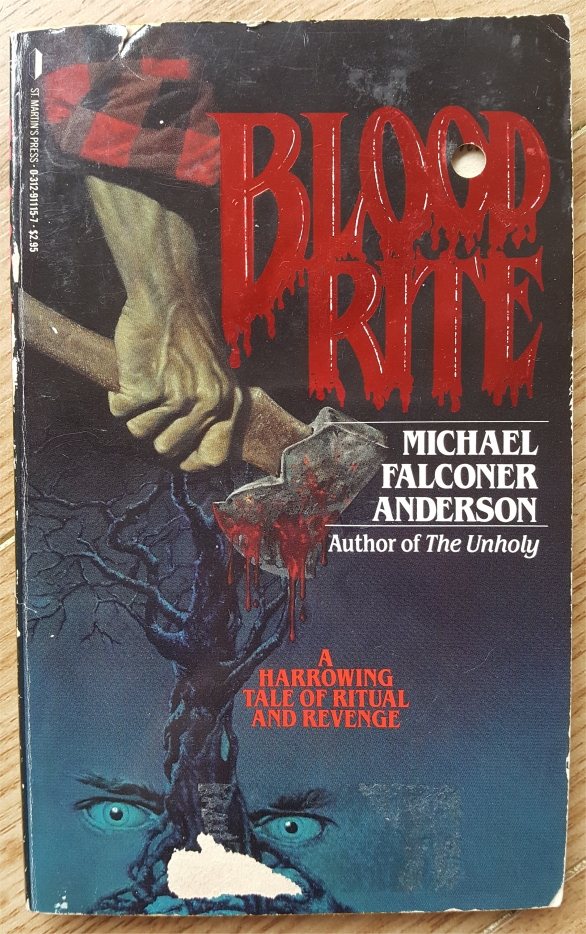
Blood Rite – Michael Falconer Anderson

blood rite michael falconer andersonBlood Rite – Michael Falconer Anderson
St. Martin’s Press – 1988

In 1988, the only things an individual needed to become a published author were the imagination to come up with an unpleasant scenario, the ability to construct grammatical sentences, and the patience to compose enough of these sentences to fill 150 pages. Blood Rite has a setting, some characters and a beginning, middle and end. It doesn’t have much else.

The premise of this book is that 2 satanic zombies have risen from their graves to go on a killing spree in the woods. This is obviously a very silly idea, but silly plots don’t necessarily make shitty books. With a bit of humour and self awareness, this could easily have been turned into an entertaining story. Unfortunately for everyone though, there is absolutely no humour, warmth or intrigue in this book. It reads as if the author had been forced to write it as punishment. I mean, it’s a bit surprising that a person would bother putting 150 pages worth of effort into something that they so clearly didn’t give a shit about.

I don’t have much else to say. This book is shite. It’s short though, I read it over the course of a few bus rides, so I’m not too upset. Reading stuff like this makes me want to write more fiction myself. I am 100% sure that I could write a much better book than this. (That might sound like boasting, but if you have read Blood Rite, you’ll know that it really isn’t.)

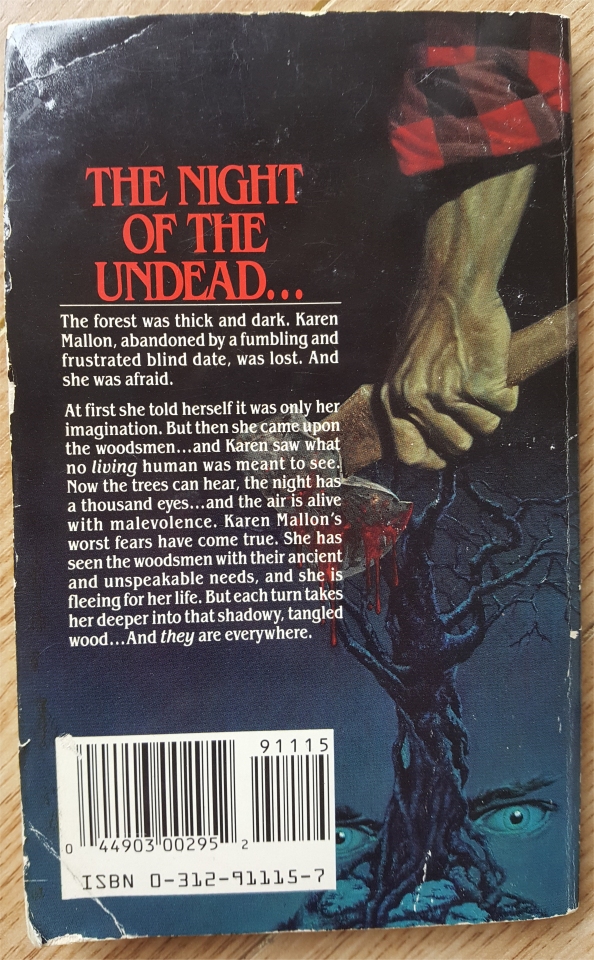
blood rite back coverAdmittedly, the cover still looks as good as it did before I read the book.
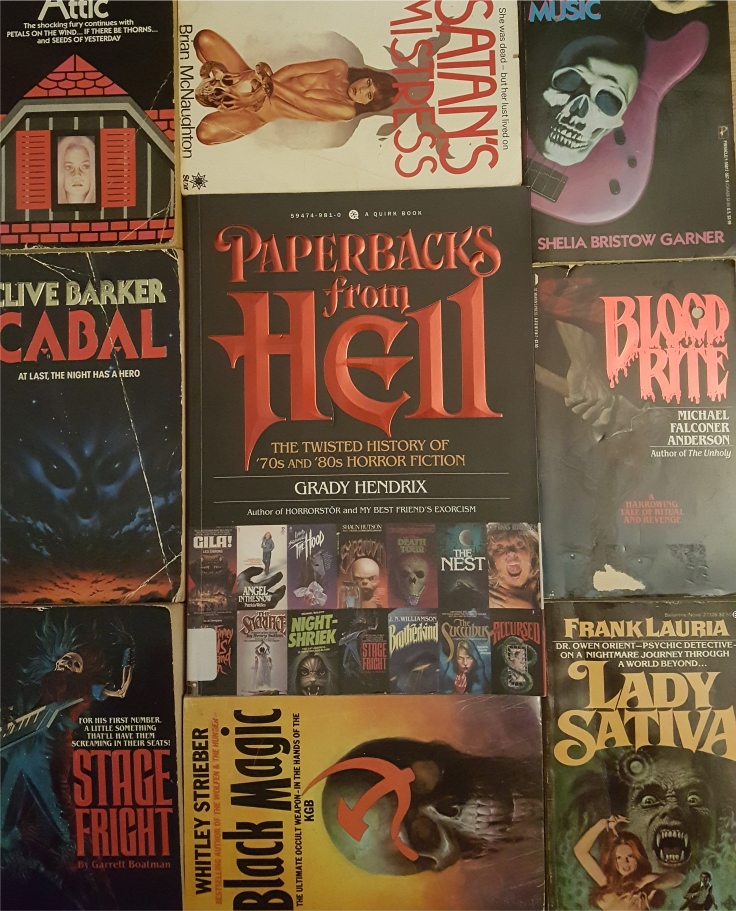
Paperbacks from Hell – Grady Hendrix

paperbacks from hellPaperbacks from Hell – Grady Hendrix
Quirk Books – 2017

Most of the horror novels that I have read have been rather old. I have nothing against modern horror, but I’ve felt that I should read the great works of the genre before indugling myself with the newer ones. At this stage, I’ve read quite a lot of the classics, and I’ve recently been allowing myself to dabble with some more modern stuff.

I haven’t put much effort into how I choose the modern horror fiction that I’m going to read. I did a bunch of Stephen King stuff last year because he’s the obvious starting point, but apart from that most of the modern horror novels on my book shelf are books that I got dirt cheap at library booksales or saw on the toomuchhorrorfiction facebook page and bought because they had cool covers.

I’m not the only person taking recommendations from toomuchhorrorfiction. Grady Hendrix used it to direct his research for Paperbacks from Hell, winner of the 2018 Stoker Award for non-fiction. Will Errickson, the guy who runs toomuchhorrorfiction, even wrote the book’s afterword. Paperbacks from Hell explores the history, scope and magnificence of the pulp horror novels that were churned out in the ’70s and ’80s.

horror paperbacksThe only thing that I don’t really like about this book is the fact that it has caused some of the featured texts to skyrocket in price. There was one text that sounded particularly appealing to me, but the only copy I was able to find online was $15,000. (I also found a pdf of that text online, for free. I’m not sure which I’ll go with yet.)
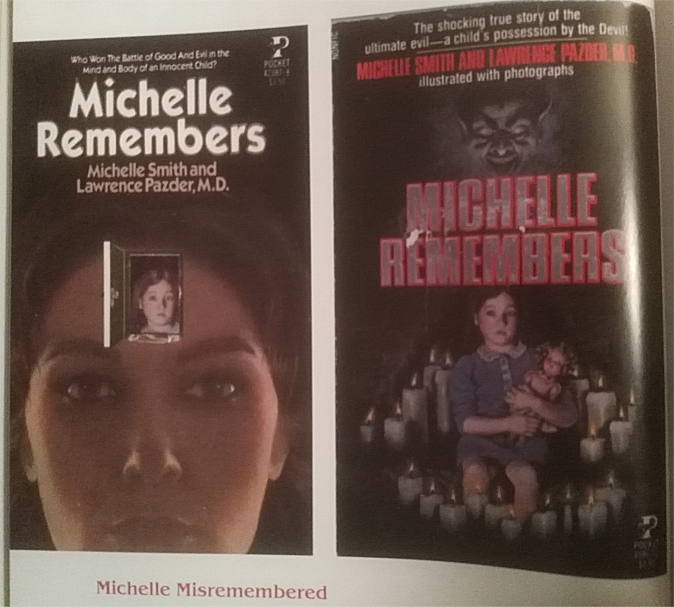
I read Paperbacks from Hell in one afternoon and enjoyed every page. The layout, tone, and information are all fantastic. The book has 8 chapters, each one looking at a different theme of trashy horror. Lots of the books you’d expect to see are in here, but much of the focus of this book is on the forgotten gems of the genre. Well, “gems” might not be the perfect word here as some of these books sound absolutely terrible, but that doesn’t make me want to read them any less. It doesn’t matter how awful a book is; if it features a woman giving birth to the Antichrist through her anus, I’ll want to read it! Obviously, I made a list of the books mentioned in here that I’ll have to read, but I’m not sure if that was really necessary. This is not a definitive list of the best horror fiction from the ’70s and ’80s; it’s more a sample of the stunning range of material that was published during those decades.

michelle remembersMy old friend shows up!

I don’t normally gush like this, but this book was really cool, and I picked it up at just the right time. A few weeks ago, I read Ghoul by Michael Slade and absolutely loved it. I’m a busy man, and the experience of reading that book was so much more enjoyable than some of the crap that I’ve reviewed on here recently that I’ve decided, at least for a while, to only bother with books that I’ll enjoy reading. Sounds mad doesn’t it? Well, Ghoul, the book that changed my perspective, is literally the type of book that Grady Hendrix is writing about – it’s featured on page 213. (I thought this was a bit odd; page 213 of this book only features books about serial killers. 213 was also the number of Jeffrey Dahmer’s apartment. Coincidence? I doubt it.) Anyways, thanks to Paperbacks from Hell, I now know that there’s lots more similar stuff out there. In general, if a book makes me excited about reading more books, I can probably say that I enjoyed reading it. Reading Paperbacks from Hell has got me absolutely pumped to dive into the slimy, toxic swamp of trashy horror fiction from the ’70s and ’80s. I just hope Grady Hendrix and Will Errickson don’t get annoyed when I review lots of the books they’ve already written about.

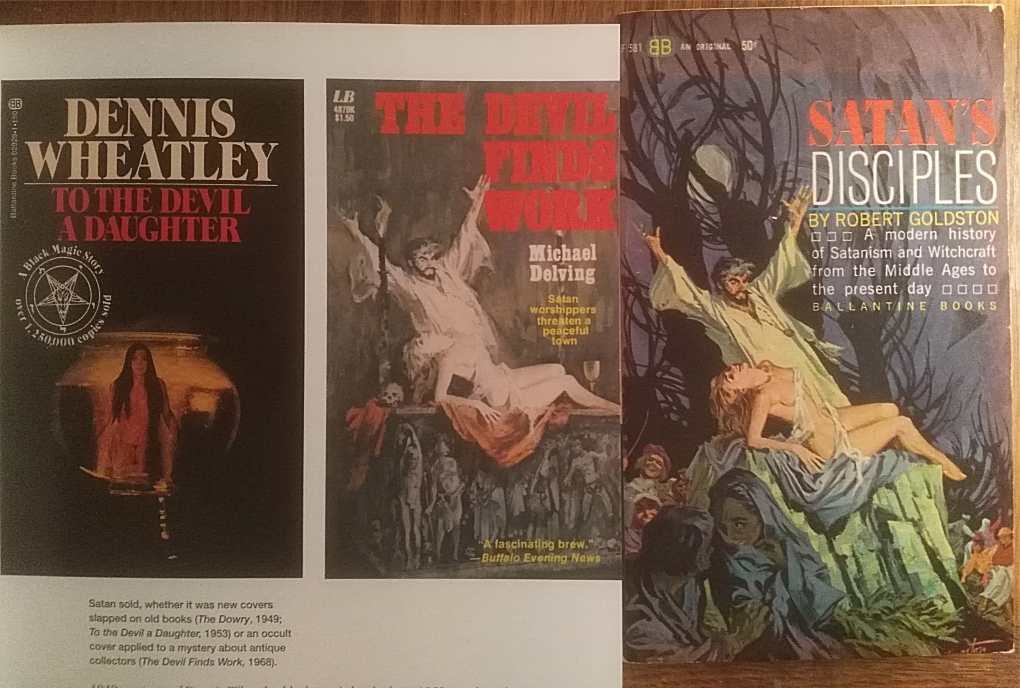
devil finds work satans disciplesI thought this was cool. The caption under the book covers reads:
“Satan sold, whether it was new covers slapped on old books (The Dowry, 1949; To the Devil a Daughter, 1953) or an occult cover applied to a mystery about antique collectors (The Devil Finds Work, 1968).”
The cover for The Devil Finds Work was actually taken from Robert Goldston’s 1962 book, Satan’s DisciplesI’m considering tracking down a copy of The Devil Finds Work because I love that cover so much, but Mr. Hendrix has made it sound rather shit indeed.

Kevin – A Short Story about Customer Service

(It has been quite a while since I wrote any fiction. I came up with an idea for a short story on my way into work on Thursday and had finished writing it before I went to bed that night. It’s based on a guy I used to work with. He was a good friend. More of this is true than you might want to believe. I hope you like it.)

Kevin, a carpark attendant at Mundrum Shopping Centre, is facing an extremely rude and irate customer. The customer is complaining about a parking coupon that she believes to have malfunctioned. Kevin calmly delivers the rote explanation of how the system works – the coupons deduct two hours off the parking, not two euros; if you’ve stayed longer than two hours, you still need to pay. The customer’s rage has overpowered her ability to think rationally, and she predictably demands to speak to Kevin’s boss. When the boss arrives, he comes down on the customer’s side and gives her free parking with a smile, apologising for Kevin’s attitude. Without making eye contact with the employee he has just stabbed in the back, the manager tells Kevin to wipe down the ticket paystations and withdraws to his office.

The service corridors that run behind the carpark walls are almost always empty. There’s a turn at the end of one of these corridors that leads to an emergency fire-exit. About 3 metres before this turn, there’s a door to the garbage-collection area. This small section of the corridor is a safe haven for slackers. There’s no security cameras, and on the off-chance that an intruder enters this realm, the echoey nature of the corridor will provide ample warning to the truant worker and allow them to escape in the opposite direction. This little patch of land is where Kevin has established his snail farm.

Every now and then, a car drives into the carpark, sheltering a snail under its fender. Sometimes the snails fall off and end up on the carpark floor, and whenever Kevin finds one of these forsaken gastropods, he takes it to his snail sanctuary. There are 7 snails on the wall here, growing fat on a diet of mayonnaisey lettuce from the turkey sandwiches that Kevin buys in the shop upstairs. He feeds them every day.

Sitting on an upturned shopping basket, facing the creatures he considers his closest friends, Kevin comforts himself with a large bag of crisps. He does his best to ignore the rancid stench from butcher’s dumpster that’s just around the corner, a stench exacerbated by the hot weather. Kevin is thinking about the events in his life that have led him here – dropping out of high-school, emmigrating in the hopes of a new life, taking the first job he was interviewed for and staying in it despite it making him unhappier than he has ever been. This job is awful. Not only are the customers cruel and the shifts long and dull, but Kevin is 350 lbs and the heavy steel-toe leather boots he is required to wear are Hell on his feet. Daily bouts of prolonged mental anguish and physical pain have recently been leading him to thoughts of suicide. He concedes to himself that tonight might be the night that he goes home and overdoses on pain medication. He doesn’t want to face another day at the carpark.

He gets a call on his radio telling him to help a customer that has gotten stuck at the exit, but the radio signal is bad in this corridor and after a delayed response, he takes another five minutes to journey to the exit to free the distressed soul. He opens the gate without question and waves the car on. The exiting driver rewards Kevin’s effort with a vulgar comment about his weight and mental capabilities.

Kevin is called to the office afterwards and the boss asks him where he was when he was being called and why he had taken so long. Kevin claims that he had been using the toilet. “You have to ask before going to toilet!”, the boss informs him. Kevin later jokes with his younger coworkers about how he would promptly soil himself if the boss ever denied such a request. He claims that he would gladly disregard his own discomfort and hygiene and finish out the day’s work with a turd in his britches if doing so would cause offense to the customers and dismay to his boss.

There’s soon another rude customer, this one is looking for his car – “You don’t know what you’re talking about. I’ve already checked Level 1.” But Kevin does know what he’s talking about; he goes through this routine several times an hour. He tells customer again that his car is actually on Level 1M, the level between Level 1 and Level 2. The customer informs Kevin that it is stupid to have two Level 1s. He’s right, but he’s speaking as if it was Kevin who had been in charge of naming the levels of the car park. Kevin, doing his best to maintain the appearance of sympathy tells the customer that he will show him a shortcut to the right level. They head into the corridor that leads to the snail farm. When they are near the end of the corridor, Kevin points to the door that opens onto the garbage-collection area and tells the customer to go ahead. As soon as the customer has his back to him, Kevin takes the shoelaces that he has removed from his heavy, leather boots from his pocket, lunges forward and swiftly wraps them around the customer’s neck. Pulling tightly, in an act of seething, malevolent hatred, Kevin’s face reddens in synchronicity with the customer’s. His eyes are open so wide that they seem to be stretching his sockets. His greasy lips are pursed tightly in a delirious grimace. After 30 seconds of intense struggling, he has to remind himself to breathe, his conscious mind overcoming his self-loathing and extinguishing his deathwish vicariously through the demise of his victim. During the attack, Kevin’s mind is aflame. He acknowledges to himself that what he is doing is terribly wrong while simultaneously contemplating the factors that have led to this – is this the end-result of not being breastfed as a baby? These thoughts follow each other in quick succession, the idea of breasts encouraging his already growing erection. It has been a long time since he has been this close to anyone. The tinge of sexual excitement now fully unhinges his mind. “Mama, Mama!” he whispers in the dying man’s ear, his breath still reeking of cheese and onion crisps, “I just want you to love me. Please, Mama, I need you to love me!”

Leaving it as late as possible, Kevin calls into his boss at 9.30 pm and reports a potential gas leak by one of the fire-exits. At this stage, all of the customers and most of the mall’s staff have gone home. A few carpark attendants are kept on site to help cinema-goers and restaurant diners as they exit. The boss is about to head home but decides that a potential gas leak sounds serious enough to necessitate a check. He reluctantly follows Kevin into the service corridors, bringing his stuff from the office so that he can leave directly once this is sorted. Once they get to the snail farm and the boss notices a large mound by the wall that has been covered with a tarp, Kevin takes the fire extinguisher from its mount beside the fire-exit and uses its rounded edge to viciously wallop the back of his boss’s head. With the boss’s body now lying parallel to the corpse under the tarp, Kevin slips off one of his own laceless boots and peels off a slimy, hot sock. The stench from this sock is more vile than anything he has witnessed today. He stuffs it into his boss’s unconscious mouth. Kevin takes off his other boot and sock and drops them to the floor. Next, he removes his trousers and underpants, leaving his sweaty, hairy ass completely exposed. His penis remains out of sight, hidden behind his sizeable paunch. Kevin steps one foot over his boss’s head, squats and begins to push out a hot loaf. “Please sir, may I go to the bathroom, please?”, he softly murmurs as the first log slides out solid, followed by a fart-powered spray of hot shit-chunks. He stands up and grabs two snails from the wall, quickly chucking them into his mouth and chewing violently. Shards of shell dig into his gums and his mouth fills with blood and snail guts. He lowers himself back down, suspending his head directly over the boss’s shit besmeared face and lets the disgusting  mixture in his mouth pour out, covering the chocolate cake like an exotic sauce. “Breakfast is served”, he chuckles to himself as he stands up and picks up his remaining sock to wipe his horrid ass. After calmly putting his pants and boots back on, he places one foot on the dirty man’s throat and exerts all of his weight on it. The man’s trachea is crushed instantly and he dies.

Tidying up is a surprisingly simple operation. The shops are long closed, and there’s nobody about to hinder the work. Kevin strips the corpses, puts their clothes into plastic bags and then puts these into his backpack. He drags the bodies a few meters and loads them into the butcher’s dumpster. This will be collected in the morning and emptied at a depot far away. The bodies might be discovered once it gets there, but they’ll probably just be minced up and turned into fertilizer.

Driving home that night in his boss’s Mercedes, Kevin feels good. He stops off at the off-license and buys a bottle of expensive brandy. When he gets home, he orders a tasty pizza. He sits on his bed, enjoying his feast. For the first time in months, Kevin is not dreading tomorrow.


H.P. Lovecraft and the Black Magickal Tradition – John L. Steadman
h.p. lovecraft black magickal tradition - john lH.P. Lovecraft and the Black Magickal Tradition – John L. Steadman
Weiser – 2015

H.P. Lovecraft was a horror writer who did not believe in the supernatural. Despite his clear declarations of the contrary, some people believe that Lovecraft’s horrors were real. This book examines both the beliefs of those people and the beliefs of other occultists that have some similarities to the ideas in Lovecraft’s fiction.

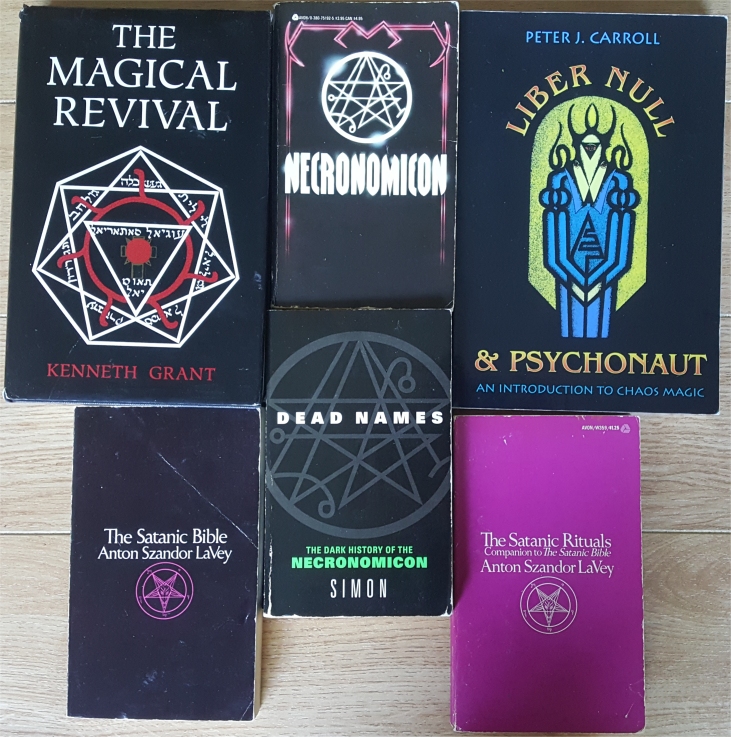
Let’s start with the first group, the nutjobs that believed that Lovecraft was psychic. Both Simon and Kenneth Grant believed that Lovecraft had channeled his horrors from another dimension. I’ve talked plenty of shit about those lads before, so let’s just say that Grant was mental and full of crap, and “Simon” is a con-artist. Steadman, the author of this book, spends paragraphs defending the legitimacy of the Simon Necronomicon, but in a note at the end of the book he concedes that Simon might just be Peter Levenda. Also, Steadman, while discussing Simon’s work, refers to Michael Baigent as “a reputable scholar”. When I was reviewing Dead Names, the book in which Simon referenced Baigent, I called him out for referencing a bullshit artist. Dead Names might best be described as a work of pseudo-non-fiction though, so a reference to a bullshit artist doesn’t really make it any less enjoyable. Steadman’s book, however, is presented as an academic work. How could any person hoping to be taken seriously refer to the author of Holy Blood, Holy Grail as “a reputable scholar”? Come on.

lovecraftian occultistsThe authors of these occult texts were clearly influenced by Lovecraft. It’s a pity they’re all garbage.

There are also chapters in here on Chaos Magicians and LaVey’s Church of Satan. Like Simon and Grant, these lads deliberately brought Lovecraftian elements into their belief systems, and although I wasn’t hugely interested in the precise ways in which they did so (I’ve already read lots of the original literature being summarized here.), I can’t complain about their inclusion in this book.  This stuff on the Lovecraftian occultists was fine. The chapters on Wicca and voodoo were not.

Wicca and voodoo have nothing to do with Lovecraft, but Steadman spends chapters trying to show how these belief systems are similar to some of Lovecraft’s ideas. There is no reason to believe, nor has anyone ever suggested, that Lovecraft was responsible for the foundation of Wicca or Voodoo, and I thought that the purpose of these chapters was to show how Lovecraft’s ideas resembled parts of these foreign belief systems in an attempt to suggest that he was psychically in tune with their practitioners and/or spirits. However, in the conclusion to the book, Steadman claims, “I have shown that Lovecraft has had an indirect, though clearly definable, influence on current Vodou and Wiccan practices.” That’s not what I got out of what he has written at all. In saying that, I have to admit that I found it extremely difficult to pay attention to these boring, lame chapters.

Steadman goes into quite a lot of detail on the beliefs and practices of wiccans, voodoo practitioners, members of the Typhonian O.T.O., and Satanists. I’m so sick of reading this kind of rubbish that I found myself skimming large passages of it. I suppose it’s my fault for choosing to read another book on the occult.

lovecraft collectionsI’ve been meaning to go back over Lovecraft’s own work for a while. It has been about 10 years since I last read some of these stories. I’m going to use the Wordsworth editions next.

H.P. Lovecraft and the Black Magickal Tradition is not a good book; it’s actually quite unpleasant to read. It’s the literary equivalent of Nickelback writing an album about a Morbid Angel song. The academic presentation combined with the author’s willful naivety is infuriating. There was a part in here where Steadman tries to make it seem that it’s common knowledge that the Knights Templar were Satanists. If he’s trying to get away with rubbish like that, who knows what other falsehoods he has slipped in here. I’d be a bit meaner, but this book is only a few years old and the author has an internet presence, so he might see this review. John L. Steadman, if you’re reading this, I’m sorry, but your book is handicapped.