A Glow of Candles and Tales from the Nightside: The Early Short Stories of Charles L. Grant

Charles L. Grant was a big name in the world of horror fiction during the 80s. He wrote a bunch of horror novels set in an imaginary town called Oxrun Station, and he edited many (many) anthologies of short stories. I read 2 short story collections by him recently, A Glow of Candles and Tales from the Nightside. When you read about this guy online, you always see people throwing about the phrase “quiet horror”. Don’t let that fool you into thinking this is horror-lite or anything like that. Grant just uses atmosphere quite effectively. It’s quiet in the sense that you won’t often see where the horror is going to come from. In truth, there were a couple of times when the horror was so quiet that it seemed to pass me by, and I was left only in a state of mild bewilderment.

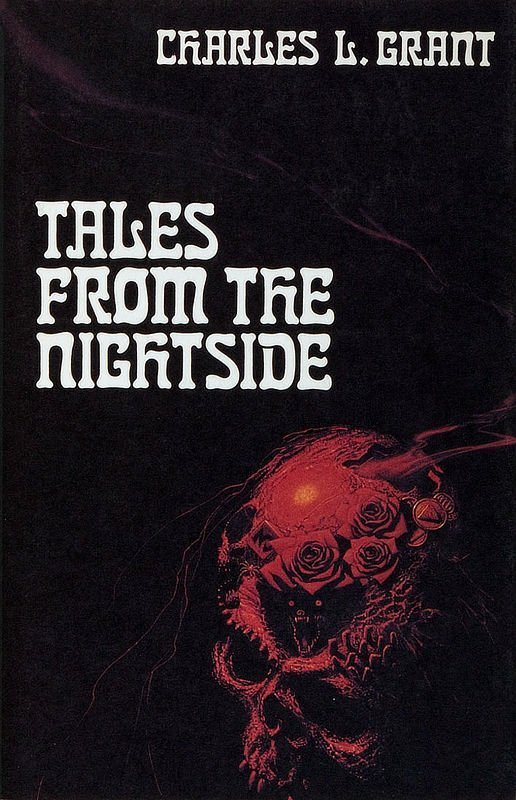
Both books were published in 1981, but I read A Glow of Candles first. It’s actually labelled as “darkening horror” on the cover. Some of the stories in here are more sci-fi or fantasy than horror. I feel like this stuff would fit into the same category as Ray Bradbury’s early stories. The second collection, Tales from the Nightside was published by Arkham House. These stories are more straightforward spooky in nature, and I don’t mean that in a negative sense at all. I enjoyed this collection more. Also, this book has the same cover as one of my favourite albums.

The below are brief summaries of the stories in these volumes. These are mostly for my own reference. Some of the stories appear in both, so I have just included them in the order I read them in.

A Glow of Candles

A Crowd of ShadowsRobot murderer child of real parents is actually real boy of murderer androids parents.
Hear Me Now, My Sweet Abbey RoseFamily goes to Oxrun on vacation. Daughter gets murdered. Ghost returns for a sentence.
Temperature Days on Hawthorne StreetMilkman brings anything you ask for. Very Stephen Kingish
Come Dance with Me on My Pony’s GraveVietnam vet adopts kid. Neighbour kills kids pony. Kid gets neighbour with jungle magic.
The Three of TensPretty good story about a man selling curse boxes at fairground that creates murderous stalker corpse
The Dark of Legends, the Light of LiesSet in future, a writer tries to write, but people are too educated to read horror fiction so he kills people. Not sure if I got the point here.
The Rest Is Silence Ghostly stalker murderer in Oxrun. Kills journalists friends
White Wolf Calling Kid across the road has werewolf parents 
A Glow of Candles, a Unicorn’s Eye An actor kills some directors and  goes on the run because drama is dying. Futuristic sci-fi that isn’t really sci-fi. Very similar to the art story beforehand. Not good.
Caesar, Now Be StillPrincipal not happy with teachers thing on Julius Caesar. Teacher decides to quit, but then turns into vampire?
When All the Children Call My Name Good story about an ex-cop who starts working at a playground where really weird killer kids play.
Secrets of the Heart Car crash victims arrive at house of psychic magic child. Also psycho. Kills them.

Tales from the Nightside

Coin of the RealmToll booth workers are depressed and summoned by Egyptian god of death
Old FriendsAn abused child makes friends with the darkness in the cellar where he is punished.
HomeWeird neighbour has little darlings (creepy child monsters) who eat pets and people. Reminded me of another story by this guy. (When All the Children Call my Name)
Night of Dark IntentReporter goes to  seance for a story but the people there turn out to be dead zombies
If Damon ComesWeird neglected kid comes back from the dead
The Gentle Passing of a HandCrippled kid wants to become magician but his sleight of hand tricks kill and reanimate people
From all the Fields of Hail and FireCreatures are coming out of the ground and setting fire to houses and kidnapping children. Local child takes matters into his own hands
The Key to EnglishKid is uncomfortable at creepy school. Breaks into storeroom and finds the schools staff secret
Needle SongOld woman plays music that drains neighbours of happiness. Some kind of vampire
Something There IsA horror writer cant find his muse.  Too airy fairy. Not much plot

These stories were pretty good. I’m not going to rush out and read more Charles L. Grant, but I definitely won’t rule out coming back to him in the future. The main reason that I don’t want to check out his novels is that they’re mostly set in the same place, and I reckon if I were to read one of them I’d have to commit to reading the rest. While I haven’t read any other Grant, I read one of his wife’s novels a few years back.
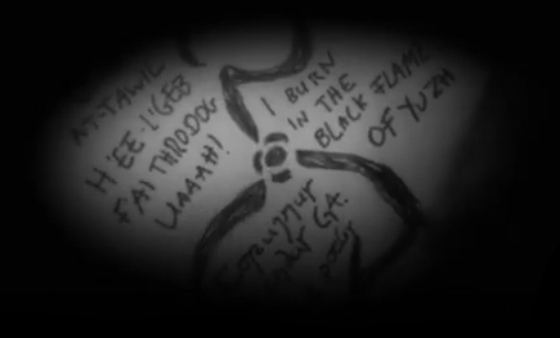
Revisiting the King in Yellow

I find writing about short story collections a bit intimidating. I’ll usually write a post here saying that the collection is ok and then quickly forget the stories until I read something else that reminds me of one of them. In some recent posts about short story collections, I have been including a table on the stories with a summary and/or my thoughts. I’m not sure if people are interested in these, but they help me remember.

I recently read Brian McNaughton’s Satan’s Surrogate. It’s not a particularly good book, but it’s full of allusions to other works of weird fiction, including Robert W. Chamber’s The King in Yellow. I read and reviewed that collection a few years ago, and although I knew I had enjoyed it, I couldn’t remember much about it other than the fact that it featured The King in Yellow, a non-existent book that was supposed to drive people mad. I also recalled that it had distinct sections and that only the first section dealt with the really weird stuff. I went back to read my post on it and discovered that I had included summaries on all of the stories in the book except the first four, the really interesting ones. (I also discovered that I had reviewed a second book by Robert W. Chambers that I had entirely forgotten about. I don’t know if I’m going senile or if I’ve just read too many books.)

A few weeks ago, I got sick. I actually vomited for the first time in maybe 20 years. I get a few colds every year, but I honestly cannot remember the last time I had a tummy bug. I didn’t realise that vomiting actually hurts and that I’m not capable of doing it quietly. Luckily enough, I vomited in the morning, before I had actually eaten anything, so it was just my cup of tea (and a single green bean from the night before) that came back up. Anyways, I was bedbound for a couple of days, and reading Satan’s Surrogate seemed like too much work. I wanted an audiobook, and I realised that I’d easily be able to find an audiobook copy of The King in Yellow. I only bothered with the first four stories, but I really enjoyed revisiting them.

The Repairer of Reputations

This is quite a complicated tale. It’s set in 1925 which was 25 years in the future at the time that it was written. It’s a little dystopian and involves the unveiling of government funded suicide booths, but it’s a horror story at its core. The narrator reads The King in Yellow while recovering from a head injury and ends up involving himself in a murderous conspiracy. His best friend is basically a professional blackmailer, and together they plan to seize control of the world. The plan doesn’t work out.

I read it and reread it, and wept and laughed and trembled with a horror which at times assails me yet. This is the thing that troubles me, for I cannot forget Carcosa where black stars hang in the heavens; where the shadows of men’s thoughts lengthen in the afternoon, when the twin suns sink into the lake of Hali; and my mind will bear for ever the memory of the Pallid Mask. I pray God will curse the writer, as the writer has cursed the world with this beautiful, stupendous creation, terrible in its simplicity, irresistible in its truth—a world which now trembles before the King in Yellow.

The narrator did suffer a brain injury, but his madness was certainly exacerbated by reading The King in Yellow. Vance, their hitman, also went insane after reading the book. It is not explicitly stated, but it seems to me that Chambers wanted his readers to believe that the legalisation of suicide was somehow influenced by the popularity of the awful tome.

The Mask

Two artists love the same girl. One of the guys reads The King in Yellow and then discovers a way to turn living creatures into statues. It is not explictly stated that his discovery was inspired by his reading. He starts off putting little creatures into his magic potion, but things get messy and the girl that everyone loves ends up in the puddle. I had completely forgotten the previous story, but I remembered what was going to happen at the end of this one quite soon after beginning it. It’s quite good, but The King in Yellow plays a fairly minor role. Characters from the play show up in the narrator’s fever dreams, but he has only ever flipped through its pages, so he ultimately retains his sanity.

 I thought, too, of The King in Yellow wrapt in the fantastic colors of his tattered mantle, and that bitter cry of Cassilda, “Not upon us, oh King, not upon us!” Feverishly I struggled to put it from me, but I saw the lake of Hali, thin and blank, without a ripple or wind to stir it, and I saw the towers of Carcosa behind the moon. Aldebaran, The Hyades, Alar, Hastur, glided through the cloud rifts which fluttered and flapped as they passed like the scolloped tatters of The King in Yellow.

In the Court of the Dragon

A lad gets bored during a church service, and he starts daydreaming about getting chased around town by the grumpy looking church organist. Part of the reason he is attending church is that he recently read The King in Yellow, and he finds the peaceful atmosphere in the church relieving. When he awakes from his daydream, he is transported to Carcosa and confronted by the Yellow King himself.

And now, far away, over leagues of tossing cloud-waves, I saw the moon dripping with spray; and beyond, the towers of Carcosa rose behind the moon.

Death and the awful abode of lost souls, whither my weakness long ago had sent him, had changed him for every other eye but mine. And now I heard his voice, rising, swelling, thundering through the flaring light, and as I fell, the radiance increasing, increasing, poured over me in waves of flame. Then I sank into the depths, and I heard the King in Yellow whispering to my soul: “It is a fearful thing to fall into the hands of the living God!”

The Yellow Sign

A painter is disturbed by a new watchman that has started working at the church opposite his house. This watchman’s face is so disgustingly ugly that it causes the painter to ruin the picture he is painting. The model who is posing for him falls in love with him, but she is haunted by strange dreams of the painter in a glass coffin. She gives him a strange piece of black jewelry as a gift. When the painter hurts his hands and can’t paint, the model hangs around his house. She finds a copy of The King in Yellow even though the painter did not own a copy because his friend, the narrator of The Repairer of Reputations, had gone mad after reading it. It is never explained how the book got into his house. Maybe the creepy watchman put it there.

I had always refused to listen to any description of it, and indeed, nobody ever ventured to discuss the second part aloud, so I had absolutely no knowledge of what those leaves might reveal. I stared at the poisonous mottled binding as I would at a snake.

Both the painter and his model end up reading the book. Soon thereafter, their dreams come true. The disgusting watchman breaks into their home and tries to steal the onyx clasp. Nobody survives. When the narrator realises what is happening he says,”I knew that the King in Yellow had opened his tattered mantle and there was only God to cry to now.”, but apparently the original text read,

I knew that the King in Yellow had opened his tattered mantle and there was only Christ to cry to now.

Apparently the publisher changed this so it wouldn’t offend Christian readers.

There are other stories in the collection, but none of them deal with The King in Yellow or Carcosa, and I’ve discussed them already. I think The Yellow Sign is probably my favourite out of these 4 stories. All four contain small references to other stories in this collection, but each tale works by itself. The references to The King in Yellow are maddeningly sparse, and you’ll want to read all four of these stories to get all the details. I reckon it’s what Chambers doesn’t say about this strange text that makes it so appealing. From what little he reveals, I have deduced that the play is about a shabbily dressed King who creeps out two Carcosian ladies called Cassilda and Camila.

Camilla: You, sir, should unmask.

Stranger: Indeed?

Cassilda: Indeed it’s time. We all have laid aside disguise but you.

Stranger: I wear no mask.

Camilla: (Terrified, aside to Cassilda.) No mask? No mask!

The King in Yellow, Act I, Scene 2.

 I thought, too, of the King in Yellow wrapped in the fantastic colours of his tattered mantle, and that bitter cry of Cassilda, “Not upon us, oh King, not upon us!”

I remembered Camilla’s agonized scream and the awful words echoing through the dim streets of Carcosa. They were the last lines in the first act,

What the Hell is that creep up to?

I know I mentioned it before, but there is something embarrassingly exciting about a creepy book that doesn’t exist. One of the characters in Satan’s Surrogate actually attempts to write a play with a similar title, but he isn’t successful. I quite enjoyed rereading these 4 stories by Chambers. Nothing else I’ve read by him comes close to them, but their atmosphere and allusions to the maddening and mysterious Yellow King are enough to ensure that Chambers is remembered as a master of weird fiction.

The Dead of Night – The Ghost Stories of Oliver Onions

The Dead of Night: The Ghost Stories of Oliver Onions

Wordsworth – 2010

I originally planned to just read Widdershins, Oliver Onion’s most famous collection of ghost stories, but after finishing that collection (it’s available online), I decided to read the Wordsworth anthology of his collected ghost stories. This collection is almost 700 pages long, and it contains Widdershins (1911), Ghosts in Daylight (1924) and The Painted Face (1929), all three of the collections of ghost stories that Onions put out in his lifetime, along with a few other bits and pieces. I read Widdershins and wrote the following paragraphs almost a year ago, but I only read the remainder of Onion’s ghost stories over the last couple of months. I had mixed feelings.

I had seen collections of Oliver Onion’s ghost stories around for years, but it wasn’t until I came across his name being mentioned in T.E.D. Klein’s The Ceremonies that I decided to read him. I read Widdershins, probably his most famous collection of ghost stories first.

The first story in here, The Beckoning Fair One, seems to be Onion’s most famous work. It’s a story about a man who falls in love with a ghost and goes mad. It’s very good.

The other stories are all of a decent standard, but there was a couple that I felt like I had read before. There’s one where two guys visit a house and later find that that house has long been abandoned. I’m pretty sure Count Stenbock wrote one along the same lines. Also, there’s one where the protagonists find out that they themselves are the ghosts.

The writing here was surprisingly good. I had Onions pegged as a pulpy writer, but these are finely crafted stories that rely on terror and suspense rather than bumps in the night. I wasn’t sure if I was going to read any more of Onion’s stuff after this collection, but I think I’ll probably give the rest of his stuff a go in the future

The Painted Face collection (originally published in 1929) is made up of only 3 stories. The titular tale, a lengthy novella is pretty good, quite literary. I liked The Master of the House, a tale about a weird werewolf man. The other story in here, The Rosewood Door was pretty standard Onions. Overall, I liked these tales as much as anything in Widdershins, and unlike Widdershins, there are no duds here.

Ghosts in Daylight contains all of the stories I really disliked. I sometimes take notes into an excel spreadsheet when I am reading a short story collection, and I’ll share what I jotted down while reading the stories from this one:

Story Comments
The Woman in the Wayboring story about a priest who meets a boy who met a ghost of a woman who was engaged to his brother in a field.
The Ascending Dream3 men from different ages dream a dream that causes them to leave their sweethearts. BORING
The Honey in the Walla girl owns a big house but has no money. She fancies a guy, so she dresses up a ghost. Nobody cares.
Dear Dryadvery boring story about a tree that 3 generations of people do stuff in front of a tree.
The Real Peoplea “comic” story about an author whose characters come to life. BORING.

If you’ve ever watched that movie From Dusk till Dawn, you probably remember that scene in the strip club with Selma Hayek dancing with the snake. I love pretty much everything about that scene, including the music. The song playing is ‘After Dark’ by Tito and Tarantula, who actually appear as the band playing in the film. Tarantism, the album that song is from is great, but I haven’t listened to it for years. A few weeks ago, I was reading through this Oliver Onions collection, and I started reading a story called “The Smile of Karen”. It’s about a jealous husband who gets upset when he sees his wife smiling. As I was reading it, I remembered that there’s a song on Tarantism called ‘Smiling Karen‘. I went back and listened to it, and sure enough, it’s about a man who finds his wife has been cheating on him, so he kills her. I emailed Tito to see if this was just a coincidence, but he hasn’t responded yet. The story was good though, one of my faves.

The other stories in here are of varying quality. I quite liked The Rope in the Rafters, a story about a disfigured soldier visiting a haunted castle, and Resurrection in Bronze was an interesting look at creative mania, but the rest were fairly shit.

Oliver Onions wrote some excellent ghost stories. He wrote some fairly dull ones too. I do appreciate the comprehensive nature of this collection, but, in truth, a greatest hits anthology would be far more entertaining. I was going to read Onion’s novel, The Hand of Cornelius Voyt, but I probably won’t now.

A.N.L. Munby’s The Alabaster Hand

The Alabaster Hand – A.N.L. Munby

Four Square – 1963 (Originally published 1949)

The protagonist in T.E.D. Klein’s The Ceremonies mentions that this book is on his shelf. I promised myself I would read all of the horror fiction referenced in The Ceremonies, but after attempting to read the truly atrocious Ingoldsby Legends, I had to wait a while before going any further with Klein’s recommendations.

The Alabaster Hand is the only work of fiction by Alan Noel Latimer Munby that was ever published. It’s a collection of ghost stories that were written while the author was being detained in a prisoner of war camp in Nazi Germany. The collection is dedicated to M.R. James, and James’s influence can be felt in every one of these tales.

Munby was a serious book nerd. He was an antiquarian book dealer, a librarian at Cambridge and the President of the Bibliographical Society. His characters, like those of James, share his interests, and his passion for old books creeps into several of the stories here. There’s mysterious diaries, terrifying grimoires and an antiquarian bookshop run by a pervert. The book nerd in me couldn’t help but enjoy these tales. I spend a good deal of my free time researching quaint and curious volumes of forgotten lore, but Munby took these pursuits to another level. I get the sense that Munby was romanticising the life of an antiquarian though. Michael Cox, in his 1995 introduction to this collection notes, “The stories in The Alabaster Hand are deliberately retrospective in their evocation of a world that, by 1949, had largely vanished.” It’s hard to imagine anyone other than a carefree Victorian Lord having the necessary time and money to pull off a life truly dedicated to the pursuit and study of antiquarian books.

There’s one story in here called ‘The Negro’s Head’ that is liable to cause offence to modern readers. It’s about a black lad who is murdered for being black. Although the narrator does not condone this murder, he does end the story with regrets for the “savage who was so grievously wronged at the hands of one of my own countrymen.” I know words were used differently back then, but describing a murder victim as a savage seems pretty silly by any standard. I’m quite sure Munby actually meant well here, but I’d still skip to the next story if I was reading this one on the bus.

My favourites in the collection were ‘Herodes Redivivus’, ‘The Book of Hours’, ‘Number Seventy Nine’ and ‘The Devil’s Autograph’. As fun as some of these stories were, none of them were remotely scary. I recall feeling a bit creeped out when I read some of James’ stories, but nothing in this book had that effect. They’re decently entertaining though, and if you like M.R. James, this may be the next best thing. It’s quite short too. You might as well read it.

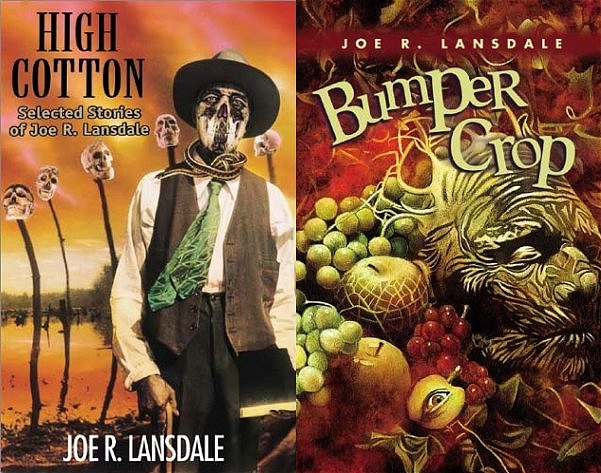
Joe R. Lansdale’s Best Short Stories (High Cotton and Bumper Crop)

Joe R. Lansdale’s High Cotton and Bumper Crop

Golden Gryphon Press

I read a few Joe R. Lansdale books last year (Part 1, Part 2). Some were great, and I ended the year as a Lansdale fan. I gathered from social media and other blogs that his short stories are some of his best writing, and I decided to look at them next. His first story collection, By Bizarre Hands , is highly esteemed, but I opted instead for High Cotton and Bumper Crop. These are ‘best of’ collections that came out in 2000 and 2004 respectively. There has since been another greatest hits collection, but its contents are nearly all included in the collections I read, and what’s left, I can read some other time.

For the purposes of this review, I’m going to treat the two collections as one. I cannot imagine a person reading one and then not wanting to read the other. The original Golden Gryphon Press editions are hard to find now, but both collections have been reissued by Crossroads Press.

I had read one of Lansdale’s short stories in the first Splatterpunks Anthology a few years ago, and then I read the God of the Razor ones after finishing The Nightrunners. I didn’t bother to reread these ones.

I was actually working on some short fiction right before reading these collections (I’m debating whether to post it here), and I actually found these books quite inspiring. My biggest struggle with writing fiction is coming up with ideas, and it’s really cool to see an author taking what are often silly ideas and then going through with turning them into a story. ‘Fire Dog’ is a perfect example. It’s very silly, but also very entertaining.

Some of the stories are hilarious, but some are also extremely violent and deeply disturbing. ‘I Tell You It’s Love’ was my favourite. It’s the romantic tale of a couple of deranged sadomasochists. It’s quite nasty. I’m already looking forward to reading it again.

Joe R. Lansdale’s readers won’t need PhDs in literature to see that his writing is openly anti-racist, but these books contain the n-word an awful lot (well over 100 times in High Cotton). The usage of this word is to show the ignorance of the characters using it, and this is nearly always entirely obvious, but it definitely dates the writing. I can’t say for sure because I haven’t read any of his recent books, but I doubt Lansdale puts that word on paper as much as he did in the 80s. Again though, he was very clearly trying to use his writing to condemn prejudice.

Lansdale’s writing is exactly the kind of stuff I need when I’m coming down off some high falutin’ literary horror that I’ve had to push myself to get through. It’s not that his writing is dumbed down or anything like that; his stories are just a lot of fun to read. His prose is tight and he tells a mean story. I am, without doubt, going to read more of his short story collections in the future.

Thomas Ligotti’s Songs of a Dead Dreamer and Grimscribe

Songs of a Dead Dreamer and Grimscribe
Penguin Classics – 2015


Although most of Thomas Ligotti’s fiction has already appeared on this blog, I only recently read his two first, and probably most famous, short story collections. Songs of a Dead Dreamer was originally published in 1985, and Grimscribe: His Lives and Works came out in 1991, but they were first packaged together, along with some stuff from Noctuary and Teatro Grottesco, as The Nightmare Factory in 1996. It wasn’t until after True Detective made Ligotti a household name that Penguin decided to reissue his first two collections under their Penguin Classics series. I believe Ligotti is one of only 10 authors to live to see their books published as a Penguin Classic. This is definitely more high-brow than a lot of the crap I write about on here.

I’ve written about Ligotti so many times here that I don’t have too much to say about the writing here. I suppose I learned that Ligotti didn’t start propounding his pessimistic outlook on life at a late stage in his career. It was there from the beginning.

“the revelation that nothing ever known has ended in glory; that all which ends does so in exhaustion, in confusion and debris.”

Vastarien

Again, I was impressed with the nightmarish quality imbued in Ligotti’s prose The word nightmare is often used as a synonym for scary or unpleasant, but these stories actually possess a bizarre dream-like quality. Obvious details are omitted, and stuff that shouldn’t become weird becomes very weird. It’s unnerving and disorientating, and I love it.

“To see the world drown in oceans of agony is the only vision which now brings me any relief from my madness”

Masquerade of a Dead Sword

While I waited a week or so after finishing Songs of a Dead Dreamer to move on to Grimscribe, this felt like one long book to me. I can’t really think of way to distinguish the tone or quality of the two collections. I think I enjoyed the stories in Grimscribe more, but I’m almost certain that this was due to the fact that by the time I started on the Grimscribe tales, I had figured out that I had been reading the book wrong. Let me explain. I love Ligotti’s fiction, but I have to be in a fairly specific mood to really enjoy his writing. It’s dense and at times tedious, and reading some of these stories at night just made me want to fall asleep. As I started on Grimscribe, I worked out a system where I would read Ligotti on my lunch break at work and then read a trashy splatterpunk novel before bedtime. It was perfect.

I definitely prefered the more straight forward stories collected here. Vastarien, Dr. Locrian’s Asylum, The Last Feast of Harlequin, The Night School and The Coccoons were some of my favourites, but there were plenty of others that I really, really liked. Ligotti is one of the few authors whose books I have read more than once, and I’m sure the stories in this collection will stand multiple readings too. I feel like I might enjoy some of them even more a second time around. I’ll tell you what; in a few years, I’ll go back and read through both Songs of a Dead Dreamer and Grimscribe more carefully and write more in depth posts about them then.

The last time I saw my friends before Covid hit, I was chatting to one of my buddies about Ligotti’s books and he told me that he had recently acquired “the one with Drake on the cover”. Given the likeness, I am surprised nobody has done this before:


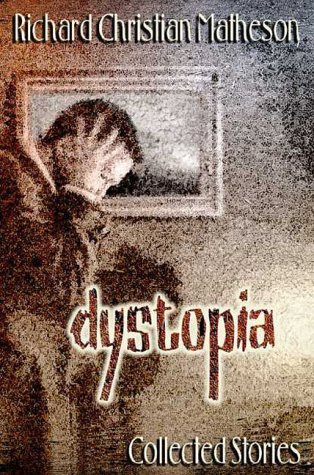
Dystopia – Richard Christian Matheson

The first time I came across Richard Christian Matheson, I liked him. The second time, I did not like him. The guy is known as one of the splatterpunks, and last year, I did a megapost on his dad’s books, so I thought I’d better take a closer look at his output. RCM has written novels, but he is most famous for his stripped down short stories. His most popular collection of stories is 1987’s Scars and Other Distinguishing Marks. I was originally going to read this one, but I opted instead for a collection called Dystopia from 2000. This collection contains all the author’s fiction that had been published by that point, including everything in Scars.

Dystopia – Richard Christian Matheson
Crossroads Press – 2011 (Originally published 2000)


Honestly, choosing the longer collection was probably a mistake on my part. Matheson is a talented writer, and some of the stories in Dystopia are great. The problem is that some (maybe even lots) of the stories are not really great. The most notable factor of Matheson’s writing is his precision; many of these tales are told in less than 3 pages. This is really cool when it works, but there’s many, many stories (60ish) in this collection, and they’re not all masterpieces. I usually read a few in each sitting, and the brevity and quantity made even the good ones a bit forgettable. I appreciate complete collections of author’s works, but I would have been far better off with a shorter “Best of” collection of this author’s works. Dystopia is more than 400 pages. I reckon a slim 180 page greatest hits would have been far more impressive.

It has been pointed out to me that I often avoid discussing specific stories when reviewing short fiction anthologies. The nature of the stories in this collection makes it even less appealing to get into specifics. Fortunately, as is so often the case, Will Errickson over at Too Much Horror Fiction blog reviewed Matheson’s short fiction more articulately and in more detail than I ever could. Check out his review here.

Kinda crappy post this week… sorry. Life has been pretty hectic recently, and I haven’t had much time to blog. I had to go through my draft posts folder to find something to polish up for my Sunday deadline. I wrote the above a long, long time ago. I was actually planning to read RCM’s novel, Created By and including my thoughts on that in this post, but after putting it off for half a year, I have decided not to bother. Life is too short to read everything. I gave this dude a chance, and while he was clearly a capable writer, I currently have no desire to read more of his stuff. If anyone has read this novel and is convinced I would enjoy it, let me know and I’ll reconsider.

I have a few big posts coming up in the next few weeks, so check back soon.

J.B. Priestley: Grandfather of Dr. Frank-N-Furter

Here’s two books by an old English wanker:

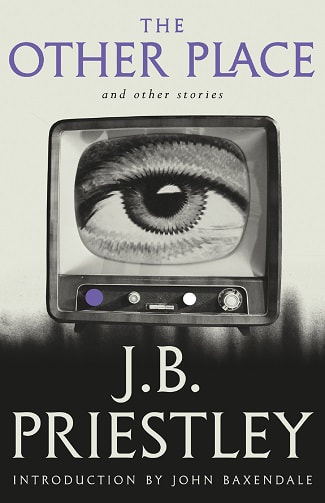
The Other Place – J.B. Priestley
Valancourt Books – 2018 (Originally published 1953)

I quite enjoyed the first few stories in this collection. None of them are particularly scary, but they’re all quite strange. The only ghost story is about  a haunted TV set, and it’s going for laughs rather than scares.

It took me several months to get through the first half of the book, but I rushed through the rest in an afternoon. I think I might have enjoyed this part more if I had continued at my original pace. Reading these tales in close succession highlighted how similar many of them are. It seems that most of them are about people having visions of the past or the future. They’re all competently written and enjoyable, but looking back now it’s tricky to distinguish some of them. This wasn’t the most jaw-dropping book I’ve ever read, but I liked it. After finishing, I was happy enough to give Priestley’s novel Benighted a try.

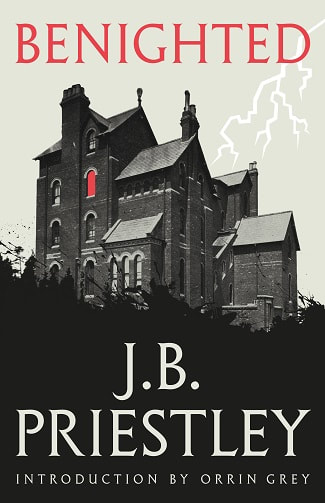
Benighted – J.B. Priestley
Valancourt Books – 2018 (Originally published 1927)

Benighted is quite good. Yesterday, I was out for a drive with my wife, and I was telling her about the book I was reading. When I explained the plot to her, she responded that it sounded awfully like The Rocky Horror Picture Show. She was dead right. This is the story of a couple who get caught in a storm and have to seek shelter in an old house full of weirdos. Unfortunately, there are no sweet transvestites in Benighted. I looked into this a bit, and it turns out that The Rocky Horror Show was directly influenced by The Old Dark House, the 1932 film version of Benighted. I was pretty embarrassed that I hadn’t noticed the similarities beforehand. I love that movie!

I’m a little surprised that Benighted isn’t better known. It starts off atmospheric and mysterious and ends quite exciting. Things get pretty heavy between the characters, and there might be a little bit too much philosophical insight for this to appeal as a straight forward horror novel. It’s creepy in parts, but that creepiness never seems to be the main point of the book. It’s hard to get too concerned about the tongueless ghoul lurking upstairs when you’re trying to figure out the single biggest obstacle to human happiness.

Still, it is fair to call Benighted a horror novel. If you look up “gothic tropes” on google, the first 3 listed are darkness, isolation and madness. Bingo! Those are the main ingredients here. This is also a novel about a labyrinthine mansion filled with a strange family’s shameful secrets. That’s pretty gothic bro. There’s no supernatural element though, so I guess this would be classed as psychological horror nowadays.

Truth be told, I had originally written a more laudatory review of these books. It was going to end with a claim that I would some day seek out the author’s other works. Then I read that he hated Irish people. Fuck you J.B. Priestley, you little jaffa prick. Glad you’re dead and if I ever come across any of your other books, I’ll stick them up my ass.

Richard Matheson’s Horror Classics – I Am Legend, Hell House, The Shrinking Man and a bunch of short stories

I’m ashamed of myself. I have been writing about horror fiction on this blog since 2015, but this is the first time I will feature the work of Richard Matheson. Silly me. I have written about these books in the order that I read them. This order does not reflect their date of publication or their merits.

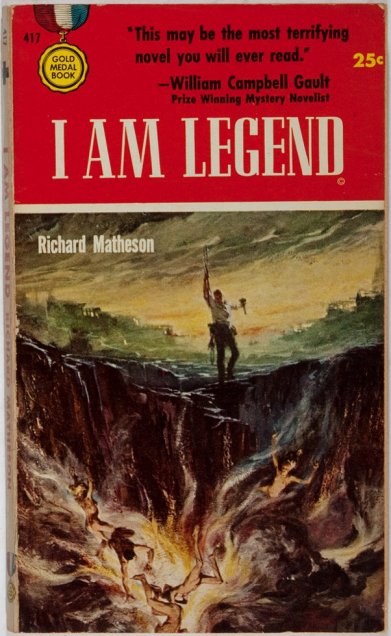
I Am Legend
Gold Medal Books – 1954


I first read I Am Legend about 6 years ago. I remember absolutely loving it. I had seen the abominable Will Smith movie with the same title and had been terribly disappointed with that film’s optimistic ending. I could not say the same thing about the novel. I started this blog a year or so afterwards, and somehow never got around to reviewing the book. I read Shirley Jackson’s The Haunting of Hill House a few months back and decided immediately thereafter to read Matheson’s similarly titled Hell House.  Just before doing so, I thought about revisiting I am Legend so that I could do a multi-book post on Matheson. I am extremely glad I did. I loved I am Legend the first time I read it, but I’m pretty sure I enjoyed it even more the second time around. I think it’s fair to say that this novel is one of my favourite books.

There was no sound now but that of his shoes and the now senseless singing of birds. Once I thought they sang because everything was right with the world, Robert Neville thought, I know now I was wrong. They sing because they’re feeble minded.

This is the violent, dark and crushingly bleak story of Robert Neville, the last man on a vampire ridden Earth. For a novel with so little hope, Matheson does an impressive job of pushing the disappointment. The dog! Oh Jesus, the dog! Come on Richard, why would you do that to your protagonist? Everything always gets worse. I don’t want to spoil how the book ends, but holy shit, that last paragraph, that last sentence, is phenomenal. This is what I want from a horror novel. It’s well written too, really enjoyable stuff. Both times I’ve read it, I’ve finished it in less than a day.  Damn, this book is awesome. Seriously, if you’re into horror at all, you should really check this one out.

Hell House
Viking Press – 1971


I don’t know much about the writing of Hell House, but I believe that it’s a fact that Shirley Jackson’s The Haunting of Hill House had a pretty big influence. The set up for both tales is almost identical – a scientist and two psychics are sent in to study a haunted house. While Jackson’s book relies on subtle, psychological terror, Matheson’s goes for an all-out onslaught of horror.

The title of this book is an apt one. This is a blasphemous, perverted, blood and guts, kinda haunted house. Matheson doesn’t shy away from getting gritty, but the pacing, characterisation and general decent standard of writing prevent this from feeling exploitative. The nastiness in here is effective too; this is quite a scary book.

Hell House is almost twice as long as I Am Legend, and I don’t think it packs quite as much of a punch, but its drawn out descent into Hell is effective in its own way. This is definitely worth reading if you like horror.

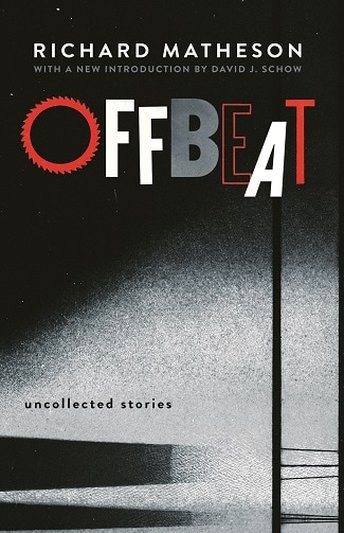
Offbeat
Valancourt Books – 2017 (Originally published 2002)


Offbeat is a collection of Matheson’s stories that had not been previously collected in an anthology. Matheson wrote a lot, and these stories’ failure to be included in other collections was not due to their quality. (One of these tales is actually featured in Penguin’s The Best of Richard Matheson.) Still though, I was a bit underwhelmed by a few of the stories in the collection. The twist endings of a couple of them seemed very predictable. My favourites were ‘And Now I’m Waiting’, ‘Maybe You Remember Him’ and ‘Phonecall from Across the Street’. I didn’t enjoy this book quite as much as the novels I had read beforehand, but I certainly don’t regret reading it. If you were already a fan of Matheson, I reckon you’ll enjoy this.

The Best of Richard Matheson
Penguin Classics – 2017


When I found out that Penguin had recently put out a “Best of Matheson” collection, I realised I had done things backwards. I should have read this first and Offbeat afterwards. That being said, it is a testament to the quality of the tales in Offbeat that I started reading another collection of Matheson’s stories directly after finishing that one. I didn’t know quite how prolific Matheson had been, and I didn’t know how well I already knew his work. He wrote a bunch of stories that turned into episodes of the Twilight Zone. I’ve never watched an episode of the The Twilight Zone, but I’m familiar with the plots of some of the episodes from the times the Simpsons parodied them. Also, this collection contains ‘Duel’. I remember watching the movie version of this with my dad when I was a kid. I had no idea it was based on a Matheson story.

Honestly, this collection is a much, much better place to start if you haven’t read any of Matheson’s short stories before. These stories are quality. There’s one near the end called ‘Mute’ that I particularly enjoyed. It’s not really a horror story, but it contains some pretty interesting insight on language. This Matheson was a smart guy.

The Shrinking Man
Bantam Books – 1969 (Originally published 1956)


I had no great desire to read this book, but it was discussed at length in Stephen King’s Danse Macabre, so I thought I’d better read it and get it into this post. It’s the story of Scott, a man who gets hit by a radioactive wave that causes him to shrink exactly one seventh of an inch every day. I had this pegged as more of a science fiction novel than a horror novel, but, as Stephen King points out, there isn’t much science in here at all.

I actually want to talk about the science, or lack thereof, because it really annoyed me when I was reading this book. This chap doesn’t shrink a certain percentage of his body height every day. He shrinks the same amount every day. If you think about this, it’s pretty ridiculous. If a 6’4″ man shrinks 1 seventh of an inch in a day, he is losing approximately 0.2% of his overall height. If he keeps losing the same amount every day, after another 529 days, he will only be 2 sevenths of an inch tall. By the next day, he will have lost 50% of his height. By then he will be one seventh of an inch tall and will continue to lose 100% of his height in one day. This doesn’t make sense. I’m not a scientist, but I feel that I know enough about the basic laws of reality to state that this rate of shrinkage is a physical impossibility.

Ok, I am going to discuss the ending of the book, so skip to the next paragraph if you haven’t read it yet. The book ends with the protagonist entering a microscopic existence. It is a weird upbeat ending full of optimism. This doesn’t make sense. Ok, maybe it’s possible he was a teeny tiny little bit taller than 1 seventh of an inch and that it will take another day for him to completely shrink out of existence, but that isn’t what the book suggests. Matheson suggests that the protagonist will continue to shrink interminably. But he can’t keep shrinking at the same rate! This would only work if he had been shrinking a percentage of his height, not a fixed amount. Things can always get a little bit smaller, but they can not decrease their size by more then their size. The other option that Matheson had to end this novel was for Scott to find himself in some kind of opposites universe of anti-matter or something where he actually finds himself growing larger every day. Sure the science is ridiculous, but at least that would work mathematically (which is more than can be said for the ending as it stands).

Really, this is more of an adventure story than anything. While half of the novel describes the shrinking process and its unpleasant effects on Scott’s life, the other half details his struggles with a spider after getting locked in his cellar alone. The spider stuff is exciting, but the real horror lies in Scott trying to come to terms with his inevitable disappearance. My favourite part was when a pervert thinks the shrinker is a kid and tries to diddle him. It’s obviously a horrible, horrible thing to happen, but the dialogue was pretty funny.

Silence a moment. Then the man said. “Women. Who come into man’s life a breath from the sewer.” He belched. “A pox on the she.” He looked over at Scott. The car headed for a tree.

This book was fine, but it was definitely my least favourite of Matheson’s novels.

I Am Legend is absolutely crucial. You should definitely check out the Best of short story collection too. If you like those, check out the others listed above. Matheson has plenty of other books, but I reckon I’ll give it a while before I seek those out. (5 books by one author over the course of 3 months was a lot for me.) This guy had a huge effect on the horror genre, and it’s not surprising. These books are imaginative, well written and sometimes truly horrifying. Richard Matheson was a cool guy.

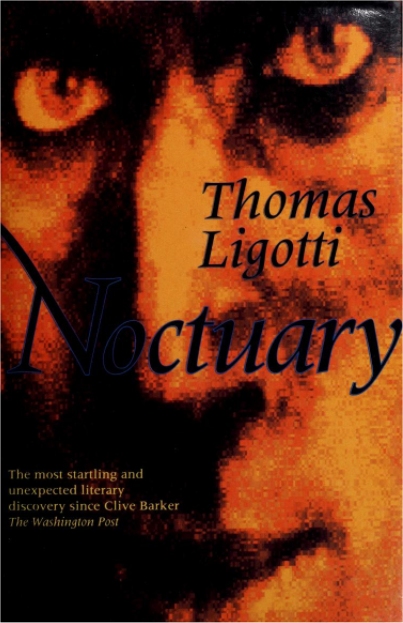
Thomas Ligotti’s Noctuary

noctuary - ligotti

Thomas Ligotti – Noctuary
Carroll and Graf – 1994

Noctuary was the first Thomas Ligotti book that I read, but by the time I got around to starting this blog a year later, I had forgotten the whole thing. I’ve reviewed quite a few of Ligotti’s books recently, and I wanted to go back to reread this one.

I have to say, I enjoyed this collection less after having read Ligotti’s other stuff. A few of the stories are so weird that they went over my head, and some of them are so abstract that I found them boring. What the hell is ‘The Medusa’ about? I read it, and I understand all of the words and sentences, but I still feel like I don’t get it. Weird? Yes. Scary? No.

I think the atmosphere of these texts is far more important than their plots, and while I do appreciate some good atmospheric horror, I felt like this was a bit much. I reread Noctuary over the course of a very stressful week last month, and that might well have affected my enjoyment of the book, but I seemed to remember Ligotti’s Teatro Grottesco collection being a little more to the point and quite a bit more satisfying.

There’s a compilation of very short works at the end of the book called  “Notebook of the Night”. Some of these were fairly dull, but this section also contains my favourite piece in this collection, ‘The Premature Transfiguration’. This is a relatively simplistic tale about people turning into lobsters and then begging to be killed. LOL!

I’m being a bit negative here. I did actually like this book, but I seemed to remember enjoying it more the first time I read it. It took me less than 24 hours to finish it that time, but more than a week this time around. If you’re already a Ligotti fan, then check this out, but I don’t think it’s the best starting place if you haven’t read his stuff before.