
2010
I saw this book recommended on a forum a few years ago and put it on my to-read list. A while later, I saw articles online about how the writer of the first season of True Detective had ripped it off. I loved that show, particularly the parts that were supposed to have been taken from this book, so this made me want to read it even more. It only took about 4 years for me to work up the courage to pick it up. I had a pretty good idea of what it was going to contain, but it wasn’t its infamous negativity that was putting me off, it was the fact that it is a book of philosophy.
I don’t like reading philosophy anymore. I occasionally pick up some Plato just for the fun of it, and I have been known to giggle at Schopenhauer and Neitzsche’s aphorisms, but I’m not really interested in their fiddle-faddle arguments about the will and all that crap. I don’t mind a philosophical novel, but books of pure philosophy often seem to require more effort than they’re worth.
That being said, there were a few things about this book that made it seem more appealing than other works of philosophy. It was written by a writer of horror fiction, and the philosophy it propounds is one of extreme pessimism, so it’s basically doom metal in the form of a book. For some reason, probably December’s festive cheer, I decided to inflict it upon myself last week.
Alright, so the main idea here is that consciousness makes life so unpleasant that it would be better not to live. I followed the author’s arguments, but they haven’t really changed my outlook on life. Maybe it’s the fact that I knew this guy is a horror writer and all of the references to Lovecraft in the text, but I couldn’t help but feel that the reality that he was writing about was a slightly different reality to the one I live in. As interesting as his arguments are, I was able to forget about them immediately after putting the book down in much the same way that I forget about the slime creatures from Stephen King stories when I go grocery shopping. In fairness to Ligotti though, he does reference this as an inevitability of the horror of existence. If we were not able to distract ourselves and stop thinking about these issues, we’d probably all kill ourselves very quickly. Ligotti’s arguments are convincing; yes, we are fucked, but they’re not particularly effective; we’re fucked, but who cares?
The world is a generally shitty place, and human beings are making it much worse. I, for one, solemnly believe that we are living in end times. The atmosphere is heating up, the seas are turning into chemical cesspools, and it’s only a matter of time before we’re all wiped out by nuclear war, biological weapons, aggressive technology or something else that’s really unpleasant (I’m personally hoping for an Independence Day style alien invasion). Human beings are disgusting, selfish, idiotic creatures with barely any self respect or intelligence, and there’s far too many of us for things to turn out well.
Life in the near future will become insufferable, but as long as I can listen to rock’n’roll, troll the internet and drink tea, I’ll be grand. While I didn’t find the arguments hugely effective (probably because I already accepted most of them), I did actually enjoy reading this book. Unfortunately, as with the last book I reviewed, it’s the people that most need to read this that are least likely to bother with it.
Perhaps the greatest feature of this book is it’s quotability. It is absolutely filled with zingers. I’ll leave you with a few of my favourites:
“We can stomach our own kind, or just enough of them who either prove useful to us or are not handily destructible, only by the terms of the following contract: we will eat some of the other fellow’s excrement if he will eat some of ours.”
On why humans reproduce: “People get the biggest kick out of seeing the features of their faces plastered together onto one head.”
“Child-bearers, then, should not feel unfairly culled as the worst offenders in the conspiracy against the human race.”
“Let it be said—human beings are the most retarded organisms on earth.”
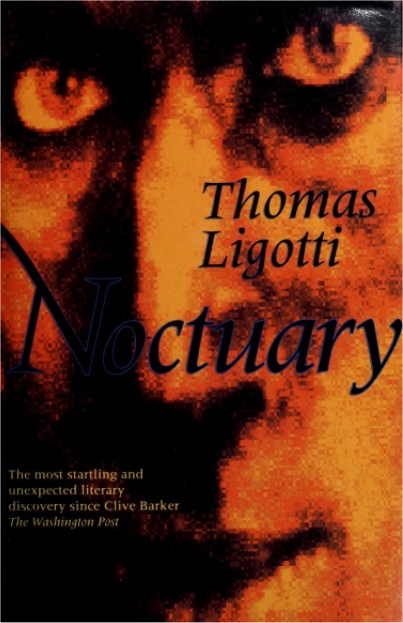 Thomas Ligotti – Noctuary
I guess I can throw this in here too. I read this collection of Ligotti’s short stories a long time ago. I had an office job back then, and I would spend most of the work day reading. I’d download pdfs of books and rename them “factory standards.pdf” and upload them to google drive so that my employer wouldn’t know what I was up to if he checked my history. I also got reckless and read a few at openlibrary.org, including this one. Over the course of three days on the job, I managed to finish Noctuary, the Satanic Bible, Mount Analogue by Damaul and Look Back in Anger by John Osborn. This frenzied bout of reading was fueled by spite for my employer rather than enjoyment, and I can honestly remember more about the ensuing headaches than the texts themselves. I rated Noctuary 4 out 5 stars on goodreads though, so it must have been pretty good.
I’d imagine this won’t be the last time Ligotti’s works are featured on this blog.


 Nocturnal Revelries