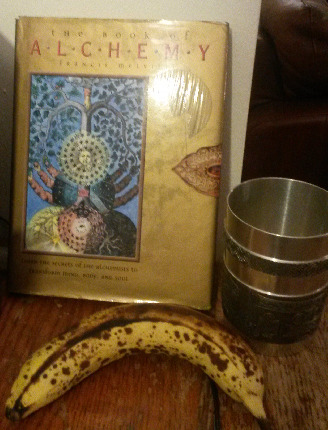
The Black Arts – Richard Cavendish

Picador – 1972

blackarts

This book is a tricky one. Half of it’s great, half of it’s horrible. The sections on ritual magic, witchcraft and satanism are really interesting, but the book also contains comprehensive sections on numerology, cabala, tarot, astrology and alchemy. Personally speaking, when I buy a book on ‘the Black Arts’, I’m not really interested in reading about people playing with cards or counting the numbers in their names. I want blood rituals, human sacrifice and horrible acts of depravity. (Reading this book could be compared to going to a Slayer concert and then finding out that Tool are the opening band.) I’m going to largely ignore the parts that I didn’t like for this review; if you want to learn about tarot, fuck off and prance over to your nearest renaissance fair.

There’s some really interesting stuff  in here about demons from Biblical Pseudepigrapha. I’m still only about halfway through the Christian Bible right now, but I’m really looking forward to finishing that and then reading the Books of Enoch, the Testaments of Solomon and the Life of Adam and Eve. There’s something particularly exciting about the idea of Jehovah being good mates with the demons back in the day – Yeeeeeeoweh and de lads!

One of my favourite things about the book is the fact that it reads more like a history book  than a grimoire or set of instructions. A large amount of the information is utterly unbelievable, but Cavendish manages to reference his sources in such a way as to avoid any accusations of credulity that might be thrown at him. He politely leaves it up to the reader to decide what they think is bullshit and what’s legitimate, and this approach makes this kind of book far more interesting to read.

There’s a great bibliography and a ‘suggestions for further reading’ section at the back. I’ve already ordered quite a few of its sources, and I’ll hopefully get around to reviewing them here sometime soon. I’m going to pretend that I didn’t begrudgingly wade through 5 chapters of new-age shite and give this book a glorious 7.5/10.
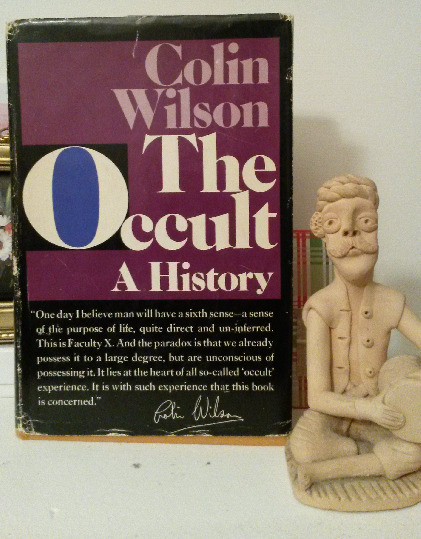
The Occult A History – Colin Wilson

Random House – 1971
occult
The title, ‘The Occult A History’, is a little misleading. A more accurate name might be ‘A ridiculous theory based on an unquestioning and incredibly naive consideration of the History of the Occult’. Colin Wilson comes across as frustratingly credulous. The following might be a typical paragraph in this book:

Tom was able to communicate with the leader of the great race of flying ape-dogs on the planet Durthyanus. Tom was a patient in mental hospital who was spoon-fed mush by a nurse and needed his nap-nap changed twice a day, but there is no reason not to believe that he had strong powers of interplanetary telepathy; most people who possess such gifts are actually completely untrustworthy.

That’s barely even an exaggeration! I understand that people who write books on the occult are often going to be more ‘open-minded’ than the average individual, but Colin Wilson comes across as a chump. The book is definitely well researched though. Wilson uses lots of interesting sources and I got loads of ideas for other books to read from this one. This book is actually quite an enjoyable read if you don’t waste too much time getting upset over the author’s ridiculous methods of reasoning. I really liked the chapters on Cagliostro and werewolves, but I couldn’t bring myself to finish the final chapter in which the author discusses ‘Faculty x’ in detail. ‘Faculty x’ is basically a 6th sense type thing that Wilson believed human beings were about to discover/develop. Well, this book was written more than 40 years ago and from what I can tell, we’re yet to x.

Sometimes I feel that I put too much faith in the authors of books on the occult. I’m not sure that people intelligent enough to make their living as writers could possibly believe the wacky crap that ends up getting published. I reckon that authors are spewing out this silly garbage just to increase their sales. It makes sense that a writer like Wilson would inject a little craziness into an otherwise reasonable historical account; books on the fantastic just aren’t as enjoyable when they’re logical. I mean it’s not likely that anybody would ever pay money for a book that sets out to disprove the validity of moleomancy.

gurd

(Wise words from Gurdjeff on the back cover.) This book is dumb but mostly fun. Read it, but don’t bother with the last chapter. 6.5/10

The Satanic Bible and The Vampire Bible

The Vampire Bible – ???
Temple of the Vampire – 1989

The Satanic Bible – Anton Lavey
Avon – 1969

I’ve just finished reading The Vampire Bible from the Temple of the Vampire. I’m going to talk a little about that and a little about the Satanic Bible. I want to get LaVey out of the way early on.

1
(The fonts and imagery are one of the sweetest things about this book.)


I am glad that I bought my copy of the Vampire Bible in a parking lot, off some dude from craigslist. I sure would feel like a dummy if I had given the person who wrote this tripe any of my money.

To join the Temple of the Vampire, you have to buy a copy of this book from them. I would hope that they also give you extra material to make sense of it, or maybe call you up to explain the crazy nonsense that’s included. The book doesn’t even include a definition of what they mean by ‘vampire’. The vampires described are non-violent vampires who don’t murder or drink blood. These vampires just float about in the astral realm, giving thanks to the undead gods and sucking life-force from their prey. It’s not very clear as to what effect this floating has on the vampire’s prey though, and the book specifically says that it doesn’t harm them. That sounds like a pathetic vampire to me.

The content is an awkward mix of instruction and fantasy. The book states that its contents are based in fantasy, yet it prohibits any kind of violence. If this is all fantasy, why shouldn’t I swally down the blood of my enemies? At least the Satanic Bible has some balls and tells you to ‘SMASH’ people that you don’t like. My favourite part of the entire book was the second item on the the list of things that suggest that you are in the presence of the Undead:
“2. Tingling sensations in the fingertips”
Perhaps the author has gotten mixed up. These vampires sound a lot like fairies to me.

2(I haven’t read my copy of the Satanic Rituals yet and probably won’t ever get around to it. It has a nice pink cover though.)


The Vampire Bible is dumb. Like the Satanic Bible, it makes no effort to emulate the actual Bible in any way. Unlike the Satanic Bible, it’s not even remotely clever. I actually enjoyed reading the LaVey’s Bible. It’s camp and silly, but there is some actual reasoning behind it. You get the feeling that he actually believed in some of what he was writing. There’s not an ounce of reasoning behind anything written by Vlad, or whoever the fuck shat out the Vampire Bible. The ideas in the Satanic Bible are obviously not completely original, but I think that LaVey did a decent job of synthesizing them into an entertaining whole.

Coincidentally, perhaps my least favourite part of the Satanic Bible (apart from the silly Enochian bits) was the section on Psychic Vampires. It seemed like it was a metaphor for something that had happened in LaVey’s own private life that was too embarrassing to clarify but too upsetting for him to leave out completely. It’s funny looking back at that section now and reading the lines: Psychic vampires are individuals who drain others of their vital energy… They fill no useful purpose in our lives. Perhaps he was in contact with some of the members from the Temple of the Vampire! Well, actually… probably not; the Satanic Bible was written 20 years before the Temple was founded.

Anyways, to conclude, I’m giving the Vampire Bible a generous 3/10. It looks and sounds pretty cool as long as you don’t take the time to actually read it. It’s not nearly as spooky as it could have been. The Satanic Bible gets a 7/10 for being good hellish fun. Even if you don’t like the writing, this book is worth owning just for the sweet portrait of LaVey on the back.

3

What a charmer!

Dictionary of Witchcraft – Collin De Plancy

Philosophical Library – 1965

This was a very disappointing purchase. I bought my copy online and never had the chance to look through the book before buying it. Based on the title, I naively presumed that this book would be a translation of Dictionnaire Infernal by De Plancy. I was mostly wrong.
Instead of a straight forward translation of the Dictionnaire Infernal, this book is largely an alphabetized list of French witches. Some of the entries are vaguely entertaining, but none of them are particularly believable. I liked the entry on Tanchelin:

In 1125 a heretic named Tanchelin was revered to such a degree in some provinces that people drank his urine and preserved his excrement as a relic. The money that came to him…enabled him to have good food and superb service. Fathers begged him to sleep with their daughters and wives.

That’s all it says. This is certainly a valuable nugget of information, but there’s no mention of Tanchelin’s witchy heresies! (I googled him. His name was Tanchelm, his heresies weren’t particularly wicked and he was dead by 1115.)

Now I’m not one to get upset when a book isn’t convincing, but this book isn’t merely unconvincing; it’s deceiving. It actually refers to itself as ‘The Dictionary of Demonology’ in Wade Baskin’s introduction, and then on the very next page it uses the title ‘The Dictionary of Witchcraft’. The slightly embarrassing entry on the book’s own author mentions, ‘this dictionary, of which the first edition appeared in two volumes in 1818’ (1818 being the year Dictionnaire Infernal was published!), and also specifically references the book as the ‘second edition of the Dictionary of Demonology’. In 1965 the Philosophical Library publishing company  released this book and a different book titled ‘Dictionary of Demonology’.   Perhaps Baskin was trying to recreate the ‘two volume’ feel of the 1818 edition of the book and purposely split the entries into the categories of witchcraft and demonology. That would be acceptable if it was actually alluded to somewhere in this book. Baskin’s shitty editing makes it all the more irritating.

I can’t be entirely sure if the books are a pair; the other book costs far more than this one, and I’m not willing to risk another expensive disappointment. Also, it’s difficult to compare the entries in this piece of crap with the French text online. It is a translated dictionary after all. I know I’ve written a lot about this frustrating inconvenience, but I couldn’t find any discussion on this topic and I’d love to hear from anyone who could clear up this confusion.

To add insult to my frustration, I noticed that the covers of the two books differ slightly. In every image that I have found online, the Dictionary of Witchcraft has a purple rectangle and the Dictionary of Demonology has a blue rectangle.

My Dictionary of Witchcraft has a blue rectangle…

Overall I’ll give it 4/10. It was more trouble than it was worth but still fun.

I also have a copy of the Dictionary of Satanism by Wade Baskin that was published by the same company. I might review that if I manage to forgive Baskin.

(October 2016 update: The mystery over this publication and its mysterious companion has now been solved. Dictionary of Demonology is word-for-word the same book as the Dictionary of Witchcraft. Click here for full details.)