Are Zombies Real? Wade Davis’s The Serpent and the Rainbow


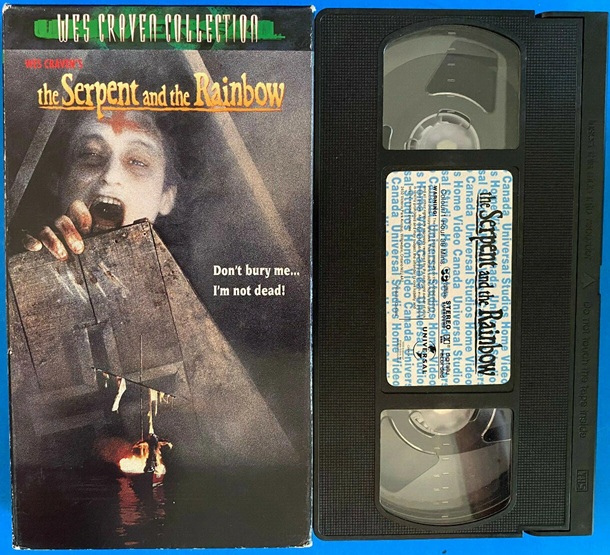
I saw the cover for the VHS of The Serpent and the Rainbow at the video shop after mass when I was a kid. I’ve mentioned before how I would become hung up on the covers of these 18+ rated forbidden films that it seemed I would never see. It stayed with me, and as soon as I could, downloaded and watched the movie. The only thing I remember about the film is that I thought it was shit, so it’s not surprising that I never bothered tracking down the book.

I don’t know why, but it popped into my head the other day, and it took me just a few minutes to locate a copy of the book. I knew that the author was an academic, and the book was somehow related to zombies and voodoo, but I didn’t really know what to expect.

Simon & Schuster – 1985

The book starts off like an adventure novel, the author describing some his experiences in the jungle of south America as a student. This stuff is quite impressive and made me jealous. I never got to travel through the jungle for credits during my time in university.
The main adventure begins when he approached by some weirdo academics who tell him about Haitian voodoo and their desire to acquire the elusive poison that is used to turn people into zombies. There had long been claims that people in Haiti were dying and being buried, only to return to their families years later with little to no memory of the intervening time period. The locals attributed this to voodoo, but the academics believed it was being done with a potent chemical.

Davis goes to Haiti to track this stuff down, and he meets a bunch of colourful characters. He helps one of these weirdoes dig up the corpse of a child and then they mix parts of that decaying infant into a potion with bits and pieces of some minging animals.

After a bit of research, Davis realises that it’s the inclusion of a pufferfish in this mixture that’s responsible for the apparent reanimation of corpses. The poison in pufferfish is known to temporarily paralyze in small enough doses, and it is not completely out of the range of possibility that this poison, along with continued doses of other drugs could result in the kind of zombification that had been reported in Haiti.

From what I have read online, Davis’s claims were not well received by the scientifific community. Very little of the pufferfish poison was actually found in the samples of the zombie potion that Davis acquired. There has been debate on this since, but the fishier element (excuse the pun) to me is the notion of zombification. I can’t find any footage online of actual zombification. I’m not expert on Haiti, but I know that it’s had more than its share of troubles. I find it very easy to understand how stories from a place like this could become twisted and exaggerated. Maybe I’m totally wrong about this, but it seems to me that the entire Haitian zombie phenomena is probably bullshit.

The worst part of this book was that it reminded me of John Russo’s absolutely terrible Voodoo Dawn novel that I read a few weeks ago. I’ve read a few other novels about voodoo (Strange Conflict by Dennis Wheatley and Frank Lauria’s Doctor Orient novels come to mind), but I have to say, the only truly enjoyable book I’ve read that really featured voodoo was Hjortsberg’s Falling Angel.
JAWS: The Books

I saw Jaws 3 at a friends house when I was 5 or 6. I don’t remember anything about the movie, but I know that it left me permanent fear of swimming in the sea. It wasn’t until I was a teenager that I saw the original movie, and I never bothered watching the sequels. I have read that each sequel is significantly worse than the movie that came before it. Over the last few years, I have read a lot of books about killer animals. It’s not a good genre of literature, but its rise in popularity seems to have stemmed from 2 novels published in 1974, James Herbert’s The Rats (review of this series forthcoming) and Peter Benchley’s Jaws. While Benchley never wrote a sequel to Jaws, Hank Searls wrote novelisations for two of the Jaws movie sequels.

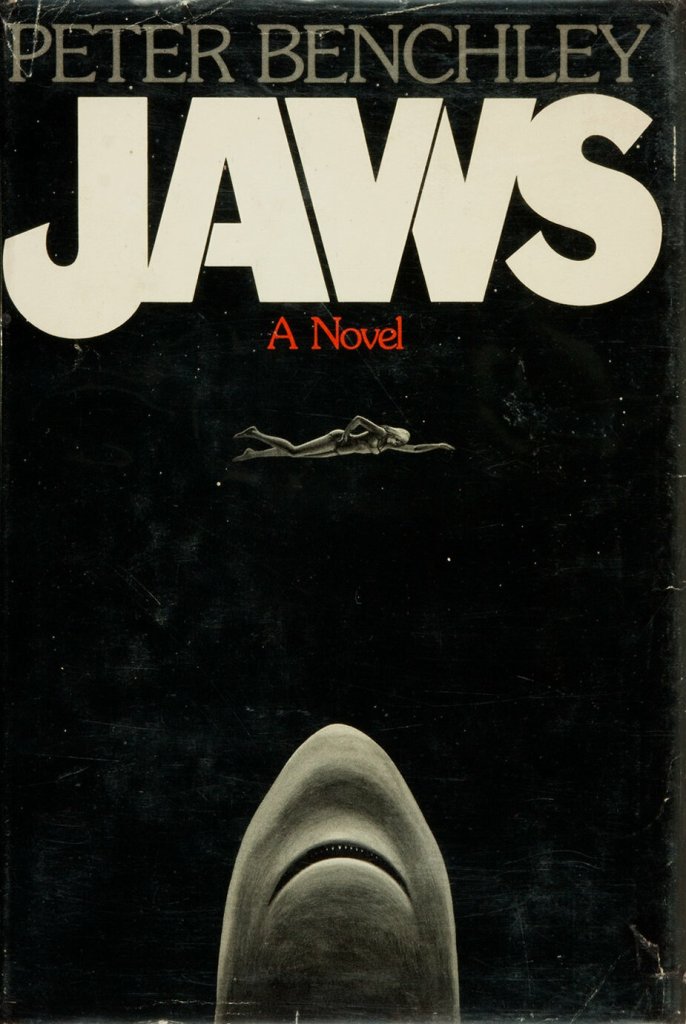
Jaws – Peter Benchley

Doubleday – 1974

Jaws was a bestseller when it came out, but its fame is largely due to the movie version that came out a year after its release. Spielberg’s classic is significantly different to the novel. The basic plot (giant shark attacks small town) is the same, but the focus of the book is more on the characters than the killer fish. There’s more politics and adultery going on. I know some people think that the book pales in comparison to the film, but it has been so long since I’ve seen the film that I was able to read and enjoy the book as its own entity. After finishing, I did go back and watch a few clips, and I’m quite sure the film is more important than the book, but the book is still a decent read.

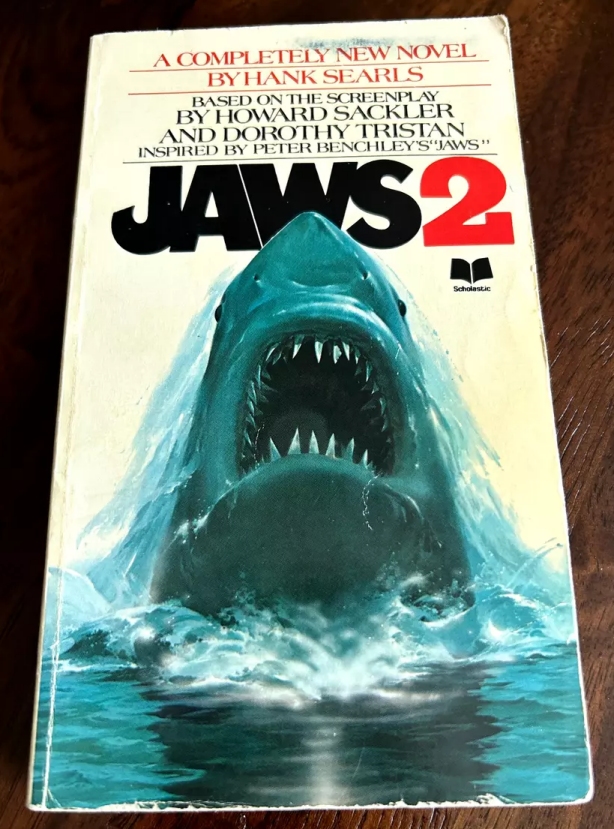
Jaws 2 -Hank Searls

Bantam – 1978

The relationship between the movie version of Jaws 2 and its novelisation seems to be the inverse of the relationship between the original book and its adaptation. I haven’t seen Jaws 2, but the consensus online seems to be that it’s a pointless, if moderately entertaining, retelling of the first movie without Quint, the best character. It’s the same story as the first installment, but this time the shark is even bigger. The novelisation is based on an early version of the screenplay that’s supposedly quite different to the movie, and this book is supposedly better than its film version. I really enjoyed most of it. It’s scarier than the original book. There was one part where the sharks shows up that genuinely frightened me. Searls seems to have had a better understanding of the thrill that a reader wants from a book about a killer shark than Benchley did. The only problem with this book, and it is a big one, is the Deux ex machina ending. The suspense ramps up and up and up, and then suddenly it’s all over. This probably wasn’t Searl’s fault. If it was in the screenplay, he would have had to stick with it. Still though, he could have set it up a little better. As we will soon see, Searls was well capable of adding to the source material to make it more entertaining.

Jaws 3 was not based on a book, nor did it get a novelisation. Again, I haven’t seen it in more than 30 years, but I’ve read that it’s utter shit. I was delighted that I didn’t have to read it.

A few weeks ago, I decided to treat myself to a day of book-shopping. I took the train into town so that I could look through all of my favourite second hand bookstores. Most of them have closed down, and the ones that are left are trash. You’d be lucky to find a few Dean Koontz books in their horror sections. I think I went to 4 different shops and found fuck all. On my way home though, I found this on a wall beside the train station. I thank the trash Gods for looking down kindly on me that day!

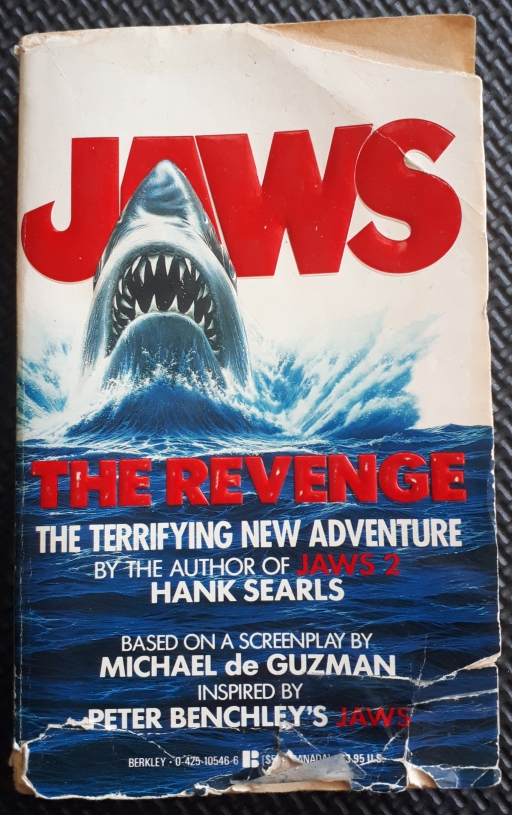
Jaws: The Revenge – Hank Searls

Berkley – 1987

Jaws 4, or Jaws: The Revenge, is an infamously bad movie. It’s about another giant shark who is trying to kill off the Brody family specifically. (Brody was the police chief who killed the sharks in the first two movies.) Somehow another giant shark is able to follow Ellen Brody from Amityville to the Bahamas so that he can kill her. Think about that. A big fish follows the path of an airplane to kill one of its passengers because her husband killed some other fish in the past. It doesn’t make any sense, and the movie’s tagline of, “This time it’s personal.” is truly hilarious when you think about it. How did Searls make sense of this in his book? Voodoo and cocaine!

Jaws: The Revenge is a stupid book. A few years ago, I would have said that if this wasn’t the novelisation of a Hollywood movie, it wouldn’t have been made. Since then though, I have actually read lots of horror novels that are significantly worse than this. The story was sufficiently entertaining to hold my interest, but reading this book has the added appeal of watching an author struggle to make a coherent story out of a bloody squirt of shark shit.

So another shark comes to Amity and kills Brody’s son. Then Ellen, the dead guy’s mom, flies to the Bahamas to be with her other son who is working as a marine biologist. It turns out that he has insulted a local witchdoctor, and the witchdoctor has summoned a spirit to possess a shark to kill him. This doesn’t really make sense though. Why would the witchdoctor summon a shark in Amity when his enemy is in the Bahamas. How would he even know that his enemy had family in Amity? Also, the shark is the son of the shark from Jaws 2. What are the chances?!

In the second book, Searls describes how a sharks consciousness is limited mostly to the instincts that help it feed. The shark in The Revenge is a fan of reggae music and cannot resist a tropical calypso beat. He also feels seriously miffed when he is harpooned.

Apparently, the voodoo aspect was included in an earlier version of the movie’s screenplay but it was deemed “too corny” to actually film. I can’t comment on whether this was a good decision or not. I went back and watched some clips from Jaws 4 after finishing the novel, and I am quite certain that the novelisation, although deeply silly and not “good” in any sense, must be a lot better than the film.

I have a fondness for reading the book versions of my favourite movies, but I’m not a fan of doing things the other way around. If I’ve read the book, I usually don’t have any interest in seeing the movie. I definitely feel the same about the Jaws sequels, especially when I read that the books are supposedly better than the movies. These books were alright, but in truth, the movie version of the original Jaws is the only version of any of these stories that you need to witness.