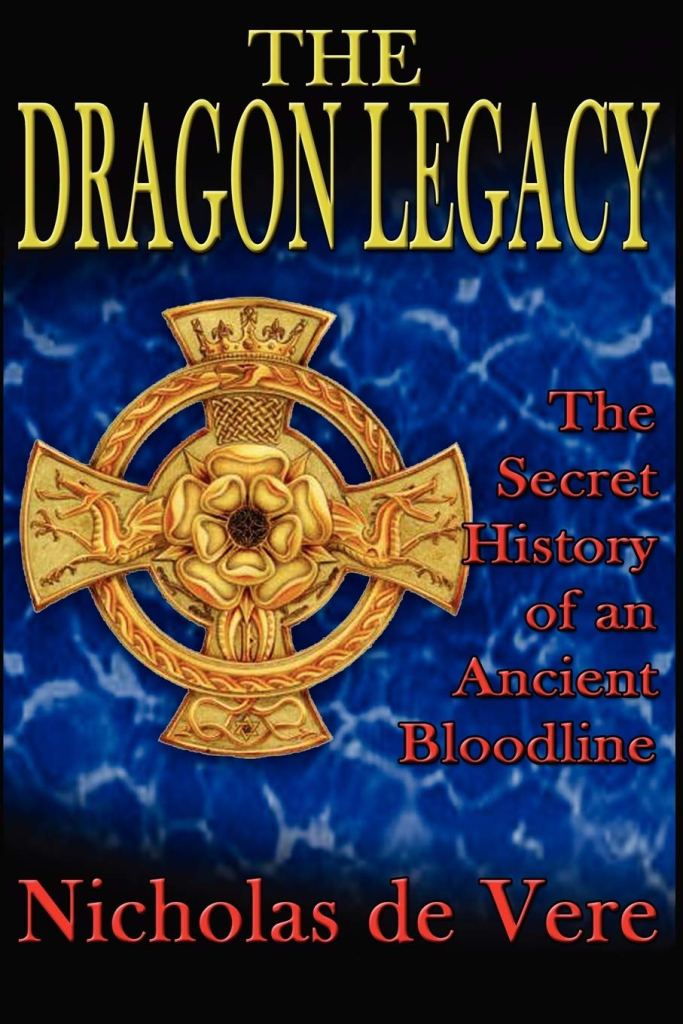
Jesus was a Vampire and a Dragon – Nicholas De Vere’s The Dragon Legacy

It has been a long time since I gave up on a book. When I started this blog, I had more free time and hence more tolerance for absolute bullshit. The last time I started a book and actually found myself unable to finish it was back in 2016 when I attempted a book called You Are Becoming A Galactic Human. A few years ago, I read a book by Tracy Twyman and a friend recommended I read a book by her pal Nicholas De Vere. I knew it was more on the bloodline of Christ story, but aside from that I had no idea what it would be like.

Book Tree – 20024

Before starting, I looked this de Vere guy up. He died a few years ago, but there’s some fairly bizarre claims about him on the internet. He traced his ancestry back and found out that he was descended from royalty, and it seems like he managed to have a royal title legitimately conferred on himself, but I’m not sure of the details there. He also claimed that he was a descendant of Elves, Vampires and potentially Jesus Christ.

I don’t think many people have read this man’s work. Part of this is due to the obscure nature of his claims, and part of it is likely how difficult he made it to understand what he was actually claiming. I spent over a week’s worth of reading on this book and got through less than half of it. The first few chapters weren’t easy to follow, but I could get the basic gist of what they were saying. It became so agonizing after a few hundred pages that I had to give up. My brain wasn’t taking anything in, and I didn’t want to waste another 2-3 weeks staring a book that wasn’t making any sense at all.

I’m going to summarize what I understood of the first few chapters.

Chapter 1
Human beings are dumb idiots. The Dragons (people with dragon blood) are Elves and are a separate species who have been persecuted for the last 1000 years. They are magic and exist on a higher realm that normal humans can’t comprehend. They have better senses than normal people like some animals do. The Grail Code is only applicable between Dragons because everyone else is shit. Dragons ritualistically drink the blood of their kings to gain their knowledge. Literally. Jesus was actually Satanic because Satan was actually good.

Chapter 2
Vampires and witches are all elves. When I was reading the words ‘elf’ and ‘elves’ in the previous chapter, I found it difficult not to think of the elves of Tolkien. It turns out I was right to think this way because those are the kind of elves that the author is talking about.

Chapter 3
Dracula is based in fact. Stoker was actually in the Golden Dawn and based his novel on insider information. Real vampires only drank the menses of beautiful virgins. This would make it likely that Jesus was in fact a vampire.

Chapter 4
The Elves faced a worse holocaust than the Jews. Again, the elves are literally like the elves in Lord of the Rings. The author compares homo-sapiens to hobbits. The elves who kept their bloodline pure weren’t racist because asking them to have sex with a regular person would be like asking a black person to have sex with a monkey. It’s not racist for them to refuse that! (This logic is not mine!)

Chapter 5
Things are getting complicated now. The author seems to think he’s talking to a mate that already understands all of this stuff. He gets into his family history. The de Vere dragon family are far superior to current monarchs who aren’t elven at all. He makes some good points about how garbage collectors never get knighted but provide a much more important service than actors or football managers. I thought this was a very interesting thought.

Chapter 6
Agonizing swill cross referencing grail lore, Irish mythology, kabala and numerology. The main take aways here are the swastika and the Star of David are the same thing. Jews are Aryan. The salmon of knowledge is actually a euphemism for licking the pussy off a beautiful woman. It really seems like the author lives in his own world. He seems to forget that people will have a hard time with him using words that generally mean the precise opposite of how he uses them.

Chapter 7
I cannot read this book anymore. I like the ideas, but the writing is too frantic and confusing.

I am sure there are gems spread throughout the rest of the book, but I am not able to spend any more time reading it. I’m sure de Vere’s fans will say that I’m just a mudblood homo-sapien who wouldn’t be expected to understand intelligent literature like this, but I could trace my ancestry back to the Merovingian Dynasty if I tried hard enough, so I am likely an elf, vampire and a dragon too.

Some Books on Jack the Ripper

Sorry, I am still on holidays, so my weekly post is late again. In April of last year, I mentioned my intention to do a post on books about Jack the Ripper. I recently reread Alan Moore’s From Hell for my post on Nicholas Hawksmoor, the Satanic architect, and before doing so I decided to prime myself by reading Donald Rumbelow’s The Complete Jack the Ripper.

The Complete Jack the Ripper – Donald Rumbelow

Virgin Books – 2016 (First published 1975)

This is the first and only non-fiction book I have read about the Whitechapel murders, and while I don’t have anything to compare it to, I was very pleased that I read this first. This book, as far as I can tell, restrains itself to the facts of the case. It outlines what is known about what happened in Whitechapel during the Jack the Ripper murders. It provides background on several of the key suspects in the murders, but it does not present any one of these characters as the likeliest candidate. The book does a very good job of making it very clear that this is a very complex case that, for many reasons, will likely remain unsolved. I don’t want to get into the events of the murders here as that information is available in a million other places, and I have no clever insights to offer. If you are interested in this case, I reckon this book is an excellent starting point. I’m actually a little hesitant to read some of the other books on the case as Rumbelow includes some details on why they’re probably not accurate.

From Hell – Alan Moore

Top Shelf – 2004 (First published 1999)

The first time I read from From Hell was an upsetting experience. I knew that some prostitutes were going to get butchered, but Moore’s story makes them people, and the violence was actually upsetting. It’s a phenomenal piece of art though. I only read a few graphic novels every year, but this is absolutely my favourite. The amount of research and thought that clearly went into is astounding. I strongly suggest that you keep 2 bookmarks handy while reading through it, one to keep your place in the story and one for the corresponding chapter notes at the back of the book. You must read both. I was very glad I had read Rumbelow’s book beforehand this time. Knowing something of the case made the depth of Moore’s work even more apparent.

White Chappell, Scarlet Tracings – Iain Sinclair

Gollancz – 1987

I read a bit of Iain Sinclair’s Lud Heat for my Hawksmoor post. I didn’t like it. I was slightly disappointed to find out that he had also written a book that involved the Ripper murders. I knew this guy’s ideas had influenced Alan Moore, and I decided that I should check out his Ripper book too. I was hoping that his White Chappell, Scarlet Tracings would be a bit more straight forward than his poetry. It’s not. It’s one of those arty books with a plot that’s buried underneath a weight of literary wank. I read it over a couple of days a few weeks ago. I’ve been putting off writing about it because I didn’t want to think about it, and now I don’t remember much of what little coherent plot there was. A bunch of ugly booksellers go on a road trip or something. There’s some flashbacks to the time of the killings, but nothing that was of any interest to me. Load of shite.

I’ve noticed a few times that people get upset when I dismiss books for being too deep or arty or clever. My review of Arthur Machen’s The Hill of Dreams was particularly offensive to one individual, and I recall somebody getting quite upset when I made fun of Stephen King’s attempt at critical writing in Danse Macabre. If you’re one of these people, fuck you, nerd. Kiss my hole.

These three books were my first real foray into Ripperology. I’m certainly not averse to the idea of reading more on the topic, but my curiosity has largely been satiated. I’d be interested in books that attribute Satanic, occult or extraterrestrial motives to the murders, and while I assume such books probably exist, I also assume that they’re complete rubbish. Much of the allure of reading about the Ripper murders is the fact that these brutal crimes have remained unsolved for more than a century despite the attention they have received. There’s so many theories and suspects that reading more facts about the case doesn’t really hold any appeal for me at this stage. I either want a definitive explanation of who was responsible or I want ridiculous (yet sincere) claims that it was a vampire.

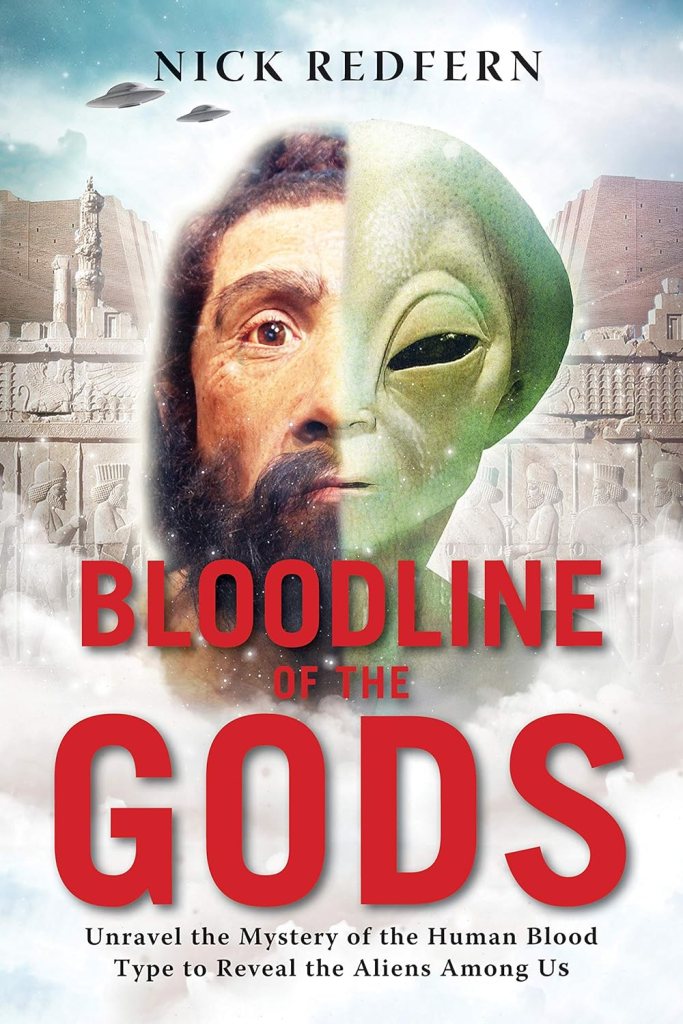
Nick Redfern’s Bloodline of the Gods: Another Extremely Stupid Book about Aliens

I’ve read 2 Nick Redfern books in the last year. The first was about evil aliens and the end of the world, and the second was about progeria patients flying UFOs. Nothing I have read by this man has made me think he is a trustworthy source. Nevertheless, I recently read another of his books, Bloodline of the Gods. I can safely say that this one was much, much sillier than the other two. This is presented as non-fiction, but its connection with reality is so tenuous that it is impossible to take seriously. I read plenty of wacky books, but this one doesn’t even try to be convincing. It’s just a series of ifs.

Bloodline of the Gods: Unravel the Mystery of the Human Blood Type to Reveal the Aliens Among Us

Weiser – 2015

A long time ago, the Annunaki aliens came down to Earth to harvest our gold so that they could take it back to their planet to pump it into their atmosphere to prevent the greenhouse effect from destroying their planet. When they got here, they realised that it was going to take a long time to export all of our gold, so they spliced their DNA with that of the neanderthals to create a hybrid race that would continue harvesting Earth’s gold. These hybrids were slightly unruly, and so some of the Annunaki stayed behind to make sure they were behaving themselves. These are the reptilians. The proof of this story is the fact that many alien abductees have RH negative blood.

Redfern gets into more detail, but the whole thing is so ridiculous that I’m not going to bother getting into particulars. This is clearly a steaming pile of horseshit that the author himself doesn’t believe.

Unlike other authors who write multiple books about aliens, Redfern doesn’t build on what he was already written. All three of the books I have read by him present different, incompatible accounts of what’s going on with UFO sightings and alien abductions. Aliens may well be evil demons, disabled Japanese people or shapelifting lizards, but surely they can’t be all of those things at once.

Honestly, this book was so stupid that I considered giving up after a few chapters. Part of what convinced me to plow through and finish this was the fact that I had an audiobook version that I could listen to while cleaning the dishes. There’s a part in the book where Redfern uses the word “ass”, but the audiobook narrator is British and pronounces it as “arse”. This one quote made the entire experience worthwhile.

It was one thing to get nabbed by aliens, taken on-board their craft, and hosed down like a muddy, old car. It was quite another to get rewarded after that traumatic experience with a fine and tasty piece of extraterrestrial arse

Bloodline of the Gods is Teletubbies, use your imagination crap. You’d have to be a ham sandwich to take this stuff seriously. I don’t think I’ll bother with any more Redfern for a while.

The Mad Gasser of Mattoon: Did a Warty, Transdimensional Ape Terrorize a Small US Town with a Gas Gun?

Last week, I was looking through a set of “Myth or Real” trading cards on archive.org. It featured bigfoot, mothman, and many of the popular cryptids, but there were also 2 cards on a mysterious character called the Mad Gasser of Mattoon. The cards looked cool, and I had never heard of this chap before, so I decided to do a little research.

So in 1944, the small town of Mattoon was terrorized by a weirdo with a cannister of gas. He was running around town spraying this stuff into people’s homes, making them cough, puke and pass out. Nobody died or suffered any lasting problems because of these attacks, but the residents of Mattoon were spooked. Many of the men in town were away, fighting in the second world war, and most of the Gasser’s victims were women. Rumours went around that Gasser was a large, warty ape with a gas gun. The source of this rather fantastic element to the story was added by the town’s local psychic. It was later hypothesized that the Gasser was able to evade police because he had teleportation device.

Over the course of 2 weeks, there were more than 20 attacks. While it is likely that some people did experience something out of the ordinary, it seems probable that the local media’s sensational coverage of the story riled the town’s populace up to an extent that people were looking for something to cough over. After two weeks with little to no progress on the case, local police said that any further victims wishing to report a gas attack would have to submit to medical testing to verify their story. This almost immediately put an end to the reports, and the entire case was soon written off as an example of mass hysteria. There was no Mad Gasser. It was all just the imaginings of some hysterical, lonely women.

Or was it?

The Mad Gasser of Mattoon: Dispelling the Hysteria – Scott Maruna

Swamp Gas Book Co. – 2003

In this 2003 book, the author, Scott Maruna, a chemistry teacher, argues that the hullaballoo around the Mad Gasser was not a case of mass hysteria. There actually was a mad person running around spraying gas into people’s windows. His name was Farley, and he was a closeted homosexual. He was an amateur chemist and apparently ended up in a mental asylum shortly after the gas attacks. His father was an influential person in Mattoon, and so it’s possible everything was covered up.

I have no way of knowing whether Maruna’s claims are true or not, but the book is well written and there’s nothing in here that seems like a huge stretch. Enough time has gone by now that we will never know for certain, but it may well have been Farley. It makes sense to me that a real creep started the panic in Mattoon and that the media blew it way out of proportion resulting in a town-wide state of panic. The claims that the Gasser was a transdimensional alien ape with a ray gun are certainly appealing, but maybe a little unlikely.

Maruna’s book is short (just over 100 pages), and I read it in one sitting. It seems like a fairly complete account of the Mad Gasser phenomenon, and aside from a few recently self-published attempts, there doesn’t seem to be any other books about the topic. Give this a read if you’re interested in the case. Physical copies are pretty hard to come by, but there’s a copy up on archive.org if you need it.

Robert Anton Wilson’s Advice for Stopping the Illuminati from Messing with your Head

Every now and again, I go back to Robert Anton Wilson. After reading his Illuminatus! Trilogy, I went on to theorize about his Sex Magicians. I then took a look at his Irish novel before returning a few years later to his autobiography. While the effects that Wilson’s writing had on the realms of conspiracy and modern occultism are vast, not all of his books are Nocturnal Revelries material. I recently read 2 of his books, Prometheus Rising and The Illuminati Papers.

Prometheus Rising

New Falcon – 1983

Prometheus Rising is basically a self-help book to show people how to untangle their neuroses and understand their own thinking. It’s largely based around Timothy Leary’s 8 circuit model of consciousness. This idea comes up in the first entry of Wilson’s Cosmic Trigger series, but he goes into more detail here. I’m not a psychologist or neurologist or anything, but this concept seems like a load of hoaky bullshit to me. The first few “circuits”, the ones involving survival, emotions and semantics, make some sense. These are definitely things that affect how people think, but by the time we get to the discussions of genetic memory and quantum consciousness in the 7th and 8th circuits, we are dealing with nonsense.

While the main premise behind the book isn’t remotely convincing, Wilson’s writing was entertaining enough to get me through to the end. One of Wilson’s big ideas, and I think he talks more about this in Quantum Psychology (which is essentially a sequel to Prometheus Rising), is the idea of reality tunnels. The fact that Robert Anton Wilson’s reality tunnel incorporated Leary’s 8 circuit model of consciousness doesn’t have much of an effect on how I view his other ideas. It works for him, but I don’t think it works for me. Maybe I just don’t understand it properly.

SMI²LE, another of Leary’s ideas, is also important in this book. SMI²LE stands for Space Migration, Intelligence squared and Life Extension. As Leary and Wilson saw things, these were the goals that humanity should be striving for. I found it painful to see how optimistic Wilson was in the early 1980s. Back then, these guys thought that humanity would currently be living on different planets, educated to the point that we’d be living in a work and war free utopia and that medicine would be bringing us to the edge of immortality. What’s actually happening in the world today? Social media has taken control of our thinking, and it’s promulgating anti-scientific and anti-humanitarian disinformation to an audience that is too complacent to spit out the shit they are being fed. The quality of human life in wealthy nations is actually deteriorating. The most powerful men in the world are narcissistic scum who care only for themselves, and the majority of people are happy about this. We’re completely fucked.

The Illuminati Papers

Ronin Publishing – 1990 (Originally published 1980)

I also read The Illuminatus Papers. This is a collection of interviews with Wilson and essays that are written from the perspective of characters in his Illuminatus! Trilogy. It’s far less focused than Prometheus Rising, but it contains many similar ideas. The 8 Circuit Model of Consciousness and SMI²LE both come up again. There’s also essays on Stanley Kubrick, Ezra Pound, Beethoven and Raymond Chandler and lots of poems. The most interesting parts of this book are the interviews with Conspiracy Digest magazine where Wilson discusses Crowley, Satanism and various conspiracies. Of the 12 books by Robert Anton Wilson that I have read, this one is the least important. I actually enjoyed reading it more than Prometheus Rising, but it doesn’t really add anything substantive to the the author’s big ideas.

Just last night, I found an interview that Robert Anton Wilson did with Nardwuar. I knew that they had talked, but I had never heard the interview before. It’s a good listen. I find that Bob’s interviews and lectures are a more entertaining way of learning about his ideas about the real world. I think I’ll read some more of his fiction next.

The Psychogeography and Megapolisomancy of Hawksmoor’s Churches in the Works of Sinclair, Ackroyd and Moore

Sinclair’s Lud Heat (1975) and Moore’s From Hell (1999)

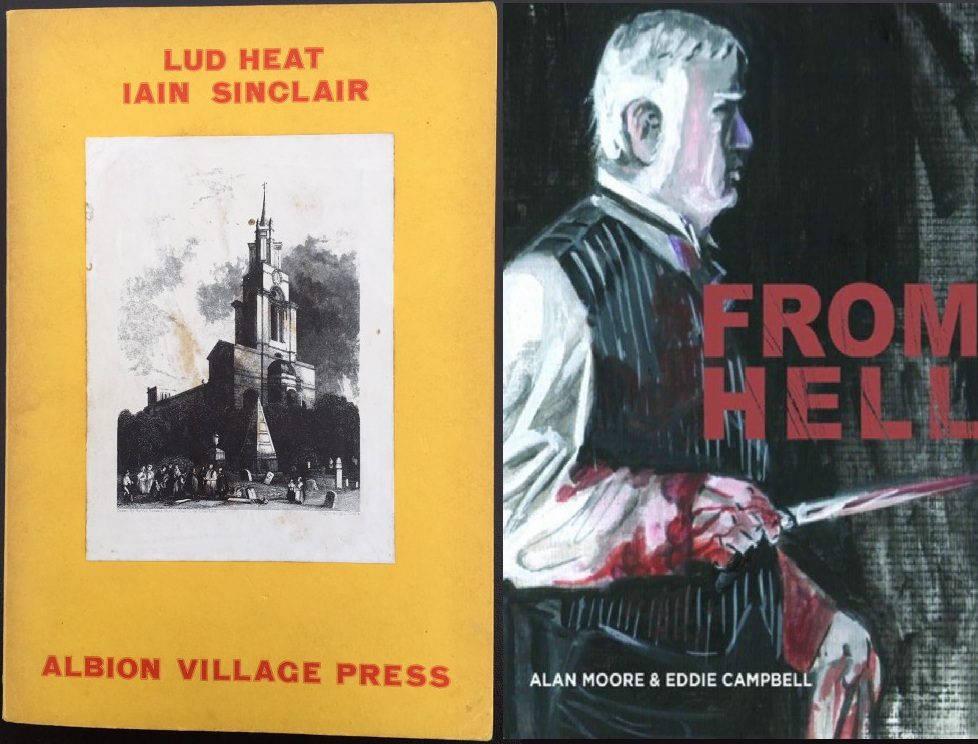
I first heard of Nicholas Hawksmoor when I read Alan Moore and Eddie Campbell’s From Hell, a graphic novel about the Jack the Ripper murders (more to come on that topic in the next few weeks!). Hawksmoor was an architect in the late 17th and early 18th centuries, and in Moore’s book, there are repeated references to the churches Hawksmoor designed in London. Moore suggests that the locations and designs of these churches bely their function as places of Christian worship. Hawksmoor was actually a Satanic pagan, and his churches were designed as talismans to serve in the great ritual of London city. The fact that Whitechapel, Jack the Ripper’s hunting ground, is situated between 2 of Hawksmoor’s churches is no coincidence.

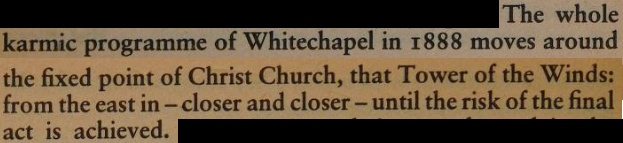
Quote from Sinclair’s Lud Heat

One of the major accomplishments of Moore’s meticulously researched work on From Hell is the synthesis of different conspiracies, characters and ideas from and about London in the late 1880s, and the notion of Hawksmoor’s churches being evil talismans originally comes from an author named Iain Sinclair. In 1975, he published a book of poetry called Lud Heat. The first section of the book is titled, Nicholas Hawksmoor, His Churches, and it’s here that Sinclair puts forth the idea that Hawksmoor deliberately infused his churches with sinister codes and symbols.

Quote from Sinclair’s Lud Heat

While there is no real evidence that Hawksmoor was a Satanist, he did incorporate obelisks, pyramids and other supposedly pagan symbols into his architecture. He was also extremely picky about the sites where his churches were to be built. When plotted on a map, they are said to form a pentagram, and Hawksmoor had them built in curious historical locations.

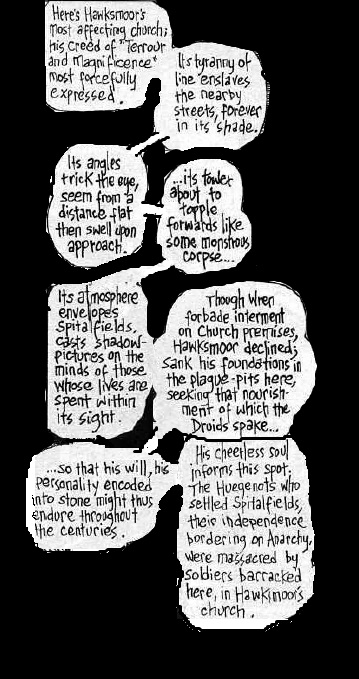
From Hell Chapter 4. Note the claim that the stone of the church will ensure the survival of Hawksmoor’s will.

Sinclair is a proponent of psychogeography. Psychogeography, as far as I understand it, is basically the process of walking around an area in an attempt to understand how its layout and architecture affect people. Alan Moore is friends with Sinclair and has openly acknowledged the influence of Sinclair’s ideas on From Hell. (Sinclair himself wrote a book about the ripper murders which I plan to read soon.)

Lud Heat is very much a poem about London. I’ve been to London a few times, but I don’t know the city well enough to really have a feel of what Sinclair is talking about. I also don’t care much for poetry, so while I read through his Hawksmoor poem, it didn’t really do much for me. This poem was published in 1975, and From Hell was finished roughly 20 years later, but halfway through this period, novelist Peter Ackroyd published Hawksmoor, another novel influenced by Sinclair’s ideas on Hawksmoor and psychogeography.

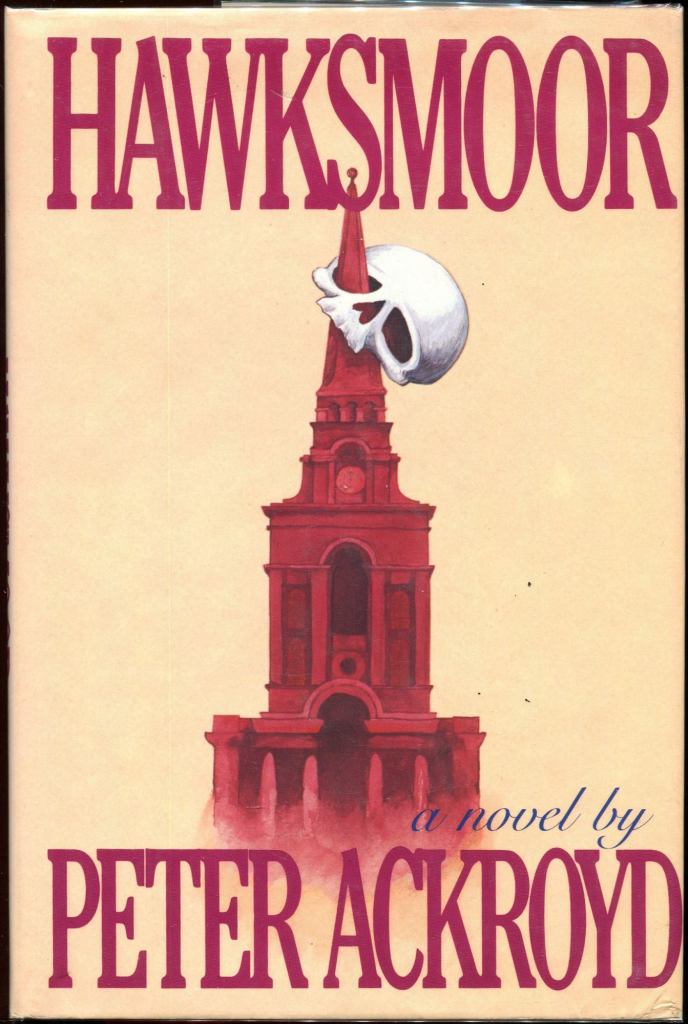
Harper and Row – 1985

Hawksmoor has 2 storylines. One deals with the trials and tribulations of Nicholas Dyer, a cantankerous architect who was initiated into a sinister cult as a child after his parents died of the plague. There’s a few minor discrepancies, but Dyer is clearly based on the real Hawksmoor. This is confusing because the second narrative takes place 200 years later and focuses on a homicide detective named Hawksmoor…

As Dyer’s churches are erected, he commits ritual murder at the site of each of these edifices to instill them with a malignant power. When the narrative switches to the present day, the reader witnesses Hawksmoor investigating similar recent murders that have occurred in the same locations as Dyer’s sacrifices. He is unable to solve these crimes, and the implication is that the sinister power that was imbued into each of the churches is still at work today. It’s not quite clear whether the recent deaths are to reinvigorate the churches with fresh sinister power or whether these crimes are just a grisly echo of evil “reverberating down the centuries”.

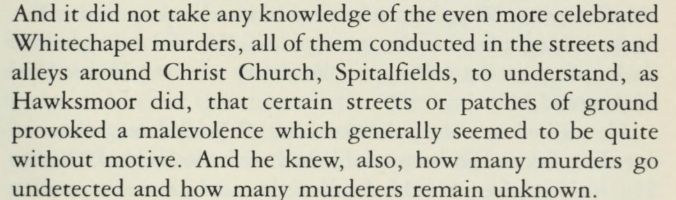
Quote from Ackroyd’s Hawksmoor (Remember that the Hawksmoor mentioned here is actually a police officer!)

Ackroyd only mentions the Whitechapel murders briefly his novel, but the notion that the design and locations of Dyer’s churches are responsible for violent deaths is central. Also, the fact that the murders in Ackroyd’s book are unsolvable does have an eerie parallel with the Jack the Ripper murders.

Ackroyd’s Hawksmoor is entertaining and at times quite funny, and while it’s more literary than what I usually read nowadays, I quite enjoyed it. I had been going through a bit of a lull with my reading material, and as I was reading this, it got me excited about books again. I have been meaning to read some books about Jack the Ripper for a while now, so I jumped at the chance to reread From Hell, and all of this talk of buildings being imbued with sinister powers caused me to revisit another old favourite.

Psychogeography seemed like quite a novel idea to me at first, but then I realised it was very similar to the mysterious science of megapolisomancy described in Fritz Leiber’s classic Our Lady of Darkness. Megapolisomancy: A New Science of Cities is a mysterious (and unfortunately ficitonal) book written by an even more mysterious character named Thibaut de Castries. De Castries believed that modern cities were dangerous places because of the materials used to construct their buildings. The layout and architecture of these buildings can drive people mad. De Castries claims that these pieces of architecture attract paramentals, bizarre entities that feed on human terror. A building designed in a particular way could be used to manipulate these entities into doing ones bidding.

Quote from Leiber’s Our Lady of Darkness

This is pretty much the exact idea that Sinclair, Ackroyd and Moore use in their respective books works involving Hawksmoor. Compare Thibaut’s thoughts there with the Sinclair’s description of Hawksmoor above. Note the emphasis on location, geometry and ritual.

De Castries dies before the events described in Our Lady of Darkness, but the effects of his work are felt long after he’s gone. Compare the following quote from Megapolisomancy with the events described in Ackroyd’s Hawksmoor and Moore’s From Hell. The buildings, these talismans of concrete are designed to house a lingering terror whose effects continue long into the future.

Quote from Leiber’s Our Lady of Darkness. De Castries probably doesn’t want to commit these “manipulations” to print because they involve ritual murders in the style of Hawksmoor!

In Our Lady of Darkness, the protagonist is terrorised by a paramental entity that had been coded onto the local architecture by an infernal work of neo-pythagorean meta-geometry (God, I love that phrase!). Ackroyd’s Hawksmoor leave rooms for a similar interpretation. The murders in From Hell are commited by a human of flesh and blood, but the murderer himself repeatedly refers to the influence of Hawksmoor’s churches on his heinous acts.

From Hell, Chapter 4 “magic… reverberating down the centuries”

Now at first I thought this was all a coincidence. Fritz Leiber’s first novel was first published before Sinclair, Ackroyd or Moore were born, and Our Lady of Darkness actually came out when Leiber was in his late 60s, 2 years after Sinclair’s Lud Heat had been published. Sinclair did not invent psychogeography, but the similarities between his ideas on Hawksmoor and Leiber’s megapolisomancy seem very specific. How would an old man have gotten wind of this new fangled version of psychogeography and put it into his novel? Now I can’t say for certain, but I’ve come across a potential explanation. Leiber was famous for popularizing the sword and sorcery genre along with English writer Michael Moorcock. These two authors were apparently good friends, and doubtlessly recommended books to each other. In 1995, Moorcock actually wrote an introduction to a new edition of Sinclair’s Lud Heat. He claims that he first met Sinclair as the author of Lud Heat, so it’s a long shot, but it’s not entirely impossible that Moorcock had read Lud Heat and suggested it to Leiber before Leiber wrote his first draft of Our Lady of Darkness. I know that Alan Moore is chummy with Moorcock, and Moorcock has also expressed praise for Ackroyd’s work, so it seems likely that Moorcock likely has some interest in their notion of psychogeography… It’s probably just a coincidence, but it’s fun to connect the dots.

I quite enjoyed writing this post. I’m going to have another post featuring From Hell in the near future. I generally avoid talking about graphic novels on here, but Moore is something of an authority on this stuff and I love him as an author and a person. It was funny reading through the appendix at the end of From Hell and seeing mention of my pal James Shelby Downard. Hawksmoor was initiated in freemasonry a few years before he died. I wonder what Downard would make of that!

Bigfoot is a Dog-hating Alien who Loves Menstruating Women: Jim Brandon’s The Rebirth of Pan

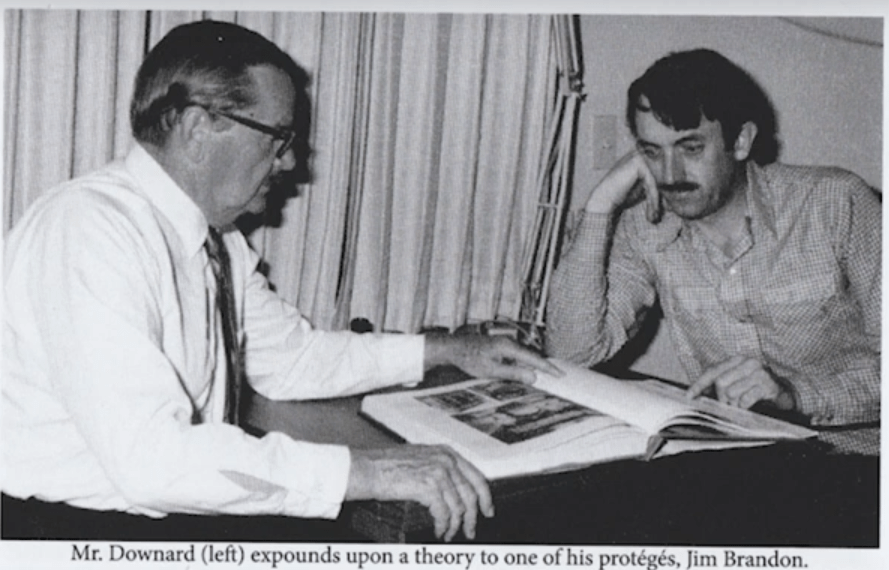
I first came across the name Jim Brandon when i was researching James Shelby Downard last year. Brandon was the guy who was interviewing Downard on the Sirius Rising recording that resulted in Robert Anton Wilson describing Downard’s ideas as the “the most absurd, the most incredible, the most ridiculous Illuminati theory of them all”. A little research on Brandon told me that wrote two books on Fortean phenomena, Weird America and The Rebirth of Pan but that most of his literary output was neo Nazi material that came out under the name William Grimstad.

Downard’s other friend, Michael A. Hoffman II, was another Holocaust denier

Now I don’t have any interest in promoting the beliefs of neo-Nazis, but I do like reading weird stuff, and what I had read about Brandon sounded truly bizarre. After glancing through Weird America, I decided to skip it. It’s basically a list of places in America where Fortean phenomena have been witnessed. It might be useful as a reference book, but the thought of reading it cover to cover seemed pretty boring. I decided to focus instead on his The Rebirth of Pan. A book that claims that the great God Pan, a great and powerful Earth spirit is alive and dedicated to causing mischief in North America.

The Rebirth of Pan: Hidden Faces of the American Earth Spirt

Firebird Press – 1983

This is definitely among the weirdest books I have read. Its central claim, that science has become too rigid to meaningfully account for every known phenomena, is one I have encountered many times before, but the reasons given here to believe this claim are definitely more far-fetched than the usual stuff. I’ll give a brief summary of each chapter, or at least what I got out of each chapter.

Chapter 1
Bigfeet appear near horny people and menstruating. Aleister Crowley and Kenneth Grant point out that sex can be used to bring about bizarre magical entities. This would explain why we can’t catch bigfeet the way we catch other wild animals. Instead of luring our traps with meat, we should use a shagging couple.

Chapter 2
North America is covered in mounds. We don’t know who made these or how. Traditional archaeologists have suggested it was prehistoric Native Americans, but the author seems to believe that it was more likely a race of giants and a race of cannibal pygmies who were responsible.

Chapter 3
This chapter is a discussion of a bunch of artifacts that have shown up in America with text on them. Many claim these were from Native Americans, but others point out the similarities between this writing and Hebrew, Norse and Chinese. Most of these artifacts were dismissed as hoaxes, but author dismisses this notion because one hoax is unlikely but more than one is even more unlikely. This chapter is a bit confusing because Brandon includes both sides of the discussion, and it’s not until the end that he tells you what he actually thinks. He doesn’t think these artifacts come from native Americans or pre-Columbian visitors to North America. He thinks they’re from bigfoot. Now bigfoot here is a transdimensional entity, the kind encountered in The Psychic Sasquatch and some other book I’ve read recently that I can’t quite remember. (Maybe John Keel?) The writing on these artifacts is Norse, Chinese, and Latin, or some combination thereof. Whatever entity left these artifacts came from another time or dimension and they didn’t know which language the locals used, so they wrote in the one they were most familiar with. This is definitely the least unlikely possibility.

Chapter 4
Fossils that feature well preserved lifeforms may not be what scientists say they are. How do we know that these aren’t just rocks that are actually giving birth to these creatures? The author claims that idea that life comes from rocks is much better than the theory of evolution. Proof of this idea is found in the fact that bigfoot often makes piles of rocks and throws rocks at people to attack them.
Weird stuff often happens near water, but more interestingly, weird stuff (tornadoes, bigfoot sightings, random explosions) frequently happen to trailer parks. The author suggests that this is probably because as metal containers, trailers are more likely to trap mysterious orgone energy, but it seems more likely to me that they’re more susceptible to tornado damage because they’re not anchored to the ground and more susceptible to bigfoot attacks because the people living in them are poor and probably uneducated (and hence more delicious to predators). It turns out that many of the strange structures and rocks dotted across America were made by Pan, the Earth spirit.

Chapter 5
More of the same, but this time he looks at how the measurements of some of these structures can be manipulated so that they relate to the measurements of the pyramids at Giza. Some of the structures he discusses here are from a book called Traditions of De Coo Dah by William Pidgeon, a book that has been accepted as a hoax for over a century. Brandon claims that the reason nobody has ever seen the monuments described by Pidgeon is that Pan caused the Earth to swallow them up in a reversal of the way he created many of the mysterious mounds previously discussed.

Chapter 6
Some numbers 23 and 33 are linked with countless weird events. Some names are too. Author lists off bad things that have happened in places called Lafayette or Fayette. These include cryptid sightings, the murders of presidents and prophets and more. He also points out that the Amityville murderer‘s name was Defeo (de-fay-oh), and Aleister Crowley’s mantra of, “do what thou wilt” translated into latin is, “fay que ce voudras”.

Chapter 7
The last chapter is basically a long conclusion that adds little to the author’s claims. It talks about symbolism and alchemy and Sirius. The nost intersting claim here is that some aliens, probably those from Orion, hate dogs because of the link between dogs and Sirius. The aliens from Sirius and Orion supposedly hate eachother according to some alien contactees. Bigfeet also hate dogs, so maybe they are aliens?

Appendices
Only point of interest here is the suggestion that cattle mutialtions are done by bigfoot.

Overall, this book was a boring slog. It had some truly ridiculous ideas, but the reasoning is just too weak for it to be taken seriously at all. I love the idea of reading a book that references the works of Aleister Crowley, H.P. Lovecraft, Kenneth Grant, Edward Bulwer Lytton, Montague Summers, and Robert Anton Wilson, but there was no real cohesion to this jumbling mess. It’s not surprising that the author is a dumb piece of trash.

The RCMP and Aliens from the Sirius Star System are Collaborating to Control your Mind with Microwaves: Martti Koski’s My Life Depends on You!

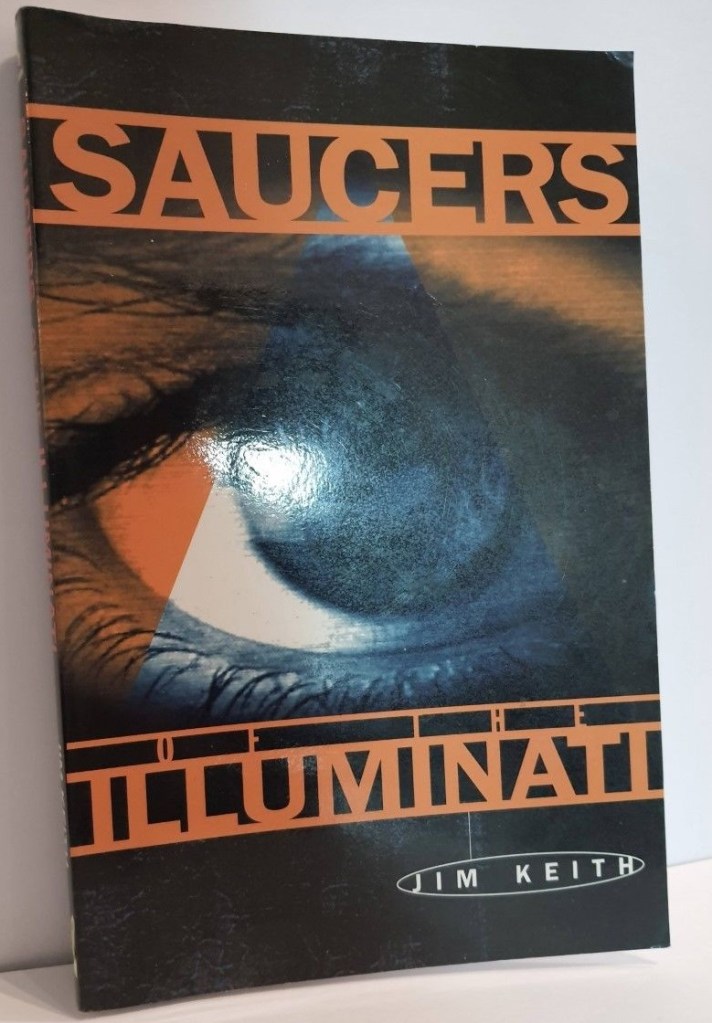
A few weeks ago, while I was reading Jim Keith’s Saucers of the Illuminati, I came across a mention of a text called My Life Depends on You! by a guy named Martti Koski. After immigrating to Canada from Finland, Martti realised that the Canadian police were firing microwaves into his brain to control his mind. When I looked for a copy at my ordinary book sources, I couldn’t find anything. After a little digging I realized it wasn’t actually a book. It was a self published pamphlet that was reprinted in different zines in the 1980s. Luckily, I found a copy archived online.

1980

After 4 years of hearing voices from the apartment upstairs from him, Martti started losing control of his body. He lost his sense of smell and control over his bum and willy. He couldn’t work anymore because the air at his work place was contaminated with carbon dioxide and was making him foam at the mouth. He stopped sleeping and was admitted to hospital after a “heart attack”. (His quotation marks, not mine).

During his stay at the hospital, he heard a new voice, this one claiming to be a spokesman for the RCMP. It told him that he had been chosen as a candidate for spy training. He had been brought to the hospital as this was a similar environment to the Russian insane asylum where he was going to be deployed.

The voice repeatedly told him that the food at the hospital was poisoned and to avoid a certain room. He was later taken to this room where the doctors hooked up a machine to his dick and gave him electric shocks to the tadger. The electronic voice told him to have a wank when this was happening. He tried, but he couldn’t come to a climax. The voice told him that if he didn’t gip, the doctors would stretch his bollocks out. On returning to his room after this experiment, an old man flashed his bollocks at Martti to show him a 15cm long ball-sack as a warning.

artist’s rendition

When he got out of the hospital, Martti started getting bad headaches and couldn’t sleep. He went to live in a hotel, but he ruptured his bladder there twice because the RCMP were stopping him from knowing when to do his wee-wee.

He went back to the hospital for round 2 of spy-training. After leaving a second time, his apartment was flooded with poison gas that caused his mouth to fill with blood.

He decided to leave Canada, but he had to travel to another province to get a passport. The voices and RCMP followed him on his journey. The voices told him that he had no limit on his credit card, and when he got to Finland the voices changed to female voices. These voices were actually aliens from the Star Sirius.

He soon went back to Canada, and there were more gas attacks at his apartment.

After getting sick of being circled by firetrucks, Martti realised that the microwaves that were controlling his body weren’t as powerful when he was outside. This is where the story ends.

Martti contacted the authorities but they never took him seriously. He spent all his money printing leaflets detailing his plight. At one point, he put out a call for others affected by telepathic amplifiers that work with microwaves, and he met some other victims, half of whom got exposed to these experiments in prison. Martti feels he was chosen because he didn’t have any friends or family in Canada.

“Leaders of the Canadian parliament are silently backing brutal human experiments, very similar to those done by the Nazis, the only difference being the use of immigrants instead of Jews.”

If any of this sounds familiar, it’s probably because there are now communities of people who are making these claims online. 7 years ago, Vice made 2 popular documentaries about “Gang Stalking” and “Targeted Individuals“. I knew about paranoid schizophrenics before reading this, but I wasn’t aware of their online communities. There’s thousands of people experiencing this kind of thing and using the internet to network and share their stories. I started looking into these communities, but it got very depressing very quickly. While it’s nice to think of people having a network of support, some of these groups are echo chambers that probably make things far worse for their members.

One piece of good news that I found during my brief look down that rabbit hole was that Martti Koski is still alive and posting. I sent him a message, but got no response. I sincerely hope that he is doing well.

Freemasons Killed JFK as Sacrifice to Extraterrestrial Demons: Jim Keith’s Saucers of the Illuminati

After a decade of running this blog, I have encountered most of the leading figures and concepts in the realms of conspiracy theories, occultism and the UFO phenomenon. When I found this short book that seeks to organise all of these elements into a cohesive narrative, I started reading it immediately.

Illuminet Press – 1999

The alien abduction phenomena may well be a psyop perpetrated against the citizens of the world by a secret society that maintains control of many major government institutions. They are doing this as part of an occult ritual to maintain their control. They may possibly be doing so with the aid of actual extraterrestrials. It is also possible that the extraterrestrials that they are dealing with are actually demons. The Illuminati have had so much disinformation spread about this stuff that it’s basically impossible to know what is real and what isn’t. (Disney’s The Lion King is actually a movie about the coming Messiah.)

This book was ridiculous nonsense. I mean, that seems pretty obvious, and anyone expecting anything else from a book with this title would have to be buffoon. I didn’t expect to walk away convinced of anything when I started this, but I had hoped to be more entertained.

Jim Keith tries to synthesize ideas from the writings of Aleister Crowley, Kenneth Grant, Michael A. Hoffman II, Philip K. Dick, Robert K.G. Temple, the Holy Blood, Holy Grail guys and James Shelby Downard. The above authors are legitimately some of the loopiest nut jobs around, and while it’s fun to try to see similarities and connections in their work, the resulting narrative is so ridiculous that it’s barely worth reading. The freemasons killed JFK with mind-controlled assassins as a sacrifice to their Satanic alien accomplices. Parts of the proof of this idea are the ramblings of a science fiction author who was going through a nervous breakdown and the religious beliefs of a remote tribe in Africa.

This is the third book by Jim Keith that I’ve read in the last few months. He also compiled The Gemstone File and Secret and Suppressed, but he actually wrote Saucers of the Illuminati by himself. I get the impression that it’s the most out there of all of his books. There was some interesting ideas in here, and it gave me the names of a few other weird texts to find, but there’s too much going on in here for it to be even remotely convincing. I reckon I’ll give Keith’s other books a look at some point in the future.

“I went to a different planet where the spacemen drink coffee and don’t cheat on their wives.” Woodrow Derenberger’s Visitors from Lanulos

I would imagine that I have read more books on aliens than most sensible people, but in truth, I have only scratched the surface of UFO literature. Within ufology, there are texts that get mentioned again and again, and there are certain cases that many UFO writers expect their readers to be familiar with. One of the foundational texts of the field (maybe because of its role in John Keel’s Mothman Prophecies, another classic) is Woodrow Derenberger’s Visitors from Lanulos.

Originally published 1971

In truth, it has been many a twelvemonth since I read Keel’s Mothman book, but one of the things I do remember from it was the name Indrid Cold. Indrid Cold was a spaceman from a planet called Lanulos. He appeared and spoke telepathically to a salesman named Woodrow Derenberger when Woody was driving one night. After this Woody’s life changed forever. This book tells Woody’s story.

The first half of the book describes Woody’s encounters with Indrid Cold and his alien buddies and their trips around the universe in the spacemen’s spaceship. The latter half is mostly rants about how the government can’t be trusted because they are covering up the existence of our benevolent space brothers. Here’s my summary:

Ch.1
Woody meets an alien on the road and has a telepathic chat. The alien is nice. Woody tells his mates and becomes famous.
Ch. 2
NASA won’t disclose their alien info to public in case it causes a wave of suicide and women throwing their babies in front of trains.
Ch. 3
Indrid Cold and his buddy show up on the author’s doorstep and tell him about their world’s religion. They have no wars because they communicate telepathically and everyone loves everyone. Humans can learn telepathy too. The author can talk telepathically with 2 of his mates.
Ch. 4
Woody goes for a ride on a spaceship. They go to the Amazon, then Saturn and then Indrid’s mother ship. Woody meets lots of nice people there and eats alien potatoes. They take him to their planet but don’t let him get off because he’s not immunized. They tell him that they can let him live on Mars or Venus if he wants. It’s strange to me that these aliens are just men.
Ch. 5-7
Woody goes back to Lanulos and goes to Indrid’s home and meets his kids. Indrid has a daughter who was born shortly after Christmas. How that makes any sense to an alien is confusing. Woody goes out for a walk. The streets have built in escalators like at the airport. All the aliens are nude, and when Woody takes his clothes off to fit in, they stare at him because they have never seen a fat person before. Their existence is paradise. These aliens from a different planet eat beef and drink coffee. They don’t have sex outside of marriage. They are Christians and believe they will be with jesus when they die. A bit odd…
Ch. 8
Woody tells of the humanoids, a different race of aliens who like to steal things from people. Indrid Cold and his buddies chase these pesky (although not malicious) aliens out of the universe for annoying woody.
Ch. 9
Another alien takes Woody for a spaceship ride around the world. Their first stop is Iraq.
Ch. 10
Woody recounts some amusing events including the time that John Keel fell into a cowpat in his garden and having to deal with a rumour that the aliens had impregnated him.
Ch. 11
Woody describes the alien’s relationship with his family. His wife and kids were initially terrified, but once Indrid and his buddy dressed up as salesmen and tricked his wife into letting them into her home, she came to trust them… Woody boasts how he would get the space people to track his wife when she left the house alone. Quite a creepy thing to think about. Was he just following her himself and gaslighting her for fun?
Ch. 12
Woody goes to Venus. It is covered in vegetation and rivers and lakes. It’s always 100 degrees there. (It’s actually usually over 800 degrees and has no water.)
Ch. 13
Woody and his wife go to a party with a bunch of other freaks who constantly see spaceships. Unsurprisingly some aliens come to spy on them but run away when the partygoers start making spaceship noises.
Ch. 14
A few stories from other contactees including a mentally ill housewife who was cured of her neuroses on a trip to Lanulos and a doctor who gets telepathic advise from a Martian doctor on how to treat his patients. At one point aliens broke into this doctors house and scared his children when he wasn’t home.
Ch. 15
A race of dwarfs from the planet Jammu come to Earth and take blood samples from people under the orders of a dwarf named “Marma”. Men in Black are members of government agencies who want to maintain the status quo.
Ch. 16
The Government knows all about the aliens, but they keep it secret for control. They are liars. At this point the book is taking a very conspiratorial turn.
Ch. 17
Details a bunch of UFO sightings
Ch. 18
Men in Black call Woody and his family. There are no bad aliens visiting Earth because bad aliens wouldn’t be able to get a flight license from the Intergalactic Federation.
Ch. 19
Some more UFO reports
Ch. 20
The government know everything and are keeping it all a secret.
Ch. 21
Government scientists can’t be trusted. The military have alien crafts, but these weren’t from crashes or shot down. The aliens gave them to the military.

Obviously, the whole book is a bunch of nonsense. The visits to Lanulos were only marginally less ridiclous than Cecil Michael’s Round Trip to Hell in a Flying Saucer. I know that John Keel had a reputation for being willing to twist facts to suit his narrative, but it’s hard to believe that any sensible person would give any credence to Derenberger’s insane ramblings. This is cuckoo- crazy rubbish. Much of the attention paid to this book nowadays comes from Derenberger’s description of Indrid Cold’s creepy smile, but I don’t recall that being mentioned in the book, and if it is, it must have been a brief mention. The only part about Indrid’s face that I can find is where in the first chapter it says his expression changed sometimes. Maybe Derenberger did mention it, but it seems that the internet has really blown that tiny detail out of proportion. According to Woody, ol’ Indrid was a super-genuine, nice fellow.