2022, The Year in Review

Normally, I focus on a book, author or theme in my posts, but once a year I do a post about this blog itself. If that seems goofy to you, piss off until next week. 2022 was a good year for me, but I simply don’t have as much time to blog as I used to. Work and family take up most of my day, and this year I also produced a series of podcasts and got involved in a few musical projects. (I also cursed and un-cursed a youtuber.) I’m still reading as much as ever, but I find it harder to find the time to take and crop book photos, research authors and actually write posts. There were actually a few weeks this year when I didn’t post anything! I have a huge backlog of half-written posts that will appear in the new year.

It’s funny looking at the site’s stats. The amount of visitors on this site has gone up every year, but the rate of growth has decreased substantially over the last year and a half. This blog has been online for almost 8 years now, and there has to be a limited audience for a blog on weird, old books, so maybe it has just reached it’s peak. Then again, the stats reveal more. The amount of on-site comments and likes has decreased dramatically. Maybe the quality of my blog has gone down in the last two years, but I also suspect that people aren’t signing in to wordpress.com to browse through blog posts as much as they used to. I’m not upset at the lack of likes, but it does make me feel a bit old fashioned. Has blogging gone the way of alchemy?

Some of the slow-down might be due to the fact that I’ve pretty much given up on promoting the blog through social media. Being on facebook makes me hate everyone, and twitter is a useless piece of garbage. The more active you are on those sites, the more prominent your posts will be in others’ feeds, and personally, I find this idea abhorrent. They are rewarding loudmouthed fools, and their owners are turds. No thanks. I’ll cut off my own cock before I start a tiktok.

A lot of what I read in 2022 was made up of stand-alone paperback horror novels. These things are usually easy to digest and don’t require serious analysis. Some of them were utter rubbish, but every now and then I’d stumble upon a Throwback or Blood Fever and really enjoy myself. I was delighted to finally read Pierce Nace’s insane Eat Them Alive (while suffocating with COVID), and getting my hands on a copy of Barry Hammond’s extremely rare Cold Front was one of the highlights of my year.

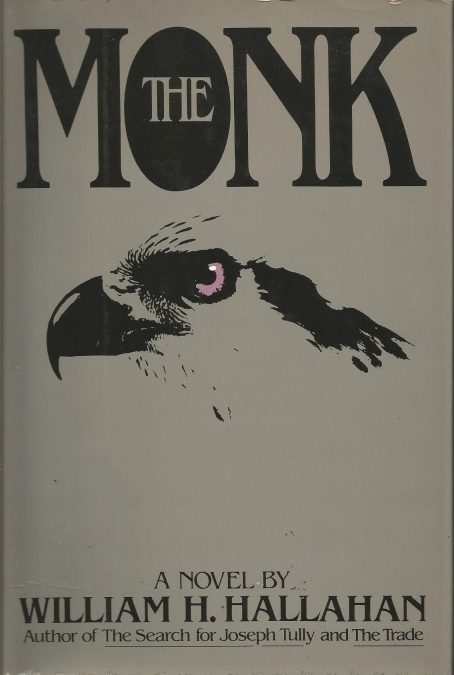
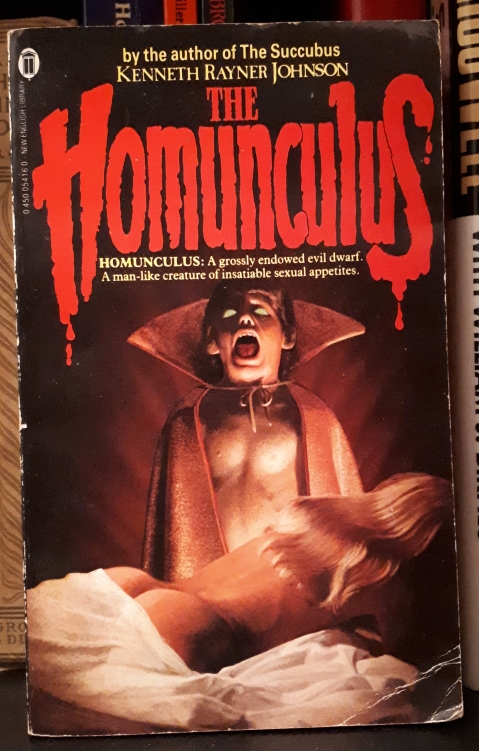
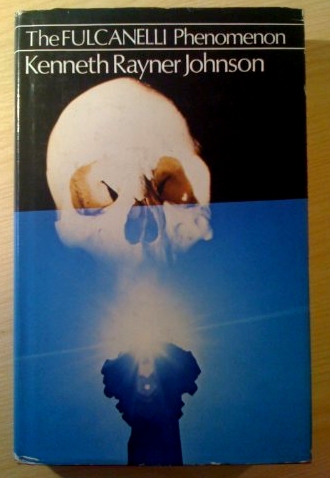
I also did a few posts on specific authors. I read several books by Alan Ryan, Thomas Piccirilli (Part 1, Part 2) and William H. Hallahan. I’m fairly certain that my posts on Kenneth Rayner Johnson and Eric Ericson are the most comprehensive articles about those writers currently available online.

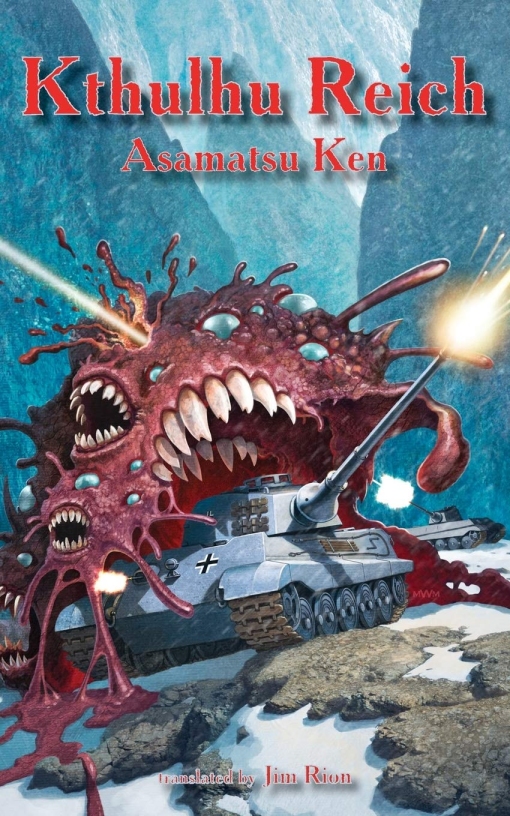
My posts on Robert Bloch and Robert E. Howard finished my series of posts on the weird fiction of the members of the Lovecraft Circle. I also read and enjoyed Asamatsu Ken’s more modern work of Lovecraftian horror, Kthulhu Reich. I’m not sure where I’ll go next with this stuff. Maybe Ramsey Campbell’s short stories.

I did a few non-fiction books in 2022. They were all terrible, but The Beginning Was The End by Oscar Kiss Maerth was so terrible that it became my favourite book of all time. It’s a book about cannibal monkeys, and if you haven’t read my review of it, please do so right now.

Well, there you go. Another year older and grumpier. I wrote posts like this for 2016, 2017, 2018, 2019, 2020 and 2021 if you want to take a trip down bad-memory lane. You can also check out my index page for individual links to the 500+ books I have reviewed here so far. Email me at dukederichleau666(at)gmail.com if you have any recommendations or questions. I hope that this blog has been interesting. Happy new year!

Seán O’Connor’s The Mongrel

The Mongrel
Matador – 2018

A horror novel about a Dubliner getting stranded in the Wicklow mountains, written by a Dublin author who plays in heavy metal bands? I really wanted to like this book. Truly, I did. Unfortunately though, it’s not very good.

There’s 4 main parts to this story. The first part, the argument between the protagonist and her boyfriend, is unnecessary and could have been worked into a flashback in the second part where they go on a reconciliatory drive in the mountains. Show, don’t tell. The third section is passable survival fiction and provides the only excitement in the book. The pregnant protagonist is stranded in a broken-down car with with a hungry wolf outside. Things get gooey. The final section descends into utter nonsense. An utterly unbelievable supernatural element is thrown in, and the plot collapses in on itself.

I got the impression that Seán O’Connor wanted to write a book, so he sat down and tried to come up with a story to tell. The plot feels entirely forced. There’s elements that make no sense, and there’s bits that are painfully underdeveloped. How did Phillips best friend end up on Erin’s dad’s team? Why were Phillip’s knives in the boot of his car? A wolf killed her mom? (Ok, this bit is kind of explained at the end, but I actually rolled.my eyes when it was first mentioned). The ending feels rushed and, quite frankly, stupid. I don’t think I’ve ever said this before, but another 50-100 pages of plot development could have made this book a lot better.

I don’t read a lot of modern fiction, and I feel like a jerk shit-talking an active writer’s work. I recognize that it takes more work to write a book than to sit here picking it apart, but this novel is an absolute mess. O’Connor has published three other books since this came out, so hopefully they are better.

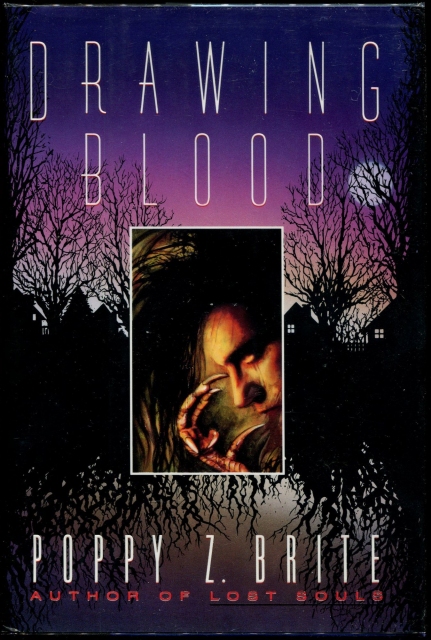
Drawing Blood – Poppy Z. Brite

Evening Star Books – 1993

I had read two Poppy Z. Brite books before starting Drawing Blood. While I enjoyed both Lost Souls and Swamp Foetus, I also felt that I would have enjoyed them even more if I had encountered them when I was younger. I felt the same way about Drawing Blood for the first few chapters. I kept telling my wife how much I was enjoying it. The story set up was weird, but it had a queer computer hacker, a haunted house, and a stripper in a Ministry t-shirt. Things were off to a very good start.

When Trevor was just a little kid, his dad went nuts and killed his whole family in a house in the small town of Missing Mile. As an adult, Trevor goes back to this house to confront his past. When he’s there, he meets Zach, a hacker who is on the run from the government. They fall madly in love with each other, but before they run away together, they try to come to terms with Trevor’s past.

Unfortunately, I found the second half of the book almost unbearable. The following paragraphs contain spoilers, so skip to the last paragraph if you’re planning to read the book.

I am a prude, and I don’t like extended descriptions of sex, straight or gay. There’s some pretty long sex scenes here. I’m sure these are really great for some readers, but I didn’t like them.

I didn’t like the fact that the climax of book occurred while the protagonists were tripping on mushrooms. I’ve read and enjoyed plenty of books about drug users and their experiences, but it felt a bit cheap for the resolution of the story to take place while the characters were high on psychedelics. They witnessed poltergeist activity in real life, and the drug trip at the end felt gratuitous and unsatisfying.

There’s a long, unnecessary scene in which Zach becomes a singer in a local rock band and plays a concert. This dude is on the run, and he agrees to perform his first concert ever. It turns out he is actually a rock god, and he gives the performance of a lifetime. This was entirely unbelievable and painfully cringey. Even as I teenager this would have made me balk. Thinking about it now is making me uncomfortable.

At the end of the book, the two protagonists escape from the United States and go and live in Jamaica. Yes, the two gay men go and live happily in Jamaica. One of them grows dreads, and they spend their days singing reggae and smoking weed with the Rastas. Makes sense, right? I mean, if Jamaica is known for anything, it’s the fact that it’s a living paradise for homosexuals.

I know some people love this book, but I found it very disappointing. I’m a straight guy in my late 30s, so I’m not the target audience for this work, but that didn’t stop me enjoying Lost Souls and Swamp Foetus. Drawing Blood was just a little too vampirefreaks.com for me. That said, I will defintely be reading Brite’s novel Exquisite Corpse in the future.,

Go Down Hard – Ali Seay

Grindhouse Press – 2020

I recently got an email with some suggestions on books with violent female protagonists. This one got a special mention, and it’s fairly recent, so it was easy to track down. I read it over a few days. It was pretty good.

This is the story of Meg and Jack. They’re both serial killers who end up on a date together. I won’t ruin the ending for you, but I will confirm, it is quite violent.

Maybe it had something to do with how I heard of the book, but I found the plot a bit predictable. This is a book by a female author that was published and well received in 2020. Look at the cover. There’s certain things that I knew that this book would not contain. Once the plot is set in motion, there’s only one possible outcome. By definition, rape-revenge stories have to end a certain way. This book doesn’t rigidly adhere to the classic rape revenge formula, but it’s not far off. Also, even aside from the unlikely coincidence that gets things going here, the plot is a little unbelievable. Meg, the female serial killer, only kills men who have committed sexual assaults. Yeah right. She’s also successful enough in her day job to have bought a house. While these features make her a more sympathetic person, they also don’t seem like the qualities of a real serial killer.

Don’t get me wrong though. It is deeply satisfying to read about a sexual predator being badly hurt. Go Down Hard makes good on its promises. It’s a fun read.

Mark Kendall’s Killer Flies

Killer Flies – Mark Kendall

Signet – 1983

I knew nothing about this book when I started reading it, but if you had asked me to guess the plot, my guess would have been very accurate. Honestly, this says more about the book than my expertise.

This is a book about a swarm of genetically altered flies who turn bad and start killing everything in sight. It was so similar to Gila! by Kathryn Ptacek that I wondered if both Kendall and Ptacek had attended the same “write your own animal attacks horror novel” workshop. One book is about lizards and the other flies, but episodically they’re almost identical. When I looked through the goodreads reviews after finishing the book, I noticed that I was not the only person to notice the similarities here. Killer Flies came out two years after Gila! too, so it looks like it was the rip-off. Apparently Mark Kendall is a pseudonym for a writer called Melissa Snodgrass, and it seems like she is not hugely proud of this work.

Honestly, this was pure trash. It’s exactly as bad as it looks. In the end, the main characters, 2 men and a woman who are involved in a ridiculous love triangle, kill the flies by playing a song at them.

Apparently this was quite a difficult book to track down for a while, but it was recently republished by Encylopocalypse. I love that there are publishers getting this kind of crap back into print. It would be a great shame for a person to have to pay more than a few dollars for trash like this.

The above comments may seem quite critical, but although they are all true, I did actually quite enjoy this very silly piece of trash novel about killer flies.

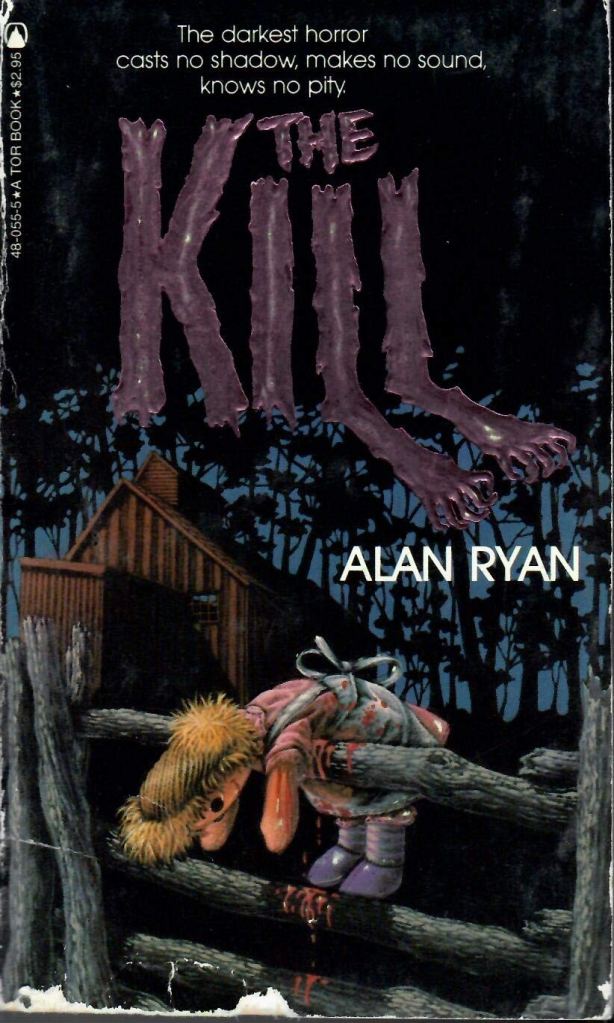
The Trouble in Deacon’s Kill: Alan Ryan’s The Kill and Dead White

The Kill

Tor – 1982

I really got into this book when I was reading it, but the ending was a let down.

The novel starts off with a child being murdered in the woods near a place named Deacon’s Kill. This scene is deeply unpleasant, but it does a good job of engaging the reader. Soon after the kid dies, a young professional buys a house in “the Kill” and invites all her friends for a party. One of them goes out to pee in the woods and gets murdered. A young couple who had been at the party then start living in the farm house and making friends with the locals, but it’s not long before they realise something bad is in the woods near their house.

That’s a pretty solid set up. I was totally invested at this point. I read the first 200 pages of the book in one sitting. Unfortunately, the ending of the book happens too fast, and the explanation given for the kills in The Kill is bizarre and unsatisfying. I’m going to talk about it in the next paragraph, so maybe skip that until you’ve finished the book.

A prehistoric, invisible, almost invincible man was fossilized inside a stone until it rolled down a hill and cracked open. I’m not a geologist or historian or anything, but the last time that the Eastern part of the United States was under water was the Cambrian period, about 50 million years ago. This guy is pretty old. Also, if he doesn’t weigh enough to make a footprint, how does he exert enough force to kill people? There’s no explanation given to this extremely mysterious antagonist. It just doesn’t work.

Dead White

Tor – 1983

I had planned to include two of Ryan’s novels in this post, but I didn’t realise when I started Dead White that it is also set in Deacon’s Kill and features some of the same characters as The Kill. It’s not a sequel, but the town itself is as much a character here as in The Kill, and I would strongly recommend reading these books together. The text also references Charles L. Grant’s Oxrun Station and Stephen King’s Overlook Hotel as if they were real places. I thought that was pretty cool.

The events in Dead White take place only a little while after the events of The Kill. A big snow storm hits the town of Deacon’s Kill at the same time that a circus train full of diseased, bloodthirsty clowns arrives at the town’s abandoned railway station. This sounds silly (in the best possible way), but the writing is good enough to fill the book with suspense and atmosphere. The chapters are all fairly short too, and every time I would tell myself, “One more before bed.”, I’d end up reading 7 or 8.

I really enjoyed reading The Kill, but the ending fell flat. Dead White is just as enjoyable, but the ending here is more cohesive while remaining just as bizarre. It is a book about murderous clowns, but it predates both King’s It and Killer Klowns From Outer Space., so it doesn’t really feel like the cheesy clownsploitation horror that I’m sure we’re all sick of. I really enjoyed it. I’ll definitely be reading Ryan’s Cast a Cold Eye in the future.

Eric Ericson’s Esoteric Occult Trilogy – The Sorcerer, Master of the Temple, and The Woman who Slept with Demons

Several years ago, as I was reading Sandy Robertson’s book about Aleister Crowley, I came across the following passage:

I am a fan of both occult lore and biscuits, so I knew I had to find and read this promising book. When I looked it up, I found that the author had written 3 occult novels, and not being a coward, I determined to track down and read all of them. It only took 5 years.

The Sorcerer

NEL – 1978
This book starts off with a scientist realising, much to his dismay, that the orgy he is attending is actually a sex magic ritual being performed by a coven of witches. He’s even more annoyed when he realises the ritual is serving as his initiation into the coven.

The coven leader, a man with scarred face named Frazer, takes a shine to the new lad and renames him Thomas. Frazer is a shifty dude, and although his followers respect him, this respect is borne out of fear. Thomas hates him straight away. It turns out Frazer is on the quest for immortality, and he is willing to sacrifice anything to achieve it. He’s a real scummer. The plot from this point is fairly predictable

I had read a few comments online that suggested that the main thing that set Ericson’s writing apart from the writers of other occult thrillers was his knowledge of ceremonial magic. His theory of magic falls in line with much of what I have read of the topic, but the potency of the magic in this book is pretty fantastic stuff. We’ve got festering zombies, soul transference, astral executions and a poo spell. This is fiction though, and if it were more realistic, the book would suck. Also, in order to figure out his magical powers, Thomas has sex with all of the women in the coven multiple times. Cool.

The fact that the protagonist is a scientist made things more interesting. He kept trying to rationalise what was happening and trying to use scientific reasoning to enhance his magical abilities. He failed at the former, but succeeded in the latter. I don’t know if that was supposed to make a point.

This book is only 224 pages long, but it took me 9 days to finish. I didn’t dread reading it, but I didn’t look forward to it either, and I only ever managed a few chapters at a time. It was alright.

Master of the Temple

1983- NEL
When I look up of a book or series of books and find that there’s little to no information about them online, I get intrigued. Aside from a few brief goodreads reviews, I wasn’t able to find anything about Eric Ericson’s books. Might they be forgotten esoteric masterpieces?

No. The reason that nobody talks about these books is that they’re boring as shit. Honestly, Master of the Temple is one of the worst novels I have ever read. It’s so, so fucking terrible. I’m going to summarise the plot here to save you the trouble of reading this utter hog’s shit.

Jonathan is a sales manager for a company that makes biscuits. He’s also a member of The Masters of the Temple, a secret society of sex magicians. The first part of the book describes his business trips around Europe. He’ll meet up with a biscuit distributor, do a little business and then sneak off for a bit to visit the local lodge of The Masters. There he will have sex with a beautiful woman with large breasts. Unfortunately for Jonathan, his boss, a lad called Braithwaite, is always on his case. Jonathan performs a magical ritual to summon the demon Abaddon to deal with his pesky boss, and poor old Braithwaite ends up in hospital with a horrid stomach condition.

With Braithwaite out of the way, Jonathan is promoted and ends up touring the United States trying to increase the biscuit company’s American presence. Things go pretty much the same way that they did in Europe, but the women here have even bigger tits. He meets one with an enormous rack and falls in love.

When he gets back to England, his aunt calls him and tells him that she’s sick. This triggers a flashback to when he was thirteen and his aunt gave him a blowjob. It turns out that she spent 5 years sexually molesting him. This was a bit of a weird turn, but things soon got weirder still.

Braithwaite, the lad he cursed, jumps out a window and kills himself, so Jonathan goes to his old boss’s secretary’s house and repeatedly rapes her until she goes insane.

Some other members of his order find out about this, so they kick Jonathan out of their clubhouse. Jonathan is so upset by this that he drives his car into a wall and kills himself.

My concern here is that I have made this book sound more interesting than it actually is. It’s nowhere near as interesting as I’ve just made it sound.

Here are some problems:

  • While the above story is fiction, most of this book is not. I’d say at least half of the book is an account of the history of Western esotericism. No thanks. I’ve read that stuff before.
  • Sex magic is seriously cringey. I far preferred the biscuit salesman stuff to the extended scenes of Jonathan holding in his cum. Gross. There’s one part where he’s having sex with a prostitute where he says to himself, “I who am a perfect king to the people entrusted to me by god, I who am by God’s command their shepherd, Have never tarried, never rested.” It was a bit like that scene in American Psycho where Bateman is looking in the mirror at his own muscles when he’s fucking a prostitute, only lamer. Honestly, when you think about the arrogance of people who are into this stuff, it’s mortifyingly embarrassing. Human beings are animated filth, and cumming is like shitting and pissing; it feels good because our bodies need to do it. To think that holding in your gip for a while brings you closer to god is downright silly.
  • Unlike in The Sorcerer, the magic in here is fairly realistic. There’s no astral projection or people getting hit with blue lightning. There’s rituals, and these rituals seem to have effects, but a sceptic could put these effects down to coincidence.
  • The main character is a preppy fucking douchebag. The gargoyle on the cover of this book should be replaced with a picture of a red-haired twat wearing a scarf.
  • There is not a single female character in this book whose breasts are not described. The main character of this book is a biscuit salesman, but not a single biscuit is described. I am a fan of tits, but I am also a fan biscuits, and this ratio was fucked up. He should have whipped out a packet of jammie dodgers while he was getting a wank off the old Finnish crone in the sauna. That would have made that scene much more entertaining.
  • It’s sooooooo fucking long.

Seriously, Master of the Temple is a horrid pile of brown, brown scat from a rotten shitter. Avoid it at all costs.

The Woman Who Slept with Demons

NEL – 1980
After finishing Master of the Temple, I waited a few months before starting on The Woman who Slept with Demons. It has a far cooler title, but I assumed it was going to be terrible. Honestly, I was pleasantly surprised by this one. It wasn’t a great novel, but it was only a novel. It thankfully doesn’t include a lengthy history of western occultism.

Andrew, a promiscuous veterinarian stops to help a woman whose car has broken down. Her name is Bianca, and she asks him to drop her off in some field in the country side. He does so, but after he drives off, he gets worried about her, so he heads back to make sure she can get home ok. When he gets to where he had dropped her off, he finds her having sex with a demon. The demon beats him up. Soon thereafter, Bianca sucks Andrew’s dick and by doing so makes him her slave. She also gains psychic control over him, and he can only get hard for her. This aspect of the book was very similar to Russ Martin’s satanic mind control books.

It turns out that Bianca is one of “the Apart”. The Apart are basically people who have been given powers by demons. With these powers comes a general disregard for decency and societal norms. The rest of the book follows Andrew’s descent into a dark world filled with violence, debauchery, child abuse, rape, incest, flaccid penises and sexy fat women. One scene involves an Egyptian pervert being brutally stomped to death by two horny hags who have been tied up and possessed by a demon. When he’s dead, they grab Andrew and have a threesome in the Egyptian’s viscera.

This book is far trashier than either of Ericson’s other novels, and I found this made it far more tolerable. None of these books are clever, but at least The Woman who Slept with Demons seems to realise this. The occultism on display here is of the far less believable kind, and this makes the book far more enjoyable. I disliked Master of the Temple so much that I’m not sure how much I feel about this book was relief and how much was actual enjoyment. It was decent enough though. This is definitely the best out of the three.

Ericson wrote a history of Witchcraft too, but I don’t feel any desire to track that one down.

Norman Bogner’s Snowman

NEL – 1979 (First Published 1978)

I started Snowman because i wanted something short. After reading the first few chapters and realising this was a novel about a team of Native Americans and Vietnam veterans hunting a yeti who attacks a ski lodge, I considered giving up. Thomas Page’s The Spirit was based on an almost identical premise, and I wasn’t a huge fan of that book.

Things picked up a bit as I kept reading. The main bigfoot hunter here is called away from a weird drug cult he has started on a Native American reservation, and he’s armed with miniature nuclear weapons. The bigfoot in question is also really, really big, and he’s half-dragon. Yes. He has heat rays and sparks come out of his mouth.

Honestly, this book was entertaining enough when I got into it, but realistically, it’s drivel. There’s a whole bunch of subplots and ideas that go absolutely nowhere. There are some cool bits, but Bogner didn’t seem to understand that these ridiculously over the top elements are the only thing that make the book enjoyable. Too much of the book is filler. Why the fuck would I want a chapter on a love interest in a book in which a peyote munching wacko melts a fire-breathing yeti’s arm off with a tiny nuclear warhead shot from a crossbow at the top of a mountain? I think Bogner should have played up the trashier elements, maybe added a some wheelies, laserbeam and guitar solos.

This book was like airplane food, unappealing at first, but tolerable after the first few bites. It also gave me diarrhea.

Tom Piccirilli’s Nameless Necromancer: Pentacle and A Lower Deep

I did a post on a few books by Tom Piccirilli earlier this year, and despite ending that post saying I would avoid his horror fiction for a while, I recently read two more of his spookier books, Pentacle and A Lower Deep.

Pentacle

1995 – Pirate Writings Pub
This is a collection of 7 short stories about a wandering wizard and his familiar spirit, Self. Self is pretty much just a small, sassier version of the Necromancer that follows him around, licking him when he gets hurt and attacking the people who inflict his injuries.

The Necromancer and Self stay at an abandoned hotel, go to a blues concert, visit a mental asylum, an art gallery and a native reservation. They come across demons, ghosts and witches in all of these places, and they rarely make friends. A lot of hexes are thrown about.

Speaking of hexes, I found Piccirilli’s novel Hexes a bit challenging when I read it, but I think it might make more sense if I had read it after this one. While Pentacle is not a sequel or prequel to Hexes, it is set in the same universe. Some of it is set in the same town, and both books feature Panecraft Asylum. They’re both from relatively early in Piccirilli’s writing career, and it seems a bit like he was trying to establish his equivalent of Arkham. I haven’t read it, but another of Piccirilli’s stories is also set in Panecraft.

The writing is very dark, and it reminded me of Clive Barker with its focus of blood and pain. It’s a bit more occulty though. It references a lot of real occult texts and authorities, and a lot of these stories feature real figures from the history of witchcraft. Matthew Hopkins has somehow come back to run the insane asylum. There’s a recipe for disaster.

Overall, I enjoyed this more than the other horror stuff I’ve read by Piccirilli. The writing isn’t super clear, but the short story form makes it easier for me to get through a plot without knowing exactly what’s going on.

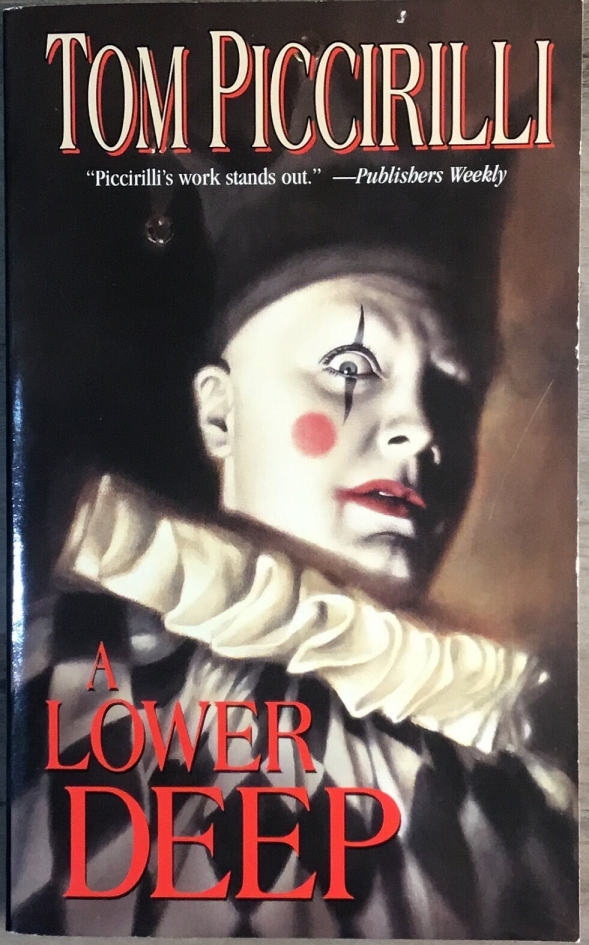
A Lower Deep

2001 – Leisure Books

A Lower Deep is basically a novel sized continuation of the stories in Pentacle. This time the Necromancer’s old friend tries to get him to resurrect Christ so they can bring about Armageddon and storm into heaven. (Yes. The protagonist remains unnamed here. Oooooooh, so edgy!) I hated this book so much that I find it hard to believe that I wrote the above paragraphs. I’ve wanted to write positively about Piccirilli’s books for years, but in truth, his horror novels are crap. This book is boring, contrived shite. If you don’t have an interest in the Bible, this will be very confusing. There’s lots of references to the Book of Revelation, the prophet Elijah and the nephilim. Yuck.

This is really a work of fantasy rather than horror. There’s lots of blood and occultism, but nothing scary happens, and I hated every page. Self, the protagonist’s familiar is supposed to add comic relief, but I found him horribly disruptive to the novel’s tone. A one point during the beginning of the apocalypse, he starts speaking with a Jamaican accent. Sigh…

The brevity of the stories in Pentacle is what made them bearable. A Lower Deep is a short novel, but it’s still far, far too long. Honestly, it’s terrible. Avoid it.

I am probably done with Piccirilli. I gave him more than a fair chance, but his horror novels just didn’t do it for me.

Barry Hammond’s Cold Front – Canada’s Rarest Horror Paperback?

Cold Front -Barry Hammond
Signet -1982

No, your eyes are not deceiving you. You have seen that cover show up on this blog before. Valancourt books used that artwork on their 2019 edition of Thomas Page’s The Spirit. (If you’ve seen the original artwork for that one you’ll understand why.) Two books sharing the same cover is not unheard if in the world of paperback horror, but Cold Front is an anomaly. This book is so rare that there was recently a thread on reddit about whether it still exists or not. There’s lots of rare horror paperbacks, but copies of The Voice of the Clown, Eat Them Alive, Chainsaw Terror and the Halloween novelisation are out there; they’re just really expensive. Cold Front is different. There are 5-6 known copies in existence. The rest of the scant information about this book online suggests that it is a lost classic, a surprisingly well written nightmare that has almost disappeared.

Adding to the allure is the fact that the book is supposed to be extremely Canadian. I have no proof of this, but as far as I know, Cold Front was only ever available in Canada, hence its rarity. Now I don’t know about you, but there’s little in the world that excites me more than a mysterious, rare, horror paperback, smothered in maple syrup. I had to read this one.

As I write this, there is actually a copy of Cold Front for sale on ebay for $3000. I didn’t pay quite that much, but I had to make a bunch of calls, barter with strange Canucks and then travel across the Great White North to procure a copy. The whole process took 4 months, but last week, I finally got my hands on one of the last remaining copies of this bizarre little book.

Cold Front is only 150 pages long. The first two thirds are entertaining but largely predictable. Three low-lifes kill their boss after a night of drinking. They stash his corpse and his cash box into their car and drive away into a storm. When they wake up the next morning, they find themselves broken down in the middle of nowhere and then notice that the body is missing from the trunk of their car. Concerned and cold, they walk until they find a cabin with a smoking chimney. When they enter they find a beautiful, half naked woman alone.

And that is where the predictable part of this story ends. As the tagline on the back cover says, “You might pity the girl, trapped in a snowbound cabin in the Canadian wilderness with three savage fugitives from the law. But you would be wrong.” I won’t give any spoilers, but I will say that the last 50 or so pages of this book are mental. This changes from a gritty crime novel to a blood-soaked, supernatural nightmare.

I can confirm that most of the stuff you’ve read about this novel is true. Cold Front is a fast paced, well written, absolutely bonkers, horror novel. It is a great shame that more people haven’t had the chance to read it.

This book is infamously rare, but unlike some rare paperback horror novels, this one is rare (at least in part) because of its reputation as being a good book. I couldn’t help but wonder why it has not been republished. The fact that Valancourt books used its cover for another book proves that Cold Front was on their radar at some point. They confirmed this in a different thread on reddit about the book, where they stated that “The art for The Spirit was not available to use and there were no plans for Cold Front to be reissued. We purchased the rights for the Cold Front art.” How would they know that there were no plans for Cold Front to be reissued if they hadn’t looked into reissuing it at some point? It seems fairly safe to assume that Hammond turned them down.

Why would an author do this? Well, this is pure speculation, but I have a theory. Barry Hammond is still active in the world of Canadian literature. He’s currently the poetry editor for On Spec, “the Canadian magazine of the fantastic”. Canada has changed quite a lot since Cold Front was published in 1982, particularly with how people think about the experiences and representation of the Indigenous and First Peoples of Canada. One of the main characters in this book is an Indigenous Canadian and a violent alcoholic. There are another two Indigenous characters who come across no better, and none of this is contextualized by addressing the horrible shit that Indigenous people in Canada would have lived through at the time when this book was written. This wouldn’t go down well today. In fairness, Hammond has to have been a fairly young man when he wrote this, and in 1982, most Canadians supposedly didn’t know about the utterly abhorrent shit that their government was doing to First Nations peoples. Again, this is pure speculation, but if Hammond is the type of guy he seems to be (and remember, he’s the poetry editor for a literary magazine), I reckon he’s happy enough to let this book remain obscure and mysterious. If this is the case, that’s actually pretty cool (and very Canadian) of him.
There are some heinous racial slurs used at one point, but the characters in this novel are definitely the kind of guys who would use racial slurs. The swearing throughout is generally delightful. I think it’s the second chapter that opens up with the phrase, “Holy Cock!” All this profanity made the book feel a bit like a Trailer Park Boys Halloween special. I mean that in a positive way.

Cold Front is definitely of its era, but if you’re able to look past its faults, it’s very entertaining. It’s only 150 pages, so I got through it in a couple of sittings. If you ever find a copy of this bizarre Canadian masterpiece, read it immediately.