The Rim of Morning: Two Tales of Cosmic Horror- William Sloane

The Rim of Morning: Two Tales of Cosmic Horror – William Sloane

NYRB Classics – 2015 (originally published as a collection in 1964)

This week’s book is The Rim of Morning by William Sloane. It contains To Walk the Night (1937) and The Edge of Running Water (1939), Sloane’s only novels. Both books went through several editions in the 50 years after they were published, and some of the covers are awesome, but other blogs have done posts about that, and I have nothing to add. The books were out of print for the 90s and early 2000s, but NYRB put out this collection with a new introduction a few years ago.

To Walk the Night

Two lads witness a scientist spontaneously combusting, and then one of them marries the scientists widow. She is a babe, but she’s also a real weirdo. This puts strain on the lads’ friendship.

Stephen King wrote the introduction to The Rim of Mourning. From what I know about his tastes, I’m not surprised King liked this book. It reads like a combination of Invasion of the Body Snatchers and Leiber’s Conjure Wife. It walks that line between sci-fi and horror nicely, and I really got into it after a few chapters. It’s suspenseful and very easy to read.

I found the ending a little underwhelming. The way the story is set up ensures no real surprises, but the explanation given (or at least hinted at) felt a bit flat. It was still enjoyable enough.

The Edge of Running Water

The second novel starts off fairly similar to the first. A lad goes to his friend’s house to help him with an experiment. When he gets there, he finds there are two women living in the house too. One is his friend’s sexy sister in law, and the other is a really annoying person who is helping with the experiment.

The nature of the experiment is not immediately discussed, but it involves a machine that makes a really upsetting noise. It turns out that the lad was trying to build a machine to let him talk to his dead wife, but he ends up making something much, much worse.

I quite enjoyed this book, but it’s very slow. The whole thing occurs over the period of 3 days or so, and I’m sure big chunks could have been cut. I enjoyed the brooding atmosphere though, and I found this one a bit creepier than To Walk the Night.

The supernatural elements of both books are not explicitly defined, and I think this is why these books get categorised as “cosmic horror”. They’re good. You should read them.

The Amityville Horror – Jay Anson

The Amityville Horror – Jay Anson

Prentice Hall – 1977

Despite what it says on the cover, this book is definitely not “a true story”.

The Lutz family move into a new house right before Christmas. The kids are disappointed by their presents, the stepdad feels chilly, the dog pukes, the mom has some sex dreams about a man who isn’t her husband, there’s a reek of human shit in the basement, and the parents beat their kids with a strap. Oh, and some weird stuff happens too.

The family hear some creepy voices, see an evil talking pig, and get covered in green slime.

Honestly, I quite enjoyed the first few chapters. There was a part where the little girl asks her mommy if angels can talk that genuinely creeped me out. Unfortunately, things get silly pretty quickly. Once the mom started levitating I lost interest and the book became a chore to read. So many haunted house clichés are present here that it’s very difficult to take seriously. (Some of these clichés likely originated in this book, but that doesn’t make them easier to accept.) This is absolutely not non-fiction.

One of the most confusing features of this book is the character of Father Mancuso. He’s a Catholic priest who visits the Lutz family right after they move in so that he can bless their home. A spirit tells him to GTFO, and he runs away. The rest of the narrative goes back and forth between what’s happening to him and the Lutz family, and I was expecting him to make a grand return to help the family out during the climax of the book. He doesn’t though. He just shits out his bathroom so badly that he has to leave his house for several days and then picks some scabs on his hands. I’m not even exaggerating. It’s suggested that these events were caused by the evil entity in the Amityville house, but the book is set during flu season, and it seems absurd to suggest that an man getting a bad dose of the trots in January has anything to do with ghosts. Honestly, he craps out the shitter so bad that his neighbours complain. Dirty old fucker with a stinking asshole. I read online that he was kicked out of the priesthood after the book’s publication, but I couldn’t find out why. It likely had something to do with his repulsively reeking shitter.

There’s a whole slew of other books about the Amityville house and the Lutz family, but some are presented as fiction based on the truth, some are non-fiction that examines the fiction, and some are presented as nothing but fiction. (There’s also novelisations of movies that don’t seem to be involved in the literary canon of the Amityville mythos.) I’d be interested in looking at some of them just to see how they go between fiction/non-fiction, but three of the key Amityville texts were written by Hans Holzer. I read two books by Hans Holzer during my first year of keeping this blog. Gothic Ghosts and Elvis Presley Speaks are two of the worst books I have ever read, and I don’t want to read anything else by Holzer. (Do yourself a favour and go back and read my reviews of those books. Pure quality.) No. I think it’s safe to say that I won’t be wasting my time on Amityville.

I just noticed that tomorrow marks 8 years since my first post here on Nocturnal Revelries. I must be getting close to 600 books reviewed. I didn’t expect the blog to last this long. You may not have noticed, but since the beginning of this year, I have been deliberately alternating between fiction and “non-fiction”. I had been avoiding non-fiction for a few years, but I’m enjoying get back into it. I actually feel happier with the blog recently than I have in quite a while. Here’s to another 8 years. Hope you’ve been enjoying it!

Elizabeth Massie’s Sineater

Sineater – Elizabeth Massie

Carroll & Graf – 1994 (Originally published 1992)

Avery Barker is a sineater, a man who ritually cleanses dead bodies of sin by eating a meal off their chest. He lives just outside of Beacon Cove, a small, extremely religious community in the mountains of Virginia. The service he offers is extremely important to this community, but it also renders him and his family as outcasts. The rest of the community believe that just looking at the sineater would be enough to kill a person. Unfortunately for everyone, Missy Campbell, the religious leader of the community, has gotten it into her head that the sineater has consumed too much sin and gone mad. Very bad things start happening, and it’s unclear as to who’s responsible.

The story centers around Joel, Avery’s youngest son and the only Barker to attend school. To make things complicated, he becomes friendly with Missy’s nephew, Burke. Joel is such a sympathetic character that I spent the whole book dreading that something bad would happen to him. It’s pretty obvious from the get-go that this book isn’t going to end happily.

I really enjoyed Sineater. It’s dark, and parts of it are very gross, but the story is good, and the characters are fun.

Apparently sineaters were a real thing in parts of Britain. I don’t think they were ever shunned to the extent that Avery is in this book though.

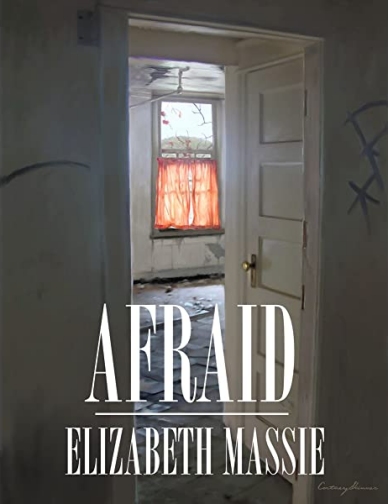
Afraid: Tidbits of the Macabre
Crossroads Press – 2011

I read Massie’s collection Afraid: Tidbits of the Macabre a few months ago. I didn’t write anything down about it after reading it, but I remember quite a few stories about people locked in basements. It also had a weird story about a body part, I honestly can’t remember which, vacating its body. Cool. I enjoyed the collection well enough to want to read more of Massie’s work. Sineater was even better, and I plan to read more of her books in the future.

Unfortunately, Elizabeth Massie was diagnosed with non-Hodgkins lymphoma last year. It seems that she is recovering, but she lives in one of those countries where people have to pay for medical care. There is a gofundme page set up where people can donate to help with her medical costs. Help out if you can.

Thomas Tryon’s The Other and Harvest Home

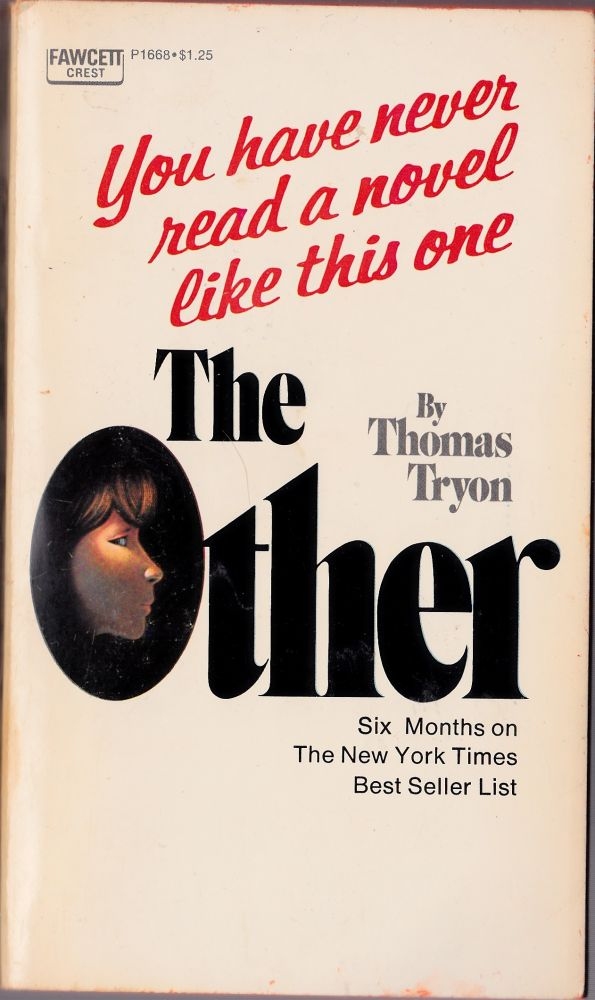
The Other – Thomas Tryon

Fawcett Crest – 1972 (Originally published 1971)

The only thing I knew about Thomas Tryon’s The Other before I read it was that it was a bestseller in 1971. It was only as I read it that I realised how influential a novel it has been on modern horror.

Niles and Holland are twin 13 year old boys who live on a farm in New England. Niles is quiet and easily led, and Holland is… well, Holland is a real bad kid. Their dad died a few months before the story begins, and from the beginning it seems pretty obvious that Holland had something to do with this. My suspicions ran wild as I was reading it. I suspected there was going to be some big plot twist, and I was trying to figure out what it was, but the story takes its time and Tryon holds on to his details, only ever giving just enough to keep his readers engaged.

The pacing got on my nerves a little bit during the first half of the novel, but when the twist was revealed and things clicked into place, it all felt worthwhile. I’m sure lots of people who haven’t read this book already know how it ends, but I won’t give anything away. I will mention that I was surprised at how unpleasant that part near the end is.

It was that particularly nasty bit that made me realise how influential this book is. I would be very surprised if Brenda Brown Canary’s choice of setting and violence in The Voice of the Clown were not influenced by Tryon’s book.

I didn’t really like the part where the boys’ grandmother, a crazy old Russian woman, teaches them a trick where they can enter the bodies of other creatures. I guess this makes it easier to accept the potentially supernatural goings on, but it was also a bit weird and unnecessary.

I can imagine some readers getting halfway through this book and not bothering to finish it. That would be a mistake. The pacing and all of the mysterious little clues that are offered throughout the book all come together at the end. I thought this was a very effective horror novel. At times I found it mildly shocking and horrifying. Read it if you haven’t already.

Harvest Home

Dell – 1987 (First published 1973)

I waited for six months to read another book by Tryon. I didn’t dislike The Other, but it was a bit slow, and I usually prefer things short and snappy. Harvest Home is actually pretty similar in pacing to its predecessor, but I ended up absolutely loving this book.

This novel starts when the Constantine family moves to Cornwall Coombe, a quaint rural village where everybody knows everybody. The new family is settling in and everything is going well until the father stumbles upon a ritual in which a local child with a learning disability is forced to choose the Harvest Lord by studying the entrails of a freshly sacrificed sheep. He sneaks away and pretends he has seen nothing, but after this, he starts to notice other strange goings on in the town. It turns out that there’s some fairly bad stuff happening behind the scenes.

I really, really enjoyed Harvest Home. Again, Tryon holds back details in a masterful way. I found this approach even more enjoyable here than it was in The Other. I think it was because the protagonist in this one was a little bit more relatable to me than the boys in his first novel. The pacing is slow, but the writing and characters are enjoyable enough to keep things entertaining between the big revelations. There was one part where the main character gets really drunk and ruins a party. I had to go back and read this section a second time to make sure I had understood everything that happened. It felt rushed and muddled the first time I read it. Reading back, it became apparent that this was clearly intentional. The author used barely any full stops (periods) in the whole passage. It’s probably a well known trick, but I found it really effective.

Tryon was an interesting guy. He was a relatively successful Hollywood actor before he was a writer. That fact made me assume his books would be trashy, but these two weren’t. They were really good. It seems like Thomas Tryon was a real cool guy.

Teddy (Novelisation of The Pit) – John Gault and Ian A. Stuart

Teddy – John Gault/Ian Stuart
Bantam – 1980


I’ve read lots of books that went on to become movies, but only a few books that were based on movies. I liked the novelisation of Halloween because it added a backstory to Michael Myers that is not in the film. If I’m going to spend 4-5 hours reading a story in book form, I want it to offer something the 2 hour film version doesn’t. The second Halloween novelisation is a more faithful adaptation, and I found it very boring. The only other novelisation I’ve read was Zoltan, Hounds of Dracula, and I only bothered with that one because I was researching its author. The book was so bad that I never bothered watching the film. I know some people collect them, but I really don’t have much interest in novelisations. Despite this, I read Teddy last week. This rare and creepy book is is a novelisation of a screenplay for the 1981 Canadian horror film, The Pit. It is not a novelisation of the film that was actually produced.

Jamie is a weird 12 year old kid who, when he’s not getting bullied, spends his time making pornographic photo-collages involving the local librarian and hanging out in the woods near a gigantic hole in the ground that nobody else knows about. Oh yeah, and this hole is full of weird, hairy dwarf creatures. His family are about to move house, and his parents need to leave town so they can sign the appropriate papers. They hire Sandy, a local college student, to babysit Jamie.

Jamie falls in love with Sandy, and when he realises that she doesn’t love him back, his teddy bear convinces him to go on a killing spree, luring his victims into the woods and then pushing them down the hole.

It’s a decent story, but the book and movie approach it differently. While the movie isn’t exactly comedy horror, it’s so ridiculous that if you’re not going to laugh at it, you’re going to find it extremely boring. There’s a scene where the kid pushes a mean old lady in a wheelchair into a giant hole in the ground. In truth, I lost interest about halfway through and started playing chess on my phone. When I looked up a while later, it had changed from a story about a creepy kid to a bunch of hairy goblins running around causing mischief. The movie tries to do too much, and this lessens the effectiveness of the actual creepy parts. The actor playing Jamie is quite good, but his performance is not enough to save this awful film.

The book is far, far better than the movie. Jamie’s parents come across as bigger jerks here, and we get to witness more of the bullying he experiences at school. Yes, he is a weirdo, but he never really had a chance. He also seems more pervy in the book. There’s parts in here that wouldn’t have been legal to film. Teddy, who is obviously just Jamie, has a far dirtier mouth in the book. Maybe it’s just me, but I felt that Jamie is easier to feel sorry for in the book.

The novel also gives more background on the creatures living in the hole. It turns out they are the descendants of the Whately family, a group of sinister weirdos who moved from somewhere in New England. Surely that is a reference to Lovecraft’s Whateleys? They are supposed to have moved to Wisconsin in 1870, and the events in The Dunwich Horror don’t occur until after this, but I think we can assume these hairy goblins must be cousins of Wilbur’s.

Ian Stuart, the guy who wrote the screenplay that both the book and movie were based on has claimed that the monsters living in the pit were supposed to be a figment of Jamie’s imagination in his screenplay, but they are real in both the movie and book. I don’t know if the screenplay is still is existence, but I’d be interested to read it. I gather it was more serious than its products.

If you’re interested in watching The Pit, you can watch it for youtube for free at the moment. I wouldn’t bother if I were you. (I have no patience for bad films anymore.) Teddy was far better than the film, and it’s a pretty good read in and of itself. Copies are shockingly rare, but there’s an ebook version kicking around the internet if you’re not extremely rich and patient.

Guy N. Smith’s The Sucking Pit and The Walking Dead

The Sucking Pit

NEL – 1975

The Sucking Pit? More like… Fucking Shit. Guy N. Smith isn’t known for high-brow fiction. His Crabs series is infamous, and The Slime Beast has been reprinted by fancy publishers as an example of extreme pulp horror, but The Sucking Pit seems to have a reputation as his worst book.

After reading it, I can confirm that this is indeed very, very bad.

A man dies in his cabin in the woods, and when his niece comes to visit him and discovers his corpse she becomes possessed by his spirit. She then makes a potion out of hedgehog blood and this makes her extremely horny and violent. She starts living in her uncles cabin, and she throws her victims into a marshy swamp known as the Sucking Pit.

There’s a bit more to the story than that, but it’s not worth recounting here. This is a ludicrous pile of nonsense. I have enjoyed the other ultra simplistic crap that I’ve read by Smith, but The Sucking Pit was so monumentally stupid that I found it tedious. This is as low as it gets. This book both sucks and is the pits.

The Walking Dead

NEL – 1984

I read The Sucking Pit in an afternoon. Its sequel, The Walking Dead, is only a bit longer, but it took me almost 2 weeks to finish. Part of this was because I was busy with Christmas stuff, but it was largely due to the fact that I had very little interest in what was happening. I had to force myself through a chapter every night.

10 years after the events of The Sucking Pit, the Sucking Pit comes alive again, and all of the corpses it absorbed in the first book come back to life. The Sucking Pit has also developed the ability to call people to it so that it can brainwash them.

There was a scene in which a man is buried alive that was actually quite scary, but the rest of this book was absolute shite. The only other memorable bits were when a rapist cuts off his own cock and when a man decapitates another man after punching him in the erection.

I did appreciate the fact that this sequel did not try to make the events in the first book make any sense. It doesn’t limit itself with any such restrictions either.

The Sucking Pit is an infamously awful novel, and its sequel, while admittedly a slightly better book, is also very silly. I wasn’t disappointed by these novels, but they didn’t make me want to read any more Guy N. Smith either. I read four of his books last year, and I think I should probably wait a good long while before I go back to him if I expect to derive any further enjoyment from his writing. There is no subtlety or pretense in these books. They are as awful as they appear.

2022, The Year in Review

Normally, I focus on a book, author or theme in my posts, but once a year I do a post about this blog itself. If that seems goofy to you, piss off until next week. 2022 was a good year for me, but I simply don’t have as much time to blog as I used to. Work and family take up most of my day, and this year I also produced a series of podcasts and got involved in a few musical projects. (I also cursed and un-cursed a youtuber.) I’m still reading as much as ever, but I find it harder to find the time to take and crop book photos, research authors and actually write posts. There were actually a few weeks this year when I didn’t post anything! I have a huge backlog of half-written posts that will appear in the new year.

It’s funny looking at the site’s stats. The amount of visitors on this site has gone up every year, but the rate of growth has decreased substantially over the last year and a half. This blog has been online for almost 8 years now, and there has to be a limited audience for a blog on weird, old books, so maybe it has just reached it’s peak. Then again, the stats reveal more. The amount of on-site comments and likes has decreased dramatically. Maybe the quality of my blog has gone down in the last two years, but I also suspect that people aren’t signing in to wordpress.com to browse through blog posts as much as they used to. I’m not upset at the lack of likes, but it does make me feel a bit old fashioned. Has blogging gone the way of alchemy?

Some of the slow-down might be due to the fact that I’ve pretty much given up on promoting the blog through social media. Being on facebook makes me hate everyone, and twitter is a useless piece of garbage. The more active you are on those sites, the more prominent your posts will be in others’ feeds, and personally, I find this idea abhorrent. They are rewarding loudmouthed fools, and their owners are turds. No thanks. I’ll cut off my own cock before I start a tiktok.

A lot of what I read in 2022 was made up of stand-alone paperback horror novels. These things are usually easy to digest and don’t require serious analysis. Some of them were utter rubbish, but every now and then I’d stumble upon a Throwback or Blood Fever and really enjoy myself. I was delighted to finally read Pierce Nace’s insane Eat Them Alive (while suffocating with COVID), and getting my hands on a copy of Barry Hammond’s extremely rare Cold Front was one of the highlights of my year.

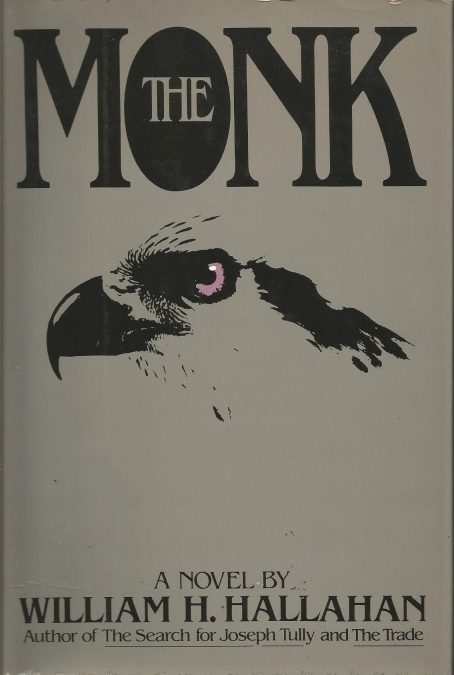
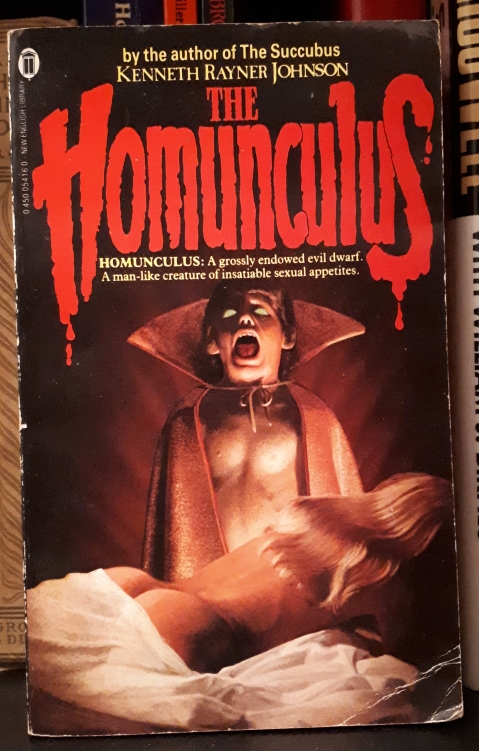
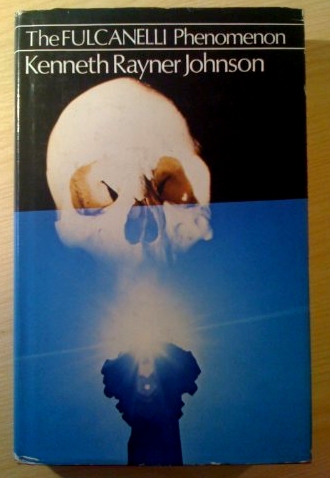
I also did a few posts on specific authors. I read several books by Alan Ryan, Thomas Piccirilli (Part 1, Part 2) and William H. Hallahan. I’m fairly certain that my posts on Kenneth Rayner Johnson and Eric Ericson are the most comprehensive articles about those writers currently available online.

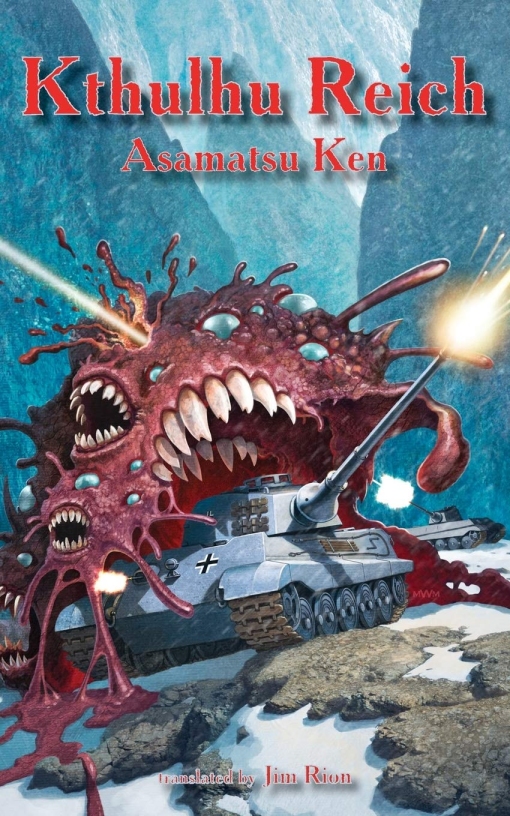
My posts on Robert Bloch and Robert E. Howard finished my series of posts on the weird fiction of the members of the Lovecraft Circle. I also read and enjoyed Asamatsu Ken’s more modern work of Lovecraftian horror, Kthulhu Reich. I’m not sure where I’ll go next with this stuff. Maybe Ramsey Campbell’s short stories.

I did a few non-fiction books in 2022. They were all terrible, but The Beginning Was The End by Oscar Kiss Maerth was so terrible that it became my favourite book of all time. It’s a book about cannibal monkeys, and if you haven’t read my review of it, please do so right now.

Well, there you go. Another year older and grumpier. I wrote posts like this for 2016, 2017, 2018, 2019, 2020 and 2021 if you want to take a trip down bad-memory lane. You can also check out my index page for individual links to the 500+ books I have reviewed here so far. Email me at dukederichleau666(at)gmail.com if you have any recommendations or questions. I hope that this blog has been interesting. Happy new year!

Seán O’Connor’s The Mongrel

The Mongrel
Matador – 2018

A horror novel about a Dubliner getting stranded in the Wicklow mountains, written by a Dublin author who plays in heavy metal bands? I really wanted to like this book. Truly, I did. Unfortunately though, it’s not very good.

There’s 4 main parts to this story. The first part, the argument between the protagonist and her boyfriend, is unnecessary and could have been worked into a flashback in the second part where they go on a reconciliatory drive in the mountains. Show, don’t tell. The third section is passable survival fiction and provides the only excitement in the book. The pregnant protagonist is stranded in a broken-down car with with a hungry wolf outside. Things get gooey. The final section descends into utter nonsense. An utterly unbelievable supernatural element is thrown in, and the plot collapses in on itself.

I got the impression that Seán O’Connor wanted to write a book, so he sat down and tried to come up with a story to tell. The plot feels entirely forced. There’s elements that make no sense, and there’s bits that are painfully underdeveloped. How did Phillips best friend end up on Erin’s dad’s team? Why were Phillip’s knives in the boot of his car? A wolf killed her mom? (Ok, this bit is kind of explained at the end, but I actually rolled.my eyes when it was first mentioned). The ending feels rushed and, quite frankly, stupid. I don’t think I’ve ever said this before, but another 50-100 pages of plot development could have made this book a lot better.

I don’t read a lot of modern fiction, and I feel like a jerk shit-talking an active writer’s work. I recognize that it takes more work to write a book than to sit here picking it apart, but this novel is an absolute mess. O’Connor has published three other books since this came out, so hopefully they are better.

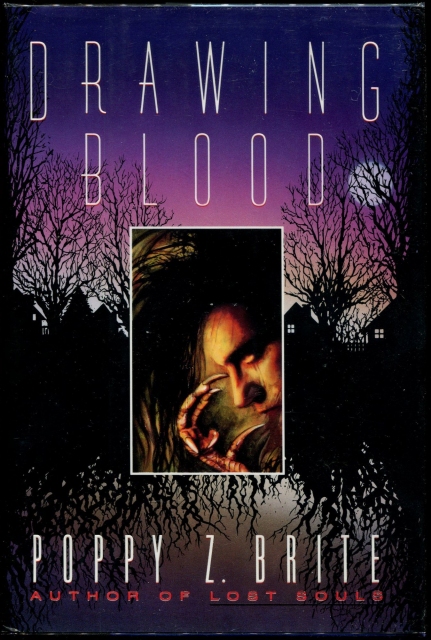
Drawing Blood – Poppy Z. Brite

Evening Star Books – 1993

I had read two Poppy Z. Brite books before starting Drawing Blood. While I enjoyed both Lost Souls and Swamp Foetus, I also felt that I would have enjoyed them even more if I had encountered them when I was younger. I felt the same way about Drawing Blood for the first few chapters. I kept telling my wife how much I was enjoying it. The story set up was weird, but it had a queer computer hacker, a haunted house, and a stripper in a Ministry t-shirt. Things were off to a very good start.

When Trevor was just a little kid, his dad went nuts and killed his whole family in a house in the small town of Missing Mile. As an adult, Trevor goes back to this house to confront his past. When he’s there, he meets Zach, a hacker who is on the run from the government. They fall madly in love with each other, but before they run away together, they try to come to terms with Trevor’s past.

Unfortunately, I found the second half of the book almost unbearable. The following paragraphs contain spoilers, so skip to the last paragraph if you’re planning to read the book.

I am a prude, and I don’t like extended descriptions of sex, straight or gay. There’s some pretty long sex scenes here. I’m sure these are really great for some readers, but I didn’t like them.

I didn’t like the fact that the climax of book occurred while the protagonists were tripping on mushrooms. I’ve read and enjoyed plenty of books about drug users and their experiences, but it felt a bit cheap for the resolution of the story to take place while the characters were high on psychedelics. They witnessed poltergeist activity in real life, and the drug trip at the end felt gratuitous and unsatisfying.

There’s a long, unnecessary scene in which Zach becomes a singer in a local rock band and plays a concert. This dude is on the run, and he agrees to perform his first concert ever. It turns out he is actually a rock god, and he gives the performance of a lifetime. This was entirely unbelievable and painfully cringey. Even as I teenager this would have made me balk. Thinking about it now is making me uncomfortable.

At the end of the book, the two protagonists escape from the United States and go and live in Jamaica. Yes, the two gay men go and live happily in Jamaica. One of them grows dreads, and they spend their days singing reggae and smoking weed with the Rastas. Makes sense, right? I mean, if Jamaica is known for anything, it’s the fact that it’s a living paradise for homosexuals.

I know some people love this book, but I found it very disappointing. I’m a straight guy in my late 30s, so I’m not the target audience for this work, but that didn’t stop me enjoying Lost Souls and Swamp Foetus. Drawing Blood was just a little too vampirefreaks.com for me. That said, I will defintely be reading Brite’s novel Exquisite Corpse in the future.,

Go Down Hard – Ali Seay

Grindhouse Press – 2020

I recently got an email with some suggestions on books with violent female protagonists. This one got a special mention, and it’s fairly recent, so it was easy to track down. I read it over a few days. It was pretty good.

This is the story of Meg and Jack. They’re both serial killers who end up on a date together. I won’t ruin the ending for you, but I will confirm, it is quite violent.

Maybe it had something to do with how I heard of the book, but I found the plot a bit predictable. This is a book by a female author that was published and well received in 2020. Look at the cover. There’s certain things that I knew that this book would not contain. Once the plot is set in motion, there’s only one possible outcome. By definition, rape-revenge stories have to end a certain way. This book doesn’t rigidly adhere to the classic rape revenge formula, but it’s not far off. Also, even aside from the unlikely coincidence that gets things going here, the plot is a little unbelievable. Meg, the female serial killer, only kills men who have committed sexual assaults. Yeah right. She’s also successful enough in her day job to have bought a house. While these features make her a more sympathetic person, they also don’t seem like the qualities of a real serial killer.

Don’t get me wrong though. It is deeply satisfying to read about a sexual predator being badly hurt. Go Down Hard makes good on its promises. It’s a fun read.