I went a bit mad on books about Charles Manson last year. I remember seeing this book at the time, but I had had a little too much Charlie, so I put it off. Recently, I have been reading about James Shelby Downard, and any amount of research on that chap will bring you to a writer called Adam Gorightly. I was searching for a copy of Gorightly’s book about Downard, and I remembered that Gorightly had written a book about Manson.
The Shadow Over Santa Susana: Black Magic, Mind Control, and the Manson Family Mythos – Adam Gorightly
Creation Books – 2014
Gorightly doesn’t really push any specific theory of what happened, and in truth, there wasn’t a huge amount in here that I haven’t come across before. The Helter Skelter hypothesis is covered, but Gorightly also hints at some of the ideas that Tom O’Neill would later explore in Chaos. Mae Brussell, a name I recently became familiar with during my research on the Gemstone File, popped up a few times in here. She claimed that Manson was a CIA pawn used in an attempt to destroy 1960s counterculture. He was just another patsy like Sirhan Sirhan and Lee Harvey Oswald. At this point I would be surprised by any book dealing in conspiracies that doesn’t somehow drag in JFK.
Gorightly is a Discordian and counterculture kinda guy, and I found the tone of the book to be quite similar to Sanders’ The Family.The Shadow was written at a much later date though, and it includes much on what happened after the trial. It gets into the Son of Sam connection and even the Hand of Death cult that Henry Lee Lucas was a part of. I’m planning to do a detailed post in the future on the Son of Sam/Manson connection. I know that connection is probably made up, but I’ve come across it in quite a few different books now.
Perhaps the most surprising thing about this book was how it made me feel. It was comforting to come back to the Manson case, almost like meeting some old friends for coffee. I’ve been planning to read the revised version of Nikolas Schreck’s Manson book for a while, but now I reckon I’ll save it for the next time I have the blues. The Shadow Over Santa Susana would be pretty good for somebody who didn’t know much about the Manson story, but it was also pretty good for me as a refresher.
When I saw the cover of this book, I knew I’d have to read it. I picked it up a few months ago, but it opens with a quote from another book called Missa Niger: La Messe Noire, and when I looked that book up, I decided to do it before starting on Blood Circle. I read it and wrote a post about Missa Niger, but shortly before publishing it I discovered something intriguing and had to go back to read Blood Circle too.
Sphere Books – 1990
Blood Circle is a nasty horror novel. That cover is not misleading. It’s brutal, sadistic and bloody.
Andrea, a teenage girl, goes to pick some herbs at night, but when she’s out, she runs into a Satanic ceremony where a virgin is being deflowered. Andrea, also a virgin, gets very horny and starts masturbating. Later on in life, she becomes very successful, but the guy who she saw performing the satanic ceremony goes on a killing spree. One thing leads to another and it becomes apparent that they’re going to be reunited pretty quickly. If I go into much more detail, I’ll ruin the story, but I can say that this is extremely nasty stuff. There’s really disgusting parts of this book. Somebody shits on a cross, somebody else fucks their own child, and several people are slowly skinned alive. I was genuinely a bit surprised at how damned unpleasant this book was.
I really dislike when authors use song lyrics as part of their writing. I don’t mean when they use a lyric as an opening for a chapter, although that does suck. I mean when they actually put the words of the song that the character is listening to into their text. It’s such a lame thing to do, and whenever I see it, I assume it’s because the author was listening to that song at the time. Stephen King does this quite often. It’s embarrassing and unnecessary. Bernard King chooses to do this with one of his characters. He has him listening to Vigilante by a band called Magnum. I hadn’t heard this song before, so I checked it out. Terrible. King describes this as “good strong music” and as having a “powerful sound”. Haha. It’s pure shit.
Blood Circle is pretty good. The author clearly had a good idea of what he was talking about. I liked that the ending wasn’t happy, and there were a few plot twists that actually surprised me. The writing was alright, but the book is only 300 pages and it took me a week to finish. It wasn’t one of those “I can’t wait for the next chapter” kind of novels. I’d say you’ll probably enjoy it if you are a sadistic, satanic pervert.
Ok, so let’s get back to this interesting Missa Niger book that’s quoted at the beginning of Blood Circle. Bernard King also thanks the author, one Aubrey Melech, for allowing him to quote from that book and for helping in his research. He follows this with a brief note about how some of the events described in Blood Circle may actually be happening.
Sut Anubis Books – 1986
Missa Niger: La Messe Noire, A True and Factual account of the principal ritual of Satanic worship The Black Mass – Aubrey Melech
This book claims to be the actual script for a black mass. A mere 500 copies were published in 1986, and at that time, the only other printed version of a Black Mass had appeared in Anton LaVey’s The Satanic Rituals. Melech acknowledges this in Missa Niger but claims that his text is more authentic.
From King’s Blood Circle
In truth, there’s not much in here that I haven’t come across many times before. This is a fairly tame rendition of the black mass. It includes blasphemy and desecration of the Host, but it steers clear of human sacrifice. I suppose the one feature that stood out to me was the inclusion of an altar girl. A kid attends the mass, pisses in a cup and then the priest splashes the audience with the wee. Honestly, if I was conducting an infernal ritual, I’d leave this part out.
This is also a very short book. It’s about 70 pages long, but most of these are taken up with the Latin version of the mass with the English translation on the opposite page. It’s the kind of thing you’d easily read in one sitting.
In the introduction, the author claims that he is publishing this text for scholarly purposes and not for people to use. I can’t believe that anyone would be that naïve, but on closer research it seems that his motivation to put this out may have been even more sinister. There are people out there who believe he did it purely to make money!
Bernard King/Aubrey Melech
A Satanic internet nerd (and I mean that with sincere respect and admiration) compared the two texts and wrote a detailed analysis of them. They are supposedly so similar that it seems probable that they either came from the same document or that Melech plagiarized LaVey’s text. This guy goes on to claim that Missa Niger was created and published by Melech (who is just a pseudonym for Bernard King) to coincide with the release of Angel Heart, the movie version of William Hjortsberg’s Falling Angel, a novel about Satanist that features scenes of a Black Mass. He believes that King created the text at the behest of Alan Parker, the film’s director. In The Lure of the Sinister, The Unnatural History of Satanism, the author, Gareth Medway, claims that Bernard King is Aubrey Melech. He says that he confronted King about this and that King said Melech was a Satanic friend, but apparently other people confirmed to Medway that King and Melech were the same person. Medway notes that King is an Odinist rather than a Satanist and suggests that the publishing of the Missa Niger text wasn’t an entirely sincere undertaking. This idea is bolstered by the other books that King put out. Most of his novels are mythological fantasy stuff and his non-fiction books are all about Runes. I was a little disappointed by this. I had hoped that Bernard King was a devout Satanist using his books to spread a doctrine of evil.
I enjoyed reading both of these books, but my favourite part of writing this post was reading the stuff on the Synagoga Satanae website from 2002. I genuinely miss the days of angelfire websites. I only hope that people will be looking back on my website in 20 years time.
I’ve been doing a lot of non-fiction recently, so here’s a couple of novels about the Devil:
Falling Angel
Warner Books – 1986 (First published 1978)
Falling Angel is a classic. There’s at least 70 editions of the book, and it was turned into a big Hollywood movie in the 80s with Robert DeNiro and Mickey Rourke. I’ve had a copy on my bookshelf for a long time, but I only sat down to read it recently. It was great. I had seen the movie years ago, and I had an idea where it was going, but I still found the book very suspenseful and very enjoyable.
Harry Angel is a private detective who has been hired to find a missing popstar named Johnny Favourite. The guy who hired him is a rich weirdo named Louis Ciphre. Harry finds himself in a world of murder, voodoo and Satanism pretty quickly.
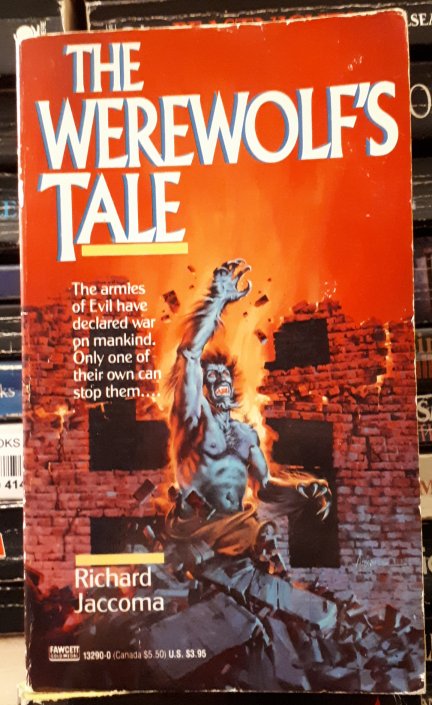
It’s more of a hard-boiled detective novel with supernatural elements than a straight horror novel, but that’s what makes it so great. There’s lots of suspense, and I got through it in a couple of sittings. It’s a really fun book to read. It made me realise exactly what Richard Jaccoma was going for when he wrote his werewolf novels. (The first of those books came out a year after Angel Heart, the movie version of Fallen Angel, and I doubt this was a coincidence.)
If you haven’t read Falling Angel, you should.
Angel’s Inferno
No Exit Press – 2020
More than 30 years after Falling Angel was published, Hjortsberg started work on a sequel. He finished Angel’s Inferno shortly before he died in 2017. It wasn’t published until 2020.
It wasn’t great. It starts where the last book left off, and the main character is now on the run. He heads to Paris and buys a lot of expensive clothes and eats some fancy food while plotting revenge. The characters and their interactions are enjoyable enough, but the suspense and mystery of the first book is almost entirely absent. The plot is modelled on that of the first book too, but the twist ending here was just a bit too ridiculous for my taste. This book was far longer too. It wasn’t absolutely horrible to read, but it pales in comparison to Falling Angel. I’m glad I didn’t spend 40+ years waiting in anticipation for this.
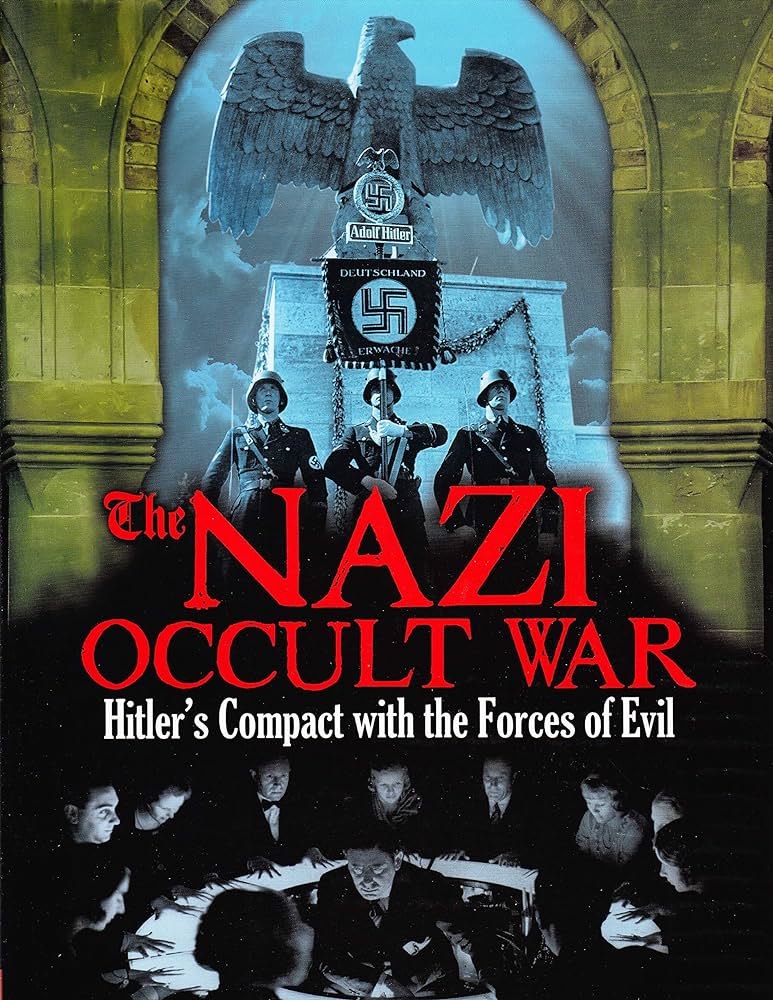
I recently enjoyed James Herbert’s Rats books, and I’ve have been planning on reading his Nazi horror novel The Spear for years. It’s been a long time since I read anything about Nazi occultism, and I thought I’d read a non-fiction book on the topic refresh my memory first. I’ve had copies of Francis King’s Satan and Swastika and Peter Levenda’s Unholy Alliance on my shelf for years, both of which I plan on reading at some point, but I also had a copy of Michael Fitzgerald’s The Nazi Occult War on my kindle. I hadn’t heard anything about it, but I’m finding ebooks easier to get through recently, so it was an easy choice to make.
Arcturus – 2013
This was not a bad book, but I have encountered nearly all of its information elsewhere. It goes into some of the bullshitty stuff, but it doesn’t get bogged down in any one topic. There are sections on Nazi ceremonies and the SS that could be taken from a high-school history book. With all the bullshit rumours about the Reich’s UFOs and Hitler being a Satanist, it’s easy to forget quite how mental the Nazis truly were. This book does feature chapters on Atlantis, the Vril society, and the Holy Grail too though. I think it would serve as a good primer on the topic of Nazi occultism. I had a leaf through a paper copy of the book, and I was quite impressed with the layout. It looks really good. While I certainly wasn’t blown away by any element of this book, it served its purpose. I was reminded of all of the other books I have read about Nazi occultism.
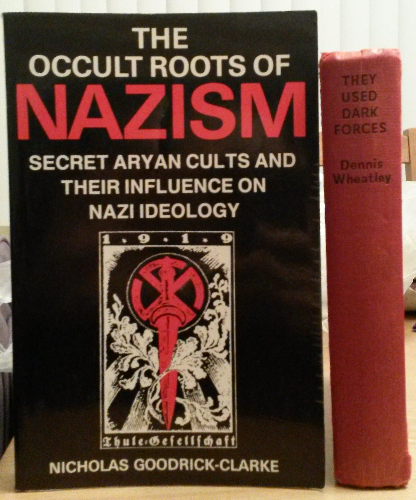
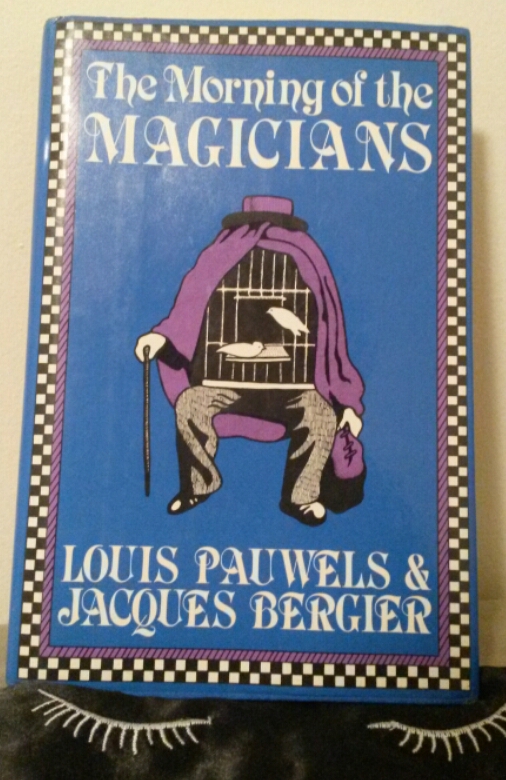
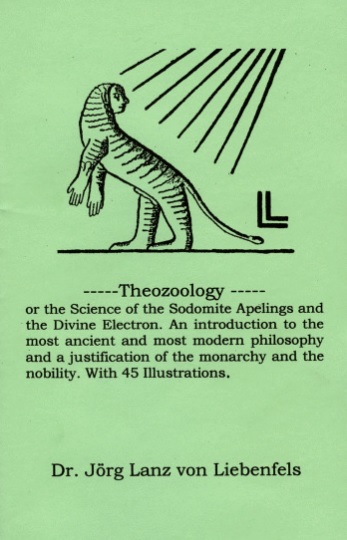
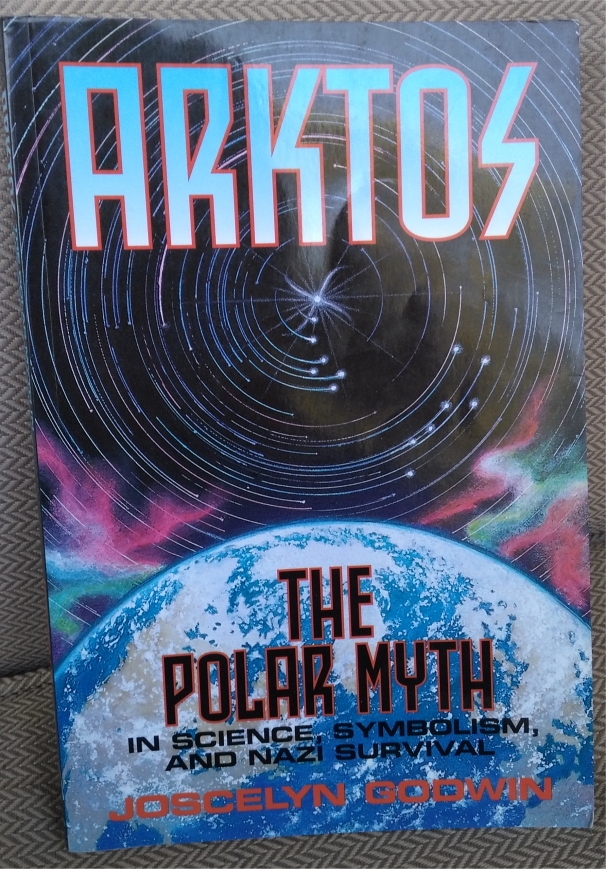
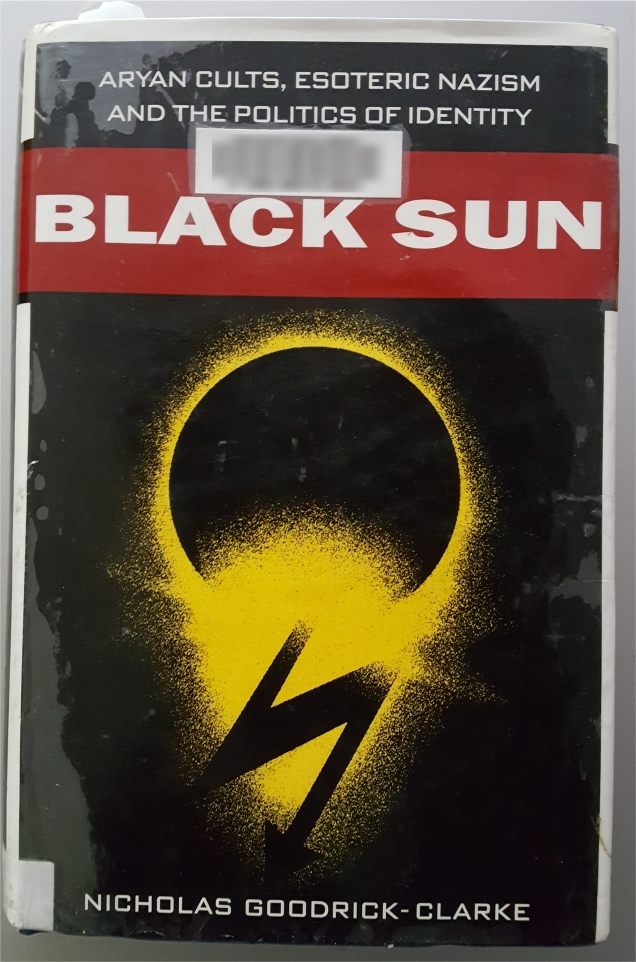
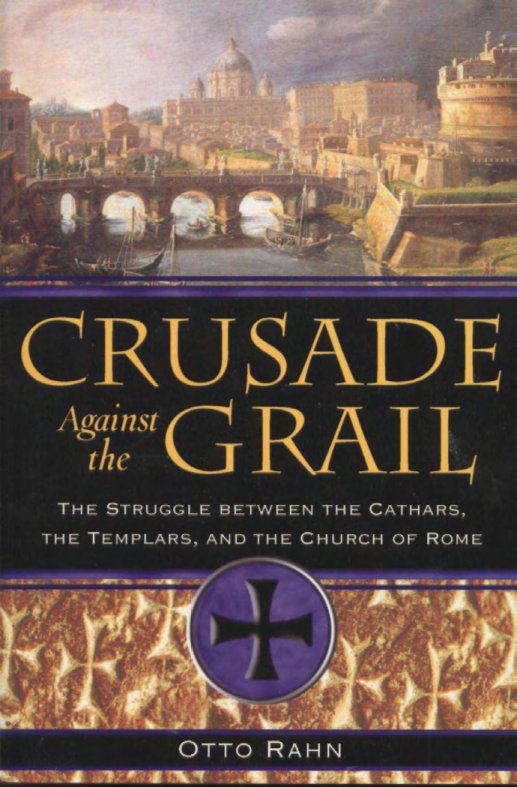
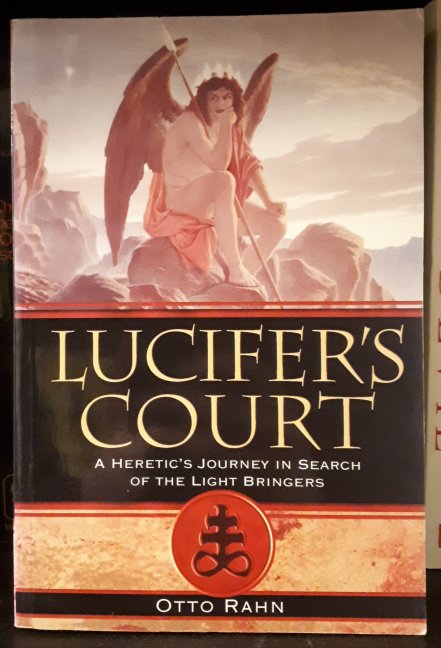
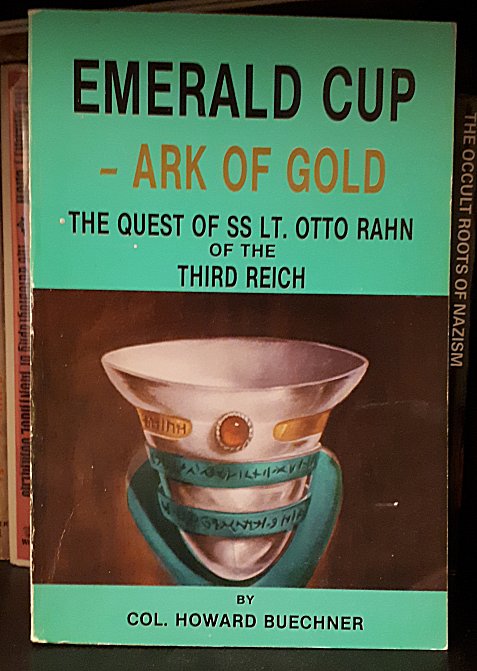
The obvious starting point for this kind of thing is Nicholas Goodrick Clarke’s The Occult Roots of Nazism. This was one of the first books I reviewed on here, and it describes the occultists who actually influenced the Nazis. Stephen E. Flowers and Michael Moynihan’s The Secret King takes a more specific look at one of these loonies, a chap named Karl Maria Wiligut, and I had a good laugh when I read von Liebenfels Theozoology. Goodrick-Clarke wrote another book, Black Sun, about the conspiracies and nutty ideas that sprang up after the fall of the Nazis (much of which stemmed from Pauwels and Bergier’s Morning of the Magicians, and if you’re going to read that you might as well read Bulwer Lytton’s The Coming Race too. It’s fiction, but unlike the fiction I list below, it actually inspired the Nazis rather than being inspired by them.) I enjoyed Black Sun more than Occult Roots of Nazism because it was about the bullshit that was clearly made up. A good companion work to Black Sun would be Joscelyn Godwin’s Arktos, an interesting book which takes a closer look at some of these insane theories. Speaking of insane, Trevor Ravenscroft’s The Spear of Destiny is a must read for anyone researching the Nazi quest for the spear that pierced the side of Christ. Of course, this spear wasn’t the only holy relic they tried to get their hands on. I also spent a lot of time and effort researching Otto Rahn and the Nazi quest for the holy grail.
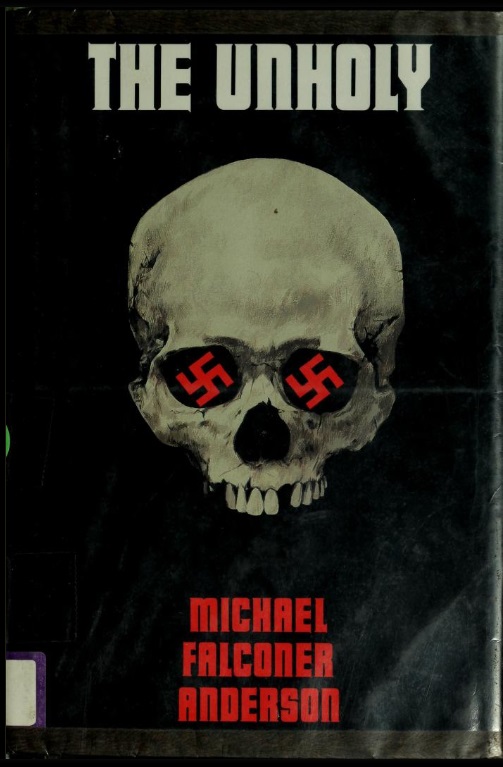
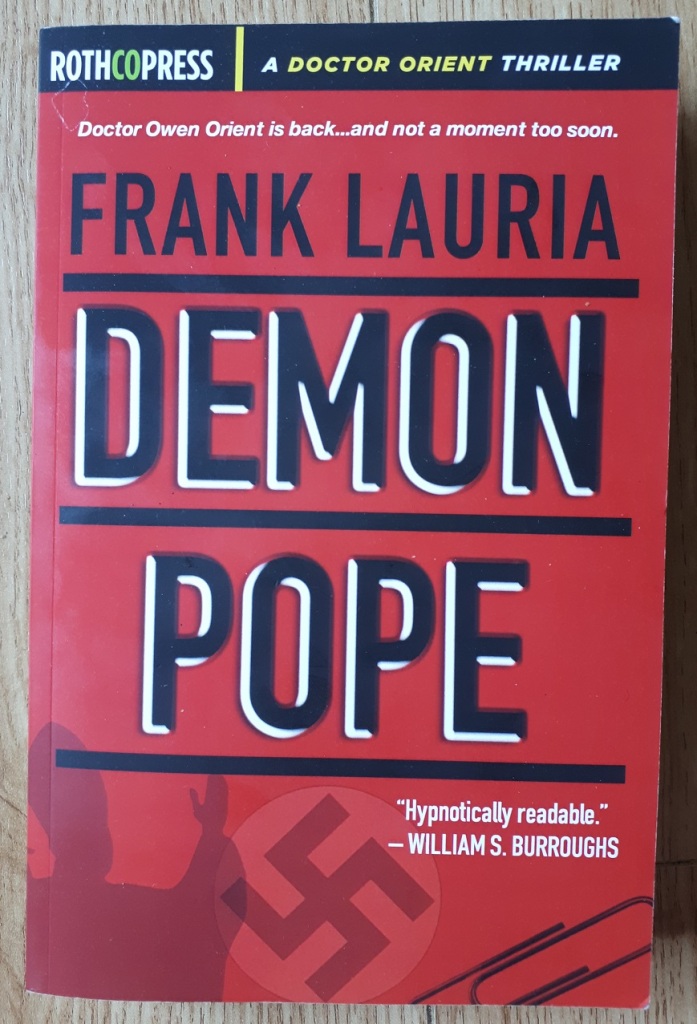
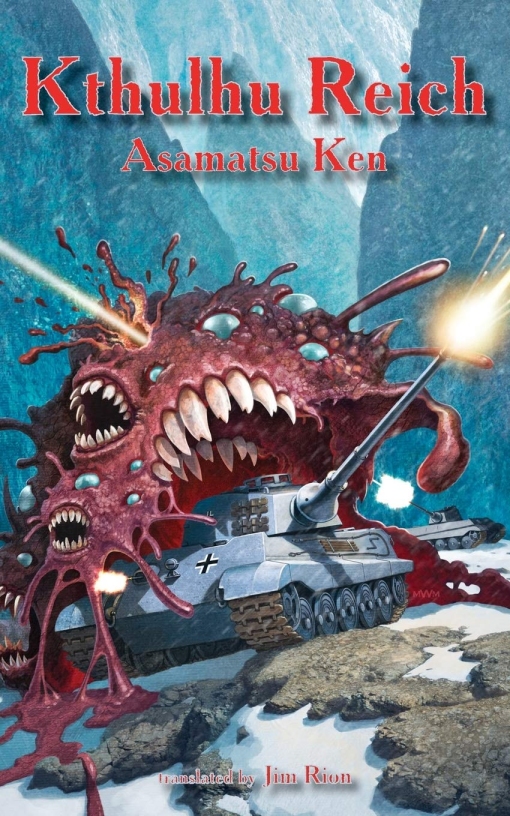
While the aforementioned books are mostly non-fiction, I have also read quite a few horror novels about Nazis. You should too.
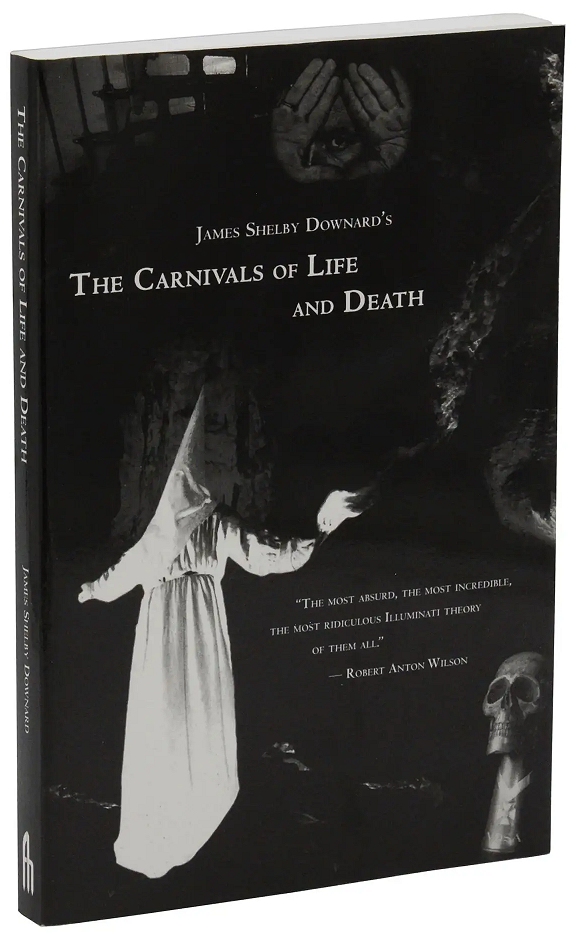
A few months ago, my friend recommended that I read the autobiography of James Shelby Downard. I didn’t recognise the name, but it turned out that this Downard guy is a mysterious figure in the conspiracy theory world. It’s not that he was into mysterious topics (although he definitely was). His life, output and reputation are shrouded in uncertainty. I mentioned him recently in my post about Robert Anton Wilson’s Cosmic Trigger books. The reference to him in the first of these books is quite vague, and he’s only mentioned as Mr. Downard. Wilson describes hearing a tape recording of a conversation between Downard and Jim Brandon (aka William Grimstad, a notorious white supremacist). In this conversation (some of which can be heard here) Downard and Grimstad supposedly set out a theory about how the Illuminati are preparing the world for UFO contact. More than a decade later, an essay by Downard appeared in Feral House’s Apocalypse Culture. Apocalypse Culture is an infamous collection of essays from some of the most bizarre and disgusting fringes of society. Kill King 33, Downard’s essay, is one of the strangest pieces of writing in there. It basically blames the killing of JFK on the Freemasons. It’s an abridged version of a longer piece of writing that appeared in another Feral House book a few years later. The revised version of Apocalypse Culture replaces it with another essay by Downard, and Apocalypse Culture II features yet another essay by him. It was through these appearances that the work of Downard came to attention of mainstream conspiracists.
A few years after he died, Feral House published Downard’s autobiography. It such a bizarre piece of writing that it convinced some people that James Shelby Downard was actually a hoax perpetrated by Michael A. Hoffman II (his pal and collaborator) and Adam Parfrey. This doesn’t make sense to me as Robert Anton Wilson came across him well before these two collaborated. Also, I feel that if somebody was going to make up a person, they would put more effort into making things seem believable. The writing here is far too ludicrous for me to imagine that a person wanted me to believe it. How many 5 year olds would think of circumcising themselves to get out of a pickle? A lot of this book is made up of memories that were wiped from Downard’s mind as a young man which he later recalled. The way that he got these memories back isn’t clearly outlined, and most of them are so hazy and unbelievable that I suspect they were just dreams.
Feral House – 2006
James Shelby Downard’s The Carnivals of Life and Death: My Profane Youth, 1913-1935
Unfortunately, while this book does touch on aspects of conspiracy theories, it doesn’t do so in a meaningful or interesting way. The enjoyment that comes from reading this text is derived solely from the surprise that an adult man could write such bizarre nonsense. I don’t normally summarize books chapter by chapter, but I have done so here for my own future reference and to save you from having to wade through this terrible, insane piece of writing. This is long, so if you’re only mildly interested and just want the craziest parts, I suggest just reading the bits I have highlighted. (I expect that doing so will convince you to carefully reread the whole thing.)
Chapter by Chapter Summary
Chapter 1 The author, a 5 year old boy, is kidnapped by the KKK after being arrested for smuggling alcohol. Goes on to kill KKK by blowing some up with dynamite and shooting others with gun he stole from a police officer. He later kills more men with dynamite.
Chapter 2 His mom makes him dress like a girl to go meet some men in a music shop. When be gets there he shoots one with a gun he had hidden in his outfit. Next day his mom sends him away with some other men. His gun is gone, so he packs a scissors for protection. The men poison him, but he spits it out. When he is left for dead, he gets an erection, so he takes out the scissors he has stashed in his outfit and circumcises himself. His screams of pain scare the bad men away. A few months later an old man tries to turn him into a golem by writing on his forehead with lipstick.
Chapter 3 Mom runs away with a “dirty greaser” named Count Eugenio, but she takes James with her. He is taken to Jekyll Island where he sees Alexander Graham Bell getting sucked off by a gambler. He later goes to a party where a man named “Cock Robin” chokes him in front of a cheering crowd. Cock Robin is shot dead shortly after. The KKK show up again and Alexander Graham Bell uses a machine to bring Cock Robin back to life. Then he gets sucked off by a klansman. Count Eugenio then takes James to some kind of toilet museum where James pisses all over the floor and walls. James will later see somebody cut off Count Eugenio’s bollocks and shove it down his throat.
Chapter 4 The gang move on. In one place they stay, James finds himself in a warehouse full of centipedes that are part of a mind control experiment. then his mother abandons him with a paedophile hotel-keeper, but James locks the paedo in a room, fills it with gas and then lights a match and throws it in. He then lives on the street with a coyote and eats cow shit. He returns to try to kill the man he recently blew up, but the man actually sends a killer to get the boy first. The boy sets his pet rattlesnake on the killer and then beats him unconscious with a chunk of wood and steals his money. Mom comes back and says she took so long because she had been kidnapped.
Chapter 5 The KKK kidnaps the 7 year old narrator and his dad, and then they crucify the boy. Dad pulls the nails out and takes him home, but KKK kidnap him again and try to bum him, but his asshole is too small. They plan to cut his asshole to make it bigger, but their boss says no. The narrator later tricks them into shooting each other by firing a cap gun in the air. Days later, his mom tells him to go to scene of the shootout he caused to get a present. He doesn’t want to, but his mom forces him. When he gets there, another child gives him a dead cat in a box. He then attends a dinner in a Jewish family’s home, but he seems to suspect the food is poisoned so he throws it on the table, issues an anti Semitic remark and runs away.
Chapter 6 The Jewish man he insulted gets him a job at a local bar that is actually a front for a freemason’s hall. A man there takes a disliking to him so he tries to feed him to some carnivorous pigs. The kid befriends the pigs and sets them free and throws the skull of one of their victims through the bar’s window. The freemasons then conduct a trial to determine his guilt, but this is ended quickly when he takes out his willy and pees at the judge. A man then tries to shoot him, but he fills the bar with gas and blows it up. After the explosion he sticks his pocket knife up the bad guy’s nose. The freemasons are angry about this so they send a cowboy assassin to kill James, but James shoots him with a shotgun made out of a pipe and then smashes his face with a hammer and throws corpse over a bridge. This all happened when he was 8 or 9.
Chapter 7 The boy sees a snake charmer doing an act, betting people they cant lift his heavy snake. The boy gives the snake some meat and the snake is so thankful that it lifts itself onto this shoulders and makes it look like he is lifting it, much to the charmer’s chagrin. A week later his mom sends him to the shop for cleaning fluid. He also buys a water pistol which he fills with said fluid. On his way home, the snake charmer threatens him with a real gun, so James shoots him in the eyes with the cleaner and stabs him in the belly. He then feeds him to the snake and opens a sewer drain so the snake can escape. He then goes into the charmers home, kisses another of his snakes and gives his Gila dragon an orgasm. Three men jump out of a car and try to kill him on his way home, but he shoots 2 of them. He was 9 or 10 at this point.
Chapter 8 The klan and his mom plot to kill him again, but he sets them on fire. Then another man kidnaps him and tries to shoot him, but the kid shoots his eyeball out with his BB gun.
Chapter 9 He agrees to join the Order of DeMolay, a masonic youth group. His initiation ritual is held in a house owned by Count Cagliostro, and another boy tries to murder him with a ventriloquist’s dummy containing a spring loaded knife. He has a thick magazine stuffed down his shirt though, so he lives to get the dummy to stab the stabber. He then gets one of his mates to steal Cagliostro’s sword. Cagliostro, who may actually just be a man named Beppo, gets pissed so tries to kill James with a gun loaded with a needle bullet, but James shouts at Cagliostro that he is the devil and frightens him away. Then he takes the needle bullet out of the gun and stabs Cagliostro with it before killing him by smashing his head with a telephone. His mom convinces him to go to the funeral, but he is kidnapped by Beppo’s friends to be buried alive with the corpse, but he stabs one of them and jumps out of the car.
Chapter 10 His teacher takes him on school tour and tries to abandon him, but he finds a way home. He electrocutes a pig-owner who was using his family’s faucet.
Chapter 11 Sister’s boyfriend introduces him to Arthur Rochford Manby, a con artist who later had his decapitated face eaten by a dog. His mom tells him to move out after he finds his dad living in an abandoned building. She gives him 75 cents and a shotgun and an address. When he gets there, he befriends a pack of wild boar outside. When he enters some men try to get him drunk and fuck a prostitute, but he runs away and sends his pigs to kill the men. Then as he is going through their pockets, the girl they tried make him shag comes and helps. She later tries to adopt him but it doesn’t work out.
Chapter 12 Mom throws hot coffee in two burglars’ eyes. A man in a quarry tries to kill him, so he hurts the man (presumably with a gun) and chains his buddies to a fence, fills the quarry with water and walks away.
Chapter 13 James goes to see a new oil pipe being laid. A man tries to kill him by shoving him into the pipe, so he shoots the man in the head with his “nigger shooter” (a slingshot). He is immediately taken to a house where another man sticks him in a wooden trap, but he escapes and forces the man into the trap where he probably dies.
Chapter 14 The KKK try to get him to join, but when they tell him to whip a black guy, he refuses. They try to kill him, so he shoots one of them dead and the rest run away. He then goes to free the black guy he didn’t beat from slavery, but he has to shoot the black guy’s boss to set him free.
Chapter 15 He finds a treasure chest but his friends basically steal it from him.
Chapter 16 A man asks James to look at his house. Initially his price is too high, but he drops it on the condition that Downard goes into his father’s tomb and takes some stuff out of it. When Downard gets there he finds the tomb booby trapped, so he steals the stuff inside out of spite.
Chapter 17 He looks through the stuff he looted from the grave. It’s mostly books attributed to him that seem to be written in a cipher. There is also a machine that he thinks might decipher them. He contacts the American government, but they are no help, and they actually steal one of his books, so he goes to JP Morgan’s house and gets a guided tour of his library.
Chapter 18 Downard writes to Franklin D Roosevelt because the government stole one of his books. The president apologizes and sends some secret service men over to collect everything Downard took out of the grave. He then sends Downard a cheque for a million dollars, but Downard’s dad won’t let him cash it.
Chapter 19 Downard befriends millionaire Mr. Proctor of Proctor and Gamble fame. Proctor borrows his book of cryptograms and when Downard asks for it back Proctor tells him to go to a pottery shop where 2 men show him a skeleton being cremated. Proctor then tells him to meet him in graveyard but then doesn’t show up. Downard’s da then brings him back to the pottery shop/crematorium where a man with a shotgun threatens to throw him into a fiery kiln. Downard runs to the car, grabs his shotgun and scares the bad man. The man’s workers then throw the man into the fire and burn him alive. Downard never gets the book from Proctor back and deduces that it was part of an Illuminati scheme perpetrated by his own father.
Chapter 20 Downard visits another Downard’s house and claims to remember it from childhood. His mom tells him his dad has been lying to him because he resents what the klan did do him because of James. The book was written by Uncle Brad, but no further info on Brad is given.
Chapter 21 James starts a new school. One of the teachers sucks off the students. Downard exposes him at graduation ceremony.
Chapter 22 Mother and father are having trouble with some criminals who stole their house. They send Downard to a masonic lodge. The mason he meets tries to get him to hang a doll, but this makes Downard mad so he pushes the mason down the stairs and pisses in his face. He later meets a guy who tries to kill the president.
Chapter 23 Mom gets dad put into a nuthouse because he has started drinking too much. He tells Downard somebody will come to kill him, but then he hangs himself.
Chapter 24 Downard joins a military camp, but the guys in charge want to kill him so he gets discharged on purpose by deliberately getting caught sneaking out at night. As soon as he is discharged, he walks up to the Whitehouse, gives his name and the security let him in.
Chapter 25 He meets the president and both confess to being illuminati members to each other even though Downard is bluffing. The president then gets him a job at the the Bureau of Investigation but during training an Bureau of Investigation man points a gun at him so Downard shoots him.
Chapter 26 On a Bureau of Investigation mission, Downard goes to the docks to get work from mafia. They say they wont hire him because he looks weak, so he lifts a large man over his head to prove strength. He gets the job and steals some whiskey from a boat. Then he goes back to the Bureau of Investigation who send him on a secret mission to Cuba. When he gets there he buys a gun and meets an old school friend who tells him the Cuban police are going to kill him. Then he meets a man who pulls down his pants and shows him a castration scar. Several cars then drive by Downard and the men inside all try to shoot him, but he shoots each one dead. He tells a story of how when he was a kid he used to feed some alligators and walk on their backs to burp them. Once he lured a bully into their cage and they ate him. He kills some more Cuban police officers and meets another member of the secret society of benevolent castrati. He bribes a government official who puts him on a boat with an Obeah priestess who takes him to Haiti. From there he gets boat back to the USA.
Chapter 27 Downard buys a Bugatti but some men hit him in the back of head and take him to a military hospital where they wipe his memory with a mind control machine that gives him seizures and orgasms. He is allowed to escape after a while but he is then abducted again and poked with a syringe full of something. He loses his memory but somehow gets home.
He attends a few colleges but leaves because the people are weird. Has a meeting with military personnel but shortly thereafter passes out. When he comes to, he has a hiccupping fit so he goes to the doctor. The doctor vigorously fingers his asshole. No harm done. He says the doctor did this to stimulate his pudendal nerve. I don’t know why a doctor would do that to a person with the hiccups.
Chapter 28 In Memphis, Downard goes to a sex circus where he sees a woman, probably a witch, having sex with strangers. He leaves before she fucks a dog, but he is more disturbed by the fact that she “fucked and sucked a negro”. The next day he goes to another sex circus with the same girl sucking and fucking strangers, but this time he leaves when they bring a pony in to fuck her. He tries to stop these sex circuses from happening with help from his Bureau of Investigation buddies, but they wipe his memory.
Chapter 29 He trades a million dollar certificate for an old shotgun and some other crap, but people dupe him out of his prizes except for a fancy archery bow.
Chapter 30 He gets a job on a Greek ship but discovers there are illegal immigrants locked in the hold. He sets them free and they take control of the ship. Both the men working on the ship and the men in the hold are referred to as greasers. I was a bit confused. I know that Mexicans and Greeks had a greasy reputation, but one of these men is referred to as a “chink-greaser”. I guess all foreigners were greasers.
Chapter 31 He goes to watch a boxing match and visits a fencing club and a concert. The Greek calls him and asks him to work on the ship again.
Chapter 32 A famous socialist asks Downard to retrieve some books by an author with the same name as Downard, but when he gets to the place with the books, the door is booby-trapped. He turns off the electricity to the booby trap, gets books and then goes back and punches the socialist in the face. Military guys offer him a job but he gets suspicious because the interview for the job is in the woods. At the second interview for this job, he shoots somebody. He gives the books that somebody with his name wrote to the Skull and Bones society.
Chapter 33 The books by “him” are science, telepathy and prophecy books. He has another job interview, but when he gets there the interviewer attacks him with a needle. He gets the needle and injects the other lad with it. This chap dies. Then he finds the lad who sent him to that interview and punches his face for him. He joins a secret carnival society who try to kill him, but he outsmarts them, steals their chickens and gives them to a black man. He goes to a party in Florida but it turns out to be a gunfight, so he flees.
Chapter 34 He joins a new college and pranks the dean by releasing some chickens into his garden. He finds some old stuff with his name on it of which he has no memory. He would have been about 23 or 24 at this point, but the book ends here.
This book covers the first 23 years of the author’s life, but James Shelby Downard lived until he was about 83 (dates of his birth and death vary by a few years online), and I am sure he had plenty more adventures before he died. I don’t know if I could stomach reading about many more of them though. This book took a lot of effort to read. It’s entertaining to take a look into the mind of a crazy person, but this is a lengthy, dense tome, and it took me more than 2 months to get through it.
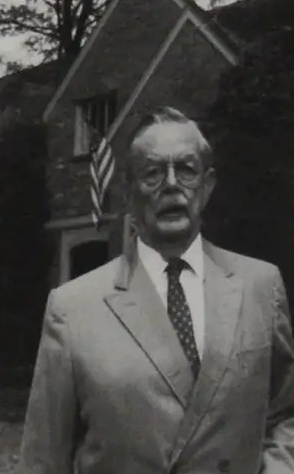
Mr. Downard
Another book of his writings recently appeared, but I don’t think that it’s a continuation of his life story. I have been making my way through some of Downard’s essays recently, and I will do a separate post on them in the near future.
Robert Anton Wilson has been a hero of mine for quite a while. His Illuminatus! Trilogy was one of the first books I read for this blog. My reviews of his The Sex Magicians and Masks of the Illuminati are probably the best pieces of writing I’ve published. I’ve read a couple more of his books since posting those, but the contents of The Book of the Breast and Quantum Psychology aren’t exactly Nocturnal Revelries material.
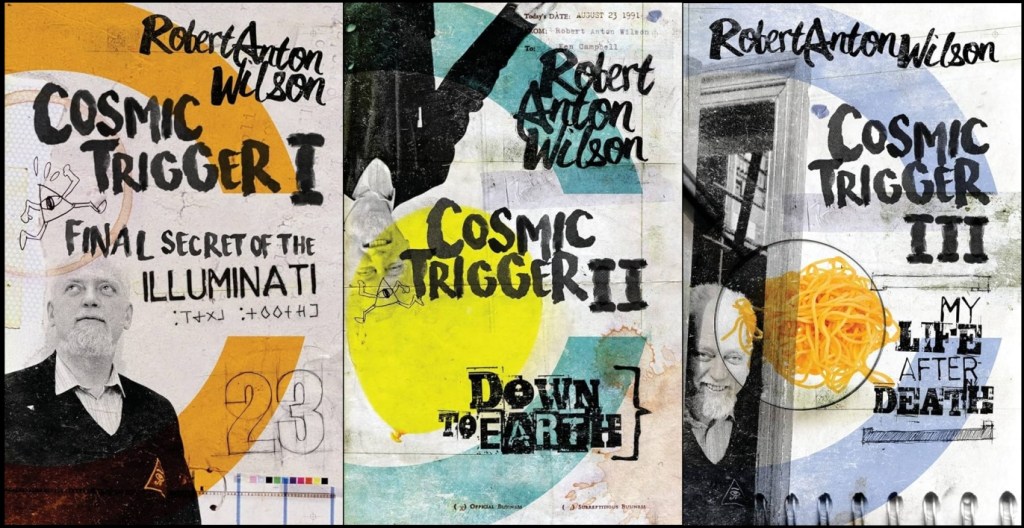
I’ve been reading a lot of books about conspiracies recently, and digging in this field this has led me to an absolutely bizarre individual called James Shelby Downard. There are rumours online that he’s not a real person, and that was was made up by Adam Parfrey and Michael Hoffman II for an essay published in Parfrey’s Apocalypse Culture from 1987. This confused me as I had read that Robert Anton Wilson had mentioned Shelby in Cosmic Trigger: Final Secret of the Illuminati, the first part of Wilson’s “autobiography”, in 1977. There’s actually a quote on the cover of Shelby’s autobiography from Wilson that says, “the most absurd, the most incredible, the most ridiculous Illuminati theory of them all”. I thought it only responsible to see what Wilson had to say about Downard, so I read all three entries of the Cosmic Trigger series.
Hilaritas Press – 2019 editions
So these books aren’t really an autobiography. There’s autobiographical elements, especially in the second volume, but, as a whole, they’re more a collection of Wilson’s big ideas and how he came to adopt them.
Final Secret of the Illuminati – 1977
The first book wasn’t that great. I’ve watched enough video lectures of Wilson to know his general outlook, and none of the stuff on Timothy Leary, the Illuminati, Discordianism, Aleister Crowley, and the author’s own alien contact came as a surprise to me. One of the big things that Wilson pushes is the idea of reality tunnels and how truth, by his definition, is relative. I accept this idea, and Wilson’s linguistic philosophy is one of my favourite things about him, but the examples he provides in this book are ridiculous. One of his favourite books at the time of writing this was Robert Temple’s The Sirius Connection, one of the worst pieces of crap I’ve ever read. He also presents the psychic powers of Uri Gellar as evidence for some of his claims. I was a bit surprised that a person who I thought was intelligent had been duped by such garbage. Also, there’s a bit near the end where Wilson presents Timothy Leary’s 8-circuit model of consciousness in significant detail. Admittedly, I am not a cognitive neuroscientist, but this idea absolutely stank of shit to me. The book ends with Wilson’s kid dying. This was heartbreaking to read, and I wonder if it had something to do with the second half of the book being far worse than the first.
Down to Earth – 1991
Part 2 was by far the most enjoyable in the Cosmic Trigger series. Wilson tells more of his life story in this one, and he comes across as the witty, interesting guy I know he was. He had spent much of the time between writing this and the first book in Ireland, and this is apparent in his writing. Much of the book is taken up with discussions on his “Irish” upbringing, James Joyce and the modern Irish legal system. He also gets into the P2 conspiracy. Honestly, you could read and enjoy this one without picking up the other 2 entries in the series. It actually deals with the earliest parts of his life more thoroughly than the first entry in the series, so it’d be a fine starting point.
My Life after Death – 1995
I don’t know if I’d been reading too much of the one author or that this book is just worse than the others, but I didn’t hugely enjoy the last entry in the series. Wilson had already covered most of his important life experiences in the previous books, and this one came out only 4 years after the preceding entry. Does enough stuff happen between the ages of 59 and 64 to warrant a new entry in an autobiography? Apparently not. Instead of offering new, insightful ways of thinking about the world, Wilson instead fills this book with cringeworthy claims about the threat of political correctness and how society oppresses men more than women. I am quite sure that Wilson wasn’t a bad guy, but these tirades are hard to stomach in 2024. Don’t get me wrong. I accept that some of the ways that people currently expect others to use language are utterly ridiculous, but in my experience, the people who are complaining about political correctness and “wokeism” are usually assholes. Again, I’ve read enough of Wilson to know that he wasn’t anything close to a bigot, and he does make some valid points about identity politics, but the way he sets his arguments up are a little too similar to your Trump voting uncle’s facebook posts. At one point he asks why there’s no such thing as a straight pride parade. Sigh. There’s some discussion of the Priory of Sion mysteries here, and it seems that Wilson had encountered similar ideas on this topic to Tracy Twyman’s. He also discusses Orson Welles, Shakespeare and Elmyr, the art forger. This wasn’t as interesting as the other books, but it’s still worth a read.
I read these books because I’m going through a conspiracy theory phase at the moment, and Robert Anton Wilson is something of a conspiracy expert. He does discuss multiple conspiracies in these books, but he’s using conspiracies as a way to explain his worldview rather than adding a huge amount to conspiracy lore. Some of his ideas were a bit naïve and/or silly, but Wilson was always self aware enough to avoid coming across as a complete tool. He also had a lot of really good ideas, and I think his ideas on language should be more widely read. The Cosmic Trigger books were amusing overall, and they’re probably an easier starting point than the author’s fiction. I’m sure I’ll get around to more of that in the future.
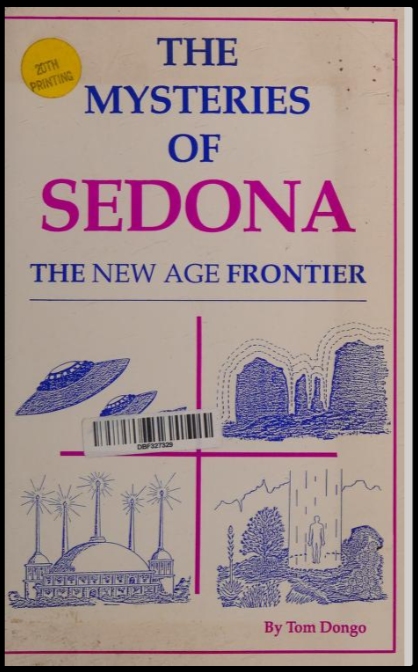
A long time ago, I read a book called Unseen Beings, Unseen Worlds by a guy named Tom Dongo. When I wrote about it here, I was relatively critical of it. Years later, somebody commented on a blog post I had written on Mac Tonnies’ Cryptoterrestrials claiming that I had given Tonnies preferential treatment to Dongo. This made me think. Had I changed, or was Dongo’s book actually deserving of more disdain than Tonnies’? I thought I’d better give Dongo another chance, so I read The Mysteries of Sedona, the first entry in his Sedona series.
The Mysteries of Sedona: The New Age Frontier
Hummingbird Publishing – 1988
Dongo lives in a place called Sedona in Arizona, and he claims that it’s a hotspot of psychic energy. This very short book describes some of the phenomena he has observed and heard about. There are some bog standard accounts of UFO sightings and psychic channellings that aren’t remotely convincing. He spends a lot of the book describing vortices where you can meditate and become one with the cosmic consciousness. This book reads like a pamphlet for unbearable new-age, hippy-dippy asshole tourists.
Cool spaceship
Honestly, there’s only 2 interesting claims made in this book of trash. The first being that Sedona is actually in the same place as the lost continent of Lemuria and that’s why it has so much psychic energy. Lemuria, of course, never existed, but that doesn’t make much of a difference to the fools who read this garbage.
Dongo also claims that parts of Sedona are inhabited by rock goblins. They aren’t visible to everyone, but Dongo can see them and they look like this:
This reminded me of the Kentucky Goblins case. I recently started watching that Hellier series that came out a few years ago. I was intrigued by the mentions of the elusive Terry Wrist in the first episode, and I liked where things were going with the mothman discussions, but when the team turned to tarot cards to guide their investigation, I turned off the TV in a fit of rage.
Dongo’s work is as bad as I made it out to be all those years ago. This book is utter nonsense. At one point the author suggests that school children be forced to take a class in channelling extraterrestrial spirits. I think I said it best in 2016 when I described Dongo’s writing as “bunch of ridiculous ideas that popped into the head of a stupid weirdo.”
When I was reading 9/11 as Mass Ritual, I noticed repeated references to a book called Secret Societies and Psychological Warfare by Michael A. Hoffman II and put it on my to-read list. Recently, I’ve been researching a particularly bizarre conspiracy-theorist named James Shelby Downard, and it turns out that his most infamous piece of writing, an essay called Kill King 33°, was co authored by Hoffman. I did a little research on this Hoffman chap, and it turned out that most of his other books are about how much he dislikes the Jews. He’s a holocaust denier and a key proponent of the Irish slavery myth. I’m not interested in reading crap like that, but this particular text is focused on more esoteric topics, and it seems pretty influential among cuckoo crazy conspiracists. Bill Cooper spent a couple of episodes of his radio show on this text. I had to read it.
Wiswell Ruffin House – 1992 (First published 1989)
Michael A. Hoffman II – Secret Societies and Psychological Warfare
The world is ruled by a shadow government. It’s not exactly clear who makes up this cryptocracy, but it’s almost definitely the Freemasons. This satanic cabal uses the media, shadow language and psychodrama to control the unthinking masses.
Hoffman claims that the cryptocracy produce traumatic events to scare the public and then wait a few years to leak information that basically admits their guilt. Jack the Ripper, the Son of Sam, and the Kennedy assassination were all examples of this. It’s this idea that 9/11 as Mass Ritual is based around. I covered the Son of Sam stuff before, and I’m going to be revisiting the JFK stuff with Hoffman’s pal Downard real soon. I’m also thinking of doing a deep dive into Ripperology at some point in the future. The main thing holding me back is the sheer volume of books about Saucy Jack. I don’t know where to start.
Shadow language is method by which the cryptocracy deliberately drop hints that they have done something terrible. Remember that time when an Ozzy Osbourne song contained the name of an airport where a plane landed on 9/11? You think it’s coincidence that Dealey Plaza where Kennedy was killed is on the 33rd parrallel and that there are 33 degrees in Freemasonry? I suppose crazy people forget that there is a finite number of words in and that some words will pop up in conversations about entirely different things.
Hoffman also claims that the murder of Sharon Tate was a sacrifice to the moon goddess after the first astronauts to land on the moon desecrated her by loading 50lbs of moon rocks into their shuttle back to earth. I hadn’t heard that one before.
In general, there are two big problems with Hoffman’s writing. The first is that it’s bad. I’m a big fan of clarity. My approach to argumentative writing has always been to state things as clearly and simply as possible. Don’t beat around the bush. Say what you mean and then provide examples and clarifications. Hoffman doesn’t do this. There’s no clear central thesis to this work. It reads like a frustrated rant.
The second problem is that most of what Hoffman says is glaringly obvious. In fact, many of his claims about the manipulability of the public seem understated given the events of the last 30 years. Human beings are exactly as stupid as Hoffman portrays them, but in reality, the forces that govern them are considerably more powerful (and sinister) than the freemasons. It would be pretty easy for a stupid person to read this book and see it as prophetic. In that way, it’s similar to the Unabomber’s manifesto. It came as no surprise to see that Hoffman actually contributed an essay on the Unabomber to the second volume of Adam Parfrey’s Apocalypse Culture.
People are dumb idiots, but I cannot believe that there is a well coordinated effort by a shadow government to control them. That idea gives us too much credit. Everybody is stupid, absolutely everybody. The Illuminati, if they exist, are morons too. As mentioned above, I am currently reading more of Hoffman’s work on conspiracies. It’s leading me to a lot of bizarre texts and sketchy characters. Take care. There’s a lot of freaks out there.
I had initially planned another post for today, but as I was putting the final touches to it last night, I discovered something about the book that necessitated further research. Luckily, I’ve had this post lined up for an occasion such as this for a while. Do you want to know how to tell if a person is a deranged freak just by looking at the shape of their head?
Self Published – 1887
The Mark of the Beast Revealed by the Shape of the Head – Lucilla Rebecca Hedley
The first 30ish pages of this 90 page book are a mildly entertaining description of how to spot a person with a savage instinct by observing the shape of their skull. Much of the amusement comes from the illustrations.
I bet most of my readers look like these absolute weirdos. Ewww.
The two tell-tale phrenological signs of a degenerate are a large gap between the eyes and a protrusion in the middle of the forehead. Spot these two together and you’re likely looking at a subhuman beast.
This is well and good and clearly backed up by science, but the last two thirds of the book descend into a jumble of Biblical hermeneutics and apocalyptic numerology. While the first part of the book deals with the mark of the beast (beast in the literal sense, pumas and lions and that), the rest of the book warns against the promises of the Biblical beasts, Mammon is the main threat here.
Honestly, the latter part of the book made me wonder about the sanity of the author. Phrenology is obviously a pile of nonsense, but there is some cohesion to the idea. The bulk of this book comes across as the incoherent ramblings of a devoutly religious lunatic. I read every word in here, but after the halfway point very little sank in. There’s a whole lot of words in here, but very few ideas.
Unfortunately, there is scant information about this curious text and its author online. I am assuming she was wealthy as she had this masterpiece published herself. There’s a copy online if you want to read it.
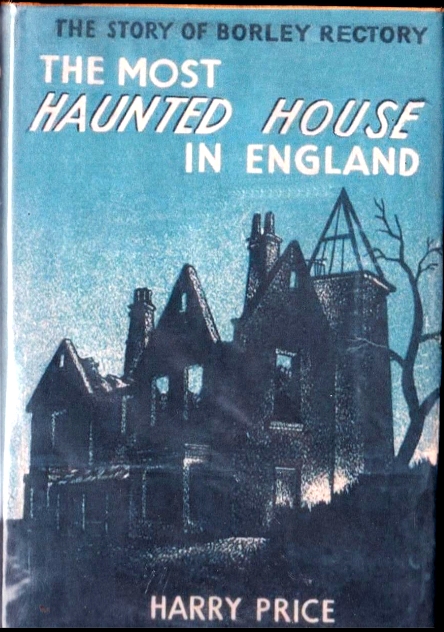
It was roughly a year ago that I reviewed The Amityville Horror. That book is an unconvincing piece of trash, but if you read it as a novel (which it is), there are some genuinely creepy ideas. I recently saw somebody posting about this book, Harry Price’s The Most Haunted House in England, and I thought I’d give it a go in the hopes that it would creep me out.
Longmans, Green and Co. – 1940
The Most Haunted House in England: Ten Years’ Investigation of Borley Rectory,
So Borley Rectory was a big house where a bunch of ghost sightings and poltergeist activity supposedly occured. From 1929 until 1939, Harry Price, a paranormal investigator, catalogued a bunch of the weird stuff that happened there.
People reported seeing a ghost nun walk across the garden. Others saw a black coach ride through the same area. Guests at the rectory heard creaking noises during the night and saw weird messages written on the walls. The people who lived there saw things falling off shelves without having being touched. One of the women who lived there claimed that a ghost punched her in the eye and flipped her out of her bed.
The (entirely fake) story of Borley Rectory could be interesting if told by the right author, but Harry Price’s book is very boring. He does his best to make the paranormal happenings seem unscary. These ghosts don’t mean any harm. They just want attention. I hate this idea. If I wanted a friendly fucking ghost, I’d watch Casper.
The other thing is that none of what Price claims in here is remotely convincing. There’s a part where the woman who owns the house goes upstairs to bed because she’s feeling sick, and then a few minutes later a ghost throws something down the stairs. Price claims that it couldn’t have been the woman because she was too sick. Shortly after this, the people below hear a clattering noise coming from upstairs. When they run up to the old lady’s room, they find her and mattress on the ground. Apparently the ghost had pushed her out of bed! Nice try Granny.
The Rectory
Not only is the book not convincing, but Price’s close associates came out after it was published and claimed it was lies. Price set most of it up. One man went into the house with Price to witness poltergeist activity. When he was walking in front of Price, he thought he felt small objects bouncing off his back. When he turned around, Price abruptly started whistling and checking his watch. Later on, the man noticed a bunch of pebbles falling out of Price’s pockets when he was taking off his jacket. When confronted, Price said that a ghost must have put them there.
Price wrote another book about Borley Rectory a few years after this one, but I couldn’t bring myself to read it. The Rectory actually burned down before the first book was published, so I can’t imagine the next book has anything of substance to add. I saw a trailer for a movie based on Price’s story. I couldn’t be bothered watching the movie, but it looks a lot more entertaining than this boring book of lies and nonsense.
I got a notification from WordPress during the week telling me that this blog is now 9 years old. I don’t know whether to feel proud or ashamed. There’s been ups and downs, but I’ve been really enjoying it for the last year though, so I’ll probably keep it going for a while longer. There’s still so many books left to read. Please let me know if you have any recommendations!









 Nocturnal Revelries