Asamatsu Ken’s Kthulhu Reich

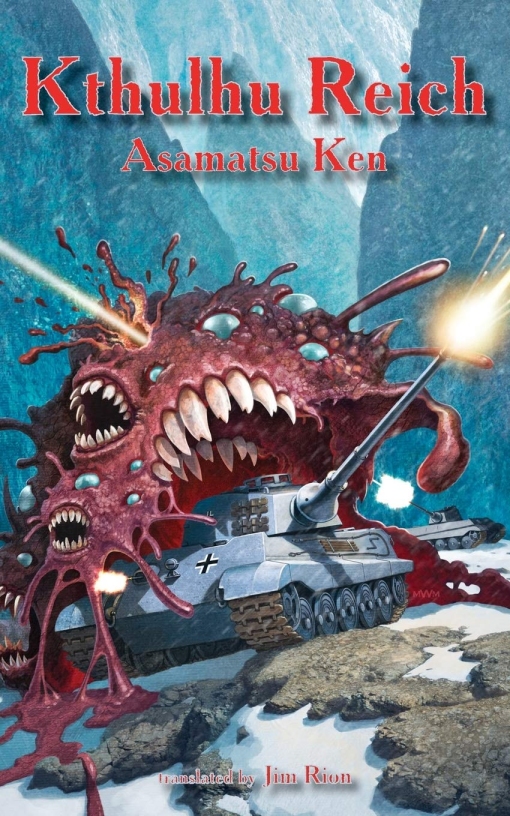
Kthulhu Reich – Asamatsu Ken
Kurodahan Press – 2019

This is a book of short stories by Asamatsu Ken, a Japanese horror author who specialises in Lovecraftian horror. I had intended for Robert Bloch or Robert E. Howard to be the next Cthulhu Mythos I read, but saw this and could not resist the promise of a Cthulhu Nazi crossover. Although the book was published in 2019, I believe all of the stories were written in the late 1990s.

The first story in here is a fairly straightforward reincarnation tale. I wasn’t super impressed. It wasn’t very Lovecrafty. The second story was about some some Nazis looking for the Mask of Yoth Tlaggon. This had an evil wizard and some spirits. It was better than the first story. I really liked how the author uses footnotes to include information on real historical events, occult theories and his own fictional characters. I enjoy the blatant disregard for the boundary between fact and fiction. The next story was basically At The Mountains of Madness with Nazis. It was pretty good.

Things got really interesting for ‘April 20th, 1889’, the 4th tale in the collection. It’s about Jack the Ripper teaming up with Nyarlathotep to summon the unborn Hitler. This is an utterly ridiculous combination, but it works. The next two stories are about Nazis getting attacked by Dracula and Dagon. I loved them. The final story, ‘Dies Irae’, is a mixture of historical fiction and the weird crustacean creatures from the The Whisperer in the Darkness.

I really enjoyed this collection.

The first story is not awful, but I reckon it’s the weakest. As I was reading it, I started thinking about why I enjoy Lovecraftian fiction. I like the pessimism in Howard’s writing, but I also enjoy his style. I know some people hate how long winded and archaic his writing is, but I don’t. This style is altogether absent in Kthulhu Reich, a translation of a modern mythos writer, and I needed the author to make up for this somehow. Fortunately, these ludicrous stories that weave in different historical figures, aspects of occultism and Lovecraftian entities were quite sufficient. You have to be careful with modern Cthulhu Mythos fiction. I know there’s lots of kitschy, cutesey Cthulhu stories out there right now. Fuck that. Ken’s stories are bonkers, but there’s a darkness behind them that keeps things legit. I would be happy to read more of Asamatsu Ken’s books in the future.

Sorry for the recent lack of posts. I have a few big articles I’m working on, and I’d rather work on those than pump out quick reviews of shit books nobody cares about.
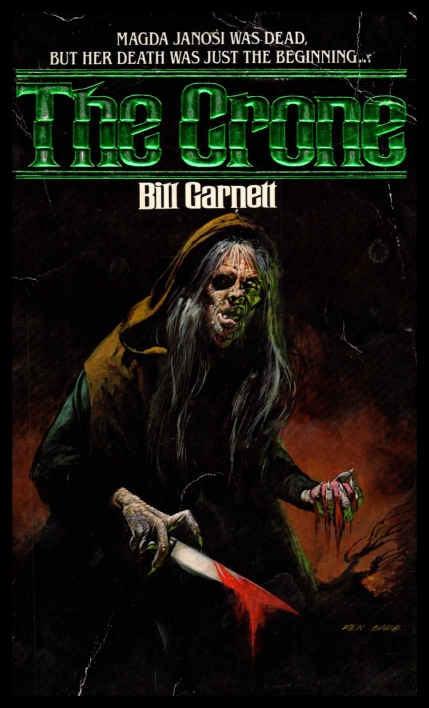
Bill Garnett’s The Crone

The Crone – Bill Garnett
Saint Martin’s Press – 1987 (First published 1984)

When I saw the cover of this book, I knew I had to read it. A mangy, ugly hag with a knife? Sign me up! The plot is as ridiculous as I’d hoped it would be.

Magda Janosi, an extremely ugly and deformed Hungarian woman, cuts a chunk of flesh out of her leg, moulds it into the shape of a small person and then baptizes it in the blood from a self inflicted and lethal tear in her jugular vein. This disgusting lump becomes sentient and starts burrowing into other bodies, eating their insides and animating their corpses to wreak vengeance on the man who wronged Magda’s daughter.

Magda is clearly a witch, but aside from a brief backstory of her getting raped, the origins of her dark powers are never revealed. That’s fine though. This isn’t the kind of book where you need things explained.

I don’t know anything about the author, and I’m not saying he was a sexist, but the protagonist of this novel definitely is. He rides his secretary, and when she falls for him, he breaks up with her by calling her a “pathetic whore” and threatening to “knock her shitless”. The way he thinks about his wife is pretty nasty too. All in all, he comes across as really horrible, and I think the reader is supposed to be half-rooting for his destruction, so maybe the book isn’t as mysogonistic as its main character. Then again, this novel is called “The Crone”, and as far as I know, crone literally means ugly old woman. So much emphasis is put on how physically unattractive Magda is, and her appearance has no real importance at all. She’s really wrecked though; even her own daughter can’t look at her. I’ve thought about this for a while, and I don’t really understand why it was so important for the reader to know how abhorrently hideous she was.

I though the build up of the story was the best part. Once the monster is ready to kill, the guy it’s trying to kill goes on a tour around the Middle East and North Africa. This allows the monster to attack in different ways, but the descriptions of each new city they visit made it feel a bit like the author was just trying to reach a page count.

Honestly, the whole book was very silly, but I found the story both fast paced and ridiculous enough to be thoroughly entertaining. This is pure trash, but I had a good time reading it.

Stephen King’s Pet Sematary

Pet Sematary – Stephen King
Doubleday – 1983

I haven’t read any Stephen King novels for a few years. 2 weeks ago I picked up Pet Sematary. I had seen the old movie version years ago, but I was not prepared for this book at all.

A family with two small kids moves into a house beside a busy road. Behind their house is a magical graveyard that brings whatever’s buried there back to life. The resurrected are altered though, altered for the worst. Even if you haven’t already read the book or seen the movie, you’ll probably be able to figure out what’s going to happen here.

King has claimed that Pet Sematary is the only book of his that actually scared him, but scary isn’t really the word I’d use to describe this. This is morbid. It’s a book about how people deal with death, specifically the death of a child.

I’ve mentioned it a few times, but I really don’t like reading about kids getting hurt. It’s too close to home. My kids are the same ages as the kids in this book, and I seriously wonder if some masochistic part of my subconscious was waiting until now to tell me to read it. I definitely found this more horrifying now than I would have if I had read it 10 years ago. I don’t know if that made it more or less enjoyable.

The inevitability of the plot is what makes this book so suspenseful. By the time you’re a quarter way through the book, you know full well where you’re going be at 3 quarters. You have to sit down and watch these poor bastards slowly suffer and disintegrate. It’s actually quite sadistic.

Pet Sematary is an effective novel, but I didn’t enjoy it as much I’ve enjoyed some of King’s other books. I’ll read another King novel next year.

The Fates and The Nightwalker – Thomas Tessier

I don’t think I’ve ever seen somebody bring up Thomas Tessier’s novels without saying how great they are. It also turns out that Tessier lived in Ireland for a while and even attended the same university as me, so I decided to give him a go earlier this year. I’ve only read two of his books, but both were enjoyable.

The Fates
Crossroads Press – 2019 (Originally published 1978)

Weird stuff starts happening in the town of Millville. A cow is torn apart, people are murdered in locked rooms, the Virgin Mary starts appearing to the local children… Read this book if you want to find out why.

The Fates was pretty good. It’s a science-fictiony horror novel that starts off with a high school teacher quoting James Joyce to his students. It’s hard for me not to enjoy that kind of thing.

The Nightwalker
Crossroads Press – 2018 (Originally published 1979)

I read this a few months ago and forgot to write anything down about it, so I don’t have a huge amount to say. I don’t need to say much though. This is the story of A Vietnam veteran who moves to London in the late 70s and becomes a punk and a werewolf. If that doesn’t make you want to read it, you have something desperately wrong with you. The book starts off with a man brutally assaulting his inconsiderate neighbour too, and anyone who reads this blog will probably remember why that might appeal to me. Some books have plots that make them sound great, but fall seriously short in the telling. This is not one of those books. It’s well written and super bloody. You should read it. You really should. The edition I read (well listened to actually) also includes, The Dreams of Doctor Ladybank, a story about a psychiatrist who dabbles in mind control. This story was also great.

I originally planned on reviewing more of Tessier’s books in this post, but I have a backlog of multibook posts, and I needed something to put out this week. I’ll read the rest of Tessier’s books in the future.

Andrew Chumbley’s Golden Toad

ONE: The Grimoire of the Golden Toad – Andrew Chumbley
Xoanon – 2000

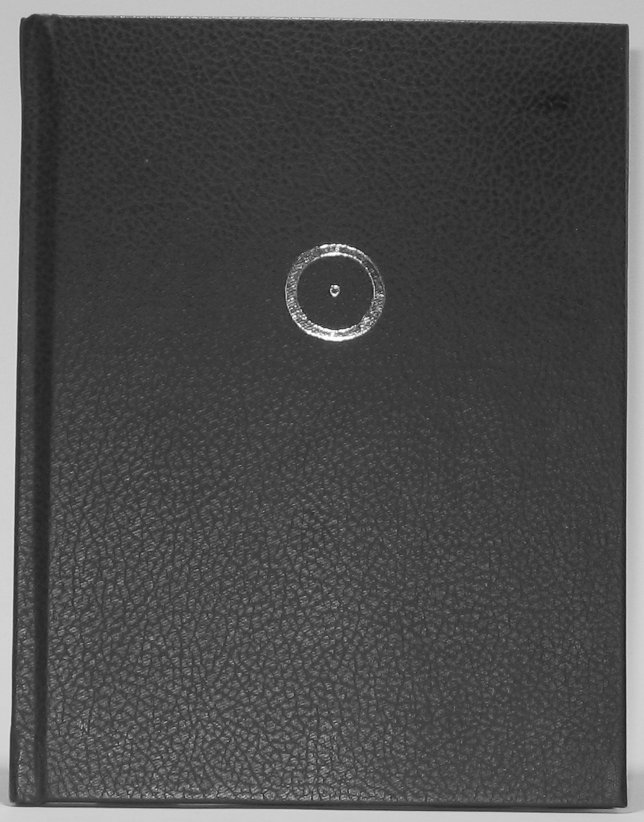
The first bit of this book tells how to kill a toad and let his body rot a certain way so that you can find the magical bone within that will allow you to summon Satan in the form of a horse. If you get on pony Satan’s back, he can carry you around the world in seconds.

The next part is a bunch of hokey poems. I understand that language can change people’s perceptions and that it can set the tone for magic, but this stuff sounds pretty silly when you’re reading it off a computer screen before going to bed on a Monday night. There was one cool line, “For the Devil’s Master am I, am I; the Devil’s Master am I” Parts in this section suggest that the practitioner is actually seeking control over humans rather than animals. I think the intention is actually just to gain self control. This reads as if it was co-authored by Severus Snape and Jordan Peterson.

The poetry section is followed by a weird fantasy story that was unbearable to read. My patience for this kind of crap is non existent at this point.

Magical bones from a toad? I wonder how many poor little toads were killed by the freaks who are into this crap. Chumbley wrote another, I think more academic, book about this topic that is probably far more interesting. I’m not going to read shit like this anymore.

The Unfortunate Fursey, The Return of Fursey, and the unfortunate audiobook

I left Ireland in my early 20s and have lived abroad ever since. I miss it greatly. I miss the people, the places, the humour and the tea. I read a lot of the classics of Irish literature when I was in college in Dublin. I read the others after I moved away. I’ve been on a horror kick since I started this blog in 2015, and I’m always excited when I find a horror novel set in Ireland. Unfortunately, some of the “Irish” horror novels I’ve come across are real crap.

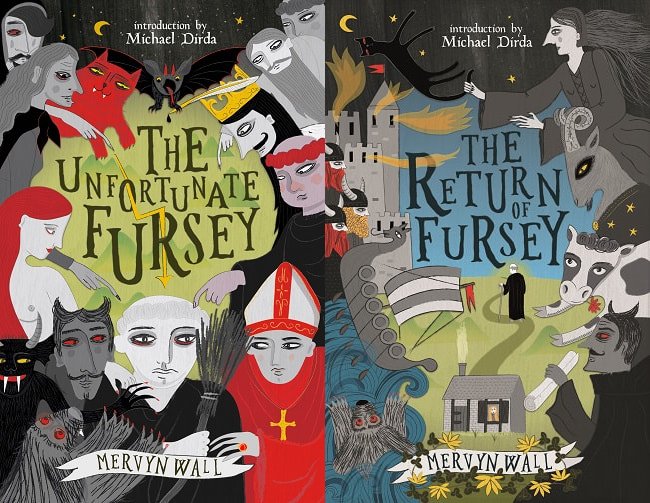
When I first heard of The Unfortunate Fursey, I was intrigued. Here was an obscure book by an Irish writer about a monk who is tormented by the Devil. Not only that, but the book was being republished by Valancourt Books, a publisher I held in the highest regard.

The Unfortunate Fursey and The Return of Fursey – Valancourt Books 2017

Mervyn Wall’s The Unfortunate Fursey was published in 1946, and it was followed by The Return of Fursey 2 years later. They’re pretty much 2 halves of the same story, so I’m going to treat them as one work rather than 2.

First of all, I want to make it clear that although it contains vampires, witches, demons and Satan, this is not a horror novel. This is farcical fantasy/historical fiction.

Fursey, the dumbest monk in Clonmacnoise, is kicked out of the monastery for unwittingly harboring demons in his cell. After his expulsion, he is forced to marry a witch who curses him with the gift of sorcery. Things go from bad to worse, and he ends up turning to a life of unmitigated evil. Fursey is basically a medieval Father Dougal, and both of the novels about his adventures are really, really funny. Wall obviously did a bit of research on witchcraft and sorcery too. He knows what he’s writing about.

I don’t understand how these books aren’t better known. I mean, they tick all of my personal boxes, but every review I have read of them has been positive too. Everyone who reads these books seems to love them. Apparently Gerald Gardner, the guy responsible for popularising Wicca, was a big fan. If you suspect that your tastes are at all similar to mine, I demand that you read these books. I promise that you’ll like them. I’m already planning to read them again in the future. I’m going to try to track down Mervyn Wall’s other books too.

That was the good side baby

Here comes the bad side…

Jimi Hendrix

I listened to audiobook versions of these two books. I’ve got through quite a few audiobooks from Valancourt, and they’re generally of an excellent quality. I love being able to take in a book as I cook dinner or clean the house, but there’s one thing about audiobooks that bothers me. I hate when audiobook narrators put on accents when they’re reading. I don’t mind if they’re voicing a character in the book. That can get pretty silly, but it totally makes sense. No, it only really annoys me when they put on an accent for the voice of the narrator. Of course, I don’t know any audiobook narrators or where they are from, so this actually only annoys me when they do a poor job of it. Personally, I think it’s pretty dorky to put on an accent just to read a story, but if your accent is good enough for me not to know it’s fake, then I guess it’s ok.

Alright, so far, I’m just discussing my personal tastes. You can roll your eyes and claim that I’m a cantankerous jerk if you want. I wouldn’t argue with you.

Unfortunately for everyone though, the narrator for the second Fursey audiobook doesn’t just put on an accent. He puts on an Irish accent. I don’t know why, but Irish accents seem difficult for people who weren’t born in Ireland. (I’ve discussed this before.) The guy reading this book is no exception. I could tell within a few seconds of him speaking that the accent was put on. Worse still, I could tell that he was English.

I don’t know how much my readers know about the history of Ireland, but a lot of what has happened there in the last thousand years has revolved around the English coming over and making things shit for us. The English did their best to colonize Ireland. They still have one of the parts that they stole. To hear an English man put on a silly Irish accent and read an Irish book about Irish culture is not something I ever want to do. If it was an American it would be annoying, but the fact that it’s a Brit is sincerely insulting. To be honest, I’m surprised and very disappointed that Valancourt Books gave this project the go ahead. I’m not going to hold it against the narrator. He’s a Brit; how would he know any better?

I don’t want to draw direct comparisons here, but I think it’s fair to label this as a case of audio-greenface. I genuinely struggle to see how this kind of thing was acceptable as recently as 2018. Unfortunate indeed. The whole thing is made more annoying by the fact that the first Fursey audiobook is beautifully narrated by an Irish person.

Buy copies of the two books, and get the first audiobook, but avoid the audiobook of The Return of Fursey at all costs.

Duncan Ralston’s WOOM

Woom – Duncan Ralston
Shadow Work – 2016


When I was reading about Matthew Stokoes Cows a few days ago, I came across a comparison to this book. I had downloaded an audiobook version of WOOM a few months back, and seeing that it was very short, I decided to give it a go.

A weird lad invites a prostitute to a hotel room and tells her gross stories while he tries to stretch out her vagina. Some of the stories are pretty nasty, but nothing in here really surprised me. This is the second book in a row that I’ve finished that contains a scene where somebody kills themselves by a self-administered abortion. I assumed that the narrator was working himself up to some horrible climax where he would do something really nasty to the woman he is talking to, and I was quite disappointed to find that my assumption was entirely correct.

This book proudly claims to be extreme horror on the cover. I understand that extreme horror often contains rape scenes. Detailed descriptions of fictional rapes don’t really bother me, but I am sometimes bothered by how rape is used in transgressive fiction. This book, while well written and plotted out, is essentially the story of a man raping a prostitute. He rapes her in a particularly unpleasant manner, but the specifics of his actions didn’t disappoint me. It was the fact that the whole book is essentially just a lead up to a rape.

Again, I don’t mind authors using rape in their stories. There’s loads of ways that rape could be used in an extreme horror story. Using it as the punchline seems lazy.

Some might say that the horrible ending to the book is to make some profound statement on the unpleasantness of existence. Let’s Go Play at The Adams’ uses rape to effectively convey this message. I don’t think that WOOM is operating on that level though. It’s not that sophisticated. One of the chapters in here is about an exploding bumhole.

I actually did enjoy reading the book, and I think Ralston is a capable writer. The plotting here is quite impressive. I just really disliked the ending. I’d be willing to give Ralston another go.

The Ingoldsby Legends – A Review in the Spirit of the Work

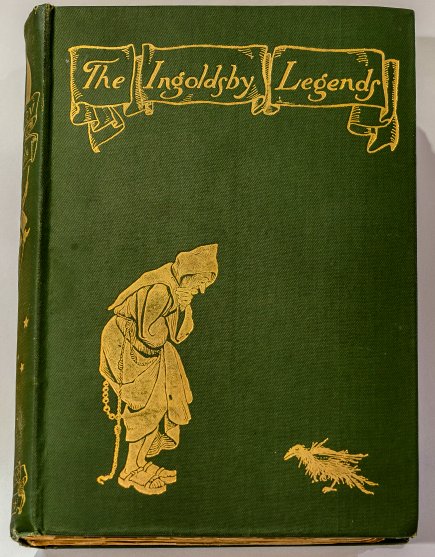
The Ingoldbsy Legends – Richard Harris Barham
J.M. Dent & Co – 1898 (Originally published 1840)

Waded through some poems in The Ingoldsby Legends before dinnertime, & that was punishment enough.

T.E.D. Klein, The Ceremonies

Ted Klein wrote a novel called The Ceremonies
that mentions some other horror ficciones
(that’s Spanish for stories), and I, being me,
decided to seek out these tales with great glee,
for Klein’s a respected horror critic and author,
and taking his recommendations I oughta.
I’d already read Stoker and  Machen and Poe,
but some of the books in there I didn’t know,
so I set out to find them, though it might be a slog,
and vowed to review each of them on my blog.

Now Klein’s protagonist reads these dark tales
but encountering one, he verily fails
to finish, for it is too boring by far,
so he picks up instead a book about stars.
I promised myself I’d succeed where he failed,
so I opened the book and I slowly inhaled
to ready myself for some archaic prose
about witches and jackdaws and old spooky ghosts,
but soon my face puckered like I’d sucked on a lime,
for The Ingoldsby Legends is written in rhyme.

It popularized supernatural tales,
but to provide any frightening scenes it quite fails.
I pushed to get through it,  made several tries,
but this kind of writing, I truly despise;
it’s boring and British and repulsively twee.
It might feature spirits, but it isn’t for me.

Let this be a lesson, learn from my mistake,
and leave Ingoldsby’s Legends alone, for God’s sake.
Use your copy for toilet paper, don’t you think twice,
and please listen closely to these words of advice:
When writing ghost stories and tales (and reviews),
poetry isn’t the form you should use.

Shoved Down Your Throat and Shat Out Your Arse – Matthew Stokoe’s Cows

Cows – Matthew Stokoe
Creation Books – 1998

Happy Halloween! Here is one of the least Halloweeny horror novels I have ever read. I had this book on my to-read list for several years before getting around to it. I don’t really remember where or how I first heard of it, but I must have read a summary of it years ago because when I started it, I recognized some plot elements. That being said, I was actually quite unprepared for the extremity of this book. I really didn’t know it was going to be so gross.

It’s about a dude who lives with his abusive mother and crippled dog. This guy gets a job in a slaughterhouse, and everything goes to Hell. I enjoyed the first few chapters. The nastiness is so extreme from the beginning that it’s difficult to absorb. I know that the world is filled with sickos and abusive parents, but the book starts off so unpleasant that nothing ever feels real. The beginning feels nightmarish, but when the violence ramps up, the whole thing starts to feel silly.

The point at which I stopped enjoying the book was when the workers in the slaughterhouse ganged up and started fucking the wounds on a cow they were killing. This scene reminded me of pictures my friends and I would draw in business studies classes when we were 15. Pretty soon after this scene, the cows start to talk and I lost interest. I did finish the book, but I didn’t enjoy much of the last half.

There is few drawn out poo-eating scenes in here. One of these made me feel a bit ill. I’ve read more books about poo-eaters in 2021 than any sensible person should.

When I was done with the book, I googled it and discovered that Cows is a widely blogged about novel. I read a few reviews, and it turns out that a lot of people talk a whole lot of rubbish about this book. It’s not really thought provoking or insightful. It’s puerile crap about a pair of poo-eaters. When it comes to artistic statements about slaughterhouses and shitty arses, there’s only one that matters:

Basil Crouch’s Fairy Gold

It’s been a long time since I’ve discussed the work of Basil Crouch. I heard recently that he died last year. He wrote one book that was a bit paedoey, but he was fairly amusing otherwise. The man was either a half-arsed swindler, a loony or both.

This week’s offering is an utterly ridiculous book of his called Fairy Gold. I don’t know when this was published or who published it. It looks like a DIY job. I’m just going to summarize this one.

Basil Crouch has a little pond in his back garden. 5 fairies and a frog live there.

The first chapter of the book is made up of accounts of people who do and don’t believe in fairies. The ones who don’t believe are all poor losers. The ones who do believe are rich success stories.

Part two is about the different kinds of fairies. Fairies are reincarnated good people. Bad people come back as frogs. This section also details where fairies live.

The third section is about how the Cottingley Fairy photos are real. The girls who took those photos admitted they were fake. There’s a funny bit in this part where Crouch tells how he went out to Cottingley to see if he could commune with the fairies but instead found a dead dog in a plastic bag. LOOOOL.

Part 4 is a conversation that Basil Crouch has with his cat. The 5 fairies that lived in his pond have gone missing, and his cat tells him that they were kidnapped by evil fairies.

Part 5 is instructions on how to make a model fairyland. This is essentially a shitty arts and crafts exercise involving plasticine, blue crepe paper and cardboard cut-out fairies stuck onto lollipop sticks.

The sixth and final section of the book is a ritual that Basil Crouch performed to set the fairies from his garden free. He seems to be suggesting that you perform the exact same ritual. I’m not sure why this would have any effect for somebody else though. Unless your cat has told you that your local fairies have been kidnapped by a goblin, this book will be utterly useless.

I haven’t exaggerated. This book is silly crap.