The Feminists’ Revenge – Shelley Hyde’s Blood Fever

Blood Fever – Shelley Hyde

Pocket Books – 1982

This book starts off with a man smashing his wife’s face in with a fire poker after he gets home from work. In fairness, he only does so in self defense, and a local police officer lets him out of jail after the cop’s daughter turns up dead at the site of another brutal murder. The first half of the book deals with these lads slowly figuring out that the town of Broughton is plagued with a virus that is turning its women into crazed savages with an insatiable lust for men’s blood.

It was the second book in a row that I read that featured a woman name Arlene suddenly going mad and trying to murder her husband. When I started it, I wasn’t expecting it to be any good, but I ended up really liking it. My biggest complaint was that it feels as if the author was going for that Stephen King thing of making the town itself the protagonist. The problem is that Blood Fever is only 188 pages, less than half the length of Salem’s Lot. There’s too many characters and not enough character development to make them distinguishable. Aside from that, the writing is decent. I mean, this is trash, but its fast paced and interesting enough. I was a bit surprised to see on goodreads that this is Shelley Hyde’s only novel. I was not surprised when some further research showed that Shelley Hyde was actually a pseudonym of Kit Reed, an award winning author of some 30 novels.

Really, it’s baffling that this book doesn’t have more of a cult following. It features a group of feminists who lose their minds, take over a ranch and brutally murder any men who come within sniffing distance. Seriously. How has this masterpiece remained in obscurity for so long? Blood Fever should be mandatory reading for all university students taking gender studies classes.

I liked this book a lot. You should track a copy down and read it.

Throwback by Mark Manley

Throwback – Mark Manley

Popular Library – 1987

I’m sure menopause is uncomfortable for a lot of women, but Arlene has it worse than most. There’s a lump growing on her spine, and it’s making life very uncomfortable. When it’s x-rayed, her doctors are horrified to see a bone structure developing inside it.

Written in 1987, Mark Manley’s Throwback is a hugely enjoyable work of trashy horror. It’s fast paced, competently written, and it features a gang of dog-fucking punk-rockers attempting to rape a woman with a giant bloodthirsty rat growing out of her back. Seriously, what else could you ask for?

Yes, when Arlene’s hideous boil finally pops, the head, arms and torso of a giant carniverous rodent emerge and begin to subsume Arlene’s body and soul. Arlene is what her backwoods ancestors called a ‘Throwback’. Her DNA contains patterns from a far earlier form of life, and those strains are becoming dominant. Arlene somehow maintains a psychic link with her daughter, Sharon, and Sharon has to do her best to end her mom’s killing spree.

I don’t know what else to say about this one. That’s the beauty of this kind of book though. You’re not supposed to have much to say. It makes promise on the cover and delivers in the text. It was a lot of fun. If you’re not already looking for a copy after reading this review, I doubt we have much in common. This is pure trash, but it’s exactly the kind of book that I want to read right now. Short, weird and gross. Perfect.

A.N.L. Munby’s The Alabaster Hand

The Alabaster Hand – A.N.L. Munby

Four Square – 1963 (Originally published 1949)

The protagonist in T.E.D. Klein’s The Ceremonies mentions that this book is on his shelf. I promised myself I would read all of the horror fiction referenced in The Ceremonies, but after attempting to read the truly atrocious Ingoldsby Legends, I had to wait a while before going any further with Klein’s recommendations.

The Alabaster Hand is the only work of fiction by Alan Noel Latimer Munby that was ever published. It’s a collection of ghost stories that were written while the author was being detained in a prisoner of war camp in Nazi Germany. The collection is dedicated to M.R. James, and James’s influence can be felt in every one of these tales.

Munby was a serious book nerd. He was an antiquarian book dealer, a librarian at Cambridge and the President of the Bibliographical Society. His characters, like those of James, share his interests, and his passion for old books creeps into several of the stories here. There’s mysterious diaries, terrifying grimoires and an antiquarian bookshop run by a pervert. The book nerd in me couldn’t help but enjoy these tales. I spend a good deal of my free time researching quaint and curious volumes of forgotten lore, but Munby took these pursuits to another level. I get the sense that Munby was romanticising the life of an antiquarian though. Michael Cox, in his 1995 introduction to this collection notes, “The stories in The Alabaster Hand are deliberately retrospective in their evocation of a world that, by 1949, had largely vanished.” It’s hard to imagine anyone other than a carefree Victorian Lord having the necessary time and money to pull off a life truly dedicated to the pursuit and study of antiquarian books.

There’s one story in here called ‘The Negro’s Head’ that is liable to cause offence to modern readers. It’s about a black lad who is murdered for being black. Although the narrator does not condone this murder, he does end the story with regrets for the “savage who was so grievously wronged at the hands of one of my own countrymen.” I know words were used differently back then, but describing a murder victim as a savage seems pretty silly by any standard. I’m quite sure Munby actually meant well here, but I’d still skip to the next story if I was reading this one on the bus.

My favourites in the collection were ‘Herodes Redivivus’, ‘The Book of Hours’, ‘Number Seventy Nine’ and ‘The Devil’s Autograph’. As fun as some of these stories were, none of them were remotely scary. I recall feeling a bit creeped out when I read some of James’ stories, but nothing in this book had that effect. They’re decently entertaining though, and if you like M.R. James, this may be the next best thing. It’s quite short too. You might as well read it.

James Howard Kunstler’s The Hunt

The Hunt – James Howard Kunstler

Tor Books – 1988

Billy, a pathetic frigid, invites cool dude R.J. on a camping trip to find bigfoot. The back cover of the book suggests that he is really inviting R.J. so that he can kill him, but this isn’t actually what the book is about. The thought of harming his friend does pass through his head when they’re on the camping trip, but only as a passing fancy.

The two lads eventually run into a gang of Bigfoot (bigfeet?), and they manage to kill one of the beasts. Unfortunately, on their way home, R.J. gets hit by a car and their bigfoot corpse gets lost in the woods.

There are a few other little bits and pieces going on in this story, but that’s the basic plot. Let me tell you why it’s stupid.

There’s too much character development for this kind of book. Billy is a little incel nerd, and he’s clearly extremely jealous of R.J. There’s a lot of backstory here, and it’s probably the most entertaining part of the book. But this is supposed to be a violent horror novel about bloodthirsty bigfeet, not a soap opera. Sure, we know why Billy is jealous of his friend, but we have no idea why he decides to try to catch a bigfoot. The revenge/jealousy part of the book has nothing to do with the Bigfoot part.

The ending is a cop-out. Yes, Billy still has the photos of the bigfoot, but by the end, I didn’t give a shit about that part of the book. I wanted to know if he was going to kill R.J. or not. That’s the story this book is set up to tell. R.J. getting hit by a car is a painful deus ex machina.

There are a few bits with bloodthirsty bigfeet, but they take up maybe 2 of the 200 or so pages of this utterly shit book. The book is called The Hunt, but “The Awkward Camping Trip” would be a far more appropriate title. (As a matter of fact, the original title of this book was “Bagging Bigfoot”. I once read a book called “Boffing Bigfoot“.)

This book tries to do several things, but it fails at all of them. Avoid this rubbish.

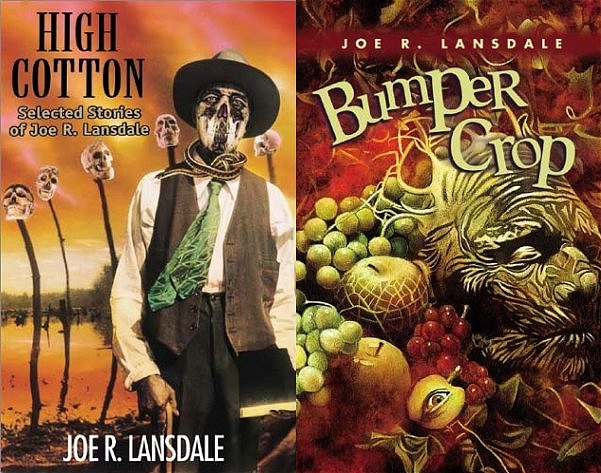
Joe R. Lansdale’s Best Short Stories (High Cotton and Bumper Crop)

Joe R. Lansdale’s High Cotton and Bumper Crop

Golden Gryphon Press

I read a few Joe R. Lansdale books last year (Part 1, Part 2). Some were great, and I ended the year as a Lansdale fan. I gathered from social media and other blogs that his short stories are some of his best writing, and I decided to look at them next. His first story collection, By Bizarre Hands , is highly esteemed, but I opted instead for High Cotton and Bumper Crop. These are ‘best of’ collections that came out in 2000 and 2004 respectively. There has since been another greatest hits collection, but its contents are nearly all included in the collections I read, and what’s left, I can read some other time.

For the purposes of this review, I’m going to treat the two collections as one. I cannot imagine a person reading one and then not wanting to read the other. The original Golden Gryphon Press editions are hard to find now, but both collections have been reissued by Crossroads Press.

I had read one of Lansdale’s short stories in the first Splatterpunks Anthology a few years ago, and then I read the God of the Razor ones after finishing The Nightrunners. I didn’t bother to reread these ones.

I was actually working on some short fiction right before reading these collections (I’m debating whether to post it here), and I actually found these books quite inspiring. My biggest struggle with writing fiction is coming up with ideas, and it’s really cool to see an author taking what are often silly ideas and then going through with turning them into a story. ‘Fire Dog’ is a perfect example. It’s very silly, but also very entertaining.

Some of the stories are hilarious, but some are also extremely violent and deeply disturbing. ‘I Tell You It’s Love’ was my favourite. It’s the romantic tale of a couple of deranged sadomasochists. It’s quite nasty. I’m already looking forward to reading it again.

Joe R. Lansdale’s readers won’t need PhDs in literature to see that his writing is openly anti-racist, but these books contain the n-word an awful lot (well over 100 times in High Cotton). The usage of this word is to show the ignorance of the characters using it, and this is nearly always entirely obvious, but it definitely dates the writing. I can’t say for sure because I haven’t read any of his recent books, but I doubt Lansdale puts that word on paper as much as he did in the 80s. Again though, he was very clearly trying to use his writing to condemn prejudice.

Lansdale’s writing is exactly the kind of stuff I need when I’m coming down off some high falutin’ literary horror that I’ve had to push myself to get through. It’s not that his writing is dumbed down or anything like that; his stories are just a lot of fun to read. His prose is tight and he tells a mean story. I am, without doubt, going to read more of his short story collections in the future.

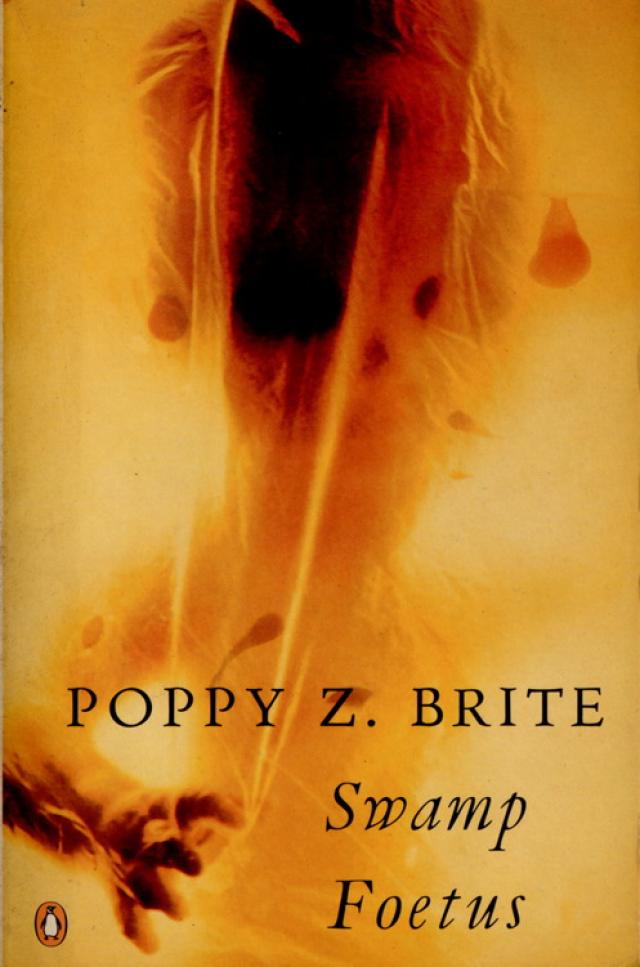
Swamp Foetus – Poppy Z. Brite

Swamp Foetus – Poppy Z. Brite


Penguin Books – 1995 (Originally published 1993)

I read Poppy Z. Brite’s novel, Lost Souls, a few years ago, and this, his first collection of short stories, is more of the same. I’m a straight guy in my mid 30s, and I enjoyed the Hell out of this book, but if, by chance, you’re a queer goth teenager, throw whatever the fuck you’re reading in the garbage and read this instead. This reminds me so much of people I used to hang out with when I was younger that it made me quite nostalgic.

These are mostly stories about skinny, sensitive, gay goth boys who drink too much. They encounter geeks, zombies, corpse thieves and other freaks. ‘His Mouth Will Taste of Wormwood’ might be my favourite story of the bunch, but I also really enjoyed reading about Steve and Ghost from Lost Souls in ‘How to Get ahead in New York’ and ‘Angels’. I know that Brite’s 2nd novel also features characters from that Lost Souls, and I intend to read that one soon too.

I realised about halfway through ‘Xenophobia’ that I had read it before in the second Splatterpunks anthology. I have seen Poppy Z. Brite associated with Splatterpunk but I don’t know why. His writing is too good. The last story in this collection, while plenty violent, reminded me more of Ligotti than anything else.

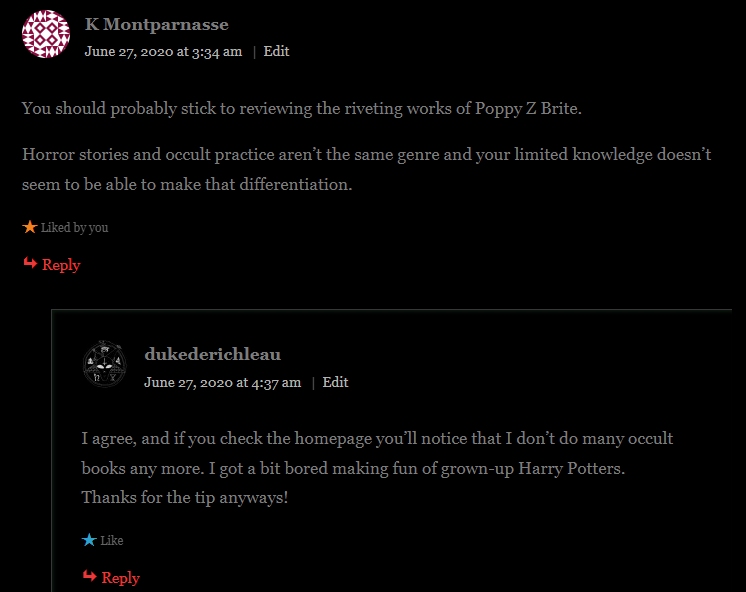
A few years back, I wrote a fairly critical review of a book of Vampiric black magic. Somebody, probably the author, made fun of me for it by saying I should stick to Poppy Z. Brite books. I am happy to take this very good advice. Poppy Z. Brite books are awesome.

What a dick!

If you want to read this collection, it might be easier to find the Dell edition titled Wormwood. It’s the same book. Be careful though, because there is also a collection by Brite titled His Mouth Will Taste of Wormwood. That one only contains 4 of these stories.

I really enjoyed Swamp Foetus. There was one story about a little kid dying that was a bit upsetting, but it ended the way I hoped it would. I am looking forward to reading more Poppy Z. Brite in the future.

Guy N. Smith’s The Festering

The Festering – Guy N. Smith

Arrow – 1989

Guy N. Smith wrote a lot of books, and I wasn’t sure of which one to read first. I didn’t want to commit to any of his series to begin with, so I looked at his standalone novels. I chose 1989’s The Festering as my starting point as it had the mingingest cover. I can honestly say that this novel is now one of my favourite books ever.

A couple move to the English countryside to escape urban life. Their plumbing is dodgy, so they have well dug in their garden. Unfortunately, an ancient, diseased corpse was buried there, and the lads who dig the well end up contracting the disease.

This disease causes you to grow disgusting boils all over and to leak stinking pus and slime from every orifice. It also increases sexual and aggressive urges. Those who get sick end up going on violent rampages and end up as a rancid puddle of noisome muck.

“it was surely a demented diseased stranger, some cancerous monstrosity bent on a final depravity before whatever was eating away his body claimed him for its own.”

I loved this book. It was really horrible.

It was written in 1989, and it’s hard not to think that the AIDS crisis had something to do with the plot. The Festering Death is directly compared to AIDS twice within the text. This seems rather insensitive now, but I think everyone reading this book in 2022 will understand how uncertainty about the symptoms and contagiousness of a disease can be used as an effective means to create tension. Also, the symptoms of the disease in the book are nothing like those of AIDS.

I also know that it’s not really fair to judge an author based on the tendencies of their characters, but the misogyny on display in this book is hard ignore. The men throw out phrases like “fucking little whore”, “poxy cow”, “poxy bitch” and my personal favourite, “a filthy slag offering her body for a pittance on a street corner.” This is real classy stuff.

“sores that pulsed even after life had deserted the wretched body, spreading and feeding on the dead flesh with revolting rapidity and cancerous lust.”

I liked the simplicity of the horror at work here. The focus is on how pus filled boils are really gross. This focus is utterly relentless. The boils are disgusting, and they smell really awful. Seriously, the horrible scummy slime inside these weeping sores is both vile and rancid. Ewwww, stink!

The Festering is as trashy as they come, but it was exactly what I needed. I shall be reading more Guy N. Smith in the future.

Basil Tyson’s UFOs Satanic Terror

Mysterious humanoids are roaming our earth, and a diabolical plan of deception, delusion, and destruction has already commenced.

UFOs Satanic Terror – Basil Tyson

Horizon – 1977

I ordered a copy of this book immediately after discovering its existence. I knew that there was no way it could live up to its title, but I needed to have a copy of it on my bookshelf regardless.

The basic idea here is that aliens are actually just servants of the Devil who have been sent to Earth to lead people away from Christianity. The book doesn’t really give any sensible explanation of this theory though. It’s more of a “we don’t understand this, so it must be the Devil” deal.

The one remarkable thing about this book is the way it highlights the narrowness of the author’s worldview. I don’t believe in extraterrestials visiting Earth, but Basil Tyson’s arguments against this narrative are more ridiculous than the narrative itself. He uses passages from the Old Testament to explain events that were supposedly happening the the 20th century. Basil Tyson really comes across as a frightened, confused fool.

After spending much of the book discussing how occultism is dangerous, Tyson claims to be a psychic himself. This is part of the reason he knows so much about the UFO phenomenon. He claims that several demons have appeared to him over the course of his life, one was disguised as his mom. He talked to these demons, and he was even brave enough to laugh at one who was not particularly scary. A tough lad was our Basil.

Basil Tyson was a crazy man, and this is a crazy book. Unfortunately, it’s actually quite a boring read. If you’re into this kind of thing, Bob Larson’s UFOs and the Alien Agenda is a more entertaining piece of garbage on the exact same topic.

Edmund Blackmoor’s The Satanic Orgy

The Satanic Orgy – Edmund Blackmoor
Tiburon Books – 1974


When I first saw this cover, I thought it was a modern book designed to look old. No. Edmund Blackmoor’s The Satanic Orgy is actually a real work of occult pornography from 1974.

A young couple’s wedding night is ruined when Ralph, the prudish husband, prematurely ejaculates on his wife Rena’s bush. It turns out that this only happened because a satanic witch has put a curse on him. Ralph is the mayor of Garden City, and when he gets back from his honeymoon, the Satanic witch drugs and seduces him and records it. This part was pretty good. She makes sure to degrade him thoroughly, eventually making him wank himself off into the toilet bowl. She then shows the video of their encounter to his wife and gets Warren, her gangster friend, to rape Rena while she’s in shock. The witch also makes a video of this. She then uses these video tapes to blackmail the mayor into allowing Warren to open up a bunch of casinos and brothels in his town.

Ralph and Rena stick together, and now that they’ve seen eachother fucking other people, they open up to eachother and their relationship dramatically improves. Unfortunately, Warren, the guy who raped Rena, decides he wants to rape her again, so he kidnaps her, gang-rapes her with his buddies and then turns her into a prostitute. Gang rape is not at all funny, but this scene was made rather humourous by a gay gangster who kept trying to suck his friends’ dicks while they were busy having a rape. The kidnapping and raping of the mayor’s wife are deemed too much by a higher ranking satanist, and the mayor and his wife are reunited and live happily ever after. The Satanic witch who caused all the trouble is then demoted and impregnated by Satan.

The focus of this story is sex, not Satanism. Sure, there are satanists in here, but the only orgy that occurs seems like a pretty regular orgy to me. The few mentions of anything to do with occultism or witchcraft serve solely to induce more fuck scenes. Whoever wrote this might well have limited their research to a single viewing of Rosemary’s Baby.

According to Kenneth R. Johnson’s article on science-fiction pornography in the July 1977 editon of Science Fiction Collector, this book was originally published as The Witch’s Spell by Gunthar James. I have not been able to verify this, but given my experiences with this kind of stuff, I don’t doubt it’s true.

Alternate version

I got my copy of this in a lot of other works of occult porno. I never enjoy this stuff as much I think I’m going to when I see the covers, but it’s really hard for me to resist. I’ve been researching old porn a bit recently, and a lot of it is very seedy. Human beings are filthy animals.

I love that cover though.

I.R.Aliens: Dermot Butler and Carl Nally’s Circle of Deceit

Circle of Deceit: A Terrifying Alien Agenda in Ireland and Beyond

Dermot Butler and Carl Nally
Flying Disk Press – 2018

The first half of this book is the boring, yet rather upsetting, account of the mutilation of hundreds of sheep on the McLaughlin’s farm in Derry. A bunch of sheep on this one particular farm had their tongues and eyeballs and other bits sliced out. The farmer believed this was being done by his neighbour, and he tried to get help from the local police force and government to put a stop to it. The police put up a few security cameras but wouldn’t let the farmer ever see the footage they captured. The authorities’ conclusion was that birds were responsible. The farmer didn’t agree that it was birds. The lad who he thought was responsible died, but the mutilations continued. The farmer was very upset that the authorities weren’t doing more to help him. It seemed like they were ignoring him.

There’s nothing about that story that’s hard to believe. Animals were being mutilated. There’s tonnes of evidence that show this. Before we go any further, ask yourself the following questions:

  • Are the police force and local politicians in Northern Ireland capable of not giving appropriate attention to the problems of one specific farmer farmer?
  • Are there people in Derry who are willing to act out on grudges that go back generations?
  • Are there any other possible explanations for the unfortunate mutilations of farm animals?

To me, it seems that the answer to all of these questions is a big fat yes. The authors of this book claim that the mutilations were caused by aliens. That seems unlikely to me, but I’m definitely willing to consider it. The difficulty for me is that the authors of this book claim that the authorities in Northern Ireland were trying to cover up the fact that the mutilations were caused by aliens.

Here’s another question:

  • Is it more likely that the authorities in Northern Ireland are so disorganized that they can’t deal with the problems of a single farmer or so organized that they are working together with global governments to cover up the existence of aliens?

I’m sorry, but this is silly. There’s a difference between being open-minded and gullible.

When it comes to this kind of stuff, I can suspend disbelief for the sake of entertainment, but after spending roughly half the book discussing real events that actually happened, the authors jump straight to quotes from the Old Testament to suggest that the mutilations on the McLaughlin’s farm were caused by aliens who are using sheep’s tongues to keep themselves alive for millennia. Come on guys, you’re supposed to ease us in. I need a little foreplay before you start quoting scripture at me. After this they go on to point out that over 100 legal firms refused to get involved in the case. They claim that this was because the legal firms were being intimidated by the government into refusing service, but it seems far more likely that the firms didn’t want to deal with the crazies that had attached themselves to the McLaughlins.

The authors go on to suggest that aliens are abducting and treating humans in the same way. They seem to believe we should all be very worried about this.

I want to believe. I really do, but this book wasn’t remotely convincing. The authors mention countless cases of animal mutilations and human disappearances, but there’s little here that sticks these cases together apart from paranoia and a willingness to ignore common sense.