 Varney the Vampyre – James Malcolm Rymer (or maybe Thomas Preskett Prest)
Wordsworth Books – 2010 (Originally serialized from 1845-1847)
I haven’t posted much in the last month because I have been spending my time slogging through this immensely long book. At 1166 pages of very small print, this is undoubtedly the longest novel I have ever read. ‘Novel’ however, maybe isn’t quite the right word to describe this tome; it’s a series of different stories about the eponymous hero that were originally serialised in pamphlet form over the course of several years. Think of it like this: if Stoker’s Dracula can be turned into 2 hour movie, Varney would take a 5 season TV show to do it justice. Just as the book is long, this review is fairly hefty too, so pour yourself a cup of blood before you sit down to read it. If you haven’t read the book, you might want to skip over the sections in red. I say this not because those sections contain devastating spoilers (they don’t), but because they deal with issues that are so perplexing that they may scare you away from ever reading the book.
 Look at the girth of this thing! It may be thicker than 4 of the other books in this series put together, but it was no more expensive. (Note: Varney is actually not the kind of vampire that can turn into a bat)
The writing is of a pretty decent standard, although there is quite a lot of recapitulation. This may have been included to keep readers up to date with the story if they had missed the last edition (kinda like the Victorian version of “Previously on the X-Files…), but I have read elsewhere that the author was paid by the word, so maybe it was just to take up space. Either way, coherence doesn’t seem to have been a priority, and throughout the tale there are characters that appear without reason and disappear without a trace. Varney himself has several suggested back stories that conflict with the account of his life that he gives at the end of the book, but more on that later. Also, with the exception of Varney himself, nearly all of the dramatis personae are interchangeable stock characters. I lost track of how many pleasant young men named Charles appear throughout the story.
The cover of the Wordsworth edition really blows in comparison to the original.
If you check out the librivox audiobook version (I would recommend that you alternate between a hard copy and these mp3s. Doing so allowed me to get through a few chapters every time I had to cook, tidy up or walk anywhere recently.), you’ll notice that Librivox credits Thomas Preskett Prest as the author instead of James Malcolm Rymer. It seems that nobody really knows who wrote the book. Prest took the credit for more than 100 years, but research that I have read ABOUT suggests that the writing style is actually closer to Rymer’s other writings than Prest’s. Also, minor publishing discrepancies in the text correspond to Rymer’s bankruptcy, suggesting that he was in fact the author. That being said, Rymer and Prest are known to have worked for the same publisher and are believed to have collaborated on other works, so it’s not unlikely that they both contributed to this one. (Apparently Rymer was less than 4 foot tall.)
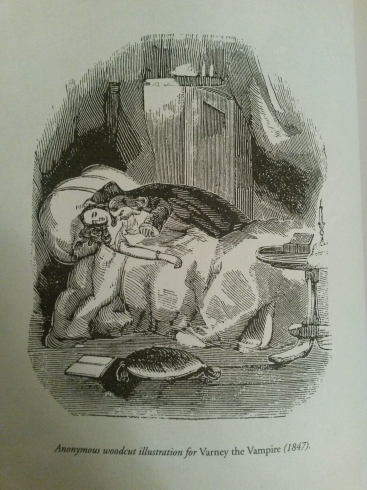 Drinking her blood, straight from the tit.
The book is split into 3 volumes of roughly 400 pages each. (This division seems to have been based on the length of the book rather than by the contents of the volumes.) This edition ends with Chapter 220, but if you were to count the amount of chapters that the book contains, you would notice that there are actually 237. How could this be? Well, Chapters 41-43 don’t exist, Chapter 171 is followed by Chapter 162, and Chapters 195, 210, 197, 118, and 199 appear in that order. These mistakes have been faithfully carried over from the original pamphlets. (The chapter numbering in the audiobook version has been corrected. This was a little frustrating as I went back and forth between that and the text, although if it had retained the original numbers, the playlist of mp3 files would have been completely shagged.) Also, each chapter has a short title, but the titles rarely refer to anything that actually happens within that chapter. The chapter might be titled; “The events in the Parson’s office”, and it would be about a pair of young lovers having a picnic by the seaside. Arbitrary volume and chapter numbers aside, the book can be divided into 11 distinct stories. The first of which takes up the entire first half of the book while the 4th is less than 20 pages.
 This poor chap was mistaken for a vampyre. He’s fucked now.
The first section, the events at Bannerworth Hall, is by far the longest and most enjoyable part of the book. The characters here, although they could be lifted directly out of 100 other Victorian novels, at least get to be part of the story for long enough that the reader remembers them. These characters play a smaller role in the second section of the book, and they are only mentioned 2-3 times in the final 400 pages. Their story is never satisfactorily cleared up, and I kept hoping that they would pop up or that the events that were occurring would somehow end up explaining what had happened to them. It seems that the initial followers of the story may have felt the same way; in one of the final episodes, the author takes pains to clarify that the Bannerworths have all died. I wouldn’t be surprised if this brief allusion served as a response to those readers who had inquired if the Bannerworths were ever going to make a comeback. These loveable characters, we are pleased to find out, have not met with an unsavory end though; it’s just that the events towards the end of the book take place at a much later period of time. As we are soon to see, this epic tale takes place over the course of several centuries.
Here’s a few questions I have regarding the trials and tribulations of the Bannerworth family.
Is Varney the man in the portrait?
There is a portrait in Flora’s bedroom of Runnagate Bannerworth, an ancestor of the family. When the family realises that the vampyre looks exactly like the man in the portrait, they go to exhume Runnagate’s corpse from their family tomb. By the time they get to the tomb, not only has Runnagate’s name has mysteriously changed to Marmaduke, but his corpse has also disappeared. This is particularly confusing because Marmaduke Bannerworth is also the name of Flora’s father, a confirmed associate of Varney’s. (Plus, one of the initial explanations of Varney’s vampyrism is that he was a suicide victim. Flora’s father also committed suicide. Could Varney be her father? Probably not, but why the similarities?)
Runnagate is said to be 90 years dead, and Marmaduke’s coffin reveals that he was buried in 1640, thereby dating the events at Bannerworth Hall to 1730. Varney is a vampyre though, so these dates don’t really exclude the possibility that he is the man in the portrait. Indeed the fact that Runnagate/Marmaduke’s corpse is not in the coffin suggest very strongly that Varney is their ancestor.
Varney later admits that he is a distant relation of the Bannerworths and that he was also a friend of their father. He claims that he had seen the portrait when he was friends with their father and deliberately tried to look like it in order to scare the family. This explanation however, does not account for the missing corpse from the tomb.
Much later on, in a different episode, Varney explains that he became a vampyre after crossing Oliver Cromwell after the death of Charles 1st. (This means that he didn’t become a vampyre until at least 1649, almost a decade after the death of Runnagate/Marmaduke Bannerworth.) He also explains that at this time he was living in London and known as Mortimer. (This is also bizarre as Varney is later to be hung by a different nasty man named Mortimer.)
In the 225th chapter (Chapter 208 in the book) Varney claims that he remembers “being hunted through the streets of London in the reign of Henry the Fourth.” Henry the 4th died of leprosy in 1413, meaning that if Varney is telling the truth, he was at least 235 years old when he became a vampyre. There is a gap of 1000 pages between the accounts of Runnagate’s portait and Mortimer’s contretemps with Cromwell, so we can forgive the author for a discrepancy of 9 years, but Varney’s account of being chased during the 1400s is placed only 12 pages apart from his encounter with Cromwell.
By his own account, Varney is not the man in the portait in Flora’s bedroom, but do we really believe him? All of his origin stories can’t be true, and he’s never exactly made out to be a particularly honest individual. While he explained that he had deliberately tried to make himself look like Runnagate/Marmaduke Bannerworth, he never explained where the body of said individual was or how it escaped from its coffin. Also, it should be remembered that Runnagate/Marmaduke’s coffin not only contained no corpse, but neither did it contain any signs of ever containing a decomposing body. If Varney is not Runnagate/Marmaduke, Runnagate/Marmaduke is still likely to be a vampyre.

What happens to George Bannerworth?
He appears as the weakling younger brother in the first few chapters of the book, but soon disappears, never to be mentioned again. We are given enough information about his timidity to presume that this will be an issue for him at some stage, but he never gets a chance to shine. Lil bitch.
What happens to Dr. Chillingsworth?
The last we hear from him, he goes to London in search of Varney. We know that something happens to him afterwards that convinces him of the existence of vampyres. A note written by him appears in one of the final chapters of the book explaining so, the appearance of which left me with a genuine feeling of excitement. Varney does end up in London for a while in one of the later episodes; did they meet there? I had a theory that Chillingsworth was the mysterious stranger who follows Varney to Anderbury and gets murdered in the ice-pit, but he actually appears elsewhere afterwards, so it can’t have been him.
Who the fuck was the Hungarian Nobleman and what did he want?
Just as Varney starts to warm to the Bannerworths, a strange Hungarian nobleman shows up in the village in search of him. We find out that he is willing to pay a high price to find Varney, but he himself becomes suspected of being a vampyre and gets run out of town before Varney is found. There is no explanation given as to why he is looking for Varney, and no more is said about him after he is chased from the town. In one of the final episodes, Varney attends a vampyre initiation ceremony with several of his kin. One asks if he knew the Bannerworths, and he responds; “I did. You came to see me, I think, at an inn.” That is the extent of the conversation that appears 475 pages after the last mention of this character. Ahhh, sweet closure at last!
Who the shitting fuck was murdered in the ice-pit?
Towards the end of the first episode, Varney disappears. (The transition between the first and second episode is the only transition between episodes that carries over characters.) Soon thereafter, two strangers show up in a town a few miles distant from Bannerworth Hall. One of them, we know, has to be Varney, but the identity of the other is never made clear.
I think it was the Hungarian Nobleman. He’s the only character from the first section that’s unaccounted for. He had been confirmed as a vampyre and fled for safety without having achieved his goal of speaking to Varney. We know that he had been looking for Varney, but we were not sure of his motives. When Dr. Chillingsworth is mugged, we are inclined to give Varney the benefit of the doubt as he has seemingly made his peace with the Bannerworths, but if it wasn’t Varney, it has to have been the Hungarian Nobleman; he’s the only other bad guy alive at this stage! When it turns out that both of the mysterious strangers are vampyres, it only makes sense that one of them is the Hungarian.
However, when these two vamps meet near the end of the book, not a word is said about the fact that one of them has stabbed the other in the throat and thrown his corpse into an ice-pit. In fairness though, after the victim of this crime was revived by the moon, he snuck into the murderer’s bedroom and stole his jewels. Maybe they just decided to let bygones be bygones… Who knows?
What happened to the Quaker whom Admiral Bell kicked up the hole?
Perhaps the greatest mystery of all. This storyline gets a considerable build up, but it’s never resolved.
 Bleh!
Bleh!
There are, of course, plenty of other plot holes in the remainder of the book, but the cast of characters and plotlines in the later episodes are not nearly as memorable or complicated. Most of the episodes follow the formula of Varney trying to marry a beautiful young woman only to be foiled right before the marriage ceremony. (There are at least 4 chapter titles that include the phrase ‘the wedding morning’.) The middle episodes start to feel cartoonish in their repetitiveness, but the final two episodes end the book on a slightly more existential note. The penultimate episode has Varney playing the role of a hero rather than a villain, but the lack of satisfaction he receives from acting so convinces him to kill himself. His suicide attempt is thwarted by a pair of altruistic brothers, and when he is brought back to life, he gets super pissed off. He decides that if he can’t feel happiness that he will make sure that those around him don’t feel it either, and he gives what is perhaps the finest villainous speech that I have ever read. I’m going to include it here in its entirety, because unfortunately, I doubt that many people will actually make it far enough into the book to get to enjoy this exquisite piece of misanthropic bile:
“Since death is denied to me, I will henceforward shake off all human sympathies. Since I am compelled to be that which I am, I will not be that and likewise suffer all the pangs of doing deeds at which a better nature that was within me revolted. No, I will from this time be the bane of all that is good and great and beautiful. If I am forced to wander upon the earth, a thing to be abhorred and accursed among men, I will perform my mission to the very letter as well as the spirit, and henceforth adieu all regrets, adieu all feeling — all memory of goodness — of charity to human nature, for I will be a dread and a desolation! Since blood is to be my only sustenance, and since death is denied to me, I will have abundance of it — I will revel in it, and no spark of human pity shall find a home in this once racked and tortured bosom. Fate, I thee defy!”
Holy fuck, that is pure heavy metal.
 Varney arises!
Whether or not Varney is actually a vampyre isn’t determined until you’re well into the story, and the first 750 pages of the book contain only 2 short instances of vampyric activity. Things get bloodier in the second half as the stories come to focus on Varney and his exploits. He oscillates between being a decent lad and a murderous villain, so much so that I was genuinely surprised at the violent acts he would sometimes suddenly commit. Although the latter episodes are definitely more gory, far more people are stabbed or shot than are drained of their blood; this is more of an adventure novel than a horror story. That being said, there are a few chapters set in moonlit churchyards and charnel houses to which you can stroke your Gothic boner. So much of what we have come to expect from a vampyre story comes directly from this book, and you’ll find a million other reviews discussing how it’s the source of many of our modern ‘Vampire tropes’. Why then, does everyone give that credit to Dracula? Well, Dracula is much scarier, Bram Stoker took all of the best bits from Varney, twisted them around a bit, and shaped them into a far superior book.
 And fucking stay dead!
Montague Summers described Varney the Vampyre as being “far ghostlier than” and “a very serious rival to” Dracula. The book was out of print when he wrote that though, so that might have just been him trying to be the cool guy who liked the less popular work. I definitely wouldn’t go as far as Monty in this case, but I did really enjoy this book. I mean, it’s deeply flawed, but if you take it for what it is, i.e., complete trash, it’s d_____d enjoyable. It’s exceedingly obvious that the author/authors were making it up as they went along, and a lot of it doesn’t stand up to scrutinous examination, but if you like stories about graveyards, ghouls, chivalrous gentlemen, foul mouthed sailors, bloody murders, and heaving bosoms, this will entertain you greatly. I fucking loved it, and it has me looking forward to reading more of the Penny Dreadfuls that have come out in the Wordsworth Tales of Mystery and the Supernatural series. I have Wagner the Werewolf by Reynolds on my shelf, and I know they have also put out The String of Pearls, the other work by Rymer and Prest.

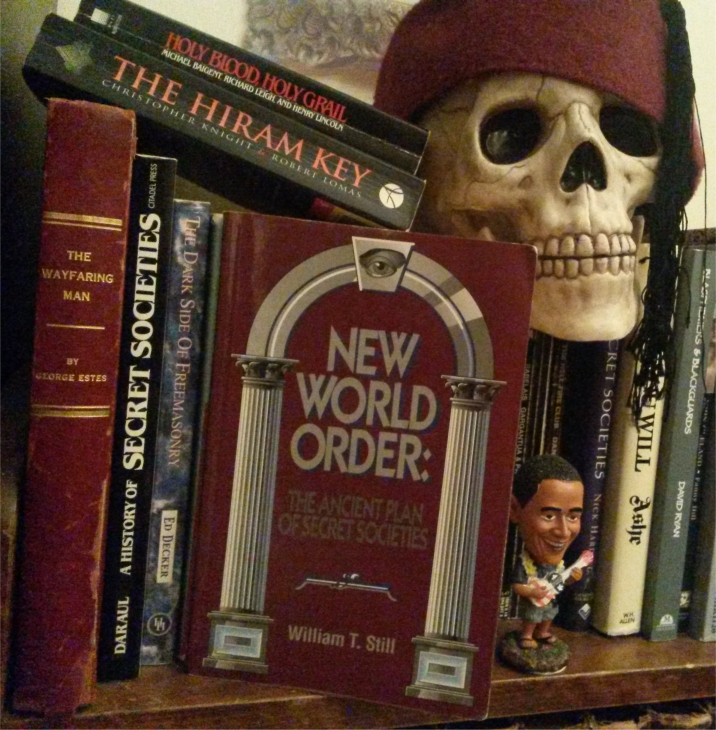 New World Order (The Ancient Plan of Secret Societies) – William T. Still


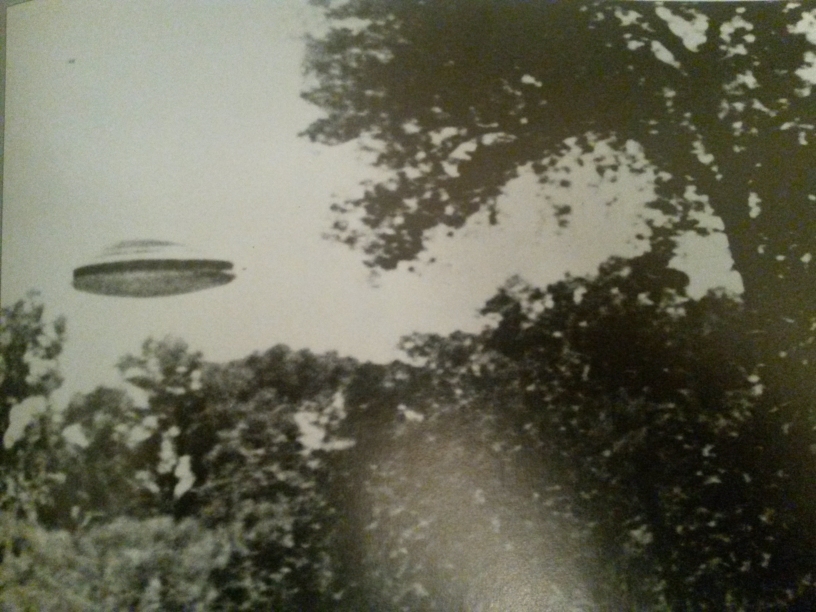
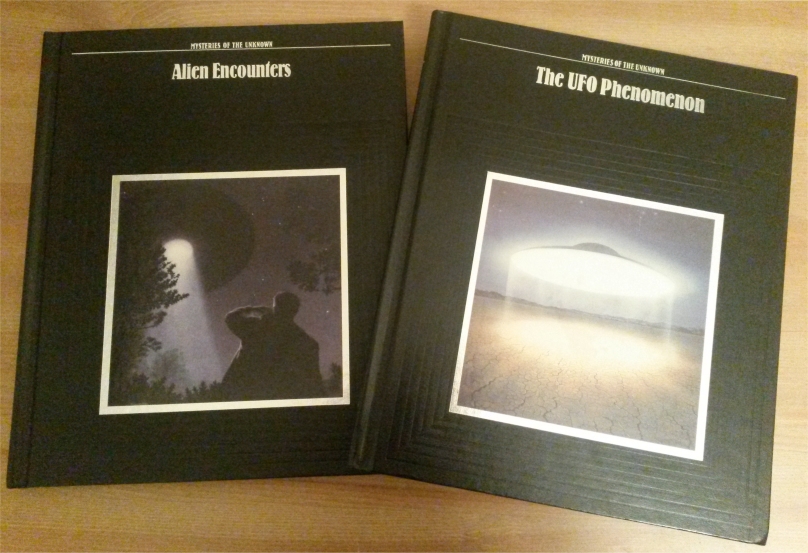
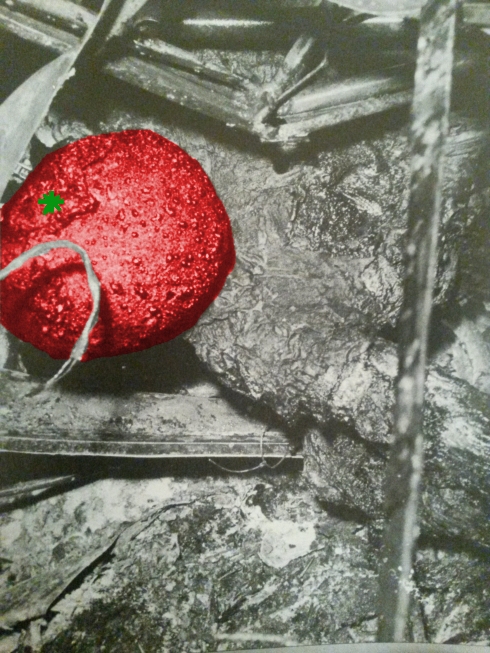
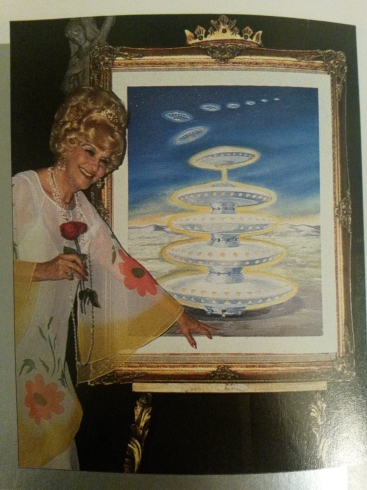 Uriel, the Legend.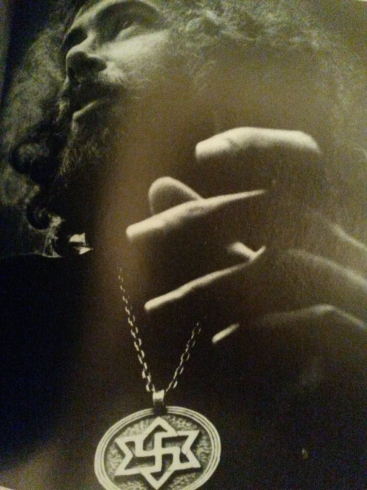
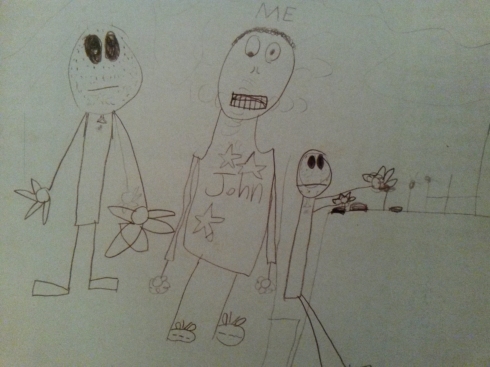 A 5 year old drew this, and some people took it as evidence that aliens abducted him.
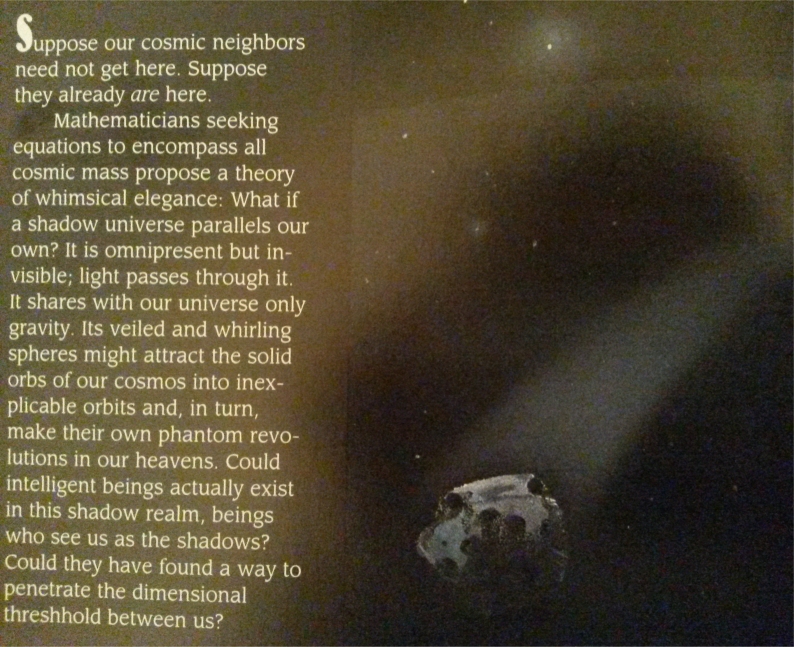 Stranger Things, anyone?
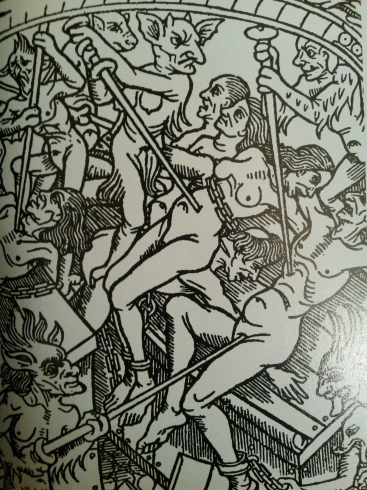 “In and out, I’ll lance her clout, Hi-Ho! Hi-Ho! Hi-Ho! Hi-Ho!”
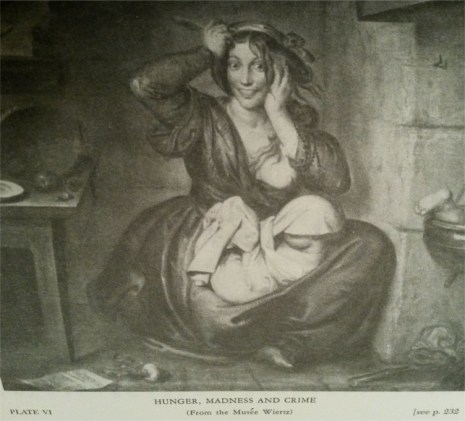 The pictures in this book are bizarre. I don’t remember why this mad woman is in there.
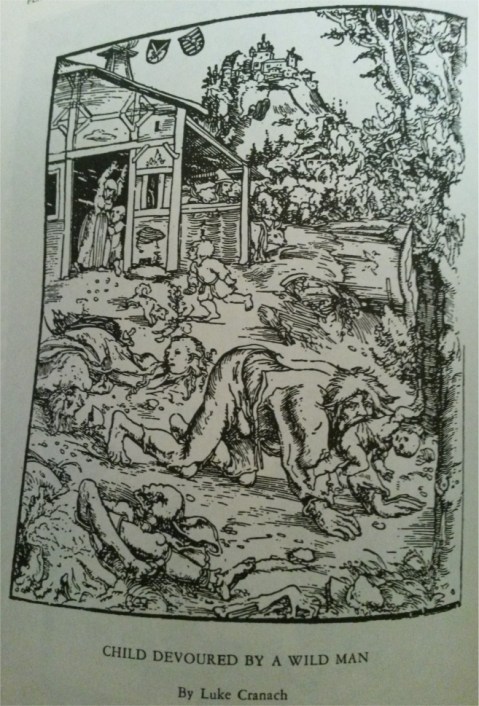 Clearly a case of Lycanthropy rather than Vampirism, but a cool picture nonetheless. Could this be
  Nocturnal Revelries