Wordsworth Books – 2009
I enjoy collecting books, but I’m not in a position to buy nice editions of every book that I want. If the price difference isn’t huge, I’ll go with the hardback edition, but with some books, particularly science fiction, I actually prefer mass-market paperback editions.
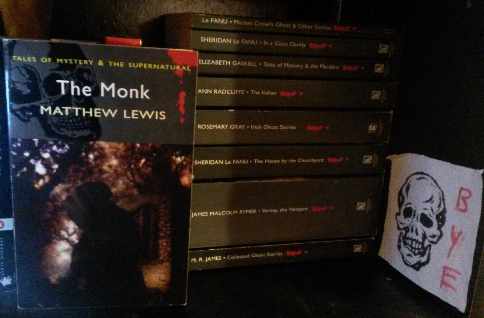
I have a particular fondness for ghost stories and gothic horror, and I have hence amounted a small collection of the Wordsworth series of ‘Tales of Mystery and Supernatural Horror’. These books are usually less than $5, and although they aren’t usually annotated as nicely as Penguin or Oxford editions, they do the trick. My biggest gripe with this series is the pathetic cover art on some of the books, especially this one and Collected Ghost Stories by M. R. James. Yes, there are cool blood splotches and shiny 3D skulls, but the actual cover images are horribly pixelated; they look like they were thrown together in mspaint.
Anyways, this is one of my favourite books. I love it. There’s plenty of poems and subplots to keep it interesting, along with lots of juicy boldness: bitta shaggin’, a dirty aul priest, the divil floatin’ about…fuckin’ savage. The Bleeding Nun is also very cool. I don’t want to ruin anything on you if you haven’t read the book, but I’ll just admit that I was genuinely surprised when I got to the scene where Matilda unveils herself. I can’t even remember if she was supposed to be good looking or not, but that whole scenario of her in the monastery got me… excited. This book was written by a 19 year old male, and there is definitely an undercurrent of misguided horniess throughout. Apparently the Marquis De Sade was a fan; there’s definitely parts in here that that old gentleman would enjoy.
I won’t talk about this one too much though; there’s a million other reviews of this one online. The book itself is a classic, and if you’re at all interested in gothic horror, you have to read this. 9/10
The 2011 film version with Vincent Cassel is pretty good. It’s definitely worth a watch if you enjoyed the book.
(A parody of The Monk was published in 1798. It’s ingeniously titled ‘The New Monk‘, and apparently it’s even bolder than Lewis’s work. Valancourt have an edition out at the moment that I’ve been thinking about buying. They also have a nice looking edition of the original, with an introduction from Stephen King.)
I love books about witchcraft and demonology. I also love books from/about Ireland. I’m sure you can imagine my excitement on finding this little beauty. I actually read the book online, but managed to pick up a copy online for a reasonable price.
This edition is lovely. It’s a nice hardback, with lovely typeset and a very interesting cover. The image on the cover is from a painting by Richard Dadd called “The Fairy Feller’s Master-Stroke”. It’s not particularly Irish or witchy, but it’s cool all the same. Look it up on google there and have a gander. I really like it.
The contents of this book are pretty good too. Unlike a lot of European countries, Ireland never really had much of a problem with witches. It’s hard to know whether that was due to the fact that’s it’s an island and hence relatively isolated, or whether it was because the country had enough problems with the bleedin’ Brits during the witchcraze and didn’t have time to be getting upset over such silly nonsense. It could also be that the deeply superstitious Irish peasantry had been holding on to some ancient pagan traditions, and had never come to see witchcraft as an inherently negative thing. It was very probably due to these and a combination of other reasons that Ireland wasn’t much affected by the witchcraze of the middle ages.
Some parts in this book are great. I really liked the part on Alice Kyteler. TG4 did a great documentary on her that’s up on youtube. The house she lived in is now an inn, and I swear that the next time I’m in Ireland, I’m going to try to pay it a visit.
There’s a few aul stories in here about fairies and lads cheating the divil and that kind of craic. I enjoy reading that stuff immensely, but this might not be the book for you if you’re looking for pure, nasty witchcraft. That said, there are some grim incidents recounted in here. There’s one story about a woman who goes mad and kills her elderly neighbour:
One of the witnesses deposed that he met the accused on the road on the morning of the murder. She had a statue in her hand, and repeated three times: “I have the old witch killed: I got power from the Blessed Virgin to kill her. She came to me at 3 o’clock yesterday, and told me to kill her, or I would be plagued with rats and mice.”
The most chilling thing about that story is that it’s actually from 1911.
Overall, this is an enjoyable little book. A lot of it’s taken up with folktales that seem unlikely to have had any basis in truth, but there are a few sinister and curious accounts of what were doubtlessly real events. Seymour isn’t out to scare anyone and definitely comes across as critical of the witch craze. (Montague Summers, he is not.) Irish Witchcraft and Demonology is a decent attempt to compile the history of witchcraft in an almost witch-less country. It’s short, interesting and definitely worth a read. 8/10
Getting back to the cover illustration, check this lad out!
Howiye Paddy!
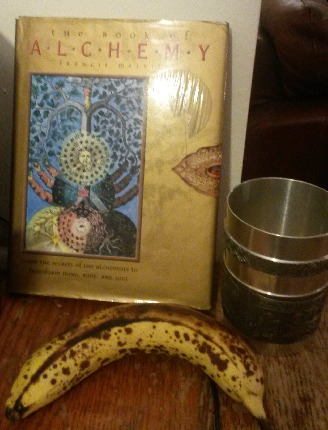
This book is a tricky one. Half of it’s great, half of it’s horrible. The sections on ritual magic, witchcraft and satanism are really interesting, but the book also contains comprehensive sections on numerology, cabala, tarot, astrology and alchemy. Personally speaking, when I buy a book on ‘the Black Arts’, I’m not really interested in reading about people playing with cards or counting the numbers in their names. I want blood rituals, human sacrifice and horrible acts of depravity. (Reading this book could be compared to going to a Slayer concert and then finding out that Tool are the opening band.) I’m going to largely ignore the parts that I didn’t like for this review; if you want to learn about tarot, fuck off and prance over to your nearest renaissance fair.
There’s some really interesting stuff in here about demons from Biblical Pseudepigrapha. I’m still only about halfway through the Christian Bible right now, but I’m really looking forward to finishing that and then reading the Books of Enoch, the Testaments of Solomon and the Life of Adam and Eve. There’s something particularly exciting about the idea of Jehovah being good mates with the demons back in the day – Yeeeeeeoweh and de lads!
One of my favourite things about the book is the fact that it reads more like a history book than a grimoire or set of instructions. A large amount of the information is utterly unbelievable, but Cavendish manages to reference his sources in such a way as to avoid any accusations of credulity that might be thrown at him. He politely leaves it up to the reader to decide what they think is bullshit and what’s legitimate, and this approach makes this kind of book far more interesting to read.
There’s a great bibliography and a ‘suggestions for further reading’ section at the back. I’ve already ordered quite a few of its sources, and I’ll hopefully get around to reviewing them here sometime soon. I’m going to pretend that I didn’t begrudgingly wade through 5 chapters of new-age shite and give this book a glorious 7.5/10.
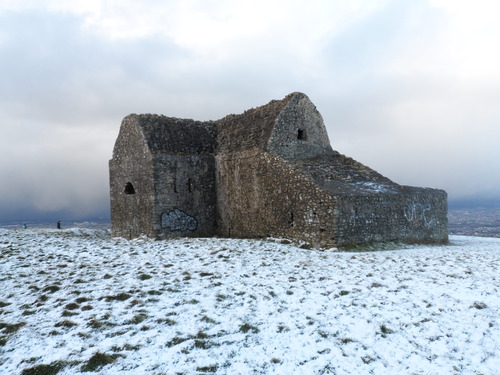
In Dublin, the phrase ‘Hellfire Club’ is almost exclusively used to refer to the ruins of the hunting lodge on top of Montpelier Hill. Families walk up to these ruins on Sunday evenings after dinner, and everybody knows the legend of the Devil appearing there during a card game:
Some lads were up at the lodge, gettin’ locked, shaggin’ tarts and playin’ cards. One of of the lads drops his cards on the ground. He stoops over to pick them up and notices that the lad beside him has hooves for feet. He stands back up and the other lad (Satan) disappears in a flash of smoke.
That story scared the shit out of me when I was little. I had visited the lodge when I was a kid, but it wasn’t until 2 years ago that I got to go back.
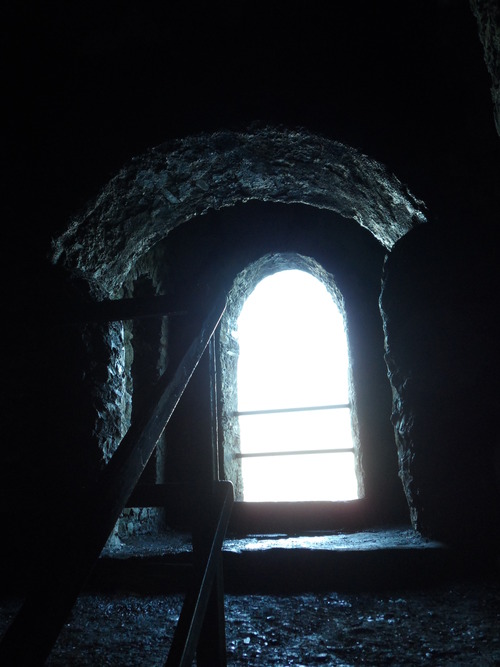
A view from inside.
The lodge was built over a pre-historic passage tomb.
Anyways, the original ‘Hellfire club’ was actually a group of 18th century English politicians. It was probably little more than an excuse to get drunk and talk lewdly, but it has literally become the stuff of legends. Several other clubs, including the one that met on top Montpelier hill, have inadvertently assumed the Hellfire moniker, and these groups are the subjects of the three books I am reviewing.
Blasphemers and Blackguards (The Irish Hellfire Clubs) – David Ryan Merrion – 2012
This book gives an account of the several different organizations that were founded by wealthy rakes in Ireland during the 18th century. The clubs consisted of upper-class individuals who were able to use their place in society to get away with murder. The Irish clubs don’t seem to have been involved in much satanism, but it’s not hard to see how a group of licentious and wealthy individuals of Protestant descendency could gain a diabolical reputation in a country that was mostly populated by poor Catholics. Besides, the crimes that some of these groups committed were far more reprehensible than the boudoir blasphemy of the real Hellfire Club.
This book is fairly academic: it’s properly researched and sourced, and I never felt like the author was bullshitting. Ryan gives a trustworthy account of the facts about these clubs, while also delineating and discussing the folklore that has developed around the Hellfire legend. I’m from Dublin and I thoroughly enjoyed reading this account of the city’s shadiest secret. 7.5/10
The Hellfire Club – Daniel P. Mannix
New English Library – 1970
This book focuses on the The Order of the Friars of St. Francis of Wycombe. While the Friars were not the original Hellfire Club, they were definitely the most infamous. This book is full of tales of blasphemy, debauchery and political upheaval. Even the less lurid parts of the book are fairly interesting. John Wilkes comes across as a particularly interesting character.
The big problem with this book is that it’s not properly sourced. Many of the events herein are undoubtedly based in fact, but there are episodes in this book that seem to be taken straight out of works of fiction. One such episode, which involves a baboon dressed as Satan, is almost definitely based on a scene from Charles Johnstone’s novel, Chrysal, or the Adventures of a Guinea. Chrysal was a satirical novel published between 1760 and 1765 that poked fun at the political leaders of the time. The novel is narrated by a golden coin that at one stage enters into the pocket of a Hellfire monk. Somehow, the experiences of this imaginary golden coin managed to transmigrate themselves into facts in Mannix’s supposedly historical account of the Club.
That being said, the subtitle of this book is “Orgies were their pleasure, politics their passtime”, and I wasn’t particularly surprised or disappointed to find that this book is a tad sensational. I’m giving it a 6.5/10 for its entertainment value.
Do What You Will (A History of Anti-Morality) – Geoffrey Ashe
W.H. Allen – 1974 This book has sections on Rabelais, John Dee, the Marquis De Sade and Aleister Crowley, but it’s really about the Hellfire Club. Dashwood’s club is again the focus, but this time the author is reasonable in his assertions. Ashe presents very similar information to Mannix, but he does so in a far less credulous manner. This book is definitely worth reading if you want a legitimate account of the Monks of Medenham.
The subtitle of this book is ‘A History of Anti-Morality’, but more than half of the book’s chapters are on the Hellfire Clubs. I obviously find the clubs fascinating, and I understand that their members played an important role in the politics of the 18th century, but I’m not convinced that they are the single most important anti-morality movement in the history of the world. I’m certain that I’m not the only person to notice this as recent editions of this book have actually been renamed ‘The Hellfire Clubs’. Basically, Ashe has arbitrarily chosen several groups and individuals, and assigned them an inordinate amount of moral accountability. It’s not that any of the material here is irrelevant, it’s the fact that so much has been left out. Compiling a history of anti-morality would be an outrageously difficult and lengthy procedure, and ultimately Ashe has failed in this task.
I was very interested to read a book that had consecutive chapters on the Hellfire Clubs and the Marquis De Sade. There are many parallels with Hellfire legends and the events in De Sade’s fiction. I have often wondered if the Divine Marquis had heard tales about the Brotherhood of Wycombe and taken inspiration from them. Think about it; he was a nobleman and a libertine, writing only a few years after the dissolution of Dashwood’s posse. I find it hard to believe that he had never heard of the friars taking young harlots into the sacrilegious abbey at Medenham or the Hellfire caves at Wycombe. I’ve done a little research to verify this link but I haven’t found anything to substantiate it. If anyone has any suggestions on where to look, I would love to hear from you!
Anyways, although I think that this book falls short on what it sets out to do, I did enjoy reading it. The stuff in here isn’t bad; there’s just not enough of it. That being said, there is an abundant amount of information on the Hellfire Clubs in here, and I would urge anyone who has any interest in this topic to get their hands on this one. I’m going to give this one a 6.5/10.
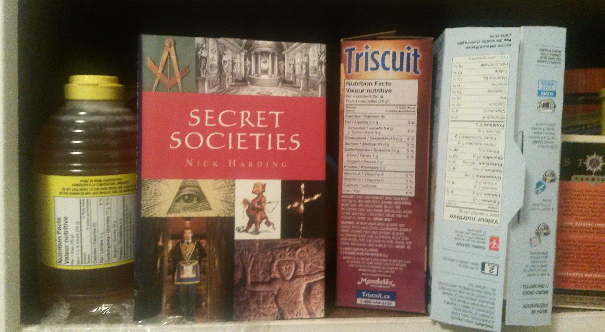
BONUS REVIEW Secret Societies – Nick Harding Chartwell Books Inc. – 2006
I’m not hugely interested in most secret societies. I inadvertently bought a copy of this book as part of a collection on satanism. It’s quite short and quite shit. It provides a little information on about 20 different secret societies, but doesn’t go into detail on any of them. I don’t really know why a person would buy a book like this. I suppose it would be quite good if you were taking a long flight and you needed something to halfheartedly glance at now and then. I am reviewing it as part of this post as it contains a section on Dashwood’s Hellfire Club. Let’s just give it a 4/10 and leave it at that.
This is a novel that deals with the occult, but it’s more than just an occult novel. There’s lots of Frenchistentialism and romance going on in here, but I’ll be straight with you; if you’re looking for a discussion on this novel’s place in the fin-de-siècle movement, you’d best look elsewhere.
The protagonist of the book divides his time researching Gilles de Rais, writing letters to a mystery woman and talking to his friends about bells. The bits about Gilles De Rais were very interesting. He was a horrible man. I’m planning to read and review the book that Bataille wrote on him soon. The other parts of this novel, although not as pertinent to this blog, were also quite entertaining. I enjoyed seeing the awkward love affair develop. The infamous depiction of a black mass was also fun, if slightly underwhelming.My copy of the novel is a ‘Dennis Wheatley Library of the Occult’ edition, and anyone who has read any of Wheatley’s black magic novels will be more than prepared for this only-slightly sordid scene of infernal blasphemy.
Perhaps the most intriguing aspect of this book is the fact that the most fantastic elements of the plot are supposedly based on real events. The most satanic of
all the book’s characters, the Canon Docre, was based on a real person! I’ve come across the story of the Black Magic war between Abbé Joseph-Antoine Boullan and Stanislas de Guaita in Colin Wilson’s The Occult and Richard Cavendish’s The Black Arts, but I’m still hungry for more information. If anyone has any suggestions on other texts that contain information on this rivalry, I would love to hear from you!
Overall, I’ll give this one a generous 8/10. It wasn’t as intense as I had expected but I did like the atmosphere and characters. I will probably read more of Huysmans’ books in the future.
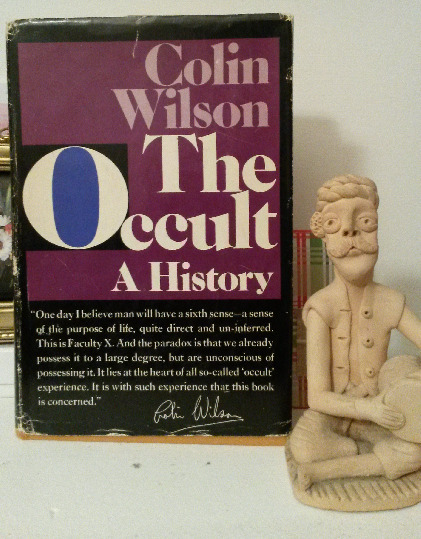
Random House – 1971
The title, ‘The Occult A History’, is a little misleading. A more accurate name might be ‘A ridiculous theory based on an unquestioning and incredibly naive consideration of the History of the Occult’. Colin Wilson comes across as frustratingly credulous. The following might be a typical paragraph in this book:
Tom was able to communicate with the leader of the great race of flying ape-dogs on the planet Durthyanus. Tom was a patient in mental hospital who was spoon-fed mush by a nurse and needed his nap-nap changed twice a day, but there is no reason not to believe that he had strong powers of interplanetary telepathy; most people who possess such gifts are actually completely untrustworthy.
That’s barely even an exaggeration! I understand that people who write books on the occult are often going to be more ‘open-minded’ than the average individual, but Colin Wilson comes across as a chump. The book is definitely well researched though. Wilson uses lots of interesting sources and I got loads of ideas for other books to read from this one. This book is actually quite an enjoyable read if you don’t waste too much time getting upset over the author’s ridiculous methods of reasoning. I really liked the chapters on Cagliostro and werewolves, but I couldn’t bring myself to finish the final chapter in which the author discusses ‘Faculty x’ in detail. ‘Faculty x’ is basically a 6th sense type thing that Wilson believed human beings were about to discover/develop. Well, this book was written more than 40 years ago and from what I can tell, we’re yet to x.
Sometimes I feel that I put too much faith in the authors of books on the occult. I’m not sure that people intelligent enough to make their living as writers could possibly believe the wacky crap that ends up getting published. I reckon that authors are spewing out this silly garbage just to increase their sales. It makes sense that a writer like Wilson would inject a little craziness into an otherwise reasonable historical account; books on the fantastic just aren’t as enjoyable when they’re logical. I mean it’s not likely that anybody would ever pay money for a book that sets out to disprove the validity of moleomancy.
(Wise words from Gurdjeff on the back cover.) This book is dumb but mostly fun. Read it, but don’t bother with the last chapter. 6.5/10
The Castle of Otranto – Horace Walpole
Collier Books – 1963 (Originally published 1764)
The Old English Baron – Clara Reeves Oxford – 2008 (Originally published 1778)
For such an influential piece of literature, the Castle of Otranto is really quite silly. It’s not a particularly well written book, but it’s responsible for introducing many of the most common motifs of Gothic fiction. I have found it quite difficult to review this book without comparing it to the far superior novels that were influenced by it.
That’s not to say that this is not an enjoyable book though. It’s too short to get boring; you’ll finish it in an afternoon. The characters and plot are a little flat in comparison to later Gothic novels, but there are enough skeletons and ghosts in here to keep the reader interested. If you like Gothic fiction at all, you should check this one out.
The other book I’m reviewing in this post is The Old English Baron by Clara Reeve. For those of you who don’t know, this book is basically a reworking of the Castle of Otranto with all of the supernatural elements removed. In Reeve’s own words:
This Story is the literary offspring of The Castle of Otranto, written upon the same plan, with a design to unite the most attractive and interesting circumstances of the ancient Romance and modern Novel, at the same time it assumes a character and manner of its own, that differs from both; it is distinguished by the appellation of a Gothic Story, being a picture of Gothic times and manners.
If you can imagine somebody remaking the Exorcist, but leaving out all of the scenes that feature anything to do with possession, then you might just be able to fathom quite how lame this book is. I read it a while back and all I can remember is the irritatingly well-mannered characters incessantly bursting into tears. If you haven’t read this novel and intend on doing so despite my poor review, please keep a red pen handy and underline every instance that a character begins to cry. I would love to know the sum total but I can’t imagine I will ever reread this pile of crap.
The Castle of Otranto is an enjoyable little romp. Read it after your tea on a Sunday.
7/10
The Old English Baron (Fuck, even the name is annoying!) is a turd in a diaper. 2/10
The Vampire Bible – ???
Temple of the Vampire – 1989
The Satanic Bible – Anton Lavey Avon – 1969
I’ve just finished reading The Vampire Bible from the Temple of the Vampire. I’m going to talk a little about that and a little about the Satanic Bible. I want to get LaVey out of the way early on.
(The fonts and imagery are one of the sweetest things about this book.)
I am glad that I bought my copy of the Vampire Bible in a parking lot, off some dude from craigslist. I sure would feel like a dummy if I had given the person who wrote this tripe any of my money.
To join the Temple of the Vampire, you have to buy a copy of this book from them. I would hope that they also give you extra material to make sense of it, or maybe call you up to explain the crazy nonsense that’s included. The book doesn’t even include a definition of what they mean by ‘vampire’. The vampires described are non-violent vampires who don’t murder or drink blood. These vampires just float about in the astral realm, giving thanks to the undead gods and sucking life-force from their prey. It’s not very clear as to what effect this floating has on the vampire’s prey though, and the book specifically says that it doesn’t harm them. That sounds like a pathetic vampire to me.
The content is an awkward mix of instruction and fantasy. The book states that its contents are based in fantasy, yet it prohibits any kind of violence. If this is all fantasy, why shouldn’t I swally down the blood of my enemies? At least the Satanic Bible has some balls and tells you to ‘SMASH’ people that you don’t like. My favourite part of the entire book was the second item on the the list of things that suggest that you are in the presence of the Undead:
“2. Tingling sensations in the fingertips”
Perhaps the author has gotten mixed up. These vampires sound a lot like fairies to me.
(I haven’t read my copy of the Satanic Rituals yet and probably won’t ever get around to it. It has a nice pink cover though.)
The Vampire Bible is dumb. Like the Satanic Bible, it makes no effort to emulate the actual Bible in any way. Unlike the Satanic Bible, it’s not even remotely clever. I actually enjoyed reading the LaVey’s Bible. It’s camp and silly, but there is some actual reasoning behind it. You get the feeling that he actually believed in some of what he was writing. There’s not an ounce of reasoning behind anything written by Vlad, or whoever the fuck shat out the Vampire Bible. The ideas in the Satanic Bible are obviously not completely original, but I think that LaVey did a decent job of synthesizing them into an entertaining whole.
Coincidentally, perhaps my least favourite part of the Satanic Bible (apart from the silly Enochian bits) was the section on Psychic Vampires. It seemed like it was a metaphor for something that had happened in LaVey’s own private life that was too embarrassing to clarify but too upsetting for him to leave out completely. It’s funny looking back at that section now and reading the lines: Psychic vampires are individuals who drain others of their vital energy… They fill no useful purpose in our lives. Perhaps he was in contact with some of the members from the Temple of the Vampire! Well, actually… probably not; the Satanic Bible was written 20 years before the Temple was founded.
Anyways, to conclude, I’m giving the Vampire Bible a generous 3/10. It looks and sounds pretty cool as long as you don’t take the time to actually read it. It’s not nearly as spooky as it could have been. The Satanic Bible gets a 7/10 for being good hellish fun. Even if you don’t like the writing, this book is worth owning just for the sweet portrait of LaVey on the back.
This book a heap of shit. It’s not spooky at all. It came in a bundle of books I picked up. I read it because it had some cool illustrations. It’s more instructional than historical. Dumb. This one gets a 1/10.
Snuff films, sleazy detectives, vampires, ghosts, werewolves, intergalactic rivalries and Gilles de Rais; what more could you ask for? How about a dash of ultra-perverted hardcore pornography?
That will suit me nicely.
This novel is trash, you never get the impression that it’s anything but trash, but reading it will convince you that trash can be absolutely glorious. I loved this book. It is exactly the kind of thing that I enjoy reading. It’s based on a perverse sex murder and the whole story has a really seedy atmosphere. It’s full of bizarre characters, weird sex and supernatural violence. There was no chance of this book giving me anything but extreme enjoyment. There’s never any clear explanation given of the antagonists’ motivation but that doesn’t matter. Evil is doing evil because it’s evil. Fuck an explanation.
My version of Image of the Beast also includes the novel’s sequel; Blown. Blown is both more science-fictiony, and less grim than Image. It’s still very nasty and odd though, and I think it probably contains more weird sex acts too. It offers an explanation of some of the events in Image, but personally I didn’t find this explanation to be completely satisfactory. I don’t want to say that I was disappointed by any element of this book being too far-fetched, indeed it is in the sheer ridiculousness of these tales that their glory lies, but I felt that the intergalactic explanation in Blown seemed a little absurd in relation to the events it was explaining.
Let me use an analogy to describe this book. It’s like a pizza topped with all of my favourite toppings. Each ingredient is delicious in itself and complements most of the other ingredients on the pizza; but unavoidably, some of the combinations taste kinda weird.
Another minor critique is that this book contains bizarre amounts of geographical detail. It must mention every street name in Southern California.
It has some minor flaws, but ultimately, this is a delicious pizza of a book that I would strongly recommend. 8/10.