The Ghost of Paddy Lafcadio Hearn, Japan’s Spookiest Irishman

Penguin – 2019

I first saw this book a few years ago. I assumed it was a collection of folk tales from different authors, but the fact that it was published as a Penguin Classic made me want to read it. I was in Ireland recently, and I needed something to read. While browsing through my library’s collection of audiobooks, I saw this title and noticed for the first time that an author’s name was on the cover. I had never before heard of Lafcadio Hearn, collector of Japanese ghost tales, but a quick google search revealed that his first name was actually Patrick and that he grew up in Ireland. I did my bachelors degree in literature in Dublin, and I believed I had read most of the big names of Irish writing. I was delighted to discover an enigmatic Irish writer on one of my brief trips back to my homeland.

So Lafcadio was born in Greece, spent his childhood in Ireland, moved to the states, became a succesful journalist and then spent the rest of his life in Japan. He married the daughter of a samurai and spent his time collecting and translating Japanese ghost stories into English. Later, these stories were translated back into Japanese, and some sources on the internet claim that these works are now better known and valued in Japan than anywhere else.

While the collection is titled Japanese Ghost Stories, a more accurate title would be “Japanese Stories that Feature Supernatural Elements”. Most of these tales don’t feature pale apparitions rattling chains. There’s a lot in here too, and honestly, some of the stories are quite lame. I noted down the general gist of each tale below and put it into the list below. This is more for my own reference than anything else, and it contains spoilers, so you may want to skip it for now if you plan on reading the book. (It won’t really ruin anything if you do read it. There’s not many surprises in this book after you’ve read the first few stories.) Make sure you check out the ending of this post though. I’m pretty sure my interest in this author led me to seeing a real ghost.

The Stories

Of Ghosts and Goblins
Suitors try to impress girl. She only likes the one who eats a corpse with her.

The Dream of a Summers Day
Fisher boy saves a tortoise and then marries sea gods daughter. Comes home 3 (actually 400) years later. Dies. Just like fairy stories

In Cholera Time
Infant drinks dead ma’s tit milk

Ningyo-no-Haka
Japanese people die in 3s. Ghost of mother comes back for son
More a paragraph than a story.

The Eternal Haunter
Description of spirit that gave man a wet dream. I think.

Fragment
Man climbs mountain of skulls of his past lives

A Passional Karma
First real story. Samurai’s love dies. Comes back to haunt him.

Ingwa Banashi
Dying wife grabs the tits of her husband’s concubine and doesnt let go even after she dies.

Story of a Tengu
A tengu takes a monk back in time to see Buddha talking. Trash.

A Reconciliation
Samurai comes back to see his ex-wife, but she is now a ghost/corpse

A Legend of Fugen Bosatsu
Monk sees a pretty girl turn into some religious figure. Crap and boring.

The Corpse Rider
Priest tells man to ride his divorced wife’s corpse like a pony so she won’t haunt him

The Sympathy of Benten
Goddess introduces man to his wife’s spirit before they get married.

The Gratitude of the Samebito
Sharkman cries jewels to give to his friend to impress his crush’s family.

Of a Promise Kept
Samurai commits suicide to get back to his brother on appointed date.

Of a Promise Broken
Corpse of samurai’s first wife takes nasty vengeance on his second wife.

Before the Supreme Court
Dying girl’s parents make deal with pest god. Pest god kills another girl with same name. Council of gods gets pissed and puts dead girl’s soul into live girl’s body.

The Story of Kwashin Koji
Old man with a magic picture tricks people.

The Story of Umetsu Chubei
Man holds heavy magic baby.

The Legend of Yurei Daki
Woman steals gods money box and they get horrible revenge on her baby.

In a Cup of Tea
Man sees a face in his tea. The own of face later comes to visit him. Fragment.

Ikiyro
Woman hates young man because she thinks he is rival to her son, so her alive ghost haunts him.

The Story of O Kame
Wife needlessly haunts ger husband after she dies.

The Story of Chugoro
A beautiful frog vampire kills a young man when he tells his mate about their relationship.

The Story of Mimi-Nashi-Hoichi
Ghosts tear off blind musicians ears.

Jikininki
Priest comes across  a goblin eater of the dead.

Mujina
Crying woman tears her face off and frightens a traveller. Good.

Rokuro Kubi
Decapitated heads gang up on samurai priest.

Yuki-Onna
Man marries spirit that killed his friend.

The Story of Aoyagi
Man marries a tree.

The Dream of Akinosuke
Man falls alseep and joins insect kingdom.

Riki Baka
Mentally handicapped boy dies and is reborn.

The Mirror Maiden
A beauriful spirit lures people to their death down a well but turns out nice after an evil dragon releases her.

The Story of Ito Norisuke
Man falls in love with ghost.

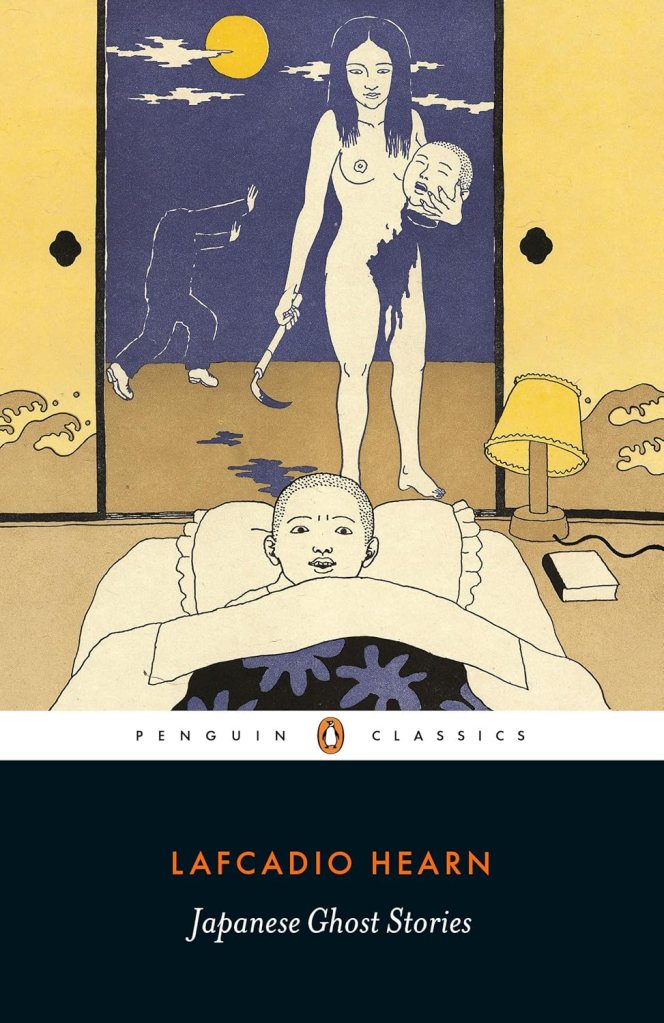
In truth, this collection felt bloated. If the 10 worst/shortest stories were removed, it would have been much more enjoyable. It seems that this is a ‘complete’ collection rather than a ‘best of’ collection. I do appreciate that really. I’d probably be curious about the crap if it wasn’t included in here. Only 5-6 of the tales live up to the grisly cover that Penguin gave this collection. (I showed my wife the cover, and she asked if it was supposed to be Bobby Hill. Hahaha.) There’s definitely some similarities in the tales here and the Irish folk tales that Hearn must have heard growing up in Ireland. All together, I’d say it’s worth a read.

Photo posted online in 2016. This plaque is now gone.

As I said, I was in Ireland when I found out about Hearn, and I wanted to use this opportunity to understand him, so I set out to find out what his experiences in Ireland had been like. On his wikipedia page, I found a picture of a plaque that used to be on the wall of his childhood home. I went to the address listed, but the plaque is no longer there. A careful analysis of the photo of the plaque and the front of the house confirms it is the same building. Given the numerous statues of James Joyce, Oscar Wilde, Patrick Kavanagh and other Dublin writers, spread throughout Dublin, I was disappointed to see that Lafcadio Hearn is basically unrecognised in what was once his home city.

48 Lower Gardiner Street, Dublin, Hearn’s Childhood Home


The stories in the book are followed by a brief appendix on the nature of ghosts and nightmares. This was definitely my favourite part of the book. Hearn discusses how belief in ghosts is a global phenomenon that occurs in every culture, and how it may derive from inherited memories from our earliest ancestors. It’s an interesting piece of writing, and it’s made more interesting by Hearn’s descriptions of his own encounters with ghosts as a child. He acknowledges that these spectres were likely creations of his mind, but in the context of his writing that doesn’t make them less terrifying. He explains how he always struggled to describe what they looked like until he saw the images of exhumed, decayed corpses in Orfila’s Traité des Exhumations Juridiques and recognized his tormentors. Perhaps the most chilling passage in the entire book is when he claims how these phantoms started to appear to him in a particular room of his home when he was 5 years old.
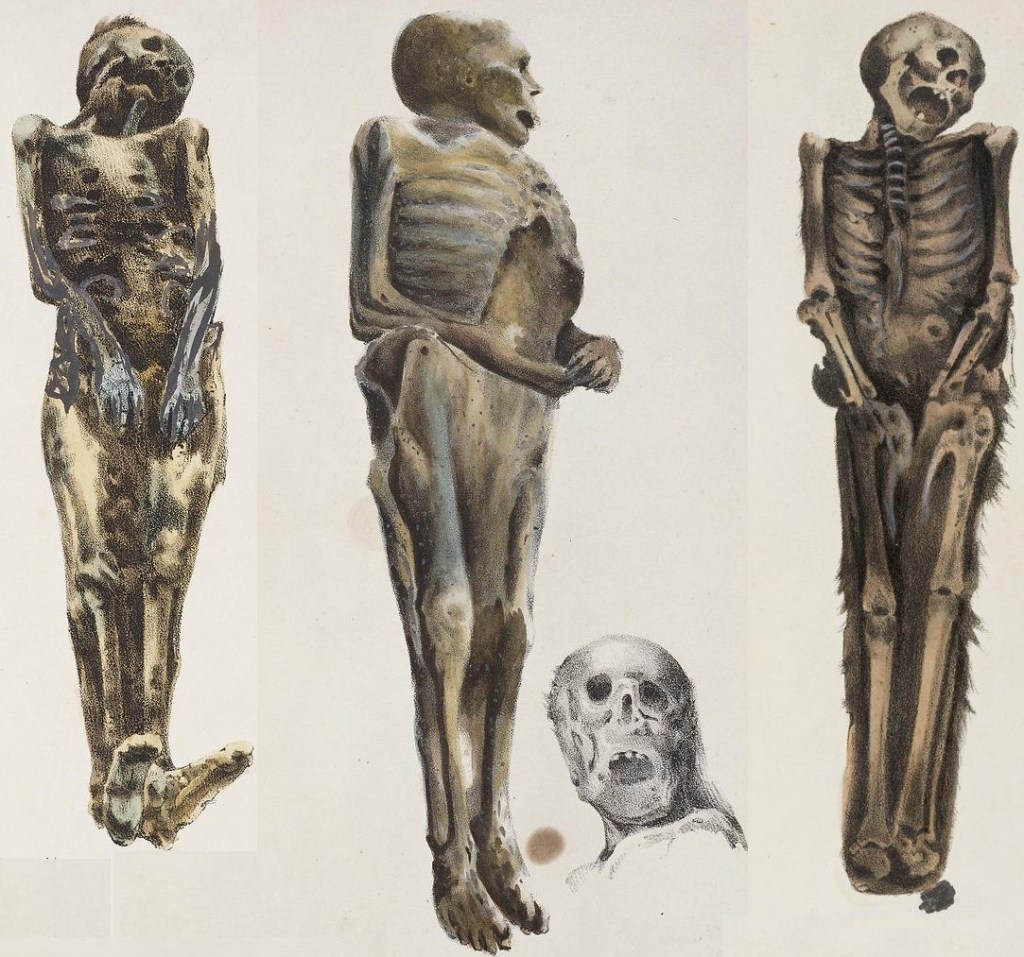
Corpses pictured in Mathieu J.B. Orfila’s Traité des Exhumations Juridiques

“When about five years old I was condemned to sleep by myself in a certain isolated room, thereafter always called the Child’s Room. (At that time I was scarcely ever mentioned by name, but only referred to as ‘the Child’.) The room was narrow, but very high, and, in spite of one tall window, very gloomy. It contained a fire-place wherein no fire was ever kindled; and the Child suspected that the chimney was haunted.”


I went back to the photo I took of the house he lived in at that point of his life, looking for a room with a tall window. It could be any of them, so I zoomed in, looking for more clues. Then I noticed this:
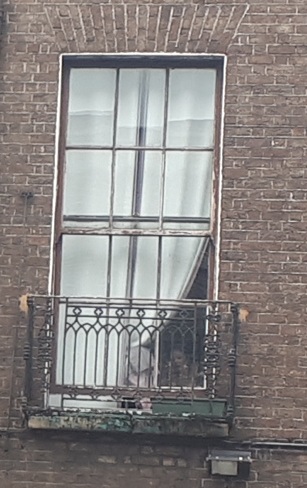
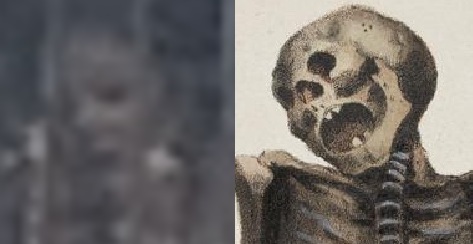
Hearn’s ghost? This genuinely creeped me out when I noticed it.

Susan Hill’s The Woman in Black

I had originally planned a different post for this week, but I got about halfway through writing it and realised I needed to do more research. Luckily enough, I spent last Friday night reading Susan Hill’s novel, The Woman in Black.

Hamish Hamilton – 1983

I had seen the movie version with Daniel Radcliffe when it came out, but I had largely forgotten what it was about. (I do remember quite enjoying it though.)

A solicitor has to go and stay in the house of a recently deceased recluse in an attempt to find some important legal papers that had been in her possession. While he is staying in her isolated, desolate mansion, he starts to see an emaciated woman dressed entirely in black.

This is a good old fashioned ghost story, much in the style of M.R. James. At least one of the chapters is named after a story of his. I love this kind of fiction, especially when it’s done well, and this novel is just that. It starts off with the narrator’s family telling ghost stories on Christmas Eve. He leaves the room in a panic when it’s his turn, creating a blissful amount of tension. His tale is so terrifying that he can only tell it through writing, which is exactly what he proceeds to do. This is the kind of book that you want to read under a blanket. It’s very short too, and I find it hard to imagine reading it over more than a couple of sittings. I feel silly for not having read this classic sooner. If you haven’t read it, do so immediately.

Not much else needs to be said. This is an excellent ghost story. There was a novelisation of the sequel film that came out in 2014, but it’s supposed to be crap, so I have no interest.

Robert Westall’s Ghost Stories

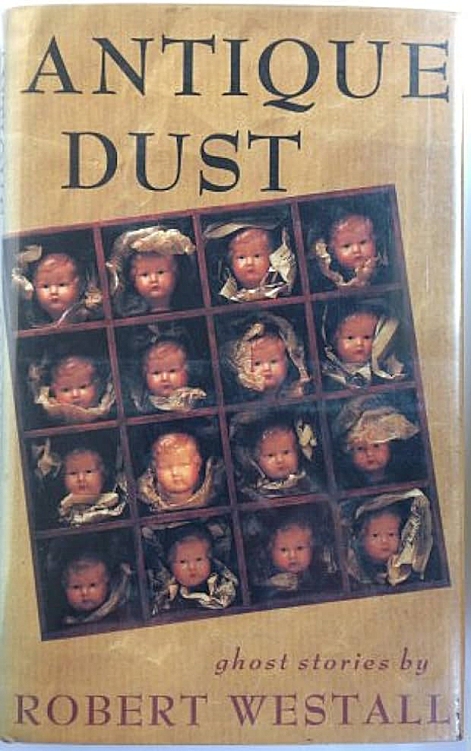
Antique Dust

Viking Adult – 1989

I started this collection of short stories knowing nothing about it or its author. I honestly had no idea how much I was going to love it.

This is about 8 ghost stories in the tradition of M.R. James. The narrator is an antiques dealer who keeps coming across haunted antiques. There’s a Satanic clock, some very creepy dolls, and a pervert in an abandoned church. The narrator here is a bit more worldly than James’ guys.

I read a similar collection of Jamesian ghost stories a few months years ago. A.N.L. Munby’s The Alabaster Hand was enjoyable enough, but I didn’t find it scary. Some of the stories in Antique Dust are quite creepy though, the first two especially. You should definitely read this book.

I wrote the above in December of 2022. It didn’t feel like quite enough for a post, so I decided to read more Robert Westall. I didn’t go near him again for well over a year, but I’ve been dipping in and out of his horror fiction for the last few months, and I have thoroughly enjoyed pretty much everything I read by him.

After Antique Dust, I read 2 “best of” collections, Demons and Shadows and Shades of Darkness. Both were phenomenal. These books came out in 1993, but they were reissued in 1999, and while both editions of Demons and Shadows are the same, the newer edition of Shades of Darkness swapped out 2 stories. I managed to track down copies of both editions.

The Best of Robert Westall, Volume 1: Demons and Shadows

Farrar, Straus, and Giroux (1994) Macmillan’s Children’s Books (1999)
Rachel and the AngelGirl sees biblically accurate angel. Must find a good soul or there’ll be another Sodom situation.
Graveyard ShiftStarts off with ghosts appearing to cemetery worker, but things get dark when paedo vampire appears.
A Walk on the Wild SideSchool headmaster’s cat brings home a kitten. The kitten falls in love with him but then kills robbers in his house and might be a shapeshifter. Some actually scary passages. So, so god damn good.
The Making of MeSentimental story about shellshocked angry grandad. Nothing spooky
The Night OutBiker boys have fun. Not scary
The Woolworth SpectaclesFrom Antique Dust
A Nose Against the GlassLong, kinda boring story, about antique dealer who sees pesky child’s face in his window
Gifts from the SeaBoy goes to granny’s to avoid blitz. Finds cool stuff on beach then a corpse
The Creatures in the HouseWeird vampire creature drains women of their minds. One such woman leaves her haunted house to niece, but niece lets a bunch of cats in who fuck creature up. Good story.
The Death of WizardsBoy saves old man’s life, but old man is wizard. Pays boy back by giving him intimate knowledge of everything around him. Doesn’t want this after trip to supermarket
The Last Day of Miss Dorinda MolyneauxFrom Antique Dust

The Best of Robert Westall, Volume 2: Shades of Darkness

Farrar, Straus, and Giroux (1994) Macmillan’s Children’s Books (1999)
Woman and HomeKid skips school. Goes into weird house that’s actually a ghost’s trap. Good.
St. Austin FriarsPriest moves to new rectory in Muncaster. Seems as though the town is inhabited by vampires
The Haunting of Chas McGillBoy moves to old schoolhouse in countryside during the blitz and meets the ghost of a soldier who deserted first world war.
In CameraPeople find roll of film in antique camera. Contains pictures of a corpse. They track down a man from the pictures.
Fifty-FaftySentimental autobiographical story about author’s family.
The CatsOld man becomes unwell. His wife starts seeing ghostly cats in their house.
The Boys ToiletsThere’s a ghost in the jacks. Excellent story.
Portland Bill (1999)From Antique Dust
The Bus (1999)Guy gets on a time travelling bus. Very racist man on board. Wouldn’t get published today. Odd that this was added to later edition of the book.
The Red House Clock (1994)Excellent story about boy who fixes dead neighbour’s clock to get revenge on landlord
The Call (1994)Samaritan phone operators get a scary call on xmas night.
The Cat SpartanKid inherits his grandad’s cat and house, much to his mother’s dismay
Blackham’s WimpyWW2 bomber becomes haunted by a German pilot it shot down.
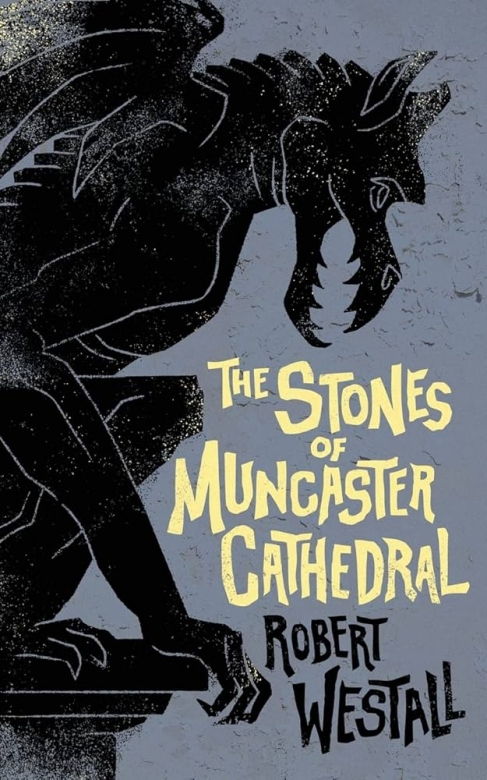
Valancourt 2015 (First published 1991)

The Stones of Muncaster Cathedral

Next up, I read The Stones of Muncaster Cathredal. It’s an excellent tale, and the Valancourt edition has an extra short story thrown in for good measure. This book is well worth a read.

The Stones of Muncaster CathedralSomething in the tower of a Cathedral is luring children to their deaths. Nothing to do with the other story set in Muncaster.
Brangwyn GardensA lad takes a room and finds a woman’s diary.
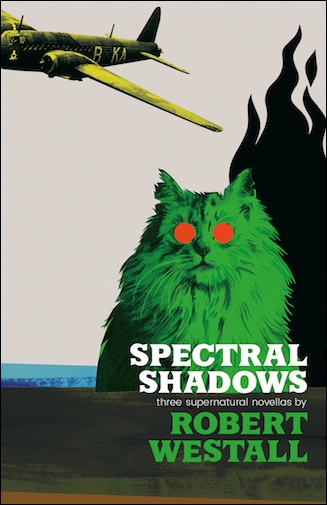
Valancourt – 2016

Spectral Shadows

This is a collection of 3 novellas. I thoroughly enjoyed it.

Blackham’s WimpyI read this in Shades of Darkness.
The Wheatstone PondA pond is drained and old toy boats start showing up. Another mysterious box holding something stinky also shows up. These items are somehow linked to a mysterious house nearby, and it’s up the local antique dealer to solve the mystery. There’s good suspense here, but ultimately, there’s too many threads to the story and it gets a bit silly. Still an enjoyable read. This is definitely not children’s fiction. The protagonist has rape fantasies.
Yaxley’s CatA woman rents a cottage for herself and 2 kids. Previous owner was a witch. She finds his stuff. Good.

Honestly, every book I read by Westall was excellent. He wrote books for kids, and it seems like his stuff is labelled as kid’s fiction, or young adult fiction, but in sincerity, these ghost stories are top notch. I think older kids would certainly enjoy them, but they’re not toned down in any fashion. If you like good old fashioned ghost stories in the vein of M.R. James, I don’t think I’ve read anything as good as Robert Westall. Any of these books would be a good starting point, all of them perfect for bedtime reading.

The Travelling Grave and Other Stories – L.P. Hartley

The Travelling Grave and Other Stories by L.P. Hartley

Valacourt Books – 2017
This book was first published by Arkham House in 1947, but many of the stories were published years before that. In truth, I found it very boring. It’s mostly ghost stories, but none of them are particularly scary. The writing is quite dense at times too, and it usually didn’t feel worth the effort. It’s less than 250 pages, but it took me more than 4 months to get through it.

Here’s what I remember about the stories:

StoryMy thoughts (includes spoilers)
A Visitor from Down UnderA lad listens to weird kids’ games on the radio and a ghost comes from Australia to get him. Shit and confusing.
PodoloA creepy island. Somebody tries to kill a kitten? Maybe it’s a werewolf or something. I forget.
Three, or Four, for DinnerSome lads arrange to meet another lad, but he dies. Shows up to dinner anyway. Supposed to be droll?
The Travelling GraveA lad collects coffins. One can bury itself and does when a person is in it.
Feet ForemostA ghost can’t come into the house because there is a step or something. Not scary at all.
The CotillonA lad kills himself, but he goes dancing afterwards.
A Change of OwnershipA truly idiotic man gets upset because he was too much of a wuss to invite his boyfriend in for some sex, so he has a nervous breakdown instead and imagines he is a ghost or something.
The ThoughtA lad goes for a walk and gets confused. This went so far above my head. Hated it.
Conrad and the DragonPredictable fantasy story. Maybe for kids.
The IslandA lad gets caught by his girlfriend’s husband. At least one of them is dead.
Night FearsA lad gets scared while working the night shift. Short.
The Killing BottleA lad gets mixed up with another chap who murders people who hurt animals. Then the other chap kills his own brother. Who knows what becomes of the dipstick protagonist?
A lot of lads.

I have nothing else to say about this book.

This is probably a poor time to mention this, as the above review is hardly riveting reading, but I have noticed a dramatic drop in traffic to this blog recently. Google updated its algorithm on the 15th of last month, and it seems to have worked against me. I’m seeing roughly half of what I had been seeing for the last 3 years. This is quite frustrating, as (with the exception of the above post) the content on here has been pretty good recently. I have glanced through a few pages explaining search engine optimization, but the thoughts of spending hours trying to make sure my posts are tagged and titled appropriately seems horrendously boring. I’d far prefer to spend my time reading a weird book. I’ll probably update the layout in the near future to make the 400+ posts on here easier to sift through, but until then, do me a favour and share this blog with your friends.

The Dead of Night – The Ghost Stories of Oliver Onions

The Dead of Night: The Ghost Stories of Oliver Onions

Wordsworth – 2010

I originally planned to just read Widdershins, Oliver Onion’s most famous collection of ghost stories, but after finishing that collection (it’s available online), I decided to read the Wordsworth anthology of his collected ghost stories. This collection is almost 700 pages long, and it contains Widdershins (1911), Ghosts in Daylight (1924) and The Painted Face (1929), all three of the collections of ghost stories that Onions put out in his lifetime, along with a few other bits and pieces. I read Widdershins and wrote the following paragraphs almost a year ago, but I only read the remainder of Onion’s ghost stories over the last couple of months. I had mixed feelings.

I had seen collections of Oliver Onion’s ghost stories around for years, but it wasn’t until I came across his name being mentioned in T.E.D. Klein’s The Ceremonies that I decided to read him. I read Widdershins, probably his most famous collection of ghost stories first.

The first story in here, The Beckoning Fair One, seems to be Onion’s most famous work. It’s a story about a man who falls in love with a ghost and goes mad. It’s very good.

The other stories are all of a decent standard, but there was a couple that I felt like I had read before. There’s one where two guys visit a house and later find that that house has long been abandoned. I’m pretty sure Count Stenbock wrote one along the same lines. Also, there’s one where the protagonists find out that they themselves are the ghosts.

The writing here was surprisingly good. I had Onions pegged as a pulpy writer, but these are finely crafted stories that rely on terror and suspense rather than bumps in the night. I wasn’t sure if I was going to read any more of Onion’s stuff after this collection, but I think I’ll probably give the rest of his stuff a go in the future

The Painted Face collection (originally published in 1929) is made up of only 3 stories. The titular tale, a lengthy novella is pretty good, quite literary. I liked The Master of the House, a tale about a weird werewolf man. The other story in here, The Rosewood Door was pretty standard Onions. Overall, I liked these tales as much as anything in Widdershins, and unlike Widdershins, there are no duds here.

Ghosts in Daylight contains all of the stories I really disliked. I sometimes take notes into an excel spreadsheet when I am reading a short story collection, and I’ll share what I jotted down while reading the stories from this one:

Story Comments
The Woman in the Wayboring story about a priest who meets a boy who met a ghost of a woman who was engaged to his brother in a field.
The Ascending Dream3 men from different ages dream a dream that causes them to leave their sweethearts. BORING
The Honey in the Walla girl owns a big house but has no money. She fancies a guy, so she dresses up a ghost. Nobody cares.
Dear Dryadvery boring story about a tree that 3 generations of people do stuff in front of a tree.
The Real Peoplea “comic” story about an author whose characters come to life. BORING.

If you’ve ever watched that movie From Dusk till Dawn, you probably remember that scene in the strip club with Selma Hayek dancing with the snake. I love pretty much everything about that scene, including the music. The song playing is ‘After Dark’ by Tito and Tarantula, who actually appear as the band playing in the film. Tarantism, the album that song is from is great, but I haven’t listened to it for years. A few weeks ago, I was reading through this Oliver Onions collection, and I started reading a story called “The Smile of Karen”. It’s about a jealous husband who gets upset when he sees his wife smiling. As I was reading it, I remembered that there’s a song on Tarantism called ‘Smiling Karen‘. I went back and listened to it, and sure enough, it’s about a man who finds his wife has been cheating on him, so he kills her. I emailed Tito to see if this was just a coincidence, but he hasn’t responded yet. The story was good though, one of my faves.

The other stories in here are of varying quality. I quite liked The Rope in the Rafters, a story about a disfigured soldier visiting a haunted castle, and Resurrection in Bronze was an interesting look at creative mania, but the rest were fairly shit.

Oliver Onions wrote some excellent ghost stories. He wrote some fairly dull ones too. I do appreciate the comprehensive nature of this collection, but, in truth, a greatest hits anthology would be far more entertaining. I was going to read Onion’s novel, The Hand of Cornelius Voyt, but I probably won’t now.

A.N.L. Munby’s The Alabaster Hand

The Alabaster Hand – A.N.L. Munby

Four Square – 1963 (Originally published 1949)

The protagonist in T.E.D. Klein’s The Ceremonies mentions that this book is on his shelf. I promised myself I would read all of the horror fiction referenced in The Ceremonies, but after attempting to read the truly atrocious Ingoldsby Legends, I had to wait a while before going any further with Klein’s recommendations.

The Alabaster Hand is the only work of fiction by Alan Noel Latimer Munby that was ever published. It’s a collection of ghost stories that were written while the author was being detained in a prisoner of war camp in Nazi Germany. The collection is dedicated to M.R. James, and James’s influence can be felt in every one of these tales.

Munby was a serious book nerd. He was an antiquarian book dealer, a librarian at Cambridge and the President of the Bibliographical Society. His characters, like those of James, share his interests, and his passion for old books creeps into several of the stories here. There’s mysterious diaries, terrifying grimoires and an antiquarian bookshop run by a pervert. The book nerd in me couldn’t help but enjoy these tales. I spend a good deal of my free time researching quaint and curious volumes of forgotten lore, but Munby took these pursuits to another level. I get the sense that Munby was romanticising the life of an antiquarian though. Michael Cox, in his 1995 introduction to this collection notes, “The stories in The Alabaster Hand are deliberately retrospective in their evocation of a world that, by 1949, had largely vanished.” It’s hard to imagine anyone other than a carefree Victorian Lord having the necessary time and money to pull off a life truly dedicated to the pursuit and study of antiquarian books.

There’s one story in here called ‘The Negro’s Head’ that is liable to cause offence to modern readers. It’s about a black lad who is murdered for being black. Although the narrator does not condone this murder, he does end the story with regrets for the “savage who was so grievously wronged at the hands of one of my own countrymen.” I know words were used differently back then, but describing a murder victim as a savage seems pretty silly by any standard. I’m quite sure Munby actually meant well here, but I’d still skip to the next story if I was reading this one on the bus.

My favourites in the collection were ‘Herodes Redivivus’, ‘The Book of Hours’, ‘Number Seventy Nine’ and ‘The Devil’s Autograph’. As fun as some of these stories were, none of them were remotely scary. I recall feeling a bit creeped out when I read some of James’ stories, but nothing in this book had that effect. They’re decently entertaining though, and if you like M.R. James, this may be the next best thing. It’s quite short too. You might as well read it.

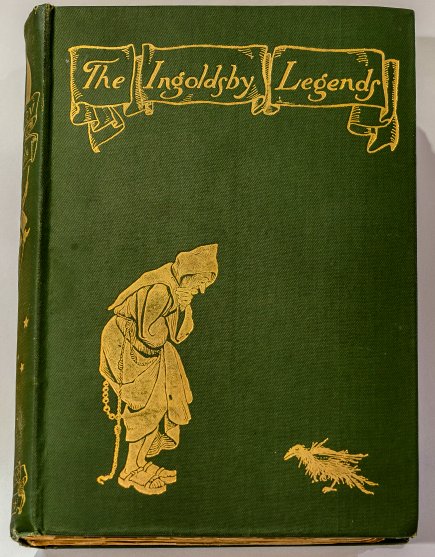
The Ingoldsby Legends – A Review in the Spirit of the Work

The Ingoldbsy Legends – Richard Harris Barham
J.M. Dent & Co – 1898 (Originally published 1840)

Waded through some poems in The Ingoldsby Legends before dinnertime, & that was punishment enough.

T.E.D. Klein, The Ceremonies

Ted Klein wrote a novel called The Ceremonies
that mentions some other horror ficciones
(that’s Spanish for stories), and I, being me,
decided to seek out these tales with great glee,
for Klein’s a respected horror critic and author,
and taking his recommendations I oughta.
I’d already read Stoker and  Machen and Poe,
but some of the books in there I didn’t know,
so I set out to find them, though it might be a slog,
and vowed to review each of them on my blog.

Now Klein’s protagonist reads these dark tales
but encountering one, he verily fails
to finish, for it is too boring by far,
so he picks up instead a book about stars.
I promised myself I’d succeed where he failed,
so I opened the book and I slowly inhaled
to ready myself for some archaic prose
about witches and jackdaws and old spooky ghosts,
but soon my face puckered like I’d sucked on a lime,
for The Ingoldsby Legends is written in rhyme.

It popularized supernatural tales,
but to provide any frightening scenes it quite fails.
I pushed to get through it,  made several tries,
but this kind of writing, I truly despise;
it’s boring and British and repulsively twee.
It might feature spirits, but it isn’t for me.

Let this be a lesson, learn from my mistake,
and leave Ingoldsby’s Legends alone, for God’s sake.
Use your copy for toilet paper, don’t you think twice,
and please listen closely to these words of advice:
When writing ghost stories and tales (and reviews),
poetry isn’t the form you should use.

Ghost Story – Peter Straub

Ghost Story – Peter Straub
Pocket Books – 1980
(Originally published 1979)

I have heard a lot of good things about Peter Straub, and I knew that Ghost Story is considered to be one of his best books. It was the last book I read of the 10 discussed in Stephen King’s Danse Macabre, and it was also the last book of my summer vacation. (That might give you an idea of the backlog of posts I have.) I had high expectations for this book, and it did not disappoint.

This is a very long novel, but its influences are the short stories of Edgar Allan Poe, Ambrose Bierce, M.R. James, Arthur Machen, Nathaniel Hawthorne and Henry James. With the exception of Hawthorne, I have tracked down and read all of the supernatural fiction by these authors, so it’s not super surprising that I enjoyed this. (I read Hawthorne’s The Scarlet Letter and Twice told Tales years ago but none of his later short fiction. I’ll have to see if there is a dedicated collection of his ghost stories out there.) While this book wears its influences on its sleeve, it has in turn become very influential on modern horror. One of the stories in Ryan Harding’s Genital Grinder uses this book’s opening line as homage.

There’s a part in Stephen King’s Danse Macabre where King discusses how the unknown is perhaps the most potent element of horror. The scary thing behind the closed door is always scarier when that door remains closed. Regardless of how terrifying the menace actually is, by making itself known it loses some its power. (Sure it’s scary, but it’s teeth and claws could always be a little bit longer.) In short, the question is scarier than the answer.

I reckon the first half of Ghost Story is one of the greatest set-ups in all horror fiction. The mystery, atmosphere and tension are magnificent. What the hell is happening here? Why has this man kidnapped a child? Who or what is picking off the small group of old men in Milburn? What’s the unspeakable event that occurred between these old men and the mysterious Eva Galli in the past? How are the answers to these questions linked?

The problem with this book is that those questions have to be answered. As King notes, the answers are doomed to fall short of the horror of the questions themselves. The ending of this book is fine. The characters remain interesting, and there’s plenty of creepy bits, but for my money, the malevolent supernatural force at the heart of the story is just a little bit too complicated for the second half of the book to live up to the first.

Maybe that sounds like a jerk thing to say. There’s literally no way to keep this kind of tension consistent until the end of a story, so this critique isn’t really fair. At least Straub tried. Most writers wouldn’t be able to come anything close to what he has achieved in this book. There are some seriously creepy moments in here. Even thinking of one particularly skillful use of foreshadowing near the beginning of the book makes me shudder, months after finishing the novel.

Jesus she moved she can’t she’s dead.

I really enjoyed Ghost Story, and I recommend it to any fan of horror. Straub has written a bunch of other novels too, including two with Stephen King. I am entirely certain I’ll be reading more of him in the future.

The Bride of Christ and Other Fictions – Montague Summers

The Bride of Christ and Other Fictions – Montague Summers
Snuggly Books 2020


I have a collection of books by and about Montague Summers. A few years ago, somebody found a bunch of his writing that was long believed lost. It contained an unpublished collection of ghost stories that was finally put out last year. This collection was really, really cool. The publisher, Snuggly Books, announced that they had enough material for a second collection of unreleased fiction. It was to be titled The Bride of Christ. I ordered a copy as soon as it came out.

In his introduction to the text, Daniel Corrick notes that the pieces in this collection can be divided into four categories: the ghost stories, the Uranian pieces, the society pieces and the titular novella. I’m going to stick with these categories in my discussion too.

The ghost stories are very short little things. They’re not awful or unpleasant to read, but they’re not particularly memorable.

The Uranian pieces are mostly uninteresting. One of them, “The Parting of the Ways”, is ok. It’s a story about a lad falling in love with a lad who falls in love with a woman. It’s not a great story, but it is actually a story which is more than can be said about the other two Uranian “pieces” in here. I was going to say that it’s a bit odd that a self proclaimed Catholic priest would write stories about romantic affairs between teenage boys, but I guess that’s not really true at all.

The “society pieces” are boring garbage. Both are opening chapters to books that Summers never bothered to finish. These are boring stories about rich old British women trying to impress their friends. I read one, but couldn’t bring myself to finish the other. Pure crap.

The Bride of Christ, the longest piece in this book, appears at the start of the collection, but I was excited to read it, so I saved it for last. I was disappointed. It’s the story of a nun who falls in love with Jesus. The priest at her convent tells her this is not good. Just as the story seems to start, it ends. There is supposedly some debate over whether or not this work is complete. If this is the final product, it’s absolute shit. There’s simply not enough in here for it to be interesting. I’m giving Monty the benefit of the doubt and assuming it’s unfinished.

I understand why a publisher would choose to release two books of Summers’ fiction rather than trying to stick it all into one together, and as a collector of his work, I am pretty happy to own this collection of rarities. Honestly though, there isn’t going to be much of interest in this book to anyone other than Summers enthusiasts. I think taking the two ghost stories out of this one and adding them into Six Ghost Stories as an appendix would have made the best book. The leftovers aren’t really worth reading.

Shirley Jackson – The Lottery, The Haunting of Hill House and We Have Always Lived in the Castle

A few months ago, I had decided to read some T.E.D. Klein, and I was trying to figure out where to start. I read on his wikipedia page that his story The Events at Poroth Farm “is notable for the insidious way in which the narrator’s responses to the works he is reading (including those of Charles Robert MaturinAnn Radcliffe“Monk” LewisSheridan Le FanuBram StokerAleister Crowley, and Shirley Jackson) are conflated with his impressions of the supernatural threat.” With the exception of Shirley Jackson, I had read and reviewed bits and pieces by all of these authors for this site. I used to teach high school English, so I had come across a few of Jackson’s short stories before, but I had never read any of her novels. I had heard that these novels were pretty great, so I decided to give Shirley a go.

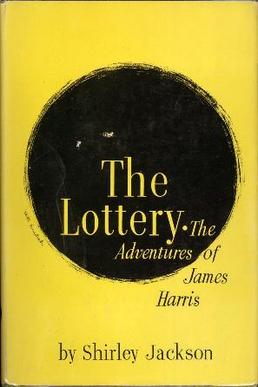
Shirley lotteryThe Lottery: The Adventures of James Harris
Farrar, Straus and Company – 1949

But I started with The Lottery: The Adventures of James Harris (or The Lottery and Other Stories as it was later retitled). Many of these stories are short little glimpses into the lives of surprisingly normal characters, racist neighbours and jealous office workers, people it’s very easy to picture. This collection had very little supernatural horror in it, and it is very different to the stuff I usually post about, but I found it interesting and entertaining. It ends with the title story, The Lottery. This is probably the most horrifying tale in the collection, but it’s also one of the most famous short stories ever written. If you haven’t read it, go read it. I have a pdf of comprehension questions I can send you when you’re done.


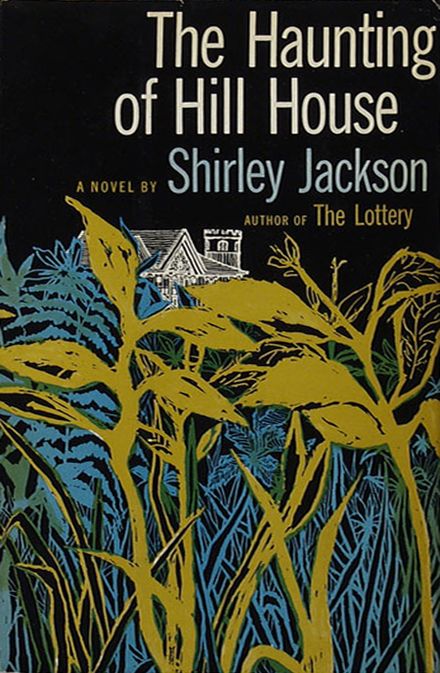
haunting hill house shirley jacksonThe Haunting of Hill House
Viking – 1958

I knew that this book had a reputation as one of the greatest horror novels ever before I read it. I was not disappointed. This was great. It’s far longer than the stories I had read by Jackson previously, but the prose and plot are just as tight. The tightness isn’t stifling though. This is masterfully written stuff, but it’s still a page turner. There was one part that creeped me out really good. No spoilers, don’t worry. (You know that bit where she thinks she’s doing one thing but she’s actually doing something else? Yeah, that bit! SPOOKY!) Holy shit, this book was good. Prioritize it on your reading list.


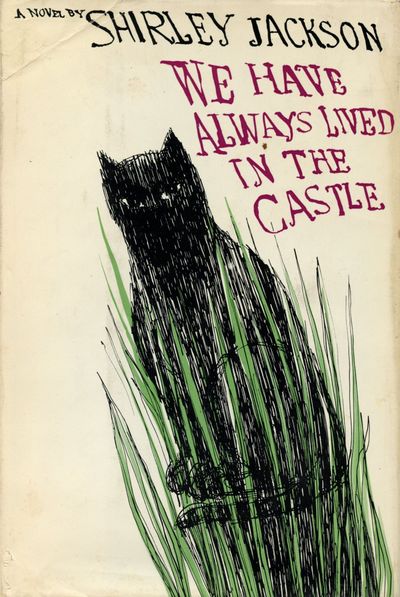
we have always lived in the castle shirley jacksonWe Have Always Lived in the Castle
Viking – 1962

I waited 2 weeks after finshing Hill House to start on We Have Always Lived in the Castle. This one isn’t a horror novel in the same way as Hill House, but I reckon it’s probably the darker of these two books. It’s about a pair of sisters who live in a big house in a town where everyone hates them. This one was great too.

In general, Jackson’s narration is superb. She manages to transfer the thoughts from her characters’ heads onto the page without losing the nuances of their thought processes. The characters in her stories will say quirky little things that you will have found yourself thinking a million times but have probably never said out loud. This is partly what makes Merrikat from We Have Always Lived in the Castle such a fascinating character. The relatability of her thought process makes it really easy to forgive her malevolent sociopathy.

Shirley Jackson was an excellent writer, one of the best. I’ve read some awful crap recently, and I really enjoyed reading some top notch horror. Jackson’s novels have somewhat rejuvenated my interest in the genre. Also, now I won’t feel like a philistine when I start reading that story by T.E.D. Klein