Susan Hill’s The Woman in Black

I had originally planned a different post for this week, but I got about halfway through writing it and realised I needed to do more research. Luckily enough, I spent last Friday night reading Susan Hill’s novel, The Woman in Black.

Hamish Hamilton – 1983

I had seen the movie version with Daniel Radcliffe when it came out, but I had largely forgotten what it was about. (I do remember quite enjoying it though.)

A solicitor has to go and stay in the house of a recently deceased recluse in an attempt to find some important legal papers that had been in her possession. While he is staying in her isolated, desolate mansion, he starts to see an emaciated woman dressed entirely in black.

This is a good old fashioned ghost story, much in the style of M.R. James. At least one of the chapters is named after a story of his. I love this kind of fiction, especially when it’s done well, and this novel is just that. It starts off with the narrator’s family telling ghost stories on Christmas Eve. He leaves the room in a panic when it’s his turn, creating a blissful amount of tension. His tale is so terrifying that he can only tell it through writing, which is exactly what he proceeds to do. This is the kind of book that you want to read under a blanket. It’s very short too, and I find it hard to imagine reading it over more than a couple of sittings. I feel silly for not having read this classic sooner. If you haven’t read it, do so immediately.

Not much else needs to be said. This is an excellent ghost story. There was a novelisation of the sequel film that came out in 2014, but it’s supposed to be crap, so I have no interest.

David Case: The Third Grave, The Cell and Fengriffen

I’ve slowly made my way through 3 David Case books over the last 2 years. I read his novel, The Third Grave, in a day, but then I started on his short stories, and they were so good that I decided to pace myself. Pretty much everything I read by him was extremely enjoyable. His horror is weird, dark and scary, but it’s also well written. I actually don’t have much to say about Case’s books other than that I loved them. This post is more a collection of notes for my own personal reference rather than a detailed review. Read all of these books if you get the chance.

Arkham House – 1981

The Third Grave

The Third Grave had been on my to-read list for a long time when I got around to it. It was a very entertaining mystery about a man’s quest for immortality. It has zombies and mummies. It starts off in Egypt, but most of the story takes place in a small village in England. There’s some fairly predictable turns, but I enjoyed it overall. This originally came out on Arkham House, but it was recently republished by Valancourt Books.

Valancourt also put out 2 collections of Case’s short stories. The stories in The Cell are linked by a werewolf theme. They’re not strictly about werewolves, but there are wolves or dangerous wolf-like creatures in all of them. I was really impressed with the standard of writing in this collection. Every story was enjoyable.

Valancourt – 2015

The Cell & other Transmorphic Tales

The Cell
This a werewolf story told in first person. The narrator has a cell in the downstairs of his house where locks himself on full moons. (I think I read a similar story by Elizabeth Massie.) The narrator is such a piece of trash, so nasty about his wife and women. LOL. Excellent character development. Very Poe-ish in ways. I loved this story.

Strange Roots
Quirky story about a scientist obsessed with researching werewolf DNA. Well crafted, humourous story.

Amoung the Wolves
Awesome story about a series of horrible murders. Eugenics murderer who kills after getting caught in a bear trap aand axing off own leg to escape from wolves. Horrid but good.

Cross to Bear
Delivery to missionary in Africa who doesn’t listen to the natives’ warnings about jaguar-men

The Hunter
A novella about 2 old hunting friends who get involved in a murder mystery in the English country side. Pretty good.

Valancourt – 2015

Fengriffen & other Gothic Tales

Fengriffen is a collection of Case’s gothic stories. Again, I really enjoyed this book.

Fengriffen
Very gothic story about a cursed manor. The rich guy is a real piece of trash. Excellent. I love this stuff.

Anachrona
Short story about some lads meeting a robot. Not a painful read or anything, but quite different to the other stories here.

Foreign Bride
Another very gothicy story about a rich man and his female companions.

Dead End
This one is pretty long, but very enjoyable. A lad who works in a museum goes on a trip to South America to research some weird creature sighting. Meets a famous scientist over there who is clearly up to something shady. Far more similar to the stories in the other collection, but has a element of genetic engineering that makes it Frankensteiny and therefore gothic?

The above collections were put out by Valancourt in 2015. Collections with similar titles were released in the past, but they contain different stories. The 1969 collection called The Cell: Three Tales of Horror contains ‘The Cell’, ‘The Hunter’, and ‘Dead End’. The 1971 collection called Fengriffen and other Stories contains ‘Fengriffen’, ‘Strange Roots’, and ‘Among the Wolves’. I’d recommend reading the Valancourt versions just because they contain all of these stories and more. I have my eye on a few other books by Case that I’ll hopefully get around to in the future.

The Animated Skeleton – Anonymous


Valancourt Books – 2005 (Originally published 1978)


Originally published in two volumes in 1798, The Animated Skeleton is an early example of the Gothic novel. What distinguishes this book from some of its contemporaries that I’ve reviewed on this site (The Castle of Otranto (1764), Vathek (1786), The Mysteries of Udolpho (1794), The Monk (1796), …) is the fact that it remained out of print for more than 200 years.

The Animated Skeleton has all the stuff you’d expect. There’s hidden passages, a virginal maiden, haunted chambers, a tyrannical ruler and his subservient bandits. Plus, the plot plays out in a nunnery and a castle. Why then, I hear you asking, did this book fade into obscurity while the novels of Ann Radcliffe have seen hundreds of editions?

I can’t say for certain, but I have a feeling that it might have something to do with the fact that it’s very, very shitty.

Honestly, this is not good at all. It’s a terrible, boring, confusing mess.

A family goes on the run after the mother is assaulted by some brutes. After getting framed for murder, they go to a monastery where they find out that a powerful woman (she’s not quite a queen) in a local castle has a grudge against them and their mate. The mother of the family dies, and then there’s a court case where it becomes apparent that they are innocent. Meanwhile, ghosts are showing up back in the castle of the bad lady. I did read the rest, but it was so boring that I don’t want to recount it here.

There’s too many characters, and most of them are entirely forgettable. One of them has two names, and the author goes back and forth between them even though they say they won’t. Honestly, reading this was a chore. I have read that the low quality was because the author of this book wrote it to make money rather than literature and that this distinguishes it from the earlier works of gothic fiction mentioned above. I suppose this book will be of interest to those interested in the history of the gothic novel, but if you’re looking for an enjoyable read, you should probably avoid The Animated Skeleton.

In saying this, I cannot over emphasize how grateful I am to Valancourt Books for literally making it their business to republish books like this. Personally, I am mildly interested in the history of the Gothic novel, and I’m very happy to have been able to read The Animated Skeleton. This is one of the first books that Valancourt put out, and they have gone on to make loads of awesome books available again. I think that the world is lucky to have a company that puts the effort in to preserve these strange old tales for future generations. I fully intend to read more of Valancourt’s Gothic reprints in the future.

I hope you all have a spooky (and safe) Halloween!

J.B. Priestley: Grandfather of Dr. Frank-N-Furter

Here’s two books by an old English wanker:

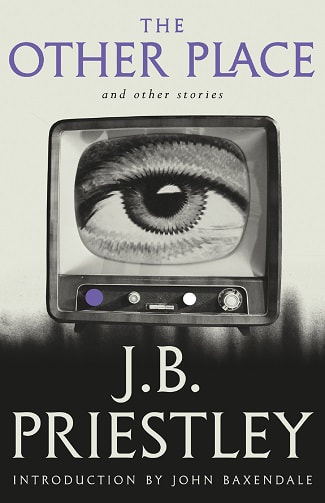
The Other Place – J.B. Priestley
Valancourt Books – 2018 (Originally published 1953)

I quite enjoyed the first few stories in this collection. None of them are particularly scary, but they’re all quite strange. The only ghost story is about  a haunted TV set, and it’s going for laughs rather than scares.

It took me several months to get through the first half of the book, but I rushed through the rest in an afternoon. I think I might have enjoyed this part more if I had continued at my original pace. Reading these tales in close succession highlighted how similar many of them are. It seems that most of them are about people having visions of the past or the future. They’re all competently written and enjoyable, but looking back now it’s tricky to distinguish some of them. This wasn’t the most jaw-dropping book I’ve ever read, but I liked it. After finishing, I was happy enough to give Priestley’s novel Benighted a try.

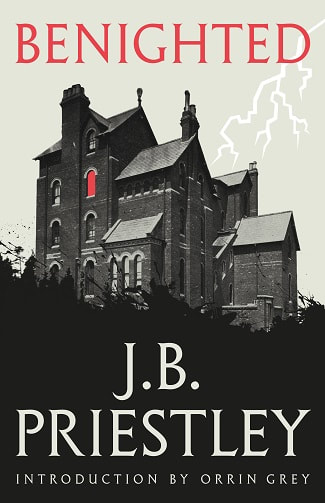
Benighted – J.B. Priestley
Valancourt Books – 2018 (Originally published 1927)

Benighted is quite good. Yesterday, I was out for a drive with my wife, and I was telling her about the book I was reading. When I explained the plot to her, she responded that it sounded awfully like The Rocky Horror Picture Show. She was dead right. This is the story of a couple who get caught in a storm and have to seek shelter in an old house full of weirdos. Unfortunately, there are no sweet transvestites in Benighted. I looked into this a bit, and it turns out that The Rocky Horror Show was directly influenced by The Old Dark House, the 1932 film version of Benighted. I was pretty embarrassed that I hadn’t noticed the similarities beforehand. I love that movie!

I’m a little surprised that Benighted isn’t better known. It starts off atmospheric and mysterious and ends quite exciting. Things get pretty heavy between the characters, and there might be a little bit too much philosophical insight for this to appeal as a straight forward horror novel. It’s creepy in parts, but that creepiness never seems to be the main point of the book. It’s hard to get too concerned about the tongueless ghoul lurking upstairs when you’re trying to figure out the single biggest obstacle to human happiness.

Still, it is fair to call Benighted a horror novel. If you look up “gothic tropes” on google, the first 3 listed are darkness, isolation and madness. Bingo! Those are the main ingredients here. This is also a novel about a labyrinthine mansion filled with a strange family’s shameful secrets. That’s pretty gothic bro. There’s no supernatural element though, so I guess this would be classed as psychological horror nowadays.

Truth be told, I had originally written a more laudatory review of these books. It was going to end with a claim that I would some day seek out the author’s other works. Then I read that he hated Irish people. Fuck you J.B. Priestley, you little jaffa prick. Glad you’re dead and if I ever come across any of your other books, I’ll stick them up my ass.

Count Stanislaus Eric Stenbock’s Tales of Death and Decadent Poetry

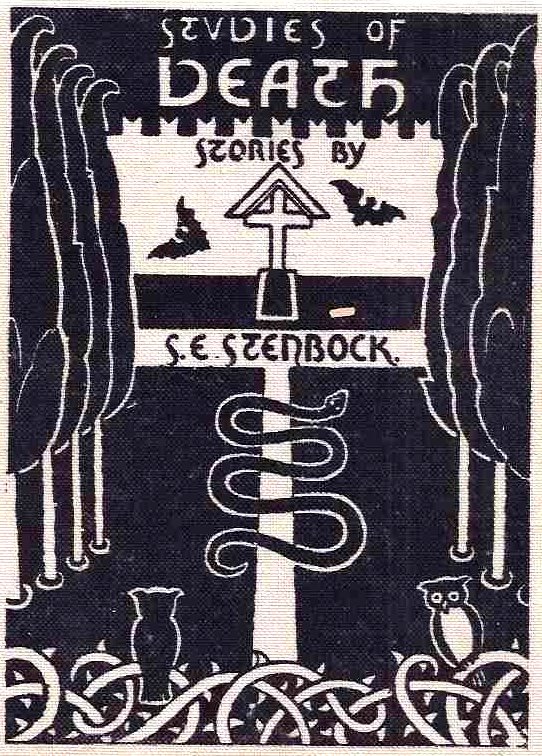
I first read about Count Stenbock on the Snuggly Books website when I was buying their collection of Montagues Summer’s ghost stories. I saw the cover of Stenbock’s Studies of Death and became intrigued. I checked and saw that first edition copies of this book go for 10,000 dollars. I had to read it.

stenbock studies of death
When I looked up Stenbock, I saw that David Tibet, Thomas Ligotti collaborator and the musician behind Current 93, had recently put out a collection of Stenbock’s work that contained all of the stories in Studies of Death along with lots of other stuff. This collection didn’t cost much more, and I decided to buy it.

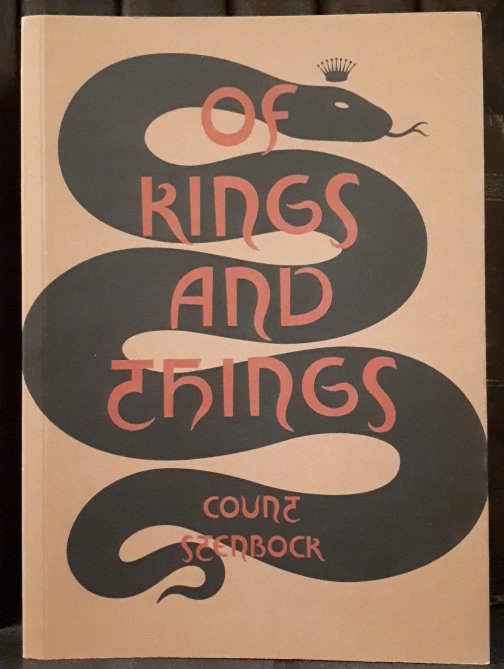
OF KINGS AND THINGS STENBOCKOf Kings and Things: Strange Tales and Decadent Poems
Count Eric Stanislaus Stenbock
Strange Attractor – 2018

Studies of Death is actually very short, and you could easily read through it in an afternoon. The stories are glum, dreary things. I enjoyed them well enough. One of the tales is about a vampire, but the others don’t really have much of the supernatural about them. I quite liked these stories, but I am very, very glad I opted for the anthology rather than just this collection.

The other tales contained in Of Kings and Things are great, and they convinced me that Stenbock was actually an interesting writer rather than just a melancholy weirdo. ‘The Other Side’ is one of the only other pieces of writing that was ever published during Stenbock’s life, and it’s a very dreamy tale of a young man becoming a werewolf. It’s really cool. There’s other stories about a voyage to Hell, a princess who pays to see a young man mauled by lions, and a monk who attends black masses and satanic ritual sacrifices. There’s also a ghost story in the form of a play. ‘The King’s Bastard’ and ‘A Secret Kept’ are very similar to the kind of stuff in Studies of Death.  All the fiction in here is worth reading, but there’s one particularly creepy story about a fella who allows himself to be cuckolded by his gay lover (his boyfriend fucks his wife), and then he falls in love with the resultant child. Yuck.

Stenbock was a real freak. There’s a story that he used to carry a wooden puppet around with him, telling people that it was his son. He was also gay. I don’t mean to insinuate that gayness is weird or abnormal, but let’s be realistic; in the late 19th century it was largely considered so. Stenbock’s writing, although never explicitly detailing acts of homosexuality, is pretty gay. Read it and you’ll see what I mean – lots of beautiful men and forbidden love. I think he deserves more credit for writing like this during that period of history. It’s a pity that he isn’t better remembered.

The physical book is lovely – it looks and feels nice, and a great deal of effort has clearly been put into it. It’s not expensive either, so if you’re mildly interested in Stenbock or a big fan of his, I can wholeheartedly recommend picking up a copy of Of Kings and Things. I’m glad I did.


Stenbock was primarily a poet, and of the 4 of his books that were published during his lifetime, 3 of them were books of poetry. Copies of the original editions of these books are now ridiculously rare. David Tibet estimates that there are 4-6 copies of each in existence. Luckily, many of these poems are included in Of Kings and Things. I was on David Tibet’s website a few weeks back and saw that he was offering free pdf copies of the collected poems of Stenbock. This collection contains all of the poems from the Count’s 3 books of poetry. I decided to give it a read before publishing this post.

collected poems stenbock
The Collected Poems of S.E. Stenbock –  Count Stanislaus Eric Stenbock
Durto Press – 2001

I have very little interest in poetry. Honestly, I just don’t get it. My opinions on this lad’s poems aren’t going to be profound. I thought they were very moody and sad and dramatic – lots of crying and love and blood. If Stenbock was a teenager in the early 2000s, he would have worn lots of eyeliner and shirts with black and purple stripes. I’m too much of a bonehead to tell if his poems are good not. I far preferred his stories.

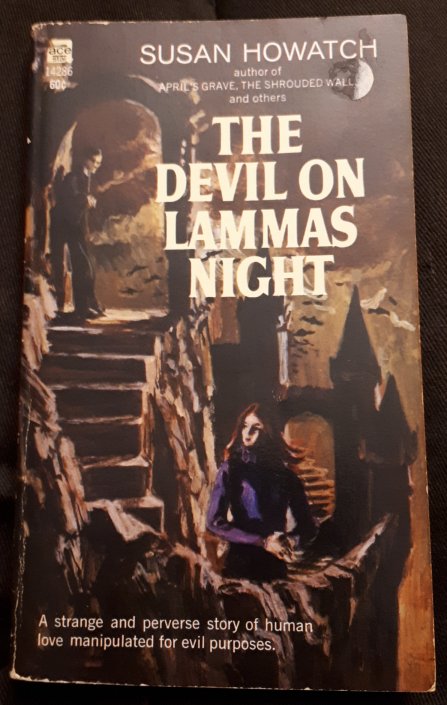
The Devil on Lammas Night – Susan Howatch

susan howatch the devil on lammas night.jpgThe Devil on Lammas Night -Susan Howatch
Ace Star -1970

A millionaire’s wife and his daughter, Nicola, are seduced by Tristan Poole, the charismatic and mysterious leader of “The Society for the Propagation of Nature Foods”. This society is actually a Satanic cult posing as a harmless group of new-agers, and Poole’s motives for seducing Nicola and her step-mom are less than gentlemanly. Oh, and to complicate matters further, Poole is living in Nicola’s ex-boyfriend’s house.

Things play out pretty much as you would expect.

This is primarily a romance novel. The Satanic antagonist’s main motivation is money, and while there is plenty of black magic in here, the story could still work if this element was switched with something else. That being said, I quite enjoyed the little bits of occultism sprinkled throughout. Howatch seems to have done her homework; the rituals here are documented, and the demons listed are all of the Solomnic tradition. There’s a part where a character shies away from explicitly describing the Osculum Infame and another bit where the author claims that the Satanist performed “unprintable” acts to his communion Eucharist. I knew that witches are supposed to kiss the devil’s shitterhole before reading this book, so I was able to fill in the blanks to the first omission by myself, but I can’t remember what unprintable acts are supposed to be performed on a Satanic Eucharist. Does the celebrant cum on them or rub them against his bumhole or something?

I’m not going to rush out to read Susan Howatch’s other books, but this one was fine.

Frankenstein’s 200th Birthday

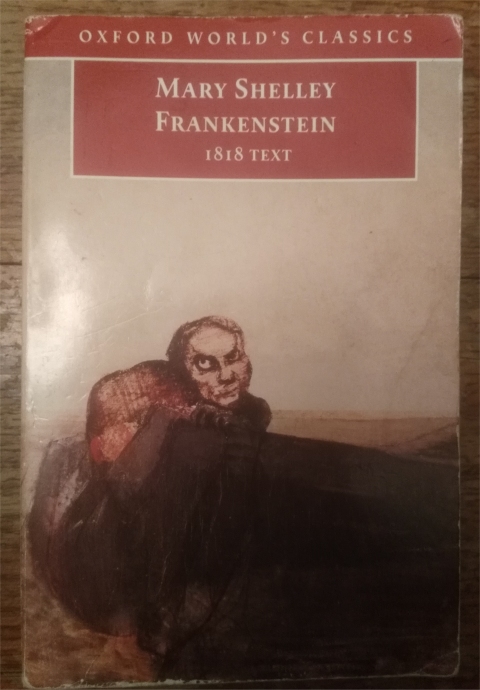
shelley frankenstein 1818Frankenstein (1818) – Mary Shelley

Not really sure where to start or what to say with this one. Published 200 years ago today, Frankenstein, or the Modern Prometheus is one of the most important horror novels ever written. It’s also one of my favourite books. I first read it years ago, but that edition was the more widely published 1831 version of the text. After finishing the book, I read that the original 1818 text was in some ways better or more authentic or something. I ordered a copy, but it remained on my bookshelf for so long that when I finally picked it up and read it, I couldn’t tell how it was any different. You can find the differences discussed elsewhere online, but I can only say that I enjoyed both versions immensely.

I recently reviewed and complimented Percy Byssche Shelley’s Zastrozzi for it’s eponymous villain. Mary’s monster is, in ways, just as diabolical a fiend as her husband’s, but he is a hundred times more tragic. He’s simultaneously more and less human than Zastrozzi; he may not have been created in God’s image like the rest of us, but his plight is nonetheless relatable. Who amoungst us has not, at some stage in their  hateful lives, looked towards the heavens with dismay in their hearts and cursed God for creating man only to abandon him immediately thereafter? Is this tale not a parable for all human existence? Victor Frankenstein, the creator, is very much the villain in the 1818 text. He’s the idiot that brought the monster to life and then failed to take responsibility for his actions.

This is a great story and an exciting read, but it’s also one that makes you think. What do Frankenstein and his monster represent? Is the book an existential metaphor? As it is perhaps the first science fiction novel, what can Frankenstein tell us about its era’s feelings about scientific advancements? What messages should modern scientists developing A.I. take from this tale? Let’s also remember that Mary Shelley’s mother was one of the most important feminist thinkers in history. Can we reasonably avoid analyzing this text through a feminist lens? Could Frankenstein’s monster represent the corrupted femininity created and enforced by Georgian males? It’s rare that a horror story will raise as many interesting questions,but fortunately for you, I won’t attempt to answer any of these questions here; I’ll leave that to the high school students fortunate enough to read this book in English class.

I have finally reviewed all of the books from Paul Murray’s list of the greatest Gothic novels. I don’t think it was a very accurate list at all. Anyways, have a good new year.

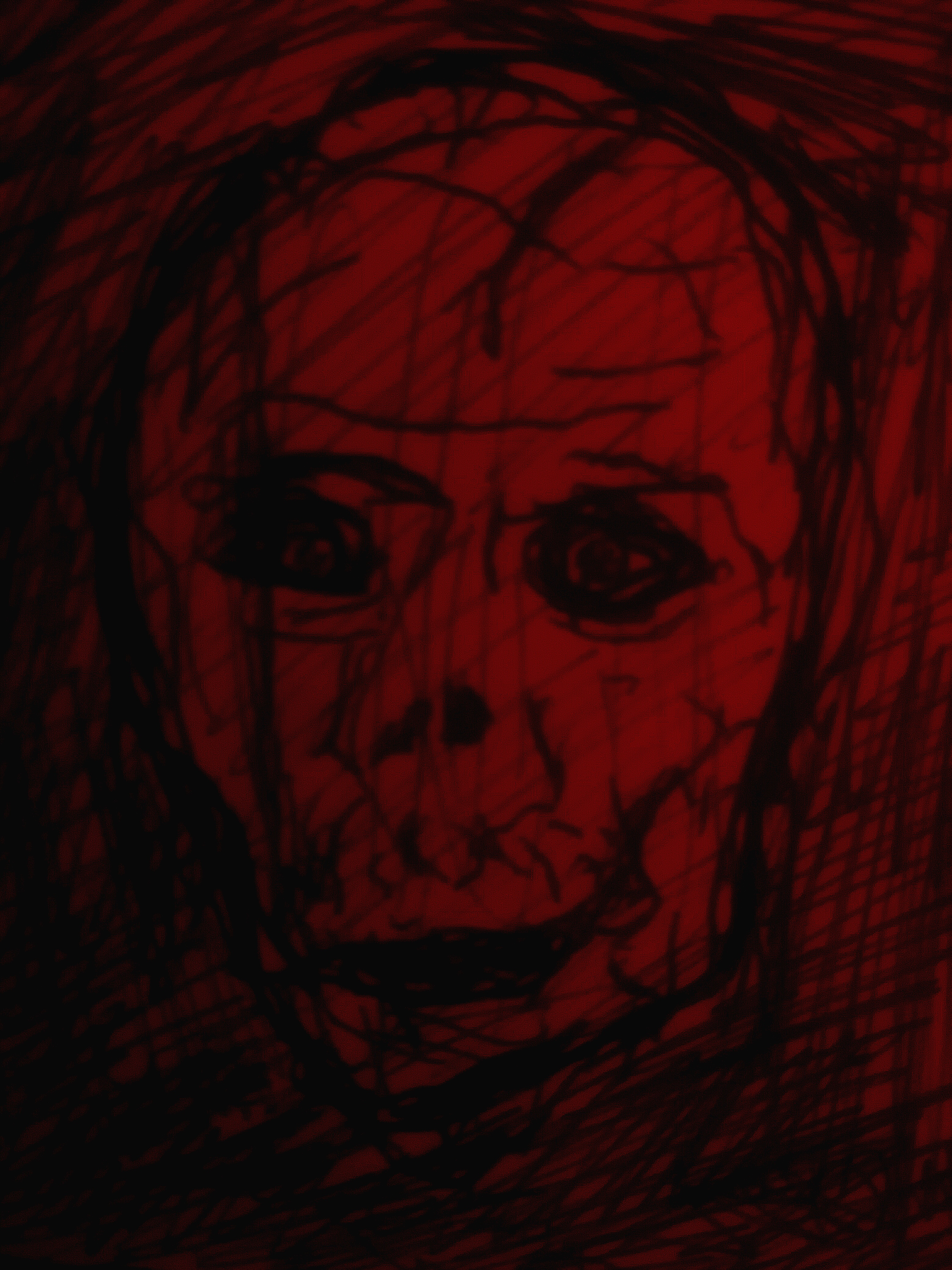
IMG_20171225_103836.jpg(I didn’t have my copy of the book handy when this post was first published, so I drew this little picture of Frankenstein’s monster for the post image.)

Shelley’s Zastrozzi and St Irvyne – Revenge is Sweeter than Life

zastrozzi and st irvyne shelleyZastrozzi and St. Irvyne – Percy Bysshe Shelley
Oxford University Press – 1986

These are the only novels Percy Shelley ever wrote, and they are usually published together. They’re roughly 100 pages each.

Zastrozzi (First published 1810)
I’ll be brief with this one because it’s very short and the more I say, the more it will take from your enjoyment if you do decide to read it. This is a remarkably enjoyable Gothic romance. The title character’s horrendously callous pursuit of vengeance leads him to acts of genuinely shocking brutality. Fantastic. File this guy alongside Maldoror, Iago, and Aaron the Moor. At one point, he utters the words, “I will taste revenge; for revenge is sweeter than life: and even were I to die with him, and, as the punishment of my crime, be instantly plunged into eternal torments, I should taste superior joy in recollecting the sweet moment of his destruction. O! would that destruction could be eternal!”
Those might be my favourite sentences in the entire canon of literature.

The ending of this book was absolutely satisfying in every respect. Incredible.

I listened to a few chapters from the Librivox audiobook version, but the narrator tries so hard to sound dramatic that he makes it difficult to keep listening. I don’t like badmouthing people who put together the stuff at Librivox as I know they’re volunteering their time to make literature accessible, but Jesus Christ, this guy sounded like an arsehole.
St. Irvyne (First published 1811)
The second tale in this collection, St. Irvyne, isn’t quite as good. There’s two storylines in here, one about a pair of star-crossed lovers and one about an innocent young virgin who is led astray by a mysterious stranger. I was really enjoying it, but I started getting a bit worried when I noticed that I was only a few pages from the end and had absolutely no idea how the two plotlines related to each other. I started wondering if I had skipped a chapter by accident. Unfortunately, this confusion lasted right up until the third-last sentence in the book.

St. Irvyne, you see, was originally intended to be a much longer work, but at a certain point Shelley got sick of writing and decided to tie everything up in a 2 page conclusion. The writing is nice, but this was a bit of a disappointment.

The alternate title of the work is actually The Rosicrucian, and while one of the characters in here has clearly been dabbling in the Occult, there’s not a single mention of actual Rosicrucianism in the entire book. If you’re into that kind of thing, I’d recommend Bulwer Lytton’s Zanoni instead.
While on the subject of Shelley, I’m going reread his wife’s Frankenstein soon. I’ve previously mentioned that book’s shameful absence from this blog, and it’s about time to rectify that. Its 200th anniversary of publication is coming up in a few weeks, so I’m going to try to get it done by then.

Rover, Wanderer, Nomad, Vagabond – Tarry Thou till I Come and Melmoth the Wanderer

tarry thou till i come crolyTarry Thou till I Come or Salathiel, the Wandering Jew – George Croly
Funk and Wagnalls – 1902 (Originally Published in 1828)

A long time ago, I read Paul Murray’s article on the greatest Gothic novels ever written. At that stage I had already read most of the books on the list*, and out of the ones I had not yet read, there was only one that I had never heard of: Salathiel The Immortal by George Croly. Murray’s description of the book reads:
Now almost forgotten, the Reverend George Croly was a friend of the Stoker family. In Salathiel the Immortal (1829), there are similarities of predicament between Salathiel and Dracula (as well as with that of Melmoth the Wanderer). Salathiel led the mob which promoted the death of Jesus, in return for which he was condemned to the misery of the undead state. A reshaping of the Wandering Jew legend which underlies so much of the gothic genre, including Melmoth the Wanderer. Like Maturin, Croly was a Church of Ireland clergyman.”
I have emboldened all the parts of this description that convinced me that I would have to read this book. I looked it up to research further, but could not find a single review. Ohhh, the alluring mystique! I quickly ordered a copy online, and when it arrived, I was thouroughly impressed with the physical book. It was printed in 1901, includes several full page colour illustrations, and ends with a bunch of notes and critical essays. It’s about 700 pages of small text though, so it sat on the shelf for four years before I found the time to read it.

tarry thou frontispiece
So, the Wandering Jew is a legendary character who was supposedly doomed to immortality after insulting Christ during the events leading up to his death. In this version of the tale, he is Salathiel, a priest of the Temple who had been gravely insulted by Christ’s heresy against traditional Judaism. Salathiel is the man who led the crowd demanding the blood of Christ. The book begins right at the moment of his exultation. As Jesus is lead to the cross, Salathiel hears a voice whisper “Tarry thou till I come” and understands that this is the voice of God telling him that he is going to have to wait around on Earth until Jesus returns on judgement day.

Ok, so we’re off to a good start: a cursed priest doomed to walk the earth until the end of time. Now this tale was originally published in 1828, so you would imagine that its 500+ pages cover a time period of almost two millennia. However, the protagonist’s most striking feature, his ability to survive for thousands of years, barely comes into play in the events of the story. The book ends with the destruction of the Second Temple, roughly 35 years after Jesus was crucified. Yes, Salathiel shows impressive endurance and manages to escape from some very tricky situations, but aside from the book’s title, first chapter and final chapter, there is very little in here that suggests anything preternatural about the title character; by the end of the book, he might be as young as 60.
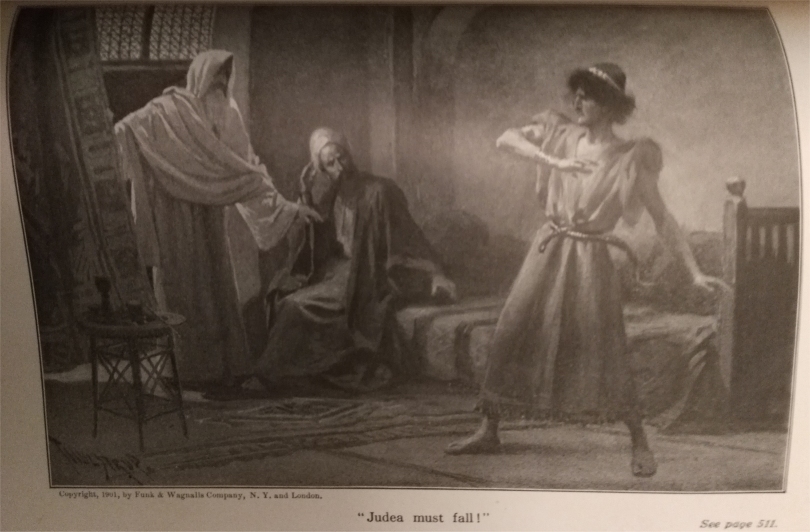
tarry thou sorcerorSalathiel meets a sorceror and spirit (That’s him in the back.)

This book includes virginal maidens, gloomy dungeons, heros, tyrants, curses, bandits, miraculous survivals, clergy, secret passageways, night journeys, and strange spectres: in short all the things that one might expect to find in a Gothic novel. But these elements are strewn (rather sparsely I will add) amoungst 500 pages of historical fiction about the siege of Jerusalem. Realistically, this is a fairly dry adventure novel about a warrior who has little fear of death. The main character has to rescue his family from captivity about 5 times, he escapes from captivity himself about 10 times, and finds himself doing battle (both physical and mental) with countless foes. He becomes stranded on a desert island, he briefly takes command of a pirate ship, he plans devastating attacks against the Roman forces, and he does it all for the love of his wife and children. There are a few spooky parts; he meets a ghost, a magician and some strange spirits, but these events only make up a few paragraphs in this tome. Referring to this book as a Gothic novel is a bit of a stretch.


Just some of the adventures on which our hero finds himself

So maybe it’s not Gothic, but is it any good? Well, it took me well over a month to finish it. I found the first 300 pages or so to be very, very boring. In fact, when I was reading it, I started wondering if this was not a precursor to the modernist novel. I wondered if Croly had deliberately avoided mentioning the legend of the wandering Jew and instead focused on extremely boring details. The horrendously wordy prose inflicts a sense of brutal tedium on his reader, and this technique gives that reader a sense of what life would be like for an individual who was doomed to live forever. Is this a stroke of absolute genius, or is it just poor writing? It’s hard to say.

The characterization is quite awful. Aside from their names, Salathiel’s associates are mostly interchangeable; they’re either completely good or completely bad. Also, some characters reappear after hundreds of pages of absence, and the reader is expected to remember exactly who they are. The biggest problem is with the title character though. Aside from a few hasty moments when he is contemplating his daughters being courted by a goy, Salathiel, the hero of this novel, is a very sensible, rational, empathetic individual. The idea that he was the man that led the mob against Christ (the proverbial ‘Jew that broke the camel’s back’) is very strange indeed. I would not be surprised to find out that Croly had written the novel and tacked on the few Wandering Jew parts afterwards because he realized that nobody would be interested if he didn’t lure them in with a familiar legend.

tarry thou jesus crolyLOL, keep walking, lil bitch!

Of course, the legend of the Wandering Jew is in itself quite bizarre. The idea is that Jesus put a curse on the lad for being mean to him. Let’s just recall that the fundamental belief of Christianity is that Jesus Christ died so that the sins of man could be forgiven. Isn’t it a bit odd then that he would personally inflict immense suffering on any individual for wronging him? Also, the nature of Salathiel’s trangression isn’t even that severe when you consider the context in which it occurred. He, a holy man, genuinely believed that Christ was a heretic trying to pervert his religion. Sure, it was a shitty thing to do to try to get him killed, but Salathiel seems genuinely remorseful afterwards. If Jesus had only cursed him with a bad dose of verrucas, Salathiel probably would have had to sit down for a while to contemplate his bad behaviour, and I reckon he’d quickly realize that he had been a bit harsh. He would have asked God for forgiveness, and if God had truly meant all the stuff that he had just had Jesus tell everyone, he’d have to forgive Salathiel immediately. As things currently stand, Salathiel is doomed to suffer regardless of how remorseful he is. Jesus is a hypocrite.

To today’s socially conscious reader, the title of this book might set off alarm bells. After all, the Nazis once made a propaganda film titled Der Ewige Jude (the German name for the Eternal/Wandering Jew). The legend of the Wandering Jew is doubtlessly anti-Semitic in its origins, but in fairness to Croly, I think it is safe to say that this book was not anti-Semitic by the standards of the time in which it was written; he’s definitely not attempting to demonize the Jews. He is however, more than happy to malign black people at every given opportunity. At one point he refers to Ethiopians as “Barbarians, with a tongue and physiognomy worthy only of their kindred baboons”.

In fairness, this book does pick up quite a bit towards the end, but overall, it’s really not that great. Tarry Thou till I Come will be a real treat for anyone with an interest in historical, religious fiction, but it’s likely to bore the pants off everyone else. If you want to go ahead and check it out, the text is available online at archive.org. Make sure that you read this version though, as some of the other versions online only contain the first two out of its three volumes.

melmoth wanderer penguinMelmoth the Wanderer – Charles Maturin
Penguin – 2012 (Originally published in 1820)

Like I said earlier on, I bought my copy of Salathiel quite a while ago. I had originally planned to make this a comparative post weighing Croly’s book against Charles Stuart Maturin’s Melmoth the Wanderer, a book that I had read long before hearing of Croly’s. Unfortunately, so much time has passed since reading Melmoth that I can’t remember it terribly well. I do recall it being similar to Salathiel in the following ways:

  • It is also excessively long.
  • It is also about a cursed immortal.
  • It was also written by a protestant clergyman from Dublin.

Unlike Salathiel however, Melmoth the Wanderer is very definitely a Gothic novel. Its title character is immortal due to his dealings with Satan, not Jesus Christ. I know that I enjoyed Melmoth, but I recall it getting a bit boring in places. Regardless, all book-goths are obliged to read this one. The cover of the edition of this book that I own is one of the reasons that I try not to buy modern reprints of old books. Luminous pink, turquoise and orange for the cover of one of the classics of Gothic literature? No fucking thank you Mr. Penguin!


*The following is the list of Paul Murray’s 10 favourite Gothic novels from the article that set me on the track of Salathiel.

  1. The Castle of Otranto by Horace Walpole
  2. History of the Caliph Vathek by William Beckford
  3. The Mysteries of Udolpho by Ann Radcliffe
  4. The Monk by Matthew Lewis
  5. Frankenstein by Mary Shelley
  6. Melmoth the Wanderer by Charles Maturin
  7. Salathiel the Immortal by George Croly
  8. Varney the Vampire or The Feast of Blood by James Malcolm Rymer or Thomas Pecket Prest
  9. The Strange Case of Dr Jekyll and Mr Hyde by Robert Louis Stevenson
  10. Dracula by Bram Stoker

Now that this post has been published, I have managed to review all of these books except Frankenstein. I’ll have to reread it and get it up here soon!

Elizabeth Gaskell’s Gothic Tales of Mystery and the Macabre

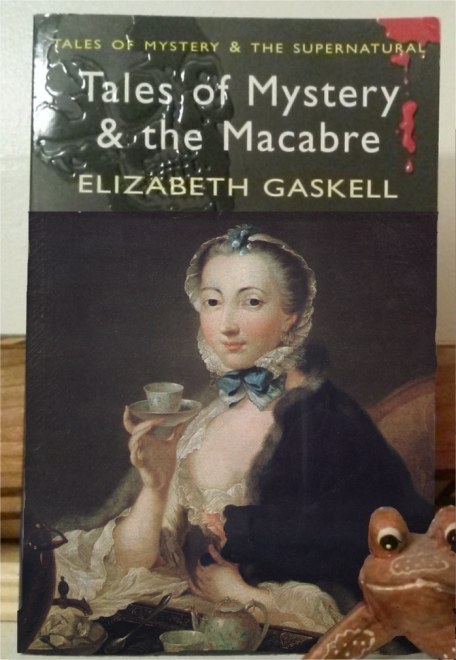
elizabethgaskell
Tales of Mystery and the Macabre – Elizabeth Gaskell
Wordsworth Books – 2008
Long ago, I got a goodreads recommendation for Elizabeth Gaskell’s Gothic Tales collection published by Penguin. In April 2013, I ordered a copy. It never arrived. Later that year, when I went home for Christmas, I found a short story collection by Gaskell in the Wordsworth Tales of Mystery and the Supernatural series. This collection was called Tales of Mystery and the Macabre. It was nice and cheap, and I presumed it would be the same as the book that I had previously ordered, so I bought it. It lay on the shelf for nearly 3 years.

I started reading Gaskell in September. I checked to see if this edition contained the same stories as the Penguin edition. The Ghost in the Garden Room goes by a different title; it’s The Crooked Branch in the Penguin edition, but they’re the same story. Apart from that, these texts are the same. The Penguin edition may well have notes and a better introduction, but I doubt those would make this book any more enjoyable.

The stories are not mysterious, and only a few of them are remotely spooky. They’re mostly about innocent young women and mistaken cases of identity. Within a week, I had read all but two of the tales, but then I started working in a factory and binging on Stephen King, and I lost all interest in Gaskell. I forced myself to go back and finish it last week, and I’m glad I did. The last story I read, The Ghost in the Garden Room, is surprisingly miserable; it was great, especially the ending. The rest of the stories range from decent (Lois the Witch and The Old Nurse’s Story) to stupidly shit (Curious, if True). I started on Gaskell right after I finished reading Varney the Vampire, another book in the Wordsworth series, and that may have had something to do with how little I enjoyed this one. My patience threshold for Victorian fiction seems to be about 1000 pages.

Overall, Gaskell’s Gothic tales are not absolutely horrible to read, but this was not a book that I ever looked forward to opening. Also, the cover is fucking stupid. I’ve given out about the covers for this series several times before, but dear Christ this one is ridiculous. There’s no mention of planets or standing stones in any of these stories, and that cover makes this book look better than it is. The image needs to be replaced for the next edition, and out of the goodness of my heart,  I have designed for a cover that far better suits the content of his book:

better-coverIf anyone working for Wordsworth sees this, please spare the niceties and just send a cheque. Thanks.