The King in Yellow – Robert W. Chambers

2016-07-30 17.39.14.jpg
Wordsworth Editions – 2010 (Originally published in 1895)

This is the first time that I’ve reviewed a single book of short stories. Usually I wait until I’ve read everything (or at least all of the good stuff) by an author of short fiction, but this is a little different. (I do own a copy of the Complete Weird Tales of Chambers, but I haven’t got around to it yet.) The King in Yellow was one of Chamber’s earliest works, and it remains his best known; he spent most of the rest of his career writing popular romance novels, but nobody remembers them. Some of the tales in this book managed to induce a lingering discomfort (I read most of them just before going to bed and afterwards lay awake, thinking of the sinister King, sitting on his throne in his tattered yellow rags.), and overall, this book is pretty neat. If you haven’t read it and you’re wondering why it sounds familiar, it might be because elements of it were borrowed for the first season of True Detective.

So this is a collection of 10 short stories, only the first 4 of which really refer to the Yellow King. I’ll get to that later though, for now I’ll just explain the  others:

5. The Demoiselle d’Ys is a ghost story. It’s not scary, but it’s enjoyable (and not dissimilar to the stories of M.R. James).
6. The Prophet’s Paradise is really just a short series of of prose-poems. It was a bit arty for my liking.
7. The Street of the Four Winds doesn’t deal with the supernatural, but it is quite creepy.

After the above, all elements of the horrific, weird or creepy completely disappear.

8. The Street of the First Shell is confusing, dull, and not worth the effort that it requires.
9. The Street of Our Lady of the Fields is the romantic tale of an innocent young man who moves from one continent to another and falls madly in love with a rambunctious young woman. Needless to say, I was almost in tears by the end. This was beautiful.
10. Rue Barrée is a less interesting and ultimately less satisfying version of the previous tale.

Ok, let’s rewind to the best bit. The first 4 tales all revolve around an obscure book of horror and despair. (You might already see why I enjoyed this.) The King in Yellow is a two act play that drives its readers insane. Unfortunately for everyone concerned, it’s a very difficult book to avoid, and if you do start reading it, it seems impossible to put down. (It’s a bit like those modern horror movies where the people who watch the video get killed.) Just to clarify here; it’s the characters in Chambers’ stories that get to read the play, not his readers. He never gives an outline of the plot of the play, but each story begins with a short quote from it. The lack of details make it all the more intriguing, and although I am aware that it does not actually exist, I have spent a more than reasonable amount of time in the last week trying to figure out ways to get my hands on a copy. How fucking cool is the idea of a book that either possesses you or drives you mad? 10/10, would read. The snippets that Chambers does include drive me wild too. Check out the poem that introduces the first story:

Along the shore the cloud waves break,
The twin suns sink beneath the lake,
The shadows lengthen
In Carcosa.

Strange is the night where black stars rise,
And strange moons circle through the skies
But stranger still is
Lost Carcosa.

Songs that the Hyades shall sing,
Where flap the tatters of the King,
Must die unheard in
Dim Carcosa.

Song of my soul, my voice is dead;
Die thou, unsung, as tears unshed
Shall dry and die in
Lost Carcosa.

Absolutely deadly. Does Carcosa sound familiar? That might have something to do with the fact that it was first mentioned in An Inhabitant of Carcosa by Ambrose Bierce. Chambers borrowed other elements Bierce’s fiction, and elements of his own fiction were in turn borrowed by Lovecraft.

I really liked 7 out of the 10 stories in here, but it would really make more sense if the book was called ‘The King in Yellow and some other stuff”. The stories at the beginning are totally different to the ones near the end, and if you like weird tales exclusively, you won’t be missing out if you don’t bother with the last few. I would advise anyone who is going to read this to save the best for last; read the last 3 stories first, then move on to the 5th, 6th and 7th, and finish with the first 4.

As a final suggestion:
If you have read this book and haven’t seen the first season of True Detective, watch it now. If you’ve seen True Detective but haven’t read this, read it now.  If you haven’t read this nor seen True Detective, get your act together.

(Most of) The Short Stories of Ambrose Bierce

bierce
The Collected Writings of Ambrose Bierce
Citadel Press – 1994 (Originally Published in 1946)

I bought this book for 2-3 stories in 2012, and only got around to reading it cover to cover within the last 6 months. This ‘collected works’ is not a ‘complete works’ as I had hoped for when I bought it. (There was a 12 volume edition of his works printed about 100 years ago, but I don’t know how complete that is either.) I found the first collection of short stories in here to be the least enjoyable by far. I spent more time getting through that first 100 pages than all of the rest put together. I found that all of the short story collections, aside from Negligible Tales, are available on Librivox as audiobooks, and so I loaded these onto my phone and listened to them whilst cooking dinner every day.

Bierce was a rather interesting man. I first heard of him in the third From Dusk Till Dawn movie. (The third film was way better than the second one, but nowhere near as good as the first. I haven’t watched the TV series.) I’ve also had to teach his short stories to high-school students on a few different occasions. There’s an essay in the introduction to this book that makes him out as a very cranky man, but I didn’t really get that impression from his stories. He definitely had a dark sense of humour, and he could be very, very funny. His wife and children all died before him, and at age 72 he moved to Mexico by himself and disappeared. In one of his last letters to his family, he wrote “Goodbye — if you hear of my being stood up against a Mexican stone wall and shot to rags please know that I think that a pretty good way to depart this life. It beats old age, disease, or falling down the cellar stairs. To be a Gringo in Mexico — ah, that is euthanasia!”
Ambrose Bierce was fucking cool.

I looked online for a comprehensive list of his short stories, but every list that I found omitted a bunch or contained the names of poems, essay and fables. In this post I have listed all of the stories in the editions of the texts that I read. (I will also list all of other known independent stories/collections at the bottom.)

Ambrose_Bierce

In the Midst of Life (Tales of Soldiers and Civilians)
(“A Horseman in the Sky”, “An Occurrence at Owl Creek Bridge”, “Chickamauga”, “A Son of the Gods”, “One of the Missing”, “Killed at Resaca”, “The Affair at Coulter’s Notch”, “The Coup de Grâce”, “Parker Adderson, Philosopher”, “An Affair of Outposts”, “The Story of A Conscience”, “One Kind of Officer”, “One Officer, One Man”, “George Thurston”, “The Mocking-Bird”, “The Man Out of the Nose”, “An Adventure at Brownville”, “The Famous Gilson Bequest”, “The Applicant”, “A Watcher by the Dead”, “The Man and the Snake”, “A Holy Terror”, “The Suitable Surroundings”, “The Boarded Window”, “A Lady from Redhorse”, “The Eyes of the Panther”)

This collection is split into two sections. The first is Tales of Soldiers. Although this contains some of Bierce’s more popular stories (An Occurrence at Owl Creek Ridge, Chickamauga…), it’s by far the hardest section to get through. Some of these stories are really dull, and almost every one of them features a twist ending. That said, this collection contains George Thurston, one of my all time favourite stories. (Imagine Hemingway crossed with Monty Python.)

The second section, Tales of Civilians, is where things get more interesting. I think it’s appropriate to refer to Bierce’s work as ‘weird fiction’, but it’s not quite weird in the same way that Lovecraft is weird. His stories often deal with the supernatural, but they’re rarely scary.

Different editions of this collection contain different stories.

Can Such Things Be?
(“The death of Halpin Frayser”, “The secret of Macarger’s Gulch”, “One summer night”, “The moonlit road”, “A diagnosis of death”, “Moxon’s master”, “A tough tussle”, “One of twins”, “The haunted valley”, “A jug of sirup”, “Staley Fleming’s hallucination”, “A resumed identity”, “A baby tramp”, “The night-doings at “Deadman’s””, “Beyond the wall”, “A psychological shipwreck”, “The middle toe of the right foot”, “John Mortonson’s funeral”, “The realm of the unreal”, “John Bartine’s watch”, “The damned thing”, “Haïta the shepherd”, “An inhabitant of Carcosa”, “The Stranger”)

These are best of Bierce’s darker, spookier tales. Again, none of these stories are terribly scary. It feels like they were written to make you think rather than to make you scream. I liked this collection though. This is the one you want if you’re a fan of Robert W. Chambers or the first season of True Detective. (See Haïta the Shepherd and An Inhabitant of Carcosa)

Different editions of this collection contain different stories.

Negligible Tales
(“A Bottomless Grave”, “Jupiter Doke, Brigadier-General”, “The Widower Turmore”, “The City of the Gone Away”, “The Major’s Tale”, “Curried Cow”, “, “A Revolt of the Gods”, “The Baptism of Dobsho”, “The Race at Left Bower”, “The Failure of Hope & Wandel”, “Perry Chumly’s Eclipse”, “A Providential Intimation”, “Mr. Swiddler’s Flip-Flap”, “The Little Story”)

Fairly negligible alright. There’s a few funny ones, a few very weird ones, and one (Jupiter Doke) that I don’t get at all. City of the Gone Away is definitely worth a read.


The Parenticide Club
(“My Favourite Murder”, “Oil of Dog”, “An Imperfect Conflagration”, “The Hypnotist”)

Without doubt, my favourite section/collection. These four tales are narrated by individuals who have killed their parents (and others). There’s a thoroughly enjoyable nastiness to these characters. The third story, An Imperfect Conflagration, contains what may be the single greatest opening line in the canon of English literature. Here is a text version, and here is an audiobook version. These stories are not scary in the least, but they are truly vile. Do yourself a favour and read them. Honestly. This is the good stuff.


The Monk and the Hangman’s Daughter
This is a novella. Apparently it’s Bierce’s retelling of a German Gothic novel. I didn’t know that when I read it back in early 2012. To tell the truth, it wasn’t shit or good enough to remember.


The following collections were not included in the book pictured above.

Present at a Hanging
(“Present at a Hanging”, “A Cold Greeting”, “A Wireless Message”, “An Arrest”, “A Man with Two Lives”, “Three and One are One”, “A Baffled Ambuscade”, “Two Military Executions”, “The Isle of Pines”, “A Fruitless Assignment”, “A Vine on a House”, “At Old Man Eckert’s”, “The Spook House”, “The Other Lodgers”, “The Thing at Nolan”, “The Difficulty of Crossing a Field”, “An Unfinished Race”, “Charles Ashmore’s Trail”, “Science to the Front”)

This collection is pretty good. The stories are mostly standard ghosty Bierce. Not hugely memorable, but still fun. The Librivox version was perfect for my bus ride into school. Link to Audiobook version here.


Bodies of the Dead
(“That of Granny Magone”, “A Ligh Sleeper”, “The Mystery of John Farquharson”, “Dead and ‘Gone'”, “A Cold Night”, “A Creature of Habit” )

This is quite similar to Present at a Hanging. These stories are all very short and about corpses. The first tale, That of Granny Magone, is very obviously an earlier draft of The Boarded Window. I found this collection in an online edition of Can Such Things Be? that also includes most of Present at a Hanging.


The Ocean Wave
(“A Shipwreckollection”, “The Captain of “The Camel””, “The Man Overboard”, “A Cargo of Cat”)

This is a short collection of stories about lads on a ship. Not great. Link here.


The Fourth Estate
(“Mr. Masthead, Journalist”, “Why I Am Not Editing “The Stinger””, “Corrupting the Press”, “The Bubble Reputation”)

Another collection of stories on a particular topic. This time it’s journalism. I read these stories out of order because I didn’t know there was a sequence. They didn’t make much sense to me at the time, and they weren’t interesting enough to reread. Link here.


I’ve spent a lot of time reading Bierce recently, and while I really enjoyed some of it, a lot of it I could have done without. There are collections out there of just his ghost stories, so  if you’re interested in checking him out, I’d recommend picking one of those up and downloading the audiobook version of the Parenticide Club. If you are a fan, the book that I have is actually pretty good. All of his good stories are in there, and anything else you can find online if you really want it. I didn’t review his fables or the Devil’s Dictionary because I haven’t read them start to finish, but they are hilarious. They’re the kind of thing that you’ll flick through for a chuckle now and then.

I did not read or review The Land Beyond the Blow, The Fiend’s Delight, or Cobwebs from an Empty SkullAlso, I have seen several references to a story named “The Time the Moon Fought Back” from 1911, but I can’t find it anywhere. I don’t know whether it really exists or not. Some lists of Bierce’s short stories contain one or more of the following: Hazen’s brigade, The Ingenious Patriot, Tale of the Sphinx, Revenge, and Visions of the Night. These are not short stories; they are fables, poems or essays. If you notice that I have missed any actual short stories, or know where I can read “The Time the Moon Fought Back“, please let me know.


Who is the Duke De Richleau? The Devil Rides Out, Strange Conflict and Gateway to Hell

It may come as surprise to some of you, but I am neither French nor a Duke. Le Duc De Richleau is the hero in a collection of 11 novels by Dennis Wheatley. For all of the philistines reading my blog, Wheatley was a prolific author of trashy adventure novels. Most of his books were spy novels, but he was also a self proclaimed expert on the occult, and some of his books, 2 of which I have already reviewed, deal with black magic. The Duke De Richleau series contains 3 Black Magic novels, including The Devil Rides Out, perhaps Wheatley’s most famous book.


20160605_232803
The Devil Rides Out
Hutchinson and Co – 1972 (Originally published 1934)
It’s been a long time since I read this one, but I remember it well enough to know that you don’t need an in-depth review to decide whether or not you should read it. This book is about Satanists, pentagrams, rituals, goats, spells, and demons. If you know that much and don’t want to read this, you’re a piece of shit. This is definitely one of the best places to start if you haven’t read any Wheatley before. The movie is deadly too, but for the love of Satan, read the book first.
2016-06-05 23.32.5920160605_232906
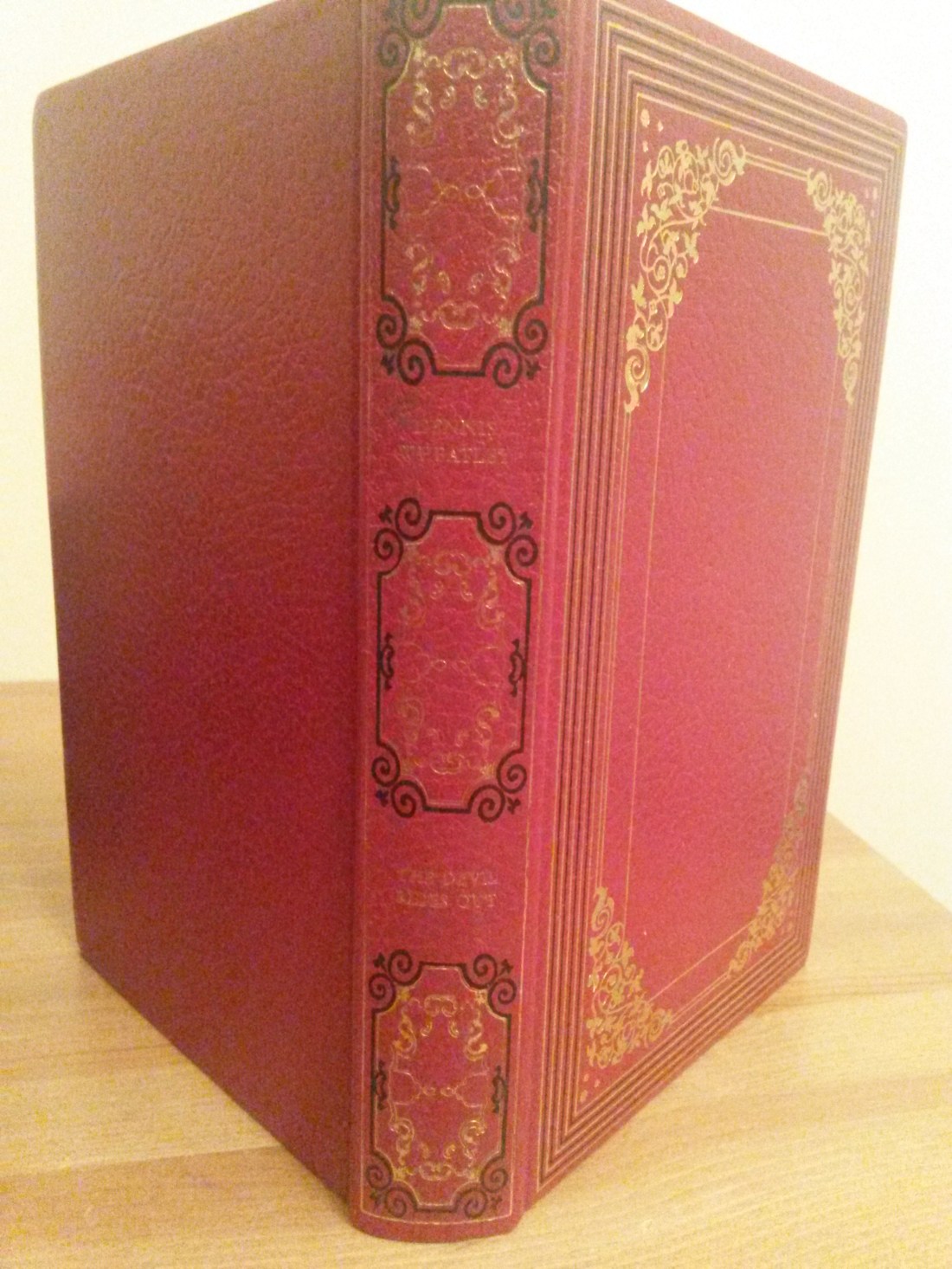
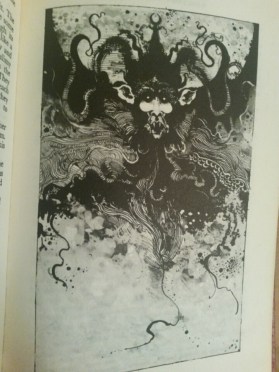
My copy of Devil Rides Out is a fancy hardback reissue. Some of these have illustrations.


20160605_232704
Strange Conflict
Arrow – 1981 (Originally published 1941)
Unlike the other two books in this post, I read this one last week, so it’s still fairly fresh in my memory. This was an enjoyable entry to the series, but it’s a pretty bad book. It sees the Duke and his mates being hired to discover how Nazi U-Boats have been successfully figuring out the trade routes of English ships. Using astral-projection, the Duke figures out that the Nazis are getting their info from an evil Voodoo priest in Haiti. Ok; Voodoo Nazis, sounds great right? Well yeah, that is super cool, but let’s just think about the idea of using astral projection as a means of espionage for a moment. Astral projection gives the Duke the ability to leave his body and go anywhere in the world. The book starts off with him sitting in his apartment in London as the city is being bombed to shit. WHY THE FUCK DID HE WAIT 2 YEARS TO START SPIRIT-SPYING? Why did he not volunteer to start sleep-creeping the Nazis as soon as they entered Poland? Also, out of the Duke’s team of friends, 3 out of the 5 are able to astrally project themselves. If 60% of people can do so, why the fuck were the British government so fucking slow to organize a full-on Astral attack on Germany? It doesn’t make any sense.

Anyways, as soon as they figure out that the bad guy is in Haiti, they decide to head over to kill him in his sleep. I have mentioned elsewhere that Wheatley was not one to be concerned with cultural or political sensitivity, and a trip to Haiti provides several lolworthy examples. This was written in 1941, so the author’s use of the term Jap is excusable, but referring to the “Jap” character as a “dirty little yellow rat” might be a bit much for the modern reader. Failing that, the description of the Haitian natives is sure to offend:
“Those coloured bums have just no powers of organisation at all and it’s like one big tropical slum. If it weren’t for the climate and the masses of fruit that can be had just for the plucking the whole darned lot of them would have starved to death long ago… The niggers live in little more than tents made from tying a few banana palms together.”  There’s another thoroughly unpleasant passage describing the parents of a missing teenager whose corpse has just been found in the hospital; “The man and woman were Mulattoes… The woman was a characterless bag of fat which appeared to have been poured into the good-quality silk dress that restrained her ample figure”.
He also refers to one of the black characters as a “wooglie”, although I’m not entirely sure whether or not that’s a racial slur. (My guess is that it probably is.) To top it all off, the book ends in an amazing proclamation on the superiority of the Anglo-Saxon race.

2016-06-05 23.31.59
Mr Wheatley, you charmer!

I’ve mentioned elsewhere that I don’t mind reading racist books as long as I’m not giving money to the author. In this case, the author is long dead, and I buy these books second hand. However, the most recent editions of Wheatley’s novels have been abridged, and the horrible racism and misogyny have been removed. This is utterly infuriating. It’s not that the publishers want to prevent the spread of racist ideas; it’s that they want to make Wheatley more palatable to the tumblr generation. Fuck that; if you buy a book about Nazi devil-worshippers but get offended by fictional characters’ racism, you need to kill yourself immediately. Yes, Wheatley was a shit, but if you can’t read a book by a person that you might not like in real life, you’re a stupid fucking loser. If you come across something in a book that makes you uncomfortable, think critically and learn from the experience. Censorship of literature is immoral, and anyone who begs to differ can go and help themselves to a hearty swig of bleach.

The rest of this book is standard Wheatley fare; chases, rituals, beautiful but enchanted young women, demons, the works… The ending involves a bit of the old deus ex machina, and I got the feeling that ol’ Dennis might have been making it up as he went along. I wouldn’t recommend this one as a starting point for his work, but it’s worth a read if you like this kind of garbage.

20160605_232625
Gateway to Hell
Arrow – 1974 (Originally published 1970)

I don’t remember much about this one to be honest. It definitely wasn’t as good as Devil Rides Out, but I gave it 5/5 stars on goodreads, so it was obviously thoroughly enjoyable. More diddies on the cover too; can’t go wrong like.

Overall, Wheatley’s writing is bad (He admitted so himself), his plots are silly, and a lot of his ideas are liable to trigger you into oblivion, but I really love his books. There’s something comic-booky about them, and I like to treat myself to one in between heavier stuff. These are just the Black Magic novels from the Duke De Richleau series, and I’ll probably review the others at some stage too.

Arthur Machen and Algernon Blackwood – Weird Fiction from the Golden Dawn

2016-05-06 19.05.55

The Three Imposters and other stories – Vol. 1 of the Best Weird Tales of Arthur Machen
The White People and other stories – Vol. 2 of the Best Weird Tales of Arthur Machen
The Terror and other stories – Vol. 3 of the Best Weird Tales of Arthur Machen
Chaosium Publishing

It’s very rare that I would read a book of short stories in the same way that I would read a novel. I usually have a book or two of short stories on the go that I’ll dip in and out of when I’m between other texts. It can take an awfully long time to get through a book in this manner, but it stops me from getting bored of the author’s style. (The Collected Stories of M.R. James, for example, took me about 7 months to finish, but I got through another 35 full texts in that same period.) In this particular case, the collection of short stories was broken up over three books, and I interspersed other collections between each of these volumes. It has hence taken me about 4 years to get through Chaosium’s collected weird tales of Arthur Machen, and I can’t honestly say that I remember much about the first ones that I read other than that I absolutely adored them.

Much like Penguin’s editions of Lovecraft’s stories, the first volume of this collection contains the best material. I took a copy of it out of the library after reading about Machen online, and I enjoyed it immensely. These creepy stories about freaks, weird experiments and dark forces are top notch stuff. I’ve already linked to my posts on James and Lovecraft, and I feel that Machen, at his best, occupies the middle-ground between these two authors. Every story in here was deadly. You should buy and read this book.

The second volume has some good stuff, but some of it is lame. This book contains the Angels of Mons stuff. During the first World War, Machen wrote a story about some angels appearing on a battlefield at Mons. The story was published in a newspaper, and many people, including some of the soldiers who had been in that battle, took it to be a factual account. It’s kind of cool that this happened, but the story isn’t that great. The Red Hand and The White People are the highlights in this volume. Maybe take this one out of the library, or read those two stories online instead.

The third volume is plop. There were a few stories that seem promising at the beginning, but these either teeter off into incoherence or abruptly turn to shit. Changes was worth reading for the hideous, yellow-faced goblin-child, and Out of the Picture was entertaining if quite silly, but the rest of the stories in here are garbage. The title story is actually the uncut version of a story that appears in the second version, and it’s a drawn-out piece of trash. Speaking of what is contained in this volume, S.T. Joshi claims; “None of these works add anything to Machen’s overall reputation as a horror writer.” I agree. Joshi afterwards mentions other works of Machen’s which were too poor to be included here. Those stories must be the literary equivalent of sniffing a shit-stained pair of britches. Don’t bother with this one unless you’re a completist. It’s not an enjoyable read.

Machen also wrote a novel called The Hill of Dreams. I haven’t read that yet, but it’s supposed to be good. I’ll get around to it someday.

2016-05-06 20.39.05

Ancient Sorceries and Other Weird Stories – Algernon Blackwood
Penguin – 2002

I took this book out of the library right after finishing the first volume in the above Machen collection. I read it straight through without breaks, and while I thoroughly enjoyed most of it, by the end I was getting burnt out on short stories. It has been a long time since I read this book, but I seem to remember the individual stories from this one better than those from the first Machen collection. There’s 9 stories in here, and they are all quite different. The weird in ‘Weird Fiction’ is a tricky thing to pin down, but I found that Blackwood’s stories are weirder (in the common sense of the word weird) than those of Machen or Lovecraft. That being said, this is the only collection of Blackwood’s that I have read, and maybe his other work is different. I would love to hear from anyone who has any recommendations on Blackwood’s other stuff. The layout of this book is nice; it has an almost identical format to the Penguin editions of Lovecraft (an introduction by Joshi and a small article and set of notes for each story). I would recommend picking this one up.

Both Machen and Blackwood were members of the magical order of the Golden Dawn along with W.B. Yeats and Aleister Crowley. Whatever though. I’m not going to get into that. If you’re interested, you can find out more about their involvement in this magical order online.

Happy Birthday Edgar Allan Poe!

2015-12-29 23.14.10
(Card made by my wonderfully creative wife)

Were he still alive, Edgar Allan Poe would be 207 today. If you haven’t read all of his stories, stop wasting your time on my dumb blog and check them out. It would be rather difficult for me to overstate how much I love Poe. Teaching English, I’ve had to read the Tell-Tale Heart, the Cask of Amontillado, and Masque of the Red Death more times than I can count, and I still get excited every time I get the opportunity to go back to them. There’s so many other great tales though. The Black CatThe Imp of the Perverse, and Fall of the House of Usher are some of my other favourites, but he wrote plenty more that are equally as brilliant.

2015-12-29 23.13.18
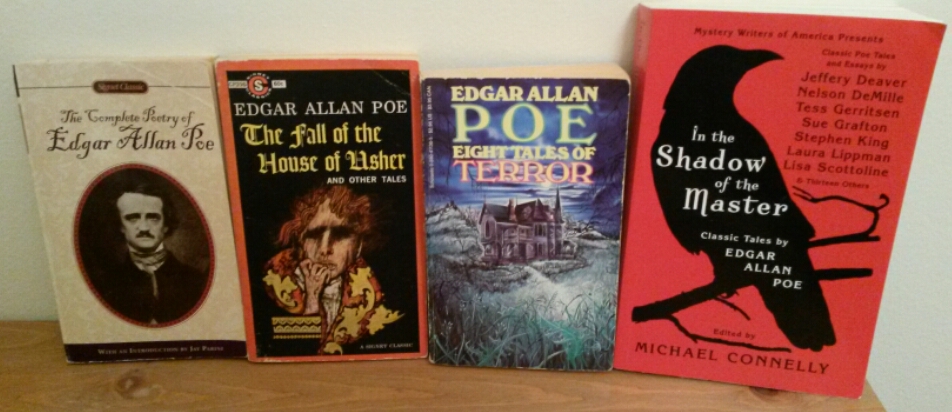
The pictured books are just some cheap collections I’ve picked up in the last few years. There are countless editions of Poe’s works out there, and I can’t recommend any in particular. (I will say, as I have said before, that the Complete Poetry Collection is a handy one for taking into the bathroom on a slow Sunday morning.) When I get rich, I’m going to buy a hardback edition of his collected works for my fine mahogany bookshelves. I’d also love a copy of Tales of Mystery and Imagination with the illustrations by Harry Clarke, but I guess shitty thrift store collections and the internet will have to suffice until I hit the big time. Anyways, Happy Birthday Edgar!!!

And just so ye know; I’m right in the middle of the busiest part of my course at the moment, and this blog might get a little slow for the next month or so, but don’t fret; it won’t be long until I get to put down the textbooks and take up some quaint and curious volumes of forgotten lore!

Here is just some of the utter garbage that I’ve picked up recently:2016-01-13 22.56.47

7 Footprints to Satan – A. Merritt

20160105_214024
Orbit/Futura – 1974

About a year ago, I was in a second-hand book-store when I came across a little black book titled 7 Footprints to Satan. It looked fucking deadly, but it was 30 dollars and I thought that was a bit much to spend on a book I hadn’t heard of. I came home and found a copy online for less than a tenner. The seller provided no image, and I presumed the cover would be the same as the one I had seen in the shop. Can you can imagine my absolute joy when the package arrived and I first saw the above cover?

Look at that thing! It’s some kind of snakey, arachnid alien holding some jewels, a bloody heart, and a hot drink. Book covers do not get much better than that! Now a person who has not read it might presume that the entity on the cover is the Satan referred to in the title of the book, but a person who has read it will have absolutely no fucking idea of what that thing is supposed to be. I doubt that the artist who drew the spiderbaby had actually read the book. Unfortunately, the story didn’t quite live up to the cover, but the cover lives up to itself even after having finished the story. Just looking at it now makes me want to read the book again even though I know how little they have to do with each other. Take a moment there to scroll back up and really soak that image in. Fucking deadly.

So, the book starts off with a lad being kidnapped by a bunch of weirdos who manage to convince the police that he’s a mental patient. They take him to a mansion owned by a chap who claims he is Satan, and that’s where the fun begins. Satan runs a weird culty mafia thing, and he forces his followers to gamble with him on his 7 footprints game. Like all good cult leaders, Satan is a massively tall freak with an enormous head who can’t be killed by bullets. He knows everything about everyone, and he has a seemingly infinite amount of power and wealth. It’s never made definitively clear whether or not he’s really the Devil, but every time that you think that he’s actually just a fat Chinese drug dealer who picked a cool name for himself, something weird happens that suggests he at least has some connection with the archfiend. It wouldn’t be accurate to describe this as supernatural horror, but it does feature individuals with superhuman strength,  doppelgängers, and even telepathy.

It also features plenty of casual racism, but this seems to have been a trend in early 20th century horror. I’m sure that there were plenty of racist authors outside of the horror genre in that era, but I think that the ways in which race is presented within the texts written to frighten people is quite telling of the real fears of the readers of the day. (Maybe some day I’ll write a blog post, if not a master’s dissertation, on that topic.) Some of the stuff in here is pretty rough; there’s a passage that reads:
There was a Hebraic delegation of a half-dozen on their way home to the Bronx, a belated stenographer who at once began operations with a lipstick, three rabbit-faced young ‘sheiks’, an Italian woman with four restless children, a dignified old gentleman who viewed their movements with suspicion, a dumb-looking black…
Pretty good right? Within the space of a single sentence he’s managed to be nasty about three different ethnicities. At another stage, he refers to a black guy as an ‘ape-faced monstrosity’, and at the point when Satan admits to having killed his daughters, the protagonist has an Ah-Hah! moment and explains that Satan must be Chinese. Oh! and there’s also a scene featuring the most offensive stereotype of all! In the second chapter, Officer Mooney appears. He’s a New York cop with a ridiculous Irish accent that is made visible in the text; “Sure,lad. Ye’re in no danger, I’m tellin ye. Would ye want a taxi, Doctor?’ (Admittedly, that accent is entirely accurate.) The thing is though, that I wouldn’t even call this is a racist book; it would be more accurate to call it a book with some racist parts, and that’s actually worse when you think about it. The racist parts don’t add anything to the story. I’m not saying that it would be excusable if the racism were a motivational force in the plot, but that would at least give an understanding of the author’s purpose. As it stands, it looks like Merritt was just throwing his bigotry in for a laugh. As I’ve said before, I wouldn’t pay for a book that contained that kind of nastiness if I thought the author was going to get any of my money, but my copy is second-hand and the author died 70+ years ago.

I read this in two sittings, and I had a dream about being stuck in Satan’s mansion after reading it. It definitely wasn’t what I was expecting, but I enjoyed it. Merritt wrote some other books with equally cool titles, and I doubt that this is the last book of his that will appear on this blog.


The Phantom of the Opera, Dr. Jekyll and Mr. Hyde, and Nightmare Abbey

2015-09-01 21.38.12

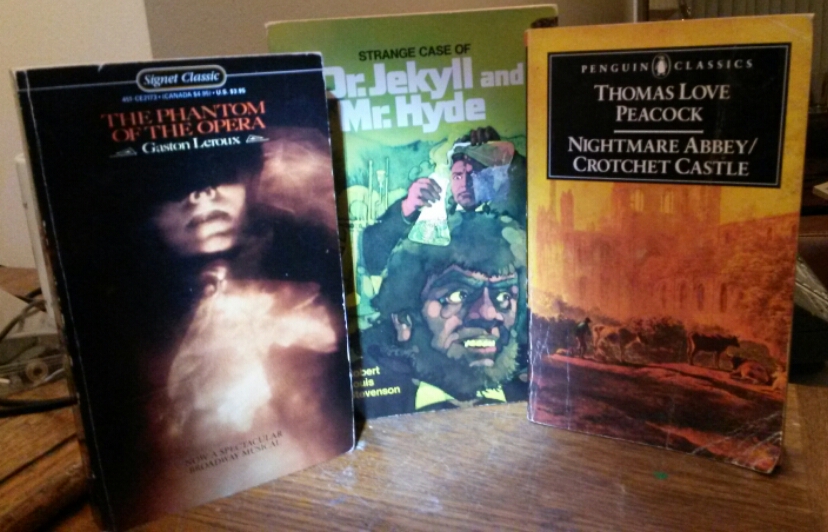
I recently started back at university, and I won’t have much time for reading or blogging for the next year. Still though, I’ll try to get a few posts up whenever I get the chance. Here are three books that weren’t as good as I hoped they would be.

The Phantom of the Opera – Gaston Leroux
Signet Classics – 1987

This one was actually pretty good for most of the book. I just felt that the ending was a let down. I read it a good while ago, and I have actually forgotten how it ended. I could look it up for the sake of this blog post, but I don’t think that my fragile heart could bear to go through that disappointment again.
Although the characters in here are annoyingly see-through, I think that the biggest problem for this book is living up to the reputation that Hollywood has created for it. The Phantom of the Opera, as an archetypal villain, is in the same league as Dracula or Frankenstein. Unfortunately the book that he comes from is not nearly as good as those of his rivals. It’s still fun though, and I probably enjoyed this the most out of any of the three turds.

Dr. Jekyll and Mr. Hyde – Robert Louis Stevenson
Golden Press – 1978

I had a cool Jekyll and Hyde board game when I was a kid, and I grew up imagining that the book would be as much fun as that game. Unfortunately, it isn’t. It basically tells the same story twice: once from the point of view of Jekyll and once from the point of view of Hyde. The plot is framed around a twist, but  I can’t imagine that there are many readers who don’t already know who’s who of this tale. This was another book that I read on a plane, so maybe it’s better than I remember. Still though, I’m not going to reread it.

Nightmare Abbey – Thomas Love Peacock
Penguin Classics – 1986
This one isn’t all that bad; it was just quite a bit different to what I expected. It’s often included in lists of classic Gothic literature, and while it is fairly morbid, it’s just not that spooky. Not a lot happens in it either; it’s mostly dialogue. It’s not an all-together bad read though; I definitely got a few laughs out of it. My edition also includes another novel by the same author. I probably won’t bother. Much of the inspiration  for that terrible Gothic film by Ken Russell came from this.

There you go faithful readers; three turds in the bowl. I’m sure this post has been even more disappointing than any of the books reviewed. Que sera, sera.

Zanoni – Edward Bulwer-Lytton

2015-08-27 20.54.58
P.F. Collier – 1892

Last year, I ordered a set of books by Edward Bulwer-Lytton. It’s a 9 volume set of his most popular works. All the books are double-paged, and each volume contains a few different works.  I have a pretty big reading list, and it took a few months to get around to any of these battered old tomes, but almost as soon as I started reading, I knew this set had been a wise purchase. If you find a cheap copy of these books, buy them immediately. I spent about three times the cost of the books on the postage, but it was still worth it. (UPS are a dirty shower of thieving bastards!)

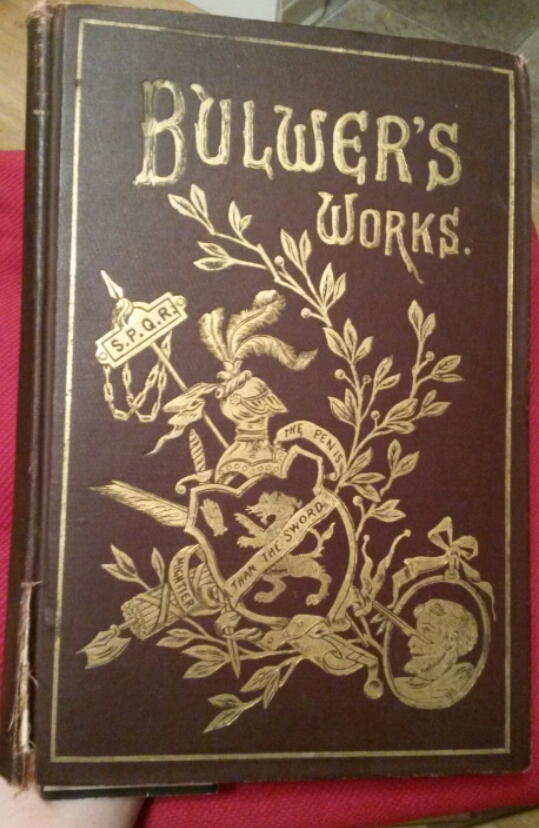
2015-08-27 20.52.31A pretty cool cover. N.b. the fasces and the obscenity.

20150814_013506LOL

These books were published in 1892, and it shows. The spines are all cracked and the binding is falling apart. I had to sit down at a desk and carefully turn each page so as not to cause further damage. Now one might think that this would have been detrimental to my enjoyment of these texts, but that couldn’t be further from the truth. I felt so cool, patiently leafing through the pages and inhaling their aged musk. One can only imagine my delight on finding that the text that I started reading was about a ciphered manuscript given to the author by a mysterious Rosicrucian whom he had met in an esoteric bookshop. All my dreams were coming true at once!

2015-08-27 20.51.35The frontispiece of Zanoni. It depicts Gaeto Pisani and his daughter, Viola. (I think.)

The manuscript tells the tale of Zanoni, an immortal sorcerer and member of an extremely exclusive secret society consisting of only two people. He tries his best to help out a pair of young lovers, but he fails miserably and ends up making their lives incredibly difficult. The youngfella thinks that Zanoni is really cool, and tries his best to be like him. Zanoni is fairly chuffed, and invites him to join his club. Unfortunately for everyone, Glyndon, the young man,  doesn’t get past the initiation ritual for the order, and ends up spending the rest of his days getting stalked by a particularly nasty entity called ‘the dweller of the threshold’.

Lytton was a hugely popular writer in the 19th century, and apparently the theosophists were big fans of his. Helena Blavatsky introduced a version of the dweller of the threshold into her teachings. She described it as an extension of one’s astral body that results from the remnants of past lives. Other occultists have appropriated the dweller in other equally silly ways. Van Morrison, everyone’s favourite adept of easy-listening, had an interest in the occult at some stage, and he used one of these bastardized versions of the dweller for the topic of one of his songs. Before I go any further, I want to declare my extreme and utter hatred for Van Morrison. I remember being a kid and having the tape of Van the man’s greatest hits playing in the car every fucking time my parents took me on a drive. I didn’t know what it was called, but I referred to it as ‘sweaty music’ because that’s how it made me feel. I actually listened to his song a few times before I wrote this review, and it made me want to vomit and shit diarrhea at the same time. Anyways, the lyrics to Morrison’s song are about some kind of benevolent source of spiritual inspiration. Bollocks to that. In Lyttons book, the dweller is a seriously nasty piece of work:

Its form was veiled as the face, but the outline was that of a female; yet it moved not as move even the ghosts that simulate the living. It seemed rather to crawl as some vast misshapen reptile; and pausing, at length it cowered beside the table which held the mystic volume, and again fixed its eyes through the filmy veil on the rash invoker. All fancies, the most grotesque, of monk or painter in the early North, would have failed to give to the visage of imp or fiend that aspect of deadly malignity which spoke to the shuddering nature in those eyes alone. All else so dark,—shrouded, veiled and larva-like. But that burning glare so intense, so livid, yet so living, had in it something that was almost HUMAN in its passion of hate and mockery,—something that served to show that the shadowy Horror was not all a spirit, but partook of matter enough, at least, to make it more deadly and fearful an enemy to material forms. As, clinging with the grasp of agony to the wall,—his hair erect, his eyeballs starting, he still gazed back upon that appalling gaze,—the Image spoke to him: his soul rather than his ear comprehended the words it said.

“Thou hast entered the immeasurable region. I am the Dweller of the Threshold. What wouldst thou with me?”

Deadly, isn’t she?

I won’t say much more about the plot, as I don’t want to ruin the story on you. Being honest though, this is not a great book. There are some fairly big flaws here; it seems a bit like the author was making up the plot as he went along, and the detailed parts on the French revolution are neither interesting nor particularly relevant. Some editions use the subtitle; ‘A Rosicrucian tale’, and this is fairly apt: there’s probably a lot of symbolic and esoteric meaning between the lines that will only become apparent to patient students of hermeneutics, but I’m not really concerned with that shit. This is an old book about wizards, spirits, demons, and babes with heaving bosoms, and I thought it was deadly.

Le Fanu’s Short Stories – Madam Crowl’s Ghost and In a Glass Darkly

2015-07-07 16.49.31
Sheridan Le Fanu – Madam Crowl’s Ghost & Other Stories / In A Glass Darkly
Wordsworth Editions – 2006 and 2008

Here are two collections of short stories from one of my favourite writers. I would recommend the Oxford edition of In A Glass Darkly, as that one contains nice notes at the back. Wordsworth editions are bare bones and rarely contain annotation. They are cheap however, and I own quite a few of them.

In A Glass Darkly is the better of the two collections. It’s been a few years since I read it, but I distinctly remember the joy I felt when the evil monkey appeared the first story. It’s also great because it contains lesbian vampires in a vampire story that predates Dracula. I think my favourite story in here is the novella: The Room in Le Dragon Volant. It’s not as spooky as the others, but I really like Le Fanu’s writing

Madam Crowl’s Ghost is a nice collection of ghost stories compiled by none other than M.R James. I read this one more recently, but I read the first two stories on a transatlantic flight and didn’t end up enjoying them as much as I would have were I to read them on the couch at midnight with a cup of peppermint tea. The stories in here are collected from different sources, and the quality and tone varies quite a bit. Some are great though, and most of them are set in Ireland. You can imagine my sheer delight on finding a story in here about a man from my hometown who shares my name. I loved this book, but the other collection is probably a better place to start if you haven’t read Le Fanu before.

Maldoror and Poems – Le Comte de Lautrémont

Maldoror

Penguin – 1978
The full title of this work is “Les Chants de Maldoror”, and it is supposedly a collection of “songs”  written by an extremely nasty individual. Imagine all of the bad guys of gothic literature rolled into one and you’ll get an idea of what Maldoror is like as a person. He’s equal parts Manfred and Melmoth, but he also has a little Dracula and Curval in him too. He hates man, god and almost everything else. Sounds pretty cool right? Well some of it definitely is. The parts where he recounts his crimes and insults god are  damn sweet. He isn’t just a little bit naughty either; he’s full on evil. He boasts about brutally torturing people and he’s a bit rapey too. I’m surprised more metal bands haven’t used the name Maldoror. I can only find one black metal band from Italy with the name, and they look absolutely shit.

This wasn’t a book that I rushed through. I enjoyed the protagonist’s horribly nihilistic outlook, but I read the book in July, and it felt wrong to sit down with it when the sun was shining. I had to wait until the hour of 12 before delving into this hateful work of misanthropy. Also, the prose is quite dense, and it was a bit of a chore to get through. Some of the sentences are ridiculously long (the narrator comments on this himself), and there’s no underlying plot to the book, so it can be difficult to follow.

Nobody knows much about Le Comte de Lautrémont, but his real name was Isidore Ducasse, and he died at 24, only a few years after this book was written. I would imagine that parts of this book are autobiographical and reflect the author’s outlook. There are brief incidents in the text where a hitherto unknown character appears and is treated as if he has been part of the story all along. These parts struck me as probably having meaning to the author alone; perhaps they are masked accounts of his own experiences. That’s one of the difficulties with surrealist writing though; the author is under no obligation to explain himself.

And this book is quite surreal. There are some truly mental parts in it. Some of them are entertaining; I particularly enjoyed Maldoror’s dalliance with a shark, but many are confusing and are made downright unenjoyable by frustratingly convoluted prose. This confusion is not accidental though, and the difficulties facing the reader of this book are undoubtedly deliberate. One of the opening lines of the book reads; “It is not right that everyone should read the pages that follow; only a few will be able to savour this bitter fruit with impunity.” Maldoror does not want his readers to enjoy these songs; he wants them to suffer. This is basically a deliberately discordant black metal album in the form of a book.

I wanted to like this book more than I did. It’s a cool idea; I just don’t think it was executed as well as it could have been. In saying that though, this is a translation, so maybe the fault lies with Paul Knight. Then again, maybe I just didn’t get it. This is definitely a book that you have to ‘get’ to enjoy. It’s surrealist fiction, so a load of it is utter bollocks that makes no sense. I would say that the grisly parts make it worth reading, they’re gross, funny and metal as fuck, but don’t expect to enjoy the whole thing. If you find yourself having a great time while reading this book, you are definitely doing it wrong.

This edition also contains Lautrémont’s poetry. Apparently he had gotten all of this negativity out when he wrote Maldoror, and his poems are supposed to focus on more positive things. I didn’t read them. I probably never will. The edition that I am reviewing also has a deadly cover. It’s from part of this painting by Anton Wiertz.wiertzL’Inhumation précipitée