The Books that Villainized Dungeons and Dragons in the 1980s

I have no great interest in role-playing games, but I knew that Dungeons and Dragons was associated with the Satanic Panic of the 1980s, do I decided to look at the books that contributed to its infamy.
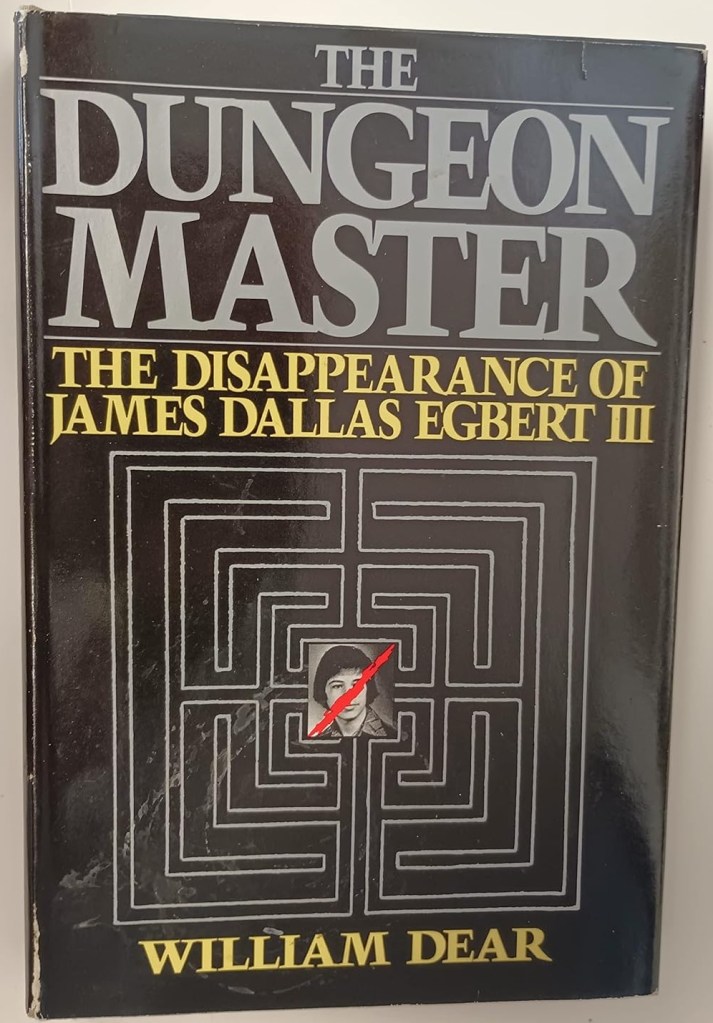
Houghton Mifflin Harcourt – 1984

The Dungeon Master: The Disappearance of James Dallas Egbert III – William C. Dear

Dallas Egbert the Third was a weird teenager. He was highly intelligent, but socially awkward. He tried to make up for this when he went to college by taking drugs. He was gay, and he got involved with some shady characters. His mom was pushy, and wouldn’t have approved of his lifestyle, so he decided to kill himself. He went down into the ventilation tunnels under his college so he could die, but he couldn’t do it, so he went to hide out in some of his gay friends’ homes. He was kept drugged and it seems likely he was sexually abused. A private detective, the author of this book, found him halfway across the United States. They returned home, but Dallas put a bullet in his head a few months later. He never gave his full account of what had happened to him when he was missing.

This book was written by the detective who found Dallas. It wasn’t a great book, and the author’s writing style was grating, but in fairness, it’s not overly bullshitty. There is a horrendously drawn out chapter describing the author’s experience playing Dungeons and Dragons, but despite his intial suspicions, he ultimately dismisses the idea that the game had anything to do with Dallas’s fate. The kid was all kinds of messed up. His interest in fantasy games and science fiction seemed like the only parts of his life he enjoyed.

The book is of its time. It repeatedly makes reference to “the gays”, but it doesn’t do so with any kind of malice. If you want to know about this sad and weird case, this is essential reading.

Dell – 1982 (Originally published 1981)

Mazes and Monsters – Rona Jaffe

I had very low expectations when I started reading Mazes and Monsters, and I can say with disappointment that it was exactly what I expected. This is a boring novel with nothing of any value. It’s truly as bad as it looks. Look at that shitty-ass cover again. Fucking lame shit.

This book is about 4 nerds who play “Mazes and Monsters”. All of the chracters are lame and annoying. One is very clearly based on Dallas Egbert, but he isn’t really the protagonist. The main character here gets so involved in the role-playing game that he becomes convinced he’s really a holy magician. He is so strongly convinced of this that he becomes impotent and kills a person. As much of the book is spent describing the backgrounds of the main characters’ parents as is spent on the plot. I assume this was because Jaffe’s audience were mostly middle-aged women with teenage children that needed some point of reference for understanding the plot. This was so, so boring and crap. If I owned a copy of this book, I would take it into the forest and defecate upon’t. The only good part was when one of the main characters’ mothers goes on a date with a gentleman who expresses disappointment over her haircut because her formerly long, curly hair had reminded him of pubic hair. Such a bizarre detail to include. I’m willing to bet that the author’s minge was infested with pubic lice.

Mazes and Monsters was published the year after Dallas Egbert died, and while it does make it seem like role-playing games are probably dangerous for impressionable youths, it doesn’t really try to link role playing games with the occult. Still, it’s a piece of shit, and you shouldn’t read it.

Chick Tracts – 1984

Dark Dungeons – Jack Chick

This is a Chick Tract that came out in 1984 that claims that playing Dungeons and Dragons leads to suicide and Satanism. It’s silly rubbish. Read it here.
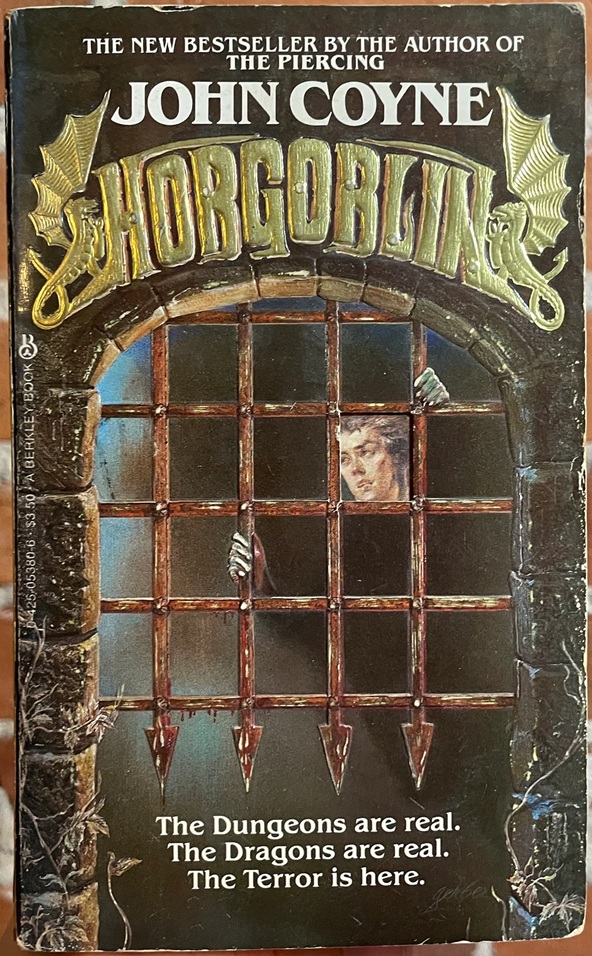
Berkley – 1982 (originally published 1981)

Hobgoblin – John Coyne

I’m throwing this book in here because other authors have linked it to the furor around RPGs in the 1980s. It’s about a young man who becomes obsessed with a game called Hobgoblin, but none of the really bad stuff that happens in here comes as a result of the game. Coyne’s book is more of an entertaining novel that features an RPG than a statement on the dangers of those games.

So a nerdy kid’s dad dies, and him and his mom have to move to a small town where she can work in the local castle. The caretaker there is a creepy Irish immigrant, and the manager starts fucking the boy’s mom. The boy is a stupid virgin, and chooses to start fights with the local football players instead of banging the hottest girl in school. It turns out there’s a weirdo living near the castle who likes murdering and sexually assaulting people.

So many parts of this book were completely unbelievable, but it was decently entertaining. There’s one part where two of the local jocks kidnap a girl, tear off all her clothes and abandon her, tied to a tombstone on the top of a hill. Then they break into the protagonist’s house and sexually assault his mom. Nobody does anything about this, and they face no repercussions. I know that attitudes toward sexual violence have change since the 1980s, but this was ridiculous.

The Irish elements were mildly interesting. The role playing game here, Hobgoblin, is set in Ireland, and all the characters in the game are supposed to come from Ireland. I didn’t recognize quite a few of them. I looked it up, and one of the main bad guys, the Black Annis, is actually from English folklore. Also, the old Irish caretaker character is very weird. Are we supposed to feel sorry for him or repulsed?

Ok, I’m going to include spoilers in this paragraph, so skip ahead if you want to read the book. I’m a bit confused about the ending. I just finished the book, and I don’t really understand what happened. The main bad guy was a badly brain damaged geriatric who must have been more than 80 years old. Despite this, he was able to brutally murder a bunch of people by himself over the course of about half an hour? Did he have some kind of magical power? Why was he killing people in the first place? Did I miss something?

Hobgoblin was alright. I don’t regret reading it. Mazes and Monsters was a mouthful of salty diarrhea. Dear’s book about Dallas Egbert was interesting as a historical source, but it wasn’t a particularly enjoyable book. I am quite done with books about Dungeons and Dragons.
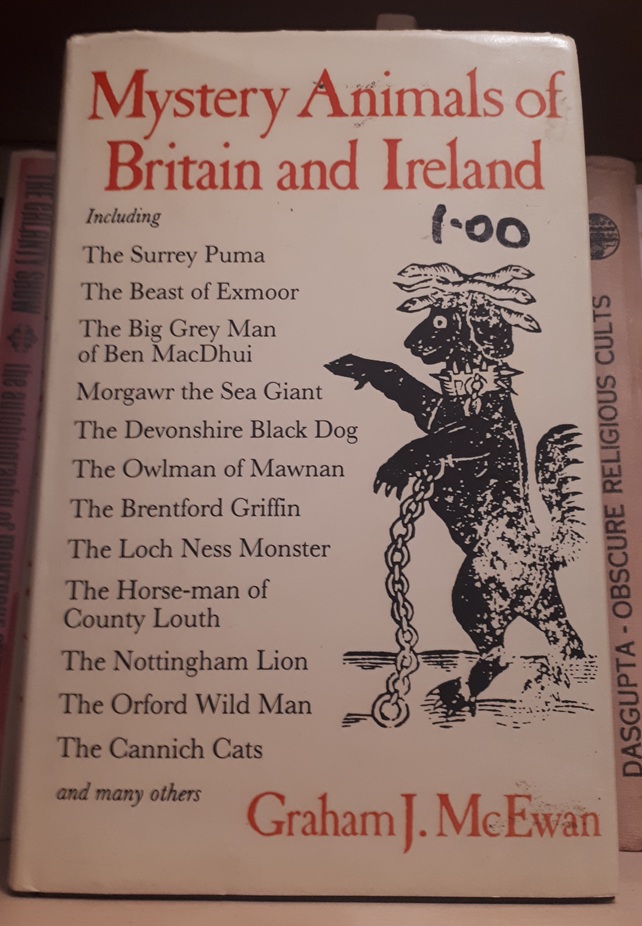
Graham J. McEwan’s Mystery Animals of Britain and Ireland

I’ve been running this blog for a long time, and there are occasions when I feel like I’m running out of books to read. A few years ago I was a bit stuck, so did a google search for Fortean books. I had read a lot of the results, but there were a few titles that piqued my interest. One of these was Graham J. McEwan’s Mystery Animals of Britain and Ireland. It took me a few years to track down a copy, and once I got my hands on one, it lay on the shelf for over a year before I actually read it.

Robert Hale – 1986

In truth, this book was largely quite boring. It deals with 4 main categories of cryptids: big cats, sea serpents, lake monsters and black dogs. The chapters on these topics are mostly made up of reported sightings. This is thorough, but it makes for dull reading.

I’ve come across the large cat thing before. There definitely seems to be something to these sightings, but it seems certain that the majority of these cases were escaped pets. They’re not cryptids or supernatural beings. The lake monsters and sea serpents sections make repeated references to Tony “Doc” Shiels, a man who managed to see and take pictures of both the Loch Ness monsters and Morgawr. It is widely accepted that he faked these sightings and photographs. None of the water monster stuff seemed remotely convincing to me. The last big category, the black dog sightings, is perhaps the most underwhelming. People all around rural Ireland and the UK have reported seeing large black dogs roaming around at night. It’s not hard to imagine a person encountering a stray or escaped dog in the countryside at night. Dogs all look black when it’s dark. The supernatural elements of these stories are silly.

The best part of the book is the penultimate chapter in which the author lists all of the other cryptid reportings from across Ireland and the UK. These feature the Owlman of Mawnan, the shoggothic Shapeless One of Somerset and the Scottish fox that walked on two legs and wore a top hat that I encountered previously in Affleck Gray’s The Big Grey Man of Ben MacDhui. I think the reason this book initially appealed to me was the fact that it dealt with Irish cryptids too. I’ll try to pay a visit to the lake monster in Lough Bray and the giant black dog of Templeogue the next time I’m home. I may even go looking for the elusive Horseman of Louth if I have the time.

One of the most interesting parts of the book was on the Hexham Heads. These were a set of stone heads that showed up in the 1970s that had supposedly been carved by the ancient Celts. There were reports that anyone who took them home suffered bad luck, and one family was even attacked by a werewolf for taking them. These heads disappeared soon after they found media attention. Although I hadn’t heard of these carvings before, their story seemed remarkably familiar. I then realised that it’s the exact plot of Paul Huson’s The Keepsake, a horror novel that I reviewed a few years back.

There is some good stuff in this book, but read cover to cover, it’s not hugely entertaining. It’s more fun to flick through to search for things from your specific area of interest. Aside from the reports of sightings, the book also contains a limited amount of postulation on the nature of the creatures. I found this quite similar to the arguments in Ted Holiday’s The Goblin Universe, a book that is referenced multiple times throughout McEwan’s text.

The Ghost of Paddy Lafcadio Hearn, Japan’s Spookiest Irishman

Penguin – 2019

I first saw this book a few years ago. I assumed it was a collection of folk tales from different authors, but the fact that it was published as a Penguin Classic made me want to read it. I was in Ireland recently, and I needed something to read. While browsing through my library’s collection of audiobooks, I saw this title and noticed for the first time that an author’s name was on the cover. I had never before heard of Lafcadio Hearn, collector of Japanese ghost tales, but a quick google search revealed that his first name was actually Patrick and that he grew up in Ireland. I did my bachelors degree in literature in Dublin, and I believed I had read most of the big names of Irish writing. I was delighted to discover an enigmatic Irish writer on one of my brief trips back to my homeland.

So Lafcadio was born in Greece, spent his childhood in Ireland, moved to the states, became a succesful journalist and then spent the rest of his life in Japan. He married the daughter of a samurai and spent his time collecting and translating Japanese ghost stories into English. Later, these stories were translated back into Japanese, and some sources on the internet claim that these works are now better known and valued in Japan than anywhere else.

While the collection is titled Japanese Ghost Stories, a more accurate title would be “Japanese Stories that Feature Supernatural Elements”. Most of these tales don’t feature pale apparitions rattling chains. There’s a lot in here too, and honestly, some of the stories are quite lame. I noted down the general gist of each tale below and put it into the list below. This is more for my own reference than anything else, and it contains spoilers, so you may want to skip it for now if you plan on reading the book. (It won’t really ruin anything if you do read it. There’s not many surprises in this book after you’ve read the first few stories.) Make sure you check out the ending of this post though. I’m pretty sure my interest in this author led me to seeing a real ghost.

The Stories

Of Ghosts and Goblins
Suitors try to impress girl. She only likes the one who eats a corpse with her.

The Dream of a Summers Day
Fisher boy saves a tortoise and then marries sea gods daughter. Comes home 3 (actually 400) years later. Dies. Just like fairy stories

In Cholera Time
Infant drinks dead ma’s tit milk

Ningyo-no-Haka
Japanese people die in 3s. Ghost of mother comes back for son
More a paragraph than a story.

The Eternal Haunter
Description of spirit that gave man a wet dream. I think.

Fragment
Man climbs mountain of skulls of his past lives

A Passional Karma
First real story. Samurai’s love dies. Comes back to haunt him.

Ingwa Banashi
Dying wife grabs the tits of her husband’s concubine and doesnt let go even after she dies.

Story of a Tengu
A tengu takes a monk back in time to see Buddha talking. Trash.

A Reconciliation
Samurai comes back to see his ex-wife, but she is now a ghost/corpse

A Legend of Fugen Bosatsu
Monk sees a pretty girl turn into some religious figure. Crap and boring.

The Corpse Rider
Priest tells man to ride his divorced wife’s corpse like a pony so she won’t haunt him

The Sympathy of Benten
Goddess introduces man to his wife’s spirit before they get married.

The Gratitude of the Samebito
Sharkman cries jewels to give to his friend to impress his crush’s family.

Of a Promise Kept
Samurai commits suicide to get back to his brother on appointed date.

Of a Promise Broken
Corpse of samurai’s first wife takes nasty vengeance on his second wife.

Before the Supreme Court
Dying girl’s parents make deal with pest god. Pest god kills another girl with same name. Council of gods gets pissed and puts dead girl’s soul into live girl’s body.

The Story of Kwashin Koji
Old man with a magic picture tricks people.

The Story of Umetsu Chubei
Man holds heavy magic baby.

The Legend of Yurei Daki
Woman steals gods money box and they get horrible revenge on her baby.

In a Cup of Tea
Man sees a face in his tea. The own of face later comes to visit him. Fragment.

Ikiyro
Woman hates young man because she thinks he is rival to her son, so her alive ghost haunts him.

The Story of O Kame
Wife needlessly haunts ger husband after she dies.

The Story of Chugoro
A beautiful frog vampire kills a young man when he tells his mate about their relationship.

The Story of Mimi-Nashi-Hoichi
Ghosts tear off blind musicians ears.

Jikininki
Priest comes across  a goblin eater of the dead.

Mujina
Crying woman tears her face off and frightens a traveller. Good.

Rokuro Kubi
Decapitated heads gang up on samurai priest.

Yuki-Onna
Man marries spirit that killed his friend.

The Story of Aoyagi
Man marries a tree.

The Dream of Akinosuke
Man falls alseep and joins insect kingdom.

Riki Baka
Mentally handicapped boy dies and is reborn.

The Mirror Maiden
A beauriful spirit lures people to their death down a well but turns out nice after an evil dragon releases her.

The Story of Ito Norisuke
Man falls in love with ghost.

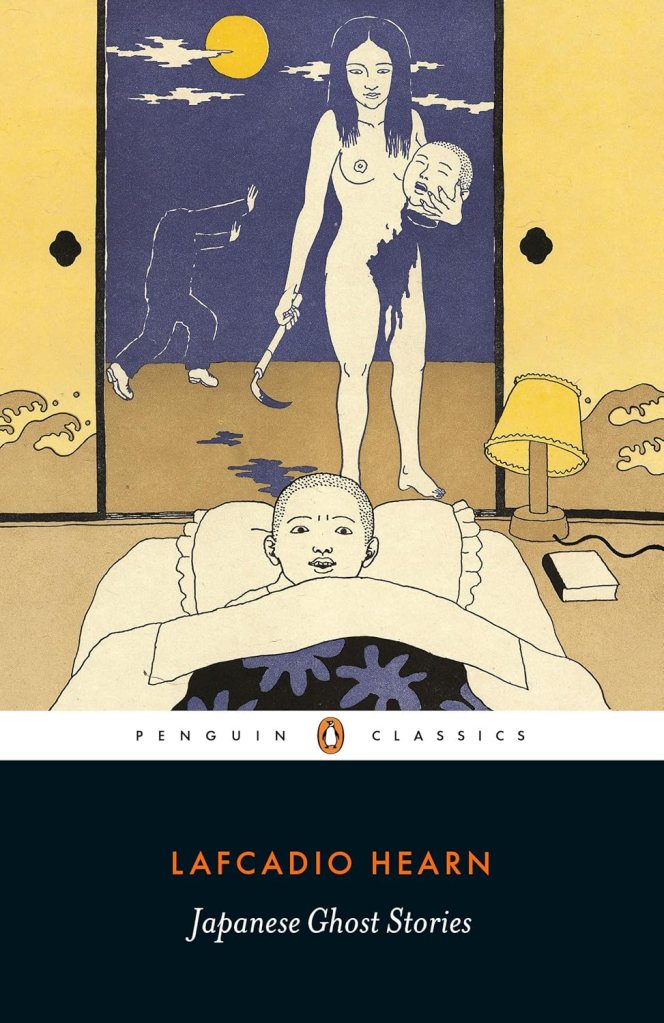
In truth, this collection felt bloated. If the 10 worst/shortest stories were removed, it would have been much more enjoyable. It seems that this is a ‘complete’ collection rather than a ‘best of’ collection. I do appreciate that really. I’d probably be curious about the crap if it wasn’t included in here. Only 5-6 of the tales live up to the grisly cover that Penguin gave this collection. (I showed my wife the cover, and she asked if it was supposed to be Bobby Hill. Hahaha.) There’s definitely some similarities in the tales here and the Irish folk tales that Hearn must have heard growing up in Ireland. All together, I’d say it’s worth a read.

Photo posted online in 2016. This plaque is now gone.

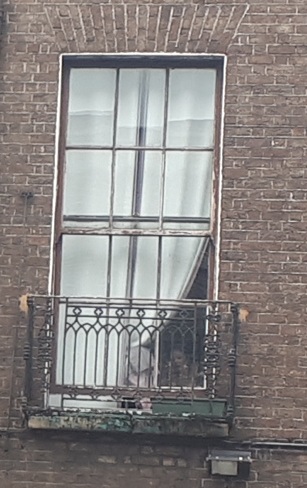
As I said, I was in Ireland when I found out about Hearn, and I wanted to use this opportunity to understand him, so I set out to find out what his experiences in Ireland had been like. On his wikipedia page, I found a picture of a plaque that used to be on the wall of his childhood home. I went to the address listed, but the plaque is no longer there. A careful analysis of the photo of the plaque and the front of the house confirms it is the same building. Given the numerous statues of James Joyce, Oscar Wilde, Patrick Kavanagh and other Dublin writers, spread throughout Dublin, I was disappointed to see that Lafcadio Hearn is basically unrecognised in what was once his home city.

48 Lower Gardiner Street, Dublin, Hearn’s Childhood Home


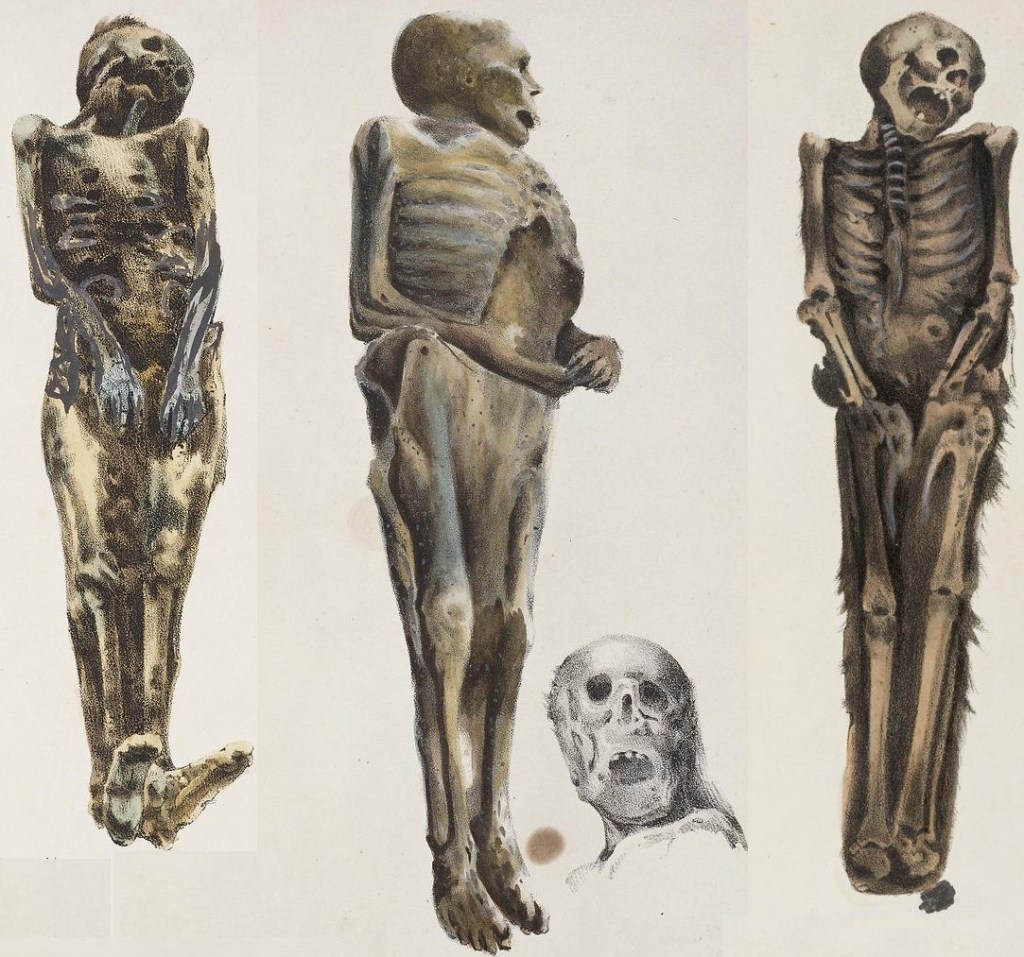
The stories in the book are followed by a brief appendix on the nature of ghosts and nightmares. This was definitely my favourite part of the book. Hearn discusses how belief in ghosts is a global phenomenon that occurs in every culture, and how it may derive from inherited memories from our earliest ancestors. It’s an interesting piece of writing, and it’s made more interesting by Hearn’s descriptions of his own encounters with ghosts as a child. He acknowledges that these spectres were likely creations of his mind, but in the context of his writing that doesn’t make them less terrifying. He explains how he always struggled to describe what they looked like until he saw the images of exhumed, decayed corpses in Orfila’s Traité des Exhumations Juridiques and recognized his tormentors. Perhaps the most chilling passage in the entire book is when he claims how these phantoms started to appear to him in a particular room of his home when he was 5 years old.

Corpses pictured in Mathieu J.B. Orfila’s Traité des Exhumations Juridiques

“When about five years old I was condemned to sleep by myself in a certain isolated room, thereafter always called the Child’s Room. (At that time I was scarcely ever mentioned by name, but only referred to as ‘the Child’.) The room was narrow, but very high, and, in spite of one tall window, very gloomy. It contained a fire-place wherein no fire was ever kindled; and the Child suspected that the chimney was haunted.”


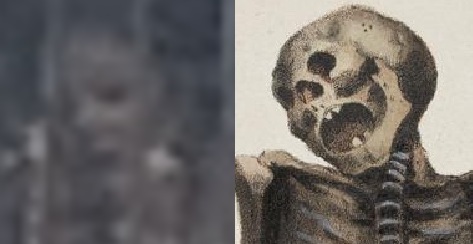
I went back to the photo I took of the house he lived in at that point of his life, looking for a room with a tall window. It could be any of them, so I zoomed in, looking for more clues. Then I noticed this:

Hearn’s ghost? This genuinely creeped me out when I noticed it.

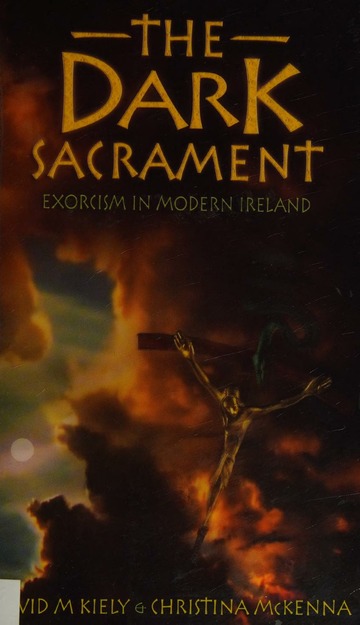
The Dark Sacrament: Exorcism in Modern Ireland – David M. Kiely and Christina McKenna


It’s Saint Patrick’s day tomorrow, and by sheer coincidence, this week’s book is set in Ireland. I was quite excited when I found a book set in my home country about demonic possession.

Gill & Macmillan – 2006

I started reading the original edition titled The Dark Sacrament: Exorcism in Modern Ireland, but later editions were titled Dark Sacrament: True Stories of Modern Day Possession and Exorcism. These editions are identical expect for an additional story in the latter, but this story is set in Kerry, so I’m unsure as to why they dropped the reference to Ireland in the subtitle. The whole time I was reading the book, I felt like the authors had written it to appeal to stupid Irish Americans. I had hoped for horrendous blasphemies, but I got a bunch of hooey about fairy forts, Banshees and druids. I can’t imagine any of the Irish people I know taking this nonsense seriously. Don’t get me wrong, there’s lots of stupid, religious Irish people, but this stuff is so daft that only an uneducated American pig could possibly accept it as true.

The introduction makes reference to a protestant Canon meeting a girl in Belfast who became possessed when she was initiated into satanic cult as a child. Bullshit. This supposedly happened in the 70s. If you google Satanism in Belfast in the 1970s, the only relevant information that shows up is about stories spread by British disinformation agents as part of a psy-op against Catholic communities. If I am wrong and any knows anything about Satanic groups that were active in 1970s Belfast, please reach out and let me know!

The cases presented in this book appear as short stories, and after finishing the book, I doubt any have any basis in reality. This entire book must be fiction. It’s too stupid to believe.

  1. The first story is about a woman who was neglected and sexually abused as a child. She had attempted suicide twice before the exorcism, and she smelled like piss. The narrative is actually quite scary. Her granny’s ghost visits her house and terrorizes her and her boyfriend. Later, she gets possessed by this ghost and tries to kill herself. The book never really explains why her granny hates her so much. The exorcism was supposedly successful, but the girl hung herself 6 months later, so it seems like she was definitely just a person with severe mental health problems. I liked the story, but it was clearly bullshit.
  2. A woman is repeatedly night raped by a French spirit named Pierre Dubois. This happens after she plays with a Ouija board. Sounds like a case of sleep paralysis.
  3. A young teenager finds a Ouija board by a river. Its planchette floats up into the air, and mesmerized, the kid uses it and comes into contact with a spirit named Tyrannus. Then he starts having seizures and tells his ma to fuck off. The kid is exorcised but it doesn’t work. Now he has suicidal thoughts. Load of bollocks.
  4. A woman buys some smelly wooden balls in a hippy shop that unleash the spirit of a missing child from 200 years ago into her house. The ghost child is mischievous, but after she is dispelled with prayer, she is replaced by an evil spirit that burns the homeowner’s prayers and wrecks their crosses. It turns out the house was built in a fairy ring. This is clearly fictional. Total bullshit.
  5. A child starts seeing ghosts in her house. No possession involved, just ghosts that rearrange video tapes and play peekaboo.
  6. A family moves into a house owned by their ancestors but left to other people. They had to buy it back. It turns out their family were trying to protect them from an evil spirit that lives under the hearthstone that has inhabited that home since the time of the druids.
  7. An old man goes on a cruise after he retires, but when he gets to Egypt he meets a man who is either drunk or possessed. When he gets back to Ireland, the spirit that possessed the drunkard takes possession of the retired man’s next door neighbour. Then the neighbour rapes the old man in front of his family at a barbeque.
  8. The ghost of a German Hessian mercenary rapes a mother and daughter and their Bosnian employee.
  9. A girl meets a creepy guy in a bookshop who gives her a book about Tuesdsy Lobsang Rampa, the fake Tibetan monk, and then teaches her how to astrally project and go back in time with LSD. He is evil, and when she gets scared, he sends evil spirits to attack her. Priest exorcises them away. Not true. Horse shit.
  10. This story is only in later editions of the book. It is the vilest of all. A woman crashes her car into a truck and ends up marrying the truck driver. They have a kid. Turns out that the husband is having a gay affair with his paedophile priest friend. This man was raped by his father and forced to have sex with his siblings. After his dad died, his mom prostituted her own kids out. It turns out this man is raping his own child and letting his priest boyfriend and paedo brothers in on the action. The woman runs away, but the priest dies and haunts her and her child until another Catholic priest gets her to pray for the soul of the child rapist. This story is obviously untrue and deeply perverse, but the fact that it works as a Catholic morality tale is fucked up.

There is a bit on the history of exorcism in Ireland as an afterword, but the above stories make up most of the book.

Honestly, I find it hard to believe that anyone could read this book and take it seriously. This book is trash. I have to say though, when I was looking up the author, I found his youtube channel, and while I didn’t enjoy his book, I did enjoy his singing.

Happy Saint Patrick’s day, you disgusting snakes!

IRA vs. Gilles de Rais: Shaun Hutson’s Renegades

Sphere – 1991

Happy Saint Patrick’s day. I’ve read a few horror novels set in Ireland over the years, but I’ve been saving Shaun Hutson’s Renegades for a special occasion. I bought this book a few years ago because the back of it mentioned Irish terrorism, ultra violence and Gilles de Rais. I was looking for something to read the other day when I took it down for another glance. Again I was intrigued by the blurb on the back, but when I saw the author’s portrait on the inside I started to read immediately. Holy shit, look at that bad-ass!

A dissident group of terrorists shoot up a political meeting in Belfast with the aim of stopping peace talks. They are being paid to do so by an English arms dealer who has been profiting from the conflict. Sean Doyle, an English counter terrorism operative with a very Irish name is sent in to Ireland to kill the bad guys.

This would be a fairly straightforward mission only the arms dealer has also recently come into possession of an evil stained glass window inhabited by an evil demon summoned by Gilles de Rais.

There is a supernatural element here, but this is 95% a crime novel. There’s occasional scary bits, but apart from the last few chapters, these ALL turn out to be “oh it was just a dream” sequences. This was written by the author of Chainsaw Terror though, so the whole book is ludicrously violent. Every bullet wound, and there are lots of them, is described in detail.

This book, which is mostly set in Ireland, was written by an English author in the early 90s. I was a little apprehensive starting out. I certainly don’t want to condone everything that the IRA did during the troubles, but let’s remember that they were fighting a foreign force that had stolen their land and oppressed their people. Fortunately, Hutson doesn’t take sides. Everyone is a piece of shit in this book, but it’s the Brits causing all the trouble here.

There’s a few scenes where the Gardai (Irish police) show up and pull their guns on the bad guys. In reality, regular Irish police officers have never had guns.

The protagonist, Doyle, is an unrepentant bad-ass. He quotes heavy metal lyrics, bangs hot babes, kills anything he doesn’t like and generally doesn’t give a fuck. He has long hair, and he’s covered in scars. He’s supposedly based on the author. Scroll up and take another look at that cool motherfucker. Hell yeah! Hutson wrote a few other novels featuring sean Doyle as a protagonist, but I’m not going to seek them out. (I felt similar about his sequel to Spawn.) I don’t think the other Sean Doyle books have any supernatural elements.

Looking back, the supernatural element in Renegades is actually pretty unnecessary to the plot. The lore of Gilles de Rais is briefly summarized, but the demon that appears in this book is a bog standard evil spirit. It kills, eats or possesses everyone in sight. I’m glad it was there though. (If you like trashy novels about Gilles de Rais, I recommend Philip José Farmer’s Image of the Beast.)

Renegades is pure trash, but I really enjoyed it. May you have a snake-free Saint Patrick’s day. If you’re interested, I’ve written about quite a few other books set in Ireland, about Ireland or by Irish authors over the years.

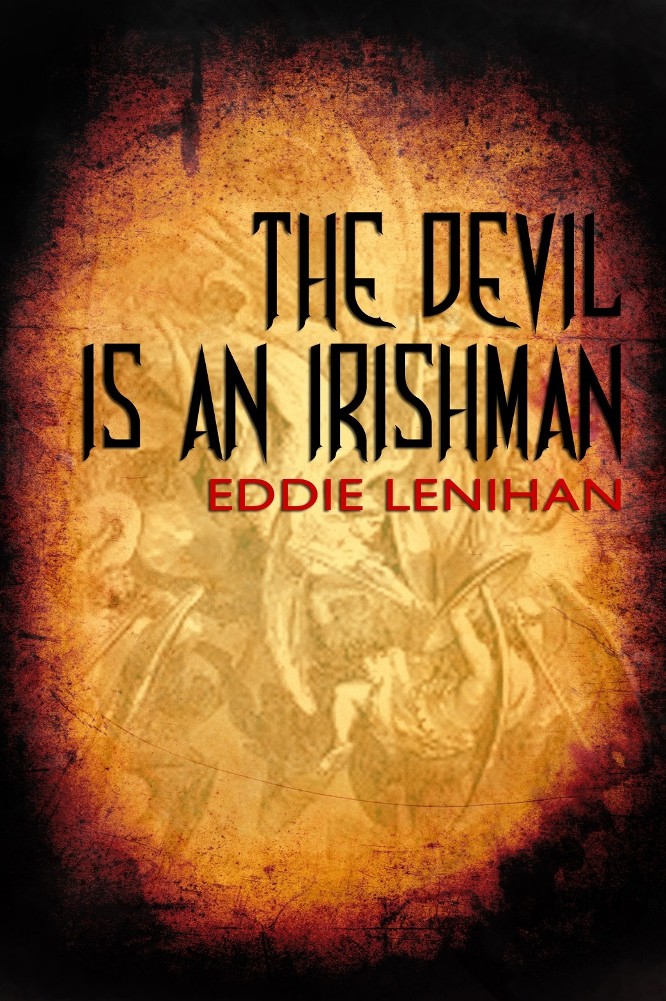
The Devil is an Irishman – Eddie Lenihan

Mercier Press – 1995

Given my penchant for books about the Devil and my ever present longing for the land of my birth, it is a curious thing that I have not yet reviewed this book. Eddie Lenihan’s The Devil is an Irishman is a collection of folk stories about Satan’s exploits in Ireland.

5 years ago, I reviewed Lenihan’s Meeting the Other Crowd. (I loved it, but my review sees very little traffic.) In that book, each of the many stories is given a bit of an introduction with some background information on where the story came from. This one is different. There’s only 4 stories in here, and while they are folk tales, the telling is distinctively Lenihan’s. I heard his voice in my head as I was reading them. He doesn’t mention where the tales come from, but he mentions in the introduction that they were collected, so I assume they are actual folk tales.

The Devil doesn’t seem to fare well in folk tales. He seems surprisingly easy to deceive, and he repeatedly finds himself in rather uncomfortable situations. I was actually quite surprised at the level of violence in this book. One tale sees the Devil having his eyeball popped after he is brutally beaten with hammers.

I loved this book, and you should definitely read it. I’m actually back in Ireland at the moment, drinking lots of tea and talking lots of shite. I’ll keep an eye out for Satan while I’m here.

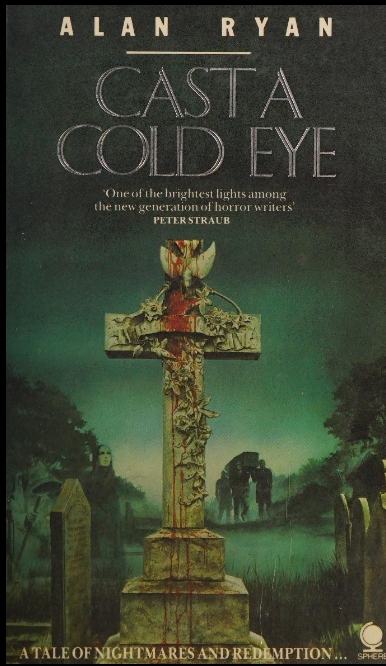
More Potato Famine Horror: Alan Ryan’s Cast A Cold Eye

I reviewed Alan Ryan’s The Kill and Dead White last winter. I was originally going to talk about Cast a Cold Eye in the same post as those two books, but I realised that that pair were set in the same village and shared characters, so I kept Cast a Cold Eye for later.

Sphere – 1986 (Originally published 1984)

Jack, a successful American author, goes to Ireland and rents a house so that he can research and write his new novel. He’s staying in Doolin, a little village on the west coast of the island, and shortly after arriving, he sees some old men pouring a bottle of blood into a fresh grave. Soon thereafter, he starts to see ghosts of victims of the potato famine.

Alright. Let’s stop there. More potato famine horror? I was not a fan of the last book I read within that very niche genre. Fortunately, Alan Ryan’s writing is far, far better than Ann Pilling’s, and the story here is more intriguing, even if it does also feature very skinny ghosts.

I want to make it clear that my disdain for potato famine horror isn’t because I’m offended by the author turning the suffering of an oppressed group of real people into entertainment. It’s more the fact that the potato famine is the only thing a lot of North Americans know about Ireland. This is like an Irish author writing a horror novel set in America about a hamburger monster or a story set in Australia about a zombie kangaroo. (I think the only other horror novel set in Ireland that I’ve read by a non-Irish author was Paul Huson’s The Keepsake. Thankfully that one had no hungry ghosts. It was about a stone that turns into a vampire. Cool!)

In fairness though, Ryan does a pretty good job of making it seem that he really likes Ireland, and I would be shocked if part of this story isn’t autobiographical. He has to have been there to write some of the things he writes. Trust me. He references tea 45 times throughout the 350 pages.

I was 23 when I left Ireland. I wasn’t planning on a long term move, but things ended up that way, and I still miss Ireland greatly. It’s strange going back. I’ve been gone for long enough that little things that I grew up with seem foreign. There’s moments when I feel like a tourist in my home country.

It was interesting reading this book. Some of the descriptions about the landscape were great. I tend to travel more in Ireland when I return now than I ever did when I lived there, and the only time I’ve visited Clare, the county where this book is set, was as a tourist. Ryan gets the countryside right.

At the same time though, there were definitely a few cringey bits. I didn’t like the author’s idea of “Irish time”. Granted, the buses in Dublin are shit, but I don’t think Irish people are less punctual than anyone else. Not everyone wears woolen jumpers either. Also, the parts where people would say “I am” instead of “yes” annoyed me.

Of the three books I’ve read by Ryan, this one is probably the best horror novel. Dead White is good, but clowns aren’t scary. Skinny little children running around at night are scary. This is, at its heart, a good old-fashioned ghost story. The ending was ok, but things didn’t come together quite as much as I was hoping for. I really enjoyed reading this book, but I think a large part of my enjoyment stemmed from the fact that I’m going to Ireland in a few weeks, and all of the talk of rainy days and cups of tea made me really excited. I will try to track down Ryan’s short stories in the future.

I.R.Aliens: Dermot Butler and Carl Nally’s Circle of Deceit

Circle of Deceit: A Terrifying Alien Agenda in Ireland and Beyond

Dermot Butler and Carl Nally
Flying Disk Press – 2018

The first half of this book is the boring, yet rather upsetting, account of the mutilation of hundreds of sheep on the McLaughlin’s farm in Derry. A bunch of sheep on this one particular farm had their tongues and eyeballs and other bits sliced out. The farmer believed this was being done by his neighbour, and he tried to get help from the local police force and government to put a stop to it. The police put up a few security cameras but wouldn’t let the farmer ever see the footage they captured. The authorities’ conclusion was that birds were responsible. The farmer didn’t agree that it was birds. The lad who he thought was responsible died, but the mutilations continued. The farmer was very upset that the authorities weren’t doing more to help him. It seemed like they were ignoring him.

There’s nothing about that story that’s hard to believe. Animals were being mutilated. There’s tonnes of evidence that show this. Before we go any further, ask yourself the following questions:

  • Are the police force and local politicians in Northern Ireland capable of not giving appropriate attention to the problems of one specific farmer farmer?
  • Are there people in Derry who are willing to act out on grudges that go back generations?
  • Are there any other possible explanations for the unfortunate mutilations of farm animals?

To me, it seems that the answer to all of these questions is a big fat yes. The authors of this book claim that the mutilations were caused by aliens. That seems unlikely to me, but I’m definitely willing to consider it. The difficulty for me is that the authors of this book claim that the authorities in Northern Ireland were trying to cover up the fact that the mutilations were caused by aliens.

Here’s another question:

  • Is it more likely that the authorities in Northern Ireland are so disorganized that they can’t deal with the problems of a single farmer or so organized that they are working together with global governments to cover up the existence of aliens?

I’m sorry, but this is silly. There’s a difference between being open-minded and gullible.

When it comes to this kind of stuff, I can suspend disbelief for the sake of entertainment, but after spending roughly half the book discussing real events that actually happened, the authors jump straight to quotes from the Old Testament to suggest that the mutilations on the McLaughlin’s farm were caused by aliens who are using sheep’s tongues to keep themselves alive for millennia. Come on guys, you’re supposed to ease us in. I need a little foreplay before you start quoting scripture at me. After this they go on to point out that over 100 legal firms refused to get involved in the case. They claim that this was because the legal firms were being intimidated by the government into refusing service, but it seems far more likely that the firms didn’t want to deal with the crazies that had attached themselves to the McLaughlins.

The authors go on to suggest that aliens are abducting and treating humans in the same way. They seem to believe we should all be very worried about this.

I want to believe. I really do, but this book wasn’t remotely convincing. The authors mention countless cases of animal mutilations and human disappearances, but there’s little here that sticks these cases together apart from paranoia and a willingness to ignore common sense.

The Unfortunate Fursey, The Return of Fursey, and the unfortunate audiobook

I left Ireland in my early 20s and have lived abroad ever since. I miss it greatly. I miss the people, the places, the humour and the tea. I read a lot of the classics of Irish literature when I was in college in Dublin. I read the others after I moved away. I’ve been on a horror kick since I started this blog in 2015, and I’m always excited when I find a horror novel set in Ireland. Unfortunately, some of the “Irish” horror novels I’ve come across are real crap.

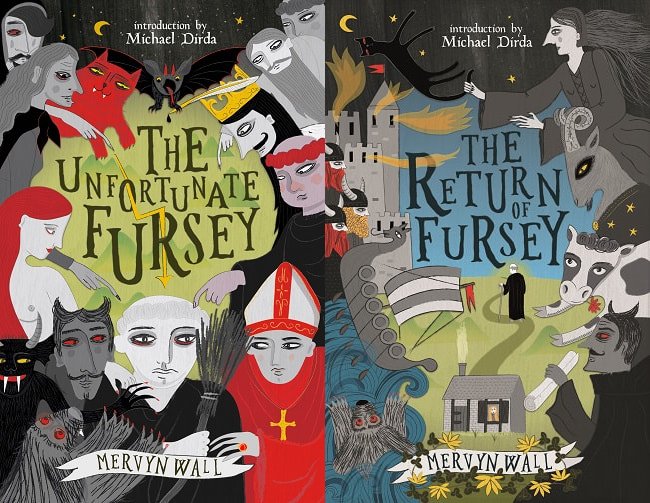
When I first heard of The Unfortunate Fursey, I was intrigued. Here was an obscure book by an Irish writer about a monk who is tormented by the Devil. Not only that, but the book was being republished by Valancourt Books, a publisher I held in the highest regard.

The Unfortunate Fursey and The Return of Fursey – Valancourt Books 2017

Mervyn Wall’s The Unfortunate Fursey was published in 1946, and it was followed by The Return of Fursey 2 years later. They’re pretty much 2 halves of the same story, so I’m going to treat them as one work rather than 2.

First of all, I want to make it clear that although it contains vampires, witches, demons and Satan, this is not a horror novel. This is farcical fantasy/historical fiction.

Fursey, the dumbest monk in Clonmacnoise, is kicked out of the monastery for unwittingly harboring demons in his cell. After his expulsion, he is forced to marry a witch who curses him with the gift of sorcery. Things go from bad to worse, and he ends up turning to a life of unmitigated evil. Fursey is basically a medieval Father Dougal, and both of the novels about his adventures are really, really funny. Wall obviously did a bit of research on witchcraft and sorcery too. He knows what he’s writing about.

I don’t understand how these books aren’t better known. I mean, they tick all of my personal boxes, but every review I have read of them has been positive too. Everyone who reads these books seems to love them. Apparently Gerald Gardner, the guy responsible for popularising Wicca, was a big fan. If you suspect that your tastes are at all similar to mine, I demand that you read these books. I promise that you’ll like them. I’m already planning to read them again in the future. I’m going to try to track down Mervyn Wall’s other books too.

That was the good side baby

Here comes the bad side…

Jimi Hendrix

I listened to audiobook versions of these two books. I’ve got through quite a few audiobooks from Valancourt, and they’re generally of an excellent quality. I love being able to take in a book as I cook dinner or clean the house, but there’s one thing about audiobooks that bothers me. I hate when audiobook narrators put on accents when they’re reading. I don’t mind if they’re voicing a character in the book. That can get pretty silly, but it totally makes sense. No, it only really annoys me when they put on an accent for the voice of the narrator. Of course, I don’t know any audiobook narrators or where they are from, so this actually only annoys me when they do a poor job of it. Personally, I think it’s pretty dorky to put on an accent just to read a story, but if your accent is good enough for me not to know it’s fake, then I guess it’s ok.

Alright, so far, I’m just discussing my personal tastes. You can roll your eyes and claim that I’m a cantankerous jerk if you want. I wouldn’t argue with you.

Unfortunately for everyone though, the narrator for the second Fursey audiobook doesn’t just put on an accent. He puts on an Irish accent. I don’t know why, but Irish accents seem difficult for people who weren’t born in Ireland. (I’ve discussed this before.) The guy reading this book is no exception. I could tell within a few seconds of him speaking that the accent was put on. Worse still, I could tell that he was English.

I don’t know how much my readers know about the history of Ireland, but a lot of what has happened there in the last thousand years has revolved around the English coming over and making things shit for us. The English did their best to colonize Ireland. They still have one of the parts that they stole. To hear an English man put on a silly Irish accent and read an Irish book about Irish culture is not something I ever want to do. If it was an American it would be annoying, but the fact that it’s a Brit is sincerely insulting. To be honest, I’m surprised and very disappointed that Valancourt Books gave this project the go ahead. I’m not going to hold it against the narrator. He’s a Brit; how would he know any better?

I don’t want to draw direct comparisons here, but I think it’s fair to label this as a case of audio-greenface. I genuinely struggle to see how this kind of thing was acceptable as recently as 2018. Unfortunate indeed. The whole thing is made more annoying by the fact that the first Fursey audiobook is beautifully narrated by an Irish person.

Buy copies of the two books, and get the first audiobook, but avoid the audiobook of The Return of Fursey at all costs.

Black Harvest – Ann Cheetham (Ann Pilling)

Black Harvest – Ann Cheetham
Armada – 1983


“A novel about a haunted house in Ireland? Yes. I will read that.”

Those were my thoughts when I first heard of Ann Pilling’s Black Harvest. After looking it up, I discovered that it was the first in a series of five “young adult” novels. I’m afraid of commitment, so I don’t really like series, and I’m also a grown man, so I don’t read YA. When I skimmed the reviews on goodreads, I noticed that several mention that this is very scary for a book aimed at teenagers, so I decided to give it a go.

This is not just a horror story set in Ireland. This is supernatural story about the horrors of the Irish Potato Famine.

The worst year of the Irish Potato Famine was 1847. That’s long enough ago that not even my great grandparents would have been directly affected by it. Intergenerational trauma is a real thing, but the Great Hunger of 170 years ago never caused me any suffering until last week when I picked up this book.

Jesus Christ, this was a pile of shit.

I usually get through 2 books a week. This piece of crap is less than 200 pages, and it took me 8 days to finish it. The writing is excruciating. I struggled to read more than a chapter each night. Wretched stuff.

A family decides to spend their holiday in a cottage in the Irish countryside. When they arrive, their baby sister won’t stop crying, and the kids all feel hungry. Every piece of food they bring into their cottage rots immediately. When the kids go outside, they see very skinny ghosts eating muck and trying to trade dead babies for food. Their mom goes crazy and abandons them.

It turns out the house is haunted because some famine victims are buried under it. The kids exhume their corpses, and the skinny ghosts go away.

At the end of the book, the author notes that when she was commissioned to write this novel she was “uneasy about horror novels. Horror was a genre [she] associated with “pulp”, with cheap, overblown writing where the author stands on tiptoe throughout to achieve ghastly effects. [She] associated it with mutants and ectoplasm, a world in which [she] had no interest.” In other words, she didn’t have any understanding of horror whatsoever, but she was convinced that she could do better than the hacks who wrote within that pathetic genre. She then goes on to say, “I decided that any spine-chilling story I might attempt would have to be rooted in reality. In The Great Hunger I found it”

So The Great Hunger is actually a non fiction book about the Irish Potato Famine. Let’s step back and think about what Ann Pilling has chosen to do here:

In Black Harvest, the author takes the suffering of poor Irish people and turns it into the main attraction at her “spine-chilling” fun fair. The events the kids witness in this story actually happened to real people. More than a million people died because they didn’t have enough to eat, and Ann Pilling decided to use their suffering to give her teenage readers a quick scare.

To Pilling, horror is uninteresting because it’s not rooted in reality. Personally, I enjoy reading horror because it is not reality. Reality is way more fucked up than any fiction. Frankenstein isn’t really horrifying. What the Catholic church did to children is horrifying. I don’t mind reading a story about a monster killing a kid, but I absolutely do not want to read a story about a priest doing the same thing. That’s not entertaining. It’s real, and it’s horribly depressing.

Maybe Pilling meant well, but this book fails on every level. I will not be reading the other books in the series. If you find a copy of this book, avenge Skibbereen by tearing it up and recycling the paper.