I don’t remember how I heard of this book, but I picked up a copy recently and really, really enjoyed it.
A man loses his wife to cancer and takes up fishing as a means to occupy himself. He makes friends with another recent widower and they start going fishing together. On the way to a new fishing spot, they stop at a diner for breakfast, and the owner tells them a chilling tale about the spot they are heading to. Nevertheless, they go there anyways.
The story they’re told in the diner makes up the bulk of the book, and it’s probably the scariest part. I was listening to an audiobook version before going to bed, and it scared the shit out of me. I’ve read my share of horror novels, and it’s quite rare that they actually creep me out like this one did. It was horrible and disturbing but purposefully written.
I’ve seen this referred to as Lovecraftian horror, and while I see the influence, this does not read like Lovecraft at all. The characterisation and imagintive plot reminded me of Stephen King at his best. The author used to be a university lecturer, and it seems his work is considered “literary horror”. I was too busy enjoying the book to really notice this except for when the author lifted lines directly from Moby Dick and put them in his own characters’ mouths. I only noticed this because when I read Moby Dick as a young man, I liked these specific lines so much that I wrote them on a sticky note and kept it in my wallet for years.
I know I’m not saying much here, but I deliberately avoided any kind of spoilers before reading this. I’m glad I did, and want you to do so also. Get a copy of this book and read it. I’m confident in saying that this was the most enjoyable novel I read in 2025. I’m looking forward to reading more from this author in the future.
Exactly 10 years ago, I reviewed the Simon Necronomicon. While that is probably the most famous hoax Necronomicon, there have been others.
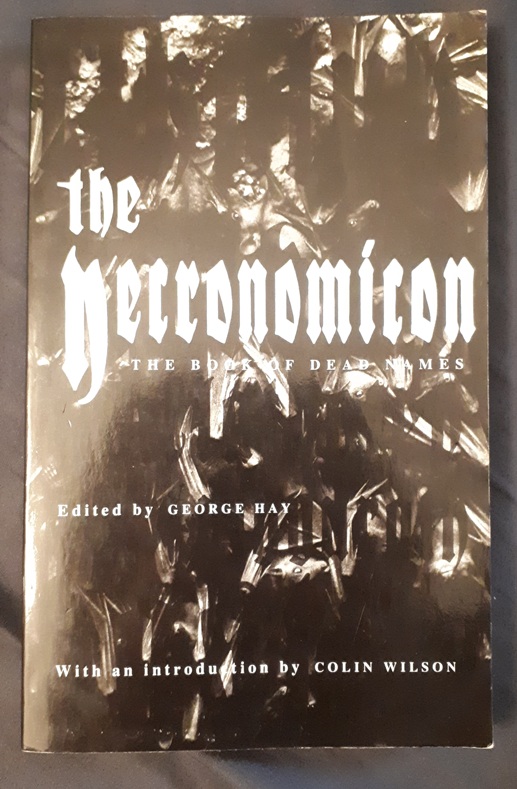
Earlier in the year, while I was researching Alan Moore for my posts on Nicholas Hawksmoor and Jack The Ripper, I came across a review he had written of The R’lyeh Text that made me want to read it. After a bit of searching, I realised that The R’lyleh Text was a sequel to a 1978 version of the Necronomicon that’s usually referred to as the Hay Necronomicon after its editor, George Hay.
The Necronomicon: The Book of Dead Names
Skoob – 1996 (Originally published 1978)
Colin Wilson’s book on the occult was one of the first I read in the topic, and while it led me to countless other books and resulted in the creation of this blog, I’ve never bothered to read any of his other works. Actually, my low opinion on Wilson got me in trouble with another historian of the occult a few years ago. Wilson wrote the introduction to this Necronomicon and reading it did not change my opinion of him. He was well read, but full of shit. This introduction is considerably longer than the actual text that it is introducing.
The text of the Necronomicon here is supposedly taken from a ciphered manuscript that had been in the possession of John Dee. It was decoded with a computer program. Wilson presents the claim that Lovecraft’s father had been a freemason and occultist and had somehow acquired a copy of this manuscript and either told his son about it before he went insane or left a copy lying around their home.
The story is obviously bullshit, and the text it presents isn’t particularly interesting. I love Lovecraftian prose and black magic, but these aren’t entertaining if they’re not sincere. None of the rituals in here are things that anyone is going to do. It’s not even like reading a Lovecraftian story where the verbose ramblings add to the suspense. I knew this book was a hoax when I started it, and it felt truly underwhelming reading it.
There’s three essays included after the grimoire part to flesh the book out, but none of them were particularly interesting. One of them was by Angela Carter. I recently read and quite enjoyed her The Bloody Chamber.
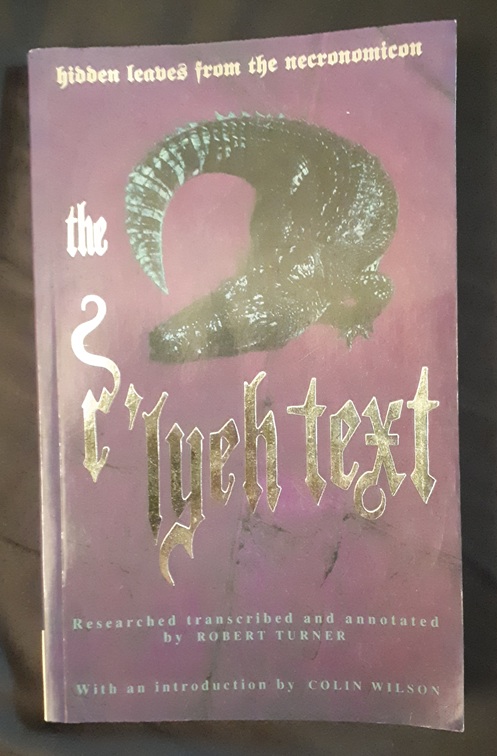
The R’lyeh Text: Hidden Leaves from the Necronomicon
Skoob – 1995
While the Hay Necronomicon went through a few editions, its sequel, The R’lyeh Text, only went through one. This has made it harder to come by at a reasonable price. Let me warn you my friends, don’t spend a lot on this if you’re thinking of buying a copy. It’s boring crap.
There’s another lengthy introduction from Colin Wilson. This one chirps on about Edgar Cayce and Atlantis, the Sirius Mystery, Kenneth Grant, Aleister Crowley, the Marquis De Sade and the Piri Reis maps, all in an attempt to prove that Lovecraft’s mythos stories were based in fact. I was astounded at how boring this introduction was given my interest in the topics it covers. Again though. this may have had something to do with the fact that I knew the book was a hoax and that Wilson was literally bullshitting. I think it may also have had something to do with the fact that Wilson’s writing is a bit dull.
The grimoire text here is the remainder of the text that was published in the Hay Necronomicon, and it is even less interesting. There’s a few essays included too. One of them discusses the Red Book of Appin, and another has put me on the trail of a book about a talking mongoose, but neither was interesting enough to save The R’lyeh Text.
Truly, I was quite disappointed by these books. If you’re going to make a fake Necronomicon, you should to overdo it. Throw mystery and mythology to the wind and include brutally violent rituals of heinous, tentacled evil. Nobody is ever going to believe it, so at least make it fun.
Al Azif – Abdul Alhazred
Owlswick – 1973
The Hay Necronomicon includes a section on a different version of the Necronomicon that had been published in 1973, the Owlswick Necronomicon. (Hay’s book does not make reference to the Simon Necronomicon even though version had come out a year before Hay’s.) The Owlswick Necronomicon is a hoax book that contains a short introductory essay by Lovecraft biographer L. Sprague De Camp in which he claims to have been sold a dodgy manuscript from the Middle East that killed whoever tried to translate it. It’s supposedly written in Duriac, a non-existent language, and it’s actually just a bunch of scribbles. It’s the kind of book that’s just going to take up space on your shelf after a couple of moments of initial amusement.
I’m really thinking of doing a Lovecraft re-read next year. This crap has me longing for the good stuff.
I have no great interest in role-playing games, but I knew that Dungeons and Dragons was associated with the Satanic Panic of the 1980s, do I decided to look at the books that contributed to its infamy.
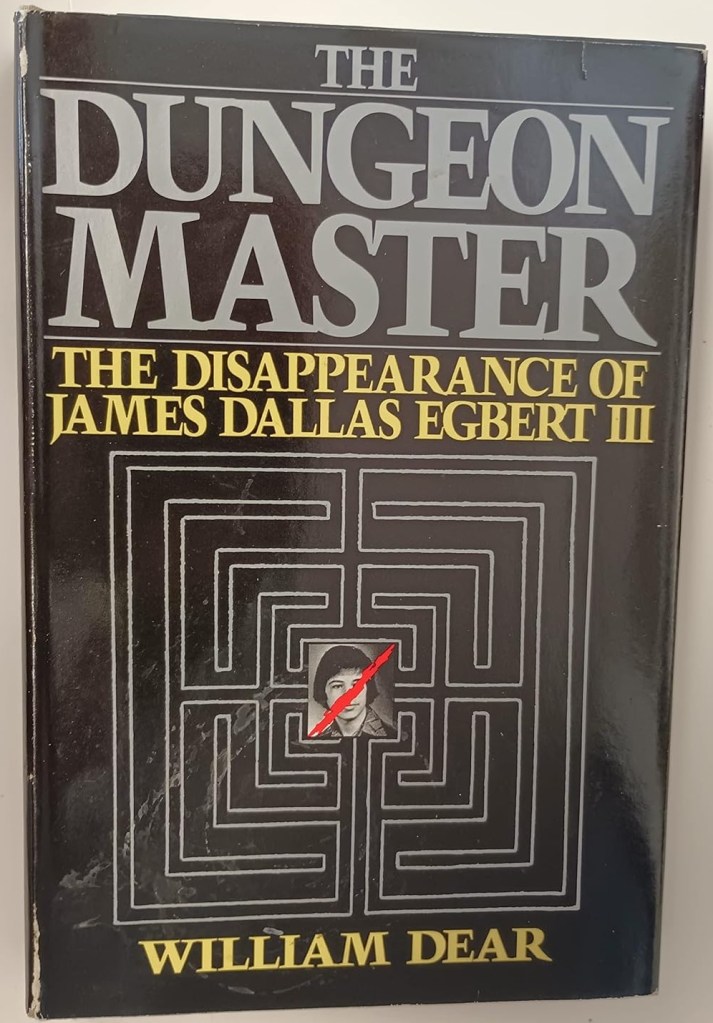
Houghton Mifflin Harcourt – 1984
The Dungeon Master: The Disappearance of James Dallas Egbert III – William C. Dear
Dallas Egbert the Third was a weird teenager. He was highly intelligent, but socially awkward. He tried to make up for this when he went to college by taking drugs. He was gay, and he got involved with some shady characters. His mom was pushy, and wouldn’t have approved of his lifestyle, so he decided to kill himself. He went down into the ventilation tunnels under his college so he could die, but he couldn’t do it, so he went to hide out in some of his gay friends’ homes. He was kept drugged and it seems likely he was sexually abused. A private detective, the author of this book, found him halfway across the United States. They returned home, but Dallas put a bullet in his head a few months later. He never gave his full account of what had happened to him when he was missing.
This book was written by the detective who found Dallas. It wasn’t a great book, and the author’s writing style was grating, but in fairness, it’s not overly bullshitty. There is a horrendously drawn out chapter describing the author’s experience playing Dungeons and Dragons, but despite his intial suspicions, he ultimately dismisses the idea that the game had anything to do with Dallas’s fate. The kid was all kinds of messed up. His interest in fantasy games and science fiction seemed like the only parts of his life he enjoyed.
The book is of its time. It repeatedly makes reference to “the gays”, but it doesn’t do so with any kind of malice. If you want to know about this sad and weird case, this is essential reading.
Dell – 1982 (Originally published 1981)
Mazes and Monsters – Rona Jaffe
I had very low expectations when I started reading Mazes and Monsters, and I can say with disappointment that it was exactly what I expected. This is a boring novel with nothing of any value. It’s truly as bad as it looks. Look at that shitty-ass cover again. Fucking lame shit.
This book is about 4 nerds who play “Mazes and Monsters”. All of the chracters are lame and annoying. One is very clearly based on Dallas Egbert, but he isn’t really the protagonist. The main character here gets so involved in the role-playing game that he becomes convinced he’s really a holy magician. He is so strongly convinced of this that he becomes impotent and kills a person. As much of the book is spent describing the backgrounds of the main characters’ parents as is spent on the plot. I assume this was because Jaffe’s audience were mostly middle-aged women with teenage children that needed some point of reference for understanding the plot. This was so, so boring and crap. If I owned a copy of this book, I would take it into the forest and defecate upon’t. The only good part was when one of the main characters’ mothers goes on a date with a gentleman who expresses disappointment over her haircut because her formerly long, curly hair had reminded him of pubic hair. Such a bizarre detail to include. I’m willing to bet that the author’s minge was infested with pubic lice.
Mazes and Monsters was published the year after Dallas Egbert died, and while it does make it seem like role-playing games are probably dangerous for impressionable youths, it doesn’t really try to link role playing games with the occult. Still, it’s a piece of shit, and you shouldn’t read it.
Chick Tracts – 1984
Dark Dungeons – Jack Chick
This is a Chick Tract that came out in 1984 that claims that playing Dungeons and Dragons leads to suicide and Satanism. It’s silly rubbish. Read it here.
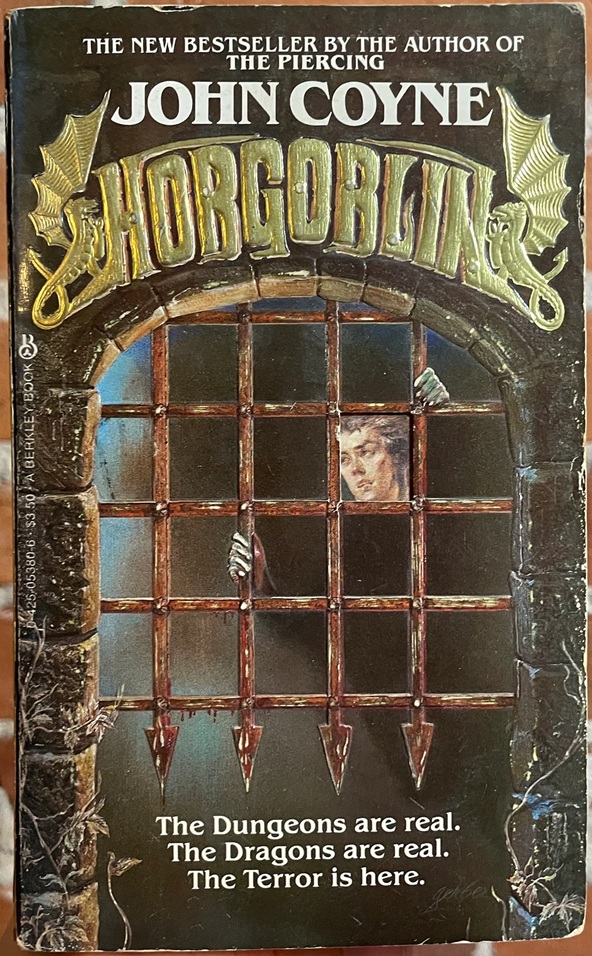
Berkley – 1982 (originally published 1981)
Hobgoblin – John Coyne
I’m throwing this book in here because other authors have linked it to the furor around RPGs in the 1980s. It’s about a young man who becomes obsessed with a game called Hobgoblin, but none of the really bad stuff that happens in here comes as a result of the game. Coyne’s book is more of an entertaining novel that features an RPG than a statement on the dangers of those games.
So a nerdy kid’s dad dies, and him and his mom have to move to a small town where she can work in the local castle. The caretaker there is a creepy Irish immigrant, and the manager starts fucking the boy’s mom. The boy is a stupid virgin, and chooses to start fights with the local football players instead of banging the hottest girl in school. It turns out there’s a weirdo living near the castle who likes murdering and sexually assaulting people.
So many parts of this book were completely unbelievable, but it was decently entertaining. There’s one part where two of the local jocks kidnap a girl, tear off all her clothes and abandon her, tied to a tombstone on the top of a hill. Then they break into the protagonist’s house and sexually assault his mom. Nobody does anything about this, and they face no repercussions. I know that attitudes toward sexual violence have change since the 1980s, but this was ridiculous.
The Irish elements were mildly interesting. The role playing game here, Hobgoblin, is set in Ireland, and all the characters in the game are supposed to come from Ireland. I didn’t recognize quite a few of them. I looked it up, and one of the main bad guys, the Black Annis, is actually from English folklore. Also, the old Irish caretaker character is very weird. Are we supposed to feel sorry for him or repulsed?
Ok, I’m going to include spoilers in this paragraph, so skip ahead if you want to read the book. I’m a bit confused about the ending. I just finished the book, and I don’t really understand what happened. The main bad guy was a badly brain damaged geriatric who must have been more than 80 years old. Despite this, he was able to brutally murder a bunch of people by himself over the course of about half an hour? Did he have some kind of magical power? Why was he killing people in the first place? Did I miss something?
Hobgoblin was alright. I don’t regret reading it. Mazes and Monsters was a mouthful of salty diarrhea. Dear’s book about Dallas Egbert was interesting as a historical source, but it wasn’t a particularly enjoyable book. I am quite done with books about Dungeons and Dragons.
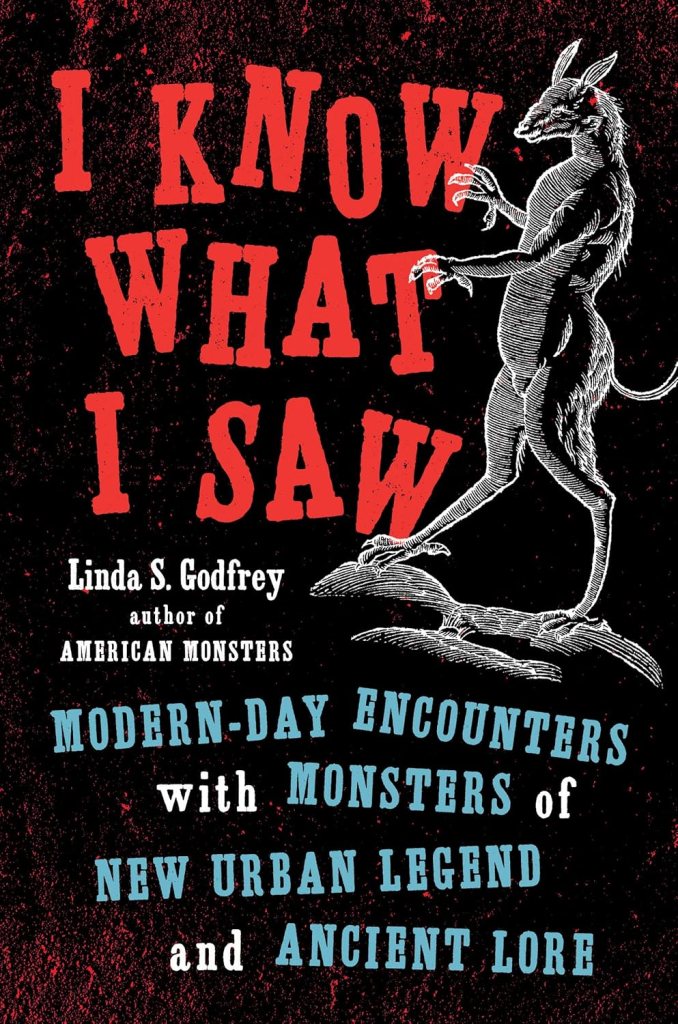
Audiobooks about the topics I’m interested in are difficult to find (for free). A few weeks ago, I saw an audiobook version of Linda S. Godfrey’s I Know What I Saw, a book about American cryptids, and decided to give it a go. I hadn’t heard of Godfrey before, and seeing that the book was published by Penguin, I thought it could be quite good. I’ve read a few books about Fortean topics by accomplished writers that walk a very entertaining line of openness and critical thinking, and I guess I was hoping for something along the lines of Jon Ronson‘s conspiracy theory books. Cryptozoology is an interesting field, but many of the books on this topic are completely devoid of skepticism.
I Know What I Saw – Linda S. Godfrey
TarcherPerigee – 2019
Unfortunately, I Know What I Saw is another of these books. The author presents countless sightings of cryptids (mostly dog-like creatures), none of which are difficult to dismiss as bullshit. I am sure Godfrey received less believable accounts that she didn’t include, but that doesn’t make the stuff in here any more credible to an ordinary person who doesn’t spend all their time reading about monster sightings.
The fact that I only recently finished reading McEwan’s Mystery Animals of Britain and Irelandmay have affected my enjoyment of Godfrey’s book. Both texts are similar books about different locations, but Godfrey’s book is made up of reports sent to the author over the internet rather than accounts in other books or newspaper clippings. McEwan’s book didn’t convince me of anything, but I am definitely biased against information sent over the internet, and Godfrey’s book seemed more credulous because of its sources.
Another thing that really set me against this book was the author’s claim in one of the opening chapters that, “the Scandinavian countries became largely Christianized around 1000 BCE”. I heard the narrator read that and assumed that it was a mistake, but then I checked an ebook copy of the book and was able to confirm that Godfrey did actually claim that Scandinavia was somehow Chrstianized an entire millenium before Christ was born. Everyone makes mistakes, but I find it hard to imagine how this one was published.
There’s descriptions of encounters with Bigfoot, Goatman and a few other weirdos, but not much stuck out to me. The weirdest part was the account of a man who saw 2 dogs whose movements were so similar that he thought were robots. There’s another part where the author discusses if Bigfoot might be descendants of the Biblical character Esau. This is silly nonsense.
It’s roughly a decade since I first reviewed a book by Whitley Strieber. I hadn’t been into this stuff very long, and I was shocked at how stupid the book was. I read the next book in his series about getting diddled by aliens a few months later, and a couple of years after that I managed to make it through the third book. Although I’ve had the 4th entry in the series on my shelf for years, I’ve never been able to convince myself to open it. What I had read of Strieber made him seem an unbearable twat, a boring, self centered gobshite.
I knew from the outset that he had been an author of horror novels, but his alien books were so cumbersome that I had no desire to read his fiction until. It was only when I became more interested in paperback horror a few years later and discovered that some of his horror novels seemed to be held in high regard that I decided to give his fiction a chance. He wrote 4 horror novels before switching to fantasy in the mid 80s. (It was a few years later that he moved on to “non-fiction” about aliens.) Over the last 8 months, I have read 3 of his 4 early horror novels. The one I didn’t read, The Hunger, seems to be considered one of the better ones, but it has sequels, so I am saving it for a separate post.
Avon – 1988 (Originally published 1978)
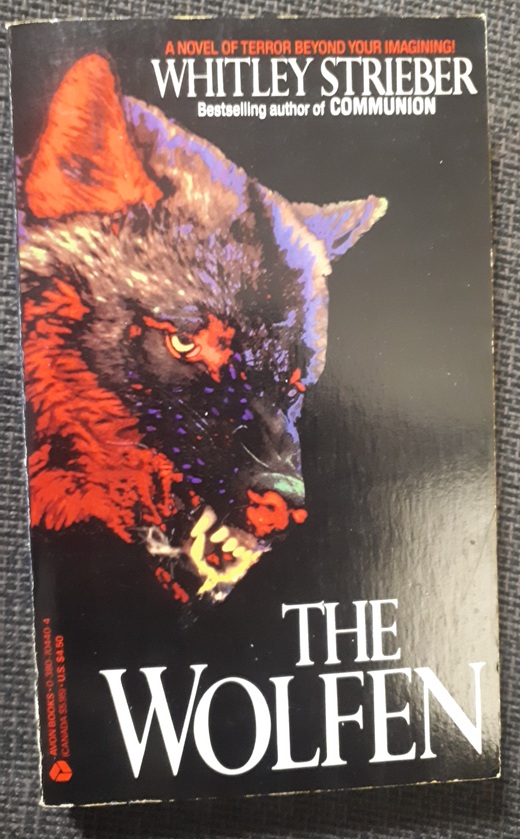
The Wolfen
I read this a few months ago and didn’t bother taking notes. It’s about a pair of detectives trying to solve a series of grisly murders committed by superwolves (not werewolves). It wasn’t utterly amazing or anything, but it was competently written and definitely of a higher standard than a lot of the paperback horror boom. I quite enjoyed it.
Grafton – 1988 (Originally published 1983)
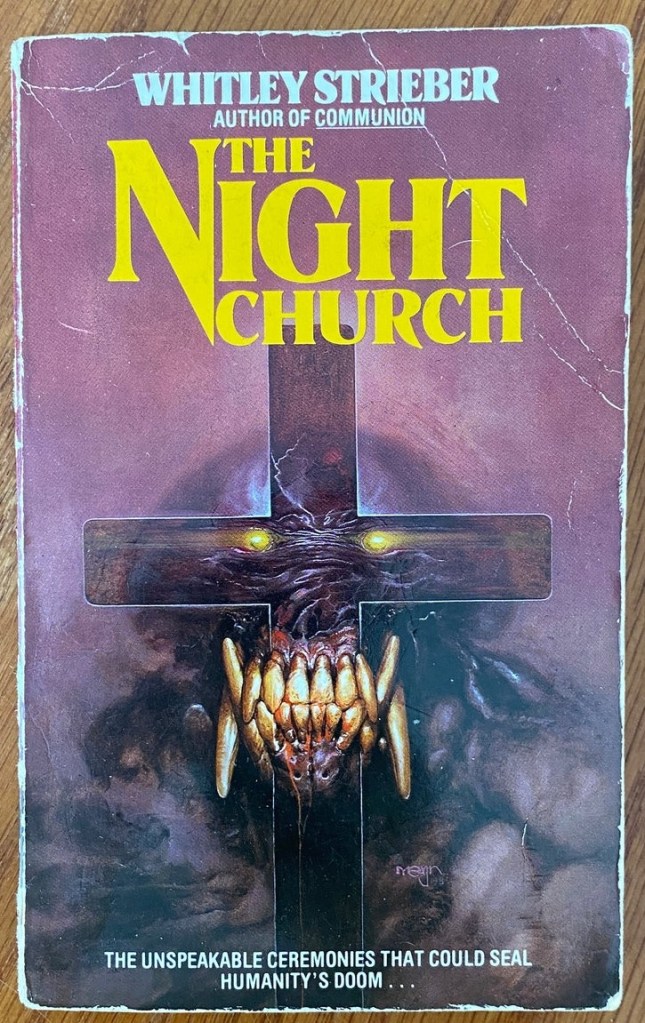
The Night Church
I was expecting to enjoy this one more as it deals with Satanists rather than werewolves. The different covers are really too. Look at the one above! Unfortunately, the story is boring. A young couple falls in love only to discover that they have been bred to breed the Antichrist. I read this a few months after reading all of the The Omen novelizations, and maybe the similarity to those is what made this seem underwhelming. After finishing this, I waited roughly 6 months until I could convince myself to read another book by Strieber.
Granada – 1983 (Originally published 1982)
Black Magic
I bought a copy of this book after seeing the cover online years ago. Unfortunately, this is a spy novel with only a touch of occultism. The plot is complicated and involves 4 different story lines. There’s the good guy, the evil, gay, psychic Iranian teenager and then 2 Russian communist generals who hate eachother. They’re all working against each other, and I didn’t care about any of them. This was boring crap, and I was very relieved to finish it.
The Wolfen was pretty good, but The Night Church and Black Magic were a waste of my time. I do plan to read The Hunger in the future as I’ve heard it’s one of his better efforts. I doubt I will ever return to Strieber’s non-fiction.
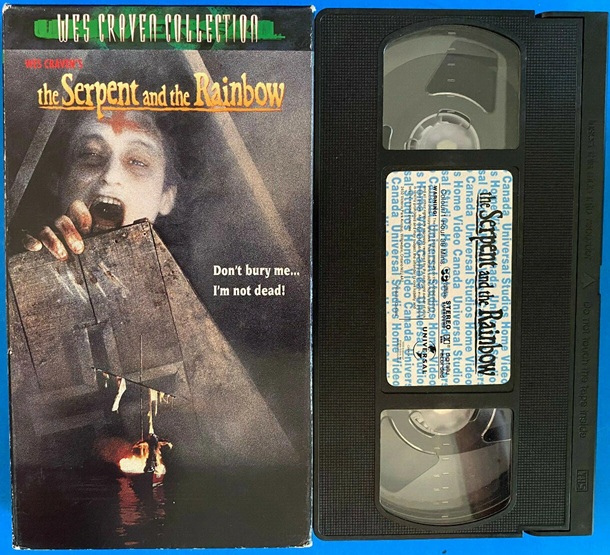
I saw the cover for the VHS of The Serpent and the Rainbow at the video shop after mass when I was a kid. I’ve mentioned before how I would become hung up on the covers of these 18+ rated forbidden films that it seemed I would never see. It stayed with me, and as soon as I could, downloaded and watched the movie. The only thing I remember about the film is that I thought it was shit, so it’s not surprising that I never bothered tracking down the book.
I don’t know why, but it popped into my head the other day, and it took me just a few minutes to locate a copy of the book. I knew that the author was an academic, and the book was somehow related to zombies and voodoo, but I didn’t really know what to expect.
Simon & Schuster – 1985
The book starts off like an adventure novel, the author describing some his experiences in the jungle of south America as a student. This stuff is quite impressive and made me jealous. I never got to travel through the jungle for credits during my time in university. The main adventure begins when he approached by some weirdo academics who tell him about Haitian voodoo and their desire to acquire the elusive poison that is used to turn people into zombies. There had long been claims that people in Haiti were dying and being buried, only to return to their families years later with little to no memory of the intervening time period. The locals attributed this to voodoo, but the academics believed it was being done with a potent chemical.
Davis goes to Haiti to track this stuff down, and he meets a bunch of colourful characters. He helps one of these weirdoes dig up the corpse of a child and then they mix parts of that decaying infant into a potion with bits and pieces of some minging animals.
After a bit of research, Davis realises that it’s the inclusion of a pufferfish in this mixture that’s responsible for the apparent reanimation of corpses. The poison in pufferfish is known to temporarily paralyze in small enough doses, and it is not completely out of the range of possibility that this poison, along with continued doses of other drugs could result in the kind of zombification that had been reported in Haiti.
From what I have read online, Davis’s claims were not well received by the scientifific community. Very little of the pufferfish poison was actually found in the samples of the zombie potion that Davis acquired. There has been debate on this since, but the fishier element (excuse the pun) to me is the notion of zombification. I can’t find any footage online of actual zombification. I’m not expert on Haiti, but I know that it’s had more than its share of troubles. I find it very easy to understand how stories from a place like this could become twisted and exaggerated. Maybe I’m totally wrong about this, but it seems to me that the entire Haitian zombie phenomena is probably bullshit.
The worst part of this book was that it reminded me of John Russo’s absolutely terrible Voodoo Dawn novel that I read a few weeks ago. I’ve read a few other novels about voodoo (Strange Conflict by Dennis Wheatley and Frank Lauria’s Doctor Orient novels come to mind), but I have to say, the only truly enjoyable book I’ve read that really featured voodoo was Hjortsberg’s Falling Angel.
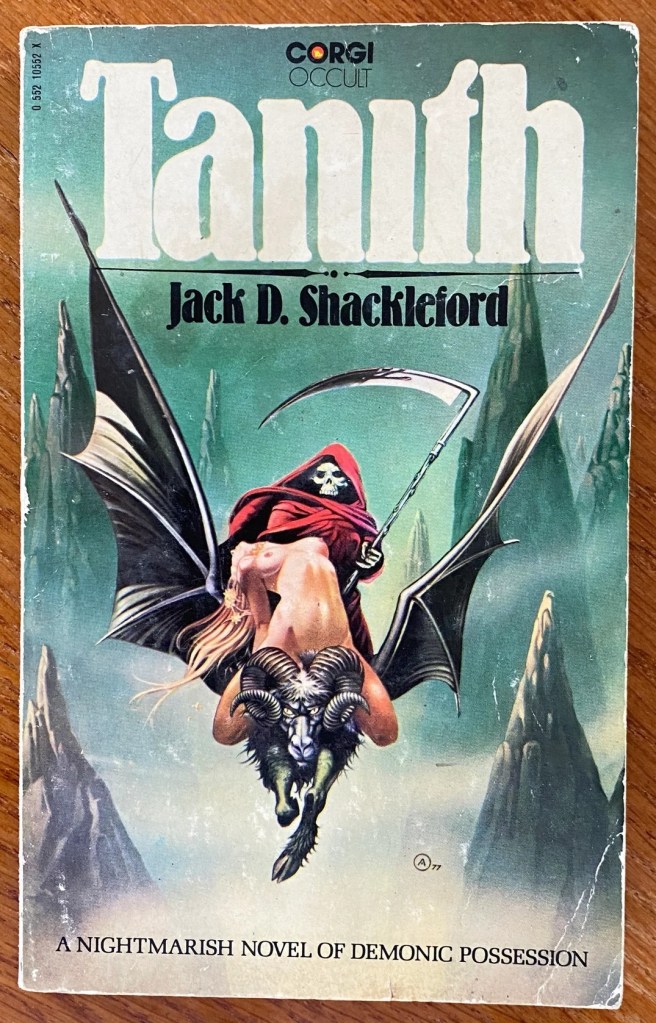
I don’t remember how or when I heard of John D. Shackleford’s occult horror novels, but I have been wanting to read them for years. I’m assuming it was the incredible cover artwork that both grabbed my attention and made it so hard to track copies of these books down at a reasonable price. Of all of his novels, Tanith was the most appealing to me. The cover artwork is phenomenal, and although I’m almost certain there is no connection, I’m also a fan of the obscure Irish doom metal band, Council of Tanith. I’ve long thought that their band name was a reference to the Tanith in Dennis Wheatley’s The Devil Rides Out, and from the titles of Shackleford’s books alone, I find it hard to imagine that he hadn’t read Wheatley’s masterpiece. I was intrigued to see if Shackleford’s Tanith had anything to do with Wheatley’s.
Corgi – 1977
Last week, I received an email from a pal of mine with a pdf copy of Tanith attached. It’s less than 200 pages, so I dove right in.
Virginia has just moved to a cottage in the woods, and after an argument, her husband stormed out of the house and hasn’t come back. Virginia goes out at night and sees an ugly leprechaun. She is almost raped by the leprechaun a few days later, but something scares him away before he can penetrate her with his knobbly cock. A sexy witch named Tanith finds Virginia in the woods and takes her home. Then she nurses her back to health.
At this point the plot gets ludicrous. It turns out that Virginia was a witch before moving to the woods, and Tanith seduces her and convinces her to take part in magical rites with her leprechaun pals because Tanith has cancer and these rituals are the only way to prevent her death. Ultimately the plan fails because Tanith’s grandmother, a good witch, convinces her servants to set the forest on fire.
Promiscuous witches and rapist leprechauns are promising ingredients for an occult horror novel, but the execution here was pitiful. This was muddled, poorly planned garbage. Holding back important facts about a main character could potentially be used to create suspense or surprise, but here it just made it feel like the author was making the plot up as he wrote and wasn’t bothered going back and editing early chapters for the sake of cohesion. There is no link between Shackleford’s Tanith and Wheatley’s Tanith other than them both being sexy witches. Also, the subtitle of the work, “A Nightmarish Novel of Demonic Possession”, is completely inaccurate. There’s no demonic possession in this book.
I have since read that this is the worst of Shackleford’s novels, but it was so bad, I have little motivation to seek out any of the others. I have a copy of The Scourge, so I may read that in the future if I’m feeling generous.
I didn’t finish my novel on time for this week’s post, so I rapidly consumed another book of Lovecraftian black magic. This one was written by a guy called S. Ben Qayin. I was going to read a different book by this author a few years ago, but I saw that he was involved with the becomealivinggod twats, so I didn’t bother. When I saw this fairly short Lovecraftian grimoire earlier on, I couldn’t resist.
Ok, so aside from a little self mutilation, but there’s nothing all that sinister about this book. You wouldn’t have to be a completely evil psychopath to follow the rituals herein, but you would have to be fairly silly. There’s a few prayers to Cthulhu and Nyarlathotep, but despite S. Ben Qayin’s best efforts to convince us otherwise, we all know that these are fictional characters. This book is basically just fan-fiction. I am obviously a fan of Lovecraft, so I was reasonably entertained, and if I found a very cheap copy of this book, I would gladly keep it on my coffee table to make guests feel uncomfortable, but I can’t imagine anyone taking actually staying up late at night to go and do blood rituals to Yog-Sothoth in a forest. If I’m wrong and you do that kind of thing, I’d love to chat with you.
All things considered, I quite enjoyed the 45 minutes it took me to read this. I was sitting in my car, drinking coffee and eating a coconut donut at the time. I may go back and read more S. Ben Qayin in the future. It’s 5 years since I wrapped up my big Lovecraft reread (Part 1, Part 2, Part 3, Part 4, Part 5), and reading this grimoire made me want to do another. I might stick with a greatest hits collection this time around.
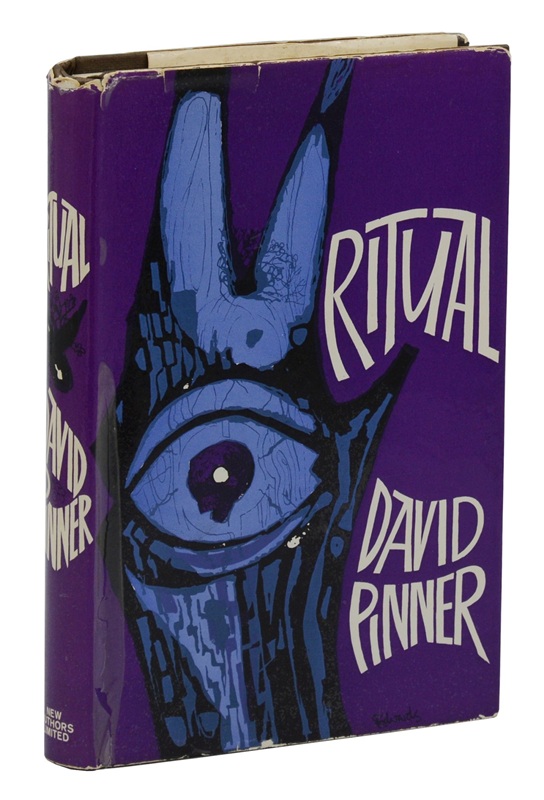
I bought The Wicker Man on DVD about 20 years ago. I can’t have watched it more than twice, but the ending of the film has stuck with me since. I was looking for a book to read recently when I came across David Pinner’s The Ritual, the novel that inspired The Wicker Man.
Ritual – David Pinner
New Authors – 19967
From what I have read, it seems as though the movie people bought the rights to Pinner’s novel, but had to change so much of it that he didn’t get mentioned in the credits of the movie. The plot is very similar.
A policeman ends up in remote village investigating the death of a child. The locals are uncooperative weirdoes and at least some of them practice witchcraft. The memorable scene in the movie where the sergeant humps the wall is taken directly from the book. There’s definitely a similar mood and cast of characters in both Ritual and The Wicker Man, but the ending to the book is quite different and falls far short of the horror of the film. Overall, it’s really more of a mystery featuring elements of the occult than a true horror novel. There’s a little more humour in it too. I quite enjoyed reading it.
The Wicker Man – Robin Hardy and Anthony Shaffer
Crown Publishers – 1978
I was going to post about Ritual last week, but then I read that the novelisation of The Wicker Man was held in high regard, so I decided to read that too. It was published a few years after the movie came out, and it offers a slightly different version of the story. As I mentioned, I’d seen the film before, but aside from the wall humping and the climax, I couldn’t remember too much. I’ve reviewed quite a few novelisations on here before, but I’ve never felt the desire to go back and watch the films after reading the books before. That was not the case here. I finished the book after dinner yesterday and sat down to watch the movie version maybe 20 minutes later. I wasn’t aware, but there are multiple cuts of the Wickerman out there. I found a version streaming on Kanopy (an awesome library streaming service) that was significantly longer than the version in Amazon. I watched the director’s cut, and to be honest, it wasn’t great. Some of the scenes are transferred from an old reel that looks like garbage in comparison to most of the film, and none of these scenes add anything of much worth to the story. Apparently there is a longer cut in existence now, but I have no interest in watching it. I reckon the short version is totally fine.
It was interesting watching the director’s cut right after finishing the novelisation though. Some very short scenes included in that cut of the movie are explained more clearly in the book, and there are a few little scenes in the book that weren’t included in the movie at all. Sergeant Howie is given more background, and there are a few extra characters. Overall, I quite enjoyed reading this novelisation. If you like the movie, the book is worth a read. The movie is great too. The director’s cut is bloated, and even the original might be a little slow to get going, but the scene when Howie realises what’s in store for him makes it all worth while. I love it.
The Loathsome Lambton Worm – Anthony Shaffer
While I was researching this post, I discovered that the screenwriter of the film had actually written an outline for a sequel to The Wicker Man with the same cast of characters. Anyone who has seen the movie or read the book will understand why that would be difficult, and the resultant screenplay is actually less coherent than you’d expect. It was called The Loathsome Lambton Worm. The brilliance of The Wicker Man is that it’s a horror movie that doesn’t rely on supernatural scares or gore to horrify. The efficacy of the islanders’ rituals is inconsequential to the plot. The proposed sequel includes decaptitions, magic spells, witches riding around broomsticks and a fire breathing dragon. It also features Sergeant Howie doing things that go against everything the audience has been told about him. The proposed sequel is pure crap, and I am more surprised that anyone ever took the time to write it out than the fact that it wasn’t made. Nobody could read it and think it was a good idea even at a time when the bar for sequels was pretty low. The treatment for this awful sequel was published in the revised edition of Alan Brown’s Inside the Wicker Man. I didn’t bother reading the rest of this book because I a bit sick of The Wicker Man at this point. I might go back and watch the Nicolas Cage version in a few years.
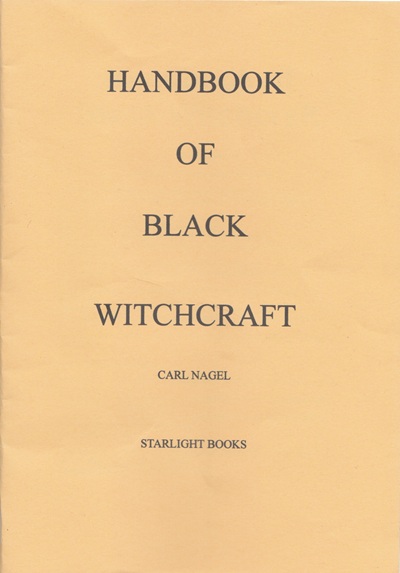
I had originally planned to post about a different book today, but I realised I needed to do some more research to do it justice, so I sought out a ridiculous pamphlet of black magic. I found one by my old pal, Carl Nagel. It starts off with a depiction of a badass Satanic human sacrifice, but then it turns out that the author is only describing this scene to say that it’s not true witchcraft. Obviously, this was quite disappointing. I was hoping this would be a grimoire of cool satanic murder rituals.
In the next section, we learn that “Black witchcraft” is “older than the centuries”. I assumed that meant it was prehistoric, but we find out in the next paragraph that it was born in the middle ages, so I’m assuming that Nagel originally meant to say that it was older than “some centuries”.
This is followed by a description of how witches used to be initiated into their covens, but Nagel then acknowledges that the readers of his work won’t have any friends, so he tells them how to initiate themself into a coven of one. They basically light a few candles and think of witchy stuff.
The guts of the pamphlet (about 5 pages) consists of a handful of silly spells. It’s the usual crap: how to attract lovers, how to make a voodoo doll, how to make a rival impotent… There’s really nothing unique or original here.
This is another instance where I find it hard to imagine a person stupid enough to take this shite seriously. When I refer to this as shite, I mean it. This book is smelly, smelly poopoo from a dirty bumhole. Carl Nagel actually has quite a few publications too, and I am very curious as to what his threshold of success is. How many copies of his last book does he need to sell to convince him to write more? Surely there can’t be more than 2 or 3 imbeciles alive who would pay for this heinously soiled adult diaper.









 Nocturnal Revelries