Bigfoot is a Dog-hating Alien who Loves Menstruating Women: Jim Brandon’s The Rebirth of Pan

I first came across the name Jim Brandon when i was researching James Shelby Downard last year. Brandon was the guy who was interviewing Downard on the Sirius Rising recording that resulted in Robert Anton Wilson describing Downard’s ideas as the “the most absurd, the most incredible, the most ridiculous Illuminati theory of them all”. A little research on Brandon told me that wrote two books on Fortean phenomena, Weird America and The Rebirth of Pan but that most of his literary output was neo Nazi material that came out under the name William Grimstad.
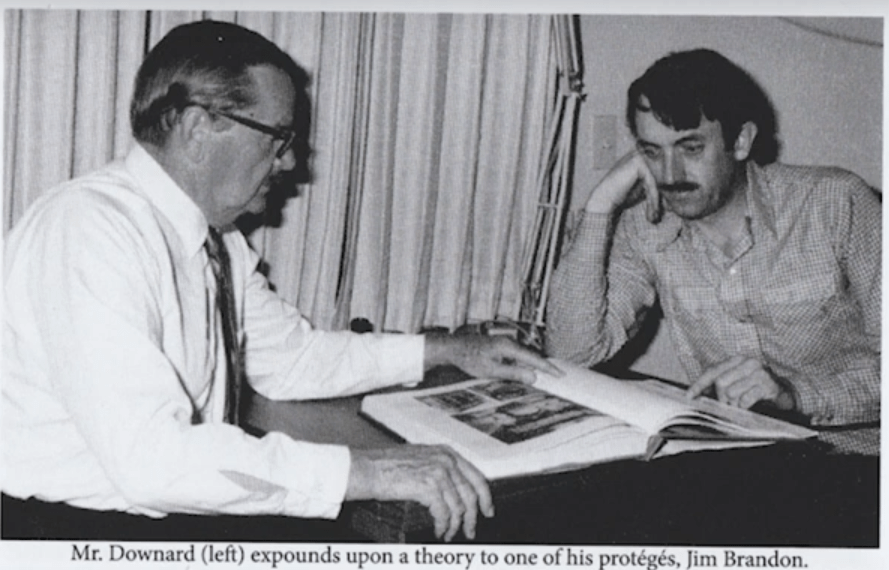
Downard’s other friend, Michael A. Hoffman II, was another Holocaust denier

Now I don’t have any interest in promoting the beliefs of neo-Nazis, but I do like reading weird stuff, and what I had read about Brandon sounded truly bizarre. After glancing through Weird America, I decided to skip it. It’s basically a list of places in America where Fortean phenomena have been witnessed. It might be useful as a reference book, but the thought of reading it cover to cover seemed pretty boring. I decided to focus instead on his The Rebirth of Pan. A book that claims that the great God Pan, a great and powerful Earth spirit is alive and dedicated to causing mischief in North America.

The Rebirth of Pan: Hidden Faces of the American Earth Spirt

Firebird Press – 1983

This is definitely among the weirdest books I have read. Its central claim, that science has become too rigid to meaningfully account for every known phenomena, is one I have encountered many times before, but the reasons given here to believe this claim are definitely more far-fetched than the usual stuff. I’ll give a brief summary of each chapter, or at least what I got out of each chapter.

Chapter 1
Bigfeet appear near horny people and menstruating. Aleister Crowley and Kenneth Grant point out that sex can be used to bring about bizarre magical entities. This would explain why we can’t catch bigfeet the way we catch other wild animals. Instead of luring our traps with meat, we should use a shagging couple.

Chapter 2
North America is covered in mounds. We don’t know who made these or how. Traditional archaeologists have suggested it was prehistoric Native Americans, but the author seems to believe that it was more likely a race of giants and a race of cannibal pygmies who were responsible.

Chapter 3
This chapter is a discussion of a bunch of artifacts that have shown up in America with text on them. Many claim these were from Native Americans, but others point out the similarities between this writing and Hebrew, Norse and Chinese. Most of these artifacts were dismissed as hoaxes, but author dismisses this notion because one hoax is unlikely but more than one is even more unlikely. This chapter is a bit confusing because Brandon includes both sides of the discussion, and it’s not until the end that he tells you what he actually thinks. He doesn’t think these artifacts come from native Americans or pre-Columbian visitors to North America. He thinks they’re from bigfoot. Now bigfoot here is a transdimensional entity, the kind encountered in The Psychic Sasquatch and some other book I’ve read recently that I can’t quite remember. (Maybe John Keel?) The writing on these artifacts is Norse, Chinese, and Latin, or some combination thereof. Whatever entity left these artifacts came from another time or dimension and they didn’t know which language the locals used, so they wrote in the one they were most familiar with. This is definitely the least unlikely possibility.

Chapter 4
Fossils that feature well preserved lifeforms may not be what scientists say they are. How do we know that these aren’t just rocks that are actually giving birth to these creatures? The author claims that idea that life comes from rocks is much better than the theory of evolution. Proof of this idea is found in the fact that bigfoot often makes piles of rocks and throws rocks at people to attack them.
Weird stuff often happens near water, but more interestingly, weird stuff (tornadoes, bigfoot sightings, random explosions) frequently happen to trailer parks. The author suggests that this is probably because as metal containers, trailers are more likely to trap mysterious orgone energy, but it seems more likely to me that they’re more susceptible to tornado damage because they’re not anchored to the ground and more susceptible to bigfoot attacks because the people living in them are poor and probably uneducated (and hence more delicious to predators). It turns out that many of the strange structures and rocks dotted across America were made by Pan, the Earth spirit.

Chapter 5
More of the same, but this time he looks at how the measurements of some of these structures can be manipulated so that they relate to the measurements of the pyramids at Giza. Some of the structures he discusses here are from a book called Traditions of De Coo Dah by William Pidgeon, a book that has been accepted as a hoax for over a century. Brandon claims that the reason nobody has ever seen the monuments described by Pidgeon is that Pan caused the Earth to swallow them up in a reversal of the way he created many of the mysterious mounds previously discussed.

Chapter 6
Some numbers 23 and 33 are linked with countless weird events. Some names are too. Author lists off bad things that have happened in places called Lafayette or Fayette. These include cryptid sightings, the murders of presidents and prophets and more. He also points out that the Amityville murderer‘s name was Defeo (de-fay-oh), and Aleister Crowley’s mantra of, “do what thou wilt” translated into latin is, “fay que ce voudras”.

Chapter 7
The last chapter is basically a long conclusion that adds little to the author’s claims. It talks about symbolism and alchemy and Sirius. The nost intersting claim here is that some aliens, probably those from Orion, hate dogs because of the link between dogs and Sirius. The aliens from Sirius and Orion supposedly hate eachother according to some alien contactees. Bigfeet also hate dogs, so maybe they are aliens?

Appendices
Only point of interest here is the suggestion that cattle mutialtions are done by bigfoot.

Overall, this book was a boring slog. It had some truly ridiculous ideas, but the reasoning is just too weak for it to be taken seriously at all. I love the idea of reading a book that references the works of Aleister Crowley, H.P. Lovecraft, Kenneth Grant, Edward Bulwer Lytton, Montague Summers, and Robert Anton Wilson, but there was no real cohesion to this jumbling mess. It’s not surprising that the author is a dumb piece of trash.
Scott Smith’s The Ruins

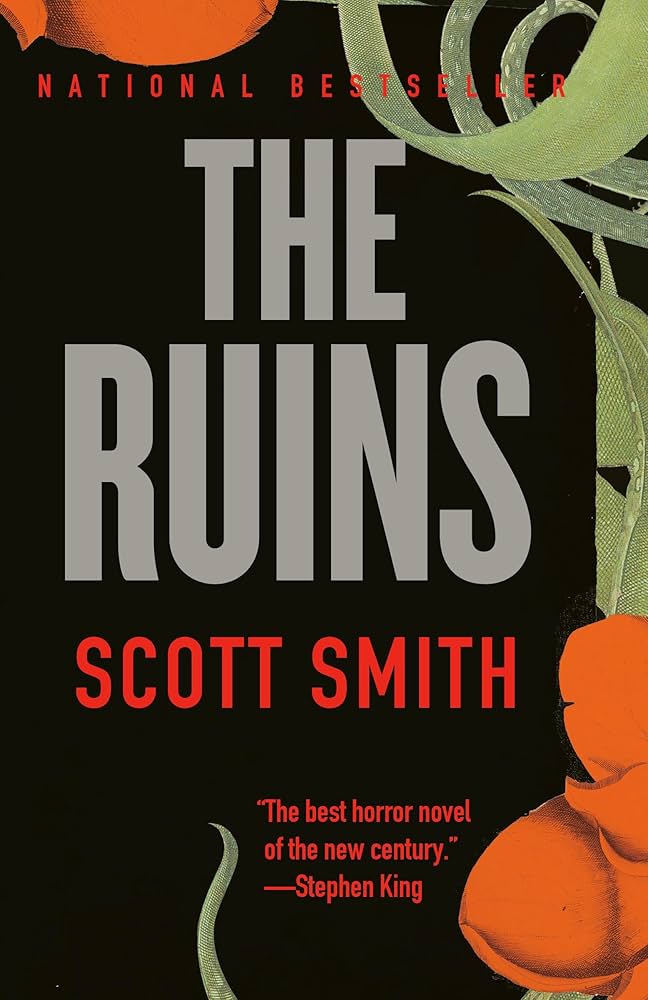
I read this on a whim recently, and though more modern than a lot of what appears on this blog, Scott Smith’s The Ruins was quite good.

Vintage – 2007 (First published 2006)

A bunch of young people go on vacation to Mexico and end up travelling into the jungle to see their friends who are supposedly working on an archaeological dig. When they get there, they get trapped on a hill that’s covered with an evil plant that won’t let them escape. Things get grizzly pretty quickly.

The plot is a bit silly, but this is well written, and there were a few genuinely scary moments. It really reminded me of The Troop by Nick Cutter. I just looked it up online, and apparently Cutter openly acknowledged that this book directly inspired his. Both books follow a small group’s nightmarish weekend on a remote and lethal location, and both feature the timeless combination of things that burrow inside people and sharp knives.

This kind of survival horror isn’t my favourite genre, but this was enjoyable. I am going to give Smith’s other, more famous, novel, A Simple Plan, a read soon.

Matt Ruff’s Lovecraft Country

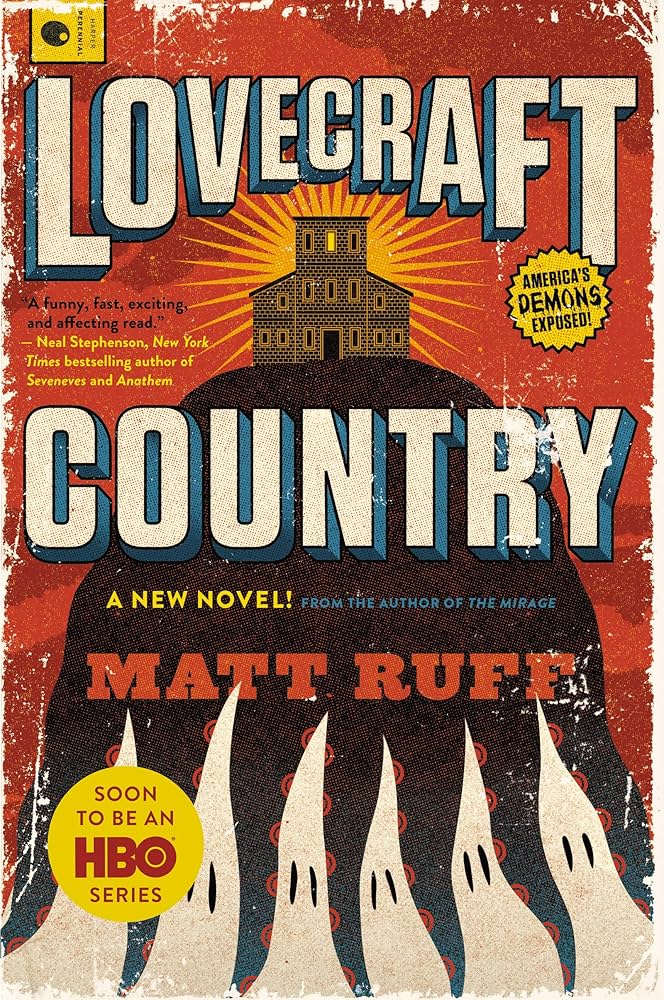
Lovecraft Country is an excellent title for a novel. Initially I assumed it was going to be Fear and Loathing in Las Vegas but with Cthulhu, the nightmarish diary of a drug user as they passed through Innsmouth and Arkham, not being able to distinguish between hallucinations and genuine sinister apparitions. That would have been awesome, but that’s not what this is.

Lovecraft Country – Matt Ruff

Harper – 2017 (First published 2016)

This is a novel that features Lovecraftian entities, but the horror it focuses on is actually that of American racism. First off, let me clarify immediately, that I am not an “anti-woke” asshole who disregards things because they mention race. I understand that racism was and continues to be a huge problem, especially in America. If you disagree with that sentiment, go stick a knife up your shitter. My complaint is not that racism shouldn’t be addressed; it’s that this is not a good way to do it. To me, the appeal of Lovecraft’s cosmic horror lies in its villains’ complete apathy towards human life. In Lovecraft’s best stories, there’s no bad guy who hates people because they were mean to him. He was writing about entities who see human life as nothing more than a mistake. We are slime to the Great Old Ones. What does Cthulhu care for the tribulations of man? To write a story that focuses on race against that backdrop seems absurd. If the world is soon to repopulated with a species of humanoid beetles, why should we care about the immediate suffering of one particular group of people?

In actuality, the Lovecraftian influence on this novel seems to come more from Lovecraft’s fantasy stories than his horror. The amount of Shoggothery in here is minimal. I kept hoping that really bad stuff was going to start happening to everyone, but it didn’t. This novel did not deliver the Lovecraftian horror that I am a fan of. If you want Lovecraftian horror with a black protagonist, I would recommend Victor LaValle’s The Ballad of Black Tom instead.

I hummed and hawed for a month after finishing Lovecraft Country, trying to figure out if I was going to read The Destroyer of Worlds, the book’s sequel. I eventually decided not to bother. I read that Ruff claimed that the first novel is a better book, and as I found this one quite boring, I decided not to bother with its sequel. I’m not going to bother with the TV show either.

The other thing is that the author is a white man. I’m certainly not of the opinion that an author should only write about characters of their own race, but this is very much a novel about the hardships endured by black people in the 1950s. While I thought that Ruff dealt with the topic in a sensitive manner, I am a white guy, so my opinion isn’t that important here. I guess a cast and crew of mostly black people worked on the TV adaptation though, so it’s probably ok. Personally, I wouldn’t touch this kind of thing with a 10 foot pole in my own fiction. I’d be afraid of being accused of virtue signaling or insensitivity. Ruff, at least in my opinion, manages to walk that fine line successfully, but it seems like the effort required in doing so made it much more difficult to deliver the promises made by the book’s title.

William Peter Blatty’s The Exorcist and Legion

The first time I heard of The Exorcist was when it was unbanned in Ireland in 1998. I was about 12 years old and still very Catholic. What I heard about this film was terrifying, and when I saw it a year or two later in a friend’s house, I was shitting myself. Part of this was due to my deeply ingrained fear of the devil, but it is also a very scary film. Despite losing my faith in the power of Christ, the original film still creeps me out every time I watch it. I first read the novel that the movie was based on just a few months before starting this blog, and I never got around to posting about it. I found an audiobook version recently, and decided to give it another go.

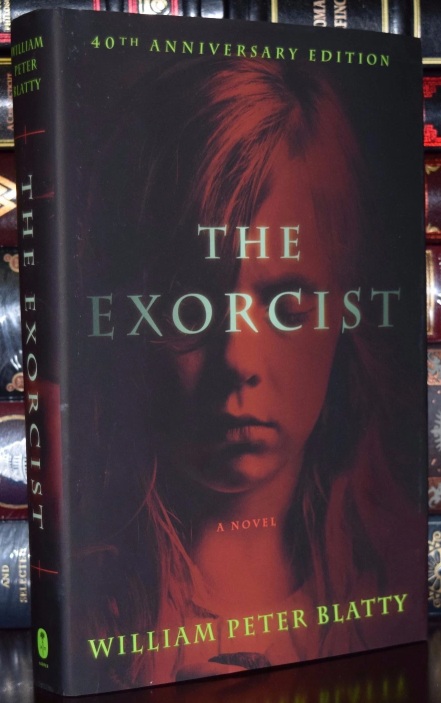
William Peter Blatty – The Exorcist (40th Anniversary Revised Edition)

Harper – 2011 (Originally published 1971)

I’m assuming anyone clicking onto a blog like this knows the story of The Exorcist, but in case you don’t, this is the story of a little girl getting possessed by a demon. The film follows the novel very closely, and if you like one, I’m sure you’ll like the other. The only problem here was that I realised very closely to the end of the book that the audiobook version I was listening to was a revised version. There’s a scene where a fat ghost priest shows up to Karras’s bedroom to warn him about the exorcism that I didn’t remember. This part was cheesy and dumb, and it cheapened the original. The ending is slightly different in the revised version too. The author tries to clarify that Karras is ultimately victorious at the end. I wouldn’t have noticed this if I didn’t compare it with my paperback copy of the original book, and while it’s not a huge change, I don’t like happy endings to horror novels, and I thought this was unnecessary. If you haven’t read The Exorcist before, make sure you read the original text and not the stupid revised version from 2011.

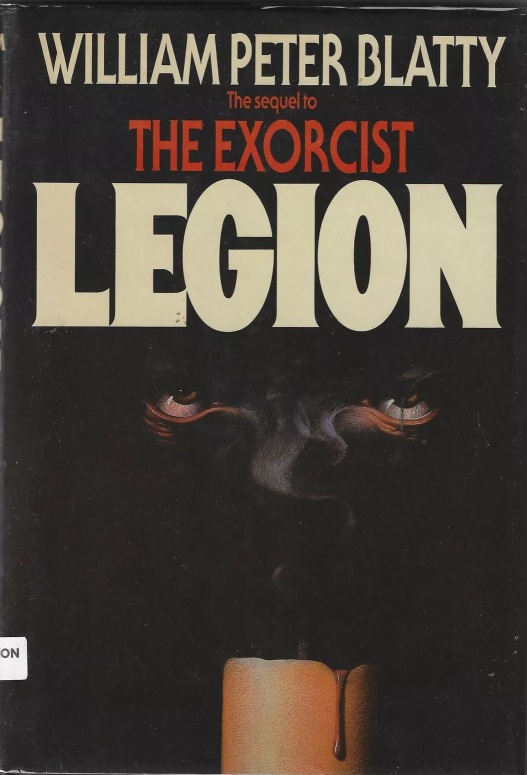
William Peter Blatty – Legion

Simon & Schuster – 1983

Directly after finishing The Exorcist, I read its sequel, Legion. A film version of this was released in 1990 as The Exorcist 3. William Peter Blatty, the author, had nothing to do with the 2nd Exorcist film, and Legion completely ignores the events in that film.

Honestly, I thought this book was trash. It follows the detective character from the first Exorcist novel as he tracks down a serial killer who is supposedly dead. The premise of the story would be fine, but every chapter gets bogged down in amateur philosophizing on the natures of evil and death. It’s painful.

Eventually it turns out that the murderer’s spirit has possessed Damien Karras, the exorcist from the first book. This makes absolutely no sense in the context of the revised version of The Exorcist, as after finishing that, the reader is expected to believe that Karras was victorious in defeating the demon. The functional premise of Legion is revealed to be that the evil spirit was victorious against Karras. This is a stupid horror novel, and while it’s pointless to get too critical here, it’s hard not to do so when the author spends half the book trying to make himself seem clever.

Well, there you go. I’ve finally done the 4 of the creepy children genre: The Omen, Rosemary’s Baby, The Exorcist and The Other.

Clive Harold, Shaun Hutson and Nick Pope’s The Uninvited

Chainsaw Terror is soon to be rereleased, but a few years ago, the only way to read it without paying a fortune was to buy the Shaun Hutson omnibus containing Come the Night (the alternate title for Chainsaw Terror) and the 2 sequels that Hutson wrote to Clive Harold’s The Uninvited. Seeing as though I already had 2 of the 3 books on my shelf, I decided to give this trilogy a read.

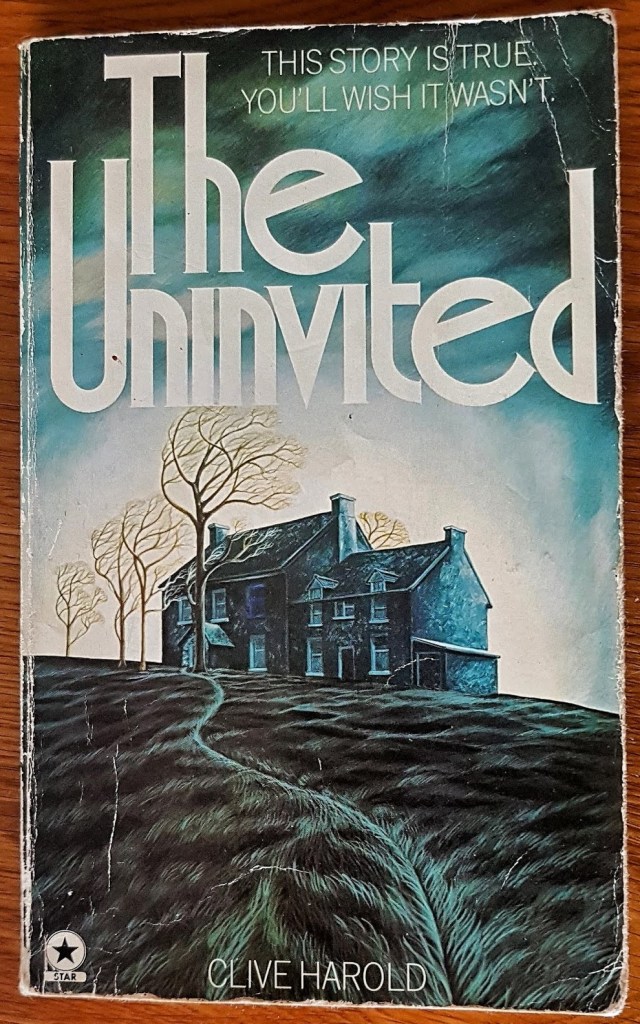
The Uninvited – Clive Harold

Star – 1983 (Originally published 1979)

Clive Harold’s The Uninvited is about a farming family in Wales being disturbed by aliens. They see spaceships that stop their cars from driving, they get a rash, their cows disappear and reappear, they see spacemen in shiny suits, and weird men with waxy foreheads call at their neighbour’s house to ask questions about them. It’s pretty straightforward stuff as far as these things go, and no explanation other than aliens from spaceships is considered.

There were a couple of passages in the book that made me think of how horrible it would be to experience this kind of thing, but I didn’t find any of it convincing. I have seen pictures online of the family this book is about, so it is possible that there was at least some factual basis for this story. I reckon they were bullshitters though.

The book was published in the late 70s, and when I looked up the author, the only thing I could find about his life after publishing this book was that he ended up homeless and selling the Big Issue in the 1990s.

My favourite thing about this book was the amount of tea and coffee the family drink. It genuinely made me care about their wellbeing. Imagine having your evening swally of tae ruined by a disappearing herd of cows. Nightmarish.

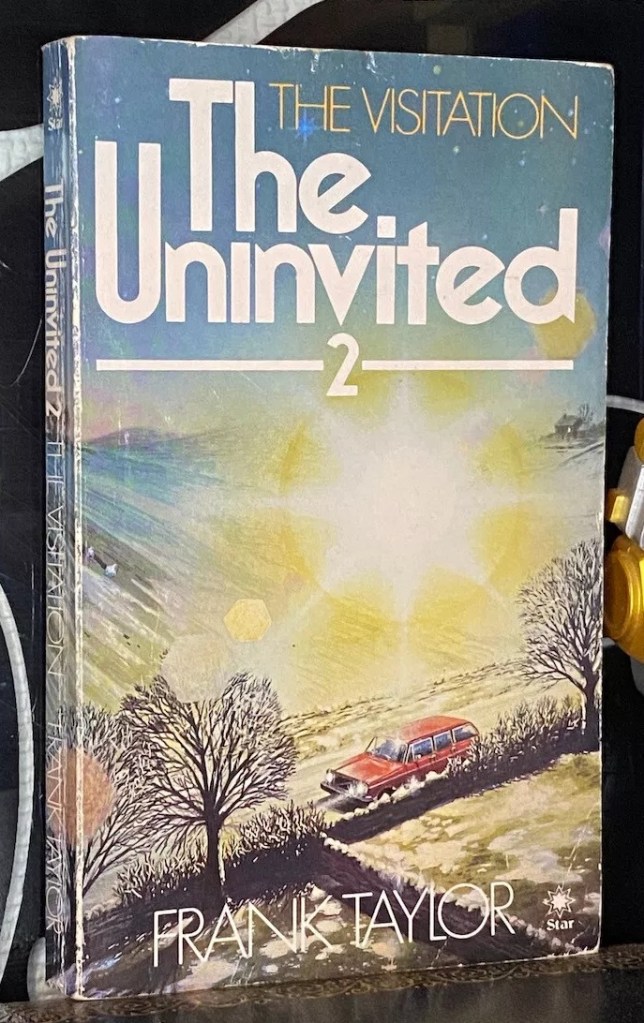
The Uninvited 2: The Visitation – Frank Taylor

Star – 1984

This one is about a family who own a pub who get harrassed by aliens. The aliens abduct and rape the mother and send down Men in Black to annoy the family. I was hoping this was going to be like the first book but Shaun Hutsoned, but it’s very similar in its scope. There’s no mutant abortions, IRA men or chainsaws. Although it is suggested that the women are raped, it cuts out after they feel their legs being spread open. This is boring crap, and I sincerely doubt any of it is true.

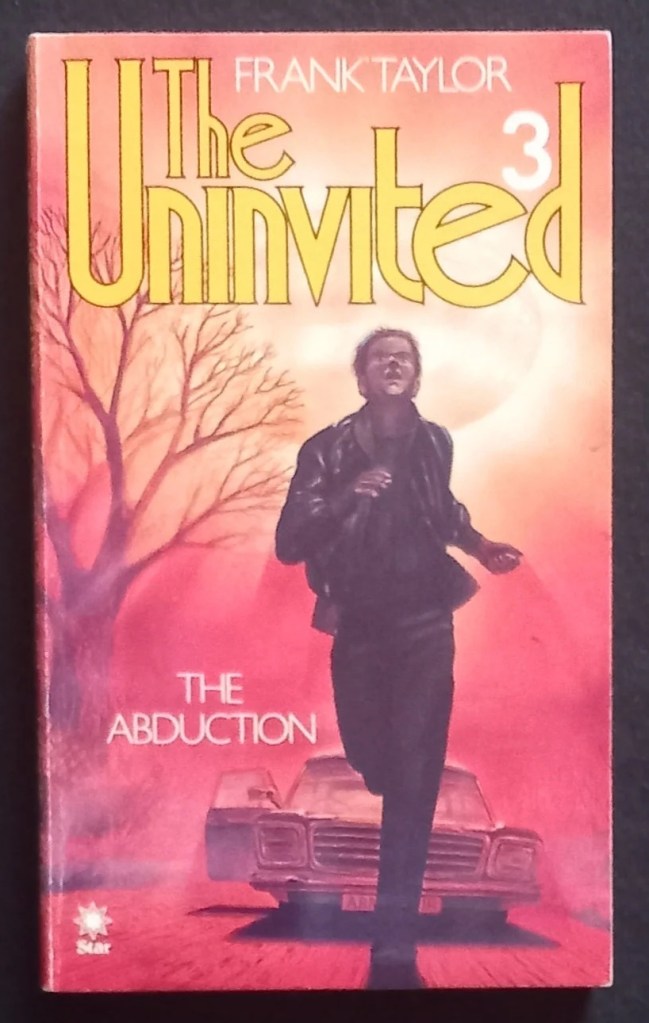
The Uninvited 3: The Abduction – Frank Taylor

Star – 1985

This time it’s a policeman who sees an alien, but his coworkers don’t believe him. He gets a heat rash after being chased by a spaceship, and 2 aliens try to come into his house. Men in Black show up to tell him to keep things to himself, but these are members of the government rather than aliens Eventually the copper is abducted and raped by a sexy alien woman with red pubic hair. This was boring, definitely fictional garbage. It’s half-assed, and I am not surprised that Shaun Hutson used a pseudonym.

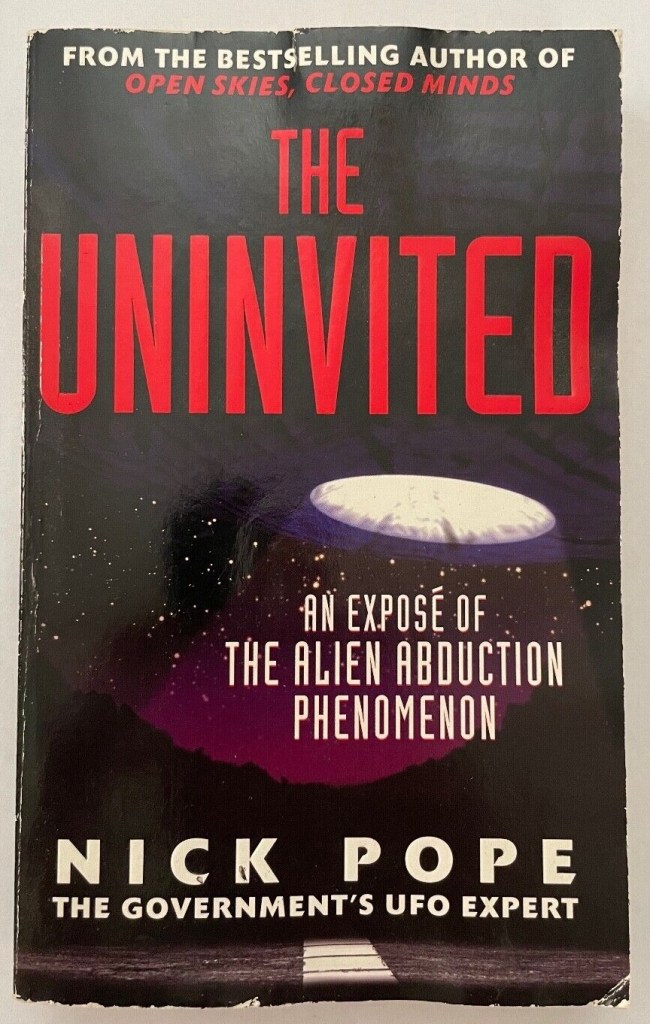
The Uninvited – Nick Pope

Pocket Books – 1998

I’ve been listening to a lot of audiobooks recently, and the reason I read the three above books was because I downloaded an audiobook called The Uninvited thinking it was the first book in the series. It turns out it was actually a completely different book about aliens by a researcher named Nick Pope. I was a few chapters in before realising that it was something totally different, but at that stage I had gone too far to turn back.

This is a fairly broad overview of the alien abduction phenomenon. It covers many of the most famous abduction cases and some cases that the author came across when working as a UFO specialist for the British Ministry of Defence. I found the stuff on the older cases quite interesting, but Pope’s willingness to accept obvious nonsense was a bit jarring. A lot of the people he’s talking about were clearly liars or morons, and some of the cases he discusses have long been accepted as hoaxes. Here is a video of him interviewing an alien who has possessed a woman that Pope claims holds the world record for number of times to get abducted. There’s a whole chapter in this book about her.

On a separate note, I found out yesterday that my friend Sandy Robertson died. I first encountered Sandy when he scolded me for pretending to throw my Colin Wilson books in the garbage. We became friends after I interviewed him about his Aleister Crowley book, and I heard from him nearly every week after that. He was a really cool guy, and I was deeply saddened to hear that he passed. Sandy my friend, if your ghost is reading this (and I wouldn’t be surprised if it is), I will miss you.

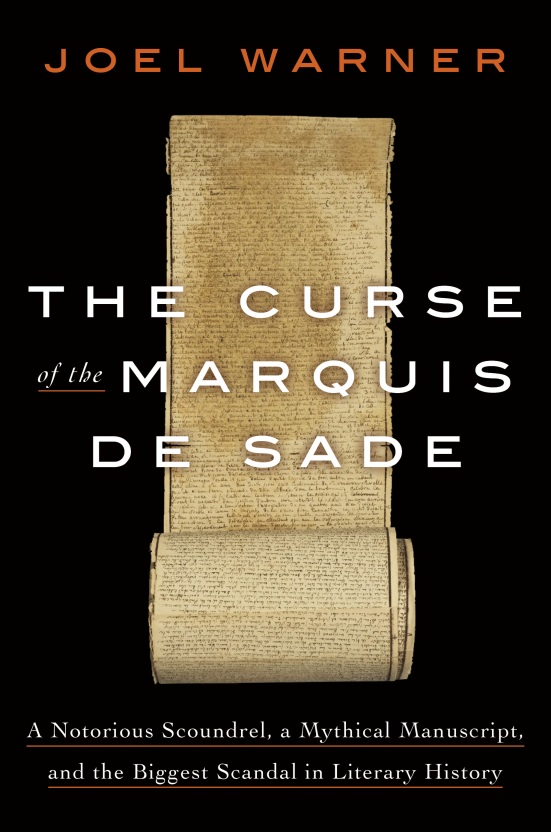
The Curse of the Marquis de Sade: A Notorious Scoundrel, a Mythical Manuscript, and the Biggest Scandal in Literary History – Joel Warner

Crown – 2023

I read a few books by the Marquis de Sade when I was in my early twenties. I was thoroughly amused, but I haven’t really felt the need to revisit his work since. A few days ago I was searching through my local library’s collection of audiobooks when I spotted a book called The Curse of the Marquis de Sade. Initially, I thought it might be a light BDSM romance novel, but on closer inspection it seemed to be a history of the manuscript of 120 Days in Sodom, perhaps the most twisted novel ever written and one of my personal favourites.

So de Sade wrote 120 Days in Sodom while locked up in prison. After the storming of the Bastille, he lost the hand-made scroll it was written on and assumed it had been destroyed. It turned up after his death, and while he had spent his remaining years writing other foul books, none of them compared to 120 Days in terms of their meticulous and undiluted cruelty.

It’s the story of 4 perverts who kidnap a bunch of kids and take them to a remote castle. There, they proceed to perform acts of every perversion imaginable. The plot is extremely simple, and as the novel was never actually finished, the version that we have is largely just a list of perverted acts. We’re not talking foot fetish or balloon popping stuff here. This is mostly shit eating, blasphemy, dismemberment and masturbating to scenes of brutal torture. I wrote more about this book a long time ago in case you’re interested.

Warner’s book goes into very little detail on the contents of 120 Days of Sodom and instead focuses on the history of the scroll. Obviously as a one of a kind manuscript, it became quite a collector’s item, and it has been highly sought after and prized by several interesting characters. Warner also gives a biographical account of de Sade. I knew the basic story of his life, but I found this part quite amusing. He was a terrible person, but his pettiness and penchant for blasphemy are quite endearing to me.

The Curse of the Marquis de Sade is a short book about a book. If you have managed to read 120 Days, I would imagine you will find Warner’s book quite entertaining. It has made me think about revisiting de Sade’s work. I’ve had unread copies of Justine and Juliette on my shelf for years. Maybe the time is now right.

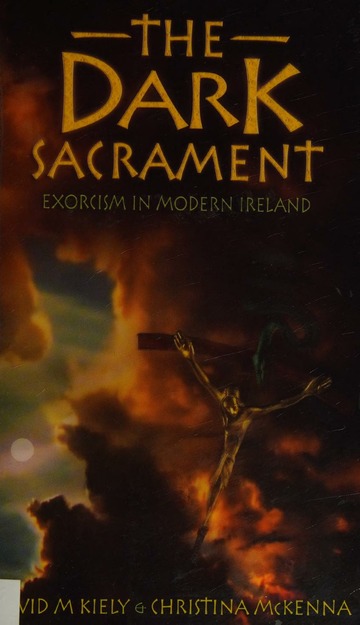
The Dark Sacrament: Exorcism in Modern Ireland – David M. Kiely and Christina McKenna


It’s Saint Patrick’s day tomorrow, and by sheer coincidence, this week’s book is set in Ireland. I was quite excited when I found a book set in my home country about demonic possession.

Gill & Macmillan – 2006

I started reading the original edition titled The Dark Sacrament: Exorcism in Modern Ireland, but later editions were titled Dark Sacrament: True Stories of Modern Day Possession and Exorcism. These editions are identical expect for an additional story in the latter, but this story is set in Kerry, so I’m unsure as to why they dropped the reference to Ireland in the subtitle. The whole time I was reading the book, I felt like the authors had written it to appeal to stupid Irish Americans. I had hoped for horrendous blasphemies, but I got a bunch of hooey about fairy forts, Banshees and druids. I can’t imagine any of the Irish people I know taking this nonsense seriously. Don’t get me wrong, there’s lots of stupid, religious Irish people, but this stuff is so daft that only an uneducated American pig could possibly accept it as true.

The introduction makes reference to a protestant Canon meeting a girl in Belfast who became possessed when she was initiated into satanic cult as a child. Bullshit. This supposedly happened in the 70s. If you google Satanism in Belfast in the 1970s, the only relevant information that shows up is about stories spread by British disinformation agents as part of a psy-op against Catholic communities. If I am wrong and any knows anything about Satanic groups that were active in 1970s Belfast, please reach out and let me know!

The cases presented in this book appear as short stories, and after finishing the book, I doubt any have any basis in reality. This entire book must be fiction. It’s too stupid to believe.

  1. The first story is about a woman who was neglected and sexually abused as a child. She had attempted suicide twice before the exorcism, and she smelled like piss. The narrative is actually quite scary. Her granny’s ghost visits her house and terrorizes her and her boyfriend. Later, she gets possessed by this ghost and tries to kill herself. The book never really explains why her granny hates her so much. The exorcism was supposedly successful, but the girl hung herself 6 months later, so it seems like she was definitely just a person with severe mental health problems. I liked the story, but it was clearly bullshit.
  2. A woman is repeatedly night raped by a French spirit named Pierre Dubois. This happens after she plays with a Ouija board. Sounds like a case of sleep paralysis.
  3. A young teenager finds a Ouija board by a river. Its planchette floats up into the air, and mesmerized, the kid uses it and comes into contact with a spirit named Tyrannus. Then he starts having seizures and tells his ma to fuck off. The kid is exorcised but it doesn’t work. Now he has suicidal thoughts. Load of bollocks.
  4. A woman buys some smelly wooden balls in a hippy shop that unleash the spirit of a missing child from 200 years ago into her house. The ghost child is mischievous, but after she is dispelled with prayer, she is replaced by an evil spirit that burns the homeowner’s prayers and wrecks their crosses. It turns out the house was built in a fairy ring. This is clearly fictional. Total bullshit.
  5. A child starts seeing ghosts in her house. No possession involved, just ghosts that rearrange video tapes and play peekaboo.
  6. A family moves into a house owned by their ancestors but left to other people. They had to buy it back. It turns out their family were trying to protect them from an evil spirit that lives under the hearthstone that has inhabited that home since the time of the druids.
  7. An old man goes on a cruise after he retires, but when he gets to Egypt he meets a man who is either drunk or possessed. When he gets back to Ireland, the spirit that possessed the drunkard takes possession of the retired man’s next door neighbour. Then the neighbour rapes the old man in front of his family at a barbeque.
  8. The ghost of a German Hessian mercenary rapes a mother and daughter and their Bosnian employee.
  9. A girl meets a creepy guy in a bookshop who gives her a book about Tuesdsy Lobsang Rampa, the fake Tibetan monk, and then teaches her how to astrally project and go back in time with LSD. He is evil, and when she gets scared, he sends evil spirits to attack her. Priest exorcises them away. Not true. Horse shit.
  10. This story is only in later editions of the book. It is the vilest of all. A woman crashes her car into a truck and ends up marrying the truck driver. They have a kid. Turns out that the husband is having a gay affair with his paedophile priest friend. This man was raped by his father and forced to have sex with his siblings. After his dad died, his mom prostituted her own kids out. It turns out this man is raping his own child and letting his priest boyfriend and paedo brothers in on the action. The woman runs away, but the priest dies and haunts her and her child until another Catholic priest gets her to pray for the soul of the child rapist. This story is obviously untrue and deeply perverse, but the fact that it works as a Catholic morality tale is fucked up.

There is a bit on the history of exorcism in Ireland as an afterword, but the above stories make up most of the book.

Honestly, I find it hard to believe that anyone could read this book and take it seriously. This book is trash. I have to say though, when I was looking up the author, I found his youtube channel, and while I didn’t enjoy his book, I did enjoy his singing.

Happy Saint Patrick’s day, you disgusting snakes!

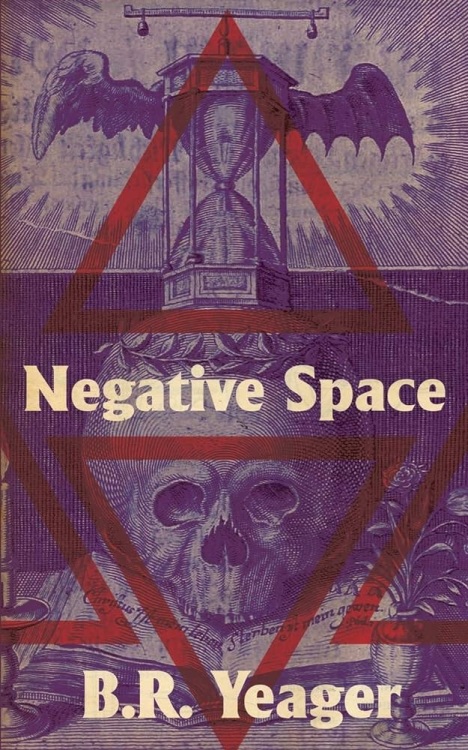
B.R. Yeager’s Negative Space

Apocalypse Party – 2020

I remember seeing the cover of this book a few years ago and being intrigued. It looked like the kind of thing I’d enjoy reading. Last December I decided that I’d give it a go, but when searching for a copy I read a couple of reviews that described it as unbearably bleak and depressing. I wasn’t exactly having a holly jolly Christmas, so I decided to postpone reading anything that might make me feel any worse. A couple of weeks ago, I was browsing my local library when I found a copy of Negative Space sitting on the bottom of a shelf. I took it home and spent the weekend with it.

So yeah, this is about a town where the local teenagers are all killing themselves. There are three narrators who weave the narrative of the final months of their friend Tyler, a particularly deranged youth. Most of these teens are fucking each other and getting fucked up on whorl. Whorl is a hallucinogenic that seems to have bizarre mystical qualities.

One of the characters is trans, but their transition is never actually addressed, and the reader is left to figure out that Lou and Lu are the same person. This goes with the quasi-philosophical element of the book that questions stuff like existence, identity and relationships. I think this is where a lot of the horror of the book is supposed to lie. I can imagine this being a real bummer to a person who didn’t already have a dim view of existence. There is an actual supernatural element to what’s going on, but it’s really not the scary part.

There are quite a few graphic depictions of self harm. I’d definitely avoid this book if that might upset you. In truth I was a little surprised at my own capacity to take it in. This is horrendous bloody stuff, but it’s happening to characters with more depth than the victims of most gory splatterpunk.

Overall, I was entertained by Negative Space. It is by no means a pleasant book, but reading it didn’t ruin my weekend. I know that B.R. Yeager has written a couple of other books. Maybe I will read them in the future.

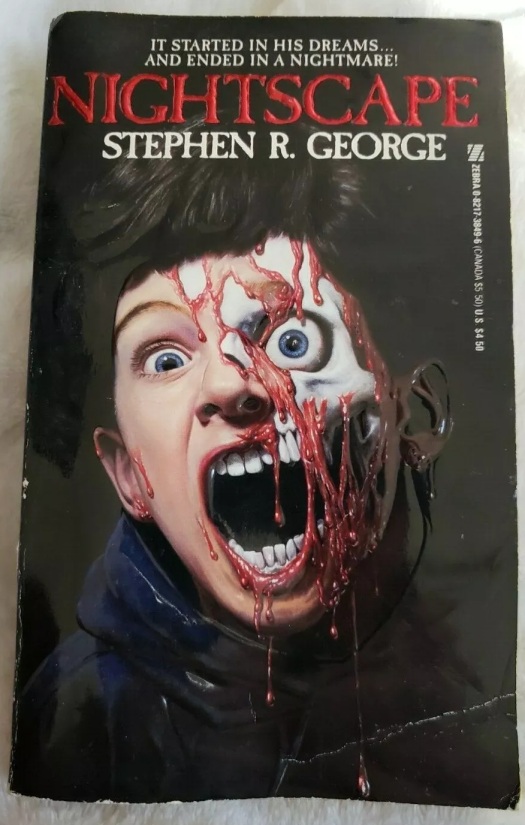
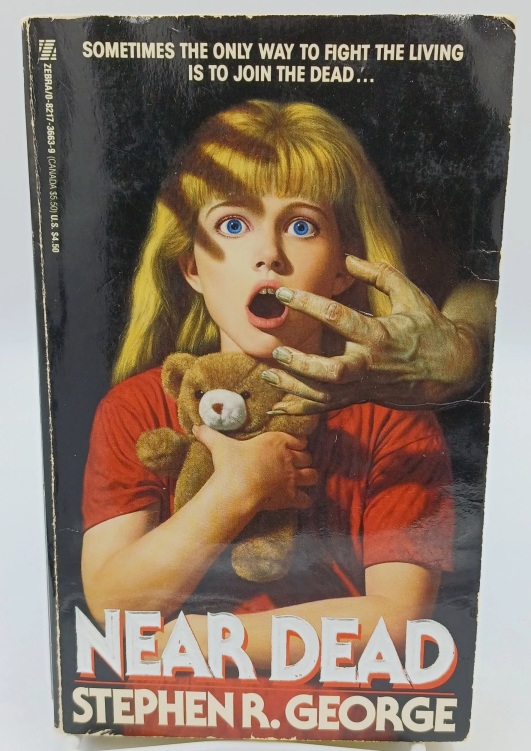
Zebra Horror from 1992: Nightscape and Near Dead by Stephen R. George

I remember talking to some dickhead online a few years back who told me that the book that he wanted most in the world was Nightscape by Stephen R. George. I had never heard of it, but one look at the cover, and I understood.

Zebra – 1992

This started off pretty well. A kid moves in with his mother after his father goes missing, but soon thereafter his skin starts coming off. It gets a bit minging, but the entire book is ruined by a super happy ending. I hate happy endings for horror novels, and this one is the worst. I had enjoyed the rest of the book, but absolutely everyone getting exactly what they wanted is not what should be happening at the end of a novel with this cover. I want pain, violence and misery. Honestly, I was very disappointed.

I had another novel by Stephen R. George on hand though, so I read that too.

Zebra – 1992

Now I read this book maybe 2 weeks ago, but I had to go and read a description online to remember what happened in it. It’s about a lad whose wife and daughter come back as ghosts once their murderer starts killing again. The lad then falls in love with a weird psychic lady. Although it didn’t really leave a lasting impression on me, I definitely quite enjoyed Near Dead. I know it only took me a couple of days to finish. It was definitely better than Nightscape.

I don’t have a huge amount to say about either of these novels. I got pretty much what I expected from the covers. While I didn’t like the ending of Nightscape, both books were very readable. The biggest problem with this author is that old copies of these paperbacks have become very expensive due to their awesome (but largely inaccurate) cover art.

I know I have a copy of Stephen R. George’s Torment, but my books are mostly in storage at the moment, and I wasn’t bothered to root it out. I may well read it or other books by this author in the future.

The RCMP and Aliens from the Sirius Star System are Collaborating to Control your Mind with Microwaves: Martti Koski’s My Life Depends on You!

A few weeks ago, while I was reading Jim Keith’s Saucers of the Illuminati, I came across a mention of a text called My Life Depends on You! by a guy named Martti Koski. After immigrating to Canada from Finland, Martti realised that the Canadian police were firing microwaves into his brain to control his mind. When I looked for a copy at my ordinary book sources, I couldn’t find anything. After a little digging I realized it wasn’t actually a book. It was a self published pamphlet that was reprinted in different zines in the 1980s. Luckily, I found a copy archived online.

1980

After 4 years of hearing voices from the apartment upstairs from him, Martti started losing control of his body. He lost his sense of smell and control over his bum and willy. He couldn’t work anymore because the air at his work place was contaminated with carbon dioxide and was making him foam at the mouth. He stopped sleeping and was admitted to hospital after a “heart attack”. (His quotation marks, not mine).

During his stay at the hospital, he heard a new voice, this one claiming to be a spokesman for the RCMP. It told him that he had been chosen as a candidate for spy training. He had been brought to the hospital as this was a similar environment to the Russian insane asylum where he was going to be deployed.

The voice repeatedly told him that the food at the hospital was poisoned and to avoid a certain room. He was later taken to this room where the doctors hooked up a machine to his dick and gave him electric shocks to the tadger. The electronic voice told him to have a wank when this was happening. He tried, but he couldn’t come to a climax. The voice told him that if he didn’t gip, the doctors would stretch his bollocks out. On returning to his room after this experiment, an old man flashed his bollocks at Martti to show him a 15cm long ball-sack as a warning.

artist’s rendition

When he got out of the hospital, Martti started getting bad headaches and couldn’t sleep. He went to live in a hotel, but he ruptured his bladder there twice because the RCMP were stopping him from knowing when to do his wee-wee.

He went back to the hospital for round 2 of spy-training. After leaving a second time, his apartment was flooded with poison gas that caused his mouth to fill with blood.

He decided to leave Canada, but he had to travel to another province to get a passport. The voices and RCMP followed him on his journey. The voices told him that he had no limit on his credit card, and when he got to Finland the voices changed to female voices. These voices were actually aliens from the Star Sirius.

He soon went back to Canada, and there were more gas attacks at his apartment.

After getting sick of being circled by firetrucks, Martti realised that the microwaves that were controlling his body weren’t as powerful when he was outside. This is where the story ends.

Martti contacted the authorities but they never took him seriously. He spent all his money printing leaflets detailing his plight. At one point, he put out a call for others affected by telepathic amplifiers that work with microwaves, and he met some other victims, half of whom got exposed to these experiments in prison. Martti feels he was chosen because he didn’t have any friends or family in Canada.

“Leaders of the Canadian parliament are silently backing brutal human experiments, very similar to those done by the Nazis, the only difference being the use of immigrants instead of Jews.”

If any of this sounds familiar, it’s probably because there are now communities of people who are making these claims online. 7 years ago, Vice made 2 popular documentaries about “Gang Stalking” and “Targeted Individuals“. I knew about paranoid schizophrenics before reading this, but I wasn’t aware of their online communities. There’s thousands of people experiencing this kind of thing and using the internet to network and share their stories. I started looking into these communities, but it got very depressing very quickly. While it’s nice to think of people having a network of support, some of these groups are echo chambers that probably make things far worse for their members.

One piece of good news that I found during my brief look down that rabbit hole was that Martti Koski is still alive and posting. I sent him a message, but got no response. I sincerely hope that he is doing well.