John Langan’s The Fisherman

Word Horde – 2016

I don’t remember how I heard of this book, but I picked up a copy recently and really, really enjoyed it.

A man loses his wife to cancer and takes up fishing as a means to occupy himself. He makes friends with another recent widower and they start going fishing together. On the way to a new fishing spot, they stop at a diner for breakfast, and the owner tells them a chilling tale about the spot they are heading to. Nevertheless, they go there anyways.

The story they’re told in the diner makes up the bulk of the book, and it’s probably the scariest part. I was listening to an audiobook version before going to bed, and it scared the shit out of me. I’ve read my share of horror novels, and it’s quite rare that they actually creep me out like this one did. It was horrible and disturbing but purposefully written.

I’ve seen this referred to as Lovecraftian horror, and while I see the influence, this does not read like Lovecraft at all. The characterisation and imagintive plot reminded me of Stephen King at his best. The author used to be a university lecturer, and it seems his work is considered “literary horror”. I was too busy enjoying the book to really notice this except for when the author lifted lines directly from Moby Dick and put them in his own characters’ mouths. I only noticed this because when I read Moby Dick as a young man, I liked these specific lines so much that I wrote them on a sticky note and kept it in my wallet for years.

I know I’m not saying much here, but I deliberately avoided any kind of spoilers before reading this. I’m glad I did, and want you to do so also. Get a copy of this book and read it. I’m confident in saying that this was the most enjoyable novel I read in 2025. I’m looking forward to reading more from this author in the future.

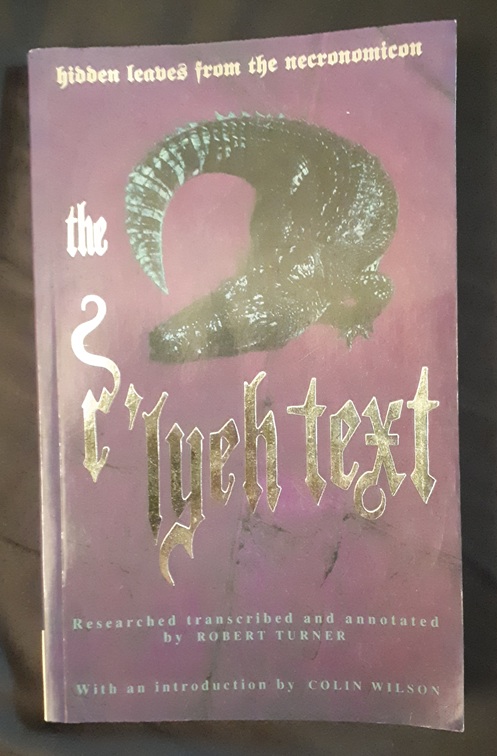
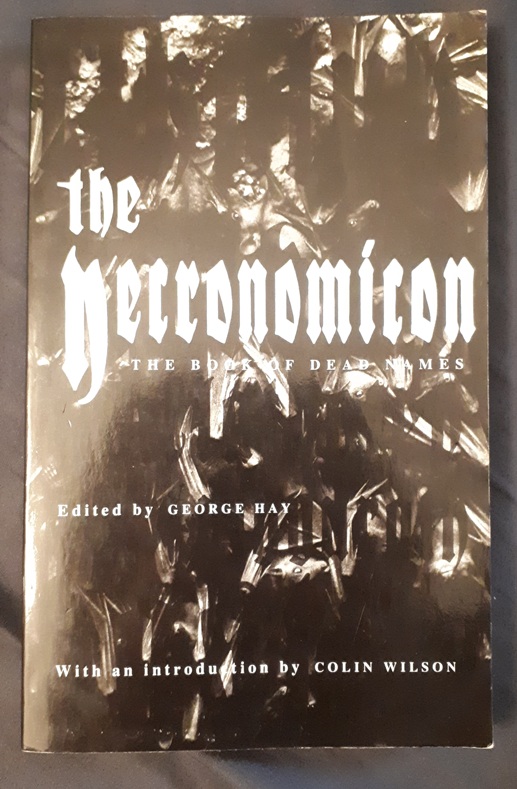
More Necronomicons: The Book of Dead Names, The R’lyeh Text and Al Azif

Exactly 10 years ago, I reviewed the Simon Necronomicon. While that is probably the most famous hoax Necronomicon, there have been others.

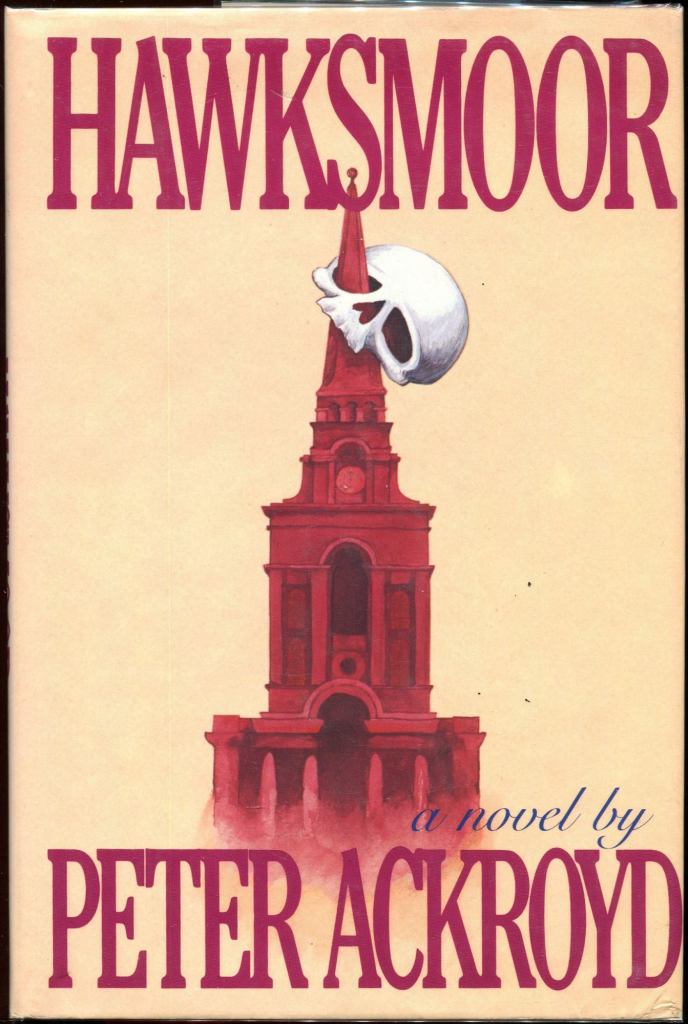
Earlier in the year, while I was researching Alan Moore for my posts on Nicholas Hawksmoor and Jack The Ripper, I came across a review he had written of The R’lyeh Text that made me want to read it. After a bit of searching, I realised that The R’lyleh Text was a sequel to a 1978 version of the Necronomicon that’s usually referred to as the Hay Necronomicon after its editor, George Hay.

The Necronomicon: The Book of Dead Names

Skoob – 1996 (Originally published 1978)

Colin Wilson’s book on the occult was one of the first I read in the topic, and while it led me to countless other books and resulted in the creation of this blog, I’ve never bothered to read any of his other works. Actually, my low opinion on Wilson got me in trouble with another historian of the occult a few years ago. Wilson wrote the introduction to this Necronomicon and reading it did not change my opinion of him. He was well read, but full of shit. This introduction is considerably longer than the actual text that it is introducing.

The text of the Necronomicon here is supposedly taken from a ciphered manuscript that had been in the possession of John Dee. It was decoded with a computer program. Wilson presents the claim that Lovecraft’s father had been a freemason and occultist and had somehow acquired a copy of this manuscript and either told his son about it before he went insane or left a copy lying around their home.

The story is obviously bullshit, and the text it presents isn’t particularly interesting. I love Lovecraftian prose and black magic, but these aren’t entertaining if they’re not sincere. None of the rituals in here are things that anyone is going to do. It’s not even like reading a Lovecraftian story where the verbose ramblings add to the suspense. I knew this book was a hoax when I started it, and it felt truly underwhelming reading it.

There’s three essays included after the grimoire part to flesh the book out, but none of them were particularly interesting. One of them was by Angela Carter. I recently read and quite enjoyed her The Bloody Chamber.

The R’lyeh Text: Hidden Leaves from the Necronomicon

Skoob – 1995

While the Hay Necronomicon went through a few editions, its sequel, The R’lyeh Text, only went through one. This has made it harder to come by at a reasonable price. Let me warn you my friends, don’t spend a lot on this if you’re thinking of buying a copy. It’s boring crap.

There’s another lengthy introduction from Colin Wilson. This one chirps on about Edgar Cayce and Atlantis, the Sirius Mystery, Kenneth Grant, Aleister Crowley, the Marquis De Sade and the Piri Reis maps, all in an attempt to prove that Lovecraft’s mythos stories were based in fact. I was astounded at how boring this introduction was given my interest in the topics it covers. Again though. this may have had something to do with the fact that I knew the book was a hoax and that Wilson was literally bullshitting. I think it may also have had something to do with the fact that Wilson’s writing is a bit dull.

The grimoire text here is the remainder of the text that was published in the Hay Necronomicon, and it is even less interesting. There’s a few essays included too. One of them discusses the Red Book of Appin, and another has put me on the trail of a book about a talking mongoose, but neither was interesting enough to save The R’lyeh Text.

Truly, I was quite disappointed by these books. If you’re going to make a fake Necronomicon, you should to overdo it. Throw mystery and mythology to the wind and include brutally violent rituals of heinous, tentacled evil. Nobody is ever going to believe it, so at least make it fun.

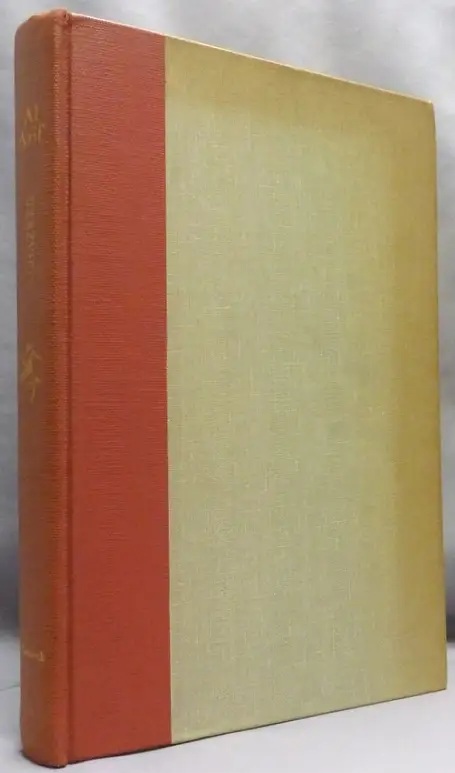
Al Azif – Abdul Alhazred

Owlswick – 1973

The Hay Necronomicon includes a section on a different version of the Necronomicon that had been published in 1973, the Owlswick Necronomicon. (Hay’s book does not make reference to the Simon Necronomicon even though version had come out a year before Hay’s.) The Owlswick Necronomicon is a hoax book that contains a short introductory essay by Lovecraft biographer L. Sprague De Camp in which he claims to have been sold a dodgy manuscript from the Middle East that killed whoever tried to translate it. It’s supposedly written in Duriac, a non-existent language, and it’s actually just a bunch of scribbles. It’s the kind of book that’s just going to take up space on your shelf after a couple of moments of initial amusement.

I’m really thinking of doing a Lovecraft re-read next year. This crap has me longing for the good stuff.

The Books that Villainized Dungeons and Dragons in the 1980s

I have no great interest in role-playing games, but I knew that Dungeons and Dragons was associated with the Satanic Panic of the 1980s, do I decided to look at the books that contributed to its infamy.

Houghton Mifflin Harcourt – 1984

The Dungeon Master: The Disappearance of James Dallas Egbert III – William C. Dear

Dallas Egbert the Third was a weird teenager. He was highly intelligent, but socially awkward. He tried to make up for this when he went to college by taking drugs. He was gay, and he got involved with some shady characters. His mom was pushy, and wouldn’t have approved of his lifestyle, so he decided to kill himself. He went down into the ventilation tunnels under his college so he could die, but he couldn’t do it, so he went to hide out in some of his gay friends’ homes. He was kept drugged and it seems likely he was sexually abused. A private detective, the author of this book, found him halfway across the United States. They returned home, but Dallas put a bullet in his head a few months later. He never gave his full account of what had happened to him when he was missing.

This book was written by the detective who found Dallas. It wasn’t a great book, and the author’s writing style was grating, but in fairness, it’s not overly bullshitty. There is a horrendously drawn out chapter describing the author’s experience playing Dungeons and Dragons, but despite his intial suspicions, he ultimately dismisses the idea that the game had anything to do with Dallas’s fate. The kid was all kinds of messed up. His interest in fantasy games and science fiction seemed like the only parts of his life he enjoyed.

The book is of its time. It repeatedly makes reference to “the gays”, but it doesn’t do so with any kind of malice. If you want to know about this sad and weird case, this is essential reading.

Dell – 1982 (Originally published 1981)

Mazes and Monsters – Rona Jaffe

I had very low expectations when I started reading Mazes and Monsters, and I can say with disappointment that it was exactly what I expected. This is a boring novel with nothing of any value. It’s truly as bad as it looks. Look at that shitty-ass cover again. Fucking lame shit.

This book is about 4 nerds who play “Mazes and Monsters”. All of the chracters are lame and annoying. One is very clearly based on Dallas Egbert, but he isn’t really the protagonist. The main character here gets so involved in the role-playing game that he becomes convinced he’s really a holy magician. He is so strongly convinced of this that he becomes impotent and kills a person. As much of the book is spent describing the backgrounds of the main characters’ parents as is spent on the plot. I assume this was because Jaffe’s audience were mostly middle-aged women with teenage children that needed some point of reference for understanding the plot. This was so, so boring and crap. If I owned a copy of this book, I would take it into the forest and defecate upon’t. The only good part was when one of the main characters’ mothers goes on a date with a gentleman who expresses disappointment over her haircut because her formerly long, curly hair had reminded him of pubic hair. Such a bizarre detail to include. I’m willing to bet that the author’s minge was infested with pubic lice.

Mazes and Monsters was published the year after Dallas Egbert died, and while it does make it seem like role-playing games are probably dangerous for impressionable youths, it doesn’t really try to link role playing games with the occult. Still, it’s a piece of shit, and you shouldn’t read it.

Chick Tracts – 1984

Dark Dungeons – Jack Chick

This is a Chick Tract that came out in 1984 that claims that playing Dungeons and Dragons leads to suicide and Satanism. It’s silly rubbish. Read it here.

Berkley – 1982 (originally published 1981)

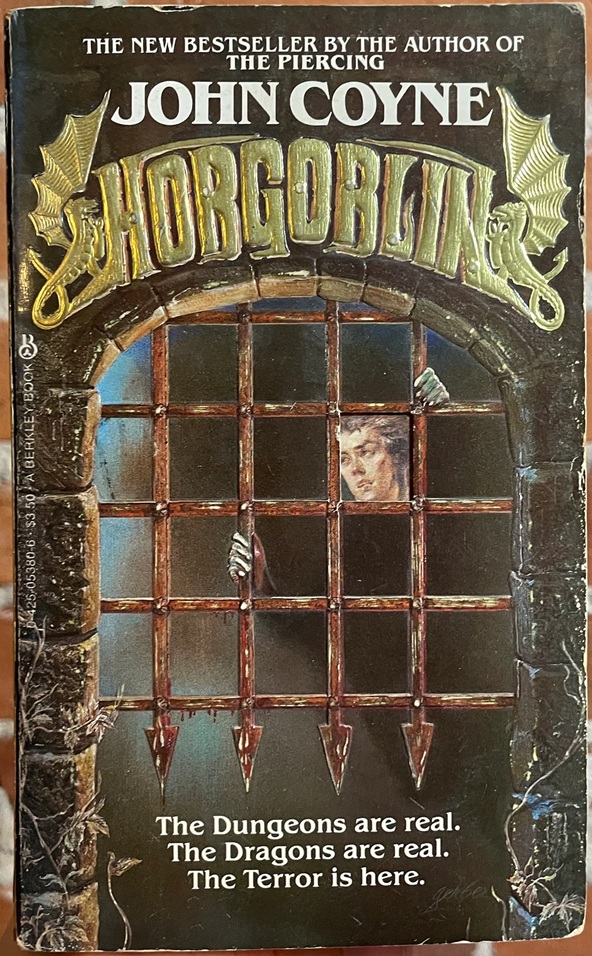
Hobgoblin – John Coyne

I’m throwing this book in here because other authors have linked it to the furor around RPGs in the 1980s. It’s about a young man who becomes obsessed with a game called Hobgoblin, but none of the really bad stuff that happens in here comes as a result of the game. Coyne’s book is more of an entertaining novel that features an RPG than a statement on the dangers of those games.

So a nerdy kid’s dad dies, and him and his mom have to move to a small town where she can work in the local castle. The caretaker there is a creepy Irish immigrant, and the manager starts fucking the boy’s mom. The boy is a stupid virgin, and chooses to start fights with the local football players instead of banging the hottest girl in school. It turns out there’s a weirdo living near the castle who likes murdering and sexually assaulting people.

So many parts of this book were completely unbelievable, but it was decently entertaining. There’s one part where two of the local jocks kidnap a girl, tear off all her clothes and abandon her, tied to a tombstone on the top of a hill. Then they break into the protagonist’s house and sexually assault his mom. Nobody does anything about this, and they face no repercussions. I know that attitudes toward sexual violence have change since the 1980s, but this was ridiculous.

The Irish elements were mildly interesting. The role playing game here, Hobgoblin, is set in Ireland, and all the characters in the game are supposed to come from Ireland. I didn’t recognize quite a few of them. I looked it up, and one of the main bad guys, the Black Annis, is actually from English folklore. Also, the old Irish caretaker character is very weird. Are we supposed to feel sorry for him or repulsed?

Ok, I’m going to include spoilers in this paragraph, so skip ahead if you want to read the book. I’m a bit confused about the ending. I just finished the book, and I don’t really understand what happened. The main bad guy was a badly brain damaged geriatric who must have been more than 80 years old. Despite this, he was able to brutally murder a bunch of people by himself over the course of about half an hour? Did he have some kind of magical power? Why was he killing people in the first place? Did I miss something?

Hobgoblin was alright. I don’t regret reading it. Mazes and Monsters was a mouthful of salty diarrhea. Dear’s book about Dallas Egbert was interesting as a historical source, but it wasn’t a particularly enjoyable book. I am quite done with books about Dungeons and Dragons.

Whitley Strieber’s Early Horror Novels: The Wolfen, The Night Church and Black Magic

It’s roughly a decade since I first reviewed a book by Whitley Strieber. I hadn’t been into this stuff very long, and I was shocked at how stupid the book was. I read the next book in his series about getting diddled by aliens a few months later, and a couple of years after that I managed to make it through the third book. Although I’ve had the 4th entry in the series on my shelf for years, I’ve never been able to convince myself to open it. What I had read of Strieber made him seem an unbearable twat, a boring, self centered gobshite.

I knew from the outset that he had been an author of horror novels, but his alien books were so cumbersome that I had no desire to read his fiction until. It was only when I became more interested in paperback horror a few years later and discovered that some of his horror novels seemed to be held in high regard that I decided to give his fiction a chance. He wrote 4 horror novels before switching to fantasy in the mid 80s. (It was a few years later that he moved on to “non-fiction” about aliens.) Over the last 8 months, I have read 3 of his 4 early horror novels. The one I didn’t read, The Hunger, seems to be considered one of the better ones, but it has sequels, so I am saving it for a separate post.

Avon – 1988 (Originally published 1978)

The Wolfen

I read this a few months ago and didn’t bother taking notes. It’s about a pair of detectives trying to solve a series of grisly murders committed by superwolves (not werewolves). It wasn’t utterly amazing or anything, but it was competently written and definitely of a higher standard than a lot of the paperback horror boom. I quite enjoyed it.

Grafton – 1988 (Originally published 1983)

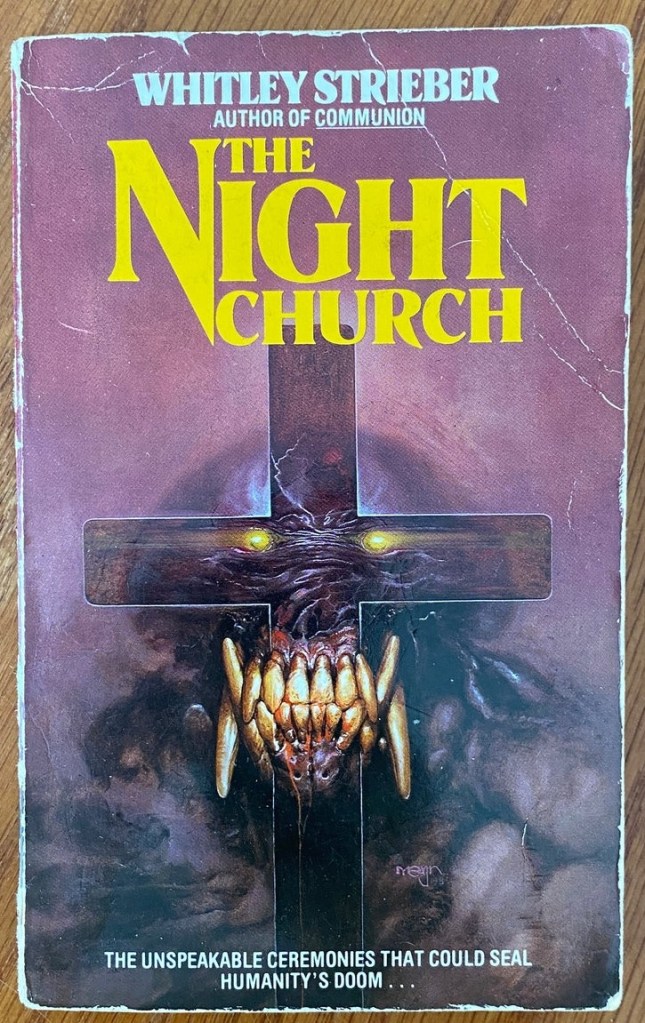
The Night Church

I was expecting to enjoy this one more as it deals with Satanists rather than werewolves. The different covers are really too. Look at the one above! Unfortunately, the story is boring. A young couple falls in love only to discover that they have been bred to breed the Antichrist. I read this a few months after reading all of the The Omen novelizations, and maybe the similarity to those is what made this seem underwhelming. After finishing this, I waited roughly 6 months until I could convince myself to read another book by Strieber.

Granada – 1983 (Originally published 1982)

Black Magic

I bought a copy of this book after seeing the cover online years ago. Unfortunately, this is a spy novel with only a touch of occultism. The plot is complicated and involves 4 different story lines. There’s the good guy, the evil, gay, psychic Iranian teenager and then 2 Russian communist generals who hate eachother. They’re all working against each other, and I didn’t care about any of them. This was boring crap, and I was very relieved to finish it.

The Wolfen was pretty good, but The Night Church and Black Magic were a waste of my time. I do plan to read The Hunger in the future as I’ve heard it’s one of his better efforts. I doubt I will ever return to Strieber’s non-fiction.

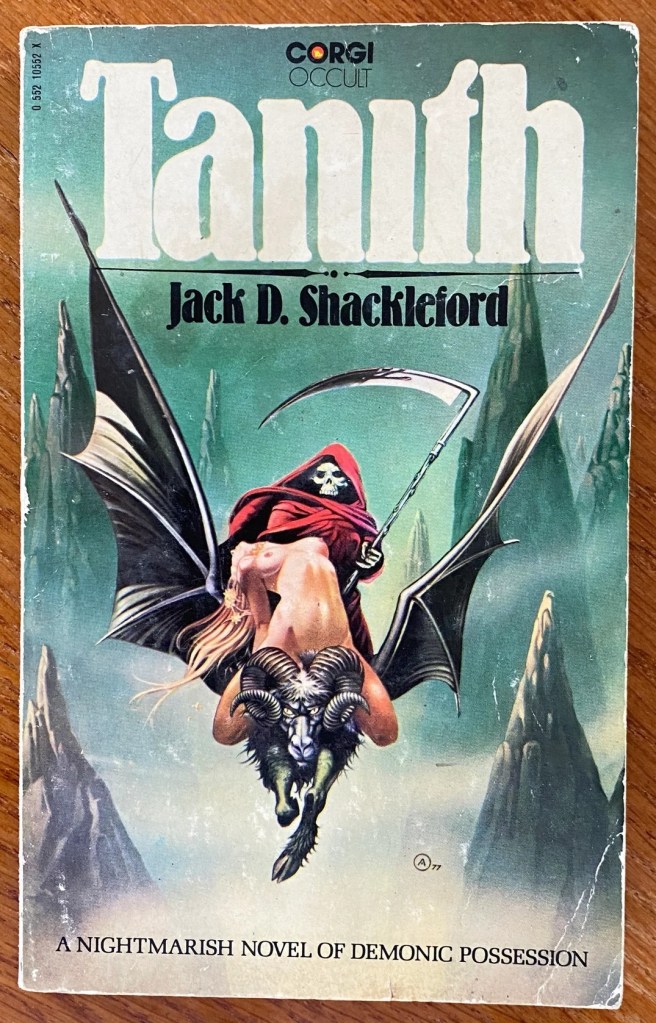
Jack D. Shackleford’s Tanith: A Nightmarish Novel of Demonic Possession

I don’t remember how or when I heard of John D. Shackleford’s occult horror novels, but I have been wanting to read them for years. I’m assuming it was the incredible cover artwork that both grabbed my attention and made it so hard to track copies of these books down at a reasonable price. Of all of his novels, Tanith was the most appealing to me. The cover artwork is phenomenal, and although I’m almost certain there is no connection, I’m also a fan of the obscure Irish doom metal band, Council of Tanith. I’ve long thought that their band name was a reference to the Tanith in Dennis Wheatley’s The Devil Rides Out, and from the titles of Shackleford’s books alone, I find it hard to imagine that he hadn’t read Wheatley’s masterpiece. I was intrigued to see if Shackleford’s Tanith had anything to do with Wheatley’s.

Corgi – 1977

Last week, I received an email from a pal of mine with a pdf copy of Tanith attached. It’s less than 200 pages, so I dove right in.

Virginia has just moved to a cottage in the woods, and after an argument, her husband stormed out of the house and hasn’t come back. Virginia goes out at night and sees an ugly leprechaun. She is almost raped by the leprechaun a few days later, but something scares him away before he can penetrate her with his knobbly cock. A sexy witch named Tanith finds Virginia in the woods and takes her home. Then she nurses her back to health.

At this point the plot gets ludicrous. It turns out that Virginia was a witch before moving to the woods, and Tanith seduces her and convinces her to take part in magical rites with her leprechaun pals because Tanith has cancer and these rituals are the only way to prevent her death. Ultimately the plan fails because Tanith’s grandmother, a good witch, convinces her servants to set the forest on fire.

Promiscuous witches and rapist leprechauns are promising ingredients for an occult horror novel, but the execution here was pitiful. This was muddled, poorly planned garbage. Holding back important facts about a main character could potentially be used to create suspense or surprise, but here it just made it feel like the author was making the plot up as he wrote and wasn’t bothered going back and editing early chapters for the sake of cohesion. There is no link between Shackleford’s Tanith and Wheatley’s Tanith other than them both being sexy witches. Also, the subtitle of the work, “A Nightmarish Novel of Demonic Possession”, is completely inaccurate. There’s no demonic possession in this book.

I have since read that this is the worst of Shackleford’s novels, but it was so bad, I have little motivation to seek out any of the others. I have a copy of The Scourge, so I may read that in the future if I’m feeling generous.

Ritual, The Wicker Man and The Loathsome Lambton Worm

I bought The Wicker Man on DVD about 20 years ago. I can’t have watched it more than twice, but the ending of the film has stuck with me since. I was looking for a book to read recently when I came across David Pinner’s The Ritual, the novel that inspired The Wicker Man.

Ritual – David Pinner

New Authors – 19967


From what I have read, it seems as though the movie people bought the rights to Pinner’s novel, but had to change so much of it that he didn’t get mentioned in the credits of the movie. The plot is very similar.

A policeman ends up in  remote village investigating the death of a child. The locals are uncooperative weirdoes and at least some of them practice witchcraft. The memorable scene in the movie where the sergeant humps the wall is taken directly from the book. There’s definitely a similar mood and cast of characters in both Ritual and The Wicker Man, but the ending to the book is quite different and falls far short of the horror of the film. Overall, it’s really more of a mystery featuring elements of the occult than a true horror novel. There’s a little more humour in it too. I quite enjoyed reading it.

The Wicker Man – Robin Hardy and Anthony Shaffer

Crown Publishers – 1978

I was going to post about Ritual last week, but then I read that the novelisation of The Wicker Man was held in high regard, so I decided to read that too. It was published a few years after the movie came out, and it offers a slightly different version of the story. As I mentioned, I’d seen the film before, but aside from the wall humping and the climax, I couldn’t remember too much. I’ve reviewed quite a few novelisations on here before, but I’ve never felt the desire to go back and watch the films after reading the books before. That was not the case here. I finished the book after dinner yesterday and sat down to watch the movie version maybe 20 minutes later.
I wasn’t aware, but there are multiple cuts of the Wickerman out there. I found a version streaming on Kanopy (an awesome library  streaming service) that was significantly longer than the version in Amazon. I watched the director’s cut, and to be honest, it wasn’t great. Some of the scenes are transferred from an old reel that looks like garbage in comparison to most of the film, and none of these scenes add anything of much worth to the story. Apparently there is a longer cut in existence now, but I have no interest in watching it. I reckon the short version is totally fine.

It was interesting watching the director’s cut right after finishing the novelisation though. Some very short scenes included in that cut of the movie are explained more clearly in the book, and there are a few little scenes in the book that weren’t included in the movie at all. Sergeant Howie is given more background, and there are a few extra characters. Overall, I quite enjoyed reading this novelisation. If you like the movie, the book is worth a read. The movie is great too. The director’s cut is bloated, and even the original might be a little slow to get going, but the scene when Howie realises what’s in store for him makes it all worth while. I love it.

The Loathsome Lambton Worm – Anthony Shaffer

While I was researching this post, I discovered that the screenwriter of the film had actually written an outline for a sequel to The Wicker Man with the same cast of characters. Anyone who has seen the movie or read the book will understand why that would be difficult, and the resultant screenplay is actually less coherent than you’d expect. It was called The Loathsome Lambton Worm. The brilliance of The Wicker Man is that it’s a horror movie that doesn’t rely on supernatural scares or gore to horrify. The efficacy of the islanders’ rituals is inconsequential to the plot. The proposed sequel includes decaptitions, magic spells, witches riding around broomsticks and a fire breathing dragon. It also features Sergeant Howie doing things that go against everything the audience has been told about him. The proposed sequel is pure crap, and I am more surprised that anyone ever took the time to write it out than the fact that it wasn’t made. Nobody could read it and think it was a good idea even at a time when the bar for sequels was pretty low. The treatment for this awful sequel was published in the revised edition of Alan Brown’s Inside the Wicker Man. I didn’t bother reading the rest of this book because I a bit sick of The Wicker Man at this point. I might go back and watch the Nicolas Cage version in a few years.

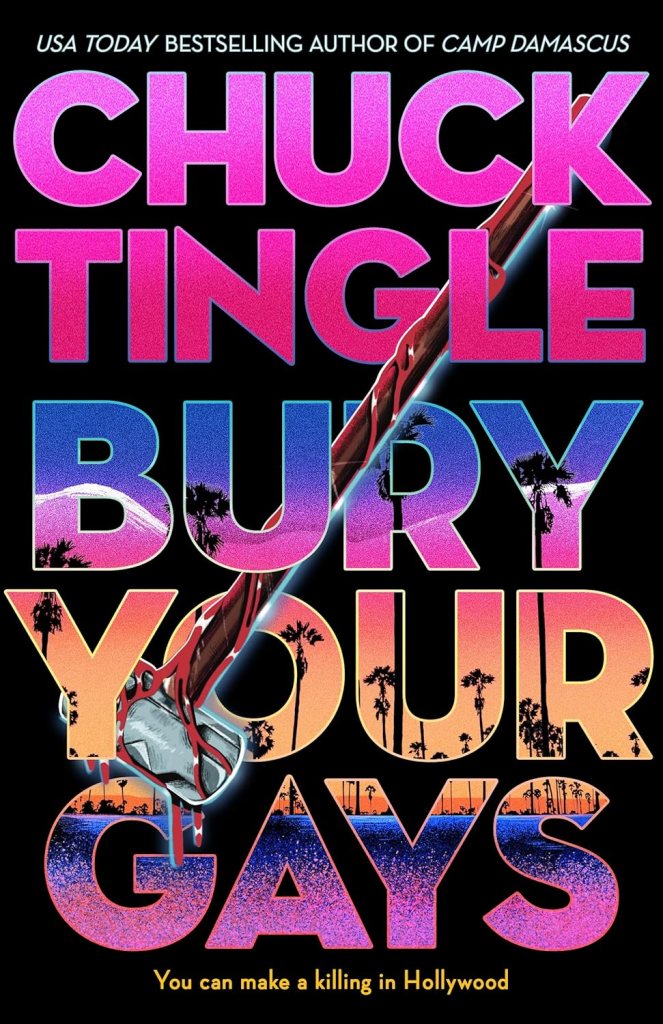
Chuck Tingle’s Bury Your Gays

Tor Nightfire – 2024

The first time I encountered Chuck Tingle was when somebody I followed on twitter posted images of the covers of his earlier books. They had some ludicrous titles (check out his bibliography if you haven’t already seen them), and while I am definitely not beyond reading a book purely because it has a ridiculous title, Tingle’s titles were overt gay porn. I was happy they existed, but content to leave them for their target audience.

Recently, a colleague in work recommended me one of Chuck Tingle’s newer novels. I was a bit taken aback, assuming the title would reference anal penetration in some manner, but it was actually called Bury Your Gays, and it was supposed to be a horror novel. To be honest, I’ve been running a little dry for blog content recently. I’ve been busy and largely directing my creative energy elsewhere, so I was quite happy to take my buddy up on a horror book recommendation. I’m really glad I did. This book was actually very enjoyable.

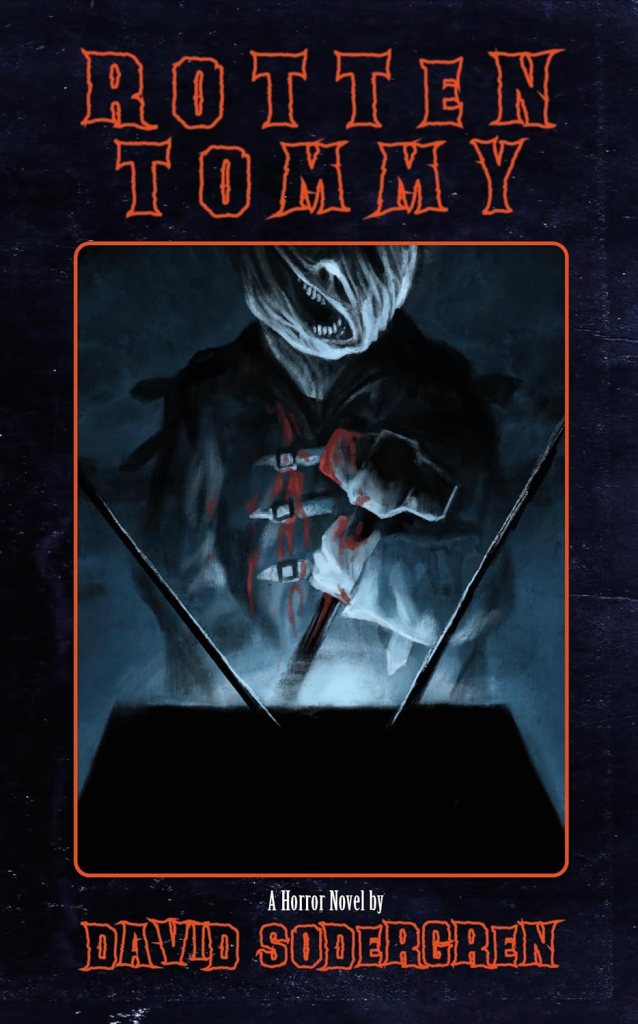
This is the story of Misha Byrne, a gay screenwriter whose characters start showing up in real life. (It’s funny, after writing that, I realise that was the premise of a Brett Easton Ellis novel I read years ago.) I won’t give anything else away. It reminded me a little of David Sodergren’s Rotten Tommy in terms of the manic creativity behind the plot and characters. It’s really enjoyable when capable writers let their imaginations loose.

The book is surprisingly well written. There’s sci-fi elements and social critique, but some scenes are horrendously violent, and I think this definitely counts as a horror novel. The sledgehammer scene made me wince, but also made me hope that this book gets turned into a movie.

I also found that while it’s a gay novel in many respects (gay protagonist, gay title, gay issues…), none of this book felt obscure or foreign to a straight reader. (The last gay horror novel I read was largely gay porn, so maybe it’s just the contrast to that book that susprised me.) I wonder how queer readers feel about how accessible this gay novel is to straight readers. While the book doesn’t trivialise the queer experience, I felt Mr. Tingle framed it in a very relatable manner. Do queer readers want to read something that makes the queer experience relatable to the straights, or would they prefer it to be a little more militantly queer? Is it naive of me to be a little taken back by how easy it is to relate to queer characters?

It’s pretty cool to see how much recognition this novel is getting. It’s a good book, but the author’s story is inspiring too. He did something weird and stuck with it until he got popular. While the title of this book isn’t as overtly self-referential as some of the author’s other works (2017’s Pounded In The Butt By My Book “Pounded In The Butt By My Book ‘Pounded In The Butt By My Book “Pounded In The Butt By My Book ‘Pounded In The Butt By My Book “Pounded In The Butt By My Own Butt”‘”‘ for example), the plot of the novel revolves around that motif in a genuinely impressive manner. It’s really cool to see that kind of integrity and ingenuity. Chuck Tingle is a weirdo, a real weirdo, but weirdoes are awesome.

The Ghost of Paddy Lafcadio Hearn, Japan’s Spookiest Irishman

Penguin – 2019

I first saw this book a few years ago. I assumed it was a collection of folk tales from different authors, but the fact that it was published as a Penguin Classic made me want to read it. I was in Ireland recently, and I needed something to read. While browsing through my library’s collection of audiobooks, I saw this title and noticed for the first time that an author’s name was on the cover. I had never before heard of Lafcadio Hearn, collector of Japanese ghost tales, but a quick google search revealed that his first name was actually Patrick and that he grew up in Ireland. I did my bachelors degree in literature in Dublin, and I believed I had read most of the big names of Irish writing. I was delighted to discover an enigmatic Irish writer on one of my brief trips back to my homeland.

So Lafcadio was born in Greece, spent his childhood in Ireland, moved to the states, became a succesful journalist and then spent the rest of his life in Japan. He married the daughter of a samurai and spent his time collecting and translating Japanese ghost stories into English. Later, these stories were translated back into Japanese, and some sources on the internet claim that these works are now better known and valued in Japan than anywhere else.

While the collection is titled Japanese Ghost Stories, a more accurate title would be “Japanese Stories that Feature Supernatural Elements”. Most of these tales don’t feature pale apparitions rattling chains. There’s a lot in here too, and honestly, some of the stories are quite lame. I noted down the general gist of each tale below and put it into the list below. This is more for my own reference than anything else, and it contains spoilers, so you may want to skip it for now if you plan on reading the book. (It won’t really ruin anything if you do read it. There’s not many surprises in this book after you’ve read the first few stories.) Make sure you check out the ending of this post though. I’m pretty sure my interest in this author led me to seeing a real ghost.

The Stories

Of Ghosts and Goblins
Suitors try to impress girl. She only likes the one who eats a corpse with her.

The Dream of a Summers Day
Fisher boy saves a tortoise and then marries sea gods daughter. Comes home 3 (actually 400) years later. Dies. Just like fairy stories

In Cholera Time
Infant drinks dead ma’s tit milk

Ningyo-no-Haka
Japanese people die in 3s. Ghost of mother comes back for son
More a paragraph than a story.

The Eternal Haunter
Description of spirit that gave man a wet dream. I think.

Fragment
Man climbs mountain of skulls of his past lives

A Passional Karma
First real story. Samurai’s love dies. Comes back to haunt him.

Ingwa Banashi
Dying wife grabs the tits of her husband’s concubine and doesnt let go even after she dies.

Story of a Tengu
A tengu takes a monk back in time to see Buddha talking. Trash.

A Reconciliation
Samurai comes back to see his ex-wife, but she is now a ghost/corpse

A Legend of Fugen Bosatsu
Monk sees a pretty girl turn into some religious figure. Crap and boring.

The Corpse Rider
Priest tells man to ride his divorced wife’s corpse like a pony so she won’t haunt him

The Sympathy of Benten
Goddess introduces man to his wife’s spirit before they get married.

The Gratitude of the Samebito
Sharkman cries jewels to give to his friend to impress his crush’s family.

Of a Promise Kept
Samurai commits suicide to get back to his brother on appointed date.

Of a Promise Broken
Corpse of samurai’s first wife takes nasty vengeance on his second wife.

Before the Supreme Court
Dying girl’s parents make deal with pest god. Pest god kills another girl with same name. Council of gods gets pissed and puts dead girl’s soul into live girl’s body.

The Story of Kwashin Koji
Old man with a magic picture tricks people.

The Story of Umetsu Chubei
Man holds heavy magic baby.

The Legend of Yurei Daki
Woman steals gods money box and they get horrible revenge on her baby.

In a Cup of Tea
Man sees a face in his tea. The own of face later comes to visit him. Fragment.

Ikiyro
Woman hates young man because she thinks he is rival to her son, so her alive ghost haunts him.

The Story of O Kame
Wife needlessly haunts ger husband after she dies.

The Story of Chugoro
A beautiful frog vampire kills a young man when he tells his mate about their relationship.

The Story of Mimi-Nashi-Hoichi
Ghosts tear off blind musicians ears.

Jikininki
Priest comes across  a goblin eater of the dead.

Mujina
Crying woman tears her face off and frightens a traveller. Good.

Rokuro Kubi
Decapitated heads gang up on samurai priest.

Yuki-Onna
Man marries spirit that killed his friend.

The Story of Aoyagi
Man marries a tree.

The Dream of Akinosuke
Man falls alseep and joins insect kingdom.

Riki Baka
Mentally handicapped boy dies and is reborn.

The Mirror Maiden
A beauriful spirit lures people to their death down a well but turns out nice after an evil dragon releases her.

The Story of Ito Norisuke
Man falls in love with ghost.

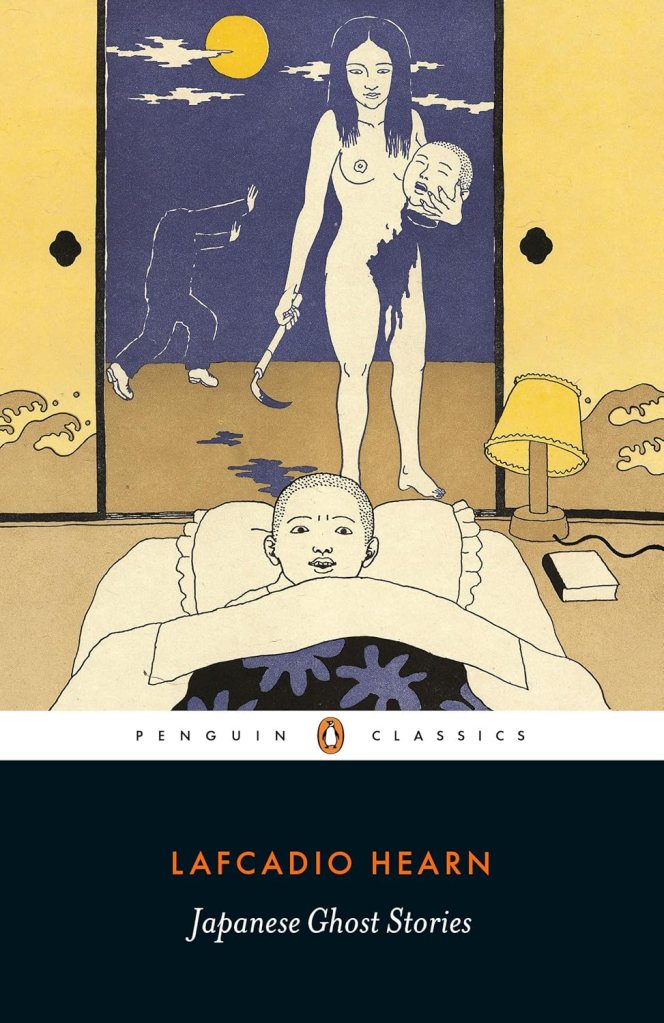
In truth, this collection felt bloated. If the 10 worst/shortest stories were removed, it would have been much more enjoyable. It seems that this is a ‘complete’ collection rather than a ‘best of’ collection. I do appreciate that really. I’d probably be curious about the crap if it wasn’t included in here. Only 5-6 of the tales live up to the grisly cover that Penguin gave this collection. (I showed my wife the cover, and she asked if it was supposed to be Bobby Hill. Hahaha.) There’s definitely some similarities in the tales here and the Irish folk tales that Hearn must have heard growing up in Ireland. All together, I’d say it’s worth a read.
Photo posted online in 2016. This plaque is now gone.

As I said, I was in Ireland when I found out about Hearn, and I wanted to use this opportunity to understand him, so I set out to find out what his experiences in Ireland had been like. On his wikipedia page, I found a picture of a plaque that used to be on the wall of his childhood home. I went to the address listed, but the plaque is no longer there. A careful analysis of the photo of the plaque and the front of the house confirms it is the same building. Given the numerous statues of James Joyce, Oscar Wilde, Patrick Kavanagh and other Dublin writers, spread throughout Dublin, I was disappointed to see that Lafcadio Hearn is basically unrecognised in what was once his home city.

48 Lower Gardiner Street, Dublin, Hearn’s Childhood Home


The stories in the book are followed by a brief appendix on the nature of ghosts and nightmares. This was definitely my favourite part of the book. Hearn discusses how belief in ghosts is a global phenomenon that occurs in every culture, and how it may derive from inherited memories from our earliest ancestors. It’s an interesting piece of writing, and it’s made more interesting by Hearn’s descriptions of his own encounters with ghosts as a child. He acknowledges that these spectres were likely creations of his mind, but in the context of his writing that doesn’t make them less terrifying. He explains how he always struggled to describe what they looked like until he saw the images of exhumed, decayed corpses in Orfila’s Traité des Exhumations Juridiques and recognized his tormentors. Perhaps the most chilling passage in the entire book is when he claims how these phantoms started to appear to him in a particular room of his home when he was 5 years old.

Corpses pictured in Mathieu J.B. Orfila’s Traité des Exhumations Juridiques

“When about five years old I was condemned to sleep by myself in a certain isolated room, thereafter always called the Child’s Room. (At that time I was scarcely ever mentioned by name, but only referred to as ‘the Child’.) The room was narrow, but very high, and, in spite of one tall window, very gloomy. It contained a fire-place wherein no fire was ever kindled; and the Child suspected that the chimney was haunted.”


I went back to the photo I took of the house he lived in at that point of his life, looking for a room with a tall window. It could be any of them, so I zoomed in, looking for more clues. Then I noticed this:

Hearn’s ghost? This genuinely creeped me out when I noticed it.

John Russo’s Voodoo Dawn

John Russo wrote Night of the Living Dead with George Romero. I have been meaning to read something by him for years. I settled on his 1987 novel, Voodoo Dawn.

Imagine – 1987

This was pure garbage. It only took a few hours to read it, but every second of those hours felt as if the author was laughing at me for wasting my time reading his filthy pile of shit.

A voodoo witchdoctor goes on a killing spree in an attempt to make a Frankensteinesque voodoo doll out of human body parts. The premise here is good, but the execution reeks of human excrement. The discussion of the life sized voodoo doll is limited to a few sentences, and the murders take up only a few pages. Most of this novel focuses on the business plans of a gang of up-and-coming advertising executives. It’s shockingly boring. There was a little bit of satisfaction when these boring squares died, but it would have been much more satisfying to witness the author being brutally dismembered with a machete for making me read through his boring, dull, uninspired shite.

At one point the author describes how one of the characters is struggling to flesh out her book on voodoo and how she ultimately resorts to inserting large quotations from other books instead of integrating their main ideas into her work. Russo then proceeds to insert a large quote from one of the books that the character was supposedly reading. He’s literally flaunting his inadequacies to his readers’ faces.

Apparently there’s a movie with the same title that was very, very loosely based on this book. I doubt I’ll watch it. Honestly, avoid this book like you would a leper. It’s a diaper full of diarrhea.

Poppy Brite’s Most Extreme Novel: Exquisite Corpse

Ok, so I know I said that I was going to get to regular posting 2 weeks ago, but I went camping last weekend and had no internet. I finished this novel, Poppy Z. Brite’s Exquisite Corpse, a few weeks ago, and it’s been stuck in my head ever since.

Gallery Books – 1997 (Originally published 1996)

I’ve read 3 other books by Poppy Z. Brite. I loved Lost Souls and Swamp Foetus. I didn’t like Drawing Blood so much. It felt more like fantasy than horror, and it was extremely homoerotic. I don’t mean that in a derogatory way, and I don’t want it to seem like I’m trying to give off “no homo” vibes here. I was able to enjoy the romance between the 2 male characters; I just didn’t like the cum eating. I guess I’m the kind of person who really only enjoys reading descriptions of people ingesting bodily fluids when these descriptions are purposely written to gross the reader out.

Anyone who has read Exquisite Corpse will probably be giggling at my squeamishness right now. Both of Brite’s publishers (Delacorte and Penguin) refused to publish this book after Brite submitted the manuscript. This is one of the most disgusting novels I have ever read.

The plot focuses on the intersection of the lives of 2 gay couples. One of these couples has recently broken up, and the other is comprised of a necrophile and a cannibal. The results are deeply disturbing and depressing. I don’t want to give anything else away, but Jesus this book was fucking grim.

At an early point in the novel, I considered giving up. There were a few chapters that were basically just gay porn. These weren’t just descriptions of what happened. This was clearly erotic writing. I generally skim over lengthy sex scenes in novels, regardless of the genders of the participants. I didn’t do that here because I was half expecting something horrible to happen, but it didn’t, and now I fear that I am a gay man.

I’m joking of course, but I was half right. Extremely horrible things do start happening in this book, and they are written about in such a way that sets them far, far apart from the generic splatterpunk book I have read here before. It’s a combination of Brite’s skill with the written word and the juxtaposition with the sexy parts of this book that make the violence in here so disturbing. At the same time, the actual brutality on display here is full on. There’s nothing left to the imagination. The viscera and gore are upsetting, but Brite also describes the psychology of the sadistic murderers too, and it was those parts that I found most upsetting. There’s one bit that genuinely disgusted me where the murderer is describing how the body of their victim acquiesces to the violence its undergoing with a kind of longing.

This book is seriously fucked up. It’s dark, disgusting and depressing. There were numerous points throughout that made me feel nauseous and made me question my sexuality. All in all, I enjoyed it.