The Tenant – Roland Topor

Topor The TenantThe Tenant – Roland Topor
First Published in 1964

The first thing that I read about this novel was that it was rare. The second thing that I read about this novel was that Roman Polanski had made a movie of it.

We all know that Polanskini is a repulsive paedophile, but he was a very successful film maker, and it puzzled me to think that the novel he based one of his movies on would be out of print and hard to find.

The third peculiar feature of this novel was that Thomas Ligotti, one of my favourite authors, had written an introduction for one of the most recent, yet long sold out, editions of this book. Ligotti’s work is bizarrely dark, and if he liked it enough to write an introduction for it, this novel might well suit my own personal tastes. All of this was deeply intriguing.

Prices for old paperback versions are ridiculous, and I quickly found a digital version on openlibrary.org, but by the time my hold came through, this version had been taken offline. I finally got my hands on a copy yesterday morning, but I had to perform unspeakable acts of degrading infamy in order to do so.

I’m glad I did though. This book was very interesting and seriously weird. I read the whole thing last night, and I feel like it hasn’t properly settled in my head yet. This isn’t a straightforward novel. I’m not academic enough to tell you which sub genre of literature it belongs to, but it’s definitely one of those -ism ones. (Absurdism? Modernism? Surrealism? Existentialism?) I’ve seen comparisons to Kafka and Beckett, and I might throw in Pinter too. That being said, while this book oozes literary merit, it is a horror novel. Topor skillfully evokes a real sense of nightmarish terror.

I don’t want to give away plot details, so I’ll just say that the book is about a lad who moves into a new apartment and finds his new neighbours rather peculiar. I’m already planning to reread this one. It’s very dark and truly strange. I reckon you should read it.

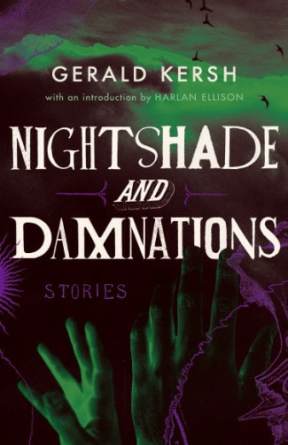
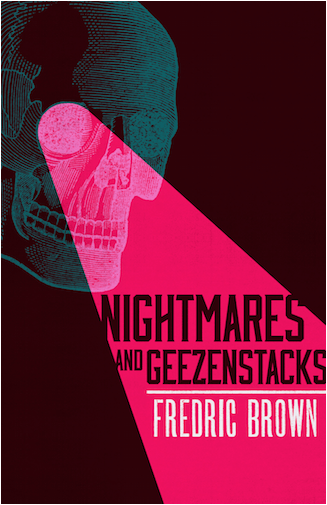
Nightshade and Damnations and Nightmares and Geezenstacks – Classic Strange Stories reissued by Valancourt

nightshade and damnations - gerald kershNightshade and Damnations – Gerald Kersh
Valancourt Books – 2019 (Originally published 1968)

When I added Michael Blumlein’s The Brains of Rats to my to-read list on goodreads, this book by Gerald Kersh popped up in my recommendations. It’s a highly rated collection of short stories titled Nightshade and Damnations, so I threw it on the list too.

There’s quite a few similarities to Poe here. The range and focus of these stories is similar, the general outlook is as twisted, and these stories are superbly written. Kersh acknowledges Poe’s influence by actually framing one of the tales as a submission from Edgar to a local newspaper.

Aside from Poe, the closest thing to which I can think of comparing these stories is The X-Files. There’s communities of freaks, bendy men, radioactive time travellers and immortals. Of course, these stories were published long before The X-Files was produced. While reading this, I started to wonder if Alvin Kersh, the unpleasant boss character in The X-Files, didn’t get his name from the author. (This is apparently not the case.) One can easily imagine Mulder and Scully appearing on the scene at the end of most of these tales in an attempt to figure out what has been happening.

In truth, this collection wasn’t quite what I expected. These stories are not straightforward horror, but they are weird, and some are quite creepy. I’m very, very glad to have read this book, as I enjoyed it immensely. I strongly recommend it to anyone with any interest in strange, well written short stories. (If you don’t consider yourself part of that group, fuck off.)


nightmares and geezenstacks frederic brownNightmares and Geezenstacks – Frederic Brown
Valancourt Books – 2015 (Originally published 1961)

This collection caught me off guard. Most of the stories in here are short vignettes of speculative fiction. I wasn’t hugely impressed until I got to the 12th story, ‘The Cat Burglar’. It was at the ending of this tale that I understood the genius of Frederic Brown. While other authors throw out their ideas haphazardly, Brown takes his readers where he needs them to be before planting a one sentence bullet right into their skull. The final sentence in ‘The Cat Burglar’ is hilarious, but the plot twists in some of the later tales feel more like punches than punchlines. Frederic Brown was an excellent writer.

While many of these tales in here are lighthearted (or downright silly), some of the longer tales towards the end get quite dark. These were the ones I enjoyed the most, but I did like the rest of the book too. Stephen King claimed that this book was “particularly important” to the horror genre, and this would be true if all it contained were ‘The Joke’ and the ‘Little Lamb’. Both tales are similar in their set-up, but I enjoyed both immensely. 


These two books weren’t quite what I was expecting. Most of the short story collections I’ve read recently have been ultra-violent books of trashy horror. Gerald Kersh and Frederic Brown steer clear of that approach; their writing is far more interesting and enjoyable.  I wasn’t expecting the caliber of the writing to be so high, but that was just my naivety. Both books were recently reissued by Valancourt Books, and the general rule with Valancourt is that the books they put out are awesome. You should definitely read both of these collections.


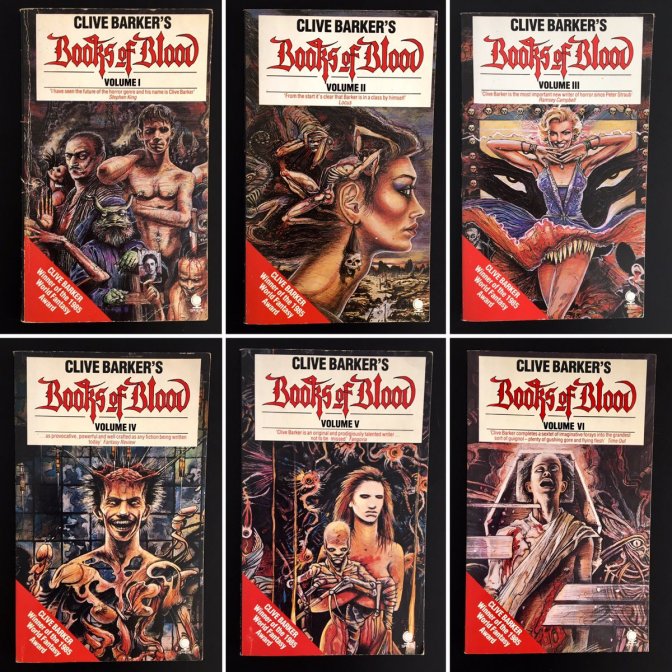
Clive Barker’s Books of Blood

clive barker books of blood
The 6 volumes of Clive Barker’s Books of Blood were published between 1984 and 1985, and they are some of the most infamous and deadly collections of short horror fiction out there. I had been meaning to read them for a long time, and after reading two of the tales in the Splatterpunks anthologies last autumn, I decided to check out the rest. Each volume contains 4-6 stories, and they’re mostly very enjoyable.

Barker’s horror is dark and violent. There’s quite a few ‘Oh God, that’s horrible!’ moments throughout. I feel like I would have read more as a teenager if I had known that books like these existed. (That’s not to say that I didn’t enjoy them as an adult.) The writing here is imaginative, exciting and often quite brutal.

I don’t really have a huge amount else to say about these books other than that they’re pretty awesome. In retrospect, waiting until I had read all six volumes before writing a review might have been a mistake. The quantity and variety of stories is so great that I don’t want to get into specifics. There’s countless other reviews online if you want more details, but I suggest you ignore those and just read Barker’s stories instead. If you like horror, you’ll very probably enjoy these books. I’ll certainly be reading more Barker in the future.

I hope you’re all staying inside and being safe during this stressful time.

Lovecraftian Rarities and Howard’s influence on Houellebecq: Lovecraft’s Legacy Part 5

lovecraft

About a year and a half ago, I started rereading the tales of H.P. Lovecraft. I had previously read the three Penguin Classics editions of Lovecraft’s work, so this time I read through the four Wordsworth editions of his fiction. The Wordsworth editions, while lacking the footnotes included in the Penguins, present a more complete collection; in fact, one of these volumes is comprised exclusively of collaborative works omitted from the Penguin versions. I wrote a series of posts on these books (Part 1, Part 2, Part 3, Part 4), pairing each one with a work of Lovecraftian Occultism, but as I was reading through them, it became apparent to me that while the Wordsworth editions of Lovecraft’s work are more complete than the Penguin editions, they do not contain all of the fiction that Lovecraft wrote/contributed to. In this post, I want to list and examine the short stories of Lovecraft that are contained in neither the Penguin or Wordsworth editions of his work.

There are four tales that Lovecraft wrote by himself that are not included in the aforementioned collections. These tales are Ibid, Sweet Ermengarde, The Reminiscence of Dr. Samuel Johnson and Old Bugs. ‘Ibid’ is a parody of academic writing about history. It’s not funny, amusing or worth reading. ‘Sweet Ermengarde’ is a farcical comic romance. ‘The Reminiscence of Dr. Samuel Johnson’ is a boring story about an old man talking about his friends, and ‘Old Bugs’ is a fairly predictable story about an old drunk. None of these stories contain any horror, and I can’t recommend checking them out.

There are also still extant several stories that Lovecraft wrote as a child between ages of 8 and 12.  These are The Mystery of the Graveyard, The Mysterious Ship, The Little Glass Bottle and The Secret Cave. These are pretty impressive for a kid of that age, but there’s no need to read them unless you’re a completist dork like me.

There are also handful of other stories that Lovecraft contributed to that are not included in the Wordsworth book of Lovecraftian collaborations. These are The Battle that Ended the Century, Collapsing Cosmoses, Bothon, The Challenge from Beyond, The Hoard of the Wizard-Beast, Four O’Clock, The Slaying of the Monster, The Sorcery of Aphlar, The Tree on the Hill, Satan’s Servants, Deaf, Dumb and Blind, The Ghost-EaterAshes and The Loved Dead. These are not included in either the Wordsworth or Penguin collections for one of two reasons. Either we don’t know how much (if any) influence Lovecraft actually had on the tales, or else the tales are absolutely shit.

Both ‘The Battle that Ended the Century’ and ‘Collapsing Cosmoses’ are collaborations between Lovecraft and his friend R.H. Barlow. These stories are jokes where they make fun of their friends, and they don’t seem to have been written very seriously. ‘The Hoard of the Wizard-Beast’ is another collaborative fantasy between these two. It’s ok. They also wrote ‘The Slaying of the Monster’ together. It’s barely worth mentioning.

‘The Sorcery of Aphlar’ and ‘The Tree on the Hill’ are collaborations between Lovecraft and Duane W. Rimel. These are ok, definitely better than the Barlow crap, but it’s not certain how much Lovecraft had to do with the composition of ‘The Sorcery of Aphlar’.

‘Four O’ Clock’ is a tale by Sonia Greene, Lovecraft’s ex-wife. He apparently made some suggestions on how to improve it after reading an early version of the story. ‘Satan’s Servants’ is a story by Robert Bloch, and Lovecraft also supplied a few suggestions for this one after reading a draft.

‘Bothon’ is a collaboration with Henry S. Whitehead. It’s another one of those ‘man wakes up in an alien’s body’ stories that we’re all used to. ‘The Challenge from Beyond’ is similar, but this one is a collaboration between several authors. C.L. Moore, A. Merritt, Lovecraft, Robert E.Howard, and Frank Belknap Long all contributed sections. This one is cool for what it is, but it’s not really essential reading.

‘The Loved Dead’, ‘Deaf, Dumb and Blind’, ‘The Ghost-Eater’ and ‘Ashes’ are all tales that Lovecraft revised for C.M. Eddy. ‘The Loved Dead’ is a story of a necrophiliac, and it was contained (as the title story!) in the original versions of the Wordsworth book of Lovecraft Collaborations. It was later removed. ‘The Ghost-Eater’ is a straightforward ghost story. ‘Ashes’ is pretty crap. ‘Deaf, Dumb and Blind’ is a bit more Lovecrafty than the others, but it’s not all that great to be honest.

‘Through the Gates of the Silver Key’ is included in the Penguin editions of Lovecraft’s work, but it isn’t in any of the Wordsworth ones. I reread this one too. It’s not great.

I am glad to have been able to find these stories online, but I can’t say any of them were very good. I don’t think I’ll bother with them on my next Lovecraft reread. I believe there might be another few tales that Lovecraft is rumoured to have had some input in, and I’ll read those if I ever come across them. My plan now is to read the weird fiction of Lovecraft’s contemporaries, Derleth, Bloch, Howard and the likes.


For the other posts in this series, I looked at a collection of Lovecraft’s tales alongside a work of Lovecraftian Occultism. Most of those spellbooks were utter nonsense, and for this post I’m including a book about Lovecraft’s literary influence instead.
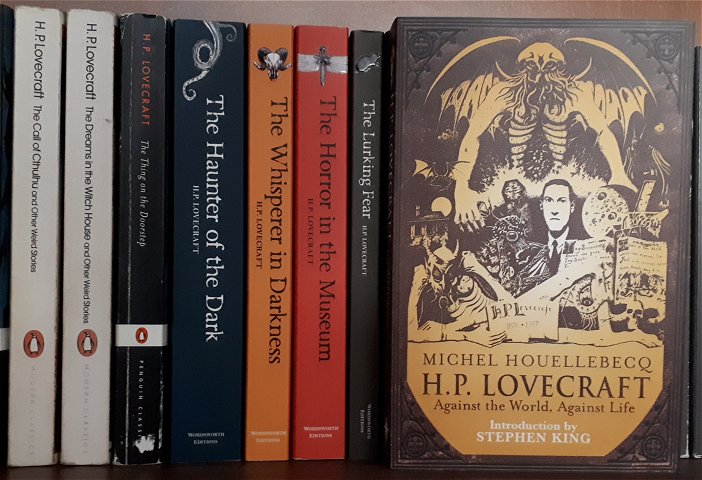
lovecraft houellebecqH.P. Lovecraft: Against the World, Against Life
Michel Houellebecq
Gollancz – 2008 (Originally published 1991)

Most of the books that I read end up getting reviewed on this blog, but recently I read two books by a Frenchman named Michel Houellebecq that don’t really fit in with the crap that I review here. Houellebecq is a respected author, but he has been critical of Islam and accused of misogyny in the past. Submission, the first of his books that I read, is about a sex-hotel in Southeast Asia being bombed by Islamic terrorists. The other one, The Elementary Particles, is about a scientist and his pervert brother. I enjoyed both books, and while they certainly contain some inflammatory passages, they are novels. Houellebecq has also written an article in defense of Donald’s Trump’s presidency, and I get the impression that he’s not really concerned with coming across as woke and progressive. I don’t agree with his outlook, but it was interesting to read something that was written by a person who clearly doesn’t give a shit.

While one of these novels has a slight touch of science fiction, Houellebecq’s thing is nihilistic, pessimistic realism. The general negativity of his books made it easy for me to swallow their nastier passages. Unhappy people have shitty outlooks. When Houellebecq’s narrators say stupidly racist things or perform acts of misogyny, it’s at least clear to the reader that these narrators are supposed to be fuck-ups.

So how does this dodgy Frenchman relate to the writings of H.P. Lovecraft? Well, while these authors’ fictional outputs are very, very different, both contain strains of nihilism, pessimism and misanthropy. There are no ancient tentacled atrocities in Houellebecq’s writing, but it didn’t surprise me to discover that the Frenchman was a fan of Lovecraft. In 1991, Houellebecq wrote a book called Against Life, Against Nature about Lovecraft’s writing.

It’s a fairly interesting read if you like both Lovecraft and Houellebecq, but I doubt it will be of much interest to everyone else. It’s basically just Michel talking about how Lovecraft’s work is groundbreaking. It contains an introduction by Stephen King.

The most contentious element of Lovecraft’s writing is his attitude towards race. While Houellebecq acknowledges Lovecraft’s blatant prejudices, he isn’t nearly as bothered by them as many modern readers seem to be. In fact, he actually seems to think that Lovecraft’s close-mindedness makes his fiction more effective. I get what he’s saying. Just because a person is shitty, that doesn’t mean that their art is shitty. Horror fiction isn’t supposed to be comfortable and pleasant for everyone, and if it’s racial prejudice that stokes the flames of fear, that doesn’t make that fear any less fearful.

Of course, it’s easy for Houellebecq and I to accept such statements. The prejudice in Lovecraft’s tales isn’t directed at us. I understand that my white privilege makes it easier for me to enjoy some of Lovecraft’s writing,and I would understand why people might deliberately avoid his writings on principle; however, I would be very surprised to meet a horror fan who has read Lovecraft and failed to find entertainment in his work.

For convenience sake, I’m just going to conclude with the links to all of the posts in this series for anyone who’s interested. (Part 1, Part 2, Part 3, Part 4, Part 5) This series is complete, but I assure you, there’s plenty more posts on Lovecraftian fiction and occultism to come.

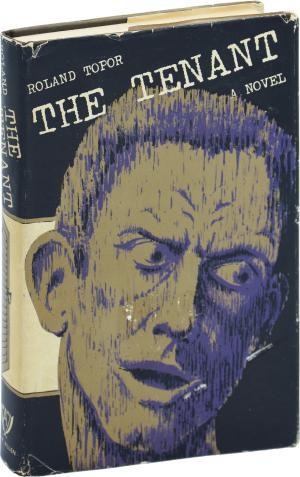


The Brains of Rats – Michael Blumlein

the brains of rats - michael blumlein
The Brains of Rats – Michael Blumlein

Valancourt – 2015 (Originally published 1989)
I added this book to my to-read list after it popped up in my recommendations from goodreads a few months ago. Just days afterwards, the author, Michael Blumlein died, and the horror community on twitter assured me that this collection was one worth reading.

I really enjoyed this book. It’s top notch, bloody weird stuff. The first story, ‘The Brains of Rats’, a medical doctor’s ruminations on gender and identity, lets the reader know that this collection is going to be quite strange, but the next tale, the infamous “Tissue Ablation and Variant Regeneration: A Case Study.”, Blumlein’s first published story, is a kick in the stomach. Its visceral cruelty is all the more punishing due to its narrator’s clinical descriptions and apparent lack of empathy, but this brutality isn’t the key to the story. I was born in 1986, so it took me longer to realise what was actually being described than it would have to anyone reading it when it was first published in 1987. Reagan is only a name to me, and the penny only really dropped when I realised that changing it to Trump would be the only necessary step to completely modernise this tale. Even thinking about it now, I’m getting excited. Publishing a story like this was gutsy, but the writing is stunning. It reminded me of Edgar Allen Poe, not in its themes or word choices, but in its absolutely masterful execution. This is a short story I will never forget.

Every review of this book I’ve read since completing it makes comparisons to the writings of J.G. Ballard, and I have to admit, Ballard’s story ‘Why I want to Fuck Ronald Reagan’ is the first thing that came to mind once I realised what ‘Tissue Ablation’ was about. (Blumlein’s story is not about fucking the President.) The Ballard influence runs deeper than this though. The final story, and one of the best in the collection, ‘Best Seller’, describes one of its characters fetishization of scar tissue, a feature which immediately brought Ballard’s Crash to mind. There’s lots of other little Ballardian touches throughout the collection.

‘Shed his Grace’, another Reagan inspired tale, reads like the screenplay for an unproduced Ministry music video. It’s pretty fucked up. The other story that really stood out to me was ‘The Wetsuit’, a truly bizarre tale of a family’s strange secret. These are the kind of stories that made me think about what was going through the writer’s head for him to come up with ideas like these. I really, really enjoyed this collection and look forward to reading more Blumlein in the future.

Half a Decade of Blogging about Creepy Books

I got a notification during the week informing me that this blog is now 5 years old. My first post, a look at Wade Baskin’s translation of Collin De Plancy’s Dictionary of Witchcraft, was published on February 27th, 2015. Since then, I have reviewed almost 350 books.

I’m a little bit surprised that I’ve lasted this long to be honest. I put a lot of work into this site, but I don’t see a huge amount of traffic. I have nobody to blame for this other than myself. Most of the books I write about are bottom of the barrel stuff that nobody will ever search for. I’ve thought about branching out and reading more contemporary fiction in attempt to draw more traffic, but while I certainly won’t rule out reading new books, I reckon weird old books will probably remain my focus. I think of this site more as a literary freakshow than a review site. I don’t really care if people want to read the books I write about or not, I just want you to know that these texts exist.

I write about famous books and popular authors regularly, but my favourite posts are always the ones about books that have an air of mystery to them. There have been a few posts on this blog where I have had the delight of presenting new information or theories on strange and mysterious texts. Here are a few posts that represent my best work. I beseech any lovers of peculiar literature to check these out if you haven’t already.


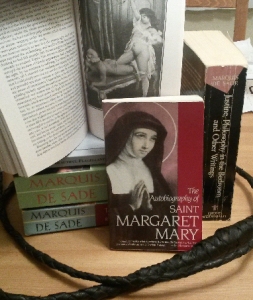
mmThe Autobiography of Saint Margaret Mary (March 2015)
This was one of my first posts. It’s about a Christian saint who had a shit fetish. I look back on it with a smile.


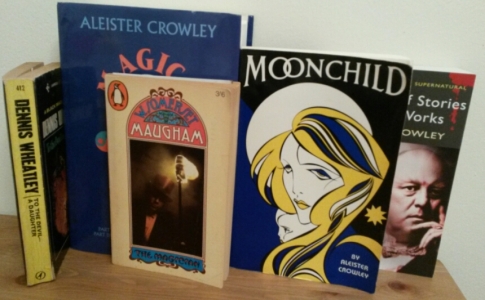
2015-12-28 02.38.38Did Aleister Crowley Create Strange Lifeforms? (December 2015)
This was my first post on Aleister Crowley. It’s a look at the different ways he was portrayed in fiction by those who actually knew him.


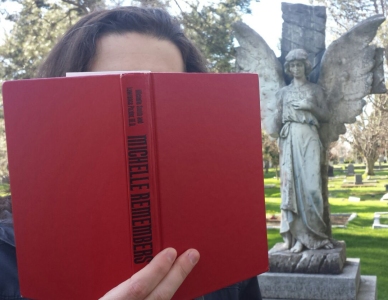
michelle remembers ross bayMichelle Remembers – Michelle Smith and Lawrence Pazder (March 2016)
I’m pretty confident in saying that at the time this post was published, it was the most comprehensive account of why this book is bullshit. It includes photos from the Satanic graveyard where the events in the book supposedly took place.


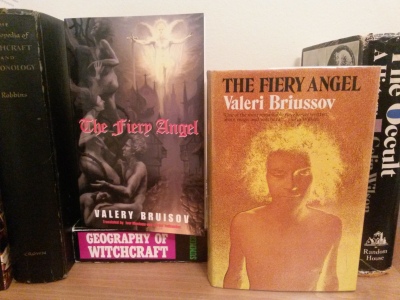
20160325_000821The Fiery Angel – Valery Bryusov (March 2016)
A look at the real events that inspired this peculiar occult novel.


robert anton wilson the sex magiciansRobert Anton Wilson, Sex Magician! (July 2017)
An exegesis of a book of pulp occult pornography. (It’s one of those ‘use the text to interpret the text’ situations.)


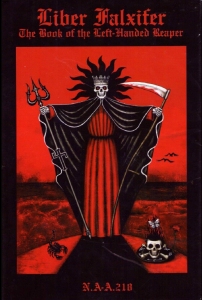
liber falxiferDeath Worship and Current 218 (November 2017)
An exploration of the link between heavy metal and Liber Falxifer, an infamous text of Black Magic.


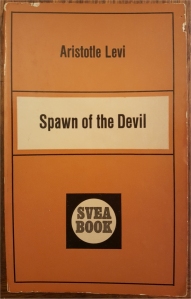
spawn of the devil - aristotle leviSpawn of the Devil (Inpenetrable) – A Quaint and Curious Volume of Forgotten Porn (August 2018)
I still think this is the best post I’ve ever written.


dark gods - anthony roberts and Geoff GilbertsonDark Gods – Anthony Roberts and Geoff Gilbertson (July 2019)
It was a delight to be able to share information on this rare and curious tome of paranoid doom.


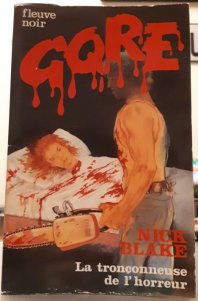
La Tronçonneuse de l'Horreur - nick blakeA History of Chainsaw Terror (Come the Night) by Nick Blake (Shaun Hutson) (February 2020)
There were histories of this book online before this, but this is the most complete one out there.


There’s lots of other good posts on here, but these few are special to me.

If you’ve been following this blog for a while, you’ve probably noticed a recent lack of posts on occult books. (The last non-fiction book I wrote about was Daughters of the Devil back at the beginning of December.) There’s a few reasons for this. I’m mainly just sick of wasting my time reading stupid spellbooks written by wankers. I have been reading other types of occult books over the past few months, but unfortunately, they have been extremely boring, long and difficult to get through. I’ve had a post about Nazi Grail Hunters in the works since early October and another on a horrendously stupid book about interdimensional sasquatches, but reading these texts has been so tedious that I have been avoiding them and breezing through enjoyable horror novels instead.

I have not abandoned occult books, but I have to be more picky these days. I don’t need to read any more books of love spells or nonsense about kaballah. I don’t want to read any more post-hypnotic accounts of alien abductions or any more books arguing that some cave paintings prove our ancestors were space people. I’m getting pretty jaded with Satanism now too. The more Satanists I interact with, the less interested I am in books about their hero.


Recently, I decided that I want to start writing more fiction. Between Nocturnal Revelries and my other blog, I write a lot, and I reckon that I’ve read enough books now to make a decent go at my own stories. I’ve posted my short fiction before (Kevin and The Compost Bin, two disgusting tales), and hopefully there’ll be more coming soon.

Blogging may be past its heyday, but I like doing it, so I reckon I’ll keep going for another few years. Thanks to everyone who reads this site. I really hope you enjoy it.

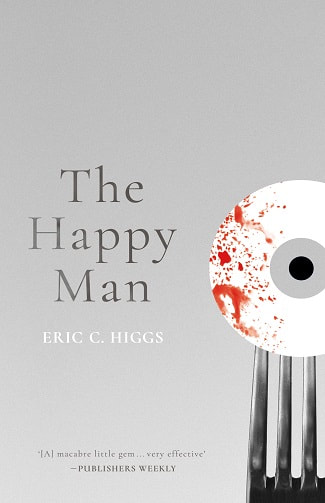
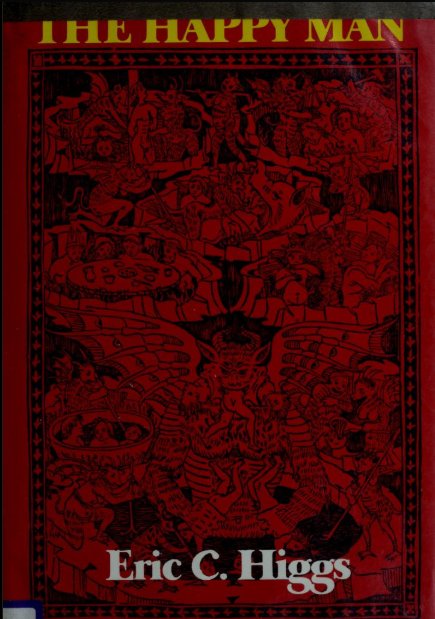
The Happy Man – Eric C. Higgs

the happy man eric cThe Happy Man  Eric C. Higgs
St. Martin’s Press – 1985

Here’s a snappy little horror novel that took me all of an evening to finish. I enjoyed every page.

The plot centers around a man in his early 30s who’s beginning to wonder if there’s any more to life than his marriage, his nice house and his comfortable job. When a new family move in next door, he makes friends with the husband, and things start to get messy pretty quickly. This new guy is a very, very, very bad influence. The plot is a little bit underdeveloped, but the telling of the tale makes this shortcoming pretty easy to forgive. In fact, I really didn’t notice it until I was finished and started thinking about what I had just read.

I won’t say anything else about the story because you should really just read the book for yourself. The writing is excellent. It reminded me of Bret Easton Ellis’s early novels – The Happy Man set in the 80s and the characters are affluent professional Californians who are apathetic to the suffering of others. This is definitely more of a horror novel than any of Ellis’s work though.

This is a short review, but The Happy Man is a short book. I strongly suggest that you pick up a copy. It’s funny, exciting and rather dark. It was recently reissued by Valancourt Books, and as you probably know, Valancourt specialise in reprinting books that really deserve to be reprinted.  This one is no exception.

the happy man eric c higgsThe new Valancourt edition’s cover

The Voice of the Clown – Brenda Brown Canary

the voice of the clown - brenda brown canaryThe Voice of the Clown – Brenda Brown Canary
Avon Books – 1982


After 
Paperbacks from Hell came out, quite a few of the books featured therein became hard to find. I made a list of the ones that I needed to read (most of which included the word Satan in the title) and tried to forget about the rest. After a bit of hunting, I managed to get my hands on copies of all of my first picks. I ordered some online, found others in thrift stores, and downloaded pdfs of others. Now, two years later,  I have read and reviewed 20 of the books featured in Paperbacks in Hell. Some were really good (The Cipher, The Tribe), and others were truly terrible (Brotherkind, The Manse). 

At this stage, the demand for many of these novels has diminished slightly, and books that were 300 hundred dollars are now available for 50 or 60. I check other blogs and discuss books with other nerds on twitter, and I noticed that the ‘paperback from Hell’ that is most frequently mentioned because of its scarcity is Brenda Brown Canary’s The Voice of the Clown

This title had escaped my notice when I first read Paperbacks from Hell, but I googled it after seeing it mentioned a few times and discovered the reason for its scarcity. Grady Hendrix has apparently claimed that this is the one book that actually lived up to the ‘from Hell’ title and that it is the only book to ever make his jaw drop. I was enticed, but after seeing the prices that it goes for online, I decided not to get too interested as I would never pay that much for a book.

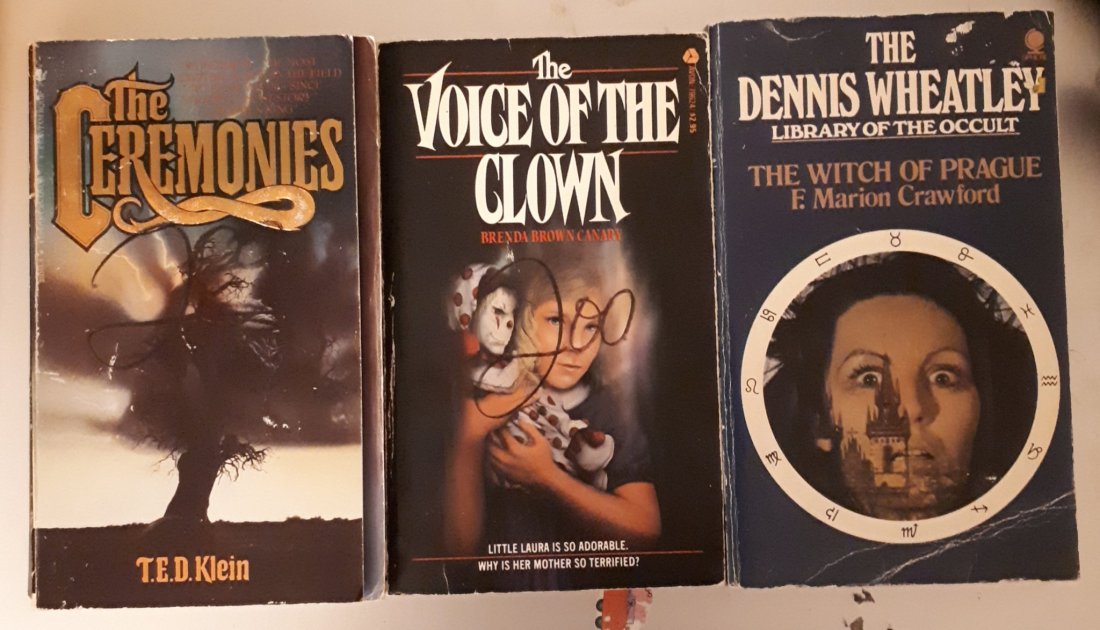
A few weeks ago, I went to one of my favourite local bookshops. It’s super cheap, and has the biggest selection of paperbacks in my city, but it’s entirely disorganized, and over the course of several visits, I’ve cleaned out most of the horror novels. This time, I spent a good half hour without finding anything, but I didn’t want to walk by the owner of the shop without buying anything, so I continued my search. Then I discovered a copy of T.E.D. Klein’s The Ceremonies, a book I’ve wanted to read for a while, and with renewed vigour I turned to a bookcase that I hadn’t yet searched through. There are three rows of paperbacks on every shelf, and it was at the back row of the bottom shelf that I found a copy of The Voice of the Clown with 2.00 written on the cover.

I started to shake. This was the Holy Grail of collectible horror paperbacks. I grabbed another horror novel and sandwiched the Clown between that and The Ceremonies to make it less conspicuous. I had to get out of there before another collector saw what I had and a fight broke out. Like a thief in the night, I tiptoed to the counter, put my books down and smiled at the old lady. I assumed that she was going to recognise what I had in my hand, but she just smiled back and charged me 9 dollars for the three novels. I got out of there as quickly as I could, expecting to hear sirens behind me once somebody realised the daylight robbery I had just committed. 

IMG_20200216_083533

When I got home, I was elated. I tried to convey my excitement to my wife, but she didn’t seem to care. My reading list is fairly lengthy, but it was only a few weeks before I gave in to temptation and bumped this novel to the front of my list.

Then I sat down and read it.


Jesus Christ. This was an unrelenting nightmare.

T.J. unknowingly gets his girlfriend Molly pregnant and then moves away. Then he knocks up a different girl, Kate, and marries her even though he only loves Molly. After giving birth, Molly kills herself. A few years later, T.J. and Kate have another kid. Unfortunately for them, Laura, the new baby, is the reincarnation of Molly, T.J.’s old girlfriend.

Laura really, really, really hates her mom, but she doesn’t fully understand why yet. She REALLY loves her dad though, in a way that seems weird right from the beginning. When her dad gets her mom pregnant again, she becomes very unhappy.

For the most part, the reincarnation business is the only supernatural element in this book. This is not what I was expecting from the cheesy cover. The horror is not of evil spirits or of psychic powers. It is the horror of trauma, suicide, domestic abuse, and misery.

Laura is not only jealous; she is also a manipulative, sadistic psychopath. The story is also told from her point of view, a fact that makes this book all the more disturbing. The reader starts off on her side, but I started to sympathise with her mother pretty quickly. Laura does everything she can to upset Kate, a woman who may not be the best mother in the world but who hasn’t actually done anything unforgivable. I don’t want to give away details, but some of Laura’s actions were so upsetting that they caused me to put the book down and consider whether or not I actually wanted to finish it.

I’ve seen other reviews of this book where people said that The Voice of the Clown isn’t as scary as it’s made out to be and that it gets bogged down with character development, but I found the build up to be really effective. Also, I honestly doubt that those naysaying reviewers have kids of their own. I have a little girl, and my wife and I have another kid on the way, and reading about a child’s mission to destroy her family by any means was deeply upsetting for me. I can read gore all day and won’t be bothered, but reading about a jealous child’s well thought out plans to torment a helpless baby and its mother was utterly horrendous. This novel struck a nerve.

This is a miserable, bleak, unpleasant book to read. While there are some supernatural elements, it’s really more horrible than horror. That being said, I reckon that was the point. Brenda Brown Canary must have sat down and really thought hard on to how write the most horrible book ever. I don’t think something as unpleasant as this could happen by accident. I know that Valancourt Books have tried to get in touch with her to reprint this as part of their Paperbacks from Hell reissues line, but that she has yet to respond. I wonder how she feels about this book now. Was it written during a dark time in her life that she would rather forget? I hope I’m wrong, but I find it difficult to imagine a person who loves their life writing a book like this. It’s relentlessly unpleasant, and it gets worse and worse as it goes on.

All that being said, I think it is a good book. This is a methodically written novel of terror, real, unpleasant terror. I’ve written before of times when books have obsessed me. In all other cases, the obsession reached its peak before reading the book. I would get fixated on a rare horror novel and spend hours seeking out information about it before finding/ordering a copy. Reading it would be the climax. In this case, my interest was really sparked after finishing the novel. I’ve found myself picking it up since finishing it, staring at the cover and feeling an unpleasant discomfort. Part of me wants to get rid of my copy to have it out of my house, but the masochist in me wants to keep it in case I want to punish myself again in a few years. If you can get a copy of this thing and you’re not faint of heart, pick it up and jump into the nightmare.

Count Stanislaus Eric Stenbock’s Tales of Death and Decadent Poetry

I first read about Count Stenbock on the Snuggly Books website when I was buying their collection of Montagues Summer’s ghost stories. I saw the cover of Stenbock’s Studies of Death and became intrigued. I checked and saw that first edition copies of this book go for 10,000 dollars. I had to read it.

stenbock studies of death
When I looked up Stenbock, I saw that David Tibet, Thomas Ligotti collaborator and the musician behind Current 93, had recently put out a collection of Stenbock’s work that contained all of the stories in Studies of Death along with lots of other stuff. This collection didn’t cost much more, and I decided to buy it.

OF KINGS AND THINGS STENBOCKOf Kings and Things: Strange Tales and Decadent Poems
Count Eric Stanislaus Stenbock
Strange Attractor – 2018

Studies of Death is actually very short, and you could easily read through it in an afternoon. The stories are glum, dreary things. I enjoyed them well enough. One of the tales is about a vampire, but the others don’t really have much of the supernatural about them. I quite liked these stories, but I am very, very glad I opted for the anthology rather than just this collection.

The other tales contained in Of Kings and Things are great, and they convinced me that Stenbock was actually an interesting writer rather than just a melancholy weirdo. ‘The Other Side’ is one of the only other pieces of writing that was ever published during Stenbock’s life, and it’s a very dreamy tale of a young man becoming a werewolf. It’s really cool. There’s other stories about a voyage to Hell, a princess who pays to see a young man mauled by lions, and a monk who attends black masses and satanic ritual sacrifices. There’s also a ghost story in the form of a play. ‘The King’s Bastard’ and ‘A Secret Kept’ are very similar to the kind of stuff in Studies of Death.  All the fiction in here is worth reading, but there’s one particularly creepy story about a fella who allows himself to be cuckolded by his gay lover (his boyfriend fucks his wife), and then he falls in love with the resultant child. Yuck.

Stenbock was a real freak. There’s a story that he used to carry a wooden puppet around with him, telling people that it was his son. He was also gay. I don’t mean to insinuate that gayness is weird or abnormal, but let’s be realistic; in the late 19th century it was largely considered so. Stenbock’s writing, although never explicitly detailing acts of homosexuality, is pretty gay. Read it and you’ll see what I mean – lots of beautiful men and forbidden love. I think he deserves more credit for writing like this during that period of history. It’s a pity that he isn’t better remembered.

The physical book is lovely – it looks and feels nice, and a great deal of effort has clearly been put into it. It’s not expensive either, so if you’re mildly interested in Stenbock or a big fan of his, I can wholeheartedly recommend picking up a copy of Of Kings and Things. I’m glad I did.


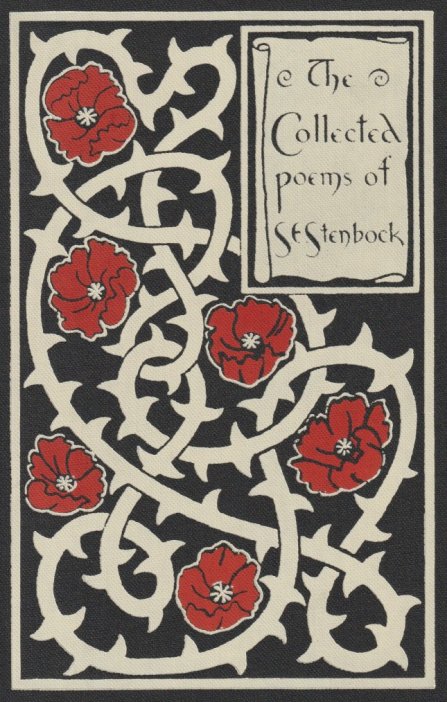
Stenbock was primarily a poet, and of the 4 of his books that were published during his lifetime, 3 of them were books of poetry. Copies of the original editions of these books are now ridiculously rare. David Tibet estimates that there are 4-6 copies of each in existence. Luckily, many of these poems are included in Of Kings and Things. I was on David Tibet’s website a few weeks back and saw that he was offering free pdf copies of the collected poems of Stenbock. This collection contains all of the poems from the Count’s 3 books of poetry. I decided to give it a read before publishing this post.

collected poems stenbock
The Collected Poems of S.E. Stenbock –  Count Stanislaus Eric Stenbock
Durto Press – 2001

I have very little interest in poetry. Honestly, I just don’t get it. My opinions on this lad’s poems aren’t going to be profound. I thought they were very moody and sad and dramatic – lots of crying and love and blood. If Stenbock was a teenager in the early 2000s, he would have worn lots of eyeliner and shirts with black and purple stripes. I’m too much of a bonehead to tell if his poems are good not. I far preferred his stories.

A History of Chainsaw Terror (Come the Night) by Nick Blake (Shaun Hutson)

I have spent the last few months obsessing over the infamous Chainsaw Terror, but finding a copy seemed impossible. A few weeks ago, I read a review that made doing so significantly easier. There’s quite a few reviews of this novel online already, but I am far more interested in the story behind this book than the story in it. In this post, I want to present the most comprehensive account of the publishing of Chainsaw Terror/Come the Night to date.

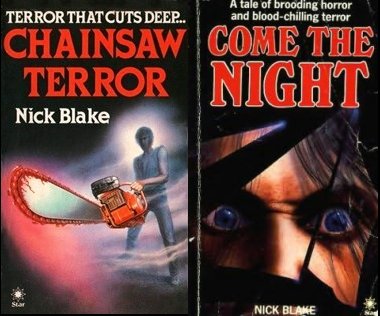
chainsaw terror come the night nick blake hutson

In 1984, Shaun Hutson agreed to write a novelisation of the Texas Chainsaw Massacre. Star, his publishing company failed to get the novelisation rights for the movie, but they encouraged Shaun to write a chainsaw novel anyways. Who doesn’t love a bit of chainsaw violence?

Shaun spent a few weeks (either 15 or 20 days) writing a manuscript titled Chainsaw Terror. A week after sending it in to his publisher, he got a call telling him that parts of it had to be cut out. The extent of these cuts varies depending on Shaun Hutson’s mood. He has claimed it was 20 pages, 25 pages and 30 pages during different interviews.

Apparently Bookwise, the biggest book retailer in England, had banned the book from their stores because of the word ‘chainsaw’ in the title. (By Hutson’s own account, other retailers, including W.H. Smith did not have a problem with the book’s title, but Hutson later claimed that the novel was “banned outright.”) The cut manuscript was retitled and all future copies were published as Come the Night.

Ok, so the small number of copies of the first printing of book that were originally sent to and sold by non-Bookwise vendors were titled Chainsaw Terror, and these are the ones that we see going for 300+ dollars on ebay today. The reason that copies of Chainsaw Terror go for so much money is that the people buying them believe that they include the 20-30 pages that were cut from the original manuscript.

But Chainsaw Terror and Come the Night are the same book. Yes, they are the exact same. Come the Night is not shorter, and it’s not less graphic. It’s literally the exact same. (Somebody made this claim on a forum in 2017, but Olly C’s review confirmed it with certainty.) All of those people who review their copy of Chainsaw Terror online and gloat smugly about how weak Come the Night must be compared to the sheer brutality of Chainsaw Terror are fools.

So who is responsible for all of the confusion over the different editions of this book? I’m pretty sure it’s Shaun Hutson. I’ve already pointed to a few instances where he has contradicted himself on elements of  the story, but most confusing of all is the following quote which is currently found on Hutson’s own website:

“…CHAINSAW TERROR and COME THE NIGHT are both the same book. CHAINSAW TERROR was originally published in the US but was banned over here by W.H. Smith because it had ‘chainsaw’ in the title. It was then re-released (heavily cut) as ‘Come The Night’. Actually, make that very heavily cut…”

Ok, so the first sentence and the last sentence of that quote directly contradict each other. Which part are we supposed to believe Shaun? Not only that, but in this quote, Hutson is claiming that it was W.H. Smith that banned the book while he has elsewhere stated that “W.H. Smith who were more conservative in their views [than Bookwise] didn’t have a problem with CHAINSAW TERROR even though they’d later go on to ban my own novel DEADHEAD in 1994.”

According to Hutson, the cuts were demanded just days after he submitted the original manuscript, but while Chainsaw Terror came out in March 1984, Come the Night was only published in December 1985, almost two years later. If Hutson’s claim that “It [Chainsaw Terror] was then re-released (heavily cut) as ‘Come The Night'” was true, this would mean that there are three different versions of the story: the original manuscript, the cut version (Chainsaw Terror) and the cut-cut version (Come the Night). But if Come the Night is a “very heavily cut” re-release of Chainsaw Terror, how is it that every known copy of both books is 173 pages long? Hutson’s claims are full of holes.

I don’t know how deliberate it was, but I can’t help but think that the author has consciously obfuscated the publication details of Chainsaw Terror to add to its infamy. In pointing this out, I want to clarify that I have nothing but respect for Hutson if this is truly the case. Nothing gets my juices flowing better than the mystique of a banned and unattainable horror novel. I’d do the same thing if I was in that position.

I pieced together the above account from different interviews and reviews, and while I’m sure it’s not completely accurate, I think it’s at least the most complete version of the story of the publication of Chainsaw Terror online. (Hutson’s contradictory accounts make it very difficult to suss out who was actually responsible for the title change and where the copies of Chainsaw Terror in circulation were actually sold – was it W.H. Smiths or the United States?) If anyone has any further information on either of these books, I’d be happy to know about it. Shaun Hutson, baby, give me a call and let’s talk.

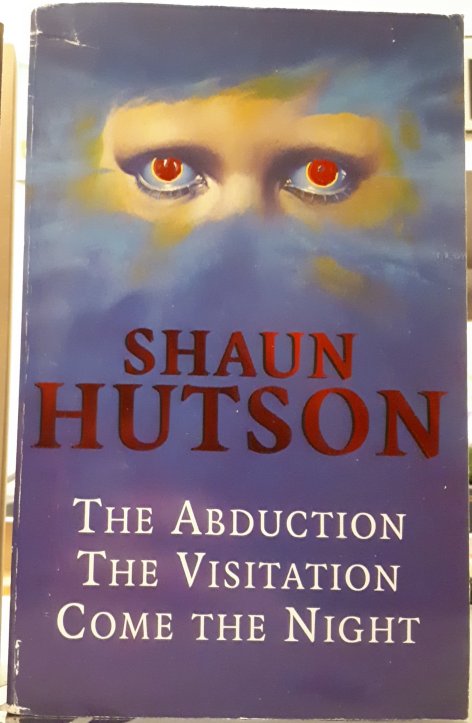
hutson come the night abduction visitation
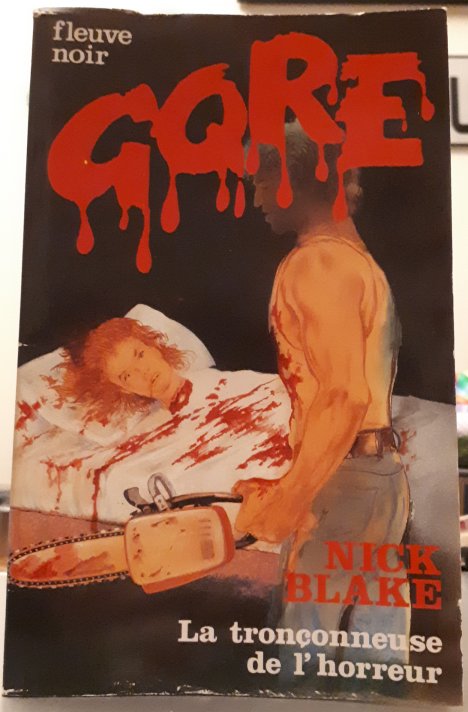
Just to clarify another point; while paperback versions of Chainsaw Terror and Come the Night are both fairly scarce at this stage, the entire text of Come the Night (and hence Chainsaw Terror) was rereleased as part of a collection of three novels by Hutson that is still widely available. I bought a copy for less than two dollars a few weeks ago. There was also a French edition called La Tronconneuse de l’Horreur put out in 1985. I actually bought a copy of this before I knew that Come the Night was the same as the published version of Chainsaw Terror. I had planned to learn French rather than paying 300 quid for a copy of the English version, but I don’t have to any more. I don’t regret my purchase though, as I think the cover of this version is the single greatest cover art in the history of horror fiction.

La Tronçonneuse de l'Horreur - nick blakeI can verify that the text is the same as the English version. It’s cut too. Still though, look at that cover!
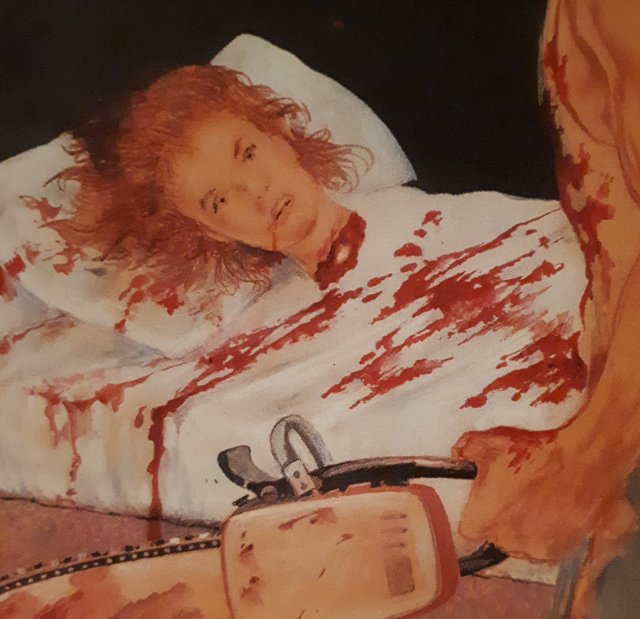
Ok, as for the actual plot of Chainsaw Terror… It’s pretty much what you’d expect: an incel cuts up a bunch of prostitutes with a chainsaw. It shames me to say this, but I thought it was quite enjoyable. Everything is pushed a few steps further than is sensible. There’s some nice touches – whenever somebody is cut up, they always seem to shit or piss themselves. Also, the chainsaw maniac has the weird (yet admittedly sensible) habit of taking off all of his clothes before he dismembers his victims.

There is one part of the book where the killer is about to ram a drill into a prostitute’s eyeball where the text cuts off with an ellipsis. When the next paragraph starts, she is dead. I assume this is the scene of one of the infamous cuts. There’s also a tense scene where the killer is left alone with two small children. Nothing happens, but in a later interview, Hutson mentioned that “Killing kids in print is always a tricky area” directly after mentioning the ban on Chainsaw Terror, leading me to believe that the that the killer may have returned to those kids in the original manuscript. Hutson has also mentioned the omission of a scene involving chainsaw rape, but the published versions do actually contain a scene that I thought suggested as much. In truth, none of these omitted scenes would have made a huge difference to the final product. As it stands, the published manuscript is plenty violent and gross. (There are rumours of a pdf copy of the uncut manuscript of Chainsaw Terror that was being sent around the internet years ago, but I doubt we’ll ever see it again.)

In conclusion then, finding a copy of Chainsaw Terror is actually pretty easy despite all the nonsense that has been written about it online. The omnibus containing two other Hutson novels is the way to go my friends – you don’t need to spend 300 dollars. As of today, the 2nd of February 2020, there are more than 50 copies available online for less than 20 dollars, many costing less than half that. The book is enjoyable in a very direct, horrible way too, and I recommend you check it out if you’re at all into violent, mindless horror novels.

severed head decapitated by chainsaw

Oh, and if elusive and weird paperback horror is your thing, make sure you check back here soon. I’ll be posting a review of The Voice of the Clown, a real rarity, by the end of the month.