Greetings freaks. I doubt many people have noticed, but I have been alternating between posts on fiction and non-fiction since the beginning of the year. I had a big non-fiction post planned for this week, but I’m on holidays at the moment, and I haven’t had time to finish it, so I’ve got to switch it up. I’ve had the following post on the backburner for a long time, and I figure now is a good time to unburden myself. I’ve got something really juicy for you next week, but for now, here’s some more books by Stephen King.
Viking – 1987
Misery
I have never seen the movie version of Misery, but my mom saw it when I was a kid and told me all about it. I had heard that this was one of King’s better books, and it did not disappoint. I knew that the author was going to be “hobbled”, but I didn’t realise the book was different to the movie. Jesus. I literally winced when I got to that part. This is one of the best books I’ve read by Stephen King. I didn’t like The Longest Walk because it felt like it stuck to one track (excuse the pun). Misery is even more confined, but it works a lot better in my opinion. This was a really good book.
Viking – 1982
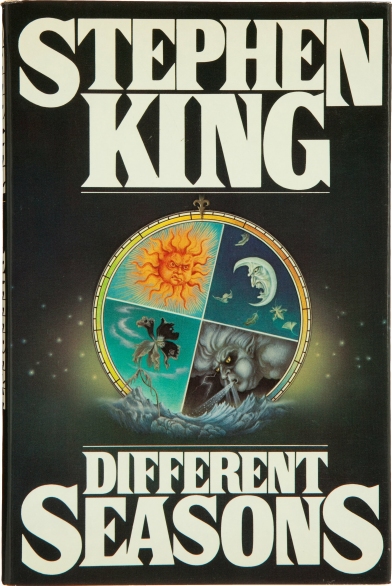
Different Seasons
Different Seasons is known as King’s non-horror collection, but one of the tales, The Breathing Method, is very definitely a horror story. The way it’s framed, as a bunch of old men telling scary stories, reminded me a bit of Peter Straub’s Ghost Story. It’s not nearly as ambitious as that book, but it’s not a bad story at all. It’s the only of one the four stories in here that hasn’t yet been turned into a big Hollywood movie. I watched The Shawshank Redemption and Stand by Me many times as a kid, but the stories they are based on are excellent, and I quite enjoyed Apt Pupil too. I know some high brow literature snobs look down on King, but he really is a talented writer. I loved this book.
Viking – 1983
Christine
I read Pet Semetery a couple of years ago, and I didn’t really like it, so I gave King a break for a few years. I really enjoyed Misery and Different Seasons, but they contain little of the supernatural fiction that drew me to King in the first place. I thought I’d better read one more book for this post, and Christine, King’s evil haunted car book, was next on my list. (I’ve read nearly all of his novels and story collections up until 1983 so far. ) I found Christine unbearably drawn out and overwritten. I’d imagine it would have been a much better book if it was 200 pages shorter. Honestly, it could have been a short story or a novella. I know some people love this one, but I wasn’t that interested.
I’m on my holidays at the moment, and I actually seem to have less time for reading than I usually do. Here’s a quick review of a quick little book that I quite enjoyed.
Overlook Collection – 2003 (First published 1996)
I haven’t read anything by Edward Lee since I gave up on his Bullet Through Your Face collection in 2020. I don’t mind vulgarity, but the amount of cocksnot in that book was tiresome. I recently came across a free copy of Goon, a book he co-authored with John Pelan, and it was short enough to convince me to give Lee another chance.
This is a brief splatterpunk novel about a serial killer/professional wrestler. It actually contains less wrestling than I was expecting.
I read 2 of the 3 stories in Bullet Through Your Face, but I gave up when I got to The Refrigerator full of Sperm, a story that was taken from Lee’s Splatterspunk: The Micah Hays Stories collection. You can imagine my disappointment when Micah Hays showed up as a character in Goon. Fortunately, it’s only a brief cameo appearance.
Things get weird at end (as they usually seem to in Lee’s books), but most of the plot of Goon is pretty much what you’d expect. There’s an instance of race-baiting in here that dates the book. I don’t think the authors were espousing racial hatred, but I don’t see two (sane) white guys feeling comfortable putting the same words to paper in 2023.
If you like wrestling and gross stuff, you’ll probably like Goon. It was quite a silly book, but it was short enough that I enjoyed it. It contains just the right amount of cocksnot, not too much, not too little.
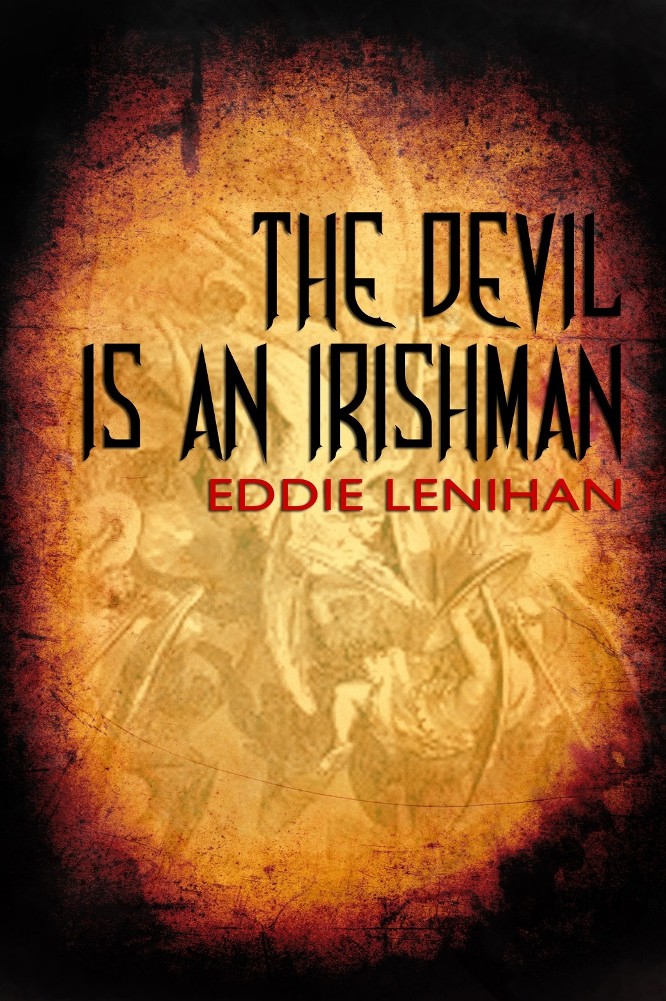
Given my penchant for books about the Devil and my ever present longing for the land of my birth, it is a curious thing that I have not yet reviewed this book. Eddie Lenihan’s The Devil is an Irishman is a collection of folk stories about Satan’s exploits in Ireland.
5 years ago, I reviewed Lenihan’s Meeting the Other Crowd. (I loved it, but my review sees very little traffic.) In that book, each of the many stories is given a bit of an introduction with some background information on where the story came from. This one is different. There’s only 4 stories in here, and while they are folk tales, the telling is distinctively Lenihan’s. I heard his voice in my head as I was reading them. He doesn’t mention where the tales come from, but he mentions in the introduction that they were collected, so I assume they are actual folk tales.
The Devil doesn’t seem to fare well in folk tales. He seems surprisingly easy to deceive, and he repeatedly finds himself in rather uncomfortable situations. I was actually quite surprised at the level of violence in this book. One tale sees the Devil having his eyeball popped after he is brutally beaten with hammers.
I loved this book, and you should definitely read it. I’m actually back in Ireland at the moment, drinking lots of tea and talking lots of shite. I’ll keep an eye out for Satan while I’m here.
When you’ve read a few of these “animal attacks” books, you start to see patterns emerging. This is set in England, and the set up was very similar to the slimey, squelchy, slithery books by John Halkin (which I assume are very similar to James Herbert’s Rats.) Peaceful rural scenes are interrupted by brutal maulings at the hands of hitherto mild-mannered wildlife. The attacks in The Folly were quite bloody, but there was nothing else to note until the end of the book.
Spoilers ahead:
So it turns out that the bunnies are a laboratory experiment gone wrong. A lad who wanted to control the rabbit population in his neighbourhood hired a scientist to genetically engineer a disease that would kill rabbits. Once accomplished, this pair continued their genetic experiments, resulting in a chamber of freaks. The book ends with the protagonist stumbling into a secret room in the scientist’s laboratory which houses his half-human, half-chimpanzee lover (Maybe it’s his love-child: I read this a few weeks ago, and I can’t honestly remember.) The inclusion of this freak is needless and out of place in the story, but I thought it was a stroke of genius. It was like giving somebody a sneaky finger up the bum at the end of a blowjob – the reader’s not expecting it and probably doesn’t really want it, but they shan’t deny it makes things more exciting!
In truth, this is a ridiculous book, but if you’re the kind of person who is willing to read a book about evil bunny rabbits, I don’t think you’ll be terribly disappointed.
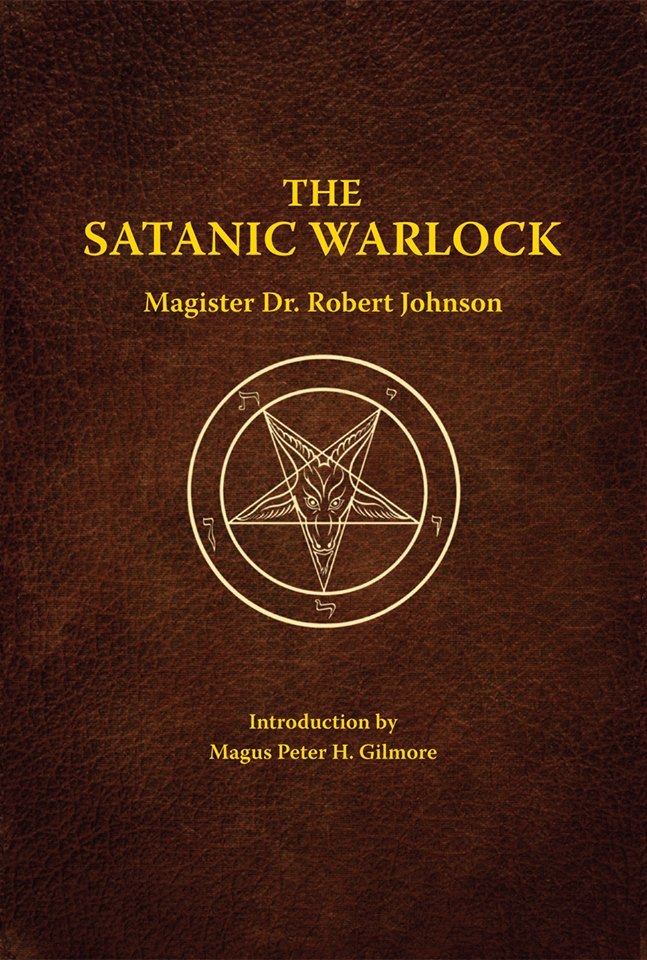
A few years ago, I tried read Anton LaVey’s The Satanic Witch. It was terrible nonsense, and I couldn’t bring myself to finish it. One of the reasons I wanted to read it was because I had heard of a ludicrously cringeworthy book that was basically its sequel, Robert Johnson’s The Satanic Warlock. The Satanic Warlock is a pick-up manual for Satanists, a book telling you how to attract women in a Satanic fashion. The idea is so ridiculous that I had to read it.
This book was atrocious. I am extremely unqualified to rate advice on flirting and seduction, but even I could tell that this was 90% awful. The only things that the author got right were the most basic rules of personal hygiene and composure (washy washy bumbum and no rapey).
It starts with an unbearably wordy intro from Peter H. Gilmore, the current leader of the Church of Satan. This is followed by a prologue in which the author boasts about how he has had a lot of sex and how he is like Frank Sinatra. Oh, and apparently he worked with Hans Holzer.
Chapter 1 The intro chapter is where the incel vibes really get going. The author needlessly boasts about how much he hates political correctness and feminism. He goes on to boast about how being a warlock is so cool. He likes boasting. He also likes to make girls pee their pants. Being a warlock is all about believing in yourself and projecting confidence. The author claims you should make a confidence den where you hang pictures of the people you want to be like. When the author was making his confidence den, the doorbell rang. It was a female mail carrier. His vibes were so strong that she came in and sex with him. Sure…
There’s an attempt here to define what a warlock is. Realistically, the people who fit the descriptions here are not the kind of people who are reading the book. The people who fit the descriptions also seem like a bunch of assholes. I would be surprised if the author of this book doesn’t wear a fedora.
Chapter 2 This chapter is about the satanic warlock “archetypes”. There are a few that you can choose from: the occultist, the rake, the metal musician… Imagine and act like you are one of these, and you will be drowning in pussy. This chapter includes pictures of the various archetypes. These pictures are without a doubt the funniest part of the book, and they are what convinced me to read it in the first place. I would post them here, but the tumblr where I originally saw them has been taken down, and I wouldn’t be at all surprised if this happened due to copyright reasons. An entirely different author threatened to take me to court recently for posting images from his book and leaving a mean review, so I will not be posting any pictures from The Satanic Warlock. If you really want to see them, Internet Archive still has a capture of the original tumblr post. It also has the entire tumblr account in all its hilarious glory.
There’s a section at the end of this chapter providing a list of “cool” names that you can use to introduce yourself. One of them is “Mormo”.
Chapter 3 Confidence is important. Looks don’t matter much, and dick size is almost irrelevant. This was a bit of a relief to me, especially after the author used the phrase “the Irish curse”. I had never heard of this curse before. I am Irish, and most of the penises I have seen in real life have been Irish; I don’t have many points of comparison, and I honestly didn’t know our penises were infamously short. I always thought my 2.5 inches (while hard) was about average. Luckily for me, the author includes some excellent advice for those of us who weren’t blessed with perfectly masculine bodies:
“Why not forget looks entirely and publish a book of your love poetry or learn to play the lute?”
p. 54
Chapter 4 – Style tips In this chapter, the author warns all warlocks to avoid wearing shorts unless they’re trying out for a part in the Little Rascals or live on the equator. Soon thereafter, he goes on to claim that “flowing silk pirate shirts and heavy leather boots create a sexy swashbuckling image.” Does anyone believe this is true? I am certain that at least 95% of all of the adult women I know would go for a guy in a pair of shorts over some wanker in a pirate shirt.
There is some good advice in this chapter. The author advises his readers to wash their willy and bum and to brush their teeth and cut their fingernails.
Chapter 5 Be powerful Challenge bullies “mano a mano”. Honestly, anyone who reads this book in earnest will get their ass kicked 100% of the time they follow this advice.
Chapter 6 – Seduction This chapter features a diagram showing women’s priorities. It lists taste in music as number 3 and intelligence as number 8. Is anyone stupid enough to believe this nonsense? Did the author get this information by surveying a group of teenage girls outside of a Hot Topic?
This chapter also contains a section about how chicks dig sweaty dudes:
“In the throes of passion, some women have said that they can “release their inner slut” when their nose is in close contact with a man’s penis, testicles and anus, often taking deep breaths to amp up the lust.”
p. 118
Chapter 7 – Sex Magic Sex magic is basically bullshit, but it works if it’s satanic enough and you have pentagrams and cool devilly shit around you. It probably works as well with a realdoll as it does with a person too, so that’ll be good news for most of the readers of this book.
Chapter 8 – The Gay Warlock There’s a 10 page chapter on gay warlocks that says nothing of any interest. At least it’s not hateful.
This book is bizarre. Despite it’s very specific nature, it is considered part of the official canon of Church of Satan literature. I suppose this isn’t too surprising. It’s not remotely hard to believe that most male members of the Church of Satan have a hard time attracting a mate. The author holds a Ph.D. in human sexuality from the Institute for Advanced Study of Human Sexuality. Sounds impressive, right? The IASHS was a non-accredited institution that was basically shut down because it was unable to meet the minimum requirements of the California Bureau for Private Postsecondary Education. I don’t have a Ph.D. in human sexuality, but I can still give all you little frigids one excellent piece of advice if you want to get laid: don’t take this book seriously.
I first heard of this book a long time ago. The title and extremely childish cover were alluring, but copies were always that little bit too expensive for something that was probably awful. None of the reviews I read made me want to splash out either. I got my hands on a cheap copy recently, and I was pretty excited to get going.
A quick glance through this blog will prove that I have read my share of terrible books. It’s quite a feat to truly disappoint me. In truth, I think that The Last Days of Christ the Vampire might deserve the title of the worst novel I have ever read.
This is anarchist fiction. I’m not an anarchist, but the fact that this book espouses anarchy is not what made me dislike it. The writing here is unreadably poor. It’s like J.G. Eccarius never once considered the fact that novels are supposed to be entertaining. There is a plot here, but the story is so poorly told that it made it very difficult to figure out what was going on. There’s no focus on any specific character, and cast of characters is huge. To make matters worse, some characters change their names throughout the story. The writing itself is bad, and the plot construction is pathetic. This book is unbearably boring.
So Jesus was actually a vampire, and he is still alive today. There are a gang of vampires (including Simon Magus and Aleister Crowley) who have a hand in controlling world affairs. Some MaximumRocknRoll reading punk-rockers decide to put an end to this, so they go to Jerusalem to go vampire hunting. This all ends in a massive attack against the Pentagon.
That summary makes this book sound pretty good. A barely competent writer could have made this into something enjoyable. Unfortunately, the above paragraph contains all of the interesting parts of the book. The author chooses to pass over everything cool about a vampire Jesus and spends his time trying to promote an incredibly naïve political agenda – there’s no chilling descriptions of Jesus drinking his victim’s blood, but there are many paragraphs about mailing anarchist zines. I bet the author wore a bumflap. The action sequences are excruciating. This is awful fiction. It stinks. I wanted to give up, but I forced myself to finish it. Piece of shit.
I read Ed Sander’s The Family a few weeks ago, and it reignited my interest in the Manson Family. Charles Manson and his followers were horrible people, and I have little sympathy for them, but there is something fascinating about how they lived and what they did. Here’s another 3 books about them.
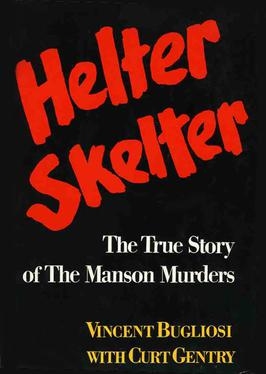
Helter Skelter – Vincent Bugliosi
W. W. Norton & Co- 1974
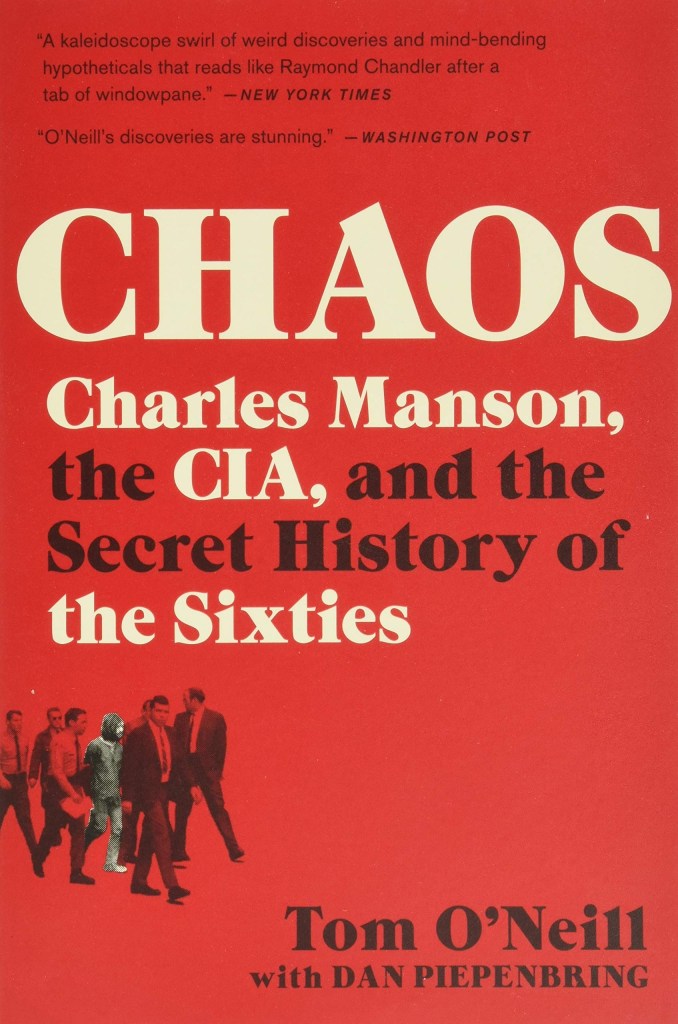
I have understood the story behind Helter Skelter for most of my life. A few months ago, I read Ed Sander’s The Family, and I learned a lot about Charles Manson and the Tate-La Bianca murders. Sanders does mention the Helter Skelter stuff in there, but his book is not limited to the crimes and their motives. When I posted about The Family, a friend recommended that I read Chaos by Tom O’Neill. I put a hold on the audiobook version from my local library and waited 6 weeks. After listening to the first 20 minutes, I paused it and started reading Helter Skelter.
Chaos reveals O Neill’s findings after 20 years of researching the Manson case. The first thing it claims is point out that the “official” story as presented in Helter Skelter is based on lies and that O’Neill can prove this claim. Knowing this going in, it was a bit hard to swallow some of the stuff in Helter Skelter. Charles Manson and his followers were clearly a danger to society, and I don’t think anyone really believes that they were innocent, but the story that Bugliosi puts together to get them convicted does seem a bit sketchy. Manson was a dangerous, paranoid, psychotic criminal, but the race-war as foretold by the Beatles and subsequent escape to the Hollow Earth story actually seems a bit too cohesive for Charlie. It seems much more likely that the murders were drugs or revenge related.
As a book, I found Helter Skelter a bit tedious. I had read The Family just a few weeks before and was familiar with the story, and Helter Skelter’s focus is mostly on the court case. It’s an important book in Manson history, but it’s clearly not entirely accurate.
Chaos: Charles Manson, the CIA, and the Secret History of the Sixties – Tom O’Neill
Back Bay Books – 2020 (First published 2019)
Chaos is a very captivating read. Its main claim is that the narrative in Helter Skelter is inaccurate. O’Neill shows that the relationship between the Family and the Polanski household was far less tenuous than Bugliosi wanted it to appear. Apparently Bugliosi told O’Neill that the cops found a video at the murder scene of Roman Polanski being cuckholded. It is suggested that the Polanskis and their friends were involved in more naughtiness than has previously been reported.
This seems perfectly believable to me. It refutes the Helter Skelter story, but it does not exonerate anyone.
O’Neill’s research takes some shocking turns, and pretty soon he is linking the Manson murders with the MK-ULTRA and the JFK assassination. That probably makes it sound crazy, but it’s terrifyingly convincing. O’Neill’s research does not reach any tidy conclusions, but the evidence he provides convinced me that there was a lot more to the Manson story than was told in Helter Skelter. I don’t want to summarize the book or O’Neill’s findings, but he convinced me that the CIA were involved in some way. I strongly recommend that anyone with an interest in the Manson family or government deception read this book. I knew that American government agencies got up to some shady stuff, but I wasn’t aware of the reach of programs like COINTELPRO and Operation Chaos. The FBI sent a letter to Martin Luther King telling him to kill himself? What the fuck?
The Manson File – Nikolas Schreck
Amok Press – 1988
The other book that was recommended to me after finishing The Family was lil’ Niky Schreck’s The Manson File. A new, almost 1000 page edition of this book was published recently, but I was only able to get my hands on the 200 page, first edition from 1988. This was quite different to the other books on Manson I have read. It’s a collection of documents by and about Charles Manson that attempt to make him out as a misunderstood, outlaw rebel and all-round cool guy.
I have to be honest here. I am biased against Mr. Schreck. Provocation is pretty cool, but this guy has been known to cross the line into edge-lord territory. He appeared on white-power talk shows in the 80s. That was a long time ago, and based on his current bandmates, I doubt he is the most racist guy in the world, but when the queen of england died last year, he posted about how much he supports the monarchy. YUCK.
The Manson File has some interesting bits, but a lot of it is Manson’s own writing. I’ve listened to a lot of interviews with Manson, and he has a tendency to get lost in his own words. This gets worse without an interviewer to reign him in. The only piece that he wrote in here that I enjoyed was his letter to Ronald Reagan in which he told the former president to end the war on drugs and to invest that money into planting more trees. I am 100% behind this line of thinking. There’s also a letter he wrote in the mid-’70s to the Hollywood Star, a tabloid newspaper, spilling some Hollywood secrets. It’s in this letter that he claims that Jane Fonda had sex with a dog. He also claims that Roman Polanski funded his Hollywood movies with “money from dog and children movies”. One might write this off as slander, but it was written before it came out that Roman Polanski actually anally raped children and made movies of his wife being raped by other men. What a fucking piece of shit. I wish the Family had killed him instead of his wife.
A lot of the book is taken up with awful art, songs and poems by Manson, and there’s a cringey essay describing the similarities and nebulous links between the Family and The Process Church of the Final Judgement. It also features a couple of essays by James N. Mason, a neo-nazi, terrorist and convicted paedophile. In a completely expected turn of events, Mason, one of the worst people in the world, idolizes Charles Manson. The only other noteworthy part of this text is a picture of the contents of a package that Charlie sent to Nick Bougas, a contributor to this book. The package contained a book and a pair of Charlie’s dirty undies. As awful as Charles Manson was, he clearly had some redeeming qualities.
Given the fact that the new edition of The Manson File is 5 times longer, I am sure it’s a very different book. I get the sense that it contains more information on the inconsistences within Helter Skelter, but I won’t be sure until I read it. At this point, I have read more than 1200 pages about Charles Manson in the last 2 weeks, and I will probably wait a while before I seek out the new edition of Schreck’s work.
I’ve definitely spent too much time on Charles Manson recently. The acts he inspired were horrendous, but it’s hard not to find him entertaining. I think part of the appeal is that Charlie was one of the biggest losers to have ever lived. He had a traumatic, loveless childhood. He had no formal education. He was insane. Just as things started looking up for him, he fucked it all up beyond everyone’s expectations, potentially because he had become a test subject for CIA mind control experiments. His life was a an absolute disaster, but he always managed to keep a smile on his face.
In honour of Canada Day next Saturday, here’s some books by a Canadian author. Exactly one year ago, I read a horror novel by Sean Costello. It was great. I discovered that Costello had written two other horror novels, so I decided to read those too. Doing so was an excellent decision. I greatly enjoyed all three of these books.
Pocket Books – 1990
The Cartoonist
Scott, a successful psychiatrist with a horrible secret, meets a strange patient at his hospital. This drooling geriatric can’t walk or speak, but he can draw. At first the drawings seem random and unconnected, but Scott soon realises this is not the case.
I really enjoyed this novel. It’s set in Canada, and at its core, it’s about a father trying to protect his little girl. Both the antagonist and protagonist are horribly flawed people, but it was difficult for me not to empathise with both of them, and parts of this novel really got to me. In the 3 days leading up to me reading this book, I read 3 other “paperback from hell”-esque novels (The Kill, Joyride, and The Scourge) , and I had enjoyed each one less than the one before it. I was expecting the same from this one, but it was way, way better. It’s not perfect (my friend Micah made some valid criticisms when he reviewed it), but I found it very entertaining.
Pocket Books – 1989
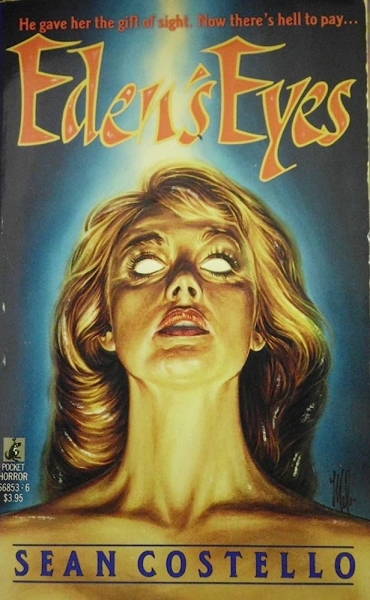
Eden’s Eyes
This book starts off with a father signing the consent forms to donate his recently deceased son’s organs. The eyes go to a blind author, the kidneys go to a sick child, and the heart goes to a homeless alcoholic. Unfortunately for everyone, the donor’s mother is not happy about the organ transplants, not happy at all.
That’s the basic premise of the book. That probably doesn’t make it sound like anything special, and in truth, it didn’t really feel like anything special for the first 50 or so pages. Then things started to get darker and weirder by the chapter. It ramps up and up and up, and the ending is bloody glorious. This is a slasher at heart, but the characters are interesting, and there’s weird supernatural elements that make it quite exciting.
I was so excited after the ending that I spent about 15 minutes trying to talk my wife into reading this one. (She wasn’t remotely interested.) Eden’s Eyes was a lot of fun to read.
Pocket Books – 1991
Captain Quad
I think this book may have the most off-putting title and cover of any horror novel ever. I didn’t want to read it, but I’m glad I did. It’s very dark, and I quite enjoyed it.
Peter Gardener is just about the greatest guy ever. He’s smart, athletic, handsome and kind. Unfortunately for him, he falls off his motorbike and breaks his neck. Being paralyzed from the neck down does two things to him. It gives him the opportunity to develop the ability to leave his body at will, and it also turns him into an evil psychopath.
That’s a horrible idea. It’s horrible because part of it is understandable. If I went from having the world in my pocket to losing the use of my body along with most of my relationships and dreams, I’m sure I’d become bitter. Hopefully not bitter enough to kill my mom, rape my ex, and shove an ice auger (basically a giant corkscrew) up an old friend’s anus, but definitely bitter.
Yes, this book gets very nasty. It was a bit like Eden’s Eyes in the way it transformed, fairly suddenly, from a gripping thriller to a gorefest.
Also like Eden’s Eyes, this one is about a person who develops psychic powers after going to a hospital. Sean Costello worked as an anesthesiologist, so this explains why sizeable parts of all three of these books take place in hospitals. The other books that came to mind when I was reading this were Trumbo’s Johnny Get Your Gun and Hallahan’s Keeper of the Children.
Captain Quad is unpleasant because Peter starts off as the good guy. He’s an extremely sympathetic character. You don’t want him to do the bad stuff he does, but it’s not too hard to understand why he does it. It’s difficult to read the book without imagining the same thing happening to yourself. I ride a bike to work every day, and the idea of getting hit by truck and paralysed is far more terrifying than a poltergeist. Honestly, the idea is almost a little too scary for a horror novel. I read these books to forget about my life, not to worry about it.
I really enjoyed these books, and I was really impressed with Costello’s writing. These are a step above a lot of the crap I read. Luckily for everyone, these three Canadian classics are now available as ebooks.
Over the years I have done posts on books about some of the better known cryptids including the Jersey Devil, the Mothman and a few on Sasquatch. In truth, I never found any of these cases particularly convincing. I’ve read a few other books about the field of cryptozoology, but I hadn’t done any on specific cryptids in a long time. I recently did posts on books about the Pigman and the Goatman, and when I saw a book about the Lizardman, I decided it was only fair that I give him a chance too.
In the late 80s, some people in Bishopville, South Carolina, claimed to see a monster. Some cars in the area were damaged. The descriptions of the creature varied, but some claimed he was like a hairless sasquatch.
Like the author of Goatman, Lyle Blackburn does an excellent job documenting the Lizardman phenomena. The story is clear, and obviously well researched. Unfortunately, none of the accounts herein are remotely convincing.
Lizardman never hurt anyone. Nobody ever went missing. None of the sightings are particularly interesting. One witness later admitted he was lying. A few people claim they saw something they couldn’t explain. Their descriptions of the monster are so different that it’s hard to accept any of this. Lizardman doesn’t exist. At best he’s just a muddy sasquatch.
This is a decent book about a very silly topic.
There were a few points in the text where the author referenced the fact that he is a musician. I decided to see if he had any recordings on the internet. It turns out that he was a founding member of Solitude Aeturnus and played on their a bunch of their albums, including my personal favourite, Through the Darkest Hour from 1994. This dude played in an awesome heavy metal band and then started writing books about cryptids. Cool.
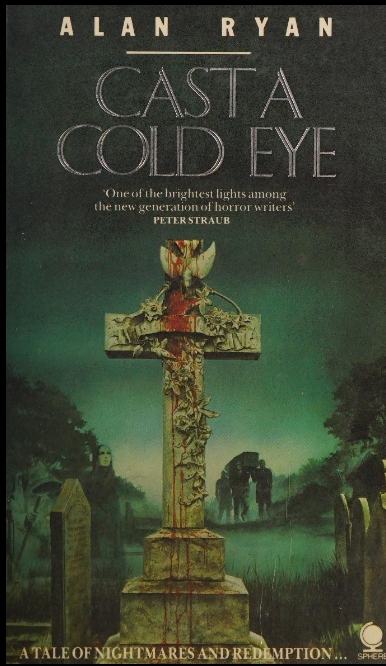
I reviewed Alan Ryan’s The Kill and Dead White last winter. I was originally going to talk about Cast a Cold Eye in the same post as those two books, but I realised that that pair were set in the same village and shared characters, so I kept Cast a Cold Eye for later.
Sphere – 1986 (Originally published 1984)
Jack, a successful American author, goes to Ireland and rents a house so that he can research and write his new novel. He’s staying in Doolin, a little village on the west coast of the island, and shortly after arriving, he sees some old men pouring a bottle of blood into a fresh grave. Soon thereafter, he starts to see ghosts of victims of the potato famine.
Alright. Let’s stop there. More potato famine horror? I was not a fan of the last book I read within that very niche genre. Fortunately, Alan Ryan’s writing is far, far better than Ann Pilling’s, and the story here is more intriguing, even if it does also feature very skinny ghosts.
I want to make it clear that my disdain for potato famine horror isn’t because I’m offended by the author turning the suffering of an oppressed group of real people into entertainment. It’s more the fact that the potato famine is the only thing a lot of North Americans know about Ireland. This is like an Irish author writing a horror novel set in America about a hamburger monster or a story set in Australia about a zombie kangaroo. (I think the only other horror novel set in Ireland that I’ve read by a non-Irish author was Paul Huson’s The Keepsake. Thankfully that one had no hungry ghosts. It was about a stone that turns into a vampire. Cool!)
In fairness though, Ryan does a pretty good job of making it seem that he really likes Ireland, and I would be shocked if part of this story isn’t autobiographical. He has to have been there to write some of the things he writes. Trust me. He references tea 45 times throughout the 350 pages.
I was 23 when I left Ireland. I wasn’t planning on a long term move, but things ended up that way, and I still miss Ireland greatly. It’s strange going back. I’ve been gone for long enough that little things that I grew up with seem foreign. There’s moments when I feel like a tourist in my home country.
It was interesting reading this book. Some of the descriptions about the landscape were great. I tend to travel more in Ireland when I return now than I ever did when I lived there, and the only time I’ve visited Clare, the county where this book is set, was as a tourist. Ryan gets the countryside right.
At the same time though, there were definitely a few cringey bits. I didn’t like the author’s idea of “Irish time”. Granted, the buses in Dublin are shit, but I don’t think Irish people are less punctual than anyone else. Not everyone wears woolen jumpers either. Also, the parts where people would say “I am” instead of “yes” annoyed me.
Of the three books I’ve read by Ryan, this one is probably the best horror novel. Dead White is good, but clowns aren’t scary. Skinny little children running around at night are scary. This is, at its heart, a good old-fashioned ghost story. The ending was ok, but things didn’t come together quite as much as I was hoping for. I really enjoyed reading this book, but I think a large part of my enjoyment stemmed from the fact that I’m going to Ireland in a few weeks, and all of the talk of rainy days and cups of tea made me really excited. I will try to track down Ryan’s short stories in the future.











 Nocturnal Revelries