Adolfo Constanzo was a drug dealer and occultist. He and his gang sacrificed humans in bizarre rituals. I had read about him online before, but he never really pops up in any of the books I read about occult murders. There’s a book by Edward Humes called Buried Secrets that came out in 1991 that seems to be a considered the definitive book on the topic, but I had a copy of Gary Provost’s Across the Border, so I went with that.
This is a really horrible story. Constanzo and his gang became known as the “Narcosatanists”, but they weren’t really Satanists. They were practicing a nasty form of Palo Mayombe, an African form of spirituality that came to the USA through Cuba, that involved sacrificing human beings and putting their remains into magical cauldrons. Apparently they had been doing this to rival drug dealers for a while, but things got messy after they kidnapped an American student. (They wanted a victim with a big brain.) They killed at least 20 people. It’s unclear how many of these victims were murdered for the sake of ritual and how many were drug hits. Apparently members of Constanzo’s crew used to drive around without any fear of being caught because they believed their boss had put an invisibility spell on them.
Provost’s book came out just months after Constanzo died, and it seems likely that more details about the crimes have come out since then. I expected this book to present a sensationalized version of the story, but I don’t think that it does. I noticed that Provost never even mentioned the fact that some of Constanzo’s victims were raped before they were murdered. This may not be an exhaustive account, but its not bullshitty either. There’s a section on other Satanic crimes that’s probably unnecessary given the fact that Constanzo and his crew were not actually Satanists, but Across the Border is relatively short, and the crimes and characters described within are fascinating. It certainly wasn’t a boring book. If I ever get my hands on a copy of Hume’s Buried Secrets, I’ll probably give that a go too.
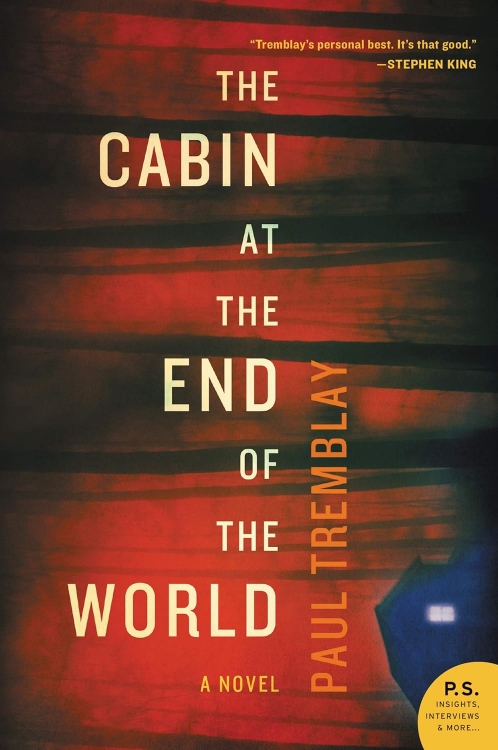
I had an afternoon to myself a few weeks ago, and I decided to spend it doing housework. I need an audiobook for that kind of thing, so I went to my local library’s app and browsed through the horror section. It was 85% Stephen King and Dean Koontz with 5-6 other books. I had seen the cover of Paul Tremblay’s The Cabin at the End of the World online a few times, but I had no idea what it was about. I decided to give it a go.
I finished the audiobook that evening. I really enjoyed it.
A family of 3 are vacationing in a cabin in the woods. 4 strangers come to their house and give them a choice; either they pick a member of their family to sacrifice or the world will end. This is a horrible, miserable book that can only end a few ways, and none of them are happy.
That’s the set up. It’s straightforward and horrible, and it makes for a tense read.
There’s little hints at cosmic/supernatural creepiness, but this is very much a psychological horror novel. You expect to be given an explanation as to how and why these events are happening, but the author doesn’t bother with that, and I reckon the book is far more effective for it. We rationalise to mitigate horror, and by avoiding explanations Tremblay keeps his readers uncomfortable.
The less you know about this one, the better it will work, so I won’t go into particulars. I did find a few of the characters’ reactions unbelievable at certain points, but I guess you can’t be too picky about realism with a book with a premise like this.
I only saw after finishing the book that M. Night Shyamalan recently put out a film version. I really liked the book, but I have no interest in seeing the movie. I might well give Paul Tremblay’s other books a go in the future.
Sorry for not posting last week. I started back at school, and I was involved in a car accident. (Nobody died.) I’ve been reading loads, but I just couldn’t bring myself to spend any more time in front of a computer last Saturday. Maybe I’ll make up for it with an extra Halloween post.
The scope of this blog covers anything remotely spooky. I don’t believe in ghosts, but I like ghost stories, and I’m moderately interested in how a person would go about hunting a phantom. I read this book because it was very short, and I had some time to kill.
I suppose I expected a manual explaining the best methods to lure a specter out from underneath the stairs, followed by an appendix with tips on how to stop ectoplasm samples from dissipating. Maybe there would be a chart describing the different varieties of apparitions. Nope. That’s nothing close to what this book is.
Dean Russell (or Dr. Dean Russell) is an “organizational effectiveness consultant”. I think this means that he goes into companies to help them figure out how to operate more efficiently. That’s a respectable thing to do, and Dean seems to be pretty successful at it. His resume is probably pretty impressive to business people. In this book he has taken his knowledge of business and project management and applied it to the field of ghost hunting.
None of the advice given in this guide relates to anything spooky or supernatural. It’s all stuff about how to build an efficient team, how to budget an adventure and how to prepare for and deal with any setbacks you face during your outing.
Realistically, a ghost hunter probably should pay close attention to the above topics before stepping foot in a haunted house. They are practical considerations for almost any professional outing. They are also the kind of things that people who go ghost hunting probably don’t bother with.
If I was actually a ghost hunter, this book might give me pause for thought. I am not a ghost hunter though. I’m just a weirdo who likes creepy books, so I was just mildly amused at this strange little text. Dean Russell has also written a few novels about a guitar playing ghost fighter. Maybe I’ll give them a go some day.
I’ve read a lot of messed up books, but Jay’s Journal by Beatrice Sparks is probably the most morally reprehensible piece of writing that I’ve ever come across. I don’t mean that in an ironic or funny way. This book and the story behind it are genuinely disgusting.
A few days ago, I picked up a book at work. It was called Go Ask Alice, and the cover suggested that it would be a bit more interesting than the other stuff on the shelf. It’s supposed to be the real diary of a teenager who gets involved in drugs. I don’t use drugs recreationally, but I’ve read quite a few drug books, and most of them made taking drugs seem pretty cool. This one didn’t. I googled it, and it turns out that it’s not a real diary. It was written by Beatrice Sparks, a Mormon youth counsellor. When I was reading about her, I discovered that after this book was published and became a success, the mother of a 16 year old boy who had committed suicide approached Beatrice Sparks and asked her to help get his diary published. The mom hoped that this text would shed light on teenage depression and hopefully prevent further teen suicides.
Suicide is one of the worst things a family can go through, and while publishing the diaries of a suicide victim seems a bit insensitive, I can’t hold this against the mother. Think of the loss she had just suffered and how much that loss must have damaged her own mental wellbeing. I can understand her desperate attempt to prevent other families from feeling her pain.
Beatrice Sparks agreed to “edit” the diary into a publishable form. What this entailed was taking 21 of the 67 entries from the actual diary and supplementing them with 191 entries of Spark’s own imagination. Oh yeah, and at the time of writing her entries, Beatrice Sparks was obsessed with occultism, blood orgies, witchcraft and Satanism. The result is a book about a kid who kills himself after summoning a satanic demon. The real kid who died was a rebellious teenager from a conservative family. Sparks published a book that made him out to be an animal-sacrificing, perverted Satanist.
To do this to the family of the child that died was a shockingly nasty thing to do. The family were extremely upset. This book had other nasty effects too. It was first published in 1978, and while it’s not solely responsible, it is fair to assume that it stoked the flames of the Satanic Panic of the 1980s. Beatrice Sparks was truly a rotten, shit-smeared asshole.
Even if we manage to put the author aside, this book is awful. The narrator comes across as a tosser. He’s constantly talking about how great he is and how much he loves his parents. He gets into trouble for doing drugs and ends up in a boys’ home. There he meets a paedophile who tells him about his aura and teaches him to move things with his mind. Yes. This is not a book about a kid who gets caught up with realistic occultist types; the bad guys here can levitate objects over a phone. After meeting the new-age child molester, the protagonist falls in love with a witch and attends a blood orgy with her. They secretly get married and their wedding ceremony involves the murder of a kitten. Later, Jay and his friends go and mutilate a bunch of cows and drink their blood to get magical powers. Then an evil demon possesses and murders all of them. The author basically took all of the silliest rumours about occultism that were floating around during the mid 70s and stuck them together with no regard given to reality. Oh, and the suicide note that ends the book is one of the few entries that Beatrice Sparks didn’t completely make up. Think about that. She used the actual suicide note of a mentally ill child to end her novel about astral projection and cattle mutilation. Disgusting.
The worst part is that lots of people actually believed her.
A few years ago, a writer named Rick Emerson wrote a book about Beatrice Sparks and her other horrible books. It’s called Unmask Alice: LSD, Satanic Panic, and the Imposter Behind the World’s Most Notorious Diaries. If you want more details, go read that one. I only read the parts about Jay’s Journal, but the other bits I glanced through also made ol’ Beatrice seem like a filthy, lying sack of shit.
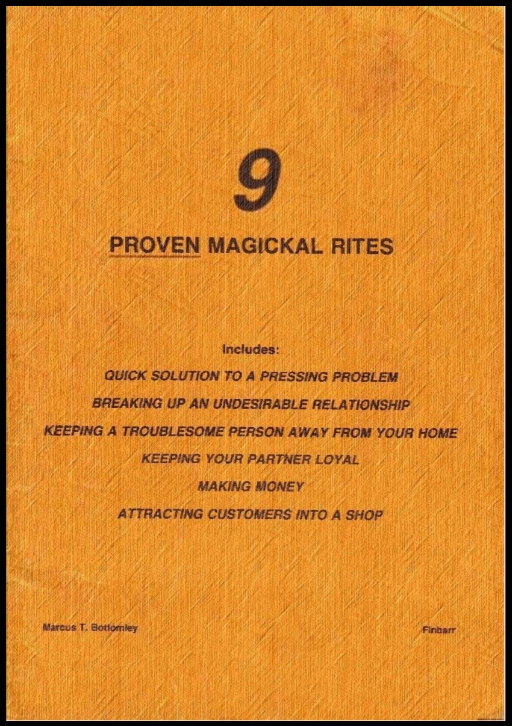
I’ve been reading lots recently, but the way things lined up, I found myself without anything to post this week. I had a quick look through the archives and found this, a 17 page pamphlet of magickal rites from Finbarr Publications. It’s terrible. I reviewed another book by its author a few years ago. I recalled it being terrible too, but I actually forgot how much of it revolved around piss until I reread my review of it moments ago. Thankfully, 9 Proven Magickal Rites also relies heavily on the use of urine as a magickal tool.
Here are the main rites described in the book:
To break up a relationship without having to deal with awkward conversations, find your partner’s footprint and fill it with piss.
If you want to attract money, take a bath, but mix some sugar and white lead into the water before you get into it. I thought that maybe white lead was just a misleading name like “fools gold” or something, but minimal research shows that white lead is highly toxic and does cause lead poisoning.
If you want something, anything really, go to a crossroads and say the Our Father while looking at your feet.
To stop a person coming back into your house, flick some sulphur and black pepper at their back as they leave. I would have thought keeping your door closed would be easier, but I’m clearly no wizard.
Piss into a bottle containing your partner’s pubic hairs and bury it your garden. Your partner will never leave you. If you put some nails into the bottle they will become your servant.
Now you may be confused as to why I have only listed 5 rites when the title of the book is 9 Proven Magickal Rites. Well, there are 5 chapters in the book, each focusing on a different magickal procedure, but some of these procedures have variations, and there are actually 13 distinct rites described in the book. (Chapters 2 and 5 have 5 rites each.) No matter what way I counted these, I could not arrive at the number 9.
I’ve read more than a few titles from Finbarr over the years, and I am consistently shocked by their lack of quality, cohesion and moral standards. I sincerely struggle to imagine how this publisher remained active for multiple decades. This book is about taking a bath in lead water and pissing on your sweetheart’s pubes. I read another one from Finbarr about Hitler waggling his mickey in the mirror. Is this some kind of post-modern art project?
Sorry dear readers. Hopefully it will be a while before I have to resort to Finbarr again.
This is a hard one to find because it was self-published, and I don’t think many copies were ever printed. It took me a few years to find a copy for less than 20 dollars. It absolutely was not worth the wait.
A family of four move to a new house in a remote part of Eastern Canada. The mom gets raped by a dream ghost, and the dad starts having an affair with his ex. Their son starts a gang and makes friends with a demented cannibal that lives in the woods and acts as a puppet for a psychic vampire. Oh, and this psychic vampire is apparently a paedophile too because he tries to marry the family’s daughter. In a hilarious turn of events, the woman who the father is having an affair with reveals that she has a son that belongs to him from their previous tryst. She tried to abort him, but it didn’t work so he just came out mentally disabled.
There’s far too much going on in here for any cohesion. We’ve got ghosts, vampires, mind control, cannibalism and a child molester. The plot doesn’t make any sense, none of it is remotely realistic and there are no likeable characters. This is pure crap.
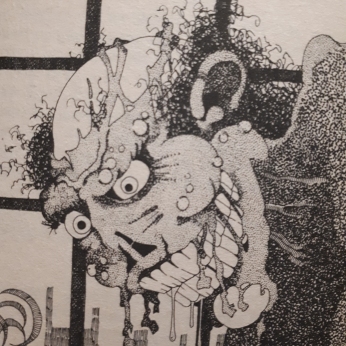
This does feel a little different to a lot of the paperback horror I discuss here though. It was self published, and this gave the author the freedom to have it illustrated. There are 5 or 6 illustrations in the text. The cover art is striking, probably what made me want to read the book, but I thought the illustrations actually took away from the story. The below image faces the scene in which the mom gets raped by a ghoul.
Not scary.
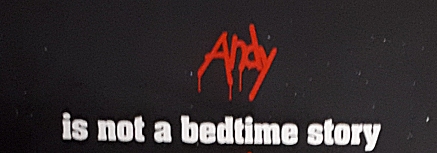
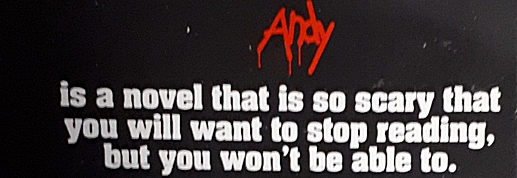
Also, the text on the back of the book makes some very bold claims.
It was for me. I read a few chapters before bed each night. Reading it literally made me feel sleepy.
See above. It was very, very easy to stop reading it. The only thing that made me want to continue reading was the idea of finishing it. I did not care about what happened to anyone in the book. Picking it up was the hard part. I’m so glad I never have to read this shit again.
I googled Bradley Snow and found some interesting results. When he’s not befriending scammers posing as beautiful women on facebook and retweeting Tucker Carlson, he’s accusing Brian Keene and Stephen King of stealing his ideas (and being racists). He also wrote a book about how a big publisher ruined his life. Of the six other books he has published since Andy, only one has any reviews on goodreads. Both gave it a one star rating. I don’t want to come across as too mean here, but this guy’s lack of self awareness is depressing. He describes himself as, “the World’s greatest living Horror Writer”. He’s the kind of person that makes me think that there should be a similar licensing system for internet users as there is for drivers.
Just a taste of the author’s social media presence
The cover of this book is the only good thing about it. Andy is excrutiatingly bad.
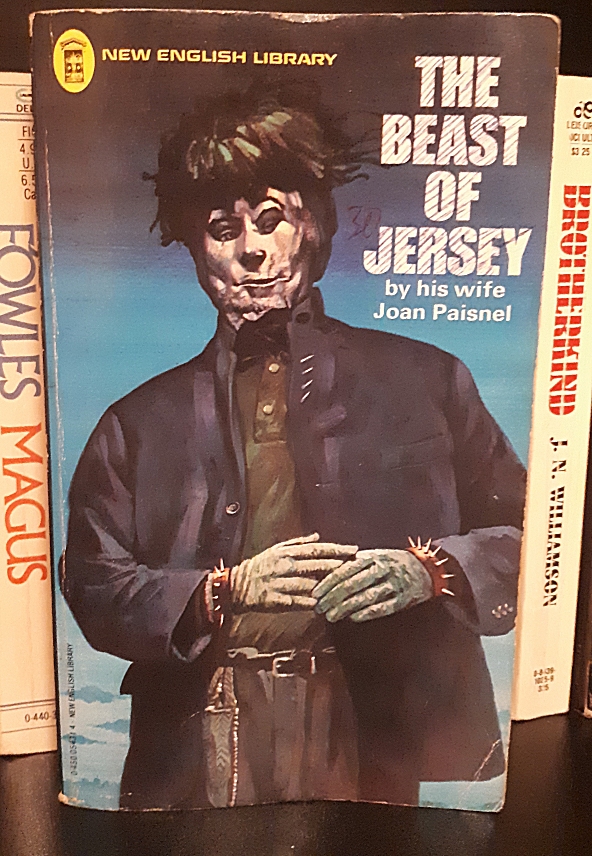
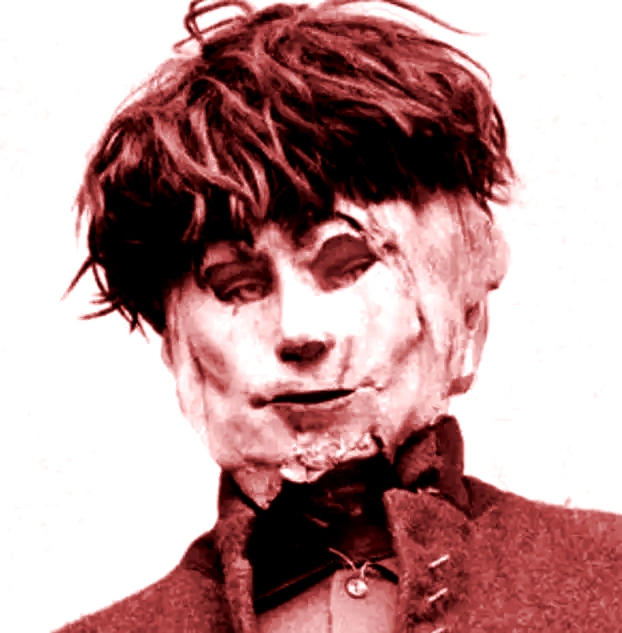
Edward ‘Ted’ Paisnel was a serial rapist, and he committed his horrid deeds while dressed in a terrifying costume which included a rubber mask, a disgusting wig, nail studded wristbands and a nail studded trenchcoat. When police searched his home, they apparently found a black magic shrine dedicated to Gilles de Rais. Most of his victims were children. One of them had a mental disability. Ted Paisnel was as bad as any horror movie villain.
NEL – 1981 (First published 1973)
This book, The Beast of Jersey, was written by Ted’s wife. It’s a weird, exploitative, horrible piece of writing. She plays up the Satanic side of things, referencing witchcraft and Dennis Wheatley and including several chapters on Gilles de Rais without ever providing any solid evidence that Paisnel was seriously into that stuff. He supposedly had a few books on the topics, but surely that doesn’t mean a person is a Satanist. She goes so far as to suggest that the reason he got caught was because a car he stole contained a crucifix in the back seat and that this might have had an effect on his evil powers. Also, on top of accusing her husband of being a wizard, she also claims he was gay. This claim is based on the fact that he only raped his victims anally. She also alludes to the fact that he refused to sleep in the same room as her. I’m no expert on the psychology of rapists, but I’m pretty sure that anally raping a female does not make a person gay – it makes them an anal rapist.
Paisnel’s actual mask
I have nothing but disdain for rapists and child molesters, but parts of Ted Paisnel’s story are a little bit funny. When he was caught by the police with his wacky costume in the back of a stolen car, he told the cops that he was going to an orgy. Also, there’s a part in the beginning of the book where Joan describes finding a story that Ted had written. It was about a child being pecked to death by a chicken. LOL. I wish I could read it. Apparently, he wore an eye-patch for months after watching True Grit because he wanted to be like John Wayne. What a freak.
There were some other interesting parts to the book that I hadn’t read anywhere else. During the second World War, Ted worked as a cobbler for the German forces that had invaded Jersey. He later claimed that the real nature of his work was as a midwife/pallbearer for the countless Russian sex slaves that the Germans had smuggled onto the island. Ted wasn’t clear about whether he had to murder their babies or just dispose of their corpses. It seems very unlikely that there is any truth to this story.
Ted’s wife ran a care home for orphans and children in need, and although Ted worked there regularly, he apparently never abused the kids there. I find that hard to believe. Joan spends a lot of time defending herself in the book, but I don’t trust her. Ted Paisnel was apparently one of three men on the island of Jersey who refused to be fingerprinted during the search for the sex maniac, and the police apparently chased him to his house on the night of one of the attacks. Joan knew about this, but didn’t put 2 and 2 together. Honestly, the fact that she even put her name to this horrible book is enough to make me suspicious of her. If my partner was the real-life cross between Michael Myers and Freddy Krueger, I’d move to another country and change my name, not try to profit from it. She seems to have been really good at being oblivious. You’d have to wonder about the poor kids who were in her care.
I don’t really buy any of the black magic/Gilles de Rais stuff in this book. It’s not necessary. Ted Paisnel was as horrible as a person can be. Reading the accounts of what he actually did was deeply upsetting. He seemed to relish the fear and discomfort of his victims. He was a sick piece of scum. He was let out of prison 10 years early and went to live on the Isle of Wight because he didn’t feel welcome on Jersey anymore. He died 3 years later of natural causes. Seems a real pity that he wasn’t given a taste of his own medicine by a disgruntled vigilante.
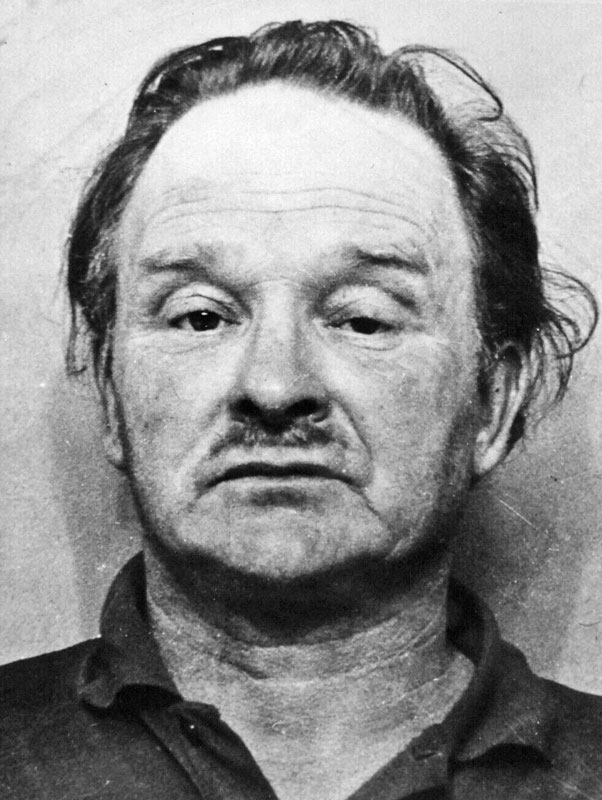
Burn in Hell, paedo scum
I had wanted to read this book for a long time, but copies online were too expensive. I came across a cheap copy on my holiday to Ireland last month. It included a Dublin Bus ticket from 1995 that the last reader had used as a bookmark. I generally prefer ebooks at this point, but I have to admit, it felt pretty cool to read a 40+ year old book that hasn’t been cracked in almost 30 years.
I’ve read my fair share of books about the history and practice witchcraft. There’s a lot of them out there, and I’m generally more interested in the slightly trashy ones from the 60s and 70s that blur the line between fiction and reality. I don’t read much stuff like that anymore, but when I was reading about the Son of Sam killings last month, I discovered that David Berkowitz had sent an annotated copy of Peter Haining’s The Anatomy of Witchcraft to police officers who were investigating the case. I also deduced that this book was one of Maury Terry’s sources on the Satanic cults of California in the late 60s, so i thought I’d better give it a go.
Roughly half of the book is about white witchcraft/Wicca and that kind of stuff. I have little interest in this type of thing, but the rest of the book is about black magic and Satanism. It was entertaining enough. I’ve come across most of the information in here before, but some of it is presented in a slightly different light here. Haining basically splits the world up into different areas and then does chapters on the parts which contain the most witchery.
Haining isn’t known for being entirely reliable. He lists Dennis Wheatley as a source of much of his information, and he includes a lengthy letter from noted plagiarist Rollo Ahmed too. Other parts of the book are based on myths (the idea that Catherine De Medici was a Satanic witch), and others are thoroughly mixed up. Haining clearly has a bee in his bonnet about LSD, and at every given opportunity he tries to link it with Satanism. Parts of this book really reminded me of Satan Wants Me by Robert Irwin.
Joris Karl Huysmans wrote a novel called Là-bas, in which he describes a black mass. The main satanic character, one Canon Docre, is said to have been based on Joseph-Antoine Boullan, an occultist who was kicked out of the Catholic clergy. Boullan and Huysmans were friends until Boullan died (supposedly because of a magical attack) in 1893.
In Anatomy of Witchcraft, Peter Haining includes a rant from Huysmans that refers to Canon Docre as if he was a real person. I was very confused by this, as he wasn’t being very nice. Why would he shit-talk his dead friend? I did a bit of research though, and it turns out that he was actually referring to a Chaplain from Bruges named Louis Van Haecke. Von Haecke was said to have the cross tattooed on the soles of his feet so he could blaspheme whenever he walked, and it seems like Huysmans explicitly claimed he was the inspiration for Canon Docre elsewhere.
Haining claims that Huysmans wrote Là-Bas as a rejection of the horrors of Satanism. He also claims that Boullan crucified small children during black masses. It’s hard for me to believe that Huysmans, conscientious, reformed Catholic that he was, would be down to hang out with a person who crucified small children. It’s funny. I did a search for the name Boullan through my blog, and it turns out this is not the first post that I’ve written about his alleged misdeeds.
There’s a chapter in here on Satanism in California that discusses the links between Charles Manson, the Process, the Chingons and the mysterious Four Pi cult. I’m planning on writing a separate post on that stuff quite soon though, so I’ll leave it for now. Very curious indeed.
There was some other mildly interesting stuff in here. He discusses the Bernadette Hasler case and the Skoptci, a weird Russian sect who cut off their own dicks. I’ve defintely read about both cases before, but I can’t remember where. Also included in this book is a very questionable quote about voodoo.
Yikes.
Overall, this is a moderately entertaining read. It does not seem particularly reliable though, and I would do a bit of extra research before accepting anything in here as fact.
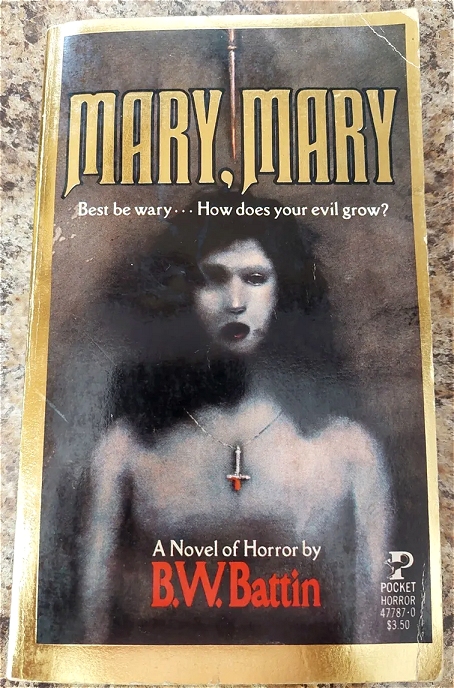
I started reading this book because it has a creepy cover.
Mary suffers from blackouts, brief periods during which she loses control over what she is doing and retains no memories. Also, she can’t tell anyone about these blackouts or she gets sick and passes out. When a murderer tries to kill her, Mary’s blackouts become more frequent and bad stuff starts happening to the people around her.
That’s the set-up. It’s a bit silly, but it has potential. It turns out that Mary was orphaned and has barely any memories of the mysterious orphanage where she grew up. Pretty much the only thing she does remember about it is that it was run by a Satanic nun. These details are revealed early on in the text, and in context, they set up the story in such a way that one ending seems inevitable. The writing is competent, and there is one particularly effective scene in a closed hardware store, but I was hoping that the author would drop in some shocking twists to elevate this beyond the realm of predictable thrillers. He didn’t.
This book ends almost exactly the way I thought it would. I say “almost exactly” because I thought there would be a slightly cheesy horror twist ending. There wasn’t though. This horror novel has a neat, complete happy ending. Yuck. No fucking thanks. In light of the predictable ending, the other faults of the book seem less forgiveable too. Why didn’t Mary just write her thoughts down instead of having to struggle to verbalise them to every new person she encounters? Also, why was she so afraid to tell her caring husband that she was seeing a psychiatrist? Stupid.
There’s a bit of suspense towards the middle of the book, but there is no real supernatural horror, novel depictions of Satanism, or extreme violence. Mary, Mary was a big let down. A few more of B.W. Battin’s books have cool covers, but I don’t feel any desire to check them out now.
The Ultimate Evil: An Investigation into America’s Most Dangerous Satanic Cult – Maury Terry
David Berkowitz, the Son of Sam, was a lunatic who shot and killed a bunch of innocent people. When he was arrested, he admitted to all of the killings. After the arrest, a reporter named Maury Terry started researching the murders and became convinced that David Berkowitz was actually involved with a Satanic cult and that he did not commit the murders alone.
While on his killing spree, the killer (at least one of them) sent letters to the police and the press referring to himself as “the son of Sam”. Berkowitz later claimed that Sam was an ancient demon that had possessed his neighbour’s dog. The neighbour’s name was Sam Carr. Terry became convinced that Sam Carr’s actual sons had been Berkowitz’s accomplices.
I’m no expert on this case, but that idea doesn’t seem absolutely unfeasible to me. Berkowitz was well known to the Carr family, and both sons died unnatural deaths shortly after Berkowitz was arrested. Some people who know lots about the case also believe that Berkowitz did not act alone, and it seems impossible to prove that the Carr brothers were not involved.
I knew that the claims in The Ultimate Evil were controversial before I read it, and I went in assuming that most of it was complete bullshit. I knew that there was a Netlix documentary series about it, and I thought that this series was going to be an exposé on how Terry’s ideas were all nonsense. There’s some stuff in the book (Terry’s decoding of the Son of Sam letters and the Roy Radin stuff) that seemed like utter nonsense as I was reading them, but some of it was actually quite convincing. When I watched the Netflix documentary, I expected it to provide refutations of these ideas, but it doesn’t.
Berkowitz started off claiming he acted alone, but he changed his story after spending a bit of time in prison. To this day he claims that he had accomplices. He doesn’t seem like a particularly reliable person though. He clearly enjoys attention, and the Satanic cult claims were probably the most efficient source of attention for an incarcerated murderer in the early 1980s. Both the book and the Netflix documentary series make it seem like Berkowitz was merely telling Terry exactly what he wanted to hear. This muddies the water, but it doesn’t actually discredit all of Terry’s evidence.
Much of what Terry says is clearly conjecture, but I don’t think the idea that Berkowitz had accomplices should be immediately disregarded. Those Carr brothers were definitely weirdoes. Both were scientologists, and one supposedly had a thing for murdering animals.
The Netflix documentary alludes to the fact that this book fed into the Satanic Panic of the 1980s, and it features clips of Maury Terry being interviewed alongside my old friend Phil Phillips. I wanted to be able to write-off Terry’s theory about the role of Satanism in the murders, but if you look at the letters, the killer(s) clearly had some interest in occultism. I don’t buy any of the “large, organised network of powerful Satanists” nonsense or any of the crap about the links between the Son of Sam and Charles Manson, but Berkowitz did seem to have some connections to occultism. Nevertheless, Terry’s efforts to bring attention to his work by jumping on the Satanic Panic bandwagon seem to have backfired. There’s a couple of parts where he mistakes Iron Maiden lyrics written on walls for Satanic prayers. When he’s trying to decode the letters he does the old “reading it backwards” trick, and at one point he even references James Blish’s Black Easter. So much of this book is dumb that he interesting parts seemed pretty uninteresting.
One of the main reasons I wanted to read this book was because I had read it contained information on the elusive Four Pi cult, an evil group of weirdos led by “The Great Chingon” that I previously came across in Ed Sanders’ The Family and Gavin Baddeley’s Lucifer Rising. The only information in here that Terry adds is that the group split up at the end of the 60s because some members were too horny. Rereading the passage in question, I realised that Terry’s source was actually Peter Haining’s The Anatomy of Witchcraft, a book which David Berkowitz annotated and sent to the Ward County Sheriff’s Department when they were investigating John Carr’s death. (Needless to say, I have already started reading that book for a future post!)
Quirk Books – 2021
I actually read the revised edition of The Ultimate Evil. It has a little bit extra on Roy Radin’s death and a few other things. Both editions of this book are extremely long, extremely detailed and ultimately extremely boring. The Netflix documentary is a much clearer way to understand Terry’s ideas. There’s really no need for anyone to slog through this unenjoyable mess (that does, admittedly, make a few good points.)










 Nocturnal Revelries