Aleister Crowley on James Joyce

Only yesterday, I finished reading Richard Kaczynski’s Perdurabo, the monumental biography of Aleister Crowley. I had intended on publishing a review of that book today, but seeing as though it’s Saint Patrick’s day, I thought I should post something relating to my native Ireland. Last year, I posted Aleister Crowley’s poem “Saint Patrick’s Day, 1902”. It was my second post discussing Crowley’s strange attitude towards Ireland. While reading through Kaczynski’s biography of the Great Beast, I found another interesting link between Crowley and the Emerald Isle.

aleister crowley and james joyce.jpg

In July 1923, Crowley had an article titled “The Genius of Mr. James Joyce” published in New Pearson’s Magazine. Crowley discusses both Portrait of an Artist as a Young Man and the then recently published Ulysses, showering both novels with lavish praise. When reading Crowley, one should always consider the possibility that he’s being insincere, but that’s clearly not the case here. It’s not hard to see how Crowley would be interested in a character like Joyce; both men were leaders in their fields, sexual deviants, largely misunderstood, and victims of censorship. (Although the two men never met, several people, including Kaczynski and Robert Anton Wilson, have pointed out similarities in their writing.)

james joyce aleister crowley

Here then, in its entirety, is Aleister’s article on Jimmy:

The Genius of Mr. James Joyce

Within the last twenty years a new form of literature has been evolved, the novel of the mind. I mean by this a story where what men do is described only as the outcome of what they think and feel and believe, and where the focus of interest is in their thoughts rather than in their acts. This literature is still in its experimental stage, and a majority of the novelists fail because they think it is enough to observe correctly, and so produce pathological studies rather than works of art. Their work is interesting because it is concerned with reality, but for the most part it is  indifferent literature, because the reality has not been worked into proper shape. It would hardly be an exaggeration to say that the further the majority of these writers probe into the mind of man, the further they depart from artistic creation.

My Wyndham Lewis’ novel Tarr is a case in point. It is one of the most interesting books written within the last ten years. It is a book that opens a secret cupboard and displays the contents with an observation that compels our admiration, but our chief interest is in watching the cat let out of the bag. All sensitive men are compelled to plead guilty to the indictment, but there is little indication that the author is interested in style for its own sake, and that his purpose would not have been as well served by an essay on the hatred of human beings for human nature.

This form of writing has been saved, by the genius of Mr. James Joyce, from its worst fate, that of becoming a mere amateur contribution to medical text-books.

Every new discovery produces a genius. Its enemies might say that psych-analysis—the latest and deepest theory to account for the vagaries of human behavior—has found the genius it deserves. Although Mr. Joyce is  known only to a limited circle in England and America, his work has been ranked with that of Swift, Sterne, and Rabelais by such critics as M. Vatery, Mr. Ezra Pound and Mr. T. S. Eliot.

There is caution to be exercised in appraising the work of a contemporary. When we like him at all, we are inclined to like him too much, because we are in unconscious sympathy with his presentation of life, and are incapable of judging his work impartially. I am convinced personally that Mr. Joyce is a genius all the world will have to recognize. I rest my proof upon his most important book Ulysses, and upon his first novel, A Portrait of the Artist as Young Man, and on such portions of Ulysses as have appeared. Before these he wrote two books, Chamber Music (The Egoist Press, London), a collection of most delicate songs, and Dubliners (Grant Richards, London), sketches of Dublin life distinguished by its savage bitterness, and the subsequent hostility it excited. The Portrait when it appeared was hailed as a masterpiece, but it has been boycotted by libraries and booksellers for no discernible reason other than the fact that the profound descriptions tell the truth from a new, and therefore to the majority a disturbing, point of view.

The book is the history of the infancy, childhood, and adolescence of a high-school boy, Stephen Daedalus. While he is little his people are prosperous gentle folk, by the time he is grown up they are living in a Dublin slum. In a magnificent early chapter his family sit round their rich Christmas Dinner. It is the time of the Parnell tragedy, and every person there takes a different view of it with an equal passion, and their dispute rises with matchless intensity until Stephen’s father is left alone at the head of the table and cries and says, “Parnell, my dead king.”

Stephen goes to a Catholic public school, and his young body and his young beliefs drive hell into him, and he leaves school and goes to college and finds his nature unchanged. He grows up in love with absolute beauty, and obsessed with the obscenity of life. He is tortured so soon as he is able to perceive the conflict of the body and the soul, the excremental animal and the image of God.

The book is written with the utmost delicacy and vigor. When Stephen is a baby, Mr. Joyce selected the exact incidents that would impress the hardly conscious minds in such a way that the reader finds that his own infantile memories are astir. He recalls his own mind when it was incapable of synthesis and conscious only of alternation between nourishment and excretion. Gradually the child becomes aware of the relation between one thing and another, with adolescence his consciousness becomes complete, and the struggle of the individual to express and reconcile himself to life begins. As his mind changes Mr. Joyce changes his style, the unperceiving mind is shown so that the actual texture of its unperceptiveness is felt, an incomplete thought is given in its incompleteness. But when Mr. Joyce leaves his characters to their stream of unsorted perceptions and speaks for himself, he write classical English prose with the particular beauty proper to a new master. Stephen is walking on the cliffs of Dublin bay, and looks over to the town and sees—

“as a scene, or some dim areas, old as man’s weariness the image of the seventh city of Christendom was present to him across the timeless air, not older, not more weary, nor less patient of subjection than in the days of the thingmote.”

The end of the Portrait leaves Stephen still at Dublin University. He is the eldest, a swarm of brothers and sisters sit round the table and drink tea out of jam pots. His mother “is ashamed a University student should be so dirty, his own mother has to wash him.” He is the poorest of poor students, the most gifted, proud and perverse. We leave him, knowing that there is worse in store for him and turn to Ulysses.

Ulysses (The Shakespeare Book Co., Paris—by subscription), as the title suggests, is another Odyssey of a small Jewish commercial traveler round about the Dublin streets on one day.

About him there unwinds the most extraordinary procession of his friends and acquaintances from one public house to the next, and among them is Stephen, his father gone in drink, Buck Mulligan, a horsey “tough,” barmaids, the Rev. Father Conmee S. J. Stephen’s little sister buying a French grammar for a penny, maid-servants, loafers, business men, all passing and talking and dreaming, and observed and set down to what seems the last possible point of human observation.

A great part of the book is passed in a public house where the scenes of the Odyssey are represented by two barmaids standing behind a barrier of whiskey-bottles which contain, as Mr. Joyce observes, “orient and immortal wheat standing from everlasting to everlasting.”

Stephen is now a school master, reading Lycidas over the heads of a class of indifferent children. He is now a quite subsidiary character. It is in Mr. Bloom that the essence of the book lies.

The disreputable, snobbish Catholic world sees in Mr. Bloom a commercial traveler of a despised race. Mr. Bloom sees himself as a lover, a poet, a gourmet, and a man-of-the-world. Yet he is an acute observer of himself, he takes himself into his own confidence, and it is infinitely entertaining to overhear him. It is also shocking and startling. His Odyssey is between his home, some shops, a cemetery and a public-house, in a trance on foot. In the beginning he buys a piece of soap, “sweet lemony wax,” and the part taken by that piece of soap in his  trouser pocket is given its exact proportion. It has a life-history of its own, a “Little Odyssey.”

I have no space to enter upon the real profundity of this book, or its amazing achievement in sheer virtuosity. Mr. Joyce has taken Homer’s Odyssey and made an analogy, episode by episode, translating the great supernatural epic into terms of slang and betting slips, into the filth, meanness and wit and passion of Dublin today. Then the subtle little alien is shown exploiting, as once the “Zeus-born, son of Laertes, Odysseus of many wiles” exploited, the ladies and goddesses of the “finest story in the world.”

At present Mr. Joyce is all but unknown except to the inmost ring of English and French lovers of the arts. In his own country prejudiced Dublin opinion is making a determined effort to boycott him. It would certainly reflect no discredit on the Commonwealth of Australia if she were to be one of the first to recognize a writer who will in time compel recognition from the whole civilized world.


Of course, this isn’t the first time I’ve encountered these lads in conjunction with each other. Both Aleister Crowley and James Joyce appear as central characters in Robert Anton Wilson’s Masks of the Illuminati.

Expect more on Crowley here soon. I should have the review of Perdurabo ready for next week.

Echoes from the Darkness – Lovecraft’s Legacy, Part 1

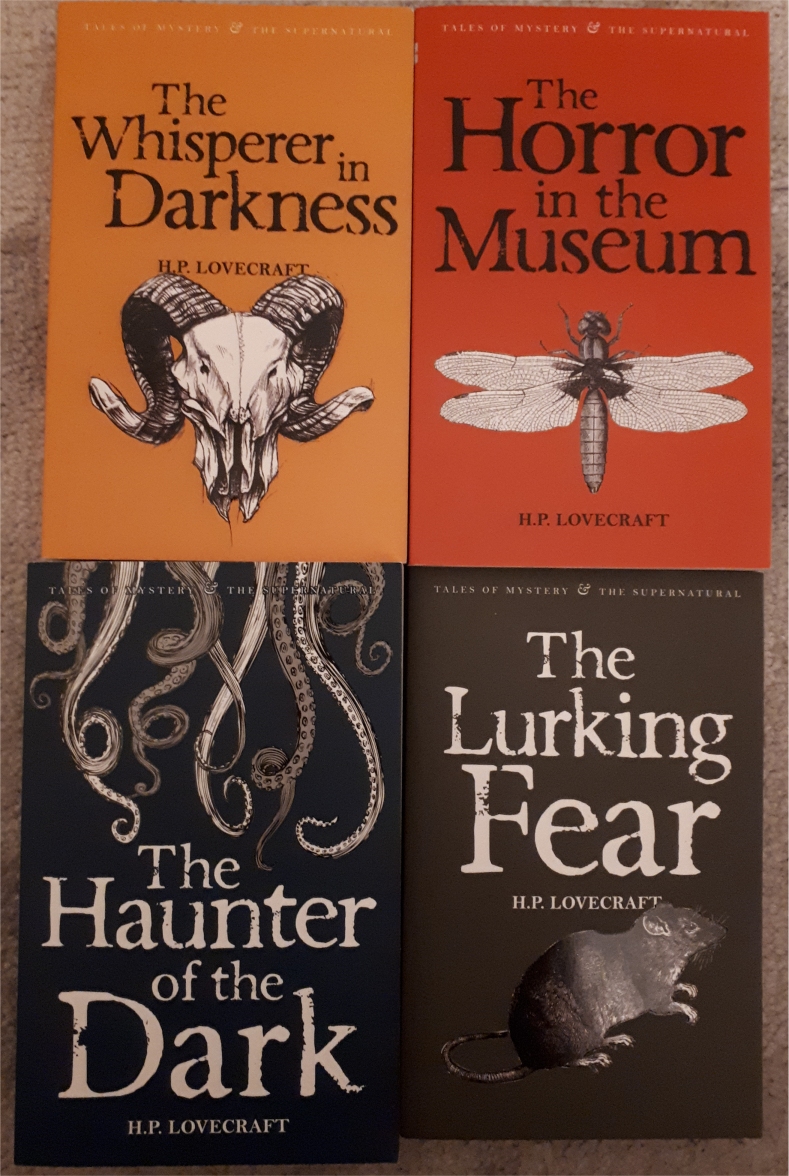
While reading John L. Steadman’s H.P. Lovecraft and the Black Magickal Tradition last year, I decided that the time had come for me to reread Lovecraft. Too many of the books I read and plan to read reference his stories, and it was getting to stage where I was mixing up my Shoggoths, Yuggoths and Yog-Sothoths.  In order to remedy this embarrassing situation,  I started going back over Lovecraft’s tales, including the stories that aren’t included in the Penguin editions of his work.  I started on this collection during the summer, reading a story here and there, between other books. I haven’t strictly limited myself to the stories in this collection, but it’s the first of the Wordsworth series that I’ve completed, so I’m reviewing it first.

whisperer in darknessThe Whisperer in Darkness – H.P. Lovecraft
Wordsworth – 2007

All of the other entries in the Wordsworth series contain stories that are not included in the Penguin editions, but this collection was all stuff I’ve read before. It contains:

Dagon
The Nameless City
The Hound
The Festival
The Call of Cthulhu
The Case of Charles Dexter Ward
The Dunwich Horror
The Whisperer in Darkness
At the Mountains of Madness

These are obviously some of Lovecraft’s finest. The Whisperer in Darkness has long been my favourite of his, but I couldn’t remember what happens at the end. It’s fucking fantastic. There were gross parts in this story and in Charles Dexter Ward that I had also forgotten about. I was also very pleasantly surprised by how much I enjoyed the Call of Cthulhu. I have read an awful lot of horror fiction since the last time I read this classic, and I was expecting that it might not seem as effective to me now. If anything, I enjoyed it more than ever. There’s so many passages throughout that story that I paused to reread several times on account of their exceptional awesomeness. It took another half year to get around to writing this review though, so I’ve forgotten the specifics. In fact, the only story from this collection that I’ve read within the last 4 months has been At the Mountains of Madness. It’s only about 4 years since I previously read this story, so much of it was still in my head, but it still managed to give me a few chills. There’s one part near the end where he says, “It is absolutely necessary, for the peace and safety of mankind, that some of earth’s dark, dead corners and unplumbed depths be let alone; lest sleeping abnormalities wake to resurgent life, and blasphemously surviving nightmares squirm and splash out of their black lairs to newer and wider conquests.” Fuck yes. Please Sleeping Abnormalities, if you’re still out there, leave those unplumbed depths and destroy us soon!

It probably has a lot to do with the fact that Lovecraft was one of the only writers I had any interest in as a teenager, but I absolutely love his writing style. I adore Lovecraftian horror. I love how he took what he understood about the advances in modern science and used this not to spread hope for the future of humankind but to insist on the futility of all human life. We are nothing in even the minutest scheme of things. According to Lovecraft’s mythos, we were created by an ancient race of prawn-cucumbers to provide them with light entertainment. YES!

Although I own all of the Wordsworth editions of Lovecraft’s work, and these are the ones I’m using to order my rereading, I’m actually reading most of the stories from the Penguin editions because of the notes therein. I’m also using audiobooks and pdf versions. The Wordsworth edition are fine though; what they lack in commentary, they make up for in comprehensiveness. So important is Lovecraft to my reading habits that I need to have hard copies of all of his stories in my library.

wordsworth lovecraft

Anyone reading this blog should have read Lovecraft. His fiction has affected so many of the other books that I review here. Kenneth Grant’s The Magical Revival, Thomas Ligotti’s Conspiracy against the Human Race, Pauwel and Bergier’s Morning of the Magicians, Anton LaVey’s Satanic Bible, Simon’s Necronomicon, and Stephen Sennitt’s Infernal Texts are all heavily influenced by Lovecraft. His influence on horror fiction is unmeasurable. Some novels like Michael Slade’s Ghoul and Garret Boatman’s Stage Fright feature beings directly from Lovecraft’s stories, but his influence can be found in countless ways in countless other novels and tales.

Like I said, I’m rereading Lovecraft to refresh my memory so that I can delve deeper into the realm of Lovecraftian occultism. Here’s a review of an interesting little pamphlet on that topic.

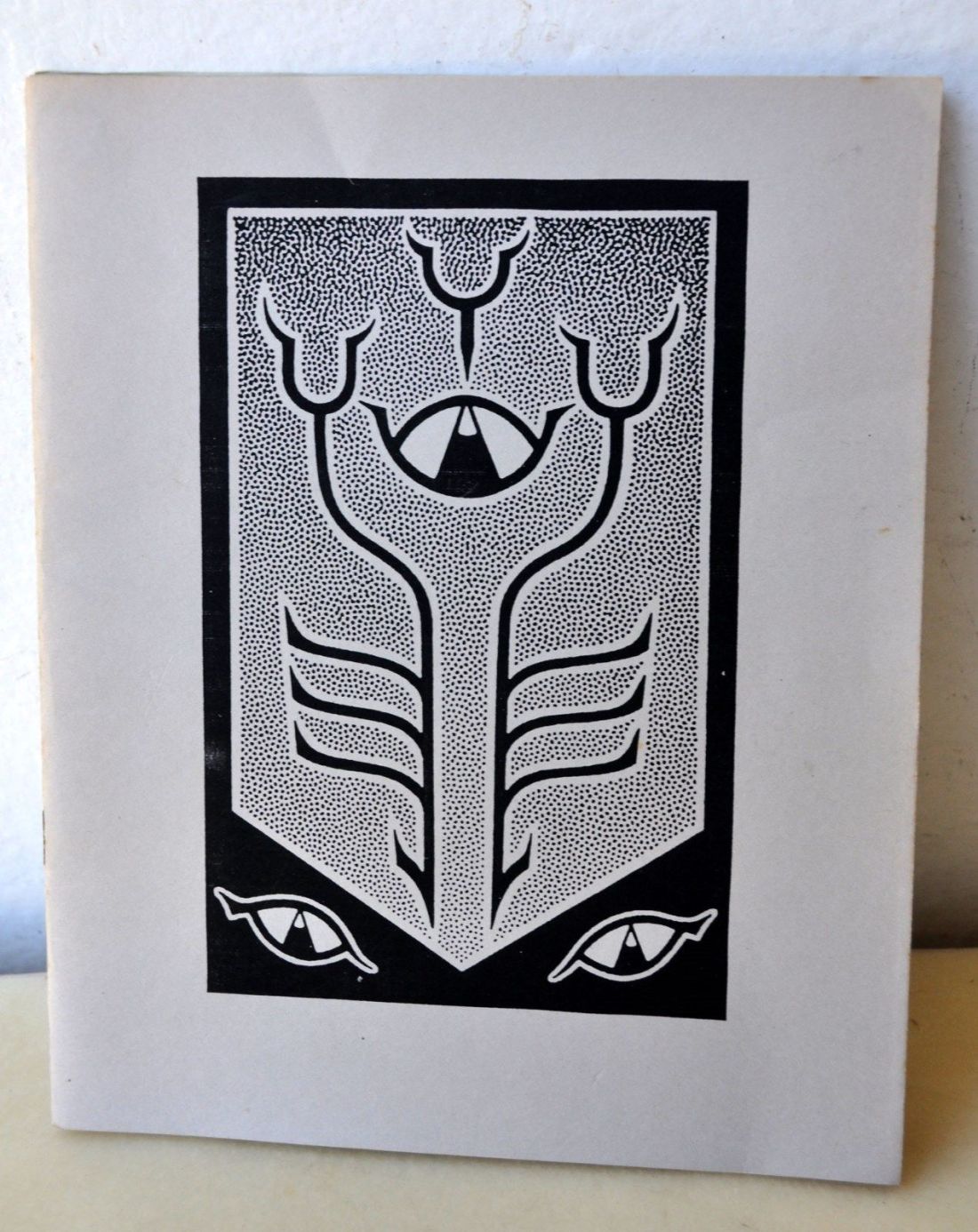
cults of cthulu tenebrous.jpgCults of Cthulhu: H.P. Lovecraft and the Occult Tradition – Frater Tenebrous
Daath Publications – 1987

This short pamphlet contains the text of a lecture given in Leeds University in 1985. It’s credited to a lad named Frater Tenebrous who the internet is telling me is another name for Peter Smith. Peter Smith was a contributor to Stephen Sennitt’s Infernal Texts, and Sennitt actually dedicated the second half of that book to him and referred to him as “foremost scholar on the Necronomicon”. Only 123 copies of this were initially published, and they go for quite a lot of money these days. Fortunately, you can download pdf copies for free. This text contains a short biography of Lovecraft, descriptions of the major players in his pantheon and a very brief discussion of how Lovecraft’s fiction has shaped the rituals of a handful of occult groups (one of whom was led by Michael Bertiaux, yet another contributor to Sennitt’s book). I can’t say Cults of Cthulhu contained much information that I wasn’t already aware of, but it was only ever supposed to be “an introduction to the occult aspects of H.P. Lovecraft’s writings for potential initiates of the E.O.D.”. It made for pleasant reading on my commute to work one morning last week.

I’m gradually getting through the other stories and some even weirder texts of Lovecraftian occultism. Expect to see a few more posts on these over the next year.

Ph’nglui mglw’nafh Cthulhu R’lyeh wgah’nagl fhtagn!

Edit: For convenience sake, I’m including the links to all of the posts in this series for anyone who’s interested. (Part 1, Part 2, Part 3, Part 4, Part 5)

Three More from the King (The Dead Zone, Firestarter and Cujo)

I’ve read a fair few books by Stephen King, and after my last binge on his writing, I decided to work through the rest of his books in chronological order. Last year, I only read one King novel (along with 7 novels by his friend Richard Bachman), so I want to get through a few this year. Here’s three.

the dead zone stephen kingThe Dead Zone – 1979

I read this a while back. I really enjoyed it up until near the end. It felt a bit like King had hit his publisher’s page limit when he was only halfway through the story. (I felt the same reading The Stand.) I was expecting the conflict between Johnny and Stillson, the antagonist and protagonist, both of whom are introduced within the book’s first two chapters, to take up more space in the book. There’s a huge big subplot in the middle where Johnny stops a murder that doesn’t have much to do with the main conflict of the book (as far as I remember), and was the chapter on the lightning-rod salesman really necessary? Also, isn’t there a bit that suggests that Stillson was in contact with Sarah’s husband? I presumed that that relationship would lead to serious complications for Johnny later on, but it led to nothing. It is hinted that Stillson is truly evil and that he would be an awful president, but he never gets to reach his full potential. Sure, he’s unhinged, but he never comes close to Randall Flagg levels of nastiness.


firestarter stephen kingFirestarter – 1980

The next of King’s books that I read features one of his scariest antagonists. Firestarter is the story of a man and his daughter, both of whom have psychic powers, being chased, imprisoned and manipulated by a shady government agency. I have a little girl myself, and I couldn’t help but get sucked into this one. The little girl in the book has the ability to start fires with her mind, and the man responsible for getting to use this power, one John Rainbird, is a chillingly evil character. He’s so bad that I had to put the book down at one point to really contemplate his wickedness.

You can probably guess how this is going to end once you get halfway through the book, but it’ll take you another 200 pages to get there. This is another long, fairly tortuous read from King.


cujo stephen kingCujo – 1981

I wrote the reviews for The Dead Zone and Firestarter a while after reading those books, but the wounds that Cujo inflicted on me are still healing. This book was fucking nasty.

I’ve known that this novel is about a rabid dog for as long as I remember, so I was a bit surprised that the book starts with the description of a serial killer. I was doubly surprised to realise that the serial killer being described was the killer from King’s The Dead Zone. Although it’s included in this post, I wrote the above review for The Dead Zone months before reading Cujo. In it, I actually complain about the inclusion of the serial killer subplot, but it makes sense now. I think the way King link his books together like this is really cool. You don’t have to have read The Dead Zone to enjoy Cujo, but it does make you feel pretty smart to have the background information from the other book. I’ve long known that King does this kind of thing, but this particular example makes me afraid of reading the rest of his novels out of sequence. I’m not going near the Dark Tower series until I’ve read everything else he wrote before finishing those books.

Anyways, people can say whatever they want about Stephen King’s writing, but fucking Hell, he can suck his reader into a story. His ideas can be corny, but his characters and the way they interact with each other are brilliant.

As in Firestarter, the central conflict in Cujo is drawn out and fairly hopeless. This one has an even bleaker ending though. Really, it’s very, very bleak. I really enjoyed this book.

I was going to try to read and review Pet Semetary before the new movie comes out next month, but Christine and Different Seasons were published before that one, so I won’t have the time if I’m reading King’s books in chronological order. I’ll probably get to those later on in the year.

Secrets of the Black Temple by the Red Spider

 Since starting this blog 4 years ago, I’ve reviewed more than 250 books. Some of which have been classics of literature, while others have been bizarre esoteric nonsense. The book I’m about to review is a pretty good example of the latter.

secrets of the black temple by the red spiderSecrets of the Black Temple by the Red Spider (Basil Crouch)
Self published – Unknown publication date. (Probably 1980s)

Although the text is initally attributed to “The Red Spider”, it becomes quickly apparent that the author is Basil Crouch. It’s not until the final pages of the book that the relationship between these two is discussed. (I can’t say it’s ever clarified.) I don’t normally summarize books, but this thing is so odd that I feel it necessary. I’ll highlight the more salient points for those who aren’t entirely invested in understanding this curious grimoire.

There is a very bad secret society. The author initially refers to this order as “The Temple of Set”, but I really don’t think that he’s talking about the order established by Michael Aquino.

Giant stones containing the spirits of ancient Taihitian leaders killed many innocent people because other people had been sacrificed on these rocks. One of these stone spirits is named Moana. Unfortunately, this is not the Disney Moana. 

A witch gave abortions. When she died, a box of hers ended up in a second hand shop and killed the shop owner’s dog and cat. Then he sold it, and the person who bought it got sick and went to hosptial. Then her ward caught fire and she disappeared.

A man got sick. Basil went in to him, said a prayer to Satan and then realised the man’s daughter had a doll that was actually a cursed ritual statue that needed to be appeased. He appeased it, and then the lad got better and buried the doll back where he found it.

A very successful girl got sick and became a loser because her boyfriend won her a cursed doll at a fair which the fairground guy had found in the fair. It had been left behind by a man who had found it in the ocean. It was originally from Haiti

You don’t choose to join the Black Temple. (I assume this is the order he referred to as the Temple of Set at the beginning of the book.) The Black Temple kidnap you, test you with a questionnaire and then ask if you wanna join.

Next come some instructions on how to set up a temple in your home.

To decide which man you want to marry, play heads or tails with a piece of bread.

A magician took on a job to magically assassinate somebody. He couldn’t do it though because he had no period blood at his disposal. He came up with a cunning plan to solve this problem – he took some hypnotism lessons from the author of this book and then set up a fake psychiatry practice. He hypnotised a young girl. Then he raped her and got her pregnant.
Problem solved.

the dreaded incubi.jpgNothing makes any sense here.

A psychiatrist hypnotised one of his patients into robbing a bank then killing himself. 

Smelly, the tragically named magician, took a job putting a revenge curse on a man. He sent a mean letter to the man that said “you are doomed”. Then he paid a kid to give flowers that looked as though they came from a mistress to the man’s wife. The wife argued with the man when he got home, resulting in him driving away, running a red light and killing a baby in a pram.

At this point the narrative cuts to Smelly bending a woman over, tearing out her tampon, sticking a bottle in her pussy and telling her to menstruate into it. No explanation is given as to why this is being described.

A mean magistrate sentenced a poor man with a wife and kids to 2 years hard labour for poaching rabbits. The man’s wife went to the local magician, a chap named Lankynob, for help. He raped her several times. Then he skinned a rabbit so it looked like a fetus and hung it in the magistrate’s garden. A picture of this was published in the local newspaper and the magistate got so angry that he had a stroke. The man he had sentenced left his wife after finding out that she had been raped, so she started dating Lankynob, the rapist magician.

For 25 pounds, Basil Crouch will teach you a foolproof, scientific method of betting on horses. It’s guaranteed to make you rich.

A woman complained to a magician because another sexier woman had called the police on her because she was a bad mother.
The magician took some dirty pictures of this woman and then raped her.

For a small fee, Basil Crouch can enlarge your photos. He’s very discreet. No pics of kids without parental permission.

Now there’s a description of a weird group ritual – half the book in and we’re finally getting to the Black Order of this book’s title. The start of the ritual sounds like standard masonic nonsense, but things turn uncomfortably dark when a lad shows up with a 14 year old girl and proceeds to spike her Fanta with sleeping tablets and then fingers her in front of his friends. After watching the child molestation, the lads do another ritual to kill a person. Basil doesn’t include details here, but he’s willing to sell them to you if you promise to be discrete.

black temple ritualThen there’s the above pic of a coven and a cum-collector about to rape a 21 year old virgin. (This part is actually explained about 50 pages later.)

The author then says that he once convinced two 14 year old girls to go to bed with him. He claims that he only did this to see if he could and that he actually refrained from doing anything to them. In my humble opinion, any adult man who tries things like this should be swiftly executed.

Suzy wanted some cash. She approached the Black Order for help. They invited her to a ritual, violently stripped her naked, stuck a knife into her tits and licked the blood

To get money, the Black Temple hypnotise old ladies and bank managers.

The Black Temple once got a lad a job, then one of the members convinced that same lad to spend all of his money on an expensive car.

Our old pal Lankynob is being initiated into the 10th degree of the Black Order. The ritual involves him being jerked off by a brother in the Order while a prostitute is fingered opposite him. Their discharges are mixed together on a sheet of paper on the floor. Now Lankynob is going to be given the knowledge of how to use the Order’s foolproof system of betting on horses, but before he learns this, the prostitute must be killed.

The actual murder here is never described, but the author does tell us that she is stabbed in the breasts and raped several times beforehand. The author offers an alternative way to get the horse racing system – just send him 25 quid and promise to keep it a secret.

For a good ritual, its best to sacrifice a baby, but if this isn’t possible, a sex magic ritual will do. A man and a woman go to a graveyard with two pre-made plasticine figures. Make one in the likeness of a “wishy washy semi-invalid girl who is always pale” and the other in the likeness of a man. They then find a grave of a man and offer his spirit some sex with the girl represented by the plasticine figure. Next, the real woman present at the grave sucks the real mans dick. Then they put the plasticine figures on the ground and step on them, thus allowing the ghost of the dead man to spiritually rape the invalid girl.

A lad called Skints was kicked out of the Black Order for putting an irreversible curse on another member. He later used witchcraft to seduce a girl and impregnate her. Her dad ran him over in his car and he died.

A 105 year old magician came to the Black Temple once and tried to sell them herbal remedies for impotence.

One member of the Temple used voodoo poison to kidnap children so he could sell them to Arabs. The author is remorseful over the fact that this man is dead.

It turns out that Jesus was never crucified. He just went to Glastobury and set up a church there instead. The ritual to pick a high priest/priestess of the Black Order has been handed down from Christ himself:
A kidnapped virgin is tied to the ground. Thirteen men are wanked off into a cows horn with a hole drilled in the tip. When the bukakke cornucopia is full, the small end of it is shoved into the virgin’s cunt and then the cum collector blows hard into the other end, pumping the reservoir of gip into the virgin’s womb. If she doesn’t die, the virgin will give birth to the next high priest/priestess of the order. 

tosser spermHonestly.

To steal a person’s good luck, write their name on a piece of paper and have a woman wank you off so that you gip on their name.

To create a Psychogone (a weird spirit creature similar to the Hallowed Genie in Basil’s other book) you should make a little figure out of wax. Make sure it has a willy. Then find a willing participant to do some weird sex magic with. Make sure to hypnotise or drug  her so she’s willing. (Yeah, I know.) Then fuck her a little bit, whip your dick out, cum on her pussy lips, and then stick the little wax doll you made into her cunt and frig her with it until she gets off. Then sling her out of your house. Your Psychogone is now ready for business.

The author then goes on to say that the Spider gave him more spells and rituals but these involved animal sacrifice so he wants to keep them secret because he likes animals. This part is interesting because it suggests that the information in this book came from this Spider character and not from Basil himself. This seems like a pathetic attempt to exculpate himself – he has already given his own name and address several times throughout the text.

Basil then says that he will initiate others further in person, but only if they’re female.

The contents of this book are so disjointed and childish that it is difficult to read this as the work of a sane individual. The way in which the text will drop a story only to continue it much further on made me wonder if the author hadn’t been practicing William Burrough’s cut-up technique, but a note at the back of the book claims that Basil had over 75 years experience with occult magic when he wrote this book. If this is true, it seems far more likely that it is senility rather than artistic experimentation that is to blame for this book’s lack of coherence. A low IQ shouldn’t be disqualified from our considerations either. The only other book I’ve read by this lad was also very, very stupid and shit.

Basil advertises several different services throughout the book including photocopying, selling herbs, and occult initiations, but my favourite money-making scheme of his is the following image. It is included in the middle of the book. It has zero relation to anything that comes before or after it.

basils girl 2 poundSend me two pound, and I’ll tell you whose arse this is.

As noted above, this book seems to have been self published. Perhaps it was due to the lack of a publisher’s restrictions that Basil felt comfortable including so much rape in here. My biggest complaint about Crouch’s The Hallowed Genie was that it wasn’t dark enough, but the Secrets of The Black Temple is too dark. This is the bad kind of darkness. I want to read about people cutting off arrogant priests’ heads, not a gang of scumbags molesting a drugged 14 year old.

Basil Crouch was not a knowledgeable magician. He was a disgusting old pervert with a poorly functioning brain. It is good that he is dead. If I knew where he was buried, I’d dance on his grave.

Well that’s all I have to say about Basil for the moment. As I mentioned before, this blog has now been going for four years. I’ve enjoyed the experience quite a lot, but I am considering slowing things down a little. Since starting this blog, I’ve limited my reading to mostly occult and horror books. It might be healthy for me to branch out a little, but I want to keep this blog for spooky stuff. This probably means going back to two or three posts a month rather than the 2 a week I’ve been aiming for since September. We’ll see how things work out. Anyways, I want to sincerely thank everyone who follows along with my ramblings. I’m always happy to receive recommendations or to chat about books on facebook, twitter or email, or just leave a comment below.

The Devil’s Dozen – Gemma Gary

devil's dozen gemma gary.jpgThe Devil’s Dozen: Thirteen Craft Rites of the Old One – Gemma Gary
Troy Books – 2015
This one was alright. It’s a book about communing with the Devil. The Devil here isn’t quite what some might expect. He’s an old Pagan god with a more complicated set of morals than the Biblical Prince of Evil.

gemma gary skulls devil

While this book does outline the procedure for summoning the Dark Man, it leaves it up to the reader to decide what to do if that summoning is succesful. Other grimoires I’ve read give fairly specific instructions on what to do and say when in the presence of Satan, but this one leaves it up to the magician. I liked this. It made Satan seem like an affable sort, the kind of guy you can talk to.

As far as grimoires go, this one is quite cool. It’s dark enough that you don’t feel like a wuss when you’re reading it, but it also has a kind of a natural, folky feel to it that actually makes it seem far more sincere than other over-the-top sinister grimoires. (This is more Black Widow than Black Witchery.) This is the second book by this author that I have read recently, and while I can’t speak to its efficacy, I definitely get the sense that Gary knows what she’s talking about.

skull gary devil
Reading this book made me reflect on my own relationship with the Devil. I’ve never met the lad, but I’m sometimes surprised by how much I am drawn to books about him. It’s been 15 years since my parents last forced me to go to mass. Why do I still think that Satan is so cool? I guess this whole blog is just a desperate last act of rebellion as I approach middle age. Oh well.

Satan was a Lesbian – Fred Haley/Monica Roberts
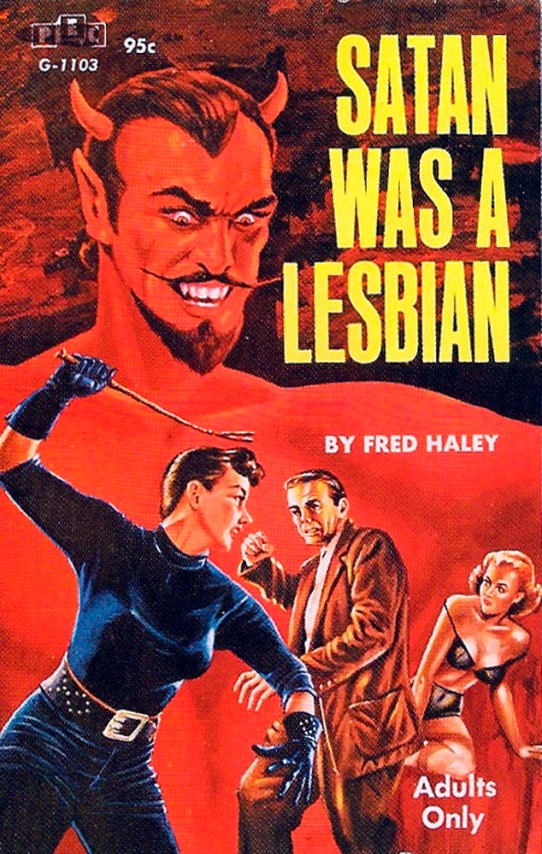
satan was a lesbian fred haley.jpgSatan was a Lesbian – Fred Haley/Monica Roberts
PEC – 1960

I’m sure you already saw it, but take another look at that incredible cover there. Bask in its glory. It’s a thing of absolute beauty. This cover was also used on Jan Hudson’s Satan’s Daughter. That book was originally published in 1961, 5 years prior to Satan was a Lesbian, but there were at least two printings of that novel, and I don’t know if this cover originally appeared there or on Haley’s book.

Unfortunately, Satan was a Lesbian fails to make good on the promises its cover makes. This is a relatively boring softcore porn novel that has nothing to do with Satan. The cover lists Fred Haley as the author, but the inside says Monica Roberts. I don’t know which is the pseudonym.

Don’t worry about spoilers. The story is lame. Here it is:

A little girl named Charlene comes across a man drowning some kittens. She becomes very upset. Later in life, Charlene leaves home and gets a job as a server at a drive-in movie theatre. She hooks up with a girl that she meets at work. Through this experience, Charlene discovers that she likes being the dominant lover. The girl that she hooks up with tells her lesbian friends.

One of these friends, a woman named Karen, comes to Charlene’s job and arranges a tryst. Charlene makes her kiss her foot before they shag. Soon after this, Karen, with help from her butch friend Billie, kidnap and rape Charlene. Charlene beats them up the next morning and leaves.

Charlene hooks up with yet another girl, Cynthia. Cynthia gets off on being afraid, so Charlene drives her around at dangerously high speeds before they shag. They see each other a few times more.

On one of these occasions, the girls that raped Charlene show up and things turn nasty. Karen tries to rape Charlene’s new girlfriend, but Charlene manages to beat her up again.

After this, Charlene runs away without telling Cynthia where she’s going. She moves to Hollywood and murders a man who raped one of her new friends. She also meets another girl at work and ends up having some rather kinky sex with her.

Meanwhile, Cynthia is raped by the lesbians who were after Charlene. She enters into a weird 3-way relationship with them, but ends up stabbing them both to death and running away after her dad peeks through a window and sees her tickling one of them with a large feather.

In the last chapter of the book, Cynthia meets Charlene in Hollywood and they drive their car into a wall and die.

There’s quite a lot of titty squeezing, but anything below the belt is described only in very vague suggestions and metaphors. The author shies away from mentioning any kind of penetration, but s/he is comfortable describing a woman being walked around on a leash and subjected to other acts of degradation.

Apart from a few “you’re a devil” comments, there’s nothing about Satan in this book.

Satan was a Lesbian has one of the greatest covers I have ever seen, but it’s actually a very shit book. Copies of the original printing are ridiculously expensive too. There’s a print-on-demand version that you can find for much cheaper, but that’s just a printed copy of the the pdf version that you’ll be able to find for free with a quick google search.

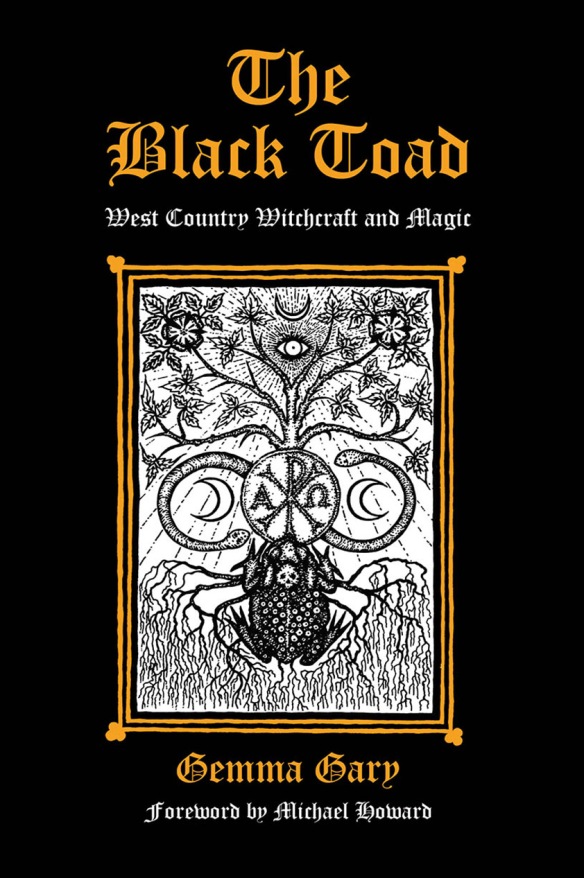
The Black Toad – Gemma Gary

black toad gemma garyThe Black Toad – Gemma Gary
Troy Books – 2012

I can’t remember what sparked my interest, but I have been meaning to read this book for a few years. The Black Toad is a collection of folk magic from South West England. There’s three sections in the book – a bit about general spells, a bit about spells that use plant materials and then a bit about black (bad) magic. I started off impatient to get to the naughty part, but in light of what I’ve read recently, I found some of the first parts quite interesting too.
gemma gary cup of toad tea.jpgThe book has some really cool pictures and photographs. I love a nice cup of tea myself.

It was only last week that I reviewed Dark Rites & Encounters with the Devil by Marcus T. Bottomley. I was rather critical of that book because I thought that the author had just made up a bunch of crap. Unlike the Solomonic grimoires I’ve read, very little prepatory work was discussed, and the author would instruct the magician to do certain things without any explanation as to why they were doing them. I didn’t think I’d be writing about that book so soon after reviewing it, but some of the stuff it contained was rather similar to the spells in Gary’s book.

The difference between these books is that Gemma Gary makes it very clear that she is writing about a specific type of magic. I’m not sure of the nomenclature, but I’ll just call this strain “folk magic”. Folk magic then, as far as I understand, is a mix of pagan, Christian and grimoire magic. Gary’s spells use parts of the Bible, the Sacred Book of Abramelin and loads of traditional British witchcraft. Gary also provides explanations of the spells she is describing. One thing that struck me as peculiar when I was reading Bottomley’s book was the inclusion of worn shoes in several of his spells. This seemed rather silly to me – what use is a smelly old boot going to be? Gemma Gary explains that shoes are potent in sympathetic magic because shoes literally lead us down the paths of our lives. I get it now. If you attack the thing that leads a person down their path, you can obstruct them. That makes perfect magical sense. There were a few other noticeable similarities between some of the spells in these books, and my general takeaway was that Marcus T. Bottomley’s book, although poorly written, was probably a far more sincere collection of folk magic spells than I gave it credit for. I want to take this opportunity to apologize for calling Mr. Bottomley an “awful wizard”.

I’ve probably written more about another book than the book I set out to review. Don’t worry; you can find more focused reviews of The Black Toad elsewhere online. I’m not a witch, but I found this book to be quite interesting. I have The Devil’s Dozen, another of Gemma Gary’s books, lined up to be reviewed real soon.

David Huggins – The Man who Shagged E.T.

love in an alien purgatory david huggins.jpgLove in an Alien Purgatory: The Life and Fantastic Art of David Huggins
Farah Yurdozu

Anomalist Books – 2009

David Huggins was featured in some alien documentary that was on netflix a few years back. I remember watching it and then checking the internet to see if he had written any books. He hadn’t, but there was a book of his art available. I put it on my to-buy list, but it was expensive, and it just kind of stayed there for a few years. Last year, I started seeing mentions of Huggins popping up online. It turned out that a director named Brad Abrahams had made a movie about him called Love and Saucers. That movie and this book tell the same story.

David Huggins is an artist who claims to have lost his virginity to an alien when he was 17. He later had a lengthy love affair with this alien, and he also shagged a few others for good measure. This book is a collection of his paintings of these encounters.

huggins shagging alien

I know it doesn’t matter whether these encounters really happened or not, but there’s two things I want to address.

In the book, Farah Yurdozu claims that since 2002/2003 “David’s experiences with Cresent [the alien he shagged] have inspired an interest in science fiction and other fantastic movies, something he never paid attention to in the past.” However, in the movie, David claims to have seen The Thing when he was about 7 or 8 years old. This would have been around 1950/1951. He also watched Dr Who: The Webbed Planet, a movie about giant ants, multiple times before his memories came back in the late 80s. This Dr. Who movie was released in 1965, and at one point in the documentary he says “it has a giant ant and when I saw it I just could not stop watching it. I don’t know why but it seemed familiar to me.” Let’s just consider that for a second. For him to have seen the movie without realizing why it was familiar to him, he would have to have seen it prior to his memories returning, but his memories returned at least 15 years before he supposedly became interested in sci-fi. If he wasn’t a sci-fi fan, what the hell was he doing rewatching Dr Who movies? Also, his movie collection is nearly all VHS tapes. He collected all of those after 2003? Let’s be realistic here; the lad has clearly been a sci-fi fan for most of his life.

david huggins intruders.jpg

Also, the fact that David’s memories of his encounters only came back after his reading of Intruders, Bud Hopkin’s 1987 book about alien abductions, is very suspicious, especially when considering how similar his experiences were to the experiences recounted in that book.

large tit alien women
huggins alien women and babies
David’s alien women bear a striking resemblance to the alien women in Intruders.

There’s a telling moment in the movie when David recalls a hitherto forgotten memory while leafing through his copy of Intruders. He says, “I just remembered something. There was a time during my teens where I seemed to float off my bed…” The interviewer responds by asking, “What made you just remember that?” David replies, “It’s what I’m reading here.”  Here is the passage:

floaty hugginsNot only does this short passage contain a person floating out of their bed, it also contains a gray-skinned figure standing beside an abductee’s bed and the abductee having a needle shoved up their nose. Hey, check out these two pictures that David drew:

huggins in bed alienshuggins nose alien

Maybe some people believe these images corroborate the accounts of other abductees, but those people are backwards-thinking imbeciles. David Huggins seems very pleasant, but he’s clearly an overly-impressionable crazy man who has watched and read too much sci-fi. Personally, I don’t care about how he came up with his ideas. His pictures are pretty cool. I wish I could buy prints of them.

Of course, that was kind of the idea behind buying Trapped in an Alien Purgatory, but unfortunately for everyone, the physical book is pretty crappy. The coolest pictures are given the least space, and the colour printing is murky and looks like it was done on an early 2000s home printer. Don’t waste your money. You’ll be better off renting the movie on youtube for a few dollars.

Dark Rites & Encounters With the Devil – Marcus T. Bottomley

dark rites & encounters with the devil marcus t. bottomley.jpgDark Rites & Encounters With the Devil – Marcus T. Bottomley
Finbarr – 2010

I was going to start off this review by saying that this book is black magic for stupid people, but that wording might imply some kind of similarity with those Complete Idiots Guide to books. No, this is not merely black magic for idiots; it is inherently and entirely idiotic black magic. These “Dark Rites” are unrelated, silly procedures that have no spiritual, philosophical, or logical reasoning behind them. Marcus T. Bottomley is an awful wizard and a bad author. I can and will do better than him:

Sinister Rituals and Rendezvous with Satan by Duke De Richleau

1. If you want a person to fall in love with you, soak their toenail clippings in your urine for a week and then bury them under a bush. You’ll be shagging in no time.

2. If you want to become rich, go into the forest at night and squeeze out a turd on a bed of oak leaves. Smear the feces into a circle, using anticlockwise motions. Stand in the center of the pooey circle until a black cat appears and tells you where his treasure is buried.

3. To ensure that you get the new job that you’ve been interviewed for, eat nothing but baked beans and vinegary chips for 3 days. On the third night, visit a graveyard at midnight. Once you have found a quiet spot in the graveyard, push out a fart into your cupped hand and breathe it in through your mouth. Hold the breath for as long as you can. When finally exhaling your own brown gas, whisper these words:
“Lucifer, I hath paid thy stinky toll. Delivereth unto me the job that I desire. So mote it be!”
If the Prince of Darkness does not immediately appear and provide further instruction, take this as a sign that your breath was not brown enough. Push harder on the next fart and try again.

If you actually go ahead and read a copy of Dark Rites & Encounters With the Devil, you might be surprised at how little I have exaggerated here. Absolutely no effort was put into writing this awful book of absolute nonsense.

The Satan Sleuth Series – Michael Avallone

michael avallone satan sleuth seriesPhilip St. George III, aka the Satan Sleuth, is wealthy, vengeful, sexy, equipped with ridiculous gadgets, and he loves solving spooky mysteries. Yeah, he’s basically a mix of Batman, James Bond and Scooby Doo. This is a series of three novels that I first read about in Paperbacks from Hell. I spent a stupid amount of time and money tracking down old paperback copies, but I saw a few days ago that you can actually buy kindle versions off Amazon.

satan sleuth fallen angel avalloneThe Satan Sleuth #1:  Fallen Angel
Mews Books – 1976 (First Published 1974)
This is the Satan Sleuth’s origin story. A gang of weirdos break into a young millionaire’s house and kill his wife in the name of Satan. He gets super upset and decides to hunt them down for revenge. Luckily for him, the Satanists come back to his house right after he has filled it with Satanist catching equipment. What follows is essentially a slightly less violent version of Home Alone.

This is the most dated book in the collection. Of the four criminals, one is described as “A walking moron, even if she was the best and free-est piece of tail in the world. With the biggest boobs.” She is repeatedly and brutally beaten and berated by her boyfriend for being dim. The Satan Sleuth shows her no leniency despite the fact that she was clearly coerced into partaking in the murder by her brutal and manipulative partner.

Another of the Satanists is “gay as a green goose when the bare asses were down”. He is also referred to as a “Fruitman”, and a “damn pineapple”, and it is insinuated that he gets off on brutally murdering a woman because he is gay. This kind of stuff is pretty distasteful in 2019, but this book was a written almost half a century ago by a man who was approaching 50. It’s hardly surprising.

satan sleuth avallone

Early on in the novel, the hero decides to do some research on Satanism so that he can understand his enemies. He gives his lawyer a list of books on the occult and has him track these down. I recognised a few of the names on the list, but some I had never heard of before, despite their amazing titles. I had to do some sleuthing myself to figure out which were real and which were Michael Avallone’s own creations.

satan sleuth book list.jpg

Possession by T.K. Oesterreich, The Satanic Mass by H.T.F. Rhodes, During Sleep by Robert Crookall, The Magus by Francis Barrett, Timeless Earth by Peter Kolosimo, Gypsies, Demons and Divinities by Elwood B. Trigg, Your Sixth Sense by Brad Steiger and The Satanic Rituals by Anton La Vey are all very real books.

Where the Devil Walks by Marcel Alevoinne sounds great, but the author’s name struck me as rather similar to Michael Avallone. It turns out that Marcel Alevoinne was actually a pseudonym that Avallone used to use to order take-out.

Lucifer, My King by Jean-Anne de Pré also sounds incredible, but I discovered that Avallone used Jean Anne de Pré as a pseudonym for several gothic novels including The Third Woman, A Sound of Dying Roses, Warlock’s Woman, Die, Jessica, Die and Aquarius, My Evil. Unfortunately, I can find no evidence to suggest that a book called Lucifer, My King was ever written

Mark Dane, the author of Beyond our Ken is yet another of Avallone’s many pseudonyms.

This leaves one book, The Blask Mass (sic) by Sidney Stuart. I couldn’t find anything on this one online. It turns out that Sidney Stuart was the name of one of Michael Avallone’s early agents, so it’s likely that book is also a fake.


satan sleuth the werewolf walks tonight avalloneThe Satan Sleuth #2: The Werewolf Walks Tonight
Warner Paperback Library – 1974

This one is about a werewolf instead of Satanists. It was not published as part of the UK Mews edition of the series, so my copy of this book and my copy of Devil, Devil (the third book in the series) are both labelled #2 on their covers. I didn’t like this one as much as the other two. Maybe the Brits felt the same and that’s why they chose to leave it out.

satan sleuth number 2Two #2s

The most interesting part of this book was the way it pushes the reader back and forth between believing/not believing in the supernatural. There are times when the text flat out says that nothing supernatural is occurring and other times when it says the opposite. In truth, I’m a bit unsure as to whether this was intentional or just sloppy writing. The time sequence in this one is confusing too, and I can’t help but feel that it would have benefited with a bit of proofreading.

Oh, and this book features another mentally challenged woman with “splendid round breasts” being brutally raped. She is referred to as both “a peacherino” and “prime cut beef”.

satan sleuth devil, devilThe Satan Sleuth #3: Devil, Devil
Mews Books – 1976 (First Published 1975)

This was probably my favourite out of the three. Not only does the Satan Sleuth find himself in the clutches of a coven of evil Satanists, but the ringleader of the coven is named Catharine Copely! Any Satan Sleuth worth their salt will surely recognize the Satanic relevance of the name Copely. Canon Copely-Syle, the strange mix between Montague Summers and Aleister Crowley, is the antagonist in Dennis Wheatley’s classic To the Devil – a Daughter. The Satan Sleuth series was written more than 20 years after Wheatley’s book, so maybe Avallone had read it and decided to pay homage. (If not, there’s some weird synchronicity going on. Copely Woods is also name given by Budd Hopkins to an area of high UFO activity in the Eastern United States.)

The women in this one still have big jugs, but they’re not as dim as the ladies in the other entries of this series. The main antagonist here is female, but unfortunately, she meets her doom after being charmed by the Satan Sleuth’s snake. She decides not to sacrifice him to Satan after seeing him lying naked, unconscious and strapped to the altar. “But this man – this intruder – whoever he truly was – was gifted in every conceivable department. He was superbly endowed. Pan would envied him for his incredible appendage. The principal male tendon was a thing of beauty, even dormant and idle. The Ram’s staff!” Sister Sorrow may not have been mentally deficient, but she was unable to resist a nice juicy cock.


Avallone is infamous for the rate at which he wrote paperback fiction. To be honest, I got the sense that these three books were churned out fairly quickly. There’s a few spelling mistakes in each of these novels, and Avallone is remarkably fond of sentence fragments. Really. So many it’s silly. Seriously. Also, in the last book it seems that he’s using the word “cockamamie” at least once every two pages.

When my copies of these books arrived, I saw the following line on the back cover of Fallen Angel and was instantly satisfied with my purchase.
satan sleuth dennis wheatleyDennis Wheatley, for any Philistines reading this, is the author that made me want to start this blog. After having read all three Satan Sleuth novels, I have to say that aside from dodgy writing and less than progressive depictions of women and homosexuals, Avallone’s books have very little in common with Wheatley’s. Black magic is a powerful force in Wheatley’s novels, but the supernatural is always presented as a farce in the Satan Sleuth series. Avallone would later claim that this was the reason that this series didn’t get more attention (source). I reckon he was right about this. By the time I got to the third book, I knew that anything spooky that happened would be explained away later on. This cuts out a lot of suspense. Why did he write his books this way? Well, I reckon that it had something to do with the fact that Avallone, despite what it says on the blurb at the back of Fallen Angel, was not nearly as knowledgeable on Satanism and Black Magic as our Dennis.

satan sleuth avallone occult expert

At one point he refers to the werewolf as a Lycanthrophobe, and when his hero is going up against a team of Satanists, Avallone has him read a bunch of books on ESP, Ancient Aliens and fairies. There’s no rhyme or reason to the Satanism presented in the Satan Sleuth novels either. The Satanists in the first novel are Satanists by name only. Sure they murder a woman for the glory of Satan, but there’s no real spiritual or philosophical motivation behind their crime.  None of them believe in what they are doing. They’re just a bunch of drugged out social outcasts who occasionally say dumb things like, “God sucked. Lucifer was right. Make way for Beelzebub!”

The last book presents a Satanism far closer to the Satanism presented in Wheatley’s novels, but unlike Wheatley, Avallone doesn’t manage to explain why the Satanists are acting the way they are. They’re just bad for the sake of being bad here. There’s a few references to the Church of Satan that suggest that Avallone didn’t really know what he was talking about.

2

Anton LaVey’s Satanism deserves to be criticized, but it’s not fair to present his followers as the kind of people who murder and decapitate young women. I’m not misrepresenting things here either. Sister Sorrow, the villain of Devil, Devil is seen reading from The Satanic Bible only a page after Avallone quotes from the Satanic Rituals, LaVey’s companion text to his Satanic Bible. I can’t imagine any way of reading this that doesn’t suggest that the fiends in this book are LaVeyan Satanists.

satan sleuth lavey quote

Satanism exists in so many forms, and it’s such a silly concept to begin with, that I’m not going to hold it against an author if they mix it up a bit. The Satan Sleuth series is far more straight forward than Paradise Lost or Goethe’s Faust. In Avallone’s work, Satan and his followers are categorically bad. I’m fine with this. I wasn’t exactly expecting profound philosophical fiction when I bought these books. These are fun adventure stories, and they work as such.

In Paperbacks from Hell, Grady Hendrix writes that “Avallone planned two more Satan Sleuth novels—Vampires Wild and Zombie Depot—but Warner Books never bought them, so he never wrote them.” This is not true. Both Vampires Wild and Zombie Depot were written, but as of today they remain unpublished. David Avallone, Michael’s son, has confirmed that he is working on having the final two Satan Sleuth novels published later on this year. (David also helped me figure out where some of the books mentioned in Fallen Angel came from. Thanks David!) I’ll be reviewing the final entries in the series as shortly after they’re released as possible!