Secret Cipher of the UFOnauts and Secret Rituals of the Men in Black by Allen H. Greenfield

secret cipher of the ufonauts secret rituals of the men in black greenfieldSecret Cipher of the UFOnauts 
Secret Rituals of the Men in Black
Allen H. Greenfield

Here are two books by the same author that make up one whole. Let me attempt to briefly summarise their contents:

Humanity has been in contact with ultraterrestrial forces for millennia. A kind of merman from Sirius came down to Earth a long time ago and taught us how to organise civilisation.

The secret wisdom of the fish god has been passed down through the coded messages of myths and the ciphered language of the rituals of secret societies. Very few humans still understand the true messages behind these stories and rites. Magic is ultraterrestrial technology, and most, if not all, aspects of the Occult relate to this technology.

summoning alien.jpg
In 1904, Aleister Crowley received messages from Aiwass, a discarnate entity. Within these messages was a key to the ciphered messages of the UFOnauts (ultraterrestrials), but despite his efforts, Crowley wasn’t able to find the key within the message that he himself had channeled. Some of Crowley’s followers discovered the key to the cipher in the 70s.

Allen Greenfield, the author of these books, claims that this key unlocks the meanings of the nonsensical names of aliens and planets given by UFO contactees. It also decodes elements of the secret rituals of certain masonic fraternities.

The deciphered meaning of these terms and rituals gives credence to the claim that ultraterrestrials have long been meddling in human affairs. Some aliens seem to be good, but others are pretty bad.

These books are not easy reading, but that’s their basic message as far as I can tell. The evidence given for these claims is fairly cabbalistic, and I don’t have the background or the patience to assess it properly. I read every word in the book, but entire paragraphs went entirely over my head. There’s a lot of references to different contactee cases that I am only mildly familiar with and a good deal of discussion on different aspects of freemasonry that I didn’t get at all.

I feel that things might have made more sense to me if I had already read Robert Temple’s The Sirius Mystery. It’s mentioned quite a few times in here. I’ve had a copy of this book on my shelf for years, bit I’ve found it tough to work up enough courage to actually read it. I suppose I should really look through it before delving any deeper into UFO lore.

Philip K. Dick’s VALIS was also mentioned in here quite a few times. VALIS was one of the first of Dick’s novels I read, and I remember finding it quite confusing at the time. I wonder if it’d make more sense to me now. I thought it was pretty cool to see Dick’s work being discussed alongside Crowley’s.

The main texts of both Secret Cipher and Secret Rituals are followed by interviews with an individual who calls himself Terry R. Wriste, and these interviews contain the most entertaining, most straightforward and most unbelievable parts of the books. In one of them, this Wriste guy describes being part of an underground shootout between a group of Vietnam veterans and a bunch of aliens. Wriste was one of the only survivors. In the other interview, he claims that UFOs can be shot down with sex energy. So remember, if you’re ever about to be abducted by an alien, just whip out your dick or pussy and rub it in their direction. They’ll disappear.

Robert Anton Wilson described Secret Cipher as “A very strange book, even for the field of UFOlogy”, and I have to agree with him. This stuff is mental. It was nice reading it so soon after Dark Gods by Roberts and Gilbertson as that book discusses a lot of the same cases. I cut down on the alien books after reviewing a bunch of new-age channeling nonsense a few years ago, but the books I’ve been reading recently have got me interested again. I’ve been enjoying the way they bring other aspects of the Occult to their discussions.

I’ve found it a bit tricky to figure out accurate publishing information for Greenfield’s books. The first one, Secret Cipher, was originally published in 1994.  I’m not sure when the second one, Secret Rituals, was published, but I know it wasn’t after 1995. I read the 2005 digital editions of both texts. (Secret Cipher of the UFOnauts, Secret Rituals of the Men in Black) The texts are about the same thing, and I’m certain they’re meant to be read together. A few years ago, the author put out another book, The Complete Secret Cipher of the UFOnauts. I haven’t been able to verify this, but it seems probable to me that that text is just the other two books stuck together.

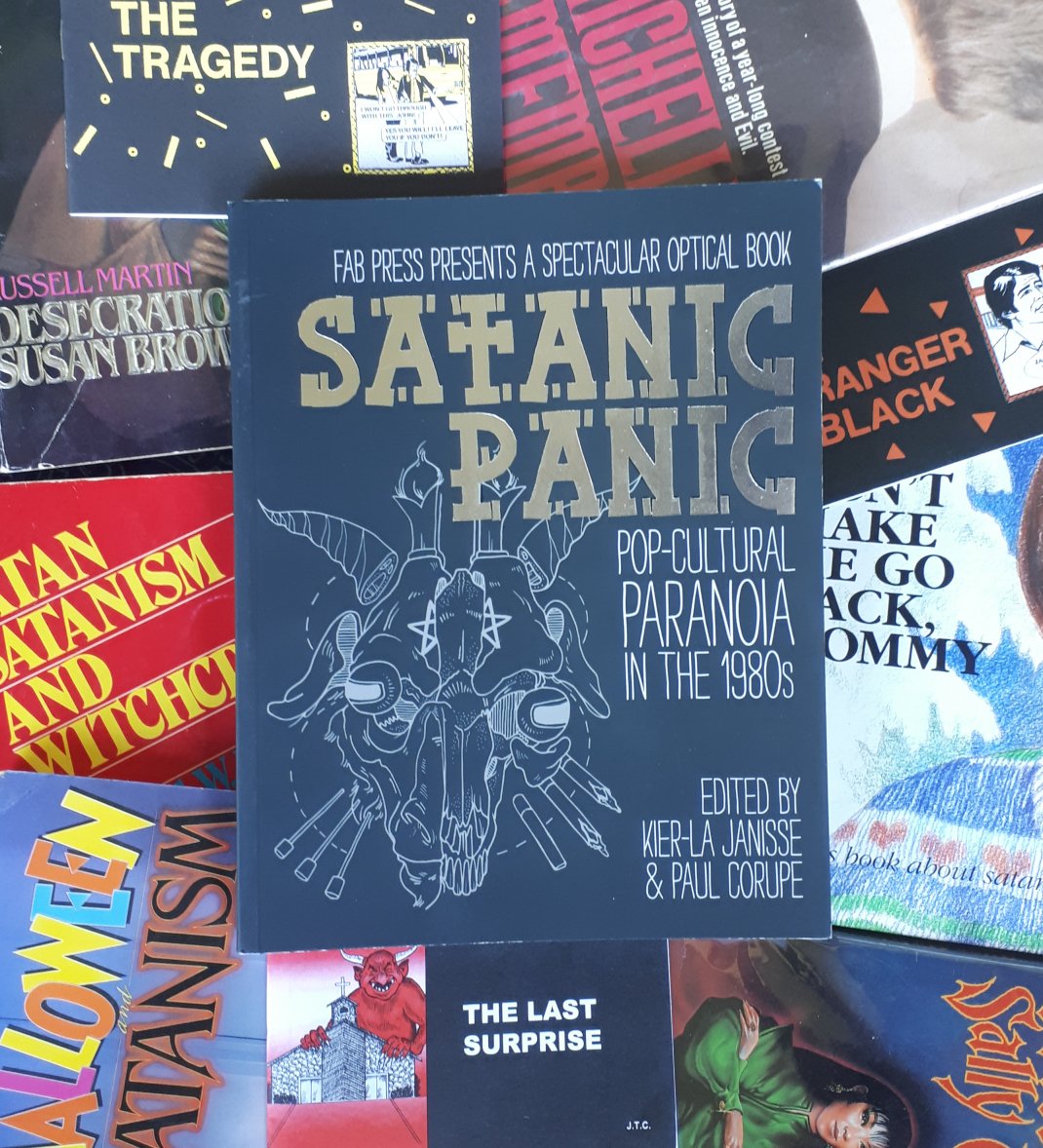
Satanic Panic: Pop Cultural Paranoia in the 1980s – Edited by Kier-La Janisse & Paul Corupe

satanic panic pop-cultural paranoiain the 1980s.jpgSatanic Panic: Pop Cultural Paranoia in the 1980s 
Edited by Kier-La Janisse & Paul Corupe
FAB Press – 2018 (Originally published 2015)

This is a collection of essays about different elements of the Satanic Panic of the 1980s. I remember seeing something about this book when it came out and thinking that it looked cool, and when I recently saw that it contained an essay on Russ Martin’s sexy Satanic mind-control novels, I knew I’d have to read it. I got a couple of gift vouchers from work over the past year, and I was delighted to find a way to use those vouchers to pursue my interest in Satanism.

The essays in here are of varying quality, but most are pretty good. I guess it’s inevitable that each reader will like some better than others. Together they present a pretty comprehensive look at the Satanic Panic of the 1980s.

Reading the book over the course of a few days was a bit odd as the introductory background information in some of the essays is pretty similar. Geraldo’s infamous Exposing Satan’s Underground special gets quite a few mentions. I guess this two hour TV special is probably the defining peak of the panic. Despite multiple attempts, I’ve never managed to watch the whole thing through. After a few moments of it, I feel a maddening urge to listen to Slayer and throw stones through church windows.

I’ve encountered a lot of the material in this book before, and covered some of it on this blog. There’s essays on Michelle Remembers, Bob Larson, books by Phil Phillips, and one on the McMartin preschool trial. The McMartin essay was one of the more interesting in the book. It argues that the claims of Satanist involvement in that case actually prevented prosecutors from busting a real paedophile ring. There are also interesting essays on Chick Tracts, Dungeons and Dragons, and heavy metal in here.

I felt that a few of the writers went a bit overboard trying to make their essays feel academic. One of them even references Foucault. Ugh. We get it guys, you went to college…

(Haha, after writing that last bit, I looked up the guy who made the reference to Foucault, and he actually teaches a course on college writing in a college. Classic! Referencing ol’ Michel might be a surefire way to dazzle your liberal arts prof, but it don’t impress me much.)

This is a far fancier book than the ones I usually read. It looks and feels really nice. There’s so many cool pictures, and it felt like a lot of work was put into the layout. Just to flick through it is a cool experience. In sincerity, if you know any goths who have a birthday coming up, this would be perfect for their coffee table.

I don’t have much more to say about this one. Overall, it’s a very cool book. I’m quite sure I’ll reread some of these essays as research for future posts.

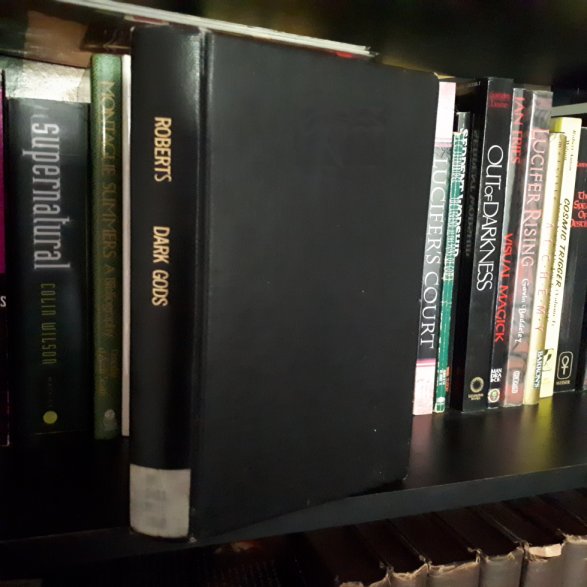
Dark Gods – Anthony Roberts and Geoff Gilbertson

dark gods - anthony roberts and Geoff Gilbertson.jpgDark Gods – Anthony Roberts and Geoff Gilbertson
Rider/Hutchinson – 1980

Malevolent forces from another dimension have long been plotting against humanity. Throughout history these forces have manifested as demons, angels, spirits, fairies, vampires, dragons, aliens and Men in Black. They have convinced some humans to create secret societies that unwittingly aim to bring about the downfall of humanity. Lovecraft’s tales are not mere fiction. Nyarlathotep and Cthulhu are very real, and they’re patiently waiting for misguided humans to call them forth so that they can lead us into an era of blasphemous anarchy and interdimensional terror.

I mean… if you don’t want to read this book after that description, you’re on the wrong blog.

There’s so much to unpack here. This utterly insane book takes the work of H.P. Lovecraft, Bulwer Lytton, Erich Von DänikenFrancis King, Pauwels and Bergier, Eliphas Levi, Aleister Crowley, Trevor Ravenscroft, and John Keel and mixes it with Biblical Lore, black magic, cryptozoology, secret society conspiracy theories and UFO abduction stories. This is essential reading.

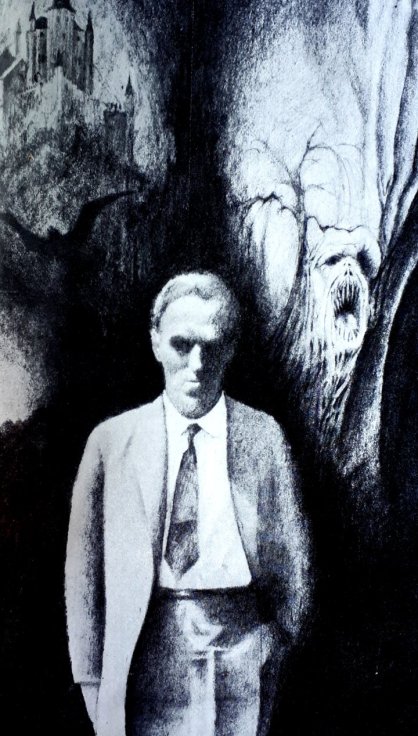
h.p.lovecraft - tom evesonjpg.jpgI’ve seen this image of Lovecraft before. It’s by Tom Eveson.

When I read Colin Wilson’s The Occult, I complained about the author’s unquestioning acceptance of ridiculous ideas. This approach made a little more sense to me after I read Morning of the Magicians by Pauwels and Bergier and understood their concept of fantastic realism, but I still thought of Wilson as a fairly credulous yet knowledgeable individual. Wilson actually wrote the foreword for this book, and it’s rather telling that he seems uncomfortable accepting this book’s findings. While he praises the authors of Dark Gods’ inquisitive vigor, he can not endorse their blind acceptance of their own conjecture. What is too much for Wilson will be far too much for almost everybody else.

Truly, this is a ridiculous book. There is no consideration given to the reliability of any of the authors’ sources; they even accept testimony from individuals they acknowledge as being liars.  They make no distinction between myths, fiction and eye-witness witness reports. Lovecraft’s short stories, extracts from The History of the Damnable Life and Deserved Death of Doctor John Faustus and Bulwer Lyton’s novel The Coming Race are presented alongside historical documents as proof of the conspiracy.

I don’t mind authors being ridiculous if the material they’re presenting is entertaining, but unfortunately, not all of the stuff in here is hugely interesting. Much of the second half of the book is taken up with descriptions of different secret societies such as the Golden Dawn, the Illuminati and even the Bilderburg Group. I recently wrote about my current disdain for conspiracy theories, and I found this section of the book to be grueling. The general message of the last 100 pages or so can be summed up by saying that any secret society that claims to offer illumination is actually run by Satanic forces that aim to enslave the society’s members and ultimately destroy humanity. I will give the authors some credit for briefly suggesting Reptilian government leaders 10 years before David Icke went mad, but this part of the book was painfully dull.

dark gods crowley blavatksy weishauptMadame Blavatsky, Rudolf Steiner, Adam Weishaupt, Aleister Crowley, Houston Stewart Chamberlain and Dietrich Eckart – Satanic Illuminatists (Picture by Tom Eveson)

Overall, the writing is quite bad. The authors seem to dance around the points they’re trying to make rather than just stating them clearly. This is particularly unfortunate as the points they are making are hardly common-sense ideas.

Perhaps the most confusing, convoluted part of this book is the bit explaining the motives of the entities who seem to abduct people in UFOs. ‘The phrase ‘seem to’ is very deliberate in that sentence. The authors of Dark Gods don’t believe that aliens are coming to Earth and abducting humans; they believe that interdimensional beings are coming to Earth and pretending to be aliens that are coming to Earth and abducting humans. We’re talking about malevolent ultra-terrestrials, not inquisitive extra terrestrials. (The idea of ultra-terrestrials rather than extra-terrestrials can be found in Whitley Strieber‘s abduction books too, but ol’ Whitley never imagines his visitors to be so deceptive.) Why are these weird entities playing such an elaborate hoax on humanity? According to Gilbertson and Roberts, it’s basically just to confuse us.

golem dark godsThis image of a Golem later appeared on the cover of a book by David Schow.

Think about that for a second. Inter-dimensional creatures are crossing over into our dimension and then pretending to be aliens because they think that will make us feel afraid and uncertain. The pretending to be aliens part just seems a little bit redundant to me. They’re inter-dimensional creatures – that’s plenty frightening and confusing. What kind of deranged people came up with this nonsense?

There’s sparse information on the authors available online, and I had to dig around quite a bit for it to paint a cohesive picture. What I could find was fairly depressing. Both men are now dead.

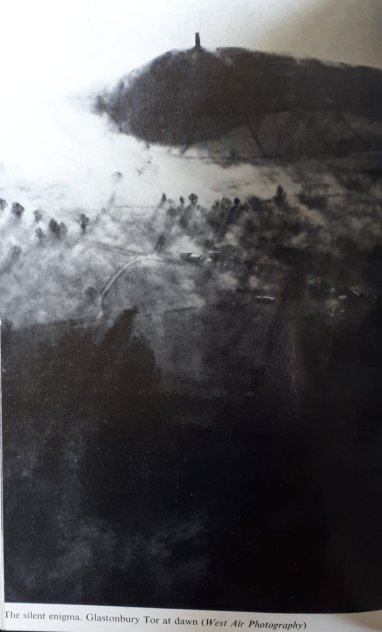
Anthony Roberts had previously published some other books on Atlantis and mythology. Paul Weston, an expert on Glastonbury’s mythology, claims that the mood of Roberts’ earlier books were “considerably different” to Dark Gods. Roberts ran a publication company called Zodiac House with his wife. He died in 1990 while climbing up Glastonbury Tor to see a lunar eclipse. He died of a heart attack, but some have suggested that he was actually killed by fairies for planning to summon the ghost of Robert Kirk, a folklorist who was supposedly abducted by the fairies in 1692. Most accounts of Anthony Roberts that I have found have presented him as a rather temperamental individual. (Sources: an essay on meeting Roberts, Paul Weston’s notes, and Roberts’ obituary on page 12 of The Ley Hunter Winter 1989/1990)

glastonbury tor - dark gods.jpgThis creepy image from the book shows the spot where Anthony Roberts would later die.

Geoff Gilbertson died more recently, in 2017. Despite living longer, he seems to have been the more tragic of the pair. He died alone of untreated cancer. I believe Dark Gods is his only book. After publishing it, he supposedly became convinced that the Dark Gods were after him for doing so. He apparently suffered several psychotic breakdowns and spent time living on the streets and in a mental institution. One of his friends believed that he was on the autism spectrum. This guy genuinely seems to have suffered horribly with his mental health. People that knew him seem to have thought him a very nice guy though, a fact which is not true for Anthony Roberts. Nearly all of the information I could find on Gilbertson came from this article.

I’ve read accounts describing both men as unstable. I don’t know how they met or what their relationship was like, but it seems that their interactions with each other created an echo-chamber of Fortean paranoia. Dark Gods doesn’t read like some transparent attempt to synthesize occult ideas in order to make a quick buck. No, this book is a genuine trek into Crazy Town.

I first saw Dark Gods being mentioned on twitter. Somebody was discussing how difficult it is to find these days. Underneath that comment, somebody else had posted a video review of the book by Occult Book Review, one of my favourite youtube accounts. (He’s another Irish dad with an interest in occult books, basically a nicer, smarter, more respectful version of me.) After the first few minutes of that video, I knew I’d have to track down and read this thing as soon as possible.

Doing so wasn’t easy. This book really is quite tricky to find. You’ll be very lucky to buy a copy for less than 200 dollars, and I wasn’t able to find a digital version. With a little bit of work, I managed to get my greedy little claws on a physical copy. It’s actually a very tedious read, but if you’re determined to read it and can’t afford to spend a bunch of money, ask me nicely and I might be able to help you out.

Conjuring Spirits – Michael Osiris Snuffin

conjuring spirits a manual of goetic and enochian sorcery michael osiris snuffin.jpgConjuring Spirits: A Manual of Goetic and Enochian Sorcery
Michael Osiris Snuffin
Concrescent Press – 2010

Here’s a book about communicating with demons.

There are two parts to this text. The first is a modern guide to Goetic evocation. It simplifies some of the steps that you’ll find listed in older manuals. This part was fine. I don’t practice Goetia, but I’ve read enough about it to have been able to follow along. Everything here seems to make sense in the context of modern ceremonial magic.

The second part of the book looks at the author’s system of Enochian magic. Enochian magic, for those of you who don’t know, originated in the scrying experiments of John Dee and Edward Kelley. I found it very difficult to bother with this section for a few reasons. First of all, Enochian magic is a system of communicating with angels. I’m more of a demon guy myself. Next up, Enochian magic is a load of bollocks – from what I’ve read, it seems that Edward Kelley was a just conman who strung John Dee along so that he could fuck his wife.

On top of this, the author has his facts mixed up about Dee and Kelley. He says in the opening paragraph of this section, “Between 1851 and 1859 , Elizabethan Magus Dr. John Dee and his seer Edward Kelly (sic) received one of the most powerful systems of magick in Western Occultism.” The problem here is that John Dee died in 1608, roughly 250 years prior to these dates. Queen Elizabeth reigned from 1558 until 1603.

Kelley’s relationship with Dee was actually confined to the 1580s, and I thought that the dates given by Snuffin might just have been a typo, getting the 1580s mixed up with the 1850s, but Snuffin later says that it has been more than 250 years since Dee and Kelley did their experiments. This is technically more accurate than his original dates, but Snuffins book was published in 2010, so this number places Dee and Kelley’s work together somewhere in the mid 1700s.

I know that historical accuracy isn’t entirely necessary for a functioning magical system, but I was quite surprised by this lack of attention to detail. I’ve read that Snuffin is going to release a second edition of this book, so hopefully these errors will be corrected there.

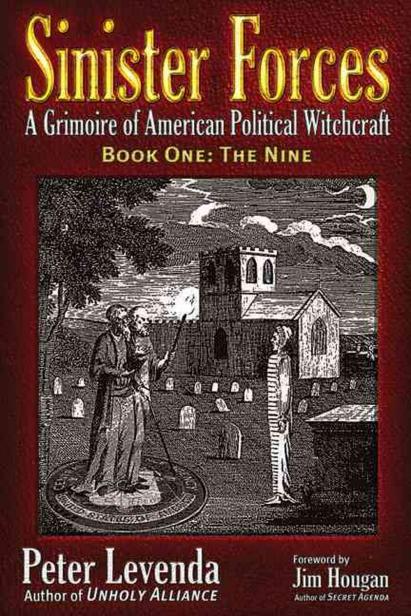
Sinister Forces: A Grimoire of American Political Witchcraft (Part 1: The Nine) – Peter Levenda

sinister forces the nine levendaSinister Forces: A Grimoire of American Political Witchcraft (Part 1: The Nine)
Peter Levenda

I used to think that I was more interested in conspiracy theories than I really am. Investigating these theories becomes far less alluring after you’ve done it a little bit.

There’s a few reasons why I think researching conspiracy theories is a waste of time:

  1. The internet has to be your main source of information – these theories evolve too quickly for books to be worthwhile anymore. But anyone can post information on the internet. There is such an abundance of crap online that you’ll rarely get to the bottom of anything.
  2. At this point in global history, the current state of politics is actually as twisted, shady and worrying as any conspiracy you can imagine.
  3. In the era of QAnon and fake news, belief in conspiracies has become too mainstream to be cool. I want to be in the same party as Frohike, Langly and Byers, not Margery from Nebraska.

Peter Levenda’s Sinister Forces series is about American conspiracy theories. It covers everything you’d expect; MK Ultra, the Manson family, the UFO phenomenon and everything in between. Unfortunately, Levenda doesn’t just describe these theories; he tries to link them all together. Can you remember Umberto Eco’s book, Foucault’s Pendulum? Levenda is like a comic-book version of the characters in that novel.

This was a very boring read. Every now and then an interesting bit would pop up, but I didn’t come across a huge amount of interesting information that I wasn’t already aware of.

I found the stuff on the mind control of Candy Jones interesting, but this was largely because of the similarity of her name to the name of one of the characters in Russ Martin’s Satanic mind-control series.

candy jones candy sterlingTwo books about mind-controlled beauties. Is there a link?

The only part of the book that actually convinced me of anything was the discussion of government agencies’ use of disinformation. That the American government has fed its citizens deliberately obfuscating untruths is undoubtedly true. The extent and nature of these untruths is a remarkably interesting topic, but it’s also one that very few, if any,  people can discuss with certainty. There’s always another layer of deception that could be peeled away.

A lot of the stuff in this book is pretty X-Files-y, and Levenda actually references the work of Mulder and Scully a few times throughout. I love the X-Files, but that series presents itself as fiction. Levenda’s talking about real life, and his ideas are far too convoluted to be remotely convincing.

I was planning on finishing the series, but I couldn’t get more than a few pages into the second book. I’ve had a copy of Levenda’s Unholy Alliance on my shelf for a couple of years now, and I reckon it’ll be another few before I get the courage to pick it up. Levenda recently co-authored a book about aliens with the singer from Blink-182. Yuck.

Gilles De Rais, the Perverted Son

trial of gilles de rais george batailleThe Trial of Gilles De Rais – George Bataille
Amok Books – 1991 (Originally published 1965)

Gilles de Rais is the kind of person that makes the belief in Heaven and Hell extremely appealing. There is no satisfaction to be derived from the fact that he was executed for his crimes. Those crimes were so hideous that their perpetrator deserves an eternity of agonizing torment – a quick execution is no payback for the brutal torture, rape and murder of countless children.

Gilles was an extremely powerful and ludicrously wealthy nobleman in 15th century France. For roughly 10 years, the Baron De Rais had his servants abduct poor children to satiate his hideous desires. He would slowly torture and murder them, usually stabbing them in the neck, sometimes severing their heads completely. As they perished, he would sit on their stomachs, peer into their dying faces and laugh. These victims would be raped at various stages during this process. After decapitating them, the Baron would kiss the children’s severed heads.

Oh, and while these horrendous acts were doubtlessly the result of de Rais’ depraved sexual impulses, he performed them in the name of the Devil. He employed several black magicians to help him communicate with demons. These sorcerers took De Rais for a fool. They would attempt to raise demons in front of him and after a while of nothing happening, they’d send him out of the room and lock the door. Then they’d start screaming in terror, and when Gilles would come back they’d tell him that the Devil told them to ask for some more money. Gilles would grant this request immediately. At other times, they would ask the Baron to provide them with the limbs and organs of dead children. These same sickos would also be present when Gilles was torturing kids. It seems that they were part of an abhorrently disgusting necro-paedophile ring. These scum were worst of the worst.

Gilles De Rais was eventually brought to trial for kidnapping a priest, and when the authorities started investigating the Baron, they heard the terrible rumours that had spread about him.

During a relatively painless trial (no torture on record), Gilles de Rais confessed his guilt and repented. He was excommunicated, but he was soon thereafter re-communicated by the Catholic Church because he had willingly confessed. The Church took the allegations of kidnapping a priest and being an alchemist more seriously than the rape and murder of countless children. Gilles was executed quickly, and the locals in his area were given a 3 day holiday to grieve for their master.

I don’t know guys. This is remarkably unsatisfying. I wanted to read about this lad dying slowly in unspeakable agony. His crimes are so gruesome that my initial response (and the response of many others) was to assume that the charges against him were false – they’re just a bit too extreme to imagine them really happening. That being said, the best evidence that is available to us, the court documents of his trial, provide a very cohesive and damning account.

It is these documents that make up most of the text of George Bataille’s The Trial of Gilles De Rais.

This is a very repetitive book. The first section is comprised of Bataille’s philosophical ramblings on the case. The second part is a very, very detailed timeline of Gilles De Rais’ life, much of which was already covered in the previous section. The last section is made up of the court documents of the trial. There is very little information in these documents that has not been discussed previously in the book. Also, court documents are fairly repetitive by their nature, so this book ends up delivering the same story about 5 times. I do appreciate the comprehensive nature of this book, but I think it would have been more effective to put the timeline first and Bataille’s thoughts after it.

The content of this book makes its repetitive nature remarkably depressing. You get to read about poor parents searching for their murdered children over and over again. This is fucking harrowing stuff. Bataille was a bit of a weirdo though, and I guess this was intentional. I read his Story of the Eye years ago, but I remember very little of it.

I’ve already mentioned that some people think that Gilles De Rais was the innocent victim of a conspiracy. He was a wealthy politician with plenty of enemies, and it is likely that many other people would profit from his downfall. My old friend Aleister Crowley was one of the individuals to proclaim the innocence of the Baron de Rais.

In an infamous lecture that was never delivered, Crowley argues that it was very likely that De Rais was framed. He argues that the claims against de Rais are too ridiculous to be taken seriously – they sound too similar to rumours spread to villainise the Jews throughout history. Crowley seems to have read a very different account of the trial of De Rais to the one presented in Bataille’s book though. Aleister claims that De Rais only confessed to his crimes when tortured, but the court documents presented by Bataille show that De Rais actually managed to avoid being tortured by confessing. Also, while the number of victims in Bataille’s text ranged from 35-140, Crowley gives the number of victims as 800 on the authority of Montague Summers. Summers, as we all know, was either very gullible individual or just prone to sensational exaggerations, and Crowley, an acquaintance of Summers, had to have known this. The swarmy, sarcastic and provocative tone that Crowley uses throughout the lecture make it seem all the less convincing.

I’ve encoutered De Rais a couple of times in fiction. The protagonist in Huysman’s Là-bas spends his time researching the evil Baron, and Gilles himself comes back from the dead to appear in Philip José Farmer’s Image of the Beast. And Ough! – he’s obviously a heavy metal hero too. I have a tshirt with a picture of him on it. I don’t wear it to work.

gilles de rais macabre shirt.jpgIt’s for this rather silly but historically detailed song.

I’d like to believe that De Rais was innocent, but the testimonies collected in Bataille’s book are very cohesive. It would be far more comfortable to believe that Gilles De Rais died an innocent man than to accept the horrendous deaths his victims suffered at his hands. This guy seems to have been a real piece of shit.


Taking Control of a Group, Organization, Society, etc., through Occult Manipulation – Nathan Elkana

Taking Control of a Group, Organization, Society through Occult Manipulation - Nathan ElkanaTaking Control of a Group, Organization, Society, etc., through Occult Manipulation
Nathan Elkana
Finbarr International – 2008

Jesus Christ, the world is home to some seriously pathetic human beings. I read this piece of garbage on the bus today. It’s awful shit, but it’s only 9 pages long. Here’s what the cretinous author has to say for himself:

There must be an unseeable world because existence is dualistic – there is no black without white, so if there is something that physically exists, it follows that there must also be something that does not physically exist. The author doesn’t mean that there are things that don’t exist though; he means that there are things that don’t exist physically. That which spiritually exists is obviously this. (Whoever believes this is a Grade-A moron. It doesn’t make any sense, but the rest of the book is based on this idea, so let’s just get on with it.)

Every place, company and type of worker is influenced by its sign and planet. This idiotic statement is followed by long lists of professions and places that are influenced by the different signs of the zodiac. These lists take up about one third of the entire text, but they’re followed by the claim that the influence of the stars doesn’t really matter all that much.

Ok, now to the most important part of the book. This is how to influence a group of people that you’re not part of. Imagine the group you want to influence as an individual human being on the astral plane. Picture a person who looks like what this group stands for. Imagine bossing this person around and telling them what you want to do. This figure will soon appear to the group’s members in their dreams and convince them to do what you want.

If the astral being resists, threaten to chain them up. If they continue, imagine them in chains. They’ll soon learn their lesson.

This method will work to influence any group, but it’s a bad idea to do it to a coven because they’ll figure out whats going on and send the entity back to attack you.

That’s it.

So, if you want to become a millionaire, all you have to do is imagine a lad named Sam with a computer for a head. Tell him to convince the executives at Microsoft to give you a percentage of their profits. If your new imaginary friend refuses, imagine him tied up. Then, a little later, imagine untying him and then wait for him to go and work his magic. Pretty soon you’ll be rich.

Some people probably paid to read this book…

There’s very little information online about the author of this text. He also published a book called The Master Grimoire of Magickal Rites & Ceremonies in which it is mentioned that he has published under many other names. Some people believe that Nathan Elkana is actually a pseudonym for Basil Crouch. It could be – both Elkana and Crouch are stupid cunts.

The Legend of the Mass of Saint Sécaire

mass of saint secaire
This is an original translation of Jean-François Bladé’s description of the diabolical Mass of Saint Sécaire:

Of course, some magicians have a more dangerous trick up their sleeves, one of these being the Mass of Saint Sécaire. It withers a man’s body, little by little, and doctors won’t be able to diagnose what’s happening to him.

Very few priests know the Mass of St. Sécaire; and three quarters of those who know it will never perform it, neither for gold nor for money. Only evil priests, damned without hope of redemption, are willing to do it. These are the type of miscreants who never stay two consecutive days in the same place. They travel by night, constantly on the run, today on the mountain, tomorrow in Bordeaux or Bayonne.

The Mass of St. Sécaire can only be said in an abandoned church that has been partly demolished or tainted by some terrible occurrence. These churches should house owls, bats, and occasionally gypsies. Under the altar, there should be plenty of croaking toads.

For the mass, the evil priest brings his mistress with him to serve him as clerk. He must be alone in the church with this slut, and they must share a fine supper. At the stroke of eleven o’clock, the mass begins and continues until midnight. The communion wafer is black, and three-pointed. The evil priest does not consecrate wine: he drinks water from a well in which an unbaptised child has been drowned. The sign of the cross is made on the ground with the priest’s left foot.

There are other terrible things that happen at the Mass of St. Sécaire, but to see them happening would blind a good Christian for the rest of their lives.

This is how some terrible people wreak vengeance on their foes.

The evil priests and their customers will find themselves in a nasty situation on judgement day. Only the Pope of Rome can grant forgiveness for this most terrible of sins, and the penance that must be paid is truly Hellish and must last until the death of the sinner. Very few of these wretches submit to their penance, and most die damned to eternal suffering in Hell.

There is a way to guard against the Mass of St. Sécaire; but I do not know the counter-mass that must be said. Please believe that if I had been taught it, I would pass it on to you…(there’s a couple of lines here that I’m omitting because they have nothing to do with the mass.) Unfortunately, the counter-mass only has the power to gradually kill the bad priest and the people who paid him. Both will die as their victim did, without knowing the cause of their own death.

I first heard of the abominable mass of Saint Sécaire in Montague Summers’ The History of Witchcraft, and I recall it popping up again when I was reading H.T.F. Rhodes’ The Satanic Mass. The description was intriguing. Summers notes that he read about this horrible rite in  Jean-François Bladé’s 1883 book, Quatorze Superstitions Populaires de la Gascogne. An almost identical description appeared 7 years later in James Frazer’s Golden Bough, and this doubtlessly brought the Mass to the attention of a larger audience. You can find Frazer’s account online, but I always want to read the original of everything and I wasn’t able to find a direct English translation of Bladé’s text online, so I made one myself. My French isn’t great, but after comparing my translation with Frazer, I’m confident that the above gets the message across.

Frazer omits the few lines about the counter-mass at the end of Bladé’s description of the Mass of Saint Sécaire, but otherwise his account is almost identical. The descriptions of the mass in the aforementioned books by Summers and Rhodes follow directly in this line of succession. (Summers provides another extremely similar account in his later book, A Popular History of Witchcraft.)

When I briefly mentioned this blasphemous ritual in a post 4 years ago, I knew that I’d have to return to it at some stage. A couple of weeks ago I picked up a novel that had been lying on my shelf for years. It turns out that the Mass of Saint Sécaire is a major part of the story.
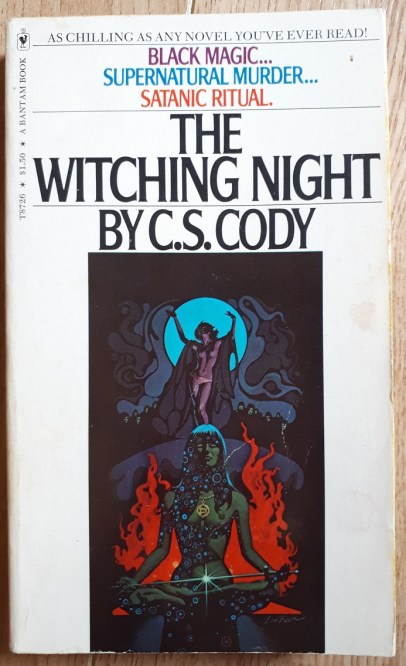
the witching night c.s. codyThe Witching Night – C.S. Cody (Leslie Waller)
Bantam 1974 (First published 1952)

I’m ripping through my paperback collection at the moment, and I’m trying to get some of the boring ones out of the way with. When I was starting The Witching Night, I assumed that it would be fairly dull. It turns out that it’s actually a Satanic love story filled with mystery and suspense. This book is absolutely deadly.

A doctor encounters an old friend who is dying. The doctor realises that something very peculiar is going on, but his friend won’t speak explicitly about it. The only clue he gives before dying is the name of a girl. When the doctor tracks her down, he finds her irresistible. The only problem is that she is the Satanic witch who performed the Mass of Saint Sécaire that killed his friend! The doctor soon suspects that he too has been cursed, but he can’t bring himself to sever his relationship with the woman who he knows is responsible.
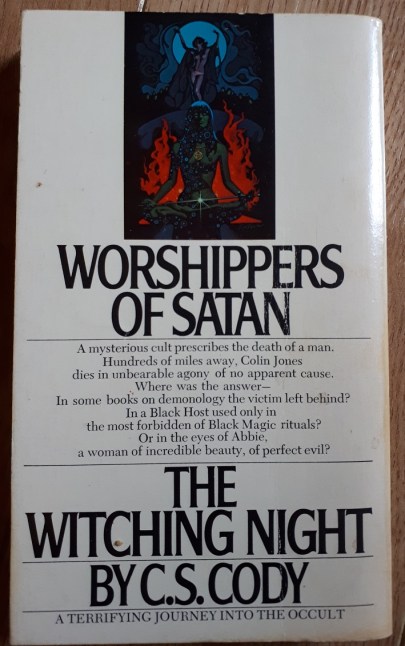
the witching night c.s. cody back coverFuck yes.

Some grisly Satanic rituals are described, but the really entertaining part of the book is how the author gets into the psychology of what’d be like to fall for a very sexy, yet very evil, witch. Imagine being in love with a person who was slowly killing you. There are also some really interesting dream sequences and supporting characters in here, and I was kept guessing what would happen until the last few pages. This is a surprisingly well written book. (So well written in fact, that I discovered some pathetic loser who copied the text, changed the names of the characters and tried to pass it off as her own work. Join me in complaining to her publisher.)

The author of The Witching Night, Leslie Waller, used ‘C.S. Cody’ as a pseudonym for this work, and as far as I can tell didn’t write any more occult themed fiction. This is unfortunate, as he did so in a tasteful way. The occultism in here is serious and effective. This isn’t a Scooby-Doo episode where the devil is unmasked and demystified at the end. The power of Satan is real! And while it’s an infamous black magic ritual that moves the plot of this book along, the author doesn’t rely on occult references to make his book entertaining.

Frazer’s account of the Mass is quoted in this novel, but later in the book the female character admits to having said the mass herself. This doesn’t really make sense, as she’s obviously not a Catholic priest, but I’ll let it slide because it adds to the story. Also, Waller describes a hitherto unmentioned way to cancel the effects of the Mass, but you’ll want to read the book to find out what that is.


After reading The Witching Night and realising that I’d have to do discuss the Mass of Saint Sécaire in my review of this book, I decided to check out the Aleister Crowley story about the Mass too. It was written in 1918 and published as part of Golden Twigs, a book of 8 short stories that were influenced by Frazer’s Golden Bough.

aleister crowley simon iff and other worksAll 8 of the Golden Twigs tales are featured in this collection.

If you’ve read the above description of the mass, this story is pretty straightforward. Two men love one woman. She loves one back. The other lad gets jealous and gets a dodgy priest to say the Mass… No surprises. I think I liked Crowley’s description of the Mass best. I mean, it gives the exact same details as Bladé‘s, Frazer’s, Summers’, Rhodes’, Waller’s and mine, but I felt that Crowley made it sound nice and creepy. I haven’t read any of Crowley’s other short fiction, but I have a couple of books of his short stories that’ll get reviewed on here someday.


While researching the Mass of Saint Sécaire, I saw that there was a radio play recorded in 1974 that was based around this terrible ritual. It was part of CBS’s Mystery Theater series, and it was called The Secret Doctrine. Thankfully, somebody has posted every episode of this series online (complete with advertisements from the early 70s). I was so happy to be able to listen to this. Again, if you know about the Mass, this story is very straightforward. Unrequited love, frustration, blasphemous ritual, death… This story is perhaps the most complete fictional account of the mass – it includes the sinner’s repentance and penance. There was a brief mention of Eliphas Levi, and the play seems to take its name from Helena Blavatsky’s 1888 theosophical opus. The writer here seems to have had a genuine interest in the occult. I was also intrigued to see William Johnstone on the cast list for this show. (He plays Father Giles.) A decade after this radio drama was recorded, Johnstone would go on to write a bunch of insane horror novels about Satanists – I just finished his The Nursery a couple of days ago. I can honestly say that it was one of the most mental books I’ve ever read.
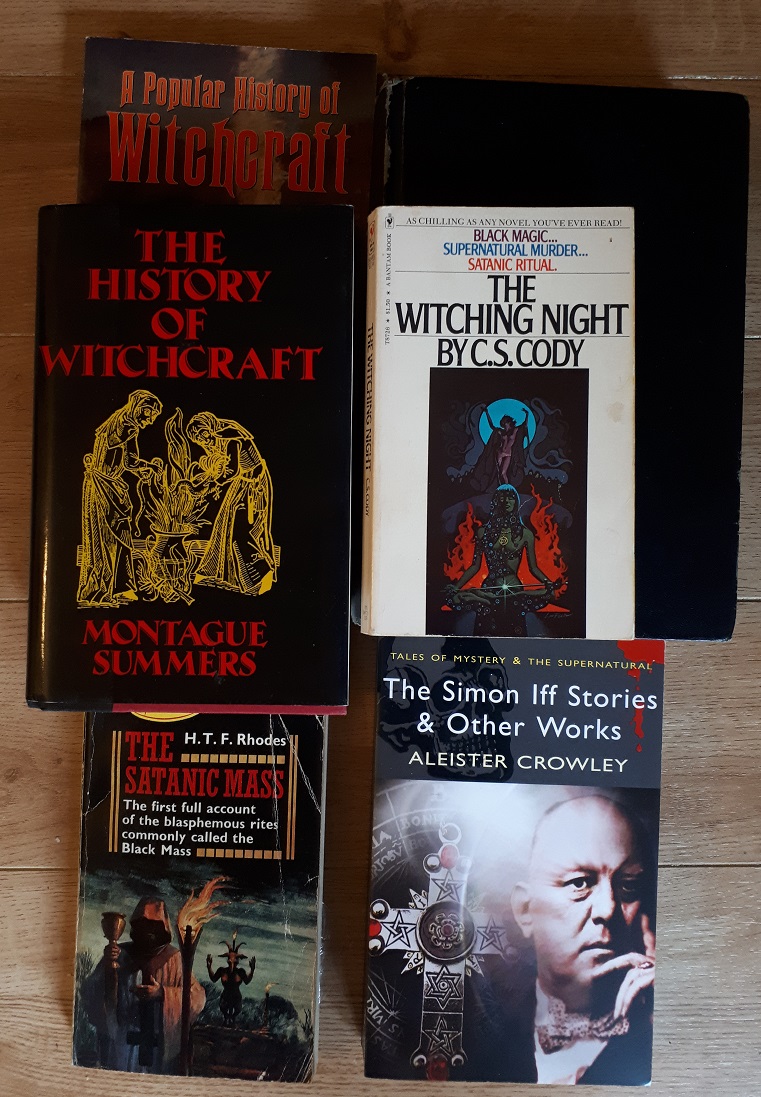
mass of saint secaire books
Just some of the works I had to reference for this post.

Of course, there is no Saint Sécaire. There are 3 Saint Sacerdos, 2 Saint Securus, a Saint Sacer, a Saint Sektar and a Saint Sagar. A few of these boys were French too, so the name Saint Sécaire probably sounded legitimate to the Gascony peasants from whom Bladé heard the legend. Also, I have read several places online that Sécaire probably comes from the French word ‘sécher’ which means to dry. If you wanted to imagine a corresponding creepy name for a Saint in English, you could go with Saint Withers. I think that works pretty well. I wouldn’t want one of my enemies saying the Mass of Saint Withers against me.

Back in November 2001, in an article in Fortean Times titled Satan in Suburbia, Gareth J. Medway suggested that the Mass of Saint Sécaire was fictional. (Meday also claimed that the original source for the story of the Mass was Bladé’s Contes Populaires de La Gascogne, but this is not quite true. Contes Populaires was published in 1895; Quatorze Superstitions had been published in 1883. The passages in these books about the Mass are identical though, so the point that Medway was making in his article still rings true.) Bladé was a collector of folklore and fairy tales, and he never presented his account of the Mass of Saint Sécaire as history. Russell Hope Robbin’s Encyclopedia of Witchcraft and Demonology states that “The so-called mortuary mass of St. Sécaire in Basque-speaking territories and the mass of the Holy Ghost in Normandy belong to folklore or anthropology, but not to witchcraft.” Was the Mass of Saint Sécaire ever a real thing? I really doubt it, but let’s be honest, it makes for a damn cool story. In the aforementioned article by Medway, he points out that later occult authors went on to use parts of the description of this terrible ritual in their descriptions of more general Black Masses, and from what I have read, it has since become a basis for modern black magic ceremonies. I’ve presented three pieces of fiction based on this blasphemous rite, and I’d love to know if there’s any more out there.

If you’re interested in other folk tales that came to be accepted as elements of occult history, I recommend that you check back soon. I’ve got a post on Gilles De Rais lined up for next week.


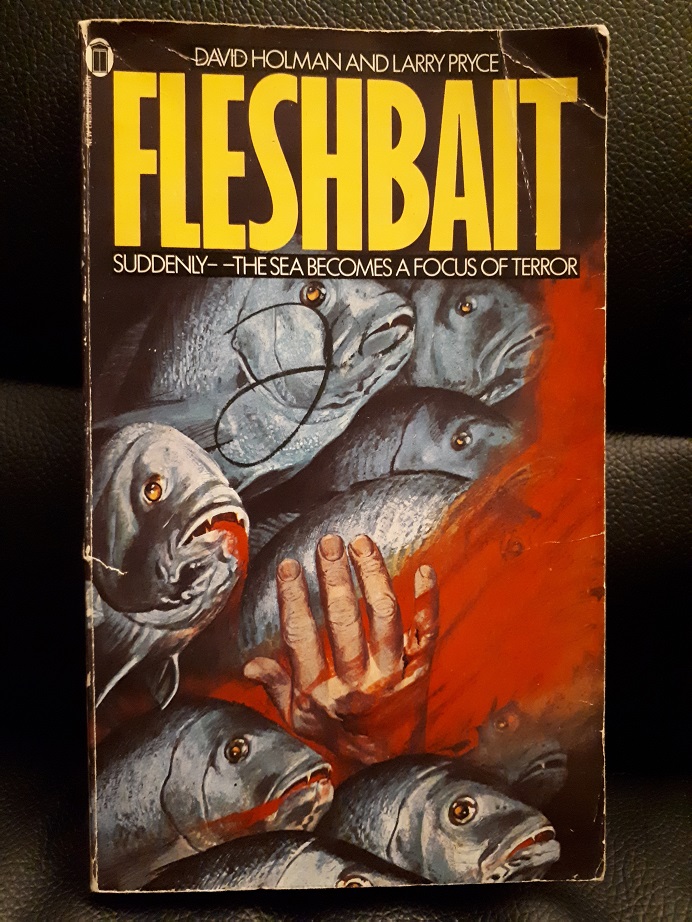
Fleshbait – David Holman and Larry Pryce

fleshbait holman pryce.jpg
Fleshbait – David Holman and Larry Pryce
New English Library – 1979

There was a period a few decades ago when animal horror was the big thing. Authors would pick any living creature, imagine them having murderous tendencies and a book would soon emerge. Harmless creatures such as dogs, cats, rats, slugs and crabs all had their turns at turning nasty. This type of horror isn’t hugely appealing to me, but I was in a bookstore the other day and found a short book about what looked like killer fish for 2 dollars. I thought I might as well give it a go.

One of the many problems with this truly awful book is that the first identifiable group of killers is a swarm of trout.

There are two reasons why I find trout amusing. Can you remember when you and your friends were teenagers and you would collectively fixate on a word or phrase? In my school this happened several times. The boys in my 4th year classroom decided as a whole that the word “girth” was hilarious. We’d mutter it under our breaths when the business studies teacher turned his back, or we’d write “Adam has a girthy one”on the inside of Adam’s copy book. Another time, somebody realised that a boy in the year below us had bulbous eyes and a fishy looking mouth. When he dyed his hair different colours, he sealed his own coffin. From that moment on, he became known as ‘Rainbow Trout’. For the interests of mischief, we dropped the Rainbow part of the phrase when in class, but the phrases ‘trout’ and sometimes even ‘brown trout’ were forevermore heard echoing through the classrooms and corridors of my alma mater.

The second reason that the word trout brings me mirth is a text message my sister sent me a few years ago. She was on holiday with a less than responsible friend, and on one occasion, my sister returned to their hotel room only to discover this friend engaged in an act of passion on the veranda. I believe the exact phrasing of her later report to me was, “I walked in and there was a lad on the floor licking her trout.” To this day the memory of that text never fails to bring me a chuckle.

Keeping these points in mind, the reader will understand how I found it difficult to take seriously the horror of a swarm of malevolent trout.

There’s more than trout to this book though. After a bunch of nuclear waste leaks into the sea, any fish that encounter it begin to mutate. They quickly evolve larger brains, vocal apparatus, telepathic abilities and a thirst for revenge against the humans that have hunted them for thousands of years.

A scientist, still reeling (haha) over the suspicious death of his best friend, finds himself in charge of the campaign against the killer fish.

After a particularly nasty fish attack, he calls a press conference, but the only person to speak at this conference is an insane woman.

When the scientist discovers that his friend actually committed suicide because he was gay for him, he recklessly dives into the most contaminated part of the sea and discovers a slab of rock that’s covered with mutilated human bodies that the fish have put on display in much the same way that fishermen display pictures of their catches on the walls of their offices.

This grisly grotto turns out to be a radioactive hub that is charging the local sea life with mutating radiation. After it is blown up, everybody assumes that the problem is solved.

This illusion is shattered when a big gang of fish assemble near a railway that passes by the ocean front. When a train containing the scientist and his team passes by this little stretch, these fish point their arses inland and flip their flippers. This causes a tsunami that knocks the train off the tracks.

Haha, this book was such a piece of crap. I just looked back through the animal horror section in Paperbacks from Hell and saw that it does get a brief mention there. Of all the books I’ve read that were featured in there, this is definitely the worst. The authors try to fit too many ideas into a very short text, and the antagonists aren’t scary at all. This book is shite.

The Compost Bin – A Short Story

20190617_203412.jpg

The world is in trouble. We’ve all known this for a long time, but conservation efforts are no longer only made by bearded liberals. Here in my country, we have state mandated recycling programs. In the basement of my apartment building, we have separate bins to sort our used cans, bottles, paper, and even old clothes. My favourite bin though, and the subject of this tale is the compost bin for our food waste.

I was overjoyed when I first saw it there. I like the idea of saving the planet, and food in the garbage often stank up my apartment, especially during the summer when it’s hot. A big grin could be seen stretching my lips on my return journeys from the basement after the compost bin showed up. It was the satisfied smile of a man playing his part for the environment.

About 2 months after this big brown bin appeared, something very special happened.

It was an exceedingly hot day, and the bowl I used to collect my food scraps was emitting an unpleasant odor. It contained the carcass of a rotisserie chicken and half a withered red onion. This fine feast was topped with some rancid yoghurt that should have been thrown out months before. When I found the yogh-cartons at the back of my fridge, I emptied their contents on top of the chicken skeleton and proceeded to rinse out the cartons so that they too could be recycled. As I carried the bowl of compost downstairs, its powerful stench waves assaulted my nostrils.

The air around the larger compost bin downstairs was worse. Every breath within a 5 meter radius of it tasted like a mouthful of hot, rank soup. After the slow process of emptying my bowl and all of its slimy contents, I was starting to feel nauseous. I hacked the phlegm from the back of my throat and voided my rheum into the compost bin.
I walked away feeling upbeat and refreshed. On my way up the stairs, I wondered about the fate of the phlegm and spittle I had left atop the stinking pile of rot. Slowly but surely, it would become an indistinguishable part of the slurry, its molecules mixing with those of the chicken carcass, and those hybrid molecules would go on to mix with the remains of the vegan curry that I had earlier smelled cooking in my neighbour’s apartment. After the mixing would come decay, but after sufficient rotting had ensued, the compost would be spread on a farm, and crops would be grown from it. My loogie might go on to become part of a carrot, and due to my faith in the cyclical nature of the universe, I felt it fairly likely that I should be the man to eat that very carrot.

What a reward! I had become an active participant in the circle of life. From thereon, it was a rare occurrence for me to take out the compost without leaving a little of myself in the mix. Mostly it would be a little spit or a large crispy snot, freshly picked, but sometimes I would go further and merrily give a a handful of toenail clippings.

I quickly became fixated on giving myself to the task, and little would be emitted from my body that would not end up in the brown bin downstairs. My compost bowl that I used leave on my microwave could often be seen housing a mushy tissue or a piece of skin picked from my foot. Once every few months, it would cater to the needs of my freshly clipped hair, both cranial and pubic. I once gave it my beard trimmings, but they were a nuisance to get out of the end of the bowl after mixing with the sickening sooly that lurked there.

Now every man has his limits, and while I am a dedicated conservationist, I also have my dignity. I refrained from ever putting my feces into the compost bin, not for any moral reason, but because doing so should properly stink out my kitchen. Yes, I refrained from doing so, but I can’t lie and say I never thought about it. In truth, it became a fantasy of mine, and you can only imagine my mirth when my stars aligned and there was a plumbing failure in my apartment building that took away our running water and prevented the toilets from flushing.

I was lucky. My toilet was clean and flushed when the failure occurred, so my house was not immediately effected. The landlord hired a portapotty for my neighbours and I, but it was not sufficient defense against the army of bowels in need of evacuation in our building, and this facility was quickly rendered unusable by a veritable mountain of dung that peaked well above the toilet lid. Only a contortionist would have been able to use it without making a repulsive mess of themselves.

I resolved to stay at home and to satiate my need in an environmentally friendly manner. I squatted above a large sheet of butchers’ paper (folded twice to protect my carpet) and squeezed out a hard lump of blackened gick. The process was made painful but rather tidy by the fact that I hadn’t drank anything in a couple of days on account of the lack of running water in the building. The painful mass of hideous scum that I produced was truly a labour of love.

It took but two crisp wipes with some more butcher’s paper to tidy myself up, and after doing so I placed my little parcel into my compost bowl and took it straight down to the basement. Dropping off my dropping was like seeing off an emigrant child at the airport. It was hard to say goodbye, but it was also exciting to think of the prospects of that small part of me to which I was bidding adieu. My pellet was fresh and ready to fertilise.

The plumbing was soon fixed, but I had developed a taste for leaving different parts of myself in the compost bin. I became obsessed with spreading my DNA. The more I gave, the more likely it would be that somebody of great importance might some day ingest a small part of me. I found momentary satisfaction by donating my collection of the baby teeth of my childhood, but I could feel the urge growing. My mantra became, “To live, I must give.”

One day, while preparing an offering of my toenails, I dug a little too deep and ended up with a small slice of flesh under the blade of my clippers. It caused great pain, but the agony was outweighed by the ecstasy of knowing that this tiny slice of flesh would go on to give life. I couldn’t stop myself from digging a little deeper under the next nail, and a little deeper on the next.

In the ensuing weeks I read several books on the anatomy of the human being. Using these books as a I guide, I plotted a map of the least essential parts of the human body, and over the following months I used this map to guide my trusty nail-clippers to the parts of my person that could be slowly excavated without serious risk to my survival. As time went on and I became accustomed to the pain, I began to use a pair of scissors to remove larger chunks of useless flesh, starting with my earlobes and moving on to larger, more sensitive unnecessaries. I’m not stupid though, and I have refrained from removing anything that could prevent me from making my nightly trips to the compost bin to present my offerings. Acquiring sustenance has become more difficult though, and recently I have been having all of my food delivered. I leave the money on the doorstep and collect the food only when I am sure there is nobody in sight. There is very little left of my face, and my skull is showing through several parts of my head. I fear that anyone who sees me might fail to understand why I’m doing what I’m doing. No, the layman might not be capable of appreciating the generous and spiritual nature of my sacrifice.

I feel now though that the final stage of my gift to the world is approaching. After I finish typing this manuscript, I shall take a knife and dice my flesh, leaving sufficient strands of skin and muscle to hold me together for my final journey. This slicing will be no act of masochism but a carefully planned act that should speed up decomposition. At this stage you will have guessed my destination, but do not, gentle reader, deny me the pleasure of announcing my plans. Yes. Oh yes, yes, yes. Tonight, I shall undress, wait until the coast is clear and then walk down to that big brown compost bin for the final time. With glee I shall climb inside that reverse womb and continue my journey towards rejuvenation and rebirth. Death is an illusion. I shall become life itself.