Jeff Gelb’s Shock Rock Collection – It’s a Long Way to the Top…

…and this book isn’t even halfway there.

shock rock - jeff gelbShock Rock – Edited by Jeff Gelb
Pocket Books – 1992

Shock Rock is a collection of horror stories about rock music. I love horror stories and rock music, so this book seemed very appealing to me. Unfortunately, out of the twenty stories in here, maybe four are interesting and only two of these are really good.

The longest story by far, and probably the book’s biggest draw, is Stephen King’s You Know They’ve Got a Hell of a Band. I read this in Nightmares and Dreamscapes when I was a kid and again a few years ago. I didn’t bother reading it a third time. It’s basically a second rate version of Children of the Corn but with dead rock stars instead of creepy children.

The only two stories in here that I really liked were Richard Christian Matheson’s Groupies and Thomas Tessier’s Addicted to Love, neither of which feature any supernatural elements. And while I did quite enjoy reading Tessier’s story, it’s a blatant rip off of American Psycho. (Tessier’s copyright is from 1992, Bret Easton Ellis’s novel had been published in 1991.)

The rest of the stories aren’t absolutely horrible to read, but they were mostly pretty forgettable and fairly similar. They are nice and short though (they’re more like music videos than films in their scope), so this book made good reading for my commute to work.

I reckon it’s fairly difficult to overestimate the power of music; it changes the ways in which people think and act. It’s is a very elusive force though. A song that brings a person to tears might have no effect on that same individual at a different time. Also, unlike a painting, which exists as a physical object, music isn’t something you can point a finger at. Trying to use text to describe the way that music sounds is absolutely futile, but without its sound music can have no effect. Novels or short stories about music can never really deliver what they seem to promise. I suppose that the only way around this would have been to have put out an accompanying soundtrack with the book.

I actually think a book of short stories with a prescribed musical soundtrack could be really cool, but I don’t think this would would have saved Shock Rock. There’s a pretty wide range of stories in here, covering several genres of rock music, and the musical accompaniment for the collection would be too discordant and jumbled to be enjoyable.

And maybe I’m just an annoying jerk, but my complaint about Michael Slade’s Ghoul can be applied here too. The music discussed in this book is largely inappropriate for the subject matter. Why would anyone write a horror story about Jimi Hendrix or Bob Dylan? Neither wrote scary music, and neither of these stories’ plots actually rely on their featured rockstar; the authors could have replaced Jimi with Jim and Dylan with Kristofferson with minimal effort. The editor of the book, Jeff Gelb, thanks the following bands, singers for their inspiration: The Beach Boys, Jimi Hendrix, Janis Joplin, Led Zeppelin, Genesis, Tangerine Dream, Vangelis, Kate Bush and AC/DC. While those bands (or at least most of them) are cool, I probably wouldn’t include any of them on the soundtrack to a horror film.

I suppose that the line between commercial appeal and a worthwhile product is a tricky one to walk. A book of stories about a living Glenn Danzig fighting off werewolves in an attempt to track down a copy of a cursed, unreleased Morbid Angel demo might not have had the same appeal as Shock Rock, but I guarantee it would have been a better book.

I’m discouraged, but not defeated. My search for the perfect blend of horror and rock’n’roll continues. Coming soon:
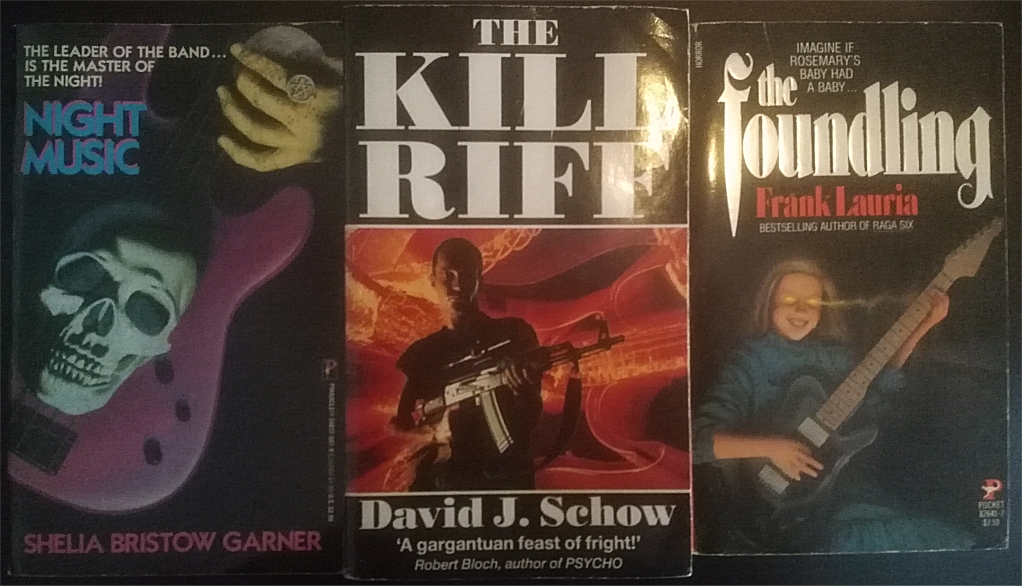
horror rock novels

Henry James was a Dry Shite

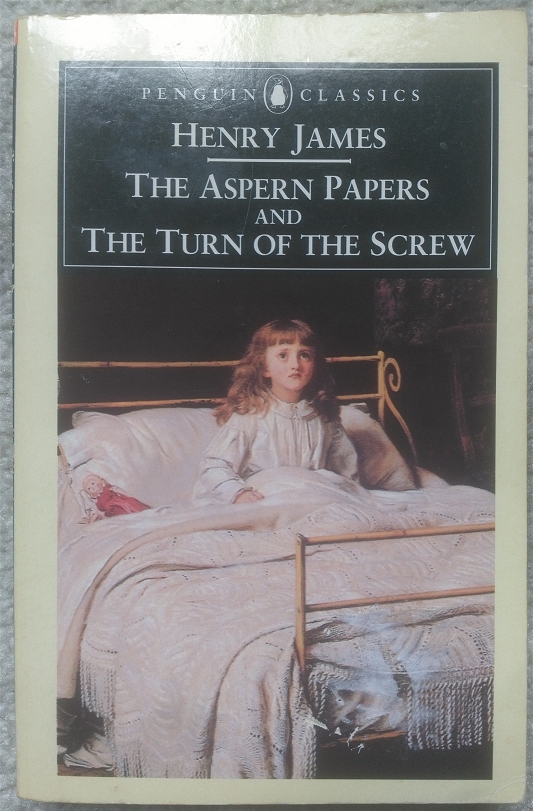
turn screw aspern james henryThe Aspern Papers and Turn of the Screw – Henry James
Penguin – 1984

I first read Turn of the Screw five years ago. I remember it taking a far longer time to get through than I had expected. While it’s only a novella, the text is remarkably dense, and I frequently needed to reread paragraphs to understand what they meant. I have worked as a teacher/tutor for many years, and rereading Turn of the Screw felt like an exercise in professional development for me; it allowed me to feel the confusion that a student goes through when they are confronted with text that is above their reading level. By the time I got around to rereading the book, I had mostly forgotten what happens in the story, so it was just as difficult the second time around.

Many, if not most, reviews of Turn of the Screw remark on the frustrating complexity of James’ sentence structures, and I have read several reviews that claim that the complicated text adds to the story’s atmosphere of claustrophobia and confusion. It’s an interesting technique, but I didn’t enjoy it. The story here is grand, but the writing ruins it.

Also included in this book is The Aspern Papers, another novella by James. This one is about a man trying to get at some papers that are in an old lady’s closet. It has no supernatural element to it, but I enjoyed it more than Turn of the Screw.

ghost stories henry james
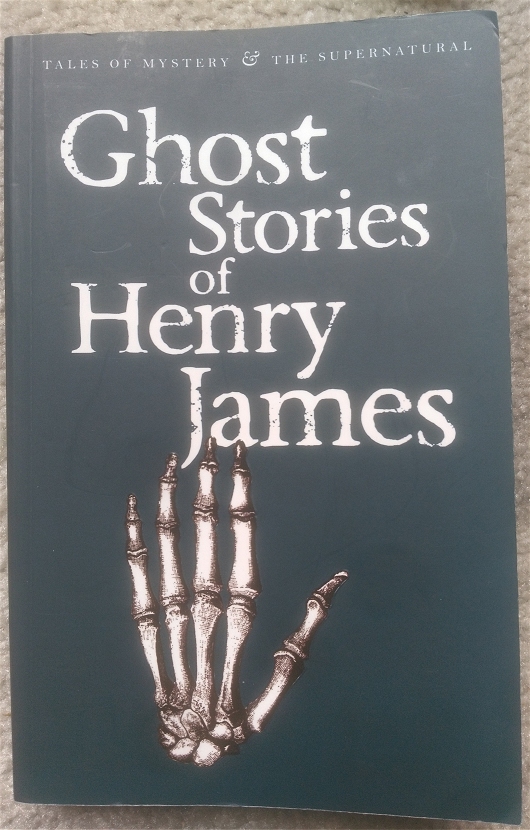
Ghost Stories of Henry James
Wordsworth – Supposedly published in 2001

Last time I was home, I went to one of my favourite book shops and bought a bunch of books from the Wordsworth Tales of Mystery and the Supernatural series. I had picked 5 out, but if you bought them in groups of 3, they were cheaper. This collection by James was the only one that I didn’t already have and I had forgotten how unpleasant reading him was, so I threw it in.

These stories are generally fairly crappy. The Ghostly Rental was probably the only one I actually enjoyed. The Romance of Certain Old Clothes was readable, but much like the exceedingly boring Owen Wingrave, the ghost bit only happens on the very last page. The Private Life and the Jolly Corner are based on interesting ideas, but they’re not spooky stories. The Third Person is one of the most boring, shitty, pooey-bum-bum stories I have ever read. This collection also contains Turn of the Screw.

These aren’t ghost stories for people who like ghost stories. They are stories that feature ghosts for people who like imagining that they’re clever and smelling their own farts. I really, really hope that I never have to read anything by Henry James ever again.

M.R. James > Henry James x 1000.

Ghoul – Michael Slade

ghoul michael sladeGhoul – Michael Slade
Signet – 1989 (Originally published 1987)

I bought this book at a library booksale last year because it had a spooky name and it only cost 25 cents. I don’t think I have ever made such a fortunate purchase.

After a prologue which describes a gang of teenage boys burying their friend alive while listening to Black Sabbath and talking about H.P. Lovecraft, I put the book down and took a deep breath. A novel about teenage mischief, heavy metal, and classic horror? This had to be awesome.

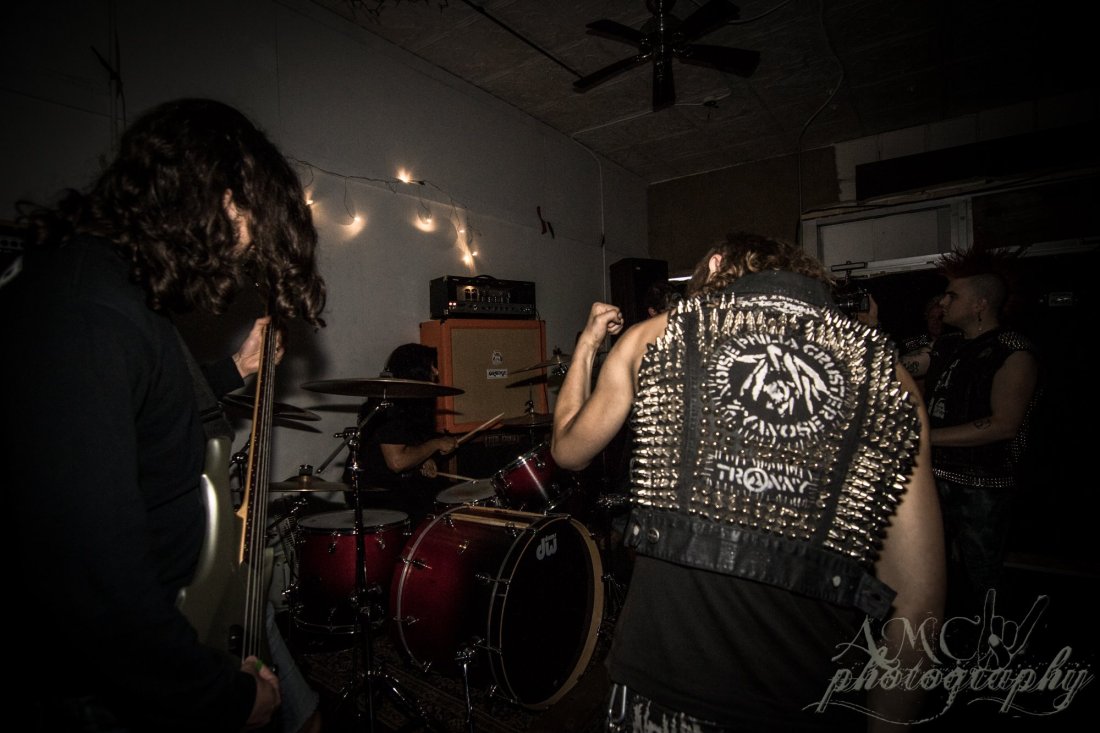
I read a few chapters more. After some remarkably graphic violence, the narrative moves to a rock club in Vancouver that is “Situated on the main floor of a rundown skid row building” with “no sign to mark its presence for those not in the know”. Now, most of my readers won’t know this, but aside from reading and reviewing spooky books, my other main hobby is attending and playing concerts in unmarked, rundown buildings on Vancouver’s skid row.

13730910_10157361294280724_6129985222740697217_o
At this point, I wondered how a text, written by another person, could be so specifically relevant to my interests. I first considered if the author had stalked me and then gone on to write a book tailored to my tastes. I was only one year old when the book was written though, so this seemed unlikely. No, this book was not written for me to read. I was born to read this book.

The rest of the novel is a fast paced thriller about a collection of insane, depraved murderers, at least two of whom play in a Lovecraft themed rock band named Ghoul. The horror here is of the bloodthirsty, slimy, two-headed freak locked in a cage variety. I’d be afraid to call anything splatterpunk because I’m not really sure what that means, but this book defines itself as such, and the label seems quite fitting. It has guitars, mohawks and a lot of blood and guts. I’ve read books that describe horrendous acts of violence before, but don’t think I’ve read anything quite as grossout gory as this. One scene describes a man disemboweling another individual, cutting a hole in his skull, debraining him, and then proceeding to fill the victim’s cranial cavity with his own internal organs. Cool.

Just because a book is about cool things doesn’t mean it’s going to be a good read. Ghoul, however, is a mighty enjoyable novel. It’s extremely well researched and plotted out. The authors are a pair of lawyers who specialise in the criminally insane. They are also clearly fans of classic horror. One wouldn’t have to be a horror buff to enjoy this novel, but I was glad to be able to understand the bits about Lovecraft’s stories. The only aspect of the book that I felt the authors could have researched more thoroughly was rock and roll stuff.

First off, Ghoul’s music and how it sounds isn’t very important to the book at all. Whether it’s punk rock, goth rock, heavy metal or some other genre of cacophony is unclear. I’m going to refer to it as heavy metal based on other bands that are mentioned in the book.

Iron Maiden, Alice Cooper, Motley Crue, Twisted Sister, Black Sabbath, Grim Reaper and AC/DC are Ghoul‘s musical influences. Aside from Grim Reaper, these bands are all household names. Heavy metal fans might listen to all of these groups, but within any underground metal scene, it’s standard practice to champion lesser-known bands. Bands who play in the venues that Ghoul play in and who act like Ghoul usually make a point of letting people know how esoteric their tastes in music are. I know this book was written more than 30 years ago, but even at that stage Venom and Mercyful Fate had put out several albums each and been brought to the attention of the public by the PMRC, the Misfits and Grave 45 had put out a bunch of horror themed punk records, Metallica had recorded and released several songs about Lovecraftian entities, and Death and Black metal were starting to take off. Instead of researching and referencing this stuff, the authors chose to go backstage at a Motley Crue concert for their insight into rock’n’roll. The novel was presumably written to appeal to lots of people and referencing bigger bands might make it more accessible to the masses, but seeing that the authors worked pretty hard to make the detective stuff believable, I thought they should have put a bit more effort into the rock’n’roll side of things. The version of rock that they present is the imaginary rock of which evangelical parents are afraid.

At one point, they refer to Highway to Hell as a Grim Reaper song. Grim Reaper have lots of songs with Hell in the title, and I wouldn’t hold it against anyone for getting them mixed up, but confusing Grim Reaper and AC/DC is a sin against rock.

That being said, some of the trends in heavy metal that these authors imagined soon became reality. It was only a few years after the publication of Ghoul that the shit hit the fan in Norway’s Black Metal scene and heavy metal band members started murdering people and burning buildings down. Also, Lovecraft’s mythos has become an extremely popular topic for death metal bands to write songs and albums about. Most prophetic of all though, would be the authors’ idea of a band called Ghoul that put on elaborate stage shows and sing about death and violence.

Ghoul (the real ones) are a metal band from Oakland that have been together since 2001. Like the Ghoul of the novel, this band also have a hyper-violent horror theme going on. I can’t say for certain how deliberate their choice of name was, but I can’t help but presume that at least one of the members has read the book. Their song lyrics are about sewer dwelling maniacs (Sewer Chewer), axe murders (Maniaxe, Bury the Hatchet), catacombs, crypts, graveyards (Into the Catacombs, Forbidden Crypts, Graveyard Mosh) and torturing freaks (Mutant Mutilator). These are all important motifs in the book. The band even have an album (and song) called Splattertrash. A few years ago, I actually saw the real Ghoul playing a show in a rundown building on Vancouver’s skid row, almost exactly like the Ghoul in the novel.

3973767

Written in the era of Video Nasties and the PMRC, Ghoul’s stance on rock music and horror is a bit confusing. One would think that the authors of an extremely gory, horror novel would do what they could to defend their creation, but the text seems to imply the potential culpability of both horror and rock. Not only are the dangers of reading horror fiction and attending rock concerts discussed at length and demonstrated by the characters, but a list of actual rock’n’roll-related acts of violence is given at the end of the book. Were the authors just trying to give their novel an extra edge by making it seem dangerous, or did they actually write it in an attempt to encourage violent acts? The latter option might seem ridiculous, but remember that the authors were both criminal lawyers. By encouraging acts of violence, they’d be setting themselves up to get more work.

I have never been so pleasantly surprised by a book. Ghoul is an awesome, awesome book, and I recommend that you read it immediately.

Thomas Carnacki, Ghostfinder General

carnacki ghost finder hope hodgsonThe Casebook of Carnacki the Ghost Finder – William Hope Hodgson
Wordsworth Books – 2006 (First published in 1910)

This is a collection of short stories about a detective who specializes in the paranormal. The original edition, published in 1910 was limited to 6 stories, but most later editions include all 9 of the Carnacki tales that survive. Did Hope Hodgson write more? It seems as if he intended to; some of these stories contain references to other adventures that were never documented.

While I was reading the first story, I realised that the Duke De Richleau from Dennis Wheatley’s novels must have learned some of his techniques from Carnacki. I afterwards read the introduction to this Carnacki collection and saw that the editor had noticed the same thing. (Wheatley later confirmed the influence of Carnacki on his own writing by including the detective’s adventures as the fifth installment of his Library of the Occult series).

These tales reside in a bit of a strange place in the land of horror fiction. Most of them are fairly straightforward ghost stories, but there are these little descriptions here and there that seem more Lovecrafty than M.R. Jamesy. The last story, The Hog, was frustratingly drawn out, but it portrays a universe that is not only apathetic towards human life but actually hostile to it, and it’s little ideas like this that make this collection worth reading. You’ll be reading what seems to be a run of the mill ghost story and then come across a line or a paragraph that’s worded in such a way that it not only conveys the characters’ terror but actually imposes it on you.

While not absolutely brilliant, this is rather enjoyable stuff. Carnacki’s unique ghost finding arsenal is made up of an interesting mix of rituals, strange grimoires and modern technology, including an electric pentacle! I’ve mentioned similarities to the works of James, Lovecraft and Wheatley above, and I reckon that if you like the work of those authors (and who doesn’t?), you’ll probably enjoy this too. I also got a serious bang of Bulwer Lytton’s The Haunted and Haunters off some of these tales.

This book is perfect for reading on the bus into work or listening to while making dinner. The first 6 tales are available as an audiobook at librivox.com. I know I’m often a bit nasty about the lovely people on that site who dedicate their time to creating these audiobooks for free, but holy God, this one was something else. Two of the Carnacki stories are set in Ireland, and one of them features several lines of dialogue from an Irish character. This dialogue is written phonetically so as to give the impression of an Irish accent. Hope Hodgson was English, so he was probably familiar with Irish accents, and if you were to read the aforementioned dialogue aloud, it would sound fairly accurate. Unfortunately, the guy who read it for the audiobook tried to put on an Irish accent while he was reading the phonetic transcription of that accent. The result was an accent so stupid sounding that I had to turn to the physical book to finish the story. I simply couldn’t understand him. It was like a guitar player putting a guitar through two of the same distortion pedal. Add to that the fact that this lad’s Irish accent is a mix of Sean Connery and Count Dracula. Check it out:

Embarrassing stuff.

While my edition of the book gives 2006 as its publication date, I believe it’s a bit newer than that. The Wordsworth Tales of Mystery & the Supernatural used their ugly old covers until at least 2010. The only complaint I ever had about this series was the awful cover art, and I have to say that these newer editions look much, much nicer. I’ve reviewed 9 of this series in total, and I have another 10 on my shelf. I’m sure I’ll acquire more at some stage in the future too. I love these books. They’re always cheap and nearly always amazing reads.

If you’re interested in reading more about Carnacki, check out this far more insightful post on this collection.


Twisted – Sue Hollister Barr

sue hollister barr twistedTwisted – Sue Hollister Barr
BMI – 1992
Twisted is, perhaps, the worst novel I have ever read. It is boring, disjointed, stupid and pointless. In an interview, the author herself referred to this novel as a “fucking piece of shit” and admitted that it’s padded with “formless, utterly embarrassing mush.”

This is a book about a group of hippies who find themselves travelling across America in a van together. On their voyage, they realise that they were all family members in a past life. The Carnes, the family they belonged to, were particularly dysfunctional, so dysfunctional, in fact, that their issues start to bleed into their next lives.

Here are the problems with this book:

  1. The plot makes no sense. The characters are thrown together in a frustratingly lazy way. I get that the author wanted to capture the care-free, happy-go-lucky atmosphere of the flower-power generation, but the idea of a group of 10 random hippies abandoning everything in their lives at the drop of a hat to form a band and travel cross country is dumb and cringey. As the book goes on, it becomes apparent that they were actually drawn together by some paranormal force, but that makes no sense either. Is it the wickedness of the Carnes or their family ties that brings them back together in their next lives? Either way, the reader is expected to swallow a remarkably narrow version of reincarnation.
  2. There are far too many characters in the book. They’re all dull, dislikable stock characters; there’s the junkie, a token black guy, the crazy one, the witchy one, the gay one… Also, each of the 10+ main characters has at least two alter-egos. The only remotely enjoyable part of the book was when they die.
  3. “Far out! Like, the dialogue is totally excruciating, man.”
  4. The author seems unsure as to what horror is. Some scenes are surprisingly gory, but this is basically a shitty thriller that is confused by the ridiculous paranormal element of the plot. Yes, there is an element of the supernatural here, but it adds absolutely nothing to the suspense of the story. I honestly believe that this book would have been much more tolerable if it was a more straight forward murder-mystery. The author has acknowledged that she was not a horror fan at the time of writing the book and that she only wrote this book for money. She admitted, “When I was teaching writing, I would tell my students that the one genre I couldn’t cover was horror.  I morally objected to it.  I thought it was sick and I’d never read it.” Ugh. How annoying! I am absolutely convinced that I could write a far better horror novel than this.
  5. Twisted is poorly written. Not only is the plot stupid, it’s also poorly executed. The narration goes back and forth in time and flips between the perspectives of the 20+ characters. The stuff in between the murders is horrendously tedious too. Absolute garbage. The author has admitted that the publishing company demanded an extra 50 pages to be added to the book after she had submitted it. I honestly believe that her first submission was probably a lot more enjoyable.
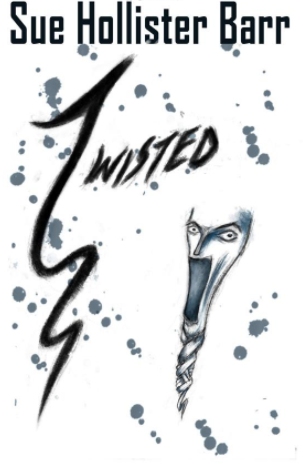
  6. The cover is pretty cool but very misleading. There is no angry green twisty man in the book. Also, the tagline “The Sins of the Father Never Die” is dumb.

I actually feel a bit bad about this review. I don’t have any qualms about attacking the work of non-fiction authors because non-fiction should be able to withstand attacks, but attacking the product of another person’s creativity (that is being presented as such) feels a bit mean, and as far as I can remember, this is the first time I’ve really done so on this blog. Then again, this book was so bad that I feel that I would be doing the world a disservice by not expressing how terrible it is. The fact that the author has also admitted that the book is awful makes me feel a little better. As a matter of fact, she was so unhappy with it that she actually self published a new, apparently much-improved, edition of the book a few years ago. I definitely won’t be checking it out, but it probably is better than the edition I read. The edition that I have comes from BMI books, a scam company that was apparently created so that the publishing house could get out of paying the authors any royalties, so if for some reason you were curious about reading Twisted, I would suggest buying the new edition.

twisted new cover

The new edition also has a much improved cover; the angry green face on the original edition has transformed into a surprised shoelace. Priceless.


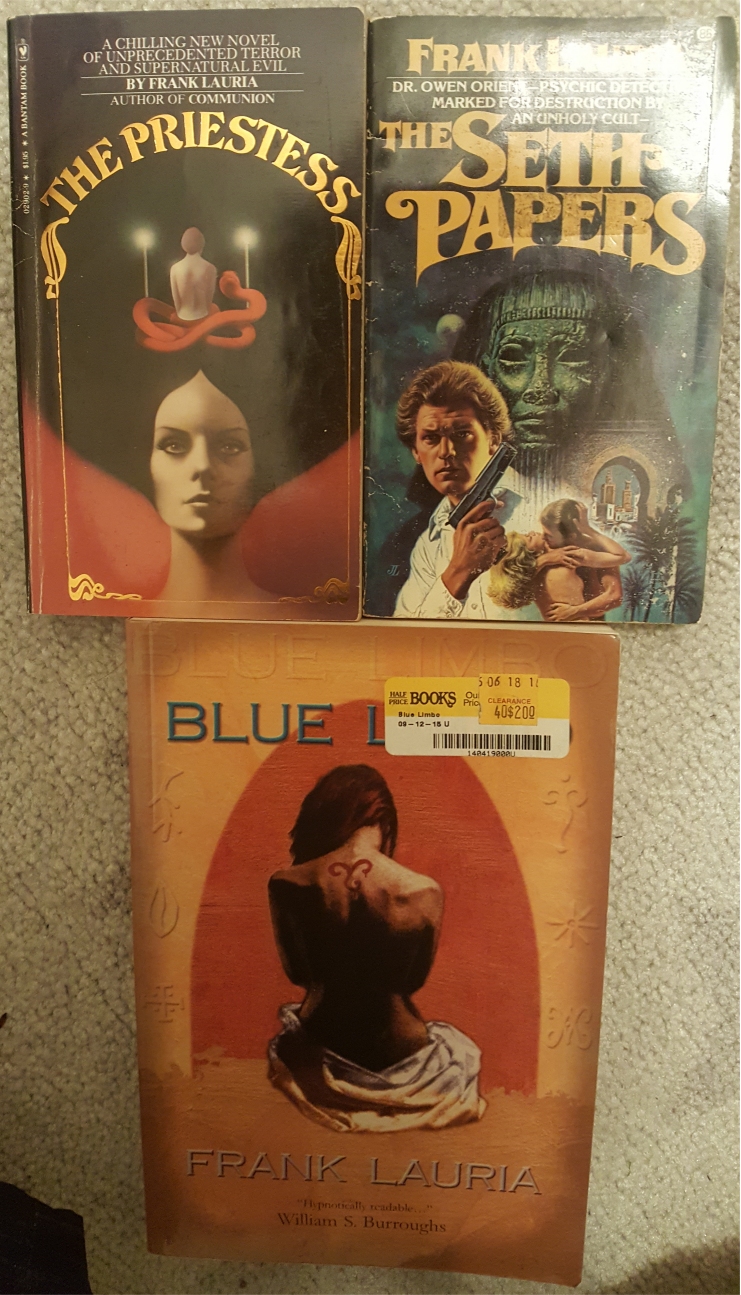
The Doctor Orient Series, Books 1-4

baron orgazIn March 2016, I was working just around the corner from my house. I came home at lunch one day, and as I was sitting down, waiting for the coffee to brew, I checked facebook. Will Errickson had posted a photo of a book featuring the above image on its cover. Let’s just take stock of the elements in that picture: a skull, some ritual candles, a semi-naked woman and a swastika. Needless to say, I had ordered a copy of the book, the intriguingly titled Baron Orgaz, before I had poured my coffee.
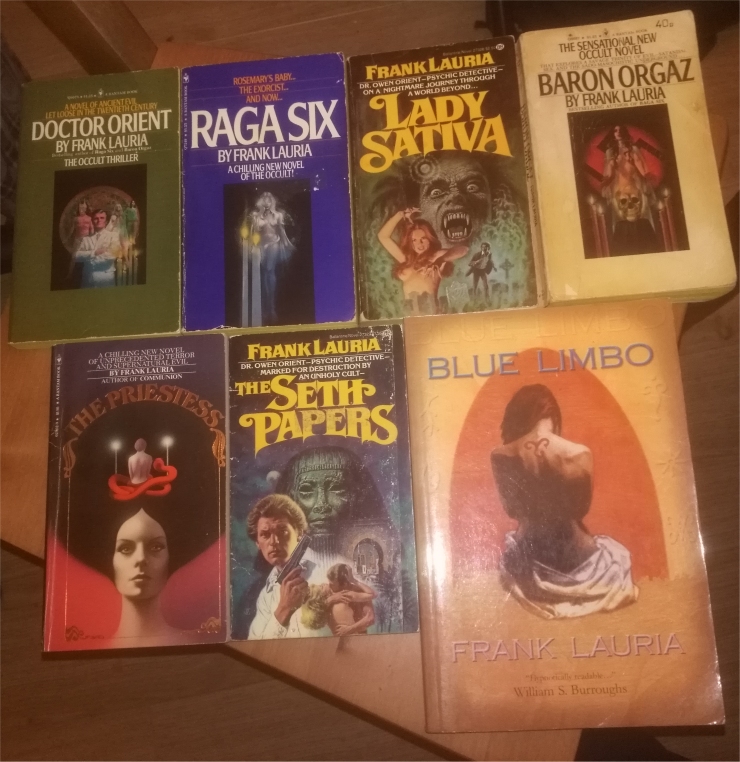
It was only after ordering that I realised that this book was part of a series. Now, as my readers well know, I don’t like starting halfway through, so I spent a few weeks tracking down copies of the preceding books in the series. By the time I had got through the first novels and was finishing Baron Orgaz, I had ordered the rest of the collection.

doctor orient books

I’ve hemmed and hawed about publishing this post for a few months. I was considering finishing the entire series before posting, but I have a lot on my hands at the moment, and it’s going to take me quite a while to get through the remaining four novels. Here, then, are my thoughts and feelings on the first half of the Doctor Owen Orient series.

doctor orient frank lauriaDoctor Orient – Frank Lauria
Bantam Press – 1974 (Originally published 1970)

The first Doctor Orient novel seems to be a little harder to come by than some of the later entries in the series. While quite entertaining, it isn’t, in my opinion, quite as good as the books that follow it. Then again, if you were to imagine the series as one extremely long novel, this would serve as good introduction. You get to meet several of the characters who are going to pop up in later installments.

The most obvious point of comparison here would be the Devil Rides Out by Dennis Wheatley. Both books are about crime fighting occult experts doing battle with a black magician. The Duke De Richleau and Doctor Orient are both aided on their adventures by a motley crew of accomplices, one member of each group being temporarily led down the left hand path. The biggest difference here is that Doctor Orient is far less hesitant to use his own psychic powers than De Richleau.

The antagonist in this novel is a dodgy lad called Sesuj. He tries to use pop music as a form of mind control to bring young people over to Satan. Pretty cool stuff.

raga six frank lauriaRaga Six – Frank Lauria
Bantam Press – 1972

Raga Six impressed me. It kicks off with a pair of weirdoes who seem to be going for fairly similar approach to Susej from the first novel, but this turns out to be a false start. The real adventure kicks off when Doctor Orient starts working for a drug peddler named Cowboy and ends up in exile after a particularly sketchy transaction. He meets a really dodgy lad on a boat to Tangier and has a threesome with this chap’s wife and a model. People start dropping off, and you get the idea that there’s at least one vampire involved.

Given that this is a book filled with sex and the undead, the writing is surprisingly good. The Doctor is a sensitive man at the best of times, and I enjoyed the existential crises that he goes through in this book. I was kept guessing right until the end of the novel too. It took me 5 months to start on Raga Six after finishing the first novel in the series, but it only took me 6 days to move onto Lady Sativa after finishing it. Raga Six might be the best known entry in the series.

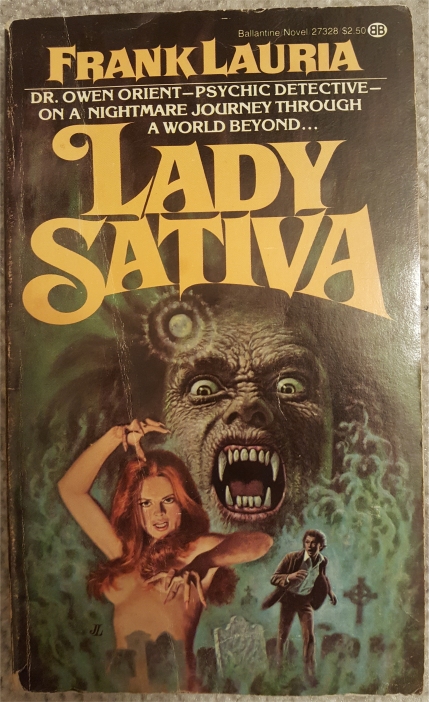
lady sativa frank lauriaLady Sativa – Frank Lauria
Ballantine Books – 1979 (Originally published in 1973)

This one is about werewolves. It had all the sex, seances and outdated slang that I’d come to expect from a Doctor Orient novel. It contains one scene in which an irritable Doctor Orient unwittingly invites himself to a threesome. Once he finds out that another male is going to be involved, he violently assaults said male and calls him a “Gaylord”. LOL. I was expecting this one to go in a similar direction to Raga Six, but it doesn’t really. A solid entry.

baron orgaz frank lauriaBaron Orgaz – Frank Lauria
Bantam Press – 1974

Nazis, extreme sadomasochism, black magic and tennis… Really, need I say more?

Well, the only other thing that might be worth mentioning is that this very much is the fourth book in a series. While a person might well be able to enjoy the work entirely on its aforementioned merits, most of the main characters have previously appeared and played important roles in the series, so I would strongly recommend reading the first 3 books before this one.

doctor orient later books
I have these ones too, but I haven’t got around to reading them yet. Not pictured is Demon Pope, the last book in the series.

Overall, the Doctor Orient series is awesome. There are loads of cool little references to actual grimoires and conspiracies scattered throughout these books. The author, Frank Lauria, knew William Burroughs and Jack Kerouac, he sings in a rock band, and he’s not a fan of Donald Trump. Also, his books are filled with sex, drugs, rock’n’roll and devil worship. Deadly. I’m looking forward to reading the rest of this series.

2019 Edit: I finally got around to reading and reviewing the second half of this awesome series.

How now, you secret, black and midnight hags? The Demonology of King James I

macbeth demonology jamesThe Demonology of King James I – Edited by Donald Tyson
Llewellyn Worldwide – 2011 (Originally published 1597)

King James (yes, the Bible lad) was a dirty cunt. Not only was he the British monarch responsible for the plantation of Ulster, he was also an insane person who thought that the devil was on a personal vendetta against him. His ludicrous beliefs led to changes in the anti-witchcraft laws of his day, and these changes were responsible for the deaths of hundreds of innocent people.

It all started when the boat that was carrying his fifteen year old Danish bride to England was caught in a storm and forced to stop off in Norway. He decided to head over there himself to escort her home, but along the way he also encountered shitty weather. After meeting his child wife in Norway, the couple headed back to Denmark, where James heard tell that two witches had confessed to causing the storms that had hindered him so.

When he got back to Scotland, he heard stories about local witches that had originated in the confessions of a woman named Gillis Duncan. Gillis was a maid who had been spotted leaving her master’s house during the middle of the night. The master of the house was upset by this and he took it upon himself to torture poor Gillis until she admitted that she was a witch. Her confessions implicated dozens of others, and this led to the North Berwick Witch Trials that were recounted in the 1591 pamphlet titled Newes from Scotland.

6 years later, James wrote his Daemonologie (or Demonology). It’s a treatise in the form of a Socratic dialogue on the existence of witchcraft, and, in truth, it’s very boring. James firmly believed in the existence and absolute guilt of witches, and while he was certainly well read, his reasoning is tedious, flawed and often ridiculous. The text is filled with all of the Biblical references and victim shaming that you’d expect from a witch hunting manual. James believed that God would not allow innocent people to be punished for witchcraft, so it was better to accuse too many than too few. Take a moment there to think about how horrible and dangerous that idea is… All together, Jimmy comes across as an arrogant, know-it-all, dickhead, and reading this text was a pain in the neck.

daemonologie

That being said, this edition of the work, translated, compiled, edited and introduced by Donald Tyson is really nice. It includes both the original and modernized versions of Demonology and Newes from Scotland, and the annotations are very comprehensive. I’ve seen other, fancy hardback editions of Daemonologie, but this is definitely the one I would recommend for anyone who actually intends to read and comprehend the text. I’m planning on reading more of Tyson’s work in the near future.


I’d like to think that this won’t have been the first story of witches fucking over the king of Scotland that my readers have encountered. James had been King of Scotland since 1567, but he was coronated King of England in 1603. It was three years after this that Macbeth was first performed. James was supposedly a patron of Shakespeare, and some people believe that Shakespeare actually wrote Macbeth for King James. James apparently believed that he was a descendant of Banquo, and although Banquo meets with a grisly end, you’ll remember that his descendants ascended the throne and ruled for generations.

When it comes to the history of horror fiction, I don’t think too much attention can be paid to Macbeth. It’s filled with decrepit castles, frightening visions, witches, ghosts, demonic apparitions, murder and evil. Also, it’s difficult for the modern reader to imagine just how scary this play would have been to an audience of people who were completely convinced in the existence and power of witches. It’s literally my job to babble on about Shakespeare, and because I don’t yet get paid for writing this blog, I’ll hold off from saying much more about him for now.

osculum anus holeKiss the Ring

I expected my life to calm down a bit after Christmas, but I feel like I’m busier than ever now. Hopefully I’ll get a few more posts out soon.

Frankenstein’s 200th Birthday

shelley frankenstein 1818Frankenstein (1818) – Mary Shelley

Not really sure where to start or what to say with this one. Published 200 years ago today, Frankenstein, or the Modern Prometheus is one of the most important horror novels ever written. It’s also one of my favourite books. I first read it years ago, but that edition was the more widely published 1831 version of the text. After finishing the book, I read that the original 1818 text was in some ways better or more authentic or something. I ordered a copy, but it remained on my bookshelf for so long that when I finally picked it up and read it, I couldn’t tell how it was any different. You can find the differences discussed elsewhere online, but I can only say that I enjoyed both versions immensely.

I recently reviewed and complimented Percy Byssche Shelley’s Zastrozzi for it’s eponymous villain. Mary’s monster is, in ways, just as diabolical a fiend as her husband’s, but he is a hundred times more tragic. He’s simultaneously more and less human than Zastrozzi; he may not have been created in God’s image like the rest of us, but his plight is nonetheless relatable. Who amoungst us has not, at some stage in their  hateful lives, looked towards the heavens with dismay in their hearts and cursed God for creating man only to abandon him immediately thereafter? Is this tale not a parable for all human existence? Victor Frankenstein, the creator, is very much the villain in the 1818 text. He’s the idiot that brought the monster to life and then failed to take responsibility for his actions.

This is a great story and an exciting read, but it’s also one that makes you think. What do Frankenstein and his monster represent? Is the book an existential metaphor? As it is perhaps the first science fiction novel, what can Frankenstein tell us about its era’s feelings about scientific advancements? What messages should modern scientists developing A.I. take from this tale? Let’s also remember that Mary Shelley’s mother was one of the most important feminist thinkers in history. Can we reasonably avoid analyzing this text through a feminist lens? Could Frankenstein’s monster represent the corrupted femininity created and enforced by Georgian males? It’s rare that a horror story will raise as many interesting questions,but fortunately for you, I won’t attempt to answer any of these questions here; I’ll leave that to the high school students fortunate enough to read this book in English class.

I have finally reviewed all of the books from Paul Murray’s list of the greatest Gothic novels. I don’t think it was a very accurate list at all. Anyways, have a good new year.

IMG_20171225_103836.jpg(I didn’t have my copy of the book handy when this post was first published, so I drew this little picture of Frankenstein’s monster for the post image.)

Video Nasty and Year in Review (2017)

2017 was a pretty good year for me. I got a much better job, became a dad and went back to university (again). These changes, while mostly enjoyable, meant that I didn’t get to review or read as many books as I have in the last few years. However, I feel that the quality of this year’s posts has been of a decent standard. Here’s the best of 2017.

liber falxifer10. Liber Falxifer 
A heavy metal grimoire of dark black magic.

halloween and satanism9. Halloween and Satanism
Anti-Semitic Christian bullshit propaganda for assholes.

tarry thou till i come croly8. Tarry Thou Till I Come 
Including it here because, as far as I know, this is the only review of this book online. The tale of the Wandering Jew.

arktos joscelyn godwin7. Arktos
Some bullshit about Donald Trump. A very cool book.

holy-blood-holy-grail6. Holy Blood, Holy Grail
Jesus had a kid, and Hitler was a descendant of Dracula.

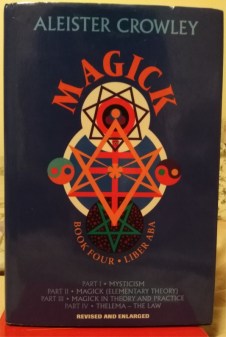
crowley book 45. Aleister Crowey’s Law and Lies
Getting to grip’s with Aleister Crowley’s bullshit.

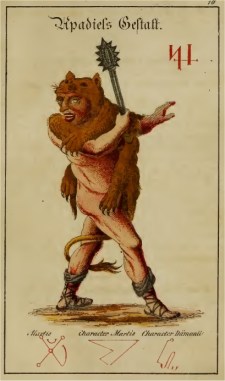
faust demon 144. The Books of Faust
This one took a lot of work.

red book of appin scarabaeus3. The Red Books of Appin
Myth busted.

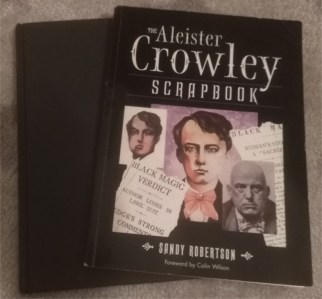
the aleister crowley scrapbook2. The Aleister Crowley Scrapbook
An interview with a Crowley expert.

robert anton wilson the sex magicians1. The Sex Magicians
My contribution to the conspiracy theories about the conspiracy theorist.

Well, there you go: Nocturnal Revelries’ best of 2017. (Just to remind you, as with last year, the links in this post are to the best posts of the year, not the best books that I read.) This blog has been going for nearly 3 years now, and I’ve reviewed about 170 books so far. I recently added an index page to the site in case anybody is looking to see if I’ve looked at a specific book or author.

Thanks for all of the support and interest. Remember, this blog has twitter and facebook pages to help keep you up to date with my ramblings. I’ve a few posts planned for the near future, but who knows what’s going to end up featured here in 2018. I’m going home for Christmas for the first time in years too, so I doubt I’ll post again until January. As always, you can email me with recommendations, questions, comments or threats. If you currently work in retail, know that my heart bleeds for you. For everyone else, enjoy the time off work, and don’t forget to go to mass on the 25th.

The Conspiracy Against the Human Race

conspiracy human race ligotti
The Conspiracy Against the Human Race – Thomas Ligotti

2010

I saw this book recommended on a forum a few years ago and put it on my to-read list. A while later, I saw articles online about how the writer of the first season of True Detective had ripped it off. I loved that show, particularly the parts that were supposed to have been taken from this book, so this made me want to read it even more. It only took about 4 years for me to work up the courage to pick it up. I had a pretty good idea of what it was going to contain, but it wasn’t its infamous negativity that was putting me off, it was the fact that it is a book of philosophy.

I don’t like reading philosophy anymore. I occasionally pick up some Plato just for the fun of it, and I have been known to giggle at Schopenhauer and Neitzsche’s aphorisms, but I’m not really interested in their fiddle-faddle arguments about the will and all that crap. I don’t mind a philosophical novel, but books of pure philosophy often seem to require more effort than they’re worth.

That being said, there were a few things about this book that made it seem more appealing than other works of philosophy. It was written by a writer of horror fiction, and the philosophy it propounds is one of extreme pessimism, so it’s basically doom metal in the form of a book. For some reason, probably December’s festive cheer, I decided to inflict it upon myself last week.

Alright, so the main idea here is that consciousness makes life so unpleasant that it would be better not to live. I followed the author’s arguments, but they haven’t really changed my outlook on life. Maybe it’s the fact that I knew this guy is a horror writer and all of the references to Lovecraft in the text, but I couldn’t help but feel that the reality that he was writing about was a slightly different reality to the one I live in. As interesting as his arguments are, I was able to forget about them immediately after putting the book down in much the same way that I forget about the slime creatures from Stephen King stories when I go grocery shopping. In fairness to Ligotti though,  he does reference this as an inevitability of the horror of existence. If we were not able to distract ourselves and stop thinking about these issues, we’d probably all kill ourselves very quickly. Ligotti’s arguments are convincing; yes, we are fucked, but they’re not particularly effective; we’re fucked, but who cares?

The world is a generally shitty place, and human beings are making it much worse. I, for one, solemnly believe that we are living in end times. The atmosphere is heating up, the seas are turning into chemical cesspools, and it’s only a matter of time before we’re all wiped out by nuclear war, biological weapons, aggressive technology or something else that’s really unpleasant (I’m personally hoping for an Independence Day style alien invasion). Human beings are disgusting, selfish, idiotic creatures with barely any self respect or intelligence, and there’s far too many of us for things to turn out well.

Life in the near future will become insufferable, but as long as I can listen to rock’n’roll, troll the internet and drink tea, I’ll be grand. While I didn’t find the arguments hugely effective (probably because I already accepted most of them), I did actually enjoy reading this book. Unfortunately, as with the last book I reviewed, it’s the people that most need to read this that are least likely to bother with it.

Perhaps the greatest feature of this book is it’s quotability. It is absolutely filled with zingers. I’ll leave you with a few of my favourites:

“We can stomach our own kind, or just enough of them who either prove useful to us or are not handily destructible, only by the terms of the following contract: we will eat some of the other fellow’s excrement if he will eat some of ours.”

On why humans reproduce: “People  get  the  biggest  kick  out  of  seeing  the features  of  their  faces  plastered  together  onto  one  head.”

“Child-bearers, then, should not feel unfairly culled as the worst offenders in the conspiracy against the human race.”

“Let  it  be  said—human  beings  are the  most  retarded  organisms  on  earth.”

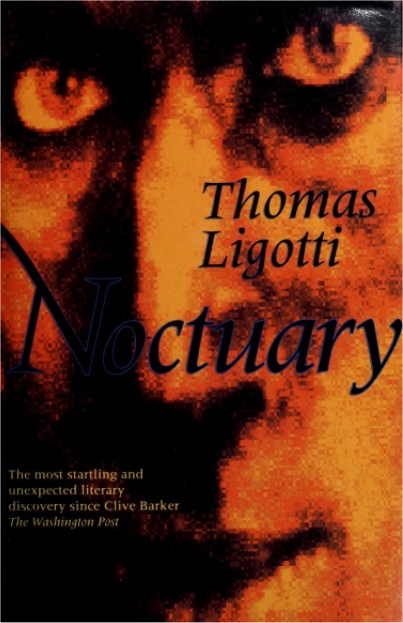
noctuary - ligottiThomas Ligotti – Noctuary
Carroll and Graf – 1994

I guess I can throw this in here too. I read this collection of Ligotti’s short stories a long time ago. I had an office job back then, and I would spend most of the work day reading. I’d download pdfs of books and rename them “factory standards.pdf” and upload them to google drive so that my employer wouldn’t know what I was up to if he checked my history. I also got reckless and read a few at openlibrary.org, including this one. Over the course of three days on the job, I managed to finish Noctuary, the Satanic Bible, Mount Analogue by Damaul and Look Back in Anger by John Osborn. This frenzied bout of reading was fueled by spite for my employer rather than enjoyment, and I can honestly remember more about the ensuing headaches than the texts themselves.  I rated Noctuary 4 out 5 stars on goodreads though, so it must have been pretty good.

I’d imagine this won’t be the last time Ligotti’s works are featured on this blog.