7 Footprints to Satan – A. Merritt

20160105_214024
Orbit/Futura – 1974

About a year ago, I was in a second-hand book-store when I came across a little black book titled 7 Footprints to Satan. It looked fucking deadly, but it was 30 dollars and I thought that was a bit much to spend on a book I hadn’t heard of. I came home and found a copy online for less than a tenner. The seller provided no image, and I presumed the cover would be the same as the one I had seen in the shop. Can you can imagine my absolute joy when the package arrived and I first saw the above cover?

Look at that thing! It’s some kind of snakey, arachnid alien holding some jewels, a bloody heart, and a hot drink. Book covers do not get much better than that! Now a person who has not read it might presume that the entity on the cover is the Satan referred to in the title of the book, but a person who has read it will have absolutely no fucking idea of what that thing is supposed to be. I doubt that the artist who drew the spiderbaby had actually read the book. Unfortunately, the story didn’t quite live up to the cover, but the cover lives up to itself even after having finished the story. Just looking at it now makes me want to read the book again even though I know how little they have to do with each other. Take a moment there to scroll back up and really soak that image in. Fucking deadly.

So, the book starts off with a lad being kidnapped by a bunch of weirdos who manage to convince the police that he’s a mental patient. They take him to a mansion owned by a chap who claims he is Satan, and that’s where the fun begins. Satan runs a weird culty mafia thing, and he forces his followers to gamble with him on his 7 footprints game. Like all good cult leaders, Satan is a massively tall freak with an enormous head who can’t be killed by bullets. He knows everything about everyone, and he has a seemingly infinite amount of power and wealth. It’s never made definitively clear whether or not he’s really the Devil, but every time that you think that he’s actually just a fat Chinese drug dealer who picked a cool name for himself, something weird happens that suggests he at least has some connection with the archfiend. It wouldn’t be accurate to describe this as supernatural horror, but it does feature individuals with superhuman strength,  doppelgängers, and even telepathy.

It also features plenty of casual racism, but this seems to have been a trend in early 20th century horror. I’m sure that there were plenty of racist authors outside of the horror genre in that era, but I think that the ways in which race is presented within the texts written to frighten people is quite telling of the real fears of the readers of the day. (Maybe some day I’ll write a blog post, if not a master’s dissertation, on that topic.) Some of the stuff in here is pretty rough; there’s a passage that reads:
There was a Hebraic delegation of a half-dozen on their way home to the Bronx, a belated stenographer who at once began operations with a lipstick, three rabbit-faced young ‘sheiks’, an Italian woman with four restless children, a dignified old gentleman who viewed their movements with suspicion, a dumb-looking black…
Pretty good right? Within the space of a single sentence he’s managed to be nasty about three different ethnicities. At another stage, he refers to a black guy as an ‘ape-faced monstrosity’, and at the point when Satan admits to having killed his daughters, the protagonist has an Ah-Hah! moment and explains that Satan must be Chinese. Oh! and there’s also a scene featuring the most offensive stereotype of all! In the second chapter, Officer Mooney appears. He’s a New York cop with a ridiculous Irish accent that is made visible in the text; “Sure,lad. Ye’re in no danger, I’m tellin ye. Would ye want a taxi, Doctor?’ (Admittedly, that accent is entirely accurate.) The thing is though, that I wouldn’t even call this is a racist book; it would be more accurate to call it a book with some racist parts, and that’s actually worse when you think about it. The racist parts don’t add anything to the story. I’m not saying that it would be excusable if the racism were a motivational force in the plot, but that would at least give an understanding of the author’s purpose. As it stands, it looks like Merritt was just throwing his bigotry in for a laugh. As I’ve said before, I wouldn’t pay for a book that contained that kind of nastiness if I thought the author was going to get any of my money, but my copy is second-hand and the author died 70+ years ago.

I read this in two sittings, and I had a dream about being stuck in Satan’s mansion after reading it. It definitely wasn’t what I was expecting, but I enjoyed it. Merritt wrote some other books with equally cool titles, and I doubt that this is the last book of his that will appear on this blog.


The World’s Most Famous Ghosts – Daniel Cohen

2016-01-01 20.13.02
Archway Pocket Books – 1985

I picked this one up as part of a collection a few weeks ago. I’m not really interested in ghosts, and I’m pretty sure this is a kids’ book, but its size and short chapters made this a perfect book for some potty-reading.

So this is a collection of accounts of different ghosts and hauntings, from the ghost of Abraham Lincoln to the Flying Dutchman. It’s written in the style of writing that 12 year olds are taught to use; every paragraph in here has an introductory sentence and a concluding sentence that rephrases the introductory sentence (Teachers call this the sandwich or hamburger paragraph.). What follows is an actual paragraph from the book:

The local people were very happy. They gave Dickie all the credit. They said he didn’t want noisy trains so close to his home. So he used his supernatural powers to stop them. Dickie is a great favourite.

Come on Daniel! You’re an author; please try to use some complex or compound sentences!

While it doesn’t contain the most eloquent writing in the world, it does contain some cool stories ( And I mean, the writing is bad, but it’s not Gothic Ghosts bad.). I like the chapter on Sarah Winchester, the millionaire’s mad widow who designed a mansion to house ghosts. There’s also the tale of the Baychimo, a ghost ship from Vancouver. I’ll definitely be doing a little more research on that one. The section I found most interesting though, was the chapter on the Screaming Skulls. These cacophonic crania are alledged to shriek whenever they are moved from their particular resting spots in certain  English mansions. I looked the skulls up, and I found the following on their wikipedia page:

skull
Whoever captioned that is a genius.

Like I said, I’m not hugely interested in ghosts, and I can’t say I believe in them, but three days ago, I spent about half an hour in the certainty that my home had been invaded by a poltergeist. My wife and I were sitting down, watching tv when our couch was lifted half a foot off the ground and instantly dropped back down. We don’t have any room-mates or pets, and nothing else in the room had moved. Neither of us had stirred, and our couch is right up against the wall, so we were able to deduce that whatever had done this wasn’t visible.  It wasn’t just a little bump either; this is a heavy couch, and it would take something very powerful to move it with the two of us sitting on it. Now I’ve spent the last two weeks reading books about ghosts and monsters, and so I immediately assumed that we were under some kind of infernal assault. I thought that I had perhaps awoken an evil spirit through my perusal of forbidden texts. I couldn’t sit back on that couch again without a weapon in my hand, and so I took down my trusty bullwhip from its mount and prepared to give 50 lashes to any intrusive ghoul! On seeing that I was ready for business, the spectre took his leave, and we were free to watch tv in relative peace. A while later, my wife checked facebook and saw that there had actually been an earthquake. I had never experienced an earthquake before, and so the thought hadn’t really crossed my mind. It was pretty funny to see how easily my scepticism was shaken in just a few moments of uncertainty.

Anyways, this book is alright. I wouldn’t recommend that you run out and buy a copy, but if you’re stuck on the crapper with nothing else, this will do trick. First you can use the ghastly tales to entertain your mind, and then you can use the nice soft pages to wipe your shitty rim.

Did Aleister Crowley Create Strange Lifeforms? Moonchild, The Magician and To the Devil – a Daughter

2015-12-28 02.38.38
It’s taken a while, but I’ve finally gotten around to writing a post about Aleister Crowley. It’s hard to know what to believe about the man; some see him as a prophet, while many others see him as a charlatan. In this post I discuss three different portrayals of Crowley. The three accounts come from novels, but the authors of these novels actually knew Crowley in real life. Their accounts are therefore infinitely more reliable than the many biographies written by people who never met him. I’ll start off with Crowley’s own novel.

2015-12-29 18.12.45
Moonchild – Aleister Crowley
Weiser – 1996

He may have been many things, but a good novelist, Aleister Crowley was not. This book is about a team of magicians who force a woman to undergo a ritual pregnancy to create a “moonchild” (Don’t ask what that is. I’ve read the book, and I don’t fucking know.). Another team of evil magicians, the Black Lodge, tries its best to stop this from happening. The premise is promising, but the plot reads as if it was made up as the book was being written; it starts off decently, but by the end it feels like Crowley has gotten bored with his own story and wants to be done with it as soon as possible. The ending is so unsatisfying that it makes the rest of the book feel like a waste of time. (Imagine getting halfway through Jaws and witnessing the characters giving up and saying “Fuck it. Let’s just move to Colorado where there’s no sharks.”) Also, the mix of fiction and mystical philosophy is tolerable at first, but unless you’re a fedora-wearing goth, it will get very boring very quickly.

All of the black magicians are based on people who Crowley disliked in real life. Edwin Arthwait is Arthur Edward Waite, the lean Protestant-Irishman named Gates is W.B. Yeats, and S.R.M.D is Samuel Liddell MacGregor Mathers. (All of these lads were Crowley’s former Golden Dawn buddies.) Cyril Grey and Simon Iff are a Stephen Dedalus/Leopold Bloom tag-team version of Crowley himself. The fact that the author put two versions of himself into his book might give you an idea of his inflated sense of self-importance.

There were two parts of this book that I really liked. The first is when a lad called Balloch calls a lad called Akbar a “piece of dirt”. The second is a depiction of a grisly necromantic ritual. I won’t ruin it for you, but it involves a lot of animal blood and the corpse of William Butler Yeats. The book is actually worth reading for that particular scene alone.

This is a novel, but I’m sure that some of it was based on personal experiences. The characters representing Crowley are the good guys, and their magic is limited to a little astral projection here and there, but Crowley himself could well have been privy to depraved rituals similar to those of the Black Lodge. From what I understand about the man, he revelled in the air of mystery that surrounded him, and this book serves to propagate that air.

I bought this book ages ago, and I was fairly disappointed when I got around to reading it. The plot is shit, the characters are annoying, and ultimately it serves as little more than an ego wank. Overall, it provides the least interesting account of Crowley out of these three books.


20151228_012546
The Magician – W. Somerset Maugham
Penguin – 1967

What a relief it was to read this book after slogging through Moonchild! This is a fast-paced, gothic thriller about an evil magician who does his best to fuck up the relationship between a young couple. He uses black magic to take control of the girl, and he forms despicable plans to use her in an unspeakable experiment. Maugham wrote this novel early in his career and later claimed to have completely forgotten about it. It’s not supposed to be his greatest work, but I fucking loved it. It’s genuinely exciting, it doesn’t shy away from violence, and it doesn’t get bogged down in tedious mysticism. The ending is fucking glorious too; I don’t want to ruin it for anyone who might read it, but holy shit, there are freaks in the attic!

So why am I including this book in this post? Well, the evil magician, one Oliver Haddo, is based on Aleister Crowley. In an introductory note, Maugham describes how he met Crowley in Paris and took an instant dislike to him. He claims that Crowley served as a model for Haddo, but that Haddo is not supposed to be a portrait of Crowley.

20151228_012606
This is the back cover of my copy of The Magician. Note that the magician is mistakenly referred to as Richard Haddo instead of Oliver. Oh Drat!

So what’s Oliver Haddo like? Well, one point that is made perfectly clear is that he is a plus-sized gentleman. References to his girth are made whenever he appears; indeed, the subtext of this entire novel reads “Aleister Crowley is a fatty-fatty-boombalatty”. What I found more interesting though, were the similarities between Haddo and Crowley’s own depiction of himself in Moonchild. In both books he is described as having a peculiar glare and the ability to enter or exit a room without notice. He is also depicted as being a very difficult man to read; he seems in both books to have a very odd, yet intriguing manner about him. Maugham claims that he was simultaneously interested, amused and repulsed by Crowley in real life.

Haddo’s most sinister plan is to use the blood of a virgin to create homunculi (little goblin people that are made through magic). Could the real Crowley have been so fiendish? Well, homunculi are also discussed at length in Moonchild. Crowley there puts forth a theory of reincarnation in which souls compete for human bodies. Every incarnated soul will have three forces acting on it: the soul itself, heredity and its environment. Souls should therefore look for bodies whose heredity and environments come with as few restrictions as possible. (By their nature, homunculi have no heredity and would therefore be freer than other bodies.) The aim of the magicians in Moonchild is to magically induce a scenario where a powerful soul will be convinced to enter the body of their ritual baby. This baby was conceived in the normal way and so can only be considered a homunculus in a very loose sense of the word. Conversely, Haddo’s creations in The Magician are homunculi in the very literal sense of the world. The unholy, fabricated mutants are probably the most fantastic element of Maugham’s story, but the real Crowley clearly had come across the idea in his own practice. Is it possible that he attempted to create life out of nothing? I see no reason to believe that he wouldn’t have tried to do so; it’s not like the guy was renowned for his ethical integrity.

Anyways, so transparent was Maugham’s use of Crowley as a model for Haddo that Crowley actually wrote a review of The Magician for Vanity Fair. He even signed the article as Oliver Haddo. His main criticism was that Maugham had plagiarized much of the material in his book. (Note that one of the sources he recognized as plagiarized was a passage on the creation of homunculi from Franz Hartmann’s book about Paracelcus!) This would be a fair complaint if The Magician was an essay, but the plagiarism doesn’t make the novel any less entertaining. Also, I probably wouldn’t have discovered this wonderful novel if it weren’t for the plagiarism herein. Crowley’s response to the novel and his further comments on Maugham are quite interesting; he gets a little bitchy at him, but he’s never really nasty. From the little I know about the man, I reckon he gained enormous pleasure from the fact that somebody had written a book about him, regardless of the content.

20151228_012632To the Devil a Daughter – Dennis Wheatley
Arrow – 1966

I read this book a year and a half ago, and as I remember, it’s the story of an evil priest called Canon Copely-Syle who is trying to get control of a girl to use her in his attempt to create a homunculus. The girl in question is a quiet, well-behaved young woman during the day, but at night, a satanic influence causes her to become a brazen little jezebel. This is a Dennis Wheatley novel, and so the victim is obviously saved by a team of upper-class Brits who have both served in the military and somehow amassed a wide knowledge of the occult. It’s also full of the casual racism and weird demons appearing out clouds of smoke that I have learned to expect in a Wheatley novel. This is total trash, but it is the exact kind of trash that I adore. My goodreads review for this book simply reads; “I can’t say this is one of the best books that I have read, but I can certainly say it’s one of my favourites. A damn fine novel.” There is a film that was loosely based on it too. It’s not nearly as good as the film version of The Devil Rides Out, but it’s definitely worth a watch.

It’s interesting coming back to this book after having read The Magician. When I started reading The Magician, I kept thinking to myself that it was like a more stylish  version of a Dennis Wheatley novel. Once I got a bit into it, I realized that it is pretty much exactly that. Wheatley draws heavily from The Magican for the plot of To the Devil a Daughter. He does it in a pretty cool way though. The girl in The Magician slowly goes from good to bad, but the girl in this one alternates between the two every 12 hours. And if Oliver Haddo is supposed to be an over-the-top version of Crowley, then Canon Copely-Syle is the same thing pushed 1 step further. There’s even a cool scene in this novel where the Canon discusses Crowley. He initially refers to him as a charlatan, but he is told a story that leads him to accept that Crowley had reached the magical degree of Ipsissimus.

I have another book about Crowley called Portable Darkness. I bought it because it was cheap and it features a foreword by Robert Anton Wilson. The foreword begins: “Everyone knows the sinister story of how Aleister Crowley and his son, MacAleister, went one dark night into a hotel room in Paris and howled within a magic triangle the nameless names that invoked the Devil. The results, we are told, were eldritch and abominable, as the late great H.P. Lovecraft would say.  MacAleister  was found dead of a heart attack.” (I have read other versions of this story in which the son’s head was either torn off or turned 180 degrees around by the demon.) Wilson notes that this story, which is accepted as true by many occultists, has its basis in the story told to the Canon in To The Devil A Daughter. Wilson therefore dismisses it as entirely fictional. Wheatley however, did not consider the story to be fictional at all. In his non-fiction work, The Devil And All His Works, he tells how he was quite fond of Crowley and how he would often have him over for dinner. This book was published 18 years after To The Devil A Daughter, and in it he also recounts the aforementioned story of the disastrous summoning ritual. Regardless of whether that story is true or not, you could say that it has been accepted into the official Crowley “Canon”. Hahaha, get it?

I have alluded to fact that I would not have discovered Maugham’s novel were it not for his plagiarism. It would be more accurate to say that I would not have discovered Maugham’s novel were it not for Wheatley’s plagiarism of Maugham’s plagiarism. There is a passage in Wheatley’s novel that discusses the succesful attempts of Count Von Küffstein and Abbé Geloni to create homunculi. Wheatley knew his stuff, and when I read this passage, I decided to try to find out whether it was based on anything or if it was directly from Wheatley’s imagination. When I looked up those names, I came across an almost identical passage from Maugham’s book. That passaged mentioned a mysterious text called Die Sphinx as a source. I looked that up, but I couldn’t find anything so I presumed that Maugham had made it up. I put The Magician on my to-read list and didn’t think much else of it. After I had read The Magician, I looked at Crowley’s review of it and noticed that the passage from Maugham’s book that mentions Count Von Küffstein and Die Sphinx was supposedly taken directly out of Franz Hartmann’s book on the Life of Paracelcus. Crowley also alludes to the improbability of Maugham having made his own translation of Die Sphinx, and that made me reconsider the existence of such a text. Well, I found a pdf copy of Hartmann’s book on the alchemist, and it mentions the publisher and other details of Die Sphinx. It is real afterall! It’s a bizarre masonic handbook by a guy named Emil Besetzny, and it contains an entire chapter on the lives of the Homunculi. After an intensive google search, I actually managed to track down a copy of the original work. Unfortunately, my German is extremely poor, and I can’t understand much of it at all. Here is a pdf copy of the chapter that deals with the homunculi. Anyone want to translate it?

Wheatley’s first hand account of the catastrophic experiments of Crowley suggest that he was willing to delve into the diabolical. Also, the fact that Crowley knew of Die Sphinx supports the idea that he might have tried to create his own homunculi. These facts, along with Maugham’s fictional accusations and his own willingness to discuss the topic, suggest that it is almost certain that Aleister Crowley attempted to create unhallowed bastard lifeforms. The only question remaining is whether or not he succeeded…

2015-12-30 22.30.04
I gave it a go myself; these boys are coming along nicely!


The Outer Space Connection – Alan and Sally Landsburg

2015-12-19 20.45.04
Bantam Books – 1975

Well, here we go again; another dumb book about ancient aliens. This one is really bad too. It’s based on the making of a film that was itself based on this book. Does that sound awkward? Yeah, it is. To get the full picture, you really have to watch the movie too. (Don’t worry; it’s online.) The soundtrack is fucking awesome, and the guy from the Twilight Zone does the narration. It turns out that Alan Landsburg worked on Erich Von Däniken’s Chariots of the Gods movie (also available online), and it shows. (In fairness, he openly admits that he has been “doing that Von Daniken stuff” at the end of this book.) The writing is laughable at times, it’s written as a first person narrative about the shooting of the film, but it has a real Da Vinci Code feel to it. My favourite line in the book comes at the end of a paragraph discussing the disappearance of the Mayan people:
“Instead, they retreated deeper and deeper into undesirable places, seemingly in fear of contact with any other people. Why, damnit, why?

So what’s being said in here that isn’t being said in the other stupid books I’ve reviewed on the same topic? Well, this one throws in the idea of cloning as an explanation as to how the aliens managed to get here. To plant the seeds of human life on Earth, the aliens would have to have travelled for hundreds of thousands of years. Cryogenics is ruled out as a means of prolonging life, and so in order for the crew to live through the journey, they would have filled up their spaceship with cannisters of human DNA, their own DNA at that. After a few years, one of the female crew members would impregnate herself with some of this DNA and give birth to a clone of herself. 25 years later, the clone would impregnate herself with yet another clone, and the process would be repeated until the ship finally reached Earth. Simple, right?

Landsburg doesn’t really go into detail on how this would work. Regardless of how large and advanced their ship was, I would imagine that the food supplies would have run out after a few thousand years even if the crew was made up of only a few people. I think the idea hinted at is that there is only one crew member alive at a time. (Quite similar to that movie Moon right?) So presumably the mother would have to sacrifice herself as soon as her clone/daughter was ready to take control of the ship. What would the clone do to the corpse? Well, considering the scarcity of meat aboard that spaceship, I reckon the only sensible thing to do would be to eat the body. Nothing should go to waste in space! Matrophageous spite; autophageous delight!

Ok, so that’s a nice bit of fantastic realism, but is there any evidence for this having happened? Of course there is! Scientists cloning axlotals [sic] found that the cloned versions of this variety of salamander end up with a slightly shorter body than the originals.  They are otherwise identical. That interesting fact is noted in one of the first chapters of the book, but its relevance isn’t made apparent until somewhere near the end. After the mention of this crucial piece of information, there are a bunch of chapters on the usual ancient alien garbage, including several discussions of the Mayans and their pyramids. The Mayans are praised as being far more advanced than any other peoples of their era. Mayan skulls with holes in them are presented as proof of their advanced medical skill. They  weren’t simply smashing each other’s heads open; they were removing cells from the brain to create clones! But wait a minute; how do we know that the Mayans were creating clones? Well, their skeletal remains suggest that the Mayans were fairly stocky.That is to say that they had shorter than average bodies, JUST LIKE THE CLONED OXLOTALS!!!
2015-12-19 20.49.02
Brain transplants in 2000 BC

There’s tonnes of other crap in here; lots of utter shit about pyramid power and human auras. The stuff on the Bermuda Triangle was pretty cool, but it’s written in an infuriatingly credulous way, just like everything else in this book. There’s also a discussion on Vladmir Demikhov’s experiments on dogs. I had heard of these before, but I’d not watched the footage online. Fuck, it’s absolutely horrible. I guess that’s what Roky Erickson was singing about.

2015-12-19 20.50.11
Pretty sure that’s just a monkey there mate!

I can’t say I’d recommend this book to anyone, but the movie might be enjoyable if you were high on drugs. I myself was not high on drugs when I watched it.

Necronomicon – Abdul Alhazred/Simon

2015-12-11 20.22.39
Avon – 1980

Well, I finally got around to reading it; the purported Necronomicon of the mad Arab, Abdul Alhazred.  If you haven’t heard of the Necronomicon, that means that you haven’t seen Evil Dead or read Lovecraft. It makes me sick to think of the uninitiated reading my blog, but luckily enough, this book contains a Most Excellent Charm against Hordes of N00bz:

Turn around, go, arise and go far away!
Your wickedness may rise like heaven unto smoke!
Arise and leave my blog!
Be commanded by Shammash the Mighty!
Be commanded by Marduk, the Great Magician of the Gods!
Be commanded by the God of Fire, your Destroyer!
From my blog depart in shame!

Now that only the adepts remain, let’s have a look at this ancient text of necromancy and forbidden ritual!

Well, it’s not really ancient, and the rituals aren’t as much forbidden as they are silly. There’s a million accounts of the story of this book online, but I’ll summarize for my readers. In the mid 70s, a lad calling himself Simon claimed that he had come across a copy of the Necronomicon, a fictional book that had appeared several times in the short stories of H.P. Lovecraft. Simon managed to get the book published, but he refused to ever go public, and nobody has ever seen the actual manuscript. Despite this, lots of people did and do think that this is the real deal. (There are some really embarrassing youtube videos of people defending the book’s authenticity.) I think the strongest evidence for the book’s legitimacy is actually how much it sucks; if I was going to write a fake Necronomicon, I would make it far, far nastier. This is basically a version of the Babylonian creation myth with a few Kutulus and ridiculous sigils thrown in to make it a bit spookier. One part of the book lists the 50 names and Seals of Marduk, and some of them are fucking ridiculous looking.

Asaru looks like a little nerd.
baalprik
And Shazu both looks and sounds like a magician’s pet gorilla.
shaavu
“Tutu” is another one of Marduk’s aliases. Yeah. Tutu.

The thing that really gives it away for me is the fact that the book reads like a Lovecraft story. It begins with a lad talking about how afraid he is of the horrors that he has awoken and proceeds to give a detailed account of how he awoke those horrors. He speaks passionately about how dangerous it would be for anyone else to read the information that he has been writing down. The manuscript is compiled of several different texts, all of which relate to each other and further the narrative, and the book ends with the narrator describing the evil things that he can see approaching him as he finishes writing the manuscript… Come on lads, that formula seems a little familiar doesn’t it?

Don’t get me wrong; I liked the fact that it was Lovecrafty, and I think that this is a quaint little addition to my weird fiction collection, but I’m definitely glad that I didn’t pay very much for my copy. The book is more than 200 pages, but about half of it is taken up with silly squiggly pictures. The testimonies of the Mad Arab were definitely the funnest parts. Were I out to cast some spells and summon some demons, I would probably be fairly disappointed with this. Then again, there is the very valid argument that this text is as “authentic” as most other grimoires. You’d have to be a bit of a wanker to take it seriously either way.

I’ve been watching that new Ash Vs Evil Dead series, and I have to say that it’s awesome. Opening the series with a Deep Purple song was utter genius! I’m going to go and watch the latest episode now. I’ll probably end up annoying my wife with some of my recently acquired Necronomicon trivia.


I found this post-it note tucked between pages when I opened it. Kutulu, enlightenment and Diana Ross; I’ll bet there was a story behind this one!!!

The Jersey Devil – James F. McCloy and Ray Millet, Jr.

2015-12-07 21.42.44.jpg
The Middle Atlantic Press – 1989

This cool little book was first published in 1976. The Jersey Devil, if you were wondering, is a weird monster that has haunted the Pine Barrens of New Jersey since the 1730s. What makes the Devil a little different to other cryptids like Bigfoot or Nessie is the fact that he caused quite a hubbub in 1909 by appearing to hundreds of different people over the course of a single week. This book is largely made up of the accounts of those people who claimed to have seen the monster. The authors never really try to convince the reader of anything, and I found this rather refreshing (the last three books I’ve read were written by evangelical christians with an agenda, ughhhhhhhh). I never felt like McCloy and Miller were trying to make me believe that the Jersey Devil was real, and this enabled me to forgo the critical assessment of the accounts herein and to get lost in the sense of terror that caused the mass hysteria.

2015-12-07 21.38.08
Look at this lad! Those hind legs don’t look the sturdiest, and he looks a bit too top heavy to fly. If I met him in a dark alley, I’d kick him to death!

The coolest part of the book is the insight into the mass hysteria. Some of the sightings were definitely hoaxes or idiots, but I don’t think that all of the people who claimed to have seen this thing were lying. Once people start to believe in something, they’ll start to see evidence for it; mass hysteria has caused humans to do far sillier things than seeing monsters or ‘jabberwocks’. It’s also very easy to be smug about these things and to act like these people were all stupid and naive, but it is possible that there was something creeping around the woods of New Jersey at that time. Who knows? Maybe it’s still there.

So, what is the Jersey Devil supposed to be? Well, some claim he was the mutant thirteenth son of a weird old woman from the woods. Others claim he was a dinosaur. He is described by one person as having the head of a dog, the face of a horse, the wings of a bat and the feet of a pig. Whilst these accounts may differ in their details, they certainly agree in their conclusion; this lad was wrecked.

2015-12-07 21.38.56
Apparently this painting was stolen from a tavern in New Gretna in the 70s. I think it’s pretty cool. He looks a bit like a floaty cow.

This book is deadly anyways. It’s fun without being bullshitty, and it’s objective without being boring.  There was clearly a lot of research put into it, and it looks great; it’s full of awesome pictures and photos. My favourite part was an account of some lads trying to make a bit of cash by painting a kangaroo green and passing him off as JD. Fair play lads. Definitely worth picking this one up if you see it for cheap. There’s also an early episode of the X-Files about the Jersey Devil. I might re-watch that one when I get some free time.

2015-12-07 21.37.43
J-Dizzy looking sharp.

The Dark Side of Freemasonry – Ed Decker

Huntington House Publishers – 1994

About 20 years ago, a bunch of evangelical christians met up somewhere in the backwards part of the southern US and had a symposium on the evils of Freemasonry. Most of the attendees were former masons, mormons and muslims; the kind of people who jump ship at the drop of a hat. This book collects the speeches that they gave. A lot of it is the kind of thing you’d expect (“Freemasons worship the Devil!” stuff). Other chapters are outright ludicrous (Freemasons are trying to destroy the US education system!), and one of them is a fairly interesting account of famous occultists and their links and opinions on masonry.

2015-12-05 00.37.24
(If anyone can fill me in on the relevance of ‘The Wayfaring Man’ within Masonic ritual, it would be greatly appreciated. I own the above copy of a book with that title by George Estes. It was published in 1922, and it’s very definitely a Masonic text. I don’t want to read it until I have some context.)

I’m not a Freemason, and I don’t feel any great desire to defend Masonry, but most of this book is silly nonsense. Several of the papers claim that most Freemasons aren’t aware of the occult influence on their organisation because they never bother to read the literature. I’m not interested in refuting this claim, but I found it hilarious to see christians criticising others for blindly accepting dogma without having read the literature.  Have you seen that awesome video of christians reading passages from the Bible for the first time and being repulsed?

2015-12-05 00.36.42
Whoever owned this book before me took it pretty seriously. They seemed to have been upset by this image of Baphomet. Also pictured is the bookmark that was hidden inside when I bought the book. I looked it up, and the christian bookstore it came from has shut down. Yipeeee!

Yeah, this book was crap. I only read it because I don’t want to get into anything too interesting while I’m in school. It came with the two books from my last blog post, and I promise it will be the last christian book that I review for a while. I got a great haul of books off craigslist the other day, and I’m hoping to read a few of those over the christmas break. Oh, and before I forget to mention it, I’ve created a facebook page so that people without a wordpress account can stay updated on this blog. The link is here and also in the menu in the top right. Give it a like if you’re so inclined.

12308258_1662418554034197_3015533422428968948_n
The X-Files Haul
A guy was selling most of his book collection on craigslist, and I nabbed these absolute classics for a measly 8 bucks. I had to take three buses to get out to meet him in front of a drugstore in the middle of nowhere, but it was totally worth the opportunity to pretend I was Mulder meeting up with some shady character to obtain esoteric information.

Demonology Past and Present by Kurt Koch and Satan, Satanism and Witchcraft by Richard W. DeHaan

2015-10-30 22.31.49
Well it’s Halloween today, and I thought I had better make a post to give you something to read before the trick-or-treaters come to set fire to your cat. Here’s a review of the two books that I have managed to read since September. Enjoy!

2015-10-29 20.36.21
Demonology Past and Present – Kurt Koch
Kregel -1973

Satan, Satanism and Witchcraft – Richard W. DeHaan
Zondervan – 1972

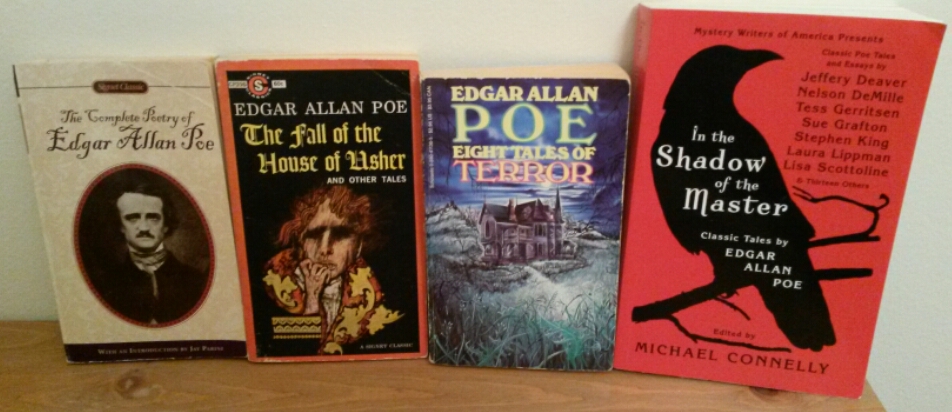
These ones aren’t just shitty books; they’re actually shit books. I have barely any free time anymore, and so I have to limit my leisure reading to my Sunday morning craps. Being in school has made it so that those holiest of moments on the Sabbath are now my only opportunity to read about Satan without feeling irresponsible. (I used to limit my toilet reading to the collection of Poe’s poems that I kept under the bathroom sink. Whenever my phone was out of battery and I couldn’t play solitaire while pinching a loaf, I would treat myself to an old ‘Edgar Allan Poo’.)

As you have probably guessed, these two books are awful. They came as part of a collection I purchased a few years ago from a hippy lady in the suburbs. She was selling a collection of 6 books, only 2 of which I actually wanted to read. I have since read and reviewed all 4 of the books that I was not interested in, but the ones I wanted have remained on the shelf. Anyways, both of these books deal with the topic of Satanism from a Christian point of view, and unsurprisingly, they are both repulsively stupid.

Let’s consider the authors for a moment. One of them is named Kurt Koch. Old Kurty is a classic case of “Koch by name; Koch by nature”. And what about his companion; Mr. Richard W. DeHaan? Well, they say that a picture speaks a thousand words, but the below picture only seems to repeat the word ‘wanker’ a thousand times.
2015-10-29 20.30.45

As i have probably mentioned elsewhere, I find it fascinating to read  the ideas of people who take each word of the Bible as being literally true. Let’s be completely honest here; 99% of the time, when a non-christian comes into contact with a christian, the non christian can instantly be sure of the fact that they are more intelligent than the christian. Oftentimes though, we can give the christian the benefit of the doubt;  although the person claims to be a christian, it can be safely assumed that they have not actually read the bible. When a person has actually read the bible and still claims to be a christian, you can safely infer that that person is an imbecile of the lowest order. To all whom encounter them, rubes of this variety seem to be entirely incapable of thinking critically.

On closer inspection though, these people are capable of a form of critical thinking. Unfortunately, the logic on which they base their thought is both flawed and perverse. Instead of using reason to reason, they use fear, prejudice and a unhealthy splash of utter nonsense. The authors of these two books are particularly fond of this approach. They weave a web of dogma around the topics of Satan and Satanism, and make themselves look like a pair of proper fools. One of the big points that both authors push is that many people who are having problems with their mental health are actually possessed by a demon and more in need of an exorcist than a psychologist or a doctor! My favourite argument that is put forth in either of these books though, is DeHaans argument for the consistency of the Bible’s attitude towards witchcraft. There has always been a bit of a problem with this issue; despite the infamous “thou shalt not suffer a witch to live” rule, there are actually quite a few witchy characters in the bible. There is a particular incident in Genesis when Jacob plays with some sticks to alter the appearance of the lambs being born to Laban’s flock. (Gen 30:37-43) He peels patterns into the bark on some sticks, and the animals who mate near the sticks will give birth to offspring with a similar pattern on their fur. Now let’s think about that for a moment. If a woman were to  have attempted something similar to this 500 years ago, she would almost definitely have been burnt as a witch. If somebody was to do something similar in the 1970s, the authors of these books would likely have attempted to perform an exorcism on them. How then does DeHaan get around the fact that Jacob, grandson of Abraham himself, was a dirty, occulting, sorcerer? Well, it turns out that God was actually trolling Jacob; he had organised the sheep to mate a certain way, and Jacob’s twigs never had any effect. Therefore, the sticks were a waste of time and Jacob hadn’t actually done magic. That’s fair enough, but DeHaan seems to think that this gets Jacob off the hook; however, it doesn’t change the fact that Jacob attempted to do magic. Just because he was a shit sorcerer doesn’t mean he wasn’t a sorcerer. It’s all about intent, you fucking dope DeHaan. (On a depressing side note, I just looked it up, and it seems that many people are still seriously discussing the tenability of Jacob’s approach to genetic engineering.) DeHaan’s twisted defenses of other biblical witches are just as unsatisfying, but this is hardly surprising. He is stretching the prim, white blanket of reason over an awkward, shit-brown, virulent mass of obtuse, dogmatic rubbish.

There was one cool part of DeHaan’s book where he lists some other books that you shouldn’t read. I haven’t heard of these, and maybe he made them up, but I’m sure as hell going to keep an eye out for them in the future. Let me know if you have copies!!!
20151030_221341

To conclude; these two books were truly moronic. Don’t waste your time with this kind of crap unless you’re crapping. School is really getting intense now, so it’ll probably be another little while before I post anything else. In the meantime, have a good Halloween, listen to metal, worship Satan and remember to keep it anti-christian!

The Phantom of the Opera, Dr. Jekyll and Mr. Hyde, and Nightmare Abbey

2015-09-01 21.38.12

I recently started back at university, and I won’t have much time for reading or blogging for the next year. Still though, I’ll try to get a few posts up whenever I get the chance. Here are three books that weren’t as good as I hoped they would be.

The Phantom of the Opera – Gaston Leroux
Signet Classics – 1987

This one was actually pretty good for most of the book. I just felt that the ending was a let down. I read it a good while ago, and I have actually forgotten how it ended. I could look it up for the sake of this blog post, but I don’t think that my fragile heart could bear to go through that disappointment again.
Although the characters in here are annoyingly see-through, I think that the biggest problem for this book is living up to the reputation that Hollywood has created for it. The Phantom of the Opera, as an archetypal villain, is in the same league as Dracula or Frankenstein. Unfortunately the book that he comes from is not nearly as good as those of his rivals. It’s still fun though, and I probably enjoyed this the most out of any of the three turds.

Dr. Jekyll and Mr. Hyde – Robert Louis Stevenson
Golden Press – 1978

I had a cool Jekyll and Hyde board game when I was a kid, and I grew up imagining that the book would be as much fun as that game. Unfortunately, it isn’t. It basically tells the same story twice: once from the point of view of Jekyll and once from the point of view of Hyde. The plot is framed around a twist, but  I can’t imagine that there are many readers who don’t already know who’s who of this tale. This was another book that I read on a plane, so maybe it’s better than I remember. Still though, I’m not going to reread it.

Nightmare Abbey – Thomas Love Peacock
Penguin Classics – 1986
This one isn’t all that bad; it was just quite a bit different to what I expected. It’s often included in lists of classic Gothic literature, and while it is fairly morbid, it’s just not that spooky. Not a lot happens in it either; it’s mostly dialogue. It’s not an all-together bad read though; I definitely got a few laughs out of it. My edition also includes another novel by the same author. I probably won’t bother. Much of the inspiration  for that terrible Gothic film by Ken Russell came from this.

There you go faithful readers; three turds in the bowl. I’m sure this post has been even more disappointing than any of the books reviewed. Que sera, sera.

Morning of the Magicians – Louis Pauwels and Jacques Bergier

2015-09-05 22.26.03
Dorset Press – 1988

This one is utterly moronic. I’m no stranger to idiotic books, and I have a fairly high threshold for reading garbage, but this one was seriously stupid. It was made particularly disappointing by the fact that I actually spent quite a while trying to track down an affordable copy. I always knew it was going to be fairly bullshitty, and so I decided that anything more than 15 dollars would be too much. It took me five separate orders over the course of two years to actually get my hands on this thing. Three times the bookseller had already sold their copy and not updated their stock online, and one copy got lost in the post. When this nice hardback edition arrived, I was delighted.

The delight was not to last.

Why was I so determined to own a copy of this book? Well, this one was actually fairly popular when it was published (this edition boasts “Over 800,000 copies sold!” on the back cover), and a lot of the silly ideas in here went on to influence other silly writers. I kept seeing its title pop up in other books and articles. It has been claimed that this is the source for the main concept in Erich Von Däniken’s work. Also, a large part of this book focuses on Nazi occultism, and Nicholas Goodrick-Clarke spends a few pages of his book talking about how fucking stupid this one is. On top of that, I had read that this book was influenced directly by the writings of Lovecraft, and while it is only mentioned briefly in Colin Wilson’s The Occult, it becomes apparent after reading it that it had a pretty big influence on his thinking. I didn’t really have a choice; I had to read this one.

So, the main idea of the book is that human beings are on the brink of the next stage of our mental evolution. Pauwels and Bergier believe that the scientific method has run its course, and any major future developments will be based on something other than logical reasoning. Being sensible is holding us back from reaching our potential. Their idea is to use their imaginations to come up with absurd nonsense, and maybe that nonsense will actually be true. T.C. Lethbridge used this exact approach in his book, the topic of which fits in perfectly with the ideas of Pauwels and Bergier. The authors title this approach ‘Fantastic Realism’. I think another, more accurate, way of describing this approach would be ‘simpletonism’.

They talk about how difficult it will be for the masses to adapt to this new approach. You might find it hard to imagine a modern society radically changing its system of beliefs over a short period of time. The authors’ response to this is ingenious. They claim, ‘ If Nazi Germany did it, we can too!’ Honestly, I think they must have been planning to write two different books and ended up throwing all of their material together to reach a word-count or deadline or something. The Nazi stuff takes up about one third of the book, but its function is limited to serving as a bad example of what the authors want to achieve: a society in which people ignore common-sense and listen to the most mental dopes in all the land.

My favourite part of the book was the authors’ theory on mutants. Pauwels and Bergier believe that while nuclear radiation definitely has negative effects on some people, it probably also has positive effects on others. Sure, it melts some people’s skin off and causes cancer and sterilization, but what’s to say that it doesn’t also create super humans? Back in a few minutes guys, I’m just going to go stick my head in the microwave and become one of the X-men! They give a description of one such super human: “He is now superior to us; his thought no longer plods – it flies… Such a man would have absolutely no interest in trying to communicate with us, nor would he seek to dazzle us by trying to explain the enigmas of light, or the secrets of genes… This man would be above and beyond humanity. He could only communicate to advantage with minds of his own.”  I would be surprised if Alan Moore hadn’t based Dr. Manhattan from Watchmen on that specific paragraph.

This book discusses Lovecraft, Arthur Machen, aliens, the Nazis and mutants, so you know that there’s going to be some good stuff in here. Unfortunately, all of the juicy bits are (a) not particularly enlightening and (b) surrounded by pages and pages of wank. It’s a long book, and I was only able to stomach a few pages a day. In fairness though, I probably would have enjoyed it a little more if I hadn’t come across its ideas in so many other texts. It would be a good place to start if you wanted to begin researching the ridiculous and inane. Otherwise, your life is almost definitely going to be better if you don’t read this imbecilic pile of crap. I bought two other books by Pauwels and Bergier before this one actually arrived, but I’m going to give myself a break before I torture myself with them.

2015-09-06 00.30.09
I’m going to have nightmares about having to read these.