The Voice of the Clown – Brenda Brown Canary

the voice of the clown - brenda brown canaryThe Voice of the Clown – Brenda Brown Canary
Avon Books – 1982


After 
Paperbacks from Hell came out, quite a few of the books featured therein became hard to find. I made a list of the ones that I needed to read (most of which included the word Satan in the title) and tried to forget about the rest. After a bit of hunting, I managed to get my hands on copies of all of my first picks. I ordered some online, found others in thrift stores, and downloaded pdfs of others. Now, two years later,  I have read and reviewed 20 of the books featured in Paperbacks in Hell. Some were really good (The Cipher, The Tribe), and others were truly terrible (Brotherkind, The Manse). 

At this stage, the demand for many of these novels has diminished slightly, and books that were 300 hundred dollars are now available for 50 or 60. I check other blogs and discuss books with other nerds on twitter, and I noticed that the ‘paperback from Hell’ that is most frequently mentioned because of its scarcity is Brenda Brown Canary’s The Voice of the Clown

This title had escaped my notice when I first read Paperbacks from Hell, but I googled it after seeing it mentioned a few times and discovered the reason for its scarcity. Grady Hendrix has apparently claimed that this is the one book that actually lived up to the ‘from Hell’ title and that it is the only book to ever make his jaw drop. I was enticed, but after seeing the prices that it goes for online, I decided not to get too interested as I would never pay that much for a book.

A few weeks ago, I went to one of my favourite local bookshops. It’s super cheap, and has the biggest selection of paperbacks in my city, but it’s entirely disorganized, and over the course of several visits, I’ve cleaned out most of the horror novels. This time, I spent a good half hour without finding anything, but I didn’t want to walk by the owner of the shop without buying anything, so I continued my search. Then I discovered a copy of T.E.D. Klein’s The Ceremonies, a book I’ve wanted to read for a while, and with renewed vigour I turned to a bookcase that I hadn’t yet searched through. There are three rows of paperbacks on every shelf, and it was at the back row of the bottom shelf that I found a copy of The Voice of the Clown with 2.00 written on the cover.

I started to shake. This was the Holy Grail of collectible horror paperbacks. I grabbed another horror novel and sandwiched the Clown between that and The Ceremonies to make it less conspicuous. I had to get out of there before another collector saw what I had and a fight broke out. Like a thief in the night, I tiptoed to the counter, put my books down and smiled at the old lady. I assumed that she was going to recognise what I had in my hand, but she just smiled back and charged me 9 dollars for the three novels. I got out of there as quickly as I could, expecting to hear sirens behind me once somebody realised the daylight robbery I had just committed. 
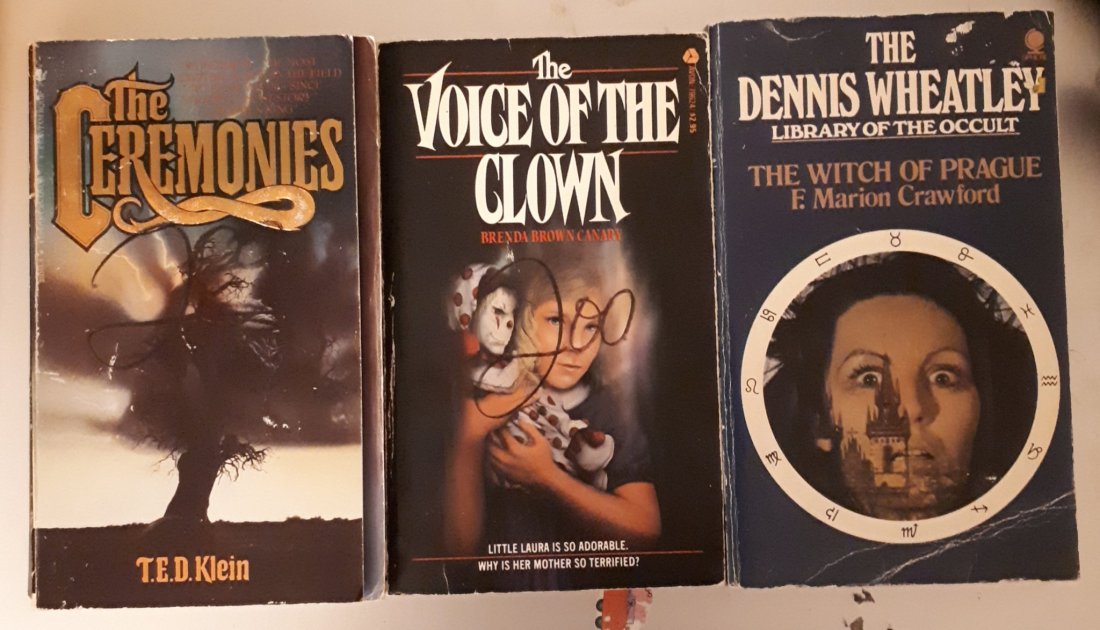
IMG_20200216_083533

When I got home, I was elated. I tried to convey my excitement to my wife, but she didn’t seem to care. My reading list is fairly lengthy, but it was only a few weeks before I gave in to temptation and bumped this novel to the front of my list.

Then I sat down and read it.


Jesus Christ. This was an unrelenting nightmare.

T.J. unknowingly gets his girlfriend Molly pregnant and then moves away. Then he knocks up a different girl, Kate, and marries her even though he only loves Molly. After giving birth, Molly kills herself. A few years later, T.J. and Kate have another kid. Unfortunately for them, Laura, the new baby, is the reincarnation of Molly, T.J.’s old girlfriend.

Laura really, really, really hates her mom, but she doesn’t fully understand why yet. She REALLY loves her dad though, in a way that seems weird right from the beginning. When her dad gets her mom pregnant again, she becomes very unhappy.

For the most part, the reincarnation business is the only supernatural element in this book. This is not what I was expecting from the cheesy cover. The horror is not of evil spirits or of psychic powers. It is the horror of trauma, suicide, domestic abuse, and misery.

Laura is not only jealous; she is also a manipulative, sadistic psychopath. The story is also told from her point of view, a fact that makes this book all the more disturbing. The reader starts off on her side, but I started to sympathise with her mother pretty quickly. Laura does everything she can to upset Kate, a woman who may not be the best mother in the world but who hasn’t actually done anything unforgivable. I don’t want to give away details, but some of Laura’s actions were so upsetting that they caused me to put the book down and consider whether or not I actually wanted to finish it.

I’ve seen other reviews of this book where people said that The Voice of the Clown isn’t as scary as it’s made out to be and that it gets bogged down with character development, but I found the build up to be really effective. Also, I honestly doubt that those naysaying reviewers have kids of their own. I have a little girl, and my wife and I have another kid on the way, and reading about a child’s mission to destroy her family by any means was deeply upsetting for me. I can read gore all day and won’t be bothered, but reading about a jealous child’s well thought out plans to torment a helpless baby and its mother was utterly horrendous. This novel struck a nerve.

This is a miserable, bleak, unpleasant book to read. While there are some supernatural elements, it’s really more horrible than horror. That being said, I reckon that was the point. Brenda Brown Canary must have sat down and really thought hard on to how write the most horrible book ever. I don’t think something as unpleasant as this could happen by accident. I know that Valancourt Books have tried to get in touch with her to reprint this as part of their Paperbacks from Hell reissues line, but that she has yet to respond. I wonder how she feels about this book now. Was it written during a dark time in her life that she would rather forget? I hope I’m wrong, but I find it difficult to imagine a person who loves their life writing a book like this. It’s relentlessly unpleasant, and it gets worse and worse as it goes on.

All that being said, I think it is a good book. This is a methodically written novel of terror, real, unpleasant terror. I’ve written before of times when books have obsessed me. In all other cases, the obsession reached its peak before reading the book. I would get fixated on a rare horror novel and spend hours seeking out information about it before finding/ordering a copy. Reading it would be the climax. In this case, my interest was really sparked after finishing the novel. I’ve found myself picking it up since finishing it, staring at the cover and feeling an unpleasant discomfort. Part of me wants to get rid of my copy to have it out of my house, but the masochist in me wants to keep it in case I want to punish myself again in a few years. If you can get a copy of this thing and you’re not faint of heart, pick it up and jump into the nightmare.
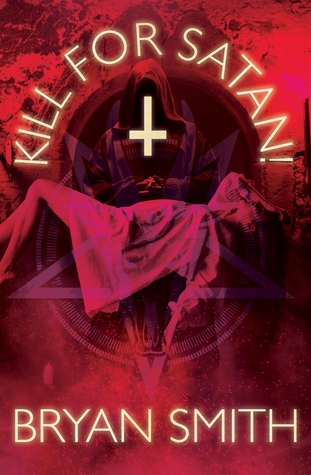
Kill for Satan – Bryan Smith

42304587._SY475_.jpg

Kill for Satan – Bryan Smith

Grindhouse Press – 2018

I saw the cover of this book roughly a year ago and knew I’d have to read it. It’s about a bunch of people killing a bunch of other people. Oh, and they’re doing so for Satan.

Kill for Satan only came out in 2018, and it features a lot of pop culture references that made me realise how little modern horror I actually read. I was a bit bothered by the repeated allusions to one of the character’s Cradle of Filth tshirt (Jesus Christ, that band are shit.), but I liked the part when one of the characters is researching Satanism and discovers “modern so-called “Satanic” groups that don’t actually believe in the existence of any demonic evil entity ” who “use Satan as a provocative and subversive means of delivering progressive messages. They are social activists, not true devotees of the dark path.” Haha, I wonder who he’s reading about.

Really though, aside from all of the killing for Satan, there’s not much else going on in this book. It reminded me of a more straightforward version of William Johnstone’s The Nursery. In a way that’s a good thing; Johnstone’s book was a mess, but I found the plot of Kill for Satan to be a bit underwhelming.

Bryan Smith seems to specialise in Splatterpunk, and this book, like some of the others within that genre, was just a bit too straightforward for me to really enjoy. Kill for Satan felt a bit more like reading the screenplay for an extended death metal music video than it did a novel. Smith’s writing is decent – I was never bored, but personally, I would have enjoyed a bit more plot/character development – maybe a little less killing and a little more Satan.

There is one particularly memorable scene in which a mother says to her child, “I’m sorry, sweetie. I do love you. But I love Satan more.” Yikes. You can probably guess what happens next. If this sounds good to you, if you’re looking for a straight up bloodbath of mindless, brutal violence, this book will not disappoint.


My Work Is Not Yet Done – Thomas Ligotti

My Work is Not Yet Done ligotti.jpgMy Work is Not Yet Done – Thomas Ligotti
2002 – Virgin

I read a lot of books, but in truth, there are relatively few authors whose books I savour. I actually hold off on reading Thomas Ligotti because I don’t want the day to come when I have already read all of his books. His low opinion of humanity is both tragically hilarious and brutal, and while I don’t necessarily share the outlook of the narrators of his stories, I find his pessimism the perfect vehicle for horror. The message that our existence has no worth is perhaps the most disturbing idea that an author can offer to 21st century humans.

My Work Is Not Yet Done is a novella and two short stories. All of these tales are about workers’ lives as part of a corporation. There’s a very Kafkaesque vibe running throughout, but Ligotti covers the bureaucratic angst with layers of supernatural horror and misanthropy and turns it into something far darker. The first act of the eponymous novella portrays a man who decides to go on a killing spree in his office after he’s unfairly dismissed from his job. I know Stephen King found himself in hot water for writing a novel about a school shooting, so I was impressed that Ligotti had done something so extreme. I won’t tell you what happens later on in the story, but I will say that it’s actually far worse than what you’d expect.

I know full well the misery of working for a company that you hate, and while I’ve only spent a little over a year working in an “office job”, I spent enough of that year fantasizing about murdering my boss to have thoroughly enjoyed this book.

Little things about the book stuck out to me. Characters have stupid names – coworkers are named Sherry, Terry, Mary, and Perry, and detectives are named Black and White. Also, the purpose of the corporations that these characters work is barely discussed – the nature of the work that the characters engage in is almost entirely passed over. Why does Ligotti omit these details? Why doesn’t he put more effort into naming his characters? Because that stuff doesn’t matter. Human beings are entirely interchangeable. You are no different to the people you hate the most. What corporations actually do doesn’t make any difference to their workers. Nothing fucking matters. Every living thing is going to die without having made any noticeable difference in the universe, a universe in which every single atom will eventually decay.

Oh, I forgot to mention that this is the first post of 2020. Happy New Year everyone!

“Generally speaking: Expect nothing but nightmarish obscenities to be born when human heads come together in intercourse.

More generally speaking: Whatever is born will ultimately grow into a nightmarish obscenity – in the grand scheme of things.”

There’s moody nuggets like this sprinkled throughout the book, but the closing lines of My Work Is Not Yet Done sum it all up. I don’t want to quote those here as it might ruin the effect when you do get around to reading it, but fuck me, they’re perfect. Please believe me when I say that this is a novella worth reading.

I’ve also reviewed Ligotti’s Teatro Grottesco and The Conspiracy Against the Human Race if you’re interested. I read Noctuary years ago too, but I haven’t reviewed that one properly yet. There’s a copy of the Penguin edition of Songs of a Dead Dreamer and Grimscribe on my shelf, but I’m waiting for a special occasion to allow myself the luxury of reading it.

2019, The Year in Review

2019 was the busiest year yet for this blog. There were more posts, words, books and traffic than ever before. (I know I said the same thing last year, but I’ve outdone myself again.) I put a lot of effort in this year, and almost all of my reading was dedicated to this blog. I only managed to read 4 non horror/occult books over the whole year. If you haven’t been paying attention, this post will guide you through what I covered in 2019.

I read some really cool novels this year. I was so excited to find a cheap copy of Kathe Koja’s The Cipher in a thrift store, and I’m happy to report that it lived up to its reputation. I posted about Edward Lee’s The Bighead right at the beginning of the year, and it was an extremely gross, funny and enjoyable read.  My copy of C.S. Cody’s The Witching Night had been on my shelf for years, but I loved it when I got around to reading it this summer. Bari Wood’s The Tribe also blew me away. There’s no wonder that it was recently rereleased. Flesh by Richard Laymon may not have been a brilliant novel, but I really enjoyed it. I ended the year reading two classics of weird fiction, Fritz Leiber’s Our Lady of Darkness and William Hope Hodgson’s The House on the Borderland. Both of these books were awesome.

I did a few short story collections this year too. I was delighted to get my hands on Montague Summer’s long forgotten Ghost Stories. I also really enjoyed rereading Lovecraft’s stuff. (Part 1, Part 2, Part 3 and Part 4.) In May, I reviewed Teatro Grottesco by Thomas Ligotti. I absolutely adored that book, and I was surprised to see how much traffic that post got. (I also just finished his My Work is Not Yet Done, so expect to see more Ligotti here soon.) In October, I did a lengthy post on the two Splatterpunks anthologies from the 90s. The stories in these were of varying quality, but they did put me onto some cool writers. I actually thought that I had reviewed more short story collections than this when I started writing this paragraph, but that’s because I have spent the last few weeks working through Clive Barker’s Books of Blood. I haven’t finished all 6 yet, so it’ll be another while before they show up here. (Barker is one of the authors that Splatterpunks convinced me to check out.)

Of course, this blog isn’t just about fiction, and this year, I got into some very weird esoteric books indeed. The one I was most excited about was Geoff Gilbertson and Anthony Robert’s The Dark Gods. Jesus, that book was mental. (I’m also happy to report that a pdf copy has been uploaded to the internet since my post was published, so you won’t have to go through what I went through to read this very rare and very odd book.) I was also proud to present a review of Robert Eisler’s Man into Wolf, a very peculiar book on lycanthropy. Dr. Alexander James McIvor-Tyndall’s (pre-Nazi) swastika adorned Ghosts: A Message from the Illuminati was another interesting book to track down and read. Allen H. Greenfield’s books on UFOnauts and the secret rituals of the Men in Black are amoungst the strangest I have ever read. I read three (1, 2, 3) dumb books on sex magic over the course of the year, and George Bataille’s book on Gilles De Rais was a very depressing look at that dirty satanist paedophile. On top of H.P.’s fiction, the aforementioned Lovecraft posts all deal with Lovecraftian grimoires too.

I also read a bunch of utterly idiotic grimoires that were written by morons. Highlights include Fascination by Master Count de Leon, The Black Grimoire by Angel Zialor and Secrets of the Black Temple by the Red Spider. This shit was DUMB.

Finally, I reviewed a little bit of porn in 2019. Satan was a Lesbian and The She-Devils did not live up to their titles, but Ann L. Probe’s Alien Sex series was exactly as good as you’d expect.

We’re soon to enter the twenties, and while this post only looks at the books I’ve reviewed in 2019, this blog has been around for half a decade now. If you’re interested in looking back, you can check my yearly review posts for 2018, 2017, and 2016. (I didn’t do one for my first year.) You can also look through my site’s index for a complete list of the 300+ books that have been reviewed here over the past 5 years. If you enjoy this blog, please share it with like-minded people. You can get updates on twitter or facebook, and I’m always happy to get recommendations for my next review.

I hope you have a great new year!

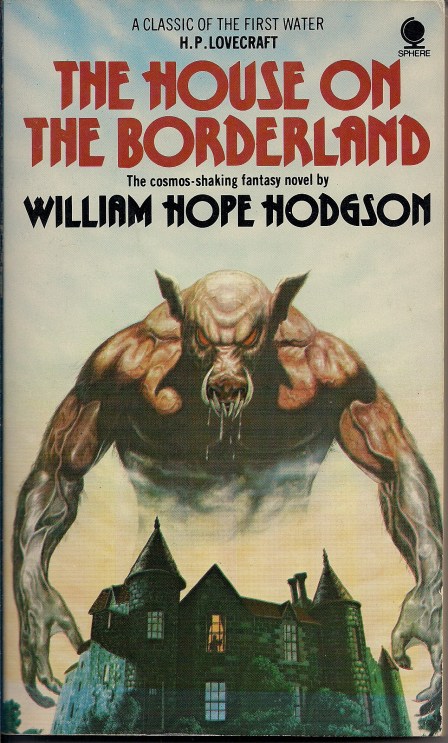
The House on the Borderland – William Hope Hodgson

house on the borderland william hope hodgson.jpgThe House on the Borderland – William Hope Hodgson
1908

It’s coming close to the end of the year, and I have spent 2019 reading some absolute garbage. After reading and reviewing Fritz Leiber’s awesome Our Lady of Darkness last week, I really wanted to read another cool book. I’ve been meaning to read William Hope Hodgson’s The House on the Borderland for a couple of years, and when I found a free audiobook version last Sunday, I decided the time was right.

This was a very enjoyable piece of weird fiction. It’s about a strange man who lives in an old house in Ireland that seems to exist on the border of different dimensions. I spent the first half of the novel thinking it was basically just Night of the Living Dead with interdimensional pig-mutants instead of zombies, but the second half of the book has more in common with 2001: A Space Odyssey. (I just read Will Errickson’s review of this book and saw that he also made a 2001 comparison. Will, I swear this was coincidence!) There’s little wonder that H.P. Lovecraft was a big fan of this novel; there’s some very definite “the universe doesn’t care about you” vibes throughout.

I read William Hope Hodgson’s Carnacki the Ghost Finder stories a little under two years ago, and while I enjoyed them, I seem to remember them being a good deal more straight forward than this. One of those stories also includes evil pigs, and a couple of them are set in Ireland too. I reckon I enjoyed The House on the Borderland more, and I’m planning to read more by Hodgson in the future.

The only problem with reading good books, especially popular ones, is that I find myself at a loss for things to say when reviewing them. This one is cool, short and available for free in multiple formats. You might as well check it out.

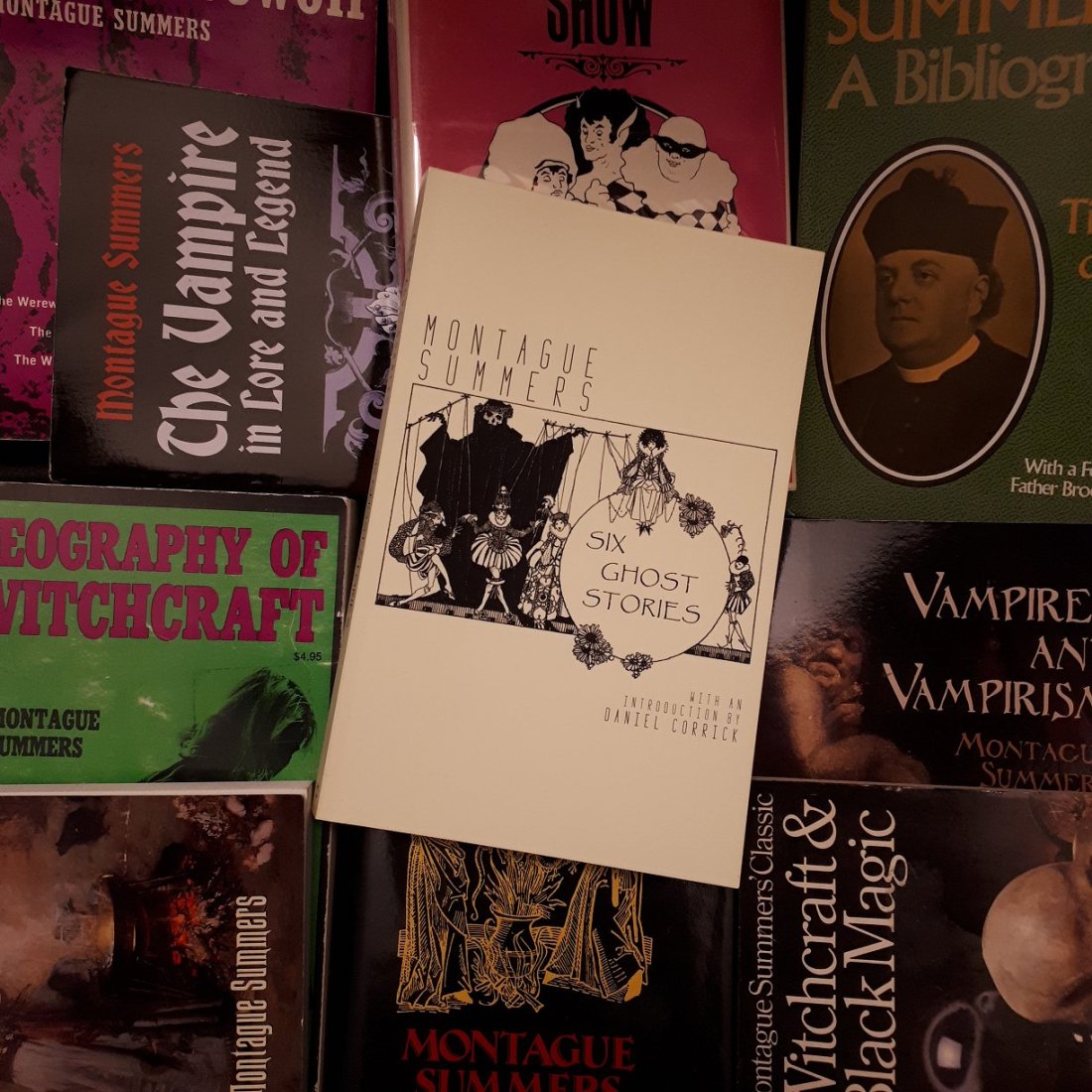
Six Ghost Stories – Montague Summers


summers six ghost stories.jpgSix Ghost Stories – Montague Summers
Snuggly Books – 2019

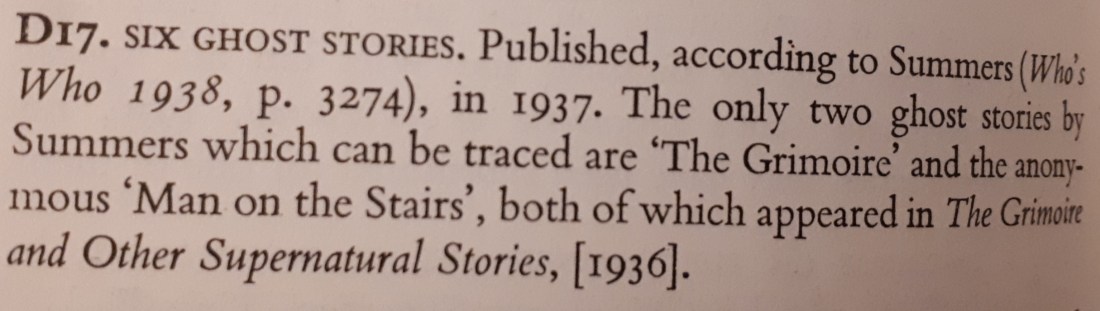
A few months ago, I got an email from my pal Sandy Robertson telling me that Snuggly Books were going to release a collection of short fiction by Montague Summers. I have long been aware that Monty had written a collection of short stories, but I knew that only a couple of these stories had ever actually been published and that it was difficult to find affordable copies of the books wherein these tales were collected. I’m a big fan and collector of the occult-related non-fiction books written and translated by Monty, and I am also a big fan of short horror fiction, so you will believe that I was very excited to hear that Monty’s ghost stories were finally being published. I ordered this collection for my birthday and read it last week.

20191130_224224This is the note from Timothy d’Arch Smith’s bibliography of Summers where I first read of these fabled fables.

These six stories lived up to my expectations. They are mostly about people who some acquire some kind of peculiar haunted object that brings about visions and specters. The obvious comparison to make is to M.R. James, who apparently had the chance to read and commend these tales. Incidentally, Montague Summers, the man, has always reminded me of the characters in James’s tales.

The writing in here isn’t what you might expect if you have only read Summers’ books on witchcraft. There’s some very long sentences, but Monty seems self-aware when he’s being verbose, and this comes across as charming rather than tedious. My biggest criticism is probably that the tone of some of these stories remains too light-hearted for too long. Everything will be going fine and dandy for all of the characters, and then a ghost will jump out and scare a person to death right at the very end of the story.

My favourite tale in here was The Grimoire. This one has been previously published in different texts, and it’s not hard to see why it was chosen above the others. It’s the story of a bibliophile whose local dealer procures him an aged book of sinister black magic. When the collector translates a passage from this heinous tome, scary things start happening. (I can’t help but wonder if Sam Raimi read this tale before writing Evil Dead.) This one was particularly cool because it feels like Summers, an expert on books about black magic, could be the narrator.

While not all terribly original, these stories are competent, fun and generally pretty satisfying. I read one each night after my family had gone to bed, sipping a cup of peppermint tea and hearing the cold November breeze blowing through the willow trees our garden. It was great. I suggest you enjoy these tales in a similar manner.

These stories are entertaining in and of themselves, but there’s something very exciting about reading a collection of tales that were believed to be lost for more than half a century. Summers’ old manuscripts went missing shortly after he died in 1948, and they were only unearthed a few years ago. Snuggly Books put out this collection in October (I think this is the only book from 2019 that I’ll have reviewed in 2019.), and they are planning to put out a second volume of Summers’ fiction early next year. This collection will include a novella titled The Bride of Christ. Sign me up!

The Devil on Lammas Night – Susan Howatch

susan howatch the devil on lammas night.jpgThe Devil on Lammas Night -Susan Howatch
Ace Star -1970

A millionaire’s wife and his daughter, Nicola, are seduced by Tristan Poole, the charismatic and mysterious leader of “The Society for the Propagation of Nature Foods”. This society is actually a Satanic cult posing as a harmless group of new-agers, and Poole’s motives for seducing Nicola and her step-mom are less than gentlemanly. Oh, and to complicate matters further, Poole is living in Nicola’s ex-boyfriend’s house.

Things play out pretty much as you would expect.

This is primarily a romance novel. The Satanic antagonist’s main motivation is money, and while there is plenty of black magic in here, the story could still work if this element was switched with something else. That being said, I quite enjoyed the little bits of occultism sprinkled throughout. Howatch seems to have done her homework; the rituals here are documented, and the demons listed are all of the Solomnic tradition. There’s a part where a character shies away from explicitly describing the Osculum Infame and another bit where the author claims that the Satanist performed “unprintable” acts to his communion Eucharist. I knew that witches are supposed to kiss the devil’s shitterhole before reading this book, so I was able to fill in the blanks to the first omission by myself, but I can’t remember what unprintable acts are supposed to be performed on a Satanic Eucharist. Does the celebrant cum on them or rub them against his bumhole or something?

I’m not going to rush out to read Susan Howatch’s other books, but this one was fine.

Hell-O-Ween and The Manse

hell-o-ween the manse halloweenHappy Halloween. To celebrate my favourite holiday, I’m reviewing two Halloween horror novels that have pumpkins on their covers.
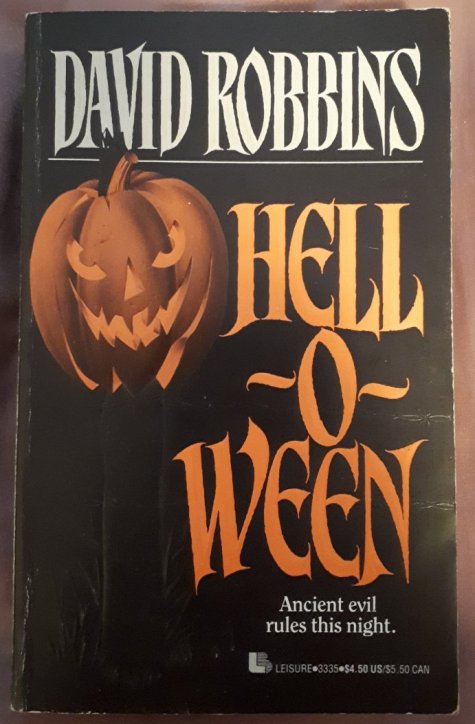
david robbins hell-o-weenHell-O-Ween – David Robbins
Leisure Books – 1992

Hell-O-Ween is a remarkably awful book. It starts off with the line; “Yo dweeb, are you ready to go monster hunting?”, and what follows is pretty much what you’d expect. This is an overwritten Goosebumps book with a little violence and a few (gross) mentions of sex thrown in. The following sentence appears n page 23: “She’d neck heavy and let a guy play finger tag with her box, but she refused to go all the way.” This isn’t a line of dialogue either; it’s the narrator’s voice. Finger tag with her box? Jesus.

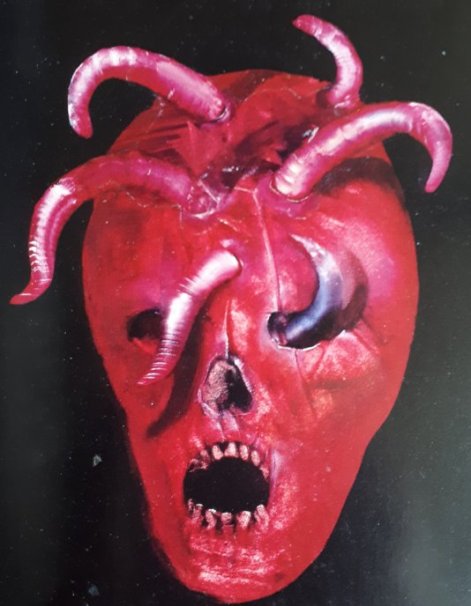
Hell-O-ween is the story of a nerd, two sluts, 3 jocks (2 bad and 1 good), a geeky girl and a beautiful virgin. These painfully stock characters decide to explore a system of caves on Halloween night. There is a huge picture of an angry demon right at the entrance to the cave, and the astute reader will figure out exactly how the story is going to end after about 10 pages.

Very little happens in here that you wouldn’t expect. Perhaps the most interesting part was a lengthy passage in which one of the jock characters admits to his friend that he started selling cocaine in defiance of his liberal father. I’m sure the author was making a point here, but I can’t figure out what it was. Was it that liberals are irresponsible and can’t raise kids, or was it that non-liberals are piece-of-shit drug dealers? I sincerely don’t know.

This was a gruelling read that I regretted starting almost immediately. Do yourself a favour and give this one a miss.

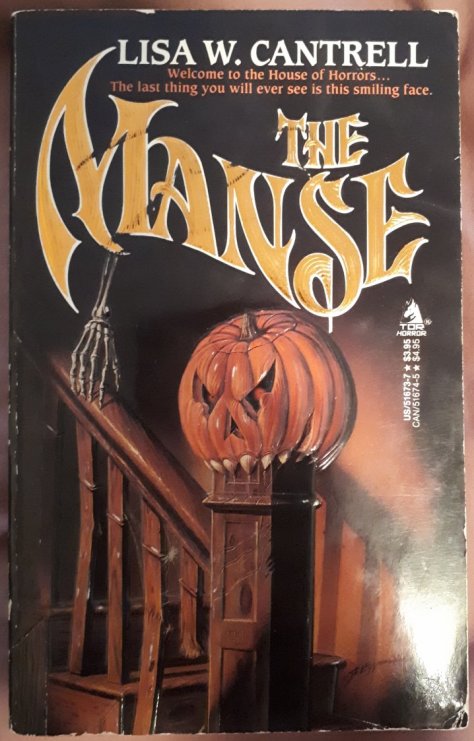
the manse lisa wThe Manse – Lisa W. Cantrell
TOR – 1987

The Manse won a Stoker award for best 1st novel in 1987. Kathe Koja’s excellent The Cipher won this same award a few years later, so I was expecting a fairly high standard from this book.

I was disappointed, terribly disappointed. This is shockingly dull garbage. It’s the painfully boring story of a haunted house that becomes extra haunted on Halloween night. Actually, Will Errickson reviewed The Manse years ago, and said all of the things I feel like saying about this book. Read his review if you’re still interested. I don’t need to say anything more. Cantrell wrote a sequel, but I’m not going to waste my time on it. The Manse was a shitty, shitty pile of trash. It was poo in a baby’s diaper. Stay away!


Both of the books I reviewed for this post absolutely sucked. Actually, pretty much all of the books I reviewed this month absolutely sucked. This week marks a milestone for this blog, and I have a bit of an announcement about that.

For the last year, I have published (at least) one post per week. I have read some great books in the process, but I have also forced myself to read some utter crap to maintain the steady stream of reviews. After some consideration, I have decided that continuing at this pace isn’t really beneficial to me or to this blog. Look at some of the shit I’ve reviewed in the last year.


Sensible adults don’t read books like these.

Nobody cares about this nonsense, especially me. With this in mind, I want to let you know that I am going to cut back on posts for the next while. I’m going to be focusing on quality rather than quantity for a bit. This probably means 2 posts a month rather than the 5 you’ve been getting for the last year, but at least the newer posts will more than just “This book is pooey farty bumbum.” I want this blog to be something that I enjoy doing rather than something I feel obliged to do.

Have a safe and happy Halloween. Check out my previous Halloween posts while you’re here.

The Splatterpunks Anthologies: Extreme Horror and Over the Edge

splatterpunks extreme horror over the edge sammon.jpg
Splatterpunks: Extreme Horror – Paul M. Sammon (Ed.)
Xanadu – 1990

The first Splatterpunks anthology was published in 1990. It’s a collection of extremely violent stories, most of which had previously been published elsewhere. Some of the stories are quite enjoyable and some are fairly shit. The most remarkable feature of this collection is the editor’s attempt to delineate Splatterpunk as a separate entity from regular horror fiction.

Every review I have read of this collection has commented on the fact that most of the authors included herein reject the splatterpunk label. Sammon himself acknowledges this fact several times throughout his introductory notes. Let’s face it. Splatterpunk was never a revolutionary literary movement; it was a label created by David Schow to describe a small group of his writer friends who were writing gory stories. The authors in this anthology repeatedly refuse the splatterpunk label because it’s too limiting, and they feel that it would only apply to a small portion of their output. If we’re calling writers Splatterpunks because they’ve written a couple of gross-out stories, surely Stephen King fits the bill too. His story Survivor Type is easily as extreme as most of the stuff in this anthology. (My point is not that King should be included here; it’s that the editor’s posturing is ridiculous. In the next anthology he goes on to claim that Bret Easton Ellis, a writer who is parodied in this collection, is actually a Splatterpunk too.)

The book includes a lengthy epilogue that I was unable to finish. Paul Sammon’s attempts to make Splatterpunk seem like a really important cultural phenomenon were genuinely embarrassing to read. I was going to include a quote from the introduction here, but after rereading the first few lines of it, I found myself cringing too hard to continue. He literally compares his authors to Burroughs, De Sade and Baudelaire in the second sentence of this book. Some stories in here were decent, but I had forgotten most of them only two weeks after finishing the collection.

 
Splatterpunks: Over the Edge – Paul M. Sammon (Ed.)
Tor – 1995

The second Splatterpunks collection came out 5 years later, and this book is far, far worse than its predecessor. Actually, I really liked some of the stories in here, but there’s way more in this one, and some of them are absolute shit.

The really dislikeable part of this one wasn’t the awful stories or even Paul Sammon’s embarrassing introductions; it was the non-fiction pieces. Aside from Sammon’s bullshit, the only non-fiction piece in the first collection was an essay on ultra violent films. I watched most of the movies it mentions when I was a teenager, so I actually quite enjoyed reading this piece. Although it was about movies, it didn’t feel hugely out of place in a collection of ultra-violent stories. There’s an article in Spatterpunks II by Martin Amis on the movies of Brian De Palma. Martin Amis is not a horror author, and while De Palma has done a few horror films, those aren’t the movies being discussed in the essay. Sure, some of De Palma’s movies are violent, but they don’t compare to the other stuff in these collections. There is absolutely no reason for this essay to be in this collection other than having a famous author’s name on its cover. Fuck off Martin Amis.

There’s also an interview in here with Anton LaVey, the founder of the Church of Satan. My favourite pastime is reading about Satanic occult orders, but I skipped this section after about 2 pages. It was excruciating. Not only does LaVey come across as an embarrassing dildo, but the interview is performed by Jim Goad. Jim Goad, for those of you who don’t know, is just about the edgiest edge-lord in town. He beats women and believes that white people are oppressed. He also published a magazine in the 90s that included pages of rape jokes. When it was first published in this same magazine, the LaVey interview was followed with an interview with David Duke, former Grand Wizard of the Ku Klux Klan. Together, LaVey and Goad are unbearable. Again, this piece has absolutely nothing to do with horror, and can only have been included because Sammon saw it as edgy and in-your-face. (There’s also a particulary embarrassing “rant” from Goad’s wife. I actually felt sorry her after reading it. Total loser.)

And I think this edginess is the big problem with these collections. Times have changed in the last 30 years, and being edgy isn’t cool any more. Pushing the boundaries of taste isn’t a difficult task, and today’s teenagers throw about the phrase ‘edgelord’ with derision. These kids have grown up with the internet. By the time was I was finished school, I had seen video footage of executions, extreme S&M and tonnes of stuff that’s worse than the stories in this book. (Can you guys remember rotten.com?)  I don’t think it’s possible to make literary gore as shocking as what kids see on their phones every day. Brutal violence is fine and dandy when it’s used for effect, but it’s rarely interesting when it’s presented as the main attraction.

A lot of this crap is boring and predictable. Think about it:

How can you make a murder more offensive? Hmmmm, make the victim more innocent and vulnerable. Who are the most innocent and vulnerable members of society? Well, women are certainly more vulnerable than men, and there’s plenty of women dying in these books, but children are more vulnerable than women! Oh wait, one of these stories is about a child dying in a car accident. Yeah, but babies are more innocent than children. Sammon’s got you covered fam; one of these stories features a baby being sexually abused. Ok, hang on! Fetuses! Fetuses are even more vulnerable than babies! They’re the most innocent and vulnerable of all! But no author would ever have the balls to write about somebody killing fetuses, would they? Actually, yeah. quite a few of these stories involve people killing fetuses. A lot of Splatterpunk seems to involve this kind of punching down, and as I am no longer 13 years old, I have no interest in this kind of crap. I far prefer gore, brutality and violence when it’s directed at somebody who deserves it.

Also, just to amp up the cringe factor, Paul Sammon filled the last few pages of this book with a list of bands that he likes. I did the same thing with my homework journal when I was 15.

All this being said, there were some great stories in the second collection. Gorman Bechard’s Pig was deadly, and I quite liked the weird ones by Petoud and Koja. There are a few duds in here for sure, but just as it was with the first collection, this book would be far more enjoyable if it was just a collection of stories with no bullshit in between. Give me gore and brutality, but don’t try to make it seem clever when it isn’t.

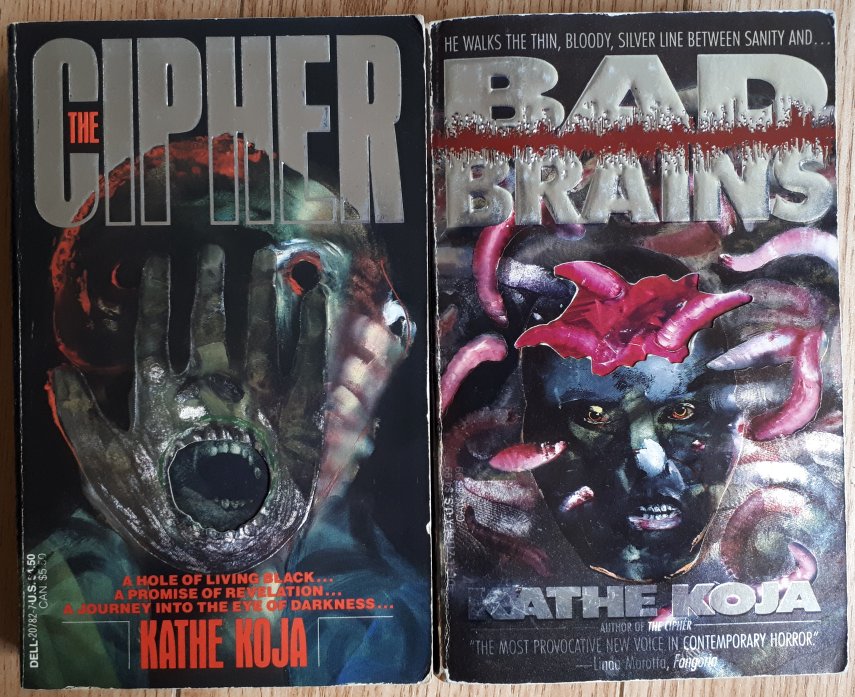
The Cipher and Bad Brains by Kathe Koja

koja cipher bad brains
My offering this week is a couple of books by Kathe Koja. These immediately went on my to-read list after I saw them in Paperbacks From Hell. It took me quite a while to find copies, but they’re so deadly that it only took me a few days to read them.

the cipher kojaThe Cipher
Dell Abyss – 1991
This is the story of a couple who find a weird hole in the corner of an unused maintenance room in their apartment building. The hole is weird because stuff that goes into it comes out quite different. Dead bugs come back to life and mutate. Human body parts that are inserted come out grossly disgfigured. When a video camera is lowered into the hole, the resultant video footage is so disturbing that it radically and permanently affects its viewers’ lives.

No sensible explanation of the hole is ever given, and the narrative is enhanced by this omission. The plot here is quite simple, and atmosphere is what drives this novel. It’s original title was ‘The Funhole’, and while that title definitely makes more sense than ‘The Cipher’, it might have made the book sound far less dark than it is. I don’t know why they went with ‘The Cipher’ though.

Nobody is happy in this book, and everything that happens is uncomfortable. It’s fairly long too, and while I enjoyed it immensely, it won’t be to everyone’s tastes. It’s very 90s, very dark and a little bit arty. If you like Nine Inch Nails’ early records, you’ll love this. (I can’t imagine a movie version of The Cipher that doesn’t end with Head Like a Hole playing over the credits. There were talks of a movie version, but I don’t think it ever happened.)

The Cipher is an original, exciting and disturbing horror novel, truly deserving of its reputation, but it has been out of print for a long time. I managed to find a copy at a thrift store for the price of a cup of coffee, but copies currently go for silly amounts online. Luckily for you, there’s an ebook version available, and Meerkat Press are publishing new hard copies next year. I can wholeheartedly recommend that all horror fans pick up this book; it’s seriously awesome.

kathe koja bad brainsBad Brains
Dell Abyss – 1992

Bad Brains is Koja’s second novel, and it has a lot of similarities with The Cipher. In this one, the protagonist trips over a curb, and smashes his head. The resulting brain damage fucks up his life. This book has nothing to do with everyone’s favourite Rastafarian hardcore punks.

Again, the plot is quite straightforward. It’s the slick, shifting prose and atmosphere that carry this novel. The text is fantastic, but I found the pacing a little uneven with this one. There’s a lot of build up to a very cool, but overly short ending segment. Also, the blurb on the back of the Dell edition gives away the most surprising element of plot, so don’t read it until after you’ve finished.

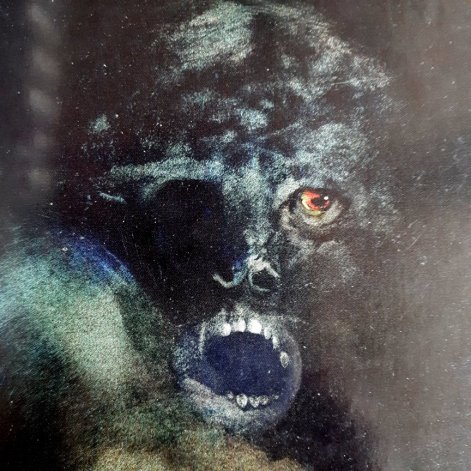
Bad Brains is certainly a horrible story, but it’s less of a horror story than The Cipher. Weird stuff happens, but the central character is so messed up that it’s impossible to know how much of what’s being described is hallucination and how much is real. The definite supernatural element here, the Dorian Grayesque alterations of the protagonist’s paintings, are background events that occur far away from where the story is unfolding. I reckon that the most frightening element of this book is the way it forces you to contemplate the fragility of the human brain.

If you enjoyed The Cipher, you’ll enjoy this. It’s a lot easier to find too.

impermanent mercies kathe kojaLoving that comic sans action.

I also read by Impermanent Mercies by Koja. It’s a short story featured in the second Splatterpunks anthology about an accident involving a kid’s pet puppy. It’s fairly bizarre. I’m planning a post on the 2 Splatterpunks anthologies for the near future. Stay tuned.

Aside from her books, Kathe Koja is pretty cool. She doesn’t eat meat, and she doesn’t like Donald Trump. I plan to read more of her books in the future.