My First Attempt at Writing Short Fiction

Recently, I had to take a writing class as part of my degree, and one of the assignments was to write a short story. I’ve long wanted to write fiction, but I always felt unprepared. The class I took was pretty great though. The instructor’s attitude was; “I don’t care if you don’t feel ready. You’re handing me in a story at the end of the week, so shut up and get to work.” It was the kick up the hole that I needed.

There were no topics assigned, but it was suggested that we write about something that we were interested in. Before putting pen to paper, I had to sit down to think about what interests me. I glanced at my desk, noticed the books on aliens and black magic that I had been reading, and shrieked, “Eureka!”

Here is the story I came up with. It may not be a masterpiece, but I feel that it’s a decent first attempt, and I think that anyone with an interest in the books I review will probably enjoy it. I definitely plan to write more short fiction in the future.

night shift

Night Shift – Duke De Richleau

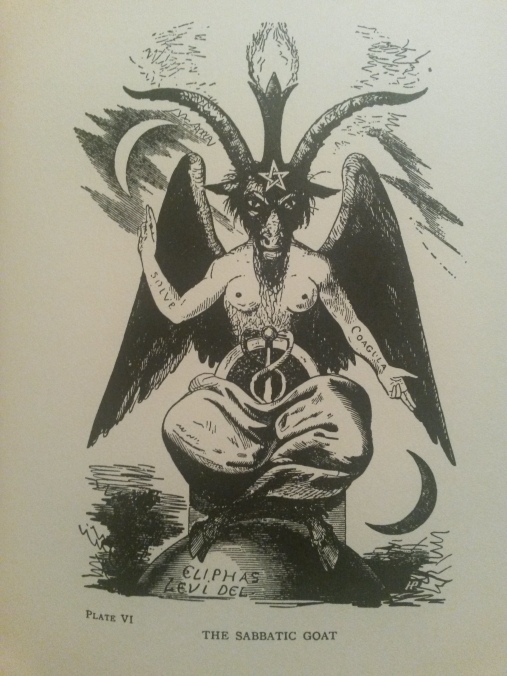
Books of Black Magic

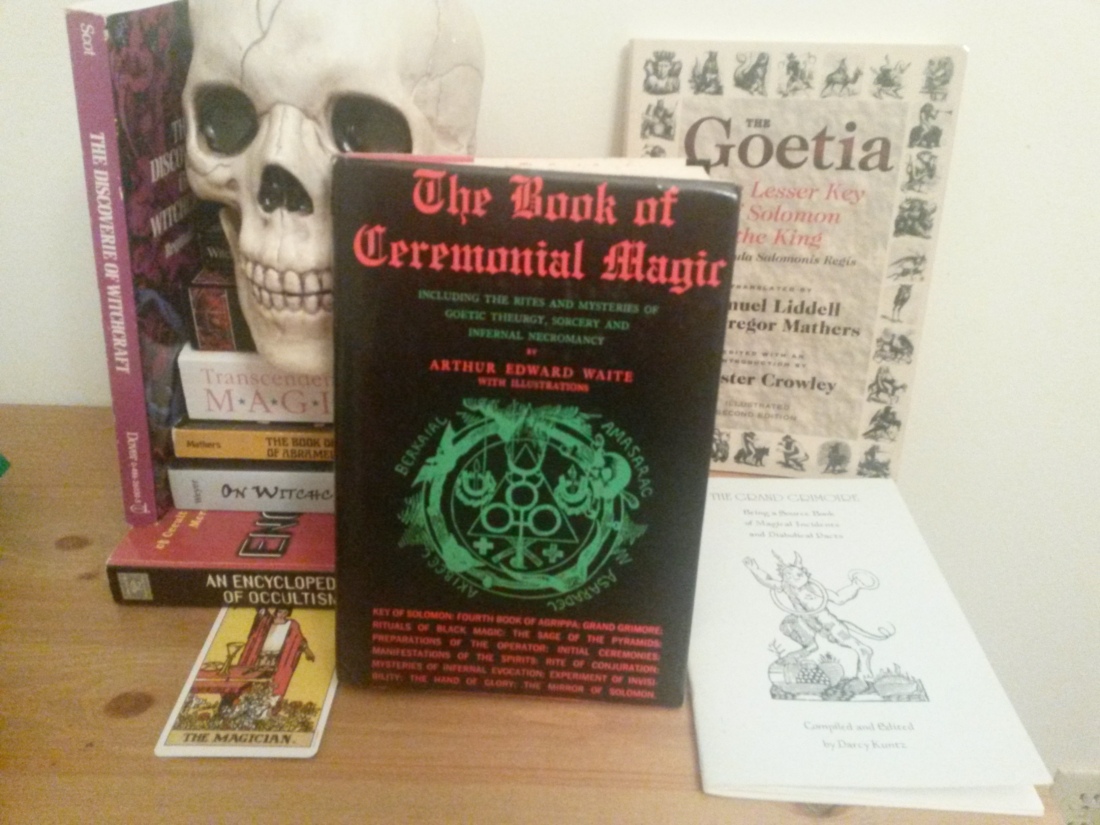
20160803_210246 The Book of Ceremonial Magic – Arthur Edward Waite
Bell – 1969 (First published in 1898 as The Book of Black Magic and Pacts)
Imagine, if you will, a man who takes it upon himself to read a bunch of cooky books on black magic and then proceeds to write about how utterly silly they are and how stupid the people who believe in them must be…  Sounds like a real cool guy, right? I’m referring, of course, to Mr. Arthur Edward Waite. Waite, famous for creating the Rider-Waite Tarot deck, is the author of this rather interesting book on grimoires, spirits, ceremonial magic and infernal necromancy.

Waite’s writing style can be painfully long-winded and academic, and nowhere is this as apparent as the headache-inducing introduction to this work. I don’t have a fucking clue what it’s about, and I would recommend that you skip it. Aleister Crowley, who is going to pop up a few times in this post, had a personal dislike for Waite and modeled Arthwait, one of the characters in Moonchild, on him. In chapter 12 of that novel, Crowley says; “Arthwait was naturally slow of thought and speech; it took him some time to warm up to real eloquence; and then he became so long-winded, and lost himself so completely in his words and phrases, that he would speak for many hours without conveying a single idea of any kind to his hearers, or even having one to convey.” Keep in mind too that Crowley himself was pretty bad for talking absolute shite.


Some of the minor illustrations within.

That being said, if you manage to slog through the intro, there’s lots of juicy stuff in here. The first half of the book gives the backstories to the most infamous grimoires. Waite breaks them down into three categories: books of transcendental magic – the least bad kind of magic, composite rituals – slightly sketchy magic, and black magic rituals – the purely diabolical. He goes into a satisfying amount of detail on the supposed origins of each text while also supplying his own opinions about their likely dates and places of origin.

The second part of Waite’s book, the Complete Grimoire, is basically all the good bits of the different texts that are discussed in the first half. It lists all the necessary precautions and steps you’ll need to take if you plan on summoning a demon to do your bidding.

20160803_210738Is this image over used? Waite and I agree that it’s not.

Waite’s overall stance is that Black Magic is really dumb and that these books are all forgeries for idiots. You’d wonder why he bothered writing a book about something that he had such disdain for. (If you’re a long term reader of my blog, you’ll remember that I said almost the exact same thing about his translation of Eliphas Levi’s book, Transcendental Magic.) He seems to have enjoyed making fun of gobshite occultists.  Good lad, Waite.

I simultaneously read this along with some of the grimoires that it’s about, and hence the second half seemed quite repetitive to me. The scope of this book is broad enough that it could serve as an introduction to the topic, but the writing is probably a bit too dense for casual readers. You can always check it out online to see if it’s what you want before buying a copy. Personally, I really enjoyed reading it.


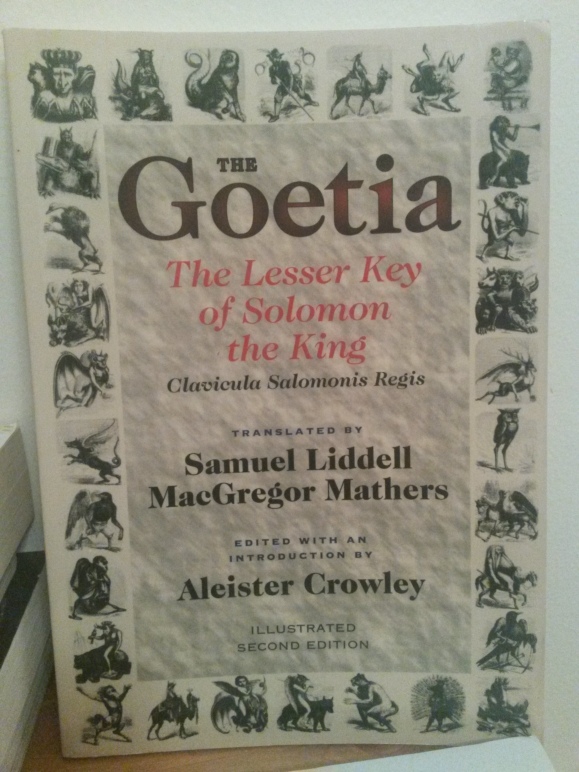
20160803_210305The Goetia – Translated by Samuel Liddell Macgregor Mathers, edited by Aleister Crowley, and supposedly written by King Solomon.
Weiser – 1995
This edition was first published in 1904.
Original edition of the Lemegeton compiled mid 17th century.
Text purports to be from 10th century BC.

The Key of Solomon, perhaps the most famous grimoire, is supposedly a set of magic spells left by King Solomon. The Lesser Key of Solomon, or the Lemegeton, is its dirty sequel. (Although sequel might not be the correct word here. It’s more like when a band releases a collection of crap songs and covers that weren’t good enough to make it onto their last album; the Lemegeton is the Reload of Solomonic grimoires.) The Goetia is the first of four (or five, depending on who you ask) sections of the Lesser Key. It was translated by Samuel Liddell MacGregor Matthews, head of the Golden Dawn, and published by his protégé, Aleister Crowley, although by the time this was published, Mathers and Crowley were no longer friends. It has the usual crap about drawing fancy triangles on the floor and all of that nonsense, but most interestingly, it contains the names and details of 72 demons (most of which come from Weyer’s Pseudomonarchia Daemonum). This edition also includes several of Louis Le Breton’s drawings that originally appeared in the second edition of Collin De Plancy’s Dictionnaire Infernal.

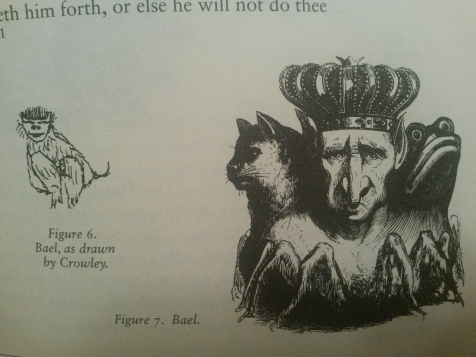
20160803_211006One of Louis Le Breton’s drawings of a demon, accompanied by Crowley’s version.

This is mildly entertaining to flick through, but the most interesting parts are included in Waite’s book. If you have Waite’s book, this book will only be interesting if you’re a big Crowley fan. The physical book is quite nice, as Weiser editions usually are, and it contains some introductory essays by and about Mr. Crowley. In my opinion, the best parts of this text are the pictures that Crowley drew of the demons:


Notice any patterns?


20160803_210327
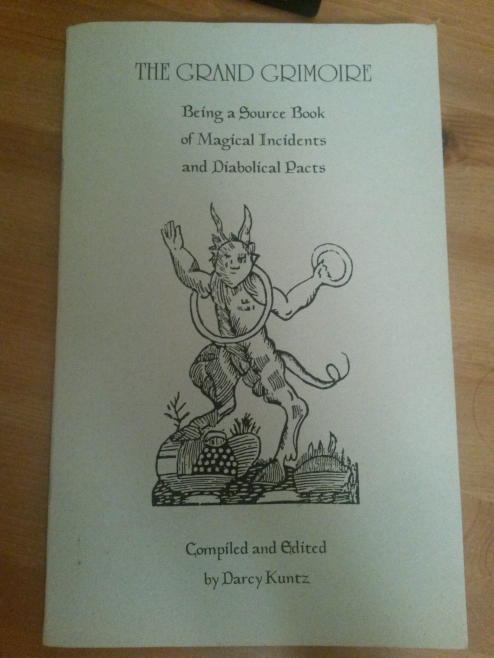
The Grand Grimoire: Being a Sourcebook of Magical Incidents and Diabolical Pacts
Compiled by Darcy Kuntz
Supposedly written by Antonio Venitiana del Rabina and King Solomon.
Holmes Publishing – 2008
Source material exists from 1521, 1522, and 1421.
Text purports to be from 10th century BC.

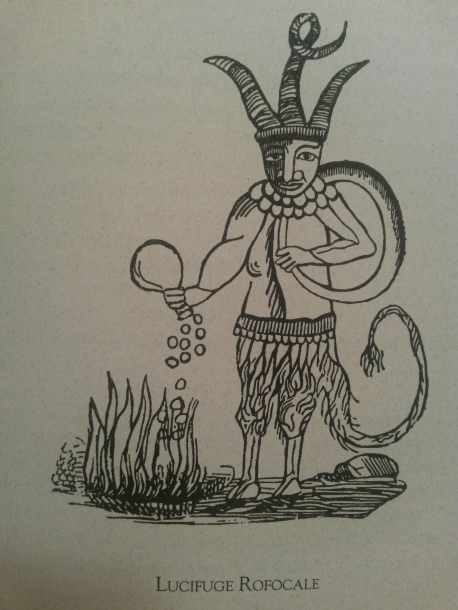
Now, this is it; the boldest and most infamous of all grimoires. Like the Goetia, the Grand Grimoire has its roots in Solomonic ceremonial magic. The first half gives instructions on how to summon Lucifuge Rofocale, Satan’s right-hand man, and the second half is about how to summon other demons.

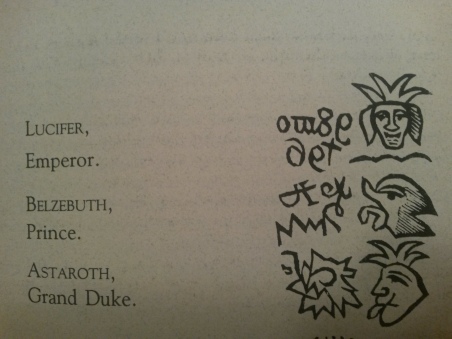
20160803_210901 Lucifer and his entourage don’t really come across as super scary in this one.

I bought this book a long time ago, but the first few times I picked it up to read through it, I became confused by the introduction. The title of the edition I bought is “The Grand Grimoire. Being a Source Book of Magical Incidents and Diabolical Pacts“. There’s no blurb on the back, and there is very little information about this edition online. All of these factors led me to think that it might actually be a book about the book that I wanted to read.  I sent a message to Darcy Kuntz, the editor, on Goodreads, but he never responded to me. However, after looking through it and doing a bit of research, I have figured out that this is a version of the Grand Grimoire and not just a book about that text.

20160803_210828

The bulk of this edition is a word for word transcription of the edition of the Grand Grimoire that our friend, A.E. Waite, published in the June 15, 1895 edition of his magazine, the Unknown World. (How fucking awesome is it that those scans are online?!? The Grand Grimoire starts on the 35th page of the pdf.) Kuntz’s book also includes some passages taken from Waite’s Book of Ceremonial Magic. The confusing introduction of this edition of the Grand Grimoire is a mash-up of the introduction in Waite’s magazine and some other sources. Entire phrases are lifted from the entry on the Grand Grimoire in Lewis Spence’s Encylopedia of Occultism, to which no references are given. Tut-tut, Mr Kuntz. Your name says it all! Plagiarism aside, I just wish the introduction had been a little clearer about how the book had been compiled. Then again, maybe the organisation was deliberately awkward to give off a more genuine grimoire experience. Summoning Belzebuth just wouldn’t be the same if the instructions you were following  were organized in a coherent order!

There are other parts in Latin or Italian that Kuntz claims were taken from a source titled “Le Grand Grimoire“, but he doesn’t elaborate on what this source was or how it differs from Waite’s translation. I have found a pdf of a more complete translation than Waite’s. This version includes an English translation of the Sanctum Regnum section, although the Citatio Praedictorum Spiritum section remains in Latin in both the pdf and Kuntz’s edition. The pdf version also includes a third section which is made up of other “magic secrets”, including the method of raising the dead that Eliphas Levi alluded to in the chapter on Necromancy in his Rituals of Transcendental Magic. (LET THE DEAD RISE FROM THEIR TOMBS!) What’s interesting about the inclusion of this ritual is the fact that Waite actually claims that Levi made it up. In chapter IX of the Complete Grimoire, he claims that this ritual “must be given on the authority of Lévi; for no available editions of the work which is in question, nor yet of the Red Dragon, nor indeed any ritual of my acquaintance, contains it. There is reasonable probability that he invented it to make out his case at the moment.” I know that the pdf version is definitely worded differently to Kuntz’s version, so either it is a different translation or it was based on another manuscript of the grimoire. If it was based on another text, maybe that text is the one that Levi had read. Then again, maybe somebody read Levi and decided to add his bit onto the end because they thought it was cool; I certainly did. This is the problem with pdf versions; you don’t really know how genuine they are. (It’s bit sad when you contemplate that you’ve spent hours of your life researching the authenticity of an online edition of a translation of a forgery.)

20160803_210350
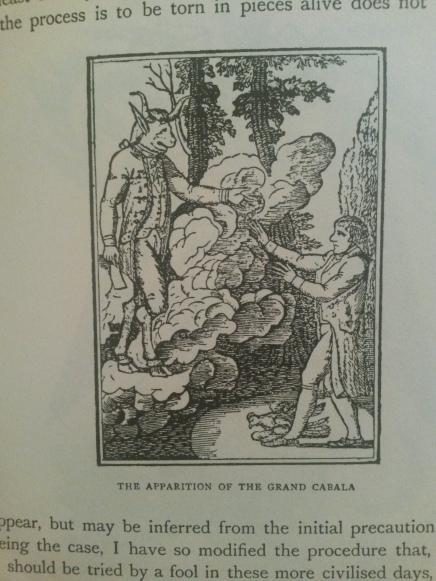
This is the lad who shows up if you perform the ritual of the Black Hen correctly.

Other things to note regarding the compilation of the pdf version:
One of the spells, “The Secret of the Black Hen”, was mentioned in Waite’s book, wherein he suggests that it was a late addition to the Red Dragon (another name for the Grand Grimoire).  The pdf also includes several spells from the Grimorium Verum, including instructions on “HOW TO CAUSE THE APPEARANCE OF THREE LADIES OR THREE GENTLEMEN IN ONE’S ROOM AFTER SUPPER”. There’s also another short section on commonly held superstitions that ends with the statement, “I have related these beliefs to amuse our readers but not to obligate the readers to believe all of them because they are mostly nonsense”. This pdf edition seems to be a compilation of different bits and pieces from a variety of grimoires and books about grimoires. It’s still pretty cool though; some of the spells at the end are grizzlier (and often far sillier/funnier) than the first two parts of the “authentic” text.

If you know anything about the compilation of the different versions of the Grand Grimoire, please leave a comment below or email me.

* * * *

20160803_210212

I have other grimoires in my collection, both books and pdfs, and I’ll doubtlessly get around to them at some stage. I suppose I’ve talked more about the actual books and what they’re composed of than the efficacy of what’s actually written within. It’s hard to imagine somebody reading through these texts and trying to carry out the rituals, but I’m sure that attempts have been made. I think that the tasks described in these books, although ludicrously tedious and difficult, are less likely to prevent somebody from attempting the rituals than is the fundamental problem of Black Ceremonial Magic addressed by Waite: these rituals require the sorcerer to supplicate God to give them control over evil demons in order that they may perform evil deeds. Why would an all-knowing, fundamentally good, God grant such a request? Also, in the grander rituals in which one of the rulers of Hell is evoked, the instructions given allow the sorcerer to essentially trick the demon into doing his/her bidding. These are not instructions on how to make a Faustian pact; it is expected that the sorcerer will get away without paying for the demon’s services. How many times would the demons fall for this kind of trickery before they cop on? Personally, I wouldn’t fuck about with a demon. It’s only polite to pay for what you’re given.

Preparing for Contact: A Metamorphosis of Consciousness – Lyssa Royal and Keith Priest

contact
Royal Priest Research – 1994

Worst of the blurst. This is a new low.

This is a book about how to prepare yourself to communicate with aliens. It’s made up of a series of messages that were sent from a several different extra terrestrial entities through a channeler named Lyssa Royal (now Lyssa Royal Holt). These entities are doing their best to help us prepare to change humanity’s mass consciousness in order to make free and open contact with the inhabitants of other worlds.

On deciding to read this book, I took one look at the cover and thought to myself; ‘Sweet Jesus, this is going to be worse than Whitley Strieber’s bullshit.” Oh, you can only imagine the hearty pat on the back that I gave myself when I opened it up to see that the first chapter opens with a quote from Transformation. (There’s another at the beginning of the 11th chapter, and the 10th opens with a quote from Communion.) Think about that for a second; the people who create this book actually look up to ol’ WhitStrieb.

Channeling is something that annoys me greatly, and nobody makes me want to publicly fill my britches with scat more than J.Z. Knight, the horrendously ugly mutant woman who has undergone failed plastic-surgery and claims to be a channel for Ramtha, a 35,000 year old, Atlantean paedophile. One day, I was watching a video of her and sticking pins into my gooch when one of the related videos caught my eye on account of its title being written in Chinese. I clicked it, and I was very glad that I had done so. It was a video of a bald man pretending to be an alien. At one point in the video, the alien’s accent becomes a hilarious mixture of Indian and the way Irish people sound in American movies. I became fascinated with this character, and I’ve spent more than a reasonable amount of time watching his videos. His name is Darryl Anka, and the alien he channels is named Bashar. Now this might seem only tangentially relevant, but as it turns out, Bashar actually appears in this book! Lyssa intrudes on Darryl’s turf and summons Bashar into her body in one of the final chapters of the book. Reading that part was like meeting an old friend.

Of course, there are others, most likely students of Anka or Priest, who summon the same types of aliens. Here’s another channeling Bashar.  This one seems particularly challenged. Fuck, the world is a silly, crazy place.

I’m not going to provide a cohesive summary of the book as that would require looking through it again. Instead, I’ll just mention a few of the more memorable ideas contained in this collection of silly nonsense.

  1. Don’t expect to make face to face contact with an alien. Aliens don’t ‘exist’ in our ‘reality’.
  2. Sometimes aliens ‘exist’ in our ‘reality’.
  3. How will you know that you’re actually talking to an alien and not just yourself? Well, it doesn’t really matter; aliens are often just our future selves.
  4. Aliens live too far from Earth to actually come down and visit us.
  5. Sometimes aliens come down to visit us.
  6. If we really want to communicate with aliens, the best thing to do is draw pictures and feel good.
  7. Every one of us has already made contact with aliens. In fact, we make contact with aliens on a regular basis. Whenever we enter the ‘theta reality’ we communicate freely with all kinds of entities. The theta reality is basically the state that we exist in between dreaming and waking up.

There were legitimately interesting aspects of this book. I was actually quite impressed with the comprehensive nature of the dogma that the authors are setting down. If you want to hear voices in your head badly enough, you will. The only difficulty with this will be for you to accept that the voices in your head are other than your own. If you manage to convince yourself that these voices are actually aliens, even if they’re only mildly alien versions of yourself, then it’s going to be quite difficult to argue with you; however, although I can’t prove that the voices in your head aren’t aliens, I can avoid you and tell all my mates that you’re a stupid cunt.

This is basically a new-age self help book with a bit of science fiction thrown in to spice it up. (It’s full of the same “let’s enter the next stage of human evolution” crap as Morning of the Magicans and the last chapter of Wilson’s The Occult.) The ideas are utterly moronic, but the author’s aren’t trying to convince their readers to kill themselves; they’re trying to encourage people to get together and be creative and open-minded. It was a shitty experience to read this book, but that’s because it was boring, repetitive and stupid. At least it wasn’t boring, repetitive, stupid and morally reprehensible like a christian self help book. I’ve also watched some videos of Lyssa Royal (skip to 12:50 to get to the summoning bit), and she’s simply too silly to dislike.

This book was written more than 20 years ago, and those 20 years have seen none of its predictions come true. That being said, there’s still people who are into this nonsense. It really does baffle me when I think of how weird and insane the human race can be. It seems that some people feel the need to believe in something greater than themselves, and all things considered, I suppose that telepathic aliens aren’t the lamest available option.

Oh, and just to remind you; there is a facebook page for this blog for anyone that wants to keep updated with all of the newest posts.


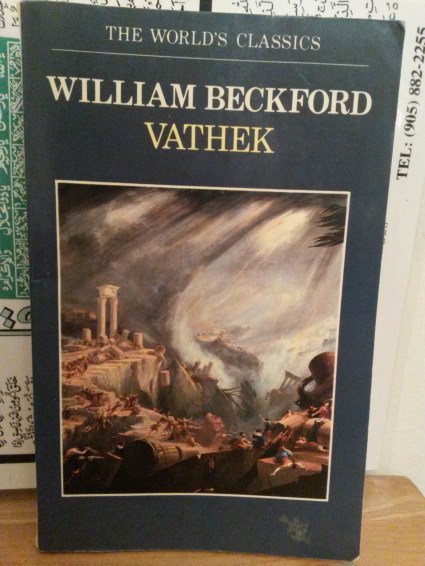
Vathek – William Beckford

20160802_230226
Oxford University Press – 1983 (Originally published in 1786)

This Gothic classic is the story of the Caliph Vathek and his series of poor life choices. Vathek is led astray by an evil giaour’s promises of more wealth and power. (‘Giaour’ is old Turkish slang for a non-Muslim. The reader pretty soon realises that the Giaour in question is actually some kind of evil spirit.) This is basically an 18th century English writer’s attempt to write an Islamic version of the Faust legend. Ahhhh, remember the good old days when appropriating culture was still considered a bit of a laugh?

Beckford was only 21 when he wrote Vathek, and he claimed it only took 3 days to complete. The story itself is quite good, but the characters are rather flat, and I think that it would have benefited from some development. Beckford later wrote the Episodes of Vathek (not included in this edition), which are additions to this text, but as far as I understand, they are side stories about very minor characters and don’t add anything to the central plot.

20160802_230201
Vathek and the Giaour

You can pick up a copy of Vathek for dirt cheap, or download the audiobook for free.  As far as Gothic classics go, this closer in its scope to The Castle of Otranto than Melmoth the Wanderer; it’s worth a read, but don’t expect too much.

Word on the street is that William Beckford was a shrub rocketeer.

The King in Yellow – Robert W. Chambers

2016-07-30 17.39.14.jpg
Wordsworth Editions – 2010 (Originally published in 1895)

This is the first time that I’ve reviewed a single book of short stories. Usually I wait until I’ve read everything (or at least all of the good stuff) by an author of short fiction, but this is a little different. (I do own a copy of the Complete Weird Tales of Chambers, but I haven’t got around to it yet.) The King in Yellow was one of Chamber’s earliest works, and it remains his best known; he spent most of the rest of his career writing popular romance novels, but nobody remembers them. Some of the tales in this book managed to induce a lingering discomfort (I read most of them just before going to bed and afterwards lay awake, thinking of the sinister King, sitting on his throne in his tattered yellow rags.), and overall, this book is pretty neat. If you haven’t read it and you’re wondering why it sounds familiar, it might be because elements of it were borrowed for the first season of True Detective.

So this is a collection of 10 short stories, only the first 4 of which really refer to the Yellow King. I’ll get to that later though, for now I’ll just explain the  others:

5. The Demoiselle d’Ys is a ghost story. It’s not scary, but it’s enjoyable (and not dissimilar to the stories of M.R. James).
6. The Prophet’s Paradise is really just a short series of of prose-poems. It was a bit arty for my liking.
7. The Street of the Four Winds doesn’t deal with the supernatural, but it is quite creepy.

After the above, all elements of the horrific, weird or creepy completely disappear.

8. The Street of the First Shell is confusing, dull, and not worth the effort that it requires.
9. The Street of Our Lady of the Fields is the romantic tale of an innocent young man who moves from one continent to another and falls madly in love with a rambunctious young woman. Needless to say, I was almost in tears by the end. This was beautiful.
10. Rue Barrée is a less interesting and ultimately less satisfying version of the previous tale.

Ok, let’s rewind to the best bit. The first 4 tales all revolve around an obscure book of horror and despair. (You might already see why I enjoyed this.) The King in Yellow is a two act play that drives its readers insane. Unfortunately for everyone concerned, it’s a very difficult book to avoid, and if you do start reading it, it seems impossible to put down. (It’s a bit like those modern horror movies where the people who watch the video get killed.) Just to clarify here; it’s the characters in Chambers’ stories that get to read the play, not his readers. He never gives an outline of the plot of the play, but each story begins with a short quote from it. The lack of details make it all the more intriguing, and although I am aware that it does not actually exist, I have spent a more than reasonable amount of time in the last week trying to figure out ways to get my hands on a copy. How fucking cool is the idea of a book that either possesses you or drives you mad? 10/10, would read. The snippets that Chambers does include drive me wild too. Check out the poem that introduces the first story:

“Along the shore the cloud waves break,
The twin suns sink beneath the lake,
The shadows lengthen
In Carcosa.

Strange is the night where black stars rise,
And strange moons circle through the skies
But stranger still is
Lost Carcosa.

Songs that the Hyades shall sing,
Where flap the tatters of the King,
Must die unheard in
Dim Carcosa.

Song of my soul, my voice is dead;
Die thou, unsung, as tears unshed
Shall dry and die in
Lost Carcosa.”

Absolutely deadly. Does Carcosa sound familiar? That might have something to do with the fact that it was first mentioned in An Inhabitant of Carcosa by Ambrose Bierce. Chambers borrowed other elements Bierce’s fiction, and elements of his own fiction were in turn borrowed by Lovecraft.

I really liked 7 out of the 10 stories in here, but it would really make more sense if the book was called ‘The King in Yellow and some other stuff”. The stories at the beginning are totally different to the ones near the end, and if you like weird tales exclusively, you won’t be missing out if you don’t bother with the last few. I would advise anyone who is going to read this to save the best for last; read the last 3 stories first, then move on to the 5th, 6th and 7th, and finish with the first 4.

As a final suggestion:
If you have read this book and haven’t seen the first season of True Detective, watch it now. If you’ve seen True Detective but haven’t read this, read it now.  If you haven’t read this nor seen True Detective, get your act together.

(Most of) The Short Stories of Ambrose Bierce

bierce
The Collected Writings of Ambrose Bierce
Citadel Press – 1994 (Originally Published in 1946)

I bought this book for 2-3 stories in 2012, and only got around to reading it cover to cover within the last 6 months. This ‘collected works’ is not a ‘complete works’ as I had hoped for when I bought it. (There was a 12 volume edition of his works printed about 100 years ago, but I don’t know how complete that is either.) I found the first collection of short stories in here to be the least enjoyable by far. I spent more time getting through that first 100 pages than all of the rest put together. I found that all of the short story collections, aside from Negligible Tales, are available on Librivox as audiobooks, and so I loaded these onto my phone and listened to them whilst cooking dinner every day.

Bierce was a rather interesting man. I first heard of him in the third From Dusk Till Dawn movie. (The third film was way better than the second one, but nowhere near as good as the first. I haven’t watched the TV series.) I’ve also had to teach his short stories to high-school students on a few different occasions. There’s an essay in the introduction to this book that makes him out as a very cranky man, but I didn’t really get that impression from his stories. He definitely had a dark sense of humour, and he could be very, very funny. His wife and children all died before him, and at age 72 he moved to Mexico by himself and disappeared. In one of his last letters to his family, he wrote “Goodbye — if you hear of my being stood up against a Mexican stone wall and shot to rags please know that I think that a pretty good way to depart this life. It beats old age, disease, or falling down the cellar stairs. To be a Gringo in Mexico — ah, that is euthanasia!”
Ambrose Bierce was fucking cool.

I looked online for a comprehensive list of his short stories, but every list that I found omitted a bunch or contained the names of poems, essay and fables. In this post I have listed all of the stories in the editions of the texts that I read. (I will also list all of other known independent stories/collections at the bottom.)

Ambrose_Bierce

In the Midst of Life (Tales of Soldiers and Civilians)
(“A Horseman in the Sky”, “An Occurrence at Owl Creek Bridge”, “Chickamauga”, “A Son of the Gods”, “One of the Missing”, “Killed at Resaca”, “The Affair at Coulter’s Notch”, “The Coup de Grâce”, “Parker Adderson, Philosopher”, “An Affair of Outposts”, “The Story of A Conscience”, “One Kind of Officer”, “One Officer, One Man”, “George Thurston”, “The Mocking-Bird”, “The Man Out of the Nose”, “An Adventure at Brownville”, “The Famous Gilson Bequest”, “The Applicant”, “A Watcher by the Dead”, “The Man and the Snake”, “A Holy Terror”, “The Suitable Surroundings”, “The Boarded Window”, “A Lady from Redhorse”, “The Eyes of the Panther”)

This collection is split into two sections. The first is Tales of Soldiers. Although this contains some of Bierce’s more popular stories (An Occurrence at Owl Creek Ridge, Chickamauga…), it’s by far the hardest section to get through. Some of these stories are really dull, and almost every one of them features a twist ending. That said, this collection contains George Thurston, one of my all time favourite stories. (Imagine Hemingway crossed with Monty Python.)

The second section, Tales of Civilians, is where things get more interesting. I think it’s appropriate to refer to Bierce’s work as ‘weird fiction’, but it’s not quite weird in the same way that Lovecraft is weird. His stories often deal with the supernatural, but they’re rarely scary.

Different editions of this collection contain different stories.

Can Such Things Be?
(“The death of Halpin Frayser”, “The secret of Macarger’s Gulch”, “One summer night”, “The moonlit road”, “A diagnosis of death”, “Moxon’s master”, “A tough tussle”, “One of twins”, “The haunted valley”, “A jug of sirup”, “Staley Fleming’s hallucination”, “A resumed identity”, “A baby tramp”, “The night-doings at “Deadman’s””, “Beyond the wall”, “A psychological shipwreck”, “The middle toe of the right foot”, “John Mortonson’s funeral”, “The realm of the unreal”, “John Bartine’s watch”, “The damned thing”, “Haïta the shepherd”, “An inhabitant of Carcosa”, “The Stranger”)

These are best of Bierce’s darker, spookier tales. Again, none of these stories are terribly scary. It feels like they were written to make you think rather than to make you scream. I liked this collection though. This is the one you want if you’re a fan of Robert W. Chambers or the first season of True Detective. (See Haïta the Shepherd and An Inhabitant of Carcosa)

Different editions of this collection contain different stories.

Negligible Tales
(“A Bottomless Grave”, “Jupiter Doke, Brigadier-General”, “The Widower Turmore”, “The City of the Gone Away”, “The Major’s Tale”, “Curried Cow”, “, “A Revolt of the Gods”, “The Baptism of Dobsho”, “The Race at Left Bower”, “The Failure of Hope & Wandel”, “Perry Chumly’s Eclipse”, “A Providential Intimation”, “Mr. Swiddler’s Flip-Flap”, “The Little Story”)

Fairly negligible alright. There’s a few funny ones, a few very weird ones, and one (Jupiter Doke) that I don’t get at all. City of the Gone Away is definitely worth a read.


The Parenticide Club
(“My Favourite Murder”, “Oil of Dog”, “An Imperfect Conflagration”, “The Hypnotist”)

Without doubt, my favourite section/collection. These four tales are narrated by individuals who have killed their parents (and others). There’s a thoroughly enjoyable nastiness to these characters. The third story, An Imperfect Conflagration, contains what may be the single greatest opening line in the canon of English literature. Here is a text version, and here is an audiobook version. These stories are not scary in the least, but they are truly vile. Do yourself a favour and read them. Honestly. This is the good stuff.


The Monk and the Hangman’s Daughter
This is a novella. Apparently it’s Bierce’s retelling of a German Gothic novel. I didn’t know that when I read it back in early 2012. To tell the truth, it wasn’t shit or good enough to remember.


The following collections were not included in the book pictured above.

Present at a Hanging
(“Present at a Hanging”, “A Cold Greeting”, “A Wireless Message”, “An Arrest”, “A Man with Two Lives”, “Three and One are One”, “A Baffled Ambuscade”, “Two Military Executions”, “The Isle of Pines”, “A Fruitless Assignment”, “A Vine on a House”, “At Old Man Eckert’s”, “The Spook House”, “The Other Lodgers”, “The Thing at Nolan”, “The Difficulty of Crossing a Field”, “An Unfinished Race”, “Charles Ashmore’s Trail”, “Science to the Front”)

This collection is pretty good. The stories are mostly standard ghosty Bierce. Not hugely memorable, but still fun. The Librivox version was perfect for my bus ride into school. Link to Audiobook version here.


Bodies of the Dead
(“That of Granny Magone”, “A Ligh Sleeper”, “The Mystery of John Farquharson”, “Dead and ‘Gone'”, “A Cold Night”, “A Creature of Habit” )

This is quite similar to Present at a Hanging. These stories are all very short and about corpses. The first tale, That of Granny Magone, is very obviously an earlier draft of The Boarded Window. I found this collection in an online edition of Can Such Things Be? that also includes most of Present at a Hanging.


The Ocean Wave
(“A Shipwreckollection”, “The Captain of “The Camel””, “The Man Overboard”, “A Cargo of Cat”)

This is a short collection of stories about lads on a ship. Not great. Link here.


The Fourth Estate
(“Mr. Masthead, Journalist”, “Why I Am Not Editing “The Stinger””, “Corrupting the Press”, “The Bubble Reputation”)

Another collection of stories on a particular topic. This time it’s journalism. I read these stories out of order because I didn’t know there was a sequence. They didn’t make much sense to me at the time, and they weren’t interesting enough to reread. Link here.


I’ve spent a lot of time reading Bierce recently, and while I really enjoyed some of it, a lot of it I could have done without. There are collections out there of just his ghost stories, so  if you’re interested in checking him out, I’d recommend picking one of those up and downloading the audiobook version of the Parenticide Club. If you are a fan, the book that I have is actually pretty good. All of his good stories are in there, and anything else you can find online if you really want it. I didn’t review his fables or the Devil’s Dictionary because I haven’t read them start to finish, but they are hilarious. They’re the kind of thing that you’ll flick through for a chuckle now and then.

I did not read or review The Land Beyond the Blow, The Fiend’s Delight, or Cobwebs from an Empty Skull. Also, I have seen several references to a story named “The Time the Moon Fought Back” from 1911, but I can’t find it anywhere. I don’t know whether it really exists or not. Some lists of Bierce’s short stories contain one or more of the following: Hazen’s brigade, The Ingenious Patriot, Tale of the Sphinx, Revenge, and Visions of the Night. These are not short stories; they are fables, poems or essays. If you notice that I have missed any actual short stories, or know where I can read “The Time the Moon Fought Back“, please let me know.

 

Foucault’s Pendulum – Umberto Eco

fp
Ballantine – 1990 (Originally published in Italian in 1988)

Most of the books that I review here are either too shit or too enjoyable to be clever. This one however, while it is rather enjoyable, is a rather astute piece of writing.

The plot is surprisingly simple. I’ll outline it in a way that won’t ruin the story for you: 3 book nerds, for a laugh, decide to patch together a ridiculous conspiracy theory. After a short while, they, and others, start to take their conspiracy too seriously and things get fairly messed up. That’s it. But if that’s the whole story, why is the book 500+ pages long? Well, Eco goes into detail, a LOT of detail, on the conspiracy that his characters are creating.

While the book is filled with interesting facts from what must have been an absolutely enormous amount of research, it’s not so much the conspiracies that are of interest as it is the psychology and biology of conspiracies and arcane ‘knowledge’. To put it another way, this is not a book about conspiracy theories in the same way that the Da Vinci Code is; this is a book about how conspiracy theories work. (Eco, when asked if he had read the Da Vinci Code, claimed that Dan Brown was one of the characters in this book.) While this book will satisfy readers of conspiracy fiction by mixing and matching their favourite secret societies and magicians, it will also force that reader to contemplate how silly most conspiracies really are. The way Eco engages with conspiracies only to end up making fun of them is really tactful. He never denies that they’re fun and interesting, indeed he would have had to have been a severe masochist to have thought that and written this book, but ultimately, he gives very little credence to any of them. Ah Umberto, a man after my own heart!

I really enjoyed this book. The subject matter is precisely the kind of crap that I like reading about, and the characters were great too. It does get a little heavy on the details at times, and I’d recommend having a decent understanding of who the Rosicrucians, Gnostics, and Templars were before you start. If you do decide to read it and feel like you’re getting bogged down in the details of the eclipse that occurred during the 14th birthday party of the blind translator of a coded manuscript detailing the fate of an obscure heretical sect from Southern France, you can probably just skim through those paragraphs without missing out on crucial plot details.

The book opens with the narrator snooping around the National Conservatory of Arts and Crafts in Paris. He has an appointment at midnight under the Foucault Pendulum housed therein, and he is trying to find a place to hide where he will not be noticed by the security guards as they are closing up. When I discovered that my University also houses a Foucault Pendulum, I determined to recreate that scene to the best of my ability.

I waited until the 23rd of June, the same day that the book’s narrator goes to see the pendulum in the Conservatoire. Unfortunately, I found it very difficult to sneak effectively, as there were very few people around to be suspicious of me. Regardless of this, I surreptitiously tip-toed into the building, constantly casting glances behind me in the hopes that I was being trailed. When I got to the pendulum, Disaster! Somebody else was standing there looking at it. I contemplated asking if he was there for the same reason as myself, but in the interests of my own personal safety (and dignity), I decided against doing so. I pretended that I wasn’t interested in the pendulum; I walked straight by it, exited the building, and bought a cup of coffee in a nearby cafe. I waited maybe 10 minutes and returned. The coast was clear, so I took the following video and ran for it.

I fear they may have seen me leave the campus. I am in hiding now, but I know that they will find me eventually. All I can do is wait. I might as well sit here and look out the window at the willow tree in the garden outside.

It’s so beautiful.


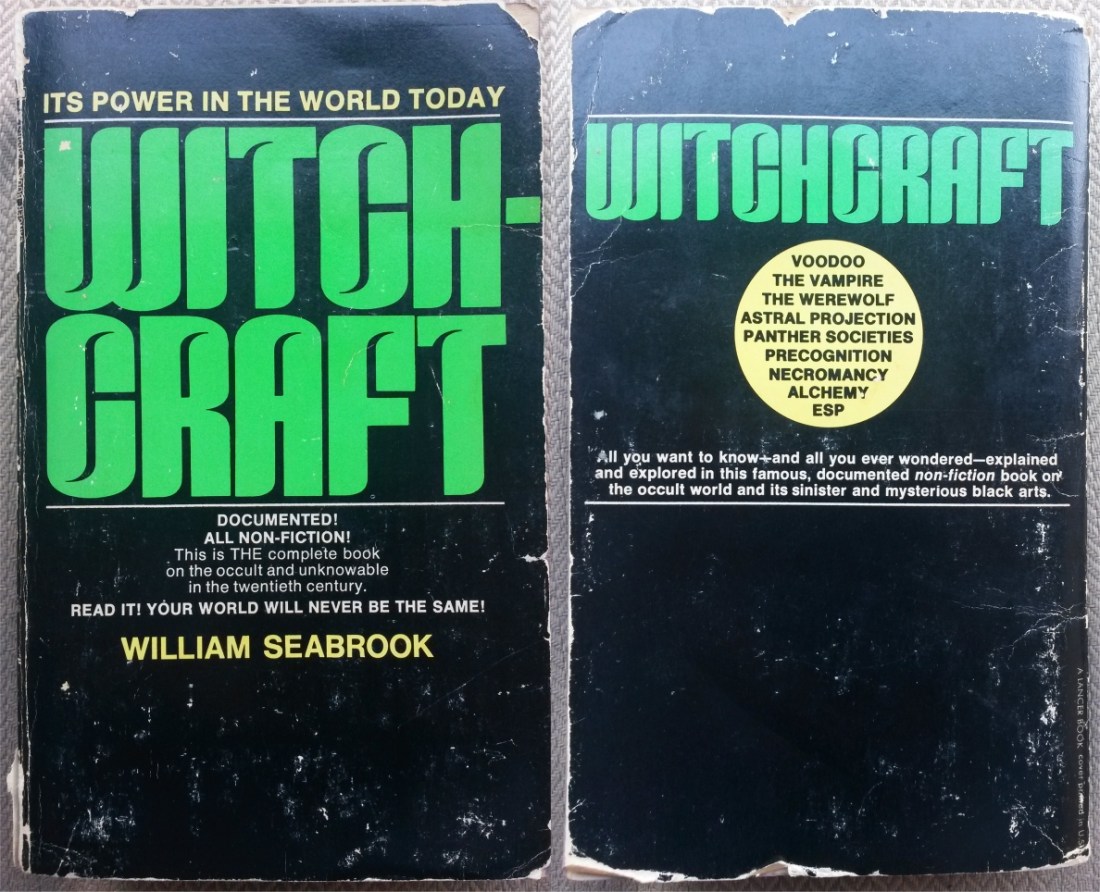
Witchcraft (Its Power in the World Today) – William Seabrook

witchcraft

Willie Seabrook was an explorer, cannibal, black magician, bondage freak and journalist. This is his book on Witchcraft, and it’s fucking wonderful. The book deals with Seabrook’s personal experiences with witchcraft, and while a lot of it is fairly unbelievable, it is deadly craic. It’s a bit like reading a Dennis Wheatley novel told in the first person. I put this on my to-buy list after reading about it in Cavendish’s Black Arts, but after seeing it referred to in my favourite section of the Illuminatus! trilogy, I knew I had to get my hands on it. The  Illuminatus authors have Seabrook playing a part in a conspiracy involving Ambrose Bierce, Arthur Machen, Aleister Crowley, Robert W. Chambers, J.K. Huysmans, and H.P. Lovecraft. (Expect a post on Bierce soon; I reckon I’ll get around to Chambers before Christmas.) It is implied that the Illuminati murdered Seabrook over what he published in this book and made his death look like a suicide.
20160625_221219
(p. 296, Illuminatus! Trilogy)
After reading this, I had to own a copy of Seabrook’s book. It’s not super rare, but it took me a while to track down a copy for what I considered a reasonable price. My edition has a fairly boring cover, but the edges are coloured an interesting purple.
purpleaki
Beyond the Mauve Zone?

So there’s three parts to the book. Each part is comprised of short accounts of different things that Seabrook witnessed. The first part is on Doll magic, and it’s probably my favourite. There’s one particular story about a deceitful white explorer in Africa that I absolutely loved. A lad cheats a tribe out of money and soon thereafter goes missing. Seabrook was mates with the lads in the tribe, and one day, one of the boys asks if he wants to see something interesting. Guessing that it has something to do with the disappearance, Willie warns him that if its the missing white man, he’ll be obliged to tell the police. The native laughs this off and brings Seabrook into the jungle and shows him something good. It’s the rotting corpse of another native, strung up to a tree. The ropes binding it to the branches are digging into the flesh of the corpse’s bloating neck, and things are starting to ooze. The corpse is wearing the clothes of the missing explorer, and if Seabrook was to have gotten up close, he would have seen clippings of the missing explorer’s hair stuck onto the head of the corpse.

The missing explorer was found dead a few days later after having died of a constricted windpipe. Black magic had caused what had happened to the corpse to also happen to the victim.
Fuck yes. That is the good stuff.

The second part of the book is on Werewolves and Vampires, and the third is on general occulty stuff. It tells of Seabrook’s friendship with Aleister Crowley.  This book is the origin of that famous story of Crowley walking behind a man, mimicking his gait, and consequently being able to make him collapse without touching or speaking to him. There’s also a part in here about Seabrook’s relationship with Upton Sinclair, author of Oil!, the most boring book I have ever read.

The book ends with a few chapters about kinky psychic-bondage experiments that Seabrook performed with his lover. He had a special gimp mask made for his partners that was basically designed to maximise sensory deprivation. He’d make his girlfriend Justine wear this mask, then tie her up by the wrists until she started hallucinating. They hoped these hallucinations would tell the future. The following images are not from the book, but they are extremely relevant. (They’re from an article about Seabrook from a 1942 edition of Click Magazine.)
seabrook's babe
One of Willie’s babes. Looks like he knew how to pick them.

seabrook mask
He was a man that knew what he liked, God bless him.

Overall, this book is delicious. The stories might seem unbelievable, but that hardly matters. They’re entertaining. Plus, the author maintains that he doesn’t believe in magic the whole way through the book, and his incredulity is charming. Seabrook comes across as  a remarkably interesting, and I am definitely going to keep my eye out for his other books. There were a few times in this one when he would write something quite rude, and it would take me a while to figure out if he was being bold or not. At one stage, I believe he refers to a woman’s vagina as a pickle-jar, but maybe he meant something completely different.  Like other similar books, this contains references to other texts that I am going to have to try to get my hands on. Unfortunately, some of the books mentioned herein are fairly rare, and any copies I can find are extremely expensive. Oh well, I guess I’ll have to wait till I’m rich. Until then, I’ll leave you with some awesome pictures that I found after hunting down a reference from this book. On page 20, Seabrook mentions an article from a 1939 edition of Life magazine about Ozark superstitions. Finding the full thing online really made me happy that we live in the internet era. (Full article here)
witch
This is why I do this blog. DEADLY!

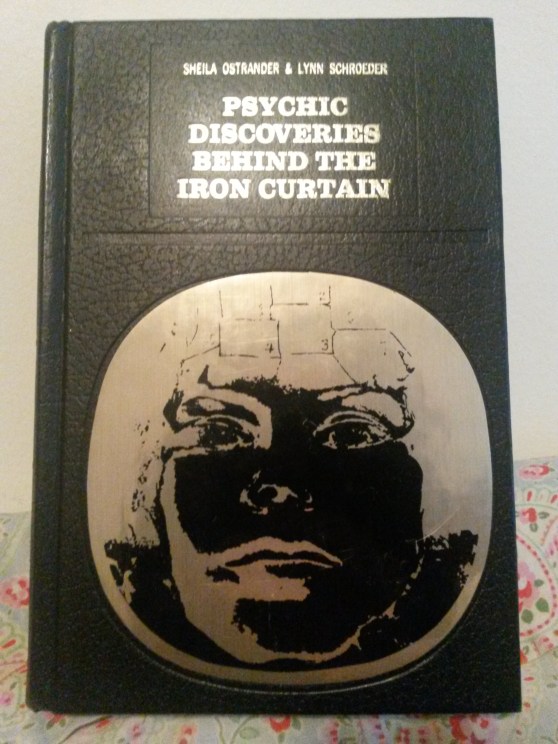
Psychic Discoveries Behind the Iron Curtain – Sheila Ostrander & Lynn Schroeder

20160617_180123
Laffont – 1970
I’m not going to read any more shit books for a long time. This horrendous pile of nonsense has ruined my month. ‘Look at the title though!’, I hear you say, “What did you expect, you fool?” Well, I knew it was going to be awful; I just underestimated how unbearable the nonsense would be.

This book was written in 1969/1970, and its major claim is the Russians are on the verge of several major breakthroughs in the field of parapsychology. The writing isn’t too bad; the book was clearly well researched, and there are lots of examples given, each described in detail. The main problem with reading this book is that it’s almost 50 years old, and, as far as I can tell, nothing much has come of any of its discoveries or predictions. Some old Russian lad guessed a bunch of cards; pffffft, who cares?  While not quite as nutty as Morning of the Magicians, this has a similar vibe to it, and it actually makes reference to Pauwel and Bergier’s work. While reading this one, I found myself constantly wondering if people 50 years ago were more gullible, but then I found this video (of two absolute legends), and I realized that people today are no better.

There is another book from the same authors simply titled Psychic Discoveries. I would have thought that that was just a different title for this book, but I read something online that suggests that it’s actually an earlier version. I’m not sure. They also wrote a book called Psychic Discoveries: The Iron Curtain Lifted in 1997, but hopefully I’ll never find a copy of that one.

Here’s a video of the actual authors being interviewed. The host is a dork, but the ladies seem genuine.
side
Sheila Ostrander’s hairstyle is the only paranormal element of the video that remains unexplained.

I could discuss specific cases from the book, but why bother? It’s all a load of shite. The only specific thing that was interesting enough to remember was the laboratory experiment that was set up to see if a clairvoyant could prevent the events they had foreseen from happening. Let me clarify how that experiment was structured:

  • The psychic would sit down and try to read the future.
  • Once they had predicted what was going to happen, they would have to think about how they could stop that event from happening.
  • The next step would be to actually stop the foreseen event from happening.
  • If the psychic managed to prevent the foreseen event, the experiment would be deemed a success.
  • That’s right; the experiment would be deemed successful if the foreseen events did not actually end up happening.
  • The only way for the experiment to fail would be for the psychic to actually be psychic.

What the fuck were you thinking, you stupid Communist bastards!

I bought this as part of a set at a library book sale a few years ago. The other books in the collection are about aliens and psychics and the like.
20160617_192800
The physical books are really nice, and I’d love to see a complete list of all the titles published in this series. They were published by Laffont. (So far, I have only reviewed Chariots of the Gods?.)

The other big problem with Psychic Discoveries behind the Iron Curtain is that it’s 400 pages long. It was too boring to read much of in one sitting, and so I spaced it out over my bus rides to school and back. It took me about a month, but I couldn’t bare for this to eat into any of my leisure reading time. I read it because it had a gnarly title, but it wasn’t worth it. Don’t waste your time.

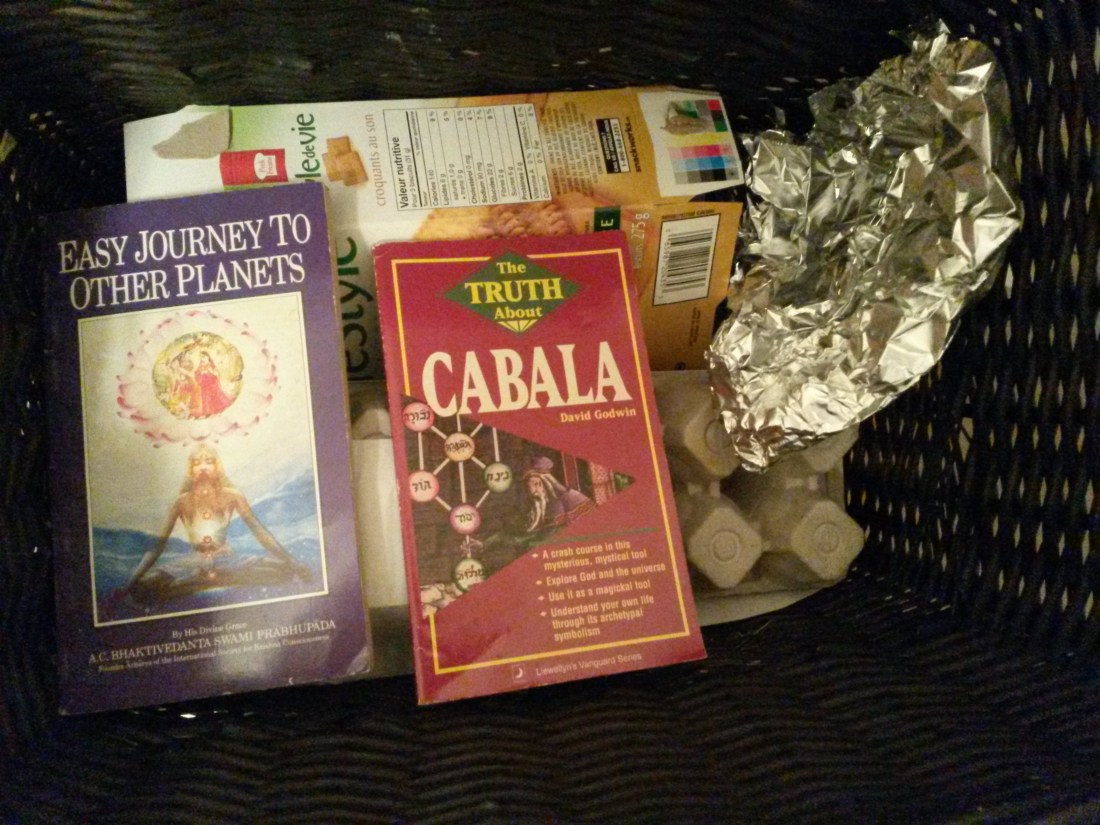
Easy Journey to Other Planets and The Truth About Cabala – Two pieces of trash

20160612_224655I thought these books were going to be pieces of shit when I bought them. I was right.

The Truth About Cabala – David Godwin
1994 – Llewellyn Publications
The one on Cabala isn’t too bad. I mean, if you wanted a little book to introduce you to the topic, this would do the trick. I’ve read a few books that required some understanding of Cabala (the Illuminatus! Trilogy, Transcendental Magic, Alan Moore’s Promethea series…), but I think the whole thing is a load of shit. Whatever though, this is only 50 pages long. I got through it in one sitting.


Easy Journey to Other Planets – A. C. Bhaktivedanta Swami Prabhupada
Bhaktivedanta Book Trust – 1997 (Originally published 1970)
Easy Journey to Other Planets is a really awful book. It starts off with the author claiming that the Bhagavad Gita pre-empted science in its discovery of antimatter. He then proceeds to reveal his complete misunderstanding of particle physics. The rest of the book is about how reincarnation is real. Overall, this is a crumby read, and although it’s quite short, it took me longer than expected to get through. Each day, I read a few pages as I shat in the toilet, but I couldn’t allow this nonsense to interfere with any other part of my life. Just thinking about this book brings a waft of shit to my nostrils.

20160612_224734
The face of a con-man.

I was hoping for some tips on making easy journeys to other planets, but all I got was some cretinous garbage about yoga. The author seems to believe that actually going to another planet would be a total waste of time. He says that the only way it would benefit us to visit a different planet would be for only our spirit to go. Fuck that. And the plonker doesn’t even give instructions on how to spirit-visit the planets; he gives tips on the things that you should do if you want to try to spirit-visit. Basically, this is instructions on how to get instructions. Truly, a piece of dirt. Fuck this shitty, scatty, awful, idiotic book.

20160612_224827
What would you want to do if you met God?
Ehhh, I’d like to muck about with him and some cows, please.


Two awful books that aren’t worth reading. I paid a grand total of 50 cents for the pair of them, and to tell the truth, I regret it.