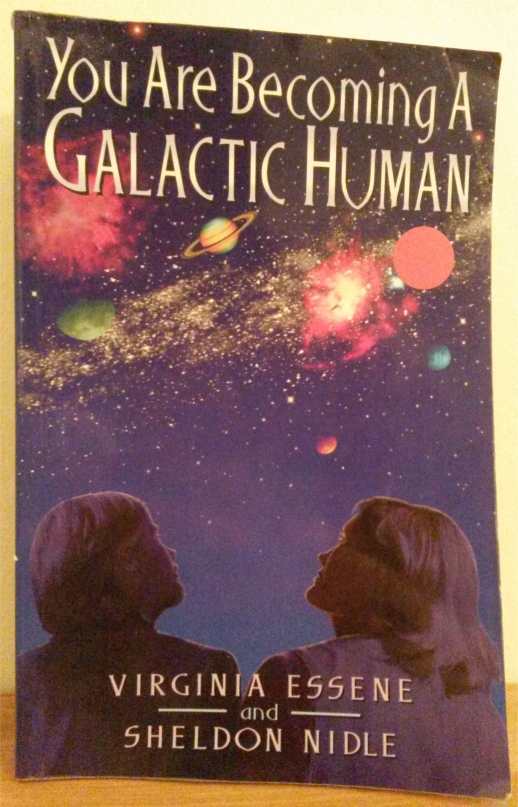
You Are Becoming a Galactic Human and (YHWH) The Book of Knowledge: Keys of Enoch

galactic-humanYou are Becoming a Galactic Human – Virginia Essene and Sheldon Nidle
1994 – S.E.E. Publishing

There are three books that I have started and never finished; Finnegans Wake by James Joyce, The Unnameable by Samuel Beckett, and now You are Becoming a Galactic Human by Virginia Essene and Sheldon Nidle. I really tried to get through each of them, but after a while I had to consider what I was going to gain from doing so and weigh that against all of the other things that I could potentially achieve in the time it would take to finish these boring, stupid nightmares. I can tolerate some Joyce and Beckett, but their aforementioned works are very definitely the literary equivalent of the Emperor’s new clothes; people like to think that they’ll seem clever if they manage to slog through them. Finishing You are Becoming a Galactic Human however, offers no such impetus. Although just as ridiculous and confusing as any obscurant modernist drivel, this book is not considered a classic by anyone. It’s a stupid piece of garbagey trash, and anyone who reads it and takes it seriously is a buffoon. If you’ve followed this blog for any length of time, you’ll know that I have a very low standard when it comes to literature, but this smear of shit in your underpants was positively too stupid for me to waste my time on.

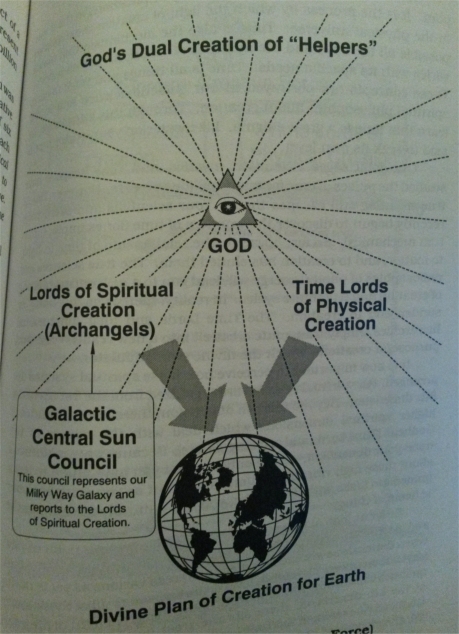
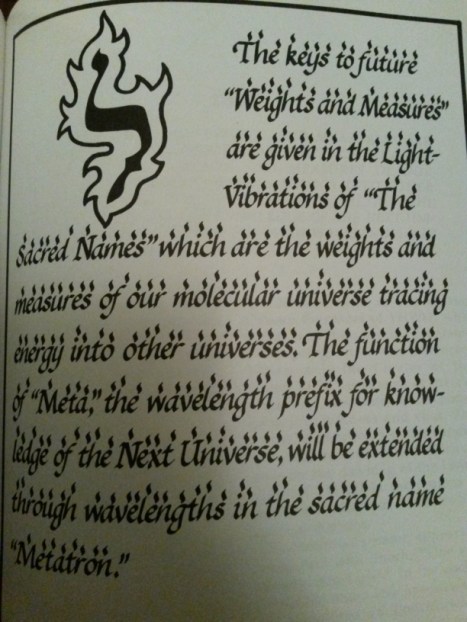
timelordsSorry, what?

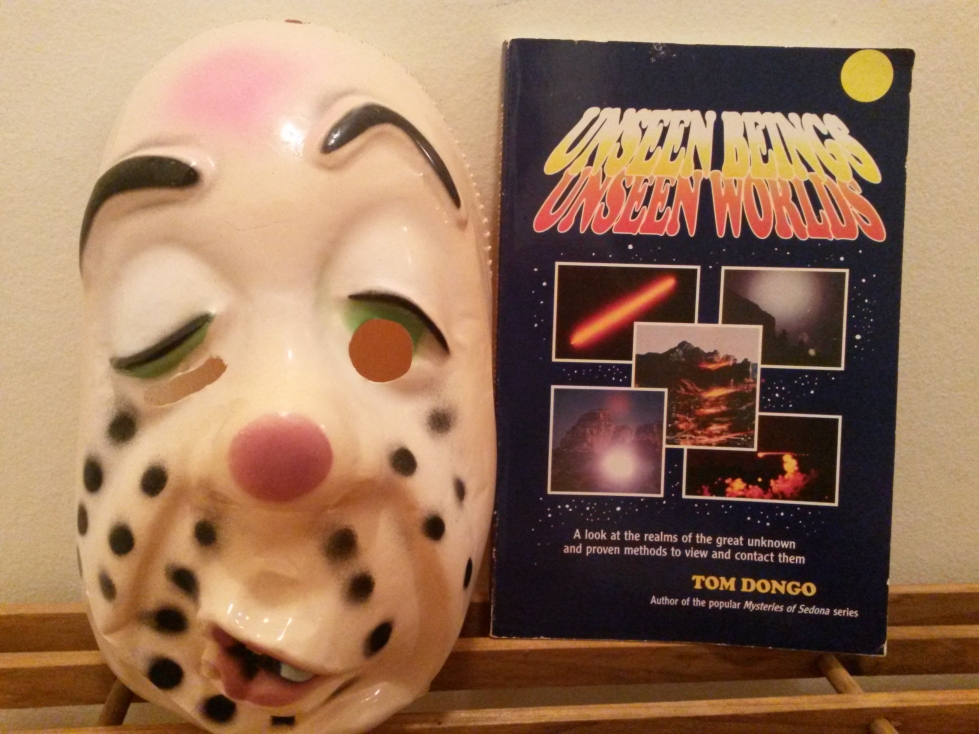
I review all kinds of nutty books on here, but there comes a point at which the content of a “non-fiction” book becomes so separated from reality that it is no longer intelligible or enjoyable. Bullshit has to have some basis in reality for it to be engaging. Neither The Legend of the Sons of God nor Chariots of the Gods are remotely convincing, but their authors at least attempted to provide some kind of evidence for their claims. Their evidence, however scant and shaky it may be, is based in things that can be checked. In comparison to Essene and Nidle, both Erich Von Däniken and T.C. Lethbridge seem like noble rationalists. The former pair of bozos’ claims are based on channeled messages from extra-terrestrial, extra-dimensional spirits that dwell in different galaxies.  I struggled with Preparing for Contact and Unseen Beings, Unseen Worlds for similar reasons, but as ridiculous as those books were, I could just about make out and accept the pretenses of the authors for long enough to allow myself to finish them. I got about 20 pages into You are Becoming a Galactic Human before I had to put it back on the shelf and admit defeat. This is next-level rubbish. Not even the closing message, delivered by the alien Jesus Christ, could compel me to finish this book of nonsense.

moonsUghhhhhhhhhhhh…..

Like Tom Dongo, Sheldon Nidle made himself instantly dislikable by boasting about how clever he is. The chap got some bullshitty degrees from a community college, and he literally thinks he’s a fucking prophet. Realistically, he’s a grown man who likes to play make-believe and has the mental capacity of a low-grade imbecile.

I put the book down when the authors claimed that the Earth was moving towards a ‘Photon Belt’ that would shift our existence into the 5th dimension and cause mental evolution and mass spiritual enlightenment. We were supposed to enter the Photon Belt at some stage between March 1995 and December 1996. Our entrance into the belt was to be signified by 72 hours of complete darkness. These three days would then be followed by 17 years of permanent light. It was during these 17 years that we were to develop ‘incredible psychic abilities’ including telekinesis and telepathy.
Sigh…

As usual, the authors string together as many new-age spiritual concepts as they can manage. I saw parts on chakras, Atlantis, crystals and my favourite old chestnut: telepathic communication with dolphins and whales. It also includes, and I didn’t bother to investigate why, a very inept drawing of some ancient Egyptian deities.

stupid
Even writing this review, I’ve been thinking of trying to read this again at some stage in the future. I know that putting this book down and reading something else was the dignified choice, but I can’t completely shake off the feeling of defeat. In an attempt to preserve some of my honour, I’m going to make a promise to myself, my readers, Virginia Essene and Sheldon Nidle:
I promise that I will read and review You Are Becoming a Galactic Human as soon as our Solar System enters the Photon-Belt.


While I’m on the topic of stupid books about intergalactic-spiritualism, I’ll share a few pics from what is one of the strangest books in my collection.
yhwh(YHWH) The Book of Knowledge: Keys of Enoch – J.J. Hurtak
The Academy for Future Science – 1977 (First published 1973)

In truth, I haven’t even tried to read this one, and I almost definitely never will. As far as I can tell, it’s a book of messages that were delivered to J.J. Hurtak by some kind of angelic entity named Enoch, and from what little I know about Hurtak, I’d imagine ol’ Enoch was probably an alien. J.J. Hurtak was in the enjoyable 2013 documentary, The Hidden Hand: Alien Contact and the Government Cover-Up, (It was on Netflix a while ago. It’s here now.), and he seems like a complete wacko. I picked this book up at a library sale for 2 or 3 dollars, and it’s fancy looking enough that I’ve been keeping it just to decorate my bookshelf.

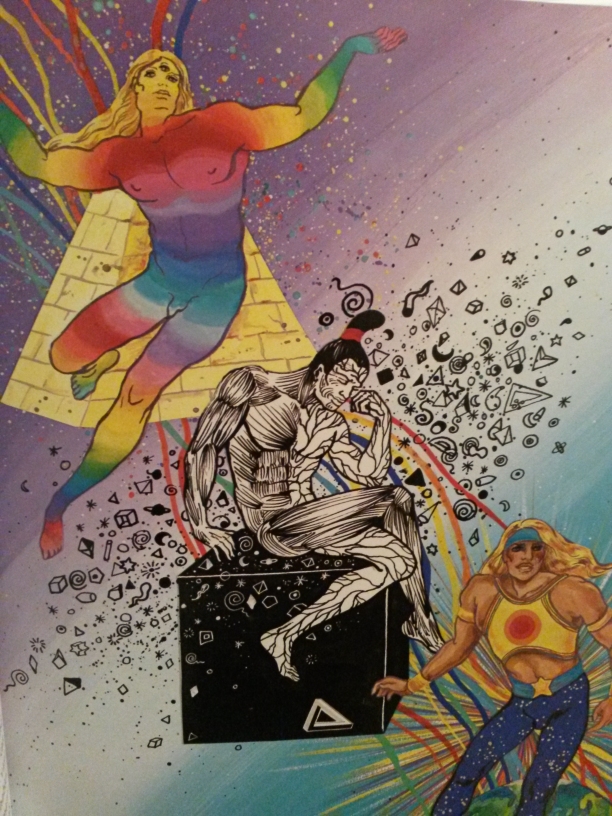
whoknowsThis book contains more than 600 pages of this kind of gobbeldy-gick.

shitting-dnaJust an Intergalactic Eunuch scatting molecular structures into deep space…

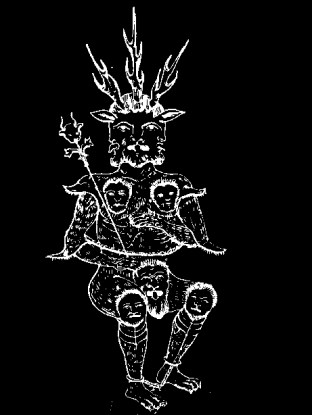
newagegarbageNot sure about the fruity Eqyptian Triclops or the black and white, naked Samurai, but the other guy is definitely 80s Vince Neil, right?

Flicking through this, all I see is an appalling mess of ridiculous pictures, pseudoscience and Biblical references. The notion of having to slog through this revelation of anal spew is genuinely frightening. People try to tell themselves that every experience can be a learning experience. I disagree. Once you have read a few really, really stupid books by people who believe they have talked to heavenly aliens, the only thing you learn from reading another is that the international list of cretins contains one more entry than you previously expected.

Don’t risk adding your own name to that list. Maintain your dignity and avoid these books.

Mrs. Radcliffe’s Novels

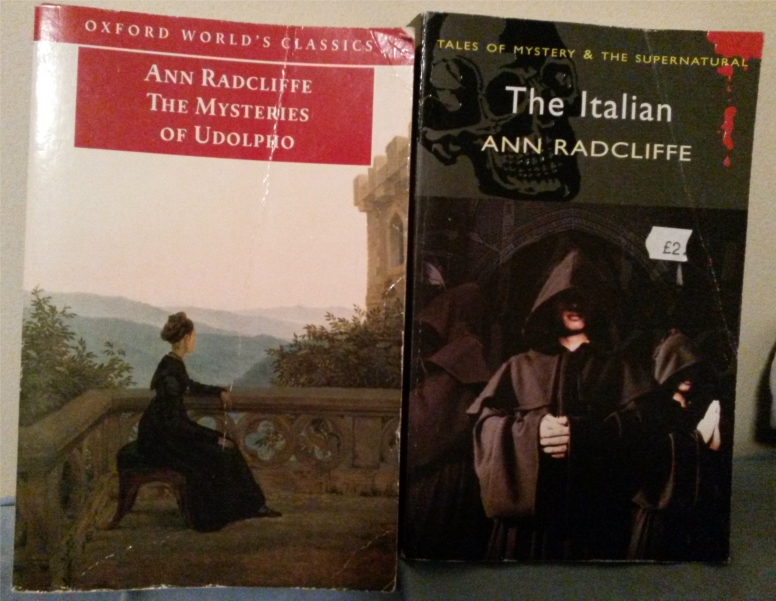
ann-radcliffe-novels

I don’t have much to say on these books that hasn’t been said before. Ann Radcliffe didn’t invent the Gothic novel, but she drastically improved it. Books like Castle of Otranto and Vathek are fun, but they’re both quite silly. Radcliffe’s novels came a few decades later, and while they’re still fairly silly, they contain interesting characters and plausible stories.

Radcliffe is famous for making the literary distinction between terror and horror. Terror, according to Radcliffe, is the fear caused by uncertainty; it’s the not knowing what’s making the slithering noises in your bedroom wardrobe. Horror is the climactic reaction to actually seeing the warty green skin and blood soaked fangs of the monster as it lunges towards you. Radcliffe claimed that terror was a far more effective method of thrilling an audience, and she masterfully weaves her tales so that they keep both her readers and characters guessing until the very end.

Her books contain all the secret passages, mysterious chambers, fiendish villains and innocent virgins that you’d expect, but unlike their Gothic predecessors, the plots of her books are not driven by supernatural forces. The strange muffled noises and shadows darting hither and thither are all eventually explained as the stories unfold. The threat of horror is never realized, but it is this very threat that creates the sense of terror that runs through these books. Radcliffe does suspense exceedingly well.

The Italian – Ann Radcliffe
Wordsworth – 2011 (Originally published 1797)
I read The Italian two weeks ago. It came out just a year after Lewis’s The Monk, and one could draw comparisons to the relationship between these two books and the relationship between The Castle of Otranto and The Old English Baron. While both books contain evil monks and the Inquistion, The Italian is more a response to The Monk than a rewrite, and it is definitely better book than the Old English Baron.

My copy is another Wordsworth Tales of Mystery and the Supernatural edition (I fucking love these books!), but I took most of this one in from the librivox audio version. The Librivox version is based on the first edition of the book (containing 33 chapters), but the Wordsworth version is the second edition (34 chapters). For the second edition, Radcliffe rewrote parts to make it seem that Ellena’s sweet singing voice was more attractive to Vivaldi than her body. The 5th chapter of second edition, in which Vivaldi visits Bianchi’s corpse, is also a new addition. If you only own the first edition and want to read this 3 page addition, you can do so here. There may be other very minor differences, but I got through the book going back and forth between the two editions, and it didn’t cause any confusion.

While I agree that terror can be far more effective than horror, I don’t think that horror needs to be abandoned completely. I certainly enjoyed this book, but I preferred the Monk. Radcliffe’s book doesn’t need the supernatural to make it work, but it does need the introduction of a new character at a very late stage in the plot, definitely a bit of a Deus Ex Machina. It is definitely worth a read though. Schedoni is a real cool guy.

The Mysteries of Udolpho – Ann Radcliffe
Oxford – 1998 (Originally published 1794)
The Mysteries of Udolpho is Radcliffe’s most famous book. I read it 3 years ago, but I remember really enjoying it. I had started a new job a few months previous, and I was starting to realize that I could get away with spending most of the day reading online. The night before, I would email myself a pdf file of the book I wanted to read, renaming it to something like “contract-agreement.pdf” so that the boss wouldn’t be able to give me any grief if he checked my browsing history. I had begun with a few short stories, and I only started on this one to see if I could get away with it. It’s more than 600 pages, and I finished it in a week. (I worked in that office for another year, and I managed to read a further 66 books at work in that time.) Reading Udolpho, you can see where writers like Lewis, De Sade and Le Fanu (especially in Uncle Silas) got many of their ideas. I really liked this book.

Apparently Jane Austen did too. Her novel Northanger Abbey is referred to as a parody of Radcliffe’s works. It’s the tale of 17 year old Catherine, an avid Radcliffe fan. Catherine goes through life imagining herself the heroine of one of Radcliffe’s novels. I waited until after I had read The Italian to read this one, but it really only makes direct reference to Udolpho.

norrthanger-abbey
Northanger Abbey – Jane Austen
Penguin – 1994 (First published 1817)
I wasn’t expecting much from this, and to tell the truth, I didn’t get much either. It’s a cute little romance that has stuff to say on femininity and feminism, but I’ll let you look elsewhere for that. My favourite parts were undoubtedly the sections where the protagonist is imagining that she’s the character in one of the books she has been reading. I also listened to two audiobook collections of Stephen King’s short stories last week, and I found that I was becoming suspicious of nearly everything around me. I therefore found Catherine’s plight very relatable.

The real reason I wanted to read this book was its connection to Montague Summers. At an early stage in the novel, Catherine’s friend promises that she will give her a small collection of books. Those books are:

Castle of Wolfenbach,
Clermont,
Mysterious Warnings,
Necromancer of the Black Forest,
Midnight Bell,
Orphan of the Rhine,
Horrid Mysteries

For years it was presumed that Austen had made these titles up herself, but Montague Summers, the absolute legend, actually rummaged through libraries until he found copies of each text. They have all been republished, and I intend to buy, read and review copies as soon as I am a wealthy man.

To conclude, Ann Radcliffe was very cool. Her books, though imperfect, were hugely influential and remain thoroughly enjoyable. They’d be perfect for taking on a lazy holiday, and I’ll definitely be keeping an eye out for her other novels. Jane Austen, on the other hand, was fairly boring, and I probably won’t be reading any of her other novels in the foreseeable future.

A Big Mistake… Dictionary of Demonology vs. Dictionary of Witchcraft

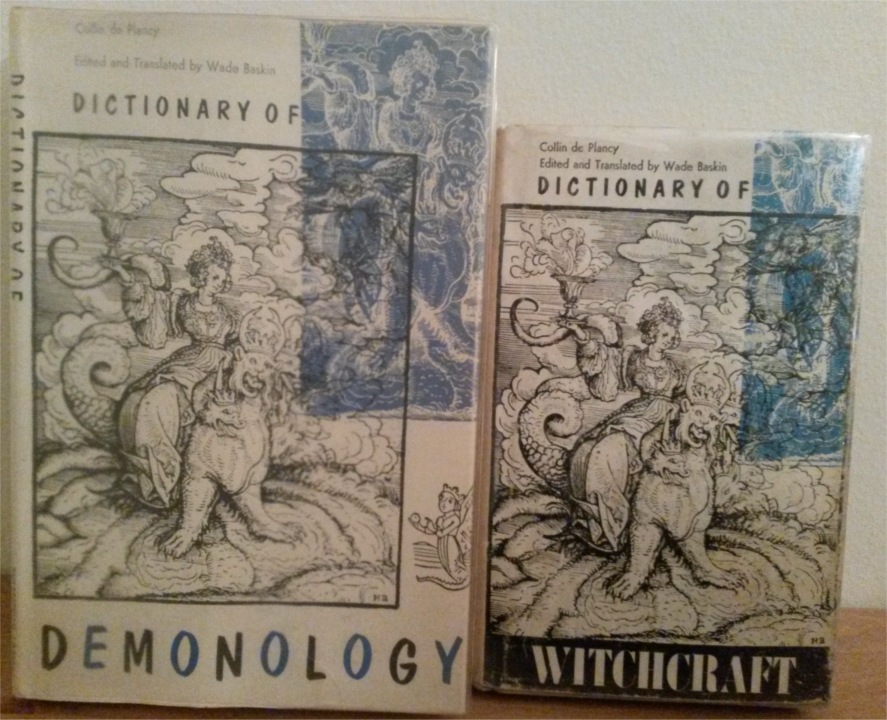
dictionaries-of-witchcraft-and-demonologyDictionary of Demonology and Dictionary of Witchcraft – Collin De Plancy
(Edited, abridged and completely banjaxed by Wade Baskin)

Philosophical Library – 1965

My main reason for starting this blog was to share my thoughts and queries on the books I was reading. I had seen tumblr blogs that consisted of pictures of the kinds of books that I review here, but there was rarely any discussion on them. Goodreads usually has the books listed, but a lot of them are reviewless. There’s facebook groups that discuss books, but I generally find that their scope is either too broad or too specific for my tastes, and most of the users are insufferable imbeciles. I thought a blog to be the perfect medium to present my musings. The first book I reviewed was Wade Baskin’s translation of Collin De Plancy’s Dictionnaire Infernal.

Reading that review, you’ll notice that the focus wasn’t really on the content of the book; it was more a post about my confusion over its publication and edition. Well, yesterday, 3 years after buying my copy of the Dictionary of Witchcraft, my confusion over its publication was finally alleviated.

In my initial post, I discussed my suspicion that Baskin had split De Plancy’s text into two separate volumes; the Dictionary of Witchcraft and the Dictionary of Demonology. I noted that the likelihood of me ever reading the Dictionary of Demonology was minimal due to its high price and the low quality of its counterpart. I requested information concerning this issue in my blog post, but nobody responded. I tried to pretend that I didn’t care. I tried to tell myself that it didn’t matter. For two years, I lay awake every night, wondering why Baskin had chosen to do such a thing. Why had he split the one text into two books? Had he really done so? Why was one more expensive than the other? Was it a much better book? Would the super-exciting entries in the Dictionary of Demonology make up for the dull entries in the Dictionary of Witchcraft? Had Baskin saved all the best bits for the half of the collection that I didn’t own? Eventually I decided that I was going to have to get my hands on a copy of the Dictionary of Demonology, regardless of the cost. I wasn’t going to be paying for the book; I was paying for peace of mind.

Can you imagine my excitement when I arrived home on Tuesday to find the book in my postbox?

Eagerly I dashed inside. I forced myself to get changed and pour a cup of tea before I opened the package. I wanted the moment to be perfect. I put on my fez and a crisp shirt, and took the Dictionary of Witchcraft off the shelf and placed it on the coffee table so that it could get a good view of the unboxing of its sister text. After carefully pulling the order slip from the packaging to make sure that this was the text I was expecting, I gingerly took the book from the envelope, and lo and behold!

It’s a slightly larger version of the other book. I don’t mean larger as in expanded; I mean the pages are a little bit bigger. Apart from the title, the Dictionary of Demonology is word-for-word the same book as the Dictionary of Witchcraft. It’s just an earlier edition.

Oh, I am fortune’s fool! I am a stupid dunce. I wear a nappy and pick my bum.

wtfOne of the very few differences between the books, this mysterious, apple-holding princess appears only on the cover of DoD.

Looking back, it seems pretty obvious that this would have been the case. There is a note in the Dictionary of Witchcraft that reads,’Originally published under the title Dictionary of Demonology’. I’m not sure how I overlooked this, although it might have something to do with the fact that this claim is erroneous. This book was actually ‘originally published’ under the title Dictionnaire Infernal!

Both books claim to have been published in 1965. Maybe the Dictionary of Demonology saw a limited run and turned out more popular than expected. Then the publishers could have decided to put out a second edition (using smaller paper to save on printing costs). This would account for the fact that Dictionary of Demonology is much harder to find than Dictionary of Witchcraft. (Also, the listed price on the book cover is $10 for DoD, but only 6 for DoW.)

suckyfontThe comic-sans title really screws with the tone of my bookshelf.

I know this post doesn’t really say anything about the content of either book (the earlier post speaks on that a little), but it has been immensely gratifying to write. I have wasted far more time and money on these books than is reasonable, but at least now I have answers. Maybe someday a person who is wondering about the difference between these two books will end up on this page, and my folly will be their deliverance. I can rest easy tonight, knowing that I might so aid the community.

Illuminati Confirmed! – New World Order (The Ancient Plan of Secret Societies) – William T. Still

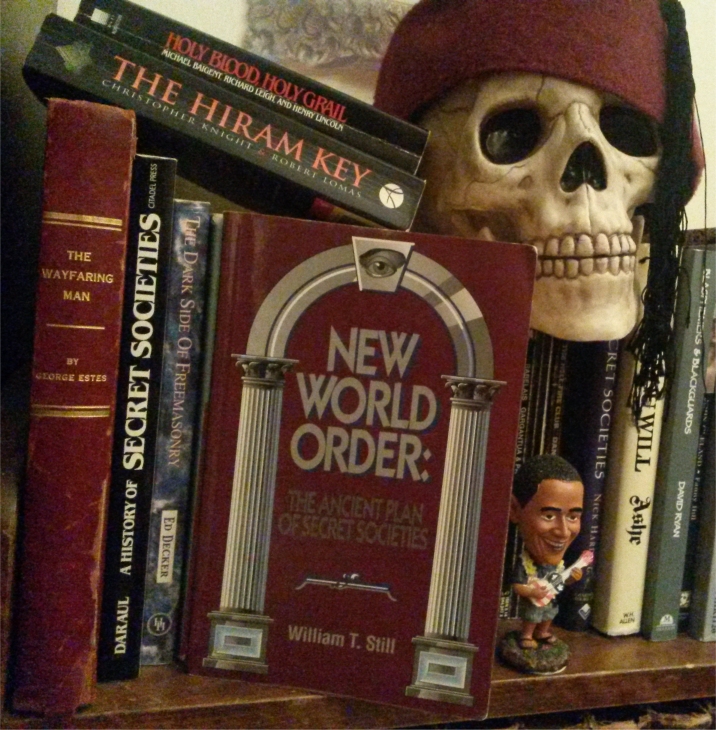
nwoNew World Order (The Ancient Plan of Secret Societies) – William T. Still
1990 – Huntington House Publishers

After a very boring introductory chapter, this book contains about 70 pages of tolerably silly conspiracies, but then it gets very, very boring. Just from the cover, I expected something similar to  Ed Decker’s Dark Side of Freemasonry, and I wasn’t far off. This is a book of conspiracies from the point of view of a conservative Christian author.

As far as these things go, it was fairly well researched. William T. Still is clearly a nutjob, but he’s competent enough to provide his references. The book contains nothing I haven’t come across before, but it was novel to see how the author managed to link the Atlantean origins of secret societies, William Shakespeare’s true identity, and the Freemason’s involvement with the Jack the Ripper murders. Still is the kind of wacko that Umberto Eco was making fun of in Foucault’s Pendulum.

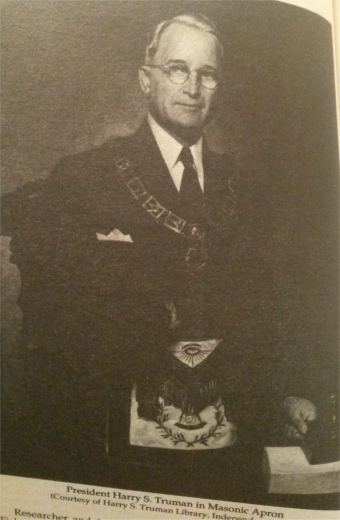
truman
The central idea behind the book is that the Illuminati is a Luciferian/Satanic cult dedicated to exterminating religion, taking over the world, and bringing about the reign of the Antichrist. If America doesn’t adopt conservative politics and good old-fashioned family values, the country is going to allow itself to be taken control of by a small group of the super-wealthy who don’t care about anyone but themselves. The scary thing about this book is that you know that the people who read it and have taken it seriously are the exact same people who are going to vote for Donald Trump.

The Illuminati has recently reentered the public consciousness. Nearly every teenager in North America has seen the ‘Illuminati Confirmed’ memes. Why now? Maybe it’s because the idea of a small, faceless group of the super wealthy being in charge of America is actually less frightening than the faces of the small group of the super wealthy that clearly are running the country.

A Feast of Blood – Varney the Vampyre

coverVarney the Vampyre – James Malcolm Rymer (or maybe Thomas Preskett Prest)
Wordsworth Books – 2010 (Originally serialized from 1845-1847)

I haven’t posted much in the last month because I have been spending my time slogging through this immensely long book. At 1166 pages of very small print, this is undoubtedly the longest novel I have ever read. ‘Novel’ however, maybe isn’t quite the right word to describe this tome; it’s a series of different stories about the eponymous hero that were originally serialised in pamphlet form over the course of several years. Think of it like this: if Stoker’s Dracula can be turned into 2 hour movie, Varney would take a 5 season TV show to do it justice. Just as the book is long, this review is fairly hefty too, so pour yourself a cup of blood before you sit down to read it. If you haven’t read the book, you might want to skip over the sections in red. I say this not because those sections contain devastating spoilers (they don’t), but because they deal with issues that are so perplexing that they may scare you away from ever reading the book.
battyLook at the girth of this thing! It may be thicker than 4 of the other books in this series put together, but it was no more expensive. (Note: Varney is actually not the kind of vampire that can turn into a bat)

The writing is of a pretty decent standard, although there is quite a lot of recapitulation. This may have been included to keep readers up to date with the story if they had missed the last edition (kinda like the Victorian version of “Previously on the X-Files…), but I have read elsewhere that the author was paid by the word, so maybe it was just to take up space. Either way, coherence doesn’t seem to have been a priority, and throughout the tale there are characters that appear without reason and disappear without a trace. Varney himself has several suggested back stories that conflict with the account of his life that he gives at the end of the book, but more on that later. Also, with the exception of Varney himself, nearly all of the dramatis personae are interchangeable stock characters. I lost track of how many pleasant young men named Charles appear throughout the story.


The cover of the Wordsworth edition really blows in comparison to the original.

If you check out the librivox audiobook version (I would recommend that you alternate between a hard copy and these mp3s. Doing so allowed me to get through a few chapters every time I had to cook, tidy up or walk anywhere recently.), you’ll notice that Librivox credits Thomas Preskett Prest as the author instead of James Malcolm Rymer. It seems that nobody really knows who wrote the book. Prest took the credit for more than 100 years, but research that I have read ABOUT suggests that the writing style is actually closer to Rymer’s other writings than Prest’s. Also, minor publishing discrepancies in the text correspond to  Rymer’s bankruptcy, suggesting that he was in fact the author. That being said, Rymer and Prest are known to have worked for the same publisher and are believed to have collaborated on other works, so it’s not unlikely that they both contributed to this one. (Apparently Rymer was less than 4 foot tall.)
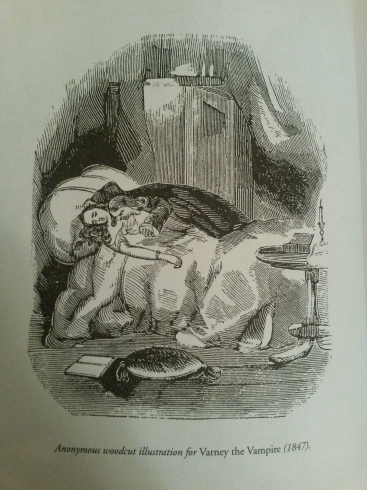
varneysucksDrinking her blood, straight from the tit.

The book is split into 3 volumes of roughly 400 pages each. (This division seems to have been based on the length of the book rather than by the contents of the volumes.) This edition ends with Chapter 220, but if you were to count the amount of chapters that the book contains, you would notice that there are actually 237. How could this be? Well, Chapters 41-43 don’t exist, Chapter 171 is followed by Chapter 162, and Chapters 195, 210, 197, 118, and 199 appear in that order. These mistakes have been faithfully carried over from the original pamphlets. (The chapter numbering in the audiobook version has been corrected. This was a little frustrating as I went back and forth between that and the text, although if it had retained the original numbers, the playlist of mp3 files would have been completely shagged.) Also, each chapter has a short title, but the titles rarely refer to anything that actually happens within that chapter. The chapter might be titled; “The events in the Parson’s office”, and it would be about a pair of young lovers having a picnic by the seaside. Arbitrary volume and chapter numbers aside, the book can be divided into 11 distinct stories. The first of which takes up the entire first half of the book while the 4th is less than 20 pages. 

hammeredThis poor chap was mistaken for a vampyre. He’s fucked now.

The first section, the events at Bannerworth Hall, is by far the longest and most enjoyable part of the book. The characters here, although they could be lifted directly out of 100 other Victorian novels, at least get to be part of the story for long enough that the reader remembers them. These characters play a smaller role in the second section of the book, and they are only mentioned 2-3 times in the final 400 pages. Their story is never satisfactorily cleared up, and I kept hoping that they would pop up or that the events that were occurring would somehow end up explaining what had happened to them. It seems that the initial followers of the story may have felt the same way;  in one of the final episodes, the author takes pains to clarify that the Bannerworths have all died. I wouldn’t be surprised if this brief allusion served as a response to those readers who had inquired if the Bannerworths were ever going to make a comeback. These loveable characters, we are pleased to find out, have not met with an unsavory end though; it’s just that the events towards the end of the book take place at a much later period of time. As we are soon to see, this epic tale takes place over the course of several centuries.

Here’s a few questions I have regarding the trials and tribulations of the Bannerworth family.

Is Varney the man in the portrait?
There is a portrait in Flora’s bedroom of Runnagate Bannerworth, an ancestor of the family. When the family realises that the vampyre looks exactly like the man in the portrait, they go to exhume Runnagate’s corpse from their family tomb. By the time they get to the tomb,  not only has Runnagate’s name has mysteriously changed to Marmaduke, but his corpse has also disappeared. This is particularly confusing because Marmaduke Bannerworth is also the name of Flora’s father, a confirmed associate of Varney’s. (Plus, one of the initial explanations of Varney’s vampyrism is that he was a suicide victim. Flora’s father also committed suicide. Could Varney be her father? Probably not, but why the similarities?)

Runnagate is said to be 90 years dead, and Marmaduke’s coffin reveals that he was buried in 1640, thereby dating the events at Bannerworth Hall to 1730. Varney is a vampyre though, so these dates don’t really exclude the possibility that he is the man in the portrait. Indeed the fact that Runnagate/Marmaduke’s corpse is not in the coffin suggest very strongly that Varney is their ancestor.

Varney later admits that he is a distant relation of the Bannerworths and that he was also a friend of their father. He claims that he had seen the portrait when he was friends with their father and deliberately tried to look like it in order to scare the family. This explanation however, does not account for the missing corpse from the tomb.

Much later on, in a different episode, Varney explains that he became a vampyre after crossing Oliver Cromwell after the death of Charles 1st. (This means that he didn’t become a vampyre until at least 1649, almost a decade after the death of Runnagate/Marmaduke Bannerworth.) He also explains that at this time he was living in London and known as Mortimer. (This is also bizarre as Varney is later to be hung by a different nasty man named Mortimer.)

In the 225th chapter (Chapter 208 in the book) Varney claims that he remembers “being hunted through the streets of London in the reign of Henry the Fourth.” Henry the 4th died of leprosy in 1413, meaning that if Varney is telling the truth, he was at least 235 years old when he became a vampyre. There is a gap of 1000 pages between the accounts of Runnagate’s portait and Mortimer’s contretemps with Cromwell, so we can forgive the author for a discrepancy of 9 years, but Varney’s account of being chased during the 1400s is placed only 12 pages apart from his encounter with Cromwell.

By his own account, Varney is not the man in the portait in Flora’s bedroom, but do we really believe him? All of his origin stories can’t be true, and he’s never exactly made out to be a particularly honest individual. While he explained that he had deliberately tried to make himself look like Runnagate/Marmaduke Bannerworth, he never explained where the body of said individual was or how it escaped from its coffin. Also, it should be remembered that Runnagate/Marmaduke’s coffin not only contained no corpse, but neither did it contain any signs of ever containing a decomposing body. If Varney is not Runnagate/Marmaduke, Runnagate/Marmaduke is still likely to be a vampyre.

varney-red
What happens to George Bannerworth?
He appears as the weakling younger brother in the first few chapters of the book, but soon disappears, never to be mentioned again. We are given enough information about his timidity to presume that this will be an issue for him at some stage, but he never gets a chance to shine. Lil bitch.

What happens to Dr. Chillingsworth?
The last we hear from him, he goes to London in search of Varney. We know that something happens to him afterwards that convinces him of the existence of vampyres. A note written by him appears in one of the final chapters of the book explaining so, the appearance of which left me with a genuine feeling of excitement. Varney does end up in London for a while in one of the later episodes; did they meet there? I had a theory that Chillingsworth was the mysterious stranger who follows Varney to Anderbury and gets murdered in the ice-pit, but he actually appears elsewhere afterwards, so it can’t have been him.

Who the fuck was the Hungarian Nobleman and what did he want?
Just as Varney starts to warm to the Bannerworths, a strange Hungarian nobleman shows up in the village in search of him. We find out that he is willing to pay a high price to find Varney, but he himself becomes suspected of being a vampyre and gets run out of town before Varney is found. There is no explanation given as to why he is looking for Varney, and no more is said about him after he is chased from the town. In one of the final episodes, Varney attends a vampyre initiation ceremony with several of his kin. One asks if he knew the Bannerworths, and he responds; “I did. You came to see me, I think, at an inn.” That is the extent of the conversation that appears 475 pages after the last mention of this character. Ahhh, sweet closure at last!

Who the shitting fuck was murdered in the ice-pit?
Towards the end of the first episode, Varney disappears. (The transition between the first and second episode is the only transition between episodes that carries over characters.) Soon thereafter, two strangers show up in a town a few miles distant from Bannerworth Hall. One of them, we know, has to be Varney, but the identity of the other is never made clear.

I think it was the Hungarian Nobleman. He’s the only character from the first section that’s unaccounted for. He had been confirmed as a vampyre and fled for safety without having achieved his goal of speaking to Varney. We know that he had been looking for Varney, but we were not sure of his motives. When Dr. Chillingsworth is mugged, we are inclined to give Varney the benefit of the doubt as he has seemingly made his peace with the Bannerworths, but if it wasn’t Varney, it has to have been the Hungarian Nobleman; he’s the only other bad guy alive at this stage! When it turns out that both of the mysterious strangers are vampyres, it only makes sense that one of them is the Hungarian.

However, when these two vamps meet near the end of the book, not a word is said about the fact that one of them has stabbed the other in the throat and thrown his corpse into an ice-pit. In fairness though, after the victim of this crime was revived by the moon, he snuck into the murderer’s bedroom and stole his jewels. Maybe they just decided to let bygones be bygones… Who knows? 

What happened to the Quaker whom Admiral Bell kicked up the hole?
Perhaps the greatest mystery of all. This storyline gets a considerable build up, but it’s never resolved.
booBleh!

There are, of course, plenty of other plot holes in the remainder of the book, but the cast of characters and plotlines in the later episodes are not nearly as memorable or complicated. Most of the episodes follow the formula of Varney trying to marry a beautiful young woman only to be foiled right before the marriage ceremony. (There are at least 4 chapter titles that include the phrase ‘the wedding morning’.) The middle episodes start to feel cartoonish in their repetitiveness, but the final two episodes end the book on a slightly more existential note. The penultimate episode has Varney playing the role of a hero rather than a villain, but the lack of satisfaction he receives from acting so convinces him to kill himself. His suicide attempt is thwarted by a pair of altruistic brothers, and when he is brought back to life, he gets super pissed off. He decides that if he can’t feel happiness that he will make sure that those around him don’t feel it either, and he gives what is perhaps the finest villainous speech that I have ever read. I’m going to include it here in its entirety, because unfortunately, I doubt that many people will actually make it far enough into the book to get to enjoy this exquisite piece of misanthropic bile:

“Since death is denied to me, I will henceforward shake off all human sympathies. Since I am compelled to be that which I am, I will not be that and likewise suffer all the pangs of doing deeds at which a better nature that was within me revolted. No, I will from this time be the bane of all that is good and great and beautiful. If I am forced to wander upon the earth, a thing to be abhorred and accursed among men, I will perform my mission to the very letter as well as the spirit, and henceforth adieu all regrets, adieu all feeling — all memory of goodness — of charity to human nature, for I will be a dread and a desolation! Since blood is to be my only sustenance, and since death is denied to me, I will have abundance of it — I will revel in it, and no spark of human pity shall find a home in this once racked and tortured bosom. Fate, I thee defy!”

Holy fuck, that is pure heavy metal.

varney-wakesVarney arises!

Whether or not Varney is actually a vampyre isn’t determined until you’re well into the story, and the first 750 pages of the book contain only 2 short instances of vampyric activity. Things get bloodier in the second half as the stories come to focus on Varney and his exploits. He oscillates between being a decent lad and a murderous villain, so much so that I was genuinely surprised at the violent acts he would sometimes suddenly commit. Although the latter episodes are definitely more gory, far more people are stabbed or shot than are drained of their blood; this is more of an adventure novel than a horror story. That being said, there are a few chapters set in moonlit churchyards and charnel houses to which you can stroke your Gothic boner. So much of what we have come to expect from a vampyre story comes directly from this book, and you’ll find a million other reviews discussing how it’s the source of many of our modern ‘Vampire tropes’. Why then, does everyone give that credit to Dracula? Well, Dracula is much scarier, Bram Stoker took all of the best bits from Varney, twisted them around a bit, and shaped them into a far superior book.

diebitchAnd fucking stay dead!

Montague Summers described Varney the Vampyre as being “far ghostlier than” and “a very serious rival to” Dracula. The book was out of print when he wrote that though, so that might have just been him trying to be the cool guy who liked the less popular work. I definitely wouldn’t go as far as Monty in this case, but I did really enjoy this book. I mean, it’s deeply flawed, but if you take it for what it is, i.e., complete trash, it’s d_____d enjoyable. It’s exceedingly obvious that the author/authors were making it up as they went along, and a lot of it doesn’t stand up to scrutinous examination, but if you like stories about graveyards, ghouls, chivalrous gentlemen, foul mouthed sailors, bloody murders,  and heaving bosoms, this will entertain you greatly. I fucking loved it, and it has me looking forward to reading more of the Penny Dreadfuls that have come out in the Wordsworth Tales of Mystery and the Supernatural series. I have Wagner the Werewolf by Reynolds on my shelf, and I know they have also put out The String of Pearls, the other work by Rymer and Prest.

 

I WANT TO BELIEVE – Alien Encounters and The UFO Phenomenon

cool-ufo
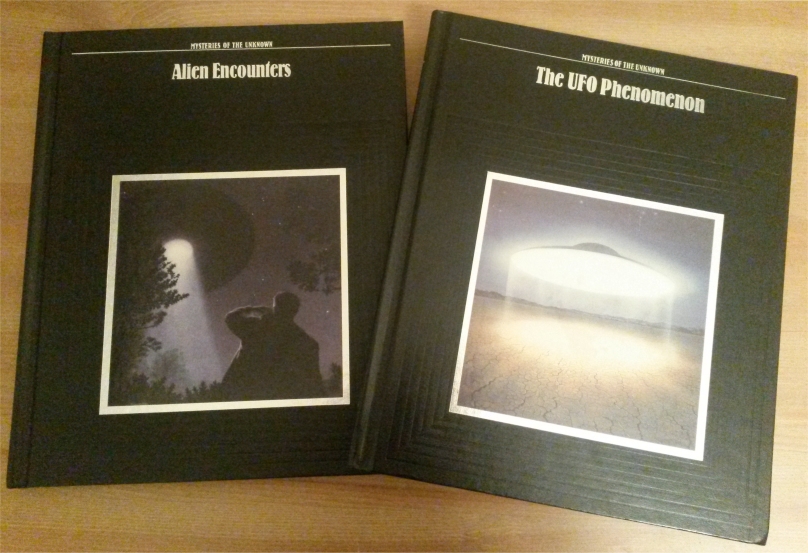
A little over a year ago I did a post on three books from the Time Life Mysteries of the Unknown series. I decided to come back to the series and to read both of its books on aliens. The UFO Phenomenon was published first, and Alien Encounters repeats quite a lot of the same information, but there is a slight distinction in the subject matter. The UFO Phenomenon deals fairly specifically with… UFOs, while Alien Encounters looks more at abductions and contact. I was again impressed by the quality of this series. These books are lovely; they look and feel great, and they are surprisingly in depth. If you can find a complete set for a reasonable price, make sure to pick it up.

covers
UFOs exist. There have definitely been, and presumabably still are, things in the sky that have not been identified. That these objects harbour alien beings from other planets is far less certain. I try to keep an open mind about this kind of stuff. I have no problem believing in the likelihood that there is life on other planets, but the idea that those lifeforms could reach Earth is too much for me to accept. My knowledge of space travel is extremely limited, but I understand that the closest planets that could possibly support life are simply too far away for their inhabitants to ever bother coming here.

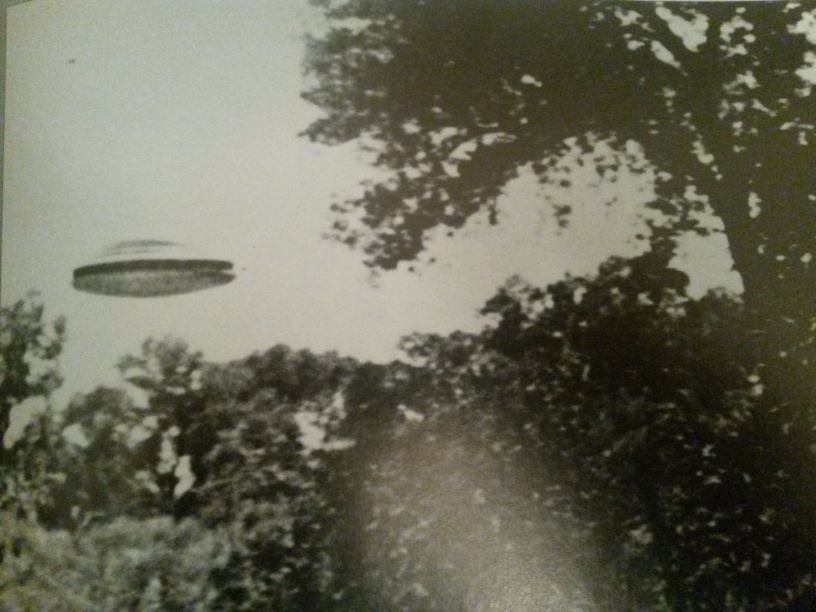
The UFO book was cool; I have read lots of other books about ancient alien theories and specific alien encounters, but I didn’t know much about the history of UFOs. It was interesting to see how the flying saucer turned an American cultural icon

billy-meier
I sometimes ponder over how modern technology has affected the acceptability of evidence of alien life on/around Earth. Nearly everyone has constant access to a camera these days, and there is no excuse not to document the spacecraft that are abducting us. At the same time, any form of digital media is susceptible to quick, easy and convincing editing. Not only that, but our skies are now so full of drones and other human made machines that we soon won’t bother to question what’s in the sky… This indifference will leave us vulnerable to external threats… In fact, the more I think about it, the more likely it seems that the aliens deliberately gave our governments their technology in an attempt to lead us into this complacency. We’re falling into their trap! Fuck it. All eyes to the skies!

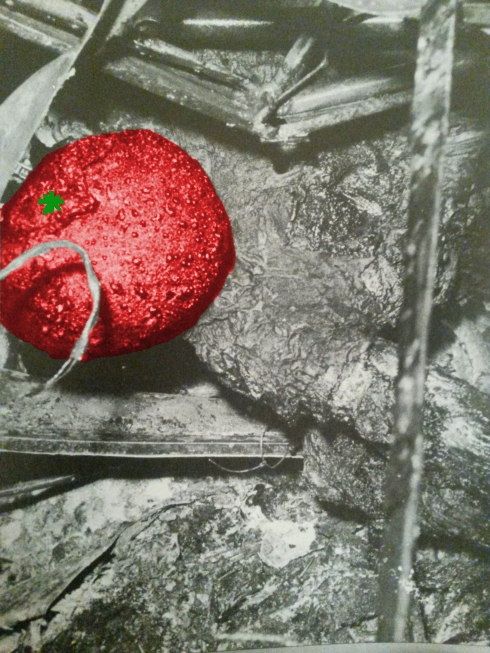
tomatoman
The above picture is of a famous alien corpse known as Tomato Man. (I have digitally enhanced it for full effect.) The original photo looks like a burned pile of rubbish to me. Some people have wondered how the glasses frames right underneath the alien’s shoulder got mixed up in the debris of an crashed spaceship.

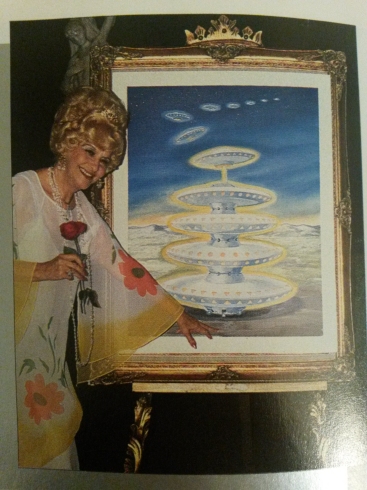
One of most fascinating things about UFOs and aliens are the people that worship them. One particular group, the Unarians, pop up a few times in these books. I had seen some bizarre videos about the Unarius Academy of Science on youtube years ago, and their appearance here convinced me to research them further. It turns out that they don’t believe in imagination. All imagined thoughts are actually memories of past lives. All science fiction is true. Star Wars is real.

The Unarians were led by a lady named Ruth Norman who claimed to be the latest reincarnation of the entity who had previously lived as the Archangel Uriel, Isis, Peter the Great, queen Elizabeth the first, Johannes Kepler, Buddha, Zoroaster, Emperor Charlemagne, Quetzalcoatl, the Dalai Lama, King Arthur and many other aliens and mythical characters. Ruth preached that the space brothers (friendly aliens) were going to descend to Earth and teach us their ways, but she died before this happened.

urielUriel, the Legend.

There’s a decent documentary on the Unarians called Children of the Stars that can be viewed here. It doesn’t criticize or question their beliefs; it merely presents them. The documentary goes on a bit too long, but it’s worth watching just to see how mental these people are. Here is the trailer if you are only a little interested, and if you’re super interested, here is Jello Biafra’s documentary on the same group of people.
There’s definitely similarities with the Church of Scientology (although the Unarians deny that they are a religious organization), but unlike L. Ron Hubbard, Uriel genuinely seems to believe her own nonsense. I think she was pretty cool.

rael
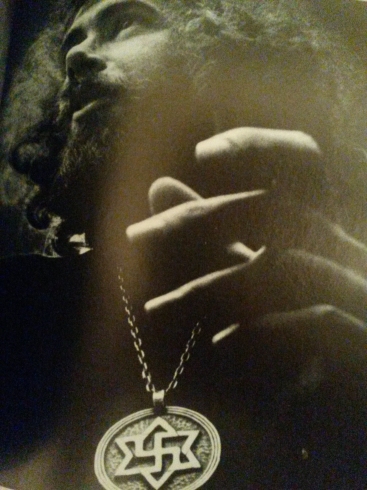
This silly looking gobshite also appears in the book. I noticed his interesting necklace and decided to google him. When an image popped up of the same lad in a white suit, I realized that I had seen him before. His name is Claude Vorilhon, but he calls himself Raël, and he claims to be the messenger of the Elohim (alien creators of humanity).

He appeared on the Late Late Show when I was a kid. I remember being very unimpressed by him talking about how Jesus had been an alien. (My, how the times have changed!) The interview stuck in my head, and I’ve only recently thought of looking him up, but I didn’t know his name. Once I discovered his name, I did another quick search and I found footage from one of his earlier appearances on the same show! Normally I dislike when talkshow hosts needlessly talk down to their ‘weirdo’ guests, but I have to say, Gaybo’s swarminess is actually pretty funny here. Apparently Raël wasn’t too upset by it anyway; he went on to appear on the same show two more times. (Unfortunately those episodes are not currently online.)

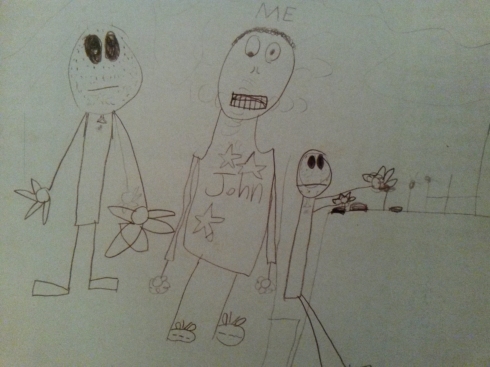
proof-of-alien-existenceA 5 year old drew this, and some people took it as evidence that aliens abducted him.
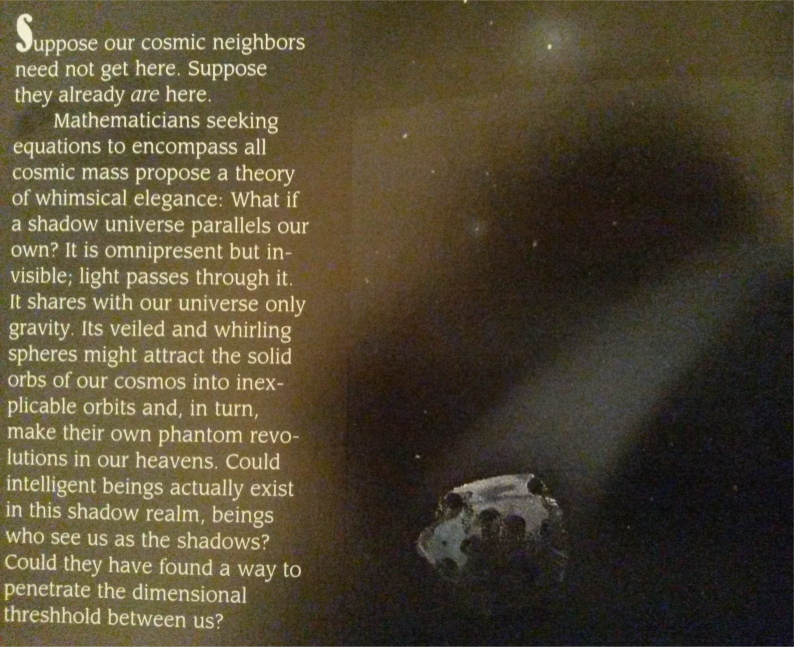
Reading these books, I wondered how often they were consulted by the writers of the X-Files. The Mysteries of the Unknown series were released between 1987 and 1991. The first episode of the X-Files was written in 1992. I find it hard to believe that some of the ideas for the show weren’t lifted directly from these pages. Just reading over the titles in the series, I’m able to think of specific episodes that refer to the content of nearly each book. In saying that, each of these books presents a fairly comprehensive overview of its topic, and if the X-Files writers weren’t taking their ideas from here, they were certainly getting them from more specific texts on the same topics. All of the mythology episodes (at least up to season 6) could easily have stemmed from the ideas in the two books I have just reviewed. We’re talking alien abductions, disinformation, alien human hybrids, implants, government conspiracies… all that great X-Filesy stuff.

Also, speaking of influencing hit TV series; check this out. There’s a small section at the end of The UFO Phenomenon that called to a mind a more recent science fiction show:
strangerthingsStranger Things, anyone?

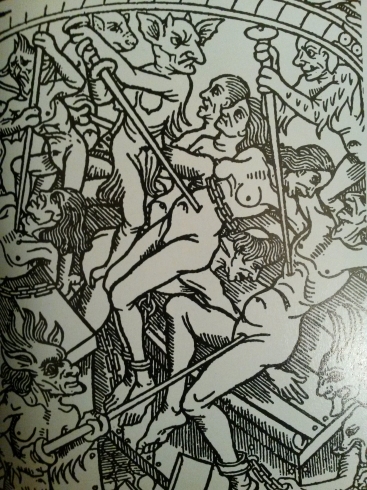
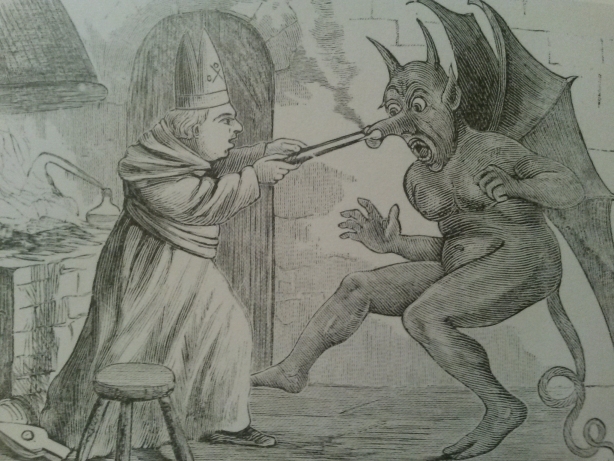
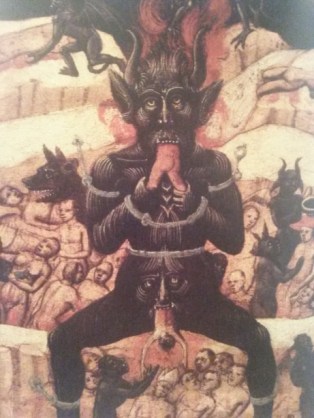
I’ll leave you with this. It’s an image of some unfortunates being tormented by demons. It was included in a section on the book proposing that aliens could be the modern equivalent to demons. The similarity being drawn here is that aliens, like demons, have been known to probe their victims. Check out the demon in the bottom left corner. Observe his calm demeanour.

bold“In and out, I’ll lance her clout, Hi-Ho! Hi-Ho! Hi-Ho! Hi-Ho!”

Vampires and Vampirism – Montague Summers

Image2
Dover – 2005 (Originally published as The Vampire: His Kith and Kin in 1929)
This is Montague Summers‘ first book on Vampires, and as much as I love the author, I have to admit that this was a rather dry read. I actually started this book to make sure that I would understand references that I might have encountered in another book I’ve been reading; Varney the Vampyre. As it turns out, that book is referenced in this book, but it contains very few references to vampire lore. (Varney is fucking DEADLY though. Expect to see it reviewed here in a few weeks.) Anyway, there’s 5 chapters in Summers’ book, and I’m going to go through each one.

1.The Origins of the Vampire
Here Summers explains several of the different elements that may have created and/or fed into the vampire legend. It includes copious stories of the reanimated dead, ghosts, premature burials and a huge section on incorruptible corpses. Apparently, there’s two ways that a corpse can remain incorrupt; the person has to have been either really good or really bad.

This chapter also includes a frustratingly multilingual section on necrophilia and necrosadism. Unfortunately the more lurid details are only given in French or Ancient Greek. I’m not joking; whenever Monty wants to give some really grisly details, he’ll switch languages. My French is poor, but it was good enough know that I was missing out on the best bits, particularly the story about the Garcon who said. “Que voulez-vous, chacun a ses passions. Moi le cadavre, c’est la mienne!”

(I have found an online version of the text, and I’ve just spent 10 minutes pasting those bits into google translate. It was worth it; my necrosadistic desires have now been satiated.)

2. Generation of the Vampire
This is all about how vampires become vampires. It mostly deals with excommunication from the church. Montague Summers knew a lot about the history of the church, and he wants to make sure that his readers are aware of this. Pretty boring stuff to be honest.

3. Traits and Practice of Vampirism
There’s a lot about suicide in this chapter, including some fascinating stuff on Russian suicide cults. Apparently one group of these fucking lunatics built a huge building with no doors or windows that was only accessible from a trap door in the roof. They’d jump in through the trap door and then they’d starve to death. Imagine the stench, the anxiety, the shame and the regret that these people had to endure until their dying moments.

4. The Vampire in Ancient Countries
I was expecting this section to be a bit boring, but it was actually quite interesting. It’s about the different types of vampiric ghouls that have cropped up around the world through history. I think that the sequel to this book, The Vampire in Lore and Legend (1929), takes up where this chapter leaves off.

5.The Vampire in Literature
This section was definitely the most disappointing, disappointing because I expected it to be the most interesting. This is just a bunch of summaries of different plays based on John Polidori’s story, The Vampyre. The summaries given are so detailed that I skipped through most of them; I didn’t want to ruin the stories in case I ever come across the original texts. Not only does this chapter contain the summaries of these plays; it also contains extensive lists of their cast members. This chapter is full of boring information, but it says very little.

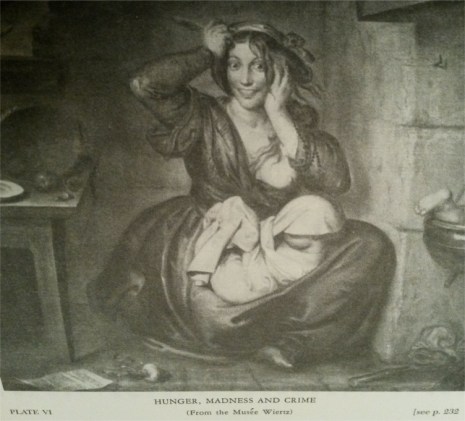
Image1The pictures in this book are bizarre. I don’t remember why this mad woman is in there.
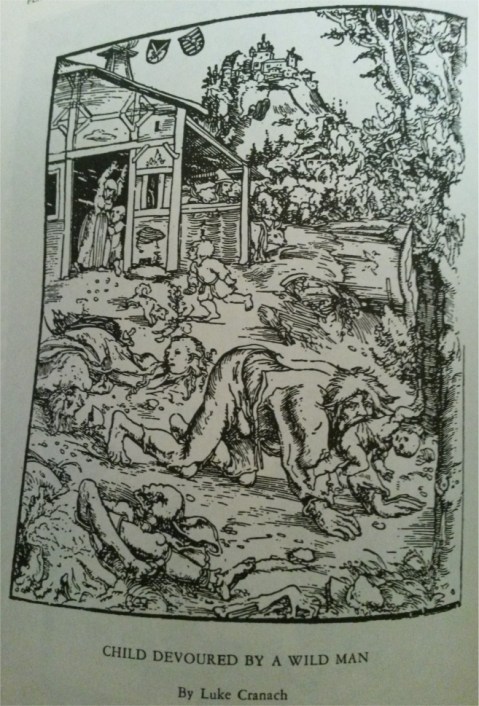
Overall, this is a decently interesting read even if it does get dry as fuck at times. There’s 5 chapters, and the way they’re structured seems a bit arbitrary, particularly the first 3. However, the worst thing about this book is that it’s full of quotes in different languages but contains no translations. If you really wanted to get the most out of this, you’d need to speak Ancient Greek, Latin, French and German. This is a bit different to the author’s books on witchcraft too. It serves more as an explanation as to how the Vampire legend developed than it does as proof of the Vampire’s existence. Monty never denies that vampires exist, but he doesn’t spend much time trying to convince you that they do.  As mentioned above, he wrote another book on vampires, but I reckon it’ll be a while before I get around to that one.

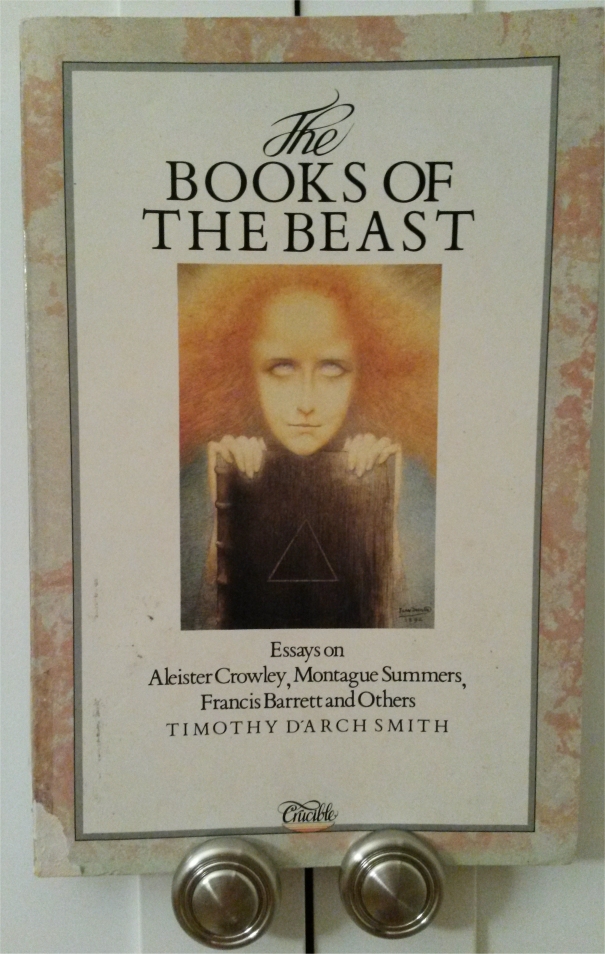
Image3Clearly a case of Lycanthropy rather than Vampirism, but a cool picture nonetheless. Could this be the instance spoken of by the great one?
The Books of the Beast – Timothy D’Arch Smith

beastCrucible – 1987
This book popped up in my suggestions from Goodreads a few years ago, but it wasn’t until I came across a quote from it that claimed that Montague Summers had attended Black Masses that I decided to buy it.

It’s a rather interesting collection of essays about different books, their authors and their publishers. The first and longest essay is about Aleister Crowley and his predilections for certain colour combinations and kinds of paper. That might sound a little boring, but I assure you it’s a very entertaining read. Not only is it quite funny at times, it is also astoundingly well researched and documented.

Timothy D’Arch Smith didn’t know Aleister Crowley or Montague Summers personally, but he did know people that knew them. He was also a dealer of rare books for a very long time, and it is rather apparent that he’s an expert in the field. (He’s still alive; I don’t know if he’s still working.) The level of detail in here is genuinely exciting, not only because the subject matter is interesting but also because the author has apparently been able to devote his life to tracking down and examining and reading rare books about magic and sex. DEADLY.

Yes, that’s right; not all of the essays in here are about magic. One is about the collection of dirty books in the British Library and another is about Ralph Chubb, a gay paedophile. It turns out that T.D.S. is also an expert on the Uranian (bent ref) poets. Apparently there was a bunch of poets in the early 1900s who had had enough of keeping their desire to bum youngfellas to themselves. Ralph Chubb was really into it. Smith’s essay is very interesting, and I wanted to read some of Chubb’s poems to see what he was talking about, but I felt a bit wary looking them up on Google.

It is suggested herein (and elsewhere) that Montague Summers, a name my readers should be familiar with at this stage, might well have indulged in a few Uranian fantasies himself. This book also suggests that he attended Black Masses. Monty you scoundrel! In his own books, Summers violently condemns such activities, but it is here suggested that he was a practicing occultist in his youth. Smith believes that Summers was sincere in his admonitions against the Black Arts, but I’m halfway through Vampires and Vampirism at the moment, and I’m really finding it tough to believe that Summers was as credulous as he makes himself out to be. Then again, maybe he witnessed something genuinely diabolical at a Black Mass and set out to warn the world of the dangers of the powers of Hell. (Smith also wrote an entire book on Summers that I hope some day to obtain.)

There’s some other bits and pieces in here too. There’s an essay on Florence Farr (a member of the Golden Dawn who shagged both Yeats and Shaw) and an autobiographical piece. Both are interesting and worth the read. There is also a short essay on Francis Barrett, author of The Magus, an influential book of magic; however, from what I have seen online, modern editions of Smith’s book have replaced this essay with another chapter on Crowley. This seems a pity as I really enjoyed the piece on Barrett. (If anyone reading this review has a copy of the newer edition, I would be happy to scan the section on Barrett in return for a scan on the newer part on Crowley. Leave a comment or email me.)

The cover of my edition is super lame, and the page numbers on the contents page are wrong (I don’t know if it’s a numerological joke or a mistake), but all in all, this book was great; it’s short, funny and insightful. I read it in a day, but I feel that I’ll probably consult it again. Timothy D’Arch Smith seems like a real cool guy.

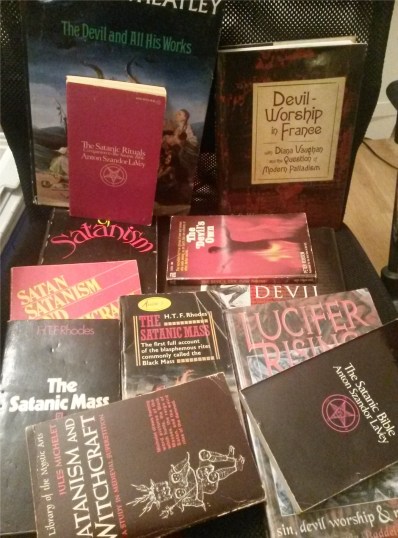
Some Thoughts on Satanism…

Image1Satanism is a truly ridiculous concept. Satan, a character most famous for his appearances in the New Testament of the Christian Bible, is supposed to be a nasty, horrible, unpleasant individual, a real shit. Why would anybody choose to follow him?
Imagine this. You’re working in a restaurant and some dickhead customer starts getting lippy because there’s mayonnaise on his sandwich. You understand his dilemma, mayonnaise is fucking gross, but he’s being rude with you and acting as if it’s your fault. You can’t speak your mind to him because you need to keep the job, but you determine to remember his face in the hopes that you will someday be able to wreak vengeance on him.

Ok, now fast forward 5 years. You have since become a millionaire and bought a big house on the outskirts of town. One night you are sitting at home, watching a good film and sipping on a glass of fine Beaujolais wine. Ahhhh, what bliss! But hark, there’s a knock at the door. Low and behold, it’s the shithead that complained to you about the mayo in his sandwich. You remember him, but he has no recollection of you; complaining to service workers is a habit of his and he doesn’t keep track. It turns out that he got separated from his friends on a camping trip and he has had to walk 30 miles back to the city alone. He managed to say hydrated by drinking his own piss, but he’s starving and he’s asking if you could spare some food. You tell him that you were about to sit down to dinner and you invite him in. Once he’s sitting at the table, you stroll into the kitchen and return  with a jar of Hellmans and two spoons. Bon Appetit, cunt!

I presume that you’ve realised that in the above scenario you’re a Satanist, the shitty customer is Christianity, and the mayonnaise is Satan. Let me clarify; Satan sucks for everyone, but Christianity is so shitty that it’s actually worth debasing yourself by pretending to like mayonnaise in order to defy it. I hope that makes sense; I think it’s a pretty tight analogy.

20160822_231909
You might then ask whether Satanists are really worshiping Satan or just pretending to worship him in order to scare/upset Christians. Well, it’s a little of column A, a little of column B. The Satan of Satanism isn’t quite the same Satan that appears in  the New Testament; he has been upgraded. To a Satanist, Satan represents freedom rather than evil

Let me clarify; Satanism and Devil worship are not the same thing. To Satanists, Satan is a good guy. There are relatively few people who actually worship the ‘evil’ Satan that appears in the Bible, and those that do are morons. To worship that Satan, you would have to believe the stories about him, but believing the stories about him would mean that your Holy Book would be the same Holy Book as the Christians. This would make you a shitty Christian instead of a Satanist.

20160822_231559

So if Satanism is not about the pursuit of evil, what is it? Well, it’s impossible to pin it down at this stage. Most modern forms of Satanism are derivations of LaVeyan Satanism, which is, at its roots, a pragmatic reevaluation of morality. It’s basically Nietzschean philosophy dressed up for Halloween. Labeling this mode of thinking as ‘Satanism’ prevents most people from taking it seriously, but this very repulsion allows Lucifer’s hordes to delude themselves into believing that they are edgy elitists and not just a shower of fedora-goths. (LaVeyan Satanism is atheistic; Satan is thought of as a symbol rather than a deity.)

20160822_231939

The really shitty thing about Satanism is that it’s not nearly as cohesive in practice as I’ve so far made it out to be. It’s an absurd, if entertaining concept, and like all ‘religions’, it acts as a magnet for absolute morons. I joined a bunch of ‘Satanic’ discussion groups on facebook (for research purposes), and I have been absolutely horrified with the stupidity of the people posting in those groups. I’m talking serious idiots here; cretins of the lowest order. Most of the people who publicly declare themselves Satanists are cringey teenagers or aging, uneducated slipknot fans. Think of a 40 year old white guy with 2 ball-bearing necklaces, a lip piercing, and a 19 year old girlfriend that he met in a Dairy Queen after the ICP concert; a guy whose facebook profile pic is a moody black-and-white selfie with a superimposed pentagram. The people who want you to know that they’re Satanists are a lowly bunch indeed.

Also, the self-centeredness and focus on power of Satanism make it really attractive to far-right dickheads and racist scumbags. Fuck those people.

Satanism is quite funny, but the term Satanism is used and understood in such drastically different ways that it has become nonsensical and impractical. It means entirely different things to different groups of people, and due to their common levels of ignorance and opposing understandings of the term, these different groups of people are very unlikely to take the time to try to understand each other.

I’m sure there are plenty of people who disagree with what I’ve said here. Let me know what you think. Leave a comment below, email me, or message me on facebook.

20160822_231816Now, get outta here!

Unseen Beings, Unseen Worlds – Tom Dongo

1Hummingbird Publishing – 1994

This is a real piece of work. Somewhere in the introduction or the first chapter, Tom Dongo claims to be an extremely skeptical individual who is unwilling to accept anything that he hasn’t been able to prove to himself. He then goes on to write a book about his personal experiences with remote-viewing, aliens, the astral plane, demons, telepathy, reptilians, ghosts, channeling, and banshees. One has to wonder what counts as proof in his mind.

I’ve read lots of books about stupid topics that were written by what seemed to be relatively intelligent authors. (I would have imagined that the sillier the topic, the smarter the author would have to be to convince a publisher to put out their work.) Take Preparing for Contact as an example. It is utterly stupid, but the author managed to sculpt all of that stupid into an impressively cohesive whole. Psychic Discoveries Behind the Iron Curtain is a truly moronic nightmare, but the authors had clearly done a huge amount of scholarly research. Unseen Beings, Unseen Worlds lacks any traces of cohesion or intelligence. The author is an ignorant, arrogant fool of a man who has absolutely no ability to make sense. This is proof that anyone can write a book; it’s just a bunch of ridiculous ideas that popped into the head of a stupid weirdo.

2Ned Flanders… Wait, sorry, I mean Tom Dongo

Mr. Diddleyongo is of the opinion that many cases of mental illness are actually just cases of possession. He believes wholeheartedly in leprechauns. He claims that he can leave his body and travel around the universe. He often talks to spirits from different planets and dimensions. The man is a fucking imbecile.

Imbecile he may be, but stupidity isn’t a crime; the really irritating thing about Tom is the way that he talks about himself. He’s a know-it-all plonker. But, this isn’t really a book about the paranormal; it’s a book about Tom Dongo’s imagination. The ironic, and perhaps most infuriating, thing about this piece of rubbish is that the second chapter begins with the sentence; “I think I have read or am aware of just about every paranormal, esoteric, spiritual, and metaphysical book in print and many that are out of print.” The arrogance of that statement really put me in a foul mood when I read it. I would imagine that Tom’s reading was probably limited to whatever books were on the paranormal shelf in his local library.

I was going to go on and talk more trash about Tom Dongo, but after some consideration, I have concluded that he probably has some kind of mental impairment, and so it’s not really fair to make fun of him. I don’t think that a healthy, normal person would be willing to publish anything this cringe-worthy and idiotic.

3My copy is signed by the author too! Aren’t you jealous?