Witchcraft (Its Power in the World Today) – William Seabrook

witchcraft

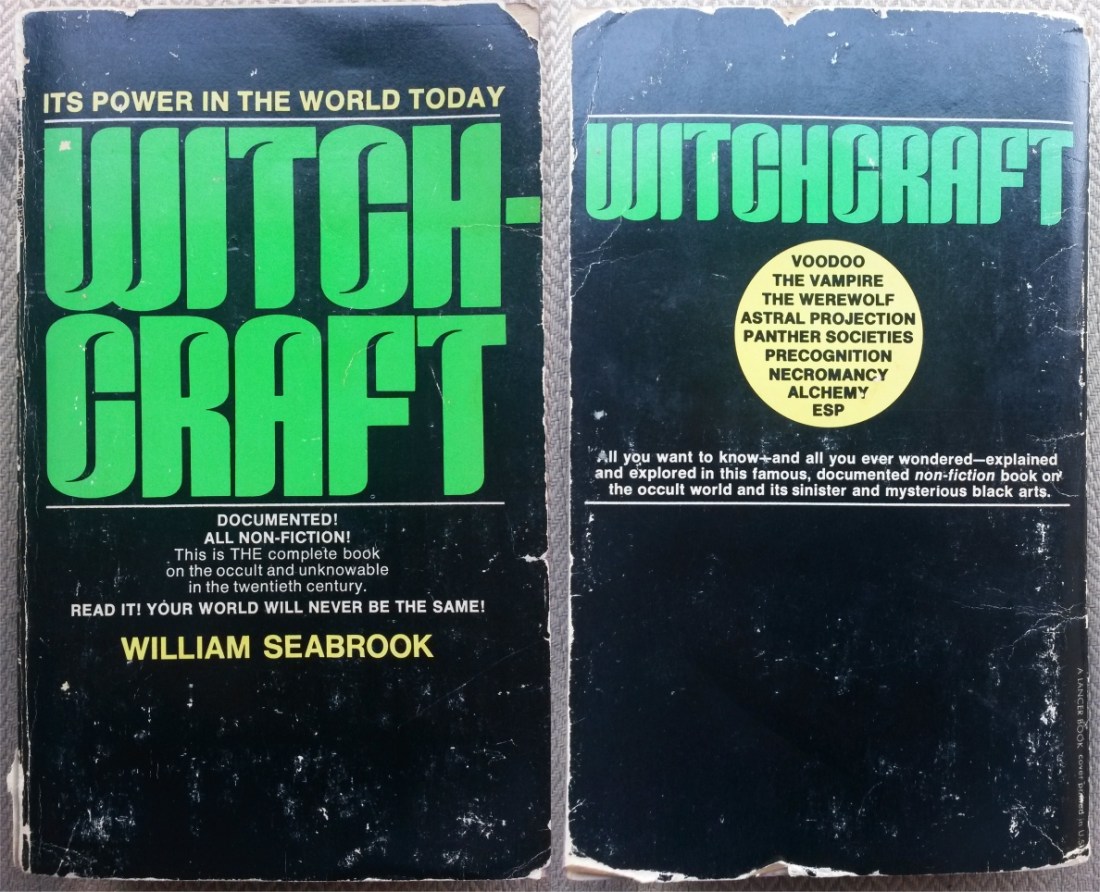
Willie Seabrook was an explorer, cannibal, black magician, bondage freak and journalist. This is his book on Witchcraft, and it’s fucking wonderful. The book deals with Seabrook’s personal experiences with witchcraft, and while a lot of it is fairly unbelievable, it is deadly craic. It’s a bit like reading a Dennis Wheatley novel told in the first person. I put this on my to-buy list after reading about it in Cavendish’s Black Arts, but after seeing it referred to in my favourite section of the Illuminatus! trilogy, I knew I had to get my hands on it. The  Illuminatus authors have Seabrook playing a part in a conspiracy involving Ambrose Bierce, Arthur Machen, Aleister Crowley, Robert W. Chambers, J.K. Huysmans, and H.P. Lovecraft. (Expect a post on Bierce soon; I reckon I’ll get around to Chambers before Christmas.) It is implied that the Illuminati murdered Seabrook over what he published in this book and made his death look like a suicide.
20160625_221219
(p. 296, Illuminatus! Trilogy)
After reading this, I had to own a copy of Seabrook’s book. It’s not super rare, but it took me a while to track down a copy for what I considered a reasonable price. My edition has a fairly boring cover, but the edges are coloured an interesting purple.
purpleaki
Beyond the Mauve Zone?

So there’s three parts to the book. Each part is comprised of short accounts of different things that Seabrook witnessed. The first part is on Doll magic, and it’s probably my favourite. There’s one particular story about a deceitful white explorer in Africa that I absolutely loved. A lad cheats a tribe out of money and soon thereafter goes missing. Seabrook was mates with the lads in the tribe, and one day, one of the boys asks if he wants to see something interesting. Guessing that it has something to do with the disappearance, Willie warns him that if its the missing white man, he’ll be obliged to tell the police. The native laughs this off and brings Seabrook into the jungle and shows him something good. It’s the rotting corpse of another native, strung up to a tree. The ropes binding it to the branches are digging into the flesh of the corpse’s bloating neck, and things are starting to ooze. The corpse is wearing the clothes of the missing explorer, and if Seabrook was to have gotten up close, he would have seen clippings of the missing explorer’s hair stuck onto the head of the corpse.

The missing explorer was found dead a few days later after having died of a constricted windpipe. Black magic had caused what had happened to the corpse to also happen to the victim.
Fuck yes. That is the good stuff.

The second part of the book is on Werewolves and Vampires, and the third is on general occulty stuff. It tells of Seabrook’s friendship with Aleister Crowley.  This book is the origin of that famous story of Crowley walking behind a man, mimicking his gait, and consequently being able to make him collapse without touching or speaking to him. There’s also a part in here about Seabrook’s relationship with Upton Sinclair, author of Oil!, the most boring book I have ever read.

The book ends with a few chapters about kinky psychic-bondage experiments that Seabrook performed with his lover. He had a special gimp mask made for his partners that was basically designed to maximise sensory deprivation. He’d make his girlfriend Justine wear this mask, then tie her up by the wrists until she started hallucinating. They hoped these hallucinations would tell the future. The following images are not from the book, but they are extremely relevant. (They’re from an article about Seabrook from a 1942 edition of Click Magazine.)
seabrook's babe
One of Willie’s babes. Looks like he knew how to pick them.

seabrook mask
He was a man that knew what he liked, God bless him.

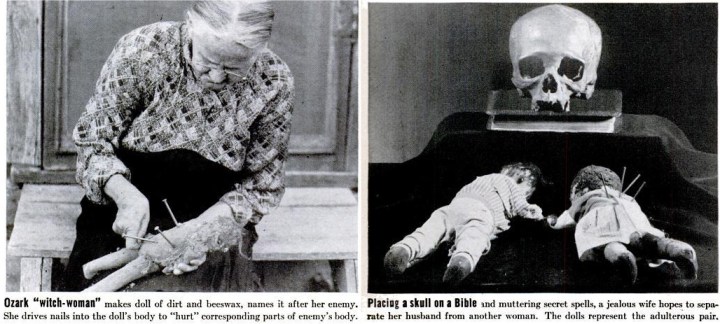
Overall, this book is delicious. The stories might seem unbelievable, but that hardly matters. They’re entertaining. Plus, the author maintains that he doesn’t believe in magic the whole way through the book, and his incredulity is charming. Seabrook comes across as  a remarkably interesting, and I am definitely going to keep my eye out for his other books. There were a few times in this one when he would write something quite rude, and it would take me a while to figure out if he was being bold or not. At one stage, I believe he refers to a woman’s vagina as a pickle-jar, but maybe he meant something completely different.  Like other similar books, this contains references to other texts that I am going to have to try to get my hands on. Unfortunately, some of the books mentioned herein are fairly rare, and any copies I can find are extremely expensive. Oh well, I guess I’ll have to wait till I’m rich. Until then, I’ll leave you with some awesome pictures that I found after hunting down a reference from this book. On page 20, Seabrook mentions an article from a 1939 edition of Life magazine about Ozark superstitions. Finding the full thing online really made me happy that we live in the internet era. (Full article here)
witch
This is why I do this blog. DEADLY!

Who is the Duke De Richleau? The Devil Rides Out, Strange Conflict and Gateway to Hell

It may come as surprise to some of you, but I am neither French nor a Duke. Le Duc De Richleau is the hero in a collection of 11 novels by Dennis Wheatley. For all of the philistines reading my blog, Wheatley was a prolific author of trashy adventure novels. Most of his books were spy novels, but he was also a self proclaimed expert on the occult, and some of his books, 2 of which I have already reviewed, deal with black magic. The Duke De Richleau series contains 3 Black Magic novels, including The Devil Rides Out, perhaps Wheatley’s most famous book.


20160605_232803
The Devil Rides Out
Hutchinson and Co – 1972 (Originally published 1934)
It’s been a long time since I read this one, but I remember it well enough to know that you don’t need an in-depth review to decide whether or not you should read it. This book is about Satanists, pentagrams, rituals, goats, spells, and demons. If you know that much and don’t want to read this, you’re a piece of shit. This is definitely one of the best places to start if you haven’t read any Wheatley before. The movie is deadly too, but for the love of Satan, read the book first.
2016-06-05 23.32.5920160605_232906
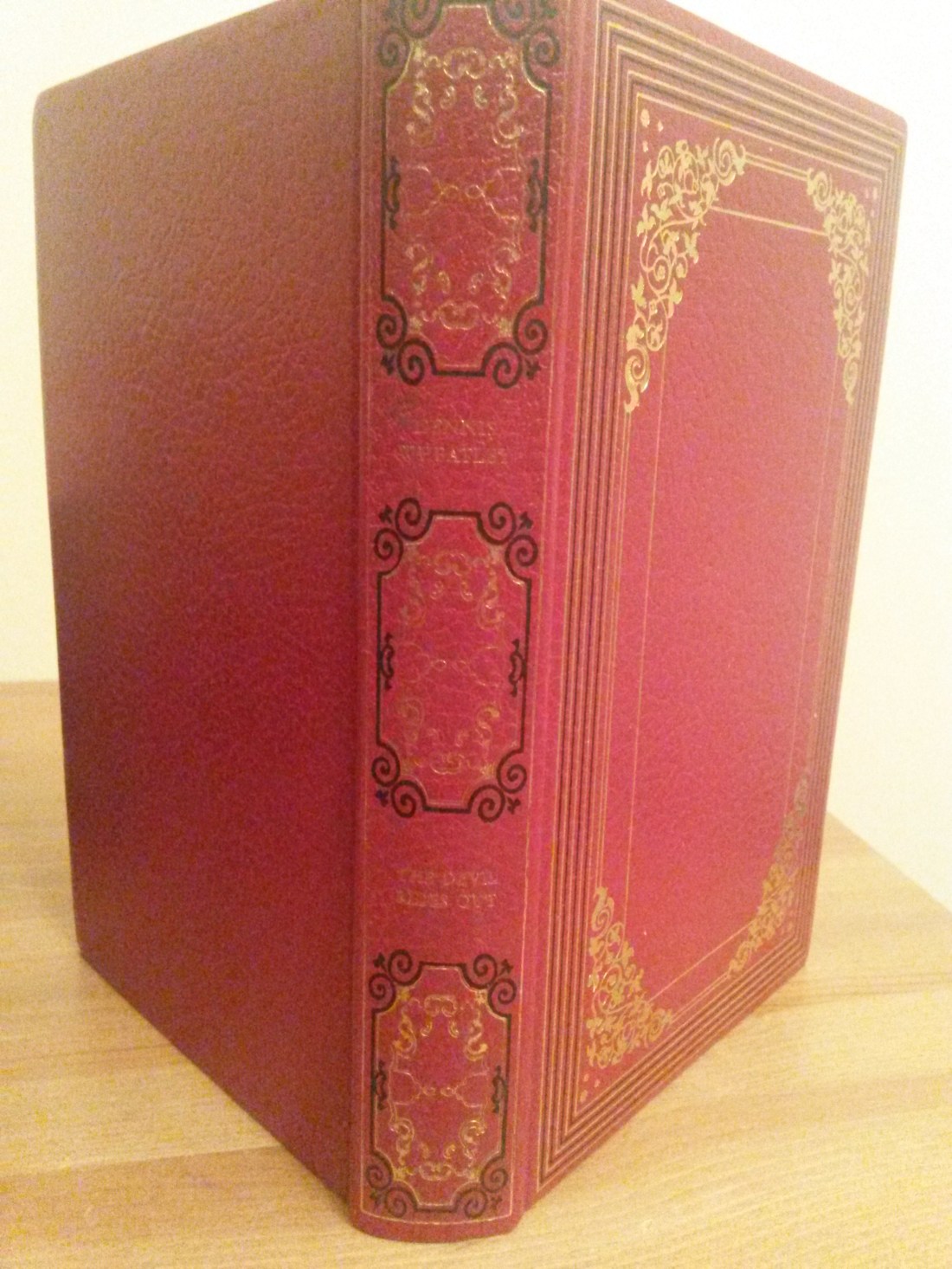
My copy of Devil Rides Out is a fancy hardback reissue. Some of these have illustrations.


20160605_232704
Strange Conflict
Arrow – 1981 (Originally published 1941)
Unlike the other two books in this post, I read this one last week, so it’s still fairly fresh in my memory. This was an enjoyable entry to the series, but it’s a pretty bad book. It sees the Duke and his mates being hired to discover how Nazi U-Boats have been successfully figuring out the trade routes of English ships. Using astral-projection, the Duke figures out that the Nazis are getting their info from an evil Voodoo priest in Haiti. Ok; Voodoo Nazis, sounds great right? Well yeah, that is super cool, but let’s just think about the idea of using astral projection as a means of espionage for a moment. Astral projection gives the Duke the ability to leave his body and go anywhere in the world. The book starts off with him sitting in his apartment in London as the city is being bombed to shit. WHY THE FUCK DID HE WAIT 2 YEARS TO START SPIRIT-SPYING? Why did he not volunteer to start sleep-creeping the Nazis as soon as they entered Poland? Also, out of the Duke’s team of friends, 3 out of the 5 are able to astrally project themselves. If 60% of people can do so, why the fuck were the British government so fucking slow to organize a full-on Astral attack on Germany? It doesn’t make any sense.

Anyways, as soon as they figure out that the bad guy is in Haiti, they decide to head over to kill him in his sleep. I have mentioned elsewhere that Wheatley was not one to be concerned with cultural or political sensitivity, and a trip to Haiti provides several lolworthy examples. This was written in 1941, so the author’s use of the term Jap is excusable, but referring to the “Jap” character as a “dirty little yellow rat” might be a bit much for the modern reader. Failing that, the description of the Haitian natives is sure to offend:
“Those coloured bums have just no powers of organisation at all and it’s like one big tropical slum. If it weren’t for the climate and the masses of fruit that can be had just for the plucking the whole darned lot of them would have starved to death long ago… The niggers live in little more than tents made from tying a few banana palms together.”  There’s another thoroughly unpleasant passage describing the parents of a missing teenager whose corpse has just been found in the hospital; “The man and woman were Mulattoes… The woman was a characterless bag of fat which appeared to have been poured into the good-quality silk dress that restrained her ample figure”.
He also refers to one of the black characters as a “wooglie”, although I’m not entirely sure whether or not that’s a racial slur. (My guess is that it probably is.) To top it all off, the book ends in an amazing proclamation on the superiority of the Anglo-Saxon race.

2016-06-05 23.31.59
Mr Wheatley, you charmer!

I’ve mentioned elsewhere that I don’t mind reading racist books as long as I’m not giving money to the author. In this case, the author is long dead, and I buy these books second hand. However, the most recent editions of Wheatley’s novels have been abridged, and the horrible racism and misogyny have been removed. This is utterly infuriating. It’s not that the publishers want to prevent the spread of racist ideas; it’s that they want to make Wheatley more palatable to the tumblr generation. Fuck that; if you buy a book about Nazi devil-worshippers but get offended by fictional characters’ racism, you need to kill yourself immediately. Yes, Wheatley was a shit, but if you can’t read a book by a person that you might not like in real life, you’re a stupid fucking loser. If you come across something in a book that makes you uncomfortable, think critically and learn from the experience. Censorship of literature is immoral, and anyone who begs to differ can go and help themselves to a hearty swig of bleach.

The rest of this book is standard Wheatley fare; chases, rituals, beautiful but enchanted young women, demons, the works… The ending involves a bit of the old deus ex machina, and I got the feeling that ol’ Dennis might have been making it up as he went along. I wouldn’t recommend this one as a starting point for his work, but it’s worth a read if you like this kind of garbage.

20160605_232625
Gateway to Hell
Arrow – 1974 (Originally published 1970)

I don’t remember much about this one to be honest. It definitely wasn’t as good as Devil Rides Out, but I gave it 5/5 stars on goodreads, so it was obviously thoroughly enjoyable. More diddies on the cover too; can’t go wrong like.

Overall, Wheatley’s writing is bad (He admitted so himself), his plots are silly, and a lot of his ideas are liable to trigger you into oblivion, but I really love his books. There’s something comic-booky about them, and I like to treat myself to one in between heavier stuff. These are just the Black Magic novels from the Duke De Richleau series, and I’ll probably review the others at some stage too.

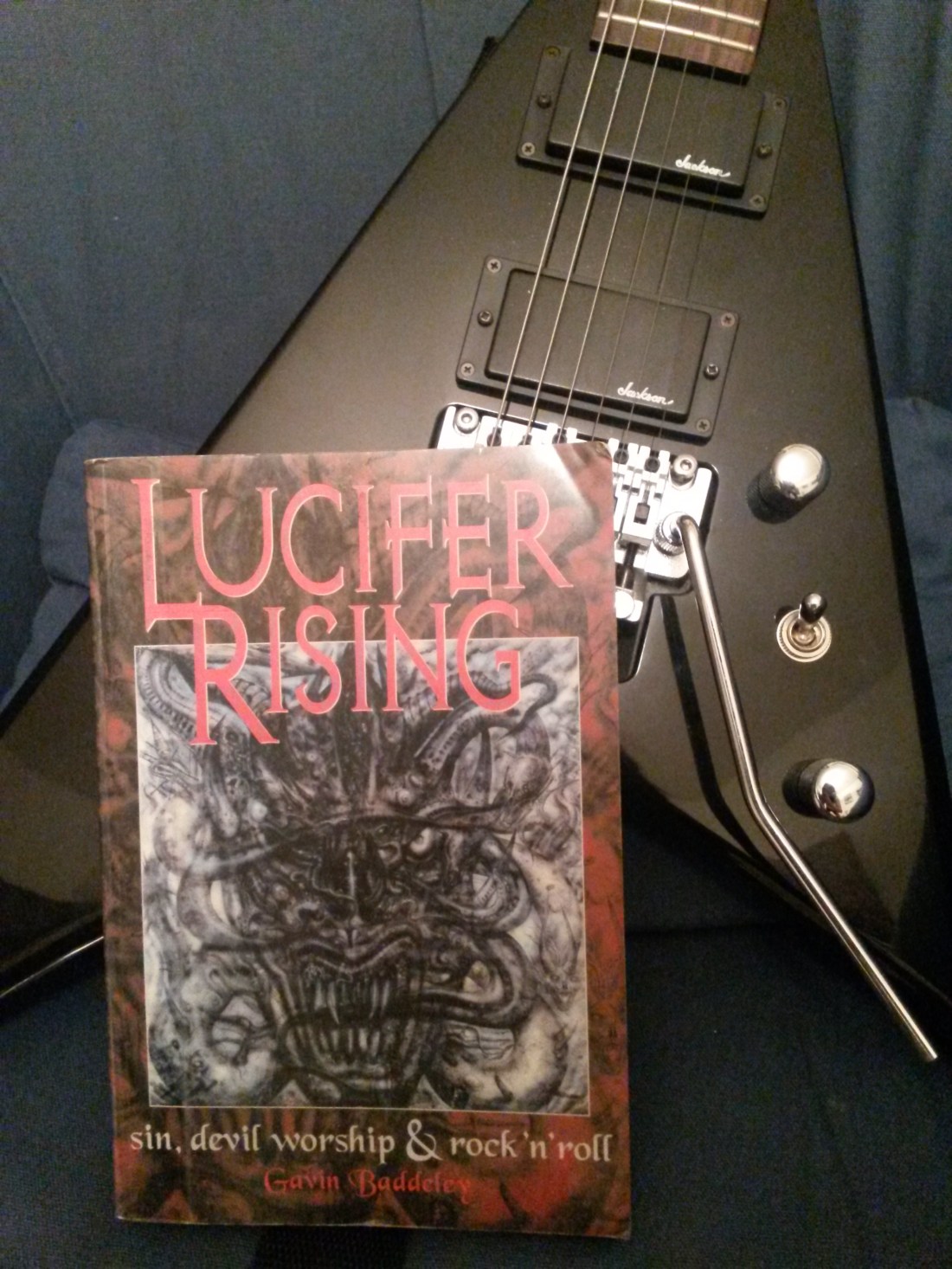
Lucifer Rising – Gavin Baddeley

20160512_224450
Plexus – 2006

This book deals with the different manifestations of Satanism within modern culture. It focuses on rock music and heavy metal, but it also discusses serial killers and horror movies. Sounds pretty great, right? A recommendation for this book showed up on my goodreads account, and my copy was ordered within moments of reading its description. I’m pleased to say that it didn’t disapoint. The author is a priest in the Church of Satan, and the history and outlook of LaVeyan Satanism is central to this book. I like LaVey, so I was entertained, but the author’s tone might be grating on some readers, particularly if they were Christian.

The first few chapters give a short yet surprisingly comprehensive history of Satanism, but the latter half of the book is mostly taken up with interviews. Some of these are excruciatingly embarrassing (Glen Benton is an idiot), and some are genuinely hilarious (Euronymous is precious). Varg Vikernes from Burzum has claimed that the interview with him is entirely fake. (He also claims that this is the worst book that he has ever seen.) I know lots of Burzum fans who claim to dislike Varg. Well, I always thought Burzum’s music was crap,  but I think he’s a pretty funny guy. (Don’t get me wrong; I know he’s a right-wing scumbag, racist, murderer and all-round crazy person, and I certainly wouldn’t say that I ‘like’ him, but let’s be honest; he regularly brings the lols.) There were a few interviews in here that weren’t hugely insightful, and it seemed that some of the interviewees may have been chosen based on their availability rather than their unique insight or authority on the topic, but this doesn’t take away from the cooler parts of the book. It might also be worth noting that I’m a fan of quite a few of the musicians interviewed herein, so I was probably more entertained than most people would be. If you don’t like rock music, this book might be a bit boring.

Baddeley suggests that there are as many different forms of Satanism as there are forms of christianity. (He also shows how hazy the lines between some forms of christianity and Satanism can be.) This book acknowledges the fact that Satanism is a very loosely defined set of beliefs and behaviors, and the author provides a thorough and entertaining account of the movement’s more interesting facets. (I picked up some cool recommendations for bands, movies and books too.) Overall, I would recommend this as a good primer for anyone with an interest in the Devil’s place in Rock’n’Roll.

I started writing a paragraph about my own take on Satanism, but it turned very lengthy very quickly, so I think I shall save it for a later date. Until then, Hail Satan!
(Update: This is what that paragraph eventually turned into.)


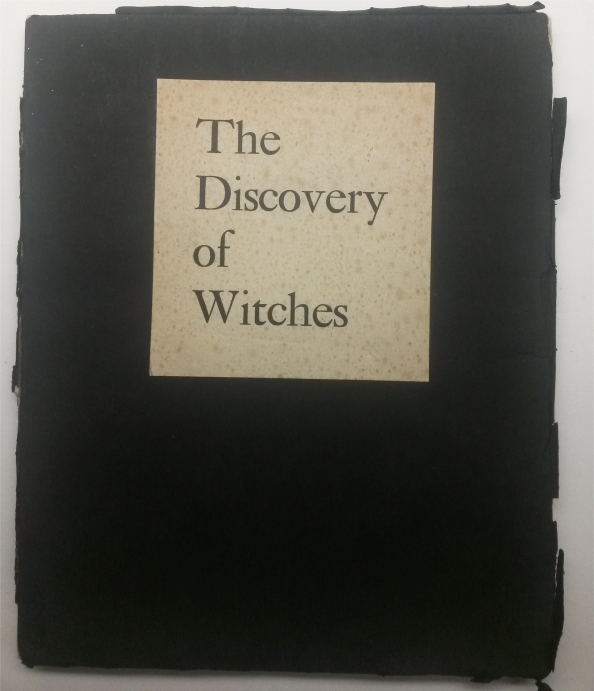
The Discovery of Witches – Matthew Hopkins and Montague Summers

buk
Cayme Press – 1928

This is a cool one.  This pamphlet contains Matthew Hopkin’s treatise on witchcraft from 1647 and an essay about Hopkins by my hero, Montague Summers. Hopkins, for those of you who don’t know, was England’s self proclaimed Witchfinder General. From 1644 until 1647, he traveled from village to village, trying and torturing those unfortunates accused of witchcraft. England was going through a civil war, and the state of political turmoil made it possible for Hopkins to assume authority and roam about as he pleased, burning bitches and getting money. It is believed that he was responsible for the deaths of 300 people. (This works out at as more than half of the total number of witches killed in England from 1400-1700.) The story goes that he stole the Devil’s list of names from Lucifer himself, and that’s how he knew where to look and who to interrogate. There was a movie made about him in 1968 that featured Vincent Price in the title role, and many heavy metal bands have written songs about him. I think he was a pretty neat guy.

Image1
The essay is fairly interesting. Summers gets upset over the fact that people presume that burning at the stake was the standard method by which witches were executed in England. Although many witches were burned alive in Scotland and on the continent, most English witches were actually hung. Those few that were burned were usually being burned for other, additional offences. Summers deems Hopkins a humbug, a quack and a mountebank largely on the basis that Hopkins was not familiar with the classic literary works on witchcraft. The fact that he claimed to be an authority without having first poring over the literature really seemed to grate on Monty. (Summers was enormously erudite and is responsible for many of the existent translations of these works with which Hopkins was not acquainted.)

hopkins
(Image From Robbins’ Encyclopedia of Witchcraft and Demonology)

Hopkins’ pamphlet takes the form of a dialogue between himself and a person who is not convinced of the legitimacy of his work. He explains how he began his witch hunt, the nature of witchcraft and the different methods of ‘examining’ a witch. These different forms of examination were really just different varieties of sadistic torture. Hopkins was a notorious witch-pricker. He and his accomplices, John Stearne and Goody Phillips, would spend hours sticking needles into women’s flesh. If they found a spot that would not bleed, this was taken as proof of diabolic interference. (The Devil always left his mark somewhere on his servants’ bodies, and the spot where he left this mark would not shed blood.) The only real problem with this method is that there is a finite amount of blood inside a human body, and the more pricks you give a person, the more likely the next prick will prove bloodless. In fairness to Hopkins though, pricking was only a preliminary method of testing. If the results weren’t conclusive, the witch would be ducked.

Remember that amazing scene in Monty Python and the Holy Grail in which the crowd decide to throw an alleged witch into the pond to see if she floats? (Watch it again and notice how they inaccurately claim that witches should be burned!) Well, a good game of sinky-floaty was also a favourite pass-time of Hopkins.

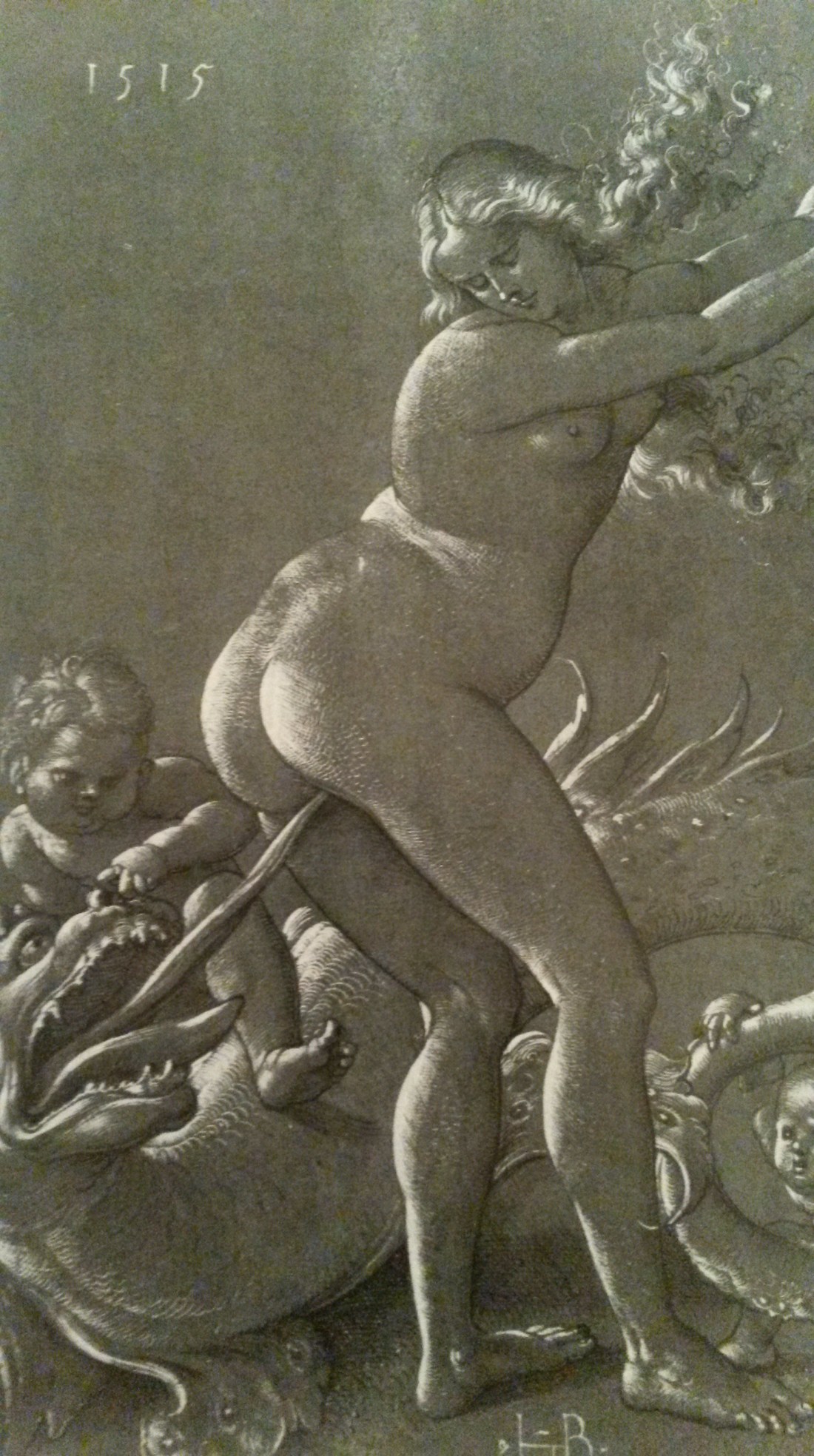
Image3
I’d allow her to swim in my pond any day.

Summers describes how before the witches would be thrown into the pond, they would have their thumbs tied to the feet on the opposite sides of their body so that their limbs would be making the sign of the cross. The reason that witches were dunked in this manner was not to see whether or not they were made of wood; it was because water, which is in some way divine by its nature, would not accept a servant of Satan into its bosom. This method of trying a witch always seemed particularly bizarre to me, but apparently the practice of dunking occurred in some parts of Europe up until the late 19th century.

Can you think of anyone else who floated on water though? Hmmmmmmmm? I wonder what his excuse was…

Other suspected witches were either ‘watched’ or ‘walked’. Watching a witch involved placing the crone in a room with a small chink or hole in the door until she either made a confession or something else occurred to prove her guilt. She would be forced to sit in an awkward position, and tied up if she refused to remain still. The watchers would keep an eye out for spiders or small flies that slipped into the room through the fissure in the door. If they were unable to squash these bugs, this would be taken as proof that they were actually the accused’s familiar spirits come to relieve their master in her hour of suffering. An elusive midge could provide interrogators with enough evidence to send a witch to the tree. Watching sessions could last days, and the witches were starved throughout.

‘Walking’ was when witches were deprived of sleep and energy by being forced to stay up all night, running back and forth in a small room. Ándale, ándale! Arriba, arriba!

Imagej2
Hopkins also provides an entertaining list of the names of all the witches’ familiars that he encountered. He claims that these wicked spirits have “names which no mortall could invent”, and while Ilemauzar, Pyewackett, Jarmara, Jeso, Holt, Saoke, Griezzel, Wynoe, Panu, and Mrit are all quite unusual sounding, Pecke in the Crowne, Vinegar-Tom, Jockey, Sugar, Newes, Littleman, Prettyman, Dainty, and  Greedigut all sound very much like they were invented by a mortall, and that’s not to mention Elizabeth, Collyn and Sandy. Best of all though, one witch claimed her familiar was named Jesus. (Summers gets hot and bothered over this, claiming that “to name the Sanctissimum Nomen would be to banish the familiars and dissolve the enchantment.”)

After a few years, local authorities became suspicious of Hopkins, and he was forced into early retirement. There are stories that he himself was ducked, but there is no evidence to believe that this actually  happened. He died from tuberculosis in his late 20s. (Vincent Price was 56 when he played him in the movie.)

This book is fairly old. I had been keeping an eye out for an affordable copy for quite a while before I found this one, and all things considered, it’s in pretty good condition for what I paid for it. The cover and spine are in rough shape, the pages are yellowed and the edges worn, but I’ve been able to figure out that before I purchased this copy, it had probably remained unread since its publication. Several of the pages are bound together on the wrong side, making the book impossible to read without either tearing them apart or using a very small camera to slip between the pages to photograph them. Maybe there is a specific word for this kind of printing error, but I am unaware of it. Check out the video below to see exactly what I mean.

I read Hopkin’s pamphlet online a long time ago, and Summer’s essay is interesting but not exactly mind-blowing. As a whole though, this book is fucking cool, and the extra effort I had to put into reading it made it all the more enjoyable. It’s Walpurgisnacht tonight too, so turn the tables on Hopkins and make it your business to go forth, make love to the devil, ride to the Sabbath, and hang a witch-hunter.

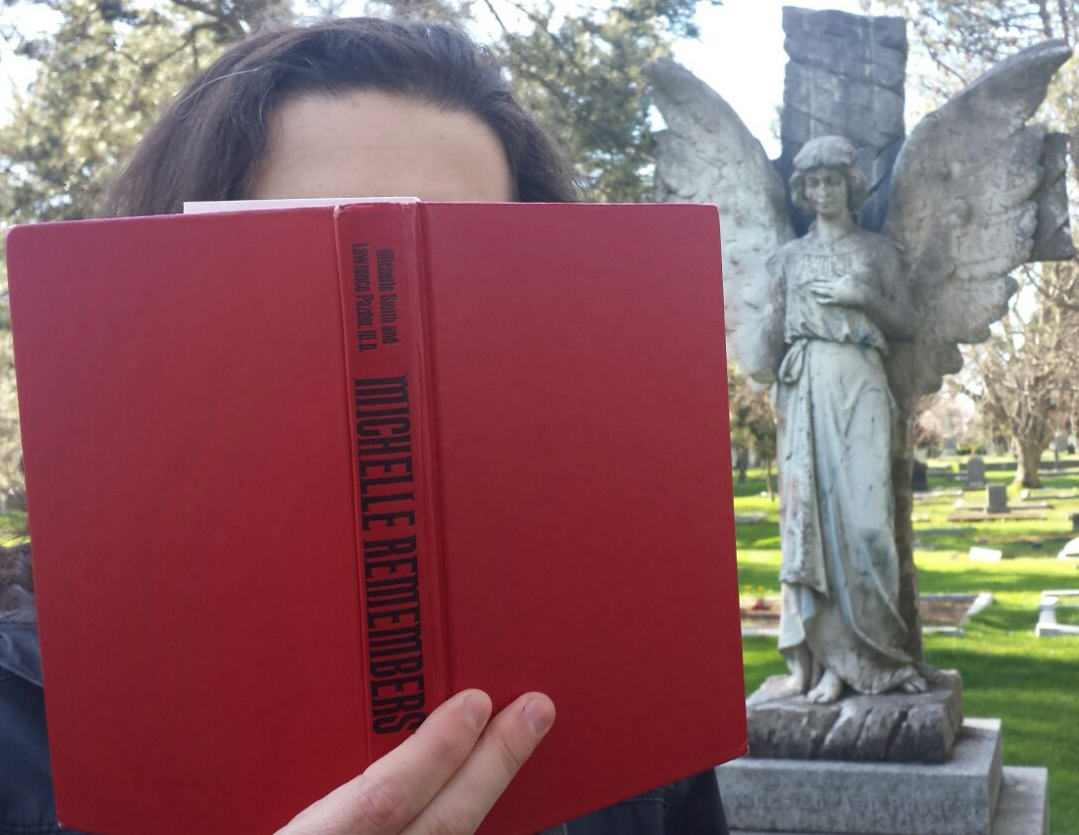
Michelle Remembers – Michelle Smith and Lawrence Pazder

michelle remembers ross bay
Congdon and Lattes – 1980
I have been horrendously busy with school and haven’t had the opportunity to update this blog, but I feel that this post will make up for my absence. I’m reviewing a Satanic classic; Michelle Remembers. Packed full of horrendous scenes of murder, enemas, cannibalism, and perverse diabolic rituals, this is the book that kicked off the satanic ritual abuse panic of the 80s. It tells the story of Michelle, a woman from Victoria BC who at the age of 27 began to uncover repressed memories of Satanic abuse that she had suffered 22 years earlier. It’s a fascinating piece of writing for several different reasons, and I have quite a lot to say about it.

So, the basic premise of the book is that as a child, this woman, Michelle, suffered such horrendous abuse at the hands of a coven of Satanists that she entirely repressed all memories relating to it. When she becomes an adult, she has a nightmare and goes to tell her psychiatrist about it. The pair become convinced that the nightmare means something, and through a kind of self-induced hypnosis that is never properly explained, Michelle summons forth her 5 year old self who proceeds to give a first hand account of the part of Michelle’s life that she herself was completely unaware of.

michelle smith lawrence pazderA real pair of plonkers. Take a good minute there to really look into the eyes of that utter imbecile. That common, stupid-looking woman believed that Jesus Christ and Lucifer personally did battle over her soul.

According to the child version of Michelle, her mother started taking Michelle to Satanic rituals when she was very small. At one of the first ceremonies, Michelle is anally fingered and frigged and forced to watch her mother engage in an orgy. Michelle gets upset when she sees a woman between her mother’s legs, so she hits her mother’s licker with a bottle. Everyone else in the room sees this happening and joins in on the fun. The saucy lesbian is stabbed to death in front of the child while she is still underneath the woman that she has been pleasuring. Not the worst way to go, I guess…

After Michelle has rudely attacked her lover, the mother abandons her naughty child and leaves her with the Satanists. I’ll be honest here; they’re not very good babysitters. They fill Michelle’s bumhole with water and then make her squirt-squirrel her sphincter’s plentiful bounty onto a Bible. They bury her alive. They kill a bunch of cute kittens in front of her. They cut up quite a few dead babies and mash some of them into Michelle’s face. They rape the child and make a snake go into her fanny. They introduce her to another child, allow them to make friends, and then they cut the other child’s head off and tell Michelle to put the body back together like a jigsaw puzzle. They bury her alive again, this time in a grave with a bunch of live cats. They make her eat part of a burnt corpse. They also cut two holes in her scalp and try to sew on a pair of horns onto her head.  All in all, they’re not very nice to her.

Child abuse is literally the least funny thing in the world, and I would not jest about these events if they had ever actually happened.  Michelle Smith you see, is a lying piece of trash who made up the whole thing.

An internet search will provide you with countless reasons to believe that this book is absolute nonsense, but I’ll just mention a few of the more salient points. Michelle Smith’s real name was Michelle Proby. Lawrence Pazder’s real name was Lawrence Pazder. Why did Michelle use a fake name if Pazder was using his real one? Well, it was probably to hide some of the evidence that proves that she was full of shit. Michelle had two sisters you see, one older and one younger, and neither of them are ever mentioned in the book, nor have they ever corroborated her story. Michelle’s father claimed that he could personally discredit every sentence in the book. He said, “It was the worst pack of lies a little girl could ever make up. The book took me four months to read, and I cried all the time. I kept saying to myself: ‘Dear God, how could anyone do this to their dead mother?’” He said of his late wife, “There never was a woman on this earth who worked harder for her daughters. There was no hanky panky or devil-worshipping.” He also said that he took Michelle to church every Sunday despite the fact that Michelle claims never to have had a religious upbringing.

One of the first memories Michelle unveils is of one of the Satanists, a man named Malachi, putting her into a corpse infested car and driving it into a wall. The Satanist was trying to make it look as if the corpse had died in the crash (whereas in “reality” this was the corpse of the woman whom Michelle attacked for sucking on her mother’s juicy pussy.) Victoria is a small city; a car crash in Victoria in the 1950s would definitely have made it into the local papers. Surprisingly enough though, no account of any such incident was ever published. Could it be that it never happened? Yes. Definitely.

Michelle was supposed to have been satanically, ritually abused over the course of about a year. One of the rituals she describes is said to have lasted between 80-90 days. Somebody had the good sense to check the attendance records at the school Michelle was supposed to be attending at the time. Guess what; Michelle Proby never missed any significant amount of time from school. Either the teachers were in on the Satanism or Michelle was full of shit.

In some of my favourite parts of the book, Michelle describes how she is taken to Ross Bay Cemetery and buried alive in an old grave. She describes the woman who is with her pulling the top off the grave and lowering her down into the earth. The only problem with this is that the lids of the graves in that cemetery are solid fucking rock and far too heavy for a single person to lift. If Michelle is truly stupid enough to believe that this nonsense happened, I really hope her delusions are vivid and terrifying. I hope she could smell the corpse.

Michelle imagining herself in her rightful place. Hopefully she is underground at this stage.

The other claims about Victoria are pretty silly too. She describes how all of the many  Satanists cut off the middle finger from their left hand. You’d think that this trend might be noticed in a small city of 50,000 people. Also, surely somebody noticed all of the dead babies that were going missing. It seems like somebody is smushing up a dead baby every ten minutes in this crazy book.  The authors’ only textual evidence of the Satanic problem in Victoria comes from a newspaper article called Witchcraft in Victoria from 1977. The article is about a series of claims from a drug addicted, delusional,  evangelical christian named Len Olsen who was eventually sued for his lies. Here is a cool video featuring the guy about whom he made the slanderous claims.

Are Michelle’s claims really that outlandish? It is possible that a dangerous cult was operating in Victoria at the time; after all, there are sickos everywhere. Well, if Michelle had only told that part of the story, I really doubt that people would have gotten as worked up about this book. The thing is, Michelle goes on to claim that Lucifer himself begins to attend the rituals that she is privy to. We are not talking some meddlesome demon here, we are talking Prince of Hell, the Arch-Fiend, Satan, THE DEVIL HIMSELF. Michelle ‘the imbecile’ Smith wants us to believe that the Fallen Angel Lucifer took the time to travel from Hell to Victoria to participate in a ritual in which he would personally rough up a 5 year old girl.

Not only that, but Michelle is only able to escape because Mary, the virgin mother of Christ, and Jesus Christ of Nazareth, the only son of god, show up to save her. This, stupid, under-achieving, plain little fart of a woman wants people to believe that Christ and Lucifer came to earth to personally do battle for her soul. Jesus and Mary, who couldn’t bother their holes coming down to stop the holocaust, decided that they had better travel to earth to come to the aid of an ugly little cur with no personality.

2016-02-29 21.50.00See the blur behind the flame? The fools who wrote this book would have you believe that that is the virgin Mary.

Now, if I was going to write a book to inspire moral panic and public outrage, I would do a little research to make my claims seem believable, but Michelle and Lawrence decided not to bother. It shows. Michelle’s description of satanism is unfounded, illogical and incredibly silly. The rituals of the cartoony ‘satanists’ in this book make absolutely no sense; the basic idea behind them seems to be ‘do whatever is wrong’. This is very clearly the satanism of a person who knows absolutely nothing of the subject. A Dennis Wheately novel, this is not. Perhaps the worst part of the book is the persistent rhyming speech that Michelle attributes to Satan. According to her, the Dark Lord can only speak in rhyming couplets. His chapter-long speeches are truly excruciating to get through. I think one of them reads;

My name is Satan, my Kingdom is Hell,
I will hurt your arm, oh little Michelle,
Swear allegiance to me, and poop on this book,
for if you say no,  your ass I shall fuck.

Ok, so I obviously wrote that. But I have just read back over some of the actual rhymes in the book, and I have to say that mine is far less silly. Why would the Devil be limited to speak in rhymes? That doesn’t make any sense Michelle, you stupid piece of garbage.

These are Michelle’s drawings of the Devil. Depending on his moods, he would either take the form of an owl with a tail, a fraggle, or a two-legged lizard dog

At several points, Pazder actually refers to the perpetrators here as members of the Church of Satan. Apparently Anton Lavey threatened him with legal action to get him to withdraw these claims, but they’re still in my copy of the book.
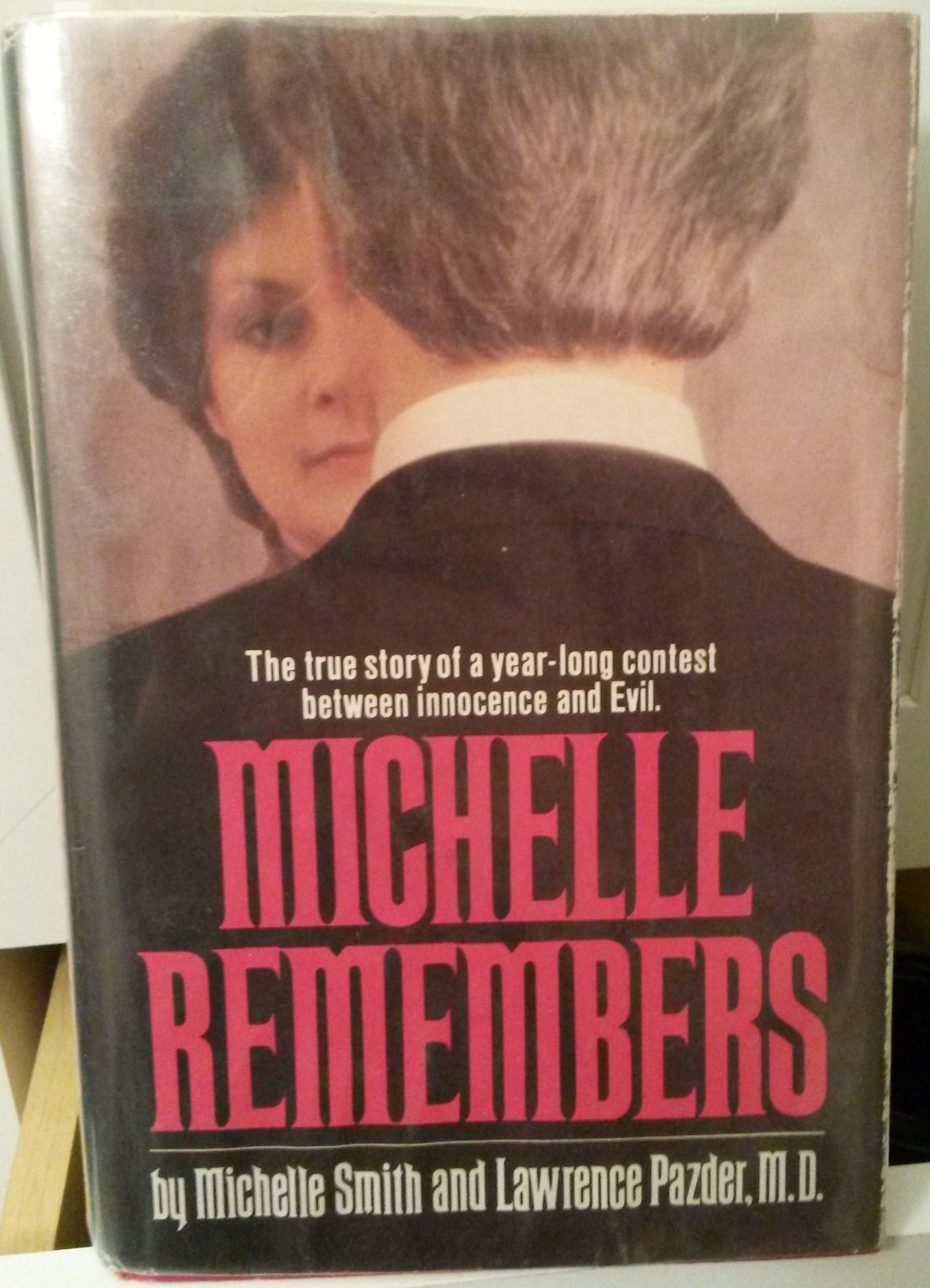
michelle remembers front cover
Doesn’t the cover of this edition make it look less like a book about satanic rituals and more like a romance novel about a really boring woman who falls in love with her psychiatrist and tries to give him everything he wants even if it means sacrificing her own dignity? Well, actually…

One of the odd features of this book is that although it was written by the protagonists, it is told in the third person. The narrative perspective makes the book feel like a novel and thus makes it a more tolerable read, but it also adds a lair of buttock-clenching cringiness. Pazder is first introduced in the text as “A handsome man in his early forties,…warm, manly, soft-spoken”, and when Michelle first appears, she is described as “A pretty young woman of twenty-seven, with a  heart-shaped face, a delicate mouth, and bountiful brown curls”. Now either they wrote those descriptions of themselves, or they wrote those descriptions of each other. Anyone who would talk of themselves in that manner is a cunt, and anyone who would write about another person in that manner is looking for the shag.

As the narrative unfolds, Michelle and Lawrence get closer and closer. She goes to see him more and more frequently, and he starts holding her hands and maintaining physical contact with her during their sessions. Michelle grows distant from her husband, and Lawrence starts holding things back from his wife. The authors try to present their blossoming relationship as something pure, positive, and misunderstood, but in reality, these two degenerates were beginning a depraved affair that centered on Michelle’s repulsive sexual fantasies.  Pazder would sit on the couch with one arm around Michelle as she spewed forth her disgusting fantasies about paedophilia, scat-play, and sadomasochism. I am not even exaggerating; that is literally what happened between the two of them. Michelle Pazder was an unhinged sexual deviant, and Lawrence Pazder, a man posing as a psychiatrist, took advantage of the patient in his care for the satiation of his own vile desires. His leading questions and her dependency and desire to please lead to their corrupt bond becoming stronger and stronger. Although it is not mentioned in the text, the pair eventually defied the catholic faith of which they were once so proud by divorcing their spouses and marrying each other. Imagine the sex talk on their wedding night. Ewwwwwwwwww.

Speaking of marriage, my wife and I were in Victoria recently, and we paid a short visit to Ross Bay Cemetery where much of the book is set. I wanted to see if I could find an entrance to the Satanic Lair that the lads had made, but I didn’t have much luck. However, I did see lots of cool tombstones and decrepit graves.

Some messed up things have actually happened at Ross Bay since the publication of this book. It has suffered a fair bit of vandalism, and has become notorious among heavy metallers due to the alleged actions of a particularly naughty black metal band. While I am all for desecration of hallowed ground, it seems a bit of a shame that people would mess up one of the few interesting historic sites in B.C. If you’re ever in Victoria, the cemetery is an awesome place to go for a stroll.

Below, and in the first image of this post, is the Pooley Angel. This statue was spray-painted blue at one stage and is commonly referred to as the Blue Angel of Ross Bay. Apparently tears can be seen running down its face on the night of a full moon.

ross bay blue angel
COOL!

I recently reviewed Communion by Whitley Strieber, and if you read that review, you will notice that like Michelle, I make fun of ol’ Whit-Strieb for having things shoved up his dirt-box. You may also notice that I didn’t get quite as worked up over the stupid story that he told after regressive hypnotherapy. That’s because Whitley Striber’s equally silly story didn’t end up ruining people’s lives. There are lots of nutty books out there, but Michelle Remembers had a tremendously negative effect on society in the early 1980s. The authors appeared on Oprah and became celebrities, Pazder became known as the leading authority on Satanic Ritual Abuse, and innocent people were publicly  and unfairly accused of child abuse. The only good thing to come from the author’s  irresponsible perversion is the over-the-top 1980s Satanic Heavy Metal that their book inspired. Fundamentalist christians are a pain in the ass, but these two pieces of shit weren’t even particularly devout. (As mentioned above, they divorced their partners and remarried, a mortal sin in the Catholic faith.) They were a pair of attention seeking scumbags who weren’t concerned with how their perverse fantasies might affect the lives of others. I know that Pazder is dead, but we can only hope that Michelle is too.

I hated the authors, but I thoroughly enjoyed this book. If you’ve made it through this review, you’ll probably enjoy it too. Reading it will make you want to listen to Slayer and spit at a priest.

HAIL SATAN 666!!!
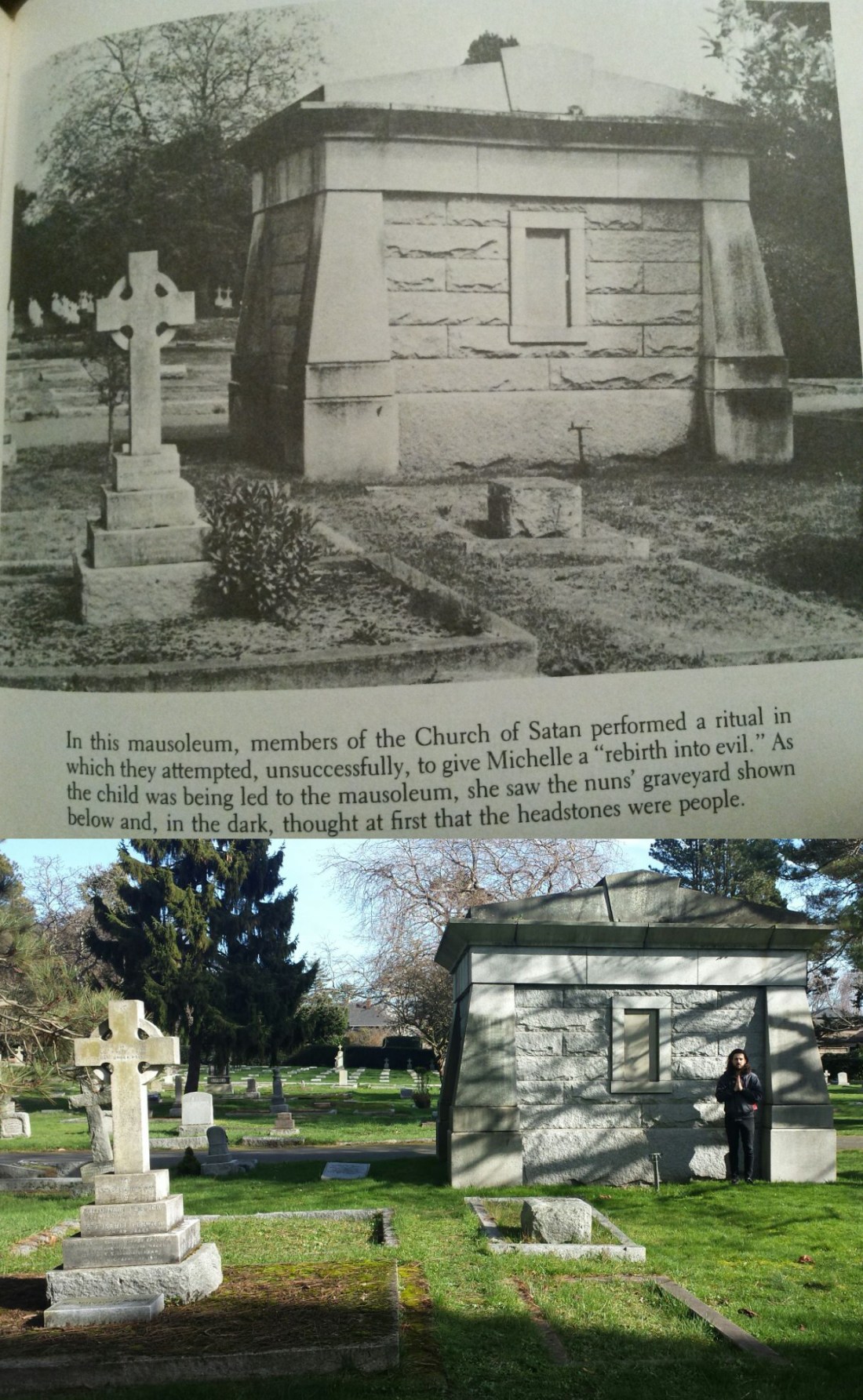
michelle remembers mausoleum ross bay

Witchcraft (The Story of Man’s Search for Supernatural Power) – Eric Maple

2016-01-07 23.52.33.jpg
Octopus Books -1973

This is a pretty cool coffee table book on witchcraft from the 70s. Most of it is the kind of stuff you expect from a 140 page overview of an overwhelmingly broad topic, but there were a few cool bits in here that I hadn’t come across before; some of the details on the torture techniques of the inquisitions made me feel rather uncomfortable. The section on Wicca is far too long, but otherwise the book  is pretty good. The images are by far the best part. I have a bunch of other books on the topic that are far more detailed, but I paid less than a dollar for this one, and I feel like it was a wise purchase.

20160107_222308
An irresponsible mother allows a dog-like serpent to give her a little bit of licky-licky-bum-bum in front of her kids.

20160107_222216
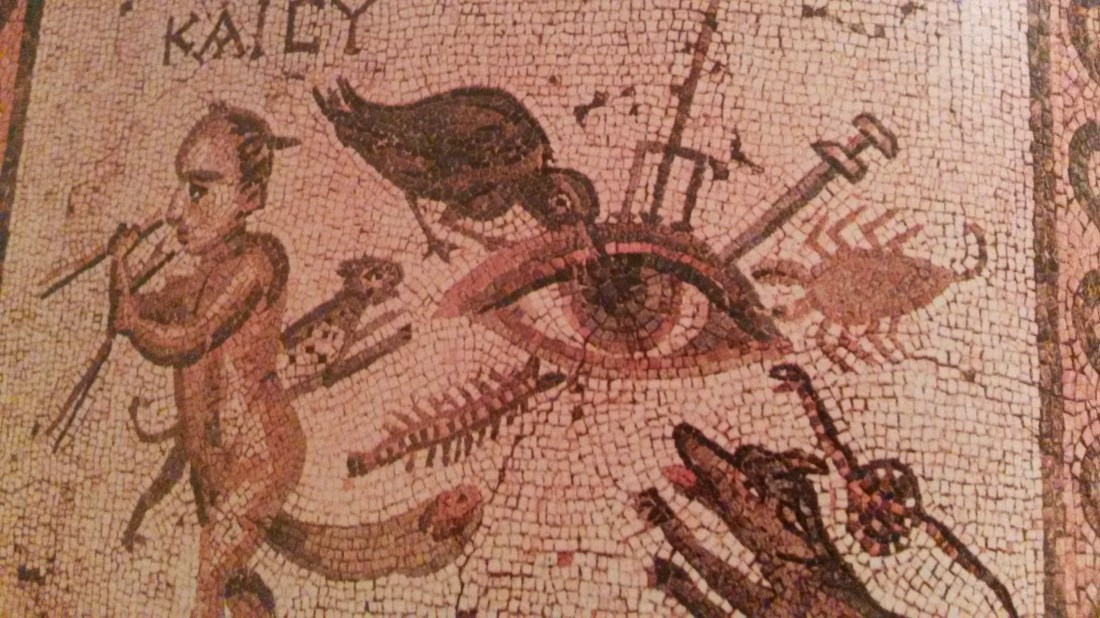
The caption below this Roman mosaic in the book claims that its intention was to “to crush the evil eye’s potency by means of pecks, bites and stabs”. Hang on though! The eye isn’t just being pecked, bitten and stabbed; there’s also a man farting at it.  And is that just a fart? That brown stream spewing from the man’s anus looks like it’s carrying baggage! Either way, think of how disrespectful that is! Imagine being captured by your worst enemy; he pokes you with his trident, throws you in a cage with gross insects and wild animals, stabs you with a sword, and then adds insult to injury by farting in your eye. What a blackguard!

20160107_221636
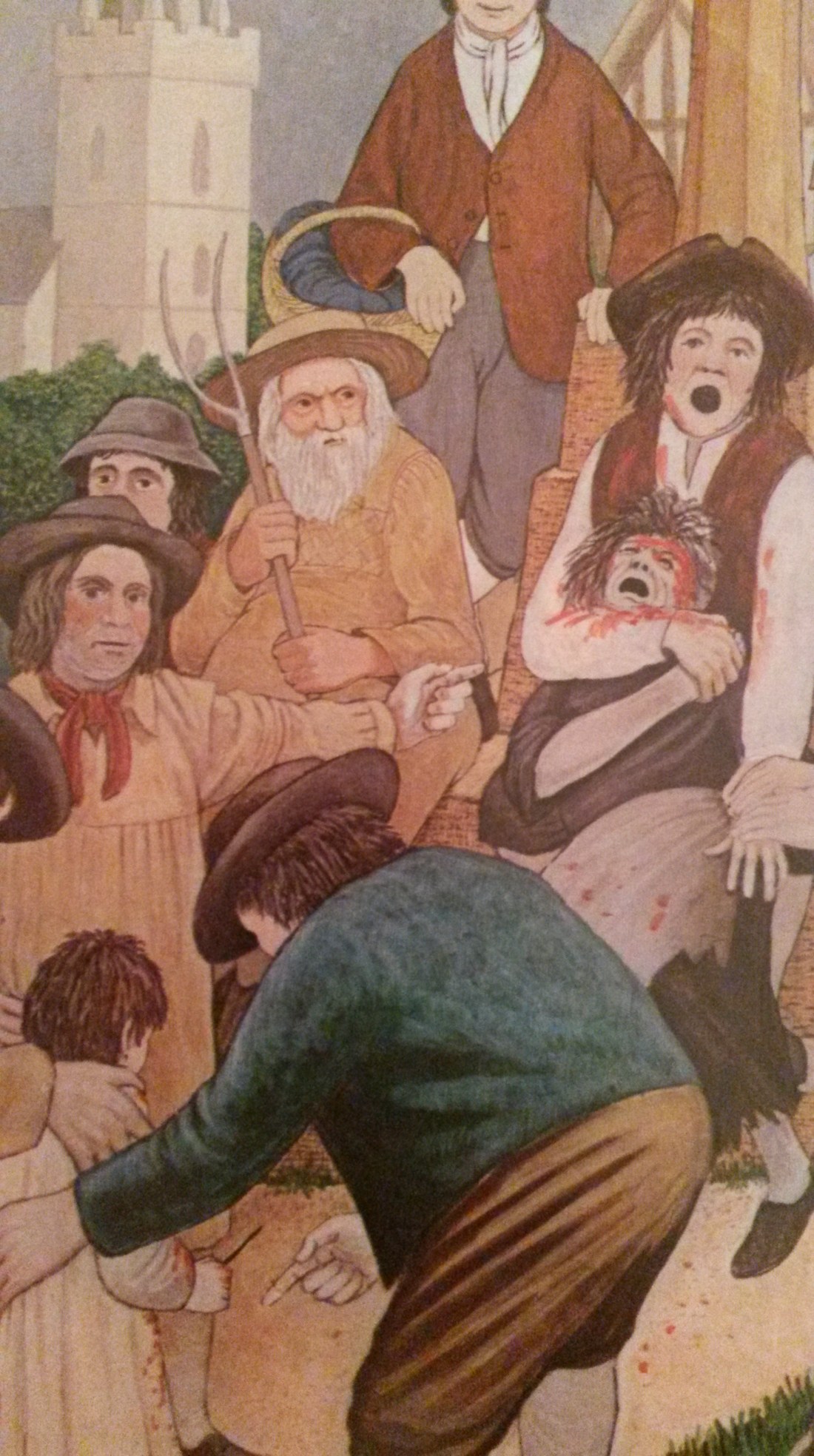
Good boy Jimmy, scratch that mentally handicapped woman’s face with your rusty nail. She won’t be casting any more spells on you after that!

20160107_22211620160107_221758
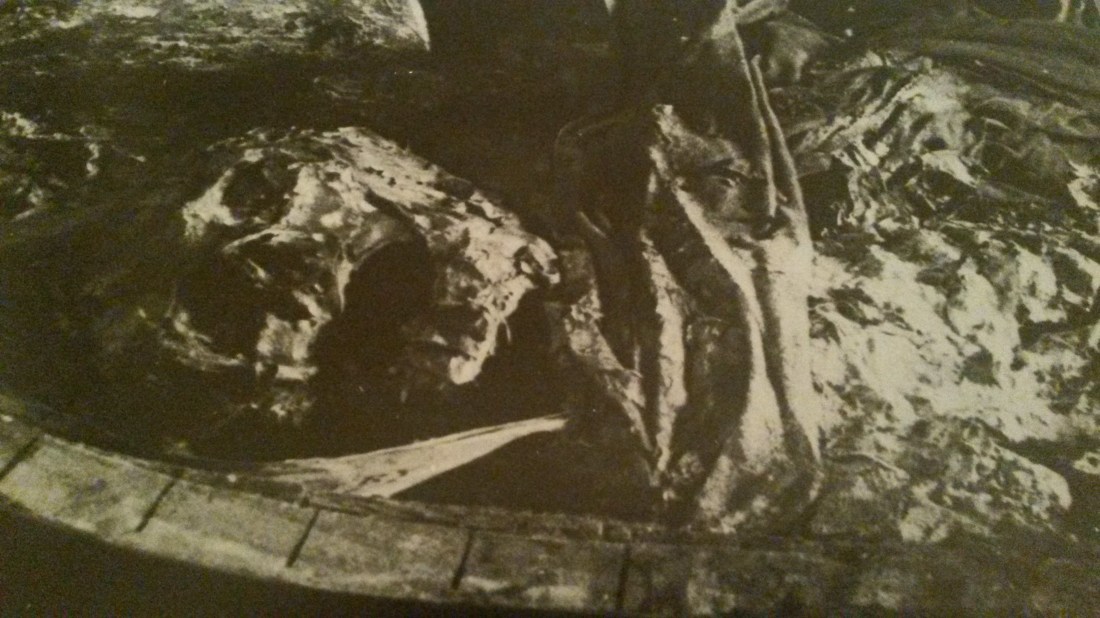
These images are the coolest part of the book. They’re from the aftermath of the 1963 desecration of Clophill Graveyard in England.  These grisly exhumations are thought to have been the work of Satanist Necromancers. 7 graves were desecrated and chicken’s feathers and blood were found strewn across the scene. One of the corpses was a lady named Jenny Humberstone who died in 1722. Her grave was opened 3 more times after the initial incident. I suppose that if you’re going to dig up a corpse, it’s probably more polite to exhume somebody that nobody remembers. It’s still pretty fucked up if you ask me. There was actually a horror movie made about Clophill church a few years ago, but it looks absolutely shit and I probably won’t be watching it.


Did Aleister Crowley Create Strange Lifeforms? Moonchild, The Magician and To the Devil – a Daughter

2015-12-28 02.38.38
It’s taken a while, but I’ve finally gotten around to writing a post about Aleister Crowley. It’s hard to know what to believe about the man; some see him as a prophet, while many others see him as a charlatan. In this post I discuss three different portrayals of Crowley. The three accounts come from novels, but the authors of these novels actually knew Crowley in real life. Their accounts are therefore infinitely more reliable than the many biographies written by people who never met him. I’ll start off with Crowley’s own novel.

2015-12-29 18.12.45
Moonchild – Aleister Crowley
Weiser – 1996

He may have been many things, but a good novelist, Aleister Crowley was not. This book is about a team of magicians who force a woman to undergo a ritual pregnancy to create a “moonchild” (Don’t ask what that is. I’ve read the book, and I don’t fucking know.). Another team of evil magicians, the Black Lodge, tries its best to stop this from happening. The premise is promising, but the plot reads as if it was made up as the book was being written; it starts off decently, but by the end it feels like Crowley has gotten bored with his own story and wants to be done with it as soon as possible. The ending is so unsatisfying that it makes the rest of the book feel like a waste of time. (Imagine getting halfway through Jaws and witnessing the characters giving up and saying “Fuck it. Let’s just move to Colorado where there’s no sharks.”) Also, the mix of fiction and mystical philosophy is tolerable at first, but unless you’re a fedora-wearing goth, it will get very boring very quickly.

All of the black magicians are based on people who Crowley disliked in real life. Edwin Arthwait is Arthur Edward Waite, the lean Protestant-Irishman named Gates is W.B. Yeats, and S.R.M.D is Samuel Liddell MacGregor Mathers. (All of these lads were Crowley’s former Golden Dawn buddies.) Cyril Grey and Simon Iff are a Stephen Dedalus/Leopold Bloom tag-team version of Crowley himself. The fact that the author put two versions of himself into his book might give you an idea of his inflated sense of self-importance.

There were two parts of this book that I really liked. The first is when a lad called Balloch calls a lad called Akbar a “piece of dirt”. The second is a depiction of a grisly necromantic ritual. I won’t ruin it for you, but it involves a lot of animal blood and the corpse of William Butler Yeats. The book is actually worth reading for that particular scene alone.

This is a novel, but I’m sure that some of it was based on personal experiences. The characters representing Crowley are the good guys, and their magic is limited to a little astral projection here and there, but Crowley himself could well have been privy to depraved rituals similar to those of the Black Lodge. From what I understand about the man, he revelled in the air of mystery that surrounded him, and this book serves to propagate that air.

I bought this book ages ago, and I was fairly disappointed when I got around to reading it. The plot is shit, the characters are annoying, and ultimately it serves as little more than an ego wank. Overall, it provides the least interesting account of Crowley out of these three books.


20151228_012546
The Magician – W. Somerset Maugham
Penguin – 1967

What a relief it was to read this book after slogging through Moonchild! This is a fast-paced, gothic thriller about an evil magician who does his best to fuck up the relationship between a young couple. He uses black magic to take control of the girl, and he forms despicable plans to use her in an unspeakable experiment. Maugham wrote this novel early in his career and later claimed to have completely forgotten about it. It’s not supposed to be his greatest work, but I fucking loved it. It’s genuinely exciting, it doesn’t shy away from violence, and it doesn’t get bogged down in tedious mysticism. The ending is fucking glorious too; I don’t want to ruin it for anyone who might read it, but holy shit, there are freaks in the attic!

So why am I including this book in this post? Well, the evil magician, one Oliver Haddo, is based on Aleister Crowley. In an introductory note, Maugham describes how he met Crowley in Paris and took an instant dislike to him. He claims that Crowley served as a model for Haddo, but that Haddo is not supposed to be a portrait of Crowley.

20151228_012606
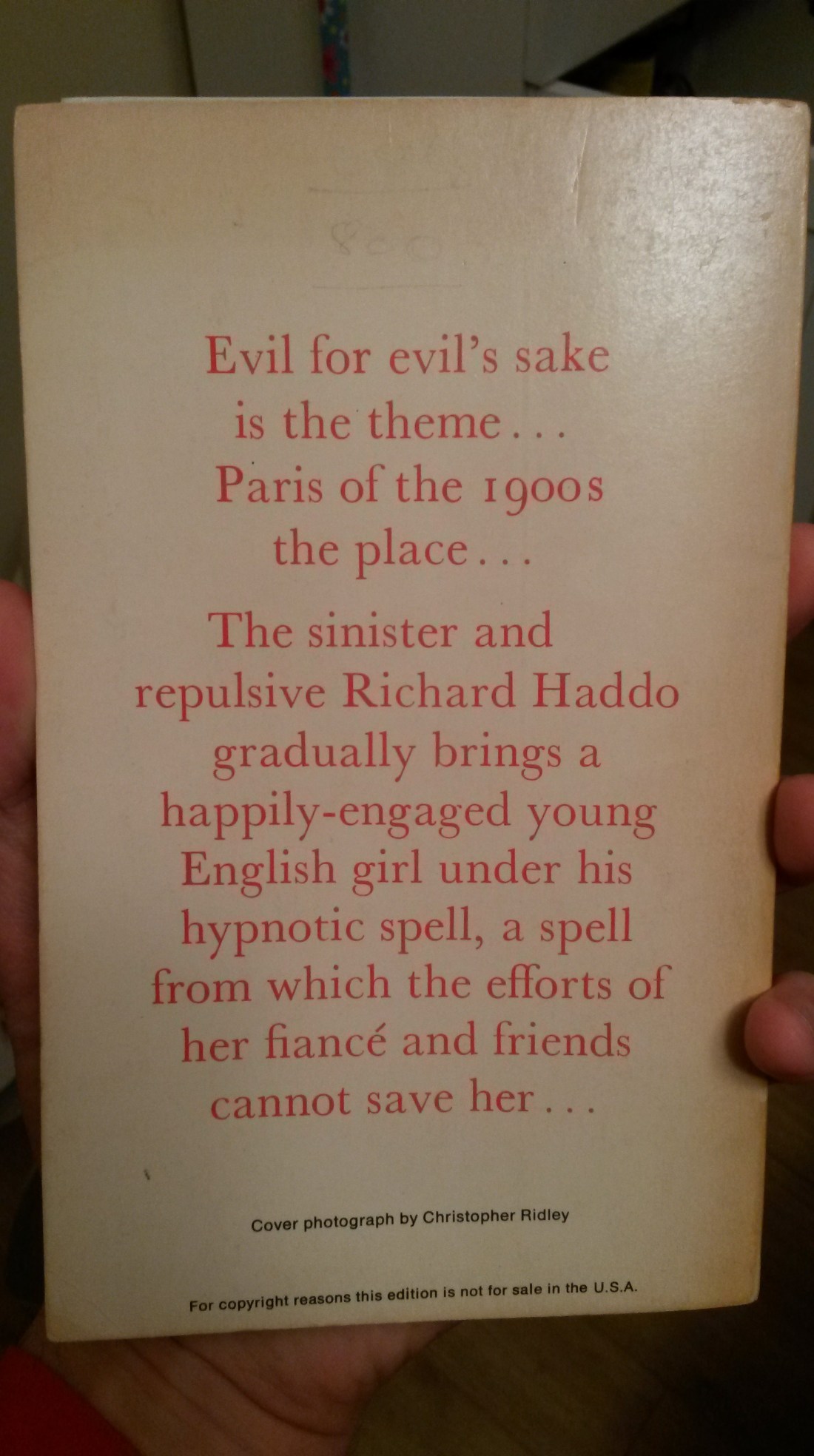
This is the back cover of my copy of The Magician. Note that the magician is mistakenly referred to as Richard Haddo instead of Oliver. Oh Drat!

So what’s Oliver Haddo like? Well, one point that is made perfectly clear is that he is a plus-sized gentleman. References to his girth are made whenever he appears; indeed, the subtext of this entire novel reads “Aleister Crowley is a fatty-fatty-boombalatty”. What I found more interesting though, were the similarities between Haddo and Crowley’s own depiction of himself in Moonchild. In both books he is described as having a peculiar glare and the ability to enter or exit a room without notice. He is also depicted as being a very difficult man to read; he seems in both books to have a very odd, yet intriguing manner about him. Maugham claims that he was simultaneously interested, amused and repulsed by Crowley in real life.

Haddo’s most sinister plan is to use the blood of a virgin to create homunculi (little goblin people that are made through magic). Could the real Crowley have been so fiendish? Well, homunculi are also discussed at length in Moonchild. Crowley there puts forth a theory of reincarnation in which souls compete for human bodies. Every incarnated soul will have three forces acting on it: the soul itself, heredity and its environment. Souls should therefore look for bodies whose heredity and environments come with as few restrictions as possible. (By their nature, homunculi have no heredity and would therefore be freer than other bodies.) The aim of the magicians in Moonchild is to magically induce a scenario where a powerful soul will be convinced to enter the body of their ritual baby. This baby was conceived in the normal way and so can only be considered a homunculus in a very loose sense of the word. Conversely, Haddo’s creations in The Magician are homunculi in the very literal sense of the world. The unholy, fabricated mutants are probably the most fantastic element of Maugham’s story, but the real Crowley clearly had come across the idea in his own practice. Is it possible that he attempted to create life out of nothing? I see no reason to believe that he wouldn’t have tried to do so; it’s not like the guy was renowned for his ethical integrity.

Anyways, so transparent was Maugham’s use of Crowley as a model for Haddo that Crowley actually wrote a review of The Magician for Vanity Fair. He even signed the article as Oliver Haddo. His main criticism was that Maugham had plagiarized much of the material in his book. (Note that one of the sources he recognized as plagiarized was a passage on the creation of homunculi from Franz Hartmann’s book about Paracelcus!) This would be a fair complaint if The Magician was an essay, but the plagiarism doesn’t make the novel any less entertaining. Also, I probably wouldn’t have discovered this wonderful novel if it weren’t for the plagiarism herein. Crowley’s response to the novel and his further comments on Maugham are quite interesting; he gets a little bitchy at him, but he’s never really nasty. From the little I know about the man, I reckon he gained enormous pleasure from the fact that somebody had written a book about him, regardless of the content.

20151228_012632To the Devil a Daughter – Dennis Wheatley
Arrow – 1966

I read this book a year and a half ago, and as I remember, it’s the story of an evil priest called Canon Copely-Syle who is trying to get control of a girl to use her in his attempt to create a homunculus. The girl in question is a quiet, well-behaved young woman during the day, but at night, a satanic influence causes her to become a brazen little jezebel. This is a Dennis Wheatley novel, and so the victim is obviously saved by a team of upper-class Brits who have both served in the military and somehow amassed a wide knowledge of the occult. It’s also full of the casual racism and weird demons appearing out clouds of smoke that I have learned to expect in a Wheatley novel. This is total trash, but it is the exact kind of trash that I adore. My goodreads review for this book simply reads; “I can’t say this is one of the best books that I have read, but I can certainly say it’s one of my favourites. A damn fine novel.” There is a film that was loosely based on it too. It’s not nearly as good as the film version of The Devil Rides Out, but it’s definitely worth a watch.

It’s interesting coming back to this book after having read The Magician. When I started reading The Magician, I kept thinking to myself that it was like a more stylish  version of a Dennis Wheatley novel. Once I got a bit into it, I realized that it is pretty much exactly that. Wheatley draws heavily from The Magican for the plot of To the Devil a Daughter. He does it in a pretty cool way though. The girl in The Magician slowly goes from good to bad, but the girl in this one alternates between the two every 12 hours. And if Oliver Haddo is supposed to be an over-the-top version of Crowley, then Canon Copely-Syle is the same thing pushed 1 step further. There’s even a cool scene in this novel where the Canon discusses Crowley. He initially refers to him as a charlatan, but he is told a story that leads him to accept that Crowley had reached the magical degree of Ipsissimus.

I have another book about Crowley called Portable Darkness. I bought it because it was cheap and it features a foreword by Robert Anton Wilson. The foreword begins: “Everyone knows the sinister story of how Aleister Crowley and his son, MacAleister, went one dark night into a hotel room in Paris and howled within a magic triangle the nameless names that invoked the Devil. The results, we are told, were eldritch and abominable, as the late great H.P. Lovecraft would say.  MacAleister  was found dead of a heart attack.” (I have read other versions of this story in which the son’s head was either torn off or turned 180 degrees around by the demon.) Wilson notes that this story, which is accepted as true by many occultists, has its basis in the story told to the Canon in To The Devil A Daughter. Wilson therefore dismisses it as entirely fictional. Wheatley however, did not consider the story to be fictional at all. In his non-fiction work, The Devil And All His Works, he tells how he was quite fond of Crowley and how he would often have him over for dinner. This book was published 18 years after To The Devil A Daughter, and in it he also recounts the aforementioned story of the disastrous summoning ritual. Regardless of whether that story is true or not, you could say that it has been accepted into the official Crowley “Canon”. Hahaha, get it?

I have alluded to fact that I would not have discovered Maugham’s novel were it not for his plagiarism. It would be more accurate to say that I would not have discovered Maugham’s novel were it not for Wheatley’s plagiarism of Maugham’s plagiarism. There is a passage in Wheatley’s novel that discusses the succesful attempts of Count Von Küffstein and Abbé Geloni to create homunculi. Wheatley knew his stuff, and when I read this passage, I decided to try to find out whether it was based on anything or if it was directly from Wheatley’s imagination. When I looked up those names, I came across an almost identical passage from Maugham’s book. That passaged mentioned a mysterious text called Die Sphinx as a source. I looked that up, but I couldn’t find anything so I presumed that Maugham had made it up. I put The Magician on my to-read list and didn’t think much else of it. After I had read The Magician, I looked at Crowley’s review of it and noticed that the passage from Maugham’s book that mentions Count Von Küffstein and Die Sphinx was supposedly taken directly out of Franz Hartmann’s book on the Life of Paracelcus. Crowley also alludes to the improbability of Maugham having made his own translation of Die Sphinx, and that made me reconsider the existence of such a text. Well, I found a pdf copy of Hartmann’s book on the alchemist, and it mentions the publisher and other details of Die Sphinx. It is real afterall! It’s a bizarre masonic handbook by a guy named Emil Besetzny, and it contains an entire chapter on the lives of the Homunculi. After an intensive google search, I actually managed to track down a copy of the original work. Unfortunately, my German is extremely poor, and I can’t understand much of it at all. Here is a pdf copy of the chapter that deals with the homunculi. Anyone want to translate it?

Wheatley’s first hand account of the catastrophic experiments of Crowley suggest that he was willing to delve into the diabolical. Also, the fact that Crowley knew of Die Sphinx supports the idea that he might have tried to create his own homunculi. These facts, along with Maugham’s fictional accusations and his own willingness to discuss the topic, suggest that it is almost certain that Aleister Crowley attempted to create unhallowed bastard lifeforms. The only question remaining is whether or not he succeeded…

2015-12-30 22.30.04
I gave it a go myself; these boys are coming along nicely!


Necronomicon – Abdul Alhazred/Simon

2015-12-11 20.22.39
Avon – 1980

Well, I finally got around to reading it; the purported Necronomicon of the mad Arab, Abdul Alhazred.  If you haven’t heard of the Necronomicon, that means that you haven’t seen Evil Dead or read Lovecraft. It makes me sick to think of the uninitiated reading my blog, but luckily enough, this book contains a Most Excellent Charm against Hordes of N00bz:

Turn around, go, arise and go far away!
Your wickedness may rise like heaven unto smoke!
Arise and leave my blog!
Be commanded by Shammash the Mighty!
Be commanded by Marduk, the Great Magician of the Gods!
Be commanded by the God of Fire, your Destroyer!
From my blog depart in shame!

Now that only the adepts remain, let’s have a look at this ancient text of necromancy and forbidden ritual!

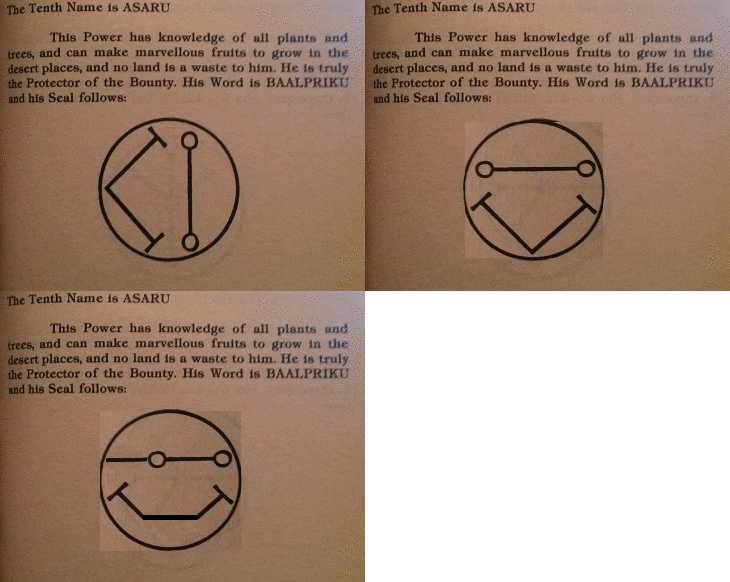
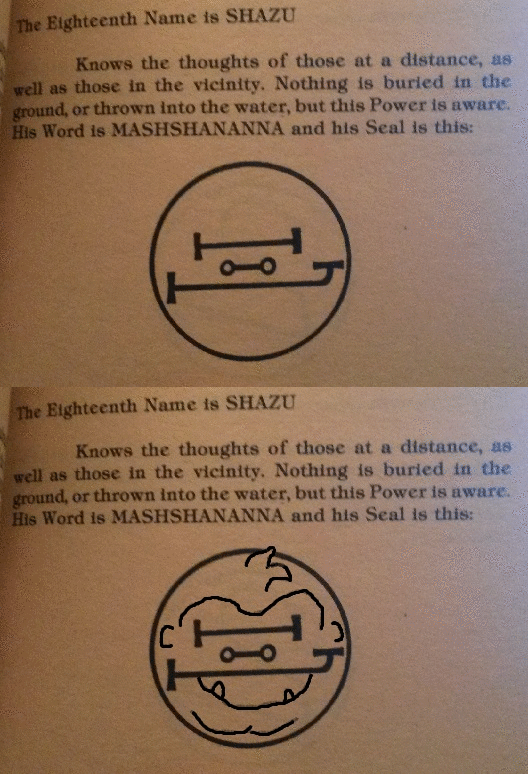
Well, it’s not really ancient, and the rituals aren’t as much forbidden as they are silly. There’s a million accounts of the story of this book online, but I’ll summarize for my readers. In the mid 70s, a lad calling himself Simon claimed that he had come across a copy of the Necronomicon, a fictional book that had appeared several times in the short stories of H.P. Lovecraft. Simon managed to get the book published, but he refused to ever go public, and nobody has ever seen the actual manuscript. Despite this, lots of people did and do think that this is the real deal. (There are some really embarrassing youtube videos of people defending the book’s authenticity.) I think the strongest evidence for the book’s legitimacy is actually how much it sucks; if I was going to write a fake Necronomicon, I would make it far, far nastier. This is basically a version of the Babylonian creation myth with a few Kutulus and ridiculous sigils thrown in to make it a bit spookier. One part of the book lists the 50 names and Seals of Marduk, and some of them are fucking ridiculous looking.

Asaru looks like a little nerd.
baalprik
And Shazu both looks and sounds like a magician’s pet gorilla.
shaavu
“Tutu” is another one of Marduk’s aliases. Yeah. Tutu.

The thing that really gives it away for me is the fact that the book reads like a Lovecraft story. It begins with a lad talking about how afraid he is of the horrors that he has awoken and proceeds to give a detailed account of how he awoke those horrors. He speaks passionately about how dangerous it would be for anyone else to read the information that he has been writing down. The manuscript is compiled of several different texts, all of which relate to each other and further the narrative, and the book ends with the narrator describing the evil things that he can see approaching him as he finishes writing the manuscript… Come on lads, that formula seems a little familiar doesn’t it?

Don’t get me wrong; I liked the fact that it was Lovecrafty, and I think that this is a quaint little addition to my weird fiction collection, but I’m definitely glad that I didn’t pay very much for my copy. The book is more than 200 pages, but about half of it is taken up with silly squiggly pictures. The testimonies of the Mad Arab were definitely the funnest parts. Were I out to cast some spells and summon some demons, I would probably be fairly disappointed with this. Then again, there is the very valid argument that this text is as “authentic” as most other grimoires. You’d have to be a bit of a wanker to take it seriously either way.

I’ve been watching that new Ash Vs Evil Dead series, and I have to say that it’s awesome. Opening the series with a Deep Purple song was utter genius! I’m going to go and watch the latest episode now. I’ll probably end up annoying my wife with some of my recently acquired Necronomicon trivia.


I found this post-it note tucked between pages when I opened it. Kutulu, enlightenment and Diana Ross; I’ll bet there was a story behind this one!!!

Transcendental Magic, Its Doctrine and Ritual – Eliphas Levi

2015-07-06 20.53.53
Senate – 1995

This book is a load of bollocks. I’ve seen it mentioned in other books, and I thought that I should check it out. In fairness, I was probably underwhelmed because I have come across these ideas in so many other books (Although they were bollocks in those books too.) There is a story that the secrets disclosed herein were once the private knowledge of a secret society to which Levi belonged*, but I think it would be unfair to blame anyone other than Levi for this stinking garbage heap of nonsense. Levi links the usual ancient traditions together and adds a bunch of his own bullshit into the mix to create a completely incoherent mess of esoteric diarrhea.

This is actually two books in one. The first is a book on the dogma of magic, the second is a book on the rituals. The chapters in each book correspond to each other, and if I were to read it again, I would read the corresponding chapters in pairs. I am almost definitely not going to read this book again though. The first ten chapters in each text are on numbers. For example, the second chapter is on the number two. For this chapter, Levi thinks of all the things that exist in pairs, and occults them. Cain and Abel represent the Yin and the Yang. Yin is the Angel Lucifer, but Yang is the Angel Michael. Yin depends on Yang, so death (Lucifer) depends on life (Michael). Death is a penis, but it is also life, therefore a penis is actually a vagina. Now this is of course corroborated by the two pillars of the temple of Solomon: they enclose the tree of life and the tree of knowledge, duhh! It’s all so obvious!

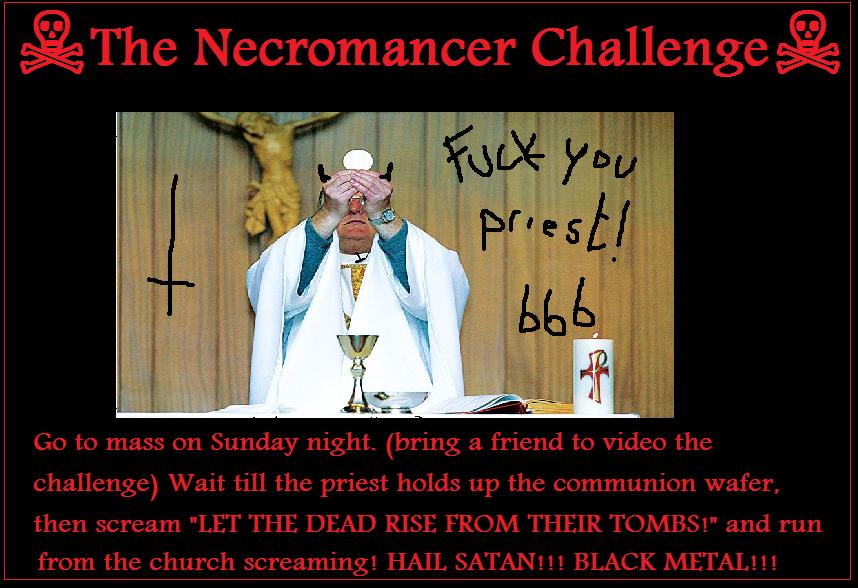
So each book starts off with ten chapters of that kind of crap. It’s only after the number chapters that Levi gets into necromancy and witchcraft. Those chapters are alright. There are some fucked up rituals described in detail. My favourite is the ritual that requires the necromancer to somehow put themselves in a position whereby they are assisting a priest in the celebration of mass on Christmas Eve. They must help the priest until the host is consecrated and then  interrupt the ceremony by yelling ‘LET THE DEAD RISE FROM THEIR TOMBS!” After this they run from the church to the graveyard, continually screaming. Wouldn’t it be amazing to see that happening? Levi also gives detailed instructions on the steps you need to take to become master of the Gnomes of the earth. Yep, this is all fairly pragmatic stuff…

The translator, A.E. Waite, provides lots of footnotes, most of which criticize Levi’s nonsense in a manner so harsh that one would wonder why he bothered with it at all.  Waite, who wasn’t exactly the most rational man in the world, describes Levi’s ideas as ‘fantastic’, ‘without authority’, ‘idle nonsense’, ‘incredibly bad’ and ‘made up out of his own head’. I also own his translation of Levi’s History of Magic, a book that I now doubt I will ever read.

The illustrations are cool though. The Sabbatic goat on the cover is quite deadly, and there’s a fair few images in here that I’ve seen elsewhere.  That’s the thing about this book; it has been used as a source for lots of other books that explain its contents far more clearly than it does itself (I would recommend Cavendish’s The Black Arts to anyone who’s interested.)

I was also delighted to find a brief reference to the tarte Bourbonnaise of Panurge. The Borbonesa tart is a dessert mentioned in Gargantua and Pantagruel. It is a “filthy and slovenly compound, made of store of garlic, of assafoetida, of castoreum, of dogs’ turds very warm, which he steeped, tempered, and liquefied in the corrupt matter of pocky boils and pestiferous botches” This is Rabelais’ description, not Levi’s. Levi only mentions the tart in comparison to the smell that might emerge from one of the potions described in the chapter on charms and philtres.

If you want to read a mess of mystical bullshit about the astral plane and tarot cards, then this is the book for you. Otherwise, skip to the chapters on necromancy, witchcraft and the Sabbath, and leave it at that.

*My source for that information was Wade Baskin’s Dictionary of Satanism, so it’s almost definitely untrue.

Please share the below image, and let’s hope somebody takes the challenge!

necromancer challenge

The Satanic Mass – H.T.F. Rhodes

satanicmassgif
Arrow – 1964

Arrow – 1973

Through an unfortunate postal error, I ended up with two copies of this little gem. I came across the title in the bibliography of Richard Cavendish’s Black Arts, and I knew that I had to read it. I’m glad I did; it’s really not as trashy as it looks.

Rhodes seems convinced that the heretical Cathars have been almost entirely responsible for all varieties of Satanic worship since their untimely end in the early 14th century. He portrays the Cathars as neo-Gnostics who renounced the physical world and the Demiurge that had created it. The Cathars supposedly believed that the Catholic church was worshiping this evil creator God, and hence saw any inversion of Catholic ritual as a positive form of worship of the true God.

Rhodes maintains that most Satanism is rooted in Christian dualism. This basically means that devil worshipers only worship the devil because they think that God is the evil one, and anything that goes against this bad God’s wishes must therefore be good. And sure, what other reasons could a person have for turning to Satan? A few dolts aside, I doubt there’s many people who get involved in Satanism solely through their desire to do evil.

What’s interesting about Rhodes hypothesis is that he pinpoints a specific movement and tentatively links their practices with the charges brought against the Templars, witches, Sabbat attendees and dodgy French aristocrats. One of the less convincing, but very interesting arguments he makes is that the alleged homosexuality of the Templars and later heretics had its roots in the Cathar practice of ejaculating into anything other than vaginas. The Cathars preached that sex was evil because it brought forth more souls into the material world. Abstinence may have been their goal, but they were realists. They understood the physical need to ejaculate, and they supposedly preached that it was better to be a sodomite or an onanist than to risk reproducing. Apparently their homosexual compromise was to become institutionalized in later Satanic movements.

Well, at least he’s being creative.

2015-06-07 22.34.57
If I were to judge this book by its cover, it would get a 10/10.

My biggest complaint about this book is that Rhodes presumes his reader has a solid understanding of all of the stuff he’s talking about. He introduces obscure characters and events from history and presumes that the reader is familiar with them. I would recommend checking out Huysman’s Là Bas  and the wikipedia articles on the affair of the poisons and the Taxil hoax before picking this one up.

There are some really cool parts in here. I was particularly interested in the account of the mass of Saint-Sécaire.  A mass “murderous in intention. The victim against whom its malevolence is directed is supposed to wither away and die of the mysterious St. Secaires sickness which no physician can cure.” Apparently there is no St. Secaire on record, and it seems rather uncertain where the origins of this legend come from. I’ve also come across mentions of this suspicious ceremony in Summer’s History of Witchcraft and Demonology, and apparently Aleister Crowley wrote a short story about it too.

I cannot deny that I laughed heartily when reading the details of the ancient and esoteric ‘ritual of the faggot’. The spell spoken during this ritual, which is used to gain control of another individual, contains the line; ” In the name of all demons, depart, faggot”. Imagine the accusations of hate-speech that could be made if a  modern day magician was overheard attempting this ritual from inside their garage.

2015-06-07 22.35.55
Doesn’t that make you want to read this book?

One final thing that I found very interesting was a biblical quotation on the title page book. It says:
‘Get thee abacko me owld scrat.’
Luke iv, 8 (dialect version)
The King James version of this line from Luke 4:8 is:Get thee behind me, Satan
I can’t find information on the dialect version mentioned in the text. I don’t know if it was an actual text, a joke, or something else. Either way, I would love to read more scripture in that dialect.

I would imagine that a more academic book on Satanic ritual would probably be quite dull.  This one has a nice balance of objectivity and goat worship. Rhode’s claims aren’t all believable, but they are worth thinking about. He rarely discusses the rationality or morality of the practices and beliefs of the Satanists, and he tries neither to polish nor to tarnish their already squalid reputation. The links between some of the sections are a bit weak, and in honesty, the last chapter is extremely dry, but overall there is more good than bad. Plus, the 1964 edition is worth owning just for the cover! (I reckon the more-boring later version was redesigned to look  like the Satanic Bible.) I’ll give it 7/10 and recommend this book to anyone interesting in Satanism.