Satan’s Disciples – Robert Goldston

satans disciples goldston.jpg
Ballantine Books – 1962
I added this book to my to-buy list immediately after stumbling across a picture of the cover somewhere online. I was worried that the book itself might not live up to the cover image, but it delivered.

This is a trashy and rather sensational history of satanism and witchcraft. Robert Goldston skips the boring parts (numerology, kaballah, astrology, palmistry…) and goes straight for the sadistic orgies, blood sacrifices, and hag torture. Needless to say, I enjoyed every page.

The introductory chapter to this magnificent work claims that “It can be safely asserted that from the year 1200 until the middle of the seventeenth century, the overwhelming majority of the people in Europe worshipped Satan and regularly attended his festivals.” While I have come to expect this kind of exaggeration from Christian writers writing about Satanism, nearly all of Goldston’s condemnations are actually directed at the church. He doesn’t quite espouse Satanism, but the book, as a whole, almost seems like an attempt to justify it.

While claiming to be a “a full account of witchcraft for modern readers”, this is really more a mish-mash of descriptions of some of the grislier characters, legends and phenomena from the history of witchcraft, each description doing its utmost to err on the side of ridiculous. Included are tales of the ‘blood cows’ of Elizabeth Bathory, how Oliver Cromwell sold his soul to the devil (I believe it, the cunt!), a woman who gives birth to a pair of goblins and feeds them to her dog, and Doctor Fian, a Scottish wizard who specialized in pube magic. There’s a wonderful account of a priest who stupidly banished a demon to a toilet and thus ended up with a burnt, shit-besplattered arsehole, and there’s the heartwarming tale of the Chatelaine De Beauvoir, a lady that I can’t find mention of anywhere else who managed to convince a troop of young men to be her sex slaves. She divided these men into different groups of animals (some were dogs, some were birds) and had them do her perverted bidding. When a police officer inquired how she maintained control over these fine fellows, he was told that she did so by feeding them her shit. What a cool lady! There’s also plenty of other stories about rape, incest and cannibalism. This book definitely doesn’t shy away from the nasty stuff. There’s one particularly brutal account of a young nun who is accused of witchcraft and jailed. Confined to her cell, she is routinely raped by her three guards. At first this treatment leads her to attempt suicide, but she later grows to like it and eventually ends up spending the non-getting-raped parts of her days worshipping Satan.

Towards the end of the book, Goldston temporarily abandons his objective of chronicling the history of witchcraft and devotes a single chapter to the actual practice of Black Magic. Chapter 11, Spells, Curse and Demons, is basically a grimoire in and of itself. It includes useful spells to cure gout, guard against vicious animals, summon Satan, get rid of a headache and kill your enemy. Crucial stuff.

In ways, this book was quite similar to Peter Robson’s The Devil’s Own, but while equally as trashy, this one contains a bibliography and actually makes frequent reference to real historical texts. I wasn’t surprised to see William Seabrook’s book on witchcraft in its bibliography either. All three of these books have a delightful bullshit/reality ratio, and if you have enjoyed one of them, you will definitely like the others. I would really love to know if anyone has recommendations for similar books.


Disinformation’s Book of Lies

img_20170119_170708 Book of Lies – Richard Metzger (Editor)
Disinformation – 2003
I can’t quite remember what put this book on my radar, but it was on my goodreads to-read list for a few years before I picked up a copy. Unabashedly taking its name from one of Aleister Crowley‘s books, this is a collection essays on Magick and the Occult, all written by modern authors. (Actually, I recently found a copy of Crowley’s Book of Lies at a library booksale for a cool 75 cents, so you can expect a review of that at some stage in the future.) The format (and choice of contributors) of this book reminded me a bit of the super edgy Apocalypse Culture series (although, in fairness, this book contains less paedophilia). I’ve been making my way through it since December, and although I have not read every single essay herein, I doubt I will get much further.

The book is divided into 8 sections, each dealing with a different aspect of occultism:

Section 1 is about the actual practice of Magick. Even though I had heard it during his infamous speech at DisinfoCon, I enjoyed Grant Morrison’s explanation of sigil charging through masturbation, I struggled through Mark Pesce’s piece, and I gave up about two paragraphs into Genesis P Orridge’s pile of rubbishy nonsense. Joe Coleman, the artist who did the covers for the Apocalypse Culture books, wrote a fairly cringeworthy prose poem on the magickalness of his own art. I barely even looked at the other essays in this section. All together, this part really sucked. The kind of magick being discussed here isn’t completely loopy stuff; it’s really just other forms of self motivation. If this kind of thing works for you, and I totally understand that it could, that’s awesome, but it isn’t for me.

Section 2 is about “Chemognosis”. I’m not a drug user, and I have no interest in ‘getting high’, so I skipped this section completely.

Section 3 is about magickal icons. There are several essays on Austin Osman Spare, Brion Gysin and William S. Burroughs. I once heard a poem by Brion Gysin that was so irritating that I decided to skip the essays about him. I don’t really care for Spare either, but I may come back to the essays on him if he ever catches my interest. I read Burroughs’ first 3 novels in my early twenties, and I used to think he was really cool because he had collaborated with Kurt Cobain, U2 and Ministry. (Coincidentally, I only recently realized that Ministry’s Psalm 69 song and album were allusions to Aleister Crowley’s Book of Lies.) That being said, William Burroughs was definitely full of shit, and I don’t really care about his forays into magick. There was another essay in here on Lovecraft’s influence on occultism, but it didn’t tell me anything I didn’t know already. This section ends with excerpts from two books. I don’t like excerpts, so I skipped them.

Section 4 is mostly about Aleister Crowley. The essays focusing on him were extremely boring. Donald Tyson’s essay on John Dee and the Enochian apocalypse was entertaining enough, but I can’t really remember what it was about and I’m only after reading it last week. Richard Metzger’s essay on Jack Parsons wasn’t horrible, but Jack’s wikipedia page is currently more informative.

Section 5 is titled Scarlet Women. There are three essays here, one on Marjorie Cameron, one on Ida Craddock, and one on Rosaleen Norton. They were ok. In a book that is 350 pages long, only 22 pages are about women. Out of the 40 essays in this book, one was written by a woman and three were written by Genesis P Orridge. I have seen this book being criticized for its very white guy perspective on occultism and magick, and while I certainly don’t want to read about sacred femininity and that kind of nonsense, I’d have to say this is a fair criticism.

Section 6, the section on secret societies, was probably my favourite. Twyman’s article on Hitler and the occult put me on the trail of a few interesting books, and P.R. Koenig’s accusations that the Ordo Templis Orientalis are a gang on spermchuggers was rather amusing. It pains me to admit it, but Boyd Rice’s very silly essay connecting Enoch’s Watchers, the Holy Grail, Dagon, Jesus Christ and Ea, Lord of the Depths is probably the best part of the entire book. The last essay in this section is rather long and it explains why wicca might not be as legitimate as some people think. I have never taken wicca seriously, so I didn’t care to finish that one.

Section 7 is quite short and not particularly interesting. It includes an interview with an aged Anton LaVey and an introductory essay about rock music’s links to the occult.

The final section is awful. There’s a big, boring, section on Julius Evola, the esoteric fascist. There are also 3 essays by Peter Lamborn Wilson/Hakim Bey. Wilson/Bey, for those of you who don’t know, is a rotten paedophile. He freely admits to and writes about wanting to have sex with children. I didn’t read what he had to say, and I really wish that he hadn’t been included in here. I am very glad that I bought a second hand copy of this book and thus avoided giving the publishers any money. Fuck that. Put that paedo in the oven. This section ends with a super cringy essay on “The Secret of the Gothic God of Darkness“. We’re dealing with seriously edgy stuff here.

Overall, Book of Lies was a bit disappointing. Some of the essays are on very interesting ideas, but in most cases, they barely scratch the surface. Then again, I bought my copy cheap, and it gave me the names of a few books that I will be checking out in the future. If you see a copy for less than a tenner and you want a nice book to leave beside the toilet, you could do worse than this.

Year in Review: 2016

2016 is very nearly over, and although it was a tremendously shit year in a lot of ways, it was a pretty good year for this blog. Not only did the site’s traffic increase to 4 times what it was in 2015, I also believe that my content has improved in quality. For much of the first year of the blog, I was reviewing books that I had read a long time ago. At this stage, I’m reviewing books right after reading them, and the more I read on these topics, the more links I have been able to draw. Not every post on here is groundbreaking, but there have been a few this year that I am quite proud of. Here’s my top-10 list for 2016:

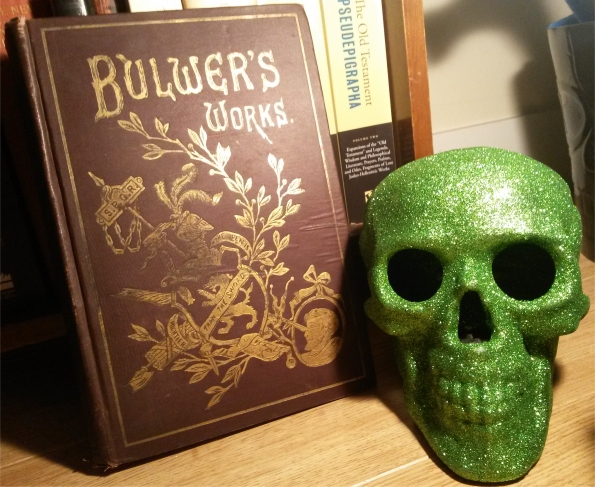
bulwer-green-skull


10. The Haunters and the Haunted

A look at the different versions of Bulwer Lytton’s classic ghost story. This post features Colin Wilson getting pwned.

2016-05-19 22.01.48

9. The Books of Whitley Strieber
(Communion, Transformation)
I want to bully this guy so much.

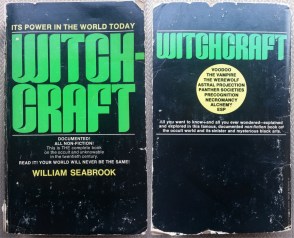
witchcraft


8. Seabrook’s Witchcraft

Willie Seabrook: explorer, sceptic, sorceror and sex-pervert. My hero.

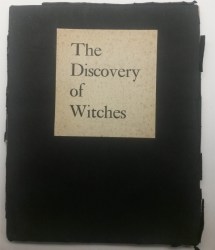
buk


7. Matthew Hopkins’ Discovery of Witches

The coolest physical book in my collection

dictionaries-of-witchcraft-and-demonology

6. Dictionary of Demonology/Dictionary of Witchcraft
The biggest disappointment of 2016

20160325_000821

5. The Fiery Angel
A curious, Russian occult novel that turned out to be based on a true story.

20160803_210212


4. Black Magic Grimoires
An in-depth look at some of the most infamous works of black magic.

demoniality-liseux-version

3. Ludovico Maria Sinistrari (Part 1, Part 2)
A weird Friar who believed in randy fairies and gander-neck appendages that grew from between the legs of horny women.

frontispiece

2. Varney the Vampire
You won’t find many reviews of this book that are as thorough as this one.

bookwith angel

and finally… 1. Michelle Remembers
My post of the year without doubt. An on-site investigation into the diabolic, incestuous rape fantasies of a masochistic idiot and sex fiend.

I want to stress that this is a list of the best posts from this blog in 2016. (It most certainly does not reflect the 10 best books that I read in 2016!) I hope that Nocturnal Revelries has been insightful and entertaining to the people who have found themselves reading through it over the last year. I have really enjoyed reading and writing for this blog, and I intend to keep the content coming during 2017. That being said, my wife and I are expecting our first baby in March, and I imagine that she’s going to leave me with significantly less time to spend reading.

Thanks for all of the support. Read books, drink tea, skip mass and have a good new year!

(Oh, and just in case you didn’t know, I have facebook, twitter and tumblr pages set up so that you can keep track of what’s happening on the blog even if you don’t have a wordpress account.)

Gutted – Lytton’s The Haunted and the Haunters

bulwer-green-skull
The Haunted and the Haunters; or, The House and the Brain – Lord Lytton 
Originally published – 1859

A few years ago, I read about the books of Edward Bulwer Lytton in Colin Wilson’s The Occult. Discovering that this Lytton lad was supposed to be friends with Eliphas Levi and that his books were about wizards, ghosts, and secret societies, I quickly put him on my to-read list. A few months after doing so, I saw his name in Nicholas Goodrick Clarke’s The Occult Roots of Nazism. Combining what I already knew about Lytton with the fact that one of his works had apparently inspired a bizarre conspiracy theory about subterranean, black magic Nazis, I knew that I had to make acquiring his books a priority.

2015-08-27 20.54.58

The four texts that Wilson specifically named were Zanoni,  A Strange Story, The Coming Race, and The Haunted and the Haunters. I found audiobook versions of the latter two on librivox, downloaded them and stuck them on my phone. The mp3 of The Haunted and The Haunters was only an hour and 10 minutes long, and I listened to it at work the other day.

It was a little disappointing to be honest. A lad hears about a haunted house and decides to spend the night there. He sees some ghosts, and a few days later he discovers a secret room containing a peculiar device that essentially functions as a ghost machine. He breaks the ghost machine, and then everyone lives happily ever after.

This is a ghost story, but it’s not remotely spooky. During the most climactic scenes, the narrator makes a point of telling the reader that he is not afraid, and it’s very hard to feel scared for a person who seems to understand the situation better than you. The chap comes across as a know-it-all wanker to be honest; I’d take a terrified Jamesian protagonist over this gobshite any day.

Lytton’s use of fiction to present his ideas about the supernatural may have been novel at the time this was published, but I found it rather trite. He goes over the old “nothing is really supernatural because supernatural means impossible and nothing is impossible” argument. Just because science can’t yet explain ghosts, ESP, clairvoyance and all that good stuff, there’s no reason to believe that it won’t some day be able to. This is a fair point to make, but it doesn’t have much bearing on whether or not these things actually exist.

The story comes to a very abrupt end. After enduring the night in the house, the lads find a chest of drawers in a secret room. In this chest is a portrait of another lad who the narrator seems to have seen before and a weird, home-made, magic compass that has been cursed. Once this strange device is destroyed, everything is grand. That’s it. End of story.

Fairly shit, all things considered.

the-endIs that really the end though?

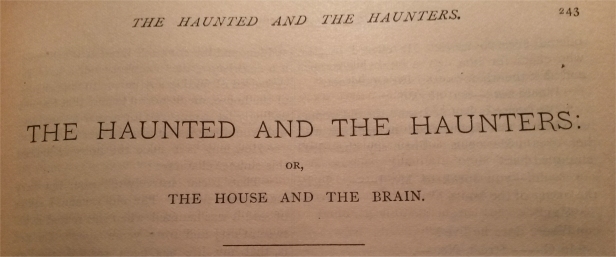
This story was originally published as “The Haunted and the Haunters; or, The House and the Brain” in the July-December 1859 edition of Blackwood’s Magazine. I find it quite strange that an original publication would feature two titles. Subsequent appearances of the tale have often been published under one title or the other.  I have read that the “House and Brain” title usually denotes an abridged version of the story, but I have read the exact same thing about the “Haunter and Haunted” title. Perhaps the different titles were once used to denote the different versions of the story, but at this stage, neither title can be trusted to signify the abridgment.

haunted-house-brainMy copy of the text has both titles, but it’s the abridged version.

If you have any sense and want to make sure that you’re reading the full version, the last paragraph of the original version of the story starts with the phrase;
“So ends this strange story, which I ask no one to believe.”

The first line of the final paragraph in the SHITTY-BUM abridged version reads;
We found no more. Mr. J—— burnt the tablet and its anathema.
If there is one thing that I simply can not abide, it’s an abridged book. If this is the ending of the tale you are reading, look elsewhere for satisfaction!

The abridgment absolutely guts the story. The haunting in the original features a creepier ghost, a slightly more gruesome description of the death of the narrator’s dog, several other minor edits, and most importantly: a tense confrontation between the narrator and the wizard responsible for bewitching the house. The complete version is by no means a brilliant piece of literature, but it is at least somewhat coherent, and it’s far more enjoyable than the shortened piece of drek. Imagine reading a version of the Shining in which all references to Jack Torrence’s family have been cut out and you’ll get a sense of the shitness of the abridged version of this tale.

Luckily, the unabridged version is widely available on the web (It’s on page 244 of the edition of Blackwood’s Magazine that I’ve already linked to.). An article from the July 1938 edition of the Theosophical Forum suggests that Bulwer cut parts out of this tale to use in his novel, A Strange Story.  That novel was published in 1862, three years after The Haunted and the Haunters. I haven’t read A Strange Story yet, and it may be a while before I get around to it, but I’ll read over Haunted/Haunters again when I do to see how the ideas were transferred between the two.

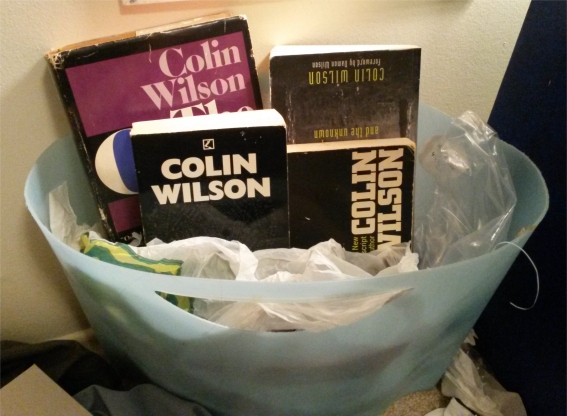
As I have already mentioned, I first heard about Lytton in Colin Wilson’s The Occult. I decided to read back over the relevant passages in that book to see if there was anything pertaining to this particular story. Wilson quotes the entire description of the curious portrait that is found near the cursed saucer to give an example of what he thinks a black magician should look like. He then says, “And when he later added a new ending to the story, Lytton extended this sketch into a full-length portrait of a man who seems to be a combination of the Wandering Jew and the Count de Saint-Germain.” Colin Wilson, author extraordinaire and expert on the occult, seems to have believed that the original version of this story was the short version. Wilson also lists Lytton’s first name as Henry in the index to the book when his name was actually Edward (His elder brother was named Henry.) Colin Wilson, it seems, was not very thorough in his research.

rubbishGood riddance to this pile of unlettered garbage.


A Big Mistake… Dictionary of Demonology vs. Dictionary of Witchcraft

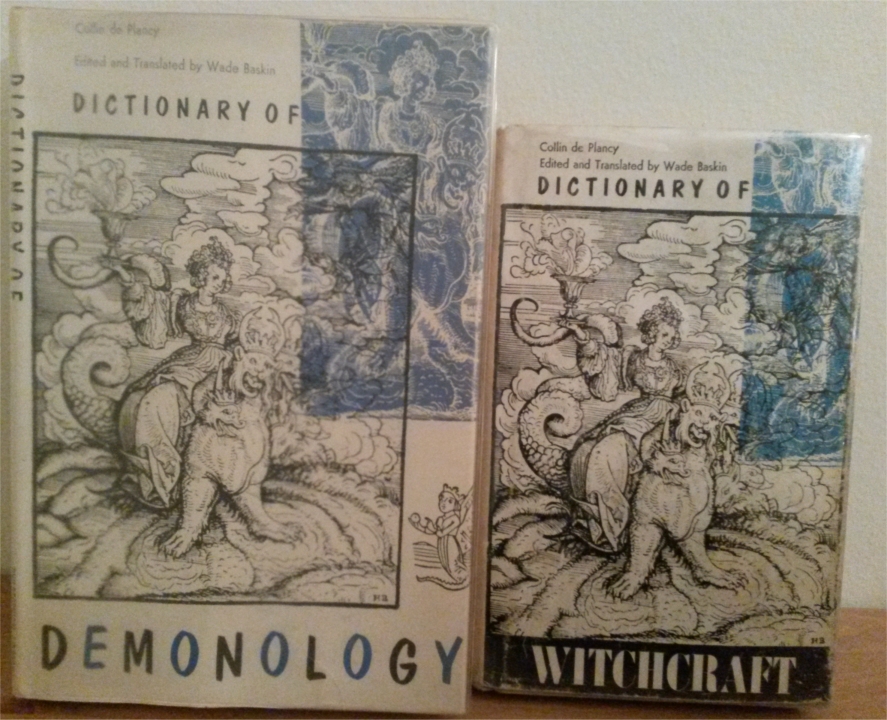
dictionaries-of-witchcraft-and-demonologyDictionary of Demonology and Dictionary of Witchcraft – Collin De Plancy
(Edited, abridged and completely banjaxed by Wade Baskin)

Philosophical Library – 1965

My main reason for starting this blog was to share my thoughts and queries on the books I was reading. I had seen tumblr blogs that consisted of pictures of the kinds of books that I review here, but there was rarely any discussion on them. Goodreads usually has the books listed, but a lot of them are reviewless. There’s facebook groups that discuss books, but I generally find that their scope is either too broad or too specific for my tastes, and most of the users are insufferable imbeciles. I thought a blog to be the perfect medium to present my musings. The first book I reviewed was Wade Baskin’s translation of Collin De Plancy’s Dictionnaire Infernal.

Reading that review, you’ll notice that the focus wasn’t really on the content of the book; it was more a post about my confusion over its publication and edition. Well, yesterday, 3 years after buying my copy of the Dictionary of Witchcraft, my confusion over its publication was finally alleviated.

In my initial post, I discussed my suspicion that Baskin had split De Plancy’s text into two separate volumes; the Dictionary of Witchcraft and the Dictionary of Demonology. I noted that the likelihood of me ever reading the Dictionary of Demonology was minimal due to its high price and the low quality of its counterpart. I requested information concerning this issue in my blog post, but nobody responded. I tried to pretend that I didn’t care. I tried to tell myself that it didn’t matter. For two years, I lay awake every night, wondering why Baskin had chosen to do such a thing. Why had he split the one text into two books? Had he really done so? Why was one more expensive than the other? Was it a much better book? Would the super-exciting entries in the Dictionary of Demonology make up for the dull entries in the Dictionary of Witchcraft? Had Baskin saved all the best bits for the half of the collection that I didn’t own? Eventually I decided that I was going to have to get my hands on a copy of the Dictionary of Demonology, regardless of the cost. I wasn’t going to be paying for the book; I was paying for peace of mind.

Can you imagine my excitement when I arrived home on Tuesday to find the book in my postbox?

Eagerly I dashed inside. I forced myself to get changed and pour a cup of tea before I opened the package. I wanted the moment to be perfect. I put on my fez and a crisp shirt, and took the Dictionary of Witchcraft off the shelf and placed it on the coffee table so that it could get a good view of the unboxing of its sister text. After carefully pulling the order slip from the packaging to make sure that this was the text I was expecting, I gingerly took the book from the envelope, and lo and behold!

It’s a slightly larger version of the other book. I don’t mean larger as in expanded; I mean the pages are a little bit bigger. Apart from the title, the Dictionary of Demonology is word-for-word the same book as the Dictionary of Witchcraft. It’s just an earlier edition.

Oh, I am fortune’s fool! I am a stupid dunce. I wear a nappy and pick my bum.

wtfOne of the very few differences between the books, this mysterious, apple-holding princess appears only on the cover of DoD.

Looking back, it seems pretty obvious that this would have been the case. There is a note in the Dictionary of Witchcraft that reads,’Originally published under the title Dictionary of Demonology’. I’m not sure how I overlooked this, although it might have something to do with the fact that this claim is erroneous. This book was actually ‘originally published’ under the title Dictionnaire Infernal!

Both books claim to have been published in 1965. Maybe the Dictionary of Demonology saw a limited run and turned out more popular than expected. Then the publishers could have decided to put out a second edition (using smaller paper to save on printing costs). This would account for the fact that Dictionary of Demonology is much harder to find than Dictionary of Witchcraft. (Also, the listed price on the book cover is $10 for DoD, but only 6 for DoW.)

suckyfontThe comic-sans title really screws with the tone of my bookshelf.

I know this post doesn’t really say anything about the content of either book (the earlier post speaks on that a little), but it has been immensely gratifying to write. I have wasted far more time and money on these books than is reasonable, but at least now I have answers. Maybe someday a person who is wondering about the difference between these two books will end up on this page, and my folly will be their deliverance. I can rest easy tonight, knowing that I might so aid the community.

Vampires and Vampirism – Montague Summers

Image2
Dover – 2005 (Originally published as The Vampire: His Kith and Kin in 1929)
This is Montague Summers‘ first book on Vampires, and as much as I love the author, I have to admit that this was a rather dry read. I actually started this book to make sure that I would understand references that I might have encountered in another book I’ve been reading; Varney the Vampyre. As it turns out, that book is referenced in this book, but it contains very few references to vampire lore. (Varney is fucking DEADLY though. Expect to see it reviewed here in a few weeks.) Anyway, there’s 5 chapters in Summers’ book, and I’m going to go through each one.

1.The Origins of the Vampire
Here Summers explains several of the different elements that may have created and/or fed into the vampire legend. It includes copious stories of the reanimated dead, ghosts, premature burials and a huge section on incorruptible corpses. Apparently, there’s two ways that a corpse can remain incorrupt; the person has to have been either really good or really bad.

This chapter also includes a frustratingly multilingual section on necrophilia and necrosadism. Unfortunately the more lurid details are only given in French or Ancient Greek. I’m not joking; whenever Monty wants to give some really grisly details, he’ll switch languages. My French is poor, but it was good enough know that I was missing out on the best bits, particularly the story about the Garcon who said. “Que voulez-vous, chacun a ses passions. Moi le cadavre, c’est la mienne!”

(I have found an online version of the text, and I’ve just spent 10 minutes pasting those bits into google translate. It was worth it; my necrosadistic desires have now been satiated.)

2. Generation of the Vampire
This is all about how vampires become vampires. It mostly deals with excommunication from the church. Montague Summers knew a lot about the history of the church, and he wants to make sure that his readers are aware of this. Pretty boring stuff to be honest.

3. Traits and Practice of Vampirism
There’s a lot about suicide in this chapter, including some fascinating stuff on Russian suicide cults. Apparently one group of these fucking lunatics built a huge building with no doors or windows that was only accessible from a trap door in the roof. They’d jump in through the trap door and then they’d starve to death. Imagine the stench, the anxiety, the shame and the regret that these people had to endure until their dying moments.

4. The Vampire in Ancient Countries
I was expecting this section to be a bit boring, but it was actually quite interesting. It’s about the different types of vampiric ghouls that have cropped up around the world through history. I think that the sequel to this book, The Vampire in Lore and Legend (1929), takes up where this chapter leaves off.

5.The Vampire in Literature
This section was definitely the most disappointing, disappointing because I expected it to be the most interesting. This is just a bunch of summaries of different plays based on John Polidori’s story, The Vampyre. The summaries given are so detailed that I skipped through most of them; I didn’t want to ruin the stories in case I ever come across the original texts. Not only does this chapter contain the summaries of these plays; it also contains extensive lists of their cast members. This chapter is full of boring information, but it says very little.

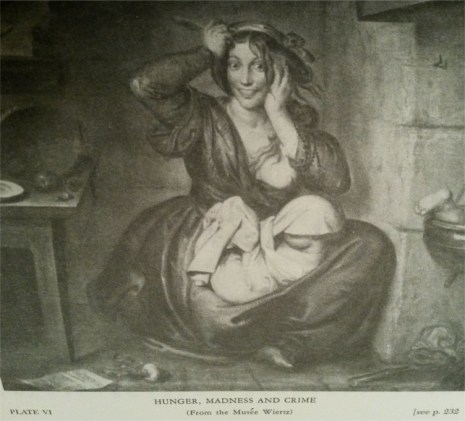
Image1The pictures in this book are bizarre. I don’t remember why this mad woman is in there.

Overall, this is a decently interesting read even if it does get dry as fuck at times. There’s 5 chapters, and the way they’re structured seems a bit arbitrary, particularly the first 3. However, the worst thing about this book is that it’s full of quotes in different languages but contains no translations. If you really wanted to get the most out of this, you’d need to speak Ancient Greek, Latin, French and German. This is a bit different to the author’s books on witchcraft too. It serves more as an explanation as to how the Vampire legend developed than it does as proof of the Vampire’s existence. Monty never denies that vampires exist, but he doesn’t spend much time trying to convince you that they do.  As mentioned above, he wrote another book on vampires, but I reckon it’ll be a while before I get around to that one.

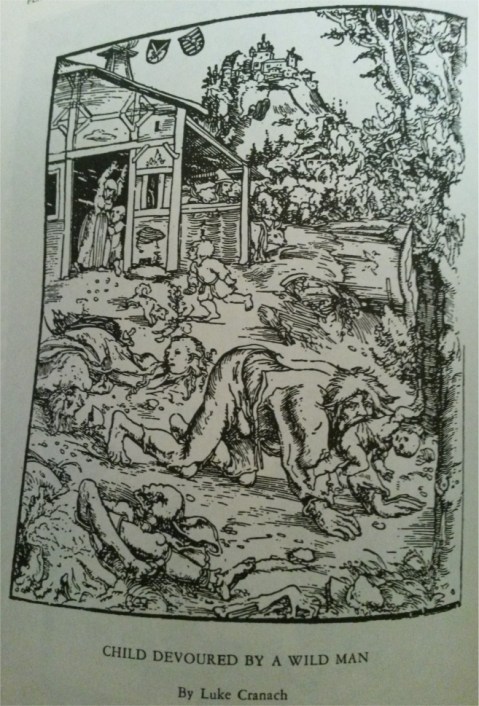
Image3Clearly a case of Lycanthropy rather than Vampirism, but a cool picture nonetheless. Could this be the instance spoken of by the great one?

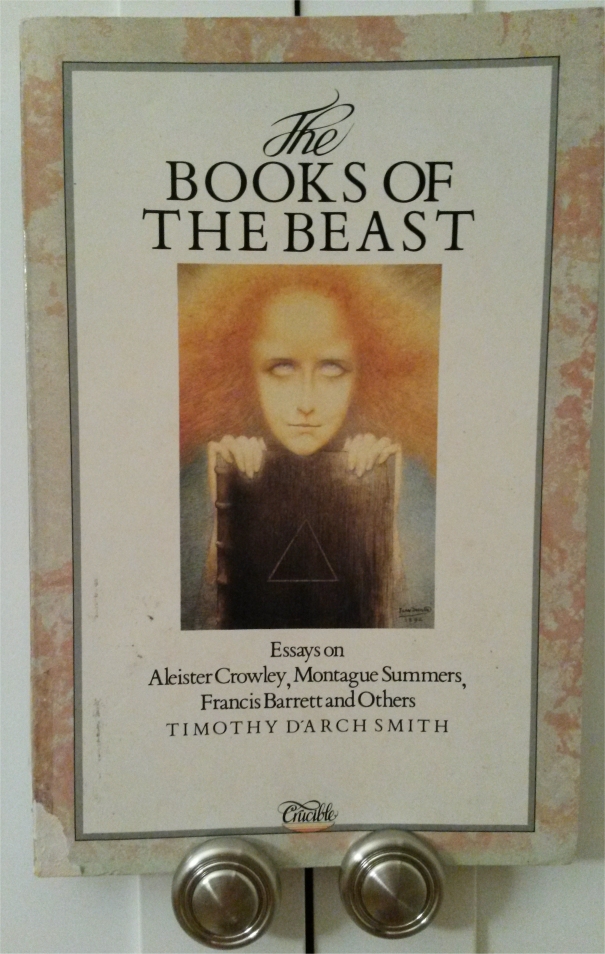
The Books of the Beast – Timothy D’Arch Smith

beastCrucible – 1987
This book popped up in my suggestions from Goodreads a few years ago, but it wasn’t until I came across a quote from it that claimed that Montague Summers had attended Black Masses that I decided to buy it.

It’s a rather interesting collection of essays about different books, their authors and their publishers. The first and longest essay is about Aleister Crowley and his predilections for certain colour combinations and kinds of paper. That might sound a little boring, but I assure you it’s a very entertaining read. Not only is it quite funny at times, it is also astoundingly well researched and documented.

Timothy D’Arch Smith didn’t know Aleister Crowley or Montague Summers personally, but he did know people that knew them. He was also a dealer of rare books for a very long time, and it is rather apparent that he’s an expert in the field. (He’s still alive; I don’t know if he’s still working.) The level of detail in here is genuinely exciting, not only because the subject matter is interesting but also because the author has apparently been able to devote his life to tracking down and examining and reading rare books about magic and sex. DEADLY.

Yes, that’s right; not all of the essays in here are about magic. One is about the collection of dirty books in the British Library and another is about Ralph Chubb, a gay paedophile. It turns out that T.D.S. is also an expert on the Uranian (bent ref) poets. Apparently there was a bunch of poets in the early 1900s who had had enough of keeping their desire to bum youngfellas to themselves. Ralph Chubb was really into it. Smith’s essay is very interesting, and I wanted to read some of Chubb’s poems to see what he was talking about, but I felt a bit wary looking them up on Google.

It is suggested herein (and elsewhere) that Montague Summers, a name my readers should be familiar with at this stage, might well have indulged in a few Uranian fantasies himself. This book also suggests that he attended Black Masses. Monty you scoundrel! In his own books, Summers violently condemns such activities, but it is here suggested that he was a practicing occultist in his youth. Smith believes that Summers was sincere in his admonitions against the Black Arts, but I’m halfway through Vampires and Vampirism at the moment, and I’m really finding it tough to believe that Summers was as credulous as he makes himself out to be. Then again, maybe he witnessed something genuinely diabolical at a Black Mass and set out to warn the world of the dangers of the powers of Hell. (Smith also wrote an entire book on Summers that I hope some day to obtain.)

There’s some other bits and pieces in here too. There’s an essay on Florence Farr (a member of the Golden Dawn who shagged both Yeats and Shaw) and an autobiographical piece. Both are interesting and worth the read. There is also a short essay on Francis Barrett, author of The Magus, an influential book of magic; however, from what I have seen online, modern editions of Smith’s book have replaced this essay with another chapter on Crowley. This seems a pity as I really enjoyed the piece on Barrett. (If anyone reading this review has a copy of the newer edition, I would be happy to scan the section on Barrett in return for a scan on the newer part on Crowley. Leave a comment or email me.)

The cover of my edition is super lame, and the page numbers on the contents page are wrong (I don’t know if it’s a numerological joke or a mistake), but all in all, this book was great; it’s short, funny and insightful. I read it in a day, but I feel that I’ll probably consult it again. Timothy D’Arch Smith seems like a real cool guy.

My First Attempt at Writing Short Fiction

Recently, I had to take a writing class as part of my degree, and one of the assignments was to write a short story. I’ve long wanted to write fiction, but I always felt unprepared. The class I took was pretty great though. The instructor’s attitude was; “I don’t care if you don’t feel ready. You’re handing me in a story at the end of the week, so shut up and get to work.” It was the kick up the hole that I needed.

There were no topics assigned, but it was suggested that we write about something that we were interested in. Before putting pen to paper, I had to sit down to think about what interests me. I glanced at my desk, noticed the books on aliens and black magic that I had been reading, and shrieked, “Eureka!”

Here is the story I came up with. It may not be a masterpiece, but I feel that it’s a decent first attempt, and I think that anyone with an interest in the books I review will probably enjoy it. I definitely plan to write more short fiction in the future.

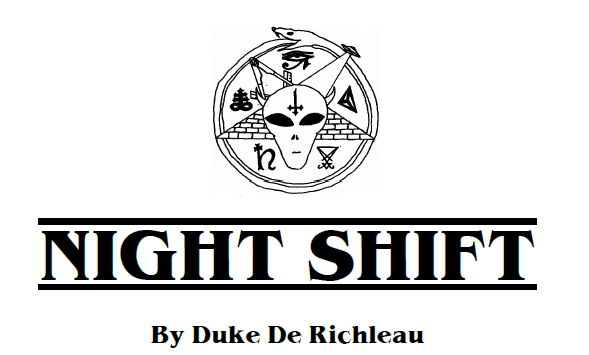
night shift

Night Shift – Duke De Richleau

Books of Black Magic

20160803_210246 The Book of Ceremonial Magic – Arthur Edward Waite
Bell – 1969 (First published in 1898 as The Book of Black Magic and Pacts)
Imagine, if you will, a man who takes it upon himself to read a bunch of cooky books on black magic and then proceeds to write about how utterly silly they are and how stupid the people who believe in them must be…  Sounds like a real cool guy, right? I’m referring, of course, to Mr. Arthur Edward Waite. Waite, famous for creating the Rider-Waite Tarot deck, is the author of this rather interesting book on grimoires, spirits, ceremonial magic and infernal necromancy.

Waite’s writing style can be painfully long-winded and academic, and nowhere is this as apparent as the headache-inducing introduction to this work. I don’t have a fucking clue what it’s about, and I would recommend that you skip it. Aleister Crowley, who is going to pop up a few times in this post, had a personal dislike for Waite and modeled Arthwait, one of the characters in Moonchild, on him. In chapter 12 of that novel, Crowley says; “Arthwait was naturally slow of thought and speech; it took him some time to warm up to real eloquence; and then he became so long-winded, and lost himself so completely in his words and phrases, that he would speak for many hours without conveying a single idea of any kind to his hearers, or even having one to convey.” Keep in mind too that Crowley himself was pretty bad for talking absolute shite.


Some of the minor illustrations within.

That being said, if you manage to slog through the intro, there’s lots of juicy stuff in here. The first half of the book gives the backstories to the most infamous grimoires. Waite breaks them down into three categories: books of transcendental magic – the least bad kind of magic, composite rituals – slightly sketchy magic, and black magic rituals – the purely diabolical. He goes into a satisfying amount of detail on the supposed origins of each text while also supplying his own opinions about their likely dates and places of origin.

The second part of Waite’s book, the Complete Grimoire, is basically all the good bits of the different texts that are discussed in the first half. It lists all the necessary precautions and steps you’ll need to take if you plan on summoning a demon to do your bidding.
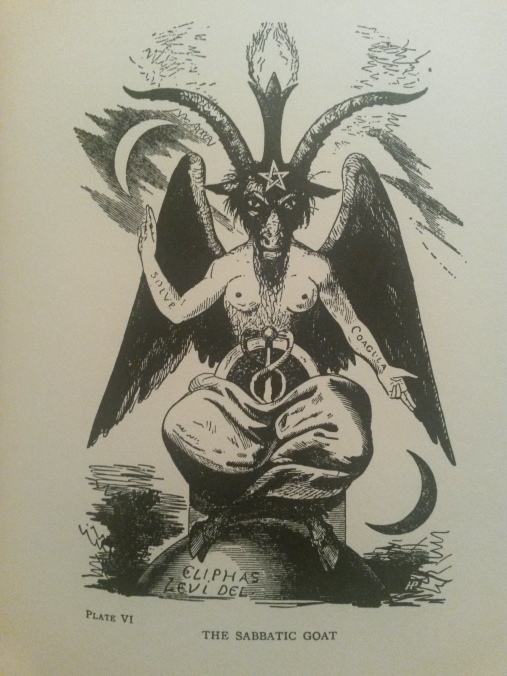
20160803_210738Is this image over used? Waite and I agree that it’s not.

Waite’s overall stance is that Black Magic is really dumb and that these books are all forgeries for idiots. You’d wonder why he bothered writing a book about something that he had such disdain for. (If you’re a long term reader of my blog, you’ll remember that I said almost the exact same thing about his translation of Eliphas Levi’s book, Transcendental Magic.) He seems to have enjoyed making fun of gobshite occultists.  Good lad, Waite.

I simultaneously read this along with some of the grimoires that it’s about, and hence the second half seemed quite repetitive to me. The scope of this book is broad enough that it could serve as an introduction to the topic, but the writing is probably a bit too dense for casual readers. You can always check it out online to see if it’s what you want before buying a copy. Personally, I really enjoyed reading it.
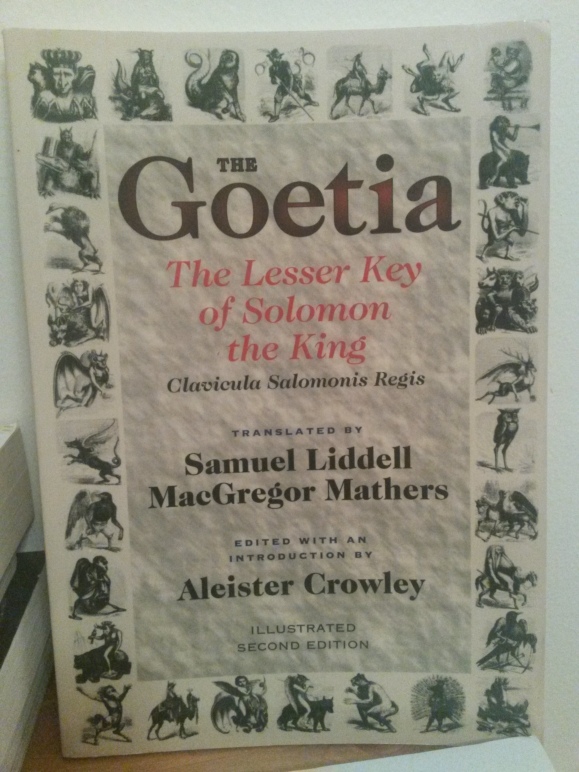
 

20160803_210305The Goetia – Translated by Samuel Liddell Macgregor Mathers, edited by Aleister Crowley, and supposedly written by King Solomon.
Weiser – 1995
This edition was first published in 1904.
Original edition of the Lemegeton compiled mid 17th century.
Text purports to be from 10th century BC.

The Key of Solomon, perhaps the most famous grimoire, is supposedly a set of magic spells left by King Solomon. The Lesser Key of Solomon, or the Lemegeton, is its dirty sequel. (Although sequel might not be the correct word here. It’s more like when a band releases a collection of crap songs and covers that weren’t good enough to make it onto their last album; the Lemegeton is the Reload of Solomonic grimoires.) The Goetia is the first of four (or five, depending on who you ask) sections of the Lesser Key. It was translated by Samuel Liddell MacGregor Matthews, head of the Golden Dawn, and published by his protégé, Aleister Crowley, although by the time this was published, Mathers and Crowley were no longer friends. It has the usual crap about drawing fancy triangles on the floor and all of that nonsense, but most interestingly, it contains the names and details of 72 demons (most of which come from Weyer’s Pseudomonarchia Daemonum). This edition also includes several of Louis Le Breton’s drawings that originally appeared in the second edition of Collin De Plancy’s Dictionnaire Infernal.
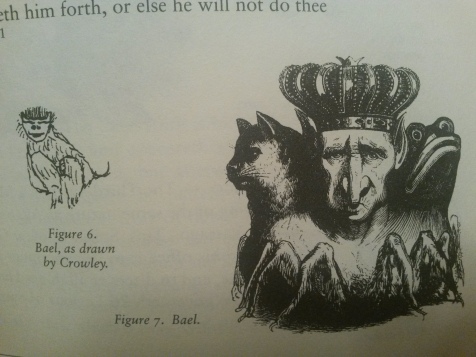
20160803_211006One of Louis Le Breton’s drawings of a demon, accompanied by Crowley’s version.

This is mildly entertaining to flick through, but the most interesting parts are included in Waite’s book. If you have Waite’s book, this book will only be interesting if you’re a big Crowley fan. The physical book is quite nice, as Weiser editions usually are, and it contains some introductory essays by and about Mr. Crowley. In my opinion, the best parts of this text are the pictures that Crowley drew of the demons:


Notice any patterns?

20160803_210327
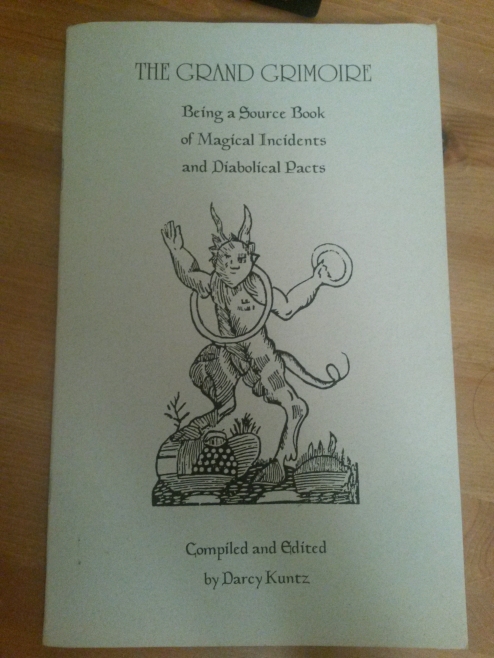
The Grand Grimoire: Being a Sourcebook of Magical Incidents and Diabolical Pacts
Compiled by Darcy Kuntz
Supposedly written by Antonio Venitiana del Rabina and King Solomon.
Holmes Publishing – 2008
Source material exists from 1521, 1522, and 1421.
Text purports to be from 10th century BC.

Now, this is it; the boldest and most infamous of all grimoires. Like the Goetia, the Grand Grimoire has its roots in Solomonic ceremonial magic. The first half gives instructions on how to summon Lucifuge Rofocale, Satan’s right-hand man, and the second half is about how to summon other demons.
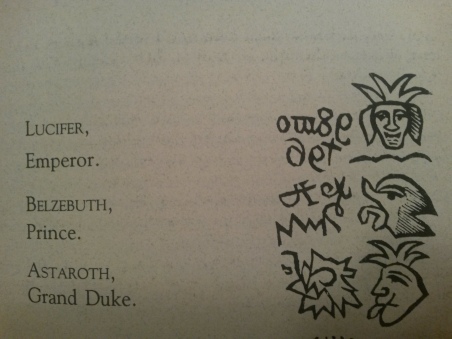
20160803_210901 Lucifer and his entourage don’t really come across as super scary in this one.

I bought this book a long time ago, but the first few times I picked it up to read through it, I became confused by the introduction. The title of the edition I bought is “The Grand Grimoire. Being a Source Book of Magical Incidents and Diabolical Pacts“. There’s no blurb on the back, and there is very little information about this edition online. All of these factors led me to think that it might actually be a book about the book that I wanted to read.  I sent a message to Darcy Kuntz, the editor, on Goodreads, but he never responded to me. However, after looking through it and doing a bit of research, I have figured out that this is a version of the Grand Grimoire and not just a book about that text.
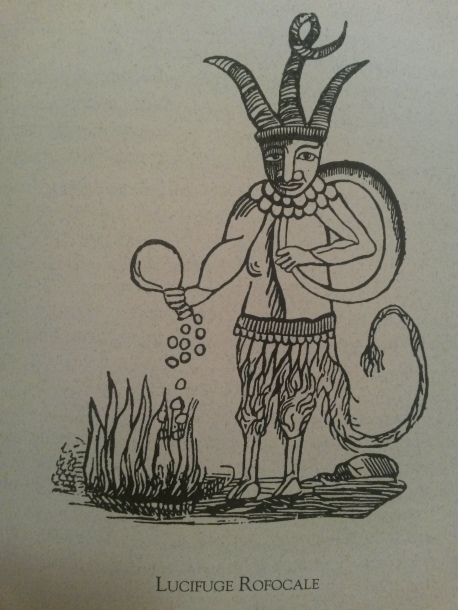
20160803_210828

The bulk of this edition is a word for word transcription of the edition of the Grand Grimoire that our friend, A.E. Waite, published in the June 15, 1895 edition of his magazine, the Unknown World. (How fucking awesome is it that those scans are online?!? The Grand Grimoire starts on the 35th page of the pdf.) Kuntz’s book also includes some passages taken from Waite’s Book of Ceremonial Magic. The confusing introduction of this edition of the Grand Grimoire is a mash-up of the introduction in Waite’s magazine and some other sources. Entire phrases are lifted from the entry on the Grand Grimoire in Lewis Spence’s Encylopedia of Occultism, to which no references are given. Tut-tut, Mr Kuntz. Your name says it all! Plagiarism aside, I just wish the introduction had been a little clearer about how the book had been compiled. Then again, maybe the organisation was deliberately awkward to give off a more genuine grimoire experience. Summoning Belzebuth just wouldn’t be the same if the instructions you were following  were organized in a coherent order!

There are other parts in Latin or Italian that Kuntz claims were taken from a source titled “Le Grand Grimoire“, but he doesn’t elaborate on what this source was or how it differs from Waite’s translation. I have found a pdf of a more complete translation than Waite’s. This version includes an English translation of the Sanctum Regnum section, although the Citatio Praedictorum Spiritum section remains in Latin in both the pdf and Kuntz’s edition. The pdf version also includes a third section which is made up of other “magic secrets”, including the method of raising the dead that Eliphas Levi alluded to in the chapter on Necromancy in his Rituals of Transcendental Magic. (LET THE DEAD RISE FROM THEIR TOMBS!) What’s interesting about the inclusion of this ritual is the fact that Waite actually claims that Levi made it up. In chapter IX of the Complete Grimoire, he claims that this ritual “must be given on the authority of Lévi; for no available editions of the work which is in question, nor yet of the Red Dragon, nor indeed any ritual of my acquaintance, contains it. There is reasonable probability that he invented it to make out his case at the moment.” I know that the pdf version is definitely worded differently to Kuntz’s version, so either it is a different translation or it was based on another manuscript of the grimoire. If it was based on another text, maybe that text is the one that Levi had read. Then again, maybe somebody read Levi and decided to add his bit onto the end because they thought it was cool; I certainly did. This is the problem with pdf versions; you don’t really know how genuine they are. (It’s bit sad when you contemplate that you’ve spent hours of your life researching the authenticity of an online edition of a translation of a forgery.)
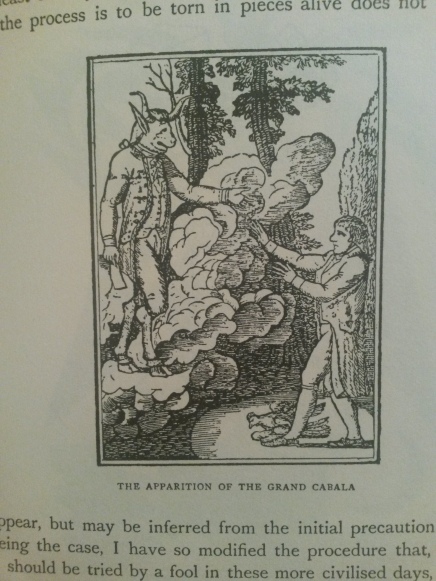
20160803_210350
This is the lad who shows up if you perform the ritual of the Black Hen correctly.

Other things to note regarding the compilation of the pdf version:
One of the spells, “The Secret of the Black Hen”, was mentioned in Waite’s book, wherein he suggests that it was a late addition to the Red Dragon (another name for the Grand Grimoire).  The pdf also includes several spells from the Grimorium Verum, including instructions on “HOW TO CAUSE THE APPEARANCE OF THREE LADIES OR THREE GENTLEMEN IN ONE’S ROOM AFTER SUPPER”. There’s also another short section on commonly held superstitions that ends with the statement, “I have related these beliefs to amuse our readers but not to obligate the readers to believe all of them because they are mostly nonsense”. This pdf edition seems to be a compilation of different bits and pieces from a variety of grimoires and books about grimoires. It’s still pretty cool though; some of the spells at the end are grizzlier (and often far sillier/funnier) than the first two parts of the “authentic” text.

If you know anything about the compilation of the different versions of the Grand Grimoire, please leave a comment below or email me.

* * * *
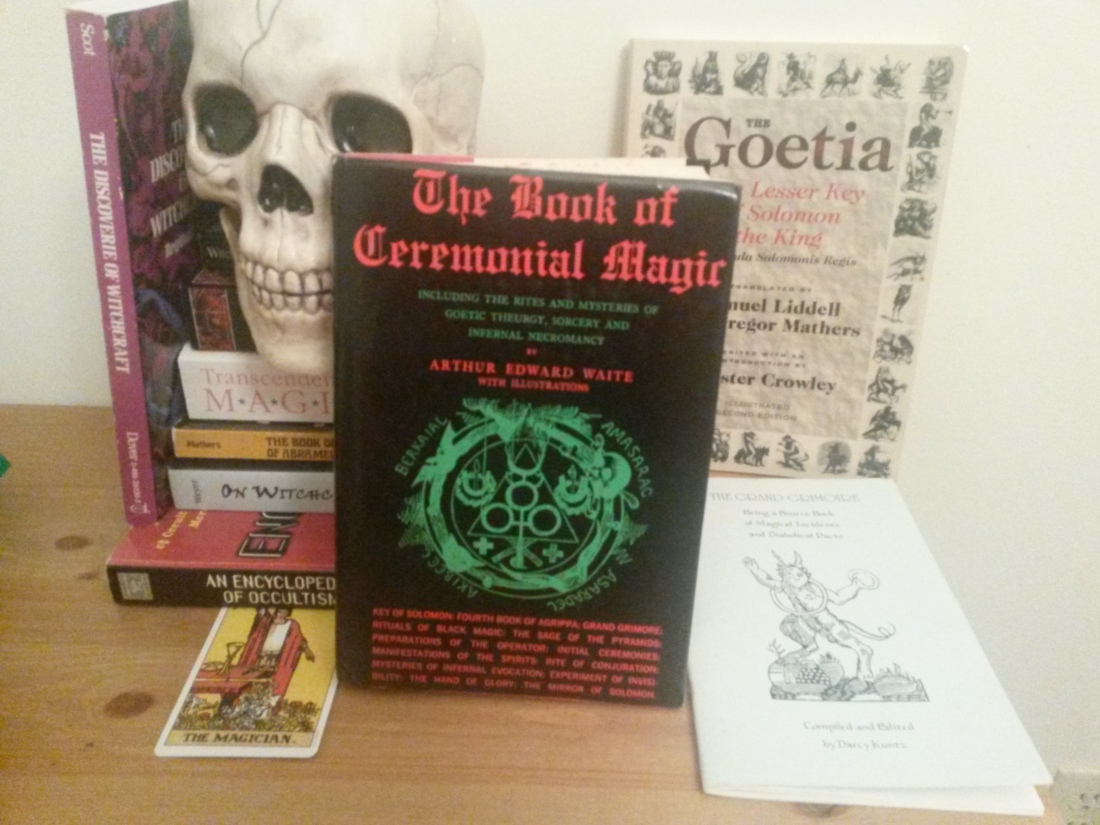
20160803_210212

I have other grimoires in my collection, both books and pdfs, and I’ll doubtlessly get around to them at some stage. I suppose I’ve talked more about the actual books and what they’re composed of than the efficacy of what’s actually written within. It’s hard to imagine somebody reading through these texts and trying to carry out the rituals, but I’m sure that attempts have been made. I think that the tasks described in these books, although ludicrously tedious and difficult, are less likely to prevent somebody from attempting the rituals than is the fundamental problem of Black Ceremonial Magic addressed by Waite: these rituals require the sorcerer to supplicate God to give them control over evil demons in order that they may perform evil deeds. Why would an all-knowing, fundamentally good, God grant such a request? Also, in the grander rituals in which one of the rulers of Hell is evoked, the instructions given allow the sorcerer to essentially trick the demon into doing his/her bidding. These are not instructions on how to make a Faustian pact; it is expected that the sorcerer will get away without paying for the demon’s services. How many times would the demons fall for this kind of trickery before they cop on? Personally, I wouldn’t fuck about with a demon. It’s only polite to pay for what you’re given.

Vathek – William Beckford

20160802_230226
Oxford University Press – 1983 (Originally published in 1786)

This Gothic classic is the story of the Caliph Vathek and his series of poor life choices. Vathek is led astray by an evil giaour’s promises of more wealth and power. (‘Giaour’ is old Turkish slang for a non-Muslim. The reader pretty soon realises that the Giaour in question is actually some kind of evil spirit.) This is basically an 18th century English writer’s attempt to write an Islamic version of the Faust legend. Ahhhh, remember the good old days when appropriating culture was still considered a bit of a laugh?

Beckford was only 21 when he wrote Vathek, and he claimed it only took 3 days to complete. The story itself is quite good, but the characters are rather flat, and I think that it would have benefited from some development. Beckford later wrote the Episodes of Vathek (not included in this edition), which are additions to this text, but as far as I understand, they are side stories about very minor characters and don’t add anything to the central plot.

20160802_230201
Vathek and the Giaour

You can pick up a copy of Vathek for dirt cheap, or download the audiobook for free.  As far as Gothic classics go, this closer in its scope to The Castle of Otranto than Melmoth the Wanderer; it’s worth a read, but don’t expect too much.

Word on the street is that William Beckford was a shrub rocketeer.