The Peculiar Tale of Jack Parsons

I’ve read several autobiographies, but there are very few people that I find interesting enough to want to read somebody else’s account of their life. In fact, prior to my reading for this post, the only biography I had ever read was Henry M. Pachter’s Paracelcus: Magic into Science, and I only ever read that because I had nothing else at the time. While Paracelsus played an important role in distilling science from magic, the individual that I’ve been researching recently traveled in a very different direction on the same path. Jack Parsons, a man who played a key role in putting men on the moon, was a black magician in his free time, applying the scientific method to his magical rituals.

jack parsons

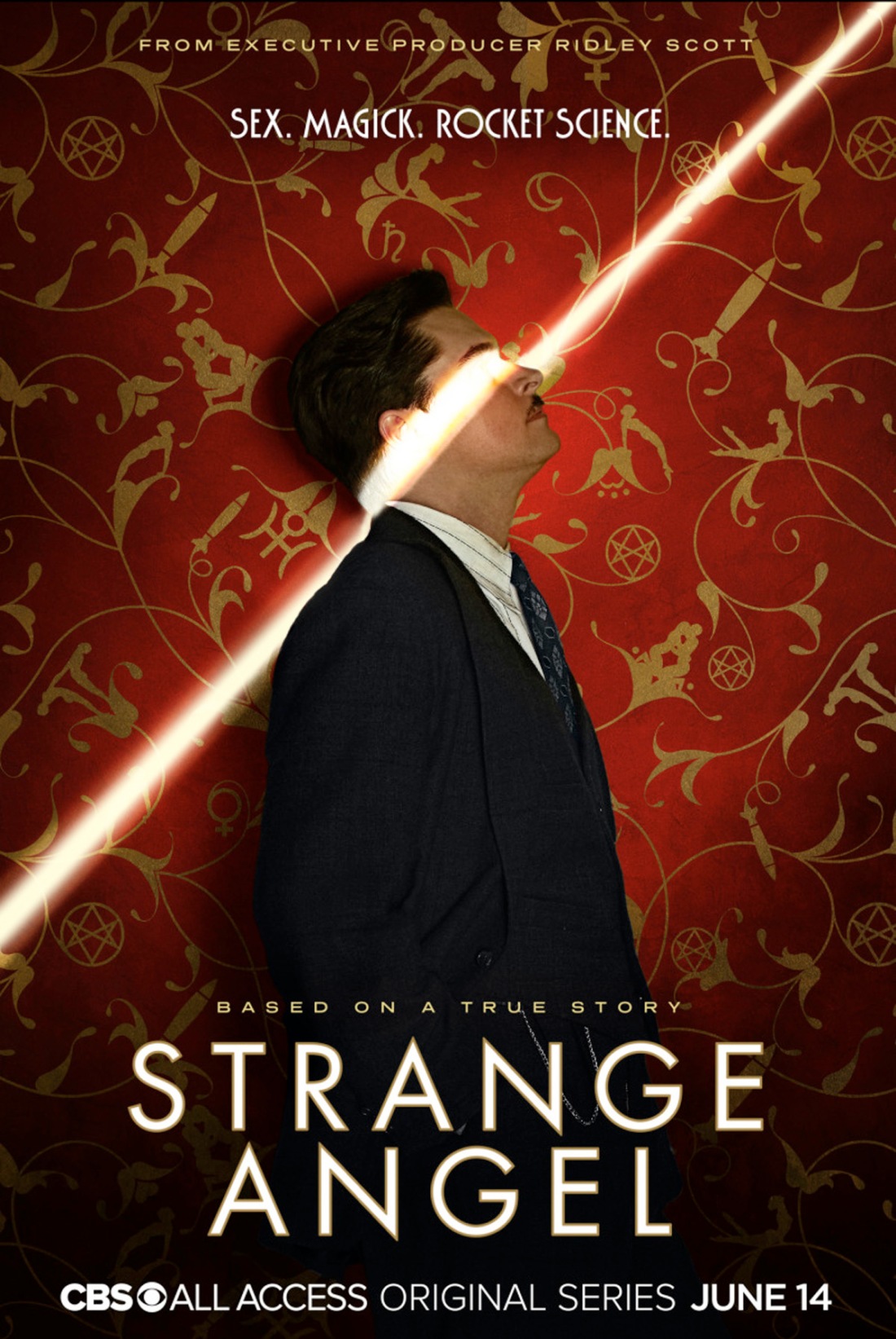
I first heard of Jack Parsons in Sorcerer of the Apocalypse: An Introduction to John Whiteside Parsons in the first Apocalypse Culture book. (Incidentally, Adam Parfrey, the editor of that book and publisher of Sex and Rockets, died recently. RIP.) After that, I encountered Parson’s name in a bunch of places, notably in Disinformation’s Book of Lies and the ramblings of Robert Anton Wilson (who wrote the introduction for Sex and Rockets). In truth, I had been planning to read these two biographies for ages, but the upcoming CBS series based on Parson’s life convinced me to finish them quickly so that I can be a cool guy when it comes out.

I’ve read so many biographical accounts of Parsons recently that I don’t want to create another one. Suffice to say that he was heavily involved in/with rocket science, science fiction, Aleister Crowley, black magic, sex magic and the founder of Scientology. A crater on the dark side of the Moon is named after him, and he died in a mysterious explosion that may have been a murder, an accident, a suicide, or a demonic summoning gone wrong. Jack Parson’s was a pretty cool guy.

sex and rocketsSex and Rockets: The Occult World of Jack Parsons – John Carter
2004 – Feral House

strange angel pendle parsonsStrange Angel: The Otherworldly Life of Rocket Scientist John Whiteside Parsons – George Pendle
2005 – Orion

I read Sex and Rockets first because it was written first. I enjoyed reading it, but it gets a bit bogged down with Thelemic mumbo-jumbo. Honestly, who cares about that rubbish? This book reads like a list of facts about Jack Parsons that were put in chronological order.  This being the second biography that I had ever read, the author’s approach seemed reasonable to me when I was reading it, but this approach makes this book less enjoyable than Strange Angel. Even though it’s mostly the same information being presented in both books, Strange Angel feels more like a novel. It begins with the climax and then goes back in time, and there’s more focus on the atmosphere and storytelling. It does not surprise me that the new TV show is based on this one. I’m glad that I read both, but I would definitely recommend Strange Angel to anyone who only has the time and/or interest to read one.

parsons black boxI wonder what’s inside!

The one notable piece of information in Sex and Rockets that’s not included in Strange Angel is the suggestion that Jack Parsons had sex with with his mother and his dog. There was a black box, covered in magical symbols, found in the apartment Jack died in. Carter notes that, “The odd box was found to contain home movies of Parsons and mother having sex, not only with each other, but also with Ruth’s “big dog.” According to reports from Pasadena police, passed down to their friend Harold Chambers, we now have circumstantial evidence that John Parsons indeed fulfilled his goal to “exteriorize [his] Oedipus complex.”
Parsons was a creep. He got off on incest (he had a long affair with his first wife’s little sister), and he seemed to like being cuckolded. Riding his ma and his dog is a bit much though. I’d have difficulty liking a person who’d do that. It’s hard to find any more evidence on this though, so I’m going to assume he didn’t.

The most important magical project of Jack’s life was the Babalon working. This involved him and L. Rob Hubbard, founder of Scientology and all-round piece of shit, going into the desert and jerking each other off with the aim of summoning the Whore of Babalon (a deliberate misspelling of Babylon) to bring about the apocalypse. After finishing the lengthy ritual in 1946, Jack believed that he and Hubbard had achieved their aim. Pendle notes that “He [Parsons] believed that Babalon, in the manner of the Immaculate Conception, was due to be born to a woman somewhere on earth in nine months time.” If Jack was right, this means that the Whore of Babalon would have been born in 1947. Think of the most powerful women in the world and then guess which one was born in 1947. That’s right, good ol’ Hillary!

Obviously, I don’t believe that Hillary Clinton is the Whore of Babylon, but it turns out that I’m not the only one to have noticed the coincidence. There’s already several loopy videos and blogposts claiming that she is the Moonchild of Jack Parsons.

Strange AngelAn Irish actor is playing Parsons too. I’ll definitely be watching.

Parsons was friends with some of the most important science fiction writers of the early 20th century, and he both inspired and was inspired by several of the characters in their works. Sci-fi is slightly outside of this blog’s jurisdiction, but I think I’ll make an exception and do a second post on Parsons about these works. Stay tuned.

H.P. Lovecraft and the Black Magickal Tradition – John L. Steadman

h.p. lovecraft black magickal tradition - john lH.P. Lovecraft and the Black Magickal Tradition – John L. Steadman
Weiser – 2015

H.P. Lovecraft was a horror writer who did not believe in the supernatural. Despite his clear declarations of the contrary, some people believe that Lovecraft’s horrors were real. This book examines both the beliefs of those people and the beliefs of other occultists that have some similarities to the ideas in Lovecraft’s fiction.

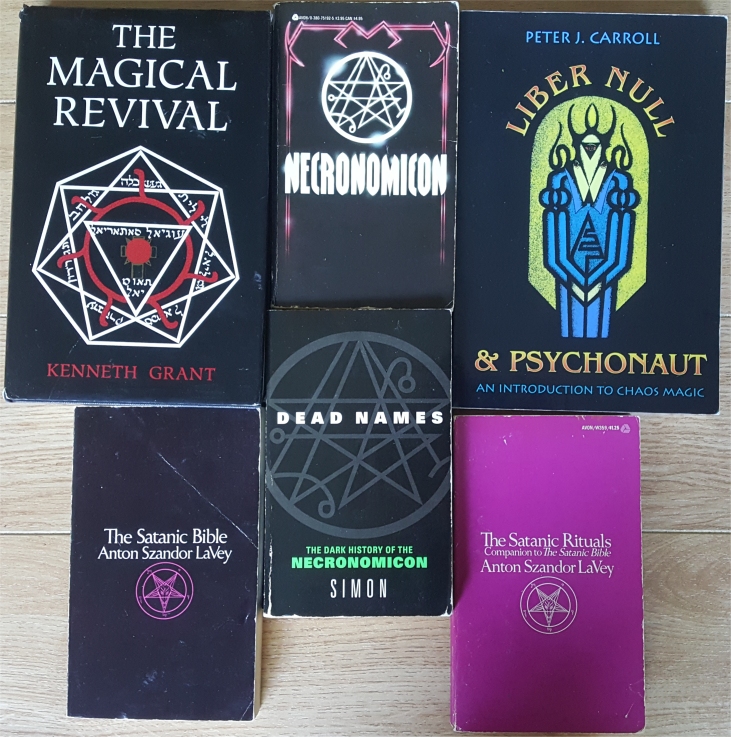
Let’s start with the first group, the nutjobs that believed that Lovecraft was psychic. Both Simon and Kenneth Grant believed that Lovecraft had channeled his horrors from another dimension. I’ve talked plenty of shit about those lads before, so let’s just say that Grant was mental and full of crap, and “Simon” is a con-artist. Steadman, the author of this book, spends paragraphs defending the legitimacy of the Simon Necronomicon, but in a note at the end of the book he concedes that Simon might just be Peter Levenda. Also, Steadman, while discussing Simon’s work, refers to Michael Baigent as “a reputable scholar”. When I was reviewing Dead Names, the book in which Simon referenced Baigent, I called him out for referencing a bullshit artist. Dead Names might best be described as a work of pseudo-non-fiction though, so a reference to a bullshit artist doesn’t really make it any less enjoyable. Steadman’s book, however, is presented as an academic work. How could any person hoping to be taken seriously refer to the author of Holy Blood, Holy Grail as “a reputable scholar”? Come on.

lovecraftian occultistsThe authors of these occult texts were clearly influenced by Lovecraft. It’s a pity they’re all garbage.

There are also chapters in here on Chaos Magicians and LaVey’s Church of Satan. Like Simon and Grant, these lads deliberately brought Lovecraftian elements into their belief systems, and although I wasn’t hugely interested in the precise ways in which they did so (I’ve already read lots of the original literature being summarized here.), I can’t complain about their inclusion in this book.  This stuff on the Lovecraftian occultists was fine. The chapters on Wicca and voodoo were not.

Wicca and voodoo have nothing to do with Lovecraft, but Steadman spends chapters trying to show how these belief systems are similar to some of Lovecraft’s ideas. There is no reason to believe, nor has anyone ever suggested, that Lovecraft was responsible for the foundation of Wicca or Voodoo, and I thought that the purpose of these chapters was to show how Lovecraft’s ideas resembled parts of these foreign belief systems in an attempt to suggest that he was psychically in tune with their practitioners and/or spirits. However, in the conclusion to the book, Steadman claims, “I have shown that Lovecraft has had an indirect, though clearly definable, influence on current Vodou and Wiccan practices.” That’s not what I got out of what he has written at all. In saying that, I have to admit that I found it extremely difficult to pay attention to these boring, lame chapters.

Steadman goes into quite a lot of detail on the beliefs and practices of wiccans, voodoo practitioners, members of the Typhonian O.T.O., and Satanists. I’m so sick of reading this kind of rubbish that I found myself skimming large passages of it. I suppose it’s my fault for choosing to read another book on the occult.

lovecraft collectionsI’ve been meaning to go back over Lovecraft’s own work for a while. It has been about 10 years since I last read some of these stories. I’m going to use the Wordsworth editions next.

H.P. Lovecraft and the Black Magickal Tradition is not a good book; it’s actually quite unpleasant to read. It’s the literary equivalent of Nickelback writing an album about a Morbid Angel song. The academic presentation combined with the author’s willful naivety is infuriating. There was a part in here where Steadman tries to make it seem that it’s common knowledge that the Knights Templar were Satanists. If he’s trying to get away with rubbish like that, who knows what other falsehoods he has slipped in here. I’d be a bit meaner, but this book is only a few years old and the author has an internet presence, so he might see this review. John L. Steadman, if you’re reading this, I’m sorry, but your book is handicapped.


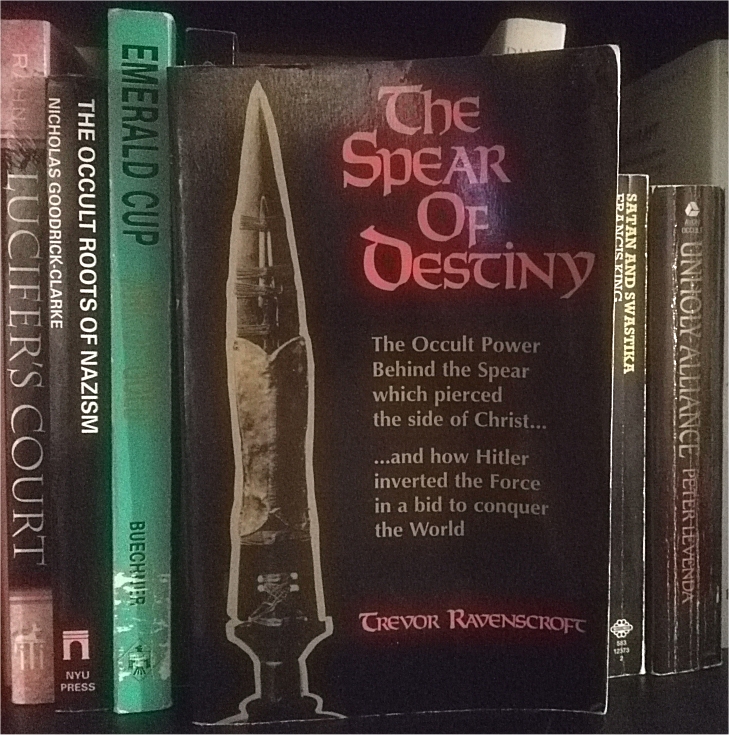
The Spear of Destiny – Trevor Ravenscroft

spear of destiny ravenscroftThe Spear of Destiny – Trevor Ravenscroft
Weiser Books – 1997 (First published 1973)

I’m going to have to summarize this one before I comment about it.

In the late 50s, the author of this book, Trevor Ravenscroft, met a lad, Walter Johannes Stein, who had spent years researching the Holy Grail and the Spear of Destiny. Stein was going to write a book about the stuff he had learned, but he was dying, so he gave all of his information to Ravenscroft so that he could write the book instead. The Spear of Destiny, or the Spear of Longinus, is the spear that pierced Christ’s side when he was on the cross.

One morning, when he was a young man, Stein woke up and started reciting entire paragraphs of Wolfram von Eschenbach’s Parzival, one of the seminal Holy Grail texts. Fascinated by his strange new ability, he decided to buy a copy of Parzival, presumably to compare with the passages he was reciting. Well, the copy he bought had some interesting notes in it. He tracked down its previous owner through his bookseller. The previous owner was Hitler. Hitler and Stein became friends (kinda). Together, they went to a museum in Austria to see a spearhead that some had claimed was from the Spear of Longinus.

When they were standing in front of the spearhead, Hitler started to glow and Stein realised that his friend was being possessed by Satan.

You see, Hitler was interested in the grail and spear because he thought they could provide him with access to the Akashic records. The Akashic records, for those of you who don’t know, are the imaginary library of memories of every human experience ever experienced by anyone. Hitler wanted access to these records for the purposes of gaining power, but he didn’t want to spend a lifetime of meditation to get there so he took a bunch of hallucinogenics in a black magic ritual to speed up the process. Unfortunately, while tripping on peyote, Hitler became possessed by the Devil. The Devil is actually one of the negative powers that came into being after some of the species that lived on the lost city of Atlantis evolved from stretchy mutants into Aryans.

Oh, and Heinrich Himmler was a zombie.

Ok, so Ravenscroft goes into a lot more detail than that, and I’ve left out all of the stuff about psychic time-travellers, but the above is a pretty fair summary of this book.

There are many, many issues that a student of history might take with Ravenscroft’s account, but there are two facts that are especially worth considering.

  1. The Hofburg Spear, the actual, physical spear that the events in book revolve around, is definitely not the Spear of Longinus.

The Hofburg Spear is of medival origin. It didn’t exist until hundreds of years after the death of Christ. This single fact obliterates nearly all of Ravenscroft’s claims.

  1. Ravenscroft never actually met Walter Johannes Stein, the supposed source for nearly all of his information.

Ravenscroft starts his book off telling his reader that Walter Johannes Stein, his good friend, deserves most of the credit for writing this book. The first chapter of this book describes, in detail, the pair’s first meeting. A few years after this book was published, Ravenscroft admitted that he never met Stein in person. He said that he had only ever been able to talk to his spirit through a medium.

When you take away the subject and the source, there’s really nothing left. It’s hard to find a footing for any meaningful criticism of this book. It’s too stupid a book to bother pointing out where it’s factually inaccurate. Ravenscroft is clearly attempting to be a part of the fantastic realism movement started by Pauwels and Bergier, but his book is one step stupider than the stuff they put out. While they encouraged speculation, Ravenscroft just tells lies. In Arktos, Joscelyn Godwin describes The Spear of Destiny as “the ultimate degradation” of the Frenchmen’s work and “blood-curdling work of historical reinvention”. A fair assessment.

Some have claimed that this book was originally meant to be a novel but that Ravenscroft’s publisher convinced him to write it as non-fiction so that it would sell more copies. I’ve no idea if that’s true or not. The book is so inflated with shockingly boring details that have little relevance to the story that it’s hard to imagine how it would have turned out as a novel. The story here is rather anti-climactic too, so I’d hope that Ravenscroft would have come up with something better for a work of fiction.

As a work of non-fiction, this is seriously one of the worst books I have ever read. I know I say that kind of thing more often than other people, but this really was a turd. The Spear of Destiny was written in an era when it was considerably more difficult for people to fact check an author’s claims, but much of the stuff that Ravenscroft tries to get away with is so clearly rubbish that I can’t imagine anyone being able to believe this shit. This book makes Holy Blood, Holy Grail seem like a serious academic study written to impeccable standards. Batshit crazy books can be entertaining, but this one wasn’t. It was tortuous.

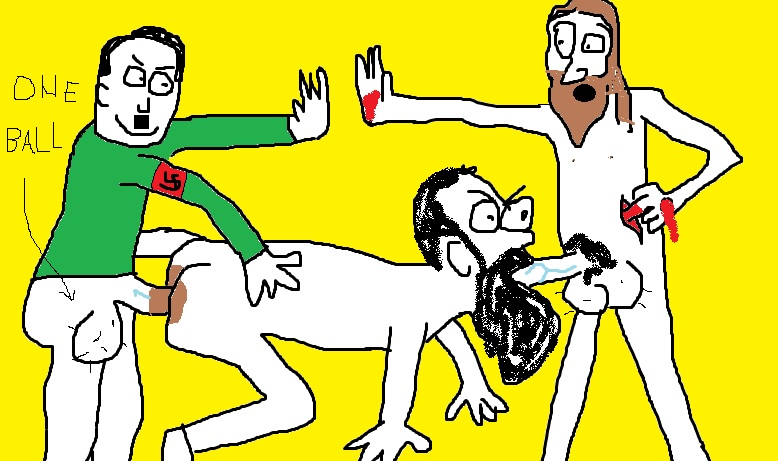
The Spear of Destiny is a surprisingly popular book (my copy is from the 9th printing!), and you’ll find plenty of other articles online that do a better job of discussing its specific inaccuracies. I liked this one, in which the author worries about how to write about this book “in a way that was not plain sneering.” I hold myself to no such standards, so here is a picture I made of Jesus and Hitler spit-roasting Ravenscroft:

jesus hitler

Meeting the Other Crowd – Eddie Lenihan

meeting the other crowd - eddie lenihanMeeting the Other Crowd, The Fairy Stories of Hidden Ireland – Eddie Lenihan
Gill and Macmillan – 2003

I first encountered the author of this book in a Tg4 documentary about Alice Kyteler, the witch of Kilkenny. Just looking at him, you can tell that the man is a legend. There are loads of videos of him telling stories online, and you’d be better off watching them than reading this review. About 3 years ago, I was visiting Ireland and somehow ended up in the Freemason’s Hall in Dublin. I got chatting to one of the lads there about books on Irish folklore, and he recommended this. I bought it the next day.

The astute reader will have noticed a decline in the amount of non-fiction being reviewed on this blog recently. This is largely due to my developing revulsion towards occultism. I don’t know whether it’s having a kid, a job and less time or if it’s just that I’ve come to know what to expect from new-age imbeciles, but I simply don’t have the patience to wade through the sort of rubbish that I used to review. Standing in front of my bookshelf, trying to choose between an outdated book about aliens and a pamphlet about magic beans, I cast my eyes to the ground in despair. It was on its way to the ground that my line of sight crossed the copy of Meeting the Other Crowd on my bottom shelf, wedged in between books on the Holy Grail and serpent worship. Yes, this book would work. The topic is occult in every sense of the word and from what I had seen of the author, I knew it would be interesting

Fairies though. Isn’t that a bit lame?

Let’s make this very clear. The fairies of Ireland are not the pleasant, wingèd creatures, fluttering about and turning little girls into princesses that some might expect. Fairies are wrathful, violent, and manipulative entities that live in a shadow world, emerging to kidnap children and seek violent retribution for any actions they have perceived as wrongs against them. They’re not objectively bad or evil, but they are certainly the kind of things that are best avoided.

This book is a collection of stories that Eddie Lenihan collected over what seems to have been several decades. He traveled around Ireland, recording old people telling the fairy stories that they had heard throughout their lives. The tales have been transcribed fairly precisely, and they retain a flow of speech that makes it easy to imagine the voice of the teller as you’re reading their words. While all of the stories are followed with a brief commentary by Lenihan, I would have liked a little more information about the story tellers and when they were recorded.

The other issue here is the consistency of the different stories. Some of these accounts are absolutely fascinating, but some are little over a page long and present only minor variations to other stories in the collection. I suppose this was probably inevitable given the nature of the book though, and I’d prefer for these shorter stories to be included than omitted.

Unlike the authors of much of the occult material that I have reviewed on here, the tellers of these tales had, as far as I can tell, an honest conviction in the stories they were telling. These people weren’t out to proselytize or to make a buck. They were telling stories that they had been asked to tell. That in itself makes it much easier to both enjoy the stories as stories and to consider them as something more than imaginary.

A skeptic might claim that these accounts are the attempts of uneducated, rural people to rationalize the traumatic events in their lives (infant deaths, thefts, abductions) but that interpretation doesn’t do these stories justice. Whether or not the events in these tales occurred precisely as they are described has no bearing on their beauty and cultural worth. While I’m not entirely convinced about the objective existence of fairies, I don’t think I’d ever enter a Fairy Fort, just to be safe.

I’d recommend this book for anyone with an interest in folklore and/or malevolent shadow people. I’m looking forward to reading more of Lenihan’s books in the future.

Black Easter – James Blish

black easter - james blishBlack Easter – James Blish
Equinox/Avon Books – 1977 (First published 1968)

This is definitely one of the better novels about black magic that I have read. The particular nature of this story renders it difficult to discuss without giving away some fairly crucial plot details, so if you’re like me and like to know as little as possible about a book before reading it, maybe you should come back to this review after reading the book itself. If you were hoping that this review would help you decide whether or not to read the book, know that I loved it. If you have any interest in the other books that I’ve reviewed on here, you’ll probably enjoy this one.

Spoilers start here:

The plot of this novel could be charted with a single ascending line. There is no falling action, denouement or resolution; it ends with the climax, and a rather climactic climax it is too. I like when books are gutsy enough to have brutal endings (unless they’re love stories), and finishing off with the ultimate victory of evil over good as brutal as it gets. I was expecting the priest to do something to thwart Baines and Ware, but I was delighted that he didn’t.

The ending was both shocking and abrupt, and for the first time that I can remember, I wanted to reread a book as soon as I had finished it. There is a sequel though, The Day after Judgement, so I’m going to wait till I get my hands on that before I reread Black Easter. To be honest, I was so happy with the ending that I am a bit worried that the second part of the story will ruin the first. I don’t want the characters to get a chance to fix things.

The final revelation of Black Easter, the claim that God is dead, is particularly chilling given the nature and timing of his death. He has died at a time when Earth is infested with demons, demons that have hitherto been under the guidance of ceremonial magicians using the dead God’s names as their instrument of control. By creating this scenario, Blish calls into question the inherent conflict of ceremonial magic as noted by A.E. Waite. Black magicians using grimoires such as the Lesser Key of Solomon and the Grand Grimoire, both of which are alluded to in Black Easter, need to ask God for his help in controlling the demons they conjure. Why would a loving God help an individual who was intent on massive acts of terror, and, in this case, why would an all knowing God accommodate his own destruction? Could it be that God is so upset with his creations that he wants to die? There’s a depressing thought.

While Black Easter and The Day after Judgement make up one larger work, that combined work (sometimes called The Devil’s Day) makes up a single part of Blish’s After Such Knowledge trilogy. The other books in this thematic trilogy are A Case of Conscience and Doctor Mirablis. I have a copy of Doctor Mirablis on my shelf, and I’m planning on picking up the other two books soon. It’s been quite a while since I finished a book and wanted to read more from the same author.

Part of the appeal of Blish’s writing, and I’ve already alluded to this, is his attention to accuracy. While this is a fantasy novel, much of its content comes from real grimoires. Blish addresses this in a note at the beginning of his book; he states,  “All of the books mentioned in the text actually exist; there are no “Necronomicons” or other such invented works”. Despite this, he later quotes from The Book of the Sayings of Tsiang Samdup, a fabled tome, similar to the Necronomicon in that the first references to it appeared in works of fiction, two novels Talbot Mundy. (This wasn’t the only time that elements of Mundy’s work managed to will themselves out of the confines of fiction.) On top of all this, there are those who say that Theron Ware, the central character of Black Easter, is based on Aleister Crowley. Ware certainly resembles the kind of person I’d imagine Crowley to have been, but I had read of this comparison before reading the novel, so I can’t be sure how much of the similarity was legitimate and how much of it was projected by my expectations.

Like I said, I’m planning to read the sequel, so I’ll doubtlessly come back to this book. In the meantime, make sure you eat loads of chocolate for the celebration of Christ’s resurrection.

The Doctor Orient Series, Books 1-4

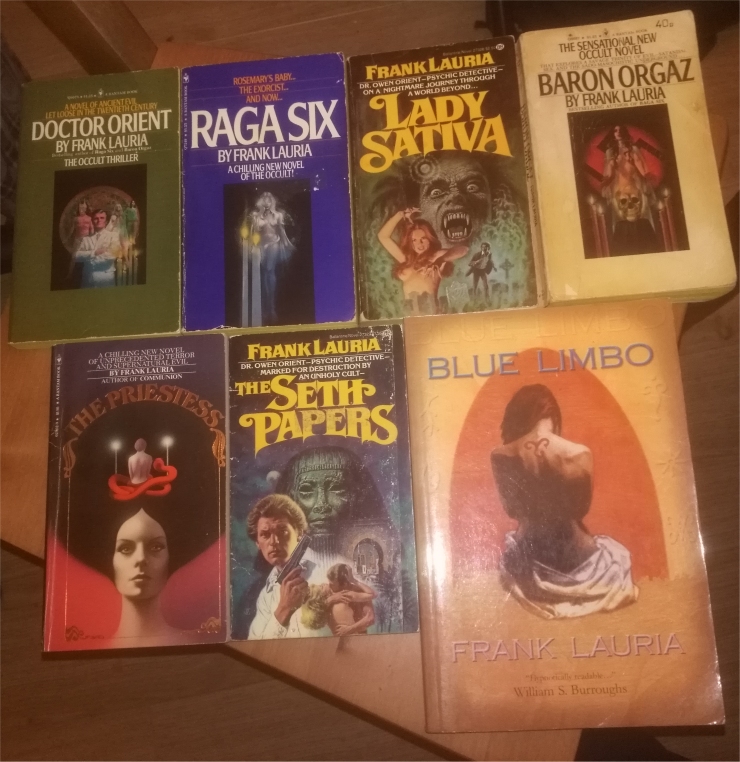
baron orgazIn March 2016, I was working just around the corner from my house. I came home at lunch one day, and as I was sitting down, waiting for the coffee to brew, I checked facebook. Will Errickson had posted a photo of a book featuring the above image on its cover. Let’s just take stock of the elements in that picture: a skull, some ritual candles, a semi-naked woman and a swastika. Needless to say, I had ordered a copy of the book, the intriguingly titled Baron Orgaz, before I had poured my coffee.

It was only after ordering that I realised that this book was part of a series. Now, as my readers well know, I don’t like starting halfway through, so I spent a few weeks tracking down copies of the preceding books in the series. By the time I had got through the first novels and was finishing Baron Orgaz, I had ordered the rest of the collection.

doctor orient books

I’ve hemmed and hawed about publishing this post for a few months. I was considering finishing the entire series before posting, but I have a lot on my hands at the moment, and it’s going to take me quite a while to get through the remaining four novels. Here, then, are my thoughts and feelings on the first half of the Doctor Owen Orient series.

doctor orient frank lauriaDoctor Orient – Frank Lauria
Bantam Press – 1974 (Originally published 1970)

The first Doctor Orient novel seems to be a little harder to come by than some of the later entries in the series. While quite entertaining, it isn’t, in my opinion, quite as good as the books that follow it. Then again, if you were to imagine the series as one extremely long novel, this would serve as good introduction. You get to meet several of the characters who are going to pop up in later installments.

The most obvious point of comparison here would be the Devil Rides Out by Dennis Wheatley. Both books are about crime fighting occult experts doing battle with a black magician. The Duke De Richleau and Doctor Orient are both aided on their adventures by a motley crew of accomplices, one member of each group being temporarily led down the left hand path. The biggest difference here is that Doctor Orient is far less hesitant to use his own psychic powers than De Richleau.

The antagonist in this novel is a dodgy lad called Sesuj. He tries to use pop music as a form of mind control to bring young people over to Satan. Pretty cool stuff.

raga six frank lauriaRaga Six – Frank Lauria
Bantam Press – 1972

Raga Six impressed me. It kicks off with a pair of weirdoes who seem to be going for fairly similar approach to Susej from the first novel, but this turns out to be a false start. The real adventure kicks off when Doctor Orient starts working for a drug peddler named Cowboy and ends up in exile after a particularly sketchy transaction. He meets a really dodgy lad on a boat to Tangier and has a threesome with this chap’s wife and a model. People start dropping off, and you get the idea that there’s at least one vampire involved.

Given that this is a book filled with sex and the undead, the writing is surprisingly good. The Doctor is a sensitive man at the best of times, and I enjoyed the existential crises that he goes through in this book. I was kept guessing right until the end of the novel too. It took me 5 months to start on Raga Six after finishing the first novel in the series, but it only took me 6 days to move onto Lady Sativa after finishing it. Raga Six might be the best known entry in the series.

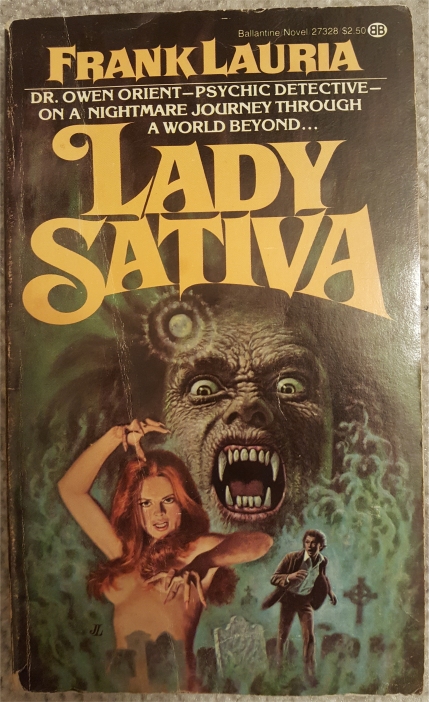
lady sativa frank lauriaLady Sativa – Frank Lauria
Ballantine Books – 1979 (Originally published in 1973)

This one is about werewolves. It had all the sex, seances and outdated slang that I’d come to expect from a Doctor Orient novel. It contains one scene in which an irritable Doctor Orient unwittingly invites himself to a threesome. Once he finds out that another male is going to be involved, he violently assaults said male and calls him a “Gaylord”. LOL. I was expecting this one to go in a similar direction to Raga Six, but it doesn’t really. A solid entry.

baron orgaz frank lauriaBaron Orgaz – Frank Lauria
Bantam Press – 1974

Nazis, extreme sadomasochism, black magic and tennis… Really, need I say more?

Well, the only other thing that might be worth mentioning is that this very much is the fourth book in a series. While a person might well be able to enjoy the work entirely on its aforementioned merits, most of the main characters have previously appeared and played important roles in the series, so I would strongly recommend reading the first 3 books before this one.

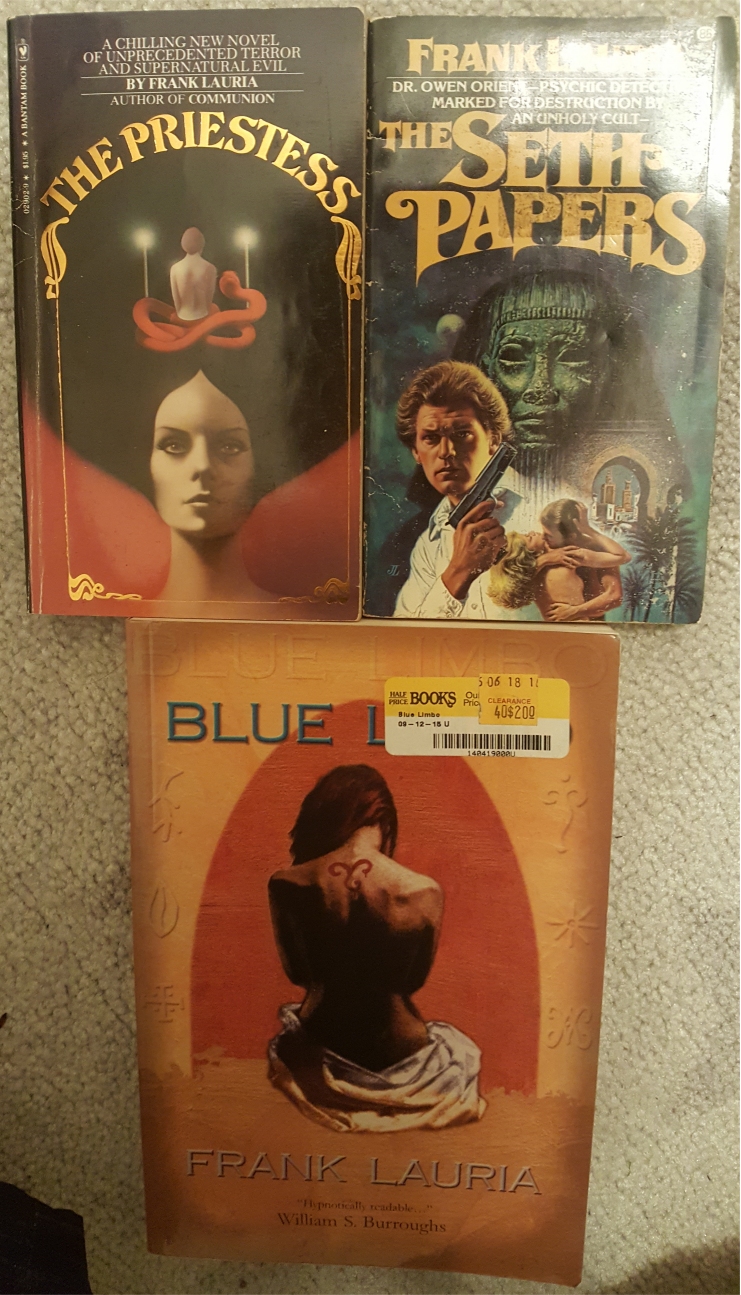
doctor orient later books
I have these ones too, but I haven’t got around to reading them yet. Not pictured is Demon Pope, the last book in the series.

Overall, the Doctor Orient series is awesome. There are loads of cool little references to actual grimoires and conspiracies scattered throughout these books. The author, Frank Lauria, knew William Burroughs and Jack Kerouac, he sings in a rock band, and he’s not a fan of Donald Trump. Also, his books are filled with sex, drugs, rock’n’roll and devil worship. Deadly. I’m looking forward to reading the rest of this series.

2019 Edit: I finally got around to reading and reviewing the second half of this awesome series.

Video Nasty and Year in Review (2017)

2017 was a pretty good year for me. I got a much better job, became a dad and went back to university (again). These changes, while mostly enjoyable, meant that I didn’t get to review or read as many books as I have in the last few years. However, I feel that the quality of this year’s posts has been of a decent standard. Here’s the best of 2017.

liber falxifer10. Liber Falxifer 
A heavy metal grimoire of dark black magic.

halloween and satanism9. Halloween and Satanism
Anti-Semitic Christian bullshit propaganda for assholes.

tarry thou till i come croly8. Tarry Thou Till I Come 
Including it here because, as far as I know, this is the only review of this book online. The tale of the Wandering Jew.

arktos joscelyn godwin7. Arktos
Some bullshit about Donald Trump. A very cool book.

holy-blood-holy-grail6. Holy Blood, Holy Grail
Jesus had a kid, and Hitler was a descendant of Dracula.

crowley book 45. Aleister Crowey’s Law and Lies
Getting to grip’s with Aleister Crowley’s bullshit.

faust demon 144. The Books of Faust
This one took a lot of work.

red book of appin scarabaeus3. The Red Books of Appin
Myth busted.

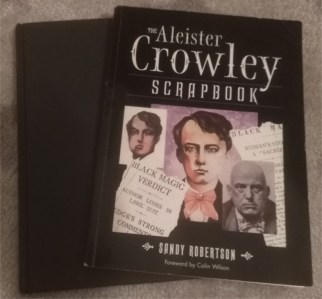
the aleister crowley scrapbook2. The Aleister Crowley Scrapbook
An interview with a Crowley expert.

robert anton wilson the sex magicians1. The Sex Magicians
My contribution to the conspiracy theories about the conspiracy theorist.

Well, there you go: Nocturnal Revelries’ best of 2017. (Just to remind you, as with last year, the links in this post are to the best posts of the year, not the best books that I read.) This blog has been going for nearly 3 years now, and I’ve reviewed about 170 books so far. I recently added an index page to the site in case anybody is looking to see if I’ve looked at a specific book or author.

Thanks for all of the support and interest. Remember, this blog has twitter and facebook pages to help keep you up to date with my ramblings. I’ve a few posts planned for the near future, but who knows what’s going to end up featured here in 2018. I’m going home for Christmas for the first time in years too, so I doubt I’ll post again until January. As always, you can email me with recommendations, questions, comments or threats. If you currently work in retail, know that my heart bleeds for you. For everyone else, enjoy the time off work, and don’t forget to go to mass on the 25th.

On Reading and Collecting Occult Books

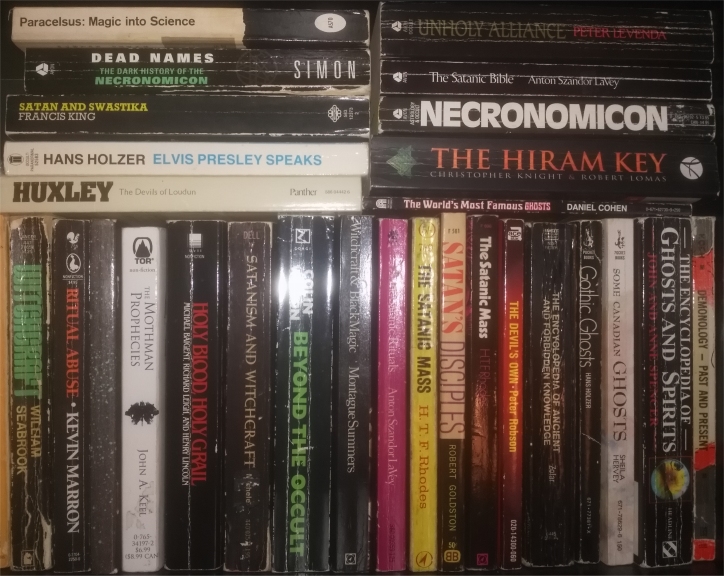
occult paperbacksThis, my friends, is what it’s all about. Fuck your fancy hardback collection!

How could a person possibly enjoy Simon’s Necronomicon if they’ve never heard of Cthulu? Could they possibly feel the full impact of Lovecraft’s Mountains of Madness having never before encountered the dread cry of “Tekeli-li!”? Haven’t you ever noticed the references to Pallas Athena and the Balm of Gilead in Poe‘s the Raven? They couldn’t have made much sense to you unless you were familiar with Greek mythology and Biblical lore. Speaking of mythology, isn’t the Simon Necronomicon, the text that we started off with, basically just a silly version of the Enuma Elish, the Babylonian creation myth?

Even the silliest, most entry-level texts of Occultism require an awful lot of background reading if they are to be understood and fully appreciated.

“Occult” literally means hidden, and many “Occultists” out there limit their research to the esoteric. Occultism is generally concerned with spirituality and the supernatural, and many “occultists” that I have encountered have little to no interest in the major world religions, history, philosophy or science. I personally fail to understand how they can comprehend the Hidden without first studying and attempting to understand what is in plain view.

The internet has made countless esoteric texts instantly available to the neophyte. A few clicks on wikipedia and Curious George ends up bypassing Homer and the Bible and gets straight into nutty books filled with references to these works. These n00bs can’t possibly understand the stuff they’re supposedly reading.

Maybe I’m just getting old. I have similar complaints about kids these days being able to download obscure black metal records when they’ve never listened to Megadeth or Anthrax. When I was a teenager, we had to buy albums and check the thank-you lists in the cd booklets to find the names of other cool bands. Nowadays a kid can go from being a Justin Bieber fan to a devotee of obscure Finnish death-doom in just a few clicks. Start at the start or go die in your posehole, you annoying little snots.

And music, while obviously very different to literature, can also contain references to other music. (I felt chills the first time I heard the singer from Crypt Sermon bellow out “Fool, fool!” in this track, a song that is incidentally based on a story from the Bible. If you don’t understand the “Fool, fool!” reference, please abruptly find the closest exit and leave the hall. (That’s another heavy metal reference btw.)) This being said, a person can certainly enjoy a song without having heard older songs of the same genre. References within music (and fiction) generally serve aesthetic purposes.

Occult texts are a little different though. Their writers often deliberately attempt to obfuscate their message, and esoteric references are one of the more popular methods of doing so. These references, while often having an aesthetic quality, primarily serve as what I’ll refer to as “initiation bridges”. You don’t get to cross the bridge and pass on to green fields of understanding until you’ve done your research and found out what the reference means.

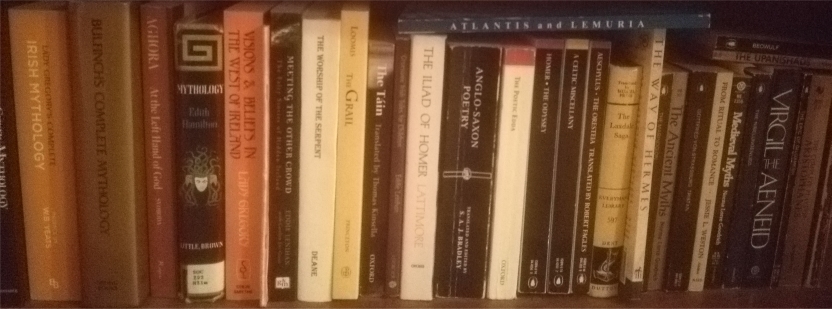
mythology book collectionSome of my books on Mythology

No matter how much background reading you do, you’re bound to run into these initiation bridges on your quest for secret knowledge. In my opinion, however, the occult adventurer is better off starting off on their quest with at least some of their homework done. If you want to become a psychologist, you need to study the history of psychology. Why should it be any different if you want to be a magician?

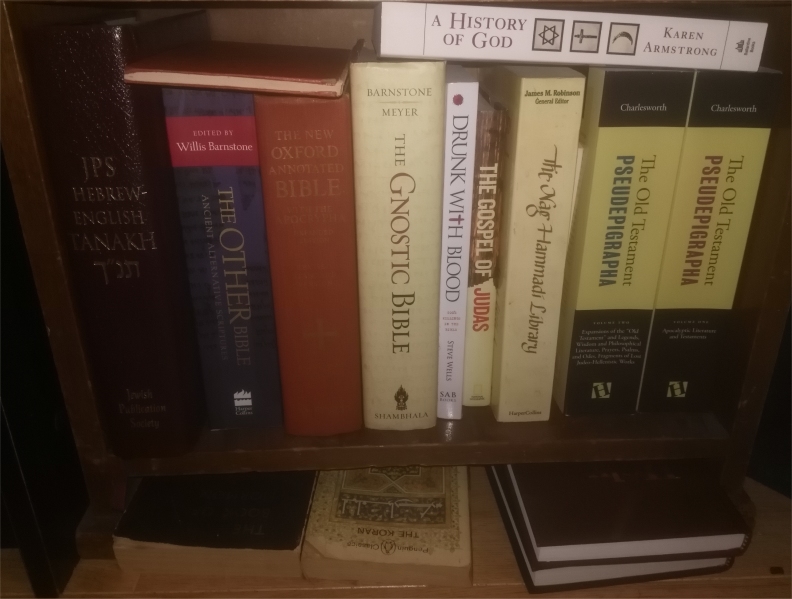
If you want to be a Satanist, please read the Bible and familiarize yourself with who Satan really is. It strikes me as bizarre that a person whose religion is named after a character from a book would not have read said book. Bizarre, but not surprising; Christians are in the same boat, with the same book. Hard copies of the Bible are widely and cheaply (if not freely) available, and it is my firm belief that every Christian, Satanist, atheist and occultist should have a copy of it on their bookshelf for reference. I have a few.

bible collection

I recently finished reading Liber Falxifer, a grimoire that I can’t imagine making much sense to anyone who isn’t familiar with Gnosticism and the book of Genesis. Indeed, it was my ruminations on that book that led to this post. Check this out:
poser occultist booksI saw this posted on facebook a few weeks ago. That collection of 6 books makes up the entirety of an individual’s library. Now look, I understand that it’s not fair to judge a person based on the number of books in their collection, but I think it is fair to judge a person based on the types of books in their collection. The books in this collection are fancy-pants hardbacks that sell individually for anything between 50 and 1000 dollars. Does expensive mean better? Can you remember the tale of the Emperor and his new clothes?

I also think it’s fair, and even important, in this situation, to judge a person based on the types of books NOT in their collection. His six books doubtlessly contain references to texts not in his possession. Does he just use wikipedia to check these references? Don’t get me wrong; I use the internet to research stuff all the time. Just remember that in this case, this person has thousands of dollars to spend on books, and it very much seems that he wants people to know that he’s a book collector. It looks like he has deliberately limited his purchases to obscure, expensive books, and as you can tell, this pisses me off. Books are for reading, not for showing off.

Yeah, ok. I am obviously guilty of showing off my book collection at every given opportunity, but at least I actually read them.

You might accuse me of jealousy, and while I can freely admit that I’m jealous of anyone who clearly has fewer responsibilities than I, I would not trade my extensive collection of trashy paperback classics for a much smaller collection of far more expensive texts. For a thousand dollars, you could buy one copy of Liber Falxifer from an Ebay auction or literally hundreds of peculiar and interesting paperbacks from library book sales and second hand book stores. Which choice is going to give you more hours of entertainment? Which choice is going to give you more knowledge?

Interestingly enough, the author of Liber Falxifer seems to agree with me on the price issue. In an interview he actually encouraged people to download pdf versions of his sold-out books rather than paying anything over the original sale price for second hand copies. I have to say, I respect him for that. The original prices for his works are reasonable for nice books put out by an independent publisher.

You see, I understand that some things are worth more than others, but just as an expensive video game is useless without a console, so too is an occult book without an appropriate amount of background knowledge. I don’t think it controversial to say that Occultism is about knowledge, and spending a ridiculous amount of money on a rare occult book does not make you a knowledgeable occultist.

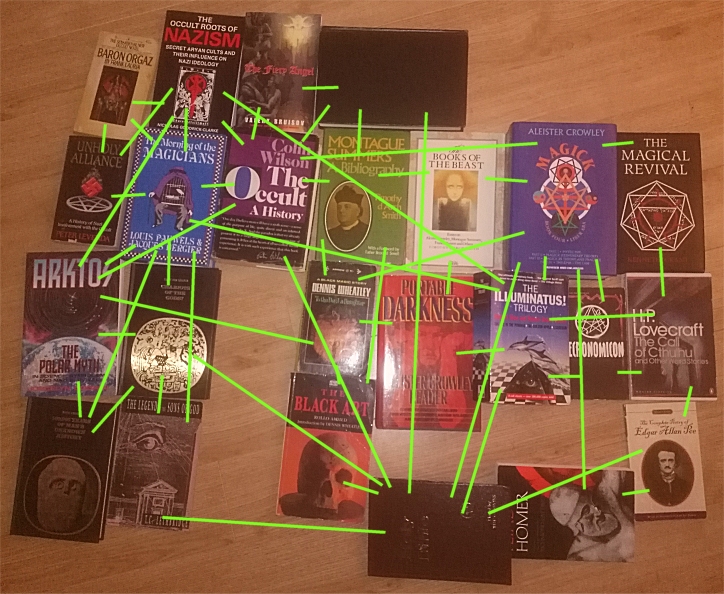
web of occult books.jpgI’m already seeing about 5 more connections between these texts.

I had an English teacher when I was in secondary school who used to say, “You can buy fashion, but you can’t buy style.” I’ve been struggling to make a very similar point as succinctly. To sum up this post then: Any fool can buy books, but true understanding of the Occult is available only to the dedicated student.

The practical value of studying the occult is a separate matter, one which I might address in the future. For now, it shall suffice to say that personally, I reckon most of it’s absolute rubbish.

To end on a positive note though, let us remember that while many texts require extensive background reading, these texts will likely also lead to further reading. One of my favourite things about reading is finding the name of some curious book being mentioned and then going out and tracking down a copy, only to find it filled with references to other curious tomes. You’re never going to run out of books to read, thank goodness.

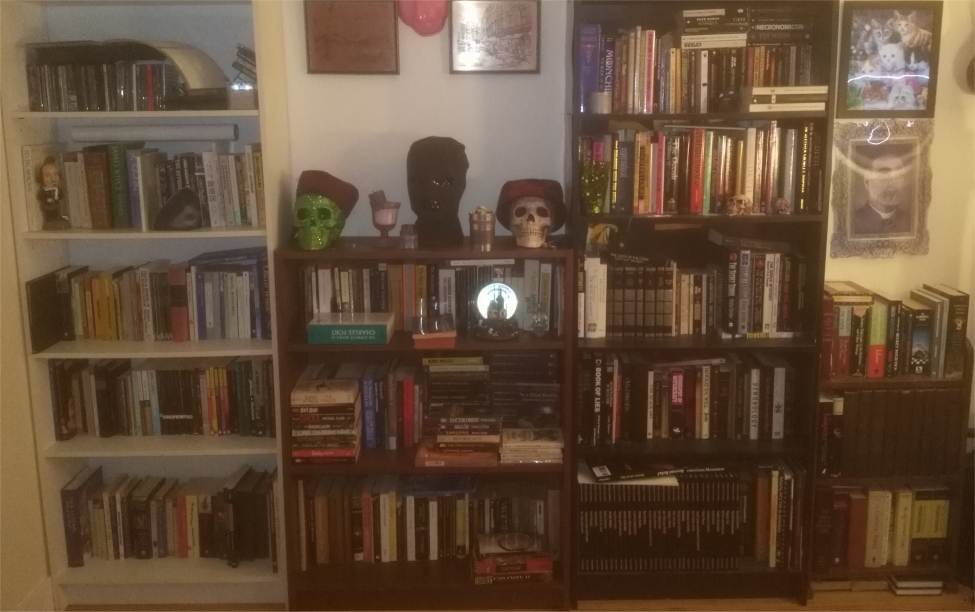
occult book collection.jpg“Not for sale. Just showcasing my collection as of 2017.”

Halloween and Satanism

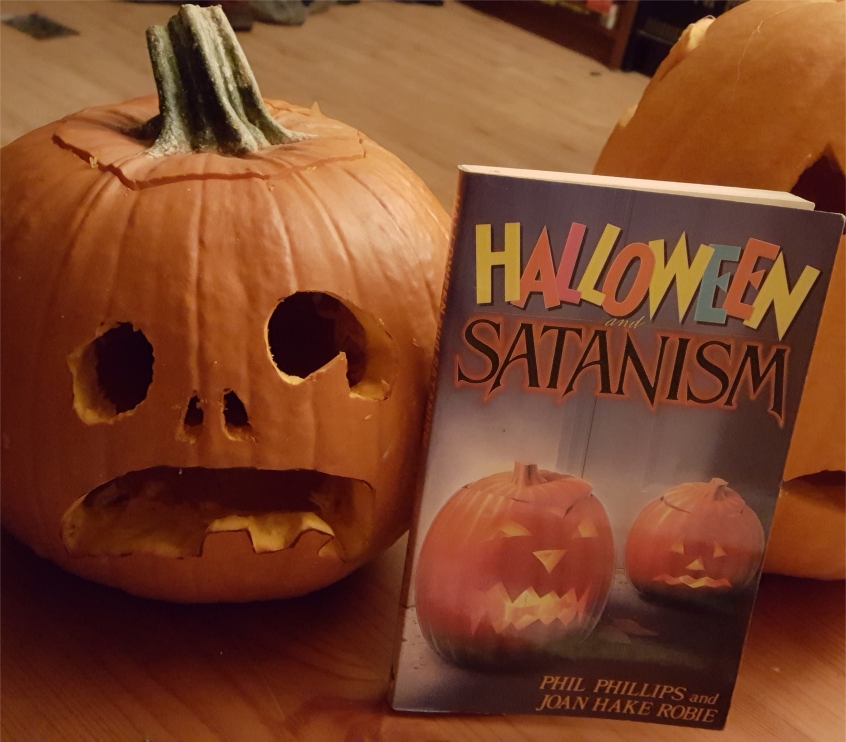
halloween and satanismHalloween and Satanism – Joan Hake Robie and Phil Phillips
Starburst Publishers – 1990 (First published 1987)

It’s been a while since I reviewed any Evangelical christian bullshit. While books of this ilk are always terrible and often palpably irritating, they are a necessary evil. The frustration that they cause serves to replenish my patience for awful, left-hand-path books about Black Magic and Satanism. The ol’ devil worship seems violently appealing when compared with this kind of idiotic christian foolishness.

Holy Jesus, this one is particularly bad too. I actually ordered it online last October, but it arrived 2 days into November, so I postponed reading it for the year. It was not worth the wait. I’m going to briefly go through the chapters, just so you can get a taste of how truly moronic this pile of shitty-shitey-farty-bummy-pooey-poo this is.

Chapter 1. The argument here is that fear is not of God; therefore, anything that causes fear intentionally (horror movies, scary costumes, etc…) is not appropriate for a christian. In fact, watching horror movies or dressing up in a costume will probably lead you into practicing witchcraft. I thought that this idea of fear being completely removed from god was fairly interesting.

Say, all my Bible nerds, can you remember what Genesis 20:11, 2 Samuel 23:3, 2 Chronicles 20:29, Nehemiah 5:15, Psalms 36:1, Romans 3:18, 2 Corinthians 7:1, and Ephesians 5:21 all have in common?
Yeah, that’s right; all of these Bible verses specifically address the necessity for “fear of God”.

Christians should not entertain themselves with scary things; the more time you spend being afraid of movies, the less time you’ll spend being afraid of god. That’s how this works, right? Makes perfect sense to me.

Chapter 2 describes the origins and traditions of Halloween. This section was a bit confusing. The text is describing ancient Celtic practices, but the accompanying images are from Disney and Hammer Horror films. There’s no distinction made between historical fact and legend. I’m sure some of what’s written in here is true, but the information is so poorly presented that it would be futile to attempt to distinguish the fact from the fiction. This issue is apparent throughout the book, and it serves to clarify that the only people who could read this book and take it seriously would be individuals completely incapable of critical thought.
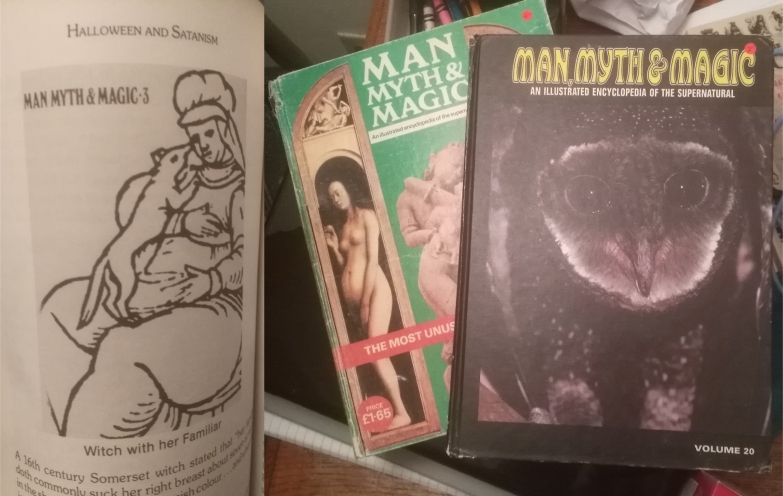
man myth and magic
Many of the images in this seriously shitty book were simply lifted from Richard Cavendish’s Man, Myth and Magic magazine series. I have a few copies of the magazine on my shelf, but I recently found that a nearby college library has the entire collection. I think I might have to spend a few days in there soon doing so some copying.

Chapter 3 talks about some animals and supernatural entities that have been linked with Halloween. It doesn’t really pass much judgement on them though. Again, the information here is a weird mix of general knowledge, opinion and fiction. This chapter, like many of the following, doesn’t really support the author’s idea that Halloween is Satanic at all. One of the images here is the cover page of a reprint of Varney the Vampire.
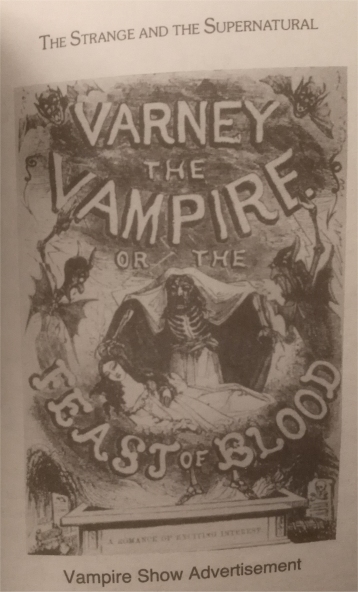
varney halloweenVarney the Vampire is a serialized novel originally published from 1845-1847. It’s a fairly well known piece of literature, and will definitely have come to the attention of anyone who has done any research on vampires. The authors of Halloween and Satanism have taken the cover page of this famous work and given it the heading “Vampire Show Advertisement”. But a book is not the same thing as show, and a title page is not the same thing as an advertisement. This is not a case of me disagreeing with the authors; this is a case of the authors publishing false information. But wait… this isn’t the worst of this variety of mistake to appear in this book. This doesn’t even come close to what pops up in chapter 7…

At the end of chapter 3, the authors suggest that their readers should celebrate “Holy-ween” instead of Halloween. This would entail prayer and dressing up as one’s favourite Bible character. Whoever made this suggestion would doubtlessly go as THE VIRGIN.

Chapter 4 is comprised of descriptions of different occult phenomena, from palmistry to necromancy. The descriptions themselves are basic and generally not condemnatory, but each one is followed by the phrase;
“You can be set free from [insert occult phenomenon here]!”
(You can be set free from Good Luck Charms!, You can be set free from Edgar Cayce!, You can be set free from Tea Leaf Reading!) The effect is generally fairly humorous. I had a hard time picturing the person whose life was being ruined by their commitment to tea-leaf reading. There’s a few irritating grammar mistakes in here too. This book was printed in September, and I imagine it had been rushed to the press to get it out in time for Halloween. I doubt it was ever proofread.

Chapter 5 is just a bunch of Biblical references chosen to support the notion that witchcraft is bad.

Chapter 6 is an awful summary of the history of witchcraft. The complete disregard for separating truth from speculation and opinion renders this fairly difficult to bother analyzing. Anyone with the patience to read a serious critique of this book would never have been capable of taking this rubbish seriously. It’s genuinely appallingly written. There’s a great bit in here about witches’ familiars, the demon-animals that witches use as servants. The authors claim that witches familiars never take the form of fish because fish are linked with christ. I would have thought that this had more to do with the fact that a fish is going to be far less useful as a servant to a human due to the fact that it lives in water. There’s very little mention of Halloween in this chapter.

Chapter 7 discusses the history of black magic and the black Mass. Again, this is awful rubbish and doesn’t really add any weight to the authors’ argument that Halloween is satanic. There’s a fairly lengthy description of a witch being tortured in this chapter that doesn’t serve any function other than sensationalizing the topic. This is objectively terrible writing.

Also included in this chapter is perhaps the most offensive part of the book.

de eewige joodEvangelical christian propaganda vs Nazi propaganda.

This image of an evil looking man, titled “Satanic Symbol” is thrown in the middle of a section about the Black Mass. This “Satanic Symbol” is actually the movie poster for Der ewige Jude, a repulsively anti-Semitic 1940 film produced for Joseph Goebbels, Nazi Germany’s Minister for Propaganda. The title is still on the poster too. How the fuck did nobody notice this? Either Joan Hake Robie and Phil Phillips didn’t give a fuck about what they put in their book, or they deliberately used an image that the Nazis used in their attempts to dehumanize Jews. Either way, this is a shameful mistake to have made. I’m not easily offended, but when you sit down and think about what’s happened here, it is actually disgusting. They have literally used one of the vilest and sadly, most effective pieces of Nazi propaganda to push their moronic agenda. What a fucking disgrace. They really should be ashamed of themselves.

At this stage, I was getting a bit fed up with this book. The next chapter discusses modern day witchcraft and magic. Nothing of note here.

Chapter 9 gives some satanic terminology and rituals. It actually contains large chunks of text from LaVey’s Satanic Rituals. I wonder if they were given by permission by the Church of Satan… Also included here is a warning to parents to look out for Motley Crue or “Ozzie” Osbourne records in their children’s rooms.

Chapter 10 is weird. It gives accounts of people who played with the occult and suffered because of it. One of them ends up getting attacked by a werewolf Jesus. Utterly stupid.

Chapter 11 is comprised of different news stories. There is mention of the cancellation of a Mercyful Fate concert in Norfolk, Virginia. That must have sucked for Norfolk. I checked it out, and that show was indeed cancelled (although King Diamond played a set in the same venue 4 years later). The rest of these news stories are about kids turning satanic after playing with Ouija boards.

The last 3 chapters wage war on Satan without being very clear on how to achieve victory. There’s some cringey sections in which the authors quote their favourite get-rich-quick, motivational speakers. Unsurprisingly. there’s no brilliant conclusion to tie up all the loose ends into a coherent argument against Halloween.
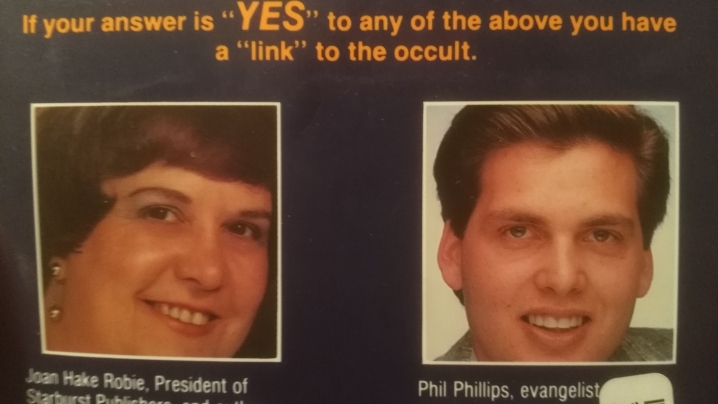
phil phillips joan hake robieThis is a “picture” of the “authors”.

I think that an intelligent person could very easily write a book about why Christians should reconsider how they celebrate Halloween, but I also doubt that any intelligent person would waste their time doing so.  Halloween and Satanism was clearly not written for intelligent people. This is sensational, incoherent garbage that only the most dangerously stupid idiot could take seriously. It’s misleading, it’s untrue and it’s legitimately offensive. Fuck this shitty book.

My life is extremely busy at the moment, and I actually wrote this review in September to make sure it would be ready for Halloween. In the meantime, I did a little internet sleuthing to see if I could track down either of the authors. I found Phil Phillips’ twitter account, and to my surprise, he seems to have dedicated a lot of his time to helping people, especially kids, in parts of Africa and Asia. He is a Trump supporter (no surprises there), but the guy is definitely not an out-and-out racist. I’d be willing to bet that the Nazi imagery included his book wasn’t included with the intent to sow the seeds of the fourth reich. With this in mind, I reached out to Phil and asked him for an interview.
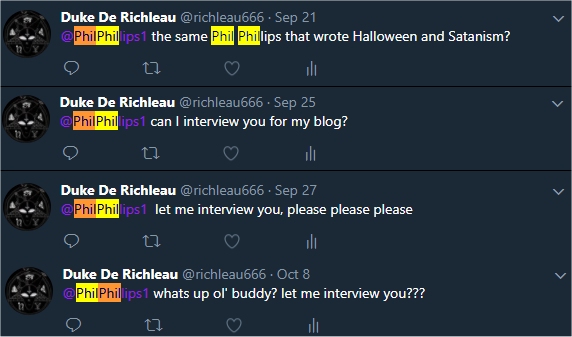
tweets to phil phillips
These are the only messages I sent. Friendly and polite, no?

Now look, I know that I’ve written some nasty things about books and authors, but I’m not a complete piece of shit. If a person is willing to take the time to talk to me, I’ll be respectful, friendly and polite, regardless of our differences. The reason I wanted to interview Phil Phillips was the fact that I hated his book but thought I saw goodness in him. I hoped to use that goodness as a bridge between our differences so that we could better come to understand each other’s point of view. It was not to be.

blocked
I thought this was a bit of an over-reaction to be honest. I wanted to give the guy a chance to respond to my criticism of his work. As things stand, I can only presume that he’s aware of the shortcomings of his terrible book and doesn’t want to embarrass himself further by talking about it. Fair enough Phil, but you didn’t have to block me. I wasn’t remotely unpleasant to you.

Ok, all that being said, the big day is almost here. I’ve already carved my pumpkin and filled my phone with Misfits and Type O Negative albums. This is going to be my first Halloween as a dad too, and I’m going to initiate my baby girl into the cult of Satan by dressing her up as a cute little witch and taking her to the trick-or-treat party in our apartment building.
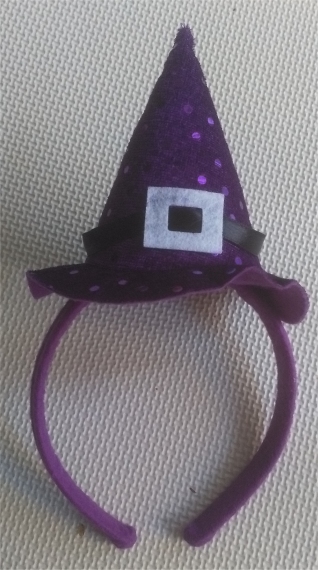
witch hat baby

I encourage you all to watch scary movies, listen to heavy metal and worship at the altar of Satan this Halloween. Keep it spooky and have a good one!
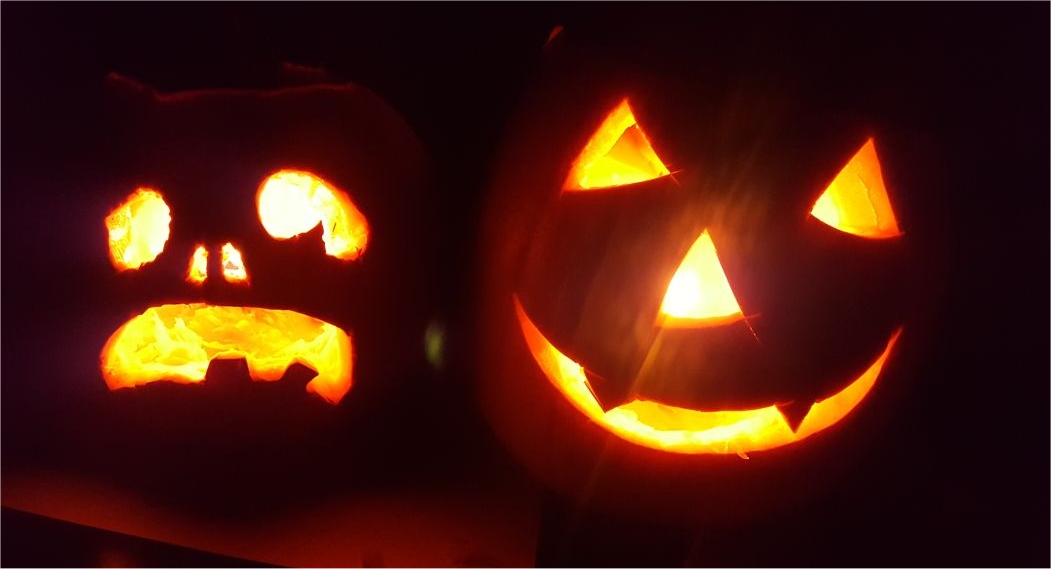
pumpkins

The Paddling of the Swollen Ass – Francis King’s Secret Rituals of the O.T.O.

secret rituals of the oto francis kingThe Secret Rituals of the O.T.O. – Francis King
1973
I’m a member of a few different book related groups on Facebook. A few weeks ago, I saw a man post a link to the ebay auction for his copy of Francis King’s The Secret Rituals of the O.T.O. Within moments, other users of that group had warned him to take the ebay listing down and to try to sell it privately instead. They claimed that the O.T.O. would file a copyright claim to have the ebay auction cancelled. Sure enough, the ebay listing was cancelled less than 6 hours later.

I knew the O.T.O. (Ordo Templi Orientis) was originally a German secret society that Aleister Crowley had commandeered at some stage, but I had no personal interest until I saw that they didn’t want people to read a particular book. Nothing is quite as appealing as that which is forbidden, and I immediately determined to read said book.. Unfortunately, copies of this curious text sell for anything between $250 and $1300.

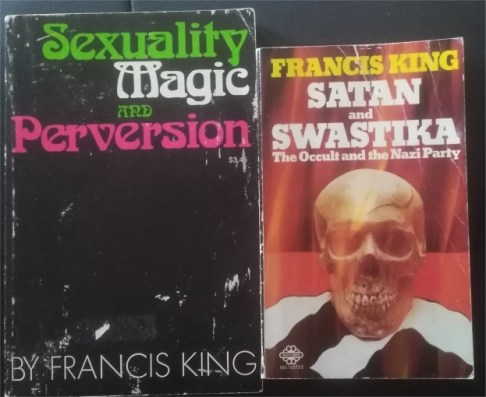
francis king sex satan swasticaThese are the only books I own by Francis King. It can’t be denied that he had a real talent for choosing appealing titles.

Luckily for me, it took about 5 seconds to find the text of Secret Rituals online. It seems rather silly that the O.T.O. would bother filling out the copyright claim against an ebay auction for a single, very expensive copy of the book that’s going to end up wrapped in plastic on some nerdy collector’s shelf when the same exact text is freely available to anyone with access to the internet. Let it go lads. The more you fuss over it, the more people are going to want to read it. I can honestly say that I would never have bothered reading this garbage if not for your hullabaloo.

And this is the thing; the content of this book is actually rather boring. There’s a small biography of the O.T.O. at the beginning, and the rest of the book is taken up with the different initiation rituals. I’m not going to discuss what they entail because I don’t want the O.T.O. to file copyright claims against me, but I will say that there’s nothing all that interesting. You know all the silly ceremonies the Mason’s go through? This is the same crap, only a bit more Templary.
secret rituals of the oto

Members of the O.T.O. have claimed that the documents herein are imperfect draft versions of their rituals. King supposedly got them off some collector and stuck them together in a book without really asking permission. Others have pointed out that these rituals don’t make any sense without another document, De Arte Magica. The best part about this omission is that De Arte Magica was later printed in full in Scott Michaelsen’s Portable Darkness with the O.T.O.’s permission. (It’s also available online.)

oto lamen.jpgAll in all, the controversy surrounding this book is far more alluring than its contents. I wouldn’t recommend reading it, but can’t deny that doing so was moderately satisfying.
.

crowley liber cdxv paris workingLiber CDXV – Opus Lutetianum or The Paris Working – Aleister Crowley
1914

It’s no secret that the O.T.O. teaches sex magic. I was doing a bit of research on the ol’ sex magic after reading their secrets, and I came across Liber CDXV – Opus Lutetianum or The Paris Working. This is basically a magickal diary kept by Aleister Crowley during a lengthy sex magick ritual that he was practicing with his mate Victor Neuburg. This ritual is the basis for the story of Crowley told by the Canon Copley-Syle in Dennis Wheatley’s To the Devil a Daughter and again by Wheatley in his The Devil and all his Works. The story tells of Crowley going mad and his son (who never existed) dying in an attempt to evoke Pan. What actually happened was that Crowley and Neuburg took a bunch of drugs and bummed the arses off each other. Fair play.
Read the cryptic account of their drugged-out bumming frenzy here.

This has been my third post in a row relating to Aleister Crowley. Kenneth Grant led his own branch of the O.T.O., and The Magical Revival discusses sex magic at length, even briefly mentioning Crowley and Neuburg’s tango in Paris. The Aleister Crowley Scrapbook shys away from elaborating on any of the truly lurid details of Crowley’s practices, but it does suggest that his poetry might be a good place to look if one was interested in that kind of thing. My own suggestion would be to read Crowley’s poem, Leah Sublime. It’s a love poem to one of his girlfriends, and it contains the lines;

“Shit on me, slut!
Creamy the curds
That drip from your gut!
Greasy the turds!
Dribble your dung
On the tip of my tongue!”

He did actually eat her poos in real life too, and that’s not even nearly the worst of it. Leah Hirsig was the woman that had tried to have sex with a goat for one of Crowley’s rituals. When the goat wouldn’t fuck her, Crowley slit its throat and let it bleed all over her.

Hopefully it will be a while before I post about this Crowley scumbag again. I feel like it’s time to read some fiction. My life is a bit hectic at the moment too, so posts here might be a bit more sporadic for a while.