Lords of Chaos and Unholy Forces of Evil!

lords of chaos coverLords of Chaos – Michael Moynihan and Didrik Søderlind
Feral House – 1998/ 2003

I thought I’d better review this before the movie comes out. It’s a book about the Norwegian heavy metallers who went mad in the early 1990s and burned a load of churches and killed some people. I hadn’t bothered reading it before because I presumed (fairly accurately) that I knew the story already. That being said, this book was written in 1998, and I didn’t become interested in this kind of crap until about 5 years after that, so it is quite likely that some of my knowledge of the history of Norwegian Black Metal came indirectly from this text. If you were unfamiliar with the story of “the bloody rise of the Satanic Metal underground”, I’d imagine some of this book would be fairly shocking.

The first third of the book, the part that outlines the history of the Black Metal movement, was pretty good. Regardless of whether you know the story or not, some of the interviews in here are very entertaining. At one point, Varg Vikernes seems to suggest that he murdered his friend because one of their mutual friends had been snooping around this lad’s bedroom and found “a dildo with shit on it”. There’s lots of cool pictures in here too (Unfortunately, none of them are of said dildo).

After that, the book gets bogged down in fairly boring chapters about pyromania, the Church of Satan and right wing extremism. The pyromania chapter seems like filler (Varg agrees), and the Church of Satan chapter is clearly only included because the author knew LaVey. The stuff on the fascistic elements of black metal is quite tedious. Lots of people have claimed that the focus on far-right politics in this book tells more about the author’s political interests than those of the entire Black Metal scene, and I reckon there’s some truth in this idea. Moynihan is a notorious edgelord.

I initially read the 1998 edition, but when I found out that the 2003 reissue contained a chapter on Varg’s theories about Nazi aliens (and more), I had to track that one down too. It was worth it. It’s interesting to see how much things had changed in those 5 years. Now, 20 years after the book was originally published, almost 30 years after the events it describes, Black Metal has turned into something bigger than any of its progenitors could have reasonably imagined. Let’s be honest though; most of it is cringeworthy muck. It’s such a conceptually ludicrous genre that there’s no real room for mediocrity. Any Black Metal band that isn’t exceptionally interesting is going to be embarrassingly shit.

And even some of the most important bands within the genre are surprisingly crap. I remember the first time I heard Burzum. My friends and I had recently heard tell of these crazy Scandinavian bands who killed and ate each other, and we spent the best part of an evening downloading a Burzum track over a dial-up connection. We were all pretty excited when the download reached 100%, but our excitement dispersed as soon as we heard Varg’s feeble shrieks over the thin sounding guitars. We all thought that this was one of those mislabeled mp3s that were so common on Kazaa at the time (you’d download a song labelled “Pantera and Metallica” and end up with a country blues track), and it wasn’t until we had downloaded a second awful track that we could confirm that yes, this weak sounding garbage was supposed to be the most evil music on the planet.

Fortunately, this book does a decent job of highlighting the insular (and puerile) nature of the genre’s origins. Black Metal (or the second wave of Black Metal if you want to be pedantic about it) started off as a small group of teenagers (and immature young adults) who got carried away with a game of unholy one-upsmanship. Don’t get me wrong; I’m delighted that they burned the churches, but after reading the interviews in this book, I got the sense that the real motives in some (if not most) of these crimes were peer pressure and the teenage desire to show off to one’s friends. Hey, whatever though; it got the job done.

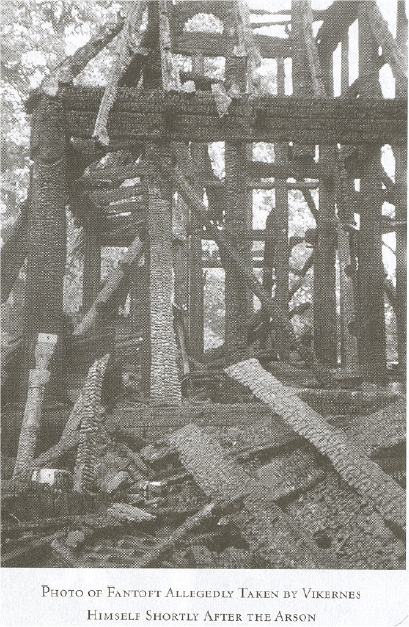
fantoft church burned vargBoys will be boys!

I have a thousand things to say on the topic of Black Metal, but this is a book blog so I’ll keep them to myself for now. Initially, I wasn’t even sure if this book belonged on this blog, but all things considered, I reckon it contains more than enough Satanism to warrant its inclusion. The Satanism of early Black Metal is the most childish, boneheaded and ultimately best variety of devil-worshipping Satanism that exists.

I’m entirely sure the upcoming movie version of this book is going to provide limitless angry responses from the Black Metal community, regardless of how good it is. I’ll probably download it to see what all the fuss is about.


Twisted – Sue Hollister Barr

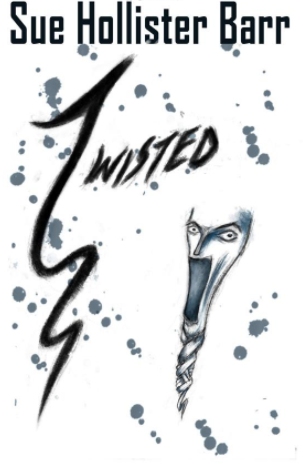
sue hollister barr twistedTwisted – Sue Hollister Barr
BMI – 1992
Twisted is, perhaps, the worst novel I have ever read. It is boring, disjointed, stupid and pointless. In an interview, the author herself referred to this novel as a “fucking piece of shit” and admitted that it’s padded with “formless, utterly embarrassing mush.”

This is a book about a group of hippies who find themselves travelling across America in a van together. On their voyage, they realise that they were all family members in a past life. The Carnes, the family they belonged to, were particularly dysfunctional, so dysfunctional, in fact, that their issues start to bleed into their next lives.

Here are the problems with this book:

  1. The plot makes no sense. The characters are thrown together in a frustratingly lazy way. I get that the author wanted to capture the care-free, happy-go-lucky atmosphere of the flower-power generation, but the idea of a group of 10 random hippies abandoning everything in their lives at the drop of a hat to form a band and travel cross country is dumb and cringey. As the book goes on, it becomes apparent that they were actually drawn together by some paranormal force, but that makes no sense either. Is it the wickedness of the Carnes or their family ties that brings them back together in their next lives? Either way, the reader is expected to swallow a remarkably narrow version of reincarnation.
  2. There are far too many characters in the book. They’re all dull, dislikable stock characters; there’s the junkie, a token black guy, the crazy one, the witchy one, the gay one… Also, each of the 10+ main characters has at least two alter-egos. The only remotely enjoyable part of the book was when they die.
  3. “Far out! Like, the dialogue is totally excruciating, man.”
  4. The author seems unsure as to what horror is. Some scenes are surprisingly gory, but this is basically a shitty thriller that is confused by the ridiculous paranormal element of the plot. Yes, there is an element of the supernatural here, but it adds absolutely nothing to the suspense of the story. I honestly believe that this book would have been much more tolerable if it was a more straight forward murder-mystery. The author has acknowledged that she was not a horror fan at the time of writing the book and that she only wrote this book for money. She admitted, “When I was teaching writing, I would tell my students that the one genre I couldn’t cover was horror.  I morally objected to it.  I thought it was sick and I’d never read it.” Ugh. How annoying! I am absolutely convinced that I could write a far better horror novel than this.
  5. Twisted is poorly written. Not only is the plot stupid, it’s also poorly executed. The narration goes back and forth in time and flips between the perspectives of the 20+ characters. The stuff in between the murders is horrendously tedious too. Absolute garbage. The author has admitted that the publishing company demanded an extra 50 pages to be added to the book after she had submitted it. I honestly believe that her first submission was probably a lot more enjoyable.
  6. The cover is pretty cool but very misleading. There is no angry green twisty man in the book. Also, the tagline “The Sins of the Father Never Die” is dumb.

I actually feel a bit bad about this review. I don’t have any qualms about attacking the work of non-fiction authors because non-fiction should be able to withstand attacks, but attacking the product of another person’s creativity (that is being presented as such) feels a bit mean, and as far as I can remember, this is the first time I’ve really done so on this blog. Then again, this book was so bad that I feel that I would be doing the world a disservice by not expressing how terrible it is. The fact that the author has also admitted that the book is awful makes me feel a little better. As a matter of fact, she was so unhappy with it that she actually self published a new, apparently much-improved, edition of the book a few years ago. I definitely won’t be checking it out, but it probably is better than the edition I read. The edition that I have comes from BMI books, a scam company that was apparently created so that the publishing house could get out of paying the authors any royalties, so if for some reason you were curious about reading Twisted, I would suggest buying the new edition.

twisted new cover

The new edition also has a much improved cover; the angry green face on the original edition has transformed into a surprised shoelace. Priceless.


The Doctor Orient Series, Books 1-4

baron orgazIn March 2016, I was working just around the corner from my house. I came home at lunch one day, and as I was sitting down, waiting for the coffee to brew, I checked facebook. Will Errickson had posted a photo of a book featuring the above image on its cover. Let’s just take stock of the elements in that picture: a skull, some ritual candles, a semi-naked woman and a swastika. Needless to say, I had ordered a copy of the book, the intriguingly titled Baron Orgaz, before I had poured my coffee.

It was only after ordering that I realised that this book was part of a series. Now, as my readers well know, I don’t like starting halfway through, so I spent a few weeks tracking down copies of the preceding books in the series. By the time I had got through the first novels and was finishing Baron Orgaz, I had ordered the rest of the collection.

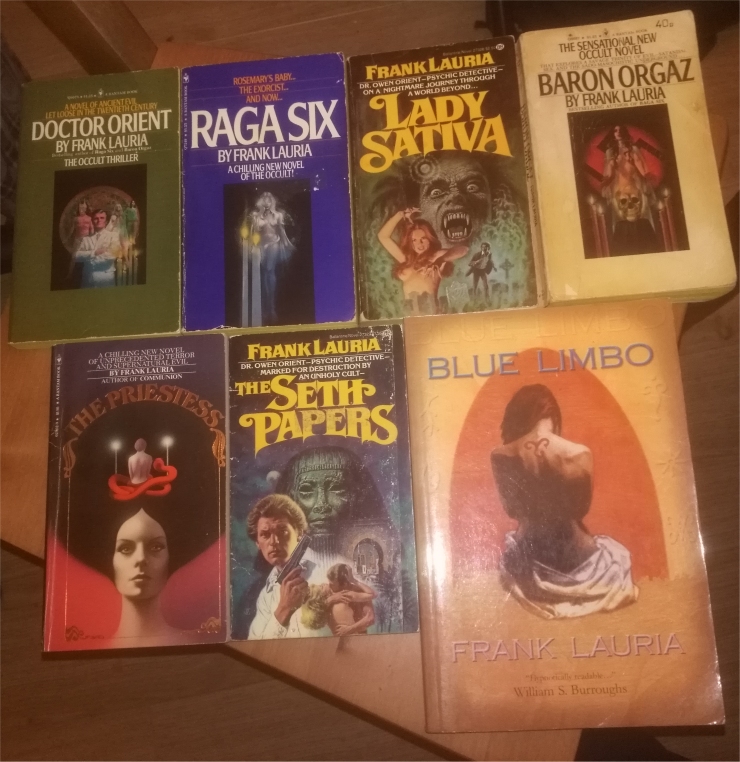
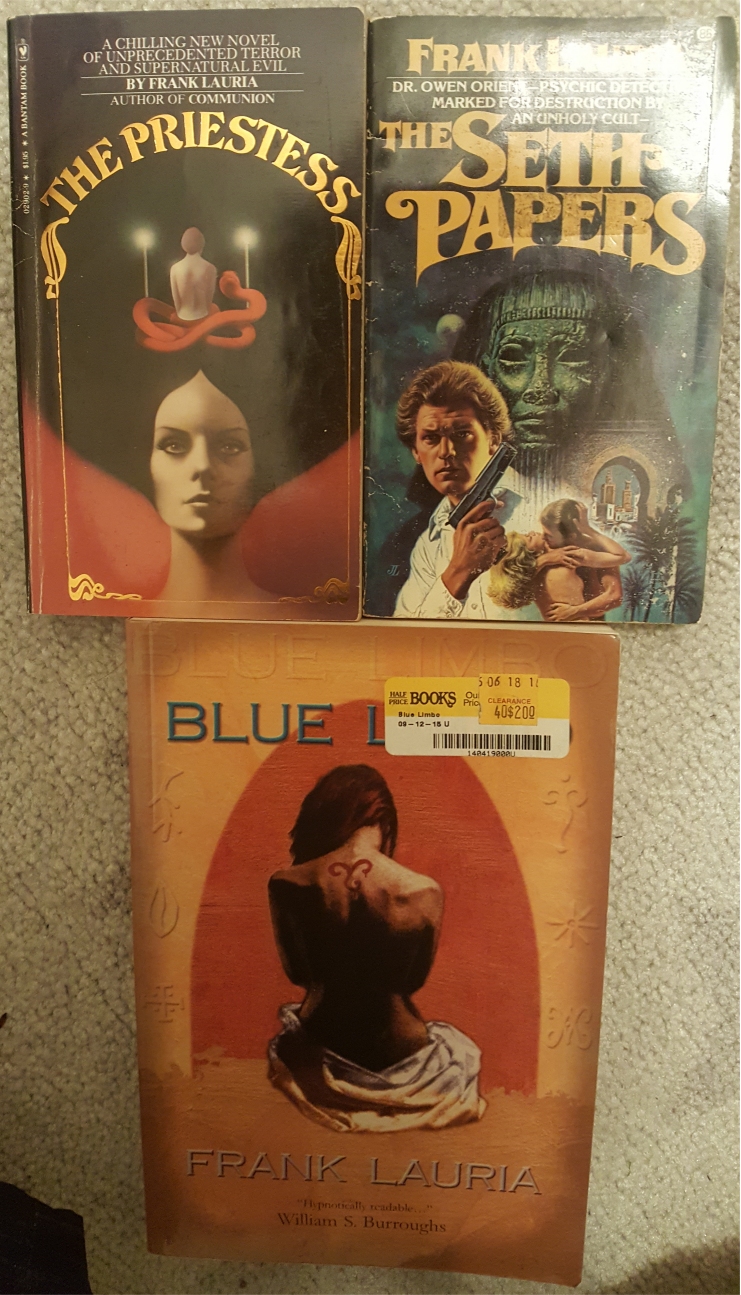
doctor orient books

I’ve hemmed and hawed about publishing this post for a few months. I was considering finishing the entire series before posting, but I have a lot on my hands at the moment, and it’s going to take me quite a while to get through the remaining four novels. Here, then, are my thoughts and feelings on the first half of the Doctor Owen Orient series.

doctor orient frank lauriaDoctor Orient – Frank Lauria
Bantam Press – 1974 (Originally published 1970)

The first Doctor Orient novel seems to be a little harder to come by than some of the later entries in the series. While quite entertaining, it isn’t, in my opinion, quite as good as the books that follow it. Then again, if you were to imagine the series as one extremely long novel, this would serve as good introduction. You get to meet several of the characters who are going to pop up in later installments.

The most obvious point of comparison here would be the Devil Rides Out by Dennis Wheatley. Both books are about crime fighting occult experts doing battle with a black magician. The Duke De Richleau and Doctor Orient are both aided on their adventures by a motley crew of accomplices, one member of each group being temporarily led down the left hand path. The biggest difference here is that Doctor Orient is far less hesitant to use his own psychic powers than De Richleau.

The antagonist in this novel is a dodgy lad called Sesuj. He tries to use pop music as a form of mind control to bring young people over to Satan. Pretty cool stuff.

raga six frank lauriaRaga Six – Frank Lauria
Bantam Press – 1972

Raga Six impressed me. It kicks off with a pair of weirdoes who seem to be going for fairly similar approach to Susej from the first novel, but this turns out to be a false start. The real adventure kicks off when Doctor Orient starts working for a drug peddler named Cowboy and ends up in exile after a particularly sketchy transaction. He meets a really dodgy lad on a boat to Tangier and has a threesome with this chap’s wife and a model. People start dropping off, and you get the idea that there’s at least one vampire involved.

Given that this is a book filled with sex and the undead, the writing is surprisingly good. The Doctor is a sensitive man at the best of times, and I enjoyed the existential crises that he goes through in this book. I was kept guessing right until the end of the novel too. It took me 5 months to start on Raga Six after finishing the first novel in the series, but it only took me 6 days to move onto Lady Sativa after finishing it. Raga Six might be the best known entry in the series.

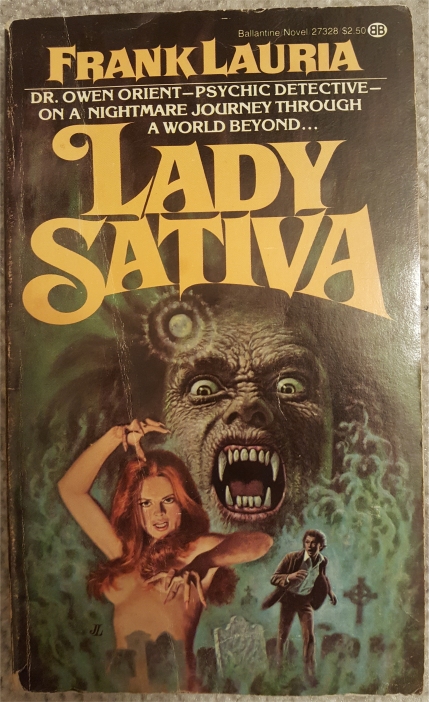
lady sativa frank lauriaLady Sativa – Frank Lauria
Ballantine Books – 1979 (Originally published in 1973)

This one is about werewolves. It had all the sex, seances and outdated slang that I’d come to expect from a Doctor Orient novel. It contains one scene in which an irritable Doctor Orient unwittingly invites himself to a threesome. Once he finds out that another male is going to be involved, he violently assaults said male and calls him a “Gaylord”. LOL. I was expecting this one to go in a similar direction to Raga Six, but it doesn’t really. A solid entry.

baron orgaz frank lauriaBaron Orgaz – Frank Lauria
Bantam Press – 1974

Nazis, extreme sadomasochism, black magic and tennis… Really, need I say more?

Well, the only other thing that might be worth mentioning is that this very much is the fourth book in a series. While a person might well be able to enjoy the work entirely on its aforementioned merits, most of the main characters have previously appeared and played important roles in the series, so I would strongly recommend reading the first 3 books before this one.

doctor orient later books
I have these ones too, but I haven’t got around to reading them yet. Not pictured is Demon Pope, the last book in the series.

Overall, the Doctor Orient series is awesome. There are loads of cool little references to actual grimoires and conspiracies scattered throughout these books. The author, Frank Lauria, knew William Burroughs and Jack Kerouac, he sings in a rock band, and he’s not a fan of Donald Trump. Also, his books are filled with sex, drugs, rock’n’roll and devil worship. Deadly. I’m looking forward to reading the rest of this series.

2019 Edit: I finally got around to reading and reviewing the second half of this awesome series.

How now, you secret, black and midnight hags? The Demonology of King James I

macbeth demonology jamesThe Demonology of King James I – Edited by Donald Tyson
Llewellyn Worldwide – 2011 (Originally published 1597)

King James (yes, the Bible lad) was a dirty cunt. Not only was he the British monarch responsible for the plantation of Ulster, he was also an insane person who thought that the devil was on a personal vendetta against him. His ludicrous beliefs led to changes in the anti-witchcraft laws of his day, and these changes were responsible for the deaths of hundreds of innocent people.

It all started when the boat that was carrying his fifteen year old Danish bride to England was caught in a storm and forced to stop off in Norway. He decided to head over there himself to escort her home, but along the way he also encountered shitty weather. After meeting his child wife in Norway, the couple headed back to Denmark, where James heard tell that two witches had confessed to causing the storms that had hindered him so.

When he got back to Scotland, he heard stories about local witches that had originated in the confessions of a woman named Gillis Duncan. Gillis was a maid who had been spotted leaving her master’s house during the middle of the night. The master of the house was upset by this and he took it upon himself to torture poor Gillis until she admitted that she was a witch. Her confessions implicated dozens of others, and this led to the North Berwick Witch Trials that were recounted in the 1591 pamphlet titled Newes from Scotland.

6 years later, James wrote his Daemonologie (or Demonology). It’s a treatise in the form of a Socratic dialogue on the existence of witchcraft, and, in truth, it’s very boring. James firmly believed in the existence and absolute guilt of witches, and while he was certainly well read, his reasoning is tedious, flawed and often ridiculous. The text is filled with all of the Biblical references and victim shaming that you’d expect from a witch hunting manual. James believed that God would not allow innocent people to be punished for witchcraft, so it was better to accuse too many than too few. Take a moment there to think about how horrible and dangerous that idea is… All together, Jimmy comes across as an arrogant, know-it-all, dickhead, and reading this text was a pain in the neck.

daemonologie

That being said, this edition of the work, translated, compiled, edited and introduced by Donald Tyson is really nice. It includes both the original and modernized versions of Demonology and Newes from Scotland, and the annotations are very comprehensive. I’ve seen other, fancy hardback editions of Daemonologie, but this is definitely the one I would recommend for anyone who actually intends to read and comprehend the text. I’m planning on reading more of Tyson’s work in the near future.


I’d like to think that this won’t have been the first story of witches fucking over the king of Scotland that my readers have encountered. James had been King of Scotland since 1567, but he was coronated King of England in 1603. It was three years after this that Macbeth was first performed. James was supposedly a patron of Shakespeare, and some people believe that Shakespeare actually wrote Macbeth for King James. James apparently believed that he was a descendant of Banquo, and although Banquo meets with a grisly end, you’ll remember that his descendants ascended the throne and ruled for generations.

When it comes to the history of horror fiction, I don’t think too much attention can be paid to Macbeth. It’s filled with decrepit castles, frightening visions, witches, ghosts, demonic apparitions, murder and evil. Also, it’s difficult for the modern reader to imagine just how scary this play would have been to an audience of people who were completely convinced in the existence and power of witches. It’s literally my job to babble on about Shakespeare, and because I don’t yet get paid for writing this blog, I’ll hold off from saying much more about him for now.

osculum anus holeKiss the Ring

I expected my life to calm down a bit after Christmas, but I feel like I’m busier than ever now. Hopefully I’ll get a few more posts out soon.

Frankenstein’s 200th Birthday

shelley frankenstein 1818Frankenstein (1818) – Mary Shelley

Not really sure where to start or what to say with this one. Published 200 years ago today, Frankenstein, or the Modern Prometheus is one of the most important horror novels ever written. It’s also one of my favourite books. I first read it years ago, but that edition was the more widely published 1831 version of the text. After finishing the book, I read that the original 1818 text was in some ways better or more authentic or something. I ordered a copy, but it remained on my bookshelf for so long that when I finally picked it up and read it, I couldn’t tell how it was any different. You can find the differences discussed elsewhere online, but I can only say that I enjoyed both versions immensely.

I recently reviewed and complimented Percy Byssche Shelley’s Zastrozzi for it’s eponymous villain. Mary’s monster is, in ways, just as diabolical a fiend as her husband’s, but he is a hundred times more tragic. He’s simultaneously more and less human than Zastrozzi; he may not have been created in God’s image like the rest of us, but his plight is nonetheless relatable. Who amoungst us has not, at some stage in their  hateful lives, looked towards the heavens with dismay in their hearts and cursed God for creating man only to abandon him immediately thereafter? Is this tale not a parable for all human existence? Victor Frankenstein, the creator, is very much the villain in the 1818 text. He’s the idiot that brought the monster to life and then failed to take responsibility for his actions.

This is a great story and an exciting read, but it’s also one that makes you think. What do Frankenstein and his monster represent? Is the book an existential metaphor? As it is perhaps the first science fiction novel, what can Frankenstein tell us about its era’s feelings about scientific advancements? What messages should modern scientists developing A.I. take from this tale? Let’s also remember that Mary Shelley’s mother was one of the most important feminist thinkers in history. Can we reasonably avoid analyzing this text through a feminist lens? Could Frankenstein’s monster represent the corrupted femininity created and enforced by Georgian males? It’s rare that a horror story will raise as many interesting questions,but fortunately for you, I won’t attempt to answer any of these questions here; I’ll leave that to the high school students fortunate enough to read this book in English class.

I have finally reviewed all of the books from Paul Murray’s list of the greatest Gothic novels. I don’t think it was a very accurate list at all. Anyways, have a good new year.

IMG_20171225_103836.jpg(I didn’t have my copy of the book handy when this post was first published, so I drew this little picture of Frankenstein’s monster for the post image.)

Video Nasty and Year in Review (2017)

2017 was a pretty good year for me. I got a much better job, became a dad and went back to university (again). These changes, while mostly enjoyable, meant that I didn’t get to review or read as many books as I have in the last few years. However, I feel that the quality of this year’s posts has been of a decent standard. Here’s the best of 2017.

liber falxifer10. Liber Falxifer 
A heavy metal grimoire of dark black magic.

halloween and satanism9. Halloween and Satanism
Anti-Semitic Christian bullshit propaganda for assholes.

tarry thou till i come croly8. Tarry Thou Till I Come 
Including it here because, as far as I know, this is the only review of this book online. The tale of the Wandering Jew.

arktos joscelyn godwin7. Arktos
Some bullshit about Donald Trump. A very cool book.

holy-blood-holy-grail6. Holy Blood, Holy Grail
Jesus had a kid, and Hitler was a descendant of Dracula.

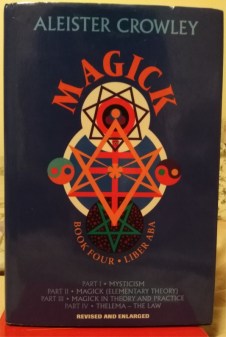
crowley book 45. Aleister Crowey’s Law and Lies
Getting to grip’s with Aleister Crowley’s bullshit.

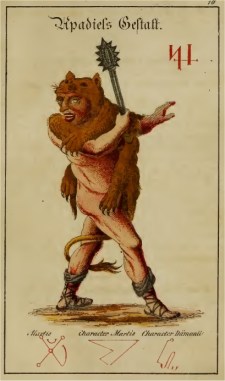
faust demon 144. The Books of Faust
This one took a lot of work.

red book of appin scarabaeus3. The Red Books of Appin
Myth busted.

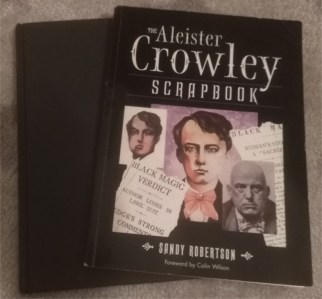
the aleister crowley scrapbook2. The Aleister Crowley Scrapbook
An interview with a Crowley expert.

robert anton wilson the sex magicians1. The Sex Magicians
My contribution to the conspiracy theories about the conspiracy theorist.

Well, there you go: Nocturnal Revelries’ best of 2017. (Just to remind you, as with last year, the links in this post are to the best posts of the year, not the best books that I read.) This blog has been going for nearly 3 years now, and I’ve reviewed about 170 books so far. I recently added an index page to the site in case anybody is looking to see if I’ve looked at a specific book or author.

Thanks for all of the support and interest. Remember, this blog has twitter and facebook pages to help keep you up to date with my ramblings. I’ve a few posts planned for the near future, but who knows what’s going to end up featured here in 2018. I’m going home for Christmas for the first time in years too, so I doubt I’ll post again until January. As always, you can email me with recommendations, questions, comments or threats. If you currently work in retail, know that my heart bleeds for you. For everyone else, enjoy the time off work, and don’t forget to go to mass on the 25th.

The Conspiracy Against the Human Race

conspiracy human race ligotti
The Conspiracy Against the Human Race – Thomas Ligotti

2010

I saw this book recommended on a forum a few years ago and put it on my to-read list. A while later, I saw articles online about how the writer of the first season of True Detective had ripped it off. I loved that show, particularly the parts that were supposed to have been taken from this book, so this made me want to read it even more. It only took about 4 years for me to work up the courage to pick it up. I had a pretty good idea of what it was going to contain, but it wasn’t its infamous negativity that was putting me off, it was the fact that it is a book of philosophy.

I don’t like reading philosophy anymore. I occasionally pick up some Plato just for the fun of it, and I have been known to giggle at Schopenhauer and Neitzsche’s aphorisms, but I’m not really interested in their fiddle-faddle arguments about the will and all that crap. I don’t mind a philosophical novel, but books of pure philosophy often seem to require more effort than they’re worth.

That being said, there were a few things about this book that made it seem more appealing than other works of philosophy. It was written by a writer of horror fiction, and the philosophy it propounds is one of extreme pessimism, so it’s basically doom metal in the form of a book. For some reason, probably December’s festive cheer, I decided to inflict it upon myself last week.

Alright, so the main idea here is that consciousness makes life so unpleasant that it would be better not to live. I followed the author’s arguments, but they haven’t really changed my outlook on life. Maybe it’s the fact that I knew this guy is a horror writer and all of the references to Lovecraft in the text, but I couldn’t help but feel that the reality that he was writing about was a slightly different reality to the one I live in. As interesting as his arguments are, I was able to forget about them immediately after putting the book down in much the same way that I forget about the slime creatures from Stephen King stories when I go grocery shopping. In fairness to Ligotti though,  he does reference this as an inevitability of the horror of existence. If we were not able to distract ourselves and stop thinking about these issues, we’d probably all kill ourselves very quickly. Ligotti’s arguments are convincing; yes, we are fucked, but they’re not particularly effective; we’re fucked, but who cares?

The world is a generally shitty place, and human beings are making it much worse. I, for one, solemnly believe that we are living in end times. The atmosphere is heating up, the seas are turning into chemical cesspools, and it’s only a matter of time before we’re all wiped out by nuclear war, biological weapons, aggressive technology or something else that’s really unpleasant (I’m personally hoping for an Independence Day style alien invasion). Human beings are disgusting, selfish, idiotic creatures with barely any self respect or intelligence, and there’s far too many of us for things to turn out well.

Life in the near future will become insufferable, but as long as I can listen to rock’n’roll, troll the internet and drink tea, I’ll be grand. While I didn’t find the arguments hugely effective (probably because I already accepted most of them), I did actually enjoy reading this book. Unfortunately, as with the last book I reviewed, it’s the people that most need to read this that are least likely to bother with it.

Perhaps the greatest feature of this book is it’s quotability. It is absolutely filled with zingers. I’ll leave you with a few of my favourites:

“We can stomach our own kind, or just enough of them who either prove useful to us or are not handily destructible, only by the terms of the following contract: we will eat some of the other fellow’s excrement if he will eat some of ours.”

On why humans reproduce: “People  get  the  biggest  kick  out  of  seeing  the features  of  their  faces  plastered  together  onto  one  head.”

“Child-bearers, then, should not feel unfairly culled as the worst offenders in the conspiracy against the human race.”

“Let  it  be  said—human  beings  are the  most  retarded  organisms  on  earth.”

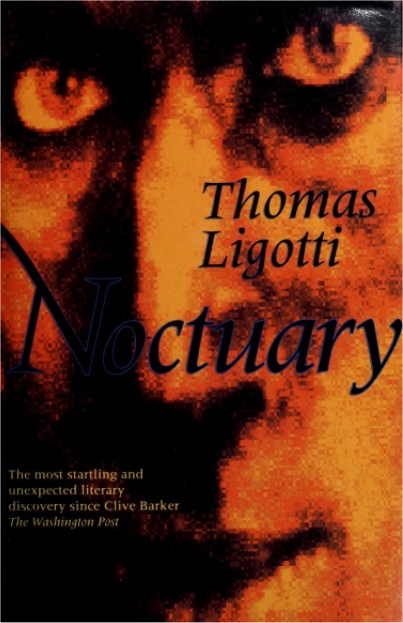
noctuary - ligottiThomas Ligotti – Noctuary
Carroll and Graf – 1994

I guess I can throw this in here too. I read this collection of Ligotti’s short stories a long time ago. I had an office job back then, and I would spend most of the work day reading. I’d download pdfs of books and rename them “factory standards.pdf” and upload them to google drive so that my employer wouldn’t know what I was up to if he checked my history. I also got reckless and read a few at openlibrary.org, including this one. Over the course of three days on the job, I managed to finish Noctuary, the Satanic Bible, Mount Analogue by Damaul and Look Back in Anger by John Osborn. This frenzied bout of reading was fueled by spite for my employer rather than enjoyment, and I can honestly remember more about the ensuing headaches than the texts themselves.  I rated Noctuary 4 out 5 stars on goodreads though, so it must have been pretty good.

I’d imagine this won’t be the last time Ligotti’s works are featured on this blog.

Drunk With Blood

drunk with blood steve wellsDrunk with Blood: God’s Killings in the Bible – Steve Wells
SAB Books – 2013

I read (past tense) the Bible largely out of spite. I went through the whole thing, chapter by chapter, underlining or highlighting bits that I thought were silly or violent. Needless to say, it took a lot of ink. I did a Bible post on this blog, but it was a fairly general overview of the entire text, and I didn’t get into specifics. When it comes to a text like the Bible, there’s not much a person can say that hasn’t been said before.

While I didn’t bother to get into specifics, Steve Wells has been doing so on his sites the Skeptics Annotated Bible and Dwindling in Unbelief since 1999. In this book, Drunk with Blood: God’s Killings in the Bible, he examines each murder committed by God throughout the events of Bible. It’s a bit like a true crime book about the most insane and successful serial killer of all time. Using the numbers provided in this text (which are sourced from the Bible itself), I worked out that throughout the Bible narrative, God was murdering between 500 and 7000 people a day on average.

The material in the book is well organized, and Steve Well’s comments are often very funny. It does get a bit boring at times, but that’s not really the author’s fault, and in a way, the offending sections make the book more effective. These boring passages highlight the fact that the Bible should be seen as nothing more than a collection of repetitive folktales from the iron-age.

Keeping that in mind, I sometimes felt a bit sorry for the Bible when reading Wells’ criticisms. He’s interpreting it literally, and for most texts of this era and genre, I would say that this would be a fairly silly thing to do. It would take all of the entertainment out of the old Greek or Irish myths if you were to take them at face value. Of course, very few people have taken literal interpretations of the Greek and Irish myths to enforce their perverse ideals upon others in the last thousand years, so I completely understand the author’s approach. I just want to put it out there that the Bible is actually a really interesting resource for entertaining stories and cultural insight. Just please understand that it’s a book from history, not a history book.

It has been long enough since I read the Bible for me to have forgotten big chunks of it. Reading this book reminded me of Biblical gems such as the tale of Elisha and the children (2 Kings 2:23-25). Elisha was a mate of the prophet Elijah. One day, he was out and about when a group of 42 children teased him for being bald. Luckily for Elisha, his merciful and forgiving God sent two bears in to kill the children. He didn’t give them a dose of diarrhea or a headache or have their parents talk to them about being polite. He had their little bodies torn limb from limb by a pair of nature’s fiercest animals.

Will many Christians read Drunk with Blood and change their minds? I doubt it. If they haven’t read the Bible, the book where all this horrible shit came from, why would they read a criticism of it? I’d imagine that most non-believers wouldn’t have much time for this kind of thing either; I mean who cares if the imaginary man in the sky is a murderer? I guess that leaves the annoying people who like to think that they know more about scripture than the majority of believers to enjoy this book.

It’s good. Read it.

jesus cant dieWhile we’re on the subject of Bibles, I “found” this illustration in a hotel room Bible over the summer. Thought this would be a good opportunity to post it.

The Peculiar Legends of the Red Book of Appin

A few weeks ago, I wrote a review in which I claimed that all of the grimoires that I have thus read have been a little disappointing. The book in question, Liber Falxifer, had a good atmosphere to it, but while the ritual procedures were generally spooky enough, the end goals of the rituals themselves were just a little too similar to what I’ve seen before. In response to this complaint, V.K. Jehannum, infamous demonolater and black magician, kindly suggested that I check out a mysterious little book called The Red Book of Appin.

This “book” is, as far as I know, exclusively available in pdf form. I did a bit of research on it before reading, and the earliest mention I found of this specific text comes from 2003. However, a mysterious book titled ‘The Red Book of Appin‘ has been referenced in many works over the last 150+ years.

I decided to do a little research.

popular tales west highlands J.FPopular Tales of the West Highlands Volume II [1860] by J. F. Campbell
The first written mention of the Red Book of Appin can be found in what is basically a footnote to a story in J.F. Campell’s collection of Scottish folktales. The stories in this book were orally collected from Scottish peasants and the likes by the author and his accomplices during the mid-nineteenth century. Part XXX, The Two Shepherds, is the story of a lad getting assaulted by a very suspicious individual when making his way home one night. It is followed by another, very similar story, and it is in this tale, as told by “an old carter named John in Ardkinglas to Hector Urquhart, a friend of Campbell’s, in 1860, that the Red Book of Appin is first mentioned. The story goes a little something like this:

A man in Appin, a village in Scotland, adopted an orphan boy, and when this kid was old enough, he became a shepherd. One day, when he was out herding sheep, a mysterious stranger approached the boy and offered him a better job. The stranger told the kid that he’d make lots of money in his service; all he had to do was sign his name in the stranger’s little red book. The kid was interested, but he said that he’d have to talk it over with his adoptive father first. The stranger didn’t like this idea and tried to convince him to agree there and then. The kid was having none of it, so they arranged to meet up the next day after he had talked things through at home.

That night, the kid tells his dad what had happened, and this dad congratulates him for acting sensibly. He tells the kid to meet up with the stranger on the following evening, and he gives him instructions on how to make a protective circle around himself with the point of a sword so the stranger can’t touch him. (Note that this guy already seems to have some knowledge of folk magic.) He instructs the kid to accept and steal the book from the stranger only when he’s safely within the circle and to avoid signing it at all costs.

The kid manages to pull it off, much to the dismay of the stranger, who, at this stage, by transforming himself into many likenesses and blowing fire and brimstone, has cast off any doubts over his true identity. The kid waits till morning when the Devil disappears and then takes the book home to his dad.

(I’m by no means an expert on Gaelic mythology, but I have encountered similar stories of Scottish and Irish folk tricking the Devil (Divil). He seems to be a bit of an idiot when he’s in those parts.)

Urquhart notes that he had heard many tales of the Book of Appin from old people but that this particular story was the best. I’m sure that he chose the word “best” to suggest that this story was the most entertaining rather than the most accurate.

Apparently, Campell provided other origin tales for the Red Book of Appin (and other red books), but I haven’t been able to find their sources online. There’s an article by Hugh Cheape that gives these different stories and other information on the book. From both the quantity of accounts and their banality, it seems quite likely that there was an actual man in Appin who had a red book. Most of the stories are about villagers asking this man for advice when their cattle were sick. The actual Red Book was almost definitely just a collection of folk medicine recipes. These stories are too boring to presume that somebody made them up.

Ok, there you have it. The actual Red Book of Appin was a book of cow medicine.

red book of appin - ethan allen hitchcock

What’s this then? It looks fancy. This, my friends, is an 1863 book called The Red book of Appin : a story of the Middle Ages, with Other Hermetic Stories and Allegorical Tales by Ethan Allen Hitchcock. It’s a book in which the author takes folk tales and completely over-analyzes them.

It gives the account from Campell’s book, word for word, and then it goes into a bizarre analysis in which the author compares elements of the story with elements of the Bible. I gave up reading it after he says that the orphan in the story represents Melchisideck. Nothing of note here other than the fact that by 1863, the legend of the Red Book of Appin was already attracting lunatics.

Ok, so we have a quaint Scottish folktale and some historical traces of a curious little book about healing cows. Didn’t I start this post off discussing ultra-violent black magic?

Enter Montague Summers.

montague summers history witchcraft.jpg

Montague Summers, a man infamous for his anachronistic fear of black magic, includes the exact same paragraph on the book of Appin in both his History of Witchcraft and Demonology, 1926 (Chapter 3, p.86) and his Popular History of Witchcraft, 1937 (Chapter 2, p.76). It reads:

Such a volume was the Red Book of Appin known to have actually been in existence a hundred years ago. Tradition said it was stolen from the Devil by a trick. It was in manuscript, and contained a large number of magic runes and incantations for the cure of cattle diseases, the increase of flocks, the fertility of fields. This document, which must be of immense importance and interest, when last heard of was (I believe) in the possession of the now-extinct Stewarts of Invernahyle. This strange volume, so the story ran, conferred dark powers on the owner, who knew what inquiry would be made ere the question was poised ; and the tome was so confected with occult arts that he who read it must wear a circlet of iron around his brow as he turned those mystic pages.

The only part of what Monty wrote that didn’t come directly from the account in Campbell’s book is the line about the iron circlet, but the chapter in Campbell’s book that mentions the Red Book does specifically discuss the notion that “supernatural beings cannot withstand the power of iron”. I think it safe to assume that Campbell was Summers’ direct source for this paragraph.

Ok, so Summer’s paragraph doesn’t really add anything to what we already knew. However, I have little doubt that it was its mention in the works of Montague Summers that brought The Red Book of Appin to the attention of modern occultists.

Somewhere along the way, around 2003 it seems, somebody decided to write (or maybe just translate) a grimoire, but they knew that nobody would pay attention to it unless it had a cool name. On reading about the long-lost, mysterious Red Book of Appin in the works of Summers (or maybe one of Summers’ fans), the author/translator realized that his work would be a whole lot more mysterious (and hence popular with occultists) if it purported to be a resurfacing of that long lost work.

red book of appin scarabaeusThe Red Book of Appin – Translated by Scarabaeus
Year of composition and publication unknown

So here we go, the dodgiest book of black magic available for free download.

This grimoire supposedly contains the teachings of Vlad Tepes. That’s right; Vlad the Impaler is supposed to have dictated this malarky to a monk named Kirill. The text claims that “the devil-worshipping of the great romanian general is an unquestionable fact, which no serious black adept can deny.” This is a bit odd considering that we’re speaking of a (V)lad who once attacked the Ottoman Empire “for the preservation of Christianity and the strengthening of the Catholic faith”.

Authorship aside, what the Hell does a grimoire supposedly written by Count Dracula have to do with the Scottish Red Book of Appin that we’ve been talking about? Well, as it turns out, nothing at all; this grimoire is named after “Joseph Appin”, the English merchant who supposedly once owned the manuscript. The fact that the book was red is just another coincidence. Indeed, the only part of the pdf that’s actually red is the Times New Roman heading on the first page.
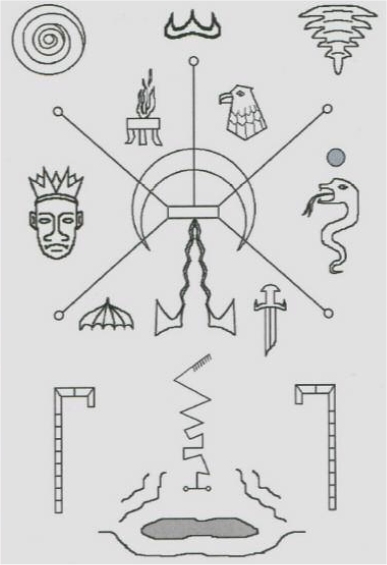
ritual red book appin scarabaeusOne of the book’s high quality illustrations.

This is definitely not the actual Red Book of Appin, but I suppose it could be a translation of a genuine grimoire to which the translator attached a name for which he knew there would be a market. Indeed there are signs that this is a translation. It reads a lot like the homework of a foreign student who has used Google Translate to change their writing into English. The grammar, spelling and punctuation are all absolutely horrible. I’ll be honest here, even if this is a translation, it’s a translation of absolute garbage. I find it very fitting that translator’s pseudonym literally means dung beetle.

There’s two main sections to the text. The first is a fairly standard list of demons, the same kind of thing that you find in the Goetia and the Grand Grimoire. The next section is on different rituals. These are absurd. The most entertaining was the one in which the wizard constructs a bell with a human corpse as the dingy bit in the middle. I can’t remember what this was supposed to achieve, but it was pretty funny. Most, if not all, of these rituals involve murderous sacrifices, including the killing of babies. I know that I complained that other grimoires weren’t nasty enough, but I found this pretty tasteless. There’s no atmosphere or cleverness here; it’s the kind of thing a teenage death metal fan would write. A load of shit.

sigil red book appinDoodles from a boring math class or the demonic seals of “Superior Creatures”?

There is another book, The True Red Book of Appin, written by Tarl Warwick, but this is an admitted fiction. This lad noticed the hullaballoo that this text was causing online and decided that he could write a much better version. Fair play to him. I haven’t read his book, but I am quite sure it’s more entertaining than the heap of trash by Scarabaeus.

So there you go, the legends of the Red Book of Appin. I somehow doubt that the original text, if it were ever to be found, would be as entertaining as the tales that have told about it.


Shelley’s Zastrozzi and St Irvyne – Revenge is Sweeter than Life

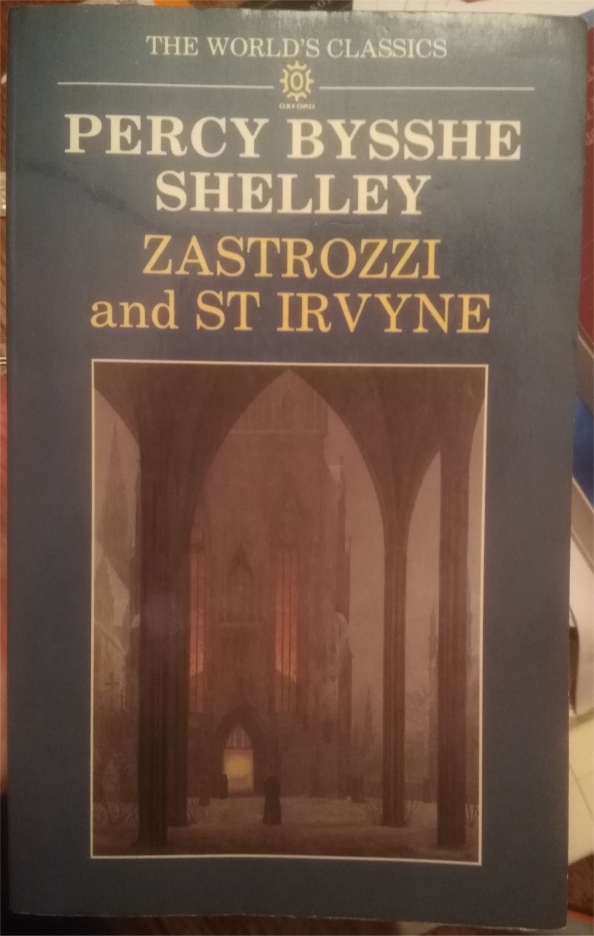
zastrozzi and st irvyne shelleyZastrozzi and St. Irvyne – Percy Bysshe Shelley
Oxford University Press – 1986

These are the only novels Percy Shelley ever wrote, and they are usually published together. They’re roughly 100 pages each.

Zastrozzi (First published 1810)
I’ll be brief with this one because it’s very short and the more I say, the more it will take from your enjoyment if you do decide to read it. This is a remarkably enjoyable Gothic romance. The title character’s horrendously callous pursuit of vengeance leads him to acts of genuinely shocking brutality. Fantastic. File this guy alongside Maldoror, Iago, and Aaron the Moor. At one point, he utters the words, “I will taste revenge; for revenge is sweeter than life: and even were I to die with him, and, as the punishment of my crime, be instantly plunged into eternal torments, I should taste superior joy in recollecting the sweet moment of his destruction. O! would that destruction could be eternal!”
Those might be my favourite sentences in the entire canon of literature.

The ending of this book was absolutely satisfying in every respect. Incredible.

I listened to a few chapters from the Librivox audiobook version, but the narrator tries so hard to sound dramatic that he makes it difficult to keep listening. I don’t like badmouthing people who put together the stuff at Librivox as I know they’re volunteering their time to make literature accessible, but Jesus Christ, this guy sounded like an arsehole.
St. Irvyne (First published 1811)
The second tale in this collection, St. Irvyne, isn’t quite as good. There’s two storylines in here, one about a pair of star-crossed lovers and one about an innocent young virgin who is led astray by a mysterious stranger. I was really enjoying it, but I started getting a bit worried when I noticed that I was only a few pages from the end and had absolutely no idea how the two plotlines related to each other. I started wondering if I had skipped a chapter by accident. Unfortunately, this confusion lasted right up until the third-last sentence in the book.

St. Irvyne, you see, was originally intended to be a much longer work, but at a certain point Shelley got sick of writing and decided to tie everything up in a 2 page conclusion. The writing is nice, but this was a bit of a disappointment.

The alternate title of the work is actually The Rosicrucian, and while one of the characters in here has clearly been dabbling in the Occult, there’s not a single mention of actual Rosicrucianism in the entire book. If you’re into that kind of thing, I’d recommend Bulwer Lytton’s Zanoni instead.
While on the subject of Shelley, I’m going reread his wife’s Frankenstein soon. I’ve previously mentioned that book’s shameful absence from this blog, and it’s about time to rectify that. Its 200th anniversary of publication is coming up in a few weeks, so I’m going to try to get it done by then.