The Black Grimoire – Angel Zialor

black grimoire angel zialor
The Black Grimoire – Angel Zialor
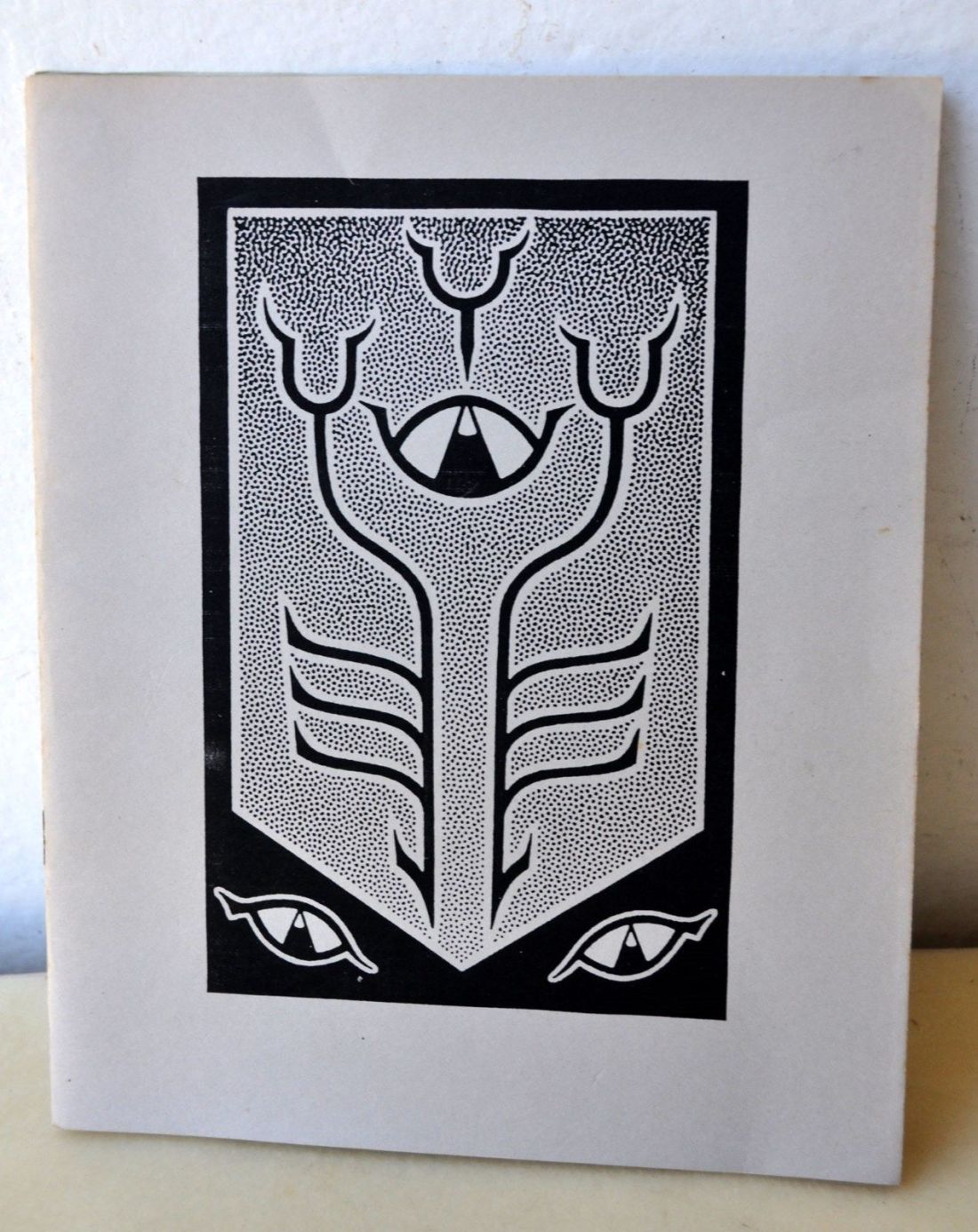
Starlight Books – 2008

I told myself I’d stop doing it, but I realised a few days ago that the multibook post I had planned for today wasn’t going to be finished on time. I have hence reviewed yet another independently published grimoire that I found on the internet. These things are often short, and they’re usually handicapped enough to poke some serious fun at. The only downside is having to come to terms with the fact that I am wasting my time reading such shit.

This little pamphlet is awful muck. It’s clearly just a bunch of spells, rituals and prayers that the author, Angel Zialor, stole from other sources. Although the author describes the contents of this book as diabolic, much of it is made up of Christian prayers. Angel Zialor is a clueless moron.

I have two examples from this text that further demonstrate that last point. The first is a ritual of Sumerian Money magic that instructs the magician to urinate into a jar and say to it, “Salty liquid from within me, I demand that you bring me wealth.” I’m not making this up. Angel Zialor is literally instructing her readers to speak to a jar of their own piss. This sounds like the kind of thing a severely deranged mental patient might do, not a powerful magician. I wonder if there’s an equivalent ritual in which the practitioner must demand a plate of their shit to deliver them a lover. “Smelly brown paste from within me, I demand that you bring me my one true love.” That would be no more ridiculous.

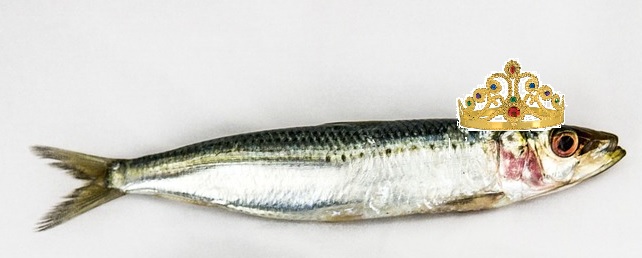
As mentioned already, the spells or rituals in The Black Grimoire seem like they have been taken from other books. With the exception of one, I wasn’t bothered tracking down the original sources. This piece of shit book doesn’t warrant that level of research. The one ritual that I did look up was “The Spell of Hatred”, a spell to cause harm to your enemies. This spell is a paraphrased version of the Barabbas Spell featured in Paul Huson’s 1970 book, Mastering Witchcraft. There’s a few minor differences between the Spell of Hatred and the Barabbas prayer, but the content is almost identical. The most noticeable change is that instead of using sard stone as an ingredient, Zialor opts for a small piece of sardine. This makes things sound pretty funny later on when instead of evoking the “Queen of Sard” as in the original Barabbas spell, Zialor’s version calls for the “sardine Queen”.

sardine queen

The publisher of this nonsense, Starlight Publishing, has an amazing website. It’s worth a look for the utterly awful cover art they use on their books. I was not surprised to see that they have also published stuff by my old friend, Marcus T. Bottomley.

Ugh, enough of this shit. I apologise for presenting my readers with a work of such low caliber.

Crawling Chaos Magic – Lovecraft’s Legacy, Part 3

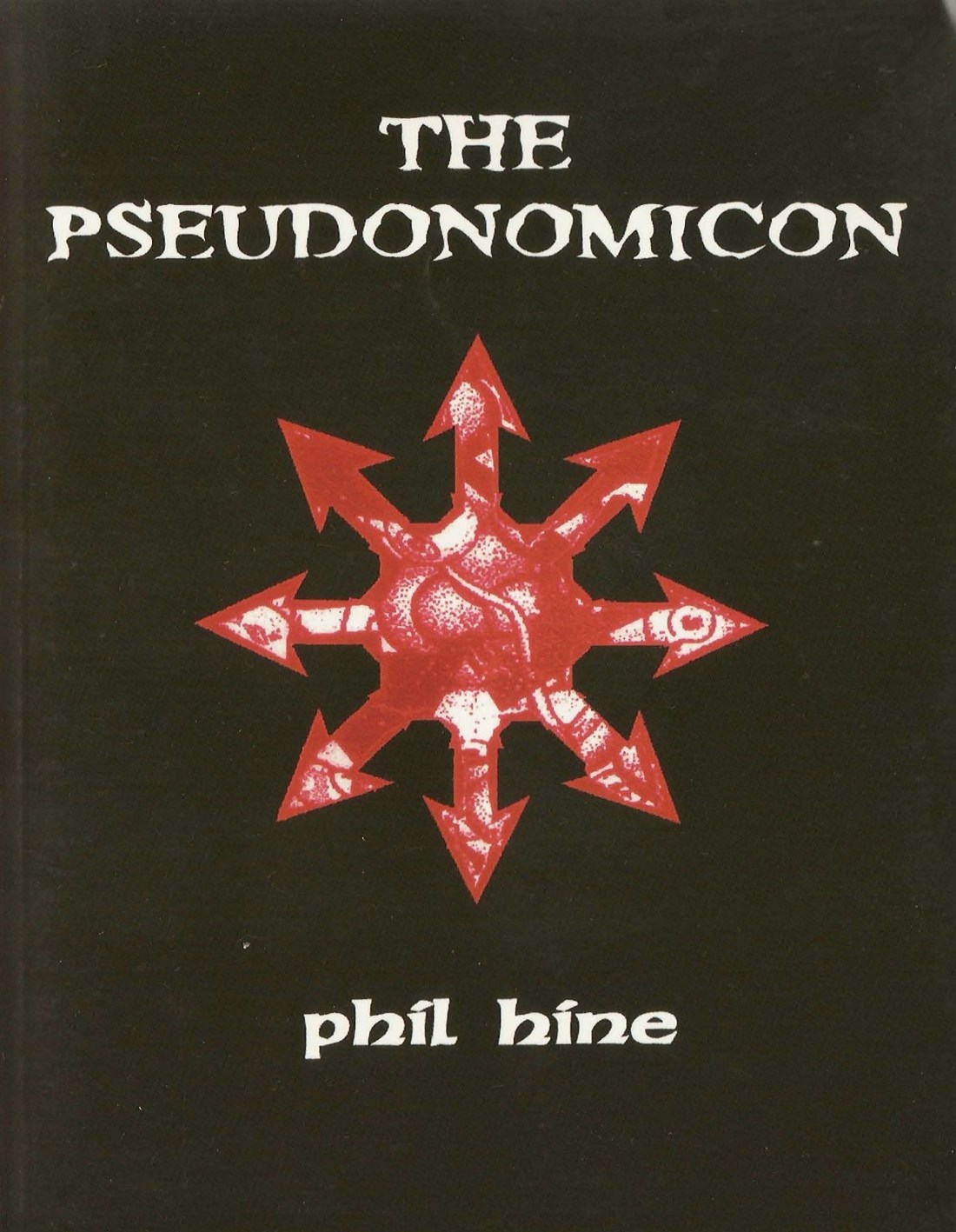
pseudonomicon phil hine.jpgThe Pseudonomicon – Phil Hine
New Falcon Publications – 2007 (Originally published in 1994)

I’ve read quite a few books of Lovecraftian occultism at this stage, and this was the best one yet. It’s a book of chaos magic. Chaos magic, as far as I understand it, is a very open form of magic. It is to free verse as goetia is to writing sonnets. The focus here is on results rather than rules and rituals.

While other books of Lovecraftian magic attempt to mix Lovecraft’s mythos with traditional forms of occultism, the Pseudonomicon encourages experimentation. A true Cthulhu druid should follow their intuition rather than the steps of a ritual. This disregard for traditional sequence fits in with Lovecraft’s tendency to use non-Euclidean mathematics as a method of evoking a weird atmosphere in his tales.

cthulhu.jpg

From the perspective of the layman, the behaviour that this book describes and encourages will seem ridiculous, and a skeptic might fairly describe this as a book on how to pretend that a collection of fantastic stories by a dead lad are based in reality. Neither view would be incorrect, but so what?

The book acknowledges that reading it might lead one to madness, and anyone who takes its advice and smears themselves in shit while dancing around a graveyard at night might well be seen as insane. On the other hand, who am I to act as though my take on reality is any more accurate than that of the Cemetery Scat Man. The more I think about it, the more I believe that what a person perceives IS their reality. If the Pooey Ghoul believes his actions are allowing him to speak to the Great Old Ones, I can’t disagree. Reality, existence and their links to perception are too inherently unknowable for anyone to assume that their take on these concepts is any more sensible than another’s.

This book does get pretty weird. In an appendix near the end, the author describes his experience of being possessed by Tsathoggua, Clark Ashton Smith‘s giant toad god who features in Lovecraft’s Whisperer in the Darkness. Cool.

This book does a pretty good job of balancing the Mythos stuff with a practical way of incorporating it into magical workings. If i was ever going to practice magic, i think i’d go for something like this.

haunter of the dark lovecraft.jpg
The Haunter of the Dark – H.P. Lovecraft

Wordsworth – 2011

This is the second and biggest entry of the Wordsworth Lovecraft editions. It contains the following stories:
Celephaïs, Herbert West – Reanimator, Pickman’s Model, Polaris, The Cats of Ulthar, The Colour Out of Space, The Doom That Came to Sarnath, The Dream-Quest of Unknown Kadath, The Dreams in the Witch House, The Haunter of the Dark, The History of the Necronomicon, The Horror at Red Hook, The Other Gods, The Shadow out of Time, The Shadow Over Innsmouth, The Shunned House, The Silver Key, The Statement of Randolph Carter, The Strange High House in the Mist, The Thing on the Doorstep, The Unnamable, the essay Supernatural Horror in Literature and Fungi from Yuggoth, a collection of weird sonnets.

The items listed in blue are not contained in the Penguin editions of Lovecraft’s work. I’m not going to say much about this collection other than that I really enjoyed reading most of these stories again. The Thing on the Doorstep and The Dreams in the Witch House are so deadly. Also, I’m pretty sure The Shadow Over Innsmouth is tied with Whisperer in Darkness as my favourite Lovecraft story. I’m not mad about all of the Dream Cycle stuff, but parts of it (The Other Gods) are awesome.

At this stage I’ve finished rereading all of the stories that Lovecraft wrote by/for himself that were included in the Penguin editions. It has been very enjoyable, and I feel that I’m now in a much better position to understand a lot of the occult texts that are based on his works. I can now sensibly distinguish a Shoggoth, Yuggoth and Yog-Sothoth. I still have one more entry in the Wordsworth series to read, but that one is comprised of collaborations that Lovecraft worked on. I’m quite excited about that as I’ve only read one of the stories it contains before. After I review that, I’m going to do a post on all of the stories that are not collected in the Wordsworth series. Both posts will also include an obscure work of Lovecraftian occultism. Stay tuned.

Edit: For convenience sake, I’m including the links to all of the posts in this series for anyone who’s interested. (Part 1, Part 2, Part 3, Part 4, Part 5)

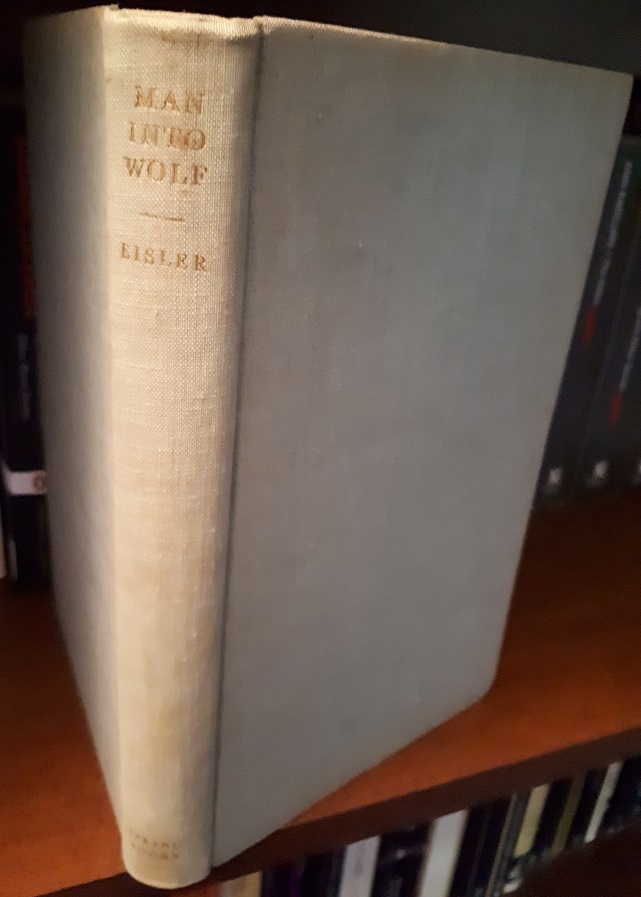
Man Into Wolf: An Anthropological Interpretation of Sadism, Masochism and Lycanthropy – Robert Eisler

man into wolf eislerMan Into Wolf: An Anthropological Interpretation of Sadism, Masochism and Lycanthropy
Robert Eisler
Spring Books – 1951

While this book may not look as interesting as the stuff I reviewed in last week’s post, it is more original, more suited to this blog and infinitely more interesting. Don’t let that pale blue cover fool you; this is mental.

The collective unconsciousness, as far as I understand it, is a postulated pool of ancestral memories to which each human being has limited access.  This theory is supposed to explain some of the strange ways in which we act. For example, it suggests that modern humans are afraid of the dark because a part of our unconscious mind remembers our distant ancestors being attacked by wild animals in the dark of night. I see the reasoning behind the idea, but I think it’s mostly understood to be pseudoscience at this stage.

Why the discussion of outdated psychology? Well, the theory of the collective unconsciousness is central to the claims of Man into Wolf by Robert Eisler, a 1948 lecture that was turned into a book. I can’t remember where I first read about this strange text, but I remember spending a lot of time tracking down an affordable copy. (This was during the stage of my life when I preferred physical books to digital copies.) Once I found a copy, it lay on my shelf for 5 years.

man into wolf sadism masochism lycanthropy eisler

Eisler claims that human beings originally lived in a Rousseauian state of harmony. Our primitive ancestors were pygmys that lived in small tribes, eating only fruits and vegetables, having sex with everyone and generally having a great time.

Unfortunately, these peaceful tribes were very vulnerable to attacks from predators, and early humans were often attacked and killed by wolves and lions. Eisler claims that in order to defend themselves from these attacks, the primitive humans started to emulate the behavior of the wolves. They started wearing wolf skins and began to eat meat themselves. This is where things started to go wrong for us. This was the real fall from grace behind the Genesis story. Once we developed a taste for blood, when we became wolf men, we started attacking other tribes and stealing their women. We thus created war and expelled ourselves from the garden of Eden.

As naive as this theory sounds, parts of it are true. The diets of large apes are largely vegetarian, and early humans were the same. Ancient hunters and warriors from around the world also wore the skins of wolves in an attempt to harness their predatory powers. Despite the inclusion of these historical truths, Eisler’s narrative remains unconvincing.

He claims that our ancestor’s change of diet and wolf skin clothes are to blame for recent acts of sadism, masochism and lycanthropy. The sadist and lycanthrope are responding to the desires of the wolf man that remain in our collective unconscious. By whipping or eating their sex partner, they are responding to the desire to inflict suffering on their peaceful vegetarian ancestors.

The masochist harbours, at a deep unconscious level, the memories of the peaceful pygmies who looked on as the savage wolf-skin clad warriors invaded their territory and raped and kidnapped any viable mates. While they may fear the sadist’s brutality, they are also drawn to it. They know that they may win approval if they submit to the wolfman’s every desire. It’s no coincidence that the most famous work of masochism is titled Venus in Furs!

Eisler concludes this work with a call to return to the peaceful ways of our ancestors. He claims that if men had always been murderous savages, we would have no chance for redemption, but since our ancient ancestors were peace loving monkey-men that changed only due to extreme conditions, we can, through massive social change, return to our former state of harmony.

The central idea of this lecture is utterly ridiculous. Fortunately the text of the lecture makes up only a small portion of this book. The rest consists of detailed notes and appendices. After perusing these, the reader will be forced to admit that while Eisler’s argument is unconvincing, his book was at least well researched. While I’m not sure that I’ll ever read the lecture again, I will be keeping this book for the information it contains on De Sade, Masoch, mass murderers, ancient blood rituals, perverts and werewolves.

The Complete Alien Sex Chronicles – Ann L. Probe

I’m constantly on the lookout for strange books for this blog, and when I first heard of this series, I knew I’d have to review it here.

alien sex chronicles ann l. probe

This is a series of 10 stories about Amy Rush, a nymphomaniac who is hired by the US government to have sex with different kinds of aliens. Each story was originally released as a separate e-book with an incredible cover, but you can now buy all 10 in a single collection. I’ll give you a brief synopsis of each tale so that you can decide if you want to splash out on this masterwork of alien/cryptid erotica.


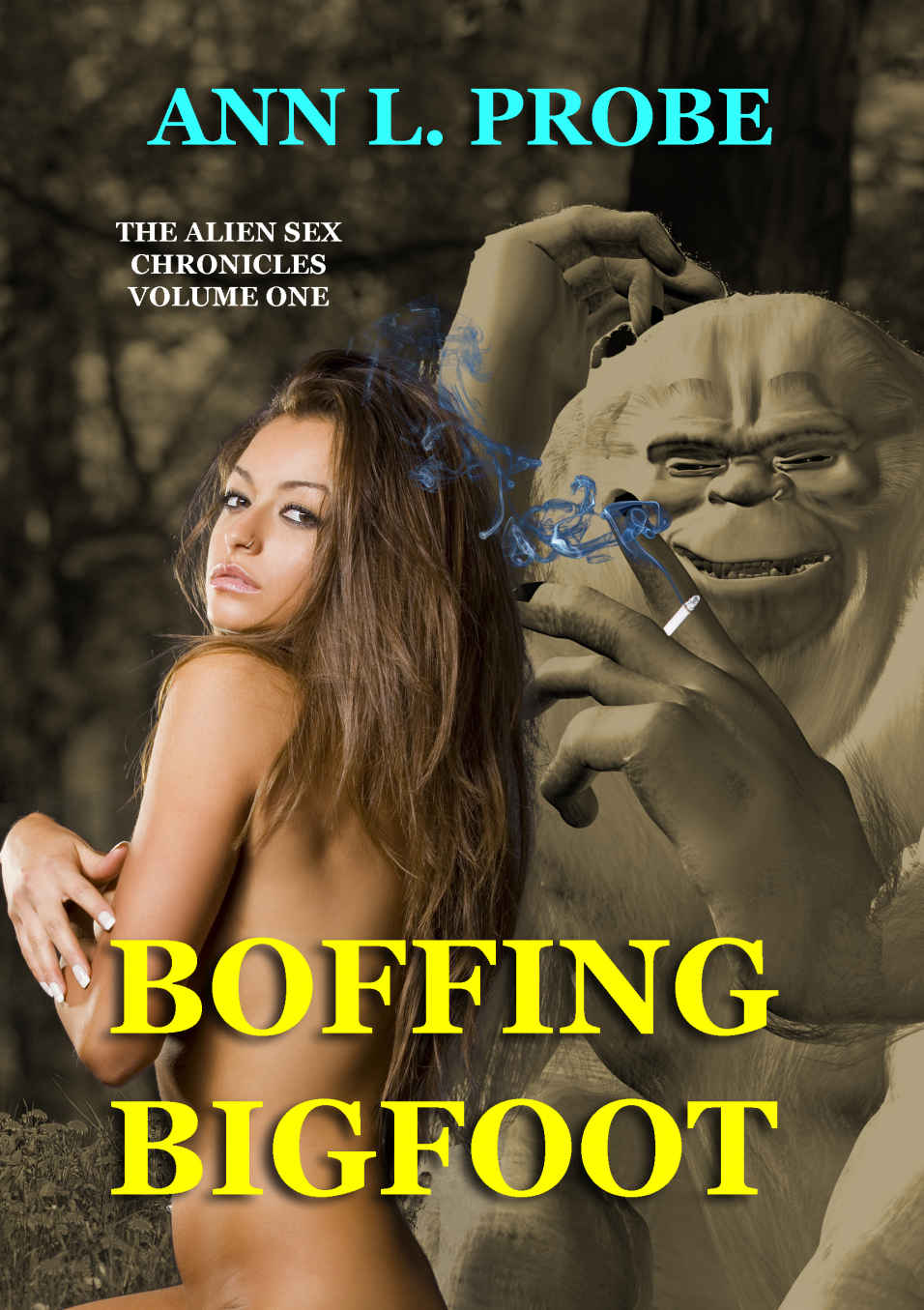
boffing bigfoot ann l. probe1. Boffing Bigfoot

A woman with a reputation for sleeping around is offered a top secret job by a secret government agency. She will fuck different kinds of aliens in return for technology that could potentially save our planet. The first alien she needs to fuck is the Sasquatch or Bigfoot. It turns out that Sasquatch “were the pets of an ancient alien race, and the aliens left them behind”. Amy is brought to the forests of the Pacific Northwest, and it is there that she boffs the Bigfoot.


fifty slaves of gray ann l. probe2. Fifty Slaves of Grays

Amy is taken to an alien spacecraft where Gray aliens are keeping a bunch of abductees and testing their sexual endurance. These aliens have a contract with the government that allows them to abduct one human a week. They’re not allowed abduct anyone famous because “They took a best selling writer once, and while the guy got a couple of bestsellers out of his experience, it made the abductions much more public than they were supposed to be.”

All humans they have tested so far have had disappointingly low sexual thresholds, so Amy makes a deal. If they can please her sexually, she’ll submit and allow them to abduct her. If they can’t satisfy her, they need to let everyone go free. She proceeds to have sex with a very large group of aliens.


tall, white and hung ann l. probe3. Tall White and Hung

This has the least appealing cover of the series, but the story is of the same high quality. Amy fucks a Tall White alien in heat in return for extra terrestrial technology. The alien ends up collapsing after his 20 inch cock encounters the taser hidden in her asshole.


mounting the mothman ann. l probe4. Mounting the Mothman

In this episode, the US government coerces Amy  into having sex with the Point Pleasant Mothman in exchange for his eggs. They want his DNA to see if they can use it to isolate the precognition gene. The Mothman lays his eggs inside of Amy with his penis and then dies. This is made doubly confusing by the fact that he had previously boasted about having had another human lover, even though the act of intercourse is apparently lethal to him.


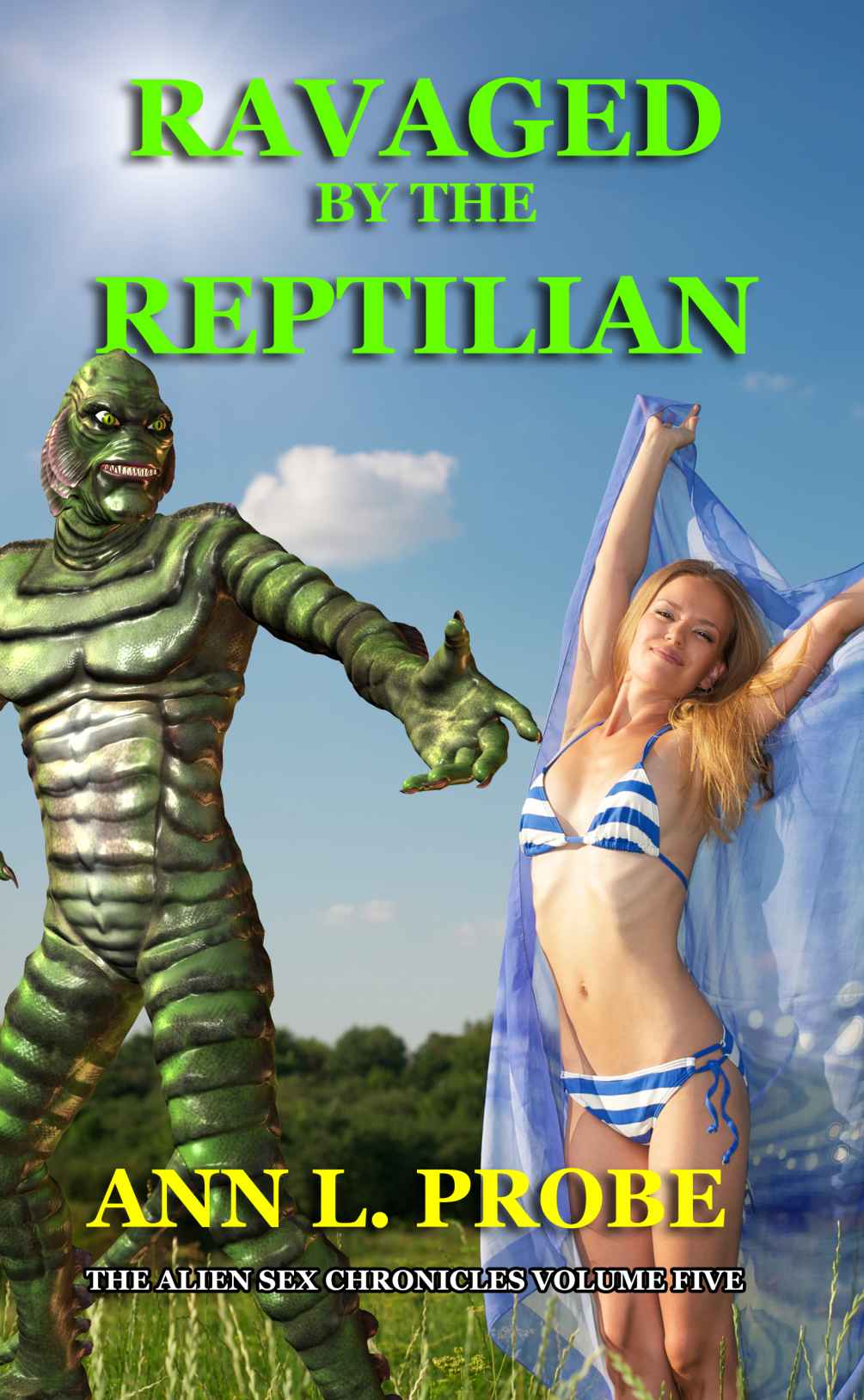
ravaged by the reptilian ann l. probe5. Ravaged by the Reptilian

Amy is sent to an orgy where the world’s most powerful politicians are in attendance. Her mission is to seduce and kidnap a shape-shifting Reptilian who is trying to take the place of one of the world’s leaders. She interrupts a pair of Reptilians, a male and a female, who were about to have sex and proceeds to fuck them both. This is particularly confusing as the reason the Reptilians are at the orgy is to have sex with humans so that they can take their places. They have no reason to be fucking each other. David Icke gets a brief slagging off in here.


the nordic nymphos ann l. probe6. The Nordic Nymphos

This one was also a bit confusing. 3 female Nordic aliens have oral sex with Amy after teaching her about their race. Then they try to kidnap her partner, but she beats them up.


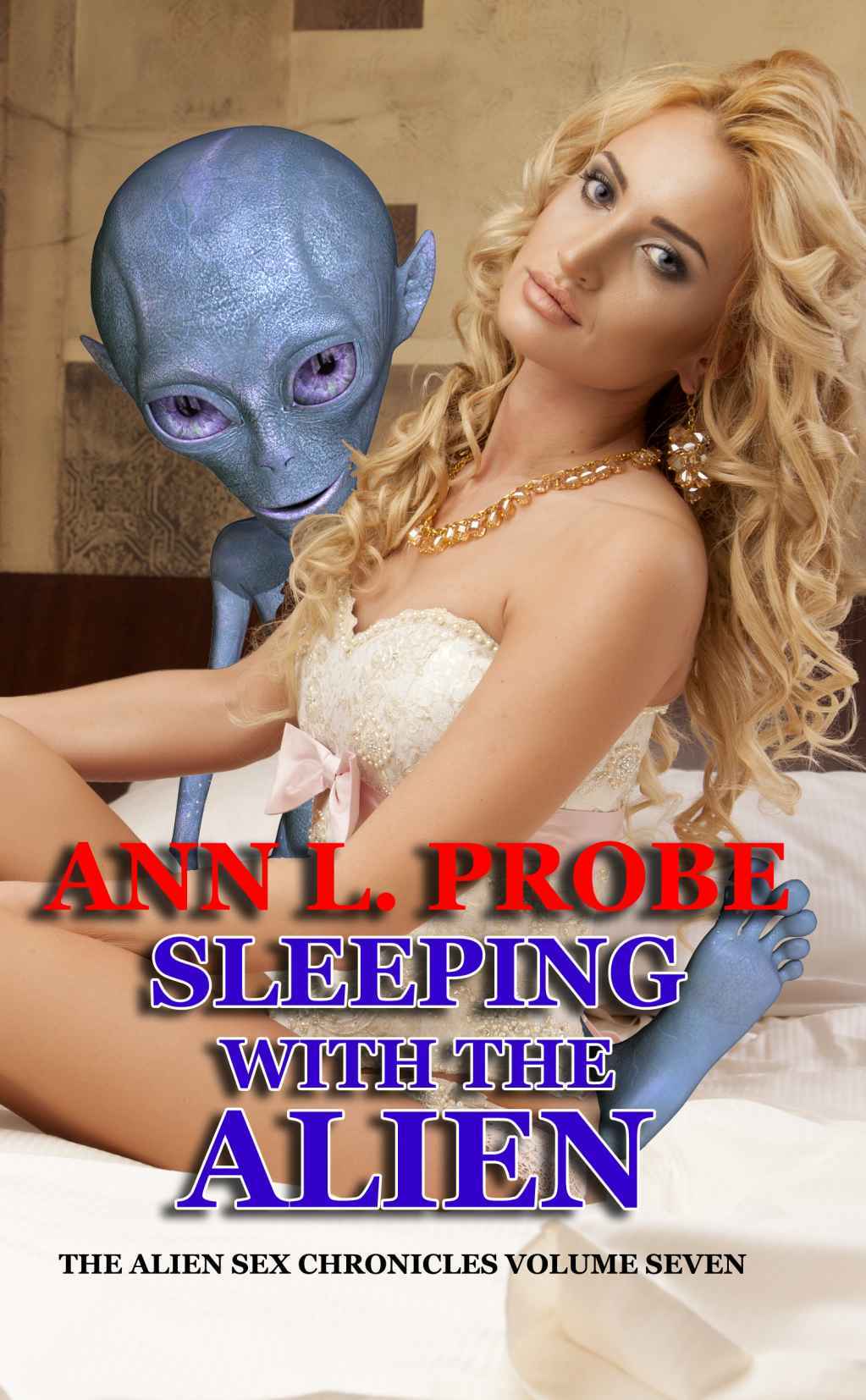
sleeping with the alien ann l. probe7. Sleeping with the Alien

Amy goes to a bar in New York where she meets David Boreanaz, the guy who played Angel in Buffy the Vampire slayer. She takes him home and they have intense, romantic sex. Then the army breaks into her apartment and David Boreanaz turns into a 3 foot alien and jumps out the window. Amy is heartbroken.


the sexy sirian ann l. probe8. The Sexy Sirian

Amy is given a break from her work with the government while the military deals with the Sirian aliens who have been pestering them. When she gets home she encounters David Boreanaz again, and before fucking her, he informs her that the government agency she is working for is actually planning to take over the world with the technology she has acquired for them.

Scroll back up there and take another look at that alien’s cheeky grin. Hahaha.


the androgynous andromedan ann l. probe9. The Androgynous Andromedan

Amy’s former employers turn out to be the Bilderberg group. After they try to kill her, she goes to a secret air base where a different secret (but good) government agency are conducting time travel experiments. (David Boreanaz previously gave her her the directions to get there.) At the base, she meets an Andromedan alien with a cock and a cunt. She makes it cum both ways.


dancing to the anunnaki nookie ann l. probeDancing to the Anunnaki Nookie

Amy goes into the future and sneaks into another top secret military base to interrupt a meeting between the Bilderberg group and the Annunaki aliens. These two parties were meeting to decide how to enslave humanity. Amy is caught by a security guard. She has sex with him. Then the aliens show up, but they have no genitalia, so they cant fuck her. The Bilderbergers also show up, but they’re no longer interested in world enslavement. All parties end up agreeing to a deal: if the Annunaki are allowed abduct Amy, her human boyfriend and the alien David Boreanaz and force these three to have a bunch of sex, they will not enslave the human race.


I honestly find it difficult to imagine anyone really getting off to these stories. I’m sure there’s loads of people out there who regularly fantasize about riding ET, but this stuff doesn’t even try to be sexy. It’s mostly just dick jokes with a few facts about the featured creatures thrown in.

In 2014, Ann L. Probe started writing a second series, this one about Amy Rush’s cousin having sex with more aliens. Unfortunately,  it seems as though only one entry of this series was ever finished, The Vegan Virgin. I’m going to wait until the full series has been published before reading it. Ann L. Probe, if you’re seeing this, get a move on and finish the UFO Sex Girl series!

Flesh – Richard Laymon

flesh - richard laymon.jpgFlesh – Richard Laymon
Tor Books – 1988

A few months ago, I found a bunch of Richard Laymon books in my favourite second hand book store. I had heard of him, but I wasn’t sure which of his books were worth checking out. I bought this one because it had a cool cover. After reading Flesh, I deeply regret not buying all of the Laymon books that were there.

A gross slug thing burrows into people’s flesh, attaches itself to the back of their skull and then takes control of their body. The plot of this novel is remarkably similar to Brain Damage (one of my favourite movies, also released in 1988) and a later episode of the X-Files. The slug like beasty of this novel is special though, as this one only takes control of humans so that it can satiate its need for human flesh. It turns its victims into cannibals.

Let me put that another way. The monster in this book eats through people’s flesh so that it can use their bodies to eat through other people’s flesh.

The central premise of this book doesn’t make sense, but I didn’t even realise that until I started writing this review. It’s such a cool idea for a book. There were, however, a few other issues that were more difficult to swallow. Most of the characters in Flesh are either exceptionally stupid or remarkably intelligent. The victims make absolutely terrible, terrible choices, but the police officers on the case are able to deduce the exact nature of their bizarre adversary after examining one of its victims. They immediately figure out that they’re dealing with a with a psycho-parasitic worm with a lust for human flesh. Finally, the women in this book have such sensitive nipples that I can’t imagine how they go about their daily lives. Every time a woman does anything in this book, her nipples’ reaction is mentioned, whether she be taking a shower, greeting a friend, or enjoying a pleasant summer breeze.

Despite these issues, I found this book to be immensely entertaining. It is absolutely full of gore, a real bloodbath. The writing is decent too. Don’t get me wrong; it’s not Faulkner, but it’s not bad. Laymon tells a good story. Flesh is 400 pages long, but I read it in only a few days. I advise you all to hunt down a copy too.

The Secret King: The Myth and Reality of Nazi Occultism – Stephen E. Flowers and Michael Moynihan

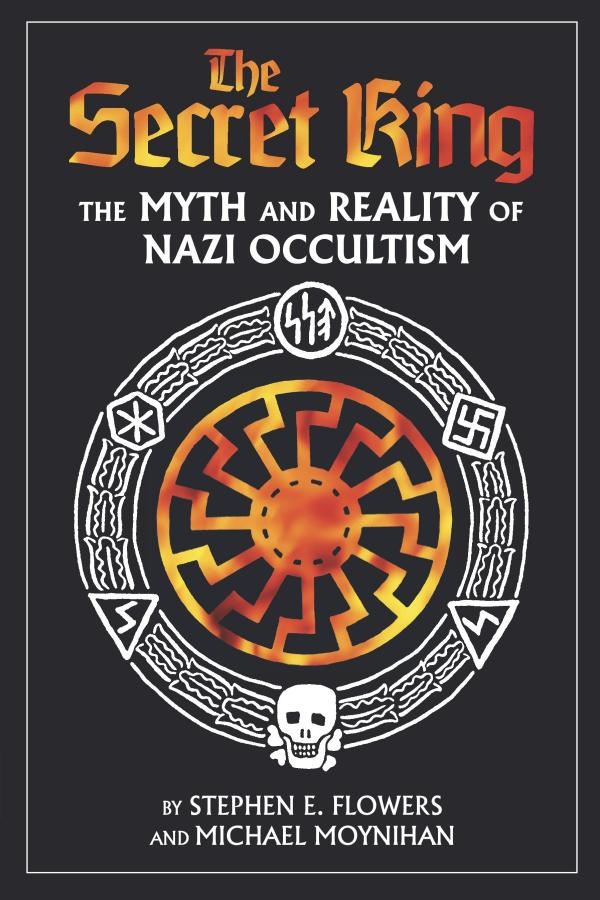
secret king nazi occultism flowers moynihan.jpg
The Secret King: The Myth and Reality of Nazi Occultism
Michael Moynihan and Stephen E. Flowers

Feral House – 2007

Of all of the books on Nazi occultism that I’ve read, this is the most limited in its scope. I don’t mean that as a criticism of the writing; I mention it because this book is probably not the best place to start for a person who doesn’t know much about the topic. That being said, the first section of the book on the Myth of Nazi Occultism is actually quite informative. The rest of book focuses on one man. This is not merely a biography of that man though; much of the book is made up of translations of his work.

The authors point out that while there were several mystical individuals who played a role in developing the myth of Nazi occultism, only of of these individuals was actually a high ranking member of the Nazi party. This individual was Karl Maria Wiligut.

Wiligut advocated Irminism. This belief system requires its followers to hold the notion that the Bible is largely true, but that it was originally a Germanic text written roughly 12,000 years ago. Over time, the text was corrupted by Odinists, Jews and Christians. The real Jesus wasn’t a Jew. He was actually Germanic hero named Baldur-Kristos.

Oh yeah, I forgot to mention that Karl Maria Wiligut spent several years of his life in a mental hospital before joining the Nazi party. His wife had him committed because he kept talking about being a descendant of Odin. He was certifiably insane.

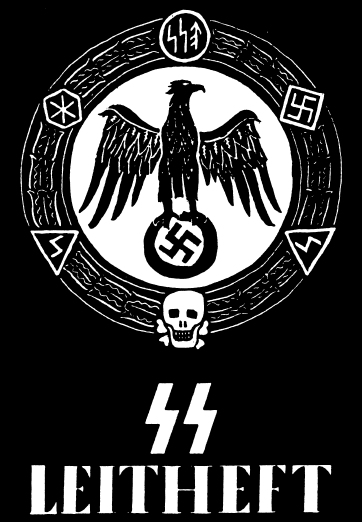
When he got out of the loony bin, he was introduced to Heinrich Himmler. Himmler, who was greatly interested in occult ideas, was impressed and made Wiligut a Brigadeführer in the SS. Karl did a few bits and pieces for Himmler, helping design the Totenkopfring and develop Wewelsburg castle as Himmler’s ceremonial heart of the SS.

totenkopf ring design.jpgWiligut’s design on the cover of an SS magazine.

Wiligut didn’t write much, and what he did put to paper is horrible to read. This book contains a few poems that were translated for meaning rather than poetry (thank goodness!), a description of a picture, an essay about women’s role in society, and a few other bits and pieces about runes and astrology and the like. Yuck. There’s also an interview with Wiligut’s former assistant, but most of the information she gives has been covered in the book’s introduction.

The introductory chapters are interesting enough, but the primary sources included here will only be a valuable resource to those interested in understanding what a crazy old Nazi thought about runes and astrology. I can’t say I was all that interested.

(I’ve previously reviewed other books by both Michael Moynihan and Stephen E. Flowers if you’re interested.)

Ghosts, the Illuminati and a Swastika

ghosts illuminati swastika mcivor tyndall.jpgGhosts: A Message from the Illuminati
Dr. Alexander James McIvor-Tyndall

The Balance Publishing Co. – 1906

Hang on. A terrifying spectre, the Illuminati and a swastika on its cover? What frightful secrets must a book like this contain? Were the Nazis in contact with spirits? Did the Illuminati try to warn humanity of the coming horrors of World War II? Were the Nazis just an offshoot of the Illuminati? There’s so many questions raised by a cover like this. Fortunately for you, I have read this fairly hard to find book, and I am about to share with you its shocking revelations.

The Ghosts of the title are the rules of society. They are ghosts in the sense that the ideas behind them are as dead as the festering, rancid corpse of Michael Jackson. For instance, many people believe that life is not supposed to be full of joy. This notion is the result of the fact that human life used to be pretty shit. Back then, people told themselves that it was good to suffer in order to make themselves feel better about their shitty lives. But life isn’t that shit anymore, and the notion that it shouldn’t be filled with happiness is outdated – it is a Ghost of an idea. Fair enough, I accept the message of this book. I feel the same way about men wearing ties. Why fucking bother? To keep you warm? Fuck ties.

This book was published as part of a series of short books on mysticism, but there’s nothing particularly mystical about its message. It was published just two years after Crowley’s Book of the Law though, and there’s a very definite “Do what thou wilt…” vibe to the message here. There’s not a lot about the author, Dr. Alexander James McIvor-Tyndall (alias Ali Nomad), online, but I found a dead link that shared some interesting information on his life. He was English but moved to the States as a young man. Although trained as a doctor, he seems to have spent his life lecturing and writing about spiritualism and the likes. He had been working as a hypnotist several years prior to writing this book and had already published a book on palm-reading. Apparently he had also lectured on Theosophy as early as 1890. Only a few people would have had the chance to read Crowley’s Book of the Law when Ghosts was written, but as an English occultist writing in the early 1900s, it’s not impossible that Dr. Alexander James McIvor-Tyndall would have heard Crowley’s message (possibly through mutual friends in the Illuminati). He did go on to write a book about “the spiritual function of sex”, so if he wasn’t familiar with Crowley, the two men were at least working on similar wavelengths.

Presumably Ghost‘s message of nonconformity to the oppressive rules of society is coming directly from the Illuminati, but other than the title, the only reference to the Illuminati in this work is when the author introduces a quote from Hamlet, referring to its author as ” Shakespeare, the Illumined”. I guess the message of Ghosts falls in with the original purpose of the Illuminati, that of promoting equality and freedom.

The swastika on the cover makes the book seem rather curious indeed, but as I’ve already mentioned, Ghosts came out in 1906, so its appearance has absolutely nothing to do with the Nazis. (Unless of course the Nazis were just an offshoot of the Illuminati!) The author of this book actually went on to edit an occult magazine called The Swastika from 1907 until 1911, all issues of which are available here. (I love the internet.)

ghosts illuminati ad swastika.jpg
Advertisement taken from Swastika Magazine, Volume 3, Issue 4.

Despite having the most alluring cover of all time, Ghosts: A Message from the Illuminati isn’t hugely exciting. For those who clicked into this post hoping for a book about Nazi Occultists, stay tuned. I have a post on that topic scheduled for next week.

Hacking the Necronomicon – Lovecraft’s Legacy, Part 2

In this series of posts, I’m reviewing books on Lovecraftian Occultism alongside the Wordsworth collections of Lovecraft’s tales. I’m finding it quite insightful to read through the bizarre works inspired by Lovecraft’s horrors while these horrors are still fresh in my mind. This post delves a little deeper into Lovecraftian Occultism, focusing on two books about the Simon Necronomicon, a book that is itself directly inspired Lovecraft’s work. I have previously reviewed the Necronomicon itself and Dead Names: The Dark History of the Necronomicon.

necronomian workbook necronomicon.jpgNecronomian Workbook: Guide to the Necronomicon – Darren Fox 
International Guild of Occult Sciences – 1996

This was written by Darren Fox, otherwise known as Brother Moloch. This is actually the same guy that published The Dark Arts of Tarantula, one of the silliest books I’ve ever read. His book on the Necronomicon isn’t much better.

He claims that Lovecraft astrally traveled to another dimension where Abdul Alhazred was real. This is where our boy H.P. discovered the Necronomicon, but he told himself it was all just a dream.

There’s at least 2 versions of the Necronomicon out there. Brother Moloch acknowledges that they might be fake, but posits that coherent forgeries can still give effective magical instruction.

necronomicon simonProbably fake, but who cares?

What follows is basically a bunch of tips on how to perform each of the different rituals and prayers in the Simon Necronomicon. Large quotations are taken from Simon’s book.

Although Moloch has warned his reader not to contact Cthulhu, he gives a ritual to do exactly that. This ritual mixes names from Lovecraft’s pantheon and quotes from Crowley’s Book of the Law into a ritual that sounds like it comes straight from a Solomonic grimoire.

Next, there’s a bunch of bullshitty grimoire styled spells with the names of a few Lovecraftian entities thrown into the mix. It’s mostly the usual stuff: to kill an enemy, to increase sexual potency, to hold back evil… but, there’s also a spell to get money that directly addresses Cthulhu. Yes, performing this spell involves asking the great priest Cthulhu for cash. In At The Mountains of Madness, Lovecraft explains that human beings were created solely for the amusement of a race that were in conflict with Cthulhu’s spawn. We are less than shit to Cthulhu, yet Brother Moloch suggests that we should ask him to help us make some money.

Moloch also describes his visit to Leng. He made a nice a cup of tea, had a warm bath, did some yoga exercises and then imagined himself walking down a stairs to the center of the world. He opened a door down there and walked into Leng, easy as that.

After this, there’s some poems that the author pinched from a 1903 book on the Devils and Evil Spirits of Babylonia, and some essays that he stole off the internet. One of these essays is called “The Aeon of Cthulhu Rising”. A quick google search reveals that its author was none other that Frater Tenebrous, the author of Cults of Cthulhu, the pamphlet I reviewed in my last Lovecraft post.

The other essay, “LIBER GRIMOIRIS: The Parallels of East and West: Termas, Grimoires and the Necronomicon”,  is by a guy called Frater Nigris. It basically says that the Necronomicon might be real. Searching the author’s name brings up other essays on Thelema and the like.

The book ends with a description of the author’s journey through Kenneth Grant‘s Lovecraftian Sephirot. It’s very confusing.

Overall, this book was utter rubbish. The spelling and grammar are utterly atrocious, and the author seems to have completely missed the distinctive and complete apathy of Lovecraft’s entities towards the human race.

Shite.

hidden key necronomicon.jpgThe Hidden Key of the Necronomicon – Alric Thomas
International Guild of Occult Sciences – 1996

This is a shockingly uninformative pamphlet on the Necronomicon. It was put out by the same publisher as the Necronomian Workbook. It’s only a few pages long, and most pages are taken up with diagrams from the Simon Necronomicon. Some of these images have been slightly edited. The author acts as if these edits will blow the Necronomicon open for the practitioner. Ugh. This is poorly written garbage. No effort was put into creating this piece of trash.
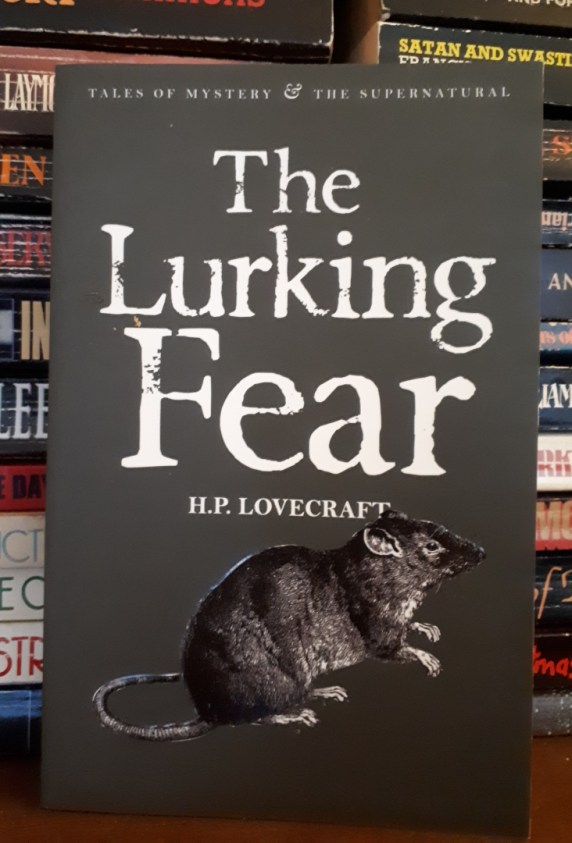
 

the lurking fear lovecraftThe Lurking Fear – H.P. Lovecraft
Wordsworth – 2013

This is the fourth collection of Lovecraft’s writings put out by Wordsworth Publishing. It contains the following tales:

The Lurking Fear, Azathoth, Beyond the Wall of Sleep, Ex Oblivione, Facts Concerning the Late Arthur Jermyn and His Family, From Beyond, Hypnos, Memory, Nyarlathotep, The Alchemist, The Beast in the Cave, The Moon-Bog, The Music of Erich Zann, The Outsider, The Picture in the House, The Quest of Iranon, The Street, The Temple, The Terrible Old Man, The Tomb, The Transition of Juan Romero, The Tree, The White Ship, What the Moon Brings, The Rats in the Walls, He, In the Vault, Cool Air, The Descendant, The Very Old Folk, The Book, The Evil Clergyman, and the short essay, Notes on Writing Weird Fiction.

The titles in green were not included in any of the Penguin collections of Lovecraft’s work, and so I hadn’t read them before. Some of them (Ex Oblivione, Azathoth, Memory) are very short, but also very cool. The essay on Weird Fiction is very interesting, and I plan to write more about it in the future.

Overall, this collection is quite a mix of stuff, both in terms of content and quality. A lot of these stories are quite short, and don’t really fit neatly in with either Lovecraft’s Cthulhu Mythos or his Dream Cycle. (Most of those tales are collected in the first and third Wordsworth collections respectively.) What you’ll find in this book is a collection of odds and ends. It features tales that Lovecraft wrote as a boy (The Beast in the Cave), stories that were never meant to be published and originally only included in private letters to Lovecraft’s friends (The Very Old Folk), and horror classics that just don’t fit in with his other tales (The Rats in the Walls).

Some of these stories are fairly shit. I read The Tree a couple of times, and I still feel like I don’t get it. A few of the other stories (The Lurking Fear, In the Vault, Arthur Jermyn…) are fine, but don’t come close to the atmosphere or excitement of Lovecraft’s more famous tales. Some are absolutely deadly though. I had totally forgotten The Picture in the House. It is fantastic.

The Horror at Red Hook is the story that people usually point to when they want to show that Lovecraft was a horrible racist, but that’s a horror story that features racism. The Street is just a racist story and a shit one at that. If you want a clearer look at Lovecraft’s racism check out this vile little poem or his letters. In one letter he says of Adolf Hitler, “I know he’s a clown, but by God I like the boy!” I considered writing more about Lovecraft’s xenophobia, but the internet is already full of articles about it and I don’t actually care that much. If you’re triggered by some of the passages in his stories, just remind yourself that he died poor and lonely and keep reading.

I’m glad to have this book on my shelf. Even though it’s basically a leftovers collection, I really enjoyed reading it. This is the shortest book out of Wordsworth’s editions of Lovecraft’s work, and it’ll probably be a few months before I write parts 3 and 4 of this series of posts.

Edit: For convenience sake, I’m including the links to all of the posts in this series for anyone who’s interested. (Part 1, Part 2, Part 3, Part 4, Part 5)


Perdurabo: The Life of Aleister Crowley – Richard Kaczynski

perdurabo Kaczynski.jpgPerdurabo: The Life of Aleister Crowley – Richard Kaczynski (Revised and Expanded Edition)
North Atlantic Books – 2010

Aleister Crowley has appeared on this blog a fair few times at this stage. I’ve read books about him and several of his own works, and I thought I had a pretty good idea of what he was about. Then I read Perdurabo: The Life of Aleister Crowley by Richard Kaczynski.

This really is an excellent book. I haven’t read any of the other biographies of Crowley, and the only reason I would want to at this stage would be to compare them with this one. I don’t imagine any of them include much information that isn’t in here. Although Perdurabo is very long and very extensive, it never really gets boring.

This isn’t just a story of Crowley’s life. It also serves as a reference work on his works. It gives the details behind all of the Beast’s most important books, and I am quite sure that I will be referring to my copy of Perdurabo whenever I’m reading a book by Crowley in the future. I would have been able to make more sense out of the books by Crowley that I’ve read if I had read this beforehand.

I’ve read about Crowley’s notorious Abbey of Thelema many times. I knew that this was a house in Italy where he lived with some of his disciples for a while. I guess I had never given the idea much thought before, but without directly stating it, this book makes it pretty clear that Crowley was a cult-leader at this stage of his life. He manipulated his followers to get them to do whatever he wanted.

Some of the most interesting stuff that I learned wasn’t about what Crowley did at the Abbey; it was the things that he didn’t do there. Apparently Crowley never forced one of his followers to drink a cup of cat’s blood. (He probably only sacrificed the cat because it was noisy.) And, while this book confirms that Crowley once tried to get a goat to fuck his girlfriend, it suggests that he did not cut the goat’s throat to let it bleed all over her as it was cumming.

Being a manipulative dickhead is one thing, but Crowley’s behaviour at the Abbey was shameful in a far nastier way than what’s mentioned above. In April, 1920, Crowley’s partner and their three month old daughter moved to the Abbey. The baby was dead by October despite her parent’s performances of sex-magick rituals to save her. The child had been ill before arriving, but Crowley was content to let her live in a dirty building with her father constantly strung out on heroin.

And this wasn’t Crowley’s first failed attempt at fatherhood. In 1906, Crowley and his family were in China. He sent his pregnant wife and their two year old daughter back to England via India while he went towards Canada. When he got back to England, he discovered that his little girl had died. I don’t care how independent and capable his wife was, he shouldn’t have left her in that situation. Kill goats, spread German propaganda, cheat idiots of their money and dignity, but take care of your little girl, you horrible piece of shit.

I’m quite sure that Crowley was upset by the deaths of his children, but it seems very likely that both babies would have lived longer if he had taken better care of them. It’s difficult for me to have any respect for a man who acted this way.  He may have been “Supreme Rex and Sovereign Grand Master General of Ireland, Iona, and all the Britons”, but he was also a deadbeat junky and a shitty, incompetent father.

I knew that Aleister Crowley had written poems, but I wasn’t aware of how many. For a portion or maybe several portions of his life, he seemed to think of himself as a poet more than anything else. I’ve never really been a poetry kind of guy myself, but within minutes of reading an excerpt from Aleister’s collection titled Snowdrops from a Curate’s Garden, I had bought a copy. You can find the text online, but I needed a hard copy for my bookshelf. I’ll review this one here soon.

crowley snowdrops


In the spirit of the comprehensiveness of Perdurabo, I had intended on going  through the index of books I’ve reviewed and compiling a list of notes about the ones which feature Crowley. I quickly realised that that would require an awful lot of work, and a Richard Kaczynski I am not. Here’s some of the more Crowley-centric posts I’ve written:


2015-12-28 02.38.38Moonchild, The Magician and To the Devil – A Daughter
This was my first post on Crowley. It’s a comparison of his different appearances in works of fiction. Knowing what I know now, I’d probably change a few things if I was going to rewrite this, but this post actually contains some fairly impressive research.


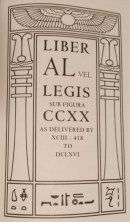
liber alThe Book of the Law and The Book of Lies
I wasn’t hugely impressed by Crowley’s masterpiece. I might see it differently now given what I have learned about Crowley’s life, but it’ll be a long time before I can bring myself to read it again.


crowley tiocfaidh ar la up the rahCrowley’s Saint Patrick’s Day Poem and Crowley’s Essay on James Joyce
These are writings by Crowley that were hard to find online. Both posts include brief discussions on Crowley’s interesting attitude toward Ireland.


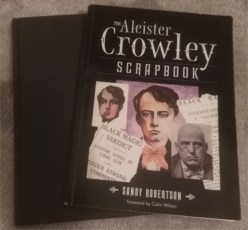
the aleister crowley scrapbookThe Aleister Crowley Scrapbook
This post includes an interview with Sandy Robertson, the book’s author. I was flicking through this book the other day, and found another reference to Inpenetrable by Joel Harris. (The third reference to this book that I’ve ever seen.)


There’s a lot more on Crowley on this blog. If you do a site-wide search for his name, you’ll see what I mean.


Echoes from the Darkness – Lovecraft’s Legacy, Part 1

While reading John L. Steadman’s H.P. Lovecraft and the Black Magickal Tradition last year, I decided that the time had come for me to reread Lovecraft. Too many of the books I read and plan to read reference his stories, and it was getting to stage where I was mixing up my Shoggoths, Yuggoths and Yog-Sothoths.  In order to remedy this embarrassing situation,  I started going back over Lovecraft’s tales, including the stories that aren’t included in the Penguin editions of his work.  I started on this collection during the summer, reading a story here and there, between other books. I haven’t strictly limited myself to the stories in this collection, but it’s the first of the Wordsworth series that I’ve completed, so I’m reviewing it first.

whisperer in darknessThe Whisperer in Darkness – H.P. Lovecraft
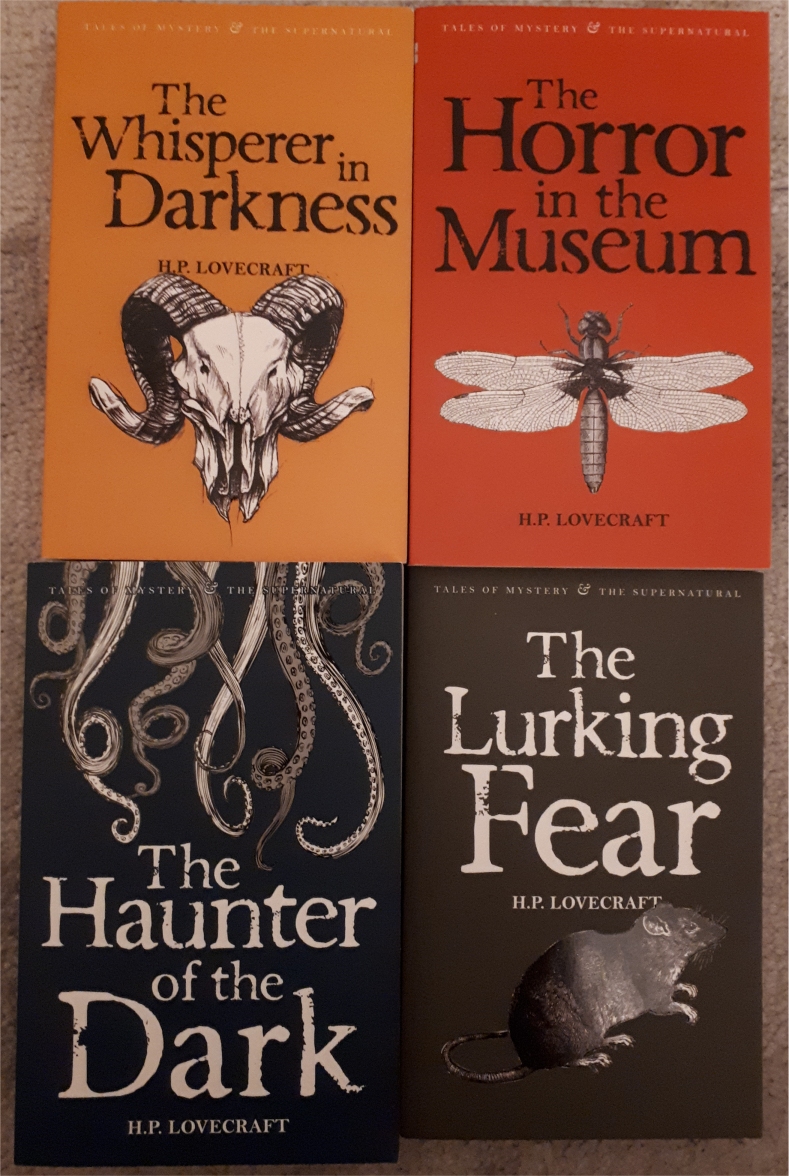
Wordsworth – 2007

All of the other entries in the Wordsworth series contain stories that are not included in the Penguin editions, but this collection was all stuff I’ve read before. It contains:

Dagon
The Nameless City
The Hound
The Festival
The Call of Cthulhu
The Case of Charles Dexter Ward
The Dunwich Horror
The Whisperer in Darkness
At the Mountains of Madness

These are obviously some of Lovecraft’s finest. The Whisperer in Darkness has long been my favourite of his, but I couldn’t remember what happens at the end. It’s fucking fantastic. There were gross parts in this story and in Charles Dexter Ward that I had also forgotten about. I was also very pleasantly surprised by how much I enjoyed the Call of Cthulhu. I have read an awful lot of horror fiction since the last time I read this classic, and I was expecting that it might not seem as effective to me now. If anything, I enjoyed it more than ever. There’s so many passages throughout that story that I paused to reread several times on account of their exceptional awesomeness. It took another half year to get around to writing this review though, so I’ve forgotten the specifics. In fact, the only story from this collection that I’ve read within the last 4 months has been At the Mountains of Madness. It’s only about 4 years since I previously read this story, so much of it was still in my head, but it still managed to give me a few chills. There’s one part near the end where he says, “It is absolutely necessary, for the peace and safety of mankind, that some of earth’s dark, dead corners and unplumbed depths be let alone; lest sleeping abnormalities wake to resurgent life, and blasphemously surviving nightmares squirm and splash out of their black lairs to newer and wider conquests.” Fuck yes. Please Sleeping Abnormalities, if you’re still out there, leave those unplumbed depths and destroy us soon!

It probably has a lot to do with the fact that Lovecraft was one of the only writers I had any interest in as a teenager, but I absolutely love his writing style. I adore Lovecraftian horror. I love how he took what he understood about the advances in modern science and used this not to spread hope for the future of humankind but to insist on the futility of all human life. We are nothing in even the minutest scheme of things. According to Lovecraft’s mythos, we were created by an ancient race of prawn-cucumbers to provide them with light entertainment. YES!

Although I own all of the Wordsworth editions of Lovecraft’s work, and these are the ones I’m using to order my rereading, I’m actually reading most of the stories from the Penguin editions because of the notes therein. I’m also using audiobooks and pdf versions. The Wordsworth edition are fine though; what they lack in commentary, they make up for in comprehensiveness. So important is Lovecraft to my reading habits that I need to have hard copies of all of his stories in my library.

wordsworth lovecraft

Anyone reading this blog should have read Lovecraft. His fiction has affected so many of the other books that I review here. Kenneth Grant’s The Magical Revival, Thomas Ligotti’s Conspiracy against the Human Race, Pauwel and Bergier’s Morning of the Magicians, Anton LaVey’s Satanic Bible, Simon’s Necronomicon, and Stephen Sennitt’s Infernal Texts are all heavily influenced by Lovecraft. His influence on horror fiction is unmeasurable. Some novels like Michael Slade’s Ghoul and Garret Boatman’s Stage Fright feature beings directly from Lovecraft’s stories, but his influence can be found in countless ways in countless other novels and tales.

Like I said, I’m rereading Lovecraft to refresh my memory so that I can delve deeper into the realm of Lovecraftian occultism. Here’s a review of an interesting little pamphlet on that topic.

cults of cthulu tenebrous.jpgCults of Cthulhu: H.P. Lovecraft and the Occult Tradition – Frater Tenebrous
Daath Publications – 1987

This short pamphlet contains the text of a lecture given in Leeds University in 1985. It’s credited to a lad named Frater Tenebrous who the internet is telling me is another name for Peter Smith. Peter Smith was a contributor to Stephen Sennitt’s Infernal Texts, and Sennitt actually dedicated the second half of that book to him and referred to him as “foremost scholar on the Necronomicon”. Only 123 copies of this were initially published, and they go for quite a lot of money these days. Fortunately, you can download pdf copies for free. This text contains a short biography of Lovecraft, descriptions of the major players in his pantheon and a very brief discussion of how Lovecraft’s fiction has shaped the rituals of a handful of occult groups (one of whom was led by Michael Bertiaux, yet another contributor to Sennitt’s book). I can’t say Cults of Cthulhu contained much information that I wasn’t already aware of, but it was only ever supposed to be “an introduction to the occult aspects of H.P. Lovecraft’s writings for potential initiates of the E.O.D.”. It made for pleasant reading on my commute to work one morning last week.

I’m gradually getting through the other stories and some even weirder texts of Lovecraftian occultism. Expect to see a few more posts on these over the next year.

Ph’nglui mglw’nafh Cthulhu R’lyeh wgah’nagl fhtagn!

Edit: For convenience sake, I’m including the links to all of the posts in this series for anyone who’s interested. (Part 1, Part 2, Part 3, Part 4, Part 5)