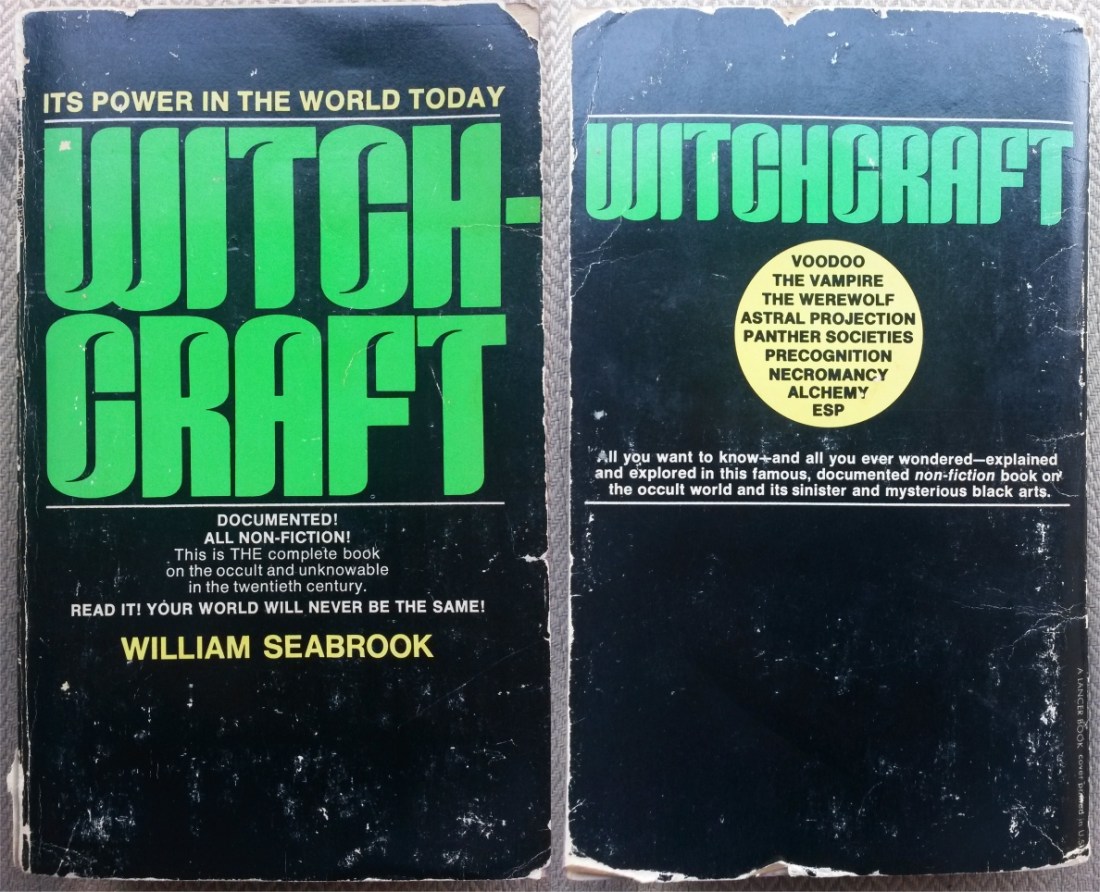
Willie Seabrook was an explorer, cannibal, black magician, bondage freak and journalist. This is his book on Witchcraft, and it’s fucking wonderful. The book deals with Seabrook’s personal experiences with witchcraft, and while a lot of it is fairly unbelievable, it is deadly craic. It’s a bit like reading a Dennis Wheatley novel told in the first person. I put this on my to-buy list after reading about it in Cavendish’s Black Arts, but after seeing it referred to in my favourite section of the Illuminatus! trilogy, I knew I had to get my hands on it. The Illuminatus authors have Seabrook playing a part in a conspiracy involving Ambrose Bierce, Arthur Machen, Aleister Crowley, Robert W. Chambers, J.K. Huysmans, and H.P. Lovecraft. (Expect a post on Bierce soon; I reckon I’ll get around to Chambers before Christmas.) It is implied that the Illuminati murdered Seabrook over what he published in this book and made his death look like a suicide.
(p. 296, Illuminatus! Trilogy)
After reading this, I had to own a copy of Seabrook’s book. It’s not super rare, but it took me a while to track down a copy for what I considered a reasonable price. My edition has a fairly boring cover, but the edges are coloured an interesting purple.
Beyond the Mauve Zone?
So there’s three parts to the book. Each part is comprised of short accounts of different things that Seabrook witnessed. The first part is on Doll magic, and it’s probably my favourite. There’s one particular story about a deceitful white explorer in Africa that I absolutely loved. A lad cheats a tribe out of money and soon thereafter goes missing. Seabrook was mates with the lads in the tribe, and one day, one of the boys asks if he wants to see something interesting. Guessing that it has something to do with the disappearance, Willie warns him that if its the missing white man, he’ll be obliged to tell the police. The native laughs this off and brings Seabrook into the jungle and shows him something good. It’s the rotting corpse of another native, strung up to a tree. The ropes binding it to the branches are digging into the flesh of the corpse’s bloating neck, and things are starting to ooze. The corpse is wearing the clothes of the missing explorer, and if Seabrook was to have gotten up close, he would have seen clippings of the missing explorer’s hair stuck onto the head of the corpse.
The missing explorer was found dead a few days later after having died of a constricted windpipe. Black magic had caused what had happened to the corpse to also happen to the victim.
Fuck yes. That is the good stuff.
The second part of the book is on Werewolves and Vampires, and the third is on general occulty stuff. It tells of Seabrook’s friendship with Aleister Crowley. This book is the origin of that famous story of Crowley walking behind a man, mimicking his gait, and consequently being able to make him collapse without touching or speaking to him. There’s also a part in here about Seabrook’s relationship with Upton Sinclair, author of Oil!, the most boring book I have ever read.
The book ends with a few chapters about kinky psychic-bondage experiments that Seabrook performed with his lover. He had a special gimp mask made for his partners that was basically designed to maximise sensory deprivation. He’d make his girlfriend Justine wear this mask, then tie her up by the wrists until she started hallucinating. They hoped these hallucinations would tell the future. The following images are not from the book, but they are extremely relevant. (They’re from an article about Seabrook from a 1942 edition of Click Magazine.)
One of Willie’s babes. Looks like he knew how to pick them.
He was a man that knew what he liked, God bless him.
Overall, this book is delicious. The stories might seem unbelievable, but that hardly matters. They’re entertaining. Plus, the author maintains that he doesn’t believe in magic the whole way through the book, and his incredulity is charming. Seabrook comes across as a remarkably interesting, and I am definitely going to keep my eye out for his other books. There were a few times in this one when he would write something quite rude, and it would take me a while to figure out if he was being bold or not. At one stage, I believe he refers to a woman’s vagina as a pickle-jar, but maybe he meant something completely different. Like other similar books, this contains references to other texts that I am going to have to try to get my hands on. Unfortunately, some of the books mentioned herein are fairly rare, and any copies I can find are extremely expensive. Oh well, I guess I’ll have to wait till I’m rich. Until then, I’ll leave you with some awesome pictures that I found after hunting down a reference from this book. On page 20, Seabrook mentions an article from a 1939 edition of Life magazine about Ozark superstitions. Finding the full thing online really made me happy that we live in the internet era. (Full article here)
This is why I do this blog. DEADLY!
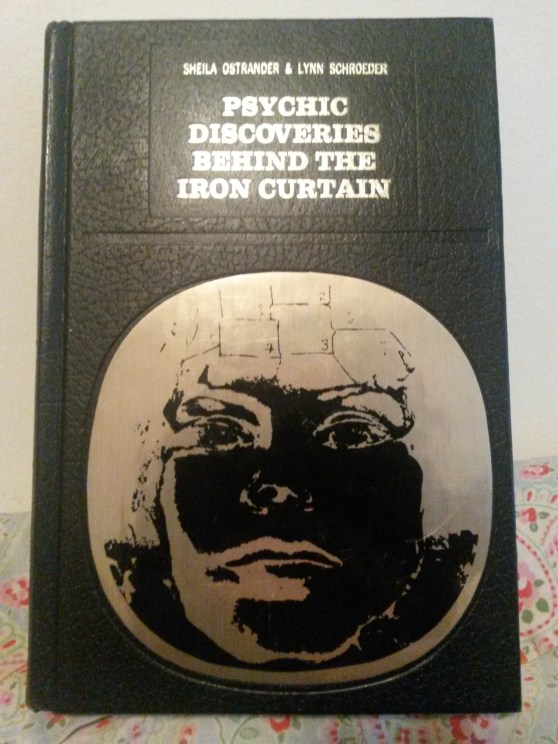
Laffont – 1970
I’m not going to read any more shit books for a long time. This horrendous pile of nonsense has ruined my month. ‘Look at the title though!’, I hear you say, “What did you expect, you fool?” Well, I knew it was going to be awful; I just underestimated how unbearable the nonsense would be.
This book was written in 1969/1970, and its major claim is the Russians are on the verge of several major breakthroughs in the field of parapsychology. The writing isn’t too bad; the book was clearly well researched, and there are lots of examples given, each described in detail. The main problem with reading this book is that it’s almost 50 years old, and, as far as I can tell, nothing much has come of any of its discoveries or predictions. Some old Russian lad guessed a bunch of cards; pffffft, who cares? While not quite as nutty as Morning of the Magicians, this has a similar vibe to it, and it actually makes reference to Pauwel and Bergier’s work. While reading this one, I found myself constantly wondering if people 50 years ago were more gullible, but then I found this video (of two absolute legends), and I realized that people today are no better.
There is another book from the same authors simply titled Psychic Discoveries. I would have thought that that was just a different title for this book, but I read something online that suggests that it’s actually an earlier version. I’m not sure. They also wrote a book called Psychic Discoveries: The Iron Curtain Lifted in 1997, but hopefully I’ll never find a copy of that one.
Here’s a video of the actual authors being interviewed. The host is a dork, but the ladies seem genuine.
Sheila Ostrander’s hairstyle is the only paranormal element of the video that remains unexplained.
I could discuss specific cases from the book, but why bother? It’s all a load of shite. The only specific thing that was interesting enough to remember was the laboratory experiment that was set up to see if a clairvoyant could prevent the events they had foreseen from happening. Let me clarify how that experiment was structured:
The psychic would sit down and try to read the future.
Once they had predicted what was going to happen, they would have to think about how they could stop that event from happening.
The next step would be to actually stop the foreseen event from happening.
If the psychic managed to prevent the foreseen event, the experiment would be deemed a success.
That’s right; the experiment would be deemed successful if the foreseen events did not actually end up happening.
The only way for the experiment to fail would be for the psychic to actually be psychic.
What the fuck were you thinking, you stupid Communist bastards!
I bought this as part of a set at a library book sale a few years ago. The other books in the collection are about aliens and psychics and the like.
The physical books are really nice, and I’d love to see a complete list of all the titles published in this series. They were published by Laffont. (So far, I have only reviewed Chariots of the Gods?.)
The other big problem with Psychic Discoveries behind the Iron Curtain is that it’s 400 pages long. It was too boring to read much of in one sitting, and so I spaced it out over my bus rides to school and back. It took me about a month, but I couldn’t bare for this to eat into any of my leisure reading time. I read it because it had a gnarly title, but it wasn’t worth it. Don’t waste your time.
I thought these books were going to be pieces of shit when I bought them. I was right.
The Truth About Cabala – David Godwin 1994 – Llewellyn Publications The one on Cabala isn’t too bad. I mean, if you wanted a little book to introduce you to the topic, this would do the trick. I’ve read a few books that required some understanding of Cabala (the Illuminatus! Trilogy,Transcendental Magic, Alan Moore’s Promethea series…), but I think the whole thing is a load of shit. Whatever though, this is only 50 pages long. I got through it in one sitting.
Easy Journey to Other Planets – A. C. Bhaktivedanta Swami Prabhupada Bhaktivedanta Book Trust – 1997 (Originally published 1970) Easy Journey to Other Planets is a really awful book. It starts off with the author claiming that the Bhagavad Gita pre-empted science in its discovery of antimatter. He then proceeds to reveal his complete misunderstanding of particle physics. The rest of the book is about how reincarnation is real. Overall, this is a crumby read, and although it’s quite short, it took me longer than expected to get through. Each day, I read a few pages as I shat in the toilet, but I couldn’t allow this nonsense to interfere with any other part of my life. Just thinking about this book brings a waft of shit to my nostrils.
The face of a con-man.
I was hoping for some tips on making easy journeys to other planets, but all I got was some cretinous garbage about yoga. The author seems to believe that actually going to another planet would be a total waste of time. He says that the only way it would benefit us to visit a different planet would be for only our spirit to go. Fuck that. And the plonker doesn’t even give instructions on how to spirit-visit the planets; he gives tips on the things that you should do if you want to try to spirit-visit. Basically, this is instructions on how to get instructions. Truly, a piece of dirt. Fuck this shitty, scatty, awful, idiotic book.
What would you want to do if you met God? Ehhh, I’d like to muck about with him and some cows, please.
Two awful books that aren’t worth reading. I paid a grand total of 50 cents for the pair of them, and to tell the truth, I regret it.
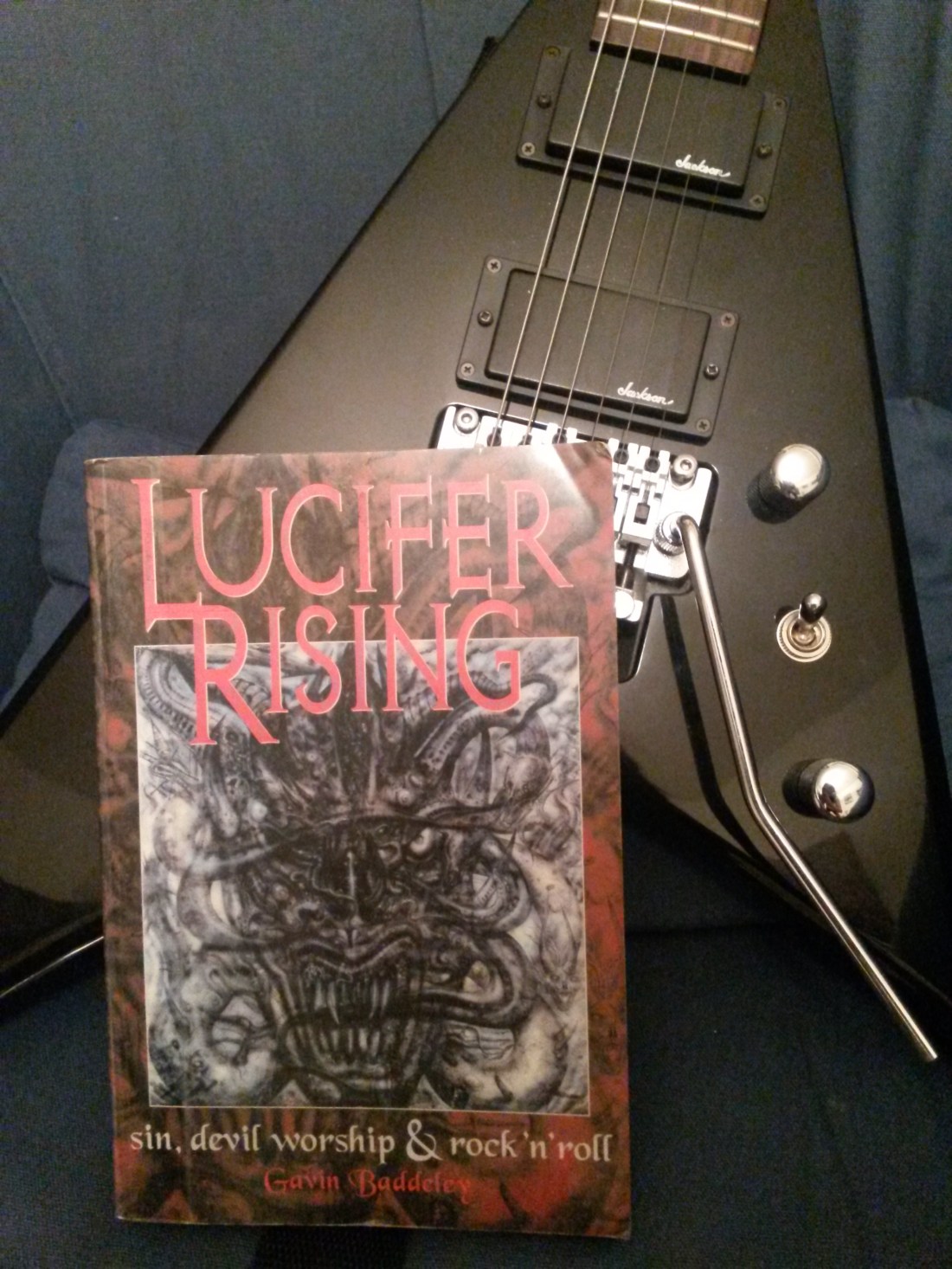
Plexus – 2006
This book deals with the different manifestations of Satanism within modern culture. It focuses on rock music and heavy metal, but it also discusses serial killers and horror movies. Sounds pretty great, right? A recommendation for this book showed up on my goodreads account, and my copy was ordered within moments of reading its description. I’m pleased to say that it didn’t disapoint. The author is a priest in the Church of Satan, and the history and outlook of LaVeyan Satanism is central to this book. I like LaVey, so I was entertained, but the author’s tone might be grating on some readers, particularly if they were Christian.
The first few chapters give a short yet surprisingly comprehensive history of Satanism, but the latter half of the book is mostly taken up with interviews. Some of these are excruciatingly embarrassing (Glen Benton is an idiot), and some are genuinely hilarious (Euronymous is precious). Varg Vikernes from Burzum has claimed that the interview with him is entirely fake. (He also claims that this is the worst book that he has ever seen.) I know lots of Burzum fans who claim to dislike Varg. Well, I always thought Burzum’s music was crap, but I think he’s a pretty funny guy. (Don’t get me wrong; I know he’s a right-wing scumbag, racist, murderer and all-round crazy person, and I certainly wouldn’t say that I ‘like’ him, but let’s be honest; he regularly brings the lols.) There were a few interviews in here that weren’t hugely insightful, and it seemed that some of the interviewees may have been chosen based on their availability rather than their unique insight or authority on the topic, but this doesn’t take away from the cooler parts of the book. It might also be worth noting that I’m a fan of quite a few of the musicians interviewed herein, so I was probably more entertained than most people would be. If you don’t like rock music, this book might be a bit boring.
Baddeley suggests that there are as many different forms of Satanism as there are forms of christianity. (He also shows how hazy the lines between some forms of christianity and Satanism can be.) This book acknowledges the fact that Satanism is a very loosely defined set of beliefs and behaviors, and the author provides a thorough and entertaining account of the movement’s more interesting facets. (I picked up some cool recommendations for bands, movies and books too.) Overall, I would recommend this as a good primer for anyone with an interest in the Devil’s place in Rock’n’Roll.
I started writing a paragraph about my own take on Satanism, but it turned very lengthy very quickly, so I think I shall save it for a later date. Until then, Hail Satan!
(Update: This is what that paragraph eventually turned into.)
This is one of the stupidest, shittest books that I have ever read. I started reading it in February, but school got busy and I gave up on it. Things have eased up a bit recently, and I saw this piece of garbage lying on my shelf, mocking me and boasting to my other books that it been victorious in clogging my bullshit filter. “No!”, I said, “I shall not be defeated!” I picked up the book with renewed vigor, and forced myself to wade through 170 pages of handicap.
Edgar Cayce was a lad from America who claimed he was a psychic. I watched a shite documentary on him once, and I wasn’t very impressed. He would pretend to be asleep and then diagnose people’s diseases. He also gave people information about their past lives and that kind of crap. Somehow, I have amassed a small collection of books about him, but after reading this one, I imagine it will be quite a while until I read any more of them.
My Cayce Collection
God, even thinking about explaining what this book is about is making me feel embarrassed. Reflecting on the fact that I knowingly spent several hours of my life reading a book by an idiot about an idiot for a bunch of idiots is making me think that I ought to find a new hobby.
So the idea here is that 12,000+ years ago, Atlantis was an island inhabited by spirits. The spirits wanted to interact with the physical stuff on the island, so they entered into living bodies. Or maybe they created the bodies; I can’t quite remember. Either way, these living bodies were not quite human; some had animal parts. Then, after a bit, some of the weird creatures turned greedy and a split occurred. Half of them remained sound, but half of them turned bad. The bad ones were called the ‘Sons of Belial’, and the good ones were called …something else; I’ll be fucked if I’m reopening the book to find out. So the two factions went at each other, and Atlantis was destroyed. The lads took off, probably in their nuclear powered flying machines, and a bunch of them ended up in Egypt.
When they got to Egypt, there were so many Atlanteans that the Egyptians didn’t know what to do. Somebody came up with the idea of bringing back RaTa. Now, RaTa, for those of you who weren’t aware, was a high priest who had been banished from Egypt. Anyways, RaTa was a bit of a genius too, and he managed to help the Atlanteans assimilate into Egyptian culture. This is how probably how the Egyptians learned about pyramid power and all of that shit. Oh yeah, I forgot to mention; RaTa, the diplomat, outcast, high-priest and all round hero of the story, was actually a previous incarnation of Edgar Cayce himself. I can’t remember if the book ever mentions why he had been banished from Egypt. I personally suspect that it was for molesting young boys.
This book is a piece of dirt, fouling up my bookshelf. I started off reading it on the toilet, but I found that it gave me constipation. I’ll never read it again. Edgar Cayce was a stupid bastard.
This is a cool one. This pamphlet contains Matthew Hopkin’s treatise on witchcraft from 1647 and an essay about Hopkins by my hero, Montague Summers. Hopkins, for those of you who don’t know, was England’s self proclaimed Witchfinder General. From 1644 until 1647, he traveled from village to village, trying and torturing those unfortunates accused of witchcraft. England was going through a civil war, and the state of political turmoil made it possible for Hopkins to assume authority and roam about as he pleased, burning bitches and getting money. It is believed that he was responsible for the deaths of 300 people. (This works out at as more than half of the total number of witches killed in England from 1400-1700.) The story goes that he stole the Devil’s list of names from Lucifer himself, and that’s how he knew where to look and who to interrogate. There was a movie made about him in 1968 that featured Vincent Price in the title role, and many heavy metal bands have written songs about him. I think he was a pretty neat guy.
The essay is fairly interesting. Summers gets upset over the fact that people presume that burning at the stake was the standard method by which witches were executed in England. Although many witches were burned alive in Scotland and on the continent, most English witches were actually hung. Those few that were burned were usually being burned for other, additional offences. Summers deems Hopkins a humbug, a quack and a mountebank largely on the basis that Hopkins was not familiar with the classic literary works on witchcraft. The fact that he claimed to be an authority without having first poring over the literature really seemed to grate on Monty. (Summers was enormously erudite and is responsible for many of the existent translations of these works with which Hopkins was not acquainted.)
(Image From Robbins’ Encyclopedia of Witchcraft and Demonology)
Hopkins’ pamphlet takes the form of a dialogue between himself and a person who is not convinced of the legitimacy of his work. He explains how he began his witch hunt, the nature of witchcraft and the different methods of ‘examining’ a witch. These different forms of examination were really just different varieties of sadistic torture. Hopkins was a notorious witch-pricker. He and his accomplices, John Stearne and Goody Phillips, would spend hours sticking needles into women’s flesh. If they found a spot that would not bleed, this was taken as proof of diabolic interference. (The Devil always left his mark somewhere on his servants’ bodies, and the spot where he left this mark would not shed blood.) The only real problem with this method is that there is a finite amount of blood inside a human body, and the more pricks you give a person, the more likely the next prick will prove bloodless. In fairness to Hopkins though, pricking was only a preliminary method of testing. If the results weren’t conclusive, the witch would be ducked.
Remember that amazing scene in Monty Python and the Holy Grail in which the crowd decide to throw an alleged witch into the pond to see if she floats? (Watch it again and notice how they inaccurately claim that witches should be burned!) Well, a good game of sinky-floaty was also a favourite pass-time of Hopkins.
I’d allow her to swim in my pond any day.
Summers describes how before the witches would be thrown into the pond, they would have their thumbs tied to the feet on the opposite sides of their body so that their limbs would be making the sign of the cross. The reason that witches were dunked in this manner was not to see whether or not they were made of wood; it was because water, which is in some way divine by its nature, would not accept a servant of Satan into its bosom. This method of trying a witch always seemed particularly bizarre to me, but apparently the practice of dunking occurred in some parts of Europe up until the late 19th century.
Can you think of anyone else who floated on water though? Hmmmmmmmm? I wonder what his excuse was…
Other suspected witches were either ‘watched’ or ‘walked’. Watching a witch involved placing the crone in a room with a small chink or hole in the door until she either made a confession or something else occurred to prove her guilt. She would be forced to sit in an awkward position, and tied up if she refused to remain still. The watchers would keep an eye out for spiders or small flies that slipped into the room through the fissure in the door. If they were unable to squash these bugs, this would be taken as proof that they were actually the accused’s familiar spirits come to relieve their master in her hour of suffering. An elusive midge could provide interrogators with enough evidence to send a witch to the tree. Watching sessions could last days, and the witches were starved throughout.
‘Walking’ was when witches were deprived of sleep and energy by being forced to stay up all night, running back and forth in a small room. Ándale, ándale! Arriba, arriba!
Hopkins also provides an entertaining list of the names of all the witches’ familiars that he encountered. He claims that these wicked spirits have “names which no mortall could invent”, and while Ilemauzar, Pyewackett, Jarmara, Jeso, Holt, Saoke, Griezzel, Wynoe, Panu, and Mrit are all quite unusual sounding, Pecke in the Crowne, Vinegar-Tom, Jockey, Sugar, Newes, Littleman, Prettyman, Dainty, and Greedigut all sound very much like they were invented by a mortall, and that’s not to mention Elizabeth, Collyn and Sandy. Best of all though, one witch claimed her familiar was named Jesus. (Summers gets hot and bothered over this, claiming that “to name the Sanctissimum Nomen would be to banish the familiars and dissolve the enchantment.”)
After a few years, local authorities became suspicious of Hopkins, and he was forced into early retirement. There are stories that he himself was ducked, but there is no evidence to believe that this actually happened. He died from tuberculosis in his late 20s. (Vincent Price was 56 when he played him in the movie.)
This book is fairly old. I had been keeping an eye out for an affordable copy for quite a while before I found this one, and all things considered, it’s in pretty good condition for what I paid for it. The cover and spine are in rough shape, the pages are yellowed and the edges worn, but I’ve been able to figure out that before I purchased this copy, it had probably remained unread since its publication. Several of the pages are bound together on the wrong side, making the book impossible to read without either tearing them apart or using a very small camera to slip between the pages to photograph them. Maybe there is a specific word for this kind of printing error, but I am unaware of it. Check out the video below to see exactly what I mean.
I read Hopkin’s pamphlet online a long time ago, and Summer’s essay is interesting but not exactly mind-blowing. As a whole though, this book is fucking cool, and the extra effort I had to put into reading it made it all the more enjoyable. It’s Walpurgisnacht tonight too, so turn the tables on Hopkins and make it your business to go forth, make love to the devil, ride to the Sabbath, and hang a witch-hunter.
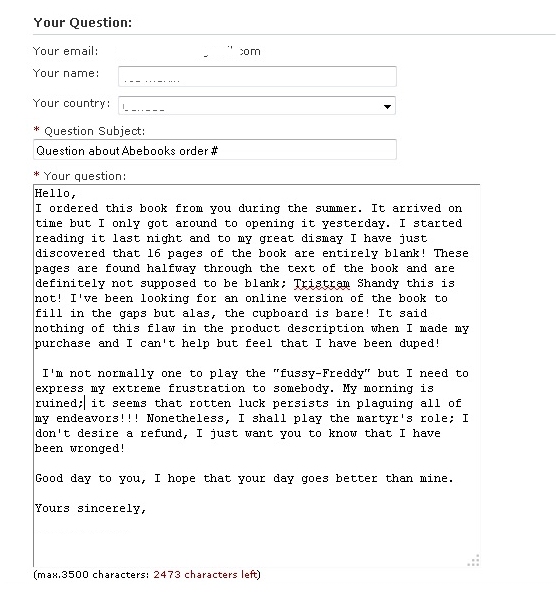
I came across the title of this book when I was reading Colin Wilson’s The Occult two years ago, and from his description, I knew that I’d have to read it at some stage. I spent a while trying to track down a copy at a decent price, and when I found one, it spent a few months lying on the shelf before I got around to reading it. When I finally got around to it, I was met with an unpleasant surprise. Some of the pages were entirely blank. See the below video for details:
Like I said, I had ordered this a good while before picking it up to read, and so I didn’t feel it fair to demand a refund. I doubted that the bookseller had known about the defect, but I was having a slow day in work, and I decided to drop them an email to pass the time. Below is the message I sent.
When I wrote that email, I did not expect a response. Fortunately, I was wrong; they replied promptly:
Many’s the stupid email I have sent, but I have never been so satisfied with a response. Normally you get a feebly polite apology. I take my hat off to the individual who sent the above response to me. It makes me happy to think that there are companies out there that deal with customers as they should be dealt with. If you’re talking to a jackass, talk to them like they’re a jackass. (Although, note that the seller did very courteously offer to send me a replacement.) I was extremely satisfied with my dealings with this seller, and I encourage all of my readers to buy books from them whenever the opportunity arises.
Anyways, I soon thereafter bought a different copy of the book (the more recent Dedalus edition), and that version lay on my shelf for another year before I got around to it. While the Spearman edition has a foreword by Colin Wilson, the Dedalus version has an afterword by Gary Lachman. Surprisingly, the Dedalus version also omits a two page foreword by Bryusov himself that really should be part of the text. In it, Bryusov claims to be the editor of the tale and not the author so-to-speak. Otherwise, the text of the two books are identical copies of the same original printing. (There are identical imperfections on the same pages in both versions, one of which looks like a squished fly.) If I had to choose, I would buy the Spearman version, but I would make sure that it has all of the pages before buying! (My copy is missing pages 76, 77, 80, 81, 84, 85, 92, 93, and a few more.)
Two things before I start my actual review. First of all, the name of the author is spelled differently on my two copies of this book. It’s spelled Valery Bryusov most places online, so I’m going to use that spelling. Next, this post contains a few spoilers. If you are sure you want to read this one and you’re like me and like knowing as little as possible about a book before reading it, maybe you should read the book before you read the rest of this. (But make sure you do come back to finish reading this when you’re done. I discovered some cool stuff about this book that you’ll want to know!) If you’re not sure about whether or not you want to read this one yet, read away. The spoilers here won’t ruin the suspense of the novel.
So what’s the big deal here? Why did I bother with this book? Well, it’s a novel about magic, the witch-craze, repressed sexuality and perversion. What more could I possibly ask for? Set in 16th century Germany, it tells the story of a hard man called Rupprecht who’s making his way home after gallivanting around Mexico for a few years. He becomes enchanted by a girl who is staying in the same hotel as him, but he quickly notices that she’s carrying some serious baggage; she is possessed by demons and she practices black magic. As so often happens, this woman’s personality flaws make her seem all the more attractive, and Rupprecht decides to wander around with her for a while. She tells him that she’s searching for a former lover, and Rupprecht agrees to help her find him. Oh, and it also turns out that her old lover is either an angel or devil. (We’re never made entirely sure which side this ‘Fiery Angel’ is on.) At this point, Rupes’s compliance makes you start to wonder whether it was by natural or infernal means that he was so enchanted; shouldn’t he be taking this as his cue to tell Renata to fuck off?
Well, they wander around a while looking for the Fiery Angel, but Renata gets disheartened and decides that the only way to find him will be to ask the devil for help. Renata doesn’t want that kind of guilt on her conscience though, so she convinces Rupprecht that he should sell his soul so that she can find out where her boyfriend is. Rupprecht is a hard man and everything, but he clearly gets off on kinky sado-masochistic power struggles. The more he can debase himself for the sake of his lady, the stronger his mental ‘gasm shall be! He offers his soul to Satan and actually kisses the Dark Lord’s ringpiece in order to cuckold himself; what a creep!
There are several other twists and turns in their complicated relationship, but eventually Renata runs away on Rupprecht. After a bit of moping around by himself, he bumps into Faust and Mephistopheles and wanders around with them for a while. When he finally stumbles across Renata again, she has joined a nunnery, changed her name to sister Maria, and she’s gotten herself accused of witchcraft. (Typical, right?) She is of course guilty of witchery, but one gets the impression that the reasons she is being charged have less to do with her actions and more to do with the fact that nunneries are mad places full of mad people. The whole thing very quickly turns into a Devils of Loudun situation, and Renata is sentenced to death. Rupprecht tries to rescue her, but things don’t really go according to his plans.
That’s the basic plot of it, but there’s a tonne of cool bits that I’ve left out. Rupprecht attends a witches’ Sabbath, he spends time with Cornelius Agrippa and Johann Weyer, he performs ceremonial black magic and summons demons, and Renata and he have a tonne of kinky sex. (Ok, so we don’t get the juicy details, but judging by the way they act with eachother and the fact that Rupprecht claims that Renata wanted to do more than just regular inny-outty, we can assume that no door was left unopened!) One interesting feature of the text is the fact that although this is a novel about witchcraft and magic, it is also very much a piece of historical fiction. At no point in the book does anything happen that might not actually be explained in real life. Perhaps the most curious thing that occurs is that Renata knows Rupprecht’s name before he introduces himself, but I’m sure you can imagine 100 different ways that a person might find out the name of another guest at the same hotel as them.
Despite the fact that it is mentioned in neither Colin Wilson’s foreword in the Spearman edition nor Lachman’s afterword, it turns out that this book, particularly the last few chapters, is actually largely based on a true story. In 1749, a nun named Renata Maria Saengen von Massau was one of the last women in Germany to be executed for the crime of witchcraft. (She died in 1749, but The Fiery Angel is set over 200 years earlier; I don’t think any dates are specifically mentioned, but Cornelius Agrippa, who dies at the end of the book, actually died in 1535.) I found two different accounts of the real Renata’s life in my library. One is from Robbin’s Encyclopedia of Witchcraft and Demonology. This is a rather sympathetic account that suggests that poor Sister Renata was a victim of mass hysteria. The other account of her life that I read was in Montague Summers‘ book, The Geography of Witchcraft. Monty was fully convinced that this woman was indeed a vile Satanist, and his account is even more fanciful than Bryusov’s.
Despite their different standpoints, Summers and Robbins both present the same basic story. Sister Renata had entered a nunnery when she was about 19 years old. She spent the last 15 of her 50 years in the nunnery as the subprioress. Everything was going fine in her life until a girl named Cecilia Pistorini started throwing fits in order to gain entry into the convent. Cecilia believed her hallucinations and spasms were messages from God, and she thought that this should allow her to skip through the novitiate stage of becoming a nun. Renata wasn’t convinced, and she suggested that the girl might have been putting it all on. Cecilia remembered this, and when she eventually became a nun, she convinced herself and others that Sister Renata was a witch. As she was dying, another senile old hag of a nun claimed that Renata had bewitched her, and this forced to the prioress of the convent to look into the matter. Word got out, and the idea that Renata was a witch caught on with other idiot nuns in the convent. They started imagining that they had been bewitched or possessed and a bunch of them started screaming things out during mass. The more attention they got from the local priests, the more horny they became and the more they acted up. This did not look good for poor Renata. She denied all of the allegations at first, but after twenty lashes with a consecrated rawhide bullwhip, she started to remember her sins.
In Renata’s confession, she claims to have given herself to Satan when she was only 8 years old. She spent her teenage years having sex with demons and learning the craft of Satanism, and then when she was old enough, she decided to join the convent with the sole purpose of bringing it down from the inside. (It’s a bit hard to understand how the other nuns didn’t notice anything for the first 49 years that she had been there.) She claims to have ridden to the Sabbath several times a week, to have made love to the Devil on countless occasions, and to have stolen consecrated hosts with the purpose of throwing them into the toilet. The way she stole the hosts was pretty cool. Before she would go to receive communion, she would cut slits in her flesh, and when the priest would give her the communion wafer, she would sneakily stick it into the communion-shaped holes that she had carved into her own body. She did this just so she could throw the body of christ into the crapper. What a legend!
There’s an interesting part in the Verbatim Reports from Sister Renata’s trials that might have been Bryusov’s source of inspiration for the character of Rupprecht.
“Q. Was she a witch? A. Yes. Q. Where did she learn this and from whom? A. A grenadier had taught her in Vienna, where she and the whole household had gone with her father during the Hungarian war. Q. How did she meet this grenadier? A. As happens in wartime. The grenadier had often given her bread when she was hungry, and finally he promised to teach her something. Q. What then did this grenadier finally teach her? A. He gave her a paper, on which all sorts of letters were written. On this paper she had to draw a circle and stand inside it. In addition, she had received a charm [Zetel] with various words on it; and if she could read these words, then she could make passers-by in the street lame and crippled.”
In The Fiery Angel, Rupprecht doesn’t meet Renata in Vienna, but he is a soldier that meets her in a time of need, and they do spend time together studying the black arts. I think it’s quite likely that Rupprecht originated as a re-imagining of the mysterious grenadier from the real Renata’s confessions.
In the book, Renata dies in Rupprecht’s arms, but the real Renata was not quite so lucky. Her judges decided to show her some leniency in her execution though, on account of the fact that she had been seduced by Satan at such a young age. She was shown the courtesy of having her head chopped off before being thrown into a barrel of burning tar. Apparently the executioner made such a clean cut that her head popped clean off her body with the first blow from his sword, and he was given a round of applause for his accuracy. Imagine a crowd of people cheering a man for decapitating a 69 year old woman.
All in all, this is a very interesting book. I found the first half dragged a little bit, but it really picks up later on. Bryusov knew his stuff when it came to witchcraft, and there are a few books mentioned in here that I am going to have to try to track down. In truth though, this book is more about the psychology of attraction than it is about black magic. Apparently the plot of the story is largely based on events from the author’s own life. He basically took the story of a love triangle that he had been involved in, chose characters from a famous witch trial to play the roles, and set the story 200 years before those people had actually lived. The result is actually deadly. I mean, as mad as it sounds, I think this book would be an enjoyable read for a person with no interest in witchcraft or demonology. For those of us who are interested in those topics, this is a must read. Five stars.
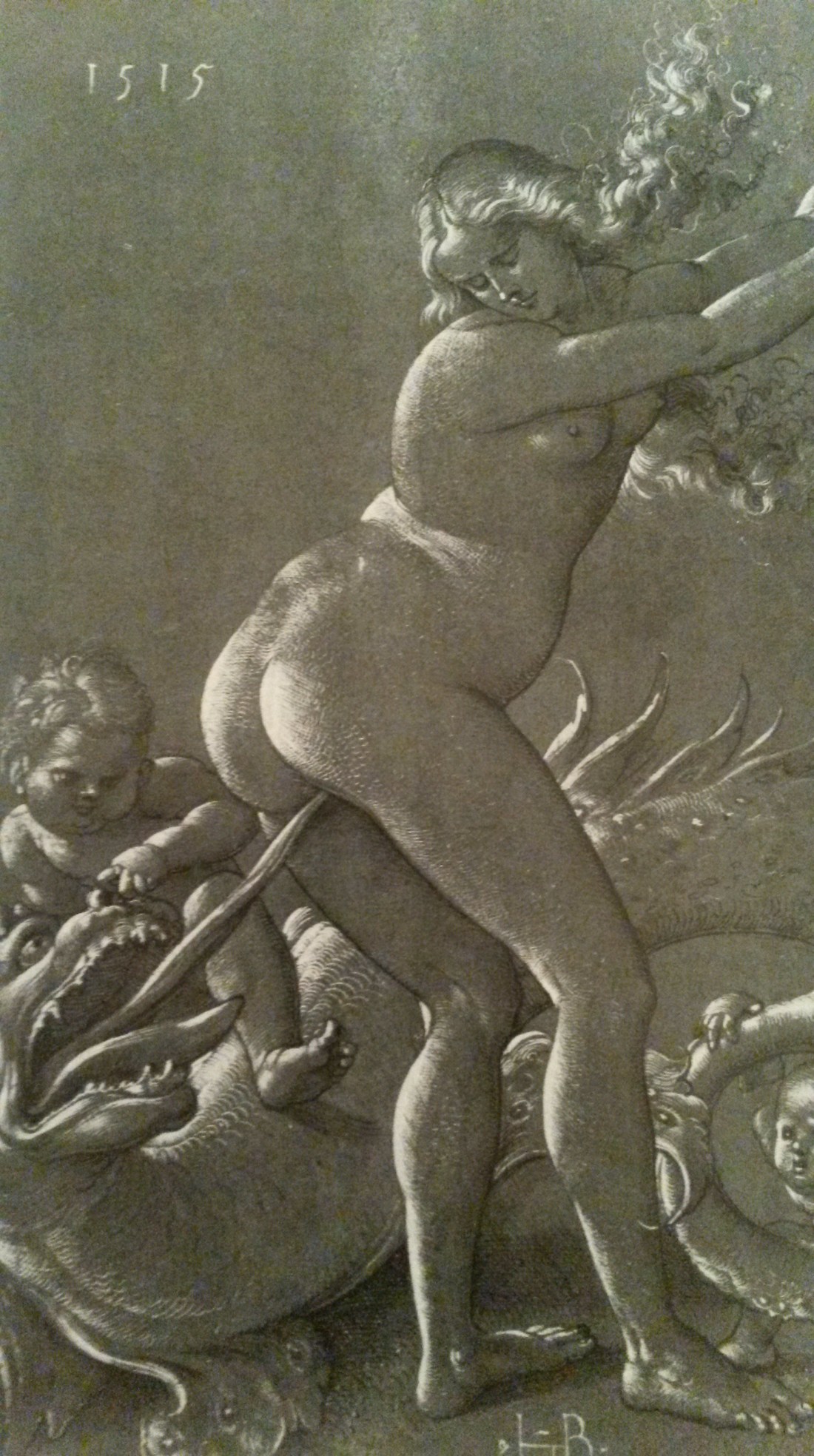
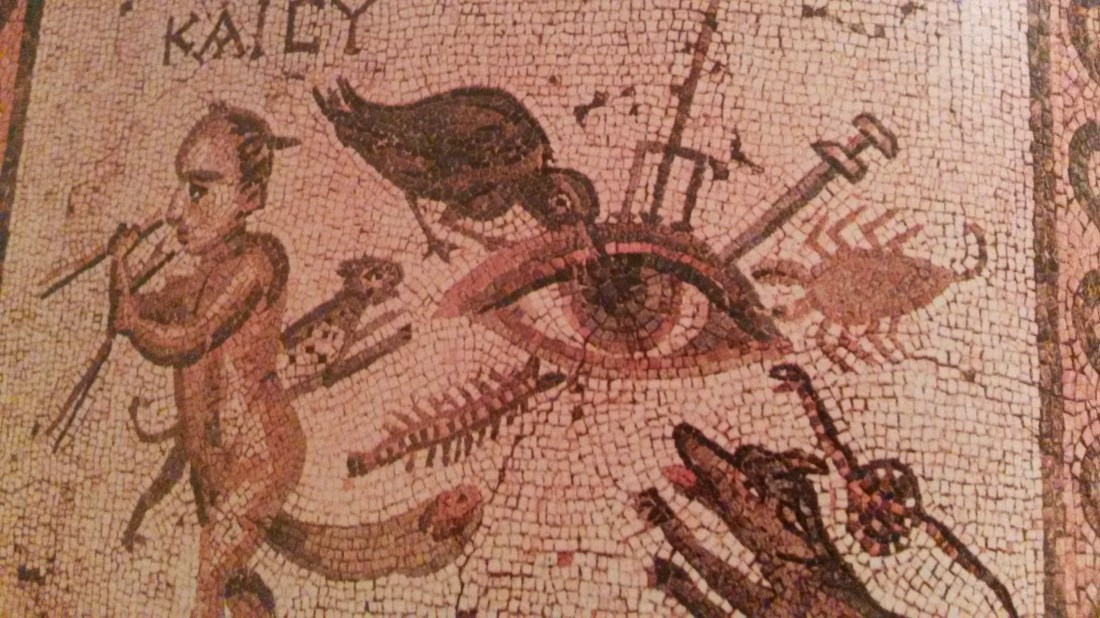
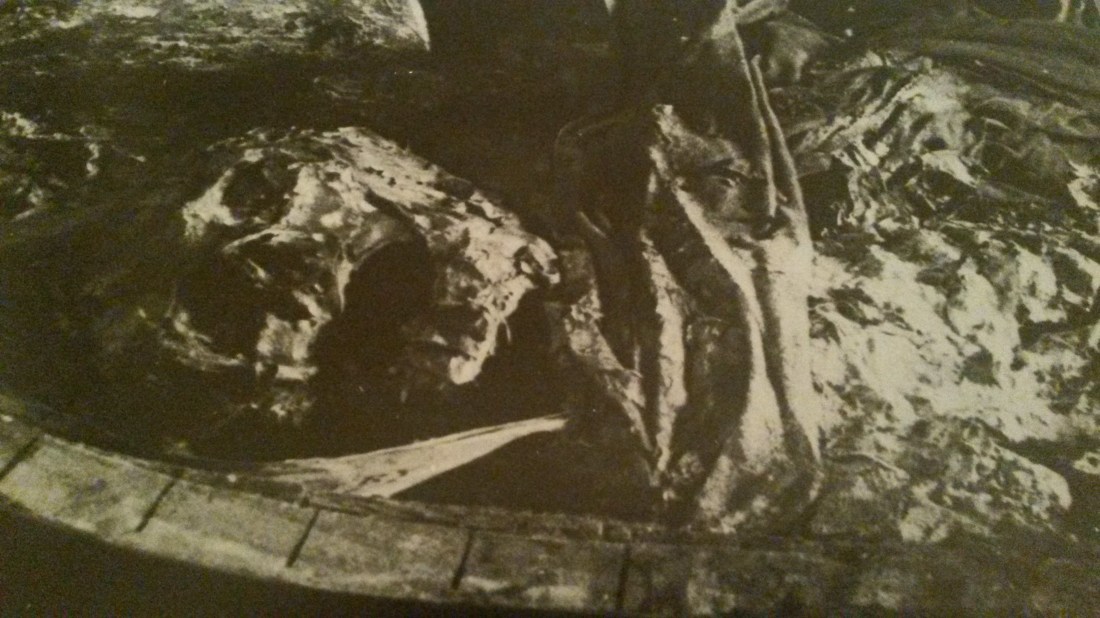
This is a pretty cool coffee table book on witchcraft from the 70s. Most of it is the kind of stuff you expect from a 140 page overview of an overwhelmingly broad topic, but there were a few cool bits in here that I hadn’t come across before; some of the details on the torture techniques of the inquisitions made me feel rather uncomfortable. The section on Wicca is far too long, but otherwise the book is pretty good. The images are by far the best part. I have a bunch of other books on the topic that are far more detailed, but I paid less than a dollar for this one, and I feel like it was a wise purchase.
An irresponsible mother allows a dog-like serpent to give her a little bit of licky-licky-bum-bum in front of her kids.
The caption below this Roman mosaic in the book claims that its intention was to “to crush the evil eye’s potency by means of pecks, bites and stabs”. Hang on though! The eye isn’t just being pecked, bitten and stabbed; there’s also a man farting at it. And is that just a fart? That brown stream spewing from the man’s anus looks like it’s carrying baggage! Either way, think of how disrespectful that is! Imagine being captured by your worst enemy; he pokes you with his trident, throws you in a cage with gross insects and wild animals, stabs you with a sword, and then adds insult to injury by farting in your eye. What a blackguard!
Good boy Jimmy, scratch that mentally handicapped woman’s face with your rusty nail. She won’t be casting any more spells on you after that!
These images are the coolest part of the book. They’re from the aftermath of the 1963 desecration of Clophill Graveyard in England. These grisly exhumations are thought to have been the work of Satanist Necromancers. 7 graves were desecrated and chicken’s feathers and blood were found strewn across the scene. One of the corpses was a lady named Jenny Humberstone who died in 1722. Her grave was opened 3 more times after the initial incident. I suppose that if you’re going to dig up a corpse, it’s probably more polite to exhume somebody that nobody remembers. It’s still pretty fucked up if you ask me. There was actually a horror movie made about Clophill church a few years ago, but it looks absolutely shit and I probably won’t be watching it.
Well, I finally got around to reading it; the purported Necronomicon of the mad Arab, Abdul Alhazred. If you haven’t heard of the Necronomicon, that means that you haven’t seen Evil Dead or read Lovecraft. It makes me sick to think of the uninitiated reading my blog, but luckily enough, this book contains a Most Excellent Charm against Hordes of N00bz:
Turn around, go, arise and go far away!
Your wickedness may rise like heaven unto smoke!
Arise and leave my blog!
Be commanded by Shammash the Mighty!
Be commanded by Marduk, the Great Magician of the Gods!
Be commanded by the God of Fire, your Destroyer!
From my blog depart in shame!
Now that only the adepts remain, let’s have a look at this ancient text of necromancy and forbidden ritual!
Well, it’s not really ancient, and the rituals aren’t as much forbidden as they are silly. There’s a million accounts of the story of this book online, but I’ll summarize for my readers. In the mid 70s, a lad calling himself Simon claimed that he had come across a copy of the Necronomicon, a fictional book that had appeared several times in the short stories of H.P. Lovecraft. Simon managed to get the book published, but he refused to ever go public, and nobody has ever seen the actual manuscript. Despite this, lots of people did and do think that this is the real deal. (There are some really embarrassing youtube videos of people defending the book’s authenticity.) I think the strongest evidence for the book’s legitimacy is actually how much it sucks; if I was going to write a fake Necronomicon, I would make it far, far nastier. This is basically a version of the Babylonian creation myth with a few Kutulus and ridiculous sigils thrown in to make it a bit spookier. One part of the book lists the 50 names and Seals of Marduk, and some of them are fucking ridiculous looking.
Asaru looks like a little nerd.
And Shazu both looks and sounds like a magician’s pet gorilla.
“Tutu” is another one of Marduk’s aliases. Yeah. Tutu.
The thing that really gives it away for me is the fact that the book reads like a Lovecraft story. It begins with a lad talking about how afraid he is of the horrors that he has awoken and proceeds to give a detailed account of how he awoke those horrors. He speaks passionately about how dangerous it would be for anyone else to read the information that he has been writing down. The manuscript is compiled of several different texts, all of which relate to each other and further the narrative, and the book ends with the narrator describing the evil things that he can see approaching him as he finishes writing the manuscript… Come on lads, that formula seems a little familiar doesn’t it?
Don’t get me wrong; I liked the fact that it was Lovecrafty, and I think that this is a quaint little addition to my weird fiction collection, but I’m definitely glad that I didn’t pay very much for my copy. The book is more than 200 pages, but about half of it is taken up with silly squiggly pictures. The testimonies of the Mad Arab were definitely the funnest parts. Were I out to cast some spells and summon some demons, I would probably be fairly disappointed with this. Then again, there is the very valid argument that this text is as “authentic” as most other grimoires. You’d have to be a bit of a wanker to take it seriously either way.
I’ve been watching that new Ash Vs Evil Dead series, and I have to say that it’s awesome. Opening the series with a Deep Purple song was utter genius! I’m going to go and watch the latest episode now. I’ll probably end up annoying my wife with some of my recently acquired Necronomicon trivia.
I found this post-it note tucked between pages when I opened it. Kutulu, enlightenment and Diana Ross; I’ll bet there was a story behind this one!!!






 I thought these books were going to be pieces of shit when I bought them. I was right.

 Warner Books – 1968
 My Cayce Collection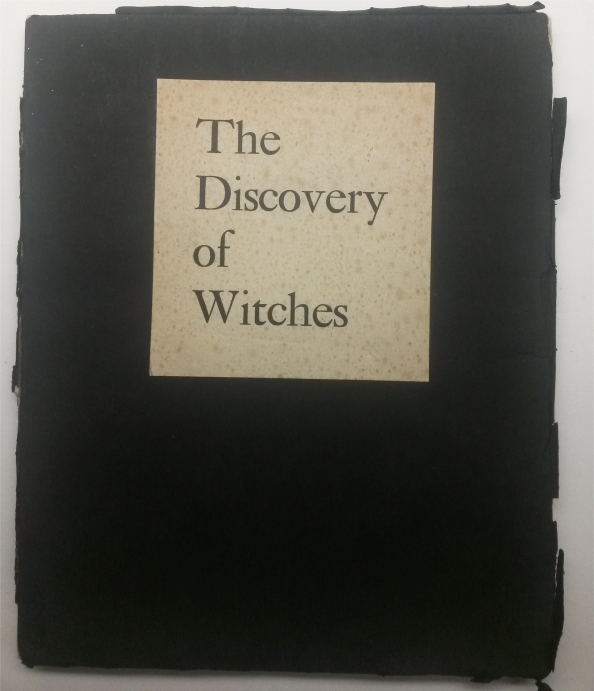












 Nocturnal Revelries