Satan was a Lesbian – Fred Haley/Monica Roberts

satan was a lesbian fred haley.jpgSatan was a Lesbian – Fred Haley/Monica Roberts
PEC – 1960

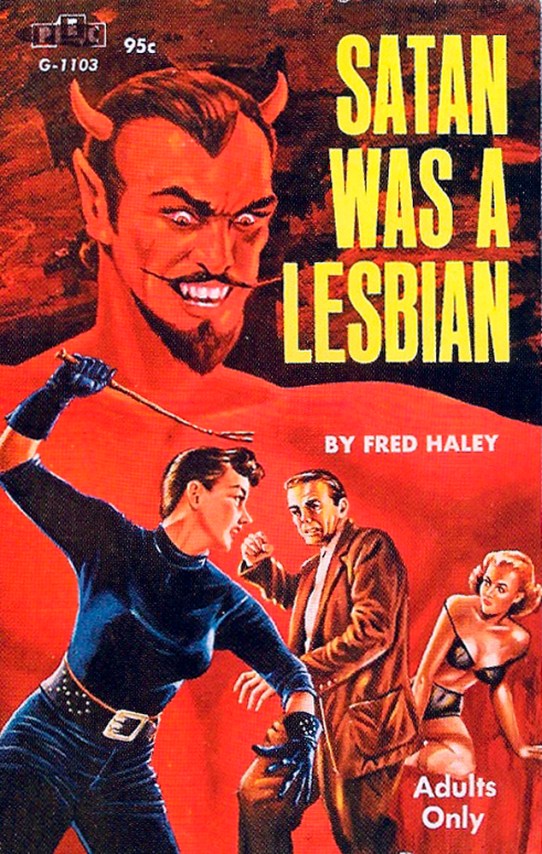
I’m sure you already saw it, but take another look at that incredible cover there. Bask in its glory. It’s a thing of absolute beauty. This cover was also used on Jan Hudson’s Satan’s Daughter. That book was originally published in 1961, 5 years prior to Satan was a Lesbian, but there were at least two printings of that novel, and I don’t know if this cover originally appeared there or on Haley’s book.

Unfortunately, Satan was a Lesbian fails to make good on the promises its cover makes. This is a relatively boring softcore porn novel that has nothing to do with Satan. The cover lists Fred Haley as the author, but the inside says Monica Roberts. I don’t know which is the pseudonym.

Don’t worry about spoilers. The story is lame. Here it is:

A little girl named Charlene comes across a man drowning some kittens. She becomes very upset. Later in life, Charlene leaves home and gets a job as a server at a drive-in movie theatre. She hooks up with a girl that she meets at work. Through this experience, Charlene discovers that she likes being the dominant lover. The girl that she hooks up with tells her lesbian friends.

One of these friends, a woman named Karen, comes to Charlene’s job and arranges a tryst. Charlene makes her kiss her foot before they shag. Soon after this, Karen, with help from her butch friend Billie, kidnap and rape Charlene. Charlene beats them up the next morning and leaves.

Charlene hooks up with yet another girl, Cynthia. Cynthia gets off on being afraid, so Charlene drives her around at dangerously high speeds before they shag. They see each other a few times more.

On one of these occasions, the girls that raped Charlene show up and things turn nasty. Karen tries to rape Charlene’s new girlfriend, but Charlene manages to beat her up again.

After this, Charlene runs away without telling Cynthia where she’s going. She moves to Hollywood and murders a man who raped one of her new friends. She also meets another girl at work and ends up having some rather kinky sex with her.

Meanwhile, Cynthia is raped by the lesbians who were after Charlene. She enters into a weird 3-way relationship with them, but ends up stabbing them both to death and running away after her dad peeks through a window and sees her tickling one of them with a large feather.

In the last chapter of the book, Cynthia meets Charlene in Hollywood and they drive their car into a wall and die.

There’s quite a lot of titty squeezing, but anything below the belt is described only in very vague suggestions and metaphors. The author shies away from mentioning any kind of penetration, but s/he is comfortable describing a woman being walked around on a leash and subjected to other acts of degradation.

Apart from a few “you’re a devil” comments, there’s nothing about Satan in this book.

Satan was a Lesbian has one of the greatest covers I have ever seen, but it’s actually a very shit book. Copies of the original printing are ridiculously expensive too. There’s a print-on-demand version that you can find for much cheaper, but that’s just a printed copy of the the pdf version that you’ll be able to find for free with a quick google search.

The Black Toad – Gemma Gary

black toad gemma garyThe Black Toad – Gemma Gary
Troy Books – 2012

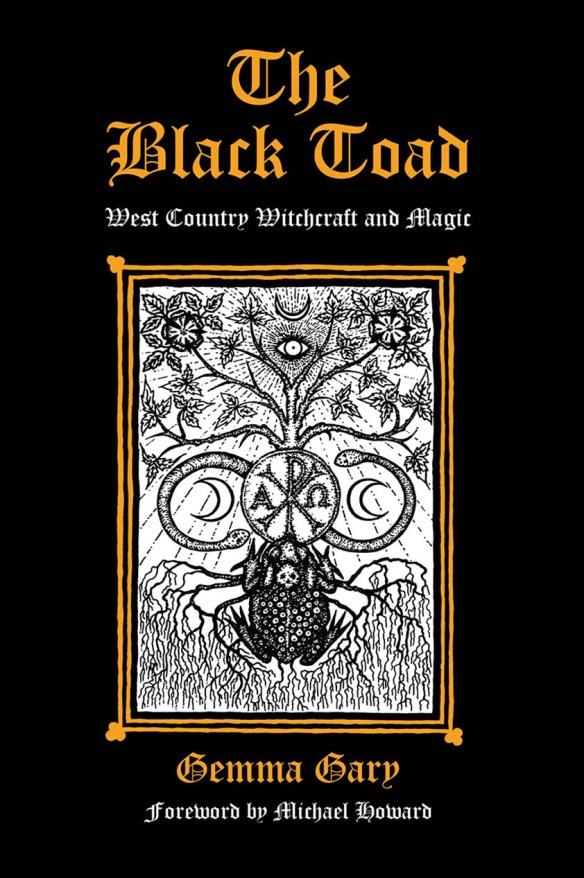
I can’t remember what sparked my interest, but I have been meaning to read this book for a few years. The Black Toad is a collection of folk magic from South West England. There’s three sections in the book – a bit about general spells, a bit about spells that use plant materials and then a bit about black (bad) magic. I started off impatient to get to the naughty part, but in light of what I’ve read recently, I found some of the first parts quite interesting too.
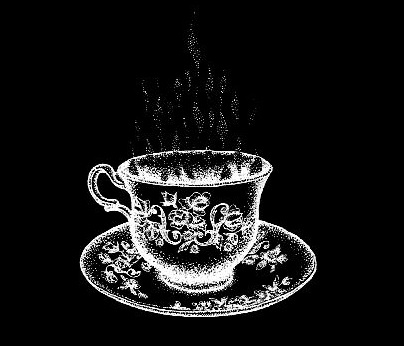
gemma gary cup of toad tea.jpgThe book has some really cool pictures and photographs. I love a nice cup of tea myself.

It was only last week that I reviewed Dark Rites & Encounters with the Devil by Marcus T. Bottomley. I was rather critical of that book because I thought that the author had just made up a bunch of crap. Unlike the Solomonic grimoires I’ve read, very little prepatory work was discussed, and the author would instruct the magician to do certain things without any explanation as to why they were doing them. I didn’t think I’d be writing about that book so soon after reviewing it, but some of the stuff it contained was rather similar to the spells in Gary’s book.

The difference between these books is that Gemma Gary makes it very clear that she is writing about a specific type of magic. I’m not sure of the nomenclature, but I’ll just call this strain “folk magic”. Folk magic then, as far as I understand, is a mix of pagan, Christian and grimoire magic. Gary’s spells use parts of the Bible, the Sacred Book of Abramelin and loads of traditional British witchcraft. Gary also provides explanations of the spells she is describing. One thing that struck me as peculiar when I was reading Bottomley’s book was the inclusion of worn shoes in several of his spells. This seemed rather silly to me – what use is a smelly old boot going to be? Gemma Gary explains that shoes are potent in sympathetic magic because shoes literally lead us down the paths of our lives. I get it now. If you attack the thing that leads a person down their path, you can obstruct them. That makes perfect magical sense. There were a few other noticeable similarities between some of the spells in these books, and my general takeaway was that Marcus T. Bottomley’s book, although poorly written, was probably a far more sincere collection of folk magic spells than I gave it credit for. I want to take this opportunity to apologize for calling Mr. Bottomley an “awful wizard”.

I’ve probably written more about another book than the book I set out to review. Don’t worry; you can find more focused reviews of The Black Toad elsewhere online. I’m not a witch, but I found this book to be quite interesting. I have The Devil’s Dozen, another of Gemma Gary’s books, lined up to be reviewed real soon.

A Manual of Sex Magick – Louis T. Culling

manual of sex magic louis t.jpgA Manual of Sex Magic – Louis T. Culling
Llewellyn – 1971

I usually know how much attention I’m going to give to reading a book by the 5 page mark. I enjoy occult books, but most of them are written horribly. The authors, lacking in anything worthwhile to say, disguise their own uncertainty, confusion and ignorance with long, winding sentences, esoteric references and an air of arrogance. Occultism, in this way, is very, very similar to academia.

Anyways, when I come across a book that I feel is going to be like this, I don’t bother committing to a thorough reading – I’ll read the whole thing, but I’ll do so on the bus to work, listening to music and not worrying if some of it goes over my head.

This was my planned approach after a few pages of Louis T. Culling’s A Manual of Sex Magick. It’s a poorly written guide to the different degrees of Sex Magic. Unfortunately, it’s quite vague about the details of a particularly curious magical working, and this vagueness, together with the lackluster manner of my reading up to that point, has left me suspecting that friends of the author of this book rubbed cum into their dog’s fur.

Allow me to explain.

There are three degrees of Sex Magick. The first is Alphaism. This basically means that if you decide to do some sex magic with your partner, you’re not allowed wank or ride anyone else.

The second degree is Dianism. This is holding in your gip. You’re allowed shag indefinitely as long as you don’t cum. If you’re interested in trying this, I have a tip for you that isn’t mentioned in the book. A friend gave me this advice when we were 15. He told me that you can last longer in bed if you just give a sharp little tug to your sack whenever you feel like cumming. This will hold off the orgasm without killing your boner. I haven’t tried it, but the confident wink my friend gave as he explained this assured me that he knew exactly what he was talking about.

When you’re riding away for hours without gipping, you think of the magical outcome you want to achieve. Do this for a few hours a day, a few days a week, and all your wishes will surely come true.

The final degree of Sex Magick is Quodosch. (Is this where J.K. Rowling got the name for quidditch?) This level is for when you need a little extra power for your spell. After a marathon sex session, you finally allow yourself to blow your load and then use your ejaculate an a magic elixir. If you’re sending a letter to ask somebody for something, seal the envelope with your sperm, and this will doubtlessly result in your request being granted.

This gets confusing when the author mentions using this kind of magic on a dog. This book contains a story about a pair of Magicians who turn their dog into a psychic, but the details of the procedure are quite unclear. The author never outright says that the magicians came on the dog, but I can’t see how else it would work. Maybe the wizard gipped his load into a bowl of dogfood and then let his pooch chow down on his fine chicken alfredo. Either way it’s a bit gross. Leave that poor hound alone!

After reading the bit about the dog, I tried looking back over the parts that I had skimmed in the hopes that I’d understand things better, but it didn’t help.

A Manual of Sex Magic is a fairly rubbish book. The author spends most of it either talking nonsense or boasting about this sexual prowess. It gets a bit embarrassing. Also, Culling reveres Aleister Crowley, and even claims to have been penpals with the Great Beast. This makes his “straights only” policy on Sex Magick a bit weird. We all know that some of Aleister’s best work was very gay.

After a slow start to the year, I’m getting back to my reading and writing routine. I have a few more posts lined up for the near future, so check back soon.

2018, The Year in Review

In 2018, I reviewed books about Satanic Communists, intergalactic Nazis, Trump voting necrophiles, sodomaniacal vampires, Sado-shamans, and an another Alien Jesus – and that’s not mentioning the fiction. I published more posts, wrote more words, reviewed more books and saw more traffic this year than any year previous. I did best-of posts for 2016 and 2017, but for 2018 I’m going to go all out and indulge myself with a full post on this blog and its upkeep. I’ll post a new review early next week, so come back then if you’re only interested in the books.

paperback wall horror occult.jpg
Most of this year’s acquisitions have been trade paperbacks.

I read and reviewed far more fiction this year than ever before.  There’s two reasons for this. I became sick and tired of reading long, boring occult books. They’re expensive, they take ages to read, and they’re usually absolutely awful. The second factor was Grady Hendrix’s Paperbacks from Hell. I’ve been reviewing horror fiction since 2015, but Hendrix’s book opened my eyes to the realms of trashy horror. I’ve long known that books like these existed, I just wasn’t sure which were worth reading. It turns out that it’s most of them.

Some of the Paperbacks from Hell I read this year.

I already had a few of the books featured in PFH on my to-read list, but PFH’s popularity made some of these books scarce, and I ended up shelling out quite a bit of cash to grab copies before they were impossible to find.

satan series brian mcnaughton starI had been meaning to buy copies of these for ages. Their inclusion in Paperbacks from Hell has made them rather difficult to track down for a reasonable price.

After enjoying the transition from classic Gothic horror to modern trashy paperback horror, I allowed myself to go even further and visited the strange world of Bizarro Fiction. I wasn’t sure if those books belonged on a blog like this, but whatever. I’ll post whatever I want. I’ve enjoyed wallowing in the trash swamp recently, but I’m planning on reading some more high-brow horror in the near future to even things out. (I’ve actually been rereading all of Lovecraft’s work since shortly after publishing this review. I didn’t think it was anything special, but it’s been one of my most popular posts this year. Expect more Lovecraft posts in 2019.)

Magical Books from the internet.

The past few months have seen me returning to occult literature. Instead of paying ridiculous money for awful books, I’m downloading pdf copies online, and instead of slogging through dense, arcane tomes of esotericism, I’m breezing through idiotic pamphlet length grimoires. It’s the same crap; it’s just easier to stomach when I’m confronted with 50 pages of nonsense instead of 500. This has allowed me to publish 2 posts per week for the last few months, but I’m not sure I’ll be able to continue at this pace. I have a few ideas for multi-book posts for the near future that will probably slow things down considerably. They’ll be worth the wait.

I usually do a top 10 posts of the year list around this time. It’s harder to choose this year because there’s more posts than ever before. I’ll just say that my reviews of Raped by the Devil, Marx and Satan, Ghoul, Space Gate, The Veil Removed, Masks of the Illuminati, Psychopathia Sexualis, Nox Infernus, Satanicon, and Don’t Make Me Go Back, Mommy are pretty good. Also, my short “splatterpunk” story, Kevin is worth a look.

Best of 2018

All that being said, the most important post of the year was doubtlessly on Spawn of the Devil by Aristotle Levi, an exceedingly rare work of occult erotica. If you haven’t read this post, please take a look.

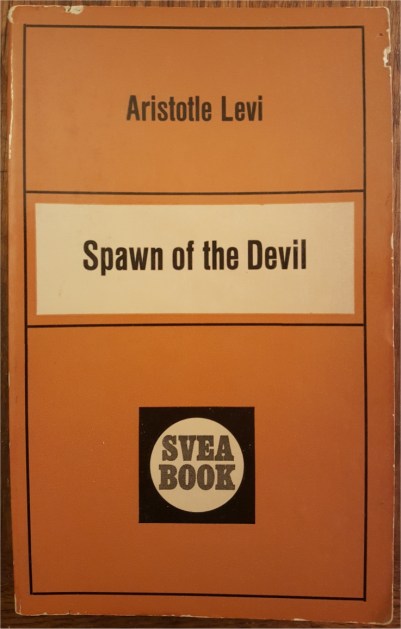
spawn of the devil - aristotle leviDefinitely not a book that you’d want to judge by its cover.

Running this blog can be quite frustrating. I put in a lot of effort and often don’t see much of a response. You won’t find reviews of some of these books on any other sites, and lots of them aren’t even listed on Goodreads. Search engines don’t bring much traffic to these posts because nobody ever googles the names of these books. I could probably do a better job promoting this stuff on social media, but I’d far prefer to spend my time reading and writing about weird books. If you could share this blog with somebody you know who’d be interested, it would be super appreciated!

Happy new year!


Alembic – Timothy d’Arch Smith

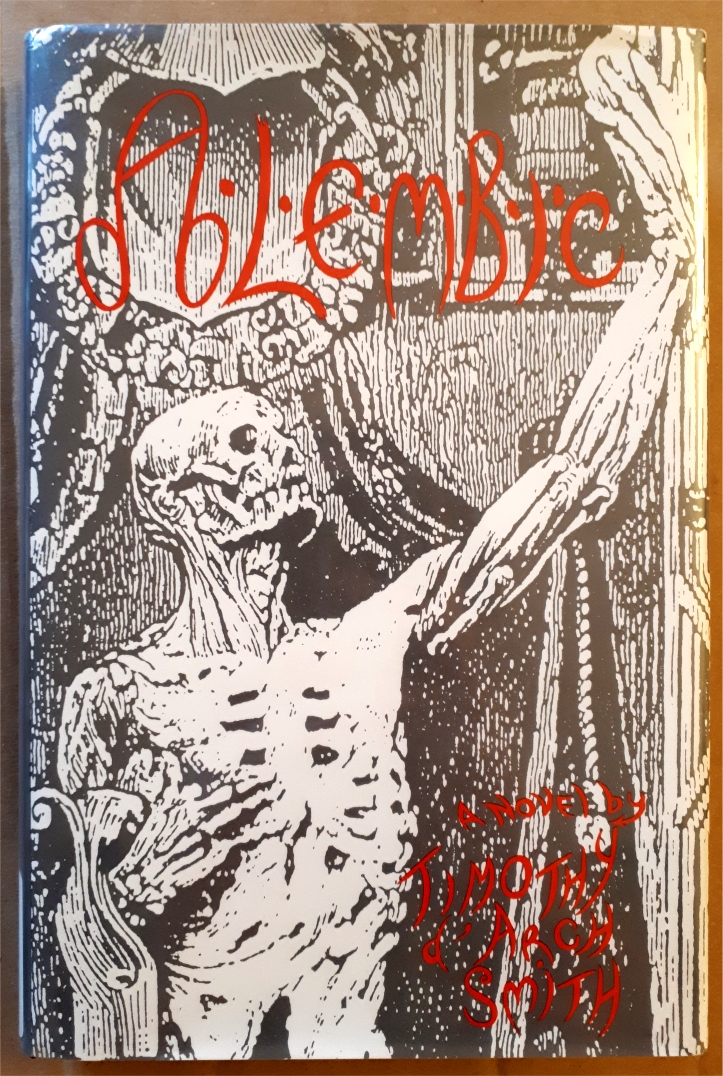
alembic timothy d'arch smith.jpgAlembic – Timothy d’Arch Smith
Dalkey Archive Press – 1992

Alembic is a novel about alchemy, insanity, sex, drugs, rock’n’roll and  magic. If that doesn’t make you want to read it, this blog isn’t the place for you. Alembic is the only novel by Timothy D’Arch Smith, a name you might recall from my earlier posts on his bibliography of Montague Summers and Books of the Beast, a collection of essays about the books of Aleister Crowley, Summers and Austin Spare. D’Arch Smith is a pretty cool guy.

The plot of Alembic is fairly puzzling. The narrator works for the English Government’s secret alchemy department. While he’s taking some time off work to visit his famous rockstar mate, he bumps into his coworker’s daughter. He falls in love with her, and they have some adventures. This story is punctuated with flashbacks of the narrator’s days in the army. 

In truth, it’s not a very good story.

Most of the novels that I’ve read this year have been of the trashy horror fiction variety. That style of writing is usually fairly to the point, and the books are plot driven, focused on the tale, not the telling. Alembic is quite the opposite. It reads like a book written to showcase the author’s writing. D’Arch Smith uses his verbiage to great comic effect at times, but overall, the writing style is overwhelming. Several secondary characters get lost and blend into each other in the dense text.

cadaver tomb rene chalon richierThe cover image of the book is a drawing of this statue. Originally the statue held the actual heart of René de Chalon. Cool.

When I started reading this book, it reminded me of the early novels of Flann O’Brien. This might have been due to the fact that Alembic was put out by Dalkey Archives, a publisher named after one of O’ Brien’s novels, but the grandiose descriptions of the utterly banal definitely seemed a bit Flannesque to me.  The other influence that I couldn’t help but notice was Nabakov’s Lolita. Yes, unfortunately this is another book about a grown man falling in love with and raping a child. I didn’t like this part. The girl in here is 14. The male is in his mid twenties. Aside from one comically repulsive scene, this book isn’t sexually explicit, but it was still unpleasant to read the narrative of a diddler.

Timothy D’Arch Smith has also written a book about the Uranian poets. These were a gang of paedophiles who liked writing poems about little boys. Hey, reading/writing books about something doesn’t mean you like it, but why put it in your own fiction? I don’t mean to be accusatory, but I did wonder why he didn’t just make the girl two years older. 

One possible explanation might be the fact that the book revolves around a Led Zeppelin styled band named Celestial Praylin. I’m not a big enough Zeppelin fan to have been able to understand the similarities between them and the fake band, but the cover of the book and every review I’ve read of it has mentioned Zeppelin. D’Arch Smith used to be close with Jimmy Page. He was the guy who got Page all his books on Crowley, and he later dedicated his Books of the Beast to the rocker. Anyways, as we all know, Jimmy Page repeatedly raped a 14 year old when he was in his late twenties, so maybe it just felt natural to include a bit of child abuse in a Led-Zeppeliny book. Anyone wanting to play the “14 is old enough to give consent” or “times were different back then” cards can fuck right off. He knew it was wrong and he did it anyway. Page is a nonce.

aleister crowley signatureThe lettering of the title on the cover of Alembic is clearly based on the signature of Aleister Crowley although I’m not entirely sure why. It probably has something to do with the magical child/homunculus motifs that run through the book.

I was a bit surprised with Alembic. I really liked the other books that I’ve read by this author, and I had wanted to read this one for ages. There were several parts that made me laugh out loud, and there are some cool ideas in here, but I didn’t enjoy this as much as I expected to. Given the role of alchemy plays in the narrator’s life, I suspect that there were levels of meaning in this book that went totally over my head.

Spawn of the Devil (Inpenetrable) – A Quaint and Curious Volume of Forgotten Porn

The most exciting part of Francis King’s Sexuality, Magic and Perversion was doubtlessly a passage towards the end of the book where King is discussing how magic has been portrayed in works of pornography. He points out that most of the occult-themed porn that had appeared at the time that he was writing his book had been written by people who had no real knowledge of occultism. He mentions one exception to the rule, referring to a book titled Inpenetrable (the spelling mistake is neither mine nor King’s), a pornographic novel that features the Order of the Golden Dawn invoking demons, worshipping Satan, and indulging in buggery, rape and psychic murder. According to King, the author of this intriguing text actually seemed to have had a decent amount of occult insight.

francis king on inpenetrable
After reading this passage, I had to find the book it’s describing.

In a footnote, King claims to have traced 3 separate printings of this intriguing book. One printing credits a Joel Harris as the author, one credits an Aristotle Levi, and the last seems to have completely withheld the author’s name. King points out that the text in all three editions was produced by photo-lithography, suggesting that all three derived from a previous edition that he has never seen. He also believes that the texts he had seen were published in 1970 or 1971.

I spent a few days trying track down a copy of Inpenetrable, but I could only find one other reference to it. Ellic Howe briefly alludes to it in the penultimate paragraph of his 1972 book The Magicians of the Golden Dawn. He claims that this peculiar work of pornography had recently been brought to his attention by a friend. Judging by the details Howe gives (or lack thereof) and the year that his book was published (the year after Sexuality, Magic and Perversion), I’d be surprised if Howe’s friend hadn’t been Francis King. Howe provides no extra clues about the origin of this peculiar text.

ellic howe inpenetrable
The title of the book, Inpenetrable, didn’t yield any other results, so I decided to search up the name/s of the author. “Joel Harris” led to a dead end, but there are a few, scant mentions of Aristotle Levi online. It seemed as if this guy wrote two other books, Spawn of the Devil and In the Devil’s Power, but there was no other mention of Inpenetrable anywhere. It turns out though, that Spawn of the Devil was translated into Danish and published as I Djævlens Magt, which translates as “In the Devil’s Power” – the two titles were a result of my browser’s automatic translator. There was only one book. Spawn of the Devil (and its translation) came out as part of the Svea Book series, a pornographic series that was published in Denmark in the late 60s and early 70s by a porn company called Nordisk Bladcentral. Some sources credit the work of this Aristotle Levi to a woman named Erica Schoeb, but Erica holds the copyright for all of the books in the Svea series, so it seems likely that she was the series editor or publisher rather than the actual author of any of its texts.

After several hours of searching with these clues, I found an index of science-fiction pornography that gives the following summary of Spawn of the Devil; “Maureen Graille, a seventeenth century witch, is reincarnated in the present.” Bingo! King had mentioned “Maureen Graille, the heroine of the book” in his brief discussion of Inpenetrable. I realised that Spawn of the Devil and Inpenetrable could potentially be two entries in the same series, but judging by the genre I was dealing with, I assumed it more likely that they were just different titles for the same work.

Ok, so I hadn’t been able to find a copy of Inpenetrable, would Spawn of the Devil prove any easier to track down? Like I said, there were very few (maybe 5) mentions of Aristotle Levi or his work online. I don’t want to give away my book-finding techniques to my competitors, but I’ll say that after quite a bit of searching, wrangling, infiltrating strange facebook groups and google-translating, I managed to obtain a single copy of Spawn of the Devil from a dusty, second-hand bookshop somewhere in the Middle-East.

spawn of the devil - aristotle levi
Spawn of the Devil – Aristotle Levi

Svea Book – 1969

Let’s start off with the physical book itself. There’s a few scratches on the cover, but nothing you wouldn’t expect on a book published in 1969. There’s no cover image or blurb on the back. There’s nothing inside other than the story itself – no details on the author or advertisements for other books.

The text is peppered with typos, but the standard of the writing is pretty good. I imagine that the writer probably wrote other, less smutty, books under a different name. In fact, some of the sex scenes in this book seem so sudden and unnecessary that I would be surprised if the author hadn’t originally had loftier aims for this work. This might well have been intended as an occult thriller that was a little too sexy for respectable publishing houses. Maybe after a few refusals, the author took his manuscript to a smut house and was told that instead of being too sexy, the text wasn’t sexy enough. Perhaps he cried into his typewriter as he reedited his manuscript and filled it with “hot cock-sticks”, “quivering quims” and “tight little shitholes” as a last resort to get it published. I’ve read other occult based porn in which the standard procedure was one sex scene per chapter, but this isn’t quite the same. Spawn of the Devil frontloads the smut – once the story gets going, the sex takes a backseat. There’s a few chapters towards the end with barely any riding at all.

And some of the sex scenes are absolutely ludicrous. I’m by no means an expert on literary pornography, and I know that different people get off on different things, but many of the sex acts described in here come across as vulgar and hilarious rather than titillating and sexy. I can’t deny the fact that I greatly enjoy vulgarity though, and I will admit that the following two page description of a disgusting incestuous liaison made me laugh so hard that I cried.

spawn of devil erotica
Please read both pages (higher res image here). It gets better and better. LOL.

Looking back, one of the main reasons I wanted to read this book was Francis King’s assessment of the author as a knowledgeable student of the occult. The occultism herein is largely of the Dennis Wheatley variety, but, like Mr. Wheatley, Mr. Levi clearly has a basic understanding of what he’s greatly exaggerating.

spawn devil inside coverI presume the pseudonym is a mix of the Greek fella and Eliphas Levi.

This book is super rare. If you plan on hunting down a copy, good luck to you. If you’re not pushed, here’s a summary of the story:

The story starts off with Maureen, a witch, observing an orgy in the forest. She isn’t partaking, just watching. When she leaves, she is apprehended by an angry mob of villagers who presume she had just finished up early and was heading home. The mob go on to capture all of the revelers.

All of the revelers are burned at the stake along with Maureen and her husband, Tom. Just before they are set alight, Maureen promises Tom that they will live again.

300 years later, a pair of twins that regularly have been having sex with each other since they were children both feel a sudden urge to go and dig a hole in a certain part of their village. They discover a strange ring. The sister, who is named Maureen, puts it on.

Soon thereafter, Maureen is having lunch in a fancy restaurant. By chance, she meets a lady called Celia Aston. It turns out that Celia is one of the leading members of a magical secret society called the Golden Dawn. She invites Maureen and her brother Tom to her house where she shows them her magical book collection and introduces them to her husband.

Maureen gets it into her head that she wants to be in Celia’s position. To put a curse on Celia, Maureen and Tom perform a gruesome black-magic sex ritual:

sex ritual curse
Yuck, but also Hahahaha.

The ritual is successful and Celia dies soon thereafter. Using mind control, Maureen convinces Celia’s grieving husband to marry her within a matter of months.

Later on, during a Golden Dawn orgy, Maureen manages to summon a spirit. It’s either Pan or Satan, or maybe both. Only Maureen and a crucified prostitute that Maureen had hired for the occasion actually see the spirit. The prostitute goes insane afterwards. While this is all happening, one of the other members of the Golden Dawn, a lady named Nona, simultaneously gets raped and senses that Maureen is a bad apple.

After this night of black magic and debauchery, Nona and her boyfriend visit a very powerful old witch named Kyleen to see if anything can be done about Maureen. They don’t know it, but Maureen was actually watching them do this by means of black magic.

Maureen summons the spirit of Pan to kill all three of them. She is successful in doing so, but unfortunately for her, Kyleen had been able to do some summoning of her own. Shortly afterwards, Maureen and Tom are killed when their ship sinks during a cruise. Just before they die, Maureen reassures Tom that they will meet again.

The book ends in the future. In the year 2236, a set of twins are born, a boy and a girl.

Spawn of the Devil isn’t the greatest occult-thriller in my collection, but it’s nowhere near the worst. Its combination of black magic and silly synonyms for genitalia pleased me immensely, and I can’t imagine a book more appropriate for this blog. Moreover, the process of reading about it in King’s book, researching it, tracking it down, waiting to see if it would ever actually arrive, and then reading and reviewing it a few months later has been rather exciting. When I started this blog and began reading books by people like Montague Summers, Timothy D’Arch Smith and even Francis King himself, I was jealous of the depths of their research and of the discoveries they had made in the realms of occult literature. It may not seem like a big deal to most people, but I found it immensely satisfying to solve part of a mystery posed by one of these individuals 47 years ago.

francis king inpenetrable footnote

Inpenetrable was first published by Nordisk Bladcentral as as Spawn of the Devil, a novel by Aristotle Levi. Unfortunately, I can’t claim to know who Aristotle Levi (or Joel Harris) was. My reading suggests that he probably wrote other books (under a different name) in the late 60s/early 70s. He clearly had an interest in the occult. His repeated use of the word bollocks means that he was almost definitely British. This book was published in Copenhagen and translated into Danish, so it is possible that he had some other link to Denmark. Does this description sound familiar to anyone? I wonder if there’s anybody alive today who knows his true identity. If anyone has any further information on Aristotle Levi, Joel Harris, Inpenetrable or Spawn of the Devil, please, please, please, leave a comment or email me to let me know.


Grimoires: A History of Magic Books – Owen Davies

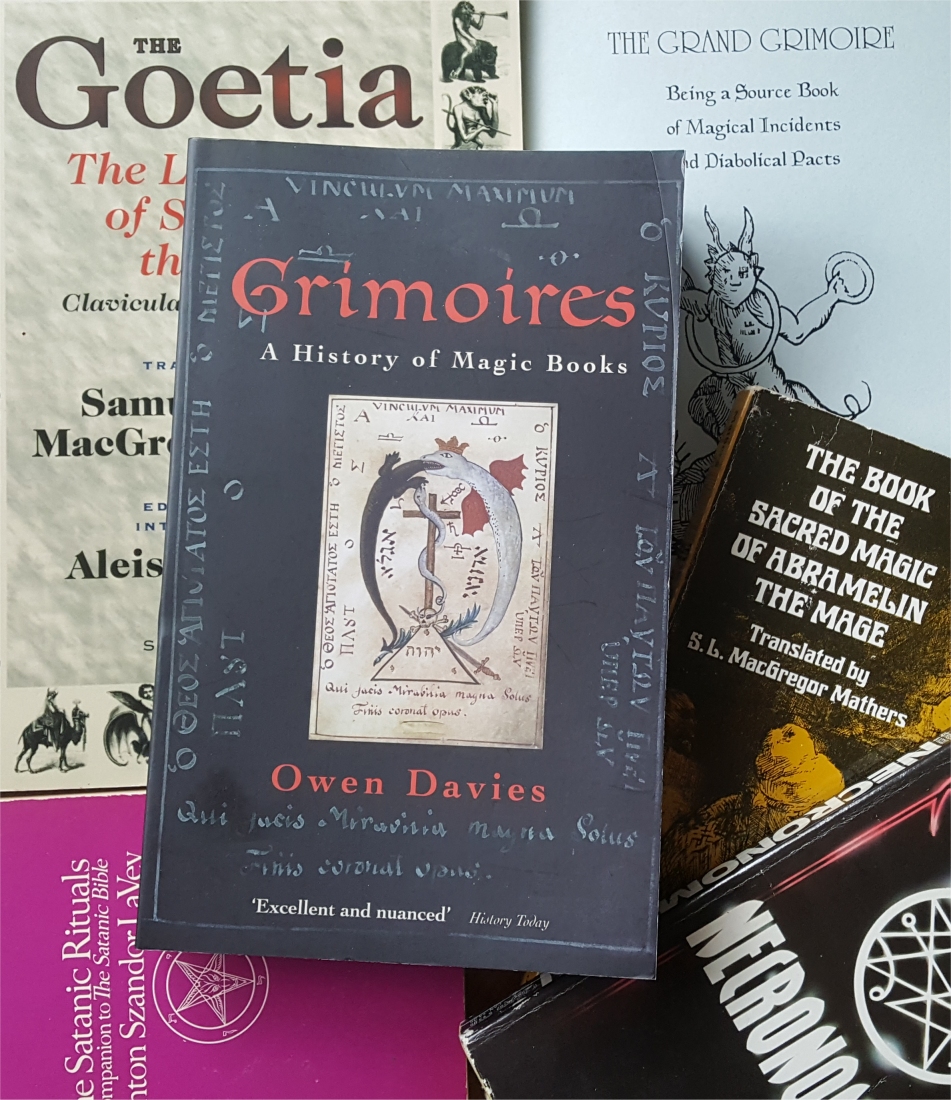
grimoires owen daviesGrimoires: A History of Magic Books – Owen Davies
Oxford University Press – 2009

Normally, when I review an occult book or a book on occult books, I spend most of the review criticizing the book’s claims and/or the author. Grimoires by Owen Davies is a no bullshit history of magical books, and thankfully, I don’t have much to criticize. This book was clearly very well researched, and it never gets bogged down in speculations on the efficacy of the books its discussing. This is an academic work, but don’t let that scare you. The actual history of grimoires is almost as interesting as the ridiculous back stories that these books so often include.

I’ve read and researched a few of the books discussed in here (The Lesser Key of Solomon, The Grand Grimoire, the Abramelin text, the Faustian Grimoires, the Necronomicon, the Satanic Bible) so some of this was revision for me, but there’s also a tonne of stuff that I had never heard of. I added a few books to my to-read list while reading this.

I thought I’d have way more to say about this one, but I don’t. It’s pretty good though. I’m quite sure I’ll be referencing my copy again in the future. If you want to read a book about the history of books of magic, this is yer only man.

The Spear of Destiny – Trevor Ravenscroft

spear of destiny ravenscroftThe Spear of Destiny – Trevor Ravenscroft
Weiser Books – 1997 (First published 1973)

I’m going to have to summarize this one before I comment about it.

In the late 50s, the author of this book, Trevor Ravenscroft, met a lad, Walter Johannes Stein, who had spent years researching the Holy Grail and the Spear of Destiny. Stein was going to write a book about the stuff he had learned, but he was dying, so he gave all of his information to Ravenscroft so that he could write the book instead. The Spear of Destiny, or the Spear of Longinus, is the spear that pierced Christ’s side when he was on the cross.

One morning, when he was a young man, Stein woke up and started reciting entire paragraphs of Wolfram von Eschenbach’s Parzival, one of the seminal Holy Grail texts. Fascinated by his strange new ability, he decided to buy a copy of Parzival, presumably to compare with the passages he was reciting. Well, the copy he bought had some interesting notes in it. He tracked down its previous owner through his bookseller. The previous owner was Hitler. Hitler and Stein became friends (kinda). Together, they went to a museum in Austria to see a spearhead that some had claimed was from the Spear of Longinus.

When they were standing in front of the spearhead, Hitler started to glow and Stein realised that his friend was being possessed by Satan.

You see, Hitler was interested in the grail and spear because he thought they could provide him with access to the Akashic records. The Akashic records, for those of you who don’t know, are the imaginary library of memories of every human experience ever experienced by anyone. Hitler wanted access to these records for the purposes of gaining power, but he didn’t want to spend a lifetime of meditation to get there so he took a bunch of hallucinogenics in a black magic ritual to speed up the process. Unfortunately, while tripping on peyote, Hitler became possessed by the Devil. The Devil is actually one of the negative powers that came into being after some of the species that lived on the lost city of Atlantis evolved from stretchy mutants into Aryans.

Oh, and Heinrich Himmler was a zombie.

Ok, so Ravenscroft goes into a lot more detail than that, and I’ve left out all of the stuff about psychic time-travellers, but the above is a pretty fair summary of this book.

There are many, many issues that a student of history might take with Ravenscroft’s account, but there are two facts that are especially worth considering.

  1. The Hofburg Spear, the actual, physical spear that the events in book revolve around, is definitely not the Spear of Longinus.

The Hofburg Spear is of medival origin. It didn’t exist until hundreds of years after the death of Christ. This single fact obliterates nearly all of Ravenscroft’s claims.

  1. Ravenscroft never actually met Walter Johannes Stein, the supposed source for nearly all of his information.

Ravenscroft starts his book off telling his reader that Walter Johannes Stein, his good friend, deserves most of the credit for writing this book. The first chapter of this book describes, in detail, the pair’s first meeting. A few years after this book was published, Ravenscroft admitted that he never met Stein in person. He said that he had only ever been able to talk to his spirit through a medium.

When you take away the subject and the source, there’s really nothing left. It’s hard to find a footing for any meaningful criticism of this book. It’s too stupid a book to bother pointing out where it’s factually inaccurate. Ravenscroft is clearly attempting to be a part of the fantastic realism movement started by Pauwels and Bergier, but his book is one step stupider than the stuff they put out. While they encouraged speculation, Ravenscroft just tells lies. In Arktos, Joscelyn Godwin describes The Spear of Destiny as “the ultimate degradation” of the Frenchmen’s work and “blood-curdling work of historical reinvention”. A fair assessment.

Some have claimed that this book was originally meant to be a novel but that Ravenscroft’s publisher convinced him to write it as non-fiction so that it would sell more copies. I’ve no idea if that’s true or not. The book is so inflated with shockingly boring details that have little relevance to the story that it’s hard to imagine how it would have turned out as a novel. The story here is rather anti-climactic too, so I’d hope that Ravenscroft would have come up with something better for a work of fiction.

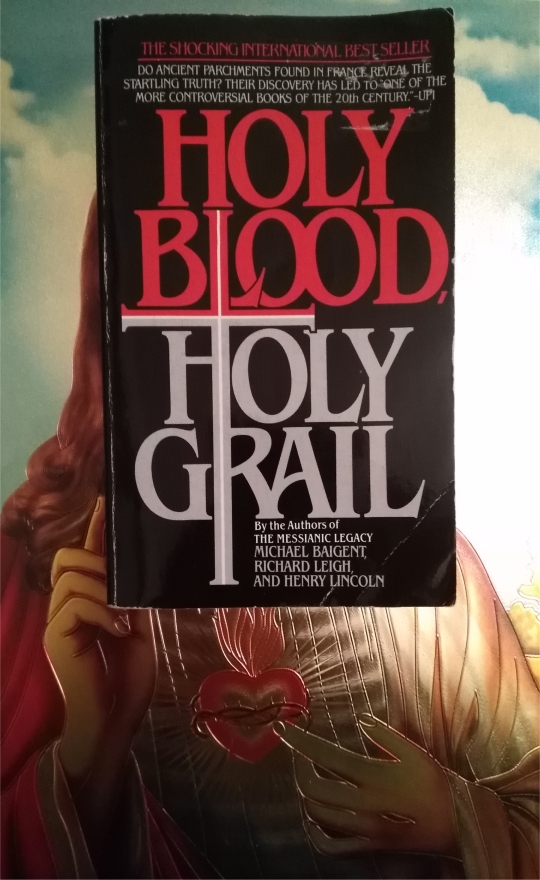
As a work of non-fiction, this is seriously one of the worst books I have ever read. I know I say that kind of thing more often than other people, but this really was a turd. The Spear of Destiny was written in an era when it was considerably more difficult for people to fact check an author’s claims, but much of the stuff that Ravenscroft tries to get away with is so clearly rubbish that I can’t imagine anyone being able to believe this shit. This book makes Holy Blood, Holy Grail seem like a serious academic study written to impeccable standards. Batshit crazy books can be entertaining, but this one wasn’t. It was tortuous.

The Spear of Destiny is a surprisingly popular book (my copy is from the 9th printing!), and you’ll find plenty of other articles online that do a better job of discussing its specific inaccuracies. I liked this one, in which the author worries about how to write about this book “in a way that was not plain sneering.” I hold myself to no such standards, so here is a picture I made of Jesus and Hitler spit-roasting Ravenscroft:

jesus hitler

Video Nasty and Year in Review (2017)

2017 was a pretty good year for me. I got a much better job, became a dad and went back to university (again). These changes, while mostly enjoyable, meant that I didn’t get to review or read as many books as I have in the last few years. However, I feel that the quality of this year’s posts has been of a decent standard. Here’s the best of 2017.

liber falxifer10. Liber Falxifer 
A heavy metal grimoire of dark black magic.

halloween and satanism9. Halloween and Satanism
Anti-Semitic Christian bullshit propaganda for assholes.

tarry thou till i come croly8. Tarry Thou Till I Come 
Including it here because, as far as I know, this is the only review of this book online. The tale of the Wandering Jew.

arktos joscelyn godwin7. Arktos
Some bullshit about Donald Trump. A very cool book.

holy-blood-holy-grail6. Holy Blood, Holy Grail
Jesus had a kid, and Hitler was a descendant of Dracula.

crowley book 45. Aleister Crowey’s Law and Lies
Getting to grip’s with Aleister Crowley’s bullshit.

faust demon 144. The Books of Faust
This one took a lot of work.

red book of appin scarabaeus3. The Red Books of Appin
Myth busted.

the aleister crowley scrapbook2. The Aleister Crowley Scrapbook
An interview with a Crowley expert.

robert anton wilson the sex magicians1. The Sex Magicians
My contribution to the conspiracy theories about the conspiracy theorist.

Well, there you go: Nocturnal Revelries’ best of 2017. (Just to remind you, as with last year, the links in this post are to the best posts of the year, not the best books that I read.) This blog has been going for nearly 3 years now, and I’ve reviewed about 170 books so far. I recently added an index page to the site in case anybody is looking to see if I’ve looked at a specific book or author.

Thanks for all of the support and interest. Remember, this blog has twitter and facebook pages to help keep you up to date with my ramblings. I’ve a few posts planned for the near future, but who knows what’s going to end up featured here in 2018. I’m going home for Christmas for the first time in years too, so I doubt I’ll post again until January. As always, you can email me with recommendations, questions, comments or threats. If you currently work in retail, know that my heart bleeds for you. For everyone else, enjoy the time off work, and don’t forget to go to mass on the 25th.

On Reading and Collecting Occult Books

occult paperbacksThis, my friends, is what it’s all about. Fuck your fancy hardback collection!

How could a person possibly enjoy Simon’s Necronomicon if they’ve never heard of Cthulu? Could they possibly feel the full impact of Lovecraft’s Mountains of Madness having never before encountered the dread cry of “Tekeli-li!”? Haven’t you ever noticed the references to Pallas Athena and the Balm of Gilead in Poe‘s the Raven? They couldn’t have made much sense to you unless you were familiar with Greek mythology and Biblical lore. Speaking of mythology, isn’t the Simon Necronomicon, the text that we started off with, basically just a silly version of the Enuma Elish, the Babylonian creation myth?

Even the silliest, most entry-level texts of Occultism require an awful lot of background reading if they are to be understood and fully appreciated.

“Occult” literally means hidden, and many “Occultists” out there limit their research to the esoteric. Occultism is generally concerned with spirituality and the supernatural, and many “occultists” that I have encountered have little to no interest in the major world religions, history, philosophy or science. I personally fail to understand how they can comprehend the Hidden without first studying and attempting to understand what is in plain view.

The internet has made countless esoteric texts instantly available to the neophyte. A few clicks on wikipedia and Curious George ends up bypassing Homer and the Bible and gets straight into nutty books filled with references to these works. These n00bs can’t possibly understand the stuff they’re supposedly reading.

Maybe I’m just getting old. I have similar complaints about kids these days being able to download obscure black metal records when they’ve never listened to Megadeth or Anthrax. When I was a teenager, we had to buy albums and check the thank-you lists in the cd booklets to find the names of other cool bands. Nowadays a kid can go from being a Justin Bieber fan to a devotee of obscure Finnish death-doom in just a few clicks. Start at the start or go die in your posehole, you annoying little snots.

And music, while obviously very different to literature, can also contain references to other music. (I felt chills the first time I heard the singer from Crypt Sermon bellow out “Fool, fool!” in this track, a song that is incidentally based on a story from the Bible. If you don’t understand the “Fool, fool!” reference, please abruptly find the closest exit and leave the hall. (That’s another heavy metal reference btw.)) This being said, a person can certainly enjoy a song without having heard older songs of the same genre. References within music (and fiction) generally serve aesthetic purposes.

Occult texts are a little different though. Their writers often deliberately attempt to obfuscate their message, and esoteric references are one of the more popular methods of doing so. These references, while often having an aesthetic quality, primarily serve as what I’ll refer to as “initiation bridges”. You don’t get to cross the bridge and pass on to green fields of understanding until you’ve done your research and found out what the reference means.

mythology book collectionSome of my books on Mythology

No matter how much background reading you do, you’re bound to run into these initiation bridges on your quest for secret knowledge. In my opinion, however, the occult adventurer is better off starting off on their quest with at least some of their homework done. If you want to become a psychologist, you need to study the history of psychology. Why should it be any different if you want to be a magician?

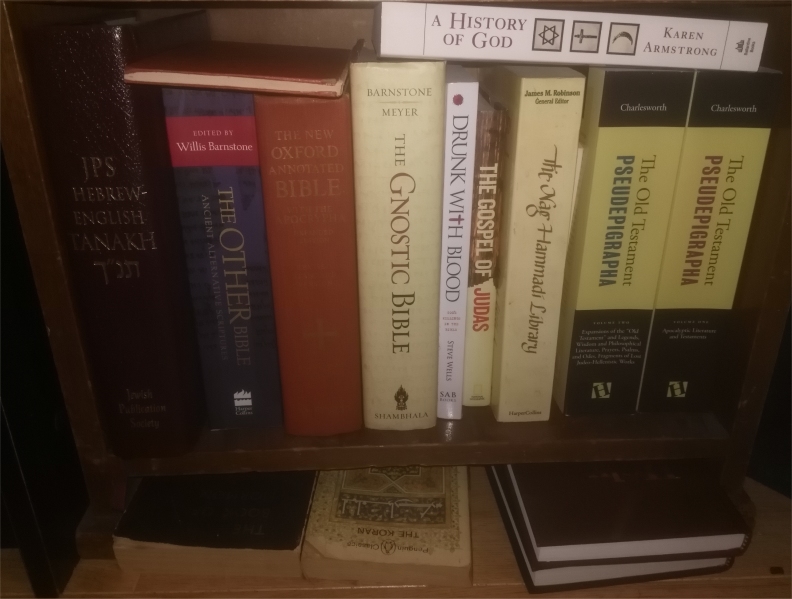
If you want to be a Satanist, please read the Bible and familiarize yourself with who Satan really is. It strikes me as bizarre that a person whose religion is named after a character from a book would not have read said book. Bizarre, but not surprising; Christians are in the same boat, with the same book. Hard copies of the Bible are widely and cheaply (if not freely) available, and it is my firm belief that every Christian, Satanist, atheist and occultist should have a copy of it on their bookshelf for reference. I have a few.

bible collection

I recently finished reading Liber Falxifer, a grimoire that I can’t imagine making much sense to anyone who isn’t familiar with Gnosticism and the book of Genesis. Indeed, it was my ruminations on that book that led to this post. Check this out:
poser occultist booksI saw this posted on facebook a few weeks ago. That collection of 6 books makes up the entirety of an individual’s library. Now look, I understand that it’s not fair to judge a person based on the number of books in their collection, but I think it is fair to judge a person based on the types of books in their collection. The books in this collection are fancy-pants hardbacks that sell individually for anything between 50 and 1000 dollars. Does expensive mean better? Can you remember the tale of the Emperor and his new clothes?
I also think it’s fair, and even important, in this situation, to judge a person based on the types of books NOT in their collection. His six books doubtlessly contain references to texts not in his possession. Does he just use wikipedia to check these references? Don’t get me wrong; I use the internet to research stuff all the time. Just remember that in this case, this person has thousands of dollars to spend on books, and it very much seems that he wants people to know that he’s a book collector. It looks like he has deliberately limited his purchases to obscure, expensive books, and as you can tell, this pisses me off. Books are for reading, not for showing off.

Yeah, ok. I am obviously guilty of showing off my book collection at every given opportunity, but at least I actually read them.

You might accuse me of jealousy, and while I can freely admit that I’m jealous of anyone who clearly has fewer responsibilities than I, I would not trade my extensive collection of trashy paperback classics for a much smaller collection of far more expensive texts. For a thousand dollars, you could buy one copy of Liber Falxifer from an Ebay auction or literally hundreds of peculiar and interesting paperbacks from library book sales and second hand book stores. Which choice is going to give you more hours of entertainment? Which choice is going to give you more knowledge?

Interestingly enough, the author of Liber Falxifer seems to agree with me on the price issue. In an interview he actually encouraged people to download pdf versions of his sold-out books rather than paying anything over the original sale price for second hand copies. I have to say, I respect him for that. The original prices for his works are reasonable for nice books put out by an independent publisher.

You see, I understand that some things are worth more than others, but just as an expensive video game is useless without a console, so too is an occult book without an appropriate amount of background knowledge. I don’t think it controversial to say that Occultism is about knowledge, and spending a ridiculous amount of money on a rare occult book does not make you a knowledgeable occultist.

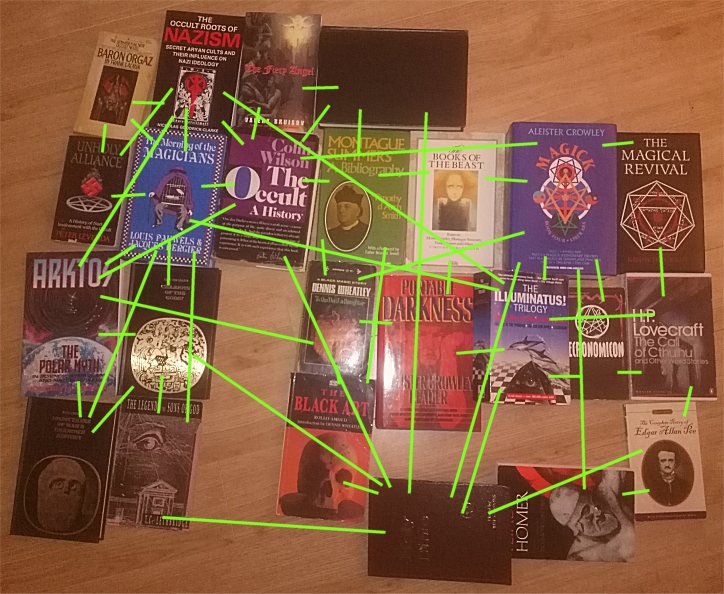
web of occult books.jpgI’m already seeing about 5 more connections between these texts.

I had an English teacher when I was in secondary school who used to say, “You can buy fashion, but you can’t buy style.” I’ve been struggling to make a very similar point as succinctly. To sum up this post then: Any fool can buy books, but true understanding of the Occult is available only to the dedicated student.

The practical value of studying the occult is a separate matter, one which I might address in the future. For now, it shall suffice to say that personally, I reckon most of it’s absolute rubbish.

To end on a positive note though, let us remember that while many texts require extensive background reading, these texts will likely also lead to further reading. One of my favourite things about reading is finding the name of some curious book being mentioned and then going out and tracking down a copy, only to find it filled with references to other curious tomes. You’re never going to run out of books to read, thank goodness.

occult book collection.jpg“Not for sale. Just showcasing my collection as of 2017.”