A Feast of Blood – Varney the Vampyre

coverVarney the Vampyre – James Malcolm Rymer (or maybe Thomas Preskett Prest)
Wordsworth Books – 2010 (Originally serialized from 1845-1847)

I haven’t posted much in the last month because I have been spending my time slogging through this immensely long book. At 1166 pages of very small print, this is undoubtedly the longest novel I have ever read. ‘Novel’ however, maybe isn’t quite the right word to describe this tome; it’s a series of different stories about the eponymous hero that were originally serialised in pamphlet form over the course of several years. Think of it like this: if Stoker’s Dracula can be turned into 2 hour movie, Varney would take a 5 season TV show to do it justice. Just as the book is long, this review is fairly hefty too, so pour yourself a cup of blood before you sit down to read it. If you haven’t read the book, you might want to skip over the sections in red. I say this not because those sections contain devastating spoilers (they don’t), but because they deal with issues that are so perplexing that they may scare you away from ever reading the book.
battyLook at the girth of this thing! It may be thicker than 4 of the other books in this series put together, but it was no more expensive. (Note: Varney is actually not the kind of vampire that can turn into a bat)

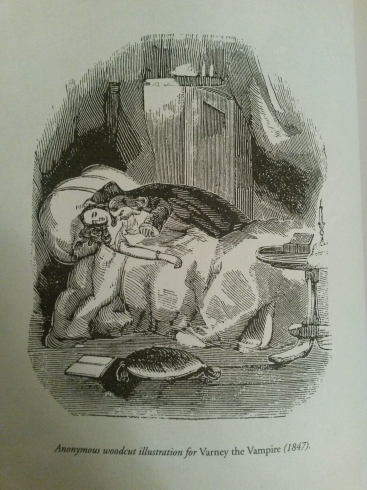
The writing is of a pretty decent standard, although there is quite a lot of recapitulation. This may have been included to keep readers up to date with the story if they had missed the last edition (kinda like the Victorian version of “Previously on the X-Files…), but I have read elsewhere that the author was paid by the word, so maybe it was just to take up space. Either way, coherence doesn’t seem to have been a priority, and throughout the tale there are characters that appear without reason and disappear without a trace. Varney himself has several suggested back stories that conflict with the account of his life that he gives at the end of the book, but more on that later. Also, with the exception of Varney himself, nearly all of the dramatis personae are interchangeable stock characters. I lost track of how many pleasant young men named Charles appear throughout the story.


The cover of the Wordsworth edition really blows in comparison to the original.

If you check out the librivox audiobook version (I would recommend that you alternate between a hard copy and these mp3s. Doing so allowed me to get through a few chapters every time I had to cook, tidy up or walk anywhere recently.), you’ll notice that Librivox credits Thomas Preskett Prest as the author instead of James Malcolm Rymer. It seems that nobody really knows who wrote the book. Prest took the credit for more than 100 years, but research that I have read ABOUT suggests that the writing style is actually closer to Rymer’s other writings than Prest’s. Also, minor publishing discrepancies in the text correspond to  Rymer’s bankruptcy, suggesting that he was in fact the author. That being said, Rymer and Prest are known to have worked for the same publisher and are believed to have collaborated on other works, so it’s not unlikely that they both contributed to this one. (Apparently Rymer was less than 4 foot tall.)

varneysucksDrinking her blood, straight from the tit.

The book is split into 3 volumes of roughly 400 pages each. (This division seems to have been based on the length of the book rather than by the contents of the volumes.) This edition ends with Chapter 220, but if you were to count the amount of chapters that the book contains, you would notice that there are actually 237. How could this be? Well, Chapters 41-43 don’t exist, Chapter 171 is followed by Chapter 162, and Chapters 195, 210, 197, 118, and 199 appear in that order. These mistakes have been faithfully carried over from the original pamphlets. (The chapter numbering in the audiobook version has been corrected. This was a little frustrating as I went back and forth between that and the text, although if it had retained the original numbers, the playlist of mp3 files would have been completely shagged.) Also, each chapter has a short title, but the titles rarely refer to anything that actually happens within that chapter. The chapter might be titled; “The events in the Parson’s office”, and it would be about a pair of young lovers having a picnic by the seaside. Arbitrary volume and chapter numbers aside, the book can be divided into 11 distinct stories. The first of which takes up the entire first half of the book while the 4th is less than 20 pages. 

hammeredThis poor chap was mistaken for a vampyre. He’s fucked now.
The first section, the events at Bannerworth Hall, is by far the longest and most enjoyable part of the book. The characters here, although they could be lifted directly out of 100 other Victorian novels, at least get to be part of the story for long enough that the reader remembers them. These characters play a smaller role in the second section of the book, and they are only mentioned 2-3 times in the final 400 pages. Their story is never satisfactorily cleared up, and I kept hoping that they would pop up or that the events that were occurring would somehow end up explaining what had happened to them. It seems that the initial followers of the story may have felt the same way;  in one of the final episodes, the author takes pains to clarify that the Bannerworths have all died. I wouldn’t be surprised if this brief allusion served as a response to those readers who had inquired if the Bannerworths were ever going to make a comeback. These loveable characters, we are pleased to find out, have not met with an unsavory end though; it’s just that the events towards the end of the book take place at a much later period of time. As we are soon to see, this epic tale takes place over the course of several centuries.

Here’s a few questions I have regarding the trials and tribulations of the Bannerworth family.

Is Varney the man in the portrait?
There is a portrait in Flora’s bedroom of Runnagate Bannerworth, an ancestor of the family. When the family realises that the vampyre looks exactly like the man in the portrait, they go to exhume Runnagate’s corpse from their family tomb. By the time they get to the tomb,  not only has Runnagate’s name has mysteriously changed to Marmaduke, but his corpse has also disappeared. This is particularly confusing because Marmaduke Bannerworth is also the name of Flora’s father, a confirmed associate of Varney’s. (Plus, one of the initial explanations of Varney’s vampyrism is that he was a suicide victim. Flora’s father also committed suicide. Could Varney be her father? Probably not, but why the similarities?)

Runnagate is said to be 90 years dead, and Marmaduke’s coffin reveals that he was buried in 1640, thereby dating the events at Bannerworth Hall to 1730. Varney is a vampyre though, so these dates don’t really exclude the possibility that he is the man in the portrait. Indeed the fact that Runnagate/Marmaduke’s corpse is not in the coffin suggest very strongly that Varney is their ancestor.

Varney later admits that he is a distant relation of the Bannerworths and that he was also a friend of their father. He claims that he had seen the portrait when he was friends with their father and deliberately tried to look like it in order to scare the family. This explanation however, does not account for the missing corpse from the tomb.

Much later on, in a different episode, Varney explains that he became a vampyre after crossing Oliver Cromwell after the death of Charles 1st. (This means that he didn’t become a vampyre until at least 1649, almost a decade after the death of Runnagate/Marmaduke Bannerworth.) He also explains that at this time he was living in London and known as Mortimer. (This is also bizarre as Varney is later to be hung by a different nasty man named Mortimer.)

In the 225th chapter (Chapter 208 in the book) Varney claims that he remembers “being hunted through the streets of London in the reign of Henry the Fourth.” Henry the 4th died of leprosy in 1413, meaning that if Varney is telling the truth, he was at least 235 years old when he became a vampyre. There is a gap of 1000 pages between the accounts of Runnagate’s portait and Mortimer’s contretemps with Cromwell, so we can forgive the author for a discrepancy of 9 years, but Varney’s account of being chased during the 1400s is placed only 12 pages apart from his encounter with Cromwell.

By his own account, Varney is not the man in the portait in Flora’s bedroom, but do we really believe him? All of his origin stories can’t be true, and he’s never exactly made out to be a particularly honest individual. While he explained that he had deliberately tried to make himself look like Runnagate/Marmaduke Bannerworth, he never explained where the body of said individual was or how it escaped from its coffin. Also, it should be remembered that Runnagate/Marmaduke’s coffin not only contained no corpse, but neither did it contain any signs of ever containing a decomposing body. If Varney is not Runnagate/Marmaduke, Runnagate/Marmaduke is still likely to be a vampyre.

varney-red
What happens to George Bannerworth?
He appears as the weakling younger brother in the first few chapters of the book, but soon disappears, never to be mentioned again. We are given enough information about his timidity to presume that this will be an issue for him at some stage, but he never gets a chance to shine. Lil bitch.

What happens to Dr. Chillingsworth?
The last we hear from him, he goes to London in search of Varney. We know that something happens to him afterwards that convinces him of the existence of vampyres. A note written by him appears in one of the final chapters of the book explaining so, the appearance of which left me with a genuine feeling of excitement. Varney does end up in London for a while in one of the later episodes; did they meet there? I had a theory that Chillingsworth was the mysterious stranger who follows Varney to Anderbury and gets murdered in the ice-pit, but he actually appears elsewhere afterwards, so it can’t have been him.

Who the fuck was the Hungarian Nobleman and what did he want?
Just as Varney starts to warm to the Bannerworths, a strange Hungarian nobleman shows up in the village in search of him. We find out that he is willing to pay a high price to find Varney, but he himself becomes suspected of being a vampyre and gets run out of town before Varney is found. There is no explanation given as to why he is looking for Varney, and no more is said about him after he is chased from the town. In one of the final episodes, Varney attends a vampyre initiation ceremony with several of his kin. One asks if he knew the Bannerworths, and he responds; “I did. You came to see me, I think, at an inn.” That is the extent of the conversation that appears 475 pages after the last mention of this character. Ahhh, sweet closure at last!

Who the shitting fuck was murdered in the ice-pit?
Towards the end of the first episode, Varney disappears. (The transition between the first and second episode is the only transition between episodes that carries over characters.) Soon thereafter, two strangers show up in a town a few miles distant from Bannerworth Hall. One of them, we know, has to be Varney, but the identity of the other is never made clear.

I think it was the Hungarian Nobleman. He’s the only character from the first section that’s unaccounted for. He had been confirmed as a vampyre and fled for safety without having achieved his goal of speaking to Varney. We know that he had been looking for Varney, but we were not sure of his motives. When Dr. Chillingsworth is mugged, we are inclined to give Varney the benefit of the doubt as he has seemingly made his peace with the Bannerworths, but if it wasn’t Varney, it has to have been the Hungarian Nobleman; he’s the only other bad guy alive at this stage! When it turns out that both of the mysterious strangers are vampyres, it only makes sense that one of them is the Hungarian.

However, when these two vamps meet near the end of the book, not a word is said about the fact that one of them has stabbed the other in the throat and thrown his corpse into an ice-pit. In fairness though, after the victim of this crime was revived by the moon, he snuck into the murderer’s bedroom and stole his jewels. Maybe they just decided to let bygones be bygones… Who knows? 

What happened to the Quaker whom Admiral Bell kicked up the hole?
Perhaps the greatest mystery of all. This storyline gets a considerable build up, but it’s never resolved.

booBleh!

There are, of course, plenty of other plot holes in the remainder of the book, but the cast of characters and plotlines in the later episodes are not nearly as memorable or complicated. Most of the episodes follow the formula of Varney trying to marry a beautiful young woman only to be foiled right before the marriage ceremony. (There are at least 4 chapter titles that include the phrase ‘the wedding morning’.) The middle episodes start to feel cartoonish in their repetitiveness, but the final two episodes end the book on a slightly more existential note. The penultimate episode has Varney playing the role of a hero rather than a villain, but the lack of satisfaction he receives from acting so convinces him to kill himself. His suicide attempt is thwarted by a pair of altruistic brothers, and when he is brought back to life, he gets super pissed off. He decides that if he can’t feel happiness that he will make sure that those around him don’t feel it either, and he gives what is perhaps the finest villainous speech that I have ever read. I’m going to include it here in its entirety, because unfortunately, I doubt that many people will actually make it far enough into the book to get to enjoy this exquisite piece of misanthropic bile:

“Since death is denied to me, I will henceforward shake off all human sympathies. Since I am compelled to be that which I am, I will not be that and likewise suffer all the pangs of doing deeds at which a better nature that was within me revolted. No, I will from this time be the bane of all that is good and great and beautiful. If I am forced to wander upon the earth, a thing to be abhorred and accursed among men, I will perform my mission to the very letter as well as the spirit, and henceforth adieu all regrets, adieu all feeling — all memory of goodness — of charity to human nature, for I will be a dread and a desolation! Since blood is to be my only sustenance, and since death is denied to me, I will have abundance of it — I will revel in it, and no spark of human pity shall find a home in this once racked and tortured bosom. Fate, I thee defy!”

Holy fuck, that is pure heavy metal.

varney-wakesVarney arises!

Whether or not Varney is actually a vampyre isn’t determined until you’re well into the story, and the first 750 pages of the book contain only 2 short instances of vampyric activity. Things get bloodier in the second half as the stories come to focus on Varney and his exploits. He oscillates between being a decent lad and a murderous villain, so much so that I was genuinely surprised at the violent acts he would sometimes suddenly commit. Although the latter episodes are definitely more gory, far more people are stabbed or shot than are drained of their blood; this is more of an adventure novel than a horror story. That being said, there are a few chapters set in moonlit churchyards and charnel houses to which you can stroke your Gothic boner. So much of what we have come to expect from a vampyre story comes directly from this book, and you’ll find a million other reviews discussing how it’s the source of many of our modern ‘Vampire tropes’. Why then, does everyone give that credit to Dracula? Well, Dracula is much scarier, Bram Stoker took all of the best bits from Varney, twisted them around a bit, and shaped them into a far superior book.

diebitchAnd fucking stay dead!

Montague Summers described Varney the Vampyre as being “far ghostlier than” and “a very serious rival to” Dracula. The book was out of print when he wrote that though, so that might have just been him trying to be the cool guy who liked the less popular work. I definitely wouldn’t go as far as Monty in this case, but I did really enjoy this book. I mean, it’s deeply flawed, but if you take it for what it is, i.e., complete trash, it’s d_____d enjoyable. It’s exceedingly obvious that the author/authors were making it up as they went along, and a lot of it doesn’t stand up to scrutinous examination, but if you like stories about graveyards, ghouls, chivalrous gentlemen, foul mouthed sailors, bloody murders,  and heaving bosoms, this will entertain you greatly. I fucking loved it, and it has me looking forward to reading more of the Penny Dreadfuls that have come out in the Wordsworth Tales of Mystery and the Supernatural series. I have Wagner the Werewolf by Reynolds on my shelf, and I know they have also put out The String of Pearls, the other work by Rymer and Prest.


I WANT TO BELIEVE – Alien Encounters and The UFO Phenomenon

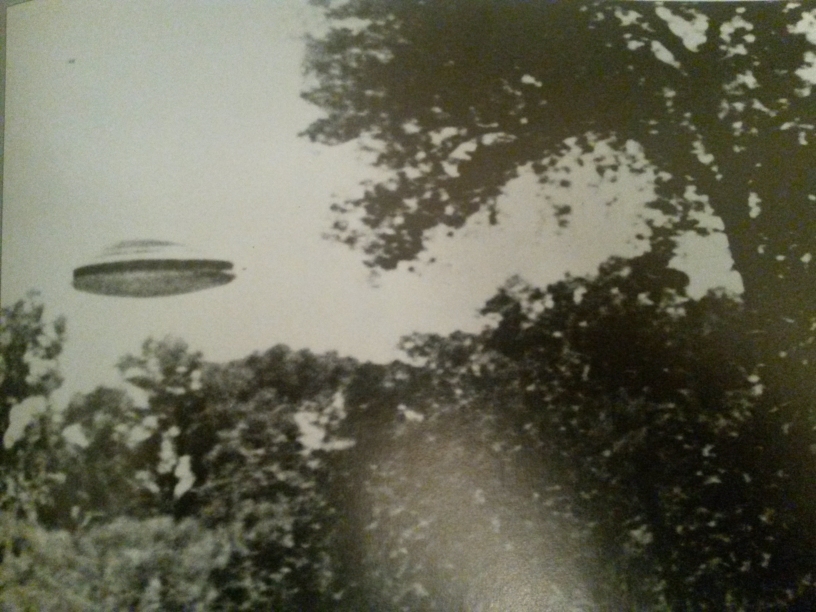
cool-ufo
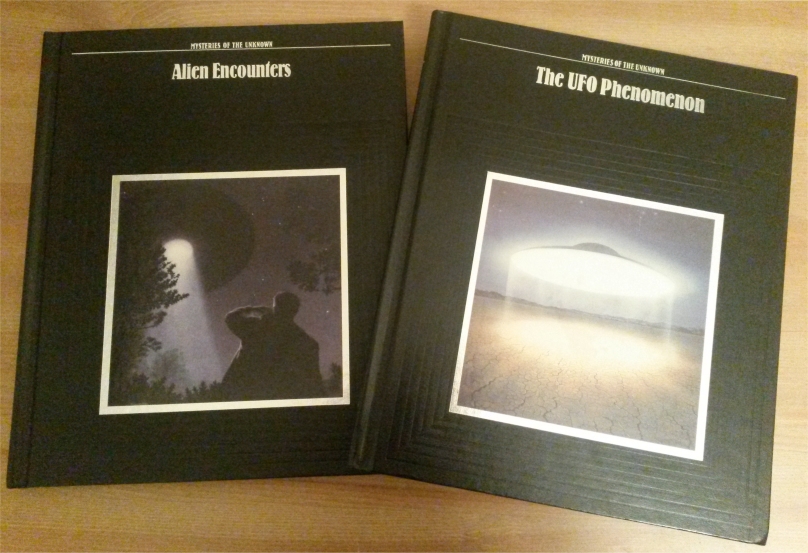
A little over a year ago I did a post on three books from the Time Life Mysteries of the Unknown series. I decided to come back to the series and to read both of its books on aliens. The UFO Phenomenon was published first, and Alien Encounters repeats quite a lot of the same information, but there is a slight distinction in the subject matter. The UFO Phenomenon deals fairly specifically with… UFOs, while Alien Encounters looks more at abductions and contact. I was again impressed by the quality of this series. These books are lovely; they look and feel great, and they are surprisingly in depth. If you can find a complete set for a reasonable price, make sure to pick it up.

covers
UFOs exist. There have definitely been, and presumabably still are, things in the sky that have not been identified. That these objects harbour alien beings from other planets is far less certain. I try to keep an open mind about this kind of stuff. I have no problem believing in the likelihood that there is life on other planets, but the idea that those lifeforms could reach Earth is too much for me to accept. My knowledge of space travel is extremely limited, but I understand that the closest planets that could possibly support life are simply too far away for their inhabitants to ever bother coming here.

The UFO book was cool; I have read lots of other books about ancient alien theories and specific alien encounters, but I didn’t know much about the history of UFOs. It was interesting to see how the flying saucer turned an American cultural icon

billy-meier
I sometimes ponder over how modern technology has affected the acceptability of evidence of alien life on/around Earth. Nearly everyone has constant access to a camera these days, and there is no excuse not to document the spacecraft that are abducting us. At the same time, any form of digital media is susceptible to quick, easy and convincing editing. Not only that, but our skies are now so full of drones and other human made machines that we soon won’t bother to question what’s in the sky… This indifference will leave us vulnerable to external threats… In fact, the more I think about it, the more likely it seems that the aliens deliberately gave our governments their technology in an attempt to lead us into this complacency. We’re falling into their trap! Fuck it. All eyes to the skies!

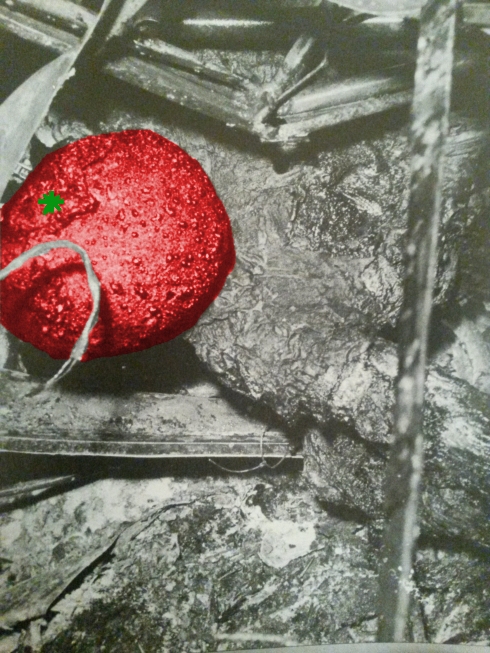
tomatoman
The above picture is of a famous alien corpse known as Tomato Man. (I have digitally enhanced it for full effect.) The original photo looks like a burned pile of rubbish to me. Some people have wondered how the glasses frames right underneath the alien’s shoulder got mixed up in the debris of an crashed spaceship.

One of most fascinating things about UFOs and aliens are the people that worship them. One particular group, the Unarians, pop up a few times in these books. I had seen some bizarre videos about the Unarius Academy of Science on youtube years ago, and their appearance here convinced me to research them further. It turns out that they don’t believe in imagination. All imagined thoughts are actually memories of past lives. All science fiction is true. Star Wars is real.

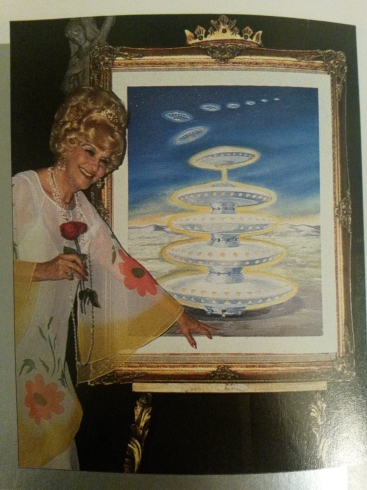
The Unarians were led by a lady named Ruth Norman who claimed to be the latest reincarnation of the entity who had previously lived as the Archangel Uriel, Isis, Peter the Great, queen Elizabeth the first, Johannes Kepler, Buddha, Zoroaster, Emperor Charlemagne, Quetzalcoatl, the Dalai Lama, King Arthur and many other aliens and mythical characters. Ruth preached that the space brothers (friendly aliens) were going to descend to Earth and teach us their ways, but she died before this happened.

urielUriel, the Legend.

There’s a decent documentary on the Unarians called Children of the Stars that can be viewed here. It doesn’t criticize or question their beliefs; it merely presents them. The documentary goes on a bit too long, but it’s worth watching just to see how mental these people are. Here is the trailer if you are only a little interested, and if you’re super interested, here is Jello Biafra’s documentary on the same group of people.
There’s definitely similarities with the Church of Scientology (although the Unarians deny that they are a religious organization), but unlike L. Ron Hubbard, Uriel genuinely seems to believe her own nonsense. I think she was pretty cool.

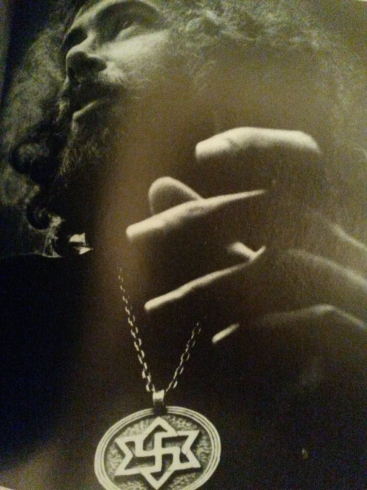
rael
This silly looking gobshite also appears in the book. I noticed his interesting necklace and decided to google him. When an image popped up of the same lad in a white suit, I realized that I had seen him before. His name is Claude Vorilhon, but he calls himself Raël, and he claims to be the messenger of the Elohim (alien creators of humanity).

He appeared on the Late Late Show when I was a kid. I remember being very unimpressed by him talking about how Jesus had been an alien. (My, how the times have changed!) The interview stuck in my head, and I’ve only recently thought of looking him up, but I didn’t know his name. Once I discovered his name, I did another quick search and I found footage from one of his earlier appearances on the same show! Normally I dislike when talkshow hosts needlessly talk down to their ‘weirdo’ guests, but I have to say, Gaybo’s swarminess is actually pretty funny here. Apparently Raël wasn’t too upset by it anyway; he went on to appear on the same show two more times. (Unfortunately those episodes are not currently online.)

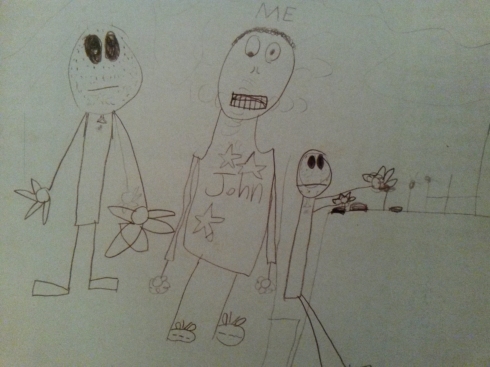
proof-of-alien-existenceA 5 year old drew this, and some people took it as evidence that aliens abducted him.
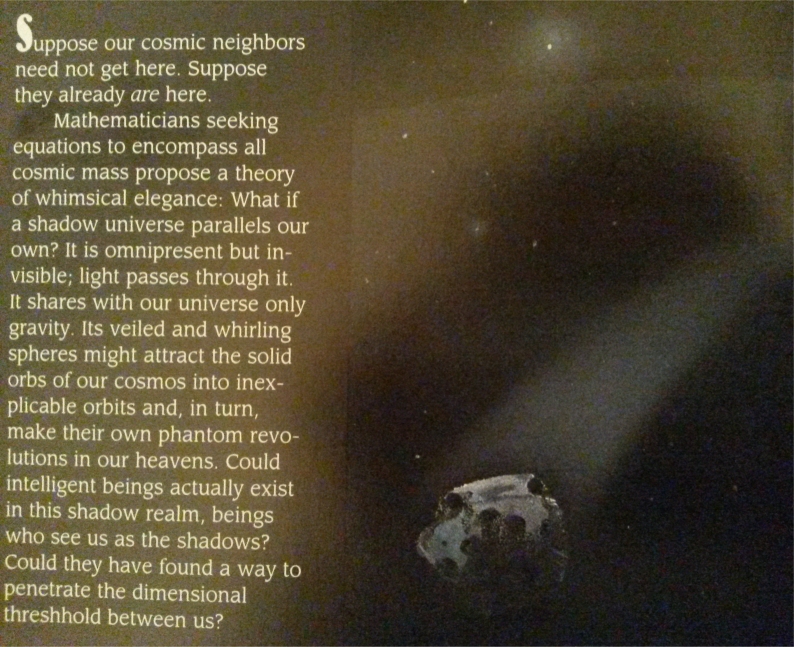
Reading these books, I wondered how often they were consulted by the writers of the X-Files. The Mysteries of the Unknown series were released between 1987 and 1991. The first episode of the X-Files was written in 1992. I find it hard to believe that some of the ideas for the show weren’t lifted directly from these pages. Just reading over the titles in the series, I’m able to think of specific episodes that refer to the content of nearly each book. In saying that, each of these books presents a fairly comprehensive overview of its topic, and if the X-Files writers weren’t taking their ideas from here, they were certainly getting them from more specific texts on the same topics. All of the mythology episodes (at least up to season 6) could easily have stemmed from the ideas in the two books I have just reviewed. We’re talking alien abductions, disinformation, alien human hybrids, implants, government conspiracies… all that great X-Filesy stuff.

Also, speaking of influencing hit TV series; check this out. There’s a small section at the end of The UFO Phenomenon that called to a mind a more recent science fiction show:
strangerthingsStranger Things, anyone?

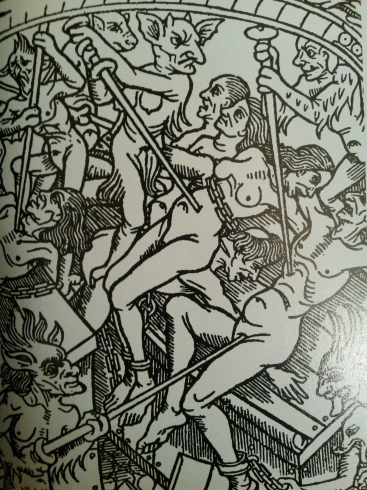
I’ll leave you with this. It’s an image of some unfortunates being tormented by demons. It was included in a section on the book proposing that aliens could be the modern equivalent to demons. The similarity being drawn here is that aliens, like demons, have been known to probe their victims. Check out the demon in the bottom left corner. Observe his calm demeanour.

bold“In and out, I’ll lance her clout, Hi-Ho! Hi-Ho! Hi-Ho! Hi-Ho!”

Vampires and Vampirism – Montague Summers

Image2
Dover – 2005 (Originally published as The Vampire: His Kith and Kin in 1929)
This is Montague Summers‘ first book on Vampires, and as much as I love the author, I have to admit that this was a rather dry read. I actually started this book to make sure that I would understand references that I might have encountered in another book I’ve been reading; Varney the Vampyre. As it turns out, that book is referenced in this book, but it contains very few references to vampire lore. (Varney is fucking DEADLY though. Expect to see it reviewed here in a few weeks.) Anyway, there’s 5 chapters in Summers’ book, and I’m going to go through each one.

1.The Origins of the Vampire
Here Summers explains several of the different elements that may have created and/or fed into the vampire legend. It includes copious stories of the reanimated dead, ghosts, premature burials and a huge section on incorruptible corpses. Apparently, there’s two ways that a corpse can remain incorrupt; the person has to have been either really good or really bad.

This chapter also includes a frustratingly multilingual section on necrophilia and necrosadism. Unfortunately the more lurid details are only given in French or Ancient Greek. I’m not joking; whenever Monty wants to give some really grisly details, he’ll switch languages. My French is poor, but it was good enough know that I was missing out on the best bits, particularly the story about the Garcon who said. “Que voulez-vous, chacun a ses passions. Moi le cadavre, c’est la mienne!”

(I have found an online version of the text, and I’ve just spent 10 minutes pasting those bits into google translate. It was worth it; my necrosadistic desires have now been satiated.)

2. Generation of the Vampire
This is all about how vampires become vampires. It mostly deals with excommunication from the church. Montague Summers knew a lot about the history of the church, and he wants to make sure that his readers are aware of this. Pretty boring stuff to be honest.

3. Traits and Practice of Vampirism
There’s a lot about suicide in this chapter, including some fascinating stuff on Russian suicide cults. Apparently one group of these fucking lunatics built a huge building with no doors or windows that was only accessible from a trap door in the roof. They’d jump in through the trap door and then they’d starve to death. Imagine the stench, the anxiety, the shame and the regret that these people had to endure until their dying moments.

4. The Vampire in Ancient Countries
I was expecting this section to be a bit boring, but it was actually quite interesting. It’s about the different types of vampiric ghouls that have cropped up around the world through history. I think that the sequel to this book, The Vampire in Lore and Legend (1929), takes up where this chapter leaves off.

5.The Vampire in Literature
This section was definitely the most disappointing, disappointing because I expected it to be the most interesting. This is just a bunch of summaries of different plays based on John Polidori’s story, The Vampyre. The summaries given are so detailed that I skipped through most of them; I didn’t want to ruin the stories in case I ever come across the original texts. Not only does this chapter contain the summaries of these plays; it also contains extensive lists of their cast members. This chapter is full of boring information, but it says very little.

Image1The pictures in this book are bizarre. I don’t remember why this mad woman is in there.

Overall, this is a decently interesting read even if it does get dry as fuck at times. There’s 5 chapters, and the way they’re structured seems a bit arbitrary, particularly the first 3. However, the worst thing about this book is that it’s full of quotes in different languages but contains no translations. If you really wanted to get the most out of this, you’d need to speak Ancient Greek, Latin, French and German. This is a bit different to the author’s books on witchcraft too. It serves more as an explanation as to how the Vampire legend developed than it does as proof of the Vampire’s existence. Monty never denies that vampires exist, but he doesn’t spend much time trying to convince you that they do.  As mentioned above, he wrote another book on vampires, but I reckon it’ll be a while before I get around to that one.

Image3Clearly a case of Lycanthropy rather than Vampirism, but a cool picture nonetheless. Could this be the instance spoken of by the great one?

The Books of the Beast – Timothy D’Arch Smith

beastCrucible – 1987
This book popped up in my suggestions from Goodreads a few years ago, but it wasn’t until I came across a quote from it that claimed that Montague Summers had attended Black Masses that I decided to buy it.

It’s a rather interesting collection of essays about different books, their authors and their publishers. The first and longest essay is about Aleister Crowley and his predilections for certain colour combinations and kinds of paper. That might sound a little boring, but I assure you it’s a very entertaining read. Not only is it quite funny at times, it is also astoundingly well researched and documented.

Timothy D’Arch Smith didn’t know Aleister Crowley or Montague Summers personally, but he did know people that knew them. He was also a dealer of rare books for a very long time, and it is rather apparent that he’s an expert in the field. (He’s still alive; I don’t know if he’s still working.) The level of detail in here is genuinely exciting, not only because the subject matter is interesting but also because the author has apparently been able to devote his life to tracking down and examining and reading rare books about magic and sex. DEADLY.

Yes, that’s right; not all of the essays in here are about magic. One is about the collection of dirty books in the British Library and another is about Ralph Chubb, a gay paedophile. It turns out that T.D.S. is also an expert on the Uranian (bent ref) poets. Apparently there was a bunch of poets in the early 1900s who had had enough of keeping their desire to bum youngfellas to themselves. Ralph Chubb was really into it. Smith’s essay is very interesting, and I wanted to read some of Chubb’s poems to see what he was talking about, but I felt a bit wary looking them up on Google.

It is suggested herein (and elsewhere) that Montague Summers, a name my readers should be familiar with at this stage, might well have indulged in a few Uranian fantasies himself. This book also suggests that he attended Black Masses. Monty you scoundrel! In his own books, Summers violently condemns such activities, but it is here suggested that he was a practicing occultist in his youth. Smith believes that Summers was sincere in his admonitions against the Black Arts, but I’m halfway through Vampires and Vampirism at the moment, and I’m really finding it tough to believe that Summers was as credulous as he makes himself out to be. Then again, maybe he witnessed something genuinely diabolical at a Black Mass and set out to warn the world of the dangers of the powers of Hell. (Smith also wrote an entire book on Summers that I hope some day to obtain.)

There’s some other bits and pieces in here too. There’s an essay on Florence Farr (a member of the Golden Dawn who shagged both Yeats and Shaw) and an autobiographical piece. Both are interesting and worth the read. There is also a short essay on Francis Barrett, author of The Magus, an influential book of magic; however, from what I have seen online, modern editions of Smith’s book have replaced this essay with another chapter on Crowley. This seems a pity as I really enjoyed the piece on Barrett. (If anyone reading this review has a copy of the newer edition, I would be happy to scan the section on Barrett in return for a scan on the newer part on Crowley. Leave a comment or email me.)

The cover of my edition is super lame, and the page numbers on the contents page are wrong (I don’t know if it’s a numerological joke or a mistake), but all in all, this book was great; it’s short, funny and insightful. I read it in a day, but I feel that I’ll probably consult it again. Timothy D’Arch Smith seems like a real cool guy.

Some Thoughts on Satanism…

Image1Satanism is a truly ridiculous concept. Satan, a character most famous for his appearances in the New Testament of the Christian Bible, is supposed to be a nasty, horrible, unpleasant individual, a real shit. Why would anybody choose to follow him?

Imagine this. You’re working in a restaurant and some dickhead customer starts getting lippy because there’s mayonnaise on his sandwich. You understand his dilemma, mayonnaise is fucking gross, but he’s being rude with you and acting as if it’s your fault. You can’t speak your mind to him because you need to keep the job, but you determine to remember his face in the hopes that you will someday be able to wreak vengeance on him.

Ok, now fast forward 5 years. You have since become a millionaire and bought a big house on the outskirts of town. One night you are sitting at home, watching a good film and sipping on a glass of fine Beaujolais wine. Ahhhh, what bliss! But hark, there’s a knock at the door. Low and behold, it’s the shithead that complained to you about the mayo in his sandwich. You remember him, but he has no recollection of you; complaining to service workers is a habit of his and he doesn’t keep track. It turns out that he got separated from his friends on a camping trip and he has had to walk 30 miles back to the city alone. He managed to say hydrated by drinking his own piss, but he’s starving and he’s asking if you could spare some food. You tell him that you were about to sit down to dinner and you invite him in. Once he’s sitting at the table, you stroll into the kitchen and return  with a jar of Hellmans and two spoons. Bon Appetit, cunt!

I presume that you’ve realised that in the above scenario you’re a Satanist, the shitty customer is Christianity, and the mayonnaise is Satan. Let me clarify; Satan sucks for everyone, but Christianity is so shitty that it’s actually worth debasing yourself by pretending to like mayonnaise in order to defy it. I hope that makes sense; I think it’s a pretty tight analogy.

20160822_231909
You might then ask whether Satanists are really worshiping Satan or just pretending to worship him in order to scare/upset Christians. Well, it’s a little of column A, a little of column B. The Satan of Satanism isn’t quite the same Satan that appears in  the New Testament; he has been upgraded. To a Satanist, Satan represents freedom rather than evil

Let me clarify; Satanism and Devil worship are not the same thing. To Satanists, Satan is a good guy. There are relatively few people who actually worship the ‘evil’ Satan that appears in the Bible, and those that do are morons. To worship that Satan, you would have to believe the stories about him, but believing the stories about him would mean that your Holy Book would be the same Holy Book as the Christians. This would make you a shitty Christian instead of a Satanist.

20160822_231559

So if Satanism is not about the pursuit of evil, what is it? Well, it’s impossible to pin it down at this stage. Most modern forms of Satanism are derivations of LaVeyan Satanism, which is, at its roots, a pragmatic reevaluation of morality. It’s basically Nietzschean philosophy dressed up for Halloween. Labeling this mode of thinking as ‘Satanism’ prevents most people from taking it seriously, but this very repulsion allows Lucifer’s hordes to delude themselves into believing that they are edgy elitists and not just a shower of fedora-goths. (LaVeyan Satanism is atheistic; Satan is thought of as a symbol rather than a deity.)

20160822_231939

The really shitty thing about Satanism is that it’s not nearly as cohesive in practice as I’ve so far made it out to be. It’s an absurd, if entertaining concept, and like all ‘religions’, it acts as a magnet for absolute morons. I joined a bunch of ‘Satanic’ discussion groups on facebook (for research purposes), and I have been absolutely horrified with the stupidity of the people posting in those groups. I’m talking serious idiots here; cretins of the lowest order. Most of the people who publicly declare themselves Satanists are cringey teenagers or aging, uneducated slipknot fans. Think of a 40 year old white guy with 2 ball-bearing necklaces, a lip piercing, and a 19 year old girlfriend that he met in a Dairy Queen after the ICP concert; a guy whose facebook profile pic is a moody black-and-white selfie with a superimposed pentagram. The people who want you to know that they’re Satanists are a lowly bunch indeed.

Also, the self-centeredness and focus on power of Satanism make it really attractive to far-right dickheads and racist scumbags. Fuck those people.

Satanism is quite funny, but the term Satanism is used and understood in such drastically different ways that it has become nonsensical and impractical. It means entirely different things to different groups of people, and due to their common levels of ignorance and opposing understandings of the term, these different groups of people are very unlikely to take the time to try to understand each other.

I’m sure there are plenty of people who disagree with what I’ve said here. Let me know what you think. Leave a comment below, email me, or message me on facebook.

20160822_231816Now, get outta here!

Unseen Beings, Unseen Worlds – Tom Dongo

1Hummingbird Publishing – 1994

This is a real piece of work. Somewhere in the introduction or the first chapter, Tom Dongo claims to be an extremely skeptical individual who is unwilling to accept anything that he hasn’t been able to prove to himself. He then goes on to write a book about his personal experiences with remote-viewing, aliens, the astral plane, demons, telepathy, reptilians, ghosts, channeling, and banshees. One has to wonder what counts as proof in his mind.

I’ve read lots of books about stupid topics that were written by what seemed to be relatively intelligent authors. (I would have imagined that the sillier the topic, the smarter the author would have to be to convince a publisher to put out their work.) Take Preparing for Contact as an example. It is utterly stupid, but the author managed to sculpt all of that stupid into an impressively cohesive whole. Psychic Discoveries Behind the Iron Curtain is a truly moronic nightmare, but the authors had clearly done a huge amount of scholarly research. Unseen Beings, Unseen Worlds lacks any traces of cohesion or intelligence. The author is an ignorant, arrogant fool of a man who has absolutely no ability to make sense. This is proof that anyone can write a book; it’s just a bunch of ridiculous ideas that popped into the head of a stupid weirdo.

2Ned Flanders… Wait, sorry, I mean Tom Dongo

Mr. Diddleyongo is of the opinion that many cases of mental illness are actually just cases of possession. He believes wholeheartedly in leprechauns. He claims that he can leave his body and travel around the universe. He often talks to spirits from different planets and dimensions. The man is a fucking imbecile.

Imbecile he may be, but stupidity isn’t a crime; the really irritating thing about Tom is the way that he talks about himself. He’s a know-it-all plonker. But, this isn’t really a book about the paranormal; it’s a book about Tom Dongo’s imagination. The ironic, and perhaps most infuriating, thing about this piece of rubbish is that the second chapter begins with the sentence; “I think I have read or am aware of just about every paranormal, esoteric, spiritual, and metaphysical book in print and many that are out of print.” The arrogance of that statement really put me in a foul mood when I read it. I would imagine that Tom’s reading was probably limited to whatever books were on the paranormal shelf in his local library.

I was going to go on and talk more trash about Tom Dongo, but after some consideration, I have concluded that he probably has some kind of mental impairment, and so it’s not really fair to make fun of him. I don’t think that a healthy, normal person would be willing to publish anything this cringe-worthy and idiotic.

3My copy is signed by the author too! Aren’t you jealous?


My First Attempt at Writing Short Fiction

Recently, I had to take a writing class as part of my degree, and one of the assignments was to write a short story. I’ve long wanted to write fiction, but I always felt unprepared. The class I took was pretty great though. The instructor’s attitude was; “I don’t care if you don’t feel ready. You’re handing me in a story at the end of the week, so shut up and get to work.” It was the kick up the hole that I needed.

There were no topics assigned, but it was suggested that we write about something that we were interested in. Before putting pen to paper, I had to sit down to think about what interests me. I glanced at my desk, noticed the books on aliens and black magic that I had been reading, and shrieked, “Eureka!”

Here is the story I came up with. It may not be a masterpiece, but I feel that it’s a decent first attempt, and I think that anyone with an interest in the books I review will probably enjoy it. I definitely plan to write more short fiction in the future.

night shift

Night Shift – Duke De Richleau

Books of Black Magic

20160803_210246 The Book of Ceremonial Magic – Arthur Edward Waite
Bell – 1969 (First published in 1898 as The Book of Black Magic and Pacts)
Imagine, if you will, a man who takes it upon himself to read a bunch of cooky books on black magic and then proceeds to write about how utterly silly they are and how stupid the people who believe in them must be…  Sounds like a real cool guy, right? I’m referring, of course, to Mr. Arthur Edward Waite. Waite, famous for creating the Rider-Waite Tarot deck, is the author of this rather interesting book on grimoires, spirits, ceremonial magic and infernal necromancy.

Waite’s writing style can be painfully long-winded and academic, and nowhere is this as apparent as the headache-inducing introduction to this work. I don’t have a fucking clue what it’s about, and I would recommend that you skip it. Aleister Crowley, who is going to pop up a few times in this post, had a personal dislike for Waite and modeled Arthwait, one of the characters in Moonchild, on him. In chapter 12 of that novel, Crowley says; “Arthwait was naturally slow of thought and speech; it took him some time to warm up to real eloquence; and then he became so long-winded, and lost himself so completely in his words and phrases, that he would speak for many hours without conveying a single idea of any kind to his hearers, or even having one to convey.” Keep in mind too that Crowley himself was pretty bad for talking absolute shite.


Some of the minor illustrations within.

That being said, if you manage to slog through the intro, there’s lots of juicy stuff in here. The first half of the book gives the backstories to the most infamous grimoires. Waite breaks them down into three categories: books of transcendental magic – the least bad kind of magic, composite rituals – slightly sketchy magic, and black magic rituals – the purely diabolical. He goes into a satisfying amount of detail on the supposed origins of each text while also supplying his own opinions about their likely dates and places of origin.

The second part of Waite’s book, the Complete Grimoire, is basically all the good bits of the different texts that are discussed in the first half. It lists all the necessary precautions and steps you’ll need to take if you plan on summoning a demon to do your bidding.

20160803_210738Is this image over used? Waite and I agree that it’s not.

Waite’s overall stance is that Black Magic is really dumb and that these books are all forgeries for idiots. You’d wonder why he bothered writing a book about something that he had such disdain for. (If you’re a long term reader of my blog, you’ll remember that I said almost the exact same thing about his translation of Eliphas Levi’s book, Transcendental Magic.) He seems to have enjoyed making fun of gobshite occultists.  Good lad, Waite.

I simultaneously read this along with some of the grimoires that it’s about, and hence the second half seemed quite repetitive to me. The scope of this book is broad enough that it could serve as an introduction to the topic, but the writing is probably a bit too dense for casual readers. You can always check it out online to see if it’s what you want before buying a copy. Personally, I really enjoyed reading it.


20160803_210305The Goetia – Translated by Samuel Liddell Macgregor Mathers, edited by Aleister Crowley, and supposedly written by King Solomon.
Weiser – 1995
This edition was first published in 1904.
Original edition of the Lemegeton compiled mid 17th century.
Text purports to be from 10th century BC.

The Key of Solomon, perhaps the most famous grimoire, is supposedly a set of magic spells left by King Solomon. The Lesser Key of Solomon, or the Lemegeton, is its dirty sequel. (Although sequel might not be the correct word here. It’s more like when a band releases a collection of crap songs and covers that weren’t good enough to make it onto their last album; the Lemegeton is the Reload of Solomonic grimoires.) The Goetia is the first of four (or five, depending on who you ask) sections of the Lesser Key. It was translated by Samuel Liddell MacGregor Matthews, head of the Golden Dawn, and published by his protégé, Aleister Crowley, although by the time this was published, Mathers and Crowley were no longer friends. It has the usual crap about drawing fancy triangles on the floor and all of that nonsense, but most interestingly, it contains the names and details of 72 demons (most of which come from Weyer’s Pseudomonarchia Daemonum). This edition also includes several of Louis Le Breton’s drawings that originally appeared in the second edition of Collin De Plancy’s Dictionnaire Infernal.

20160803_211006One of Louis Le Breton’s drawings of a demon, accompanied by Crowley’s version.

This is mildly entertaining to flick through, but the most interesting parts are included in Waite’s book. If you have Waite’s book, this book will only be interesting if you’re a big Crowley fan. The physical book is quite nice, as Weiser editions usually are, and it contains some introductory essays by and about Mr. Crowley. In my opinion, the best parts of this text are the pictures that Crowley drew of the demons:


Notice any patterns?


20160803_210327
The Grand Grimoire: Being a Sourcebook of Magical Incidents and Diabolical Pacts
Compiled by Darcy Kuntz
Supposedly written by Antonio Venitiana del Rabina and King Solomon.
Holmes Publishing – 2008
Source material exists from 1521, 1522, and 1421.
Text purports to be from 10th century BC.

Now, this is it; the boldest and most infamous of all grimoires. Like the Goetia, the Grand Grimoire has its roots in Solomonic ceremonial magic. The first half gives instructions on how to summon Lucifuge Rofocale, Satan’s right-hand man, and the second half is about how to summon other demons.

20160803_210901 Lucifer and his entourage don’t really come across as super scary in this one.

I bought this book a long time ago, but the first few times I picked it up to read through it, I became confused by the introduction. The title of the edition I bought is “The Grand Grimoire. Being a Source Book of Magical Incidents and Diabolical Pacts“. There’s no blurb on the back, and there is very little information about this edition online. All of these factors led me to think that it might actually be a book about the book that I wanted to read.  I sent a message to Darcy Kuntz, the editor, on Goodreads, but he never responded to me. However, after looking through it and doing a bit of research, I have figured out that this is a version of the Grand Grimoire and not just a book about that text.

20160803_210828

The bulk of this edition is a word for word transcription of the edition of the Grand Grimoire that our friend, A.E. Waite, published in the June 15, 1895 edition of his magazine, the Unknown World. (How fucking awesome is it that those scans are online?!? The Grand Grimoire starts on the 35th page of the pdf.) Kuntz’s book also includes some passages taken from Waite’s Book of Ceremonial Magic. The confusing introduction of this edition of the Grand Grimoire is a mash-up of the introduction in Waite’s magazine and some other sources. Entire phrases are lifted from the entry on the Grand Grimoire in Lewis Spence’s Encylopedia of Occultism, to which no references are given. Tut-tut, Mr Kuntz. Your name says it all! Plagiarism aside, I just wish the introduction had been a little clearer about how the book had been compiled. Then again, maybe the organisation was deliberately awkward to give off a more genuine grimoire experience. Summoning Belzebuth just wouldn’t be the same if the instructions you were following  were organized in a coherent order!

There are other parts in Latin or Italian that Kuntz claims were taken from a source titled “Le Grand Grimoire“, but he doesn’t elaborate on what this source was or how it differs from Waite’s translation. I have found a pdf of a more complete translation than Waite’s. This version includes an English translation of the Sanctum Regnum section, although the Citatio Praedictorum Spiritum section remains in Latin in both the pdf and Kuntz’s edition. The pdf version also includes a third section which is made up of other “magic secrets”, including the method of raising the dead that Eliphas Levi alluded to in the chapter on Necromancy in his Rituals of Transcendental Magic. (LET THE DEAD RISE FROM THEIR TOMBS!) What’s interesting about the inclusion of this ritual is the fact that Waite actually claims that Levi made it up. In chapter IX of the Complete Grimoire, he claims that this ritual “must be given on the authority of Lévi; for no available editions of the work which is in question, nor yet of the Red Dragon, nor indeed any ritual of my acquaintance, contains it. There is reasonable probability that he invented it to make out his case at the moment.” I know that the pdf version is definitely worded differently to Kuntz’s version, so either it is a different translation or it was based on another manuscript of the grimoire. If it was based on another text, maybe that text is the one that Levi had read. Then again, maybe somebody read Levi and decided to add his bit onto the end because they thought it was cool; I certainly did. This is the problem with pdf versions; you don’t really know how genuine they are. (It’s bit sad when you contemplate that you’ve spent hours of your life researching the authenticity of an online edition of a translation of a forgery.)

20160803_210350
This is the lad who shows up if you perform the ritual of the Black Hen correctly.

Other things to note regarding the compilation of the pdf version:
One of the spells, “The Secret of the Black Hen”, was mentioned in Waite’s book, wherein he suggests that it was a late addition to the Red Dragon (another name for the Grand Grimoire).  The pdf also includes several spells from the Grimorium Verum, including instructions on “HOW TO CAUSE THE APPEARANCE OF THREE LADIES OR THREE GENTLEMEN IN ONE’S ROOM AFTER SUPPER”. There’s also another short section on commonly held superstitions that ends with the statement, “I have related these beliefs to amuse our readers but not to obligate the readers to believe all of them because they are mostly nonsense”. This pdf edition seems to be a compilation of different bits and pieces from a variety of grimoires and books about grimoires. It’s still pretty cool though; some of the spells at the end are grizzlier (and often far sillier/funnier) than the first two parts of the “authentic” text.

If you know anything about the compilation of the different versions of the Grand Grimoire, please leave a comment below or email me.

* * * *

20160803_210212

I have other grimoires in my collection, both books and pdfs, and I’ll doubtlessly get around to them at some stage. I suppose I’ve talked more about the actual books and what they’re composed of than the efficacy of what’s actually written within. It’s hard to imagine somebody reading through these texts and trying to carry out the rituals, but I’m sure that attempts have been made. I think that the tasks described in these books, although ludicrously tedious and difficult, are less likely to prevent somebody from attempting the rituals than is the fundamental problem of Black Ceremonial Magic addressed by Waite: these rituals require the sorcerer to supplicate God to give them control over evil demons in order that they may perform evil deeds. Why would an all-knowing, fundamentally good, God grant such a request? Also, in the grander rituals in which one of the rulers of Hell is evoked, the instructions given allow the sorcerer to essentially trick the demon into doing his/her bidding. These are not instructions on how to make a Faustian pact; it is expected that the sorcerer will get away without paying for the demon’s services. How many times would the demons fall for this kind of trickery before they cop on? Personally, I wouldn’t fuck about with a demon. It’s only polite to pay for what you’re given.

Preparing for Contact: A Metamorphosis of Consciousness – Lyssa Royal and Keith Priest

contact
Royal Priest Research – 1994

Worst of the blurst. This is a new low.

This is a book about how to prepare yourself to communicate with aliens. It’s made up of a series of messages that were sent from a several different extra terrestrial entities through a channeler named Lyssa Royal (now Lyssa Royal Holt). These entities are doing their best to help us prepare to change humanity’s mass consciousness in order to make free and open contact with the inhabitants of other worlds.

On deciding to read this book, I took one look at the cover and thought to myself; ‘Sweet Jesus, this is going to be worse than Whitley Strieber’s bullshit.” Oh, you can only imagine the hearty pat on the back that I gave myself when I opened it up to see that the first chapter opens with a quote from Transformation. (There’s another at the beginning of the 11th chapter, and the 10th opens with a quote from Communion.) Think about that for a second; the people who create this book actually look up to ol’ WhitStrieb.

Channeling is something that annoys me greatly, and nobody makes me want to publicly fill my britches with scat more than J.Z. Knight, the horrendously ugly mutant woman who has undergone failed plastic-surgery and claims to be a channel for Ramtha, a 35,000 year old, Atlantean paedophile. One day, I was watching a video of her and sticking pins into my gooch when one of the related videos caught my eye on account of its title being written in Chinese. I clicked it, and I was very glad that I had done so. It was a video of a bald man pretending to be an alien. At one point in the video, the alien’s accent becomes a hilarious mixture of Indian and the way Irish people sound in American movies. I became fascinated with this character, and I’ve spent more than a reasonable amount of time watching his videos. His name is Darryl Anka, and the alien he channels is named Bashar. Now this might seem only tangentially relevant, but as it turns out, Bashar actually appears in this book! Lyssa intrudes on Darryl’s turf and summons Bashar into her body in one of the final chapters of the book. Reading that part was like meeting an old friend.

Of course, there are others, most likely students of Anka or Priest, who summon the same types of aliens. Here’s another channeling Bashar.  This one seems particularly challenged. Fuck, the world is a silly, crazy place.

I’m not going to provide a cohesive summary of the book as that would require looking through it again. Instead, I’ll just mention a few of the more memorable ideas contained in this collection of silly nonsense.

  1. Don’t expect to make face to face contact with an alien. Aliens don’t ‘exist’ in our ‘reality’.
  2. Sometimes aliens ‘exist’ in our ‘reality’.
  3. How will you know that you’re actually talking to an alien and not just yourself? Well, it doesn’t really matter; aliens are often just our future selves.
  4. Aliens live too far from Earth to actually come down and visit us.
  5. Sometimes aliens come down to visit us.
  6. If we really want to communicate with aliens, the best thing to do is draw pictures and feel good.
  7. Every one of us has already made contact with aliens. In fact, we make contact with aliens on a regular basis. Whenever we enter the ‘theta reality’ we communicate freely with all kinds of entities. The theta reality is basically the state that we exist in between dreaming and waking up.

There were legitimately interesting aspects of this book. I was actually quite impressed with the comprehensive nature of the dogma that the authors are setting down. If you want to hear voices in your head badly enough, you will. The only difficulty with this will be for you to accept that the voices in your head are other than your own. If you manage to convince yourself that these voices are actually aliens, even if they’re only mildly alien versions of yourself, then it’s going to be quite difficult to argue with you; however, although I can’t prove that the voices in your head aren’t aliens, I can avoid you and tell all my mates that you’re a stupid cunt.

This is basically a new-age self help book with a bit of science fiction thrown in to spice it up. (It’s full of the same “let’s enter the next stage of human evolution” crap as Morning of the Magicans and the last chapter of Wilson’s The Occult.) The ideas are utterly moronic, but the author’s aren’t trying to convince their readers to kill themselves; they’re trying to encourage people to get together and be creative and open-minded. It was a shitty experience to read this book, but that’s because it was boring, repetitive and stupid. At least it wasn’t boring, repetitive, stupid and morally reprehensible like a christian self help book. I’ve also watched some videos of Lyssa Royal (skip to 12:50 to get to the summoning bit), and she’s simply too silly to dislike.

This book was written more than 20 years ago, and those 20 years have seen none of its predictions come true. That being said, there’s still people who are into this nonsense. It really does baffle me when I think of how weird and insane the human race can be. It seems that some people feel the need to believe in something greater than themselves, and all things considered, I suppose that telepathic aliens aren’t the lamest available option.

Oh, and just to remind you; there is a facebook page for this blog for anyone that wants to keep updated with all of the newest posts.


Vathek – William Beckford

20160802_230226
Oxford University Press – 1983 (Originally published in 1786)

This Gothic classic is the story of the Caliph Vathek and his series of poor life choices. Vathek is led astray by an evil giaour’s promises of more wealth and power. (‘Giaour’ is old Turkish slang for a non-Muslim. The reader pretty soon realises that the Giaour in question is actually some kind of evil spirit.) This is basically an 18th century English writer’s attempt to write an Islamic version of the Faust legend. Ahhhh, remember the good old days when appropriating culture was still considered a bit of a laugh?

Beckford was only 21 when he wrote Vathek, and he claimed it only took 3 days to complete. The story itself is quite good, but the characters are rather flat, and I think that it would have benefited from some development. Beckford later wrote the Episodes of Vathek (not included in this edition), which are additions to this text, but as far as I understand, they are side stories about very minor characters and don’t add anything to the central plot.

20160802_230201
Vathek and the Giaour

You can pick up a copy of Vathek for dirt cheap, or download the audiobook for free.  As far as Gothic classics go, this closer in its scope to The Castle of Otranto than Melmoth the Wanderer; it’s worth a read, but don’t expect too much.

Word on the street is that William Beckford was a shrub rocketeer.